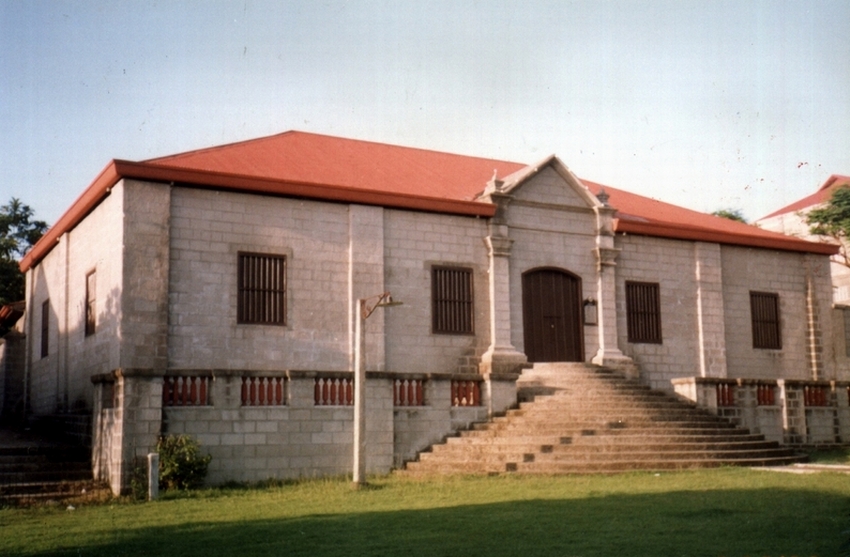
Church of St. Peter the Apostle (Loboc, Bohol)

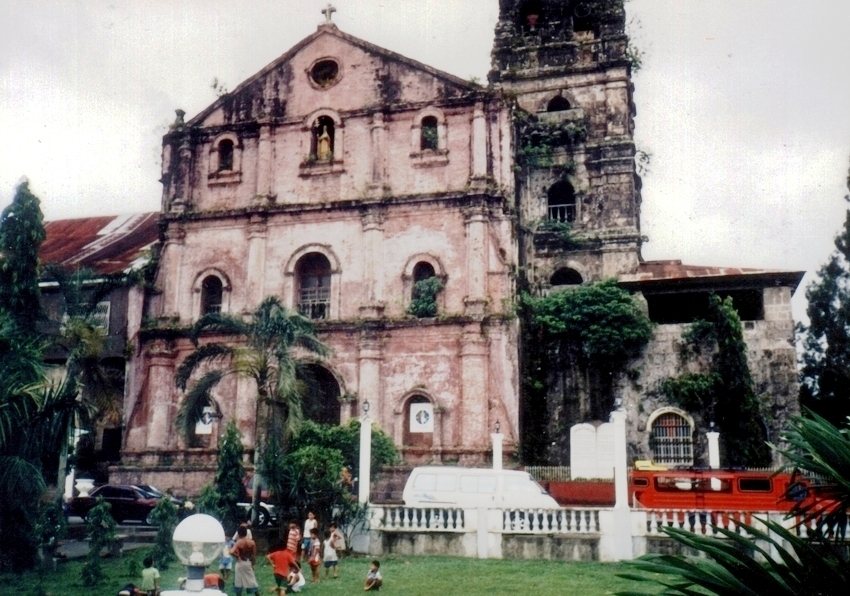
On my own, I made a short visit to Loboc’s Church of St. Peter the Apostle, listed by the National Museum as a National Cultural Treasure.  Built in 1602 by Fr. de Torres, it is the second oldest church in Bohol.  The present church was built in 1734. 

Church of St. Peter the Apostle

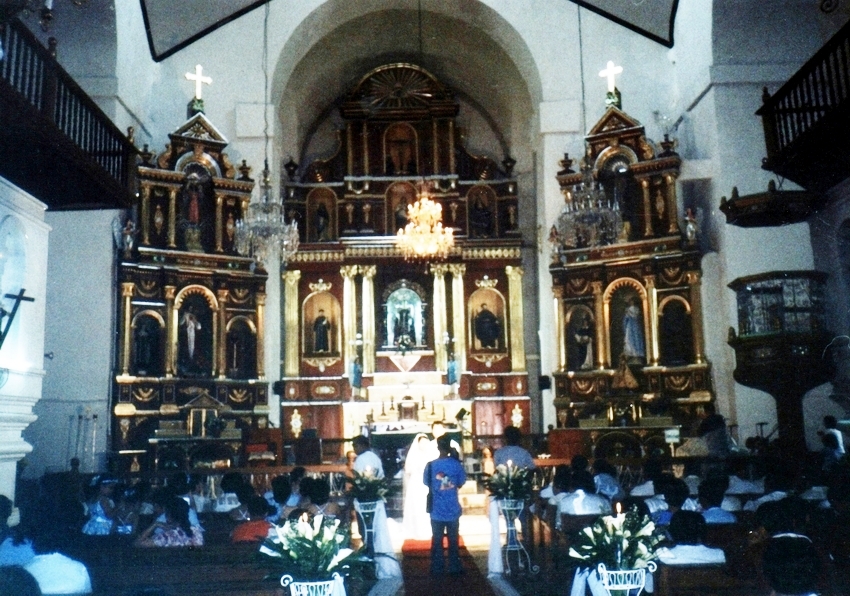
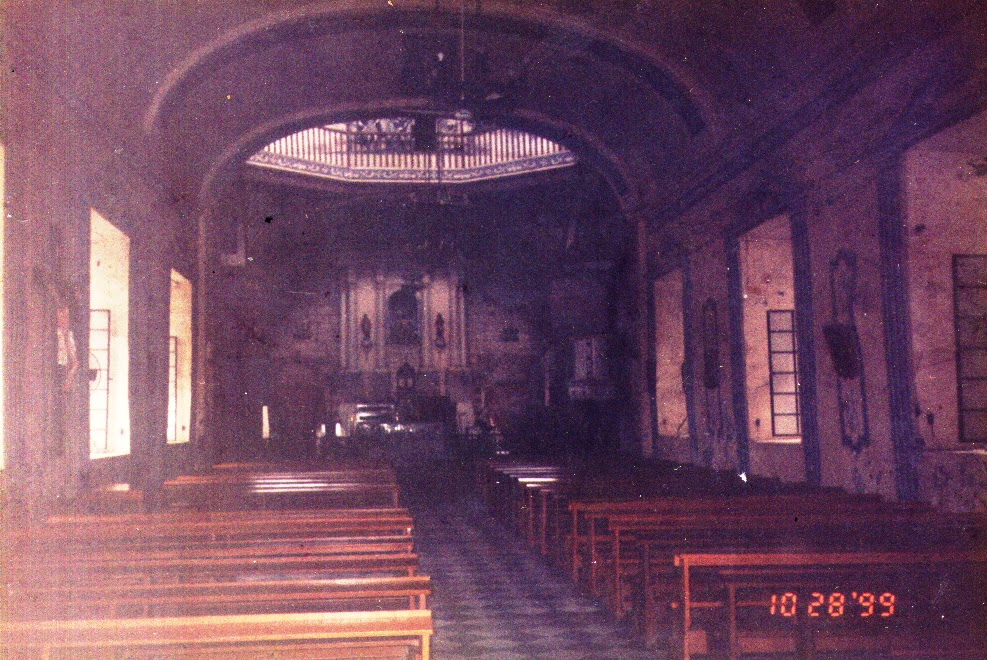
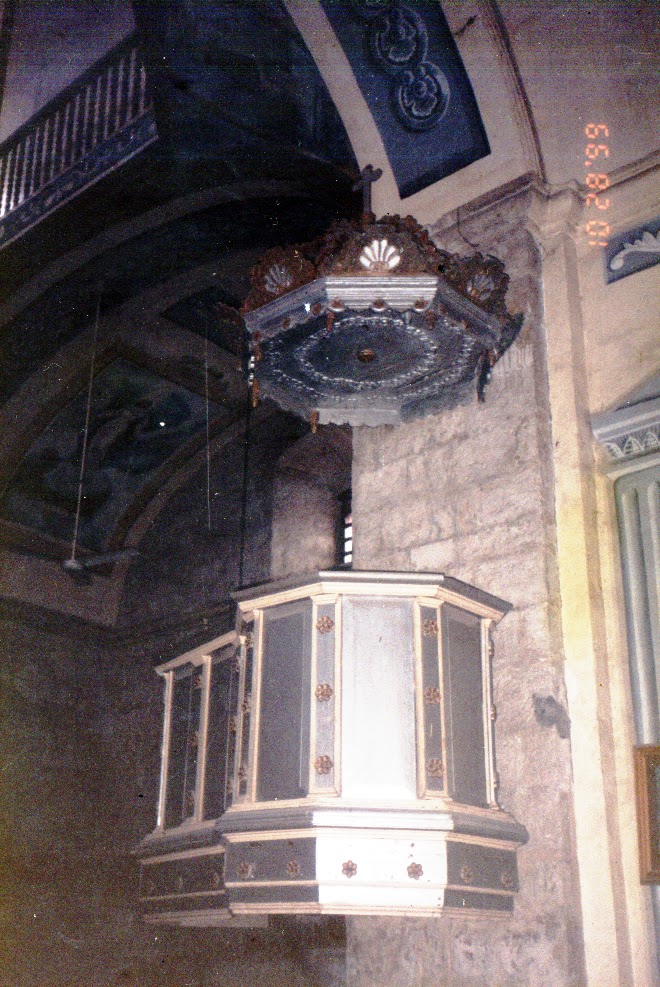
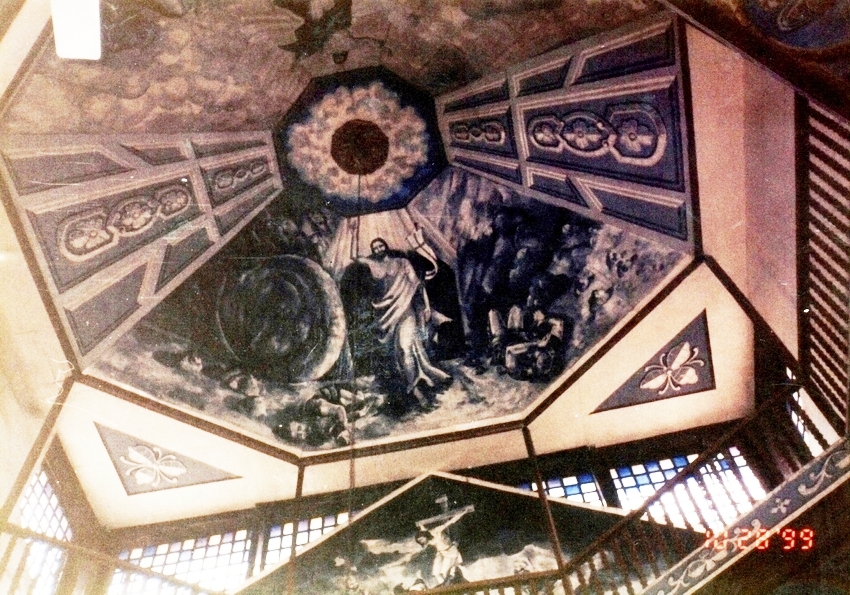
Inside are remarkable nave paintings done (from May 1926 to July 1927) on the walls and ceiling by three artists (Canuto Avila and son Ricardo, Ray Francia), the biggest number of murals on religious subjects.  The ceiling was retouched in 1995 by Cris Naparota.   It also has a Neo-Gothic pulpit with a late 19th century sounding board (portavoz) and 5 retablos between the transept and sacristy. 

Bell Tower

Outside the church, near the riverbank, is the separate 21-m. high, 4-storey octagonal stone bell tower, built after 1768.   It has 7 bells, the oldest dated 1863 and 2 others dated 1914 and 1937.  The tower also has a large wooden matraca (a cranked noisemaker) dated 1899 and a clock from Altonaga Co., acquired through public subscription and installed in 1893.   The bell tower was almost destroyed during the construction of the unfinished Loay Bridge, a folly of the Marcos era which was supposed to be part of an elevated expressway just across the road.  Timely objection by the Lobocanons prevented its destruction.  The project was discontinued. 

Church of La Purisima Concepcion de la Virgen Maria (Baclayon, Bohol)

Church of La Purisima Concepcion de la Virgen Maria

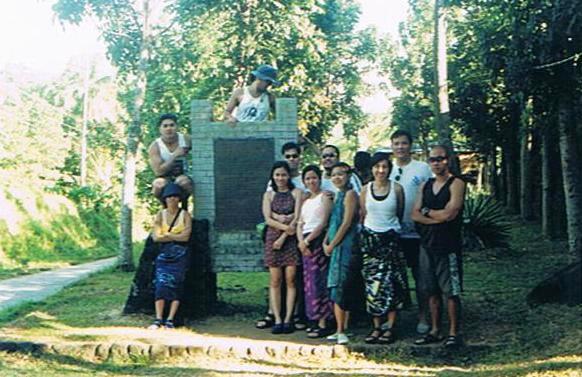
We had just finished unloading our luggage and were savoring our welcome drink at our resort when our tourist van arrived to pick us up.  Barely catching our breath, we were again on the move as we had to compress a tight, pre-arranged sightseeing tour around Bohol within the day.   The province has a quite efficient road system with concrete roads encircling the province and traversing the land from Trinidad on the north and Loay in the south.  Besides this, second-class roads also connect the other towns, thereby completing a truly serviceable transportation network.  Touring the island is thus a breeze since travelers can start practically anywhere.  From Panglao, we again crossed the bridge to Tagbilaran City.  About 3 kms. out of the city, we made a photo op stopover at the Blood Compact Site at Brgy.  Bool, the site of the blood compact between Spaniard Miguel Lopez de Legaspi and Rajah Sikatuna on March 16, 1565.

The Blood Compact Site

Our first real stop was at the town of Baclayon were we visited the Church of La Purisima Concepcion de la Virgen Maria, one of the best examples of Philippine Baroque combined with Western and Eastern influences.  Reputed to be the oldest church in the country, it was first built by the Jesuit Frs.  Juan de Torres and Gabriel Sanchez in 1595.  The present coral stone church was built in 1727. The church’s simple Early Renaissance facade has a 21-m. high, massive square bell tower (now connected to the church by a portico-façade installed in 1875), a fine porch and massive stone piers (in which some of the town’s priests are entombed.   Inside are an intricately carved, gilded altar and icons plus two side retablos, all dating back to the Jesuit era.  It also has a pipe organ installed in 1824.  The pulpit, installed in 1870, is located at the epistle corner.  The floor’s glazed tiles were installed in 1875 after the completion of the portico. 

Church of Pope St. Gregory the Great (Majayjay, Laguna)

Before departing for Manila, we passed by the Majayjay town center to visit the town’s imposing Spanish-era Church of Pope St. Gregory the Great.  A wedding was in progress when we arrived.  Named after the town’s patron saint (whose feast is held on 12 March), the church suffered successive destruction by fires (1576, 1606, 1660 and 1711) before it was strengthened and enlarged, to its massive and present form, from 1711 to 1734 by Fr. Jose de Puertollano through the forced labor of its 4,000 townspeople.

Church of Pope St. Gregory the Great

The church was again repaired in 1839, 1842 and 1848, because of typhoon damage, and further improved in 1892 when its roof was replaced with galvanized iron by Fr. Gregorio Platero.   During the Philippine-American War, the church became the headquarters of American forces.  The church was repaired again in 1912.

The church interior

This unusually tall, stone and brick colonial Baroque church, with its commanding view of the town and Laguna de Bay, has 6-m. thick adobe walls covered with vines and moss, vaulted halls and enormous and unusual 16.5-m. high solid buttresses supporting a bell tower (with 5 century-old bells) at the rear.  Of equally huge proportions, the tower is topped by a pointed roof and is accessed by concrete steps that also lead to a catwalk above the ceiling (called langit-langitan) that, in turn, leads to the crossing above the transept. The 60-m. long and 17-m. wide nave has balconies on both sides, 3 impressive altars, antique relief statues of saints, azulejo-tiled floor and 5 elaborate retablos (altar backdrops) constructed on the wide pilasters supporting the lateral bays of the capiz window-lined transept.  The adjacent convent, one of the earliest surviving examples in the country, houses a small museum of old parish documents and ecclesiastical silver.  It was slightly defaced when part of it was converted into St. Gregory Academy (later to be renamed Liceo de Majayjay). 

After our church visit, we again passed by Mr. Flory Rosales’ home to thank him personally for the assistance he gave us.  The ladies and Robert also went to the nearby market to buy the fruit of the month of October – lanzones.  As I would say, “Never leave Majayjay without it!” (a pun of the American Express commercial).  I stayed behind to do some people-watching.  One thing noticeable is the unusual number of horse-riding men I saw passing me by.  Majayjay certainly is not your one-horse town.   After a while, my companions returned, all toting 5 kgs. each (at PhP37 per kilo) of the luscious fruit.  These, plus the extra pasalubong of lanzones Mr. Rosales gave us, made us look more like visiting fruit dealers.  Thus fully laden, we all happily went our way back to Manila.

Basilica Minore de Penafrancia (Naga City, Camarines Sur)

From the Ermita, we crossed the Naga River, and made our way to the Basilica Minore de Peñafrancia.  This imposing modern shrine, started on April 18, 1976, was completed, after some delays due to financial concerns, on September 1981.  The original statue of the Virgin of Peñafrancia was transferred here from the Ermita on May 22, 1982.

This Romanesque-style basilica was given the title “Basilica Minore” on May 22, 1985.  The only basilica in the Bicol Region and the whole Roman Catholic Archdiocese of Caceres, its grounds has a fine view of Mt. Isarog.

Basilica Minore de Penafrancia

After touring the basilica itself, we next proceeded to the nearby Altersheim Building where we had the chance to interview Rev. Monsignor Romulo A. Vergara, H.P., the rector of the Peñafrancia Basilica and a cousin of our media colleague Rick Alberto.  We were also shown (and privileged to touch) the original Statue of Our Lady.  The one I saw at the basilica just happens to be a replica.

Monsignor Vergara and the original statue of Our Lady
Basilica Minore de Penafrancia: Balatas Rd., Brgy. Balatas,  Naga City, Camarines Sur.  Tel: (054) 473-3644. E-mail: info@penafrancia.org.ph.  Website:  www.penafrancia.org.ph.

Old Shrine of Our Lady of Penafrancia (Naga City, Camarines Sur)

From the Cathedral of St. John the Evangelist, we were driven, upriver from the city center, to the bank of the Naga River where we visited the Old Shrine of Our Lady of Peñafrancia.  This stone church was built in 1753 by Bishop Isidro Arevalo to replace a bamboo and nipa chapel built in 1711.  Also known as the Ermita, it was restored and enlarged in 1876 to 1877.

Check out “Cathedral of St. John the Evangelist“

Old Shrine of Our Lady of Penafrancia

The shrine has a charming facade decorated with Chinese art. Its bell was donated by Don Simon Tuangqui, a wealthy Chinese trader, during its reconstruction in 1864.

The shrine’s facade

Here, on 20 September 1924, Monsignor Guglielmo Piani (Apostolic delegate of Pope Pius XI) canonically crowned the Statue of the Blessed Virgin of Peñafrancia as the queen of Bicolandia. The statue was also stolen here on August 15, 1981 under mysterious, unexplained circumstances and was returned, in six separated pieces, on September 5 in Manila.

The shrine’s altar
Old Shrine of Our Lady of Penafrancia : San Felipe Rd. Naga City, Camarines Sur.

Cathedral of St. John the Evangelist (Naga City, Camarines Sur)

The next day, after breakfast at the hotel, we were whisked off on a tour of the city’s 3 foremost religious shrines.  We made our first stopover at the Cathedral of St. John the Evangelist (also called the Naga Metropolitan Cathedral). Originally founded in 1595 on the location of the market, the present Spanish Romanesque church, one of the largest in the country, was completed in 1843. Damaged by typhoons and the 1811 earthquake, it was restored in 1890.  Its austere interior houses a Black Nazarene statue and some fine ecclesiastical silver in the sacristy.

Cathedral of St. John the Evangelist

The church’s plain and massive, three-level façade has a semicircular arched main entrance, paired superpositioned columns, statued niches and a slightly curving end wall at the second level.  It is topped by a triangular pediment with a centrally located clock.  The levels of the massive, Renaissance-style bell towers on the flanks are marked by enclosing balustrades.   The church has an austere interior, a Black Nazarene statue and some fine ecclesiastical silver in the sacristy.

The image of the Virgin of Peñafrancia is transferred and enthroned here until her feast day from the Basilica during the Translacion (the 2-km. ritual transfer of the Virgin, by the traditional all-male retinue). A novena is held during the Virgin’s stay at the cathedral.

Beside the cathedral is the Holy Rosary Minor Seminary where our media colleague Rick Alberto studied.  Formerly the Seminario Conciliar de Nueva Caceres, it was founded in 1797, the first school for ecclesiastical and lay education in Southern Luzon.  On September 1998, the cathedral’s old seminary building was declared a National Landmark by the National Historical Institute.

Cathedral of St. John the Evangelist:  cor. of Elias Angeles and Paz Streets. Tel: (054) 473-1836 and 473-8418. Feast of St. John the Evangelist: December 27.

Old Guiob Church Ruins (Catarman, Camiguin)

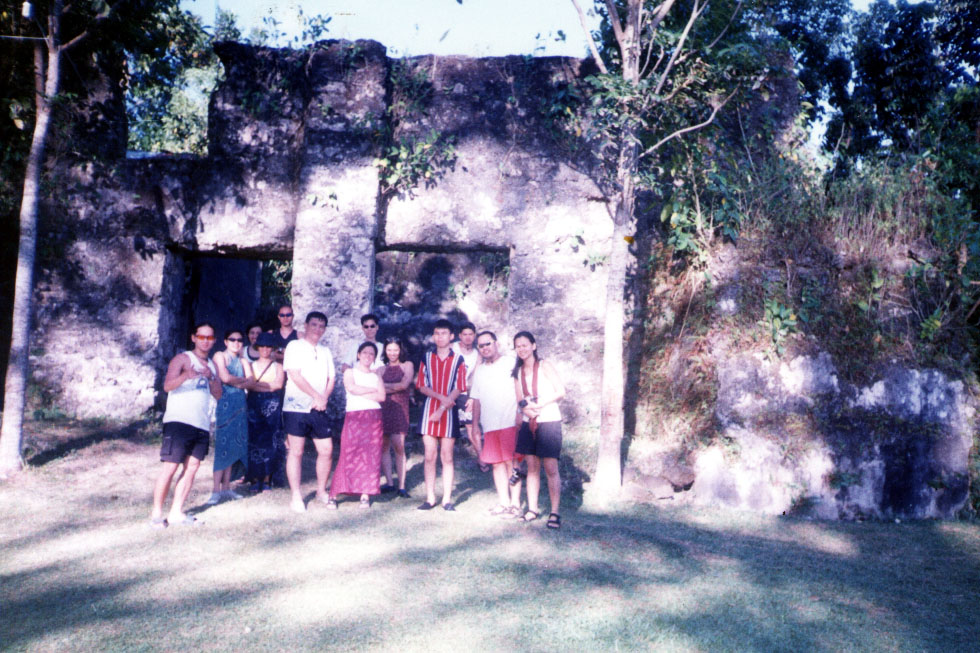
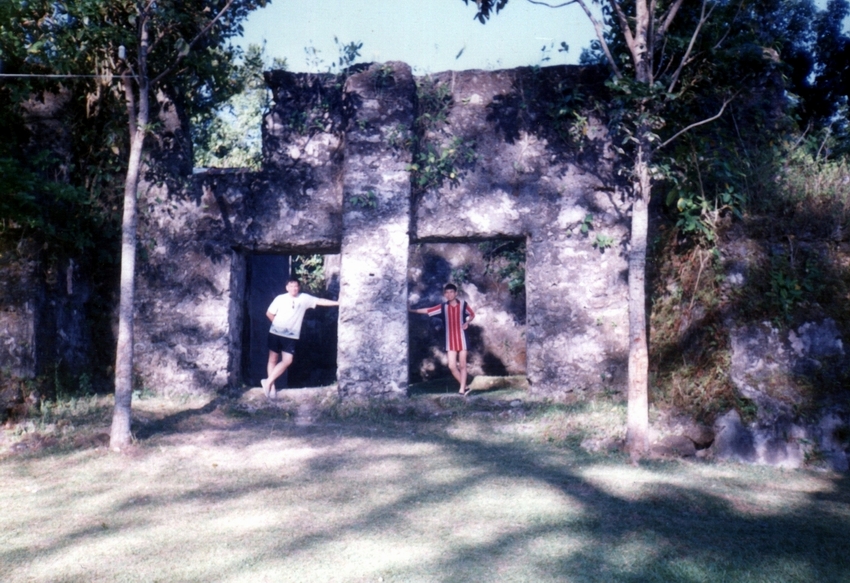
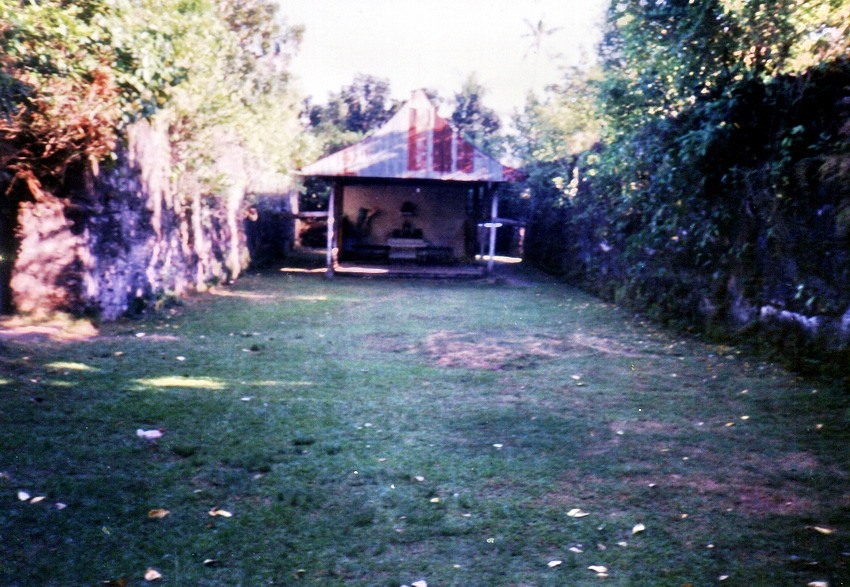
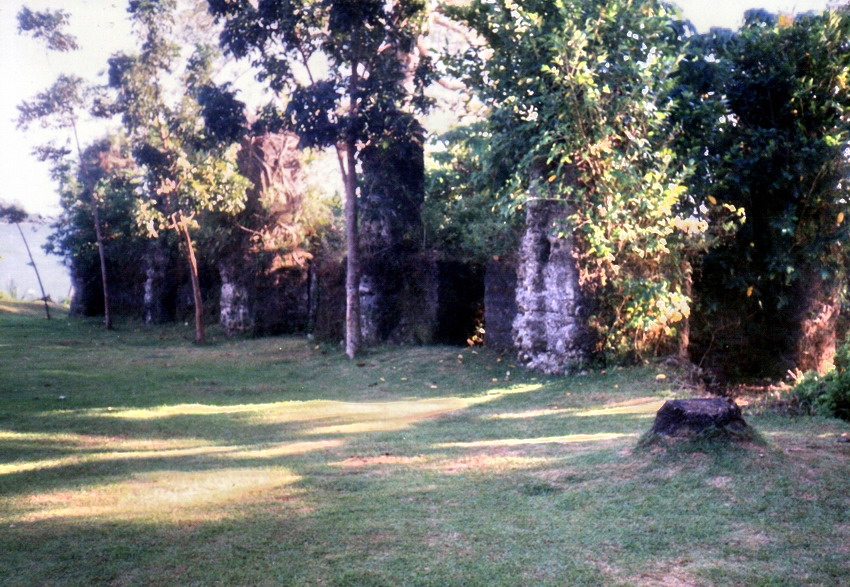
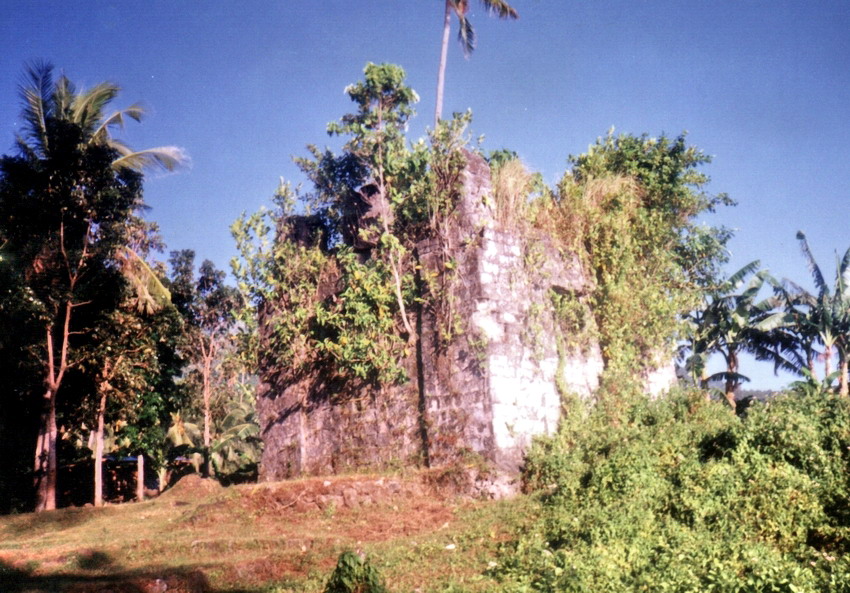
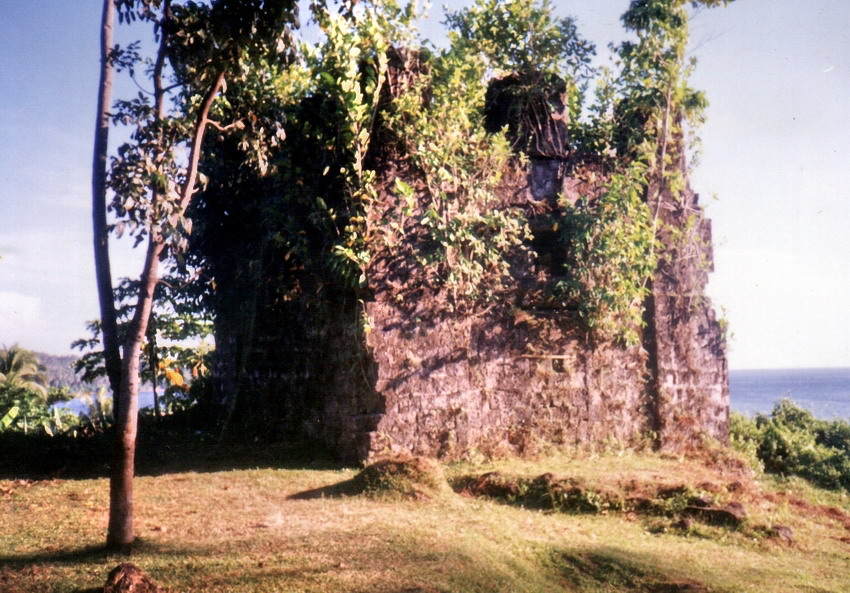
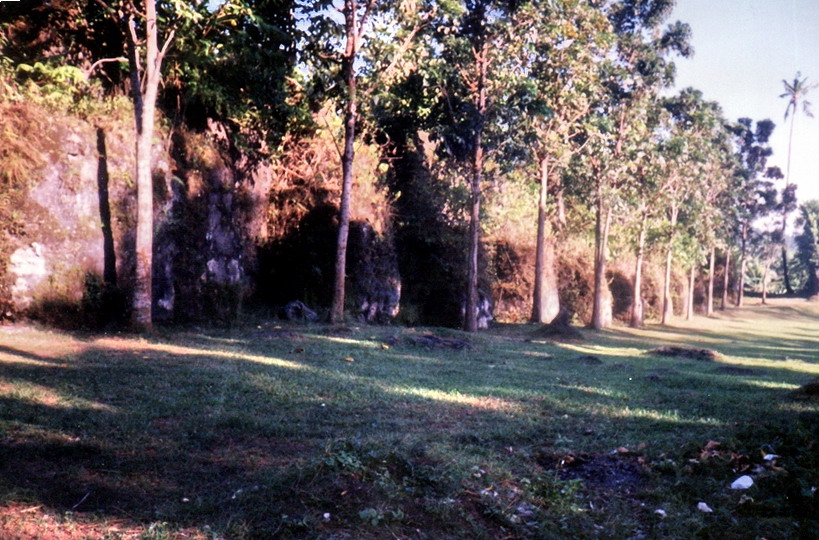
From Sto. Nino Cold Spring, a 30-min. drive brought us to the ruins of the old Gui-ob Church (Cotta Batto) in Catarman.  This coral and stone-hewn church, Camiguin’s version of Albay’s Cagsawa Ruins, is located 16 kms. from Catarman and 20 kms. from Mambajao proper.  It was built in 1623 as the parish of San Roque  before it was half buried by lava flows during the May 1, 1871 eruption of the 838-m. high Vulcan Daan (locally called Tandang Bulkan) which destroyed the town. 

Old Gui-ob Church (Cotta Batto)
Old Gui-ob Church (1)
Old Gui-ob Church (11)
Old Gui-ob Church (7)

Within its thick, century-old adobe walls is a makeshift chapel.  A short distance away is the bell tower and a moss and vine-covered convento, reminiscent of the Spanish era.  Viewed in the late afternoon sun, all three made nice subjects for a photo shoot.

Old Gui-ob Church (4)
 Old Gui-ob Church (5)
Old Gui-ob Church (8)
Old Gui-ob Church (9)
Old Gui-ob Church (10)
Old Guiob Church Ruins: National Highway, Brgy. Bonbon, Catarman, Camiguin.

Chapel of the Virgin of Caysasay (Taal, Batangas)

Returning to my car which was parked at an empty lot across the street, we proceeded up along M.M. Agoncillo St. and turned left to a street leading to Taal Coliseum.   Further down the road and fronted by an ugly and inappropriate basketball court is the small and beautiful coral-hewn Chapel of the Virgin of Caysasay. Located in Brgy. Caysasay (better known as Labac), it is home of the 272-mm. high pinewood image of the Blessed Virgin of Casaysay.

Chapel of Caysasay

According to the awe-inspiring folklore of this deeply religious community, the carved wooden image was found in 1603 by Juan Maningkad, an honest fisherman and town chief, caught in a fishnet near the mouth of the Pansipit River.  Some claim its appearance as miraculous and a token of divine favor.  Others say that it was brought by some Spanish soldiers and given to some natives or that it was just lost from a passing or shipwrecked Spanish or Portuguese ship.

It was brought to Fr. Juan Bautista de Montoya, Taal’s prior, and was given a grand religious celebration.  The priest then entrusted the image to Maria Espiritu, widow of a judge, who enthroned it in a precious urn and guarded it zealously.  In spite of her zeal, the image mysteriously and continually disappeared from her niche and reappeared later on.

Informed of these strange excursions, Fr. de Montoya later placed it in a special niche above the main altar of the town’s church.   All the while, the image kept disappearing from the church and reappearing a few days later.  Later, it completely disappeared from the church.  A meticulous search proved fruitless and it was given up for lost.

Several days later, two women, Maria Baguhin and Maria Talain, gathering firewood in the forest, drew water at a water well 7 kms. from Lumang Taal, and discovered the image on a branch of a sampaga tree, surrounded by lighted candles on each side and guarded by a kingfisher (locally called a casaycasay).

It was brought back to the church but again regularly disappeared, reappearing at its chosen haven near the well.  Henceforth, the image was called the Virgin of Caysasay and a provisional chapel was erected in 1611 near the spot.

The present 50 m. long and 10 m. wide reef-stone chapel, located on a deep ravine by the right bank of the Pansipit River, was started in 1639 under the direction of its then parish priest, Fr. Alonso Rodriguez. Its roof was partially destroyed by ash and boulders during Taal Volcano’s 1754 eruption and the walls and the towers fell during the December 24, 1852 earthquake.

The church was later reconstructed in 1856 but was again damaged during the 1867 earthquake.  Fr. Marcos Anton repaired it, clothed the image of the Virgin with pure gold, installed a new altar and built an iron balustrade around the main altar.  The Italian artist Cesar Alberoni decorated its beautiful interior.   An organ was bought in 1880 from the famous organist, Don Doroteo Otorel (they previously installed the organs at Manila Cathedral and at Oslob’s church), in Palencia (Spain).

The chapel altar

The chapel has a central cross vault and a beautifully painted dome embellished with small windows.  Behind the main altar is the sacristy housing the niche of Blessed Virgin of Casaysay.  It is reached by a small staircase. Adjacent to the chapel is the hewn stone orphanage managed by the Oblate Sisters of the Holy Spirit. Formerly the convent, it was allegedly built in the mid-19th century by a Chinese maestro de obra.

The chapel pulpit

The image is transferred from its special niche in the Basilica of St. Martin of Tours to the chapel every Thursday and returned on Saturday afternoon, a continuous tradition since 1857 interrupted only in 1952 when then Bishop (and later Cardinal) Rufino Santos ordered the image’s permanent enshrinement at the sanctuary.  This controversial decree caused great apprehension and was resolved only when, upon the request of many of Taal’s fervent devotees, the tradition was revived.

The beautiful ceiling

On December 8, 1954, the Feast of the Immaculate Conception, the image was canonically crowned by Spanish Cardinal Fernando Quiroga y Palacios, Archbishop of Santiago de Compostela and official representative of Pope Pius XII.  Since then her feast is celebrated on that day and is highlighted by the Taal river festival.

Chapel of the Virgin of Caysasay: Brgy. Tatlong Maria, Taal, Batangas.

Basilica of St. Martin of Tours (Taal, Batangas)

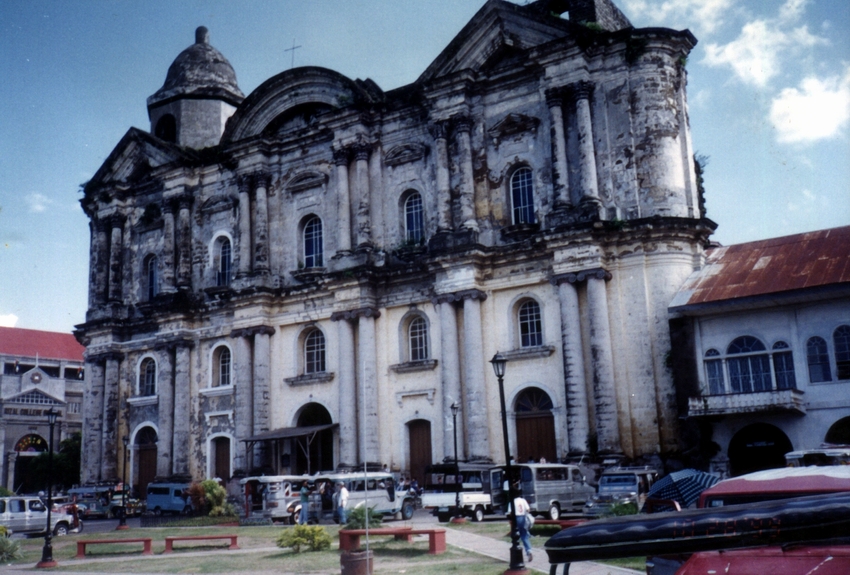
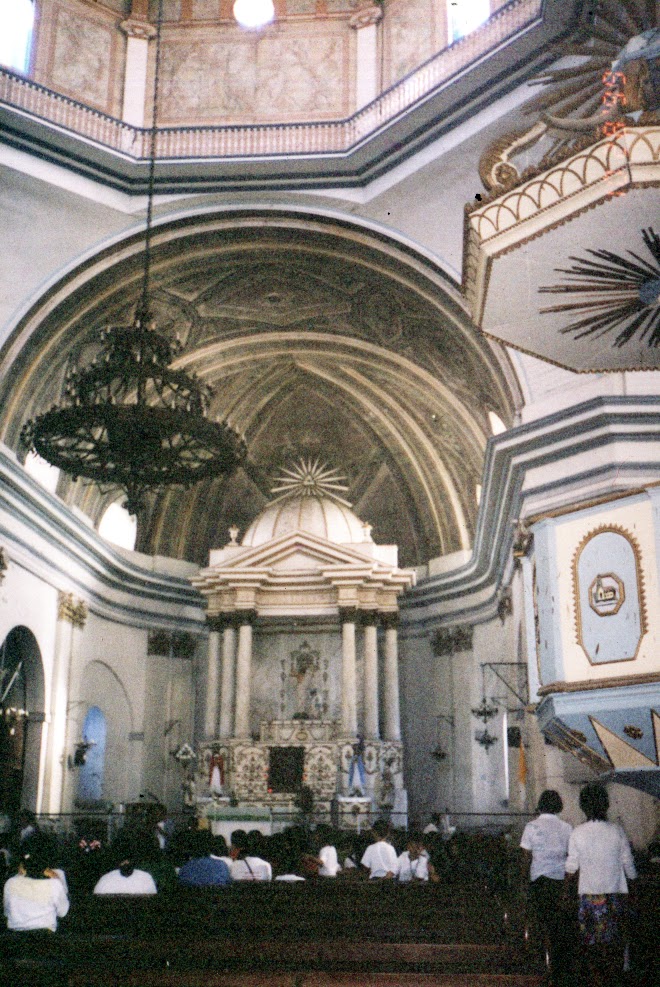
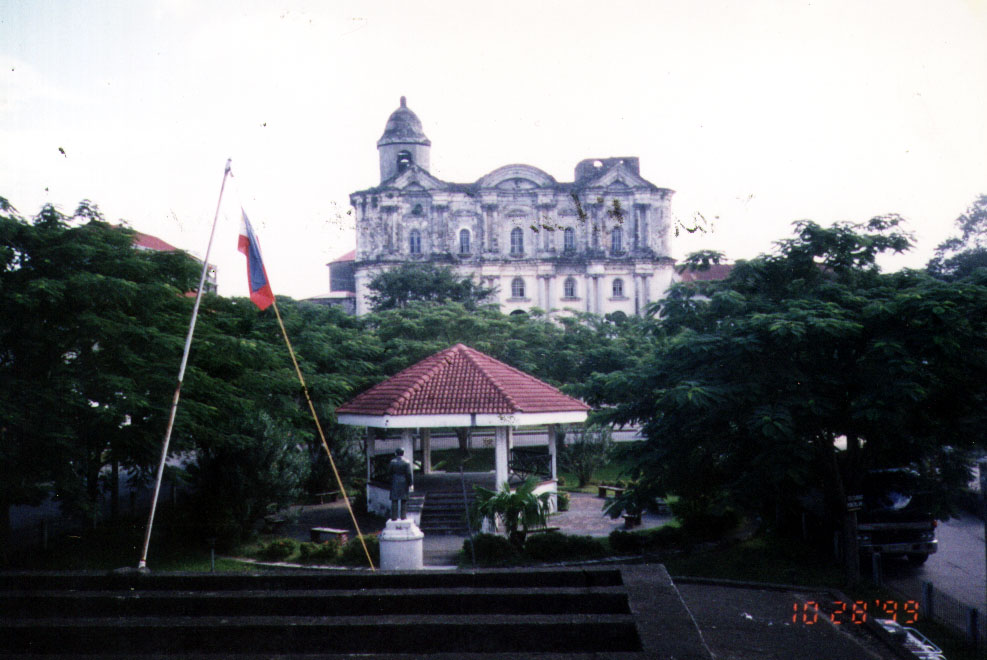
On a hilltop overlooking the park, accessed by a broad flight of stairs and unobstructed by any edifice, is the majestic  Basilica of St. Martin of Tours.  Measuring 88.6 m. long, 48 m. wide and 95 m. high, it is the biggest in the country and is reputed to be the biggest in the whole of East Asia.  The first church on the half-hectare site was built by Fr. Martin Aguirre in 1755 but was destroyed during the 1849 earthquake.

Basilica of St. Martin of Tours

The famed Spanish architect Luciano Oliver was commissioned by parish priest Fr.  Marcos Anton to design the present big church.  He arrived in Taal in 1857 and managed its construction from 1858 until its official inauguration (although unfinished) in 1865.  Adobe quarried and cut from riverbanks in Barrio Cawit were used as building blocks for its thick walls.  The church was finally completed by Fr. Agapito Aparicio in 1878. It was made into a basilica on December 8, 1954 and was restored in 1972 by the Taal Quadricentennial Council, in time for the 400th anniversary of the town’s founding.   The church was declared a National Shrine on January 16, 1974 by virtue of Presidential Decree No. 375.

Basilica interior

The elegant 28-m. high, two-storey “Baroque” facade is unconventional yet exudes a character of stability and permanence.  It has two levels of 12 columns each, the lower, standing on pedestals, is Doric while the upper and shorter level, supporting the cornice of the entablature on top, is Corinthian.   In between every pair of columns at the lower level are five doors of different sizes and type of arches with the largest at the center.  Above it are semi-circular arched windows.  In between the paired columns at the upper level are semi-circular arched windows with depressed or triangular-shaped segmental canopies above it.   At the edge of the entablature are three pediments: triangular at both sides and half moon at the center.   From my point of view, this Palladian-style structure has a look of a Roman villa, manor or a government office building rather than that of a church.

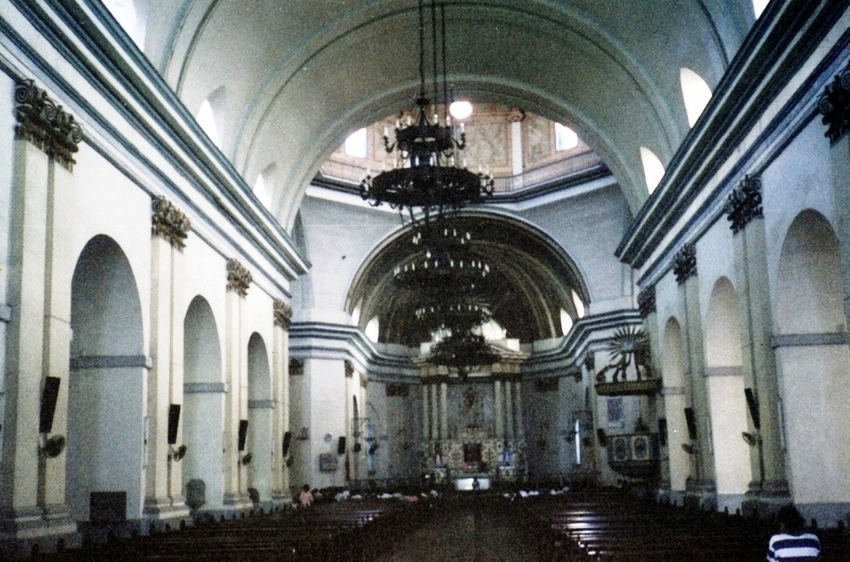
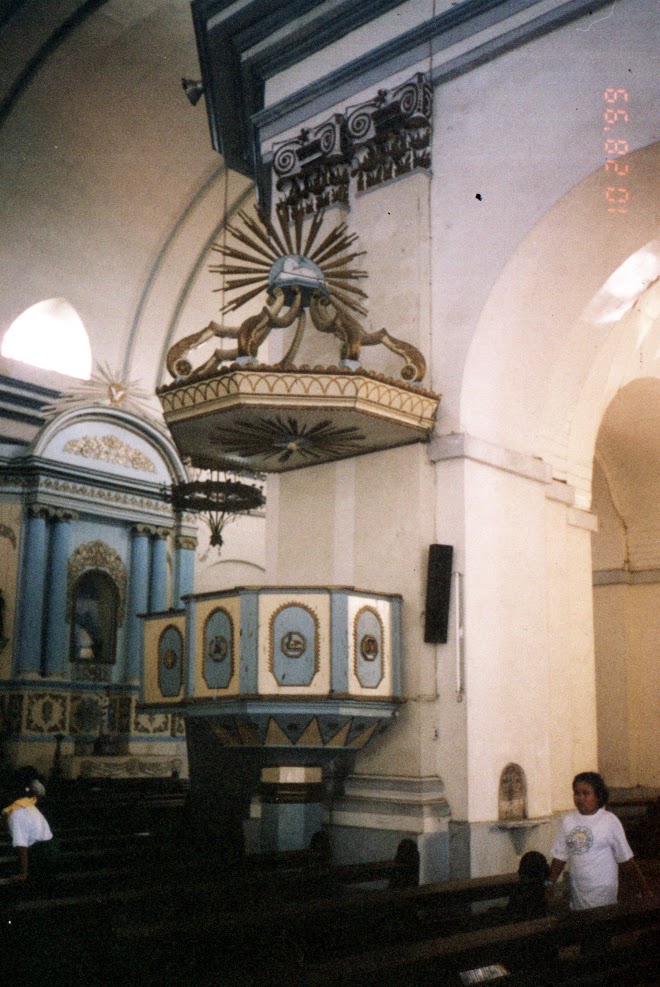
The magnificently large and cavernous interior has a grand transept and three naves, with the central nave bounded by twelve pillars, six on each side.  Behind the main entrance, supported by two huge pillars and hemmed in by a wooden balustrade, is a choir loft.   On the right side of the nave, attached to a pillar nearest the altar, is a beautiful canopied pulpit.  At the end of the left nave is the Altar of St. Martin of Tours, Taal’s patron saint (its feast is celebrated on November 11), and at the end of the right nave is the altar of the Virgin of Caysasay, designed by Arch. Ramon G. Orlina and built in 1972. The circular baptistery  with its marble font and European-made floor tiles, was built by Fr. Agapito Aparicio in 1878 and repaired by Fr. Antonio Javan after a fire in 1959.

Pulpit

The 24 m. high and 10 m. wide main altar has a badalchin on top supported by 6 columns.  At the center is a huge, ornate silver tabernacle with ornamental sunburst on top.   Attached to the high ceiling are five huge chandeliers with the biggest, hanging on the 44.5 m. high cupola above the altar, installed during the town’s 1972 quadricentennial.  Behind the facade’s walls is a truncated mass of stones, former site of the short bell tower destroyed in the 1942 earthquake.  The present truncated and massive, stone and lime bell tower is accessed by an 18-inch wide winding stairway and has a spectacular view of the town, Taal Lake, the narrow but scenic Pansipit River, tranquil Balayan Bay and the surrounding countryside.  To the right of the basilica is the adjacent school run by Benedictine Sisters since 1945.  Formerly the convent, it was built together with the present church and its tiled roof, as well as that of the church, was replaced by galvanized roofing sheets in 1946.  The facade was restored by Fr. Eliseo Dimaculangan, after typhoon damage in 1970.

Southern Luzon’s Heritage Village (Taal, Batangas)

Jandy and I checked out of Villalobos Lodge in Lemery by 6 AM, had an early breakfast at the town  and drove beyond the small bridge (Lemery’s boundary with Taal) over the Pansipit River to Taal’s poblacion (town center)  which was zoned and patterned by Spanish architects after the town of Albuquerque in Spain.

Taal Park

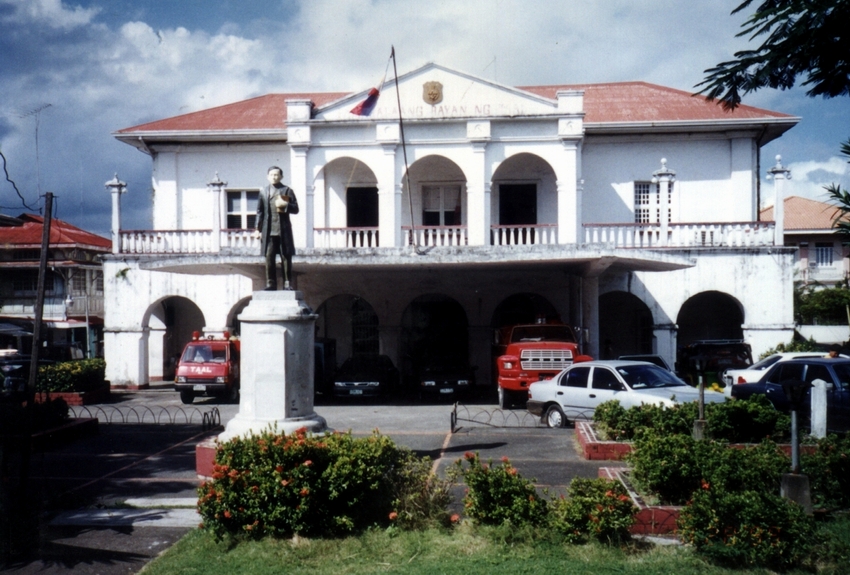
Our first stop was the town’s stately municipal hall, the former Spanish-era Casa Real.  It was built from 1846 to 1850 by Augustinian Fr. Celestino Mayordomo.  Directly in front is the wide, landscaped Taal Park with its mercury lights and statues of Jose Rizal (installed by Banaag Nang Tagumpay), Apolinario Mabini (installed by the Malvarian Society on December 1928), A Los Heroes Nacional (installed by La Sociedad La Patria on May 20, 1929) and the newer one of Marcela Agoncillo (installed January 20, 1979).  This central area was restored in 1976 during the administration of Mayor Corazon A. Caniza.

Taal Municipal Hall (Casa Real)

To the left of the basilica is the former Escuela Pia, now Taal’s Cultural Center.  It was built by Fr. Aniceto Aparicio in 1885 and was restored by the Taal Arts and Culture Movement in cooperation with the National Historical Institute.  It was made into a National Historical Monument by virtue of Presidential Decree No. 260 (August 1, 1973), Executive Order No. 375 (January 14, 1974) and Executive Order No. 1505 (June 11, 1978)

Taal Cultural Center (Escuela Pia)