

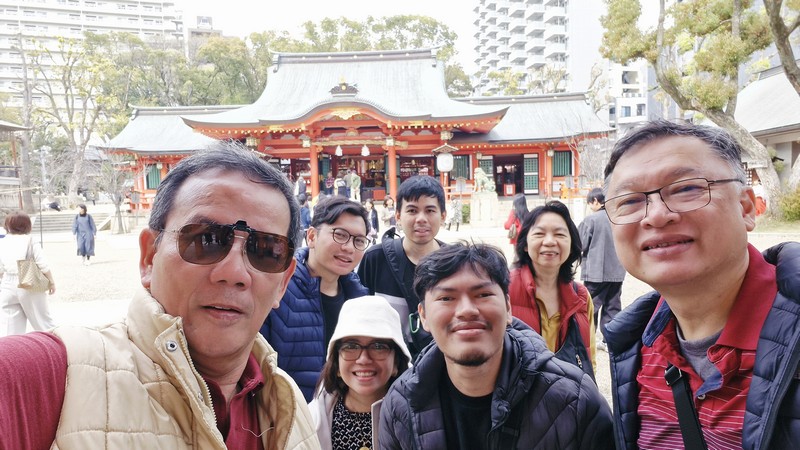
After our tour of Kobe Port, it was just a short 2-km. drive to the wonderful Ikuta Shrine (Ikuta-jinja). A major shrine in Kobe, is believed to be one of the oldest Shinto shrines in Japan. Famous as a “power spot” for matchmaking and love, dotted around the grounds of Ikuta Jinja are 14 sub-shrines, each dedicated to a different god. This shrine, in Kobe’s city center, has spacious grounds, impressive buildings and, at its rear, you can find a remnant of the ancient forest that once covered the entire area.
Check out “Kobe Port”
According to Nihon Shoki (Nihongi), the second oldest book of of classical Japanese history, it was founded in 201 AD by the Empress Jingū to enshrine the goddess (kami) Wakahirume-no-Mikoto. Empress Jingu was returning from the Three Kan campaign on the Korean Peninsula, when her ship was nearly shipwrecked by bad weather. By praying to Watatsumi, she managed to survive by stopping at what is now Kobe harbor. Upon arrival, she held a divination ceremony that summoned the goddess Wakahirume-no-Mikoto, and the goddess said she wanted a shrine to be built for her in a place called Ikuta.
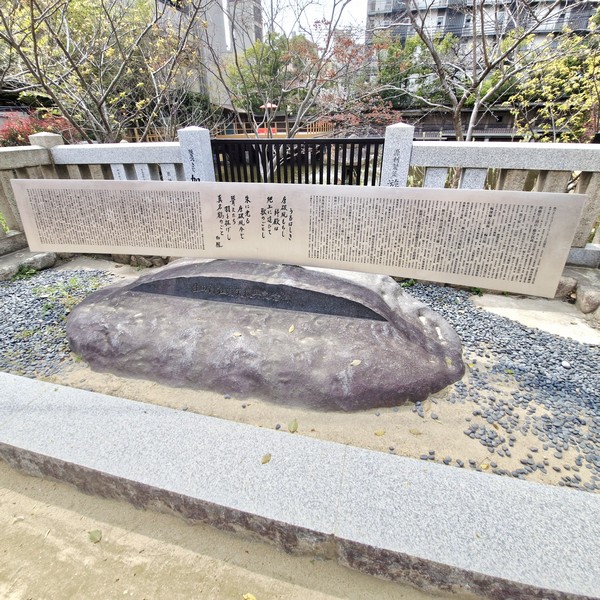
The shrine was originally located, on a sand dune, further north from its current location on Mount Isagoyama. However, in 799 AD, terrible floods threatening to wash the shrine away forced priest Tone Shichidayu to carry the goddess, in a portable shrine, to search for a new home. After 8 days, the portable shrine suddenly became too heavy. Taking this as a divine message, the goddess was re-enshrined at its present location.
In 806 AD, 44 households were given responsibility for the care and protection of the shrine and given the title kanbe (meaning “sacred households”). This was the origin of the name of the city of “Kobe,” which is written with the same characters.
In 1938, the shrine suffered damage during floods and, in 1945, was severely damaged during air raids in World War II. On January 17, 1995, the shrine suffered significant damage during the Great Hanshin-Awaji Earthquake. However, following each tragic event the shrine was restored with the support of local citizens. As a result, Ikuta Jinja is now loved and respected by the people of Kobe as a symbol of the city’s resilience and resurrection.
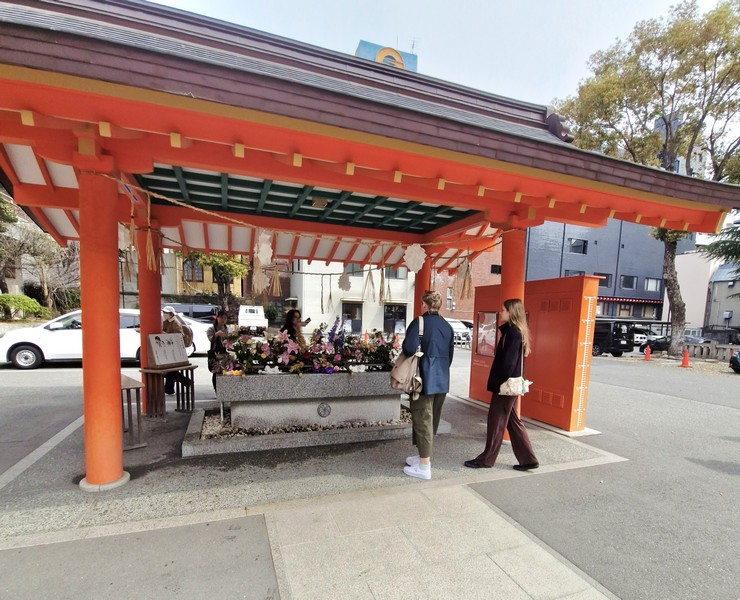
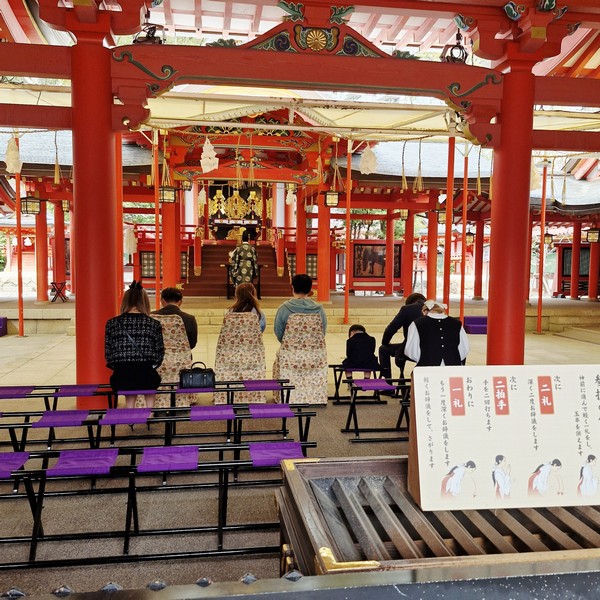
Before entering the shrine, there’s a chozu-ya (or temizuya), a traditional roofed Shinto water ablution pavilion, on the right, where we would ritually purify ourselves, by taking a bamboo scoop and washing our hands and mouth with the water, before approaching the splendid shaden (main shrine building), flanked by lion-dog statues (komainu), where you can softly murmur prayers in your mind.
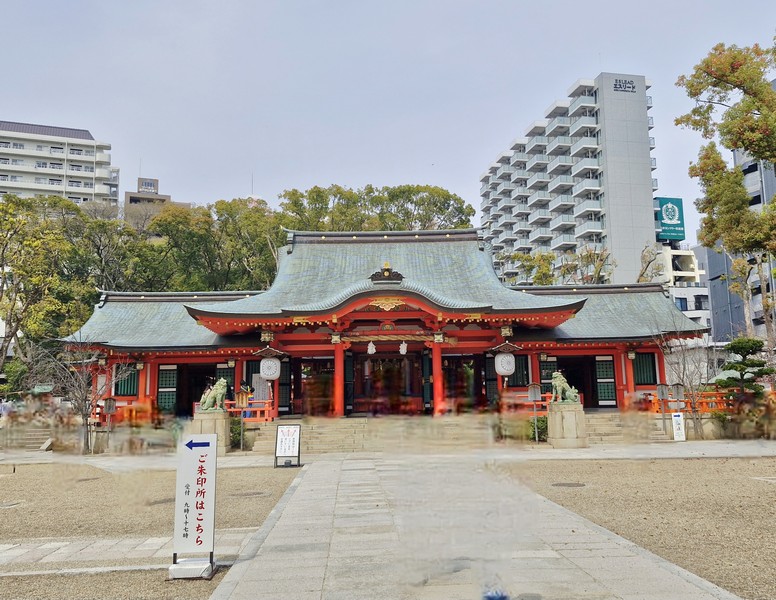
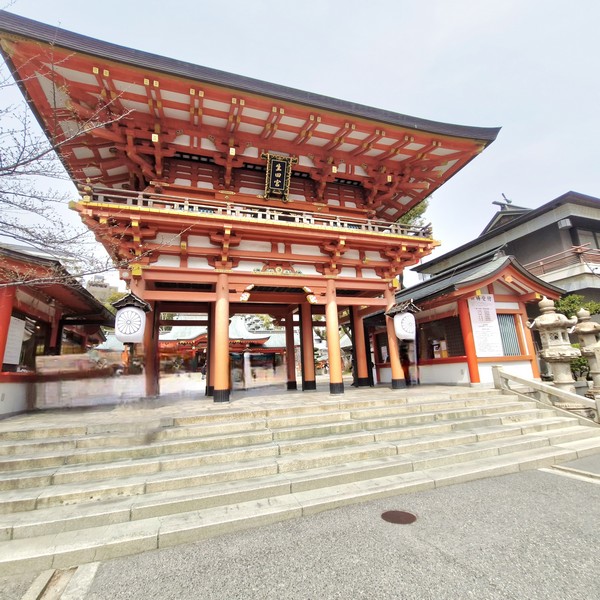
We entered the shrine through the striking, vermilion-lacquered tower gate (ro-mon) which marks the transition, from bustling city, to the forested shrine grounds.
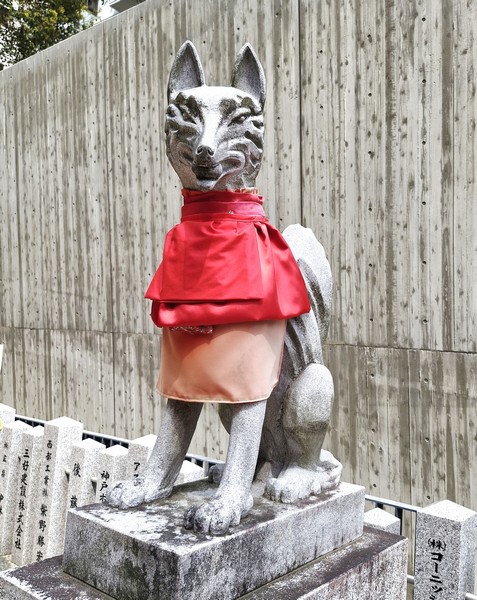
After passing through the impressive tower gate, we saw booths, on either side, selling a variety of omamori (protective charms) and omikuji (fortune paper slips). To the left of the shaden is a picturesque pond, with lotus flowers (in full bloom from July to August), ducks and koi (Japanese carp), called Ikuta-no-ike. The serene, leafy pond has a small island accessible by a bridge.
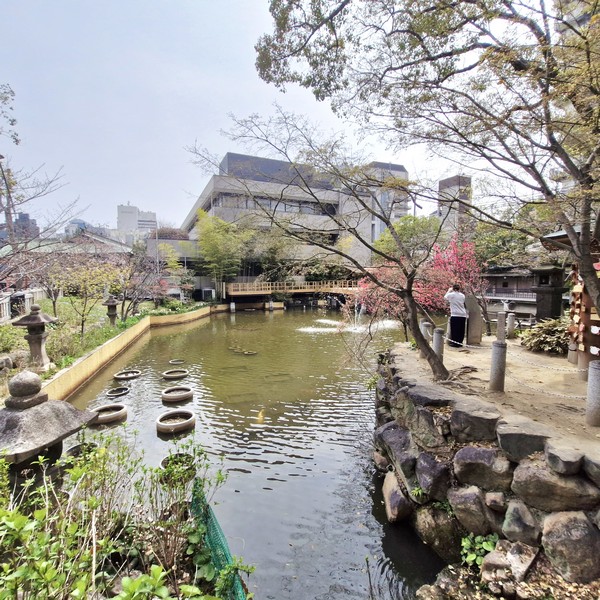
On the island is a small sub-shrine called Ichikishima Jinja, dedicated to Ichikishima-hime, (also called Benzaiten), the goddess of water and all things that flow (like language, performing arts and music). This peaceful retreat is often visited for romantic blessings.
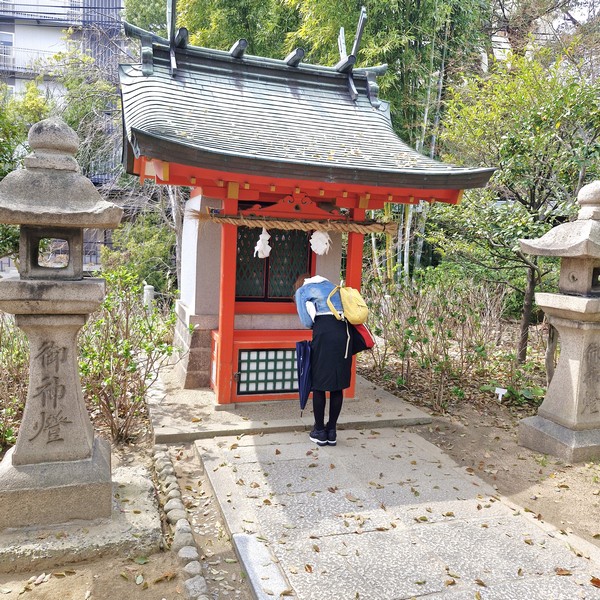
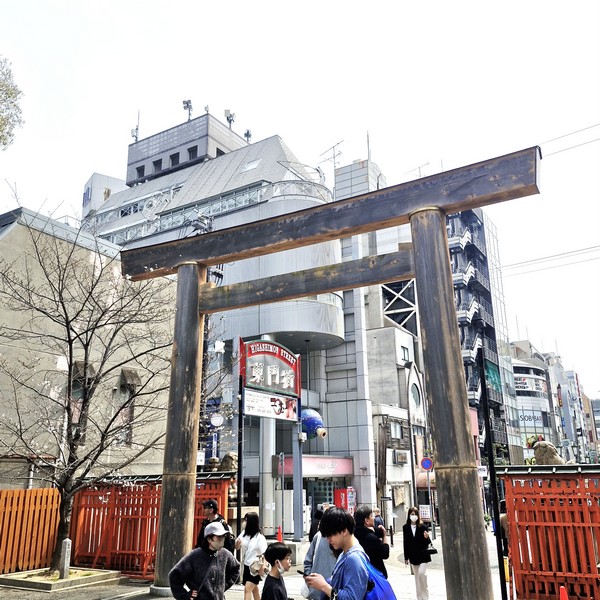
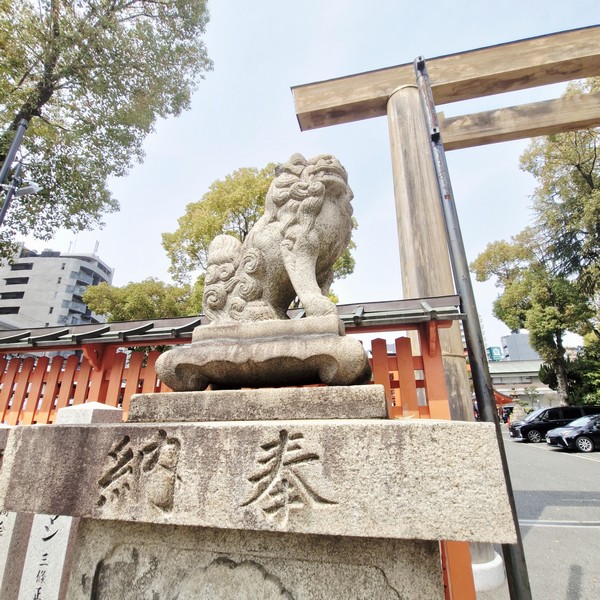
Near the entrance of Ikuta Jinja are two quite important sub-shrines. Just after the second torii gate, on the left side, is the maritime-focused Daikai Jinja (literally “Ocean Shrine”) with a red torii.
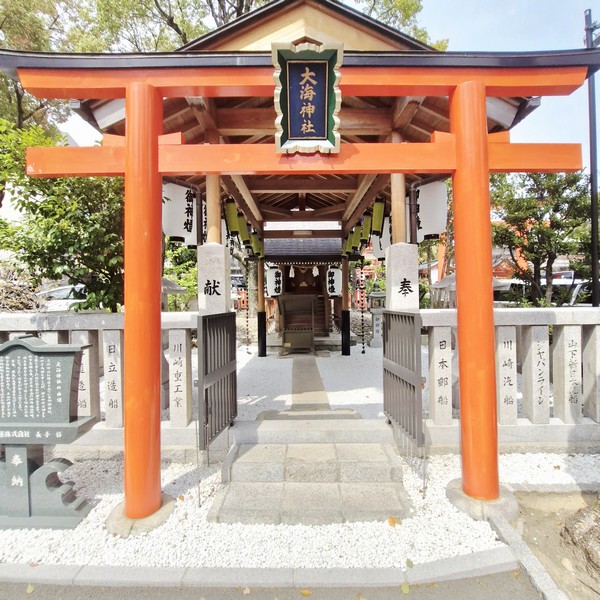
Dedicated to Sarutahiko-no-Mikoto, a god of guidance and travel, people pray here for safety at sea which is very important in a port city like Kobe. On the right side is Matsuo Jinja with a concrete gray torii. Dedicated to Oyamakui, the god of farming and sake brewing, this is an important shrine as Kobe is the home of many famous sake breweries.
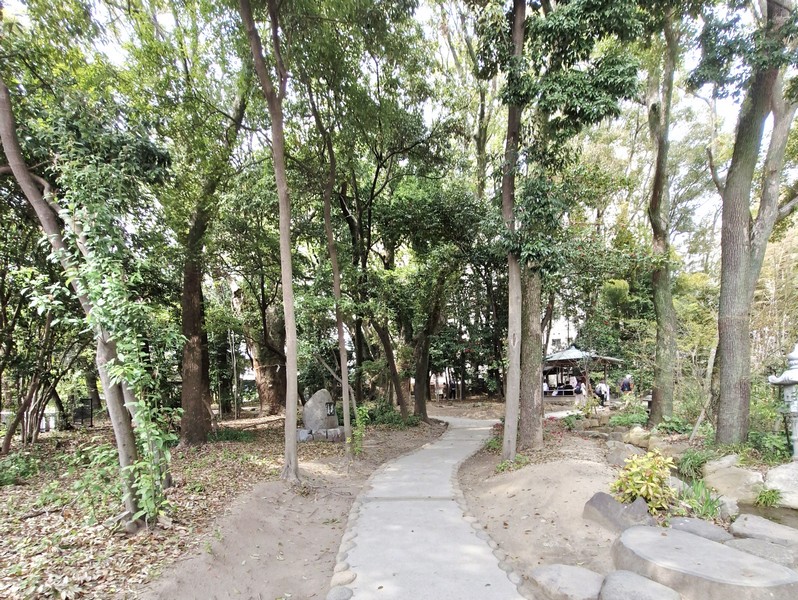
At the far end of Ikuta Jinja’s grounds, behind the shaden, is the quiet and peaceful Ikuta-no-mori, the remains of an ancient forest. The forest was the site of the Battle of Ichi-no-Tani, a major battle during the the end of the Heian Period Genpei War (1180-1185), commemorated by markers. Today, Ebira and Ikuta Atsumori, two Noh plays which retell aspects of the Genpei War, are performed, on a regular basis, every year at Ikuta’s Autumn Festival (Akimatsuri), near the Ikuta Shrine. Ikutamorizasha, a sub-shrine inside the forest, is dedicated to the Empress Jingū. People pray here for growing things and for the safe birth of babies.
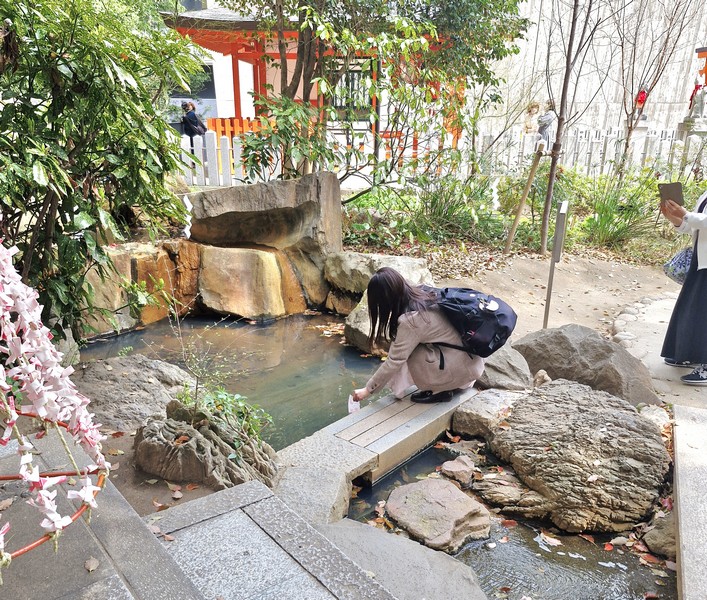
At Kinryusen, a popular spot in the forest, you can have your fortune read by water. When you float an initially-blank mizu-omikuji (a Japanese water-activated fortune slip bought at the shrine office, 300 yen) on the water, your fortune (only available in Japanese) will appear, split into different categories such as your lucky color, location, place and more. Truly, a delightful and interactive experience for visitors.
We also saw rows of omikuji (also in English, Korean and simplified and traditional Chinese) tied to racks. The goddess of weaving, Wakahirume is said to be good at making connections (whether these be business connections or romantic connections) so people pray to her for prosperity in business and happy marriages.
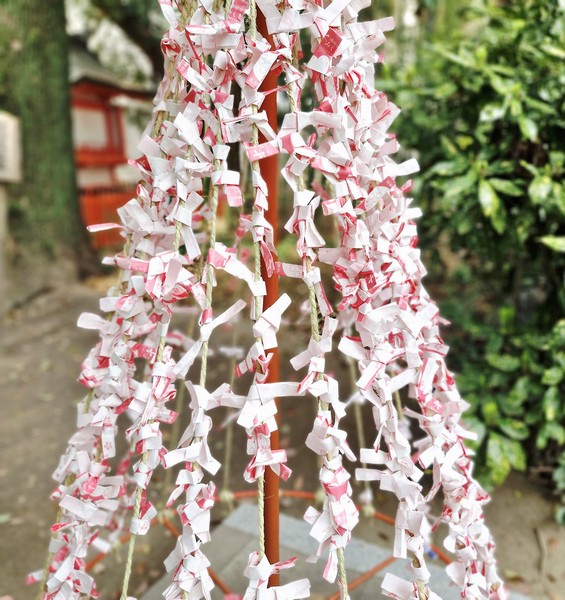
Also, as the shrine has survived many disasters in the past, people also pray here for their health and for protection from calamity. Visitors often make a small donation and draw an omikuji to discover their luck in love and business. If it’s bad luck, they tie it to a rack to leave the bad luck behind.
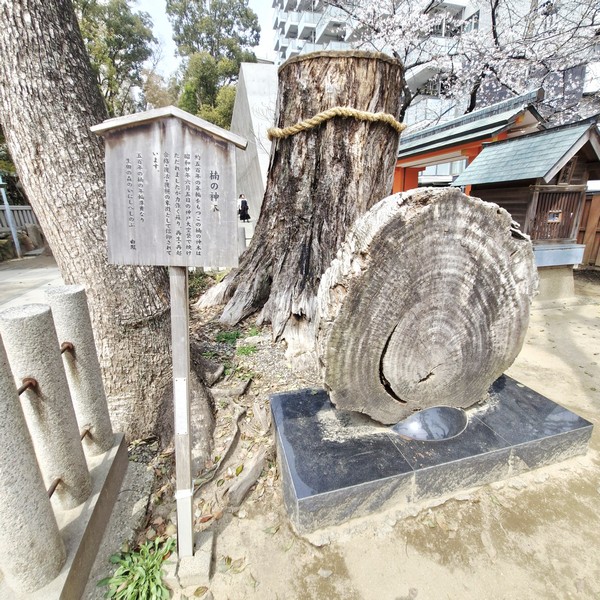
Also within the forest are the remains of a camphor tree which was around 500 years old (seen from its rings) when it fell. It is considered sacred and is seen as a symbol of reconstruction and revival because it survived the bombing of Kobe during World War II and, although terribly burned, it recovered and continued to live for many years.
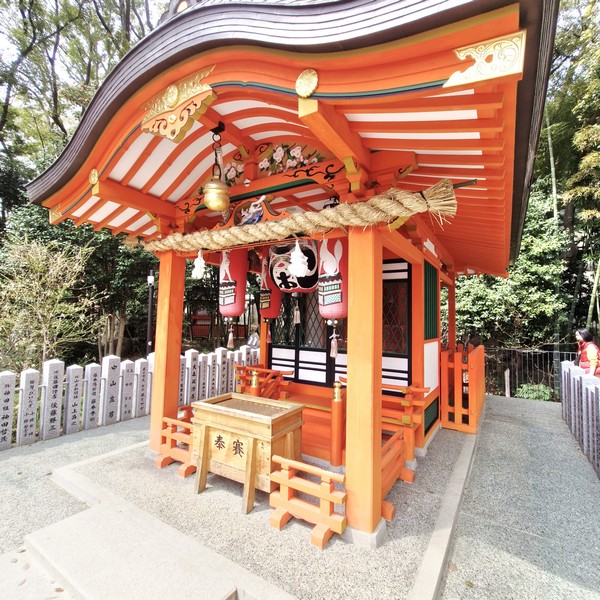
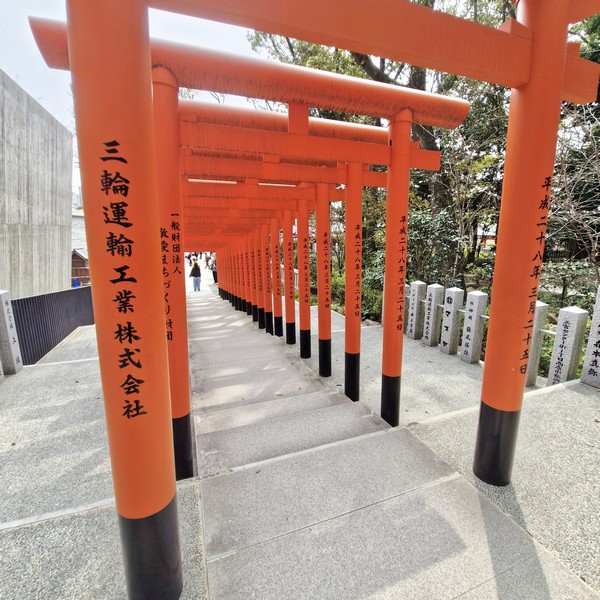
Within the forest, you can also walk through a striking, continuous series of 22 vermillion-lacquered torii gates (often referred to as a “row of red torii), donated in 2016, leading to the Inari Shrine dedicated to Uganomitama-no-Mikoto, the very important god of food, rice (the traditional staple food of Japan) and business prosperity who is also considered the god of fertility and life.
Ikuta Jinja Shrine: 1-2-1 Shimoyamate-dōri, Chūō-ku, Kobe, Hyōgo prefecture 650-0011. Tel: +81 78-321-3851. Open daily, 8:30 AM to 6:30 PM. Admission is free. Coordinates: 34°41′42″N 135°11′26″E.
How to Get There: Ikuta Jinja is a short 10-min. walk from JR Sannomiya Station. Here is a map showing its location.