
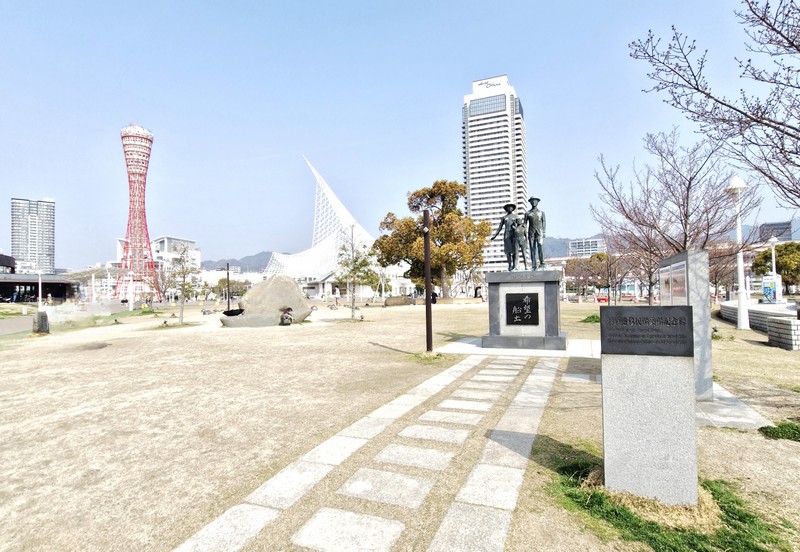
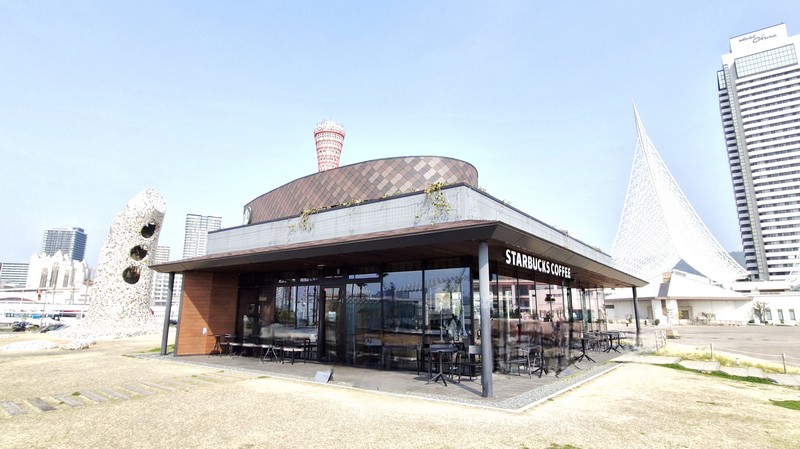
Our third whole day in Japan was spent on a day tour of Kobe which was just a 37.1-km. (40-min. drive) from Osaka. Our first stopover was at Meriken Park, a nice waterfront park located in Kobe’s port area. The park’s name was derived from the word “American,” which was commonly translated as “Meriken” during the Meiji era. Upon arrival, we first had breakfast at a stylish, 2-storey Starbucks outlet, with its ship-inspired design. Opened in 2017, it featured hishibuki (traditional diamond-patterned metal plates meant to evoke the feeling of a ship’s cabin) and offered stunning waterfront views of Kobe Harbor from its large glass walls and second floor outdoor balcony.
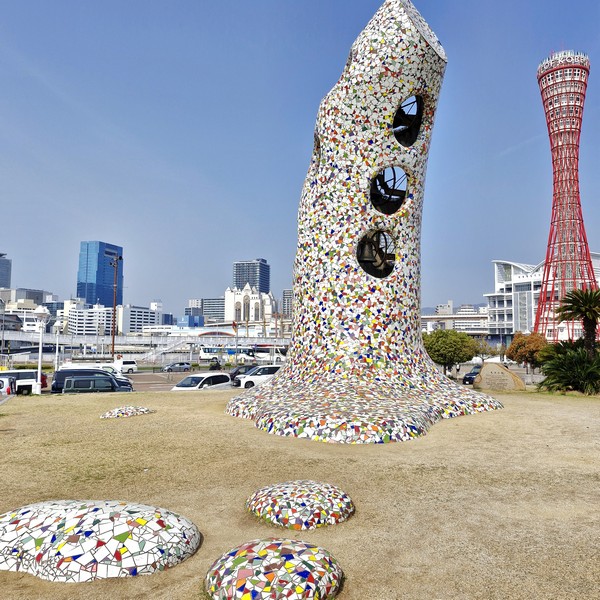
Beside the Starbucks store is the Bell of Hortensia, a colorful, modern mosaic sculpture. Installed on June 19, 1990, it represents the Hydrangea macrophylla, Kobe’s official flower. It was established to commemorate the opening of the first Kobe Fashion Festival in November 1989, which was part of the World Fashion Festival ’89. When it was first installed at the “symbol monument of the fashion city of Kobe,” the bell was rung but, after the Great Hanshin earthquake, which devastated the park, it has not been rung.
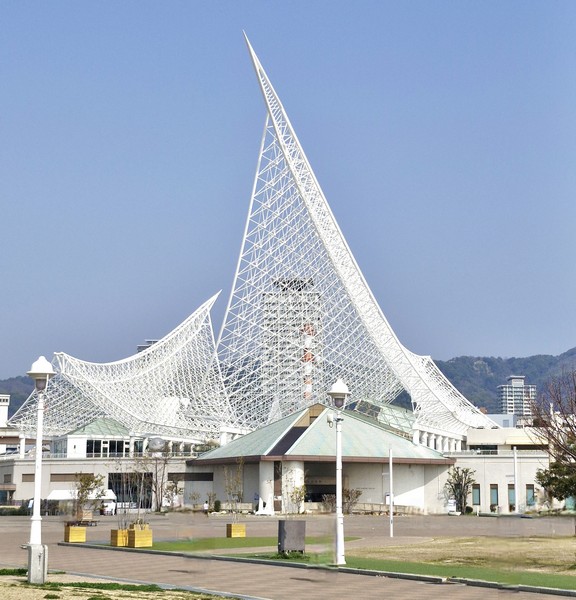
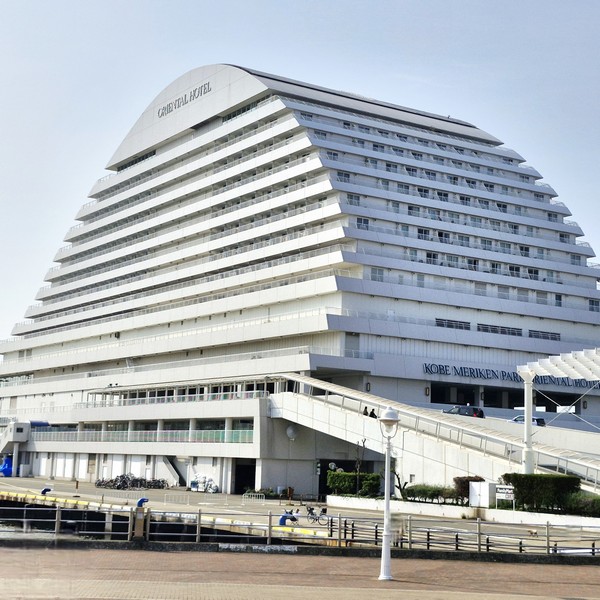
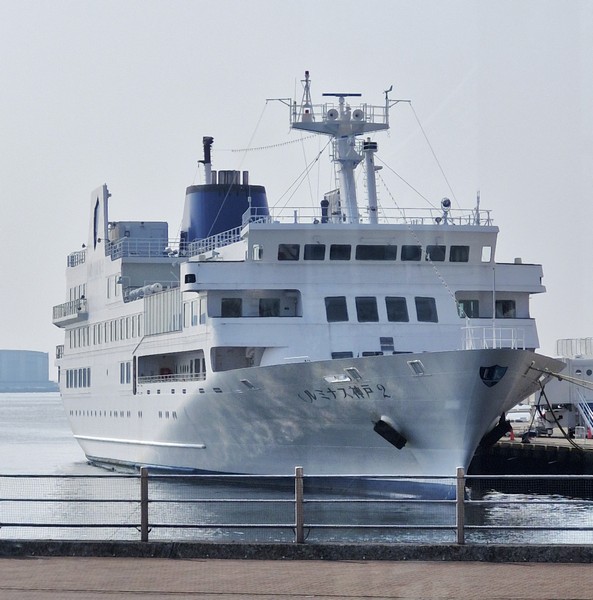
Built on an outcropping of reclaimed land, this waterfront park, a popular spot for locals and tourists, is covered in grassy lawn and open courtyards and is dotted with a collection of modern art installations and fountains. Meriken Park, the location of the Hotel Okura Kobe, Sannomiya Ferry Terminal (where the Jumbo Ferry, connecting Kobe, Shodoshima, and Takamatsu, and the Miyazaki Car Ferry, departs and arrives) and the wave-shaped Kobe Meriken Park Oriental Hotel, is home to some of the city’s more iconic contemporary architecture such as the red Kobe Port Tower and Kobe Maritime Museum.
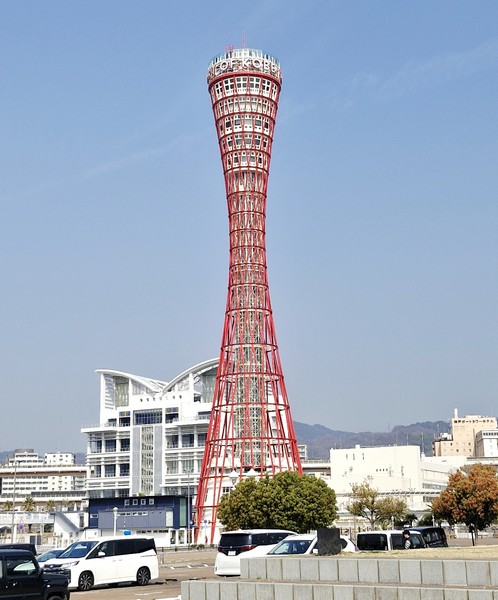
To the west of the Maritime Museum stands the 108 m. (354 ft.) high Kobe Port Tower, a unique, red-painted steel structure completed in 1963, was designed by the Nikken Sekkei Company to look like a tsuzumi, a Japanese drum. A symbol of the port and the city, it is the first tower built using a pipe lattice. The tower has a total of 8 layers and is surrounded by 32 red steel staves as a symbol of welcome for vessels returning to the shore. It has five observation decks, approximately 100 m. above ground, including an open-air rooftop deck and a revolving cafe and bar.
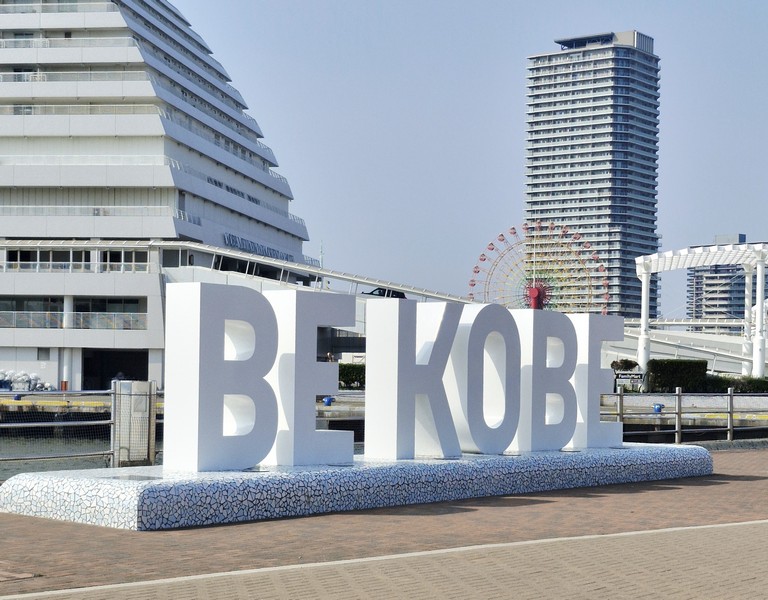
The “Be Kobe” Monument, installed in 2017 to commemorate the 150th anniversary of the opening of Kobe Port, is a popular photo spot. The phrase “Be Kobe,” introduce in 2015 (the 20th anniversary of the Great Hanshin earthquake), is a civic pride message that expresses the idea that the chrm of Kobe lies in its people, inspired by those who work hard for the city’s recovery.
Kobe Port was once Japan’s most important departure point for overseas immigrants and the famous Kobe Port Emigrants Memorial Statue (also known as “Set Sail for Hope” or “Memorial Statue of Emigrants Boarding the Emigrant Ship”) honors the thousands of Japanese citizens who emigrated from Kobe Port, for new lives abroad, particularly to Brazil, in the early 20th century.
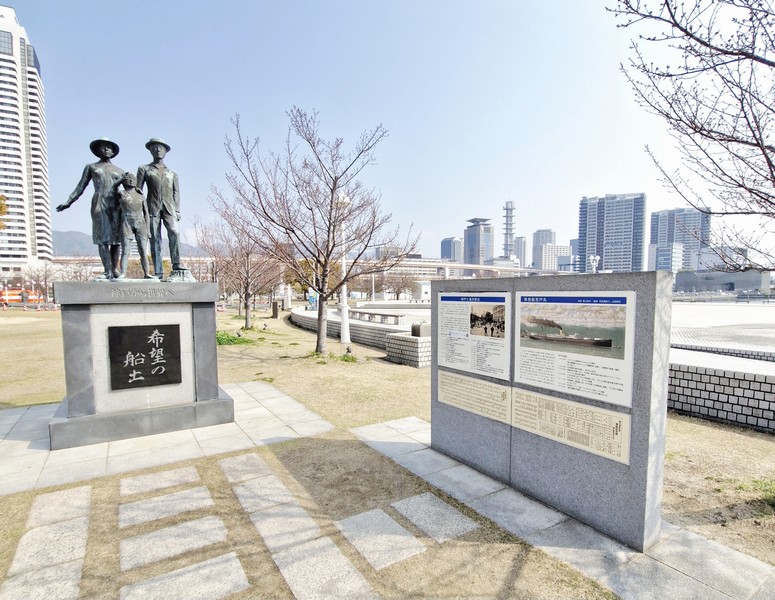
Erected in 2001, it also serves as a reminder of the “National Kobe Emigrant Camp” history, where families awaited ships to travel abroad. This bronze monument, erected in 2001, features a family (two adults and a child gazing out at the sea), symbolizing the departure. The main statue is titled “Hope’s Departure.” The statue is seen as a bridge connecting Japan and the destination countries of immigrants, symbolizing international exchange and pioneering spirit.
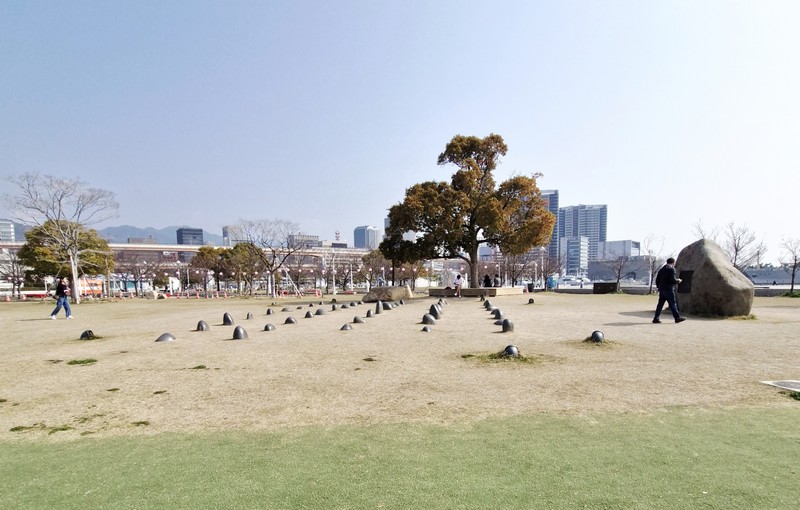
The unique Meriken Theatre Monument, erected in 1987, commemorates Kobe as the location of the first public movie screening in Japan. A popular photo spot, it was designed to look like a cinema screen and theatre seats.
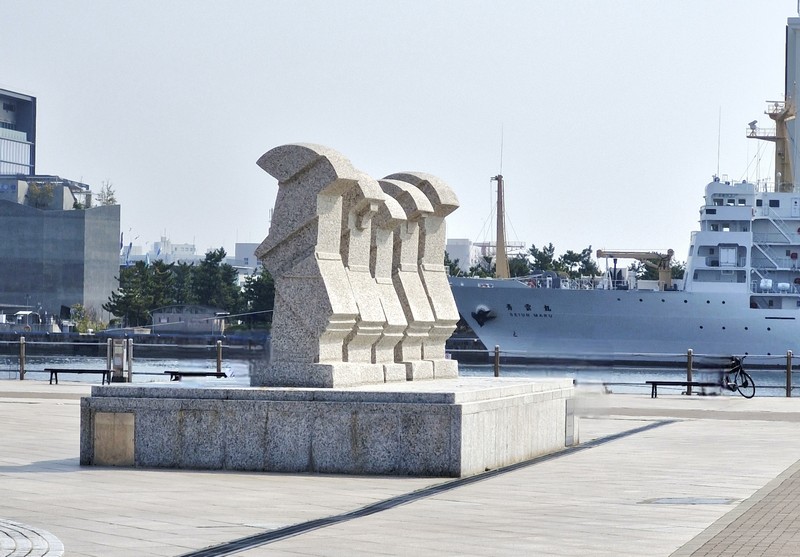
The Kobe Kaientai Monument, a notable abstract sculpture, commemorates the Kobe Kaientai, a historical naval group active at the end of the Edo Period.
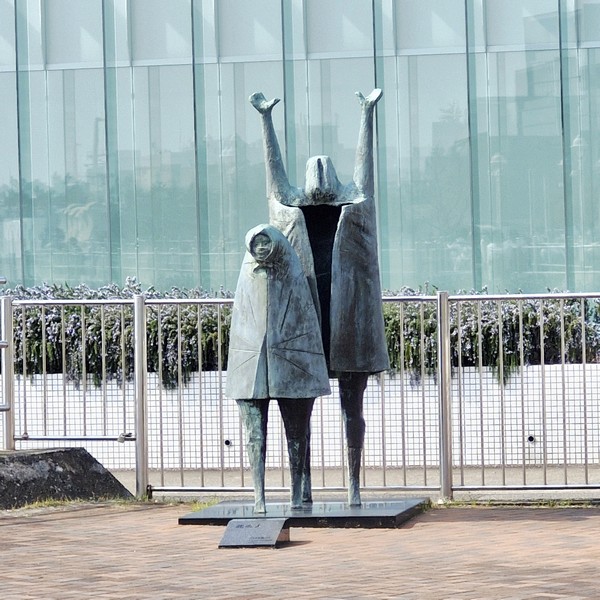
“Save Northern People,” a notable abstract, human-shaped bronze sculpture created by sculptor Kaneichi Futakuchi, was a winner of the Port of Kobe Anniversary Commemorative Award. It is often interpreted as a tribute to those who left Kobe in search of a better life far away.
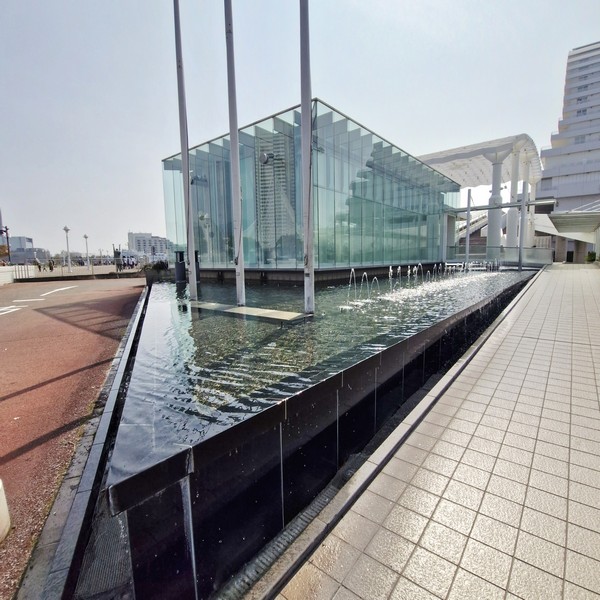
Meriken Park: 2 Hatobacho, Chuo-ku, Kobe-shi, Hyogo-ken, 650-0042.
How to Get There: Meriken Park is about a 10-minute walk south of Motomachi Station, on the JR Kobe Line, or just across the sightseeing cruise terminal from Kobe Harborland.
Pingback: Hyogo Prefectural Maiko Park (Kobe, Japan) – B.L.A.S.T. – Live Life to the Fullest ……… Don't Stay Put
Pingback: Ikuta Jinja Shrine (Kobe, Japan) – B.L.A.S.T. – Live Life to the Fullest ……… Don't Stay Put