
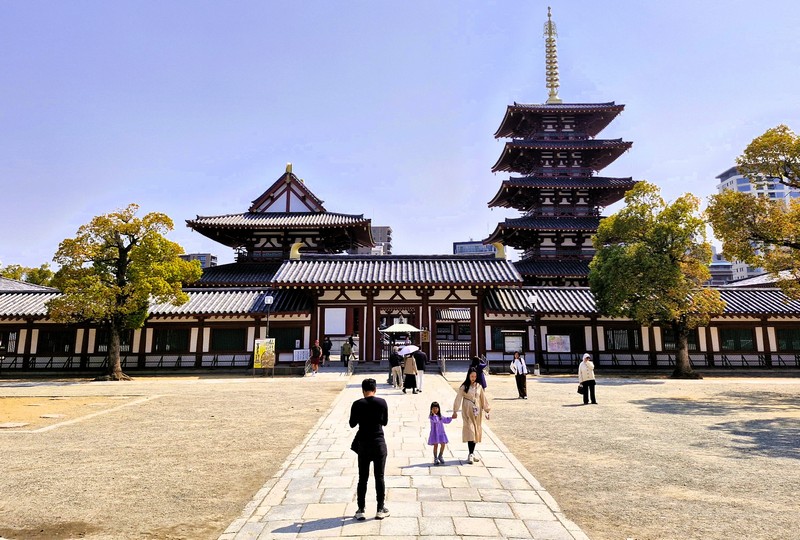
After our visit to Osaka Castle Park, it was a short 4.7-km. (15-min.) drive to Shitennō-ji Temple. The outer temple grounds are free to enter, but we paid admission to explore the inner precinct (Chushin Garan), the Gokuraku-jodo Garden and the treasure house. The stone torii gate at the main entrance to Shitennō-ji dates from 1294 and is the oldest of its kind in the country.
Check out “Osaka Castle Park”
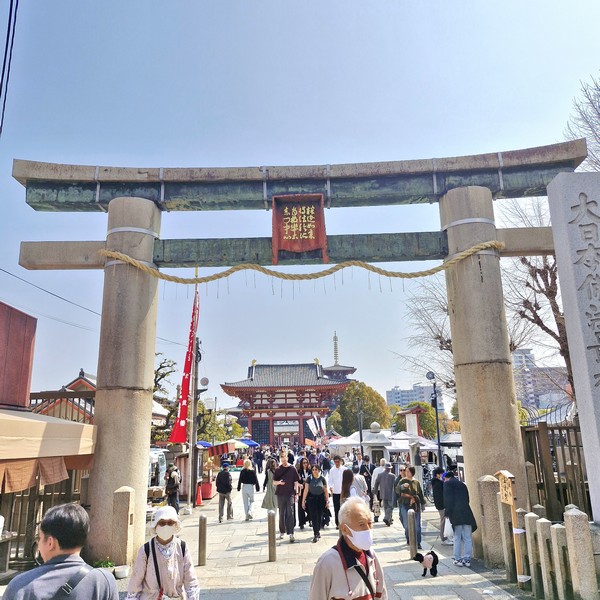
Also called as Arahaka-ji, Nanba-ji, Mitsu-ji or Temple of the Four Heavenly Kings (“Shitennō” refer to the Four Heavenly Kings in Buddhism), this Buddhist temple is sometimes regarded as the first and oldest of Japan’s officially administered Buddhist temples and the first ever to be built by the state (although the temple complex and the buildings themselves have been rebuilt a few times over the centuries; most of the present structures are from when the temple was last completely rebuilt in 1963).
The temple was founded in 593 by Prince Shōtoku, who known for his profound Buddhist faith. He supported the introduction of Buddhism which was not widespread in Japan during the 6th century. In order to popularize Buddhism, Prince Shōtoku led a massive national project to promote Buddhism and he commissioned the construction of Shitennō-ji in the 6th century, inviting three Korean carpenters from Baekje who brought knowledge and led the construction. Later, one of the members involved in the initial construction of the temple established the firm Kongō Gumi (the world’s oldest company until it was acquired by the Takamatsu Construction Group in 2004), which specialized in temple and shrine buildings.
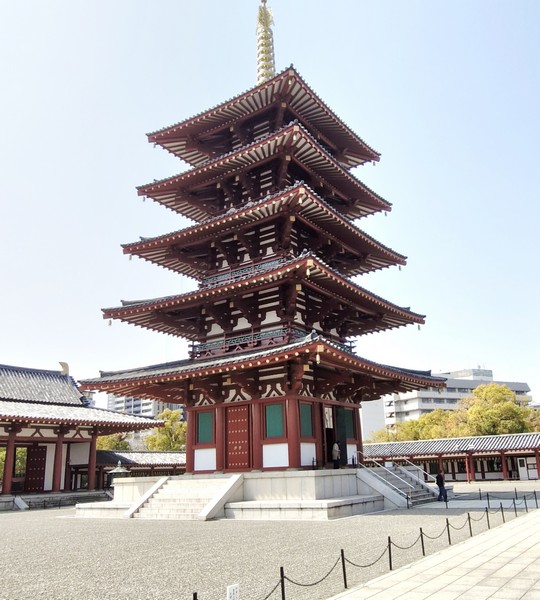
The temple Prince Shōtoku built to honor the Four Heavenly Kings had four institutions (Shika-in), each to help the Japanese attain a higher level of civilization, centered on the seven-building garan (the complex inside the walls), which included a Kyōden-in (Institution of Religion and Education), a Hiden-in (Welfare Institution), a Ryōbyō-in (hospital), and a Seiyaku-in (pharmacy) to provide essential care to the people of Japan.
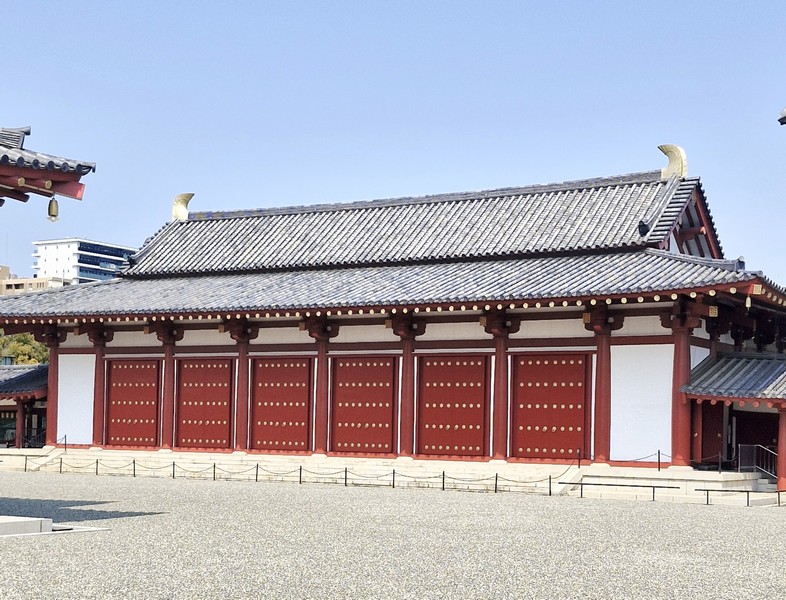
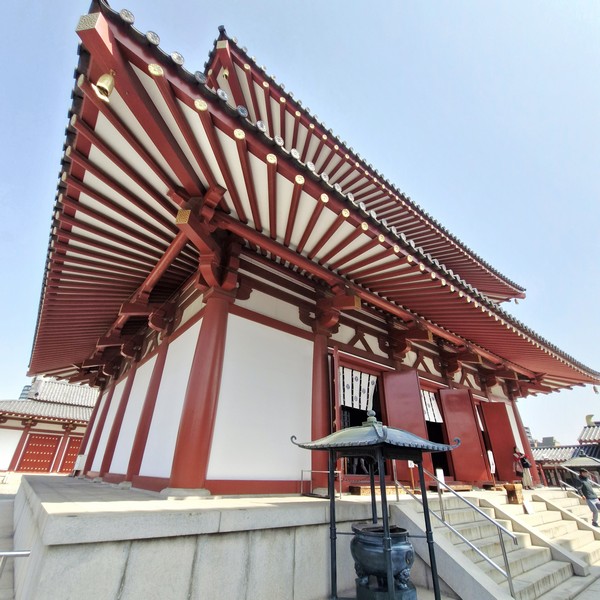
Within the pebble-covered courtyard of the inner precinct, the garan consists of a five-storey pagoda (which we entered and ascended), a main Golden Pavilion (Kondō) where Prince Shōtoku is enshrined as a statue of Bodhisattva Kannon, and a Kōudōu (Lecture Hall).
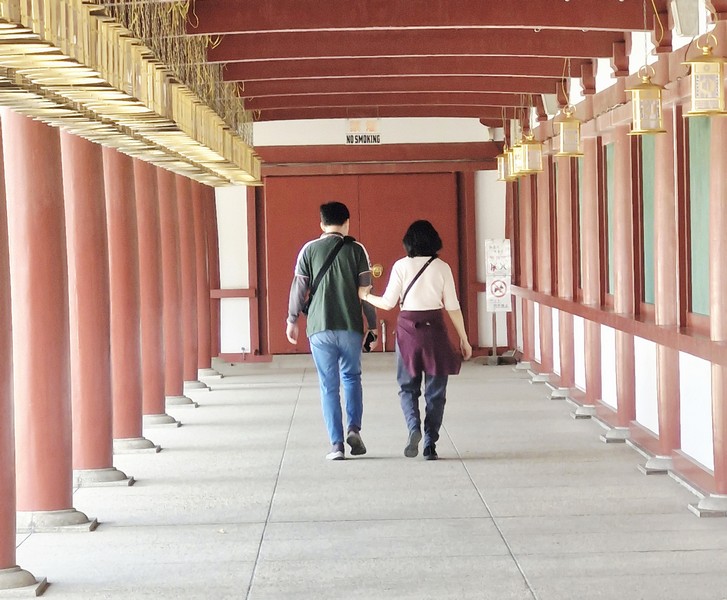
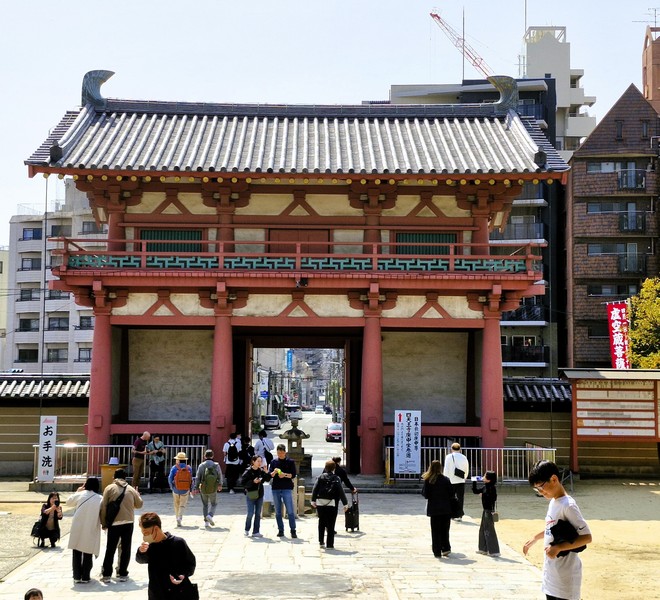
The covered corridor (kairo) holds three gates – the Deva Gate (Niōmon, also known as the Chūmon), the Western Gate (Saijumon), and the Eastern Gate (Tojumon).
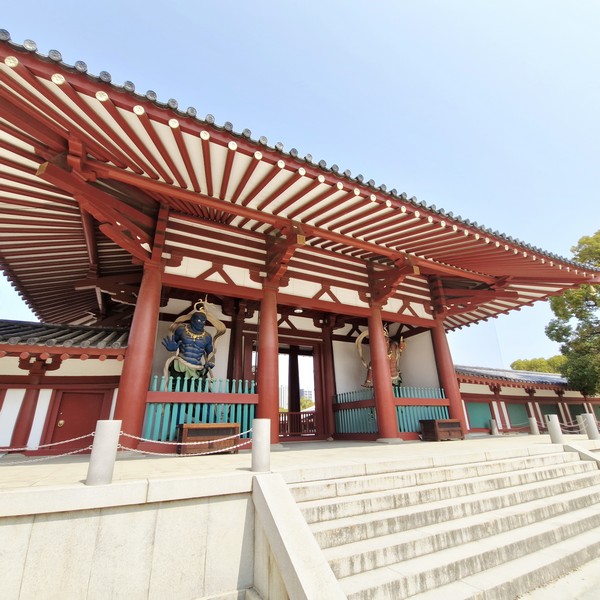
The Chūmon is home to two Nio (benevolent guardians). Ungyo, on the left, represents closure or death. Agyo, on the right, symbolizes beginnings or birth.
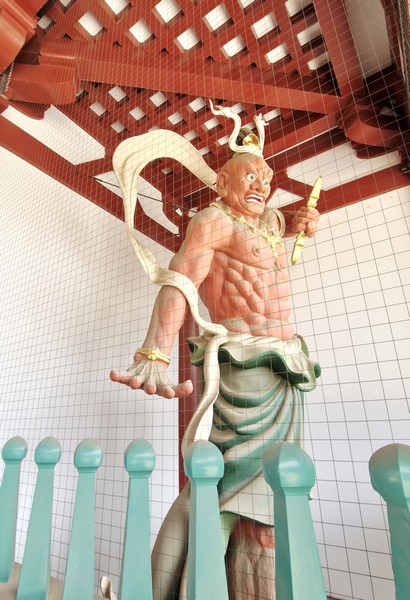
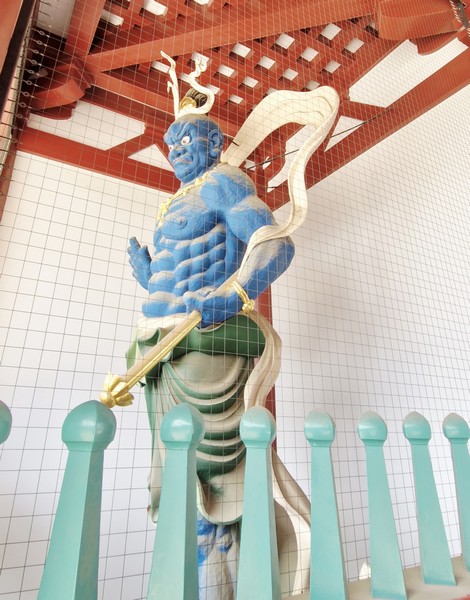
Surrounding this central complex are the Great South Gate (Nandaimon), and a Great East Gate (Higashi-no-ō’mon). To the west is the Great West Gate (Nishi-no-ō’mon, also known as Gokuraku-mon). Further to the west is a stone torii, which is imagined to be the Eastern Gate to Sukhavati, the Pure Land of the West. These gates are guarded by wooden statues called Nio (Benevolent Kings).
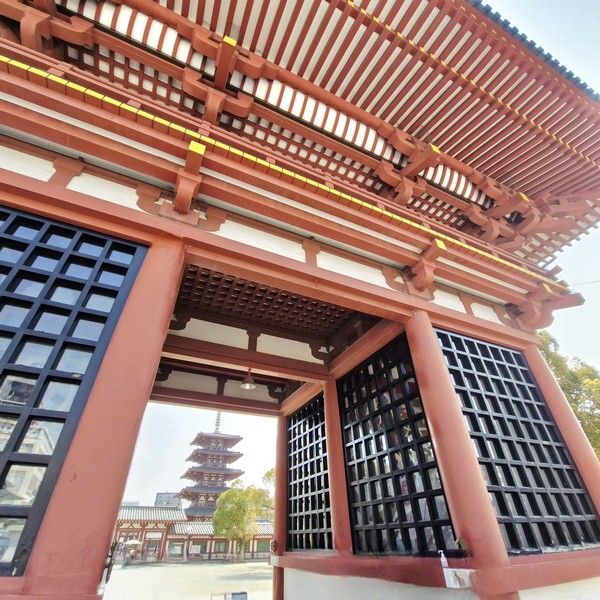
During the Kamakura period, three of the four sections are known to have existed inside the temple. Although the temple’s buildings burned down several times over the centuries, they were always carefully reconstructed to reflect the original 6th century design. Shortly after World War II, Shitennō-ji became independent of the parent Tendai sect and formed the Wa sect (Wa-shū) of Buddhism.
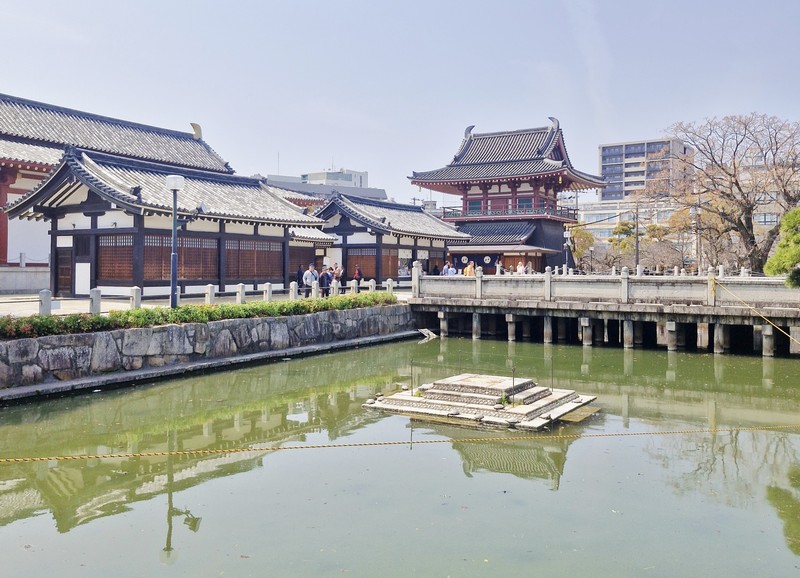
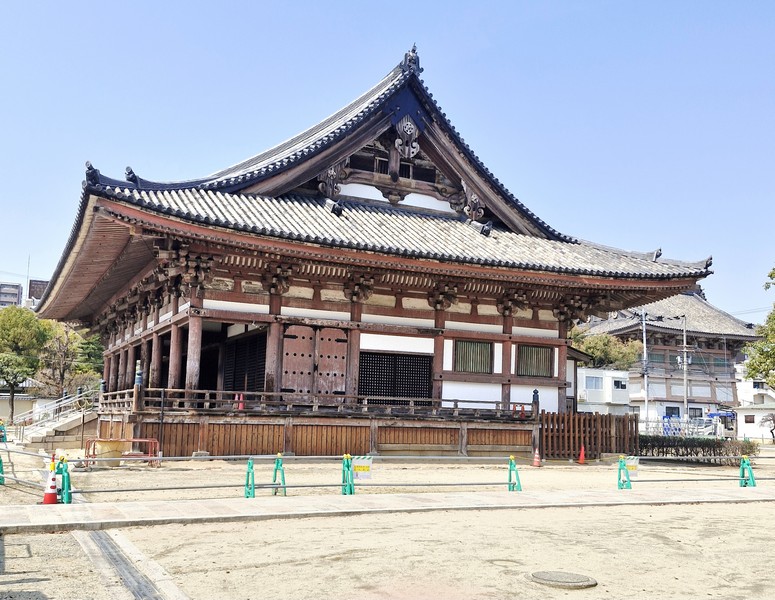
A short walk away, the Gokuraku-jodo Garden, laid out in the early Edo Period, was designed in 1933 based on descriptions of the Western Paradise of the Amida Buddha. It has pleasant ponds and rock waterfalls, cherry trees, irises and stone lanterns. The Kame-no-ike Pond in the main complex is famous for its scores of basking turtles.
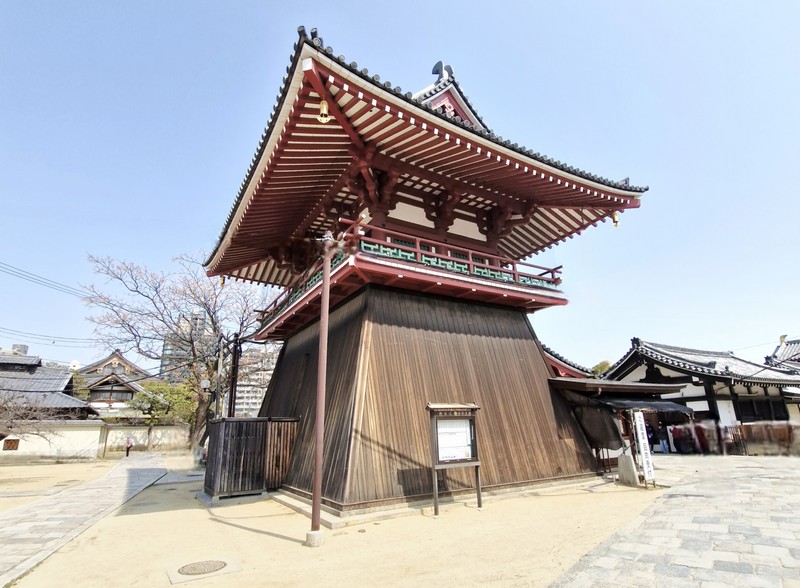
Also on the temple grounds is the Treasure House. It holds documents, paintings and sacred objects which are displayed in periodic themed exhibitions throughout the year as well as a number of National Treasures including swords said to have belonged to Prince Shotoku and a copy of the Heian Period Hokekyo sutra.
Shitennoji: 1 Chome-11-18 Shitennoji, Tennoji Ward, Osaka, 543-0051, Japan. Tel: +81 6-6771-0066. Open 8:30 AM to 4:30 PM (until 4 PM from October through March); slightly longer hours on the 21st of each month and on some other special days Admission: 300 yen (inner precinct), 300 yen (garden), 500 yen (treasure house)
How to Get There: Shitennoji is a 5-minute walk from Shitennoji-mae Yuhigaoka Station on the Osaka Municipal Subway Tanimachi Line, a 15-minute walk from Tennoji Station on the JR West Lines and the Osaka Municipal Subway Lines and a 15-minute walk from Osaka Abenobashi Station on the Kintetsu Minami-Osaka Line.