
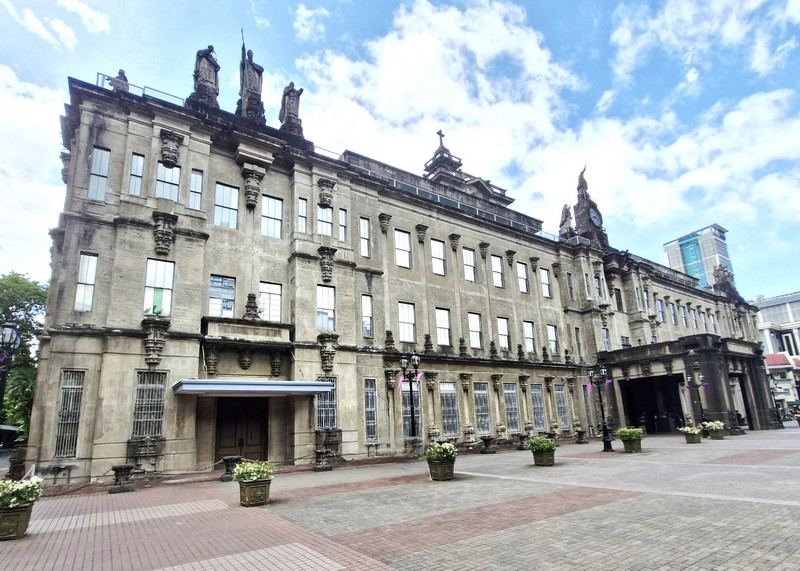
The majestic, 4-storey, Renaissance Revival-style Main Building of the University of Santo Tomas (UST), functioning as the university’s administrative center, is home of the Faculty of Civil Law, Faculty of Pharmacy, the College of Science and the Museum of Arts and Sciences. Designed by Fr. Roque Ruaño, O.P., this building, influenced by Frank Lloyd Wright‘s Imperial Hotel, Tokyo (which survived the Great Kantō earthquake of September 1, 1923 which flattened Tokyo and Yokohama), is the first earthquake-resistant building in the Philippines.
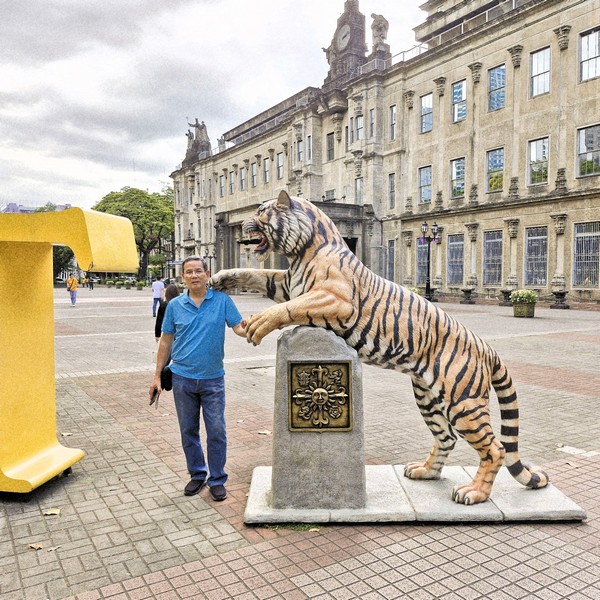
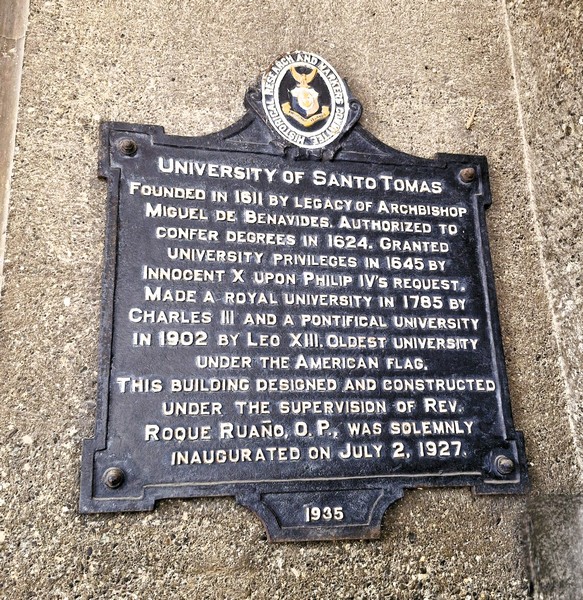
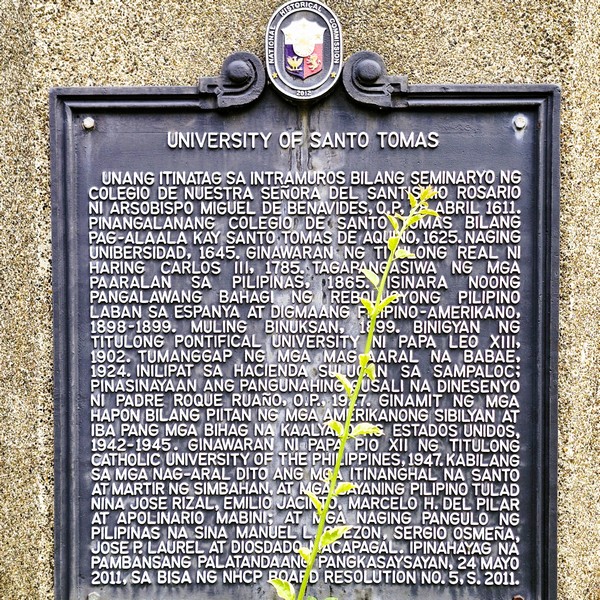
Construction of the building began on 1924 and, before it inauguration on November 12, 1927, the first classes were held there on July 2, 1927. Since then, it has been the focal point of the campus and all succeeding structures revolved around the Main Building.
Starting on January 4, 1942, during World War II, the Japanese converted the university into the Santo Tomas Internment Camp for Americans and other non-Filipinos, the internees occupying three floors of the building (465 died there from hunger and malnutrition). On February 3, 1945, during the Battle for Manila the university and its around 4,000 Allied POWs and civilian internees were liberated by the 1st Cavalry Division, tanks from the 44th Tank Battalion and Filipino guerrillas led by Capt. Manuel Colayco (a UST faculty member who died securing the place), the first building in Manila to be liberated. After the war, UST resumed operation, holding classes in the building.
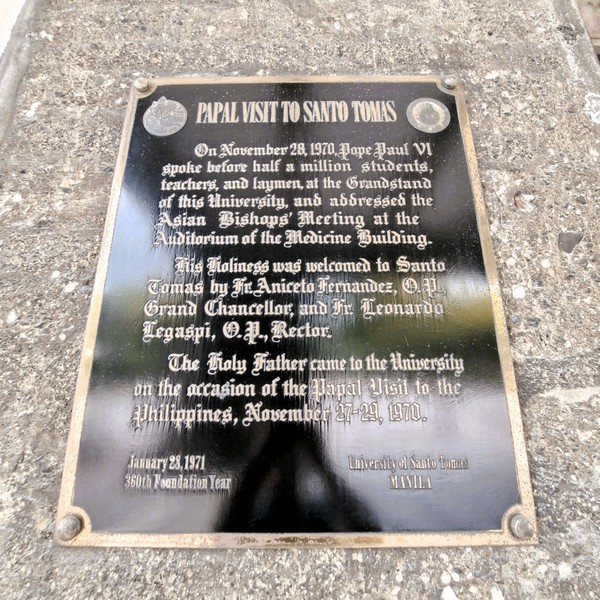
The university and the building was visited by three popes: Pope Paul VI on November 28, 1970, Pope John Paul II on February 18, 1981 and January 13, 1995 (when UST hosted World Youth Day 1995) and Pope Francis on January 18, 2015 (though he did not enter the building). Queen Sofia of Spain also visited the building on July 6, 2012. On January 25, 2010, the National Museum of the Philippines declared it as a National Cultural Treasure.
This 86 m. long, 74 m. wide and 51.5 m. (169 ft.) high, rectangular structure, with two patios (interior courtyards), is actually made up of 40 separate structures independent from one another, with the only opportunity provided by pre-cast stab flooring. There are four corner units, two midsection units (rear and front entrance), one tower (including two elevator cores) and one entrance canopy. Another 26 units consists of seven units for the Padre Noval Street side, seven units for the Arsenio H. Lacson Avenue (formerly Gov. Forbes) side, six units for the Dapitan Street side, six units for the España Boulevard side, four for the middle section (or paraninfo) and two stair sections adjacent to the tower and elevator core.
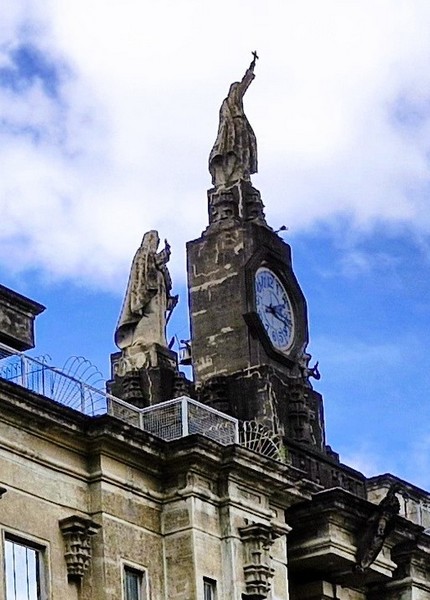
Statues, standing on the pedestals on the fourth floor of the building, symbolize the spiritual and intellectual aspiration of the university. Designed by Italian sculptor Francesco Riccardo Monti, a faculty member of the College of Architecture, they were installed between 1949 and 1953. The so-called “Tria Haec” (Latin for “These Three”), surrounding the clock, are three statues representing Hope (Spe), Faith (Fides, on top of the clock) and Love (Caritas).
To the right of the “Tria Haec” are theologians and historians such as St. Augustine, St. Raymond of Peñafort and Vincent of Beauvais (Dominican monk and writer of Speculum Maius). To their right, facing Padre Noval Street, are the tragedians Pedro Calderón de la Barca, Sophocles and William Shakespeare, while to the left are the philosophers Aristotle, Saint Albert the Great and Plato. To the left of the philosophers, facing Arsenio Lacson Avenue, are the playwrights Lope de Vega, Aristophanes and Molière.
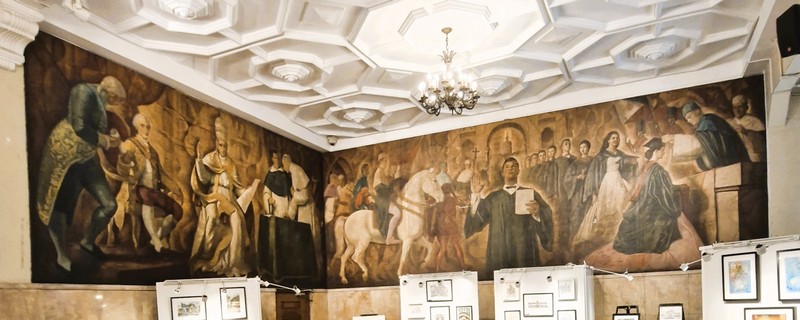
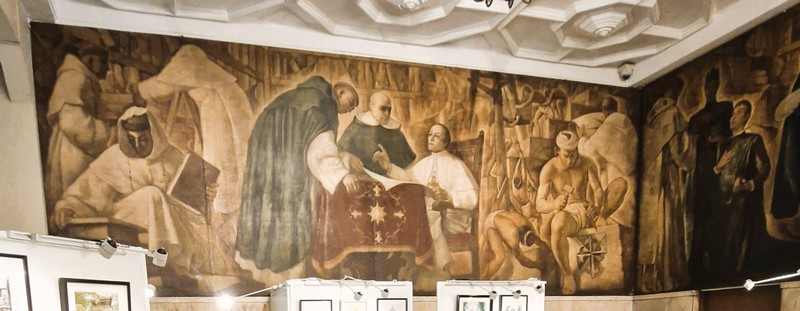
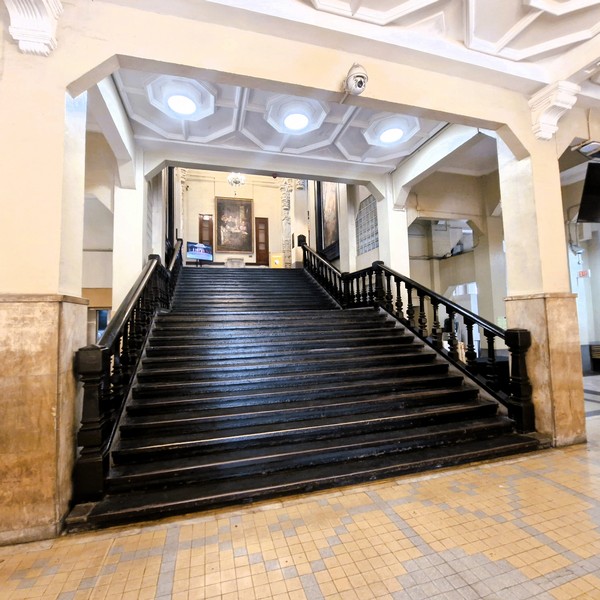
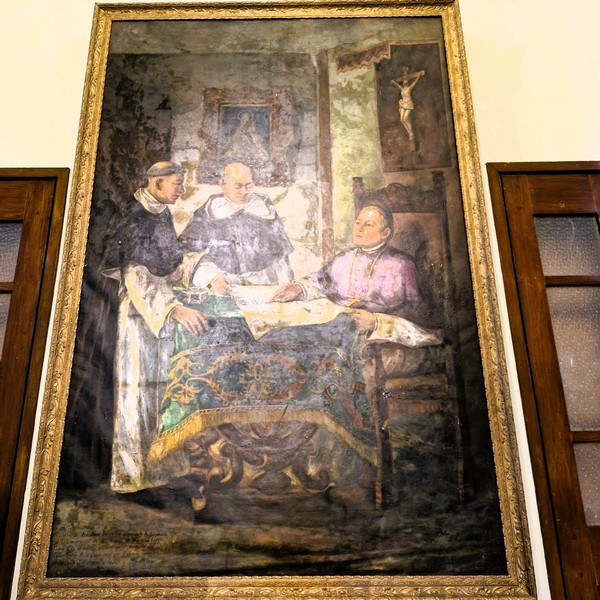
At the ground floor lobby is the four-panel mural “The History of the University of Santo Tomas,” painted by Antonio Garcia Llamas between 1952 and 1954. It depicts significant milestones of the university including its declaration as a Pontifical University on September 17, 1902 by Pope Leo XIII and the advent of co-education. At the second floor staircase are paintings by Filipino masters Galo Ocampo and Carlos “Botong” Francisco.
Main Building: University of Santo Tomas (UST), España, Sampaloc, Manila. Coordinates: 14°36′37″N 120°59′21″E.
Pingback: Arch of the Centuries (University of Santo Tomas, Manila) – B.L.A.S.T. – Live Life to the Fullest ……… Don't Stay Put