
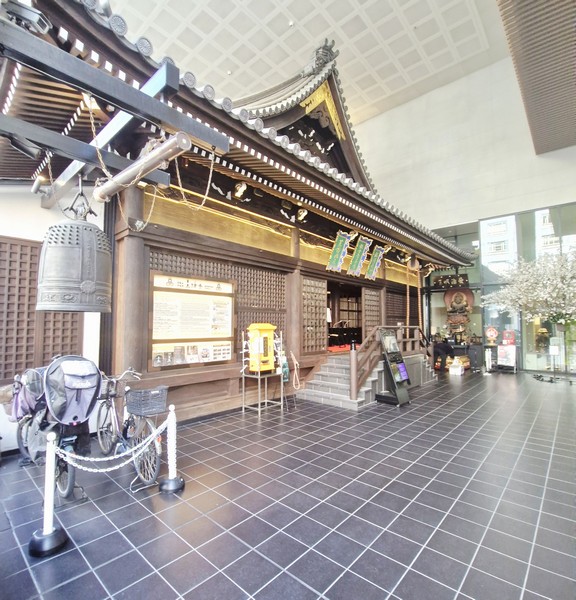
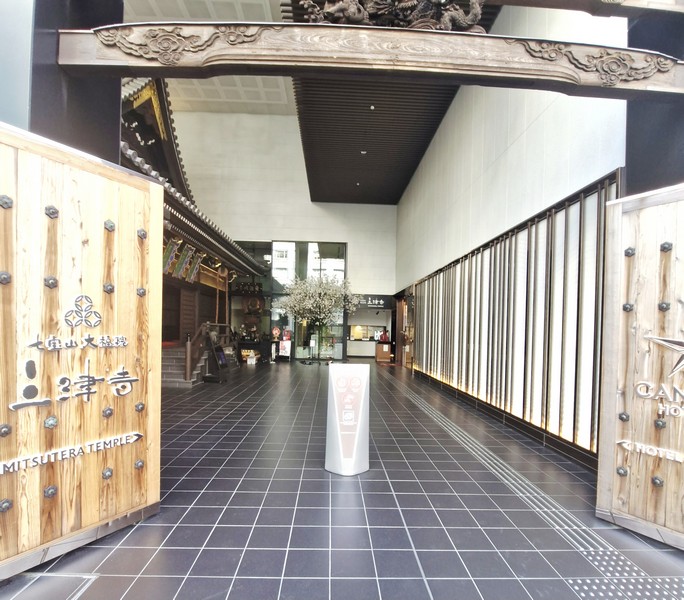
Japan is known for being a heady mix of the old and new, and this is perhaps best exemplified by the way some of its high-rise blocks are carefully built around, or integrated with, ancient temples. One such example is the ancient, charming Mitsutera Temple, known affectionately as Mittera-san by local residents. Located along bustling Midosuji Avenue, a major artery in the center of Osaka, its main hall, dating back to the early 1800s, has been neatly embedded at the base of the large, 15-storey, 180-room Candeo Hotels Osaka Shinsaibashi, in the city’s Chuo Ward. The first few floors are atrium-style to provide ample space for the hall.
Check out “Hotel and Inn Review: Candeo Hotels Osaka Shinsaibashi”
Mitsutera Temple, founded in the Nara Period (710-784) by the renowned monk Gyōki (one of 49 temples established by him during this period) to serve as a burial site for Emperor Ojin (Japan’s 15th emperor), on the orders of Japan’s 45th emperor, is a member of the Omuro school of the Shingon sect of Buddhism headquartered at Ninnaji temple in Kyoto. After it burned down in the late Edo Period (1603-1867), the current main hall was rebuilt in 1808 and, in 1945, remarkably survived the Great Osaka Air Raid unlike many other wooden structures in the city.
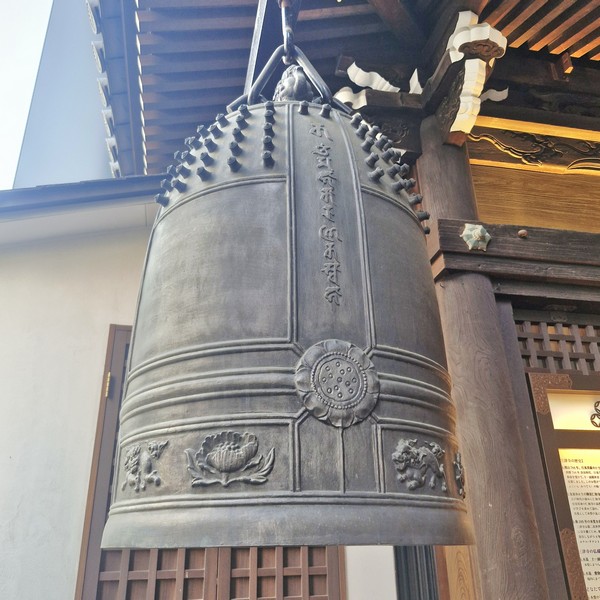
A decline in parishioner numbers and an increasing demand for simplified funerals have made it difficult for the temple to financially survive. In a rare partnership and an attempt to pass down the temple to posterity, Mitsutera temple entered into a fixed-term land leasehold agreement, of 50 years, with Candeo Hotels Osaka Shinsaibashi wherein Mitsutera will tap into the rent to cover expenses, such as repairs to the main hall and altar fittings. The construction project was undertaken jointly by Mitsutera and Tokyo Tatemono Co., a property developer based in Tokyo’s Chuo Ward.
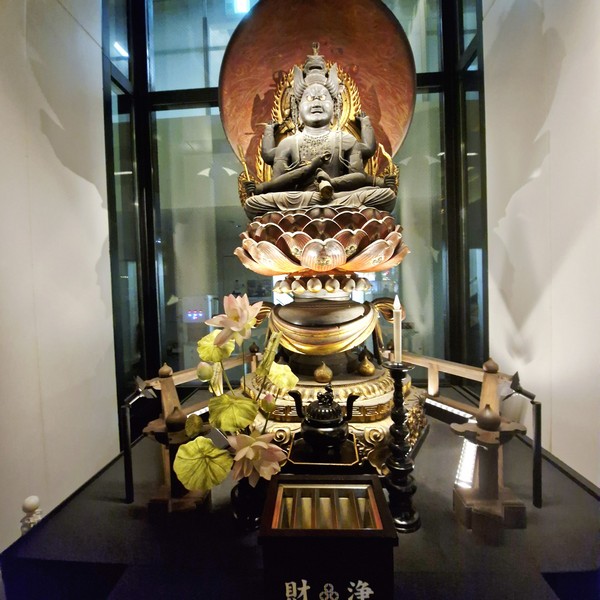
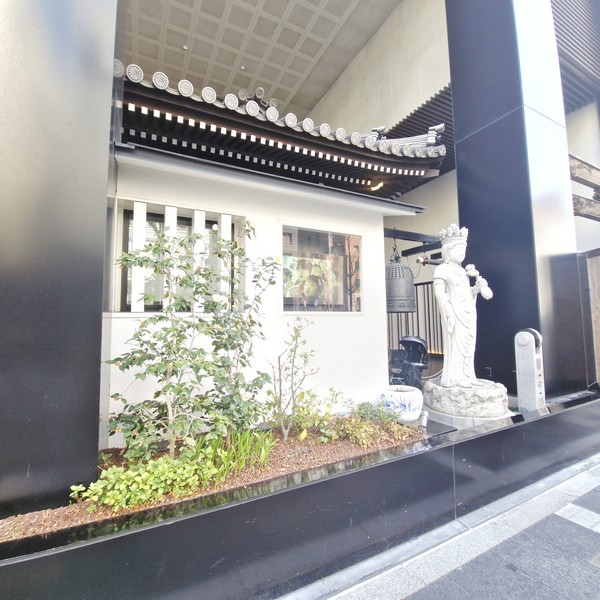
From 2020 to 2023, it was physically merged and incorporated into the hotel, which was built directly above the temple. The entire main hall structure was jacked up and, to facilitate the new construction, relocated within the site and moved in one piece to sit alongside Midosuji’s sidewalk, allowing the tower block to be constructed behind and around it. On November 26, 2023, the temple’s main hall was opened there, creating a unique blend of traditional architecture and modern development.
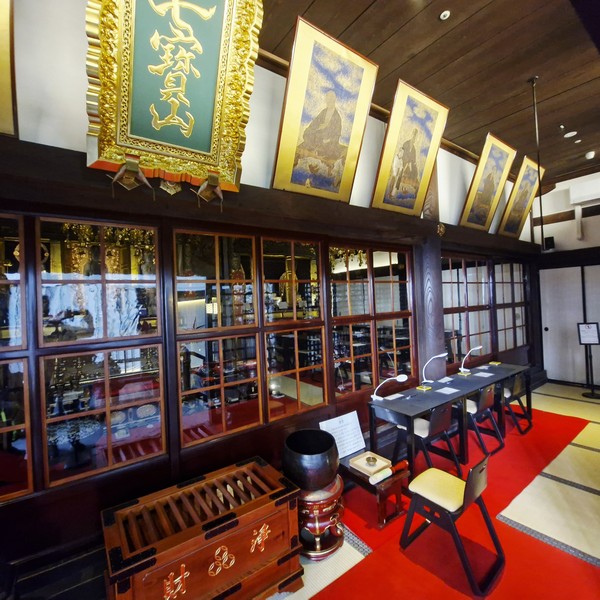
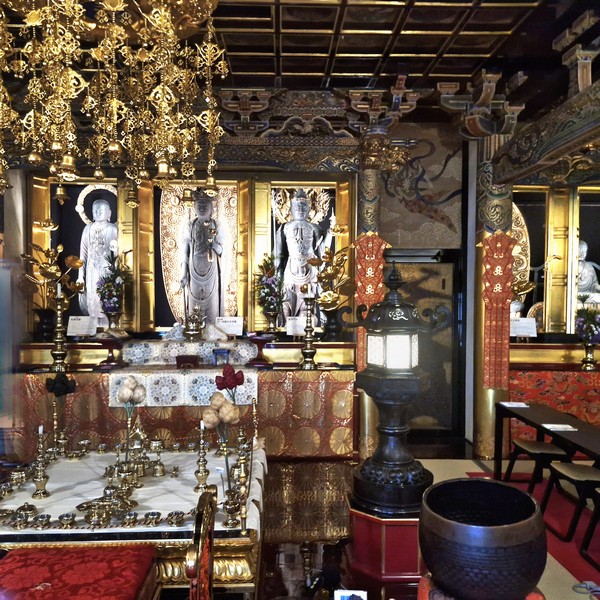
For the aging temple, this creative solution preserved the history and architecture of this centuries-old temple, allowing hotel guests a special experience of staying almost at a temple, participating in religious practices, including morning prayers, eshakyo (transcription of sutra and Buddha images) and meditation. The main hall is within the first three floors.
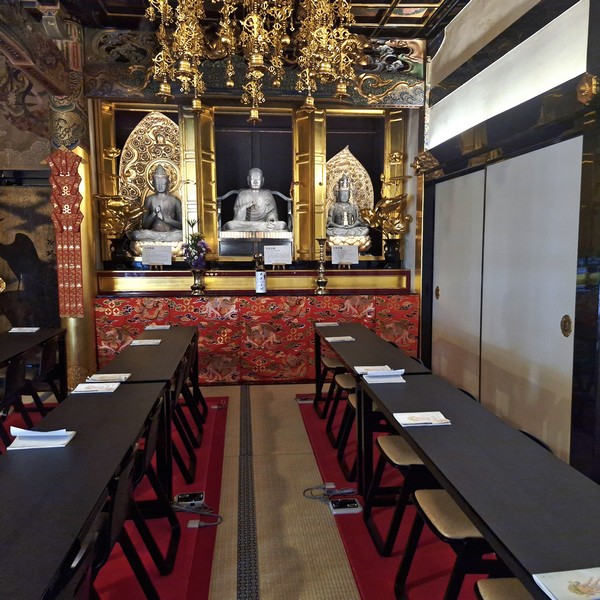
Mitsutera Temple houses precious Buddhist statues and paintings that Osaka City designates as cultural properties. Decorated in lacquer, gold leaf, and flower petals, the main hall’s center is dominated by an 11-faced statue of the Kanzeon Bodhisattva, with eight other Buddhist statues (including figures such as the Buddhas Yakushi Nyorai and Kobo Daishi, among others) arrayed to the sides.
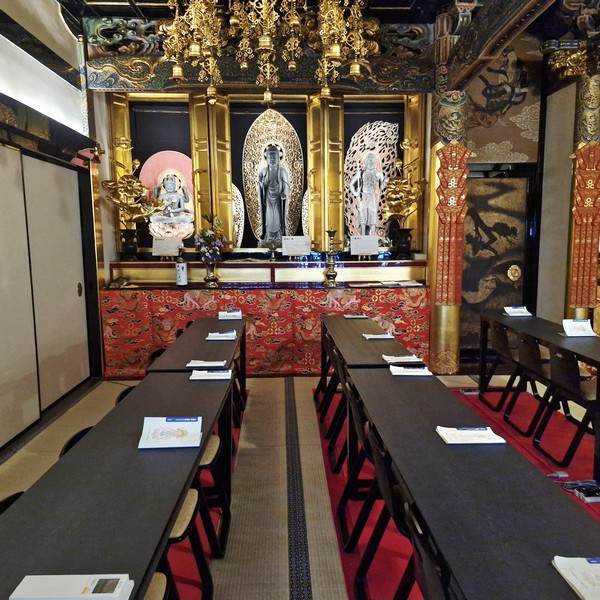
This temple offers a black and white goshuin where you need to trace the lines and words color the picture and write your own wish. After that, they will help to stamp the special ink on the completed goshuin. Today, it is a pleasant experience to stroll in the area as the aroma of incense floats next to the fragrance of perfume from the boutiques of high fashion brands which line Midosuji.
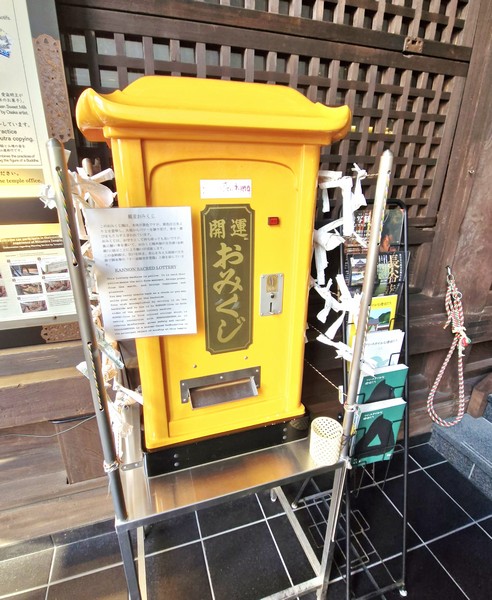
Mitsutera Temple: corner of Midosuji Avenue and Mitsudera-suji Sts., 2 Chome-7-12 Shinsaibashisuji, Chuo Ward, Osaka, 542-0085, Japan. Tel: +81 6-6211-1982.
How to Get There: Mitsutera Temple, located near Shinsaibashi-suji and Dotonbori, conveniently situated within walking distance from both Namba Station and Shinsaibashi stations on the Osaka Metro Midosuji Line.