
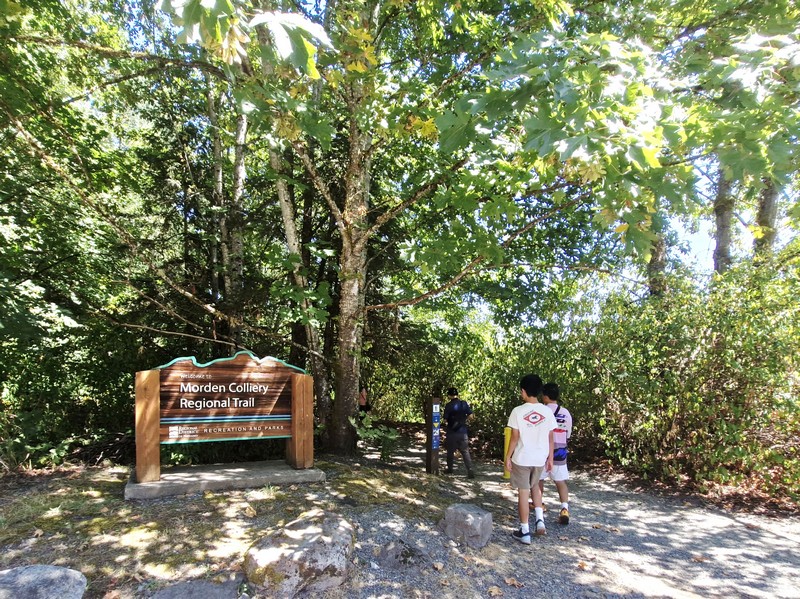
From Petroglyph National Park, it was just a short 10.1-km. (15-min.) drive to the 1.1-mile Morden Colliery Regional Trail (MCRT), a segment of a historical rail corridor that has become a popular regional and community route for walking, nature appreciation, horseback riding and cycling.
Check out “Petroglyph National Park”
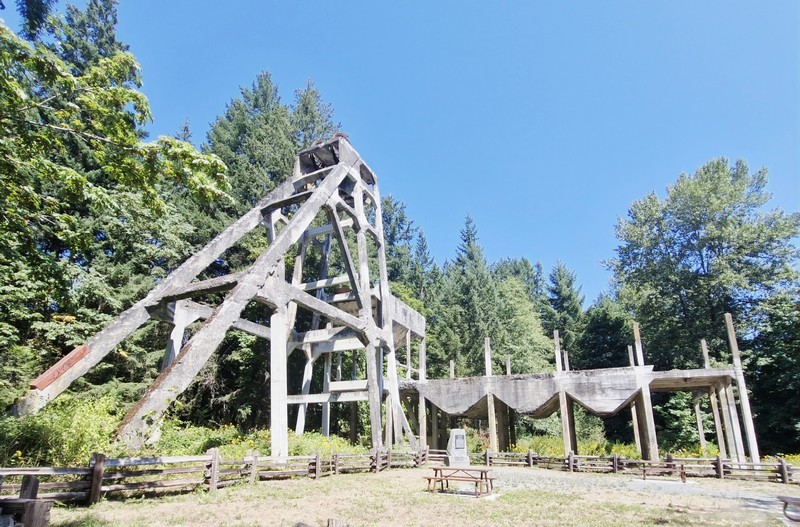
This small 4-hectare provincial park, in south Nanaimo, gives you access to the only remaining coal tipple (a structure that loads coal into rail cars, much like a grain elevator unloads grain) on Vancouver Island. Not well-known, it can easily be considered a Vancouver Island hidden gem.
Known for its historical significance and natural beauty, this 4 km-long corridor of Provincial Crown Land located between Morden Colliery Historic Provincial Park (maintained and managed by the Regional District of Nanaimo), in South Wellington, and Hemer Provincial Park in Cedar, is a unique, must-visit destination for anyone interested in Vancouver Island’s history or for those simply looking for a peaceful outdoor escape.
Because there is currently no bridge crossing the Nanaimo River, within the MCRT, the trail network of the MCRT consists of two separate segments – the 2 km-long North Segment, between Cedar Road and Hemer Provincial Park, and the 1-km. long South Segment between MCRT to the Nanaimo River. The Central segment of the MCRT, which runs approximately 1 km. through agricultural land from the Nanaimo River to Cedar Road, is currently undeveloped and requires two bridges to span the Nanaimo River.
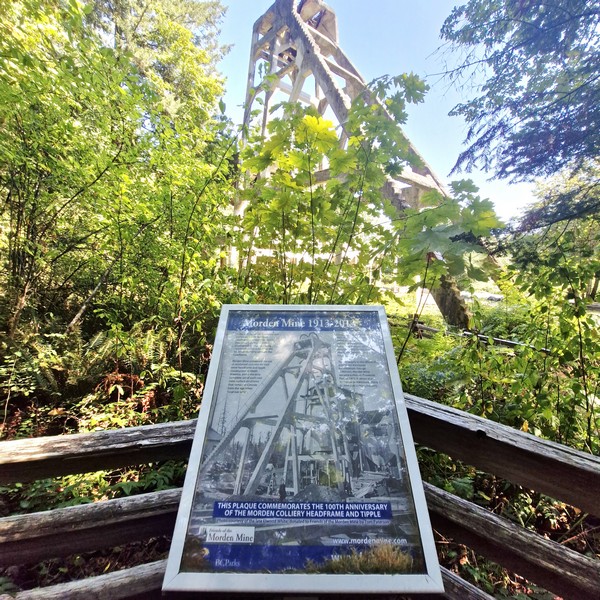
The MCRT runs along an old rail grade used to move coal, during the early years of the 20th century, from the mines of South Wellington to Boat Harbour. Between 1852 and 1938, coal mining was the main economic driver on Vancouver Island, and 10 small towns, notably Nanaimo, Ladysmith and Cumberland, were built because of it. In 1912, Pacific Coast Coal Mines, Ltd. (PCCM) began developing Morden Mine and, in its first year of operation, the Morden Mine produced 76,000 tons of coal.
However, from 1913 to 1914, a miners’ strike disrupted operations. During that time, a 22.7-m. (74.5-ft.) high reinforced concrete head-frame, the first in the district, was constructed.
Despite modern equipment and investment, Morden Mine was not as successful as investors had hoped and never succeeded. After the strike ended, underground work resumed, but the mine struggled with poor air quality, causing frequent illnesses among the miners. Between union strikes and unfavorable economic conditions, production stopped in 1921 and the closure caused PCCM to go bankrupt the following year. In 1930, the Canadian Coal and Iron Co. rehabilitated the mine, but production didn’t even last a full year, and the mine officially closed in 1931.
In 1972, to protect and preserve remnants of the Nanaimo region’s coal mining history, the area was turned into a provincial park (largely due to the efforts of George Wilkinson, a prominent Vancouver businessman) and recognized as a National Historic Site of Canada but, despite the designation, little was done to preserve the remaining structures. In 2003, “Friends of Morden Mine,” a group of concerned citizens, got together to try to save the remains.
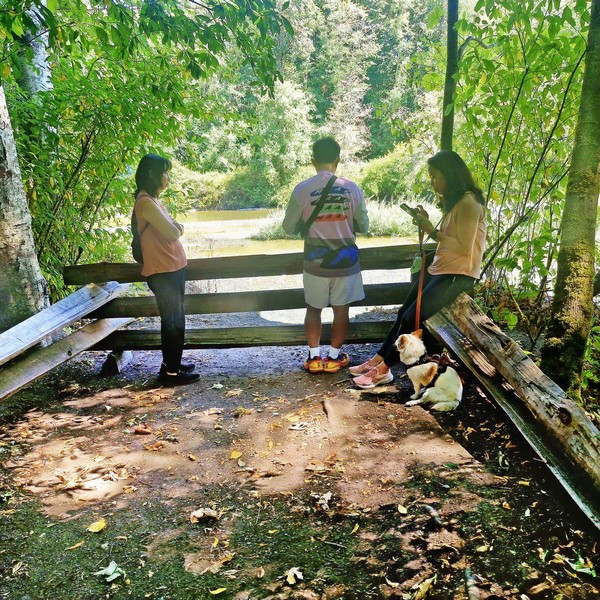
In 1995, the Regional District of Nanaimo (RDN), under license from the Province of British Columbia, initiated development of the MCRT corridor for recreational trail use. In 2019, the Government committed $1.4 million to restore the concrete headframe and tipple structure at Morden Colliery Historic Provincial Park. Consequently, at the same time, improvements were made at the park.
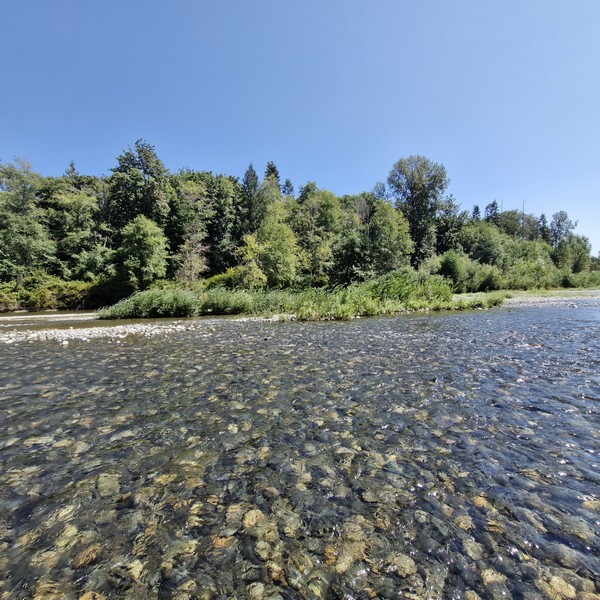
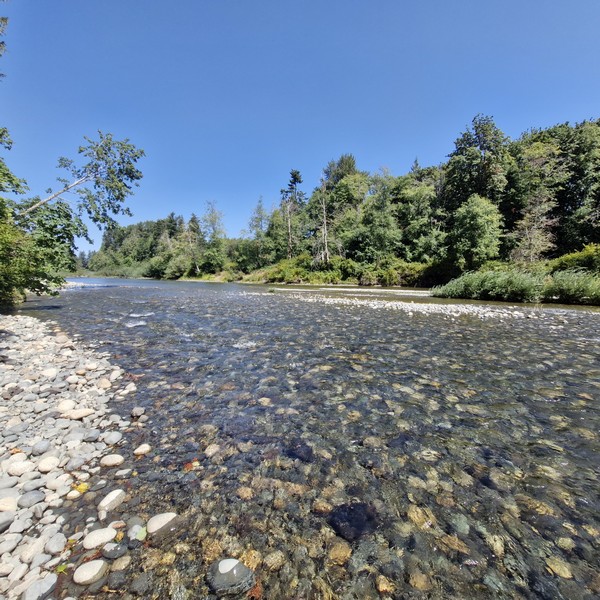
Upon arrival at Morden Colliery Historic Provincial Park, we parked the car just across the concrete Morden Mine tipple, its remaining concrete head-frame standing as a rare monument to Vancouver Island‘s coal mining history. The first of its kind in North America (before 1913, tipple were usually made of wood) it is, ironically, one of only two left standing (the other is the O’Gara Coal Mine No. 12 Tipple, built in 1923, in Muddy, Illinois) and the only one in Canada.
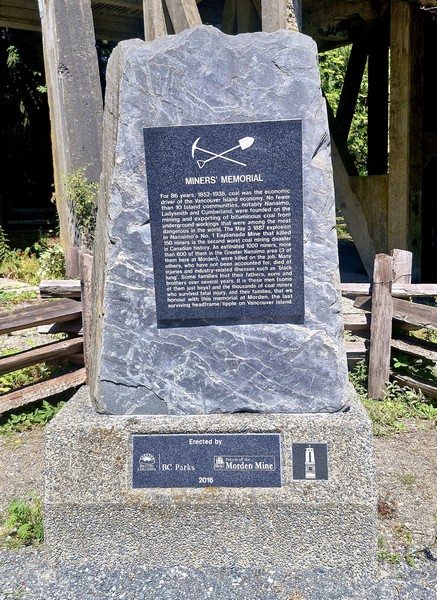
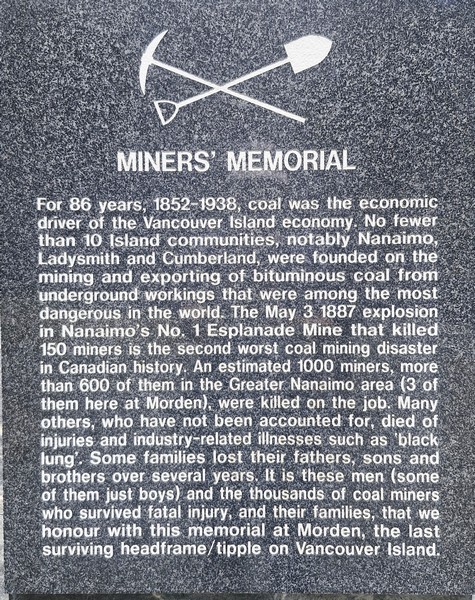
A memorial, at its base, commemorates the estimated 1,000 miners who were killed doing this very dangerous job, with 600 in the Greater Nanaimo area and 3, in particular, at the Morden Mine, as well as the unfortunate workplace deaths that do not include those who died of industry-related illnesses, such as black lung, of which there were many.
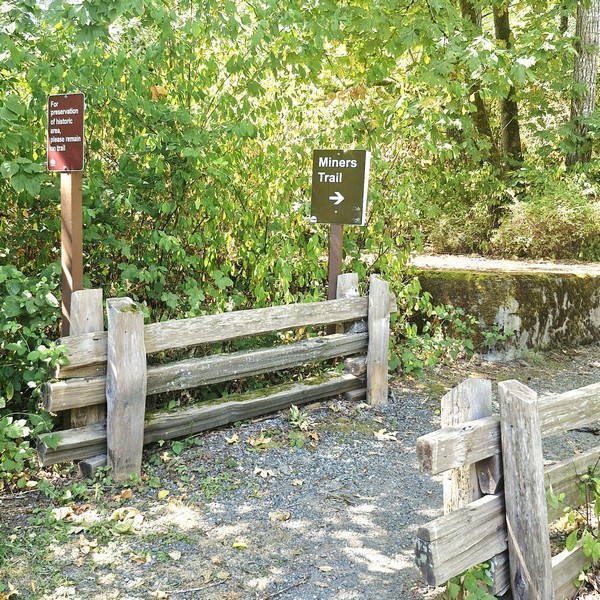
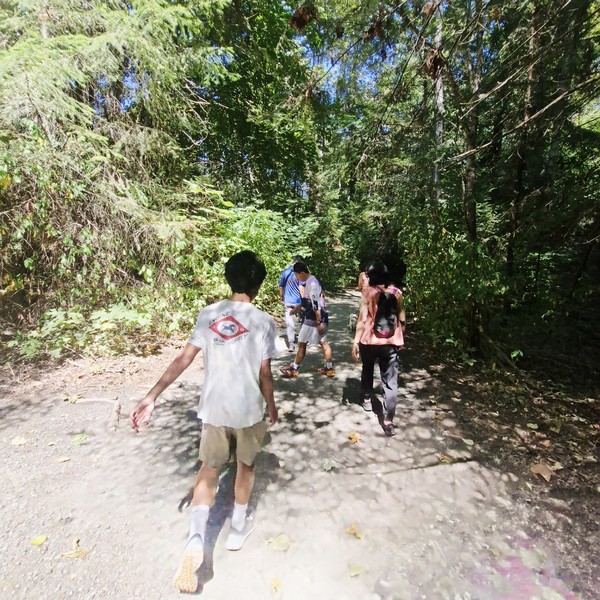
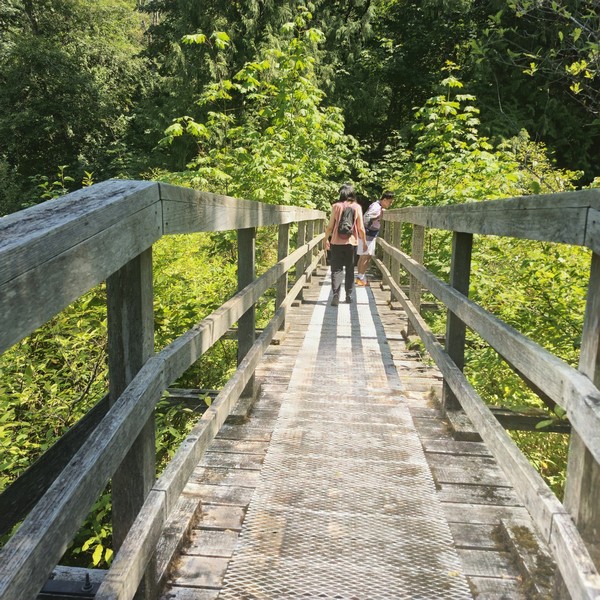
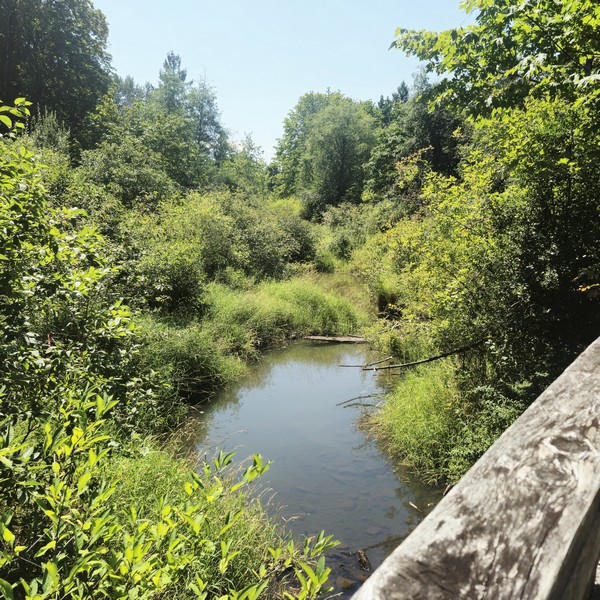
From Morden Colliery Historic Provincial Park, we first hiked the wide, 1.2-km. long and fully accessible gravel path, with two wooden bridges, developed by the RDN. The RDN Trail lead to a view deck overlooking a quiet and tame section of the Nanaimo River. Currently, one can only cross the river on foot (getting wet in the process) but, eventually, the RDN hopes to build a bridge connecting Morden Colliery Historic Provincial Park with Hemer Provincial Park in Cedar.
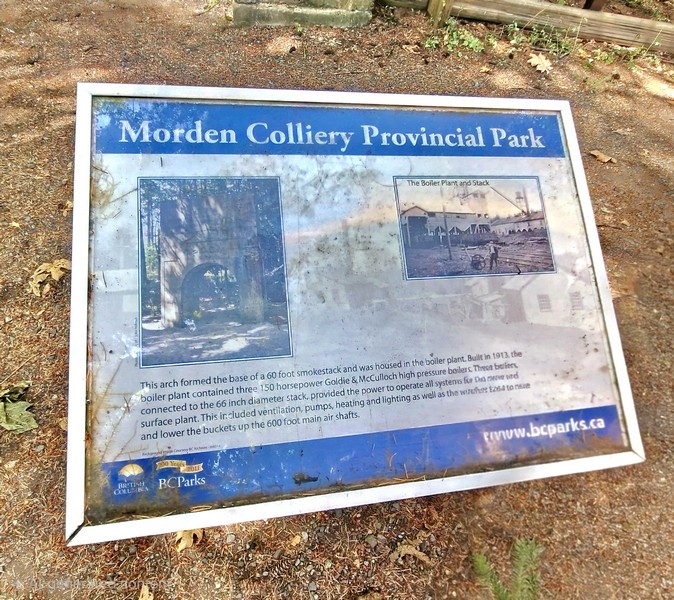
Back at Morden Colliery Historic Provincial Park, we then walked along the short Miners Trail that follows the old rail grade used to move coal at the mine. There were plenty of signs to guide us. Along the way, we saw remnants of the mining operation that once took place here.
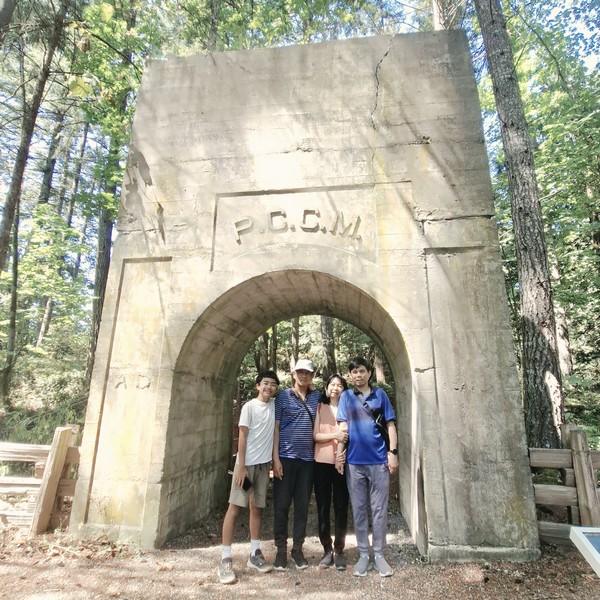
The concrete “Arch,” the surviving heavy structural base of a 60-ft. high, 56-in. diameter industrial smokestack, was built around 1913 by the Pacific Coast Coal Mines (PCCM), and once supported the boiler plant (with 3 150 horsepower Goldie & McCulloch high pressure boilers) that powered the historic mine site’s ventilation, pumps, heating and lighting as well as the winches to raise and lower the buckets up the 600-ft. main air shafts.
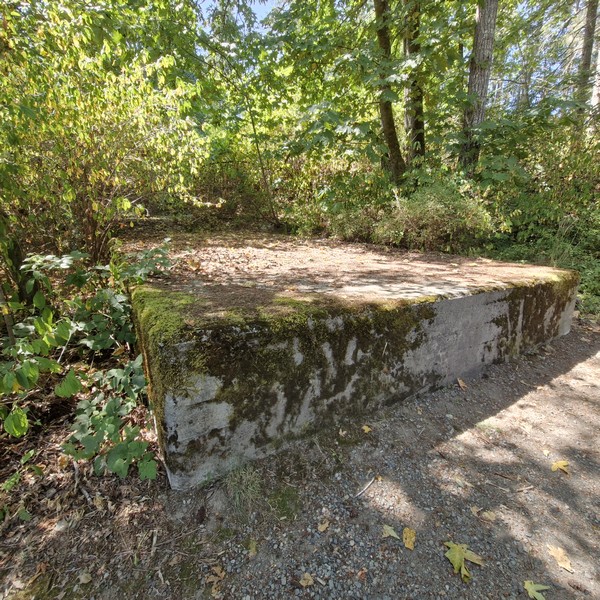
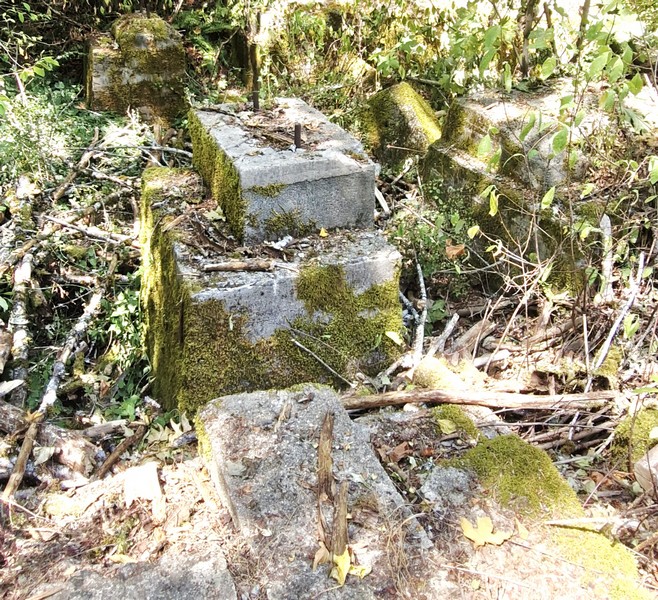
Near the towering headframe ruins are the foundations and structural remnants of the hoist house that housed the electric winding engines and heavy cable spools used to operate the skip/cage system, the electric winding machinery to raise and lower workers and coal cars via dual steel cables sunk roughly 180 m. (600 ft.) down to the main coal seam, in the concrete headframe.
Morden Colliery Regional Trail: 1L7, 1840 Cedar Rd., Nanaimo, British Columbia V9X 1H9. Tel: (250) 390-4111.
How to Get There: Morden Colliery Historic Provincial Park is located 7 kms. south of Nanaimo. It is accessible off Highway 1 on Morden Road.