
From Malaspina Galleries Community Park, we next drove 9.8 kms. (a 15-min. drive) to Brickyard Beach, a rocky beach rich in industrial history located on the southwest coastline of Gabriola Island. The beach is located on False Narrows that separates Gabriola Island from Mudge Island and Vancouver Island.
Check out “Malaspina Galleries Community Park”
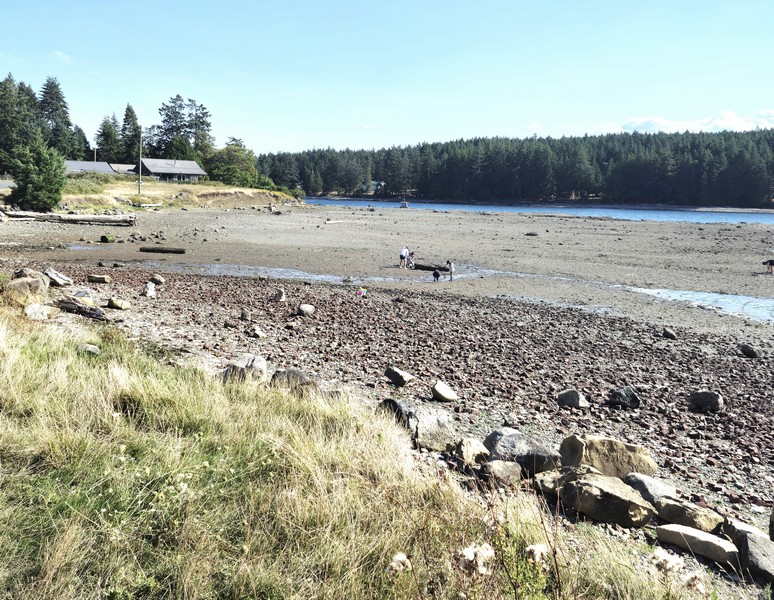
It was once the site of Gabriola Brickyard, the largest industry and employer (of Gabriolans and Chinese contract workers) on the island. From 1890 to 1950, it was actively producing, all by hand, up to 80,000 bricks per day. The work was difficult, noisy, and dirty, but the bricks were used for construction of buildings in Nanaimo, Victoria, Vancouver and New Westminister in British Columbia.
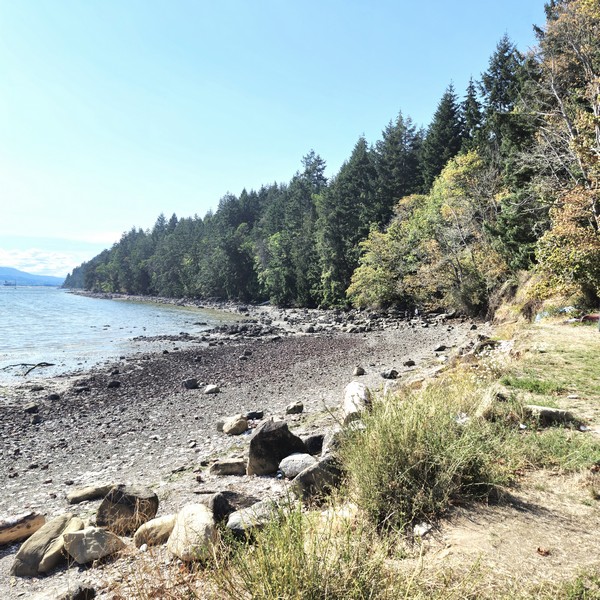
The brickyard was located at the base of Brickyard Hill, just north of Ferne Road. The raw material was plentiful blue and brown shale, extracted on the hill by the beach, which was crushed to make clay. There was no electricity at Gabriola at the time and the plant operated on steam pumps heated by local firewood and cheap coal from Nanaimo. To heat the crushed shale, workers shoveled coal and wood into a fire and pressed the shale into bricks, four at a time, using a hand-operated hydraulic press.
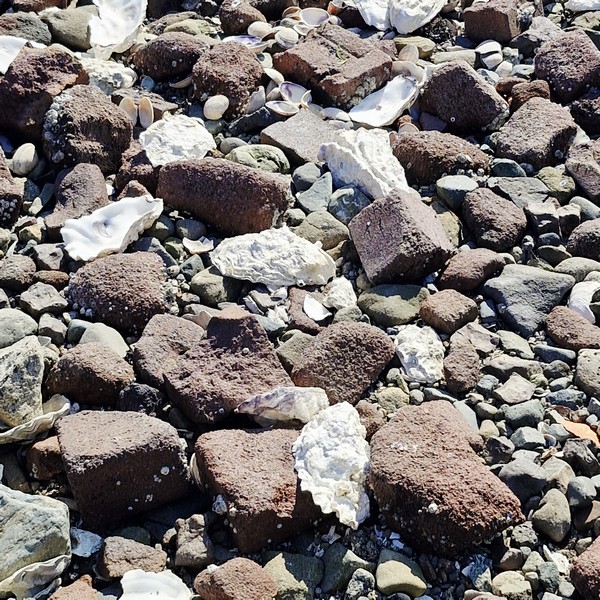
The ease of transportation, by ocean, made the location functionable. During low tide, the bricks were loaded onto scows that departed from the shore, with the high tide, for shipping. In 1952, because construction techniques had advanced beyond bricks, production ceased and the plant was closed and, a little later, the kilns and buildings were dismantled and the area was bulldozed and cleared.
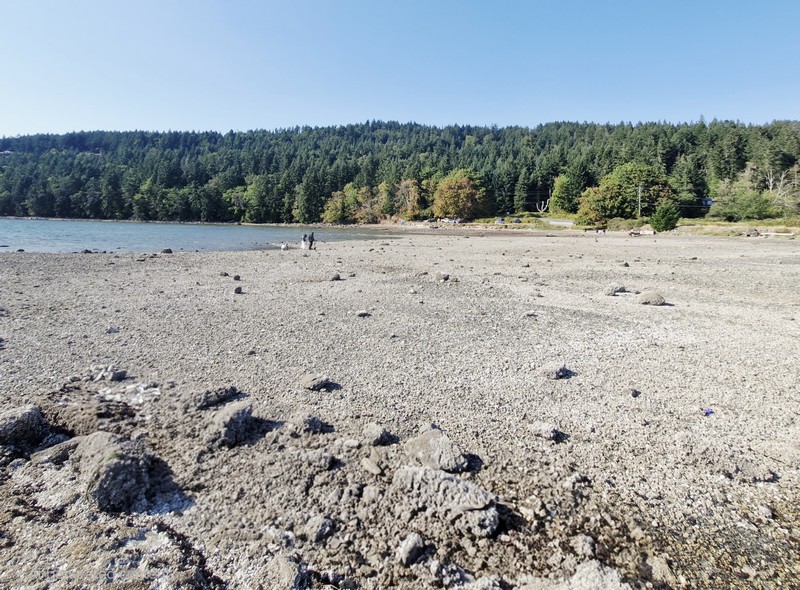
Brush and undergrowth have now reclaimed most of the site but pieces of misshapen, defective or broken “Dominion” brand red bricks, that were culled by workers on the beach, have remained there still, mixed with the sand and pebbles. That’s how Brickyard Beach turned out. Today, there is still evidence of the old bricks located throughout the beach. However, because of storms, winds and human activity, most are crushed and mixed in with the sand and pebbles.
Today, little remains of the Gabriola Brickyard except for piles of broken bricks heavily littered on Brickyard Beach and the name of the steep hill on South Road. Enterprising locals still dig these historic bricks out of the banks. From the shore of the beach, it is easy to see Mudge Island (where orcas are frequently spotted) and the Pylades Islands and there are views of birds and marine activity as boats and kayaks often explore the area. The False Narrows is a busy marine route used frequently by sailboats, fishing vessels and yachts.
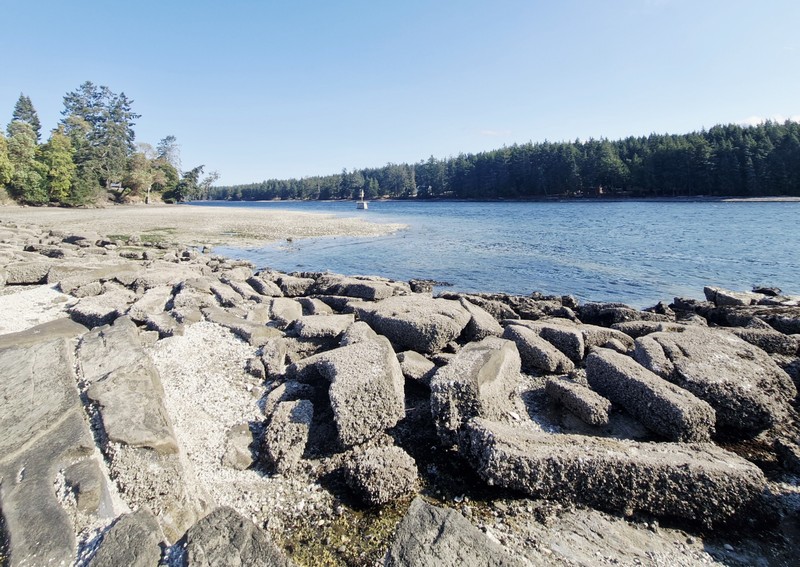
During low tide, the ocean water recedes, revealing a land of tidal pools that are full of marine life like sea anemones, crabs and star fish. There are opportunities for birdwatching and wildlife viewing like sea birds, predator birds, seals and more. Brickyard Beach, a launch and landing point for kayaking (the close proximity to the bays and coves on Mudge Island and the Pylades Islands makes the beach ideal for launching a kayak), is also a popular location for beachcombing, clam digging, gathering oysters and sightseeing.
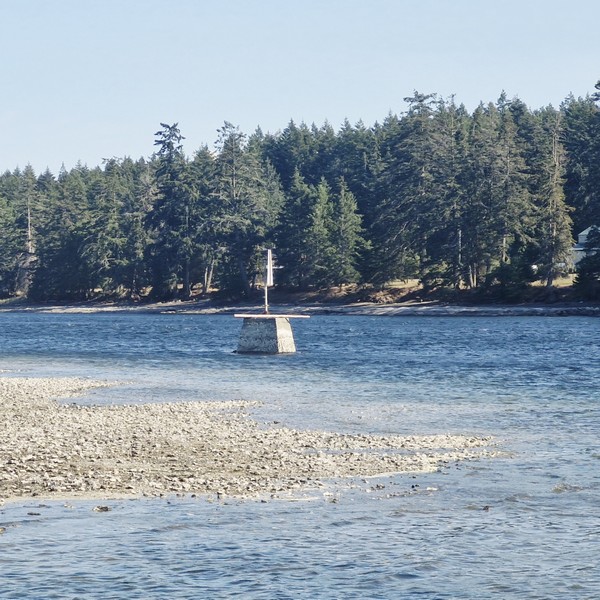
Brickyard Beach: 1633 South Rd., Gabriola, British Columbia V0R 1X6.
How to Get There: A ferry leaves, almost every hour, for Descanso bay Ferry Terminal on Gabriola Island, from Nanaimo Harbor. The crossing takes 25 mins. From Descanso bay Terminal, it is a 7.3-km. (4.5-mi.)/10-min. drive to the beach. Drive up Ferry Hill onto North Road, connect toward South Road, and follow it southeast to 1633 South Road.