
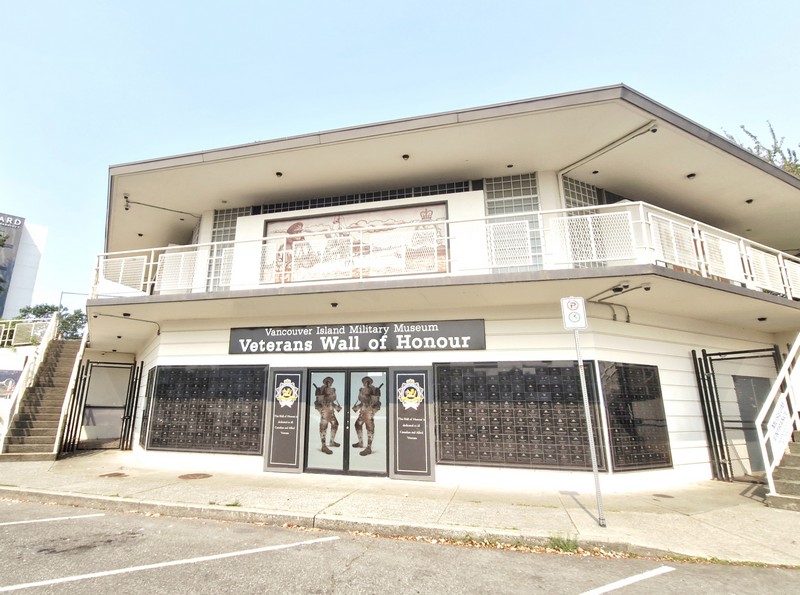
On our last day in Nanaimo, we drove the short 4.5-km. (a 10-min. drive), from Departure Bay Motel, to Vancouver Island Military Museum. Considered as British Columbia’s most significant military museum, the Vancouver Island Military Museum’s truly impressive collection of military memorabilia and artifacts, from the War of 1812 right through to Canada’s involvement in Afghanistan, was assembled by the museum for more than a quarter of a century.
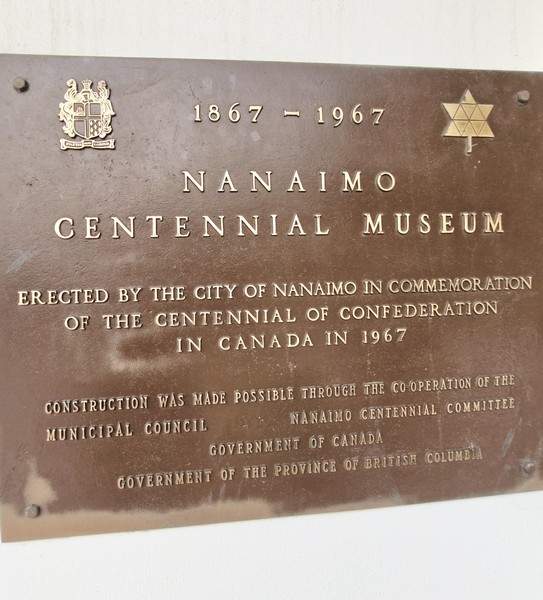
Lodged in a historic, 2-storey, octagon-shaped building, built by the Hudson’s Bay Company between 1853 and 1855 to defend their coal mining operations in the area, it originally housed the Nanaimo Centennial Museum, opened in 1967.
The museum, receiving around 3,500 visitors a year, features than 25 exhibits and displays showcasing Canada’s proud military history and traditions.
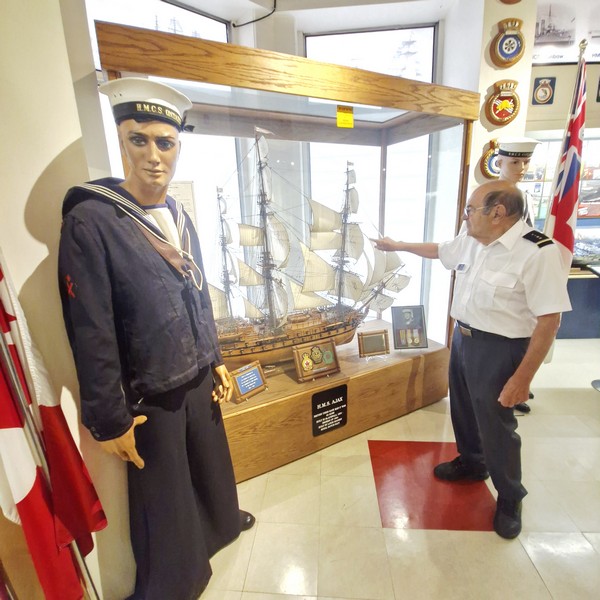
We were shown around the museum by knowledgeable and friendly volunteer guide Joseph “Joe” Pighin, who authored research articles for the museum publications, covering topics like Canadians who served and died fighting for other countries (such as in the American Civil War). He also contributed a Chinese army ammunition belt from the Korean War.
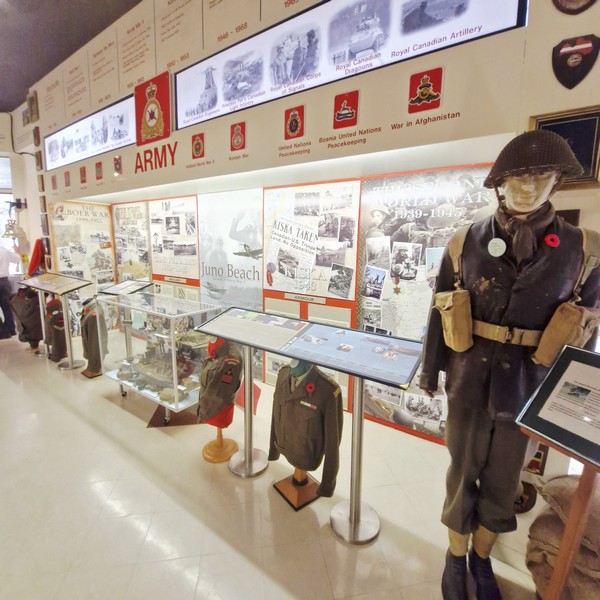
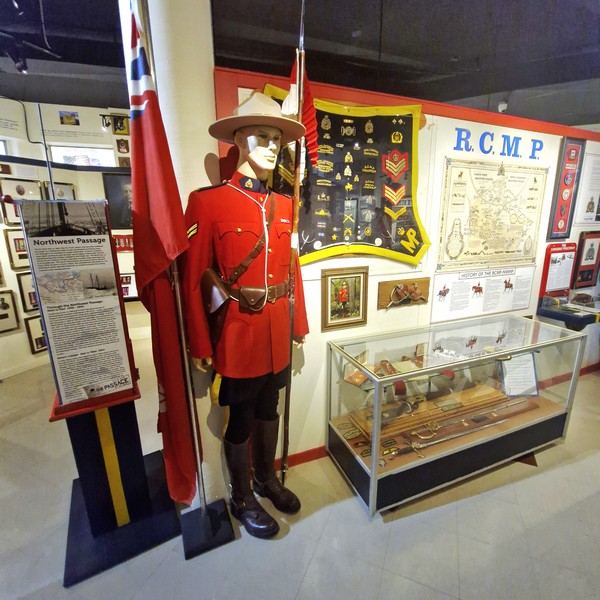
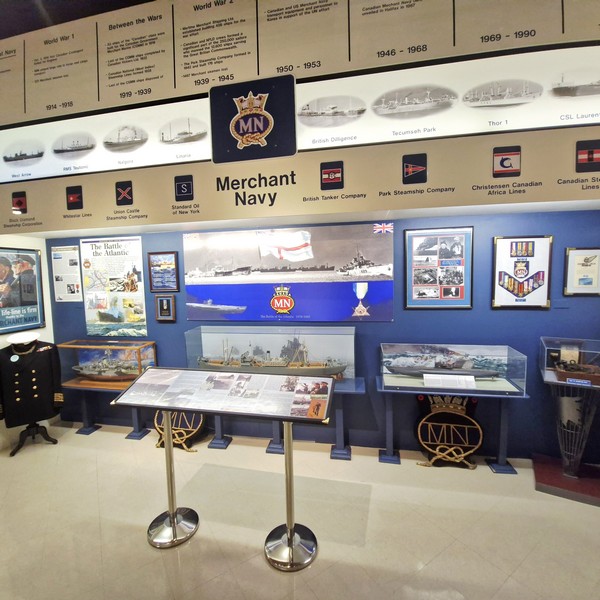
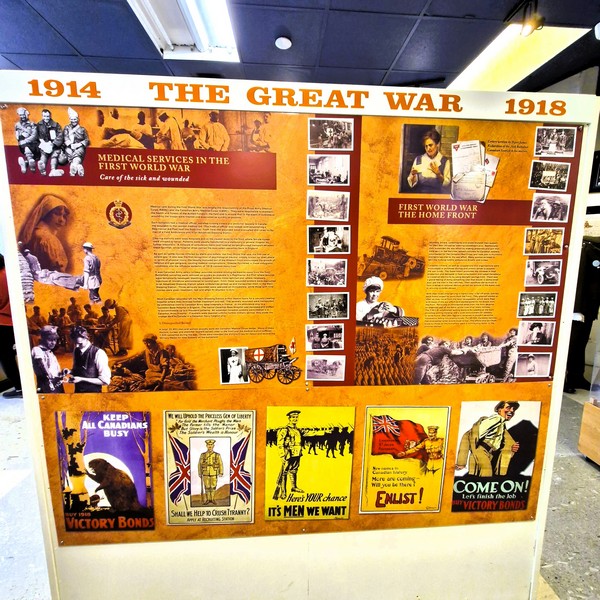
Here, we examined life on the home front; the important work of the Red Cross, St John Ambulance, the Salvation Army, and Royal Canadian Mounted Police (RCMP); and the critical role played by the Canadian Merchant Navy in war time.
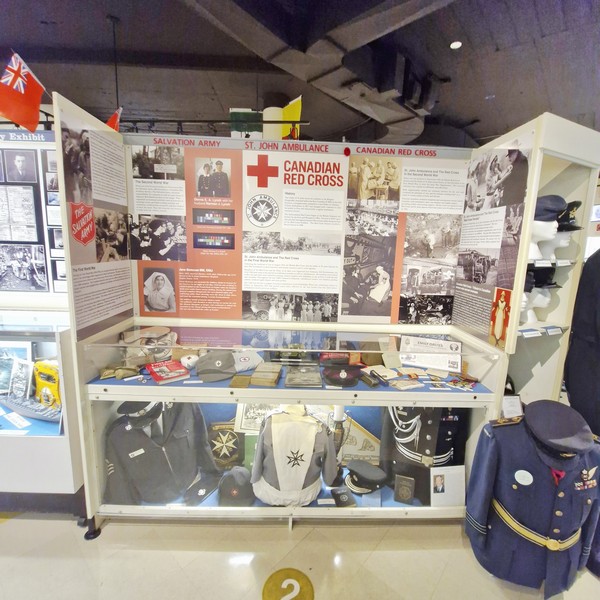
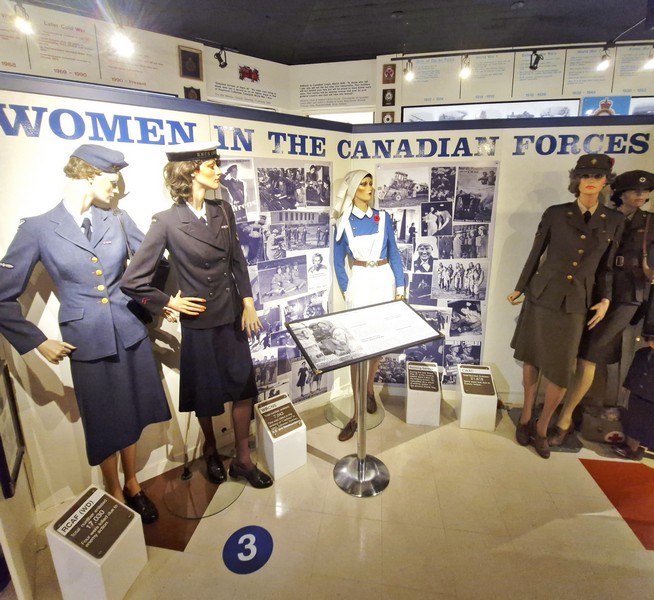
We also followed the evolution of Women in the Armed Forces, from Nursing Sisters, during the Second Boer War and World War I, where more than 2800 Canadian Nursing Sisters served (many of them nuns, nicknamed the “bluebirds” due to their blue dresses and white veils), to present day operations in all branches of the Canadian Armed Forces. By World War II, the first Women’s Division of the Royal Canadian Air Force was created. By the end of the war, membership totaled more than 1,700. Initially performing clerical and administrative roles, a number of them later became radio/radar operators, plotters, coding technicians, and signalers.
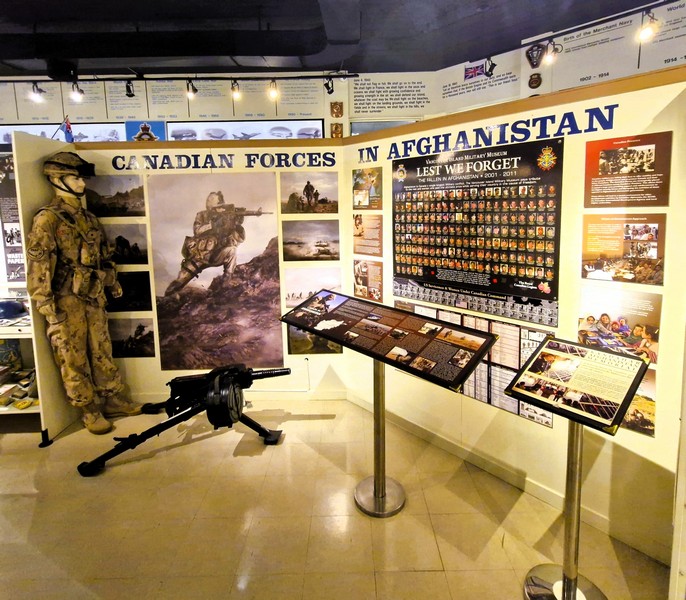
The many unique artifacts and exhibits, related to the military and life on the homefront, include extensive dioramas, unit histories, the riding crop used by Canadian Corps Cmdr. Arthur Currie during World War I; the ship’s bell from HMCS Saskatchewan, dedicated displays with detailed scale models of the coastal defense vessel HMCS Nanaimo (MM 702) and the World War II corvette HMCS Nanaimo (K101); rare items linked to Nanaimo fighter ace Raymond Collishaw; a gallery of photos of Canadian Forces members killed in the Afghanistan War, 2001-2011; 2000+ military books and military history, from the War of 1812 through the Cold War to Canada’s involvement in Afghanistan.
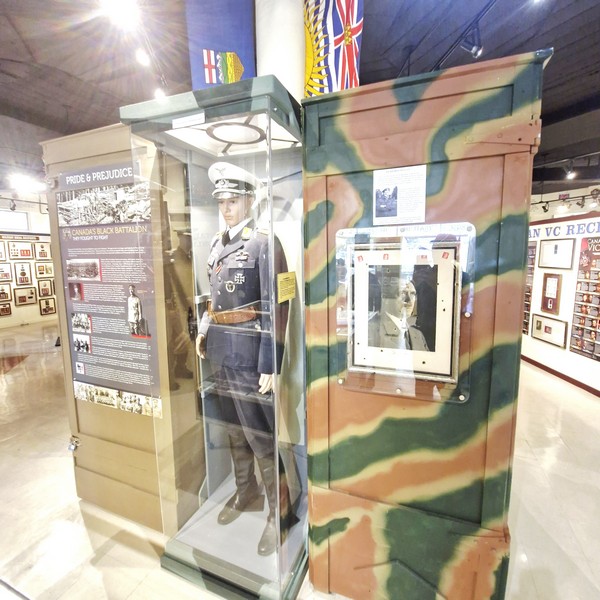
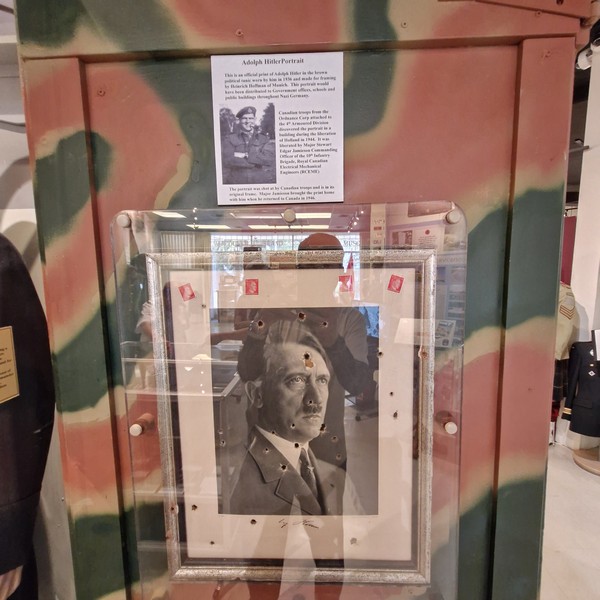
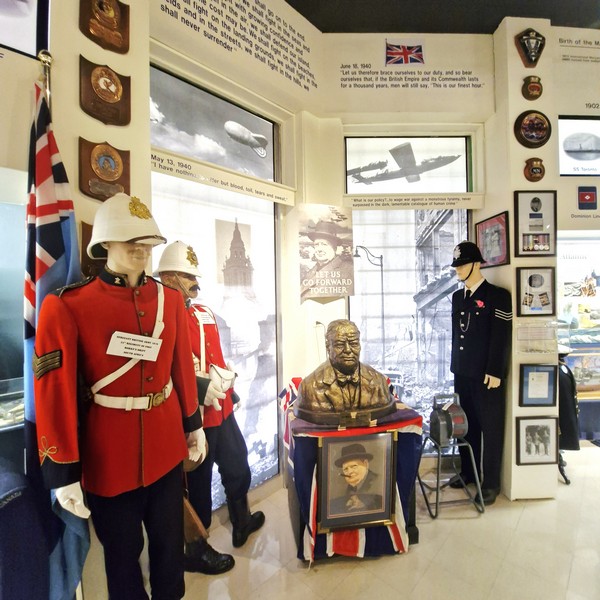
On display at the German Memorabilia Exhibit are a German Luftwaffe pilot uniform and a framed picture of Adolf Hitler that a unit of the Canadian Army in the Netherlands, used for target practice in 1945 and brought home by Nanaimo veteran Maj. Stewart Edgar Jamieson. There’s also an exhibit dedicated to Winston Churchill.
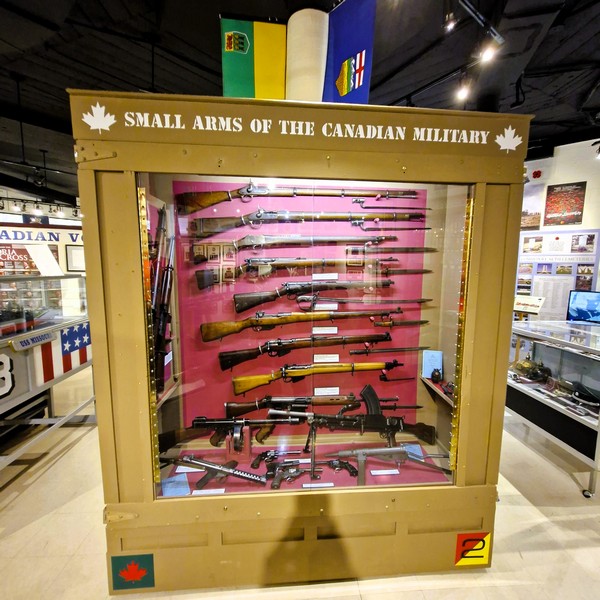
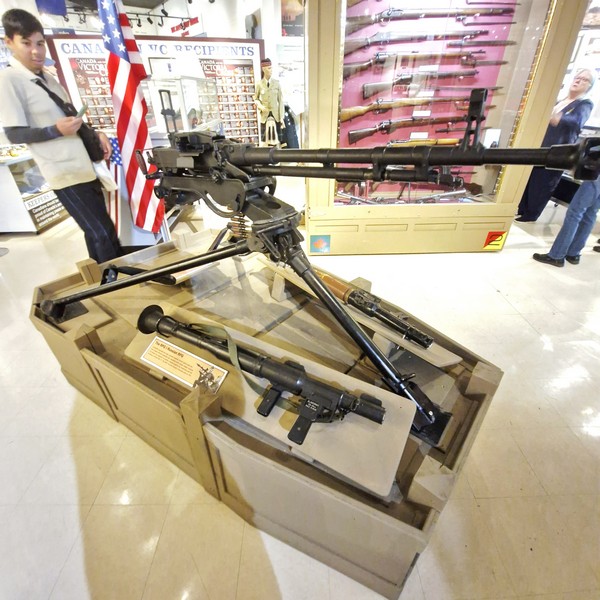
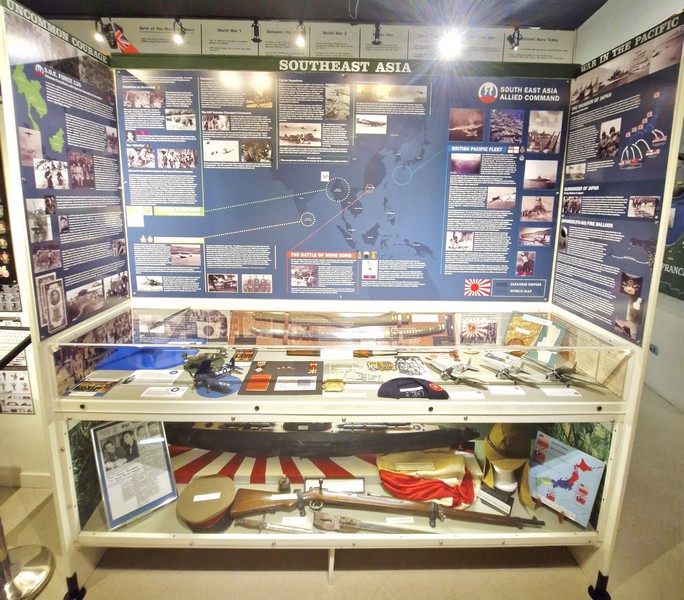
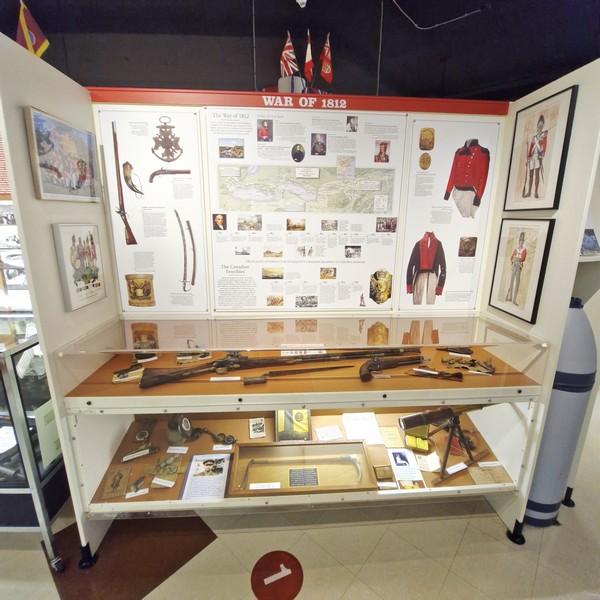
The 85 firearms (from 300 in its inventory), secured safely (rendered fully inactive/deactivated for public viewing) and on display behind glass display cases, features deactivated pistols, long guns, and main-service rifles from the War of 1812 through the Cold War, including standard service rifles and handguns utilized by Canadian, American, and Allied troops, alongside captured German and Japanese artifacts, as well as percussion cap rifles, early long guns, and small arms used up through the Vietnam War era.
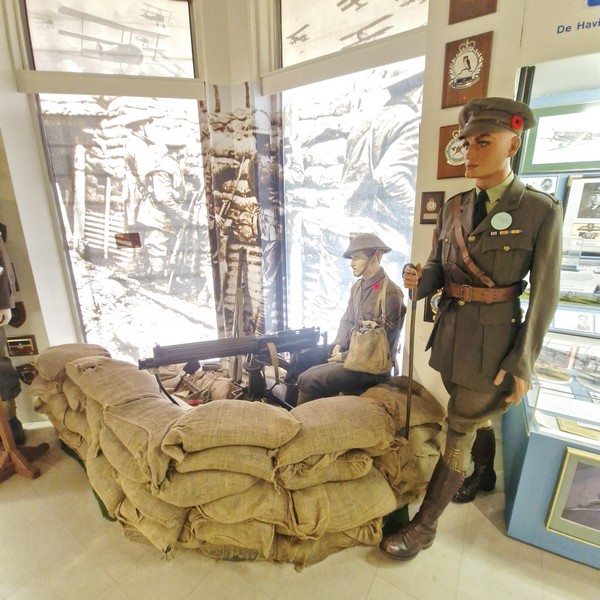
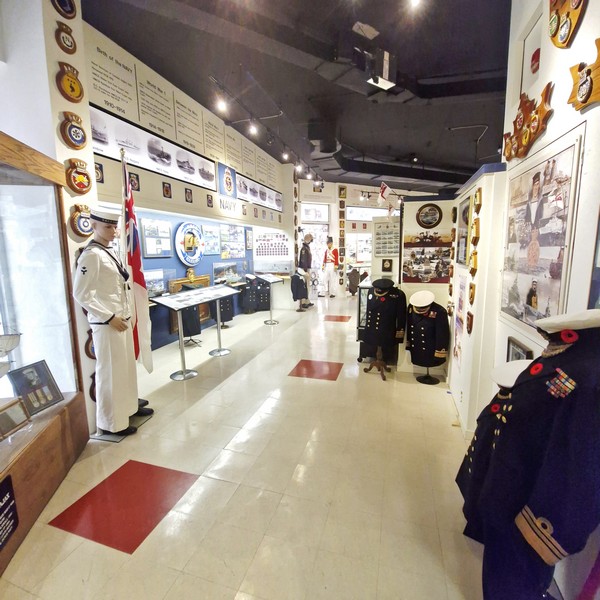
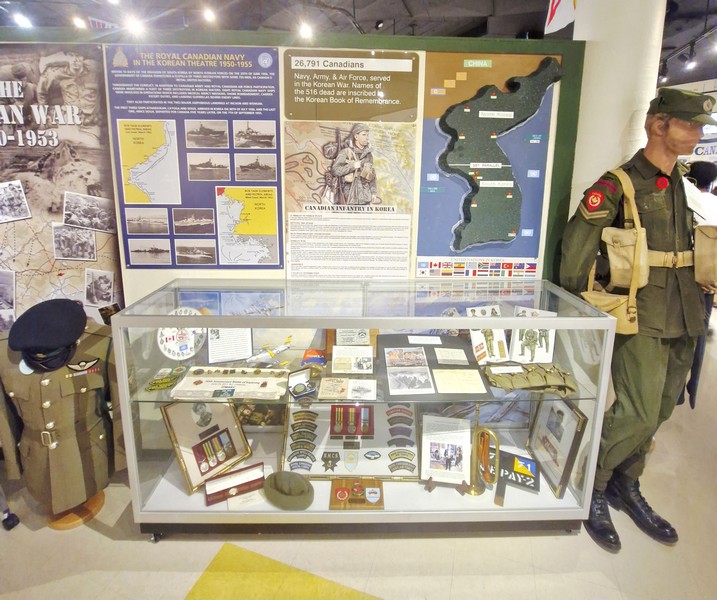
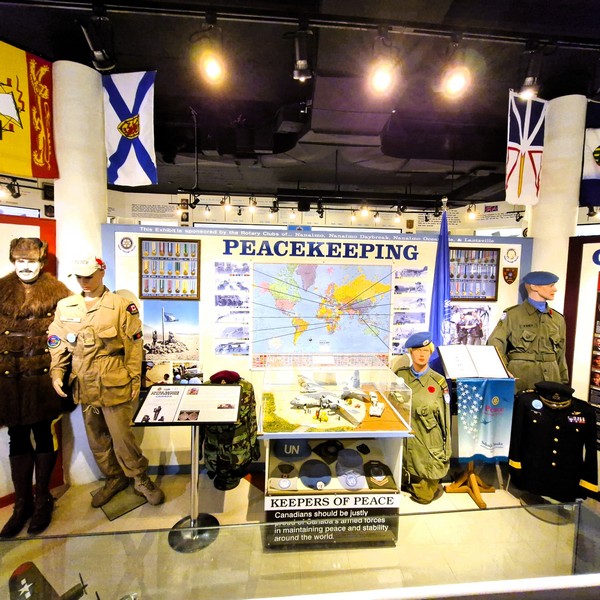
The 90 curated uniforms (from 700 in storage) on display include Royal Canadian Air Force attire (complete with rare historical pins and veteran histories); dedicated dress and service gear representing the evolution of female roles, from early nursing sisters to modern armed forces; and outfits and gear representing the two World Wars, the Korean War and peacekeeping missions, alongside Allied and adversary dress.
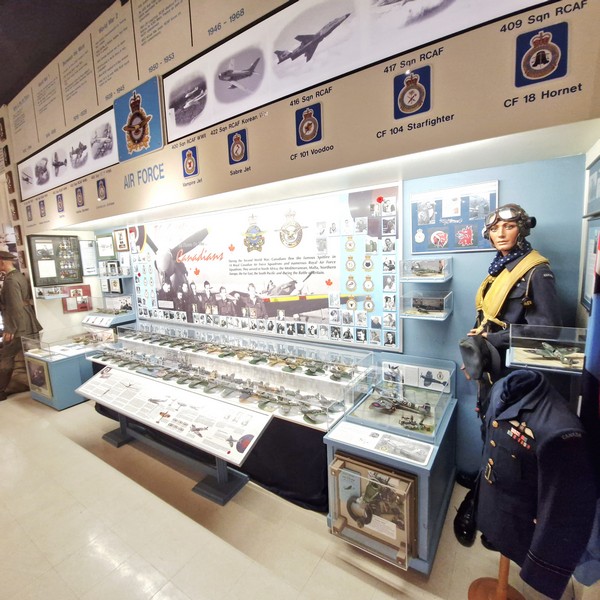
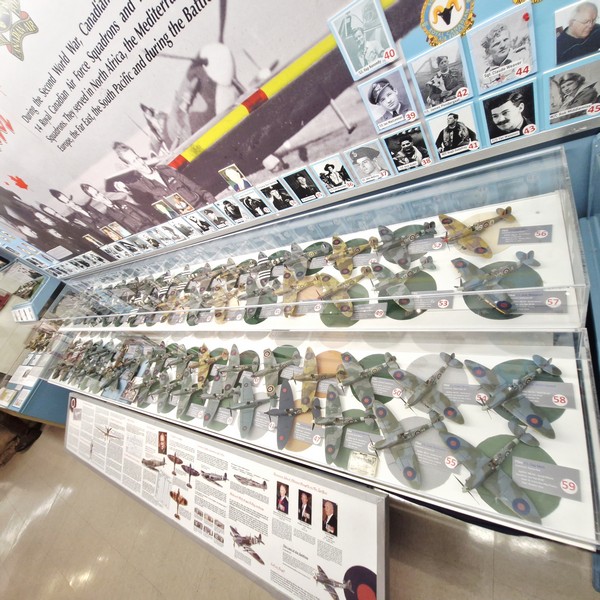
Also very interesting was the display of model airplanes crafted, over many years, by volunteer researcher and modeler Pat Murphy. The exhibit showcases roughly 70 meticulously-researched (it required up to 50 hours of historical cross-referencing and hand-assembly) replicas of World War II Royal Canadian Air Force (RCAF) Supermarine Spitfires and the specific pilots who flew them including historic local veterans, such as the late World War II Spitfire pilot Pierce George Brewster (whose “Lois-II” model was added to the permanent display) and Squadron Leader Hart Finley. Each miniature Spitfire was built to replicate the exact squadron codes, serial numbers, and nose art of a real aircraft flown by a Canadian veteran.
Two of their incredibly rare possessions, significant to military history, is a signed Christmas card from Adolf Hitler to his command structure in 1939 (seen at the captured German memorabilia display) and a 1937 Canadian dollar bill signed by flying ace George Frederick “Buzz” Beurling, considered to be Canada’s most famous hero of World War II nicknamed both as the Falcon of Malta and the Knight of Malta.
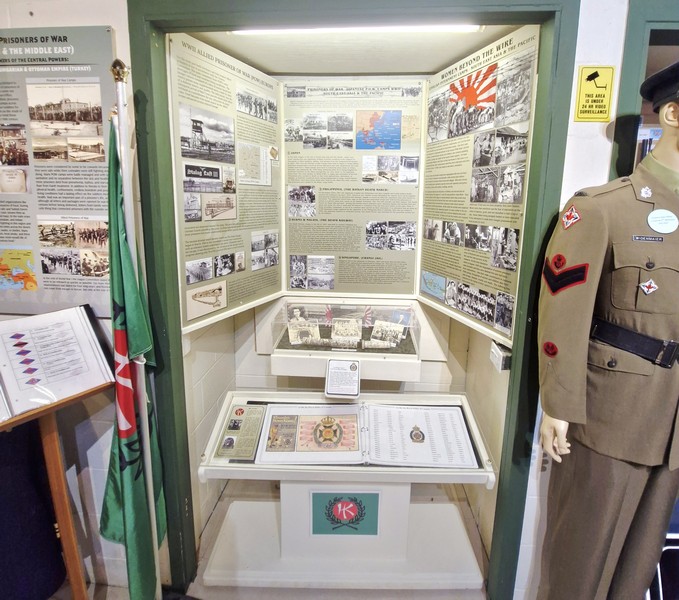
The Ronald Buxton album was assembled from the somewhat tattered remains of a scrapbook Ronald Buxton kept during the three years he was a prisoner of war. Many of the pictures in this album were done by Lt. Gordon Horner of the 72nd Field Regiment. K.A. (a fellow P.O.W and a former ‘Sunday Chronicle’ war artist) while others are freehand copies, done by Ronald, of some of his sketches.
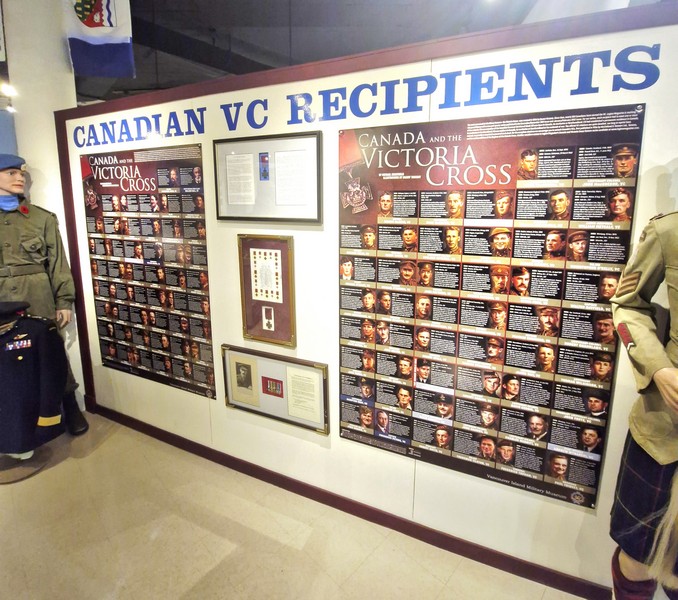
The facility also features permanent exhibits containing extensive historic military medal displays, from World War I, World War II, and post-war conflicts, donated by families and veterans. They also offer professional medal mounting and framing services for orders, decorations (court or swing-mounted on brooch or push pins using regulation ribbons service medals), and service medals with historical accuracy, alongside housing.
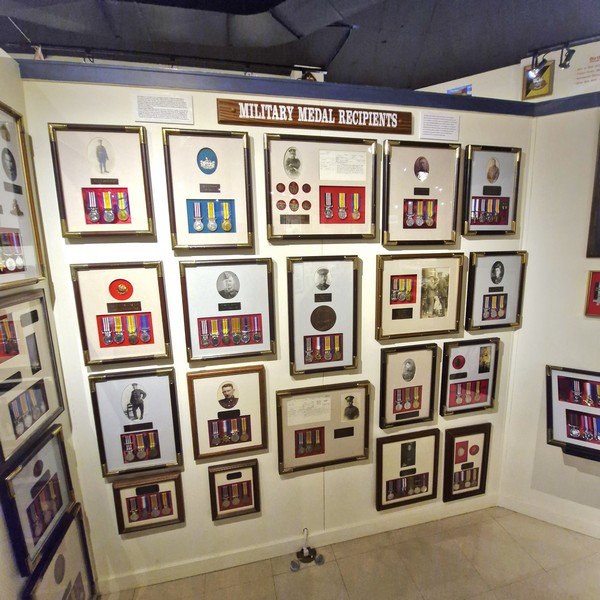
The exhibits, covering all phases of Canadian military history (which, of course, means there is a lot of crossover with events involving the USA such as the American Revolution and the War of 1812), at the museum’s well filled space was well organized and professionally presented, with many of the “real stuff,” and none of the “interpretive” pap of many other museums. The exhibits are updated when new information or artifacts come in.
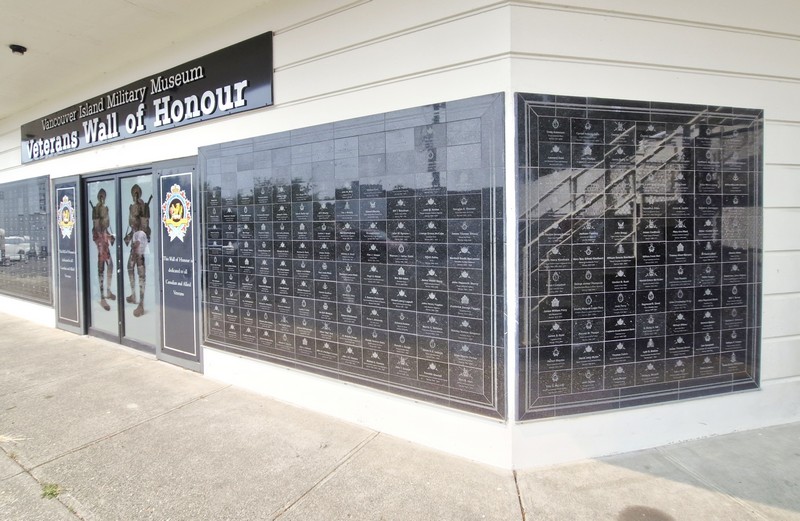
At the ground floor is the Veterans Wall of Honour. Began in October 2013, it was dedicated at a ceremony held on June 16, 2016 by Judith Guichon, OBC, the Lieutenant Governor of British Columbia. The wall was created to recognize the service of veterans from Canada’s Armed Forces, Merchant Navy, Royal Canadian Mounted Police, and those who served with British and Commonwealth of Nations Forces and its Allies, and as a fund-raising project to further the work of the museum. The wall, displays 414 black granite plaques, showing each veteran’s name, branch of service, and dates of service. The largest tribute dedicated solely to military service in British Columbia it is, however, not a memorial as the plaques show no rank, honors nor awards.
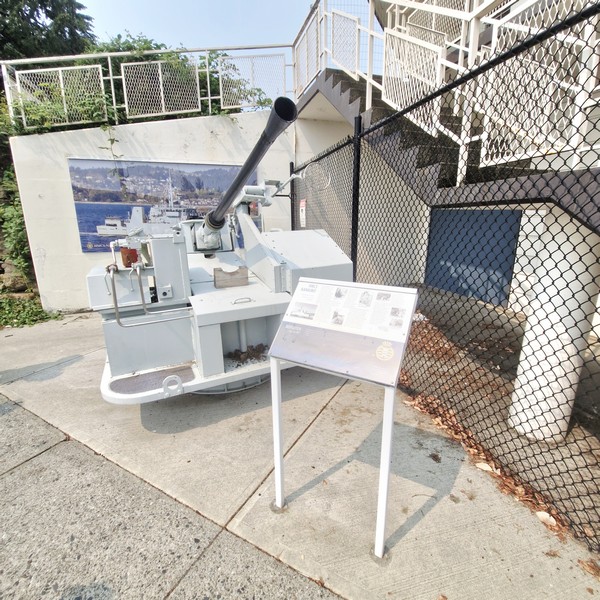
Mounted at the entrance of the museum is the actual 40 mm. Bofors Gun from the decommissioned Royal Canadian Navy’s maritime coastal defense vessel HMCS Nanaimo which was presented during a ceremony, attended by the mayor, members of city council, and the ship’s crew, held on July 1, 2017, during the celebration of Canada’s 150th birthday and the 20th anniversary of the commissioning of the HMCS Nanaimo.
Vancouver Island Military Museum: Piper Park, 100 Cameron Rd., Nanaimo, British Columbia BC V9R 0C8. Tel: (250) 753-3814. E-mail: oic@militarymuseum.ca. Website: www.militarymuseum.ca. Admission: $4.00 for adults; $2.00 for students and seniors; free for children under 12 and military/RCMP veterans or active personnel. Open Tuesdays through Fridays, from 10 AM to 3 PM, and Saturdays, from 11 AM to 3 PM (Closed Sundays and Mondays).
How to Get There: The museum is located in downtown Nanaimo’s dynamic waterfront; close to the Port Theatre, the Inner Harbour Boat Basin, Cruise Ship Facility, the Nanaimo Conference Centre, Tourism Office and many major hotels.