
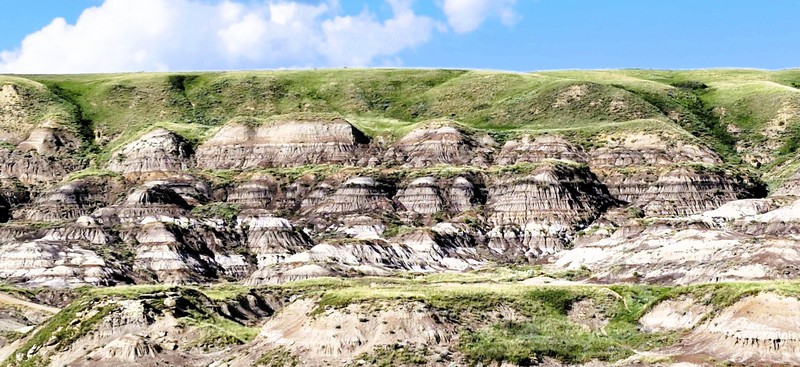
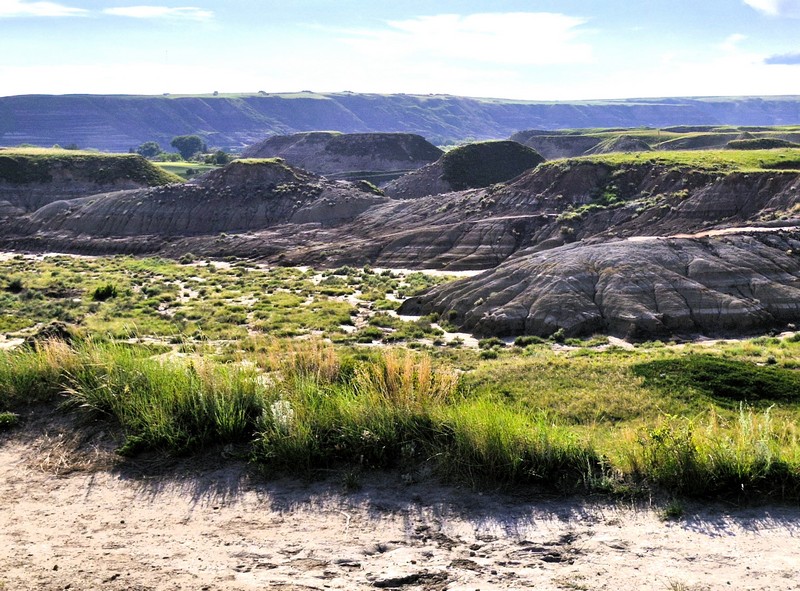
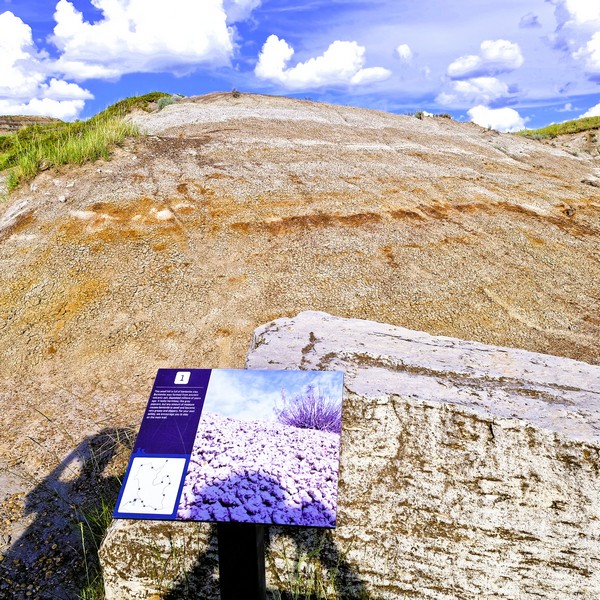
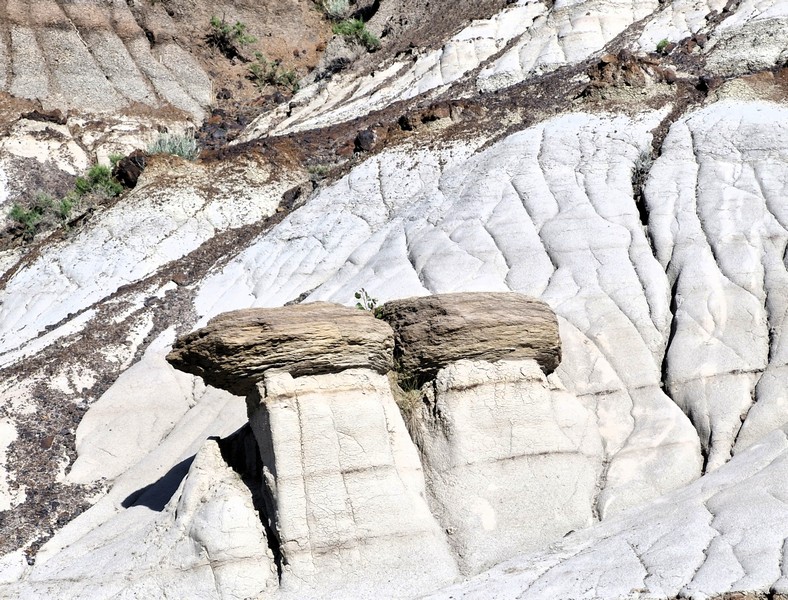
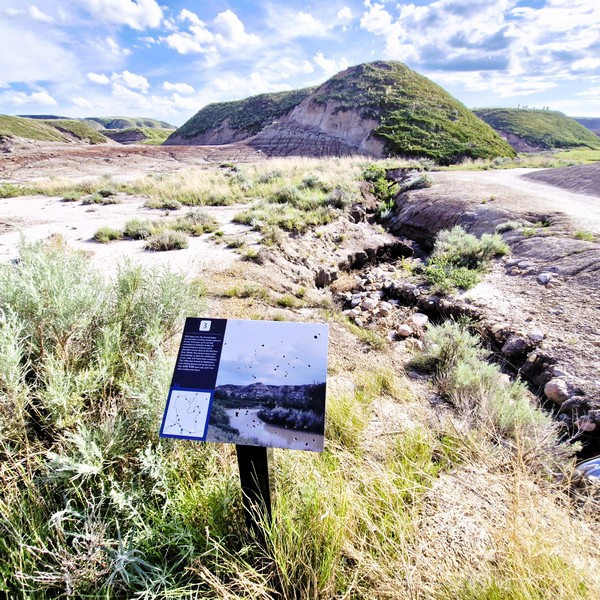
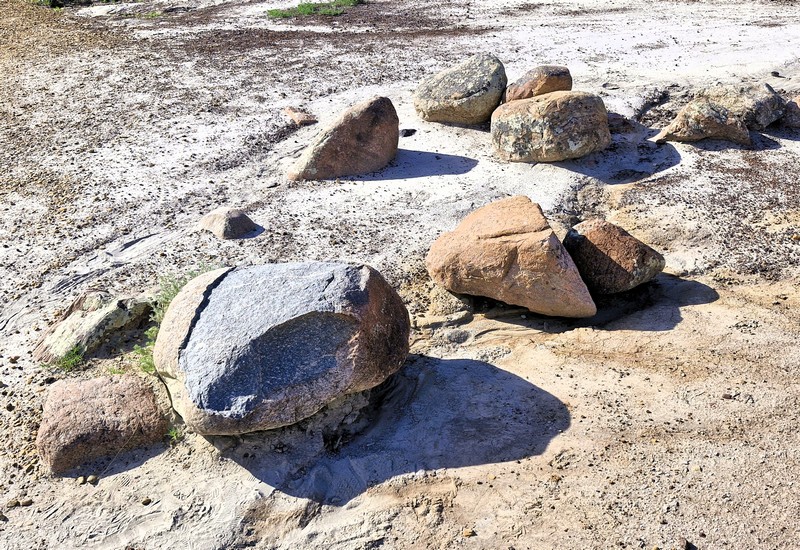
After our tour of the Royal Tyrrell Museum of Paleontology, we tried out the Badlands Interpretive Trail, a 1.4 to 1.6-km. (0.87 mi.) easy loop hiking trail, with about 27 m. (88 ft.) elevation gain, which is used extensively by the museum public and school programs. A trailhead, a few hundred meters east of the museum, marks a 1-km. long loop, where numbered interpretive signs recount the glacial forces that sculpted the badlands from 70-million year-old layers of sedimentary rock.
Check out “Royal Tyrrell Museum of Paleontology”
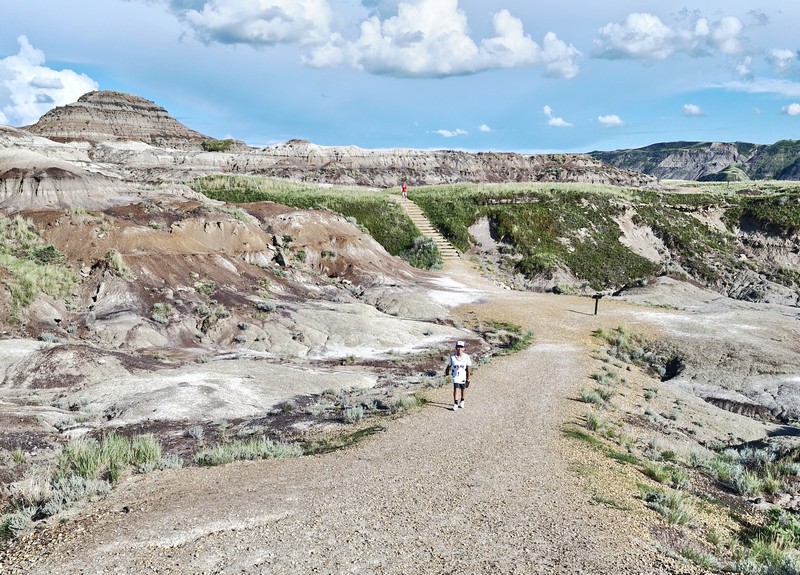
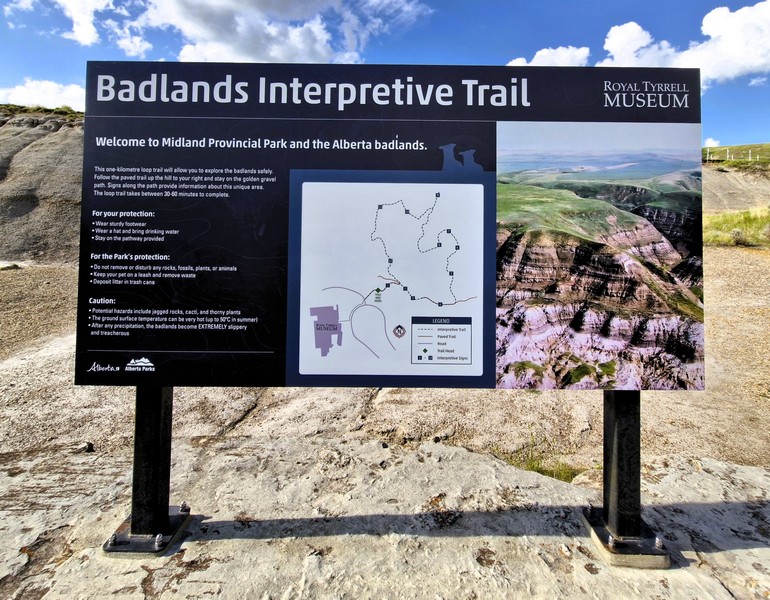
Visitors can enjoy a self-guided tour through the trail, which is a popular destination for those interested in geology, paleontology, and natural history and suitable for all ages, offering stunning views of the surrounding badlands.
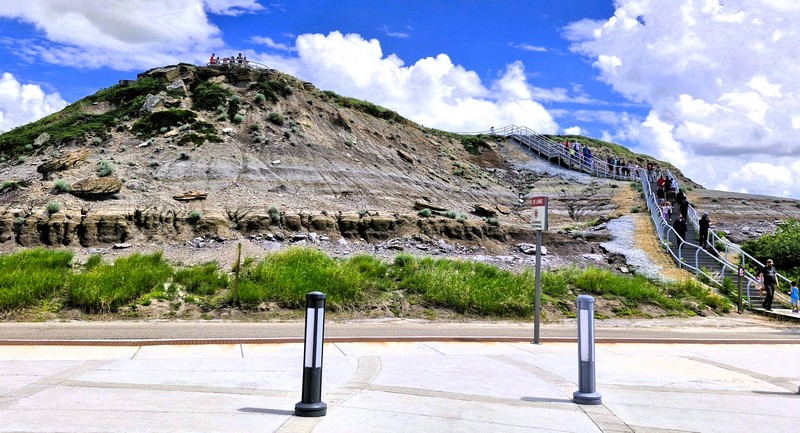
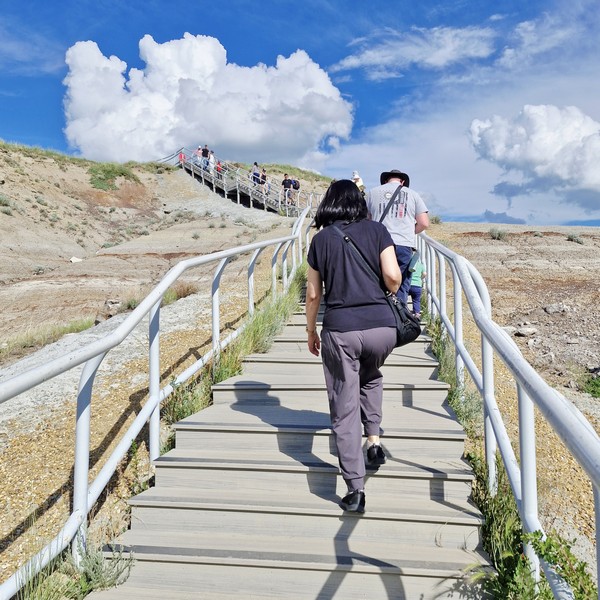
This trail, featuring two stairs, elevated viewing platforms (not fully wheelchair-accessible), and informative signs explaining local fossil history, plants and landscape creation, is part of the Canadian Badlands, an area known for its striking landscapes, including hoodoos, canyons, and coulees. We climbed up the elevated viewing platform just across the museum. Here we had panoramic bird’s eye views of the museum and the eroded valley.
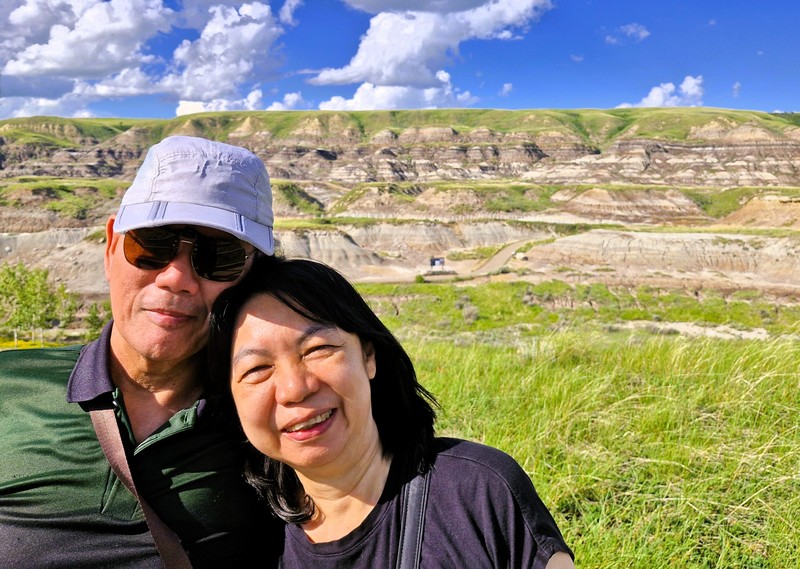
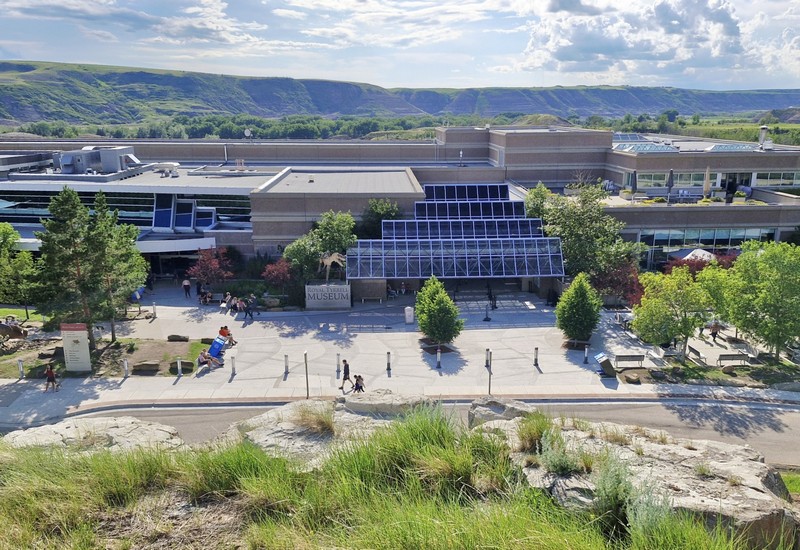
Taking visitors through Midland Provincial Park and connecting to the Trans Canada Trail, the Badlands Interpretive Trail offer us a chance to explore the unique geological formations and rich paleontological history of the Drumheller region.
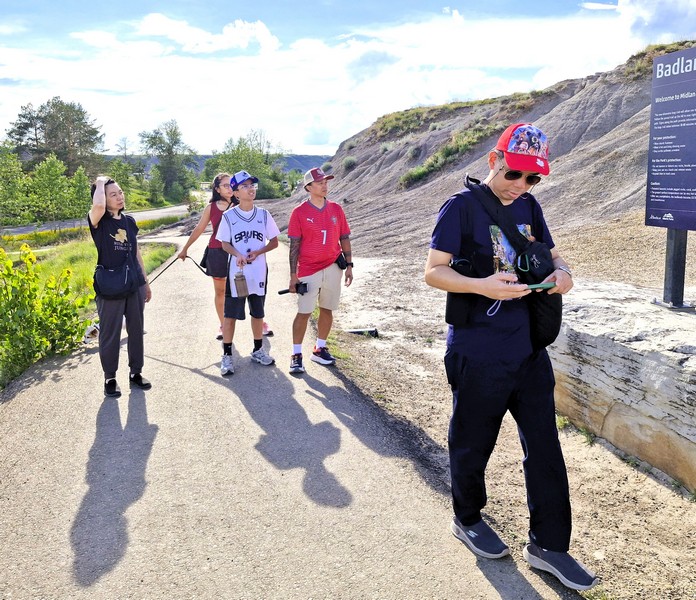
One or two kilometers east of this path is another self-guided tour through the remains of the Midland. After descending the elevated viewing deck, we began our hike on the east side of the Royal Tyrrell Museum of Paleontology parking lot, staying on the marked golden gravel and paved paths to protect the fragile badlands ecosystem.
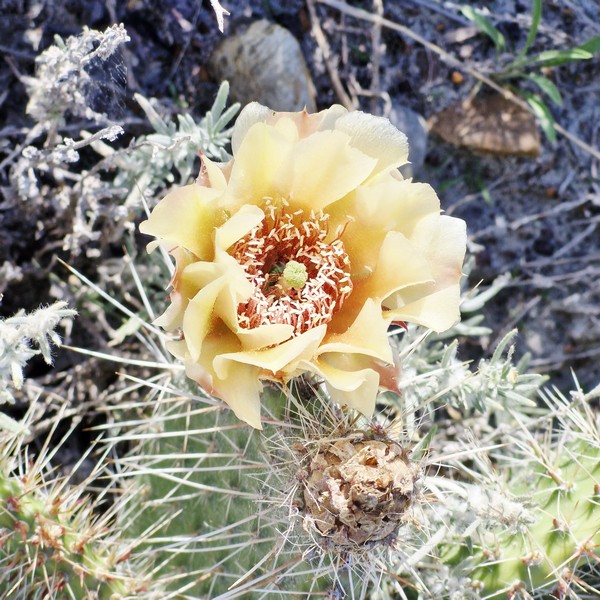
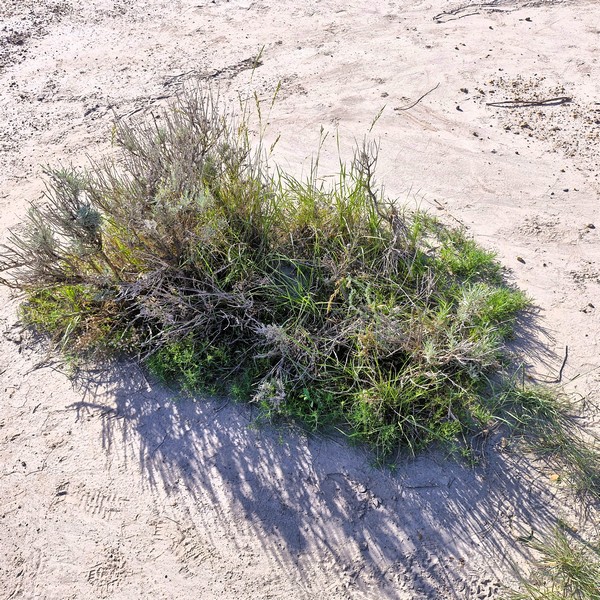
As it was summer, it was the perfect time to look for tough plants that survive despite the hot, dry, and windy desert-like badlands conditions. They include flowering prickly pear cactuses (which have special stems with thick, waxy skin to trap water and sharp thorns for safety), sage (with strong aromatic leaves, it thrives in dry soil), scarlet mallow (produces bright, hardy flowers during summer months) and small populations of harebell and wild rose which bloom in sheltered or slightly cooler spots.
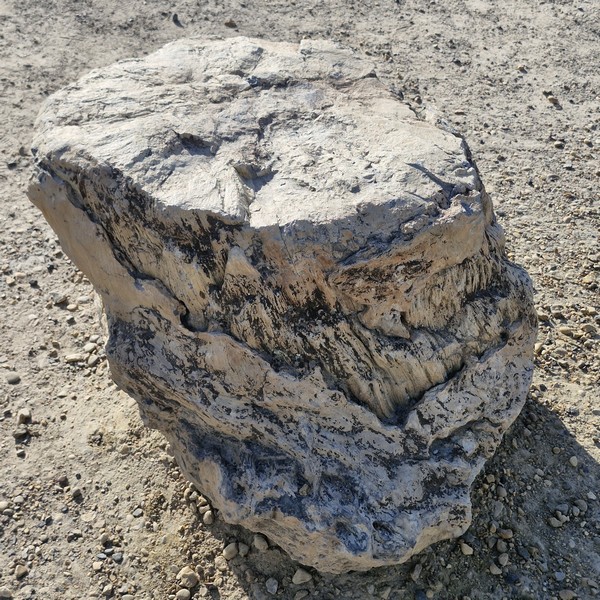
We also encountered a boulder-size fossil of an ancient giant redwood (Sequoiadendron), dating back roughly 72 million years to the Late Cretaceous period, that has been petrified and remains exposed by erosion. The fossil, existing long before the region eroded into today’s semi-arid badlands landscape, proves the local badlands area once had a warm, moist, subtropical climate comparable to modern-day Florida.
If you want a longer walk, the path links up with other trails in the Midland Provincial Park and the wider local river park system. The trail provides educational signage that explains the area’s geology, ecology, and the significance of the dinosaur fossils found in the region.
Badlands Interpretive Trail: at 1500 North Dinosaur Trail, Midland Provincial Park, Drumheller, Alberta. Admission is free.
How to Get There: the trail is located northeast and right next to the Royal Tyrrell Museum.