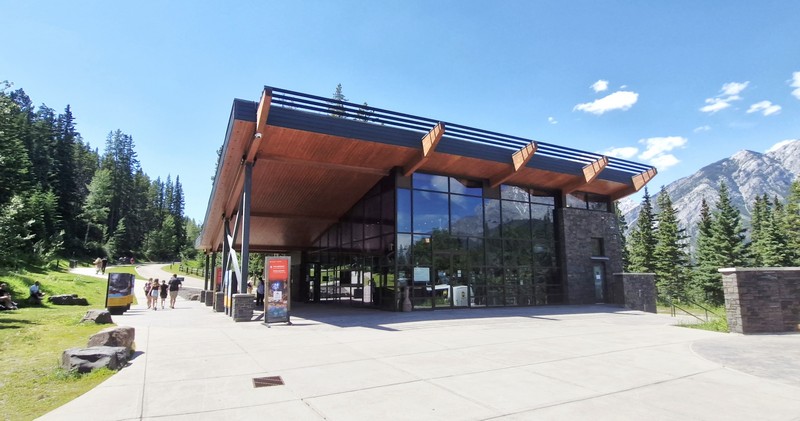
On our first whole day in Banff, we departed Douglas Fir Resorts & Chalets for the short 3.8-km. (10-min.) drive to The Cave and Basin National Historic Site of Canada, the first ever federally protected reserve in Canada and the birthplace of the country’s national park system (now, Canada has 37 national parks, 11 national park reserves, and 1004 national historic sites, 171 of which are administered by Parks Canada). As we arrived in July, well within between June 19 and September 7, 2026 (when Parks Canada waived all entry fees for visitors this summer), our entrance to the site was free.
A special place for Indigenous Peoples for over ten thousand years (and continues to be so to this day), with important and longstanding cultural significance, it is a gathering place for sharing stories about conservation and the connection between people and the land. Together with Banff National Park, it is part of the traditional territories of the Blackfoot Confederacy, the Îyârhe Nakoda of the Chiniki, Bearspaw, and Goodstoney First Nations; the Tsuut’ina First Nation; and the Métis Nation of Alberta.
Here’s the historical timeline of the site:
- In 1859, the first written recorded reference to hot springs here was made by James Hector of the Palliser Expedition.
- In 1875, Joe Healey happened upon the Cave and Basin site long after Indigenous Peoples.
- In 1883, Frank McCabe and brothers Tom and William McCardell, three Canadian Pacific Railway workers, using a felled tree, descended through the skylight entrance into the cave and the thermal springs.
- In 1884, they constructed a small cabin nearby with the intention of commercializing the Cave and Basin site. In those days, hot springs were extremely valuable since hot water was not readily available from a tap like it is today. The CPR workers knew this would attract people and wanted to monetize it. Conflicting claims by other parties prompted intervention by the Canadian government headed by John A. Macdonald.
- In 1885, an order-in-council reserved 26 sq. kms. (10 sq. mi.) around the Cave and Basin, the Banff Hot Springs Reserve. This was the genesis of Canada’s national parks system.
- In 1886, the Canadian government held an inquiry into the various private claims to settle on compensation. That same year, an artificial tunnel was driven into the Cave and Basin to aid visitation. Its construction, according to articles in the Calgary Herald at the time, was contentious even in 1887.
- In 1887, a bathhouse, the first structure on the site, was built.
- In 1904, a new, naturally-heated pool was built as the existing one proved inadequate by 1902,
- In 1912, bottled water from the Cave and Basin site was sold for its alleged curative powers.
- In 1914, a stone bathhouse, designed by architect Walter S. Painter, was completed and opened to the public. Many of the early structures were built by detainees held at a World War I Ukrainian Canadian internment camp located nearby. The camp had a significant Ukrainian contingent. It continued to operate until 1994.
- In 1924, western mosquitofish were introduced into the hot springs in an attempt to control mosquitos. Tropical fish illegally introduced into the lower springs by local aquarium enthusiasts may have contributed to the extinction of the Banff longnose dace.
- In 1975, the pools were closed.
- On November 13, 1981, the Cave and Basin was formally declared a National Historic Site.
- In 1985, on the anniversary of the order-in-council that established the original reserve around the Cave and Basin, Canada’s national parks system celebrated its centennial. That same year, the pools were also restored.
- On August 20, 1985, Prince Philip, Duke of Edinburgh and consort of the Queen of Canada, unveiled the National Historic Site plaque.
- In 1992, the pools were permanently closed. An interpretive center now uses the structures.
- In 2000, the Committee on the Status of Endangered Wildlife in Canada listed the Banff Springs snail as an endangered species. Cave and Basin hot springs are also notable as the habitat for this snail.
- In the summer of 2010, First Nations ceremonies and rituals began again in the Cave and Basin. (the Stoney people stopped coming to the Cave once Canadian Pacific Railway workers and settlers arrived in Banff).
- On September 13, 2013, a permanent exhibit about Canada’s first national internment operations was opened at the Cave and Basin site (it was postponed three months by extensive flooding across southern Alberta), with an address by Jason Kenney, Minister of Employment and Social Development and Minister for Multiculturalism
Located within the Canadian Rocky Mountains, at the site of natural thermal mineral springs around which Canada’s first national park, Banff National Park, was established, it is the lowest component of nine sulphurous hot springs clustered, in three groups on the northeast flank of Sulphur Mountain, all located along the Sulphur Mountain Thrust Fault below Devonian limestones.
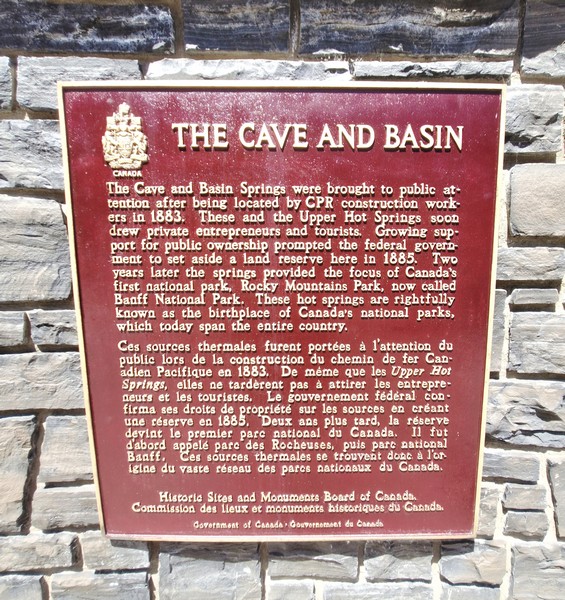
The mineral spring issues from Sulphur Mountain where surface water penetrates the rock, absorbing minerals and being heated, by geothermal energy, from an estimated depth of 3 kms., to emerge in a cave and in a nearby basin before joining the Bow River drainage system below.
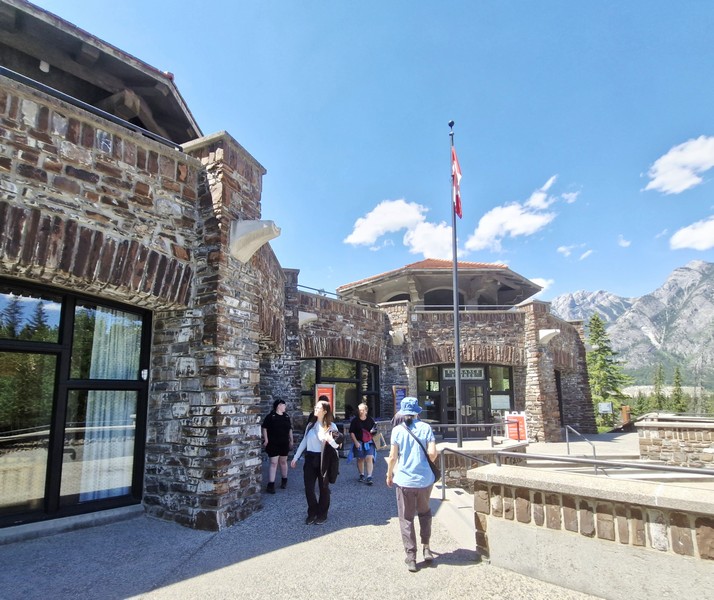
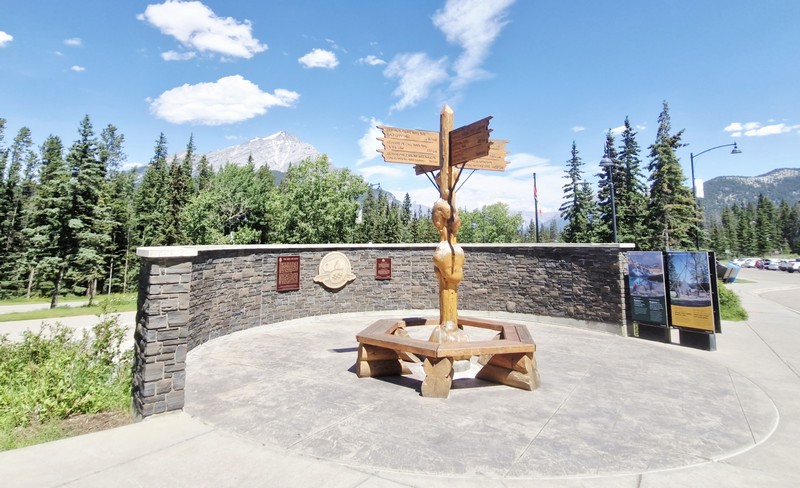
At the entrance is a rotunda with interpretative panels commemorating the historic 1883 discovery by railway workers plus the official National Historic Site bronze plaque, unveiled by Prince Philip, Duke of Edinburgh on August 20, 1984, designating the thermal springs as the birthplace of Canada’s national parks system.
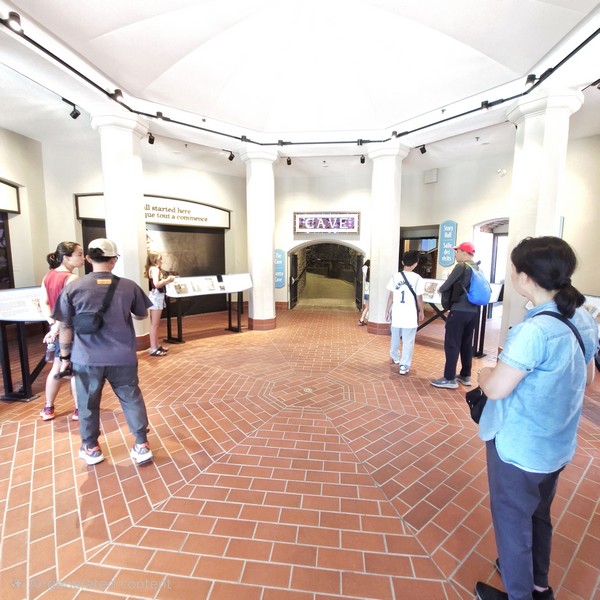
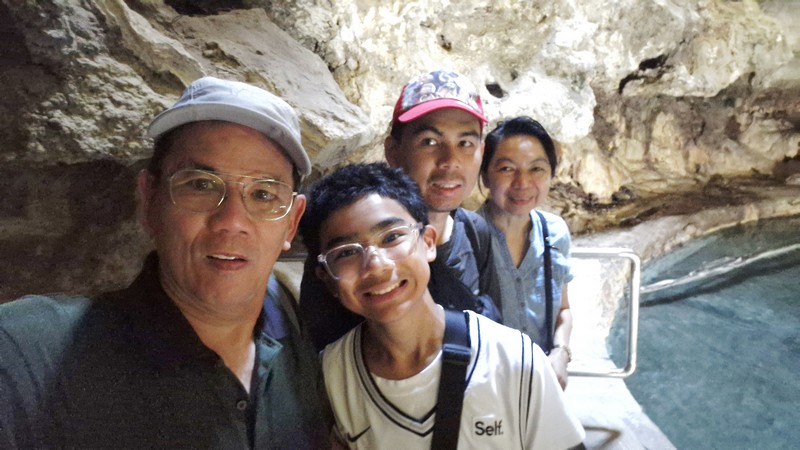
Near the entrance, at the south belvedere of the main building, is a narrow artificial tunnel leading to The Cave, a dimly-lit natural grotto and hot spring. The tunnel ceiling was low in some places, so I had to mind my head. Before entering the cave, we took time to read the education displays and panels at Cave Story Hall to have a deeper understanding of the impact and significance of what we are seeing when we enter The Cave.
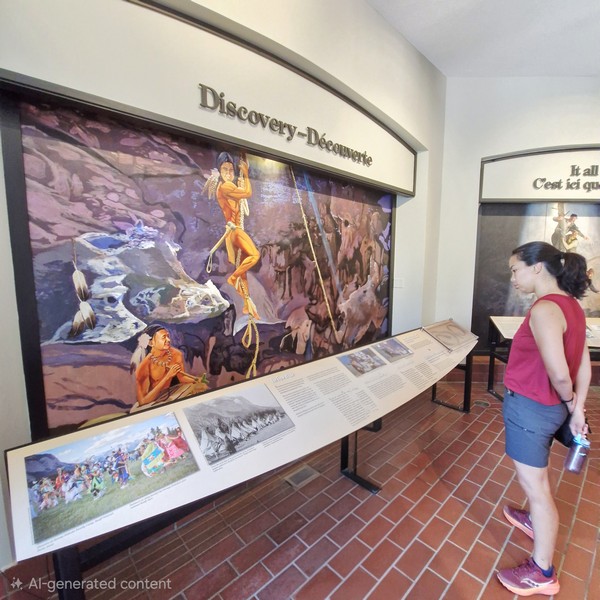
Near the entranceway and and tunnel of the hall is a remarkable oil-based mural, created by artist Roland Rollinmud (an elder from Stoney Nakoda Nation) and presented to Parks Canada in 2011, depicting Indigenous elders climbing down into the cave through the vent hole on rawhide ladders
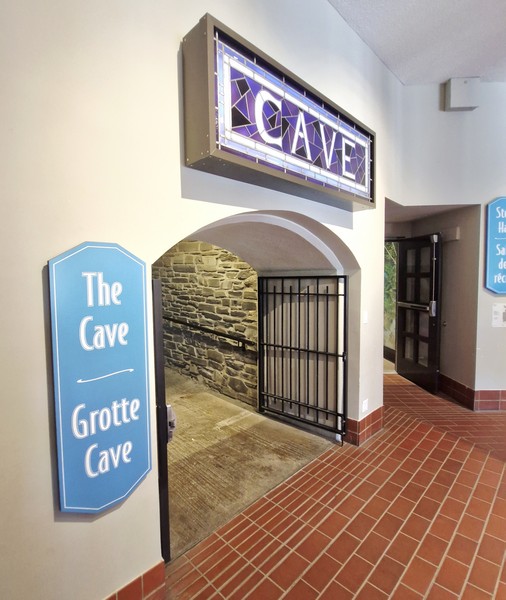
This large hollowed-out cavern, with a steaming mineral pool below, is the only cave large enough to comfortably accommodate groups of people. A small vent hole, in the rock ceiling, acts as a natural skylight, letting in enough sunlight to reflect off the pool and glisten on the smooth red and white flowstone layers running down the cave walls. You’ll also find stalactites and stalagmites, glacial till and a small trickling waterfall.
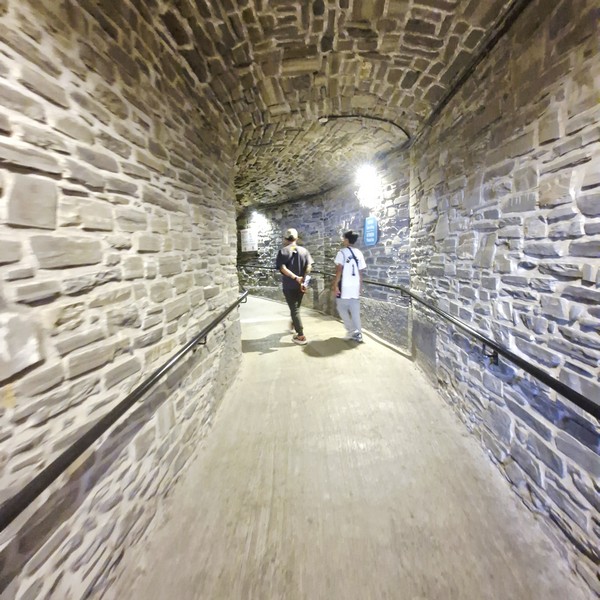
A single elevated platform overlooks the water. There are stanchions in place to make it abundantly clear you enter along the righthand side of the hall in a line that terminates at the platform. After your time on the platform, you exit via the left-hand side of the tunnel. Relatively small, the cave has a single opening at the top that lets in natural light.
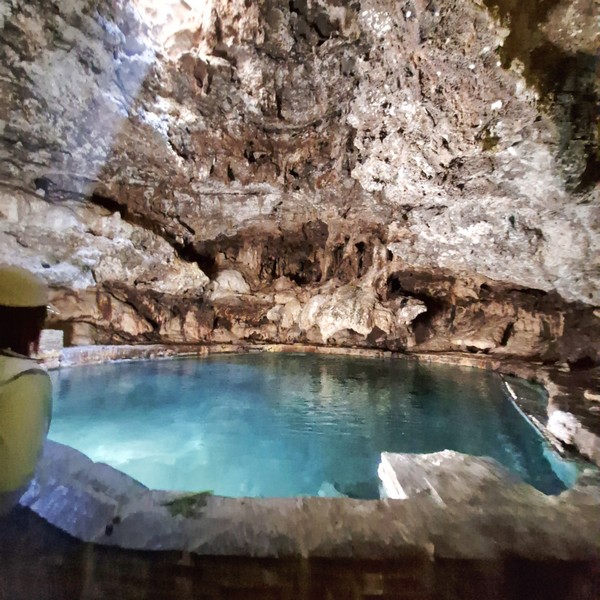
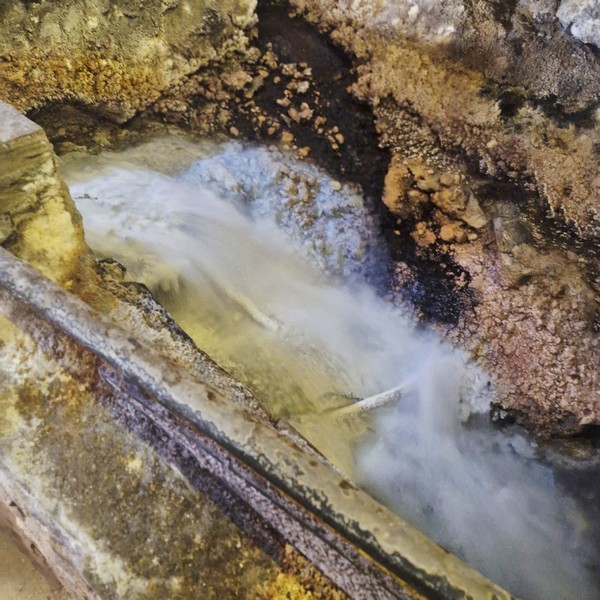
Immediately following its “discovery,” almost all of the delicate cave formations had been stripped out thinking it would improve the accessibility and aesthetic. Steam continually rose from the geothermally heated waters, and the earthy mineral scent of hydrogen sulfide filled the air, which kind of makes you second guess wanting to jump in. While the rotten egg smell never goes away, it does become tolerable.
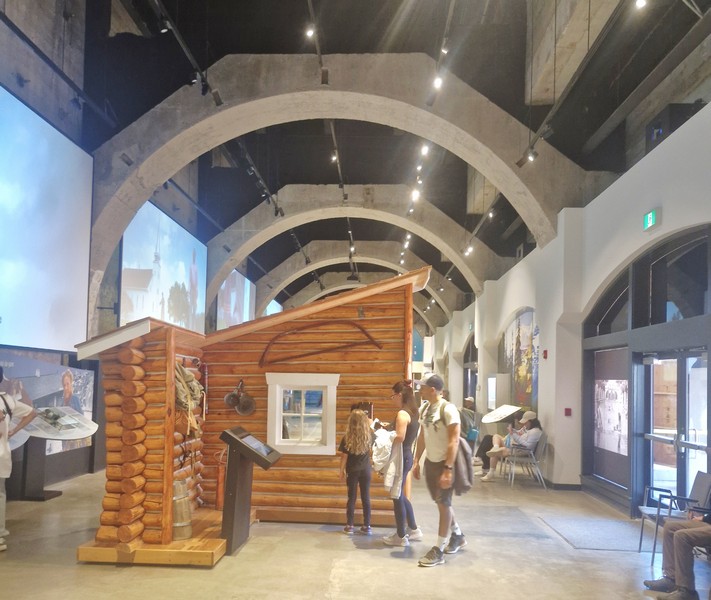
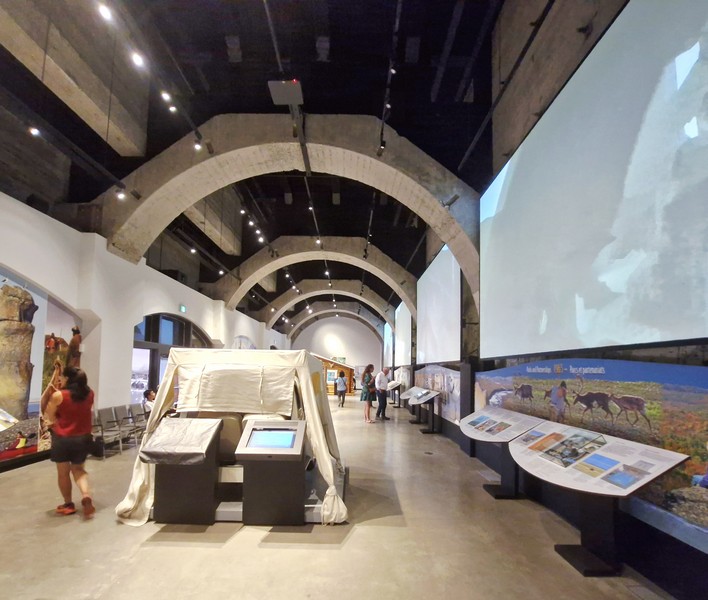
The former original 1887 bathhouse and restored 1916 interior public swimming pool complex for nearly 100 years, built with Classical Revival details, has now been renovated into an Interpretive Centre and Museum. Visitors here can enjoy interactive and interpretive media exhibits, detailing the 1883 discovery of the thermal hot springs by railway workers, and short films that takes you through a journey of Canada’s National Parks, and heritage of thermal waters.
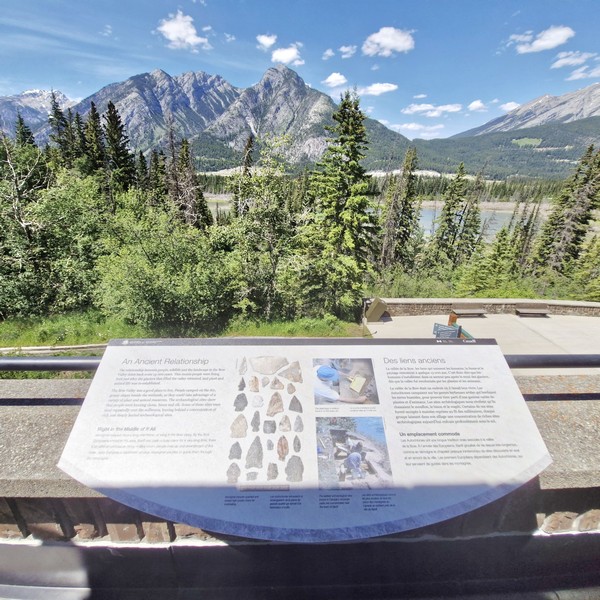
On top of the main building are the covered Belvedere Viewing Decks, overlooking the historic site, that offer panoramic views of the surrounding Canadian Rocky Mountains, marshland and mountain ridges.
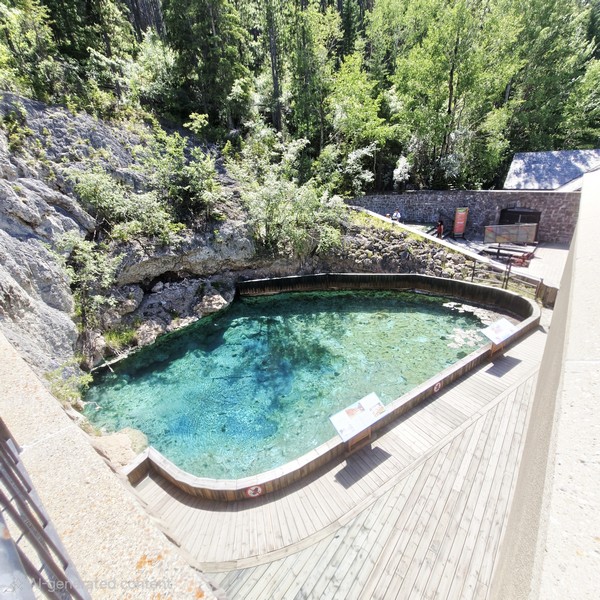
Outside the old pool complex, adjacent to The Cave, is The Basin (a pool of mineral water), the natural springs which flow into the Cave and Basin. It has been rewilded as close to its original state as possible and is now protected. A helpful ranger explained more about the animals that call these thermal pools home. They include tiny fish that have been introduced to these thermal waters (mosquito fish, jewelfish and sailfin molly), damselfly (Argia vivida) larvae that were in among the algae and, if you look closely, you’ll catch a glimpse of the endangered Banff Springs Snail (Physella johnsoni) in the pools.
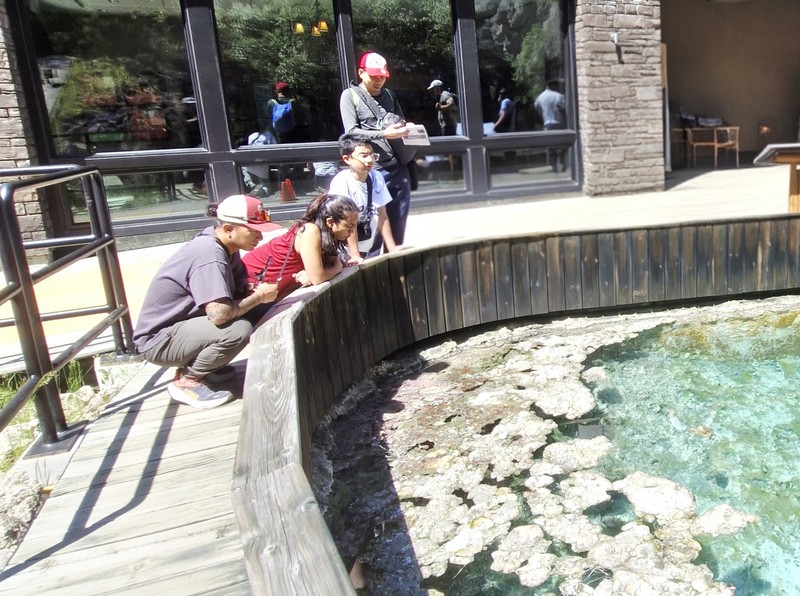
These tiny snails that are only found in the Upper Hot, Kidney, Middle, Cave, Basin and Vermilion Lake Springs in this area. All of the thermal pools, except the Banff Upper Hot Springs, a separate facility some 5 kms. (3 mi.) southeast of the Cave and Basin, have been closed off to humans in order to preserve this limited habitat.
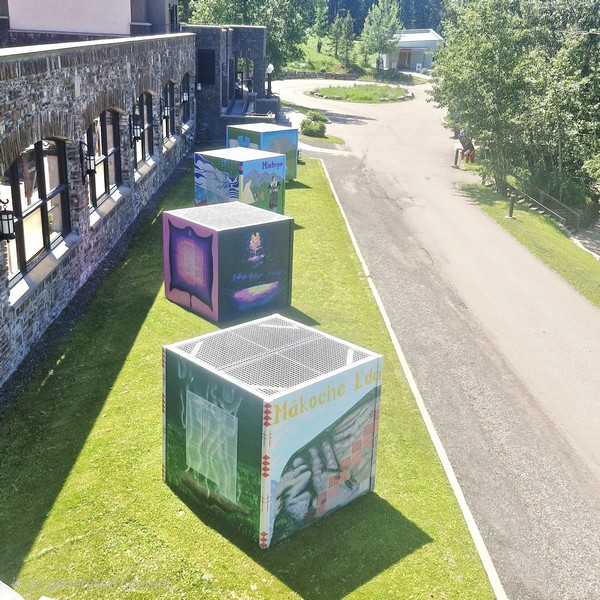
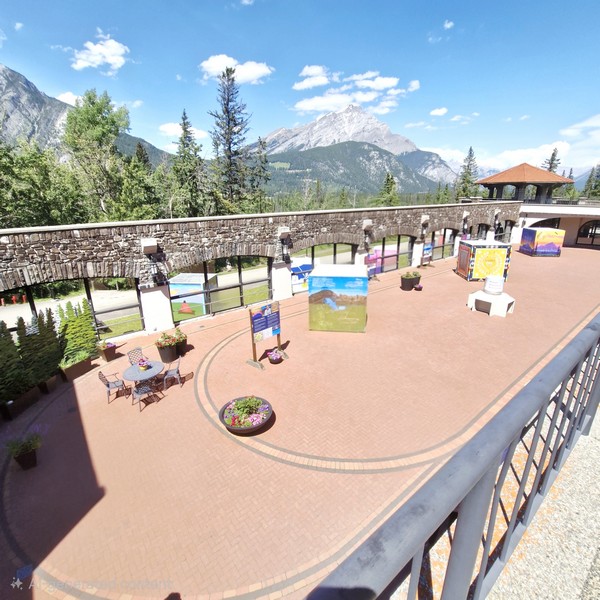
Located around the parking lot and historic bathing pavilion are large 8×8 ft. murals, painted on outdoor display boxes, which were placed during the spring-to-fall visitor season and can be viewed during regular site hours. These rotating large-scale outdoor mural projects were created by indigenous artists, in collaboration with the Whyte Museum of the Canadian Rockies.
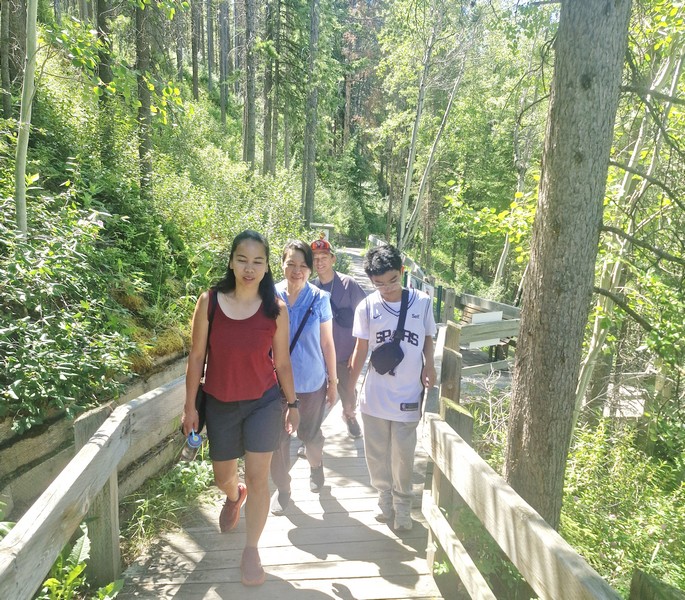
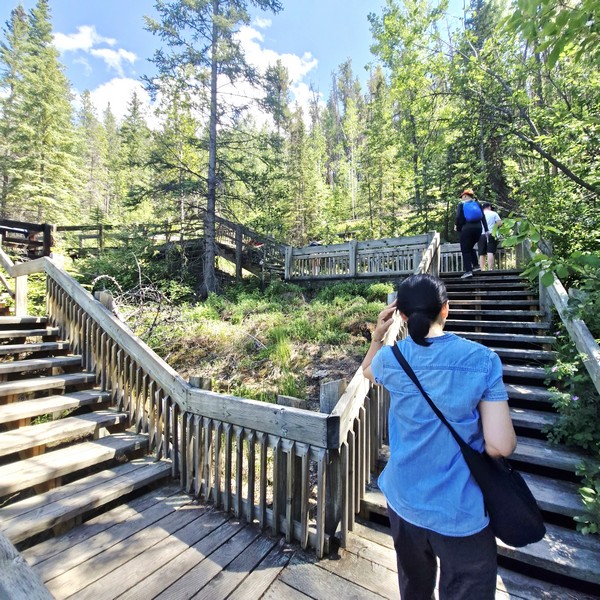
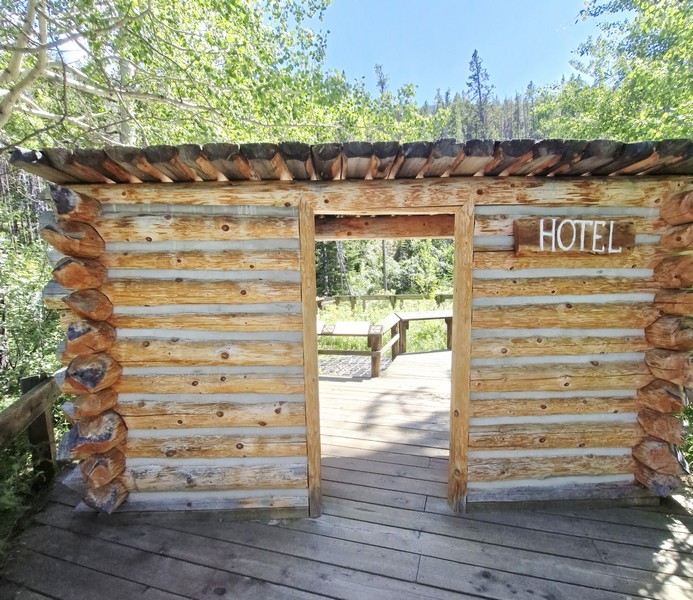
Within the complex are the Discovery Boardwalks that lead you up the hill and through unique marshes created by the natural springs. Along the walk, you’ll encounter the original surface vent hole and, next to it, are vestiges of the log shanty, built between 1883 and 1885, known as ”the Hotel,” so they could stay close and protect it from other prospectors.
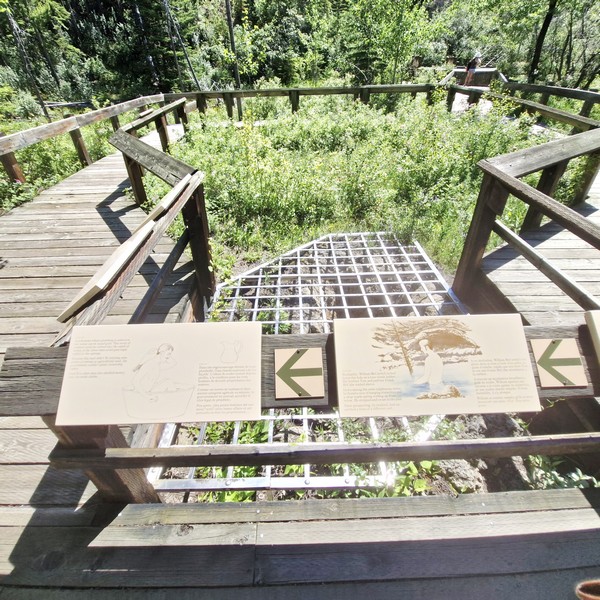
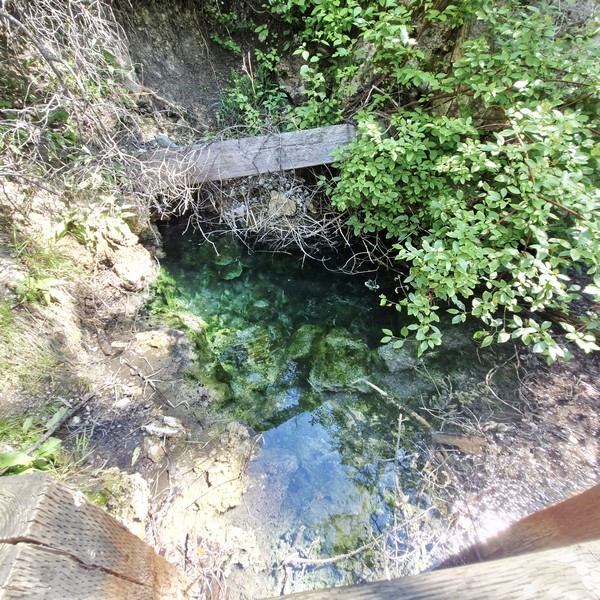
There are also few other smaller hot pools with bright blue-green waters and filled with pink bacteria and algae.
The boardwalks also feature educational signage, upper views of the Cave and Basin complex, and stunning, sweeping mountain and valley vistas of the Canadian Rocky Mountains. For those with stamina, you can hike along the 7.4-km. round trip Sundance Trail and the 2.7-km. Marsh Loop.
Cave and Basin National Historic Site of Canada: 311 Cave Ave., Banff, Alberta T1L 1K2. Tel:+1-403-762-1566. E-mail: caveandbasin@pc.gc.ca. Admission: $9.00 (adults), $7.50 (seniors) and free for children. Free admission on Canada Day. Open daily, from May 15 to October 15, 9:30 AM to 5 PM. Closed: September 21 to 24, 2026. Coordinates:
How to Get There: It is located about 2 kms. and a 30-min. walk from the town center. Once you cross the bridge, look for the dedicated walking trail. The Cave and Basin Trail will take you all the way there. From Banff, head south on Banff Avenue (the main street through Banff), over the Bow River Bridge to a T-intersection, and then turn right on Cave Avenue and follow the signs. The Cave and Basin parking lot is located at the end of this road. By bus, Roam bus route #4 will take you to the Cave and Basin.