
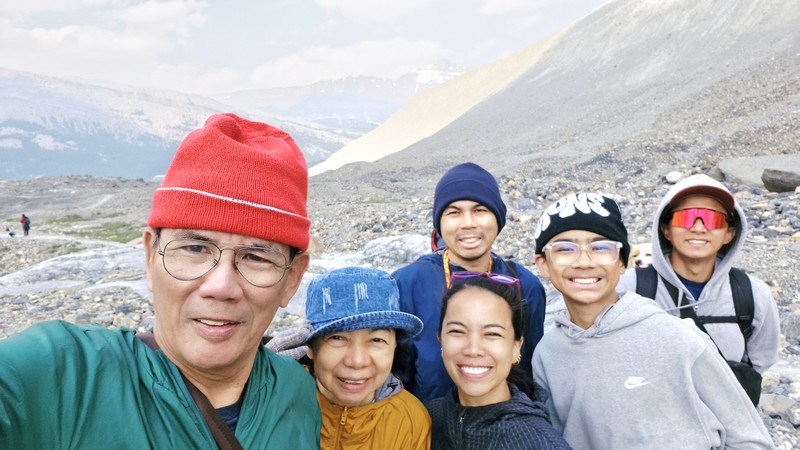
After our short stopover to view Panther Falls, it was a short drive to the Athabasca Glacier, the most visited glacier in North America and one of the most accessible (due to its close proximity to the road) glaciers in the world. Grace, Jandy and I were supposed to take a ride onto the glacier in a massive, all-terrain Ice Explorer vehicle (tours depart from the Columbia Icefield Glacier Discovery Centre, located directly across the highway from the glacier) but we decided to just join Cheska, Bryan and Kyle who were exploring the glacier on foot.
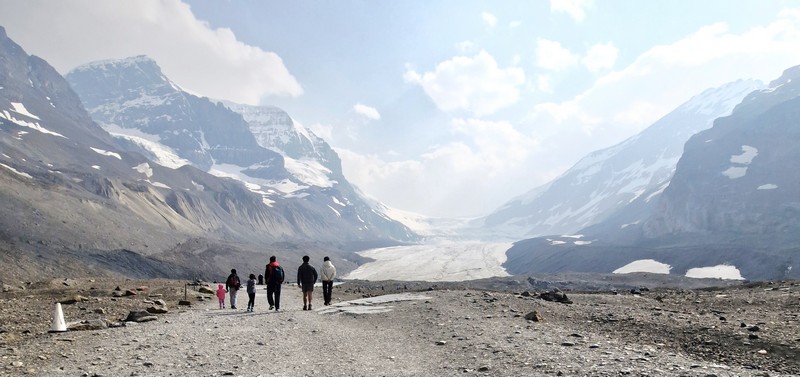
One of the largest non-polar ice fields in the world and a part of the Canadian Rocky Mountain Parks UNESCO World Heritage Site, this ice river is located in Jasper National Park within the Canadian Rockies and sits below monumental summits including 3,491-m. (11,453-ft.) high[Mt. Athabasca, the 3,450-m. (11,320-ft.) high Mt. Andromeda and 376-m. (1,234-ft.) high Snow Dome. Lying on a wide, elevated plateau, it is one of the six principal ‘toes’ of the Columbia Icefield, a surviving remnant of the thick ice mass that once mantled most of Western Canada’s mountains, and is the largest icefield in the Canadian Rockies.
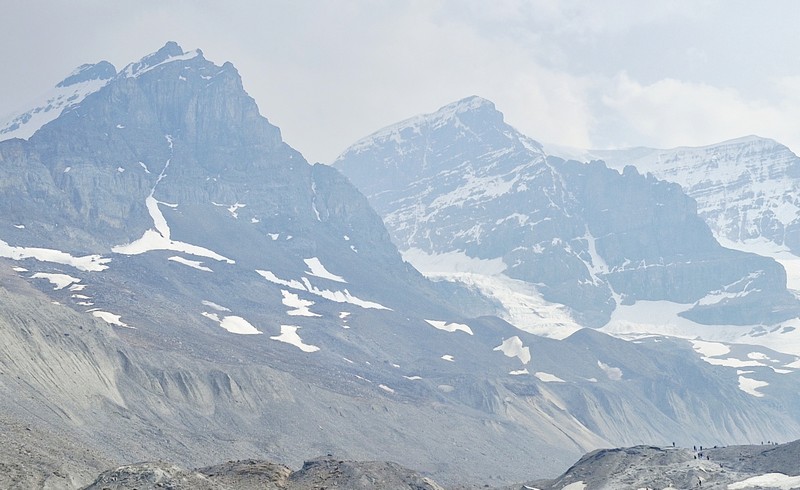
This ancient, receding “river of ice” is a striking, must-see stop in the Canadian Rockies. The glacier, covering an area of 6 sq. kms. (2.3 sq. mi.) stretches about 6 kms. (3.7 mi.) in length and was measured to be between 90–300 m. (300–980 ft.) thick.
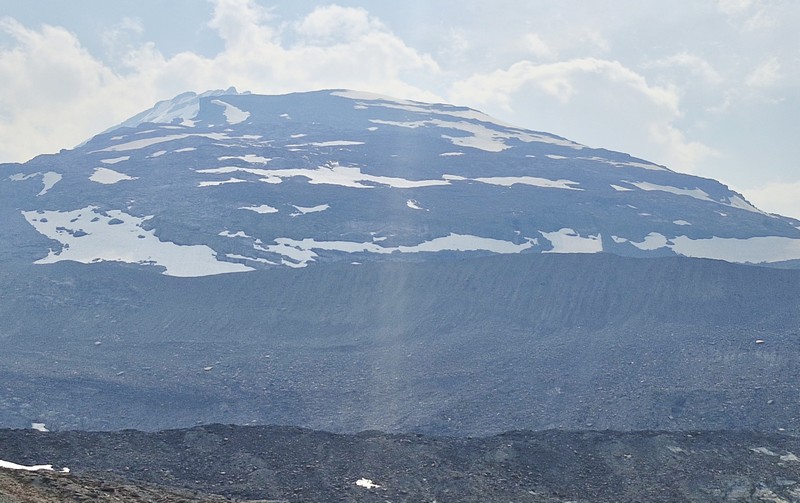
Because of a warming climate, the shrinking glacier has experienced significant glacier recession, increased temperatures and, in recent years, a notable lack of snowfall and snowpack. It currently loses depth at a rate of about 5 m. (16 ft.) per year and has receded or melted more than 1.5 kms. (0.93 mi.) and lost over half of its volume in the past 125 years.
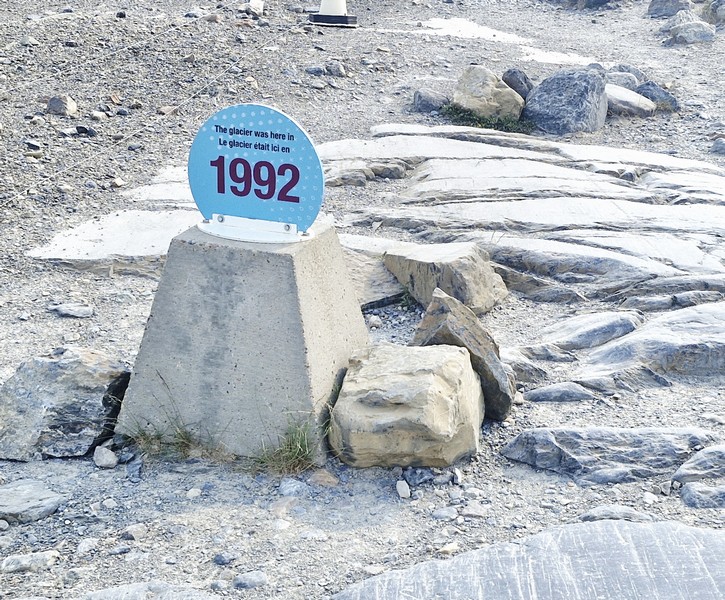
What really struck me was the tombstone-like “1992” marker that indicates the edge of the ice in 1992. The distance from that point up the edge of the glacier was now more than 150 meters. A moonscape of rocky moraines (piles of rock and sediment carried by the glacier) and glacier-eroded depressions, filled with meltwater, were left in its place. There was also evidence of glacial striation (scratches cut into the bedrock by the moving glacier).
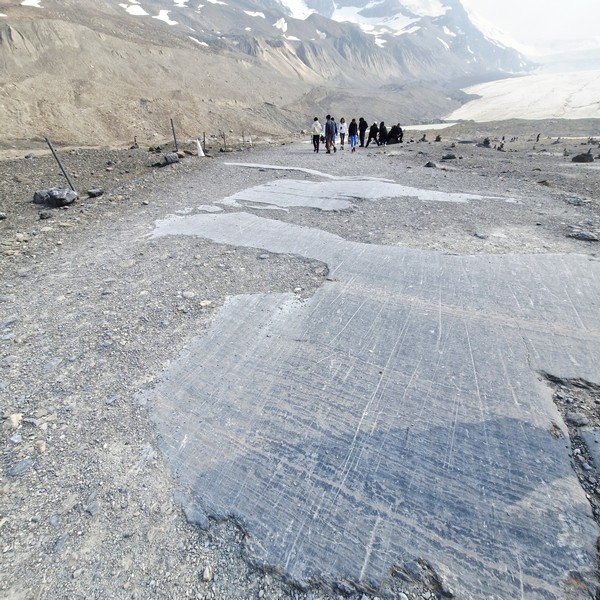
Firsthand evidence of the rapid retreat of this glacier has been witnessed, over the past century, by millions of visitors. A variety of researchers have documented this phenomenon, a direct indicator of the adverse effects of climate change on the glacier’s health and stability and, in 2023, the Athabasca Glacier saw more glacier ice melt than in any of the past 10 years. To ensure its ecological integrity for present and future generations, Parks Canada continues to work towards fostering public understanding, appreciation and enjoyment of the Athabasca Glacier.
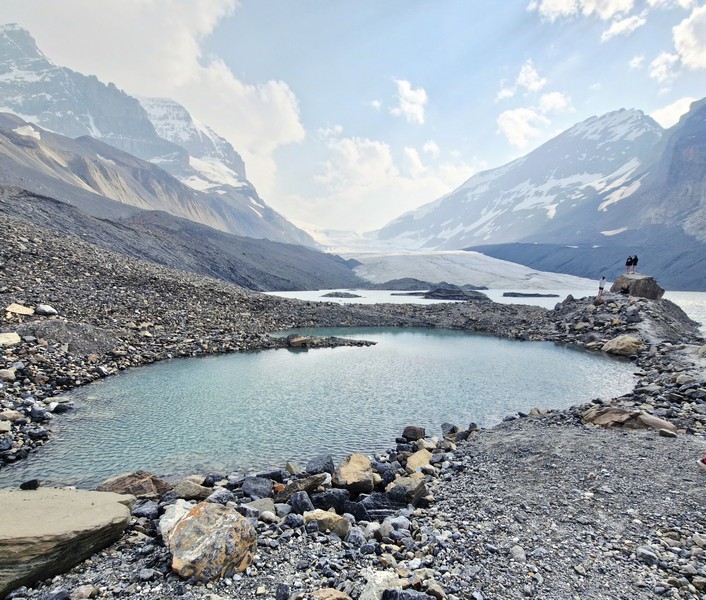
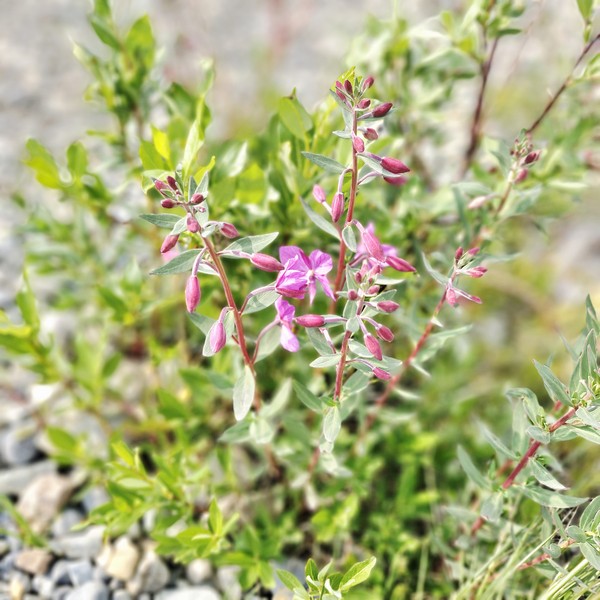
Hardy alpine plants and early colonizing species have slowly establish themselves in the rocky, wind-swept forefield left behind by the receding Athabasca Glacier in Jasper National Park. They include Fireweed (Chamerion augustifolium), Alpine stitchwort (Cherleria obstrusiloba), Reddish stitchwort (Sabulina rubella) and Mountain Avens (Dryas species), River Beauty (Chamaenerion latifolium) and White arctic whitlow-grass (Draba fladnizensis).
Ideally placed to catch much of the moisture that Pacific winds carry across the British Columbia interior, nearly three-quarters of the park’s highest peaks are located close to the icefield. Spilling from the Columbia Icefield over three giant bedrock steps, the Athabasca Glacier flows down the valley.
However, though easily accessible, our travel onto the glacier was not easy and we were not properly equipped with the right clothing as we just wore light jackets and woolen bonnets and gloves. Even during our visit on the second week of July, in the middle of summer, temperatures at the glacier that day were quite chilly, with strong, cold katabatic winds (cold, dense airflows that rush downhill from the steep face of the glacier) coming off the ice.
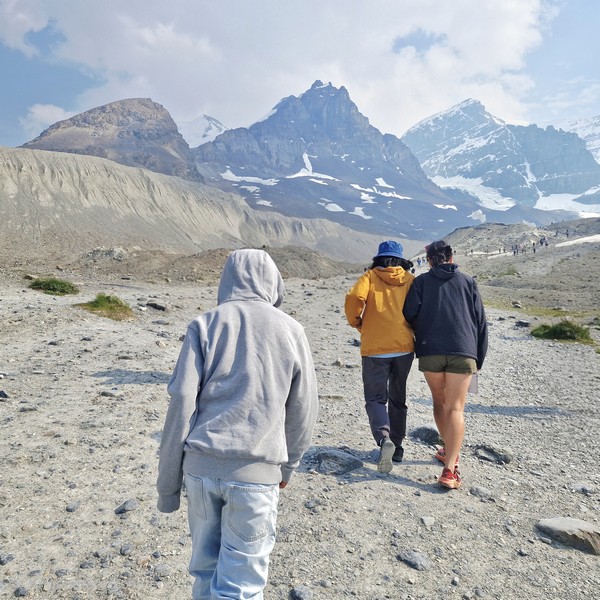
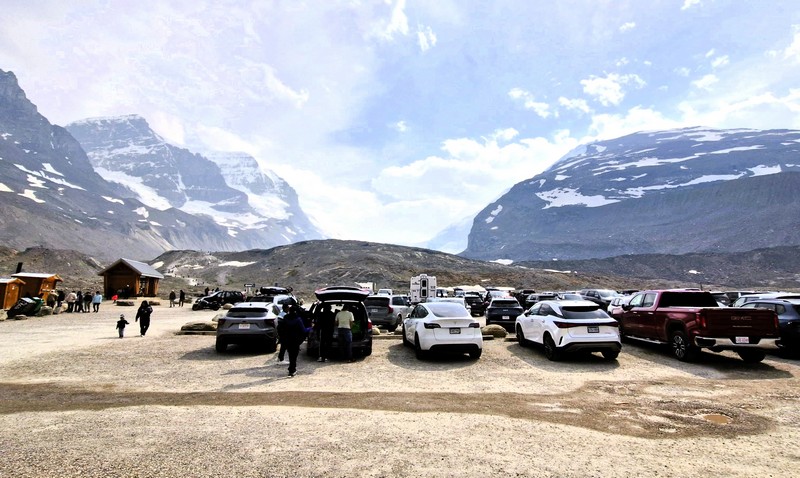
When we left the parking area, it was a mild 15°C to 20°C (59°F–68°F). However, it dropped sharply down to around 4°C to 10°C (40°F–50°F) or near freezing, at the edge of the ice surface, and it felt much colder due to the strong winds. Our visit, though, provided a first of Jandy – his first experience with snow.
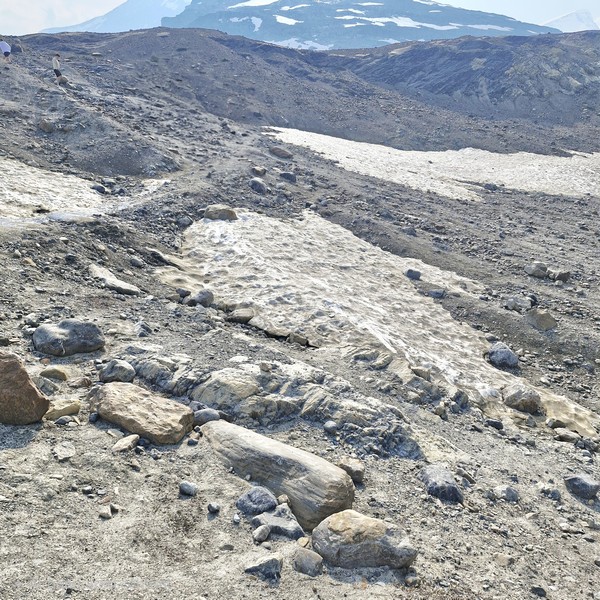
Walking onto the glacier independently is highly discouraged as hidden crevasses are incredibly dangerous, and wandering onto the ice without proper gear or a guide has proven fatal in the past, leading to the deaths of unprepared tourists. For your safety do not cross the barriers.
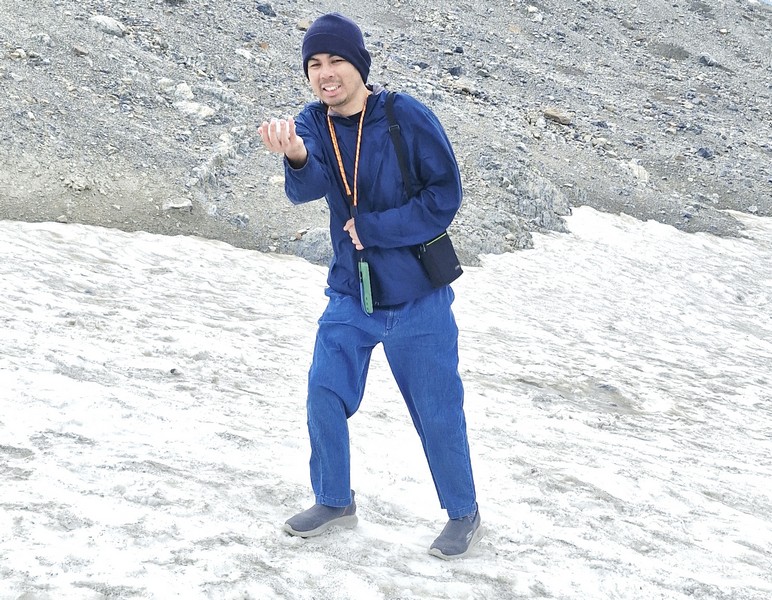
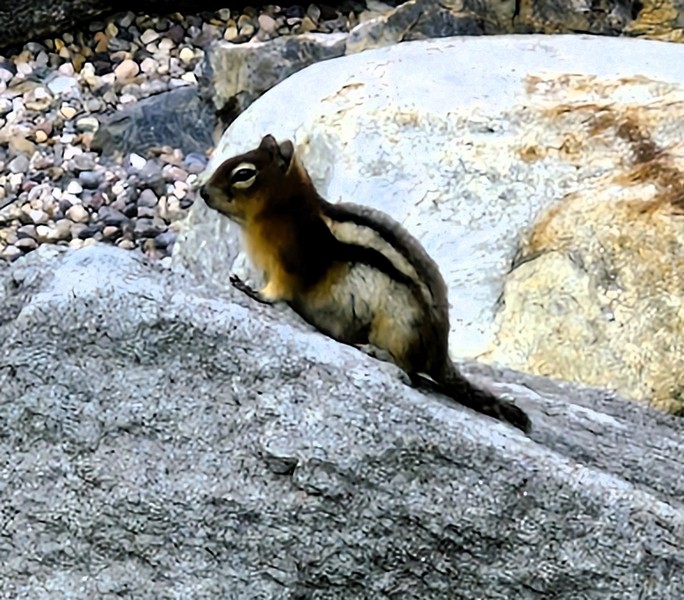
Along the way, we passed by patches of “dirty snow” and dark lines which are a completely natural and highly studied phenomenon, their dark, soot-like appearance caused by cryoconite, rock dust and wildfire ash. We also encountered a Golden-mantled ground squirrel.
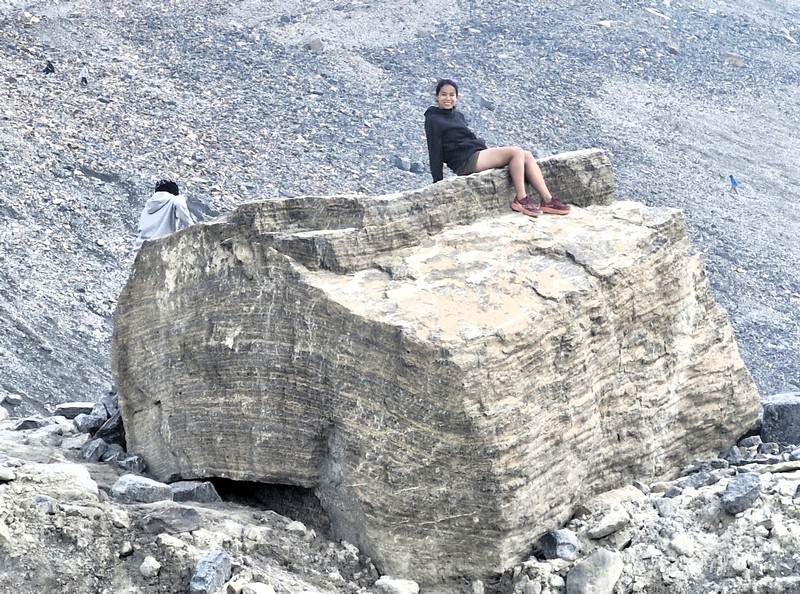
We also encountered (and climbed up) a number of glacier erratics, large boulders moved by glacial ice and left in an area with a completely different underlying bedrock type.
The Columbia Icefield Glacier Discovery Centre is also used as a lodge and for ticket sales for sightseeing on the glacier. It has two restaurants and a Starbucks. Standard buses here transport tourists from the center to the glacier edge, where they board specially designed snow coaches for transport over the steep grades, snow and ice part way up the glacier. The center is closed during the winter (mid-October to mid-April).
The Columbia Icefield Skywalk, located nearby, is a 918-ft. high, suspended glass-floored platform offering incredible, jaw-dropping views of the glacier-formed valleys. If you want to take an Ice Explorer tour or a guided hike, book your passes in advance through the Columbia Icefield Adventure platform to secure your preferred time slot.
Athabasca Glacier: Highway 93 North – Icefield Parkway, Improvement District No. 12, Jasper, Alberta, T1L 1J3. Tel: (888) 740-0307. Toll Free: (866) 506-0515. Coordinates: 52°11′55″N 117°14′37″W.
How to Get There: The glacier is directly off the Icefields Parkway (Highway 93N) and is 105 kms. (about an hour drive) south of Jasper and 128 kms. (a 2-hour drive) north of Banff. The leading edge of the glacier is within easy walking distance.