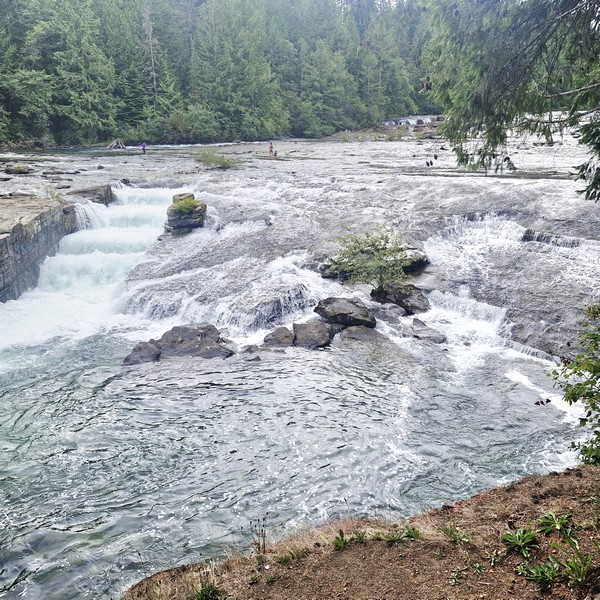
On our second whole day in Vancouver Island, we drove 58.3 kms. (a 40-min. drive) from Qualicum Bay Resort to Nymph Falls Nature Park a popular summer spot for swimming and picnics known for its series of small waterfalls along the Puntledge River, clear pools, and easy multi-use trails that work well for families, casual walkers, and anyone who wants a quick escape from town.
This park, originally a recreation reserve, protects 61 hectares (151 acres) of second-growth forest (Douglas fir, Western Hemlock and Western Red Cedar), as well as a few black cottonwoods, Sitka spruce, big-leaf maple, red alder and Pacific yew, located on the north side of the Puntledge River. Members of the Plateau Road Residents Association have improved and maintained the trails for many years.
During World War II, the picnic table clearing, close to the river at the base of the Nymph Falls Nature Park main entrance, was once the site of a labor camp for conscientious objectors (e.g. Mennonites). In 1977, fish ladders were blasted out to help spawning salmon swim upstream.
In 1992, the Comox Valley Regional District (CVRD) received a 20-year lease over this piece of Crown Land for park purposes. In 2012, this lease was renewed for another 30 years. In November 2012, the CVRD purchased, for $379,000, a 5.5-hectare property located on the untledge River northeast of Crown-owned portion Nymph Falls Park from 0768816 BC Ltd., Inc. (also operating as 3L Development).
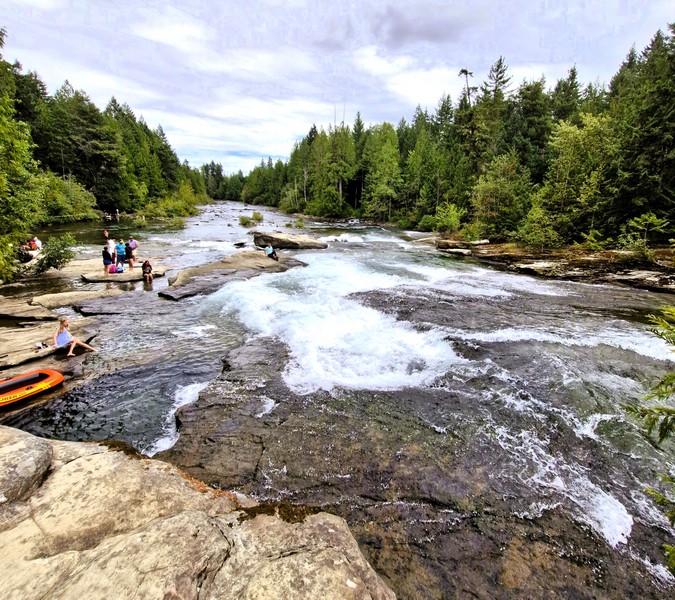
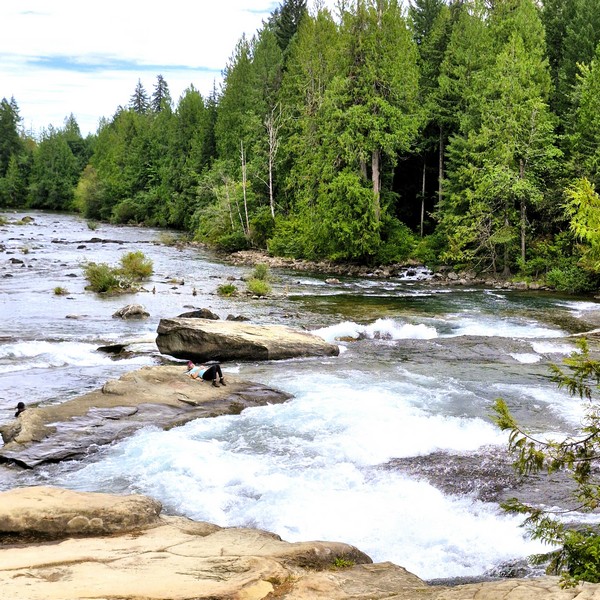
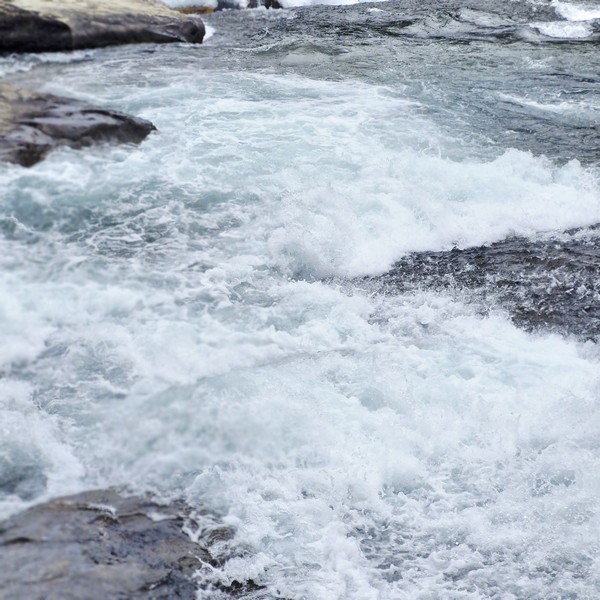
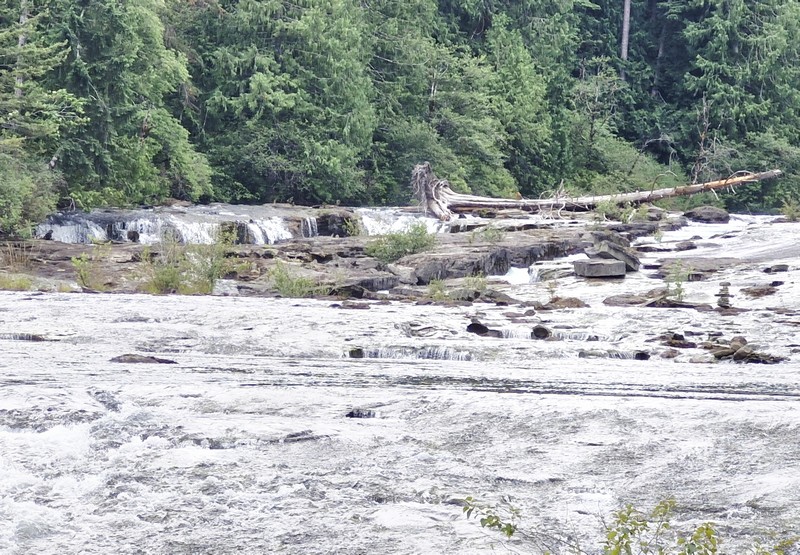
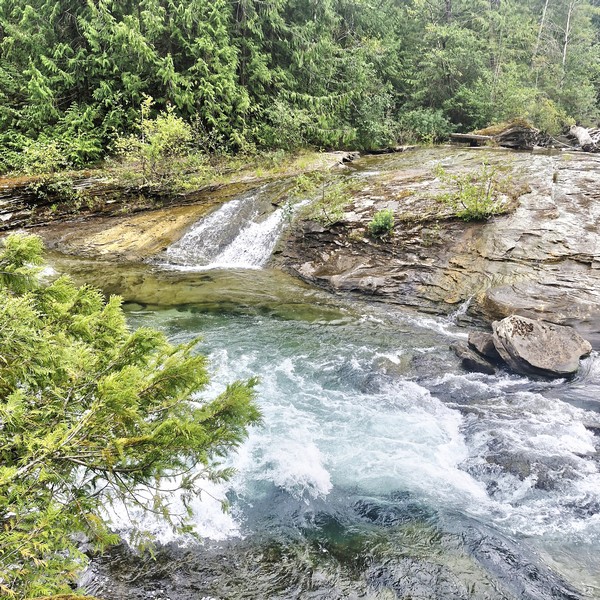
After parking our car at the designated parking stalls at the trailhead, the falls were an easy 500-m. stroll along a wide and gentle, wheelchair friendly River Trail. As we arrived during summer, we saw unusual plants such as gnome plant and Indian pipe along edge of the trail, and its glacial waters were running calm, clear and cool, revealing a series of exposed bedrock ledges, making the park and nearby Barber’s Hole popular spots for a refreshing dip on hot days. The river changes with the seasons. From fall to spring, the river and falls rages over the exposed bedrock ledges, to the delight of whitewater enthusiasts.
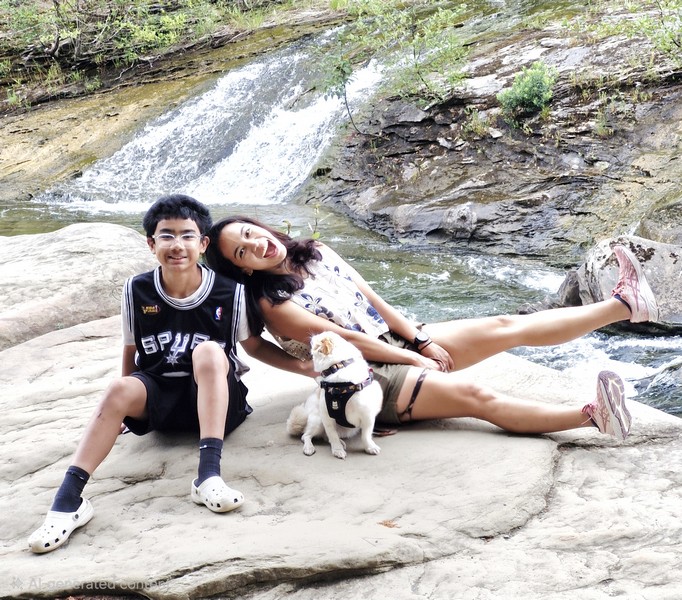
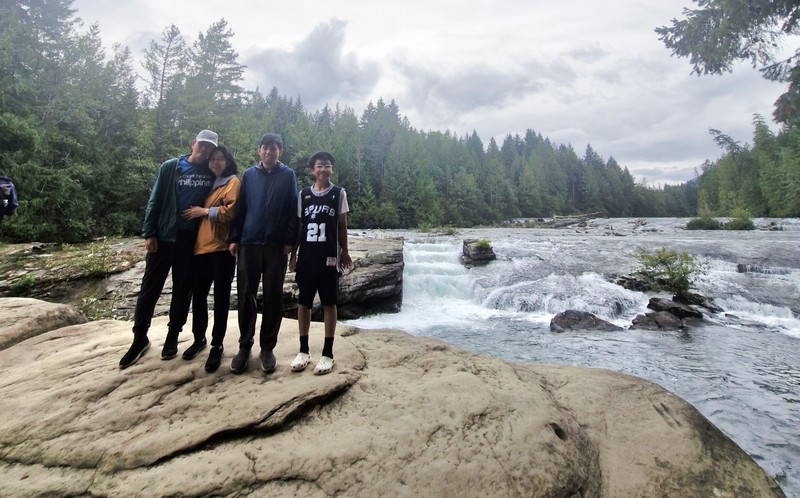
We walked out onto the long flat rock outcrop at the shore, watching out for slippery rocks due to algae deposits, for a spectacular view of the Puntledge River and the spectacular Nib Falls, which cascades over man-made fish ladders falls (where you’ll often notice flashes of red or silver in the water). We didn’t sunbathe and swim (steps to the river located just 40 m. downstream of the falls provide access to the rock outcrops and pools of clear water) but there were benches and picnic areas placed beside the water and throughout the forest, where we had a late lunch. Additional tables were also spaced out, along the trail network, for those who prefer quieter corners of the park.
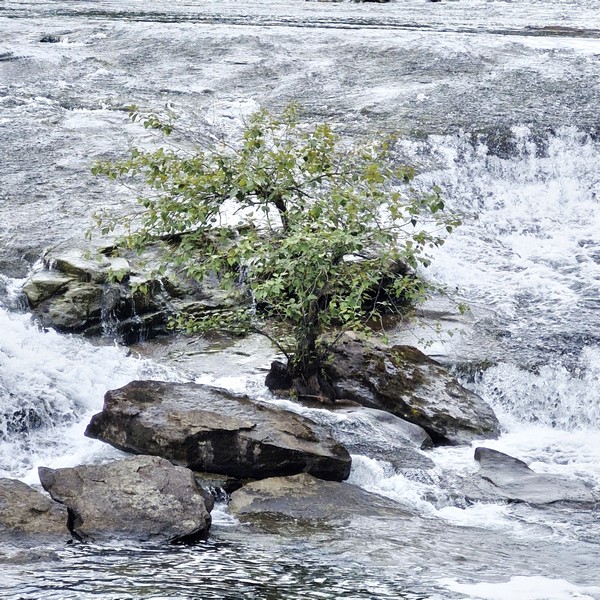
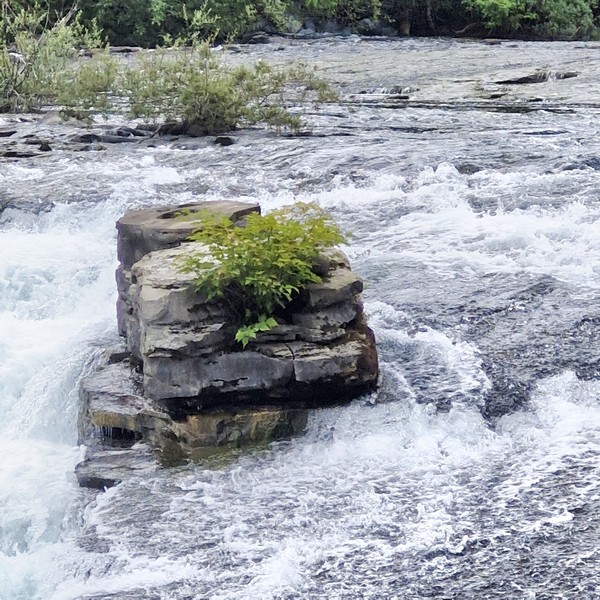
In the middle of the rushing Puntledge River is a solitary, iconic and highly photographed bonsai-like evergreen tree directly out of a small rocky island. This tree survives on a slab of exposed bedrock amid cascading glacial water. Attempting to swim or wade out to the solitary tree island is dangerous as the bedrock shelves create treacherous undertows and high-velocity currents.
Solitary but resilient wildflowers, surviving in thin layers of organic matter trapped within the rock’s unique weathered “tafoni” pits, also bloom directly out of the moss-covered crevices, pockets, and fissures of the exposed Cretaceous sandstone bedrock along the Puntledge River.
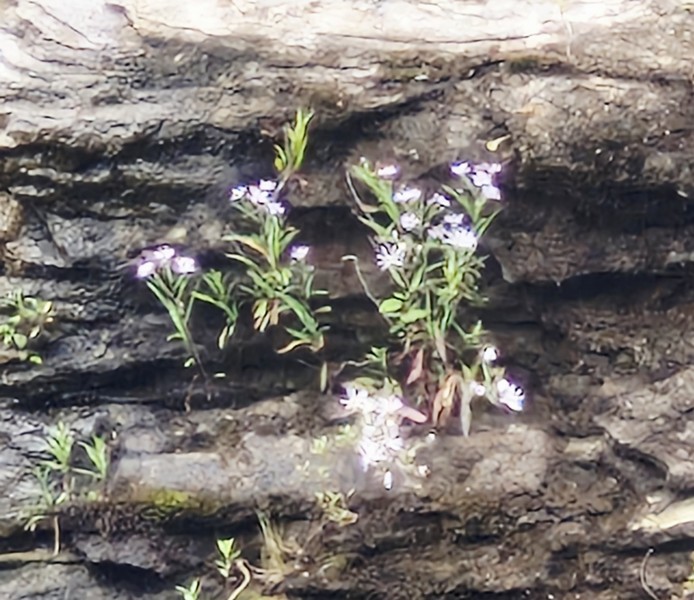
They include succulent broad-leaved stonecrop (Sedum spathulifolium), dense clusters of tiny pink sea blush (Plectritis congesta), bright yellow monkeyflower (Erythranthe guttata), red-and-yellow wild columbine (Aquilegia formosa) and delicate white small-flowered alumroot (Heuchera micrantha).
From October to November, as the water levels rise and temperatures cool, this is a good place to see returning salmon working their way up the Puntledge River, towards the spawning grounds upstream, as the fast-moving channels around Nymph Falls and Nib Falls create natural pinch points where you can sometimes watch fish leap through the current. Though numbers vary from year to year, this is still one of the more accessible places, in the Comox Valley, to experience the fall salmon run up close.
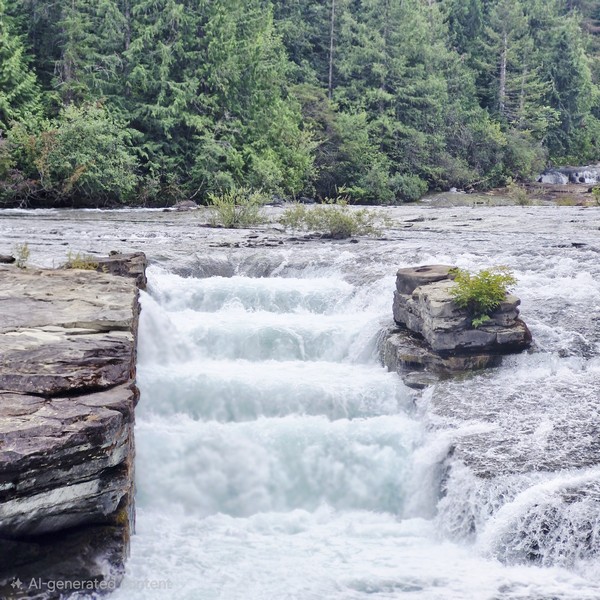
The Puntledge River, which once boasted an abundance of various species of fish, is an important part of the salmon run and the Puntledge River Hatchery was built downstream to save Chinook salmon from extinction and, altogether, help rebuild a healthy fish population.
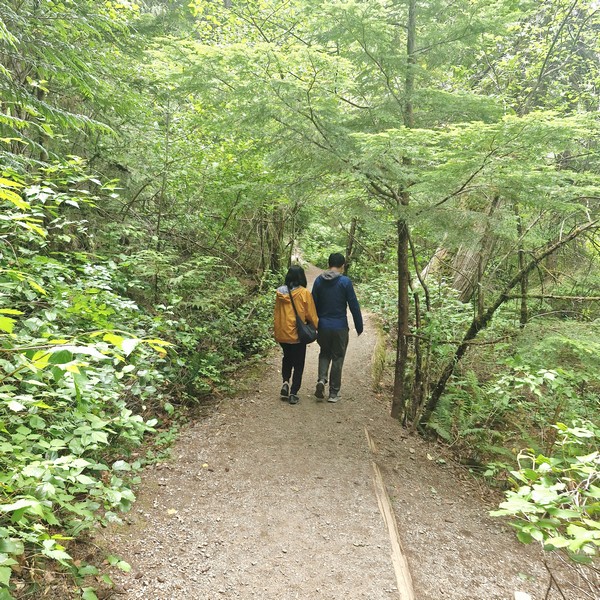
Facilities here are simple but thoughtful. There are several pit toilets, picnic tables, and signed routes from the two main parking lots. A well-marked, multi-use trail network, within Nymph Falls Nature Park, connect with a larger system up and down the river and wind through second-growth forest to key viewpoints where benches appear. The walking trails vary, from gentle riverside paths to wider forest routes, giving you options for short outings or longer loops, and the routes are well signed,
Most commonly seen along the trails and river are birds such as osprey, Cooper’s hawk, bald eagle, Glaucous-winged gull, American dipper, northern flicker, red-breasted sapsucker, varied thrush, brown creeper, Pacific wren, red-breasted nuthatch, chestnut-backed chickadee, golden-crowned kinglet, belted kingfisher and dark-eyed junco.
Nymph Fall Nature Park: 4481 Forbidden Plateau Rd., Courtenay, British Columbia V9J 1R2. Tel: (250) 334-6000.
How to Get There: Nymph Falls Nature Park is just a short 10-min. drive from Courtenay and Comox.