
After our hike to the Hole in the Wall, we drove another 13.9 kms. (a 20-min. drive), heading east along BC Highway 4, to get to the Cathedral Grove. Located within the 301-hectare (740-acre) MacMillan Provincial Park (it officially became a Class A provincial park in 1947), it is one of the most accessible and incredible old-growth forests on Vancouver Island. Each year, this iconic destination draws more than half a million visitors. We parked our car at a small roadside parking areas, on both sides of Highway 4. It being summer, we were lucky as we arrived late in the day. It usually fills up quickly, especially during weekends.
Check out “Hole in the Wall”
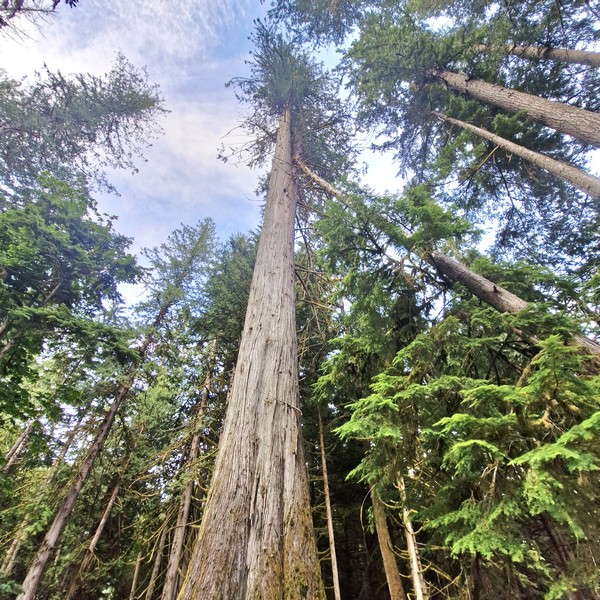
For thousands of years, the Hupacasath First Nation and other local indigenous groups have cared for the land, using the giant trees for shelter and tools. Since the 1920s, Cathedral Grove has been a famous stop along the Alberni Road. Viscount Willingdon, the Governor General of Canada, named the site “Cathedral Grove” in the 1920s because the tall trees looked like a grand church.
In 1944, Harvey Reginald MacMillan, a timber baron who wanted to log this whole area, donated 136 hectares of his company’s land to the public after concerned locals and first nations protested fiercely, making it one of the first successful conservation victories in British Columbia. It’s ironic though that the park was named after the man who wanted to cut it all down. Unfortunately, although this grove was protected, most of the surrounding watershed was chopped down and cleared.
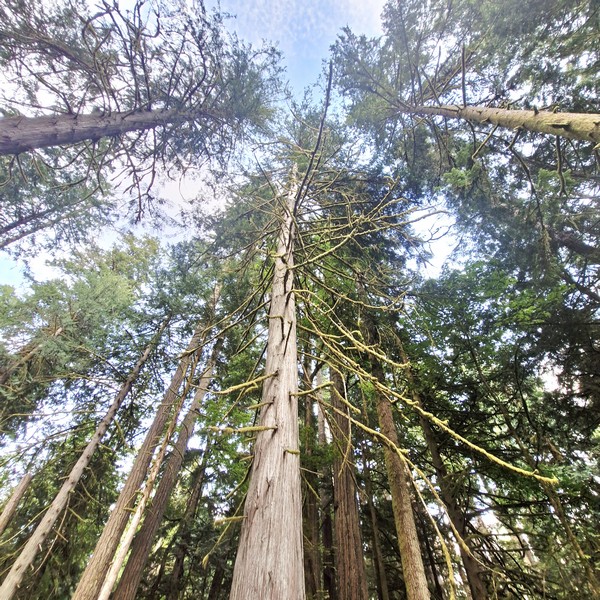
An easy stop on the drive to Port Alberni, the Pacific Rim, or central island lakes, here a short network of combined flat loop trails, with a combined walking distance of roughly 2.2 kms., takes you beneath towering Douglas fir and Western Red Cedar trees, with trunks so wide you can barely wrap your arms around them. Boardwalks, wide gravel paths, and frequent viewpoints makes you experience the forest at a relaxed pace.
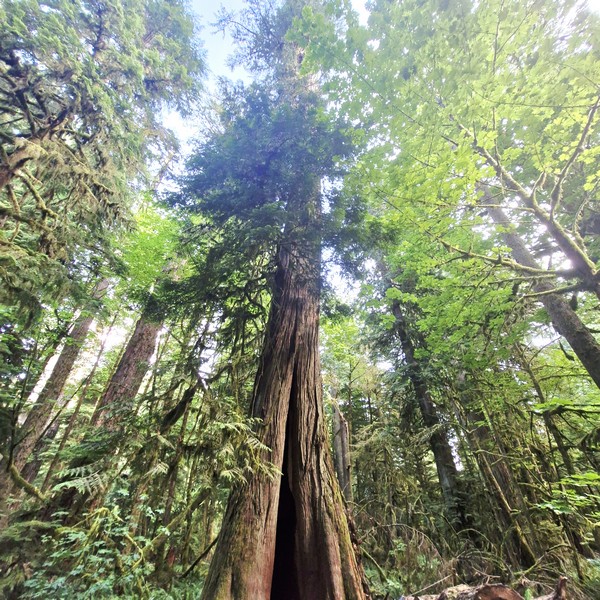
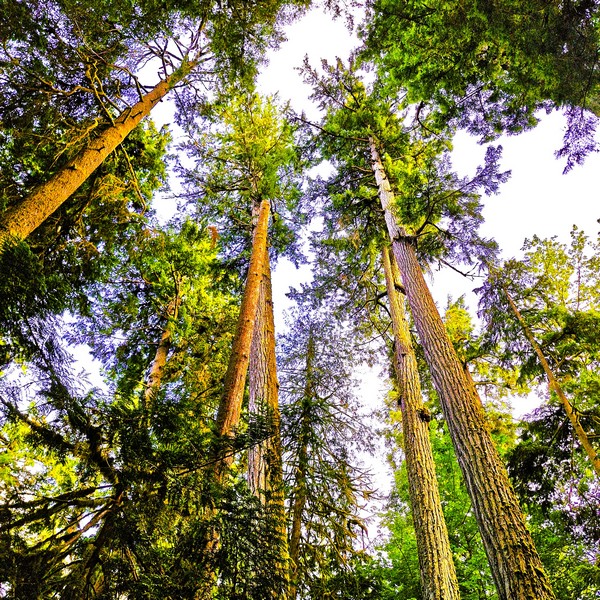
The Douglas fir are the granddaddy of this forest. They were huge and massive, with a long branch-free trunk 9 m. in circumference, and a canopy up high. Their dark brown bark looks much thicker, with irregular, thick ridges. Western Red Cedar trees have trunks that flare out at the base, with reddish-brown bark with long ridges. Their leaves, spread out on the twigs in flat, fan-like swooshes, have a lovely smell. Western Hemlock, the most common tree on the British Columbia coastline, doesn’t mind shade, growing up beneath the other giants. Its drooping branches have a feathery, flat, glossy and soft foliage that, when the sunshine streams through it, looks fabulous.
Cathedral Grove has two main trail areas on either side of Highway 4, making it easy to explore, in a single short visit, both the north and south sections. The north section has a boardwalk-style loop that works well for most wheelchairs and strollers while the south section has upgraded but slightly more uneven but wide gravel paths. To help manage traffic, both trails are one-way loops.
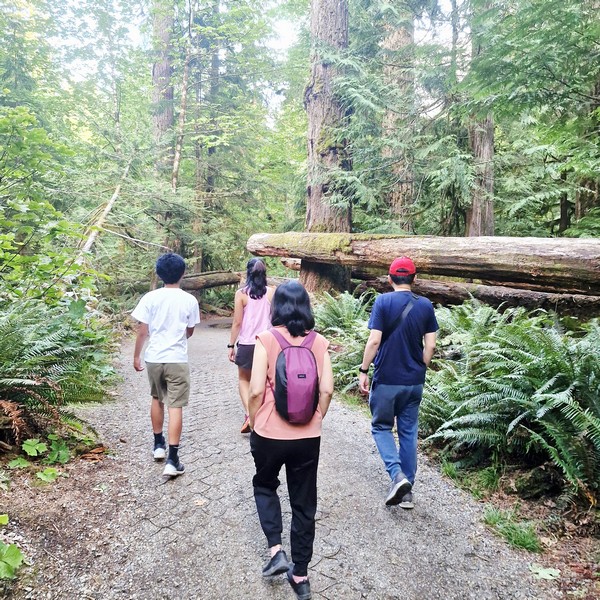
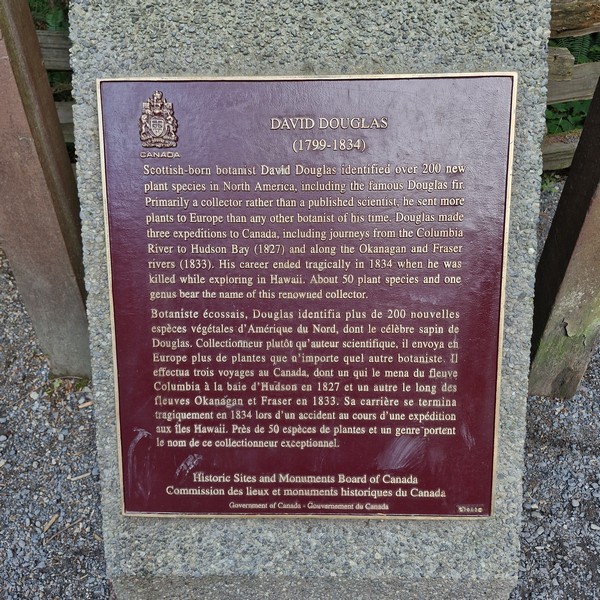
We first entered the Cathedral Grove’s south section, a 1-km. long dirt path which was muddy due to rain that day. At the entrance was a plaque honoring Scottish botanist David Douglas, after whom the Douglas fir was named. Good thing we wore proper footwear. Upon stepping into the trail, we felt like entering another world.
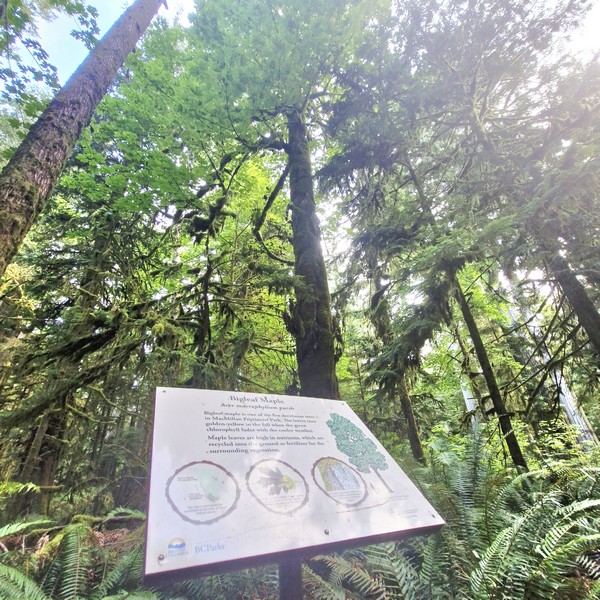
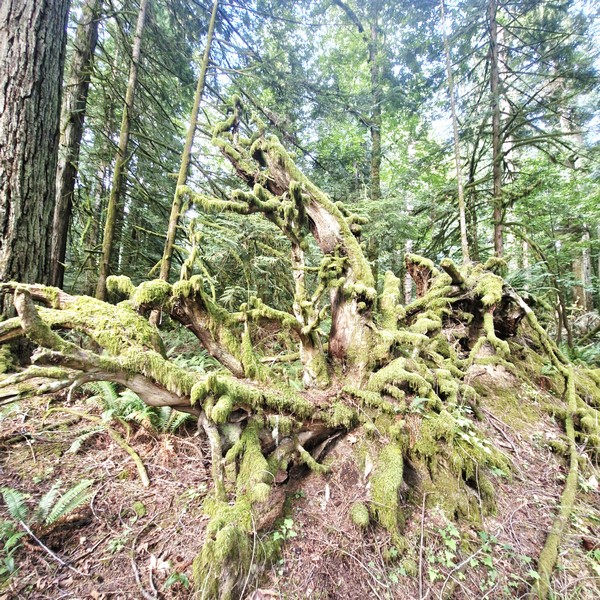
We were captivated by its towering old-growth trees, deep green moss, and quiet forest floor. There’s no boardwalk here, but the route is still flat and easy to follow. To protect the forest floor and root systems, we stayed on the designated trails. Smoking is also strictly prohibited. We encountered exposed roots and fallen trees, particularly through the “Living Forest” section.
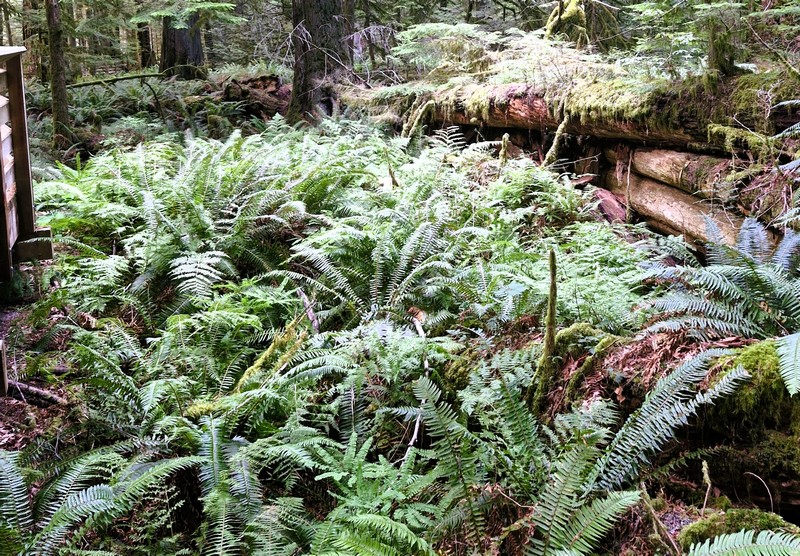
This trail is a bit more hands-on, with opportunities to step over logs, get close to the trees and, along the way, snap some great photos. Most of the forest trees (giant Douglas fir, Western Hemlock, Western Red Cedar and a few maple trees) we saw today are younger growth that regenerated after a major forest fire that swept through this part of Vancouver Island around 300 to 400 years ago. However, some of the oldest giants here are well over 800 years old. Following the “Big Tree Trail,” we made our way up to the superstar of the hike – the largest Douglas fir around. At 72 m. (236 ft.) tall, it stands higher than the Leaning Tower of Pisa.
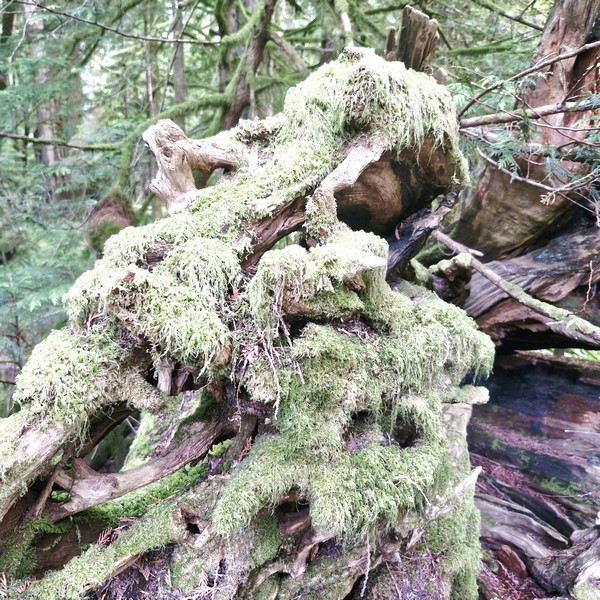
From the South Trailhead, we carefully crossed the highway to enter the North Old Growth Trail. This trail features groves of ancient Western Red Cedar (British Columbia’s official tree) near Cameron Lake.
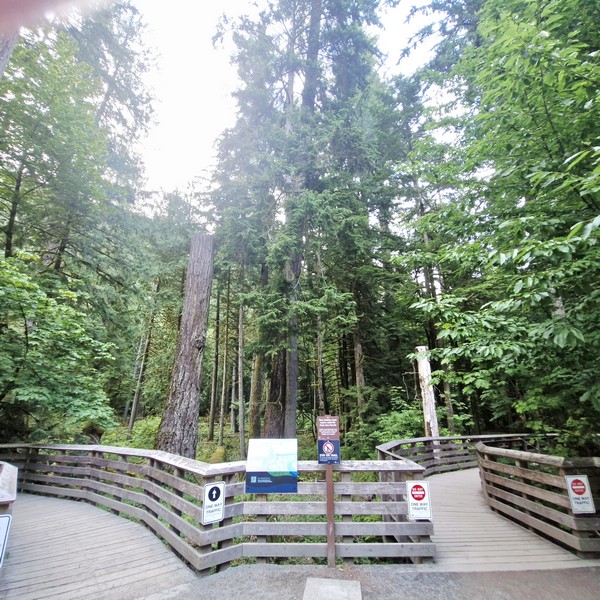
To protect the tree roots, a beautifully maintained boardwalk trail winds around most of the trails, extending approximately 1.2 kms. This was fine for our footwear as we didn’t get muddy or soggy. Plus it is wheelchair accessible. Along the trail, there were scenic spots along the Cameron River.
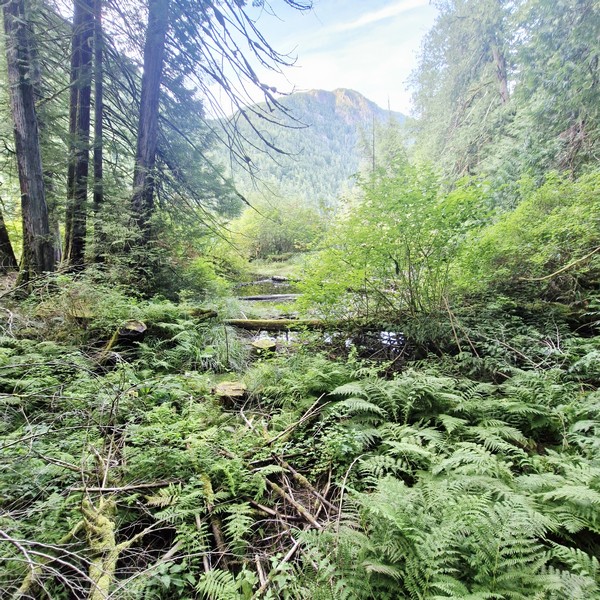
Along this trail, we encountered a lot of enormous fallen trees, a legacy of severe windstorms (when massive trees were knocked down) in 1990, 1997, 2018 and 2024, creating open spaces and nurse logs that feed new plant growth, and a striking visual and ecological narrative. These fallen trees now play an important role in the forest’s renewal as atop the old, nutrient-rich logs, newer trees now thrive, creating an awe-inspiring cycle of renewal of the ecosystem. Some trees grew into each other as we saw the differences in the bark.
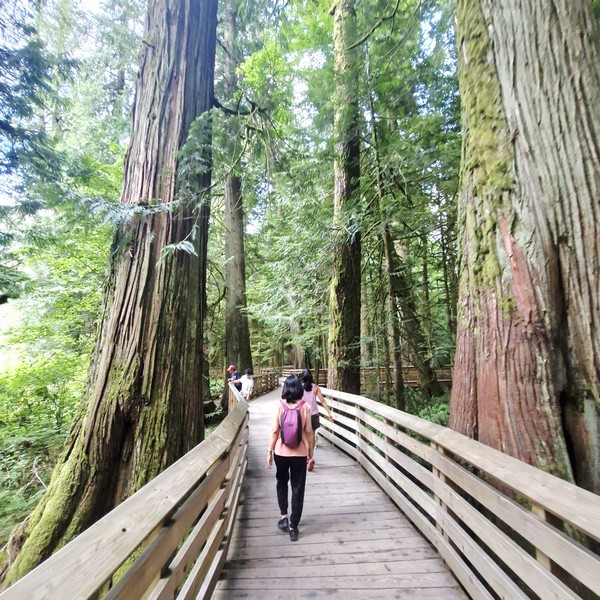
It took us more than an hour to walk both sides of this well-loved roadside attraction as we stopped for photos and read interpretive signs.
Cathedral Grove: MacMillan Provincial Park BC-4, Port Alberni, British Columbia V0R 1G0. Open year-round, with lush moss and ferns in the rainy months. Avoid visiting during strong winds, as large branches and trees can fall in old-growth forests. Admission is free. There are pit toilets on both sides of the highway. Dogs are welcome but must remain leashed. On windy days, consider skipping your visit or waiting for calmer conditions, as large branches and trees can fall in old-growth forests.
How to Get There: The park, conveniently located 16 kms. east of Port Alberni and 30 kms. west of Parksville, along Highway 4, is easily reached by car or via organized tour groups. Public transportation is not available.