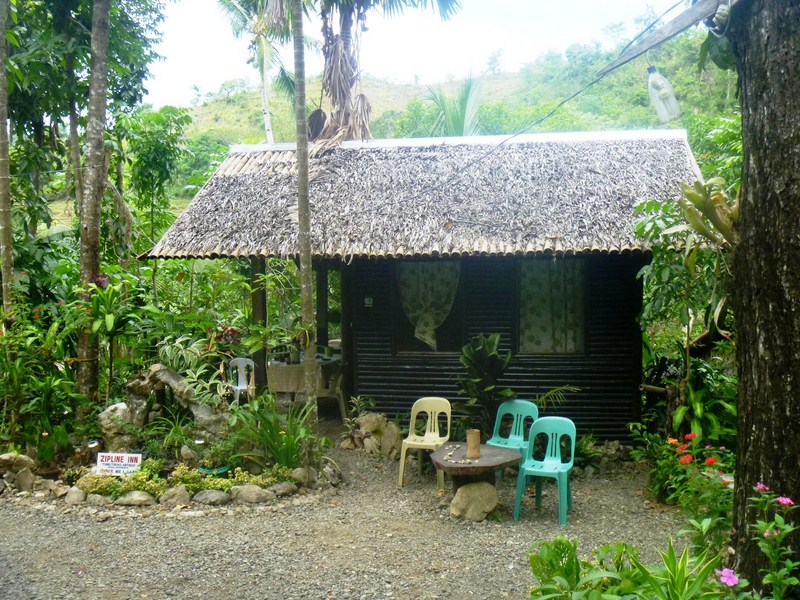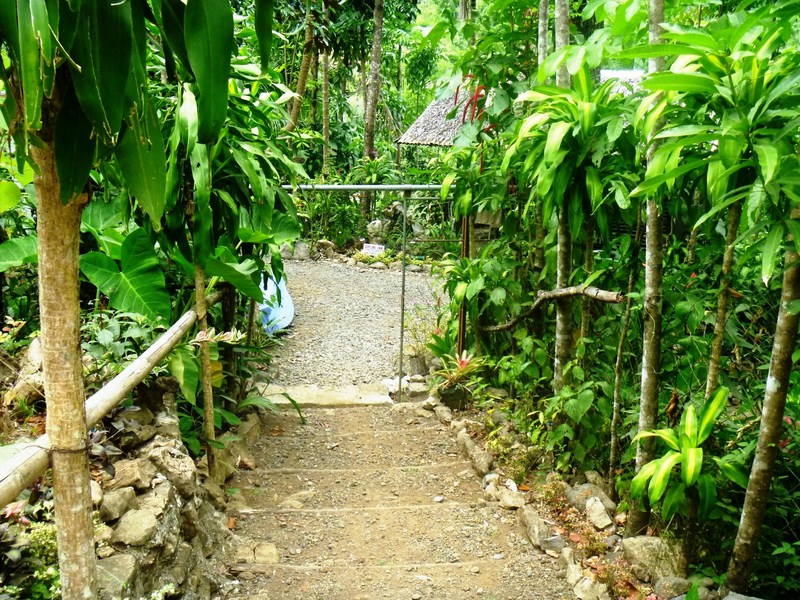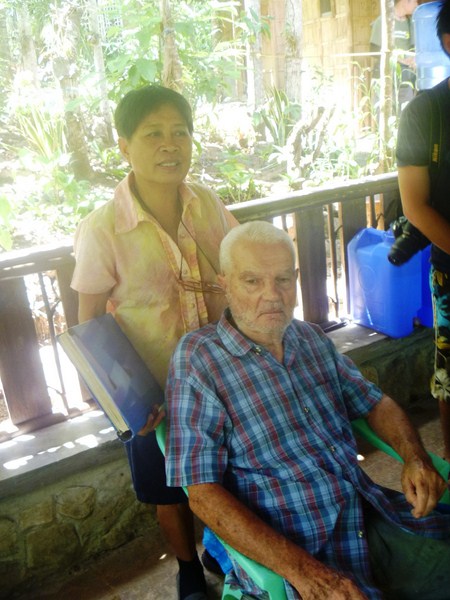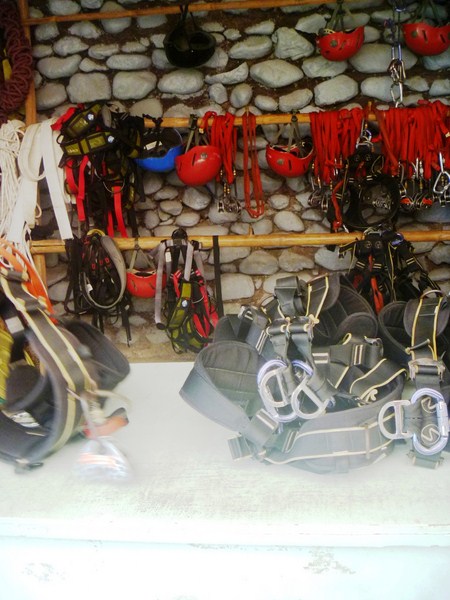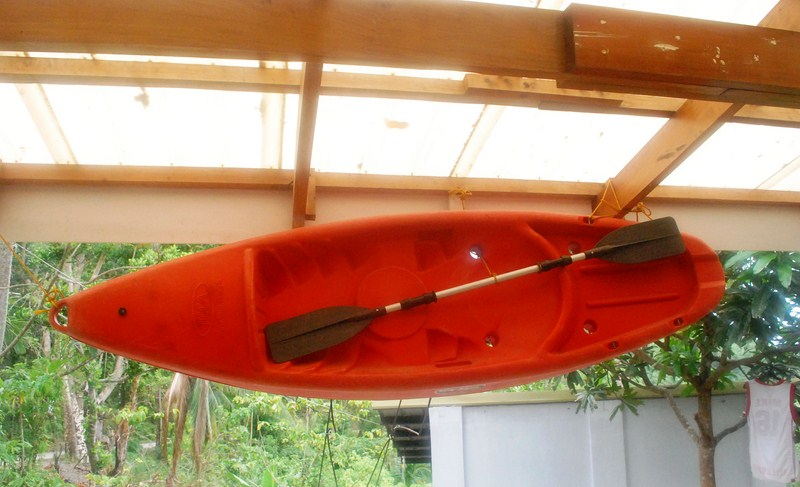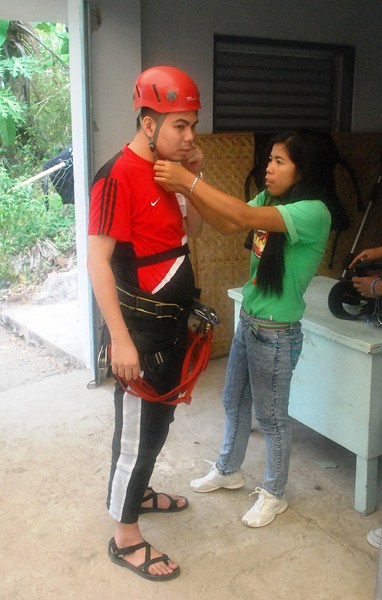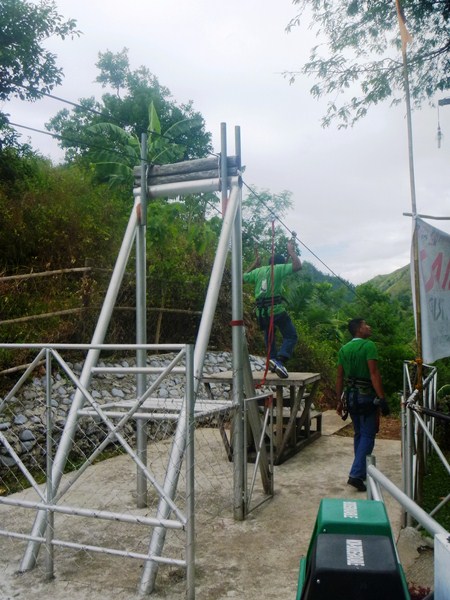
After our orientation at Zipline Inn, we again boarded our van for the drive to the barangay hall of Brgy. Tuno where we secured the services of local guides Arnel Vicente and Marialyn Benito for our trek to the 7-tiered Bugtong Bato Falls, so called because it is perched in the midst of a lone rock. The first three waterfalls, with heights up to 150 ft., are easily accessible.
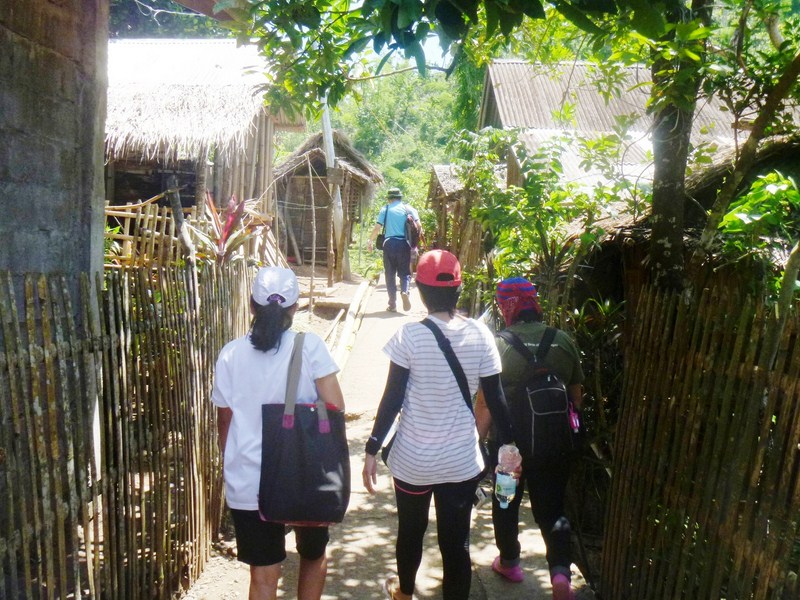
The trek begins ….
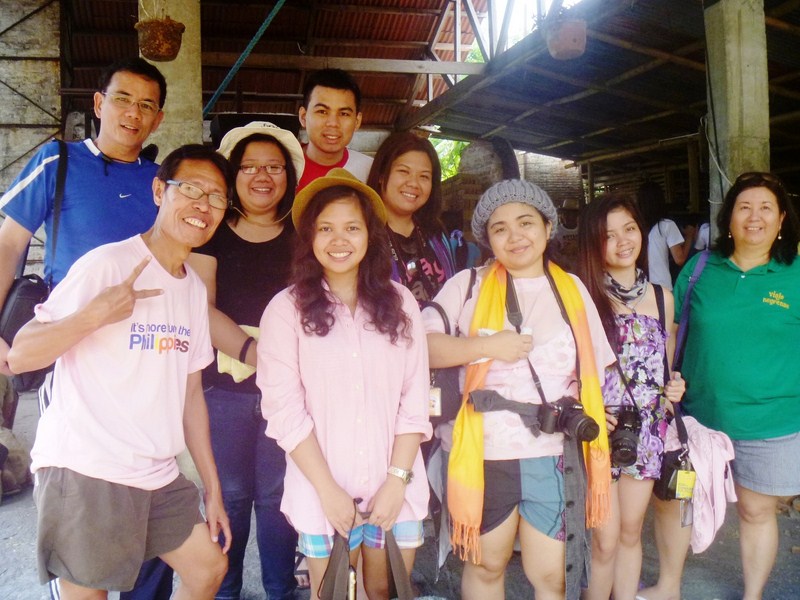
Zipline Inn owner Ms. Ofelia Gaal also joined us on this hike to her property. According to her, it just takes her 25 mins. to get to the falls but I figured it would take me much longer with my mobility issues due to osteoarthritis. We just brought along our essential gear – cameras, water, hats, etc.
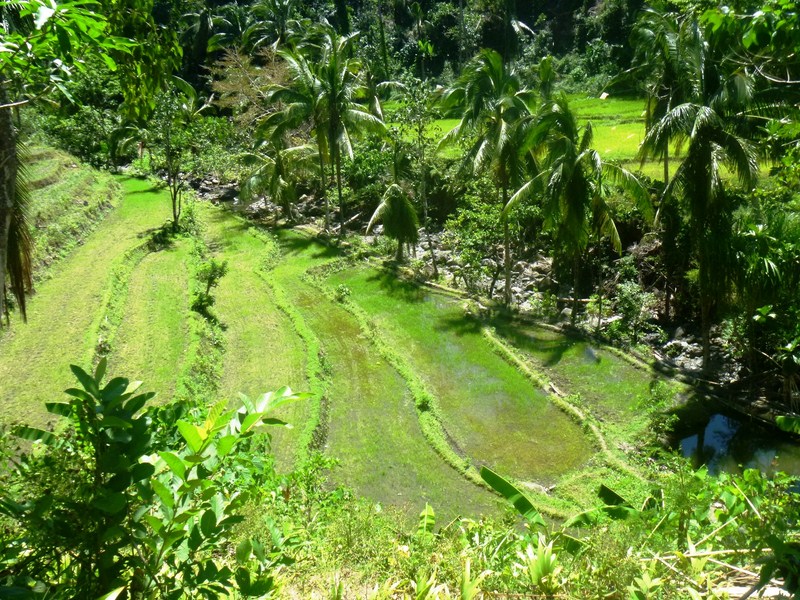
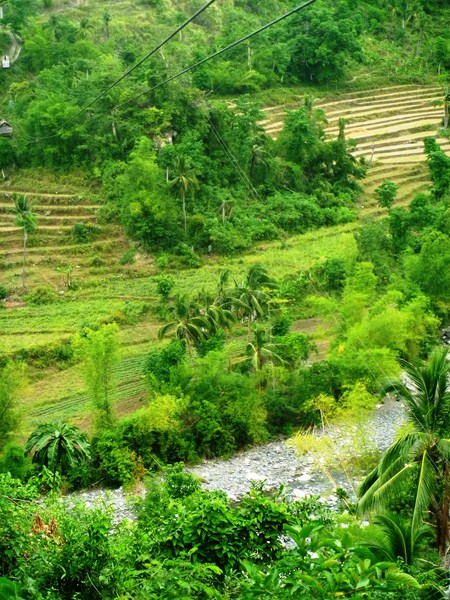
Passing rice terraces on the way to the falls
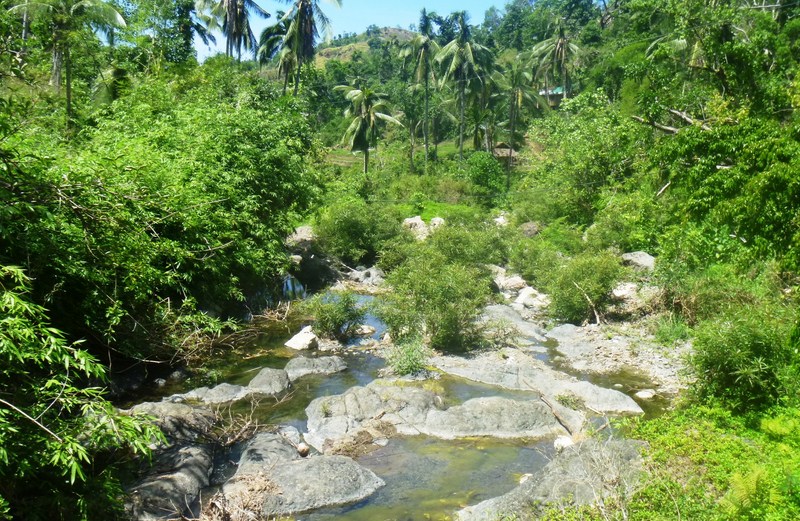
Another bucolic scene
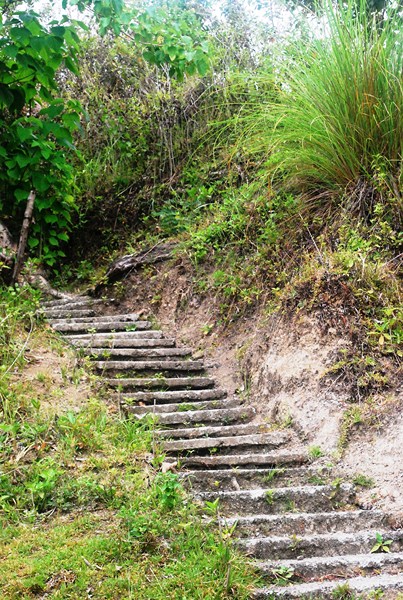
The hike, through a craggy mountain trail, took us past streams, lush forests, beautiful rice terraces and over two bamboo suspension bridges.
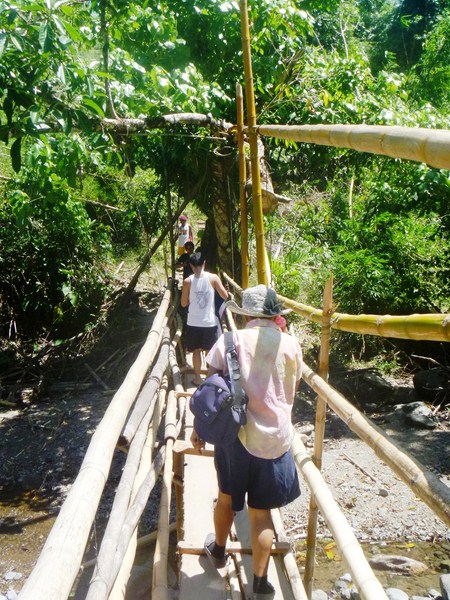
Crossing a bamboo footbridge
Hiking through this incredible countryside was worthwhile and a treat by itself, even without the falls at the end of the trail. Along the way we also encountered some grazing cows as well as a number of fallen trees, visual evidence of the destruction wrought by Typhoon Yolanda (international name: Haiyan) on the town.
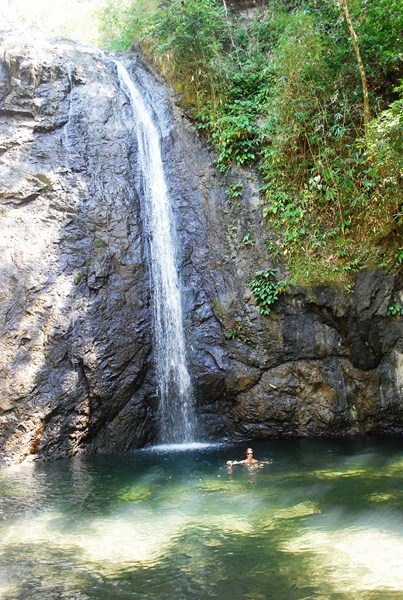
The first waterfall and its swimming hole
Surprisingly, in under 40 mins., we arrived at the beautiful falls and our prize for completing the hike – its inviting swimming hole. It is thus with great anticipation that we dipped our tired bodies in its cool, refreshing water. In my excitement though, I forgot to remove my belt bag with my cellular phone in it. A total loss. Oh well.
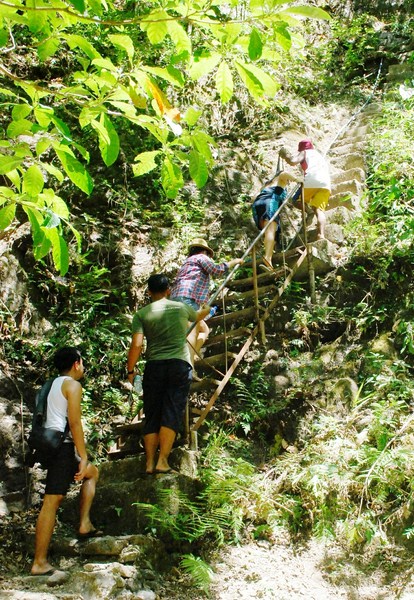
Steps with rope leading to the second tier
After a while, we decided to try out the second waterfall. Getting there entailed a short but steeper climb up a staircase with a stout nylon rope to assist us, much too challenging for Maricar who decided to stay behind. Once up there, it offered another cool, inviting swimming hole for us to swim in.
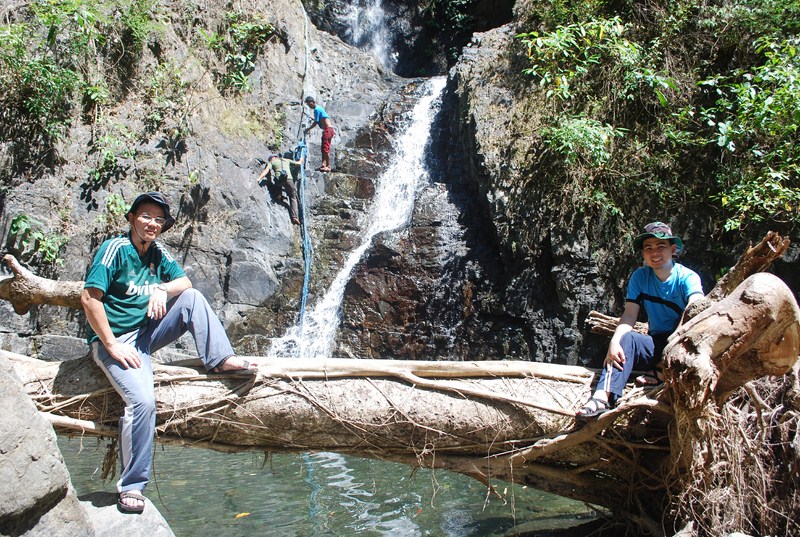
Father and son at the second tier of the falls
The third fall, visible from here, was a different story as it was accessible only by swimming across this second swimming hole and then climbing another nylon rope up the slippery side of the waterfall. Tricky to say the least. Still, I admit to being envious seeing the others do it. If only I were 20 years younger.
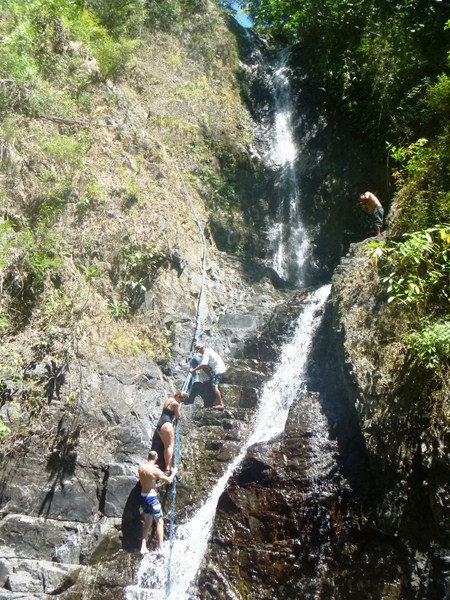
Steps and rope from second to third tier of falls
Only Clelia and Rupert, as well other visiting foreign tourists, attempted this. The third falls offers the smallest but the most beautiful of the three swimming holes, said to have deep blue waters.
Katahum Tours: Tibiao, Antique. Mobile numbers: (0919) 813-9893 and (0917) 631-5777. E-mail: flord@tibiaofishspa.com. Website: www.katahum.com.
How To Get There: Tibiao is located 73 kms. from San Jose de Buenavista, 12.6 kms. from Barbaza, 17 kms. from Culasi and 89 kms. from Brgy. Caticlan (Malay, Aklan).