Manila Metropolitan Theater (City of Manila, Metro Manila)

Manila Metropolitan Theater

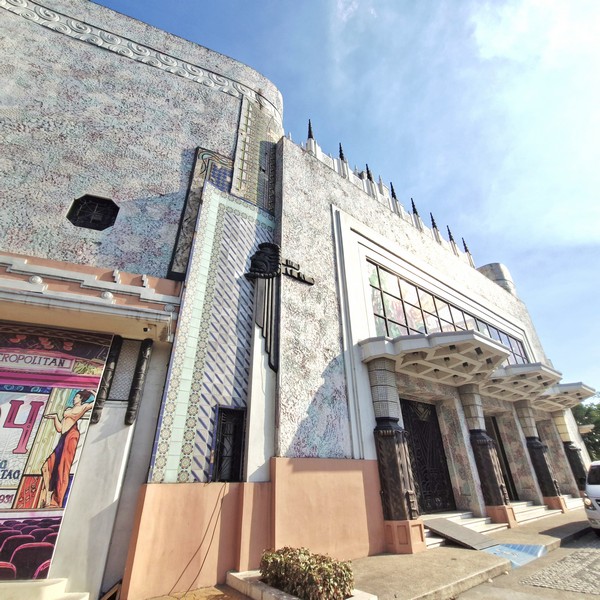
After nearly 13 years, I finally got to see the historic Manila Metropolitan Theater (abbreviated as the MET), a renowned Filipino-influenced Art Deco masterpiece, in its restored state (after surviving the Second World War, it went through periods of disrepair and neglect before undergoing successful restoration), attending the closing and turnover ceremony of the Filipino Food Month 2026 at its ballroom. Located along the Pasig River and in front of the equally classic Manila Post Office, it was recognized as the forefront of the Art Deco architectural style (then a rage in the U.S.A.) in the Philippines.

Check out “Save the Manila Metropolitan Theater!!! and “Closing and Turnover Ceremony of Filipino Food Month

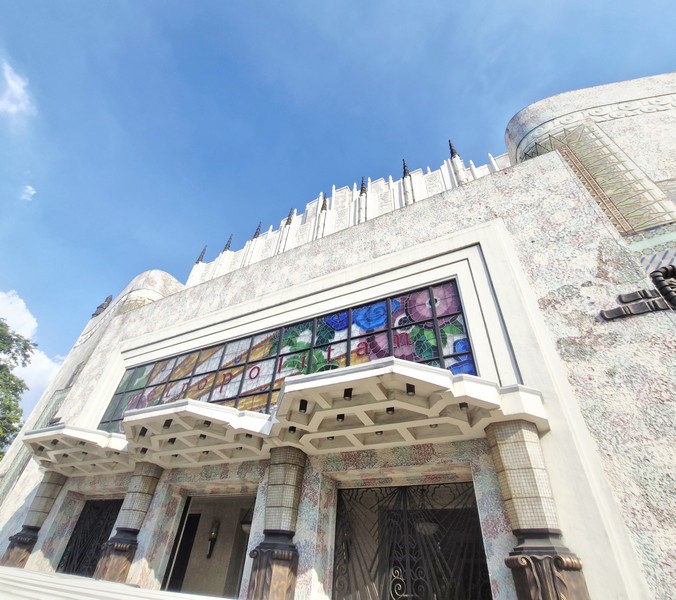
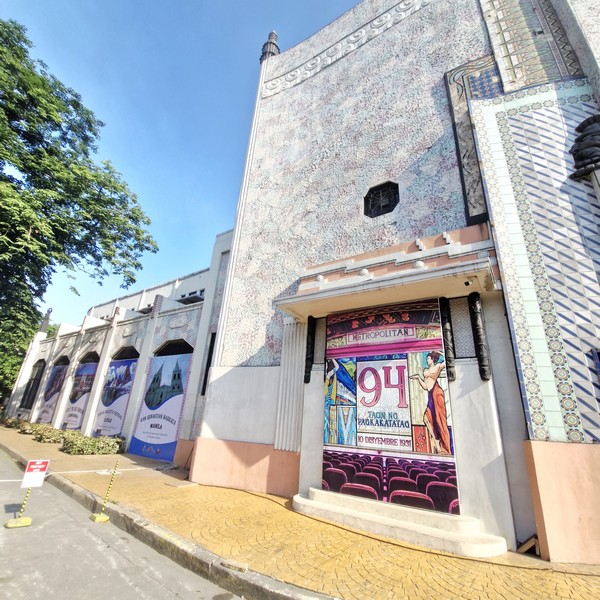
Entrance facade with its proscenium-like central window of rectangular stained-glass panels

Designed by the late National Artist (for Architecture) Juan M. Arellano, its cornerstone was laid in February 1928, with construction by Pedro A. Siochi & Co. as contractors.  The biggest in the Far East at that time, the theater was inaugurated on December 10, 1931.

Side elevation

Arellano, known for his Neo-Classical architectural style employed in his design of the Legislative Building and Manila Post Office, departed from this and the Metropolitan Theater marked his departure towards more modern designs. For the structural configuration of the building, Arellano was inspired by the phrase “On Wings of Song,” a rectangular-shaped auditorium flanked by pavilions on either side. Throughout the design, Arellano weaved Filipino decorative elements into the Art Deco style. Philippine Magazine editor A.V.H. Hartendorp described the style as “modern expressionistic.”

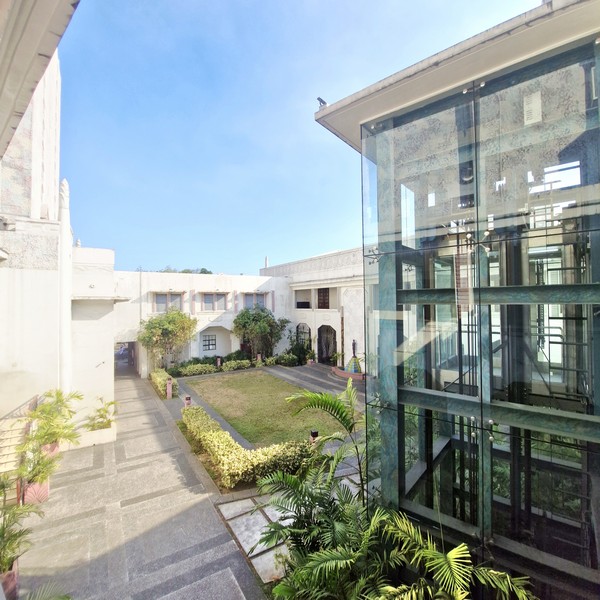
The courtyard

During its heyday as the “Grande Dame” of theaters, the Met played host to vaudeville acts, zarzuelas, operas, pageants, Filipino and Spanish plays, and performances by well-known artists such as violinist Maestro Jascha Hefertz and composer/conductor Dr. Herbert Zipper (who conducted the Manila Symphony Orchestra).

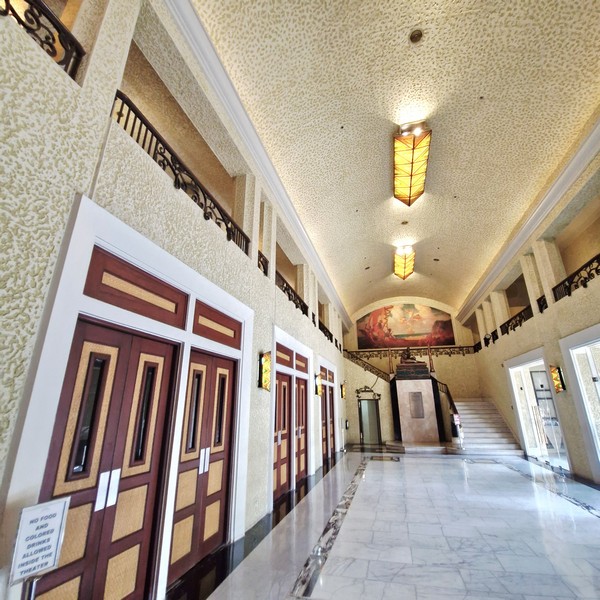
The foyer

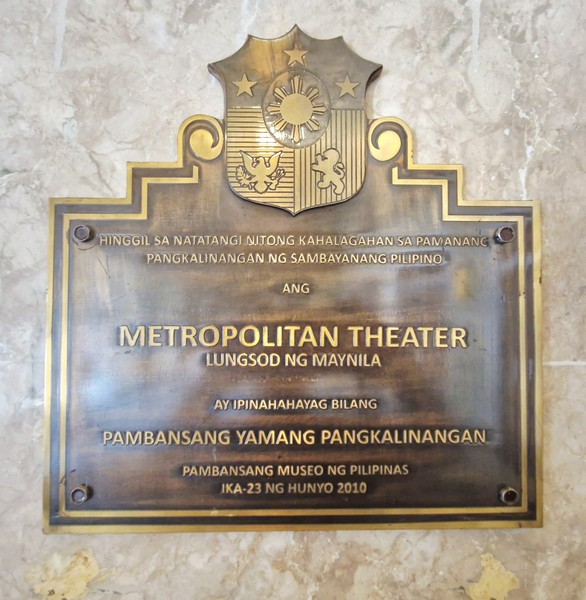
On October 21, 1976, the Metropolitan Theater was declared a National Historical Landmark by the National Historical Commission of the Philippines (NHCP) and, on June 23, 2010, the National Museum of the Philippines recognized the Met as a National Cultural Treasure under the National Cultural Heritage Act.

National Cultural Treasure Plaque (2010)

Following extensive restoration by the National Commission for Culture and the Arts (NCCA), which now oversees the venue, it reopened on December 10, 2021 (the Metropolitan Theater’s 90th anniversary) as a premier venue for arts and culture, including performances and special screenings.

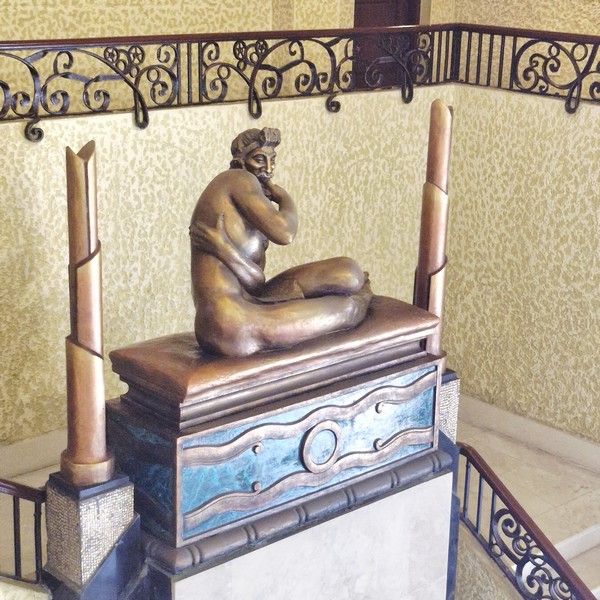
Adam (Francesco Riccardo Monti)

The theater’s still had its exuberant and symmetrical exterior, with its tiara-like pediment with stylized, Muslim-inspired minarets crowning the top of the concave roof (which suggested its status as a theater back in its prime days), plus bas-reliefs with curlicues or mask-like chimeras; whimsical rope designs; friezes; colorful ceramic tiles;  intricate grille work at the doors and windows. and is also enhanced by sensuous, exotically-draped female statues, said to be Siamese dancers, done by Italian sculptor Francesco Riccardo Monti (who lived in Manila from 1930 until his death in 1958).

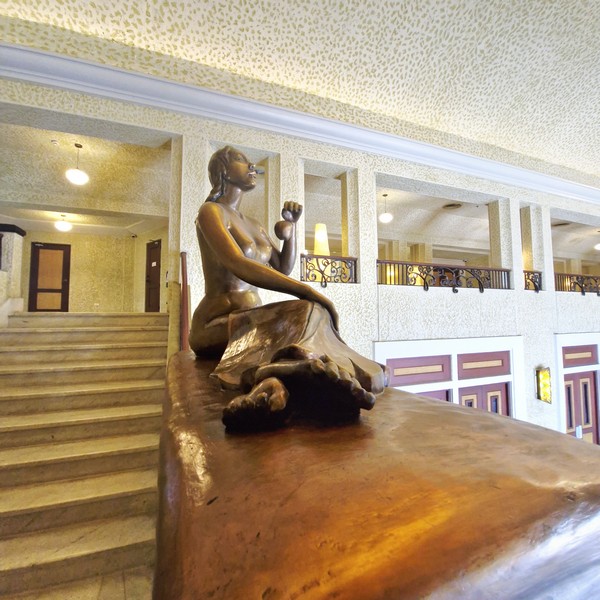
Eve (Francesco Riccardo Monti)

The façade’s focal point is its proscenium-like central window of rectangular stained-glass panels that corresponds with the shape and scale of the Main Theater inside. The stained-glass marquee, executed by the Kraut Art Glass Company, with the “Metropolitan” label backlit and surrounded by Filipino floral motifs, is highlighted, on both sides, by curving walls of colorful, decorated tiles resembling batik patterns of Southeast Asia. The wall that frames the stained-glass is a segmented arch with rows of small finials on the upper edge. 

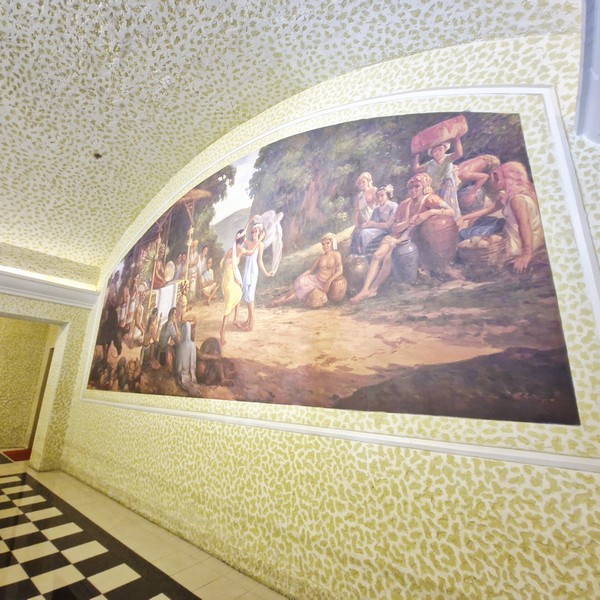
Dance (Fernando Amorsolo)

Above the proscenium arch are eight iconic, original bas-relief figures, by Francesco Riccardo Monti, which were discovered intact, in 2017, after dismantling the anomalous additions from the 1978 restoration, surprising the NCCA who originally intended to reproduce the figures from historical photographs.

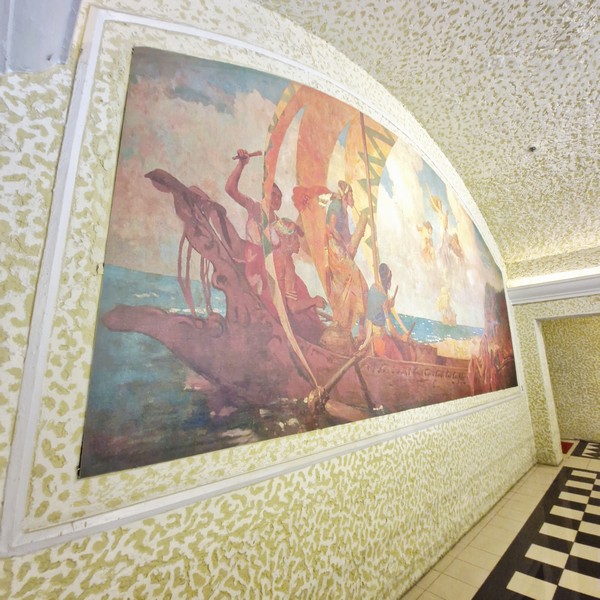
The History of Music (Fernando Amorsolo)

There are also moldings of zigzag and wavy lines that go with the sponged and painted multi-colored walls. Capiz lamps and banana-leaf formed pillars, which go alternately with the theater’s entrances, accent the ground level.

Balcony

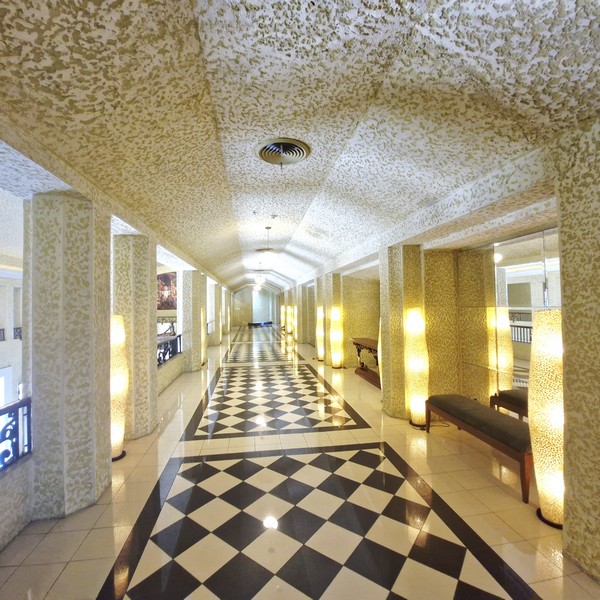
At the entrance are elaborate wrought iron gates, patterned into leaf designs and various lines. I accessed the Main Theater through a foyer with a two-storey ceiling.  The foyer’s grillwork features a drooping floral balustrade, in a geometric Art Deco style, originally crafted by Arcadio Arellano, the brother and collaborator of Architect Juan M. Arellano.

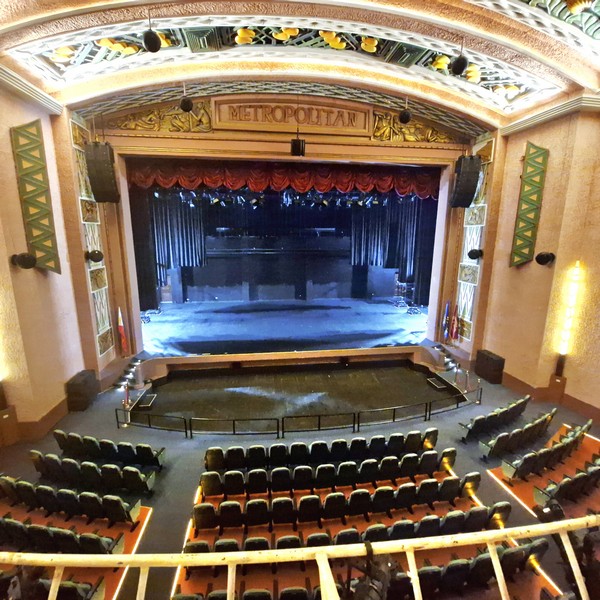
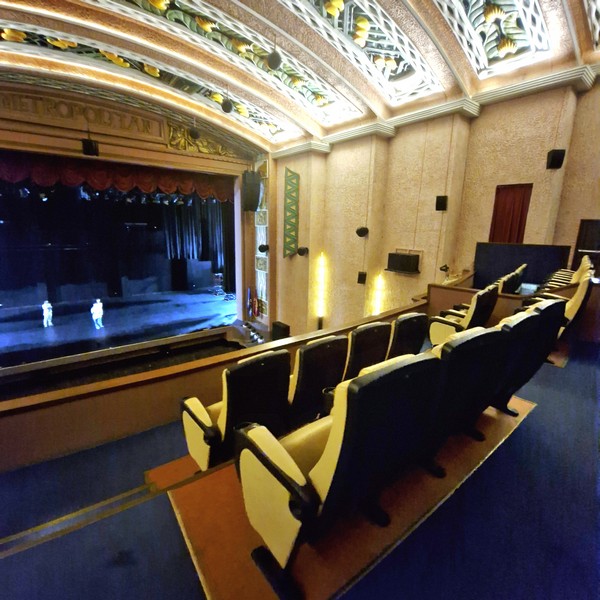
The Main Theater

There were stairways, on either side, leading up to the balcony. By the stairways are the Adam and Eve bronze sculptures also done by Francesco Riccardo Monti. On opposite sides of the foyer are reproductions (since the 1996 foreclosure, the original murals are in the GSIS Museum) of two mural paintings, “The Dance” and “The History of Music,” by the late National Artist Fernando Amorsolo

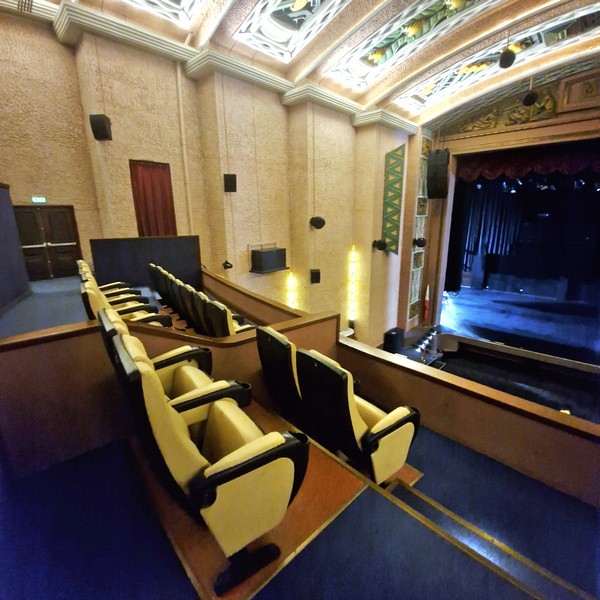
The Loge Section and the ceiling of Isabelo Tampinco

The theater used to seat 1,670 (846 in the orchestra section, 116 in loge and 708 in balcony) but, during its 2020 renovation, the capacity of the Main Theater was reduced to 990 and the floor’s elevation was adjusted to comply with safety regulations.

Balcony Section
Balcony Section

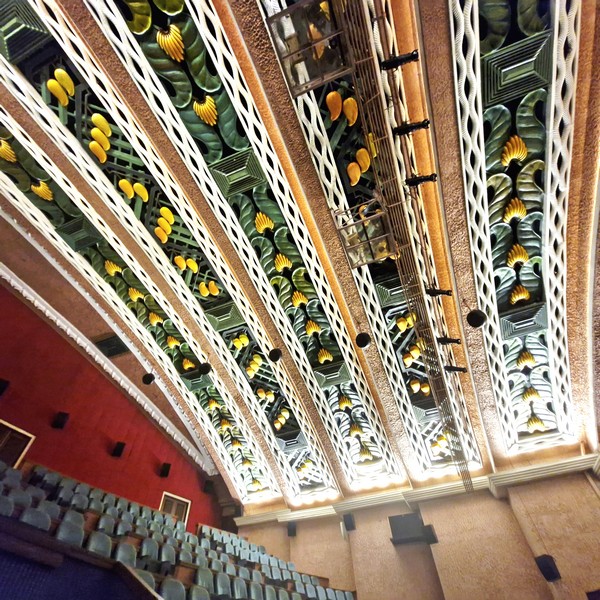
The ceiling is decorated with intricate interior motifs such as Art Deco mangoes, bananas, and tropical leaves bas-reliefs designed by Isabelo Tampinco.

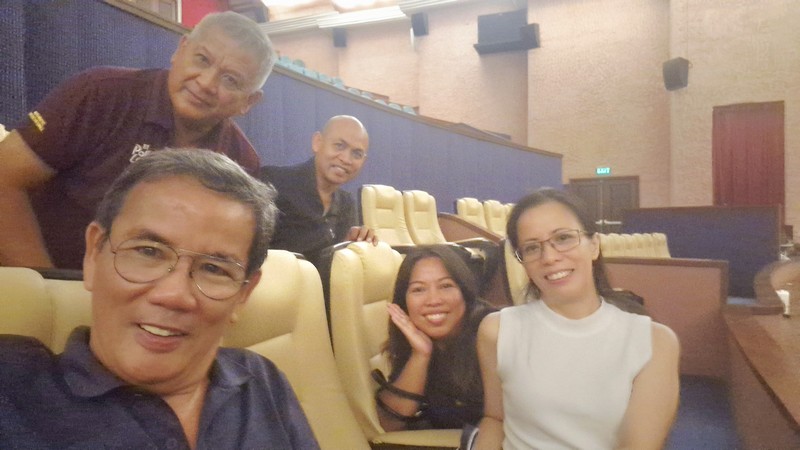
The author (left) with Teddy Pelaez, George Buid, Cris Gadion and Ann Esternon

Metropolitan Theater: Padre Burgos Avenue cor. Arroceros Street, Liwasang Bonifacio (formerly Plaza Lawton), Ermita, Manila (near Mehan Garden and the LRT Central Terminal). Tel/Fax: (02) 8248 3068 or (02) 8527-2192 local 805. Mobile number: 0968 542 8521. E-mail: met.visitorsservices@ncca.gov.ph. Coordinates: 14.5940°N 120.9806°E.

Goldenberg Mansion (City of Manila, Metro Manila)

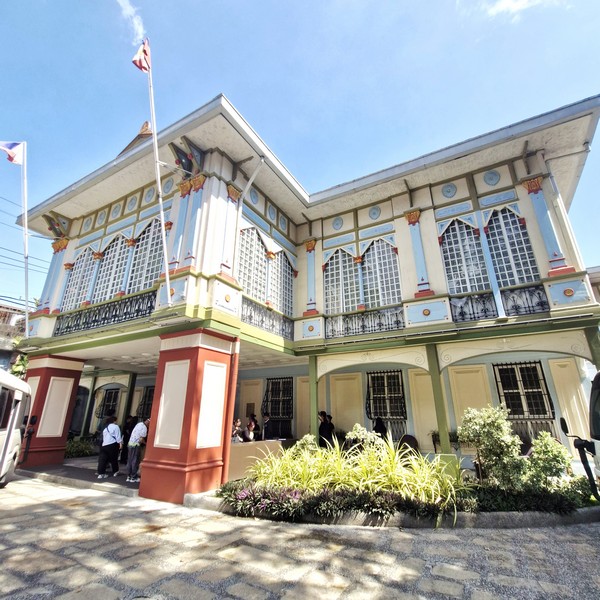
The Goldenberg Mansion

Fifth Part of NCCA Heritage Tour

The historic Goldenberg Mansion, a stately 19th-century residence nestled in the heart of Manila, beside the Teus Mansion, stands as a timeless symbol of elegance, boasting a rich historical background.  This beautifully restored ancestral home now serves as a venue for cultural events, art exhibitions, and official receptions. This heritage house’s grand architecture, intricate details, and rich legacy offers a glimpse into the opulence of the colonial era while continuing to play a vibrant role in the country’s contemporary cultural landscape.

Check out “Teus Mansion

The right side of the mansion

It was built in the 1870s by the affluent Eugsters, a Spanish merchant family who owned the trading company Eugster, Labhart y Cia. It was later purchased by Spanish lawyer, writer, and colonial official (he previously served as the Oidor de la Audiencia or Hearing Officer of the Real Audiencia of Manila) Jose Moreno Lacalle who revamped it, heavily incorporating  Moorish Revival style into the design and infusing elements of his native region of Granada.

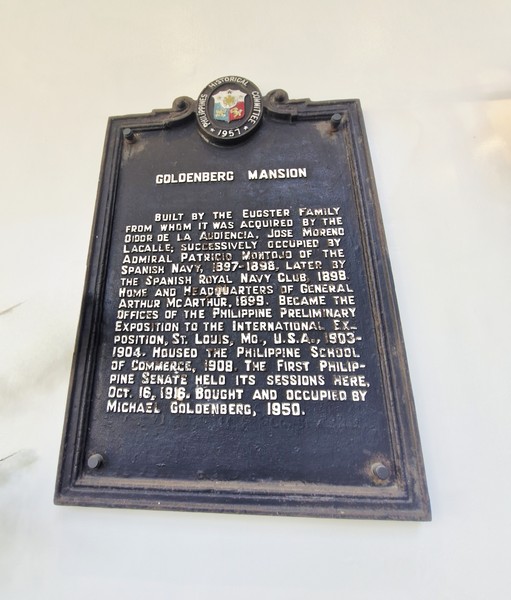
Philippine Historical Committee plaque (1957)

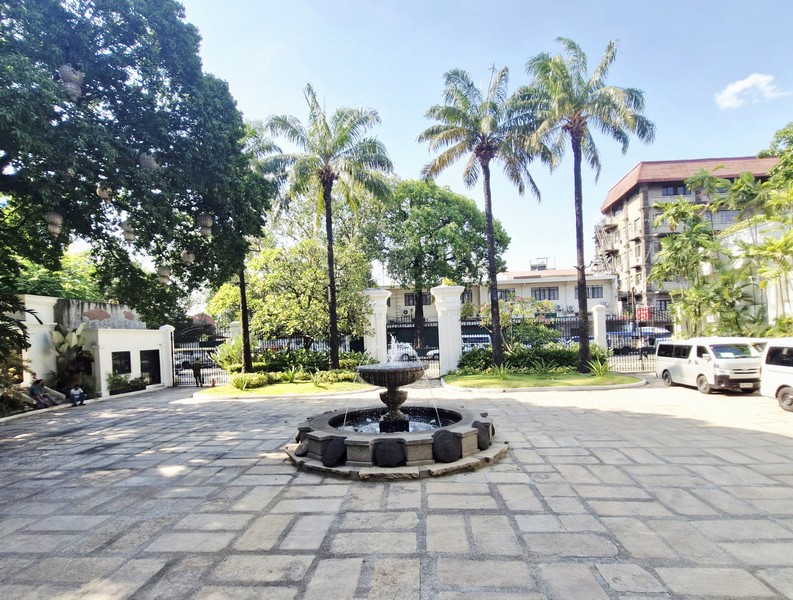
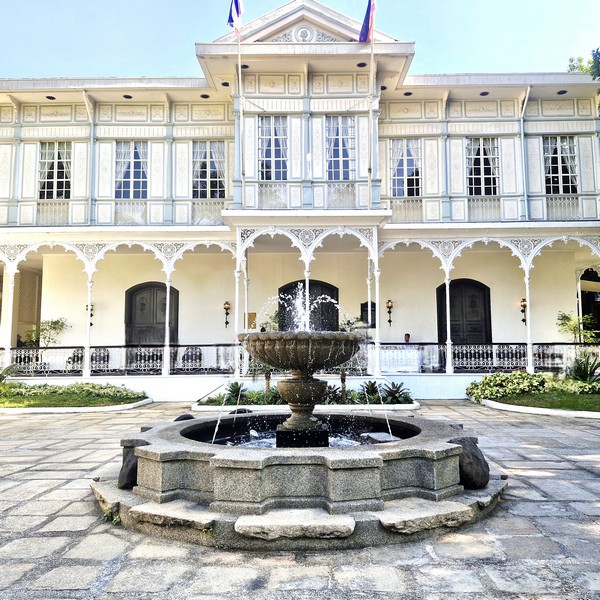
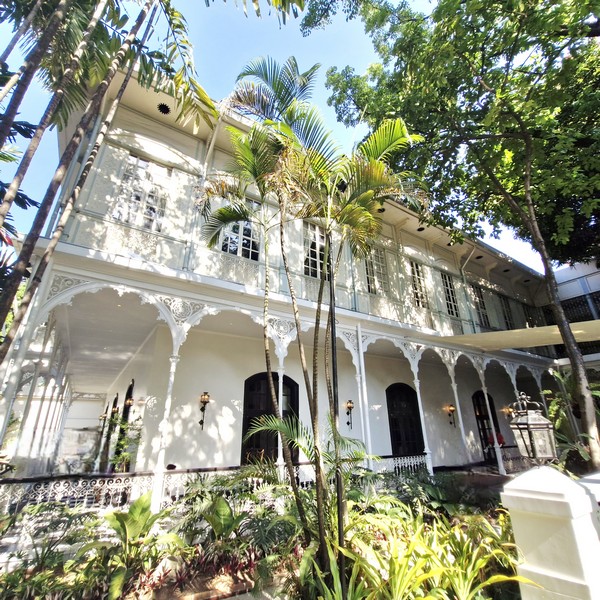
Constructed using indigenous materials such as Philippine hardwood, alongside European materials such as pre-fabricated steel from Belgium, Italian marble, and bricks and tiles from Spain, the mansion showcases window sashes using capiz shells, an arcaded veranda, a paved courtyard, and a splashing circular fountain.

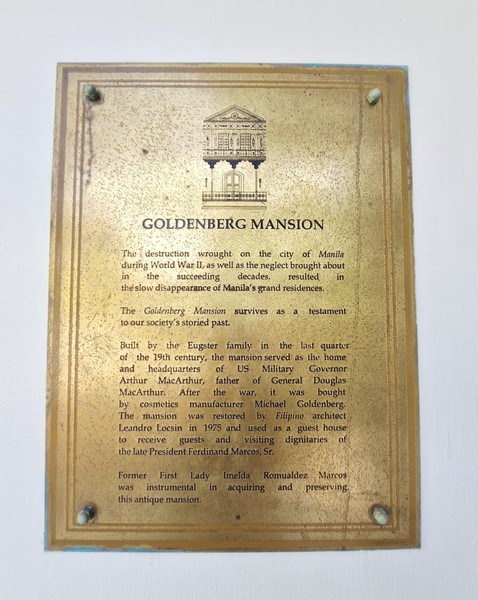
A more recent historical plaque

Over the course of the next 53 years, the house underwent several changes in ownership, being leased to various government and military offices. Between 1897 and 1898, it was rented to the Spanish Navy, serving as the residence for Admiral Patricio Montojo, its commanding officer, and housing the exclusive Spanish Navy Club’s headquarters.

The mansion’s interior

After Admiral Montojo’s defeat at the Battle of Manila Bay and the surrender of Manila to the Americans under U.S. Navy Commodore George Dewey, it became the residence of Gen. Arthur MacArthur Jr. (father of Gen. Douglas MacArthur), the battalion commander, until his appointment, in 1900, as Military Governor of the Philippines, after which, he moved to Malacañang Palace. Responsible for maintaining public order of the city of Manila, Gov. MacArthur Jr. established the Metropolitan Police Force of Manila in 1901, with himself as its inaugural chief, and the police force was initially stationed on the mansion’s grounds.

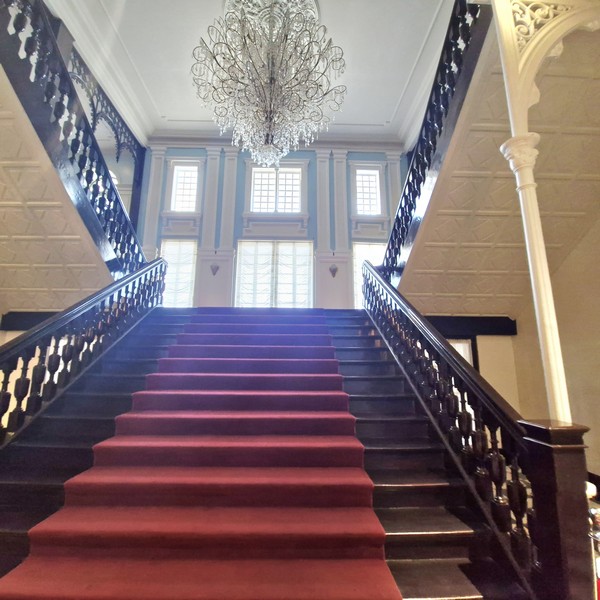
Grand double staircase

The year 1903 marked the mansion’s initial role as a museum when it functioned as the office of the Philippine Preliminary Exposition to the International Exposition in St. Louis, Missouri, exhibiting artifacts before their transfer to the Louisiana Purchase Exposition in 1904. Before shipping the items to the United States, the mansion hosted the first public exhibition of Philippine art, featuring works by Felix Resurreccion-Hidalgo, Fabian dela Rosa as well as Juan Luna’s famous The Blood Compact, which now resides in Malacañang Palace’s collection.

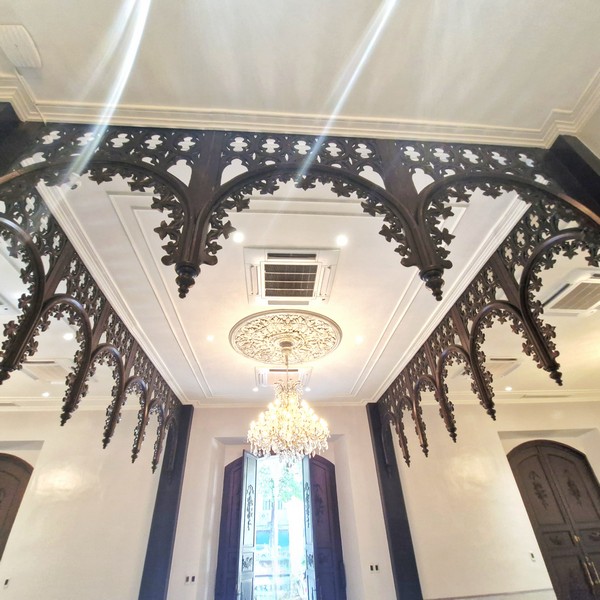
Glass chandelier bordered by intricate wooden fretwork

In 1908, it was the inaugural location of the Philippine School of Commerce (now the Polytechnic University of the Philippines) and, by 1915, the property was acquired by Ricardo Esteban Barretto, whose family established the San Miguel Brewery. On October 16, 1916, it hosted the first session of the Senate of the Philippines. In the 1930s, it also housed the Adamson School of Industrial Chemistry (the present Adamson University main building, in San Marcelino, was inspired by the mansion’s architecture).

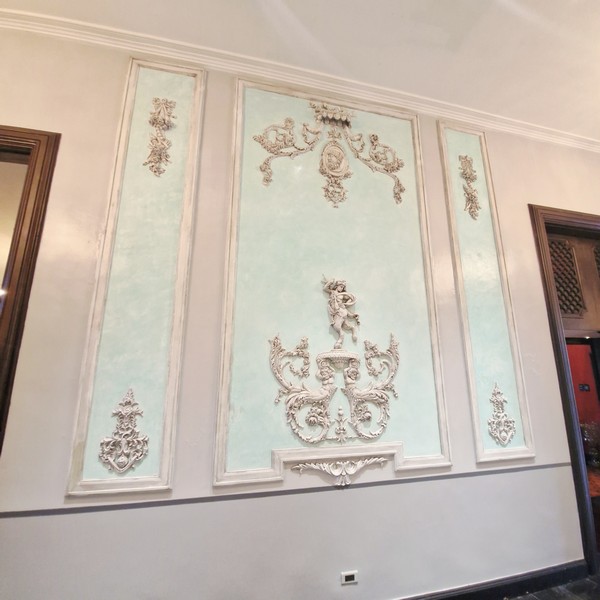
Intricate wooden bas-reliefs at the walls

During World War II, it served as the residence of a Japanese general.  After the war, it was converted into the Ye Olde Mansion, a restaurant-nightclub for American troops. In 1950, the mansion was acquired by cosmetic magnate, businessman and philanthropist Michael Goldenberg (1889–1963), an American of French-Jewish descent, who initially arrived in the Philippines as a young boy in 1896 (he personally witnessed the execution of National Hero Jose Rizal in Bagumbayan).

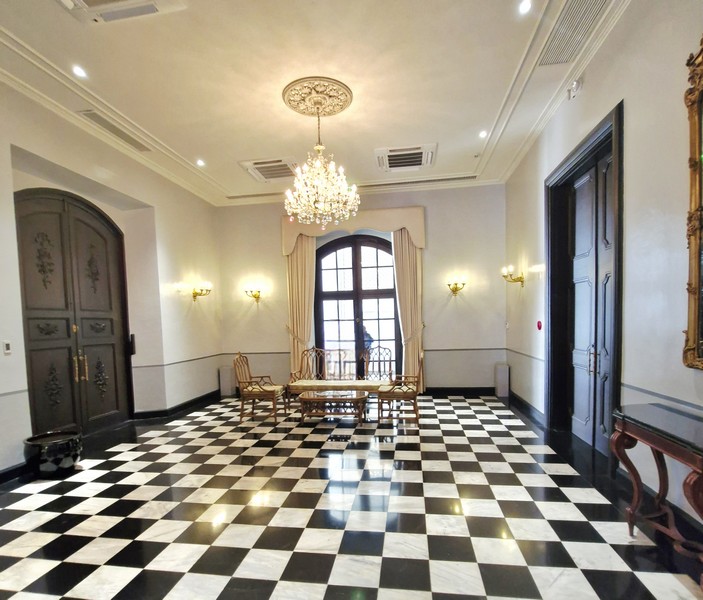
The main hall with checkerboard tile pattern

Amassing his wealth in retail, Goldenberg founded the Goldenberg Department Store situated in Escolta and held exclusive distribution rights, in the Philippines, for distributing Helene Curtis Shampoo Plus Egg beauty products.

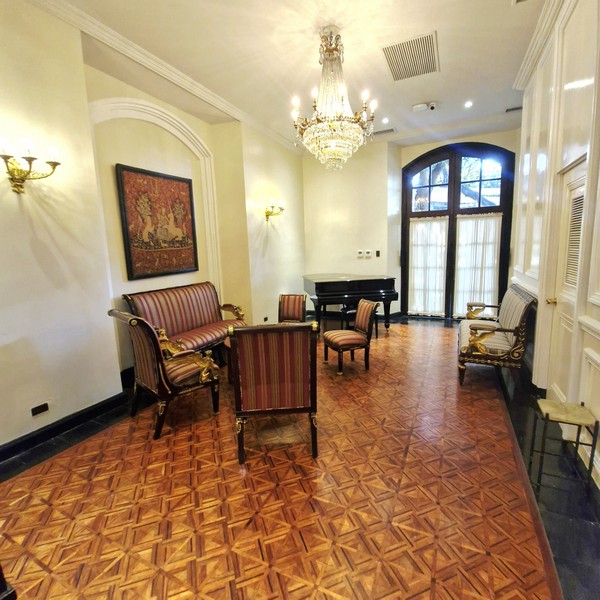
Receiving area with wooden parquet flooring

A keen stamp collector and a trailblazer in organized philately in the Philippines, Goldenberg amassed a collection of over 4,000 books, journals, maps, old photographs, pamphlets, and other ephemera on the Philippines and, subsequently, established the Goldenberg Filipiniana Library, a private institution dedicated to the study of Philippine history and culture. As a consequence, the mansion came to be known as the Goldenberg Mansion.

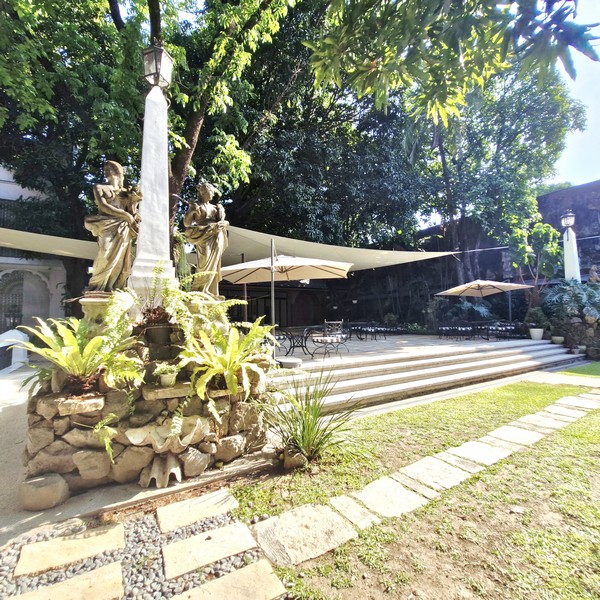
Mansion garden

In 1966, following Goldenberg’s death in 1963, the Goldenberg Mansion was acquired, from his heirs, by First Lady Imelda Marcos  as one of the Marcos mansions. Subsequently, it became the offices of the Marcos Foundation and, after undergoing extensive restoration and renovation of the interiors by National Artist for Architecture Leandro Locsin, served as the office and guest house of the Marcos Foundation and renamed Ang Maharlika.

View looking towards Gen. Solano Street

As a guesthouse, it hosted notable dignitaries such as King Hussein and Queen Alia of Jordan; Prince Juan Carlos and Princess Sofia (later King and Queen) of Spain; Prime Minister Indira Gandhi of India; Prime Minister Pierre Elliott Trudeau of Canada; UN Secretary-General Kurt Waldheim; celebrated American pianist Van Cliburn and renowned ballerinas Dame Margot Fonteyn and Alicia Markova.

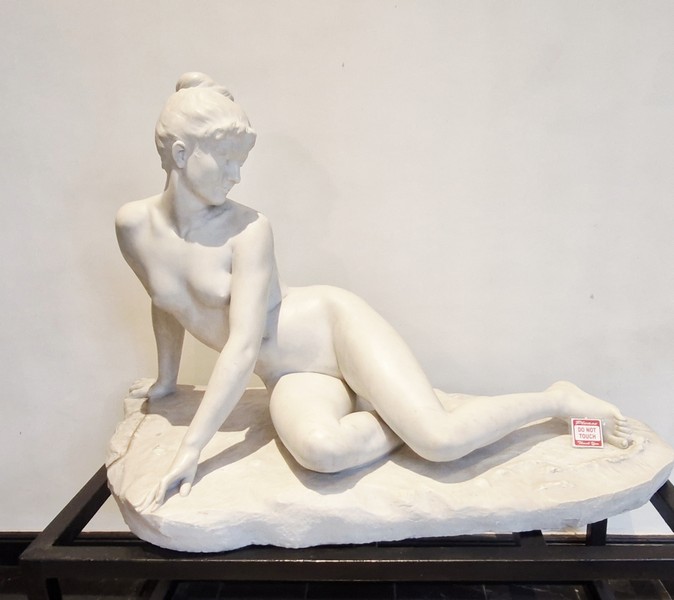
Sculpture of a reclining nude female figure

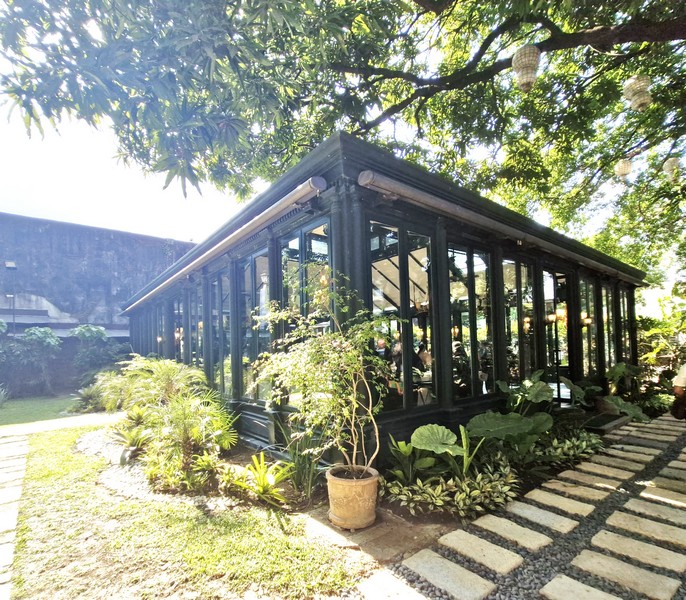
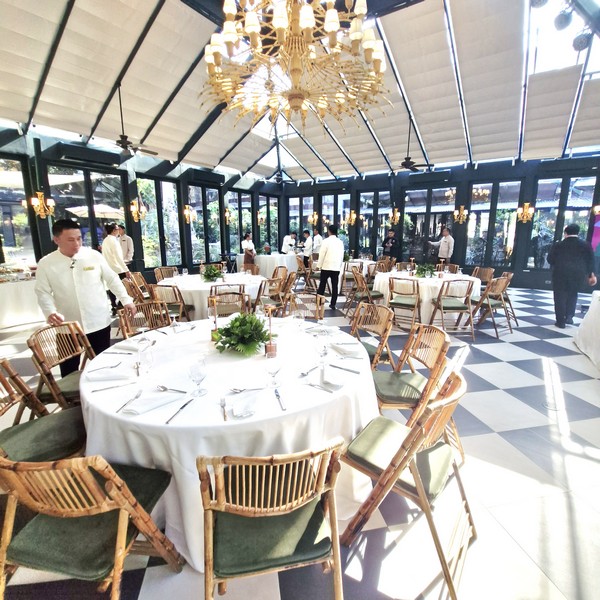
After the People Power Revolution of 1986, ownership of the Goldenberg Mansion and other properties within the Malacañang Palace complex transferred to the Government of the Philippines, with restricted public access. From 2022 to 2023, following the initiative of First Lady Liza Araneta Marcos, the Goldenberg Mansion underwent renovation to be made into a cultural center and events space.  A glass house, designed and conceptualized by Jonathan G. Matti (an in-demand interior designer with a background in architecture), was also added on the grounds of the Goldenberg Mansion.  The mansion was reopened to the public as a cultural center and events space.

The Glass House

On May 12, 2023, President Bongbong Marcos issued Executive Order No. 26 to conserve and protect cultural heritage sites around Malacañang Palace, including the Teus Mansion and the Goldenberg Mansion. The supervision of these properties was transferred, from the former Office of the Deputy Executive Secretary for General Administration, to the Social Secretary’s Office.

Interior of Glass House

In April 2023, the Goldenberg Concert Series, part of the “Konsyerto sa Palasyo,” was launched. In March 2024,  Araneta Marcos’ inaugural concert, starring the Manila Symphony Orchestra musicians, was held there. The Series, featuring exceptional Filipino performing artists, especially the youth, was the brainchild of Stella Goldenberg Brimo (daughter of Michael Goldenberg). In April 2024, Indak ng Musika, a piano concert, was performed by alumni of Santa Isabel College’s Conservatory of Music. In the fourth event violinist Adrian Ong and pianist Jet Chong performed for former First Lady Imelda Marcos, and her sister-in-law Irene Marcos-Araneta.

In addition to the Goldenberg Mansion’s library, the mansion housed Imelda Marcos’s extensive art collection and a significant collection of oriental ceramics and artefacts, including Chinese jade furniture, excavated porcelain and pottery, and Ban Chiang pottery from Thailand.

Its interiors features a living room with wood filigree arches and chandeliers; tapestries depicting Diana the Huntress; a “Della Robbia” style mirror (which once belonged to Catherine de Medici); several paintings by the American artist Grandma Moses (forfeited, in 2019, by the Sandiganbayan  in favor of the Government); a 16th-century European devotional altar adorned with ivory figures depicting the life and martyrdom of Catherine of Alexandria; and Persian rugs adorning the floors.

Goldenberg Mansion: 838 Gen. Solano St., San MiguelManila. Tel:  (02) 8249 8310 local 8188. E-mail: goldenbergevents@op.gov.ph.  Wensite: www.goldenbergmansion.gov.ph. Open  Tuesdays to Sundays, 9 AM to 6 PM.  Coordinates: 14°35′30″N 120°59′22″E

How to Get There: The mansion can be visited, by the public, upon reservation, via socsec@malacanang.gov.ph.

National Commission for Culture and the Arts (NCCA): NCCA Bldg., 633 General Luna St., Intramuros, Manila, 1002. Tel: (632) 8527-2192. E-mail: info@ncca.gov.ph. Website: www.ncca.gov.ph.

Teus Mansion (City of Manila, Metro Manila)

Teus Mansion

Fourth Part of NCCA Heritage Tour

The stunning, Spanish-Era, Neo-Gothic-style Teus Mansion (beside the Goldenberg Mansion), preserving the legacy of Philippine leadership by displaying rare portraits and historical memorabilia of the nation’s 17 Philippine presidents (that were previously shown in the Kalayaan Hall Presidential Museum and Library), takes its name from Valentin Teus Yrissari (1832-1909), a Spanish businessman, of Basque descent, from Navarra (at the foot of the Pyreness), who arrived in the Philippines in 1847 at the age of 15.  

Check out “Goldenberg Mansion

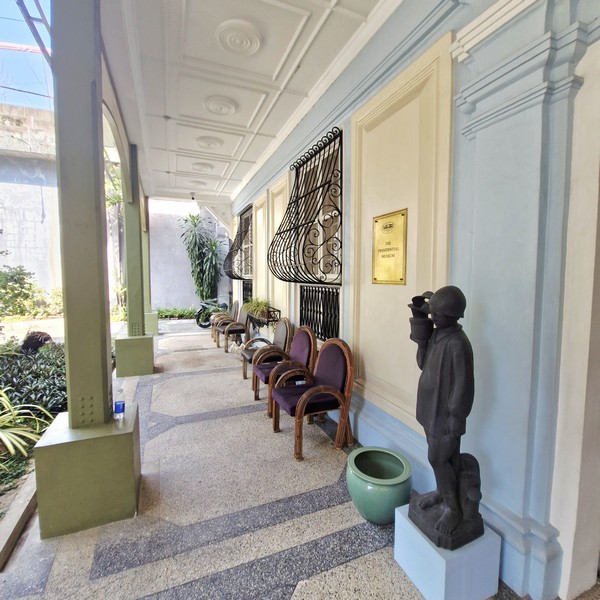
Entrance porch

In 1856, Teus acquired a local distillery in Hagonoy, Bulacan, owned by Elias Menchatorre.  Later, he merged his operations with Ynchausti y Cia, a company supplying equipment and abaca rope (for ship’s rigging) for steamships, which evolved into the renowned Tanduay Distillers

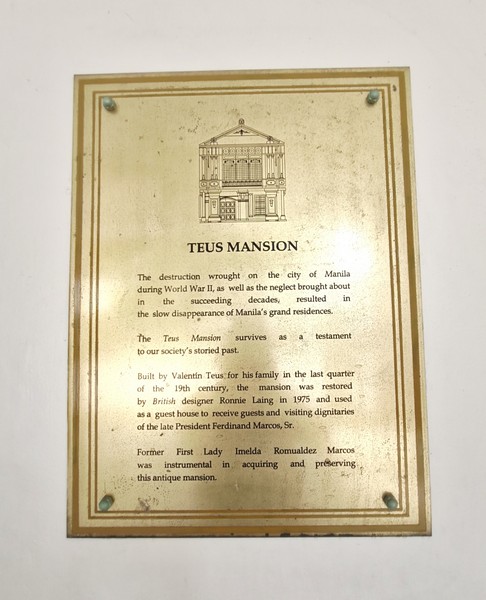
Historical plaque

In 1871, Valentin became alcalde primero of the Ayuntamiento (City Council) de Manila and, the following year, was honored as Comendador de la Real Orden de Isabela la Catolica. He later married Teresa Ferrater Ponte (1847 – 1892), the niece of the capitán general. Following Ponte’s demise, Valentin, now 62, married Maria Dolores Menendez Valdes de Cornellana Ferrater, Teresa’s 20-year old niece, at San Miguel Church. They had 4 children: Valentin Jr. (who died young), Concepcion (known as Concha), Valentin III (or Tito), and Dolores (affectionately called Lolin).

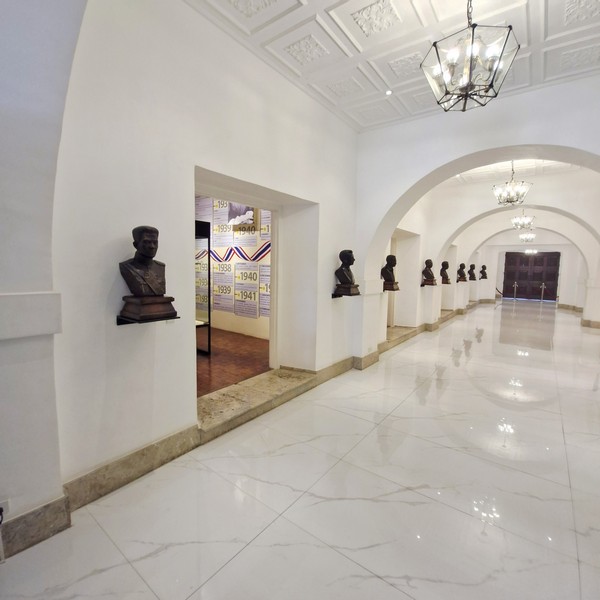
Busts of presidents lining the main hall

Initially residing in Binondo, Valentin, in a gesture of affection, surprised Dolores with Teus Mansion in the 1890s, a new residence, in the fashionable arrabal of San Miguel, built on the ruins of an older convent probably destroyed during the 1880 earthquake. He and his family would occupy this residence in Manila but, periodically, every five years, Valentin would journey to Spain. In 1909, Valentin unexpectedly died, leaving Dolores to manage the household and the family affairs. After Dolores’s own demise, the family eventually relocated to Spain by selling their interests there.

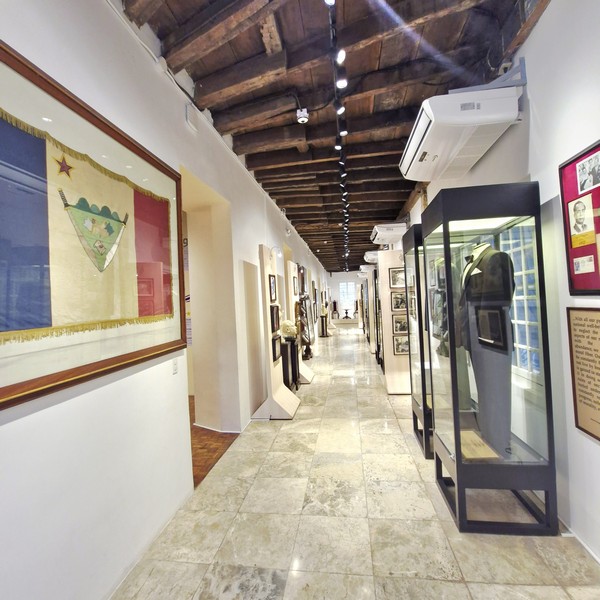
Presidential Museum
Presidential staff assistant Mr. Ronnie W. Balastigue touring media guests around the museum

The mansion was inherited by Concepción Teus, the eldest child, who rarely visited it, leaving an old man as caretaker.  The once proud mansion deteriorated.  The kitchen roof fell in and the attic became home to a bat colony. In 1974, Concepción opted to sell the mansion (none of her 7 children and 48 grandchildren were interested) to First Lady Imelda Marcos. In 1975, she engaged British interior designer Ronnie Laing and antique dealer Viring de Asis to renovate the Teus Mansion as a guest residence, becoming one of the Marcos mansions

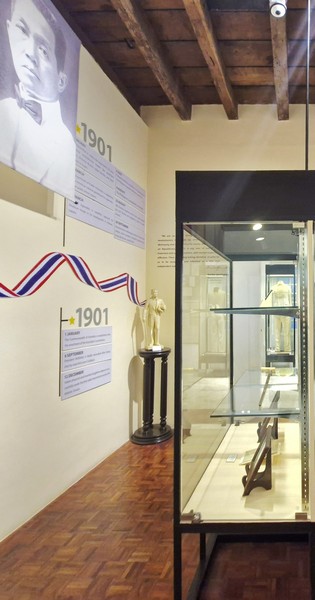
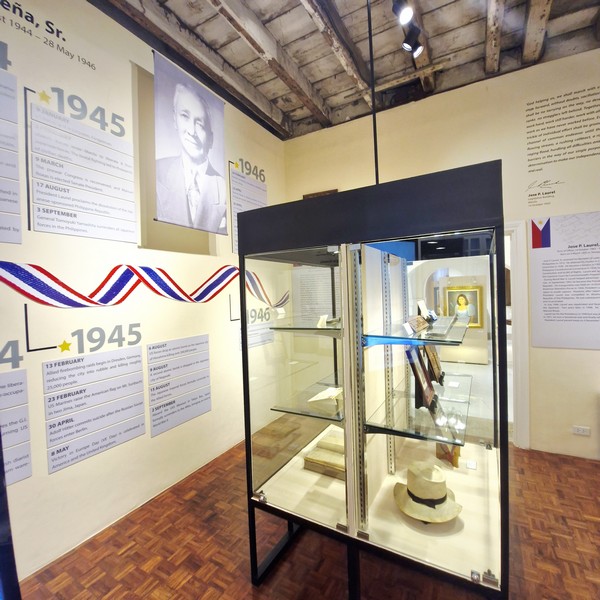
Emilio F. Aguinaldo Exhibit
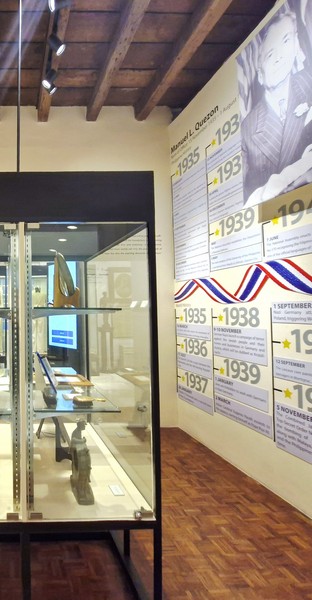
Manuel L. Quezon Exhibit
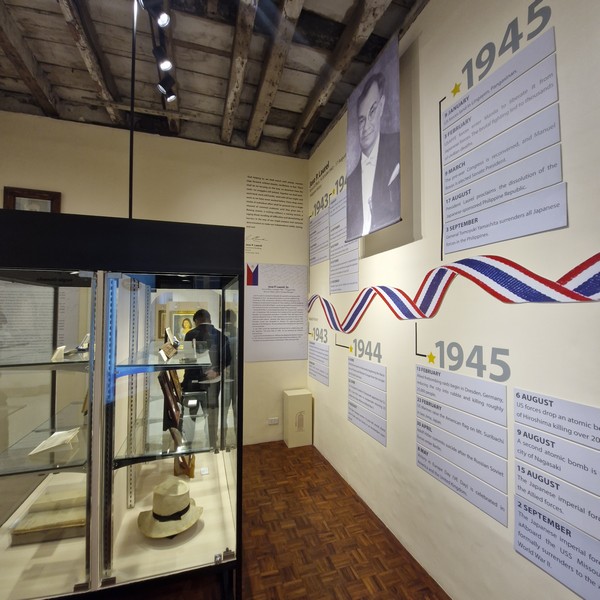
Jose P. Laurel Exhibit
Sergio Osmena Exhibit

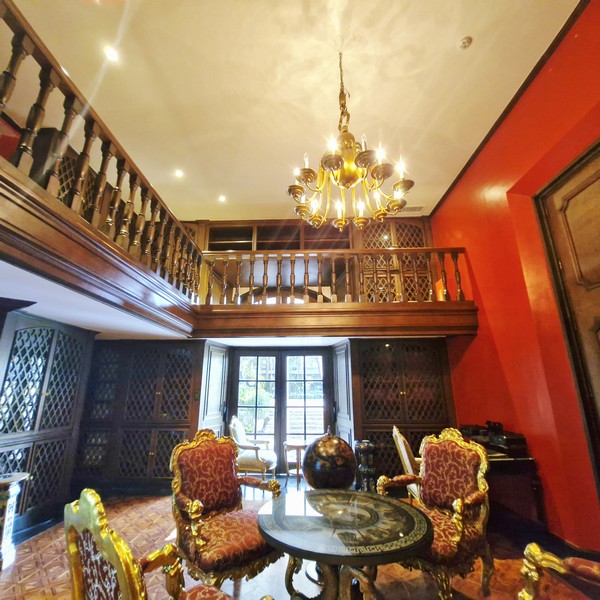
The former dining room was made into two bedrooms and partitions, in another bedroom, were taken down to create a spacious living-dining area. Bathrooms and closets were cleverly added, their entrances cleverly camouflaged behind aparador (cabinet) fronts. The original downstairs carriageway now serves as an entrance hall. The rest were transformed into 12 bedrooms which, with the existing five upstairs, gave the old home a total of 17 bedrooms.  Notable guests at the Teus Mansion included the Italian-American socialite Cristina Ford, who was close associate of Imelda.

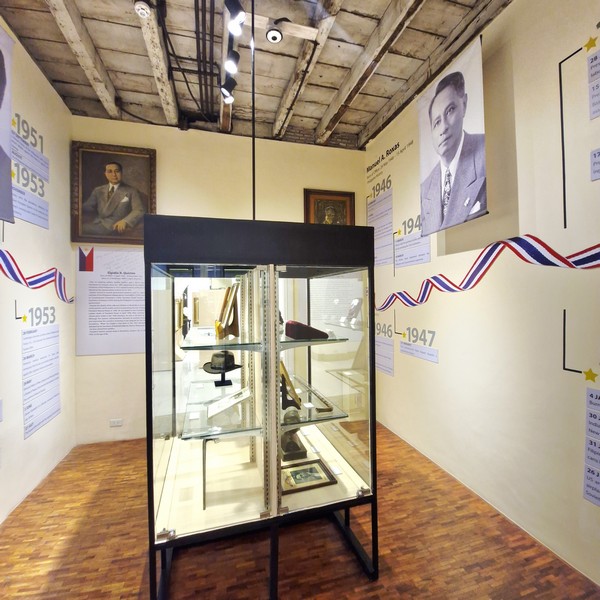
Manuel A. Roxas Exhibit
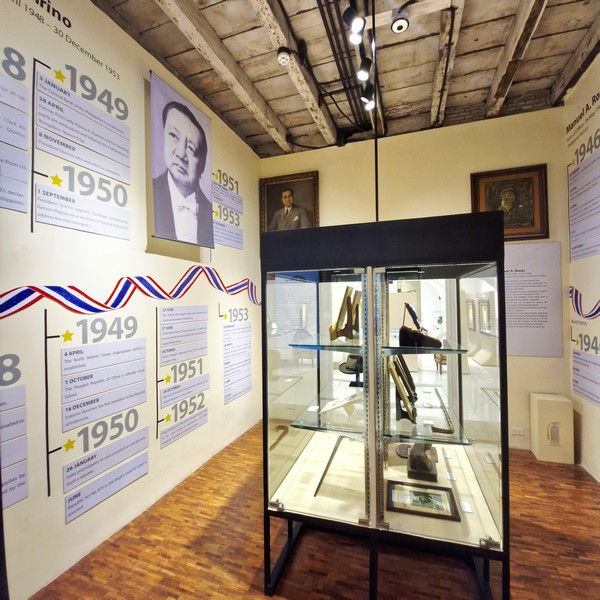
Elpidio Quirino Exhibit
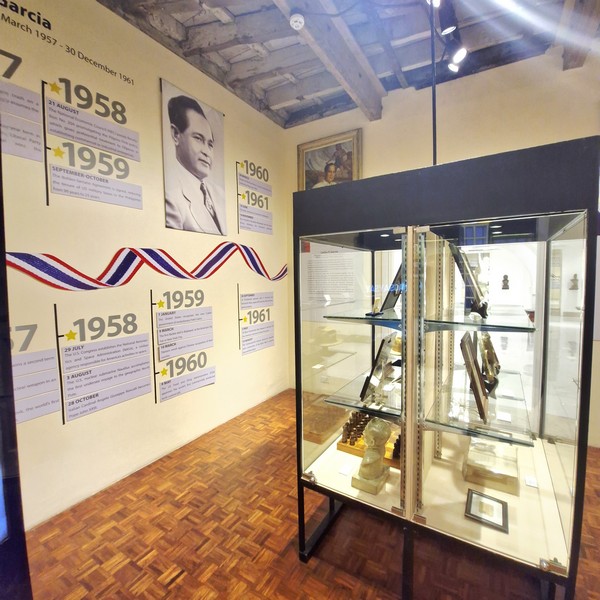
Carlos P. Garcia Exhibit
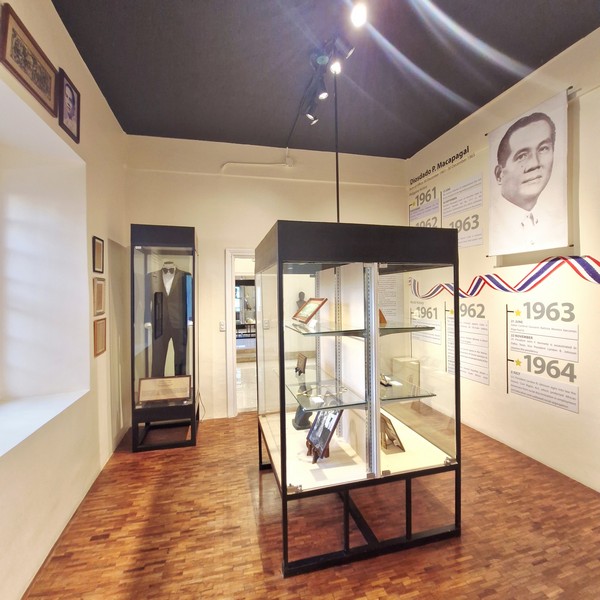
Diosdado Macapagal Exhibit

After the People Power Revolution of 1986, the Teus Mansion, and other properties within the Malacañang Palace complex, became possessions of the Government of the Philippines but was left unused and remained closed to the public.

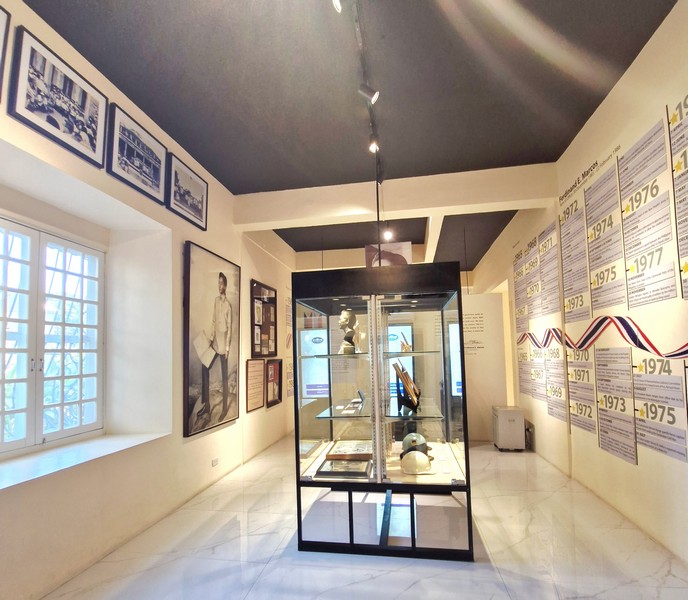
Ferdinand E. Marcos Exhibit
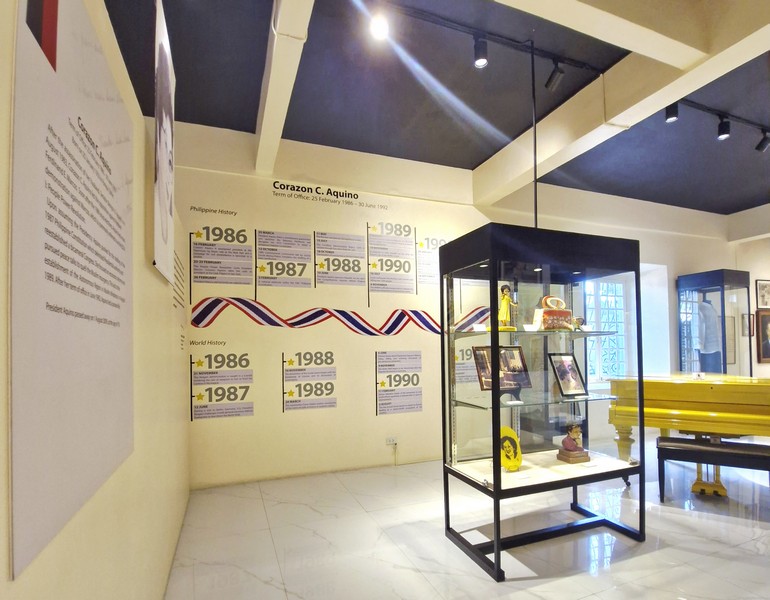
Corazon C. Aquino Exhibit
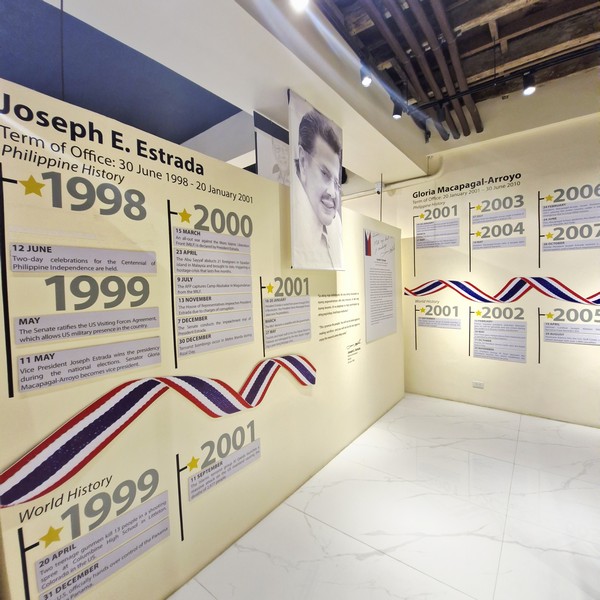
Joseph E. Estrada Exhibit
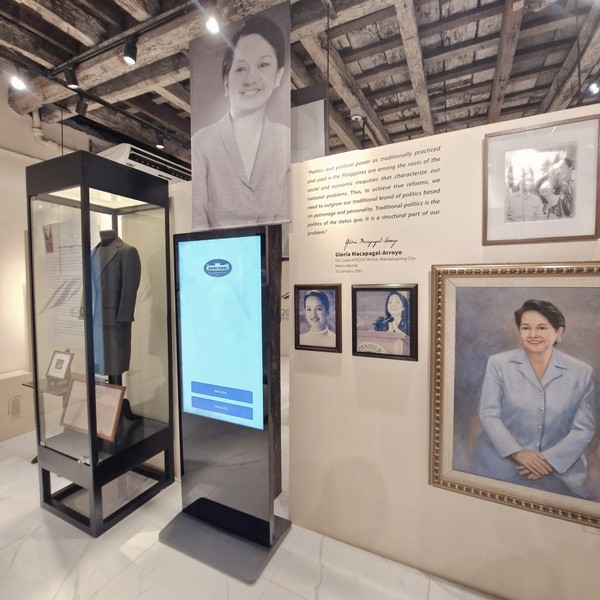
Gloria Macapagal-Arroyo Exhibit
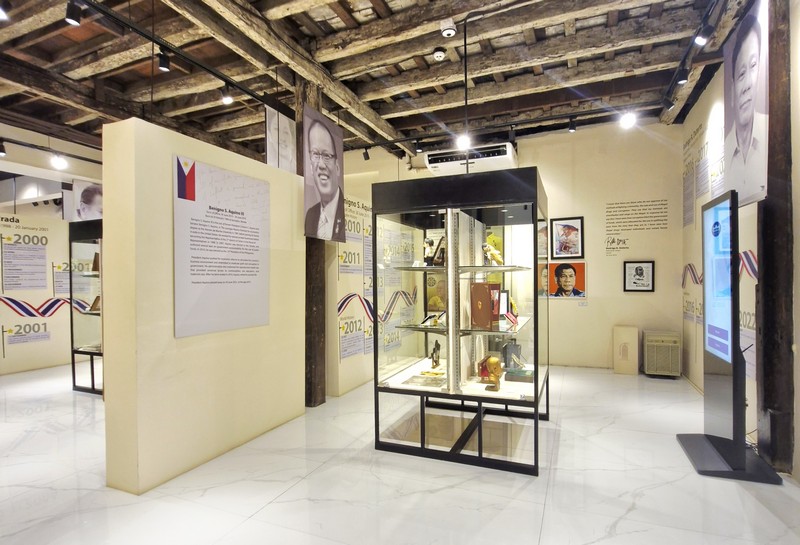
Benigno C. Aquino Exhibit
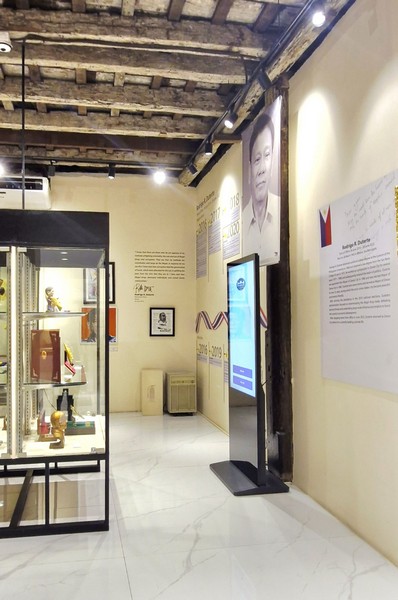
Rodrigo R. Duterte Exhibit

On May 12, 2023, President Bongbong Marcos issued Executive Order No. 26 to conserve and protect cultural heritage sites around Malacañang Palace, including the Teus Mansion. That same year, the Teus Mansion underwent renovations, overseen by First Lady Liza Araneta Marcos, to house collections from the Presidential Museum (formerly located in Kalayaan Hall). The supervision of these properties was transferred to the Social Secretary’s Office from the former Office of the Deputy Executive Secretary for General Administration.

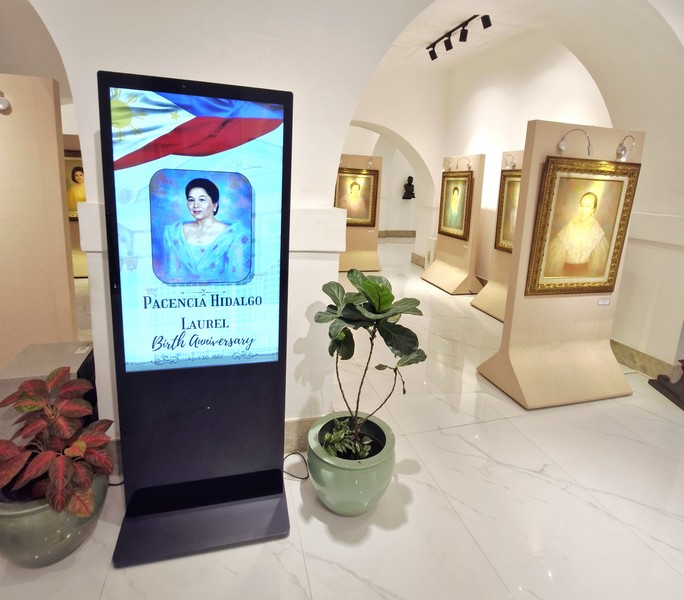
Gallery of First Ladies

The rooms were transformed into galleries exhibiting artifacts, personal belongings, clothing, souvenirs, gifts, photographs, and memorabilia of Philippine Presidents, from Emilio Aguinaldo to Rodrigo Duterte. One or two rooms is devoted to each president,.  Wall text and photographs sustain the main narrative.  Memorabilia from government collections and loans or gifts from presidential families include medals and decorations, commemorative coins, and miscellanea like eyeglasses, a golf club, chess pieces, automobile license plates, a buntal hat and a cap, flyers from long-ago elections, souvenirs of EDSA I, and sculptures like one of President Ramos’ head puffing on a cigar.

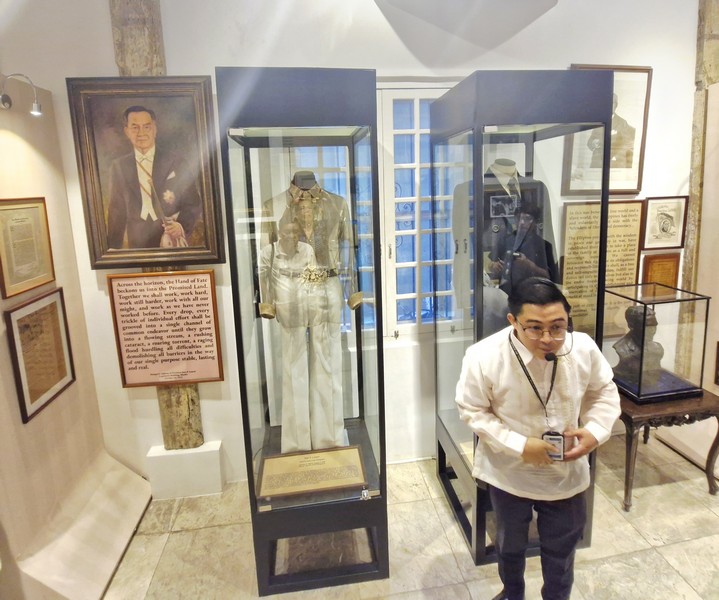
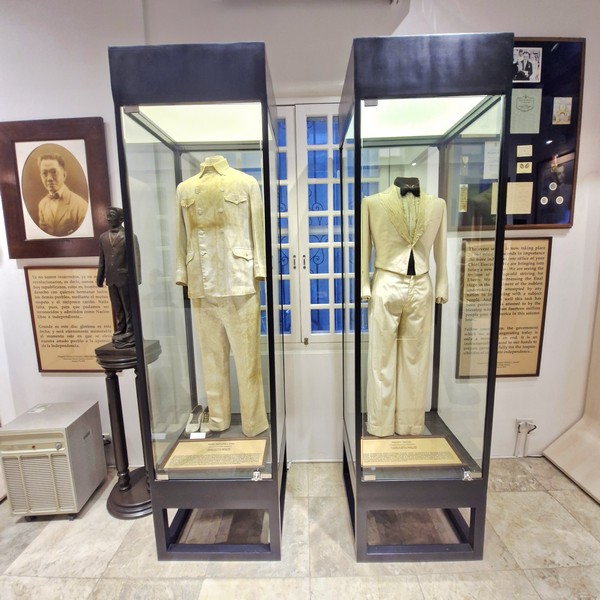
Suits of Emilio Aguinaldo and Manuel L. Quezon
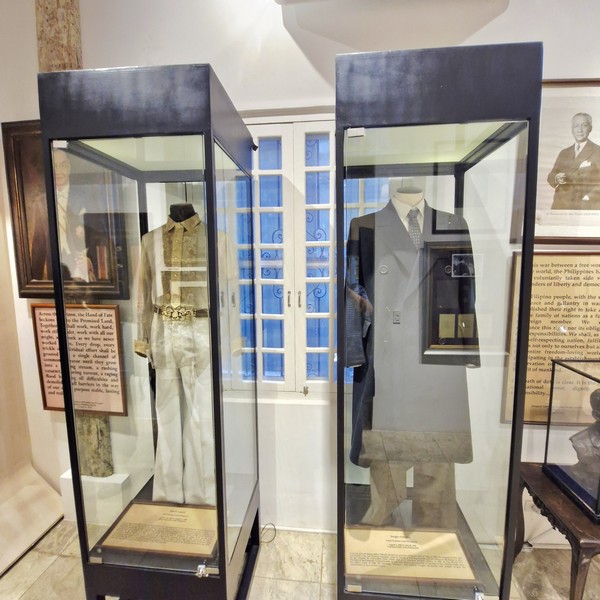
Barong tagalog of Jose P. Laurel and suit of Sergio Osmena

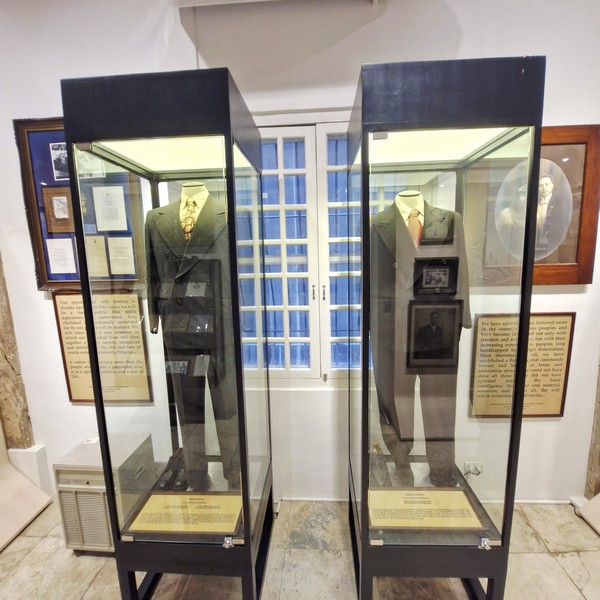
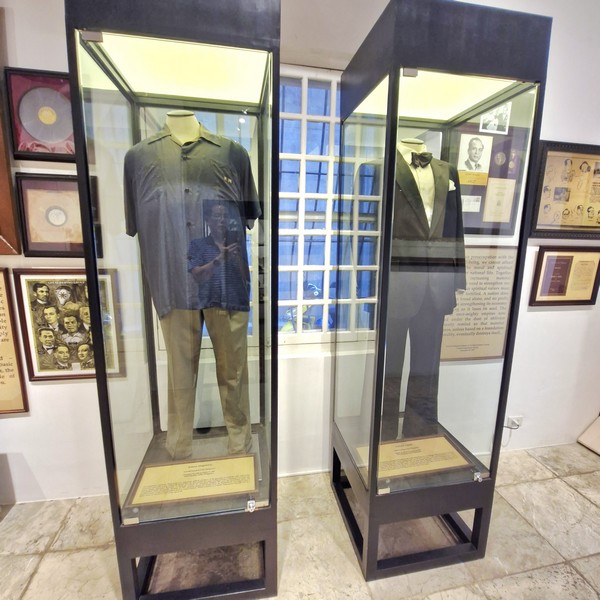
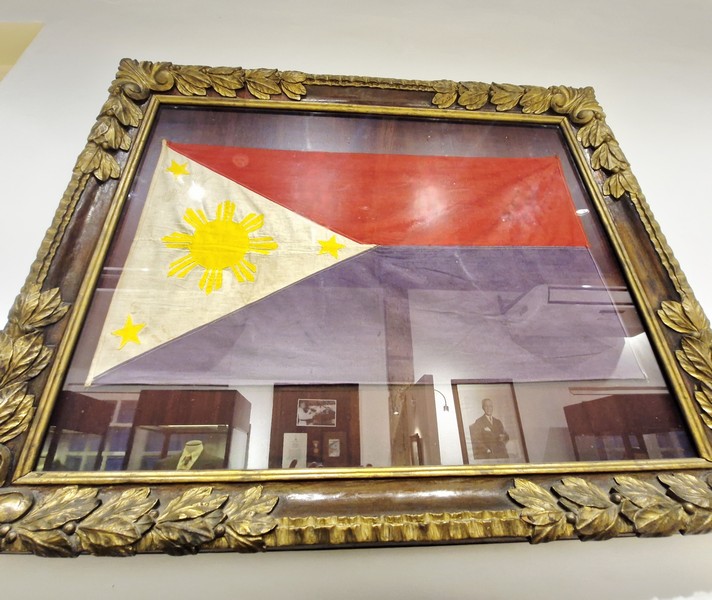
The Osmeña Room has a Philippine flag signifying that the Republic was then at war, with the red section above the blue. Barong Tagalog and/or suits of most of the presidents, on mannequins, provide an unintended history of Philippine men’s fashion. The main hall is lined with busts of presidents and there is also a gallery with portraits of First Ladies.

Suits of Manuel A. Roxas and Elpidio Quirino
Casual attire of Ramon Magsaysay and suit of Carlos P. Garcia

AUTHOR’S NOTES:

The two-storey façade, with Neo-Gothic windows (flanked by paired and single flat pilasters), on the upper floor, and quadrilateral windows, on the ground floor, features a protruding central section, topped by a triangular pediment (flanked by 8-petalled finials and topped by an acroterion), holding the porte cochere below.  Below the windows are grilled ventanillas. The massive wrought iron gate of the mansion opens up to a stone courtyard with a circular fountain.

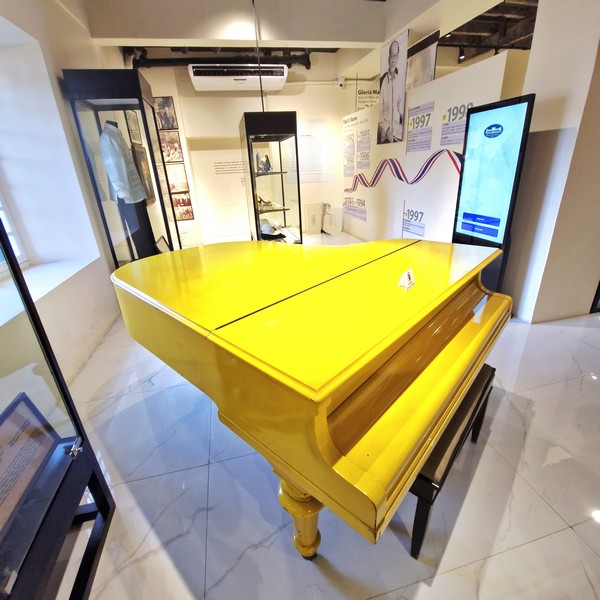
Grand piano at the main sala (living room)
The Osmena flag with the red section above the blue signifying that the country was at war.

Teus Mansion: Gen. Solano cor. J. Nepomuceno (formerly Tanduay) Sts., San Miguel, Manila. Tel:  (02) 8249 8310 local 9009. Open Tuesdays to Sundays, 10 AM to 6 PM. Admission is free.  E-mail: tours_mht@op.gov.ph. Website: www.teusmansion.gov.ph. Coordinates: 14°35′30″N 120°59′22″E.

National Commission for Culture and the Arts (NCCA): NCCA Bldg., 633 General Luna St., Intramuros, Manila, 1002. Tel: (632) 8527-2192. E-mail: info@ncca.gov.ph. Website: www.ncca.gov.ph.

Bahay Ugnayan (City of Manila, Metro Manila)

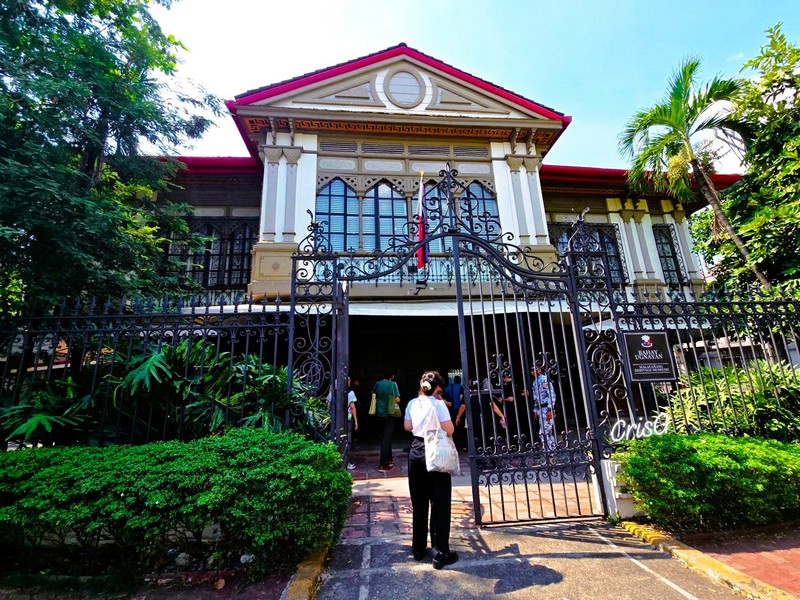
Bahay Ugnayan (photo: Ms. Cris Gadion)

Third Part of NCCA Heritage Tour

The Spanish Colonial-period Bahay Ugnayan (Tagalog word for “connection” or “relationship”), formerly a compound for priests, was built around the 1800s though not much is known about it.  Located meters away from the Teus Mansion, it was donated to the government, by the Madrigal family, shortly before World War II, making it one of the first, if not the first, of the mansions outside the Malacañang complex that came into government possession. 

Check out “Teus Mansion

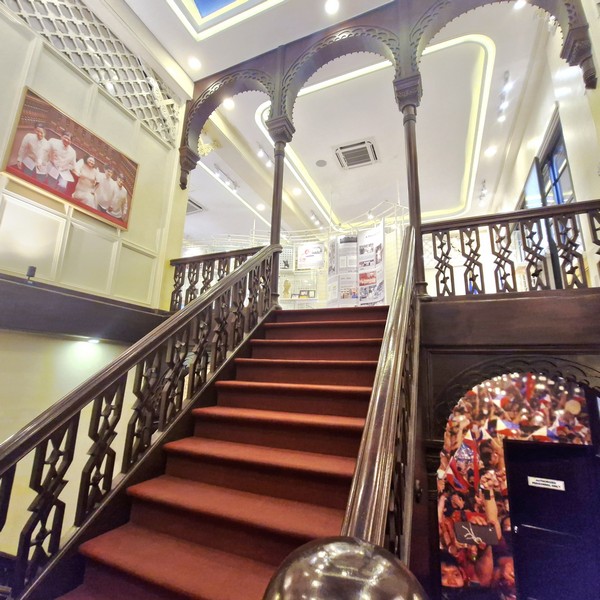
Grand Staircase

For many years, it served as a government office, for various agencies under the Office of the President (such as the Presidential Complaint Center and the 8888 Citizens’ Complaint Center), until May 12, 2023, when President Ferdinand “Bongbong” Marcos, Jr. issued Executive Order No. 26 to conserve and protect cultural heritage sites around Malacañang Palace, including the Bahay Ugnayan, Teus Mansion and Goldenberg Mansion. That same year, the mansion underwent renovations, overseen by First Lady Liza Araneta Marcos

Check out “Goldenberg Mansion

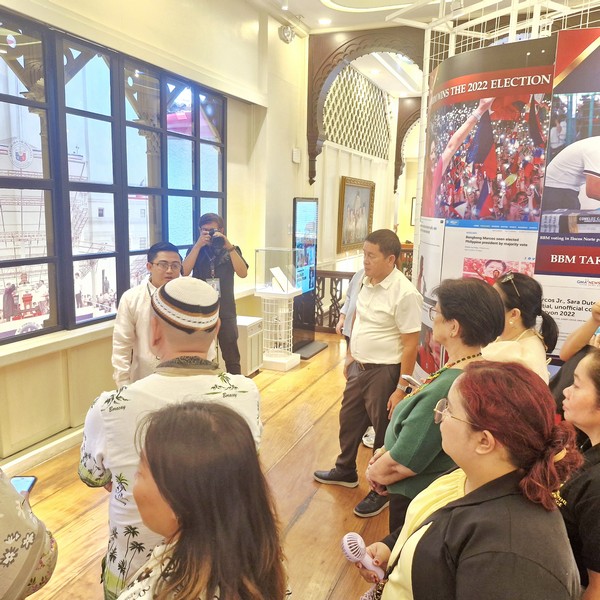
Presidential Staff Assistant Mr. Ronnie W. Balastigue (upper left, facing camera) touring media guests around the museum

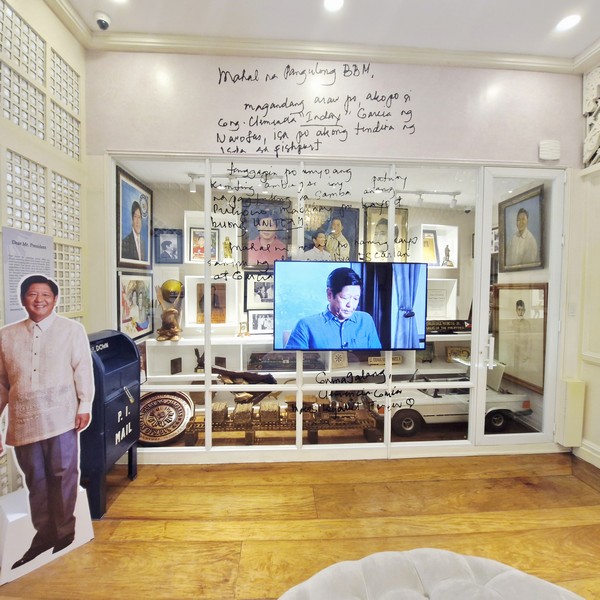
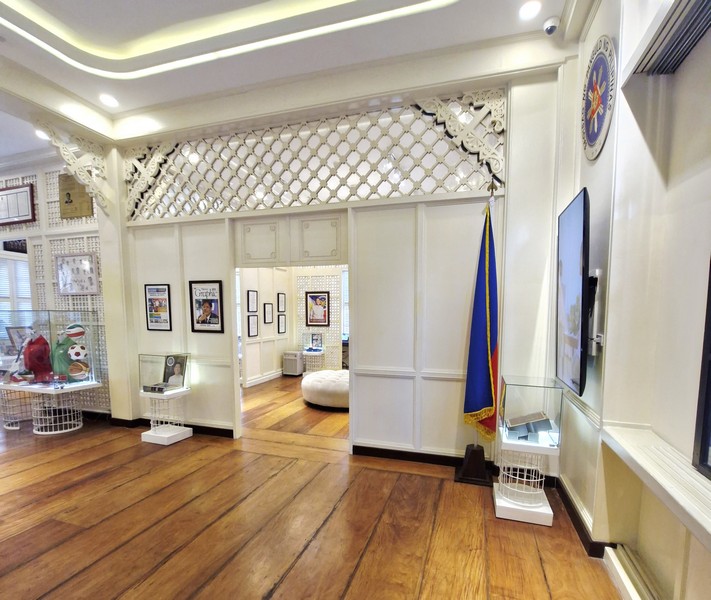
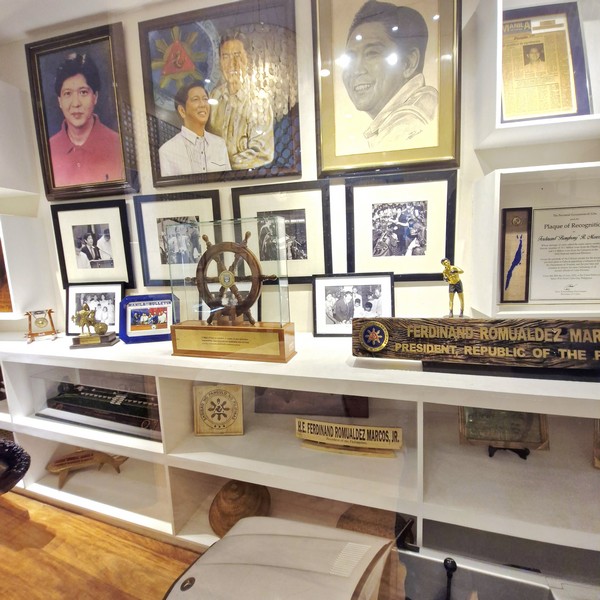
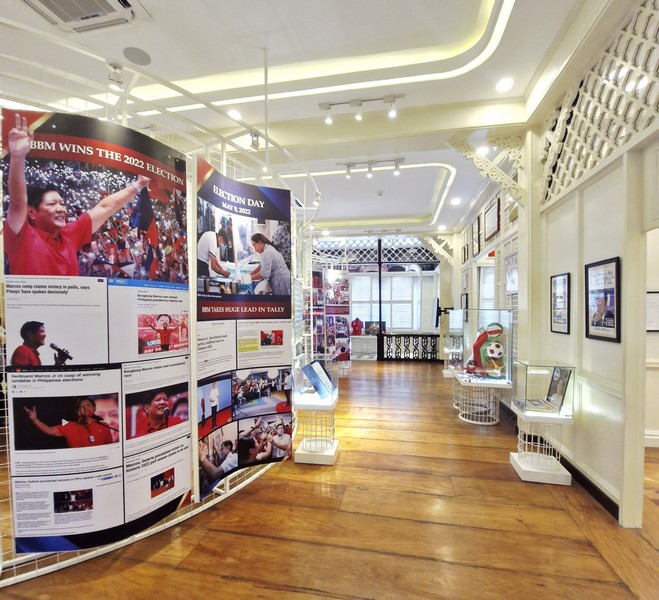
Bahay Ugnayan, reimagined as a dynamic museum, has been designated as a “changing” museum, which would showcase the life and accomplishments of the current president, in this case that of the “Road to Malacañang” exhibit of Pres. Ferdinand “Bongbong” Marcos, Jr.. which houses memorabilia from his childhood to his 2022 campaign.

Exhibit of photographs and the president’s childhood toys
The “Road to Malacanang” Exhibit

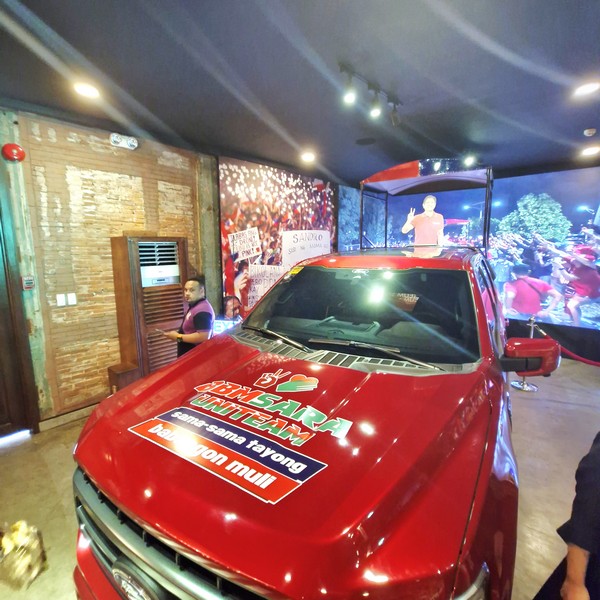
Items in its carefully curated displays and artifacts include the red Ford F-150 pickup he frequently used during the campaign period; copies of the original documents submitted during his electoral protest against former Vice-President Leni Robredo after the 2016 elections (the Supreme Court junked Mr. Marcos’ electoral protest against Robredo in February 2021) and a piece of barbed wire tied with a yellow ribbon, a prominent symbol during the People Power Revolution that led to the ouster of the President’s father and namesake in 1986.

Exhibit of photographs of father and son and desk name signs

Whoever succeeds Marcos Jr as president in 2028 will be showcased in the Bahay Ugnayan venue by then, while the memorabilia of Marcos Jr. will be moved to the Teus Mansion.  As it stands, the Bahay Ugnayan not only showcases the life of the current president but also serves as a political statement of sorts.

Exhibit of 2022 presidential campaign

Apart from the campaign materials used during the elections, one can find the certifications about Marcos Jr.’s college education (a controversial topic that props up from time to time) as well as a section dedicated to his electoral protest which came about after his loss in the vice-presidential race in 2016.

Ford F-150 Pickup the president used during his 2022 campaign

Bahay Ugnayan: Jose P. Laurel Sr. St., (fronting Gate 2 of the Malacañang Palace), San Miguel, Manila, 1005. Open Tuesdays to Sundays, 10 AM to 4 PM. Admission is free. Website: www.bahayugnayan.gov.ph. For private guided tours, please email to arrange separately tours_mht@op.gov.ph.

National Commission for Culture and the Arts (NCCA): NCCA Bldg., 633 General Luna St., Intramuros, Manila, 1002. Tel: (632) 8527-2192. E-mail: info@ncca.gov.ph. Website: www.ncca.gov.ph.

Namba Jinja Shrine (Osaka, Japan)

Namba Jinja Shrine

We were now on our last day in Osaka and we still had time to explore the city as our Cebu Pacific flight back to Manila was still in the late afternoon.  After breakfast at the hotel, my nephew Miguel, who was proficient in Japanese, offered to tour us around before returning to Kyoto to work and study.  We decided to walk to the nearby Namba Jinja Shrine. It was rainy that day.

Torri (Gate)

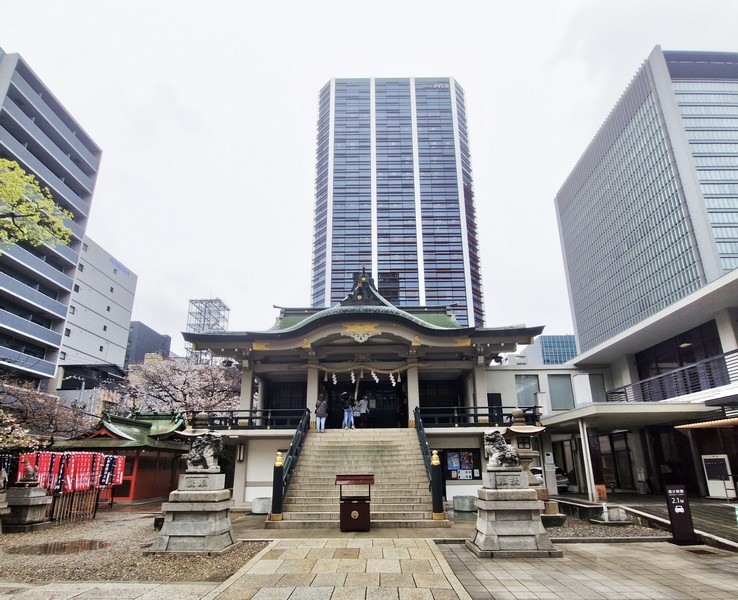
Nestled along Midosuji Avenue in Osaka’s Chūō Ward, the tranquil, restored Namba Jinja Shrine complex was said to have been founded in the 5th century by Emperor Hanzei, who established Shibagakinomiya Shrine in Matsubara City, Osaka Prefecture, to enshrine his father, Emperor Nintoku. 

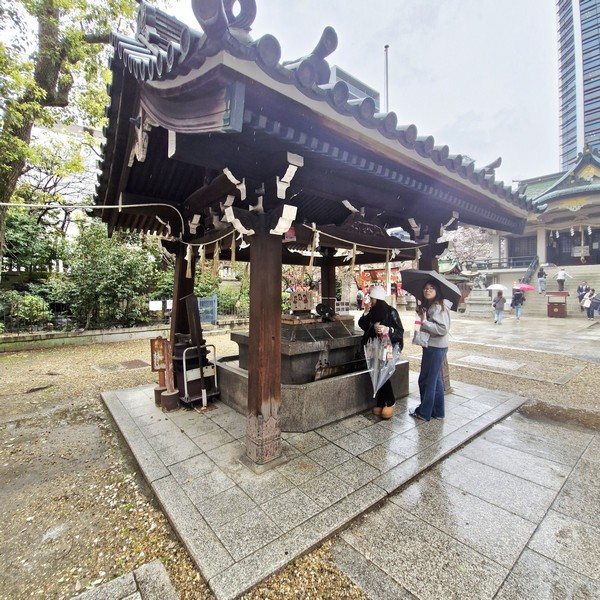
Purification Fountain (Temizuya)

It holds the weight of ancient Imperial reverence and civic memory and stands as a historical anchor amid the city’s pulse.  The shrine was later moved to Hommachi, Tennoji Ward, and then moved to its current location in 1583 (Tensho era) after Toyotomi Hideyoshi built Osaka Castle.

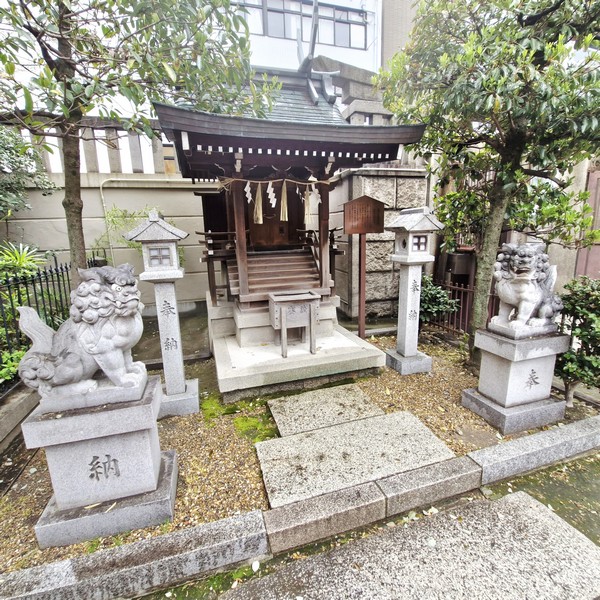
Shrine with Offertory Box (Saisen-bako)

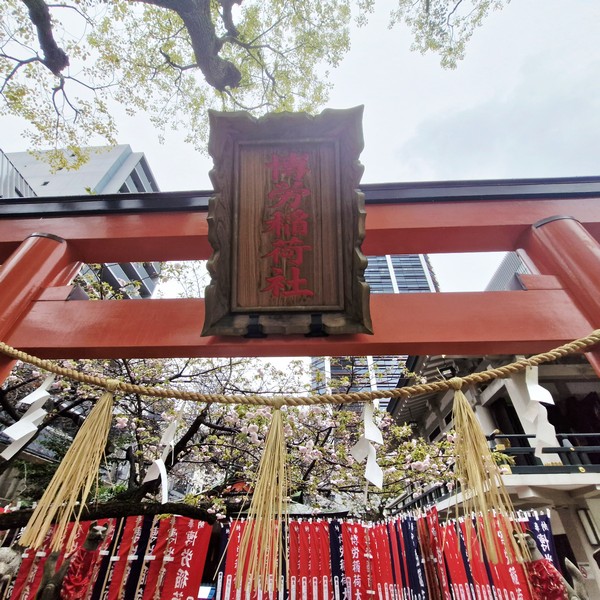
It was named “Kami-Namba Shrine” after the area and, later, adopted its current name in 1875 (Meiji era). During the Edo period, with the rise of Inari worship, the Inari Shrine, a branch shrine within the grounds, commonly known as “Bakuromachi no Oinari-san,” became more famous than the main shrine. Uemura Bunrakuken opened a puppet theater troupe within the shrine grounds in 1811 (Bunka era 8).  Destroyed during World War II, the shrine was rebuilt in 1974, with reinforced structures that echo its pre-war architecture.

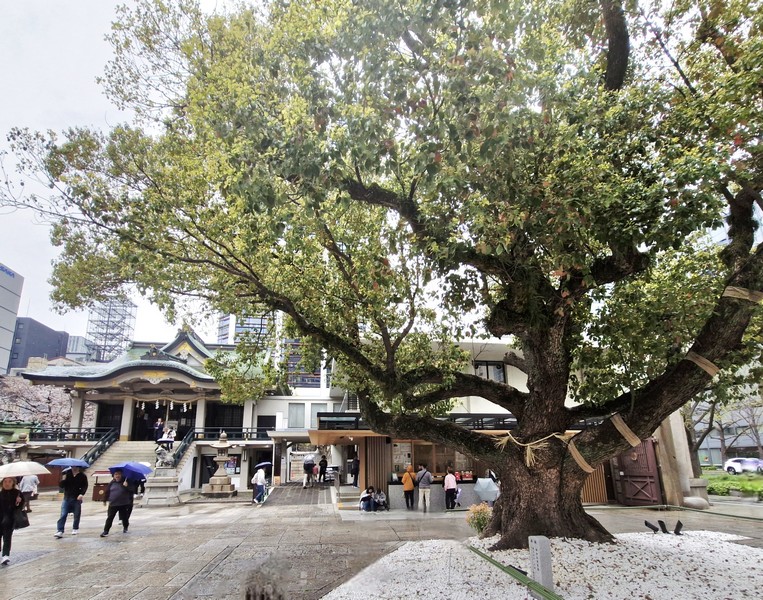
Camphor Tree

Passing through the sturdy stone torii, we were welcomed by a sacred courtyard framed by modern buildings yet rooted in centuries-old tradition. Today, it has three different shrines with different deities, offering a gentle yet powerful pause with the rustle of leaves, flicker of lanterns, and soft murmur of prayers—a tender heartbeat within Osaka’s fast rhythm.

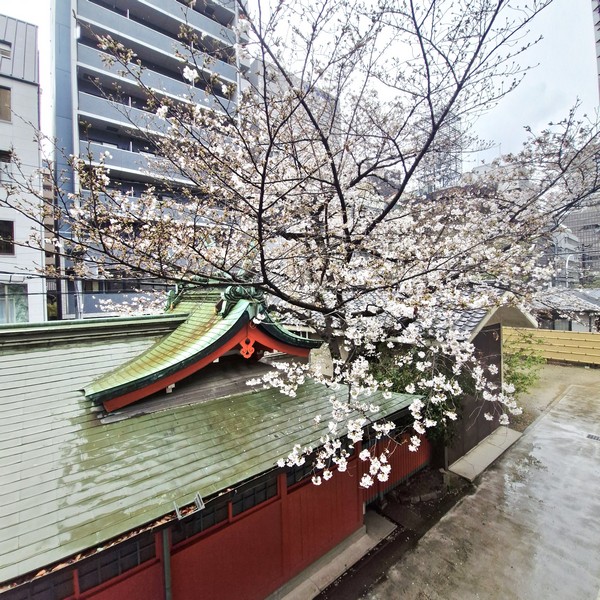
Cherry Blossom Tree

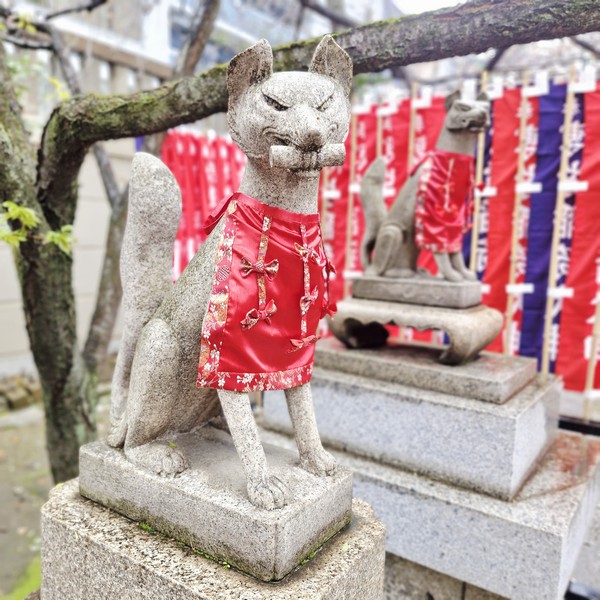
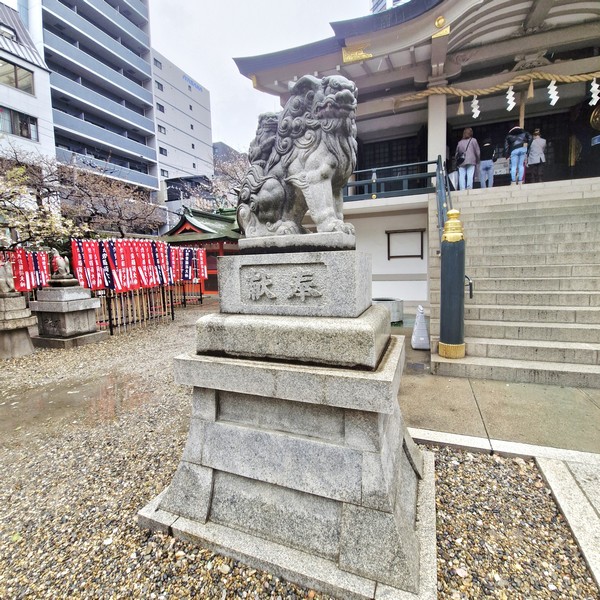
Known for its lion-dog (komainu) and fox (kitsune) statues and cherry blossom gardens, the shrine is also home to a scorched but unbowed and majestic 400-year-old camphor tree, one of the oldest in Osaka, whose trunk radiates quiet resilience and offers visitors a moment of grounding in the midst of urban haste. There is a belief that if you touch it, you will receive the “power” to rejuvenate yourself.

Fox Statues (Kitsune)
Lion-Dog Statue (Komainu)

Revered within Settsu Province’s Soja shrine network, Namba Jinja Shrine invites prayers for health, prosperity, and protection from calamities. At the beginning of the Meiji era, when Bunrakuken moved to the new development in Kujo, the “Hikorokuza” troupe opened on the site.

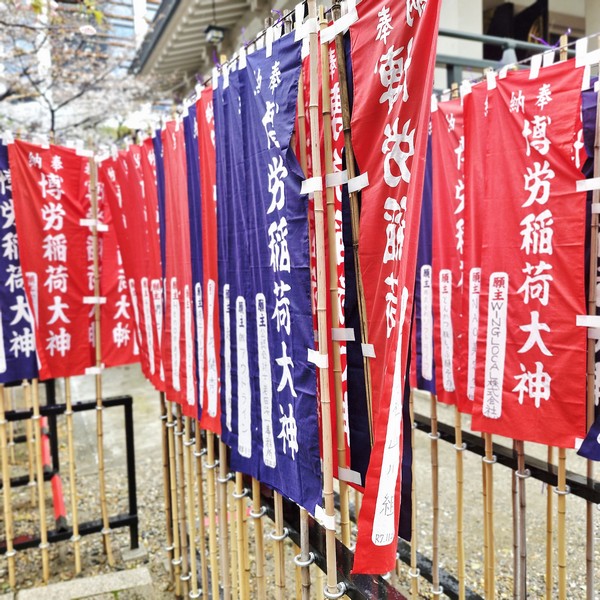
Red and Blue Banners (Nobori)
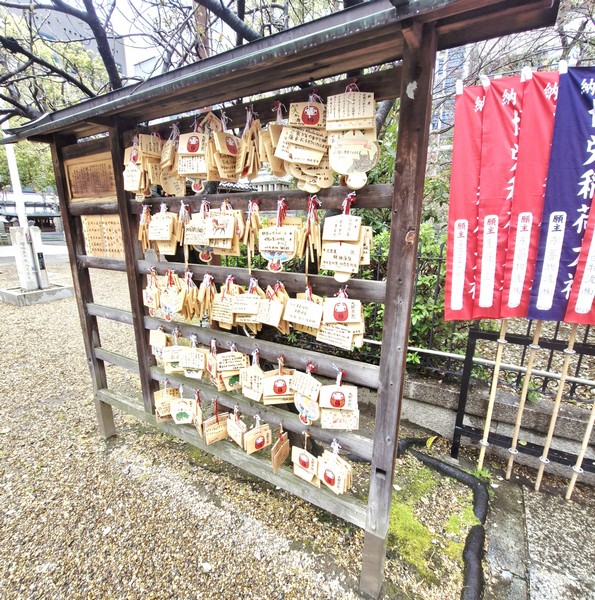
Wish Cards (Ema)

Each summer, the Himuro Ice Festival, held every year from July 20 to 21, visitors and worshippers are cooled by being given crushed kachiwari ice, a charming ritual reminding us of ancient ways to beat the heat.  It is said that if you eat this ice, you will not be defeated by the summer.

Sacred Lottery (Omikuji)

Namba Jinja Shrine: 4 Chrome 1-3 Bakuromachi, Chuo-ku, Osaka 541-0059. Tel: 06-6251-8000.  Fax: 06-6251-5110. Website: www.nanba-jinja.or.jp. Open daily, 7 AM – 6 PM. Admission is free.

How to Get There: Osaka Metro Midosuji Line “Shinsaibashi Station” Exit 3.  It is a 5-min. walk from Exit 13 of Osaka Metro Hommachi Station.
Nara Park (Nara, Japan)

Nara Park

Our fourth full day in Japan was to be spent on a whole day tour of Nara, a 32-km. (35-min.) drive from Osaka.  Our first stopover was to be Nara Park (Nara Kōen), a public park at the foot of Mount Wakakusa , designated as one of the “Places of Scenic Beauty” by the Ministry of Education, Culture, Sports, Science and Technology (MEXT). One of the oldest parks in Japan, it was established in 1880.

The park, under the administrative control of Nara Prefecture, is known for its over 1,200 wild, freely roaming sika deer (shika) around in the park that are also under designation of MEXT and classified as Natural Treasures. The sika deer were considered divine and sacred by both Kasuga Grand Shrine and Kōfuku-ji.

L-R: Mark, the author, Matthew, Nenette, Jandy, Grace and Miguel at Nara Park

According to local folklore,  Takemikazuchi, one of the four gods of Kasuga Grand Shrine, received an invitation from Kashima Shrine (in present-day Ibaraki Prefecture) and he was said to, and appeared on Mount Mikasa (also known as Mount Wakakusa) riding a white deer. From that point, killing one of these sacred deer was a capital offense up until 1637, the last recorded date of a breach of that law.

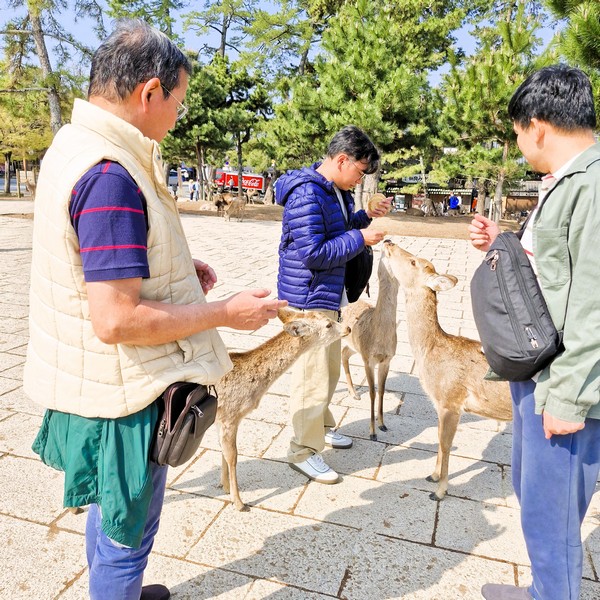
The author, Miguel and Jandy feeding the deer

While the official size of the park is about 502 hectares (1,240 acres), defined by the Urban Park Act in 1960, the surrounding  area including the grounds of the Nara National Museum and Shinto shrines and Buddhist temples, which are either on the edge or surrounded by Nara Park, is as large as 660 hectares (1,600 acres).

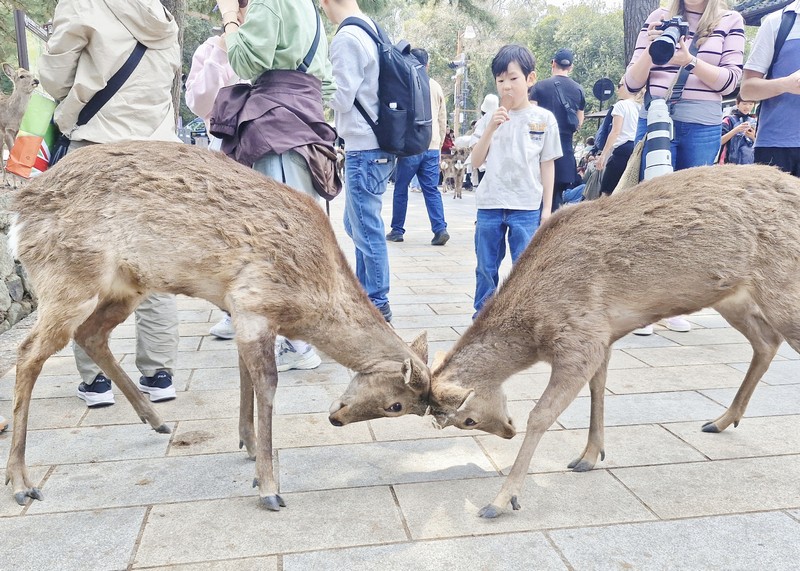
Deer engaged in territorial behavior by bumping heads

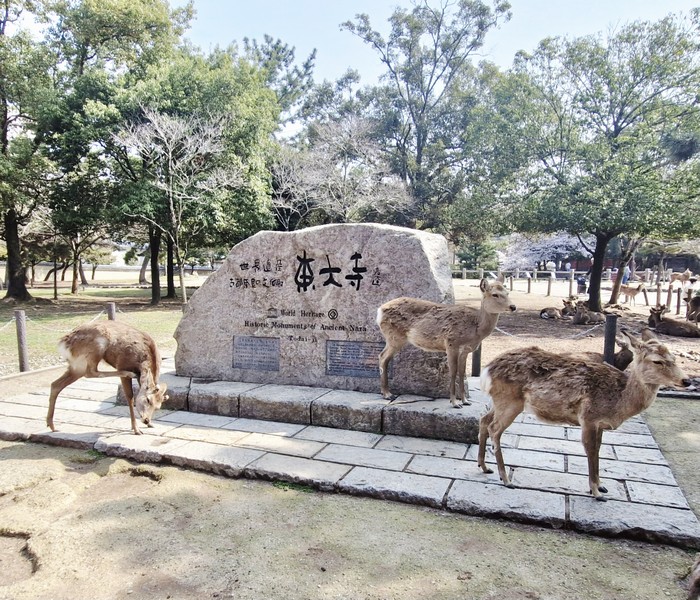
Within the 660-hectare area are World Heritage Sites (Tōdai-jiKōfuku-jiKasuga Grand Shrine and the Kasugayama Primeval Forest), registered under the title Historic Monuments of Ancient Nara, as well as 47 buildings and 374 arts and crafts (mainly consisting of Buddhist statues and religious arts and crafts) designated as National Treasures and Important Cultural Properties found in the grounds of Buddhist temples and Shinto shrines such as Todai-ji, Kofuku-ji, Kasuga Grand Shrine, ShōsōinShin-Yakushi-jiGangō-ji, and others; designated by the Japanese government.

Check out “Kofuku-ji Temple” and “Todai-ji Temple”

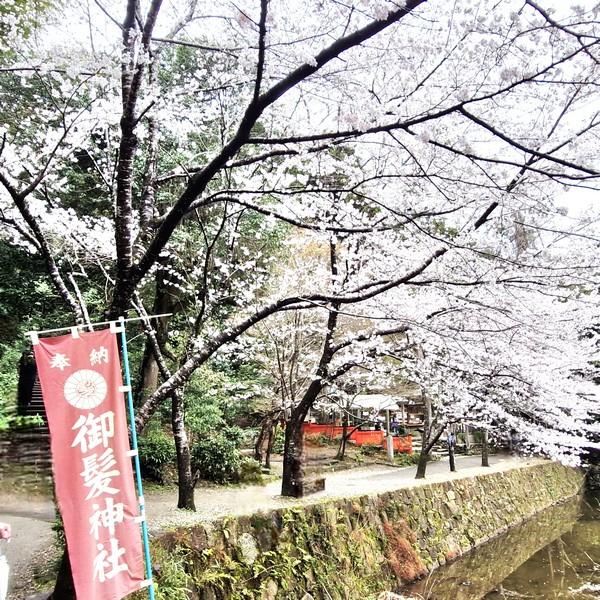
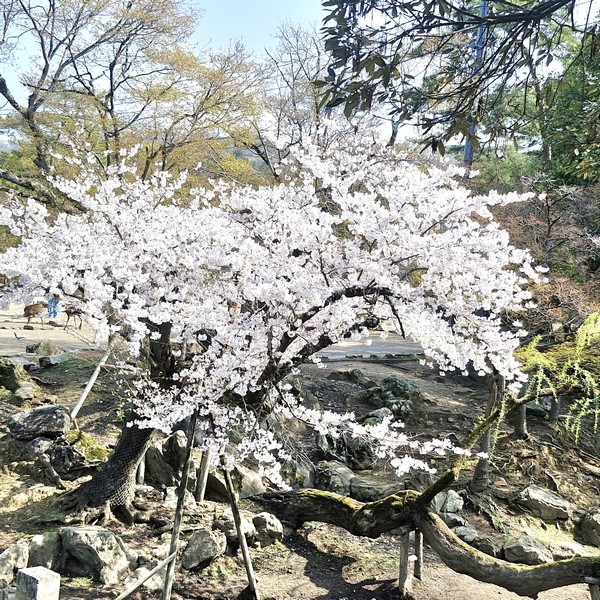
One of 1,700 cherry blossom trees in the park

The Kasugayama Primeval Forest is also designated as a Special Natural Monument (Tokubetsu Tennen Kinenbutsu), while the sika deer, the habitat of the Panchala ganesa butterfly, the Nageia nagi tree forest of Kasuga Grand Shrine, and the Prunus verecunda “Antiqua” tree of Chisokuin are designated as Natural Monuments (Tennen Kinenbutsu).

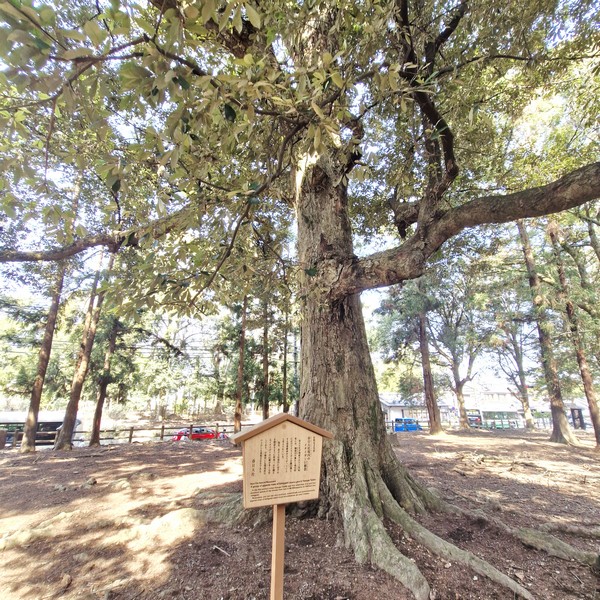
Japanese Evergreen Oak (Ichiigashi)

Aside from sika deer, the other wild animals that inhabit the park include  wild boarJapanese raccoon dogsJapanese giant flying squirrels and Japanese squirrels, among others. The vegetation consists of pine trees (matsu, some reported to be over 1,000 years old), roughly 1,700 cherry blossom trees (including shidarezakura weeping varieties), camphor trees (kusu), maple trees (momiji), plum treesJapanese cedar (sugi) and Japanese pieris, among others.

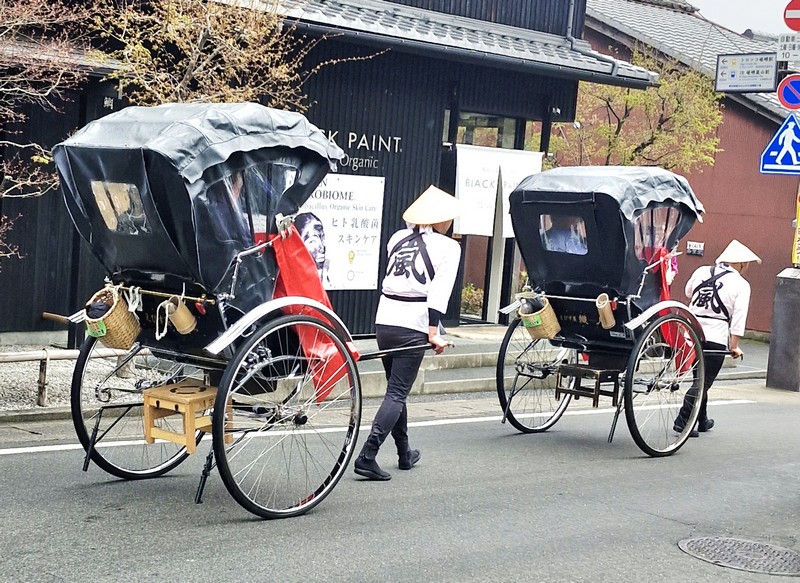
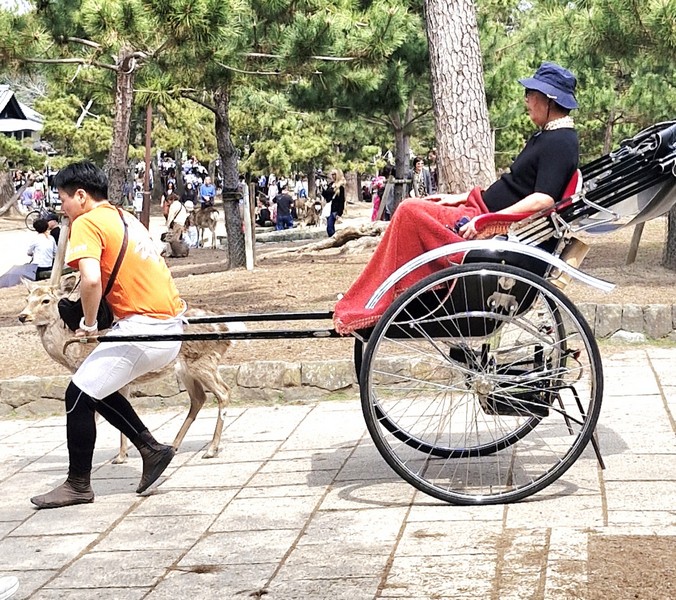
Jinrikisha (Japanese Rickshaw)

For centuries, the Nara deer have coexisted with the city’s inhabitants, and now, the multitude of travelers coming, from far and wide, to take their picture-perfect selfies with them. Any visit to Nara Park is never complete without frolicking amongst, and feeding its herds of four-legged creatures. The deer are known for bowing their heads to tourists to request specially sold, registered shika-senbei (“deer-crackers”), at 200¥ per pack, which are exclusively sold by the WNOW company.

These bows are learned (not instinctual) gestures to get food and deer can be highly opportunistic, using bows as an “implied threat” for food.  The experience can unnerving for others who flee in terror as a dozen more of them surround them in search of their own treats. They can also be aggressive, biting, chasing, or head-butting visitors for crackers.

Nara Park: 469 Zoshicho, Nara, 630-8501, Japan. Tel: +81 742-22-0375. Coordinates: 34.685°N 135.85°E

How to Get There: Nara Park is serviced by the Kintetsu Nara Station (a 5-min. walk) and is reachable by the Kintetsu Line from Osaka-Namba Station.

Ikuta Jinja Shrine (Kobe, Japan)

Ikuta Jinja Shrine

After our tour of Meriken Park, it was just a short 2-km. drive to the wonderful Ikuta Shrine (Ikuta-jinja).  A major shrine in Kobe, is believed to be one of the oldest Shinto shrines in Japan.  Famous as a “power spot” for matchmaking and love, dotted around the grounds of Ikuta Jinja are 14 sub-shrines, each dedicated to a different god. This shrine, in Kobe’s city center, has spacious grounds, impressive buildings and, at its rear, you can find a remnant of the ancient forest that once covered the entire area.

Check out “Meriken Park

The author (left) with Miguel, Nenette, Jandy, Matthew, Grace and Mark

According to Nihon Shoki (Nihongi), the second oldest book of of classical Japanese history, it was founded in 201 AD by the Empress Jingū to enshrine the goddess (kami) Wakahirume-no-Mikoto. Empress Jingu was returning from the Three Kan campaign on the Korean Peninsula, when her ship was nearly shipwrecked by bad weather. By praying to Watatsumi, she managed to survive by stopping at what is now Kobe harbor. Upon arrival, she held a divination ceremony that summoned the goddess Wakahirume-no-Mikoto, and the goddess said she wanted a shrine to be built for her in a place called Ikuta.

Old wooden torii

The shrine was originally located, on a sand dune, further north from its current location on Mount Isagoyama. However, in 799 AD, terrible floods threatening to wash the shrine away forced priest Tone Shichidayu to carry the goddess, in a portable shrine, to search for a new home. After 8 days, the portable shrine suddenly became too heavy.  Taking this as a divine message, the goddess was re-enshrined at its present location.

Tower Gate

In 806 AD, 44 households were given responsibility for the care and protection of the shrine and given the title kanbe (meaning “sacred households”). This was the origin of the name of the city of “Kobe,” which is written with the same characters.

Chozu-ya basin

In 1938, the shrine suffered damage during floods and, in 1945, was severely damaged during air raids in World War II.  On January 17, 1995, the shrine suffered significant damage during the Great Hanshin-Awaji Earthquake. However, following each tragic event the shrine was restored with the support of local citizens. As a result, Ikuta Jinja is now loved and respected by the people of Kobe as a symbol of the city’s resilience and resurrection.

Ikuta Shrine Earthquake Recovery Monument

Before entering the shrine, there’s a chozu-ya (or temizuya), a traditional roofed Shinto water ablution pavilion, on the right, where we would ritually purify ourselves, by taking a bamboo scoop and washing our hands and mouth with the water, before approaching the splendid shaden (main shrine building), flanked by lion-dog statues (komainu), where you can softly murmur prayers in your mind.

Shaden (Main Shrine)
Interior of Shanden

We entered the shrine through the striking, vermilion-lacquered tower gate (ro-mon) which marks the transition, from bustling city, to the forested shrine grounds. 

Lion-Dog Statue (Komainu)
Fox Statue (Kitsune)

After passing through the impressive tower gate, we saw booths, on either side, selling a variety of omamori (protective charms) and omikuji (fortune paper slips). To the left of the shaden is a picturesque pond, with lotus flowers (in full bloom from July to August), ducks and koi (Japanese carp), called Ikuta-no-ike.  The serene, leafy pond has a small island accessible by a bridge. 

Ikuta-no-ike

On the island is a small sub-shrine called Ichikishima Jinja, dedicated to Ichikishima-hime, (also called Benzaiten), the goddess of water and all things that flow (like language, performing arts and music).  This peaceful retreat is often visited for romantic blessings.

Ichikishima Jinja

Near the entrance of Ikuta Jinja are two quite important sub-shrines. Just after the second torii gate, on the left side, is the maritime-focused Daikai Jinja (literally “Ocean Shrine”) with a red torii

Daikai Jinja

Dedicated to Sarutahiko-no-Mikoto, a god of guidance and travel, people pray here for safety at sea which is very important in a port city like Kobe. On the right side is Matsuo Jinja with a concrete gray torii. Dedicated to Oyamakui, the god of farming and sake brewing, this is an important shrine as Kobe is the home of many famous sake breweries.

Ikuta-no-mori

At the far end of Ikuta Jinja’s grounds, behind the shaden, is the quiet and peaceful Ikuta-no-mori, the remains of an ancient forest. The forest was the site of the Battle of Ichi-no-Tani, a major battle during the the end of the Heian Period Genpei War (1180-1185), commemorated by markers. Today, Ebira and Ikuta Atsumori, two Noh plays which retell aspects of the Genpei War, are performed, on a regular basis, every year at Ikuta’s Autumn Festival (Akimatsuri), near the Ikuta Shrine. Ikutamorizasha, a sub-shrine inside the forest, is dedicated to the Empress Jingū. People pray here for growing things and for the safe birth of babies.

Cherry blossoms

At Kinryusen, a popular spot in the forest, you can have your fortune read by water.  When you float an initially-blank mizu-omikuji (a Japanese water-activated fortune slip bought at the shrine office, 300 yen) on the water, your fortune (only available in Japanese) will appear, split into different categories such as your lucky color, location, place and more.  Truly, a delightful and interactive experience for visitors.

Lady floating an initially-blank mizu-omikuji at the kinryusen

We also saw rows of omikuji (also in English, Korean and simplified and traditional Chinese) tied to racks. The goddess of weaving, Wakahirume is said to be good at making connections (whether these be business connections or romantic connections) so people pray to her for prosperity in business and happy marriages.

Omikuji (paper fortunes)

Also, as the shrine has survived many disasters in the past, people also pray here for their health and for protection from calamity.  Visitors often make a small donation and draw an omikuji to discover their luck in love and business.  If it’s bad luck, they tie it to a rack to leave the bad luck behind.

Sacred camphor tree

Also within the forest are the remains of a camphor tree which was around 500 years old (seen from its rings) when it fell. It is considered sacred and is seen as a symbol of reconstruction and revival because it survived the bombing of Kobe during World War II and, although terribly burned, it recovered and continued to live for many years.

Inari Shrine

Within the forest, you can also walk through a striking, continuous series of 22 vermillion-lacquered torii gates (often referred to as a “row of red torii), donated in 2016, leading to the Inari Shrine dedicated to Uganomitama-no-Mikoto, the very important god of food, rice (the traditional staple food of Japan) and business prosperity who is also considered the god of fertility and life.

Series of torii

Ikuta Jinja Shrine: 1-2-1 Shimoyamate-dōri, Chūō-ku, KobeHyōgo prefecture 650-0011. Tel: +81 78-321-3851.  Open daily, 8:30 AM to 6:30 PM. Admission is free.  Coordinates: 34°41′42″N 135°11′26″E.

How to Get There: Ikuta Jinja is a short 10-min. walk from JR Sannomiya Station. Here is a map showing its location.

Hyogo Prefectural Maiko Park (Kobe, Japan)

Hyogo Prefectural Maiko Park

From Meriken Park, it was a 16.1-km. (30-min. drive) to our second stopover – the exotic atmosphere of Hyogo Prefectural Maiko Park.   This 7.8-hectare oceanside city park features large grassy areas with sea and bridge views; a 1,500-pine forest; the Akashi Kaikyo Bridge Exhibition Center (displays showing the history of what is the world’s longest suspension bridge) and several historic houses. The current Maiko Park was opened as the first Hyogo prefectural urban park in 1900.

Check out “Meriken Park

Akashi Kaikyo Bridge Exhibition Center

There are plenty of things to do and see at the park.  It is the gateway for the 3,911 m. long Akashi-Kaikyo Bridge which is the world’s largest suspension bridge. Linking Hyogo Prefecture (Kobe) with Awaji Island, it also boasts the world’s longest central span at 1,991 meters. At night, the bridge is illuminated with colorful lights.  This stunning sight, for those crossing the strait, has earned it the nickname “Pearl Bridge.”

L-R: Jandy, the author, Grace, Miguel, Mark, Matthew and Nenette

Underneath the bridge is the Maiko Marine Promenade, a viewing facility built in the bridge girder, approximately 47 m. above the sea and 150 m. above the ground, that offers fantastic views of the Seto Inland Sea and Akashi Strait.  An approximately 317 m. long, circuit-style promenade on the Akashi-Kaikyo Bridge opened on April 5, 1998, it was constructed on the Kobe side of the bridge as an additional facility. Information materials and a DVD system that explain the bridge are available on the first floor of the promenade. There is an observation camera system which makes you feel like you’re on top of the bridge’s 300-m. high main tower. At the observation lounge, on the 8th floor, you can try an additional thrill – the “log-bridge 47 meters above the sea.”

Akashi Kaikyo Bridge

You can also see and visit three historical buildings.  Other Japanese residences, in Osaka and Kobe, have been gradually disappearing since the Hanshin/Awaji Great Earthquake. The Former Residence of Sanji Muto was built in 1907, during the Meiji period, at Maiko Beach, by businessman (he was president of the Kanebo textile company), journalist and politician (he was an active member of the House of Representatives) Muto Sanji.

After Muto was murdered in 1934 (as part of the fallout of the Teijin Incident), it was used by Kanegabuchi Boseki Co., Ltd. as its social welfare facility, and was called the Kanebo Maiko Club (also known as the Old Kanebo Maiko Club).  However, for the expansion work of National Route 2, it was taken down, in conjunction with the construction of the Akashi-Kaikyo Bridge, and the Western-style building was relocated to Kariguchidai, Tarumi-ku.

Former Residence of Sanji Muto

In 2007, Kanebo Co., Ltd. donated the building and furnishings to Hyogo Prefecture and, that same year, the prefecture started relocation/restoration work to move the building back to Maiko Park, its original location. In July 2011, it was registered as a National Tangible Cultural Property. Now a new tourist attraction representing Maiko Park, visitors can enjoy the scenery, from this Western-style seaside cottage, of the Akashi Strait and the pine forest. Inside, it features preserved Meiji-period furniture and stained glass.

The Former Japanese Residence of the Kinoshita Family is an early modern Japanese home built in the tea ceremony arbor (sukiyazukuri) style. Originally completed as a private residence, in 1941, for a man named Ryosuke Matano, it came into Mr. Kichizaemon Kinoshita’s possession in 1952 and, in 2000, the bereaved family of the late Mr. Kichijiro Kinoshita donated it to Hyogo Prefecture. In December 2001, as it has almost completely retained its appearance since its establishment, it was registered as a National Tangible Cultural Property.

Sun Yat-Sen Memorial Hall (Ijokaku)

The iconic Sun Yat-Sen Memorial Hall (Ijokaku), built in 1915 by Wu Jintang (1855-1926), a prosperous Chinese merchant in Kobe, is a cottage with a three-storey octagonal tower (added, as an annex, in 1915) that was shown to the public, in 1984, as Sonchuzan Memorial Hall. It exhibits information materials related to Chinese revolutionary and first president of the Republic of China Sun Yat-sen who was honored with a dinner, hosted by the local Chinese business community, in 1913. On December 10, 1993, tt was registered as a Prefectural Important Tangible Cultural Property and, on November 14, 2001, as a National Important Tangible Cultural Property.
The author, Jandy and Grace

Nearby is monument “Dream Lens,” an iconic photo spot created by a sculptor Keizo Ushio.  It was installed to commemorate the 5th anniversary of the foundation of the Akashi-Kaikyo Bridge, the embodiment of half a century of technology. The Moebius strip, made of rock with three different types of surface, represents people, nature, and science as well as the main island of Japan, Awaji Island, and Shikoku, which are connected by the Akashi-Kaikyo Bridge. These three layers harmonize well, expressing hope for development in the future.

Dream Lens (Keiso Ushio)

Hyogo Prefectural Maiko Park: 4-2051 Higashimaikocho, Tarumi-ku, Kobe, Hyogo 655-0047, Japan.  Tel: +81 78-785-5090.

How to Get There: The closest train stations to Maiko Park and the Akashi Kaikyo Bridge are Maiko Station on the JR Sanyo Line and Maikokoen Station on the Sanyo Electric Railway, both just a few hundred meters from the park. The journey is 35 to 45 minutes from Himeji, or 25 minutes from Sannomiya Station in Kobe.

Meriken Park (Kobe, Japan)

Meriken Park

Our third whole day in Japan was spent on a day tour of Kobe which was just a 37.1-km. (40-min. drive) from Osaka.  Our first stopover was at Meriken Park, a nice waterfront park located in Kobe’s port area.  The park’s name was derived from the word “American,” which was commonly translated as “Meriken” during the Meiji era. Upon arrival, we first had breakfast at a stylish, 2-storey Starbucks outlet, with its ship-inspired design. Opened in 2017, it featured hishibuki (traditional diamond-patterned metal plates meant to evoke the feeling of a ship’s cabin) and offered stunning waterfront views of Kobe Harbor from its large glass walls and second floor outdoor balcony.

Beside the Starbucks store is the Bell of Hortensia, a colorful, modern mosaic sculpture. Installed on June 19, 1990, it represents the Hydrangea macrophylla, Kobe’s official flower.  It was established to commemorate the opening of the first Kobe Fashion Festival in November 1989, which was part of the World Fashion Festival ’89. When it was first installed at the “symbol monument of the fashion city of Kobe,” the bell was rung but, after the Great Hanshin earthquake, which devastated the park, it has not been rung.

Bell of Hortensia
Kobe Maritime Museum

Built on an outcropping of reclaimed land, this waterfront park, a popular spot for locals and tourists, is covered in grassy lawn and open courtyards and is dotted with a collection of modern art installations and fountains. Meriken Park, the location of the Hotel Okura Kobe, Sannomiya Ferry Terminal (where the Jumbo Ferry, connecting Kobe, Shodoshima, and Takamatsu, and the Miyazaki Car Ferry, departs and arrives) and the wave-shaped Kobe Meriken Park Oriental Hotel, is home to some of the city’s more iconic contemporary architecture such as the red Kobe Port Tower and Kobe Maritime Museum.

Kobe Meriken Park Oriental Hotel

To the west of the Maritime Museum stands the 108 m. (354 ft.) high Kobe Port Tower, a unique, red-painted steel structure completed in 1963, was designed by the Nikken Sekkei Company to look like a tsuzumi, a Japanese drum. A symbol of the port and the city, it is the first tower built using a pipe lattice.  The tower has a total of 8 layers and is surrounded by 32 red steel staves as a symbol of welcome for vessels returning to the shore. It has five observation decks, approximately 100 m. above ground, including an open-air rooftop deck and a revolving cafe and bar.

Port of Kobe Tower

The “Be Kobe” Monument, installed in 2017 to commemorate the 150th anniversary of the opening of Kobe Port, is a popular photo spot.  The phrase “Be Kobe,” introduce in 2015 (the 20th anniversary of the Great Hanshin earthquake), is a civic pride message that expresses the idea that the chrm of Kobe lies in its people, inspired by those who work hard for the city’s recovery.

Be Kobe Sign

Kobe Port was once Japan’s most important departure point for overseas immigrants and the famous Kobe Port Emigrants Memorial Statue (also known as “Set Sail for Hope” or “Memorial Statue of Emigrants Boarding the Emigrant Ship”) honors the thousands of Japanese citizens who emigrated from Kobe Port, for new lives abroad, particularly to Brazil, in the early 20th century.

Kobe Port Emigrants Memorial Statue

Erected in 2001, it also serves as a reminder of the “National Kobe Emigrant Camp” history, where families awaited ships to travel abroad.  This bronze monument, erected in 2001, features a family (two adults and a child gazing out at the sea), symbolizing the departure.  The main statue is titled “Hope’s Departure.” The statue is seen as a bridge connecting Japan and the destination countries of immigrants, symbolizing international exchange and pioneering spirit.

Meriken Theatre Monument

The unique Meriken Theatre Monument, erected in 1987, commemorates Kobe as the location of the first public movie screening in Japan.  A popular photo spot, it was designed to look like a cinema screen and theatre seats. 

Kobe Kaientai Monument

The Kobe Kaientai Monument, a notable abstract sculpture, commemorates the Kobe Kaientai, a historical naval group active at the end of the Edo Period.

Save Northern People (Kaneichi Futakuchi)

“Save Northern People,” a notable abstract, human-shaped bronze sculpture created by sculptor Kaneichi Futakuchi, was a winner of the Port of Kobe Anniversary Commemorative Award.  It is often interpreted as a tribute to those who left Kobe in search of a better life far away.

Sannomiya Ferry Terminal
A ship docked at the harbor

Meriken Park: 2 Hatobacho, Chuo-ku, Kobe-shi, Hyogo-ken, 650-0042.

How to Get There: Meriken Park is about a 10-minute walk south of Motomachi Station, on the JR Kobe Line, or just across the sightseeing cruise terminal from Kobe Harborland.

Dotonbori District (Osaka, Japan)

Dotonbori District

The 4-star Candeo Hotels Osaka Shinsaibashi, the hotel that we stayed in, happened to be just 250 m. from Dōtonbori District, the vibrant, popular, neon-lit entertainment and dining district of Osaka for visitors to the city, boasting of a number of well-known restaurants offering a range of traditional and modern Japanese dishes.  Known as one of Osaka’s principal tourist and nightlife areas, the area runs along the Dōtonbori Canal, from Dōtonboribashi Bridge to Nipponbashi Bridge in the Namba district of the city’s Chūō Ward.

Check out “Hotel and Inn Review:  Candeo Hotels Osaka Shinsaibashi

Shinsaibashi Shopping Mall

Dōtonbori traces its history back to 1612, when merchant Nariyasu Dōton, the administrator of local canals, joined by Yasui Jihē, Yasui Kuhē, and Hirano Tōjirō, began construction of the canal on the southern edge of Osaka, aiming to increase commerce by widening the river.

View towards Shinsaibashi Shopping Mall

To get there, we passed through the huge tunnel of the Shinsaibashi shopping mall. We then proceeded to the main gathering spot, often called “Hina-dan,” which offers the best views of the iconic signs. Here, we encountered Kim Jong Un lookalike Howard X (Howard (X) Lee), a well-known professional Australian-Chinese impersonator and political activist.  Considered the world’s first professional Kim Jong Un impersonator, he is frequently spotted in Dotonbori and other Japan locations, holding a toy missile and attracting large crowds.

Kim Jong Un impersonator Howard X

When taking photos with crowds, he often appears in costume and is sometimes paired with Donald Trump impersonators, notably around major events like the 2019 G20 Summit in Osaka. Creating satirical scenes to promote democracy, his appearance sometimes leads to deportation or detention due to political sensitivities. To provoke reactions from North Korean delegations beyond Japan, he has appeared at the PyeongChang Olympics and the Paris Olympics and has a significant presence on social media platforms such as Instagram. 

View from Midosuji Avenue

Evenings are the best times to experience the dazzling, futuristic neon cityscape reflected on the canal.  Here, you can also take a Dotonbori Canal Cruise or city cruise, to see the neon lights from the water, or visit the massive Don Quijote store by the canal.  Though now mostly a dining and nightlife area, the Theater District is historically known as a hub for Kabuki and Bunraku puppet theaters. 

Dotonbori Canal

Centered along the Dotonbori Canal, Dōtonbori (bori from hori, meaning “canal”) is famous for its eccentric atmosphere and extravagant signage (including the iconic Glico Running Man Sign and the massive. 6.5 m. long moving crab sign at Kani Dōraku) and is a top tourist spot for nightlife, shopping, popular spots including Ichiran, and various street food stalls selling takoyaki (octopus balls), kitsune udon and ramen. 

Check out the “Glico Running Man Sign

The author and Grace with the Glico Running Man Sign in the background

Dotonbori is considered as the city’s food capital or kuidaore, a Japanese word meaning to “ruin oneself or go bankrupt by extravagant spending on food” or, more pithily, “eat until you drop.” It is part of a larger proverb: “Ruin yourself with fashions in Kyoto, ruin yourself with meals in Osaka,” reflecting local priorities (and artistry) in the clothing and food of Kyoto and Osaka, respectively.  This phrase, associated with Dōtonbori, is often used in tourist guides and advertisements.

Rows of restaurants at Dotonbori District

On our first night in Osaka, we decided to dine at Botejyu (founded in 1946), located at the second floor of the Comrade Doton Building.   We waited in line for several minutes before finally being seated.  The menu and ordering are accessed on your smartphone via a QR code. 

Botejyu Restaurant

Here, we tried out, among other dishes, the okonomiyaki, a savory Japanese pancake consisting of wheat flour batter and other ingredients (shredded cabbage, eggs, meat, etc.). This specialty’s classic mayonnaise ingredient was developed by Botejyu. 

Ganko Sushi

On another evening, we tried out Ganko Sushi (since 1963) and Torikizoku (a popular, affordable yakitori chain. The latter is located at the Kuidaore Building, in front of which is Kuidaore Taro (also known as the Kuidaore Ningyo), a mechanical drum-playing clown, installed in 1950 as a mascot for the now closed Kuidaore Taro Restaurant which moved to a new location slightly east of his old haunt. Every March the visiting rikishi for the Osaka Grand Sumo tournament used to line up with Kuidaore Taro for photos.

L-R: Jandy, Miguel, Matthew, Nenette, Mark, the author and Grace at Torikizoku Restaurant
The mechanical, drum playing clown Kuidaore Taro

How to Get There: Located in the Minami district, Dotonbori, adjacent to the Shinsaibashi-suji shopping street, is easily accessible near Namba Station.