Gems Gallery International (Bangkok, Thailand)

After our tour of Wat Traimit and Wat Pho, we next moved on to the 7,200 sq. m. (1.8 acre) Gems Gallery International, an ISO certified gems gallery.  Open in 1987, it is said to be the world’s largest jewelry and gems center. Here, we watched skilled, in-house Thai artisans cut, polish and set each precious stone to create exquisite pieces of jewelry.
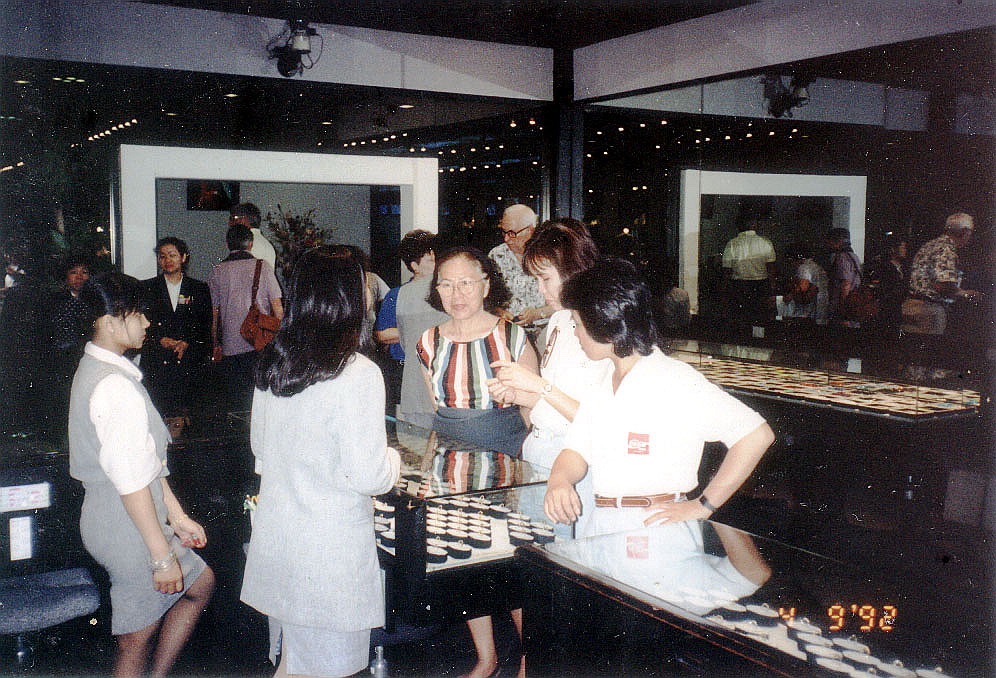
Gems Gallery International

Its eye-catching showroom also displays thousands of world-class natural gems (diamonds, sapphires, rubies, emeralds, topaz, etc.) mined from Chanthaburi and Kanchanaburi provinces; pearls as well as unique bracelets, necklaces, rings, bangles, earrings and other jewelry masterpieces.
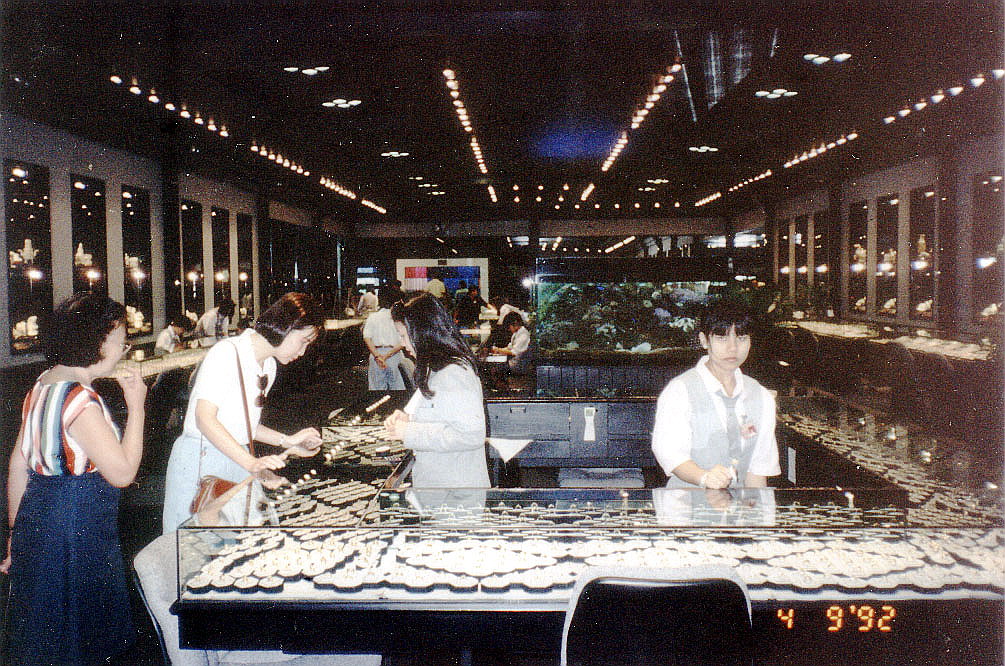
Gems Gallery International – Showroom
Gems Gallery International: 198/23-24 Rama VI Rd., Samsen Nai, Phaya Thai, Bangkok 10400, Thailand.  Tel: 02-2710150.

Sentosa Island – Musical Fountain Show (Singapore)

From Underwater World, we walked to Monorail Station No. 7 and boarded one of the 6-pax cars of the Sentosa Monorail that circles Sentosa and alighted at Station No. 1 (Sentosa Ferry Terminal). Here, we plan to watch the 7:30 PM Musical Fountain (also known as the Magical Fountain of Sentosa) show.

The Sentosa Monorail was closed in 2005 and most of the island’s monorail was dismantled, though parts of the original track structure still remain. The monorail was replaced by the red, blue and yellow bus lines.

Sentosa Monorail

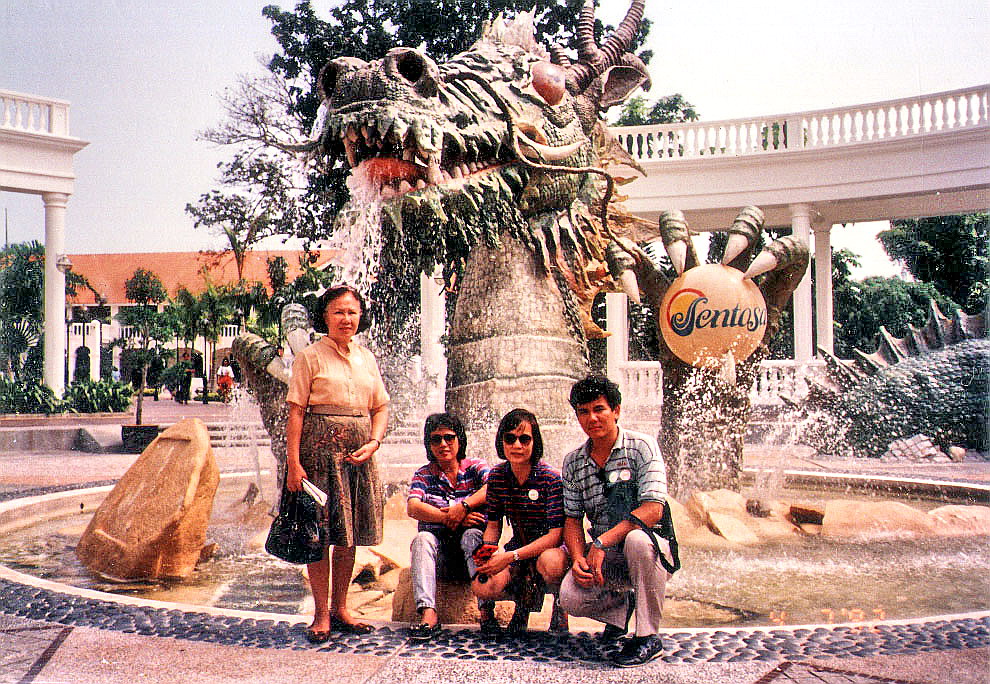
Started in 1972 and opened, 10 years later, in 1982, the fountain show was designed by world-renowned fountain designer Yves Pepin.  The star attraction at the resort, it was just upgraded early in the year and the fountain is now Neo-Classical in look, with heavily decorated arches.  Its design was also themed to look like a nature wonderland, with small ponds, shrubs and  gigantic man-made waterfalls flanking the fountain grounds.

Musical Fountain and Fountain Gardens

The pool consisted of 25 million gallons of water which took 3 man-hours to fill and the fountain and could be shot up to 20 m.  It had more than 19 different water formations including the famous Phoenix flanked by waltzing “chorus-lines.

The Neo-Classical Musical Fountain

It was already late in the afternoon when we arrived at the amphitheater which could  accommodate 5000 people seated and at least 100 standing. The 7 seating zones in the arena were themed after the colors of the rainbow.  The 3 minute and 36 second fountain display show we watched was said to have been inspired by the synchronized dance of the Fountains of Bellagio.  The show capped our visit in Sentosa.

The Musical Fountain underwent a major restoration and upgrading project in 1999. In 2002, Yves Pepin replaced all the musical fountain shows with the Magical Sentosa Show but this show did not last long. After operating for 25 years, it was shut down to make way for an integrated resort called Resorts World Sentosa . Its last show was staged on March 25, 2007 and was replaced by the “Songs of the Sea” show. The area once occupied by the Musical Fountain is now occupied by the Lake of Dreams, Hotel Michael and Crockford Tower.

Sentosa Island – Underwater World (Singapore)

After our Pioneers of Singapore/Surrender Chambers Museum tour, we proceeded to Underwater World, Asia’s largest tropical oceanarium located on the western part of Sentosa.  Opened in 1991, this underground living museum has more than 2,500 marine and freshwater animals of 250 species from different regions of the world. Here, we befriended American couple William (Bill) and Ellen Smith.

Underwater World – Touch Pool

Upon entering, we encountered the “Touch Pool” where I got to feel starfishes, sea cucumbers, turtles and more. Further on is the Tidal Pool where we saw samples of multi-colored, living coral.

American Couple William (Bill) and Ellen Smith at the Perspex Tunnel

Next, we moved along a submerged, glass-windowed Perspex tunnel via an 83 m. long travelator, practically nose-to-nose with an array of marine life including a coral reef, stingrays, moray eel, turtles, sharks and other fishes and other fishes.

Underwater World – Schooling Fish Display

Enroute to Sentosa Island (Singapore)

After our city tour and lunch, we again availed of another RMG Tours Pte. Ltd. tour, this time to the resort island of Sentosa (S$22 each). We were transported to the Mt. Faber Station where we boarded a 6-pax gondola of the Singapore Cable Car System (actually a bi-cable, detachable-grip gondola lift system), traversing 2 supporting towers and the World Trade Center & Ferry Terminal, to Sentosa.

Mount Faber Cable Car Station

Opened on February 15, 1974, it was the first aerial ropeway system in the world to span a harbor. Traveling the 1,650 m. distance at a speed of 4 m. per second, it took us about 12 mins. to get from Mount Faber to Sentosa, including the short interval at the World Trade Center.

World Trade Center and Ferry Terminal

Opened on February 15, 1974, it was the first aerial ropeway system in the world to span a harbor. Traveling 1,650 m. distance at a speed of 4 m. per second, it took us about 12 mins. to get from Mount Faber to Sentosa, including the short interval at the World Trade Center.

The Mount Faber Station has now been renamed as Jewel Box Station while the World Trade Center was renamed as the HarbourFront Centre in 2000 and its cable car station as the HarbourFront Station.

Sentosa

City Tour – Botanic Garden (Singapore)

Lastly, from Mt. Faber, we then proceeded to the 74-hectare (183-acre) Botanic Garden. This combination of 4 hectares of primary jungle and elegantly planned and manicured gardens and greenhouses is home to 1,000 species and 2,000 hybrids of orchids, including many rare specimens. Malaysia’s rubber industry had its origins here in the 19th century when Henry Ridley successfully propagated and tapped Brazilian rubber trees from London’s Kew Gardens in 1877.

Botanic Garden – Vanda Miss Joachim

A high point of our visit here is the Victorian-style Orchid Pavilion with its 1,200 orchid plants, including the Vanda Miss Joaquim (honoring the daughter of a respected Armenian family), Singapore’s national flower, and a lilac bloom named after Singapore’s four millionth visitor, Jane Deny of Australia. A lake, home to waterfowl, ducks and kingfishers, adds to the serenity of the gardens. We also browse around at the RISIS Souvenir Shop.

Botanic Garden – RISIS Souvenir Shop

After our city tour, we had lunch along Victoria St.

Botanic Garden: 1 Cluny Rd. cor. Napier St., Singapore 259569.  Tel: 6471 7361. Open daily, 5 AM-12 midnight. Admission is free.

City Tour – Mt. Faber (Singapore)

View of City From Mount Faber

From Chinatown, we moved out of the city to the 105 m. (344 ft.) Mt. Faber (actually just a hill), the highest point in the southern part of Singapore and a frequent tourist destination.  Located near the Bukit Merah planning area in the Central Region, it overlooks the Telok Blangah area, and the western parts of the Central Area.

Formerly known as Telok Blangah Hill, it was renamed after Capt. Charles Edward Faber of the Madras Engineers.  The hill’s slope includes a tower that is part of the Singapore cable car system.  Here, we had a panoramic view of Singapore Harbor, the Central Business District and, over the  horizon, the islands of the Riau Archipelago of Indonesia.

City Tour – Merlion (Singapore)

After breakfast at the hotel, we left on our city tour ( RMG Tours Pte. Ltd., S$21 each).  A surprise was our first destination – the bustling Serangoon Central Wet Market along Serangoon Rd. (Little India’s main thoroughfare), well stocked with the freshest vegetables, meat, fish, spices, etc.  and surprisingly fly-free.

Merlion Park

From Serangoon Rd. we made a short photo-op stopover at Merlion Park which houses the 8.6 m. high, 70-ton statue of the merlion, a mythical creature with the body of a fish and the head of a lion. The statue, made from November 1971 to August 1972 by the late Singapore sculptor Lim Nag Seng, was installed on September 15, 1972 at the mouth of the Singapore River, with the Anderson Bridge as its background.

In 1997, the completion of the Esplanade Bridge blocked the views of the Merlion from the Marina Bay waterfront.By then, its original location was also no longer the entrance of Singapore River. In 2002, the statue and its cub were relocated, from April 23-25, 2002, 120 m., to the current Merlion Park, fronting Marina Bay, where it stands on a newly reclaimed promontory in front of the Fullerton Hotel.

Indonesia: Batam Island

Mom and I finally arrived at Finger Pier, at the end of Prince Edward Rd., and I got us fast ferry tickets (S$28 round trip).  Ferries for Sekupang Pier, the main entry point in the 715 sq. km. Batam Island, leave every half hour.

Later in the year, the regional ferry operation at Finger Pier was relocated to the S$50 million International Passenger Terminal (IPT) at the Harbourfront Cruise Centre (formerly World Trade Center).

On Board the Fast Ferry Sea Flyte of Dino Shipping Pte. Ltd

We left on board Dino Shipping Pte. Ltd.’s streamlined and airconditioned  Sea Flyte, leaving the pier by 3:40 PM.  The trip took a little over 30 mins. and was uneventful. Along the way, we weaved through Singapore’s southern islands, most of which are small and uninhabited. We docked at Batam Island’s Sekupang Pier by 4:15PM.

Sekupang Pier, Batam Island

After securing our arrival clearance at the Batam Customs & Immigration Area, I hired the services of a local taxi driver to tour us around the island.  Batam Island, a duty-free island, is about two-thirds the size of Singapore and is an economic development zone of Indonesia with emphasis on tourist development. Nagoya City, formerly known as Lubuk Baja which means “Pirates Waterhole,” has shops that offer local handicrafts and Asian food delicacies.

Nagoya City

Beginning in the 1970s, the island underwent a major transformation, from a largely forested area, into a major harbor and industrial zone. During our tour, land was being cleared for new roads and many factories, many operated by Singaporean companies, were being built. Evidently, with its lower labor costs and special government incentives, the island’s economy benefits from being close to Singapore.

However, we weren’t shown any old government buildings, mosques, churches or temples as there didn’t seem to be any.  After our tour, our taxi driver brought us back to Sekupang Pier where we again boarded our fast ferry back to Finger Pier, arriving there by 10 PM. Upon arrival, we had a late dinner at a Burger King outlet before returning to our hotel.

Johor Bahru (Malaysia)

Upon reaching the Malaysian side, I cleared my entry to Johor Bahru at the Malaysia Customs and Immigration Office. Once past, I found myself along Jalan Tun Abdul Razak.  Here, a fenced historical marker with a plaque tells the story of the town.

Johor Bahru Historical Marker

Johor Bahru has a rich history that dates as early as the 16th century but its urbanization began in 1855. Sultan Abu Bakar (1862-1895), the 21st Sultan of Johor, transformed Johor Bahru from a fishing village into a thriving city.

Johor Bahru

Jalan Tun Abdul Razak and the adjoining  Jalan Trus has a number of shophouses, mostly built in the 1920’s,with great heritage value. Here, traders from Arab, India and China used to come to trade spices and tobacco. Also along Jalan Tun Abdul Razak is the Johor Bahru Railway Station.

On October 10, 2010, the spanking new JB Sentral railway station, along Jalan Tun Abdul Razak and Jalan Jim Quee, was opened. The old train station, located just 200 m. south of JB Sentral, has been decommissioned, its platform 2 and its tracks dismantled.  Only one track and platform remain.  There are plans for it to be preserved for a future Mini Railway Museum for the Southern Region.

Johor Bahru Railway Station

The relatively old Plaza Kotaraya shopping center, along Jalan Trus, is only 5 minutes walk from the Malaysia Customs and Immigration Office.  Across the street is the Arulmigu Sri Raja Mariamman Devasthanam Hindu Temple.  Built in 1922, it is one of the town’s oldest Hindu temples and has an impressive gopuram (entrance tower).

The Arulmigu Sri Raja Mariamman Devasthanam Hindu Temple was rebuilt and was officially reopened in 1996. In 2009, the temple was embellished with an impressive mosaic of 300,000 pieces of red, blue, yellow, green, purple and white glass (completed in October 2009) and, on May 12, 2010, the temple was listed in the Malaysian Book of Records as the first and only glass temple in the nation.

Arulmigu Sri Raja Mariamman Devasthanam Hindu Temple and Plaza Kotaraya Shopping Center

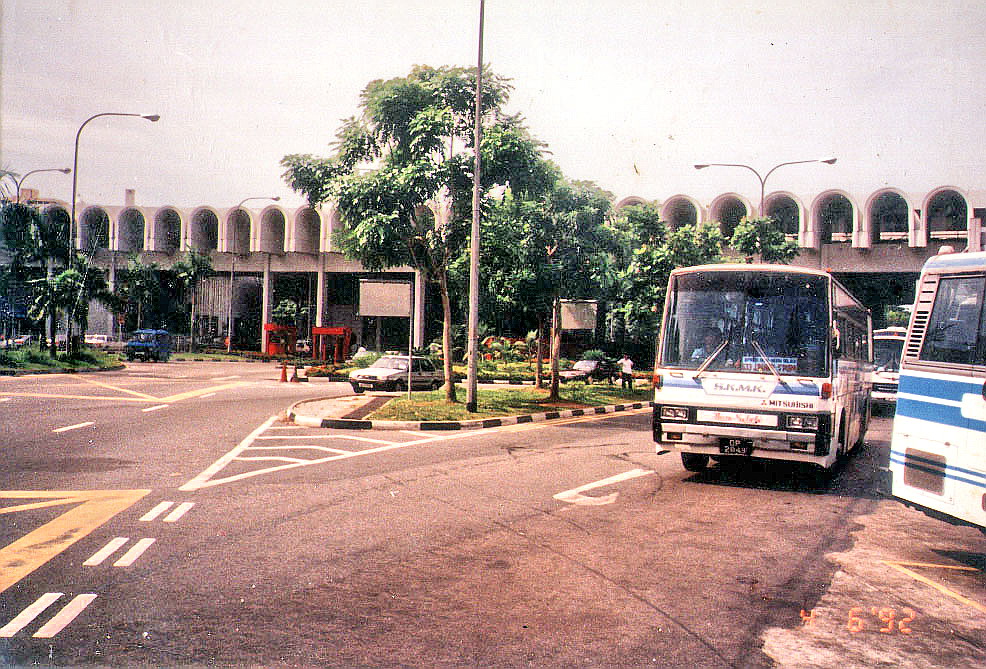
After this relatively short walking tour of Johor Bahru, I retraced my steps back to the Malaysia Customs and Immigration Office to clear my departure and, this time, took a bus back to the Queen Street Bus Terminal in Singapore.

Arulmigu Sri Raja Mariamman Devasthanam Hindu Temple: 22 Lorong 1, Jalan Tebrau, Johor Bahru, Malaysia.

The Causeway (Singapore)

Singapore Customs and Immigration Office

Upon arrival at the Queen St. Bus Terminal, I took the SBS (Singapore Bus Service) Transit’s service 170.  These public buses provide one of the cheapest and most reliable form of transport directly into the heart of Johor Bahru, across the causeway over the Straits of Johor, from Singapore. The Johor-Singapore Causeway, completed in 1923 after 4 years of construction, was partially destroyed in 1942 during World War II, to prevent the Japanese army from invading Singapore. However, it was rebuilt once the Japanese had captured the island.

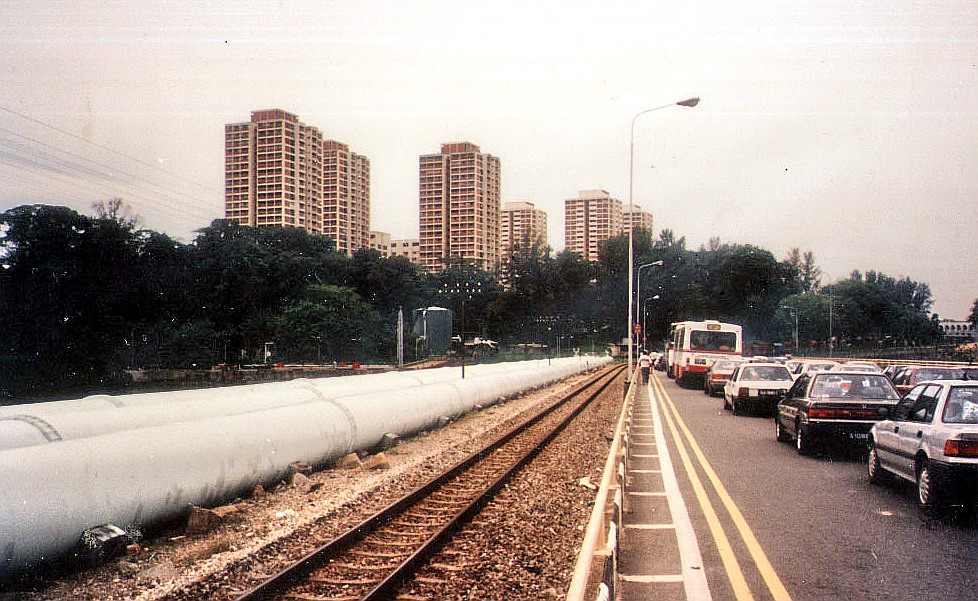
Huge Water Pipes, Railway Track as well as Roads Line the Johor-Singapore Causeway

Very popular but terminally congested, the causeway is crossed by buses, trains, taxis and cars and is normally jam-packed on Friday evenings (towards Malaysia) and Sunday evenings (towards Singapore).  However, it was the Qing Ning holiday (similar to our All Saints Day) and the bus queue was very long going to Johor. Seeing the traffic, I decided to alight from the bus and just walked towards the Singapore Customs & Immigration Office at Woodlands for the necessary departure clearance.

A second crossing, between Johor Bahru and western Singapore, was open on January 2, 1998. Known as the Tuas Second Link, it is much faster and less congested than the Causeway and  is used by some of the luxury bus services to Kuala Lumpur.

Traffic Along the Johor-Singapore Causeway

I also decided to just walk the whole 1 km. length of the Causeway to the Malaysian side.  It seems I was the only one doing so. Along the way, I noticed, aside from the huge traffic jam, the huge water pipes as well as the railway track between the two sides of the Causeway. I was dripping with sweat by the time I reached the other side.

In December 2008, immediately after the opening of the new Johor Bahru CIQ complex, crossing the Causeway, on foot, from Singapore to Johor Bahru was officially forbidden by the Singapore authorities. Once you have cleared Singapore immigration at the Woodlands Checkpoint, you have to take any of the public or private buses waiting at the bus bays downstairs to cross the Causeway. There is always a Singapore police officer stationed at the staircase entrance to the Causeway to prevent anyone from crossing the Causeway on foot.

Malaysia Customs and Immigration Office