Arrival in Gloria (Mindoro Oriental)

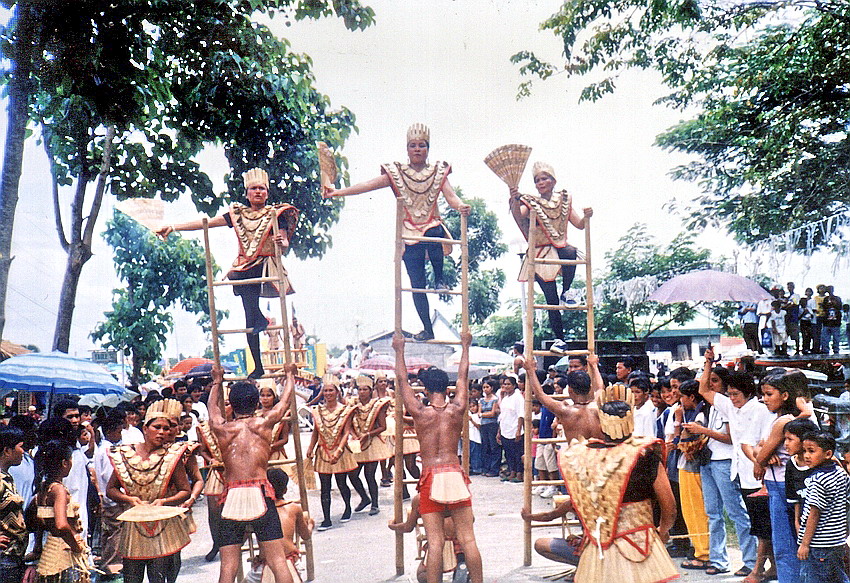
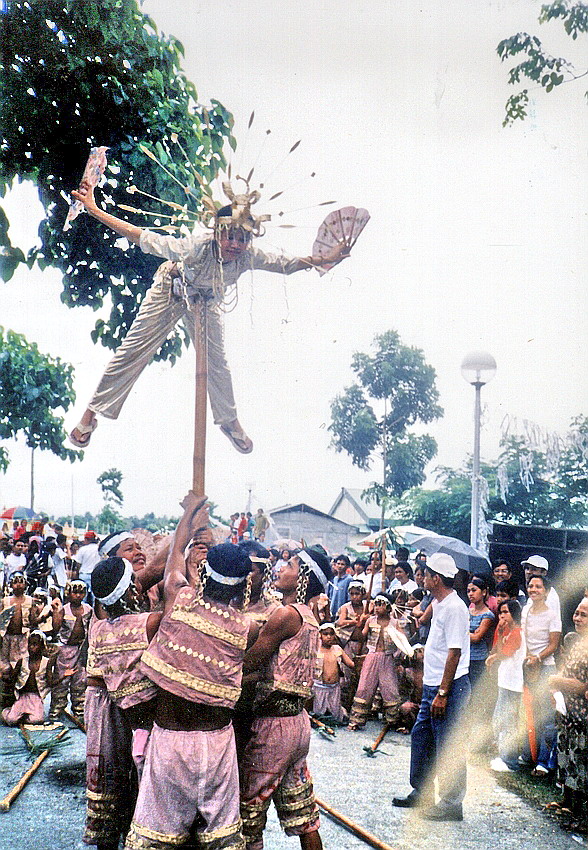
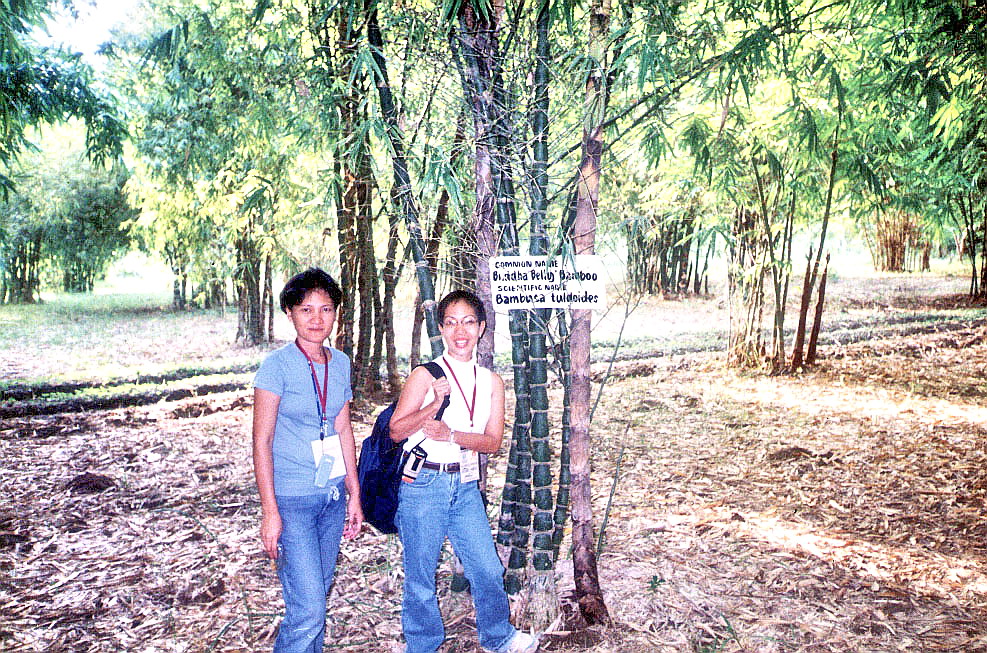
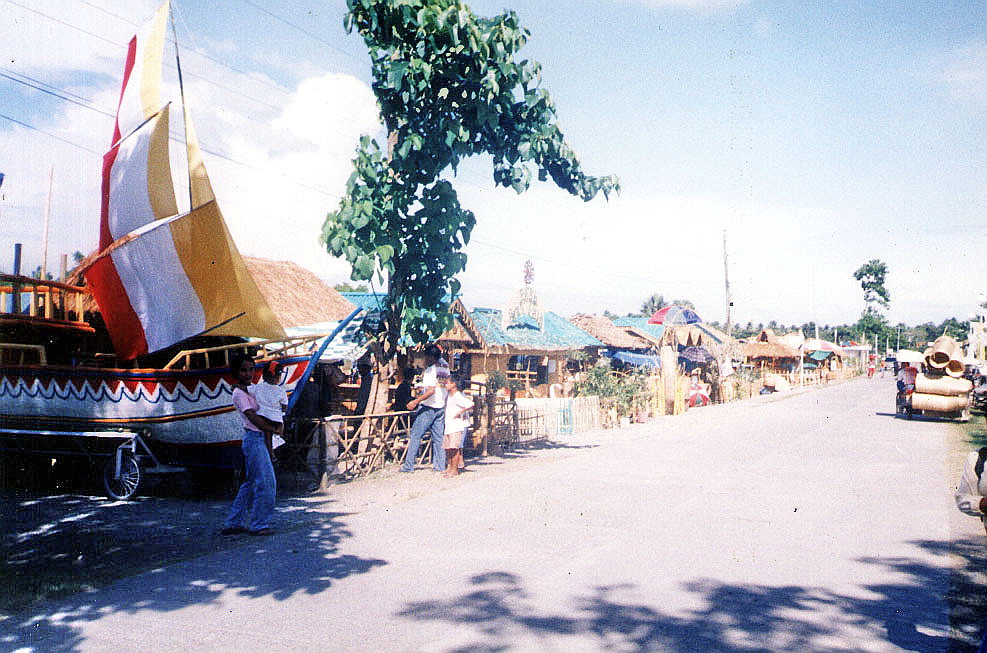
I received a personal invitation from close friend Vic Pascua to attend the 38th founding anniversary (October 1-2) of the town of Gloria and the launch of its first Kawayanan Festival.  I was to be one of more than 40 from media and travel agencies to be so invited.  The town’s name may sound familiar and you may have guessed right. Gloria was, and truly is, named after Pres. Gloria Macapagal-Arroyo. The town was created on October 2, 1964, by virtue of Executive Order No. 117 issued by the late Pres. Diosdado Macapagal. In gratitude, the town was named after his young and only daughter.  Just last year, Gloria visited the town during its foundation day.

The day before the festival

I left Manila for Batangas City early in the morning (7 AM) of September 30, a Sunday, via a BLTB bus. The trip was uneventful and surprisingly traffic-free, reaching Batangas Port before 10 AM and booked myself on the 10:30 Aboitiz Supercat fast ferry.  I arrived at Calapan City port by 11:15 AM and was met by my guide Ms Maria Goretti “Gorett” S. Mercado.   We took a hired L-300 van for the 81-km. (1.5-hr.) drive to Gloria, passing the towns of Victoria, Socorro and Pinamalayan as well as lovely Lake Naujan.  We arrived in time for a late lunch at Biyahero Restaurant and were soon joined and welcomed by Vic and Mr. Robert Villavicencio, the restaurant owner and chairman of the town’s Tourism Council.  I later checked in at the nearby residence of Manny and Gloria Tan (a doctor) and it would be my home for 4 delightful days. Breakfast time was always a pleasure here as I would compare travel experiences with my gracious hosts.

Media participants and travel agents

Kaogma Festival (Naga City, Camarines Sur)

After our city tour, we all returned to Naga City proper for the highlight of our stay: the Kaogma Festival’s 27 May Grand Parade which caps the 423rd foundation anniversary of the province. The word kaogma is derived from the Bicolano word meaning “happy.”

The festival was first celebrated on May 15, 1989 to commemorate the Feast of San Isidro Labrador (St. Isidore the Farmer), the patron saint of farmers.  This was just a one-day celebration but, over the next two years, it was extended to three days. Gov. Luis R. Villafuerte then sent Prof. Danny Gerona to Spain to research the birth date of the province which was found to be May 27, 1589.  Since 1999, the festival has become a week-long celebration.

Street dancing parade

The Grand Parade featured well-choreographed street dancing contingents showcasing uniquely designed and colorful ethnic and native costumes using abaca and characters in fantasy costume.  The contingent from the capital town of Pili won.

The parade also featured marching bands, giant mascots, competing drum and lyre corps, a fancy drill competition and a grand display of the 37 flags of the province’s cities and towns.  The festivities were ended by a fireworks display and the release of hot-air balloons.

The winning Pili contingent
Float with winners of Miss Camarines Sur beauty contest

Basilica Minore de Penafrancia (Naga City, Camarines Sur)

From the Ermita, we crossed the Naga River, and made our way to the Basilica Minore de Peñafrancia.  This imposing modern shrine, started on April 18, 1976, was completed, after some delays due to financial concerns, on September 1981.  The original statue of the Virgin of Peñafrancia was transferred here from the Ermita on May 22, 1982.

This Romanesque-style basilica was given the title “Basilica Minore” on May 22, 1985.  The only basilica in the Bicol Region and the whole Roman Catholic Archdiocese of Caceres, its grounds has a fine view of Mt. Isarog.

Basilica Minore de Penafrancia

After touring the basilica itself, we next proceeded to the nearby Altersheim Building where we had the chance to interview Rev. Monsignor Romulo A. Vergara, H.P., the rector of the Peñafrancia Basilica and a cousin of our media colleague Rick Alberto.  We were also shown (and privileged to touch) the original Statue of Our Lady.  The one I saw at the basilica just happens to be a replica.

Monsignor Vergara and the original statue of Our Lady
Basilica Minore de Penafrancia: Balatas Rd., Brgy. Balatas,  Naga City, Camarines Sur.  Tel: (054) 473-3644. E-mail: info@penafrancia.org.ph.  Website:  www.penafrancia.org.ph.

Old Shrine of Our Lady of Penafrancia (Naga City, Camarines Sur)

From the Cathedral of St. John the Evangelist, we were driven, upriver from the city center, to the bank of the Naga River where we visited the Old Shrine of Our Lady of Peñafrancia.  This stone church was built in 1753 by Bishop Isidro Arevalo to replace a bamboo and nipa chapel built in 1711.  Also known as the Ermita, it was restored and enlarged in 1876 to 1877.

Check out “Cathedral of St. John the Evangelist

Old Shrine of Our Lady of Penafrancia

The shrine has a charming facade decorated with Chinese art. Its bell was donated by Don Simon Tuangqui, a wealthy Chinese trader, during its reconstruction in 1864.

The shrine’s facade

Here, on 20 September 1924, Monsignor Guglielmo Piani (Apostolic delegate of Pope Pius XI) canonically crowned the Statue of the Blessed Virgin of Peñafrancia as the queen of Bicolandia. The statue was also stolen here on August 15, 1981 under mysterious, unexplained circumstances and was returned, in six separated pieces, on September 5 in Manila.

The shrine’s altar
Old Shrine of Our Lady of Penafrancia : San Felipe Rd. Naga City, Camarines Sur.

Museo del Seminario Conciliar (Naga City, Camarines Sur)

The Museo del Seminario Conciliar, opened on September 1998, consists of a Marian Room, Ecclesiastical Collection, Gallery and Archive and the Archaeological Collection.

The Marian Room has a replica of Our Lady of Peñafrancia, pictures of the original Lady of Peña de Francia in Salamanca, Spain and extant postcard-size pictures of the canonical coronation of Our Lady of Peñafrancia.

The Ecclesiastical Collection displays retablos (altar backdrops), antique santos, vestments, chalices, monstrances and episcopal seals of the liberal-minded Bishop Francisco Gainza and hard-line Bishop Arsenio Campo, the last Spanish bishop to serve in Bicol.

The Archives-Gallery contains the memorabilia of Monsignor Jorge Barlin as well as pictures of the various Bicol bishops including Jose Cardinal Sanchez, the first Bicolano cardinal.  The Archive has books in Latin and Spanish printed in the 1600s, 1700s and 1800s as well as baptismal and marriage registries in the 1700s and early 1800s.

The Archaeological section displays the collection of Ermelo M. Almeda.  It consists of Philippine pottery and burial jars found in archaeological diggings in the Bicol region, Calatagan (Batangas), Marikina City (Metro Manila), Samar and Palawan; porcelain ware from Vietnam and Thailand and Chinese porcelain ware from the Tang Dynasty (618 to 906 AD) to the Qing Dynasty (1645 to 1912).

Museo del Seminario Conciliar: Holy Rosary Minor Seminary, Naga City, Camarines Sur.

Cathedral of St. John the Evangelist (Naga City, Camarines Sur)

The next day, after breakfast at the hotel, we were whisked off on a tour of the city’s 3 foremost religious shrines.  We made our first stopover at the Cathedral of St. John the Evangelist (also called the Naga Metropolitan Cathedral). Originally founded in 1595 on the location of the market, the present Spanish Romanesque church, one of the largest in the country, was completed in 1843. Damaged by typhoons and the 1811 earthquake, it was restored in 1890.  Its austere interior houses a Black Nazarene statue and some fine ecclesiastical silver in the sacristy.

Cathedral of St. John the Evangelist

The church’s plain and massive, three-level façade has a semicircular arched main entrance, paired superpositioned columns, statued niches and a slightly curving end wall at the second level.  It is topped by a triangular pediment with a centrally located clock.  The levels of the massive, Renaissance-style bell towers on the flanks are marked by enclosing balustrades.   The church has an austere interior, a Black Nazarene statue and some fine ecclesiastical silver in the sacristy.

The image of the Virgin of Peñafrancia is transferred and enthroned here until her feast day from the Basilica during the Translacion (the 2-km. ritual transfer of the Virgin, by the traditional all-male retinue). A novena is held during the Virgin’s stay at the cathedral.

Beside the cathedral is the Holy Rosary Minor Seminary where our media colleague Rick Alberto studied.  Formerly the Seminario Conciliar de Nueva Caceres, it was founded in 1797, the first school for ecclesiastical and lay education in Southern Luzon.  On September 1998, the cathedral’s old seminary building was declared a National Landmark by the National Historical Institute.

Cathedral of St. John the Evangelist:  cor. of Elias Angeles and Paz Streets. Tel: (054) 473-1836 and 473-8418. Feast of St. John the Evangelist: December 27.

Deer Breeding Farm (Ocampo, Camarines Sur)

With still some daylight up ahead, we opted to visit another of Gov.  Luis Villafuerte’s priority projects: the Deer Breeding Farm in  Ocampo.  Located below Mt. Isarog’s slopes, this experimental breeding farm, started in 1996, has a 60-head herd made up of 5 species of Australian deer (blackbuck antelope, the fallow deer, the chital deer, red deer and elk).

Grazing deer with Mt. Isarog in the background

Here, we decided to go “deer hunting” with our cameras.  This proved quite difficult as the deer were wary of us newcomers, retreating as we approached them.  Luckily, it was feeding time and the deer seemingly ignored us as they went about their meal with gusto.  We also had our fill as we clicked away with our cameras.

The deer up close

Its not everyday that we see deer in the country but it certainly is possible in Camarines Sur.  Satisfied with this unique experience, we decided to call it a day, returned to our van for the return trip back to Naga City and our hotel, dropping off our guides along the way.  That night, I slept soundly, counting deer instead of sheep.

Deer Breeding Farm: Brgy. Sta. Cruz, Ocampo, Camarines Sur

Consocep Resort (Tigaon, Camarines Sur)

After an early morning breakfast at the hotel, Alex, Rick, Jess and I, together with Boyet and Susan, all left on our van for a familiarization tour of Naga City’s favorite getaway from the hustle and bustle of the city: Consoscep Mountain Resort at the foot of Mt. Isarog in Tigaon.  Accompanying us as guides were Ms. Melba Niebres and Ms. Shiela Clara of the Camarines Sur Tourism Office in Pili. The trip, via the Jose Fuentabella Highway, was to take all of an hour.   Past the towns of Pili and Ocampo, we turned left at the intersection leading to the resort.  The 8-km. uphill drive was scenic all the way as we passed abaca plantations and verdant forests.  Turning off our airconditioning, we instead savored the cool caress of its Baguio-like mountain air.  Along the way, we also passed the Parks and Wildlife Office.  Nabontolan Springs are located within its grounds.

Consocep Resort
A welcome arch signaled our entry into Consocep Resort.  This resort, developed in 1989 during the term of Gov. Luis Villafuerte, is located at the 1,800-ft. level of Mt. Isarog.  This extinct, isolated volcano’s vast 101.12-sq. km. (10,112-hectare) base covers Naga City and the towns of Calabanga, Goa, Pili, Tigaon and Tinambac.  The mountain is said to be the home of the legendary Bicolano goddess Aligata and Negritos also live within its dipterocarp forest.  Upon arrival, we parked our van at the park’s spacious lot.
 
Mt. Isarog
From hereon, it would be all footwork.  The appeal of this mountain resort is its fascinating waterfalls.  The resort has 3 major waterfalls: Bulalacao Falls, Kawa-Kawa Falls and Tumaguiti Falls.  There are also 2 smaller ones.  Getting to these falls proved to be easy as we leisurely hiked along cemented, pebbled-washout or cobbled-stoned pathways and stairs (there are said to be 1,394 steps along the trail).
 
Entrance to the resort
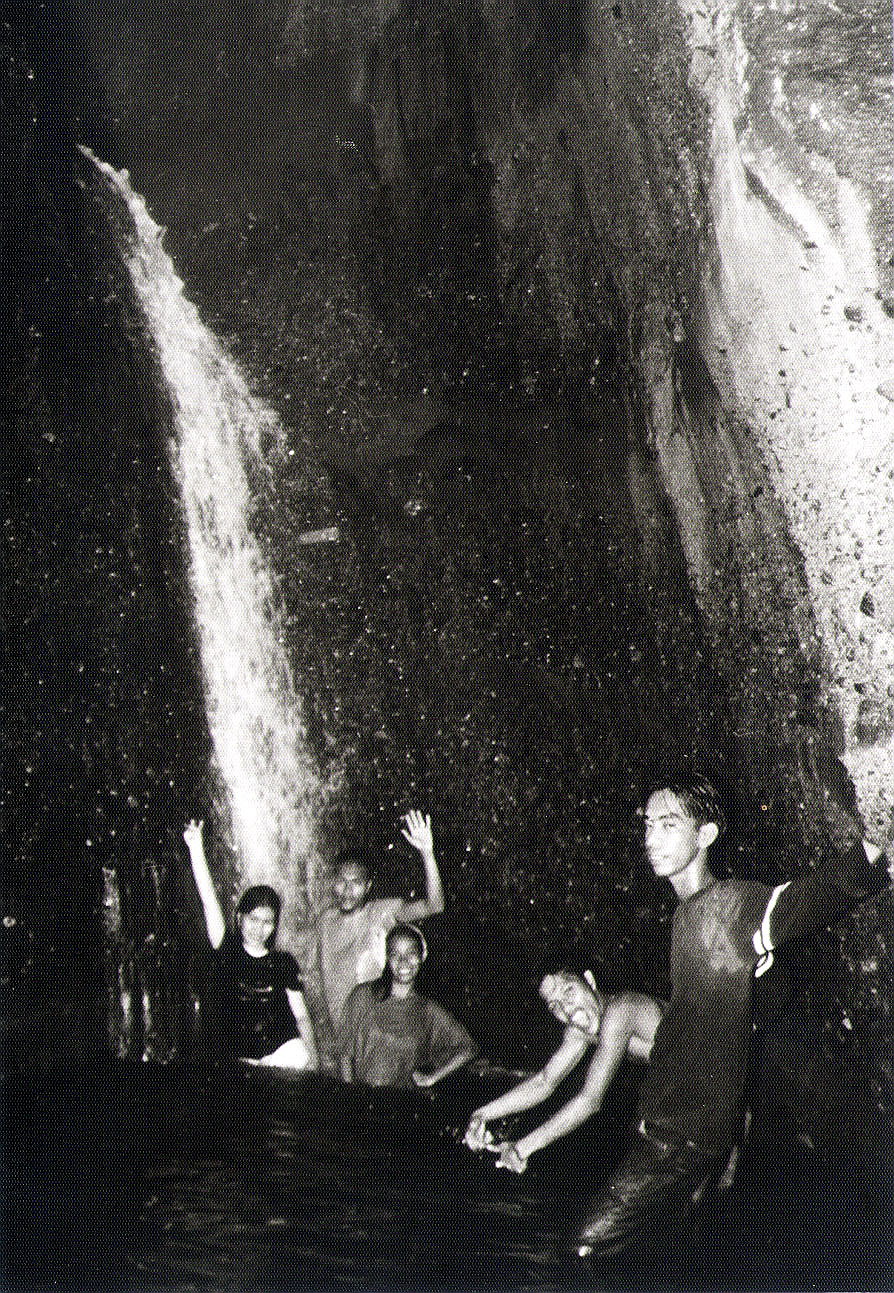
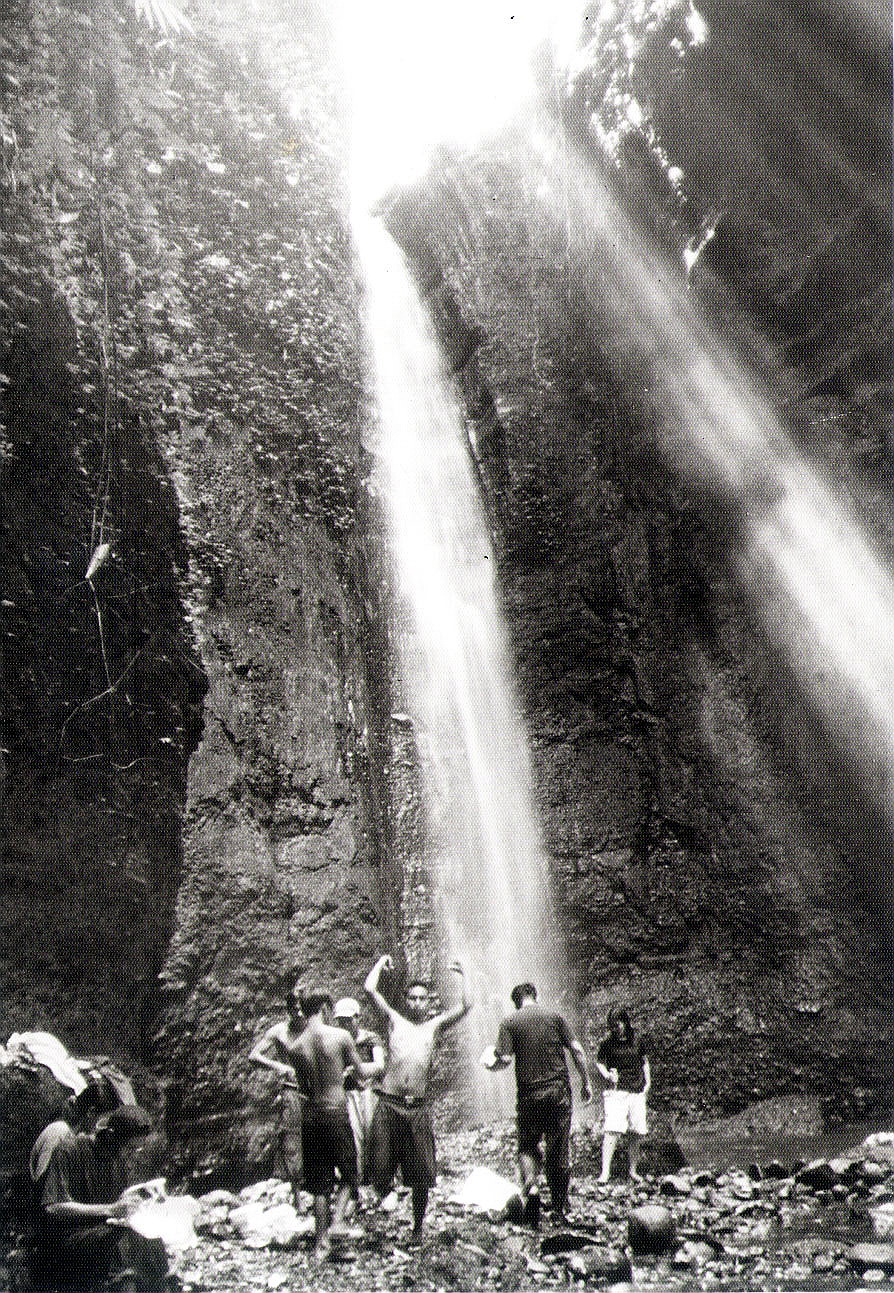
The first waterfall we reached, Tumaguiti Falls, was the park’s highest.   Its name was derived from its rain shower-like gush of water.  We weren’t prepared for a wet reception at this fall as we didn’t bring bathing attire or extra clothes.  Boyet didn’t seem to care as he took, with gusto, his first “natural” shower, clothes and all.  We could only watch in envy.
      
Tumaguiti Falls
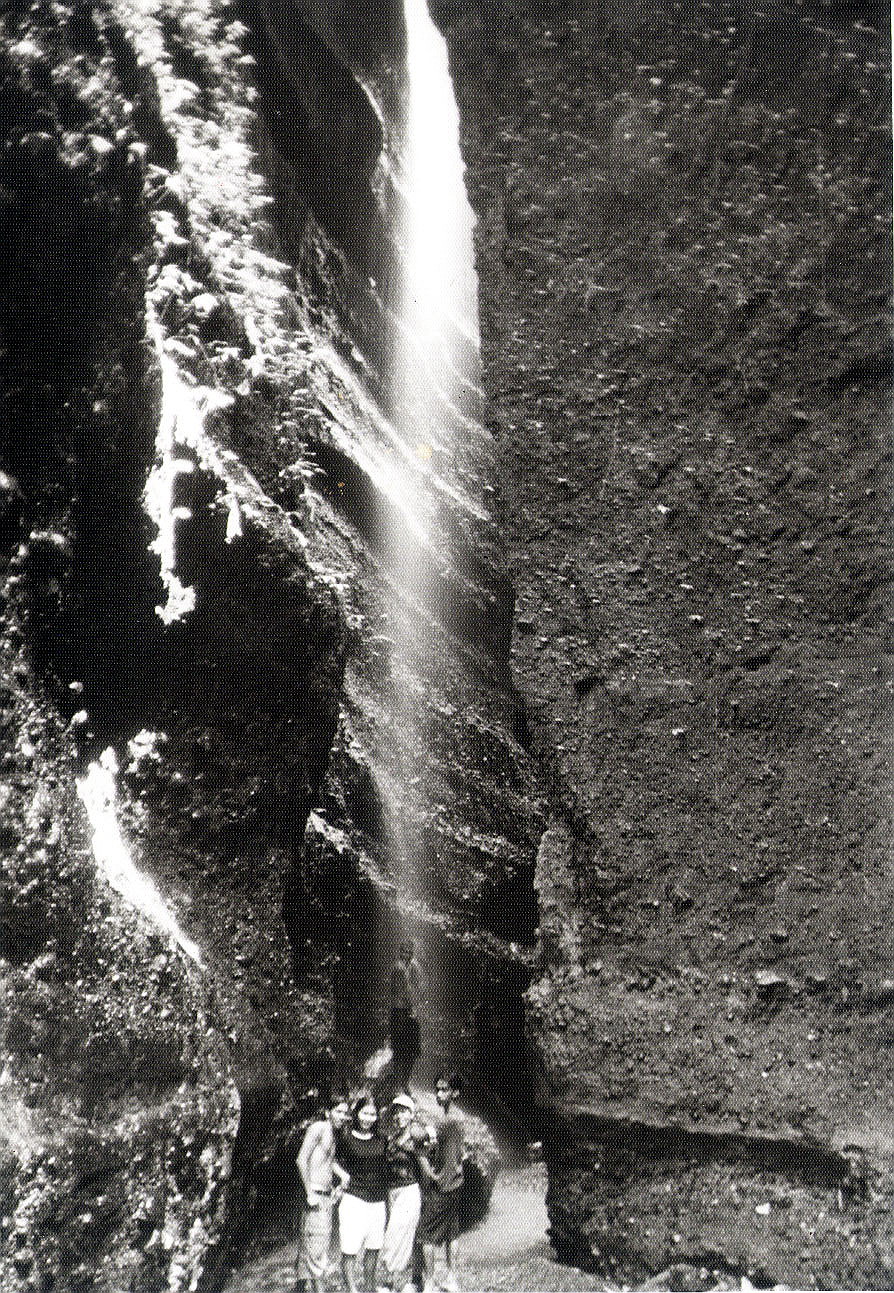
We soon continued on our way to our next destination: Kawa-Kawa Falls.  Its name was derived from the native word kawameaning “big cauldron.”  Although a David compared to the Goliath-like Tumaguiti Falls, it is still the best known and most popular because of its natural “slide” into a man-made swimming hole so structured as to blend naturally with its surroundings.  Again, Boyet took a natural bath in its refreshing waters while we consoled ourselves by just breathing the cool mountain air and admiring the tall trees and giant ferns.  We also interviewed 47-year old Domingo Saulon, one of the park’s four rangers.
     
Kawa-Kawa Falls
After about 30 mins., we continued on our way to our final destination: Bulalacao Falls, so named because of its rushing cascade. After passing a dressing area and an impressive treehouse, we soon heard the rushing waters of the waterfalls.  But first, we proceeded to its viewing deck.  Quite tired and famished, we partook of the packed Bigg’s Diner packed lunch we brought along: fried chicken and laing (taro leaves with shrimps in coconut cream) cooked in true Bicolano fashion; hot and spicy.   After this hearty lunch, our group proceeded down the steps, to the falls.
      
Bulalacao Falls
What a falls it was!  This third major waterfall truly lived up to its name, as its onrushing waters fell down, in graduated steps, to a deep, inviting pool surrounded by lush foliage.  The temptation to dive in was irresistible and since I had already missed out on two beautiful falls, it would truly be a sin to miss out on this third and last opportunity.  Clad only in my jogging pants, I waded its icy-cold waters for my own “natural” bath.  Boyet, Alex and our guides; Melba and Sheila, soon followed suit.   Susan, Jess and Rick still opted to remain as spectators, watching us as we lolled about the pool.
     
A treehouse at the resort
After 30 mins. of sheer ecstasy, we reluctantly left the falls, drenched as a newborn chick, to make our way back to the park entrance.  The return trip was all slightly uphill and our group was split in two as the others lagged behind.   Reaching the parking lot ahead of them, I took the opportunity, while waiting for the others, to dry myself under the sun.  Soon everyone was accounted for and we all boarded our van for the return trip down the mountain.

Back to Naga (Camarines Sur)

The first time I’ve been to Naga City was way back in 1980 when I attended a Rotaract convention there.  I wasn’t much of a tourist then as I was now.  Opportunity beckoned again when I was invited by the Department of Tourism to cover its May 25 to 28 Kaogma Festival.  I was to join a media group consisting of Mr. Rick Alberto of What’s On/Expat, Mr. Jess Escaros of Philippine News Agency and Mr. Alex de los Santos of Pilipino Reporter.   Also accompanying us were Mr. Boyet Escueta and Ms. Susan Codotco, media coordinator and in-house writer, respectively, of the DOT’s Office of Tourism Information.  We left the DOT by 11 AM on an airconditioned tourist van.

Quezon National Park

All of us were in for a long haul as the trip to Naga City took all of 9 hours, passing 6 towns and 1 city in Laguna, 11 towns and 1 city in Quezon, the whole length of Camarines Norte and 5 towns of Camarines Sur before reaching our destination.  Places of interest along the way include the scenic seacoast highway along Atimonan, Plaridel and Gumaca and the Quezon National Park with its winding zigzag road (locally called bitukang manok).

The Miss Camarines Sur beauty contest

We arrived at the city by 8:30 PM and checked in at the Villa Caceres Hotel.   After a hearty supper, it was off to work as we covered the Ms. Camarines Sur beauty pageant held at the Government Center in Pili.  Special guest there was former Miss International Melanie Marquez.  After a courtesy call on Gov. Luis Villafuerte, we called it a day and returned to our hotel for a fitful sleep.

Villa Caceres Hotel: Magsaysay Ave., Naga City, Camarines Sur. Tel: (054) 473-6530 to 33 and 811-6083 to 89. Fax: (054) 473-9327.   E-mail: info@villacacereshotel.com. Website www.villacacereshotel.com.

Matabungkay’s Balsa Festival (Lian, Batangas)

Parade of Decorated Balsas

I, together with other members of the print and broadcast media, were again invited (my first was a media familiarization tour last March 23 and 24) to cover the First Balsa Festival in Matabungakay, Lian.  Matabungkay’s very shallow beach is lined with about 150 of these rented balsas, all ingeniously fitted with shaded picnic tables and grills for visitors who want to go dining al fresco, swimming, snorkeling, sunbathing and, at the day’s end, watching the magnificent sunset. These hardy balsas and their navigators have, in effect, become the durable and unique symbol of Matabungkay and a very important contributor to Lian’s tourism livelihood economy.

Sunset at Matabungkay

We were guests of the 4.2-hectare, DOT-accredited “Class AA” Matabungkay Beach Resort and Hotel (MBRH).  Just recently, the resort was named as the “Most Outstanding Beach Resort of 2002” during the 17th Annual Parangal ng Bayan Awards and the 2002 National Consumer Excellence Awards.  As festival hosts, MBRH was in the thick of preparations with the visibly-tired Ms. Charley Leviste-Antonio (Vice-President for Operations), Ms. Marissa Romero-Balangue (Marketing and Sales Director), Mr. Rico M. Violeta (General Manager) and Ms. Blessie Zarzuela (Gen. Manager of Adea Advertising) ably providing the push.

Sen. Loren Legarda

We arrived at Matabungkay in time for the festival’s highlights: the Balsa Race and the Parade of Decorated Balsas.  The weather was perfect with the sun shining brightly on a cloudless, blue sky.  The race and parade was held along the beachfront of Kandahar Resort.  Invited guests of honor included Sen. Loren Legarda-Leviste and former Batangas Gov. Antonio Leviste.   The Balsa Race was a test of the boatmen’s strength, endurance and dexterity with the bamboo pole as they navigated their sometimes unwieldy balsas to the end of a one hundred meter long course along the shoreline.  The winners took home cash prizes of PhP10,000, PhP7,000 and PhP5,000 for first, second and third place respectively.

Matabungkay’s hardy balsas

The Parade of Decorated Balsas was truly a spectacle in itself.  It also had a message: recycling and use of indigenous materials.  This theme was evident among the eleven entries who vied for even bigger cash prizes of PhP20,000, PhP15,000 and PhP10,000 for first, second and third respectively.  Aside from bamboo, the indigenous material from which all balsas are made, the entries also made free use of the town’s famous caballero flowers, the fiery-red blooms of the flame tree.   Recyclable materials of choice were old newspapers (as banderitas) and plastic, colored water-filled, 1.5-liter soft drink bottles strung together.  The star of the parade (although not the winner) and the photographer’s delight was a balsa featuring a gay, blue-painted shokoy (local name for a “merman”).

A crowd favorite

After the show, it was back to MBRH for a sumptuous, a la carte lunch at its Caballero Café.  Later, we were all booked in some of the resort’s 57 airconditioned superior and executive guest rooms with cable TV, private bath and spacious veranda.   In the afternoon, the mood of the Balsa Festival turned Filipiniana as MBRH also played host to two exciting games, both qualifying as the Filipinos’ version of “Grease.”  The first was a palo sebo, where contestants had to clamber up a greased up bamboo pole in a no-holds-barred race to grab the pennant on top.  Equally greasy was the habulan ng biik, where contestants raced against each other in a bid to be the first to catch a greased up piglet.  Poor pig.   

A senior citizen dance

Later in the afternoon, students from the town’s different secondary and tertiary schools as well as senior citizens showcased their talents in dance and other production numbers at MBRH’s basketball court.  Quite a colorful sight was the dance troupe which performed a komedya (also called a moro-moro), an age-old dramatization of the battle between Christians and Moors.  It won the top prize. Another sure-fire scene stealer was the town’s old ladies in white and multi-colored balintawak attire who showed a lot of spunk in rendering a native dance.  One even regaled the appreciative crowd with her whole-hearted rendition of the timeless song “Tayo na sa Antipolo.”  Bravo!  Come nighttime, the festival was capped by band performances where the townspeople slowly but surely danced the night away, to the beat of old and new disco tunes, up to the wee hours of the morning.  What a way to end a day (and a festival).