
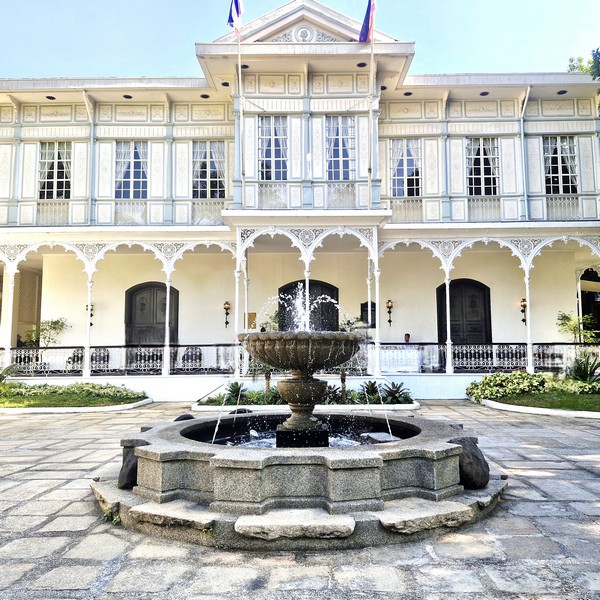
Fifth Part of NCCA Heritage Tour
The historic Goldenberg Mansion, a stately 19th-century residence nestled in the heart of Manila, beside the Teus Mansion, stands as a timeless symbol of elegance, boasting a rich historical background. This beautifully restored ancestral home now serves as a venue for cultural events, art exhibitions, and official receptions. This heritage house’s grand architecture, intricate details, and rich legacy offers a glimpse into the opulence of the colonial era while continuing to play a vibrant role in the country’s contemporary cultural landscape.
Check out “Teus Mansion“
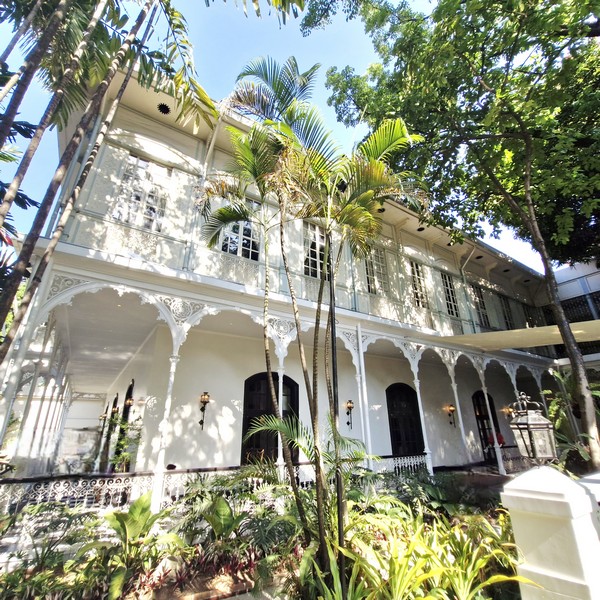
It was built in the 1870s by the affluent Eugsters, a Spanish merchant family who owned the trading company Eugster, Labhart y Cia. It was later purchased by Spanish lawyer, writer, and colonial official (he previously served as the Oidor de la Audiencia or Hearing Officer of the Real Audiencia of Manila) Jose Moreno Lacalle who revamped it, heavily incorporating Moorish Revival style into the design and infusing elements of his native region of Granada.
Constructed using indigenous materials such as Philippine hardwood, alongside European materials such as pre-fabricated steel from Belgium, Italian marble, and bricks and tiles from Spain, the mansion showcases window sashes using capiz shells, an arcaded veranda, a paved courtyard, and a splashing circular fountain.
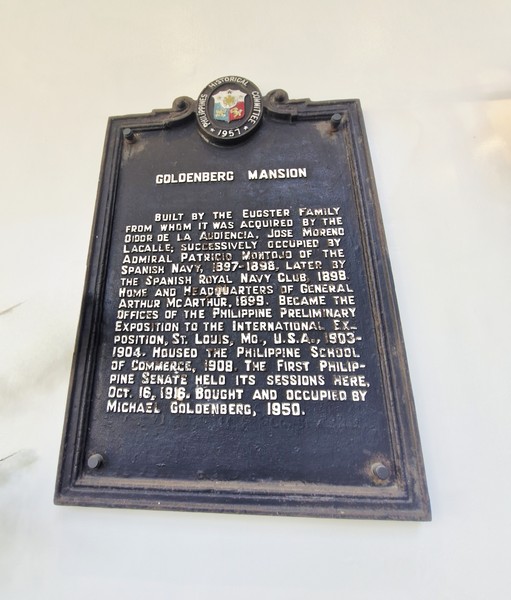
Over the course of the next 53 years, the house underwent several changes in ownership, being leased to various government and military offices. Between 1897 and 1898, it was rented to the Spanish Navy, serving as the residence for Admiral Patricio Montojo, its commanding officer, and housing the exclusive Spanish Navy Club’s headquarters.
After Admiral Montojo’s defeat at the Battle of Manila Bay and the surrender of Manila to the Americans under U.S. Navy Commodore George Dewey, it became the residence of Gen. Arthur MacArthur Jr. (father of Gen. Douglas MacArthur), the battalion commander, until his appointment, in 1900, as Military Governor of the Philippines, after which, he moved to Malacañang Palace. Responsible for maintaining public order of the city of Manila, Gov. MacArthur Jr. established the Metropolitan Police Force of Manila in 1901, with himself as its inaugural chief, and the police force was initially stationed on the mansion’s grounds.
The year 1903 marked the mansion’s initial role as a museum when it functioned as the office of the Philippine Preliminary Exposition to the International Exposition in St. Louis, Missouri, exhibiting artifacts before their transfer to the Louisiana Purchase Exposition in 1904. Before shipping the items to the United States, the mansion hosted the first public exhibition of Philippine art, featuring works by Felix Resurreccion-Hidalgo, Fabian dela Rosa as well as Juan Luna’s famous The Blood Compact, which now resides in Malacañang Palace’s collection.
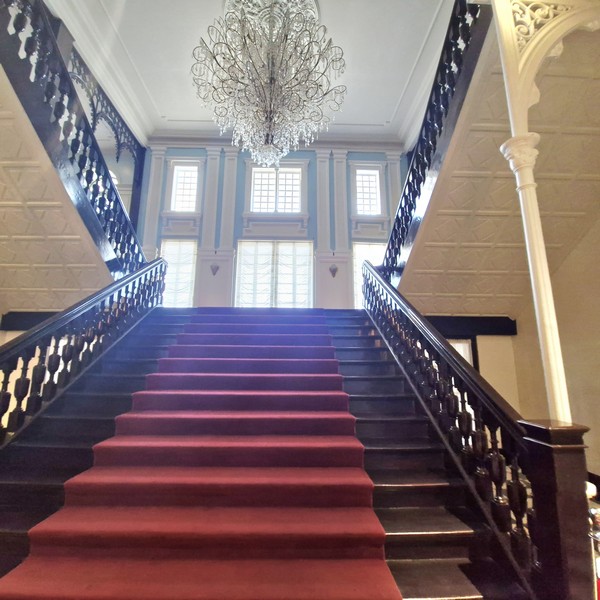
In 1908, it was the inaugural location of the Philippine School of Commerce (now the Polytechnic University of the Philippines) and, by 1915, the property was acquired by Ricardo Esteban Barretto, whose family established the San Miguel Brewery. On October 16, 1916, it hosted the first session of the Senate of the Philippines. In the 1930s, it also housed the Adamson School of Industrial Chemistry (the present Adamson University main building, in San Marcelino, was inspired by the mansion’s architecture).
During World War II, it served as the residence of a Japanese general. After the war, it was converted into the Ye Olde Mansion, a restaurant-nightclub for American troops. In 1950, the mansion was acquired by cosmetic magnate, businessman and philanthropist Michael Goldenberg (1889–1963), an American of French-Jewish descent, who initially arrived in the Philippines as a young boy in 1896 (he personally witnessed the execution of National Hero Jose Rizal in Bagumbayan).
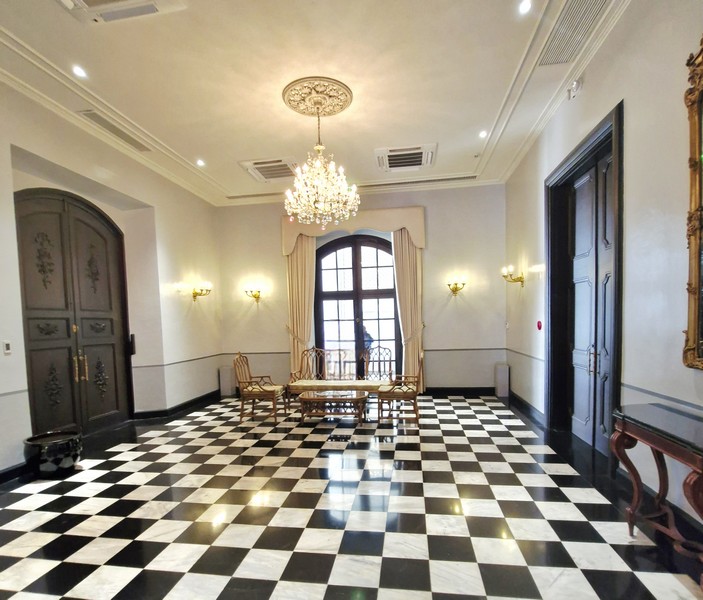
Amassing his wealth in retail, Goldenberg founded the Goldenberg Department Store situated in Escolta and held exclusive distribution rights, in the Philippines, for distributing Helene Curtis Shampoo Plus Egg beauty products.
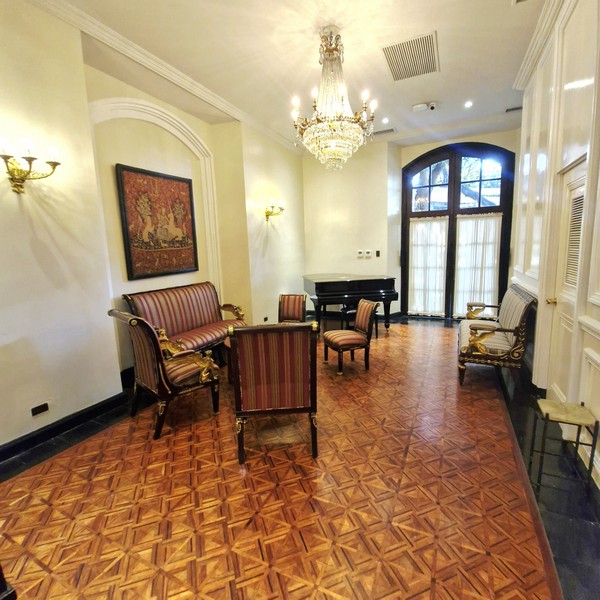
A keen stamp collector and a trailblazer in organized philately in the Philippines, Goldenberg amassed a collection of over 4,000 books, journals, maps, old photographs, pamphlets, and other ephemera on the Philippines and, subsequently, established the Goldenberg Filipiniana Library, a private institution dedicated to the study of Philippine history and culture. As a consequence, the mansion came to be known as the Goldenberg Mansion.
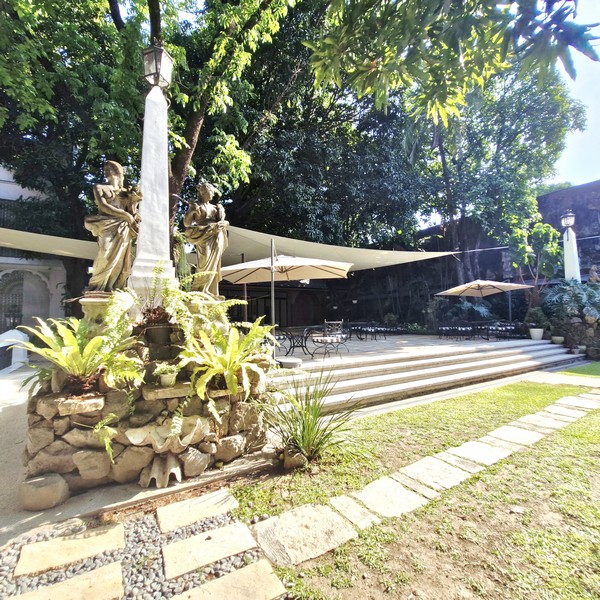
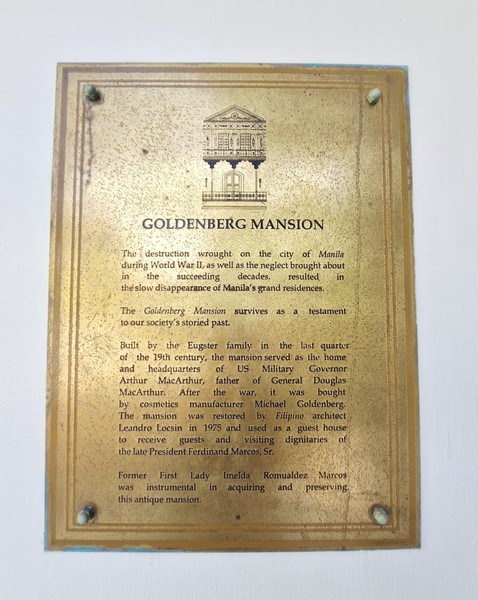
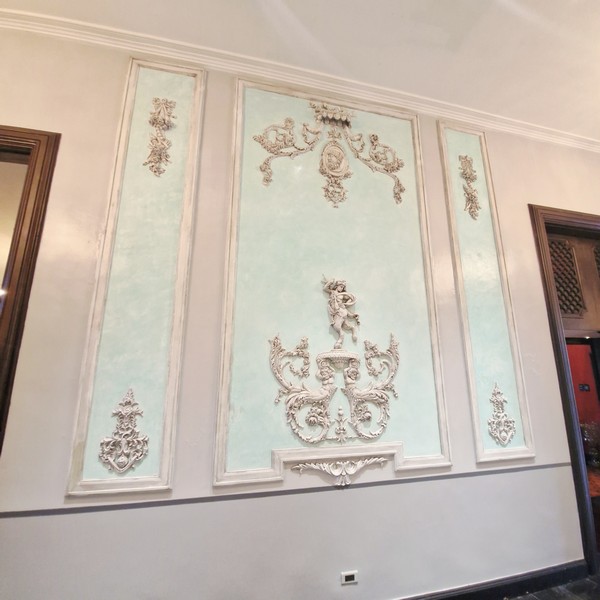
In 1966, following Goldenberg’s death in 1963, the Goldenberg Mansion was acquired, from his heirs, by First Lady Imelda Marcos as one of the Marcos mansions. Subsequently, it became the offices of the Marcos Foundation and, after undergoing extensive restoration and renovation of the interiors by National Artist for Architecture Leandro Locsin, served as the office and guest house of the Marcos Foundation and renamed Ang Maharlika.
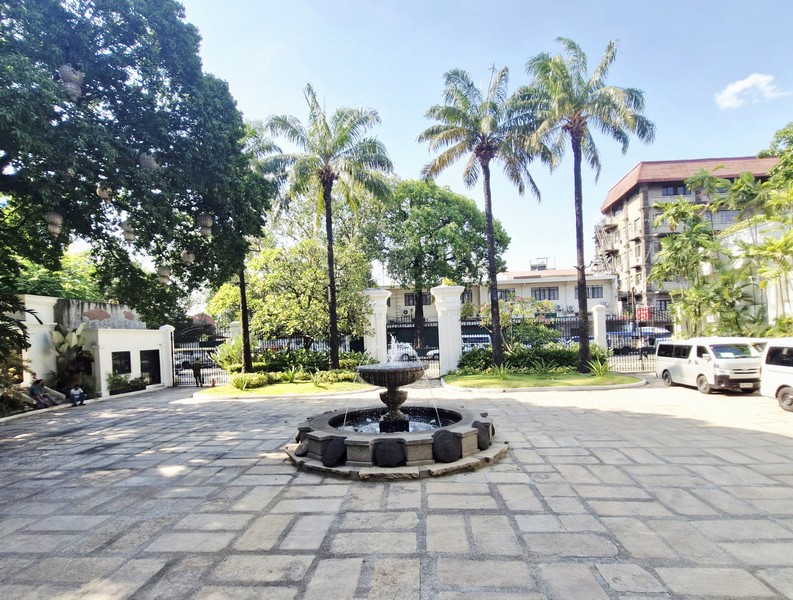
As a guesthouse, it hosted notable dignitaries such as King Hussein and Queen Alia of Jordan; Prince Juan Carlos and Princess Sofia (later King and Queen) of Spain; Prime Minister Indira Gandhi of India; Prime Minister Pierre Elliott Trudeau of Canada; UN Secretary-General Kurt Waldheim; celebrated American pianist Van Cliburn and renowned ballerinas Dame Margot Fonteyn and Alicia Markova.
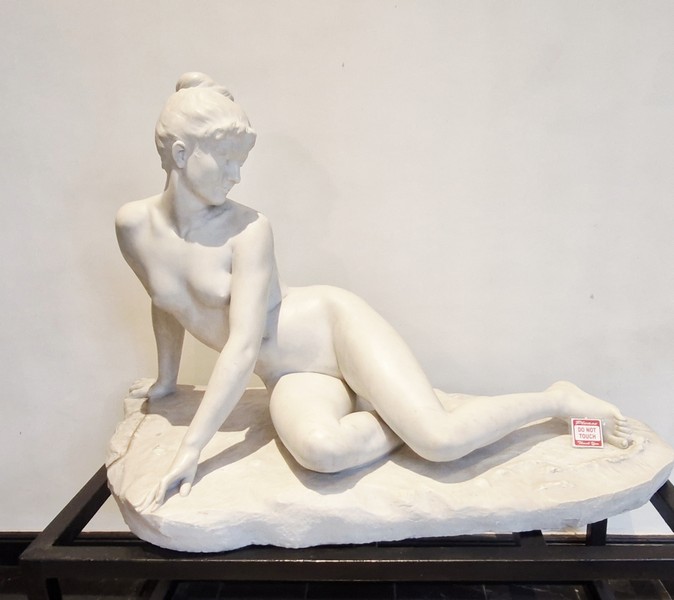
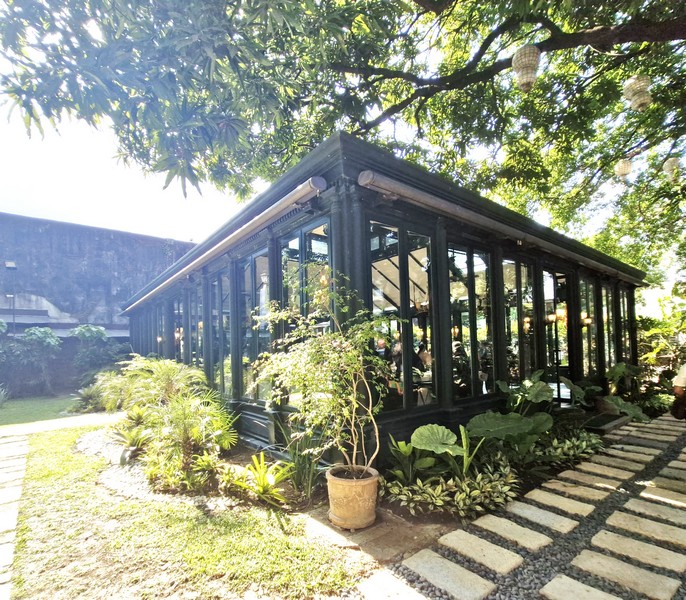
After the People Power Revolution of 1986, ownership of the Goldenberg Mansion and other properties within the Malacañang Palace complex transferred to the Government of the Philippines, with restricted public access. From 2022 to 2023, following the initiative of First Lady Liza Araneta Marcos, the Goldenberg Mansion underwent renovation to be made into a cultural center and events space. A glass house, designed and conceptualized by Jonathan G. Matti (an in-demand interior designer with a background in architecture), was also added on the grounds of the Goldenberg Mansion. The mansion was reopened to the public as a cultural center and events space.
On May 12, 2023, President Bongbong Marcos issued Executive Order No. 26 to conserve and protect cultural heritage sites around Malacañang Palace, including the Teus Mansion and the Goldenberg Mansion. The supervision of these properties was transferred, from the former Office of the Deputy Executive Secretary for General Administration, to the Social Secretary’s Office.
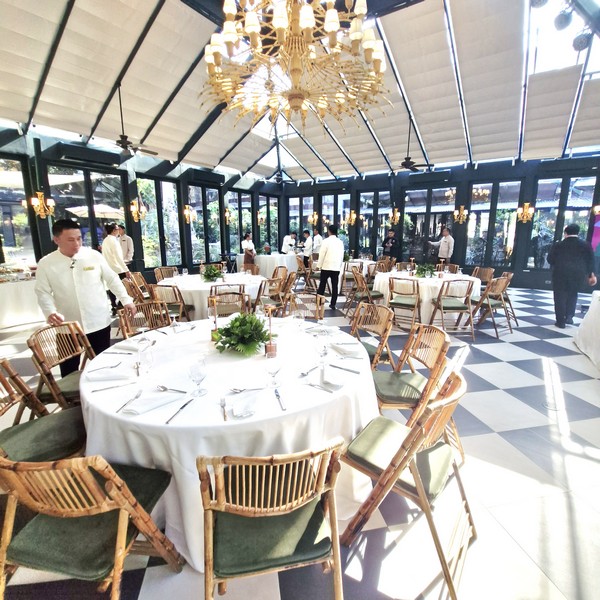
In April 2023, the Goldenberg Concert Series, part of the “Konsyerto sa Palasyo,” was launched. In March 2024, Araneta Marcos’ inaugural concert, starring the Manila Symphony Orchestra musicians, was held there. The Series, featuring exceptional Filipino performing artists, especially the youth, was the brainchild of Stella Goldenberg Brimo (daughter of Michael Goldenberg). In April 2024, Indak ng Musika, a piano concert, was performed by alumni of Santa Isabel College’s Conservatory of Music. In the fourth event violinist Adrian Ong and pianist Jet Chong performed for former First Lady Imelda Marcos, and her sister-in-law Irene Marcos-Araneta.
In addition to the Goldenberg Mansion’s library, the mansion housed Imelda Marcos’s extensive art collection and a significant collection of oriental ceramics and artefacts, including Chinese jade furniture, excavated porcelain and pottery, and Ban Chiang pottery from Thailand.
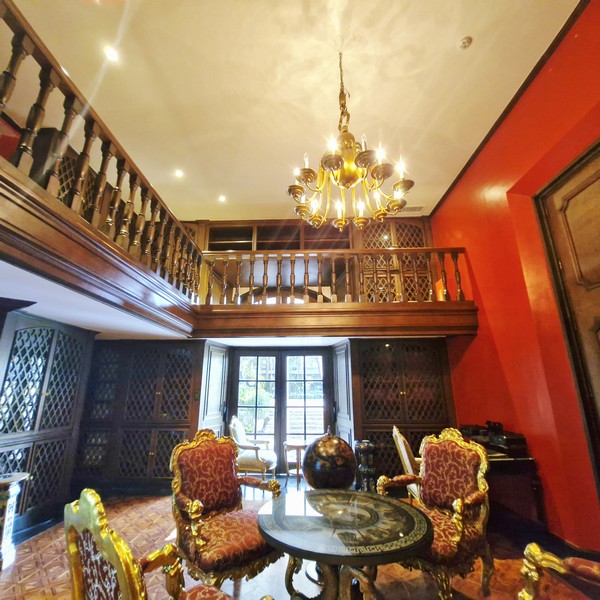
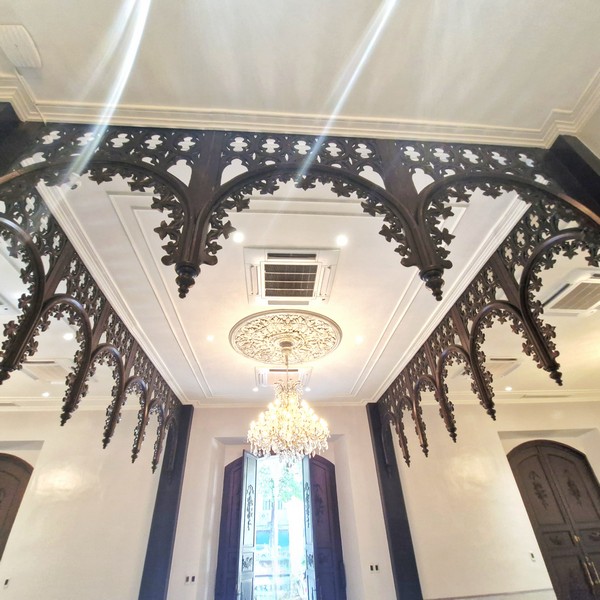
Its interiors features a living room with wood filigree arches and chandeliers; tapestries depicting Diana the Huntress; a “Della Robbia” style mirror (which once belonged to Catherine de Medici); several paintings by the American artist Grandma Moses (forfeited, in 2019, by the Sandiganbayan in favor of the Government); a 16th-century European devotional altar adorned with ivory figures depicting the life and martyrdom of Catherine of Alexandria; and Persian rugs adorning the floors.
Goldenberg Mansion: 838 Gen. Solano St., San Miguel, Manila. Tel: (02) 8249 8310 local 8188. E-mail: goldenbergevents@op.gov.ph. Wensite: www.goldenbergmansion.gov.ph. Open Tuesdays to Sundays, 9 AM to 6 PM. Coordinates: 14°35′30″N 120°59′22″E.
How to Get There: The mansion can be visited, by the public, upon reservation, via socsec@malacanang.gov.ph.
National Commission for Culture and the Arts (NCCA): NCCA Bldg., 633 General Luna St., Intramuros, Manila, 1002. Tel: (632) 8527-2192. E-mail: info@ncca.gov.ph. Website: www.ncca.gov.ph.
Pingback: Bahay Ugnayan (City of Manila, Metro Manila) – B.L.A.S.T. – Live Life to the Fullest ……… Don't Stay Put
Pingback: Teus Mansion (City of Manila, Metro Manila) – B.L.A.S.T. – Live Life to the Fullest ……… Don't Stay Put