Pulong Laki (Calapan, Mindoro Oriental)

The next day, All Saints Day, Jing again packed us some lunch (including beer) for our excursion to Pulong Laki (Big Island), one of the 3 Baco Islets, the others being Pulong Munti (Little Island) and Pulong Gitna (Middle Island).  All have white sand beaches.  We espied these beautiful islands during the ferry crossing from Batangas City to Calapan.  Ronnie also brought along his fishing rod.

On our way

Jing also chartered a boat very early in the morning for our use as, if there are no charters, their owners usually leave early in the morning to catch fish for a living.  From Ronnie’s home, we walked towards the nearby beach where our motorized outrigger boat and the boatmen where waiting for us.  Once on board, we were soon on our way.  The trip was smooth, usual for the morning and, after about an hour, we made landfall on the island.

The island’s coarse sand beach

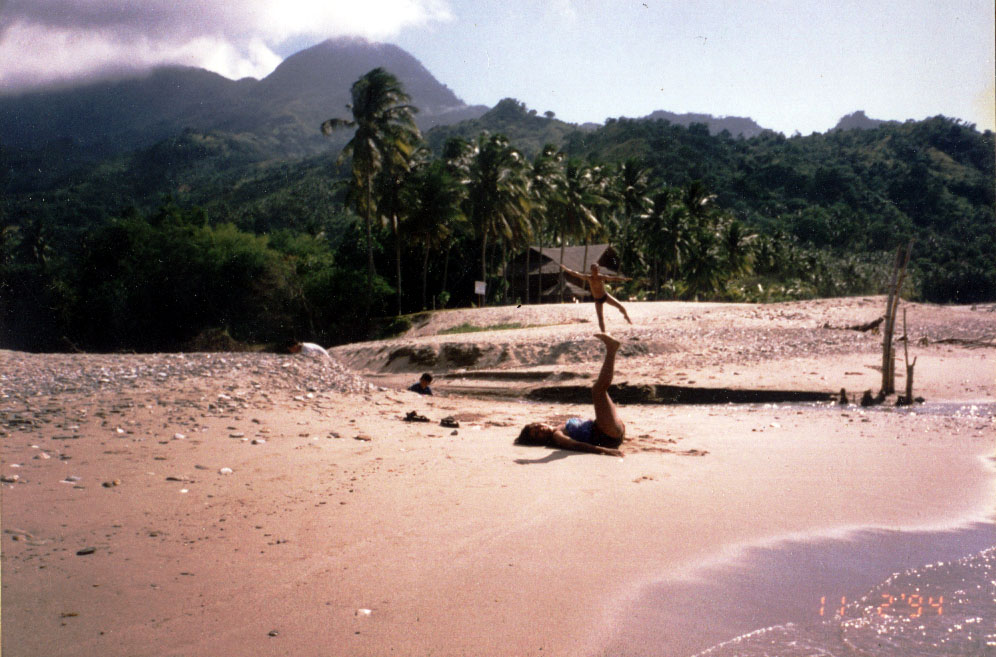
The island had a broad, coarse sand beach, with vegetation and shade some distance away.  This didn’t matter much to us as we savored our first dip in a Mindoro Oriental beach.  From the beach, we also had a panoramic view of a couple of islands.  We were the only excursionists on the island that day.  I guess that most Calapenos were visiting their dead while most local and foreign tourists were in Puerto Galera.  We had this beach to ourselves.  

Doing some trick photography

Ronnie went fishing  and sunbathing while the rest went swimming or shell hunting.  Ronnie caught a couple of small fish that day which he cooked.  By mid afternoon, we all left the island, upon the boatman’s suggestion,  to avoid the high, late afternoon waves.  Back on the mainland, we again had supper at the house of Ronnie and Jing’s aunt.    

Coral Island – Koh Larn (Pattaya, Thailand)

After an early breakfast at the hotel, we prepared for a change of pace as we were scheduled to do an island tour, with lunch, of Koh Larn (translated as “Coral Island”).  Located about 7-8 kms. off the coast of Pattaya Beach, Koh Larn is about 4 kms. long and 2 kms. wide.  It has 2 villages (Ban Ko Lan and Ban Krok Makhan)  and a number of white sand beaches (Tonglang Beach, Tien Beach, Samae Beach, Naon Beach, Na Ban Beach, Ta Waen Beach, etc.) with clear, blue waters, mostly on the western side.  Koh Larn is part of a cluster of 3 islands called the Near Islands (the other 2 are Koh Sak and Koh Krok).

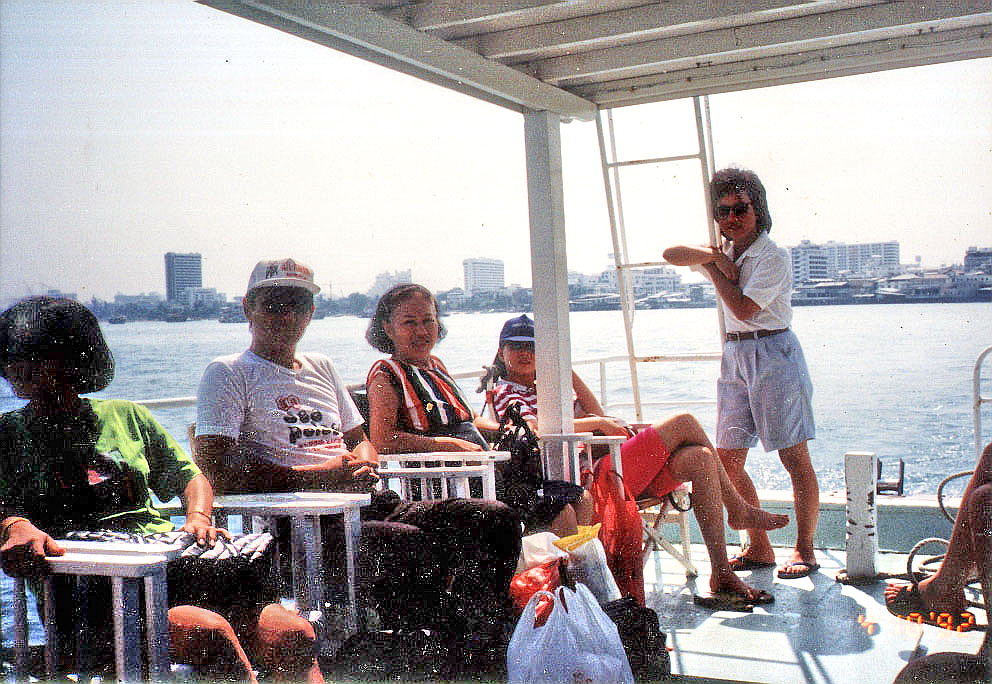
On Our Way to Koh Larn

From the Bali Hai Pier, we all boarded a cruiser for the 45-50 min. trip, across the Gulf of Thailand, to the hilly island.  Within sight of the crescent-shaped Ta Waen Beach (the most frequented beach), we all transferred to a glass-bottom boat so that we could view the marine life and offshore coral garden.

Glass-Bottom Boat Ride

Upon landing, we were assigned to a long picnic shed with other guests. As the beach was very inviting, the sun was out and the skies were clear, we all changed into our swimming attire.  The sand here was definitely much cleaner (and whiter) than in Pattaya Beach.

Koh Larn (Coral Island) – Ta Waen Beach

Salve and Tellie tried jetskiing while I donned  mask and snorkel and explored the island’s coral garden.  Come noontime, we returned to our picnic hut were a seafood lunch was arrayed before us. This we feasted on with gusto.  After lunch, we all went back to our boat for the return trip back to the mainland. Once on shore, we returned to the hotel, checked out and, by 4:30 PM, boarded our bus for the return trip to Bangkok.  Back in the city, we had supper at a MacDonald’s outlet along Sukhumvit Rd., then returned to our hotel.

Boracay Here We Come! (Malay, Aklan)

After breakfast at Dad’s ancestral home in Malay, we boarded the L-200 and were driven, along 6 kms. of dirt road, to the makeshift jetty port at Brgy. Caticlan.  Here, we boarded a big outrigger boat for Boracay Island.  Our 15-min. pumpboat ride to the island was smooth all the way and soon the crystal blue waters turned sparklingly clear as we approached the island’s famous White Beach.  It was just about noontime and the palm-fringed beach’s dazzlingly white sand was practically deserted and enchanting.

On our way

Our boat docked at Boat Station 2, actually just an open beach point without piers where boats land.  All passengers, including us, have to alight the boat via a narrow gangplank then wade a short distance through the shallow water to the beach.  Others, however, hired brawny porters to carry them to shore on their shoulders.  From the beach, we walked a short distance to a narrow alley.  From the alley entrance, we walked a further 100 m. to Lion’s Den Resort on our left.

This rustic resort, owned and managed by Lowell A. Talamisan, an apo (grandnephew) of my father-in-law and a nephew of my wife Grace, is conveniently located midway between the beach and Main Road.  Here, we stayed at one of the resort’s quaint and cozy nipa and bamboo cottages with private bath.  Our cottage also had a verandah with a nice hammock slung at the posts.

Jandy and his lola relaxing at the verandah

Boracay Island then was without electricity and our cottage was lit at night with gas lanterns.  Other high-end resorts were powered by generators.  This didn’t matter to us then, since food and accommodation were inexpensive and the people were friendly. Sometimes we would dine on grilled blue marlin at the resort or dine out at the restaurant of the nearby Red Coconut Resort.

White Beach circa 1990

The most exhilarating portion of our 3-day stay on the island was  the  feel of the sand of White Beach, snow white and fine as sifted confectionary sugar, top-grade cake flour or baby powder.   It was so white you can get a total suntan  due to the  sun’s  reflection on the sand.  The  aquamarine  water was shallow and clear and the sunset was always magnificent.

Sand, sea and sky at Boracay

Up north along White Beach, across Willy’s Beach Resort, is Willy’s Rock, the familiar and frequently photographed landmark that dominates the seascape.  This large, castle-like natural boulder rises 7 m. (23 ft.) from the sand.

Posing by the much photographed Willy’s Rock


Repulse Bay and Tin Hau Temple (Hong Kong)

Traveling along the main road between Aberdeen and Stanley, we could hardly believed that we were in a highly urbanized city such as Hong Kong as, along the way, we espied the resort-like setting of the wide, crescent-shaped beach of peaceful Repulse Bay at the southern part of Hong Kong Island.  The bay, once a haven for pirates intent on plundering foreign merchant ships trading with China, was so named after the British fleet repulsed the pirates in 1841.

Repulse Bay

Repulse Bay

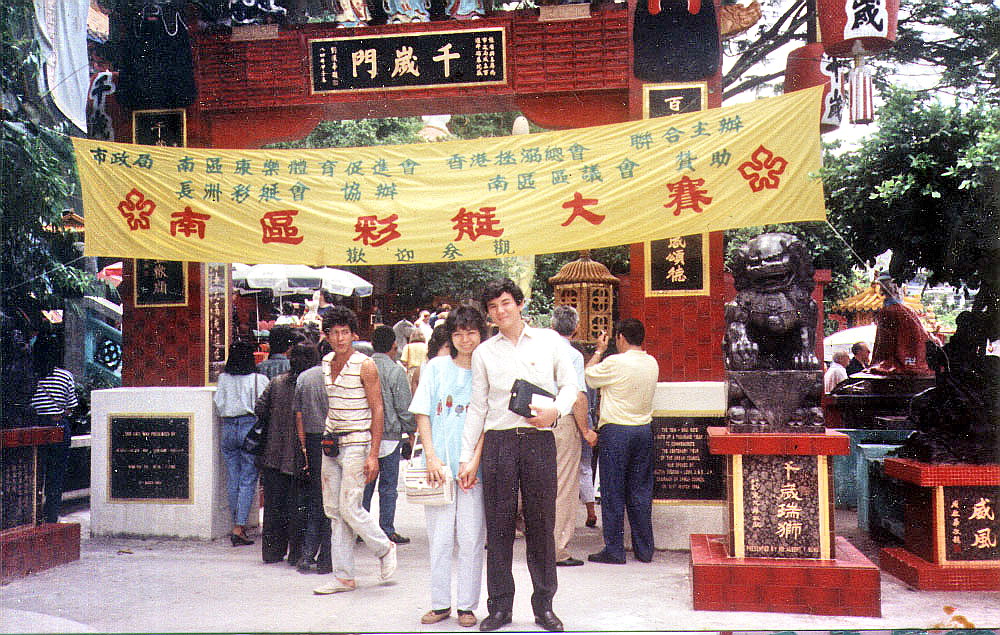
Here, at the eastern end of the beach, we made a stopover at Tin Hau Temple, one of the oldest in Hong Kong and one of over 70 Tin Hau Temples throughout the colony.

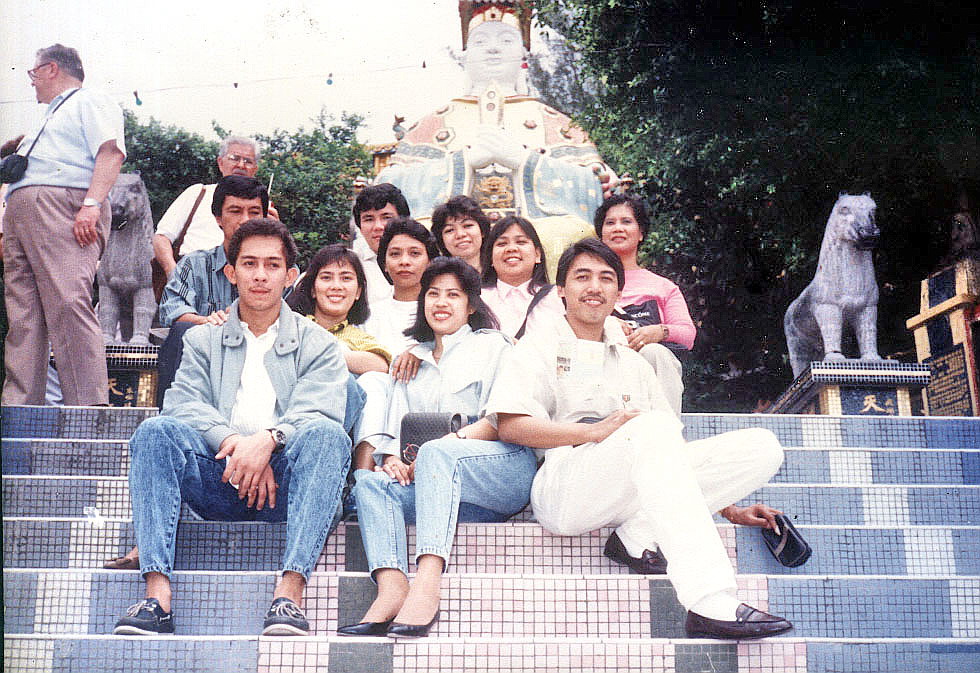
Posing at the base of the statue of Tin Hau

Posing at the base of the statue of Tin Hau

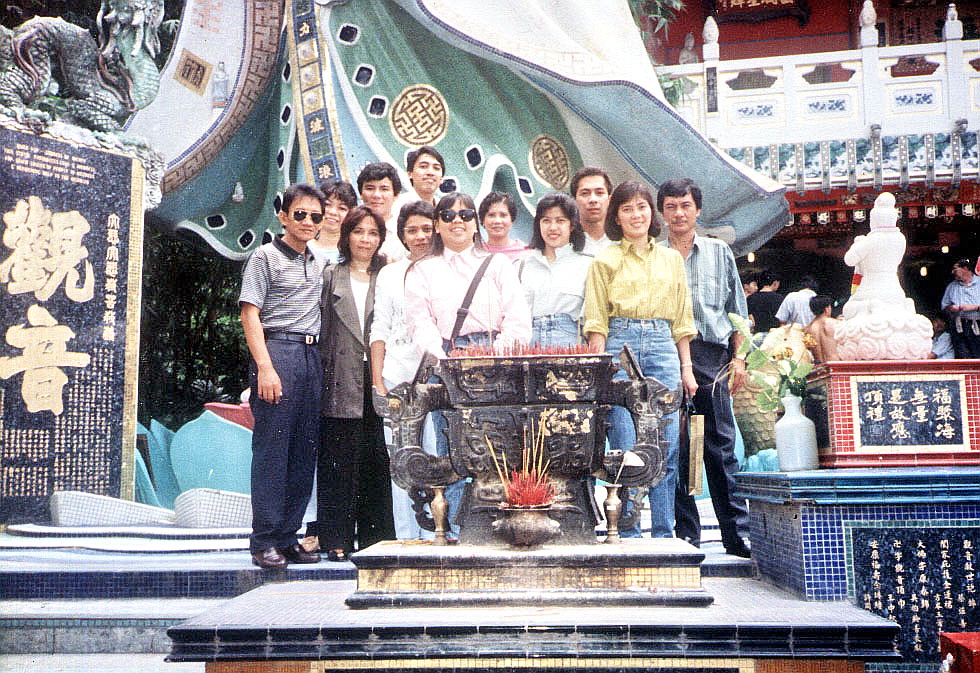
This brightly-colored Taoist shrine has a pavilion, a small pier area and  two huge, more than 10 m. high statues – one for Tin Hau (the Goddess of the Sea) and the other for Kwun Yam (Guan Yin, the Goddess of Mercy).  Both goddesses hold a prominent place in traditional Chinese legends.

Posing in front of the statue of Kwan Yam

Posing in front of the statue of Kwun Yam

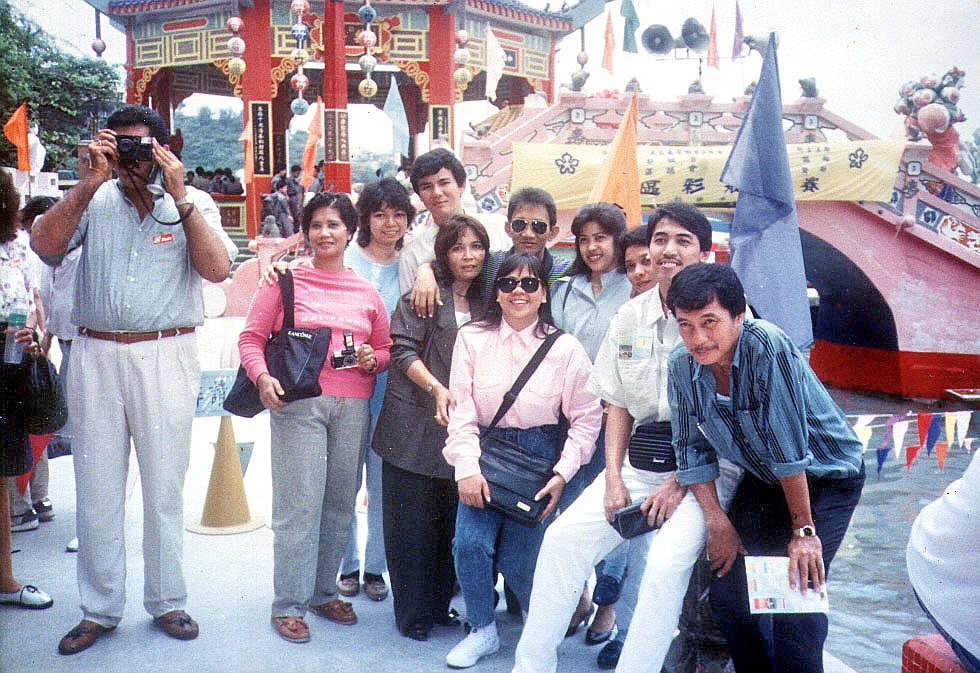
It also has a Chinese-style garden, leading down to the beach, and the Longevity Bridge, a little bridge with an inscription that says “Each time you cross this bridge, your life will be prolonged 3 days – Lau Hon-Wah.”

Posing in front of the Kwun Yam Shrine and Longevity Bridge

Posing in front of the Kwun Yam Shrine and Longevity Bridge