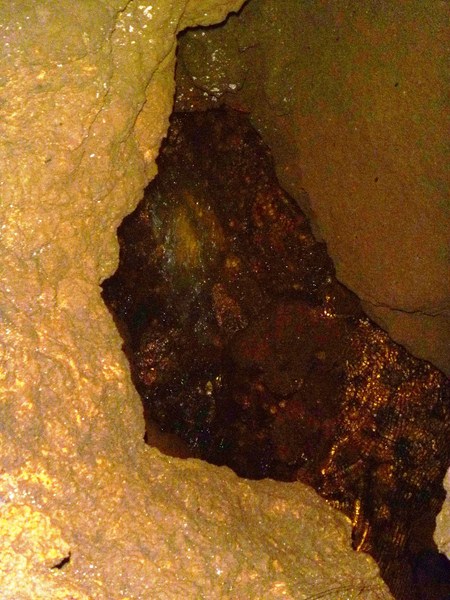
The Pagbilao Islands (Pagbilao, Quezon)

It was already midway in the afternoon when we finished our lunch at Cortijo de Palsabangon Farm Park & Restaurant and, according to Lurhen, we had to leave now if we were to catch the boat and avoid the low tide at Pagbilao Wharf (also known as Daungan) in Sitio Kalawit.  Up ahead was the piece de resistance of our Appsline Travel-sponsored Lucena-Pagbilao Media Tour – the Pagbilao Islands.

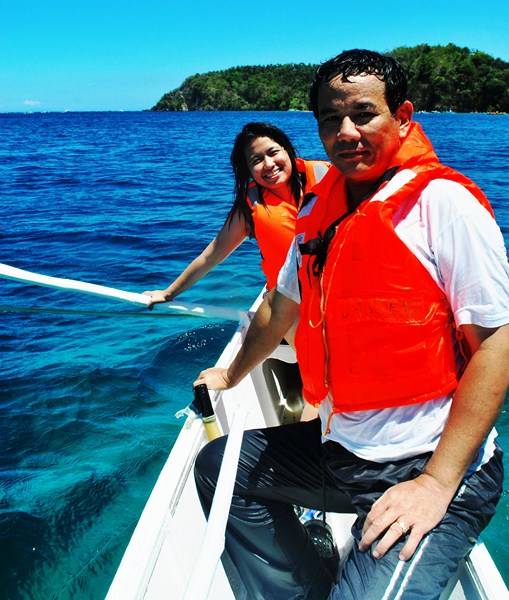
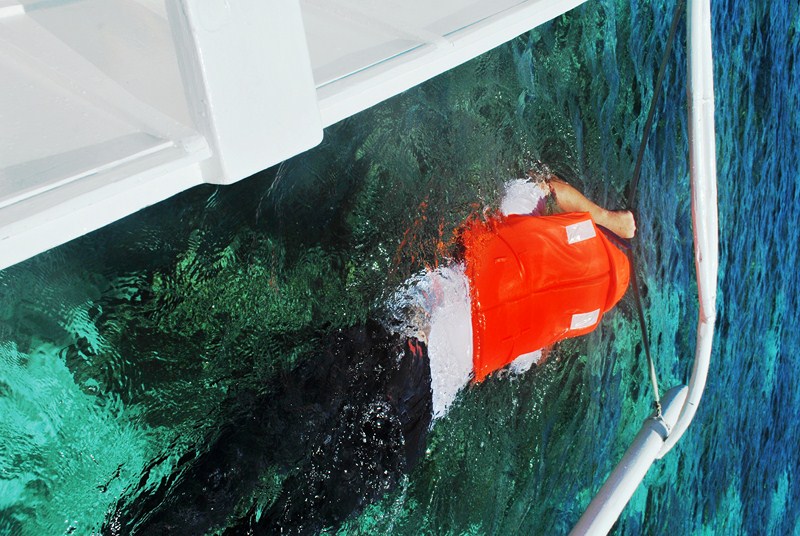
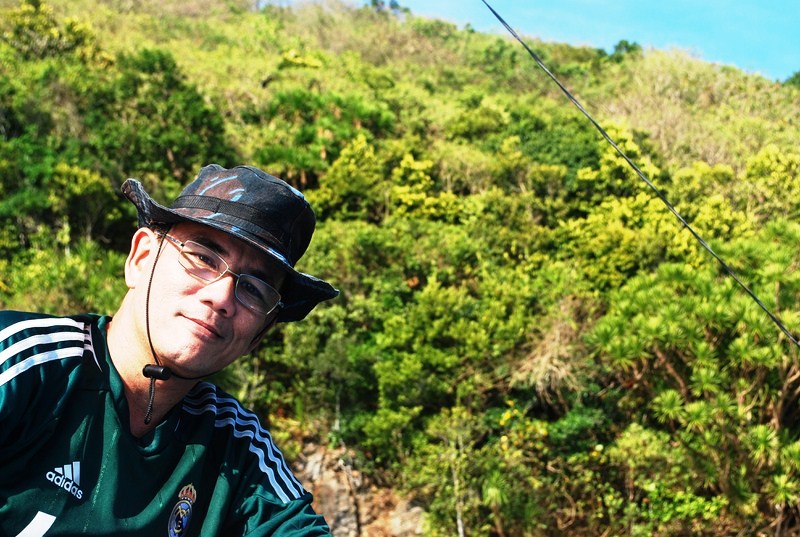
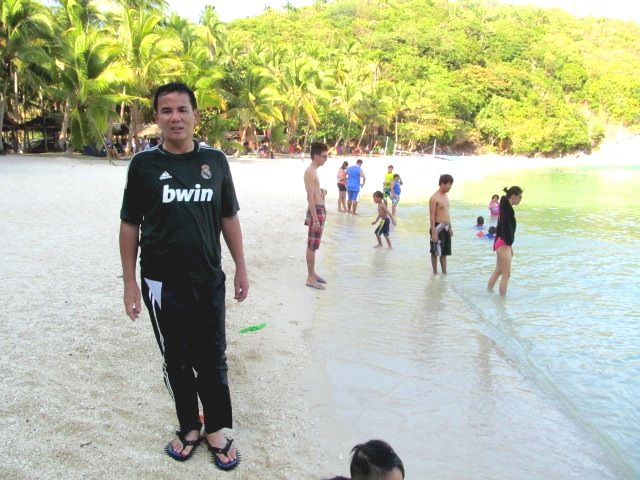
Author at Pagbilao Grande Island

Author at Pagbilao Grande Island

Upon arrival at Daungan, our huge 25-pax outrigger boat was already waiting for us.  Here, we met up with Mr. Celedonio “Dionnie” Dapla, member of the town’s tourism council and former head of the DENR Mangrove Experimental Forest.  We were supposed to visit Dionnie’s forest-farm and nursery in Brgy. Pinagbayanan but, as it was already late in the day to do so, he just saw us safely off.

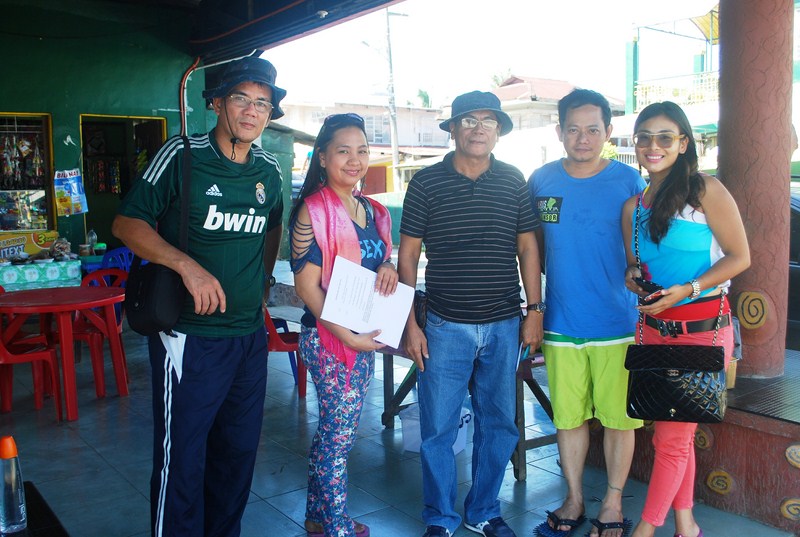
L-R: The author, Lurhen, Dionnie, Rannie and Mel

L-R: The author, Lurhen, Dionnie, Rannie and Mel at Daungan

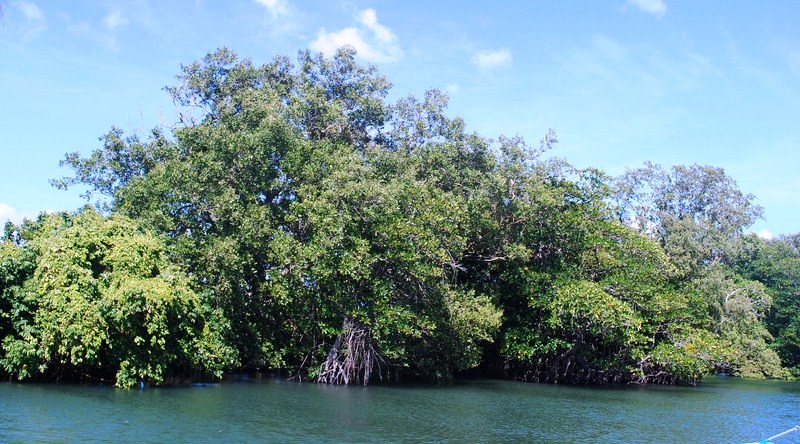
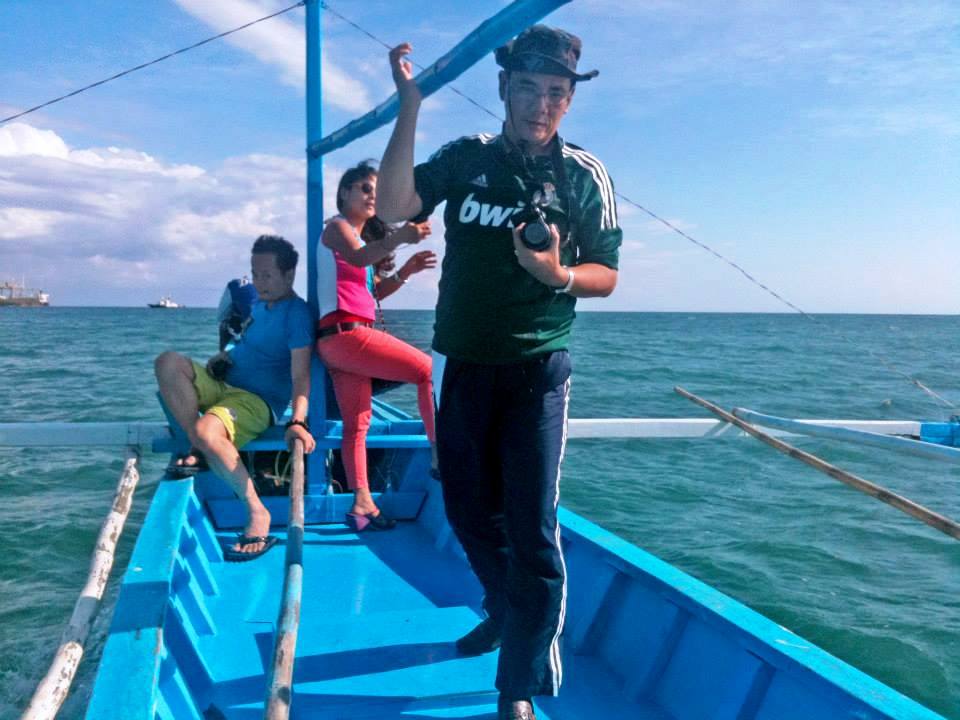
Mel, Maichel, Angela, Lurhen (with her son Marxus), Rannie and I were soon on our way, cruising the river, passing thick patches of mangrove forests along the way before heading out into Pagbilao Bay and the open sea.

Mangrove forests

Mangrove forests

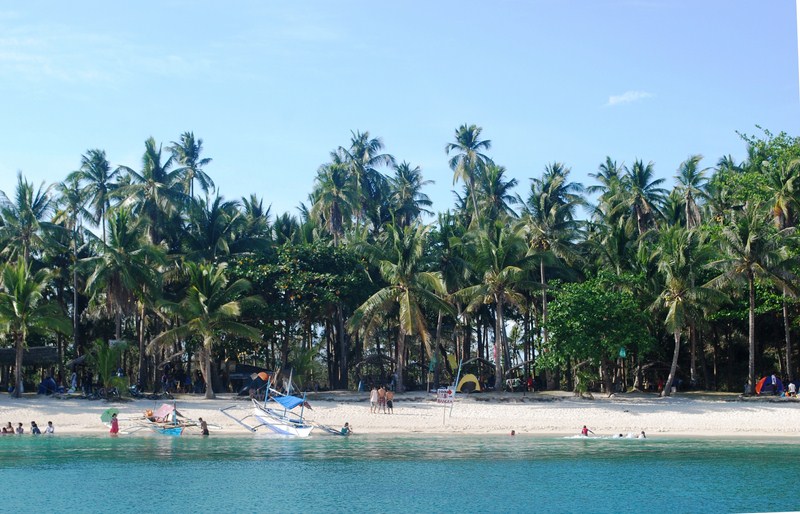
The Pagbilao Islands, also called Pulo Island, are a lovely pair of islands (Pagbilao Grande in the north and Pagbilao Chico in the west)  joined together by a 500 m. long, 200 m. wide (3 m. above sea level at its highest point) sandy isthmus called Tulay Buhangin (meaning “sand bridge”).  The main settlement (also called Tulay Buhangin) is located here.

On our way into the open sea

On our way into the open sea

Though part of Pagbilao town, the islands are more accessible by boat from Padre Burgos.  Bounded by Laguimanok Bay in the north and east and Tayabas Bay in the west, the islands are 100 feet above sea level on a promontory overlooking Padre Burgos town to the east.  This ancient and still developing coral rock formation has numerous coves, caves cliffs and a hilly interior with clumps of giant yuccas and small, emerald forests.  There are also white sand beaches and rich fishing grounds.

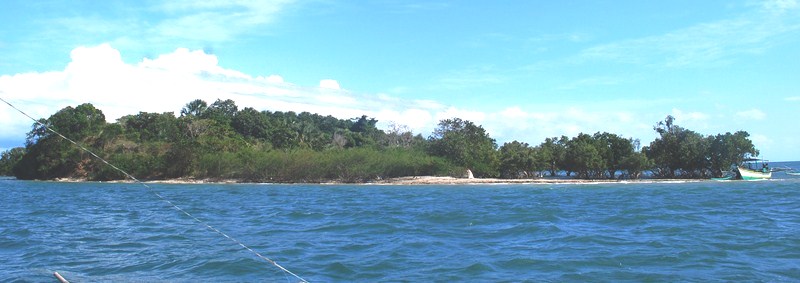
Patayan Island (Pagbilao Chico Island)

Patayan Island (Pagbilao Chico Island)

Around 30-40 mins. on our journey we passed Pagbilao Chico Island, also called Patayan Island.  It has a smooth stone beach and a single privately-owned beachhouse that can be rented out.  Its Bansilan Cave has cathedral-like dimensions.

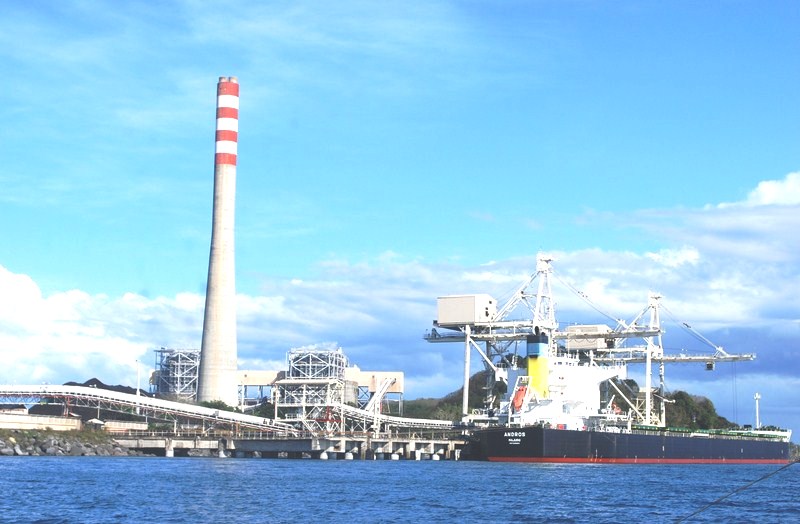
The Team Energy coal-fired thermal power plant

The Team Energy coal-fired thermal power plant

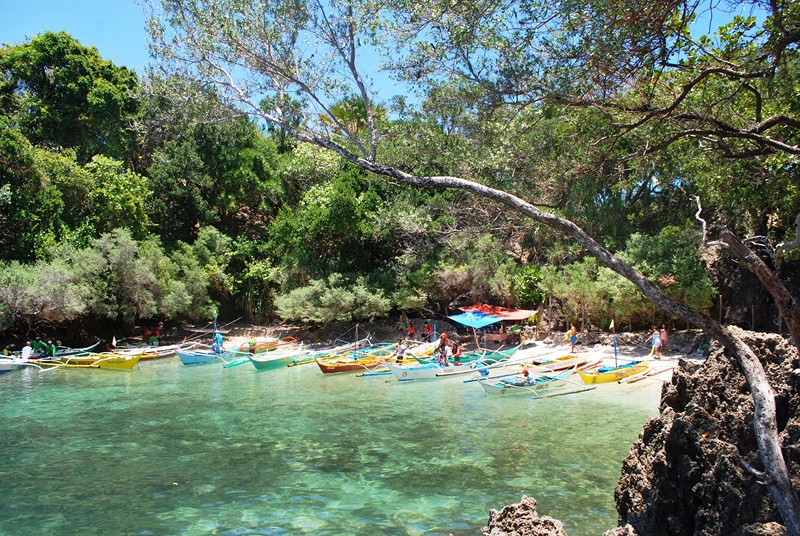
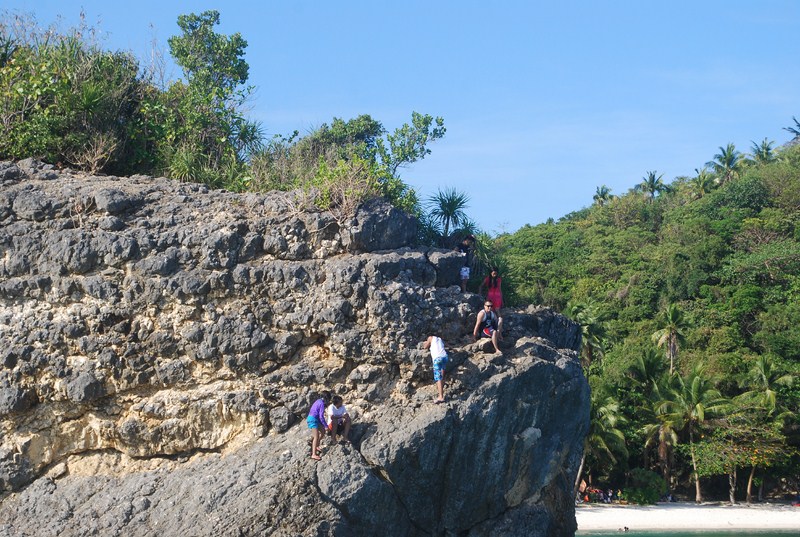
We next espied the tall chimney of 735-MW Team (Tokyo Electrification and Marubeni) Energy coal-fired thermal power plant.  During our visit, a  huge cargo ship was unloading coal at the power plant.  The plant is the landmark for those taking the land route to Puting Buhangin Beach. Turning a corner past the power plant, we were greeted by beautiful rock limestone formations and Kwebang Lampas and, past it, the beautiful cove with white sand Puting Buhangin Beach with its clear emerald waters and coconut trees.

Puting Buhangin Beach

Puting Buhangin Beach

The 70 m.  long and 10 m. wide white sand Puting Buhangin (which literally means “white sand”) Beach, with Kwebang Lampas at one end, is located in Brgy. Ibabang Polo at the southwestern part of Pagbilao Grande Island.

Author at Puting Buhangin Beach

Author at Puting Buhangin Beach

We requested the boatmen to dock and, upon reaching the shore, Rannie and I  made for the beach. This private beach (also called Lukang Beach  after the Lukang family), available to the public on day trip visits (PhP100 entrance fee), was filled with people during our visit.  Some were staying on native picnic huts (rented for PhP300-500); others pitched tents along the beach, while others just availed of the shade of coconut trees.

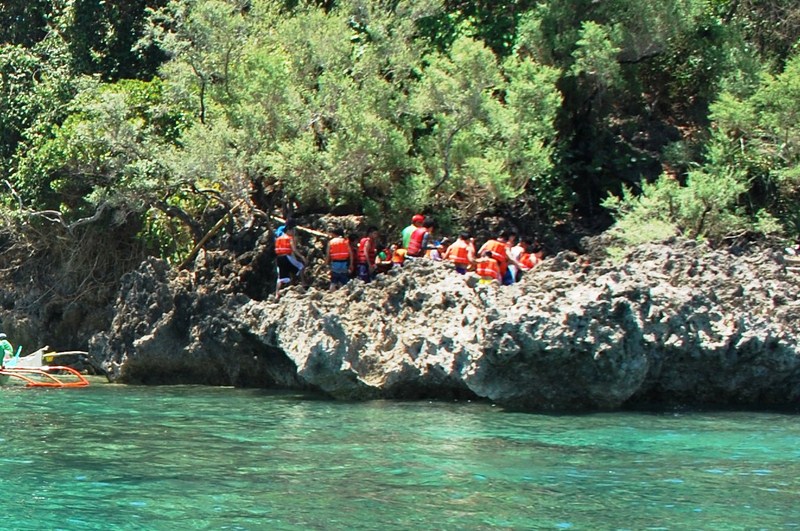
Visitors making their way to the beach via the power plant and limestone formations

Visitors making their way to the beach via the power plant and the treacherous limestone formations

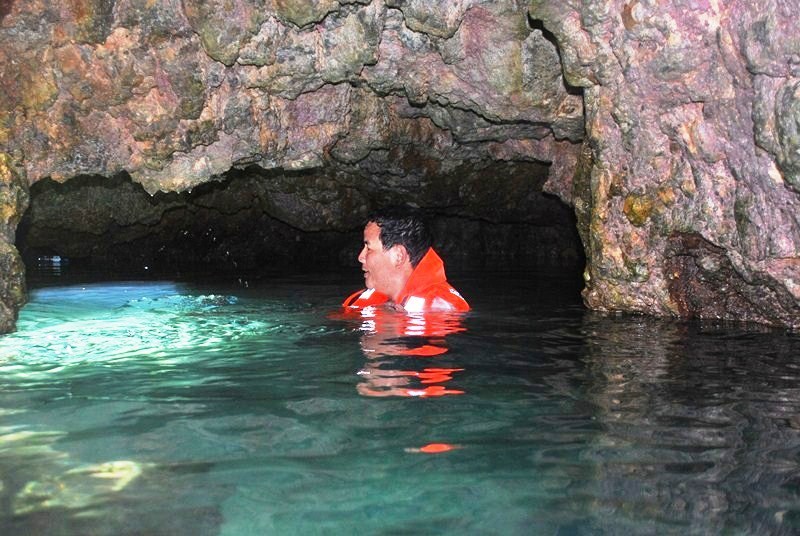
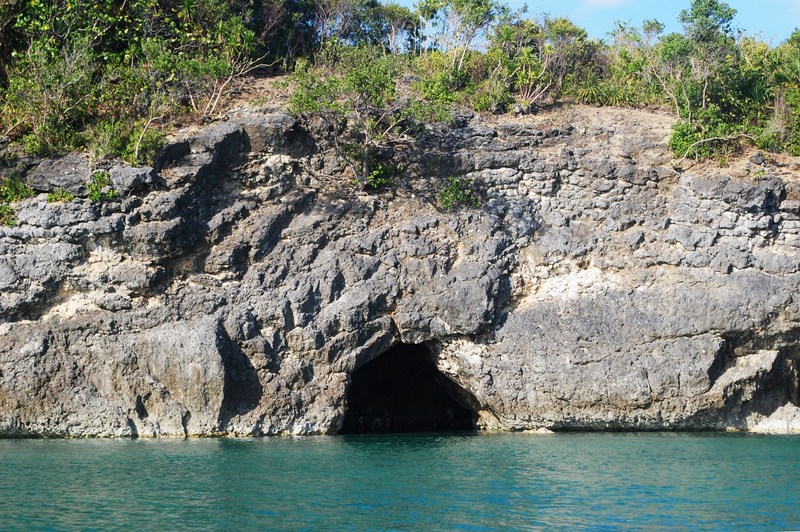
Other destination, though, was the small, unique cave right at the edge of the cove famously known as Kwebang Lampas whose opening we saw on the way to the cove.  Walking along the beach, we reached the foot of the limestone formation and carefully negotiated the rocks to the entrance of this easily explored, tunnel-like cave.   We could see the cave’s other opening at the opposite end.

Kwebang Lampas

Kwebang Lampas

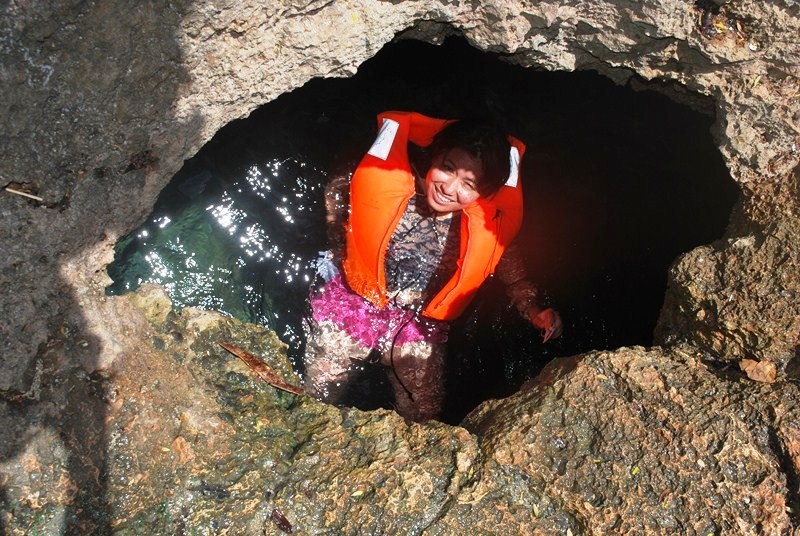
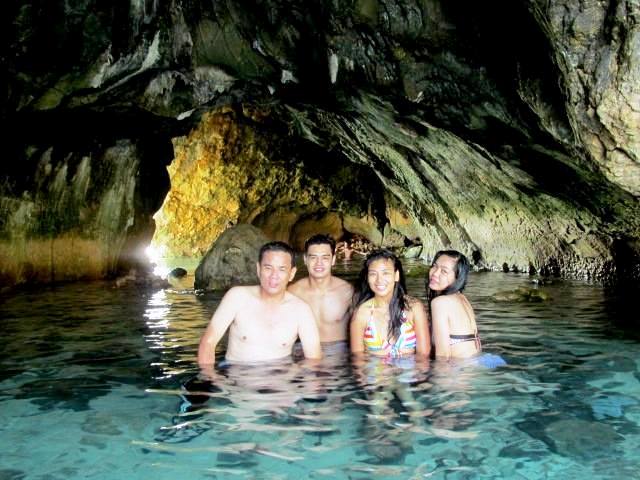
They say that the water at one end of the cave is freezing cold, while water at the opposite end is warm, but I didn’t notice any difference.  Mel, Angela and Maichel soon joined us. After the usual photo ops, using Rannie’s camera, we made it back to the beach and our boat, thoroughly sated with the adventure we just experienced.  It was with some feeling of regret that we  left the island back for the mainland.

The author, Maichel, Mel and Angela at Kwebang Lampas

The author, Maichel, Mel and Angela at Kwebang Lampas

Appsline Travel Services and Consultancy: Phase 2, Krisanta Village, Brgy. Bukal, Maharlika Village, Pagbilao, Quezon.  Tel: (042) 716-0067.  Mobile number: (0922) 633-0363 (Ms. Lurhen T. Cortes). E-mail: yvette_24@yahoo.com andappsline0305@gmail.com.

Spelunking at Maanghit Cave (Libertad, Antique)

After our banig making demonstration, we again boarded our van as we headed for Brgy. Union, the jump-off point for our hike to Maanghit Cave, located inland, 4 kms. north of Libertad. The  cave entrance is located near the river.

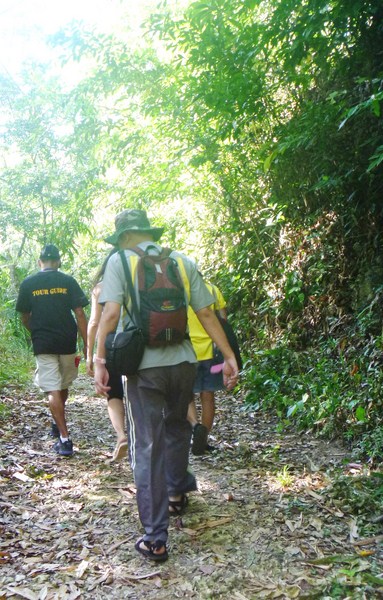
Trekking the well-trodden trail to Maaghit Cave

Trekking the well-trodden trail to Maaghit Cave

The local word maanghit, meaning “having a foul odor,” comes from the foul smell of the huge deposits of guano (bat droppings) which fall on the cave’s floor and are mined by the townspeople.  That said, we were in for a muddy and slippery tour.

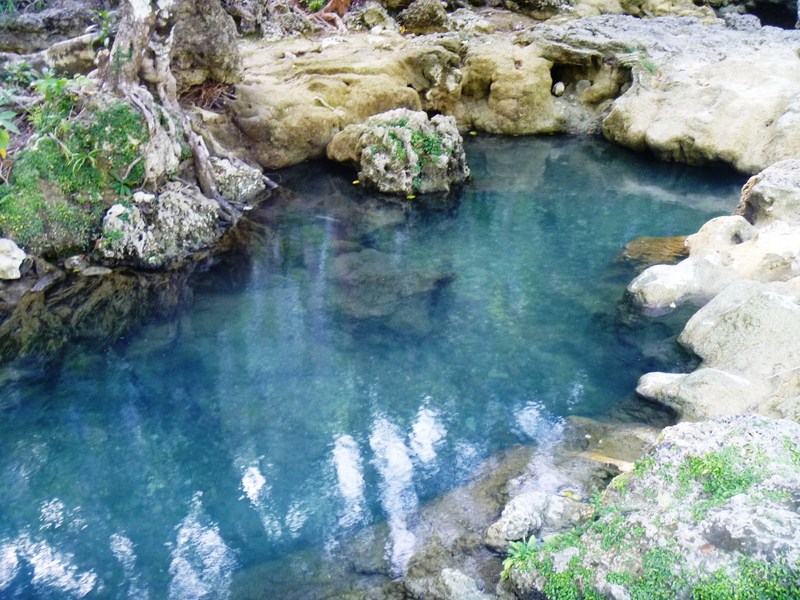
Bungan-Bungan Spring

The blue lagoon at Bungan-Bungan Spring

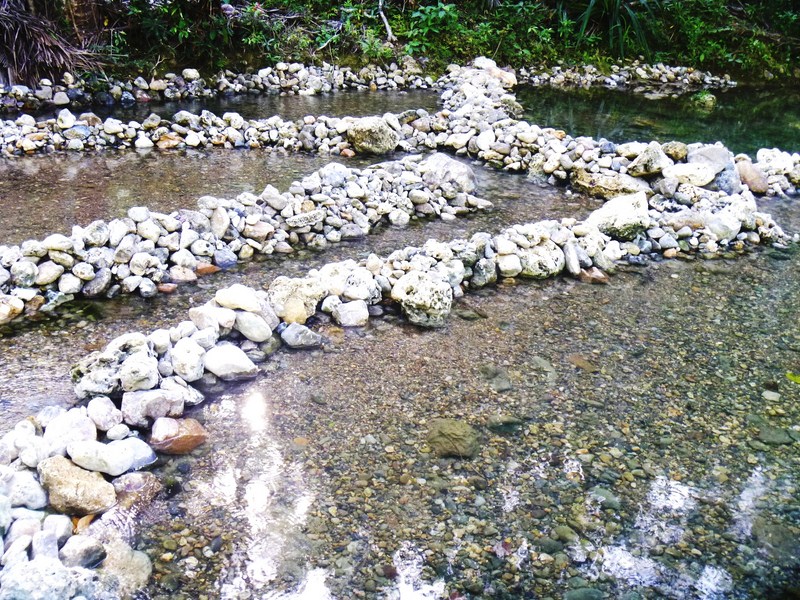
Series of pools at Bungan-Bungan Spring

Series of crystal clear pools at Bungan-Bungan Spring

Upon arrival, we were all assigned local guides equipped with hard hats and flashlights.   No hard hats for us though. It’s a good thing Jandy and I wore hats to protect our heads.  Just 5 mins. into our hike, along a well-trodden trail through a light forest,we arrived at Bungan-Bungan Spring.  It has a blue lagoon and a series of small pools of crystal clear water walled in with stacks of river rocks.

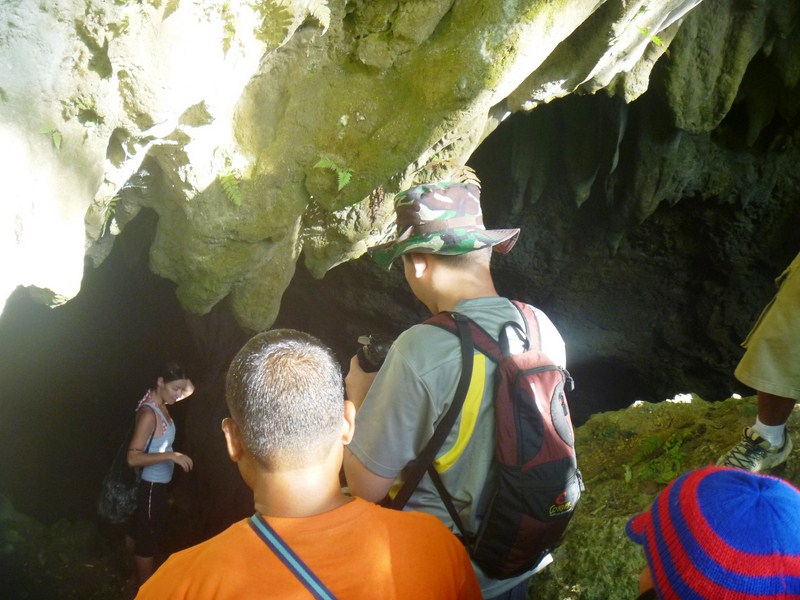
Entering the low cave entrance

Entering the low cave entrance

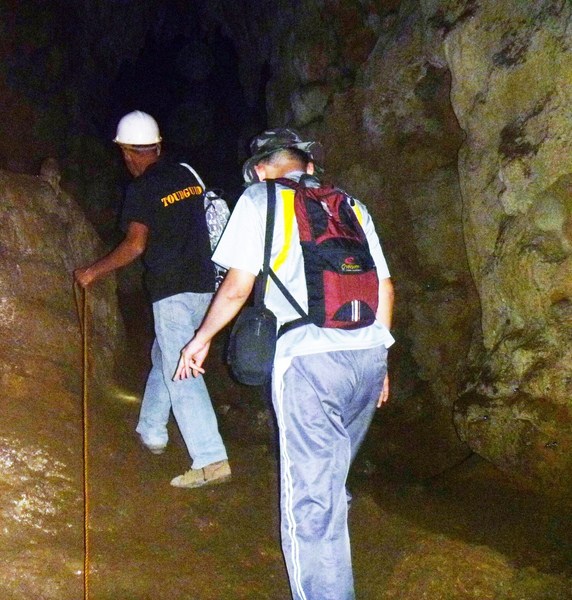
Into the recesses of the cave

Into the recesses of the cave

We again proceeded on our trek to the cave, passing as well as hopping over a number of forest trees felled by the fury of Typhoon Yolanda (international name: Haiyan) which struck the town.  After about 20 mins., we espied the low and wide cave entrance on the rock face which we accessed via carved steps and rope railings.

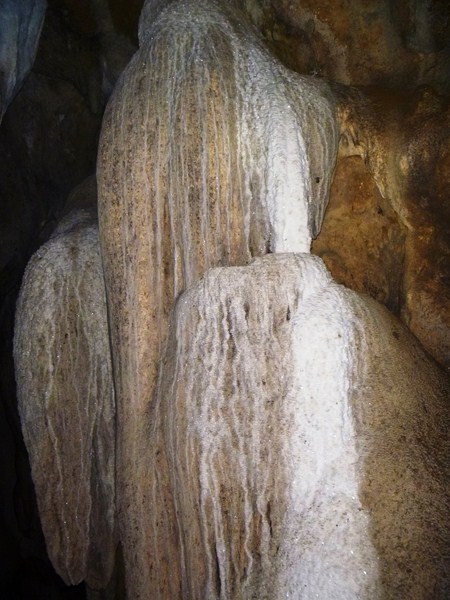
Flowstone formations

Flowstone formations

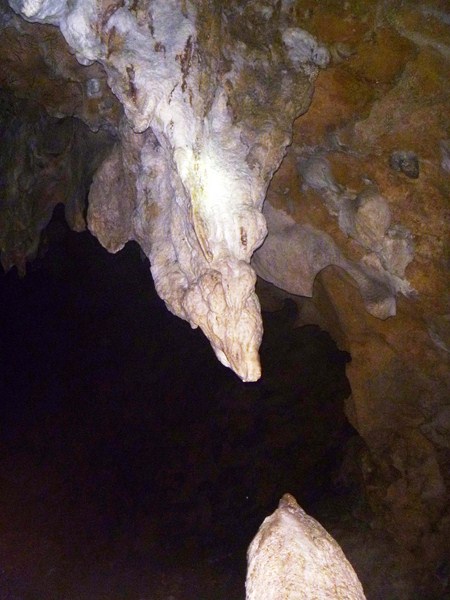
Maanghit Cave is not big nor is it deep (just about 250 m. in depth) and it would just take us a few minutes to explore the cave until its terminus.  How I wish we carried Petromax lamps, not the flashlights we brought, to light our way better as well as illuminate the stalactite and stalagmite formations which, somehow, still continuously drip water.

A stalactite and stalagmite bout to meet (in a million years) to form a column

A stalactite and stalagmite about to meet (in a million years) to form a column

Though largely unseen, the sounds of bats congregating on the ceiling could easily be heard. Near the cave entrance are two small sinkholes where, when lighted, you hear and see running water, evidence of a small underground river within the cave itself.

A sinkhole with flowing water underneath

A sinkhole with flowing water underneath

After our spelunking tour of Maanghit Cave, we made our back to Bungan-Bungan Spring where we washed off the guano and its smell from our bodies. We then continued on our way back to Brgy. Union where we again boarded our van for the trip back to town.

Enchanted Cave (Bolinao, Pangasinan)

Enchanted Cave

After our Solomon’s Paradise sojourn, we next proceeded along the road to Enchanted Cave, one of three caves (the others are Cindy’s Cave and Wonderful Cave) in Brgy. Patar in Bolinao.  Located in a private property it is, however, open to the public (in early 2000) but, you’ll have to pay an entrance fee of PhP30 if you’ll just look at the place and take pictures, and PhP40 if you’ll swim.  This was to be my second visit to the cave (the first was in March 2005).  The owner allowed us entry into the premises and, as we were in a rush, skipped the usual orientation by its staff. Along its paved walkway amidst a lush garden and huts, we noticed, mixed with the garden landscape, fossilized remains of giant clams discovered in the hilltop, 2 kms. from the cave, and estimated to be about 2-3 million years old.   The fact that it was a cave made of coral limestone is evidence that the place was under water for millions of years and that the beach head of Bolinao extended almost a kilometer from the current beach line.

Fossilized clams

We then carefully went down, through a small opening with paved steps and railing, to the cave’s 30-m. freshwater (which some say is unusual for a coral cave) pool with cool and crystal clear water. Adequately lit, it was very humid and musty inside.  According to the caretaker, the pool, connected to an underground river, has depths of 3-6 ft., during low tide, and 3-10 ft. during high tide.  Swimmers are restricted by management from entering certain areas clearly marked by ropes.  Some scenes in the 1996 movie Ang Pinakamagandang Babae sa Balat ng Lupa (starring Ruffa Gutierrez) and the popular 2008 GMA 7 telenovela Dyesebel (starring Marian Rivera and Dingdong Dantes) were shot here.  Actor Piolo Pascual was also said to have visited the cave.

Enchanted Cave: Brgy. Patar, Bolinao, Pangasinan.

Reminiscing in San Miguel de Mayumo (Bulacan)

Church of St. Michael the Archangel

We were now on the final leg on our Lakbay Norte 2 tour and our final destination was the marble quarrying, first-class municipality of San Miguel de Mayumo, a town rich in history within the equally historic province of Bulacan.   Our special Victory Liner bus first dropped us off at the Church of St. Michael the Archangel where we were welcomed by Mr. Jose G. Clemente and Ms. Amelia Aquino, both of the Bulacan Tourism Convention and Visitors Bureau (BTCVB); Mr. Jimmy Corpuz, head of the National Historic Conservation Society; and municipal tourism officer Ms. Divina Quetua.  This Baroque-style church, with its statue of St. Michael the Archangel slaying the dragon at the center panel of the pediment, was built (or rebuilt) in 1848 by Fr. Juan M. Tombo and was completed in 1869 by Fr. Francisco Arriola.  Maximo Viola, the financier of the printing of Rizal’s Noli me Tangere, is buried in a vault within the church.  After the church tour, we all cross the street to pay a courtesy call on Mayor Roderick Tiongson at the municipal hall (built in 1874). 

Simon Tecson Mansion

Being an hour behind schedule, we had no time to tour, on foot, San Miguel’s 25-30 ancestral houses (the town is called the “Vigan of Bulacan”) scattered around the town proper as we had to drop by Biak-na-Bato National Park, site of the Biak-na-Bato Republic.  These bahay na bato were built with different styles of architecture and colors during the Spanish and American eras, all existing testimonies to the abundance and prosperity of the past. Instead, we did a slow tour via our bus, along the town’s narrow streets, with Mr. Clemente commenting on each house we passed. In the past, landed barons running haciendas in Central Luzon built their grand residences or vacation houses in San Miguel de Mayumo where they hosted lavished parties or soirees.

Bahay Paniki Cave

We arrived at the 2,117-hectare Biak-na-Bato National Park by 5 PM.  Our 1-hr. tour took us past Gen. Aguinaldo Cave (Emilio Aguinaldo‘s headquarters in 1897 and site of the Biak-na-Bato Republic) all the way up to Bahay Paniki Cave, located upstream from the Balaong River.  Probably the largest cave in the area, the cave has a rather deep natural indoor swimming pool fed by an underground stream.  Thousands of fruit bats fly in and out from dawn and dusk but we were not to witness this as approaching darkness would make our return trek difficult.

Lakbay Norte media group with BTCVB

It was already dark when we returned to the park’s new pavilion for a snack of ensaymada (a brioche made with butter and topped with grated cheese and sugar) and arroz caldo (a rice porridge flavored with chicken)  After a short press briefing and photo ops, we all returned to bus for our 2-hr. return trip to Manila.  However, the grateful town and its people wouldn’t let us go without bringing home some pasalubong of the town’s famous delicacies.  Waiting for us at the bus were pastillas de leche (delicious, mouth-watering candy made from sugar and pure carabao’s milk), tableya (old fashion Philippine chocolate), minasa (cassava cookies), yema balls (a sweet custard candy made with condensed milk and egg yolks) and chicharon (fried pork crackling). 

Bulacan Tourism Convention and Visitors Bureau (BTCVB): c/o Ciudad Clemente Resort, Paombong Bulacan.  Mobile number: (0927) 669-5655. E-mail: joclemente01@yahoo.com.

Batu Caves (Selangor, Malaysia)

From the Royal Selangor Pewter Factory, we returned to our van and moved on to nearby Batu Caves, a series of caves and cave temples within a limestone hill. One of the most popular Hindu shrines outside India, the caves, discovered in 1892, are located 13 kms. (7 miles) from Kuala Lumpur.

Lord Murugan Statue

Outside the main cave is the world’s tallest statue of Lord Murugan (a Hindu deity for whom the temple is dedicated), standing at 42.7 m. (140.09 ft.) high. Costing nearly 24 million rupees, it is made of 1,550 cu. m. of concrete, 250 tons of steel bars and 300 liters (800 gallons) of gold paint brought in from neighboring Thailand.

The Magnificent but Quite Steep, 272-step Stairway

Me, Grace and my kids Jandy and Cheska all gamely climbed the magnificent but quite steep 272 steps (luckily there were landings along the way where we can catch our breath and admire the view at the same time) leading up to the 100 m. high and 400 m. long Cathedral Cave (or Temple Cave), the main cave (there are 2 others) where the Murugan Temple is located.  The huge chamber is lighted by daylight from several holes in the ceiling.
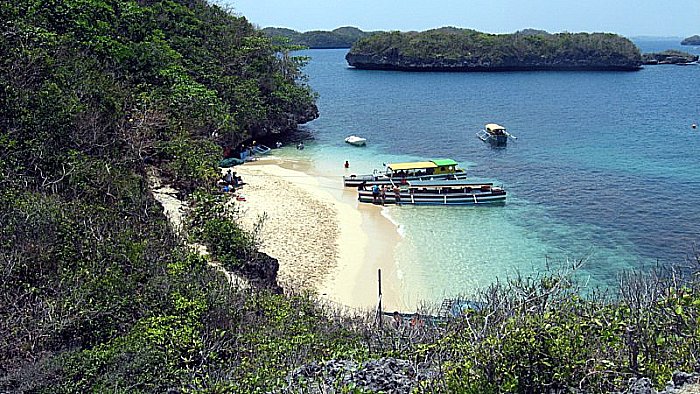
Cathedral Cave (or Temple Cave)

Along the steps and within the cave are numerous, naughty, playful and sometimes aggressive long-tailed macaque monkeys. The temple is the focal point of the colorful Thaipusam (on a full moon day between January 15 and February 14), the annual Hindu festival of repentance.

Lord Murugan Temple

Batu Caves: Gombak District, Selangor, Malaysia.  Tel:  +60 3 2287 9422.

How to Get There: The easiest way to get to Batu Caves is by Komuter train (RM2.00, one way) from KL Sentral station. You can also take a taxi (RM20.00-25.00) from KL Sentral, the Bus 11/11d from Bangkok Bank Terminus (Near to Pudu Raya Terminus) or Bus U6 from Titiwangsa.

Return to the Hundred Islands (Alaminos City, Pangasinan)

View of Islands from View Deck

The last time I’ve been to the Hundred Islands in Alaminos City, Pangasinan was way back March of 2005, Holy Week with son Jandy and 2 lady friends, and we only got to explore 3 of its islands, camping overnight at Marta Island. I considered this a poor batting average considering that there are 127 of these granite and scrub-covered islands and islets, a number of them having white sand beaches.  Again it was Holy Week and this time I, together with Jandy and daughter Cheska, found ourselves in Pangasinan, staying at El Puerto Marina Resort and Spa at the provincial capital town of Lingayen.  The resort offered day tours to the islands and we decided, especially Cheska who was a first-timer to these islands, to join the tour.  Our group included Fil-American Ms. Katrina Nogoy and Malaysian-American Ms. Janet Jun Siew Loh, both visiting school teachers from Japan.  Our guide was resort employee Mr. Viramel “Ram” Velasco. 

Lucap Wharf

The trip, via a van driven by Mr. Nixon Fernando, to Brgy. Lucap, take-off point to the islands, took all of 1 hour. Again, it being a long holiday, the wharf and every island with a white sand beach was packed with tourists.  Although I brought a 5-pax tent with me to Lingayen, camping on an island was out of the question.  However, we decided to explore beyond the normal tourist boat route which only included the partially developed Children, Governor’s and Quezon Islands, this time including the other outlying but interesting islands, paying a hefty PhP800 to do so.  While waiting for our boat, I made a short visit to Lucap’s Marine Museum which has a collection of corals and other marine life.  This 1,844-hectare national park, declared as such on January 18, 1940 through Proclamation No. 667, is believed to be the second largest marine reservation in the world with 2,000 species of marine life.

Lucap Wharf Marine Museum

The whole park can be readily covered, even by a slow banca, in half a day.  Most of the islands we passed are small (the smallest being less than 20 sq. m.), heavily-undercut at the base and have an elevation of 20 m. .  Many do not have trees to shade you from the sun and do not carry a name.  Some that do carry names are fancifully named after luminaries in the country (Marcos Island, Romulo Island, Quezon Island, etc.) while others are named after plants and animals that they resemble (Mushroom Island, Turtle Island, etc.).  An interesting photo opportunity was Cathedral Island, so named after its cathedral-like, fruit bat-inhabited cave with domed rock formations.  

Cathedral Island and Cave

Our first stop was Governor’s Island.  The island had white sand beaches on both sides but lolling around at the packed beaches wasn’t yet in our agenda.  Instead, all five of us decided to climb up the top of the island which, unlike 5 years ago, now had paved stairs and roped railings leading to a concrete view deck with railing (and packed with tourists).  What hasn’t changed, though, was the magnificent and panoramic view it afforded of this mini-archipelago said to have been formed from the tears of a prehistoric lovelorn giant who pined for his lost lady love.   The island also has a not-too-deep, sea-sculpted cave.

Marcos Island

Our next and longest stopover was Marcos Island.  Marked by mermaid statues, the island consists of 3 mounds, a 70-foot drop-off, a nice white sand beach (difficult to land on when the waves are high) and a helipad on the smaller dome.   From the beach, a well-marked trail, on the left, leads to the top of the island where its chief attraction is the bat-inhabited Imelda Cave which can be peered down from a blowhole above. Here, the adventurous and brave could climb down a wooden stairs to a ledge where they can cliff dive to the sea below.    

Waiting in line for our cliff dive
All five of us took a shot at it but the visibly scared Katrina and Jandy (although he knows how to swim) donned life vests just in case.  Upon hitting its suitably deep waters, we swam or clung to the cave walls, out to the cave mouth and back to the white sand beach.  Although Janet and Katrina only tried it once, we liked it so much that we went back for second shots (Cheska tried it thrice).  With our adrenaline rush sated, we finally settled down to lolling around in the rock-shaded portion of its beach. 
Cheska taking the plunge

It was now noontime and, after this exciting but adrenalin-sapping exercise, we were visibly hungry, our previous meal being an early breakfast at the resort.  We got back to our boat and proceeded to Quezon Island (at 25 hectares, the largest in this mini-archipelago).  This most frequented island was truly packed to rafters with tourists as it had, aside from its white sand beach, a pavilion for guests, stores (where one could dine) and toilet and bathing facilities (for a fee).  Again, it being a holiday, prices of goods bordered on the cutthroat but, hungry as we were, still ordered cooked Spam (at PhP250, twice that in Manila) plus rice (at PhP25 per cup) washed down with half-liter bottles of water (at PhP60).  The island also has a nursery for giant clams (locally called taklobo), a demonstration site for 300 clams dispersed here and at Children’s and Governor’s Islands, and all monitored on a regular basis. These, as well as the corals and mangroves, were rehabilitated through a program called “Marine Biodiversity Enhancement,”  a project of the Philippine Tourism Authority (PTA), the University of the Philippines Marine Science Institute (UPMSI) and the Marine Environment and Resources Foundation (MERF). 

Cuenco Island and its Cave
Backed at our boat, we passed by, but did not land, at the similarly packed Children’s Island which has a walkway and a calm, nearly wave-free shoreline suitable for children (hence its name). Cuenco Island, also called Quinco Island, was our last stopover.  This interesting island has two white sand beaches, on two sides, and a huge cave that passes through its center. 

Dicasalarin Cove (San Luis, Aurora)

After lunch, the Sen. Angara invited us to explore the compound and climb the hill.  We were particularly impressed by and enjoyed exploring the compound’s Ifugao Village, a mini-complex of quaint Ifugao-inspired cottages.  

View of Dicasalarin Cove from Lighthouse Hill

Then, with some guides, we decided to explored the cove itself, its stunning beauty as rough as the continually crashing waves of the Pacific Ocean.  Its beauty remains so as there are no resorts and visitor facilities along the beach.  Instead, scattered along this cove are unique rock formations, each with a unique charm of its own.

Unique rock formations at Dicasalarin Cove
Exploring the cove

On the right side of a peninsula we discovered a sea-sculpted cave and did some swimming inside.  This short cave, seemingly accessible only during low tide, is well-lighted as it is open on both sides of the mountain.

Exploring the sea-sculpted cave

Nearby is Birhen Island, a rock formation sculpted by natural erosion to resemble the figure of the Blessed Virgin praying amidst the pounding waves. On our way back, we then climbed a steep imposing hill, the site of the senator’s future lighthouse.

The route up Lighthouse Hill
The gang’s all here

Steps, with ropes tied to wood posts as railings, were cut along the hill to provide access.  The 15-20 min. climb was exhausting but the rewards were great when we reached top as we had a panoramic and breathtaking, 360 degree view of the cove, the Sierra Madre Mountains, sheer cliffs and the pounding waves of the Pacific Ocean.  The way way down was easier but harder on the heels.  Back on the beach, we gave our tired bodies a break with a brief but welcome frolic at the sea.

Relaxing along the beach after a tiring trek

Returning to the resthouse, we met up with Ms. Alexandra “Alex” Angara, the London-educated daughter of the senator, and her boyfriend Joseph “Joe” Cole and her pet dog Huckleberry.  Alex invited us to stay the night and we were really tempted to accept the offer.

With Alex Angara (third from left)

However, we only planned our visit as a day trip and didn’t bring enough clothes.  Besides, we had to leave very early in the morning for our long-haul return trip to Manila.    Thus, it was with some difficulty that we declined the invitation.

The beauty that is Dicasalarin Cove

After washing up, Alex graciously accompanied us to the beach where our speedboat was waiting to bring us back to Cemento.   Truly, our visit to Dicasalarin Cove was the piece de resistance to our 4-day visit to the beautiful province of Aurora.

How to Get There: As the cove is privately-owned, you have to secure a gate pass (PhP300/pax) at Bahia de Baler Garden Resort before heading for the cove.  The cove is open for guests at the resort.  By land, you can get there in 30 mins. by car via a steep (too steep for a tricycle) and narrow  road with scenic views of the cove.  By sea, you can charter a motorized boat at Sabang.  The trip takes 45 mins.

Dauis (Bohol)

On the way back to the resort, we proceeded to Dauis town in Panglao Island and made a short stopover at the Church of the Assumption of Our Lady.   This church, the fifth on the site, was started in 1863 by Recollect Fr.  Julio Saldaña (1861 to 1898) but the façade’s first level was only completed in 1879 and the second level in the early 1920s by Fr. Natalio del Mar. The church’s façade is a mixture of Gothic and the ornamental Neo-Classical styles.  The bell tower was built from 1938 to 1939.   The church was built on a site of an old cemetery from which high quality China tradeware, used as grave furniture, has been recovered.  I didn’t see the church’s interior as it was closed during our stopover.

Church of the Assumption of Our Lady

Our last stop was at Dauis’ Hingadanan Cave in Brgy. Bingag, located 10 kms. from Tagbilaran City.  After paying a PhP5 entrance fee, we descended the cave via a small, narrow opening, with paved concrete steps, leading to a dark, cavernous chamber studded with stalactites and stalagmites.  The air within was pungent and humid.

Check out “Hinagdanan Cave

Once inside, we beheld its natural, refreshingly cold swimming pool fed by an underground spring.  Two natural skylights, on the cavern’s roof, illuminated this eerie setup.  Kids, obviously delighted with the cool dip, were frolicking in its waters under the watchful eyes of their guardians.

Biak-na-Bato National Park (Bulacan)

Biak-na-Bato National Park

I got an invitation from Jesu-Mariae School (JMS), my son Jandy’s school, to join an outbound education demonstration tour for teachers at Biak-na-Bato National Park in Bulacan sponsored by Lakbay Kalikasan and I promptly accepted.  Five JMS teachers were to accompany me – Ms. Ofelia “Openg” E. Bermas, Ms. Maritess H. Dimaranan, Mr. Robert V. “Rob” Castañeda, Mr. Joel P. Fatlaunag and Mr. Ronnie Boy R. Lansangan.   

The Balaong River

We left Manila fittingly on April 9, Araw ng Kagitingan, and were picked up, by 5 AM, at the EDSA Shrine by a Lakbay Kalikasan-chartered airconditioned tourist bus.  In all, there were 48 of us from different schools.  Our Lakbay Kalikasan hosts were Ms. Rosa-Vina S. Prudente (Team Leader and Lecturer), Mr. Ryan Viado (Team Leader 1), Mr. Roger Quizol (Team Leader 2), Ms. Hanna Garcia, Mr. Bobby Estrebillo and Mr. Joel Garalde.  We arrived at Biak-na-Bato by 9 AM after a 3-hr. trip (including waiting for latecomers, a stopover for breakfast and calls of nature) via the North Luzon Expressway (NLEX), exiting at Sta. Rita/Baliwag Exit.  Then, from the National Highway, we headed towards Plaridel and Baliwag. At a Y intersection 7 kms. from San Ildefonso, we took the road to the right then,  about 1 km farther, another right at another intersection leading straight to Biak na Bato.

Yungib 2 Cave

This 2,117-hectare National Park, site of Gen. Emilio Aguinaldo’s Biak-na-Bato Republic, covers a large part of San Miguel de Mayumo and parts of San Idelfonso and Doña Remedios Trinidad (DRT).  Its attractions are its series of 16 major caves, some unexplored, that lies at the rocky foothills of the Sierra Madre Mountains. The park is bordered by a small mountain range (the 432-m. high Mt. Nabio, the 422-m. high Mt. Susong Dalaga and the 380-m. high Mt. Silid) in the east and the Balaong River in the west.   It also has low, 140-m. high, rolling hill lands.  Also within the park are Brgys. Biak-na-Bato, Kalawakan and Sibul. The park has two areas: the easily accessible Front Country and the undeveloped and hard to reach Back Country.  

Yungib 3 Cave

It seemed that we weren’t literally going for a walk in the park as our bus entered the Back Country. There are 3 trails leading to the Back Country and its rarely-visited caves.  The trail we chose was well-marked. It starts directly across the Balaong River from the park entrance and proceeds over hills towards Mt. Silid.  We are to explore several semi-caves and at least one pit cave.  From a trail branch to the top of Bahay Paniki Cave, we can also explore 2 more caves without spelunking gear.

Yungib 1 Cave

Reality meets history at this trail as we were going to walk under the blazing heat of the sun through an unpaved, poorly shaded and dusty trail as our Katipunero ancestors did over a century ago.  No pain, no gain.  However,we had the luxury of doing some stretching exercises before our hike. Accompanying us was park guide Mr. Patricio Garcenilla.  Our nostalgic 2-hr. trek took us to 4 caves – Yungib 2, Yungib 3, Tangapan Cave and Yungib 1. The first 3 were naturally lighted and all had at least 2 entrances.  In every cave, we were given a historical overview of what each cave served.  Yungib 2, the so-called Pagamutan (“infirmary”), was, in the past, the nearest cave from the battlefield. Here, in this makeshift hospital, our Katipunero ancestors sought medical help for battle wounds.  Yungib 3, on the other hand, served as the Katipuneros’ storage for weapons, food and other war necessities.

Tangapan Cave

Tangapan (“meeting place”) Cave, near the third trail’s start, was where Gen. Aguinaldo first made contact with other revolutionaries.  Its well-lit main chamber is accessed by a front and back entrance.  A small tunnel, leading to the river, requires the use of helmets and lights for exploring.  Our final destination, Yungib 1, was the longest and the darkest of the four.  Called the “Ambush Cave,” here our Katipunero ancestors would lie in ambush as they waited for pursuing Spanish soldiers.  They escaped via a rear entrance.  We also made our “escape” via the same route, watching our heads as we groped in the dark.  In all 4 caves, we all said a prayer dedicated to our brave ancestors prior to departing. 

Gen. Aguinaldo Cave

After this nostalgic travel through time, it was back to our bus for a short drive to the developed Front Country.  The parking area before the entrance was filled with food stalls selling just about anything from snacks, maps and even souvenirs made from Biak-na-Bato limestone.  This time, we hiked along paved trails straddling the river to our designated picnic area.  Along the way, we passed (but didn’t explore) the Gen. Aguinaldo Cave and Cuarto-Cuarto Cave. Gen. Aguinaldo Cave, also called Biak-na-Bato Cave, was Aguinaldo’s headquarters in 1897 and site of the republic. The Pact of Biak-na-Bato was also signed here.

Bahay Paniki Cave

Once at the picnic area, we pigged out, kamayan style, on a feast of pork adobo, inihaw na talong (eggplant), tokwa (tofu), rice, and a salad of diced tomatoes, onions and salted eggs, all washed down with soft drinks or bottled water. Just when we felt like dozing off, a whistle blew signaling the start of more trekking.  Whatever we ate seemed to disappear as we traversed the paved, up-and-down (mostly up) trail to Bahay Paniki (“House of Bats”) Cave.  This easy-to-explore and well-lit cave is located upstream from the river.  Probably the largest cave in the area, it has a rather deep natural indoor swimming pool fed by an underground stream.  Thousands of fruit bats fly in and out from dawn and dusk.  The presence of these bats also meant the presence of guano (bat droppings), a sure source of income for the inhabitants.  However, it was a cause of concern for those of us who wanted to swim.  What the heck!  A number of us (including me), with or without life vests, dove in and enjoyed the cool waters.

Lakbay Kalikasan: G/F Balai Lakbay, 2 Alondras St., Mira-Nila Homes, Tandang Sora Ave., Quezon City, Metro Manila.  Tel: (632) 932-7818 to 19.  Mobile number: (0917) 500-4796. Website: www.lakbaykalikasan.com.

A Boat Tour Around Boracay Island

After lunch at Sea Lovers Restaurant along White Beach, Grace, my kids Jandy and Cheska and I opted to do something we haven’t done before in Boracay – going around the island by pumpboat.  Getting a tour was no problem, there are lots of operators going around White Beach offering this service.  All we had to do was haggle for a low price.  This settled, we boarded our boat along White Beach and were soon on our way.

Crocodile Island

Just off the southeast coast of Boracay, we passed by rocky Crocodile Island, so named because of its crocodile shape from a distance.  It has no beaches but is said to be a good snorkeling area and a popular venue for scuba diving.

The entrance of Crystal Cove

After 20 mins., our boat dropped anchor at the white sand beach in front of the welcome arch of Boracay Crystal Cove atTigwati-an Island.  This 2-hectare, privately-owned island, formerly called Laurel Island, is located just off Tabon Point, east of Boracay.

Resting along the island’s circumferential path

To explore the island and its caves, we paid an entrance fee (P75 per adult and P30 per child).The island had a circumferential cement path and, during our tour, we encountered statues of mythical characters. The island’s chief attraction are its 2 caves.

Posing among statues of mythical characters

One is located on a hill top.  There is also a small, 8-m. long cave at the tip of the island which is liberally covered with yellow and orange polyps.  The kids and I were excited to enter it but Grace opted to stay behind and just wait for our return.  The cave has a natural shallow pool on the side of the beach where we swam through.

One of the island’s caves

Back at our boat, we proceeded directly up north, near Yapak, to our last destination – the 800-m. long, blissfully deserted Puka Shell Beach (also called Yapak Beach). This beach, the island’s second longest, covers half of the northern tip of the island and ends abruptly at Lapuz-Lapuz Cliffs on the island’s extreme northern point. This most primitive and rugged part of Boracay has yellow, less fine sand and a stronger surf and a more abrupt change of depth than at White Beach.  We were careful when we swam there.

The blissfully deserted Puka Shell Beach
This beach was made famous by its heishi and shiny white (sometimes dotted with brown) Puka shells (actually part of the core of a shell), said to be the best in the world due to its luster and whiteness. Also found in Bali (Indonesia) and Hawaii, these shells were collected and stringed into fashion necklaces and bracelets and other jewelry in the 1970s and 80s.  Elizabeth Taylor once appeared in celebrity circles wearing such a necklace.  They are now very rare and the collecting, selling and buying of these shells are now prohibited by law.  However, women still collect, make and sell these jewelry pieces.  The beach also has a fine view of Romblon’s Carabao Island.
 
Boracay Crystal Cove: Tabon Point, Brgy. Caticlan, Malay, Aklan, 5608.  Tel/Fax: (036) 288-7482. Mobile number: (0918) 911-8134.  E-mail: info@crystalcoveisland.net. Website: crystalcoveisland.net and crystalcoveisland.com.