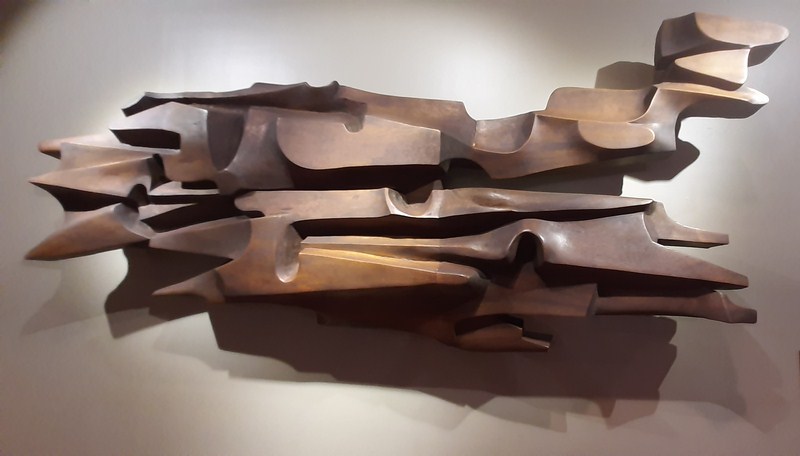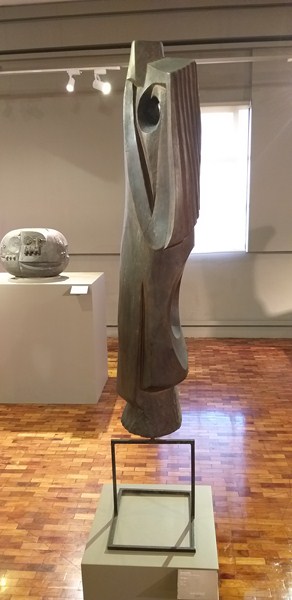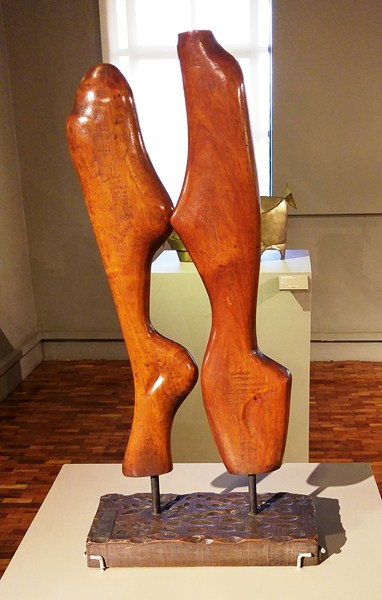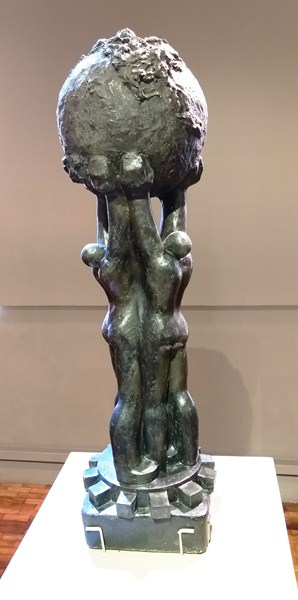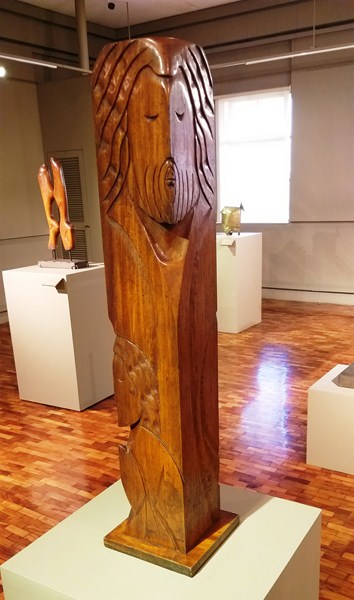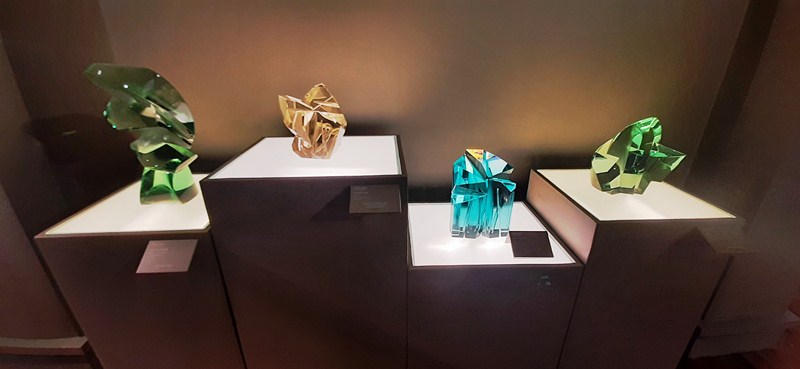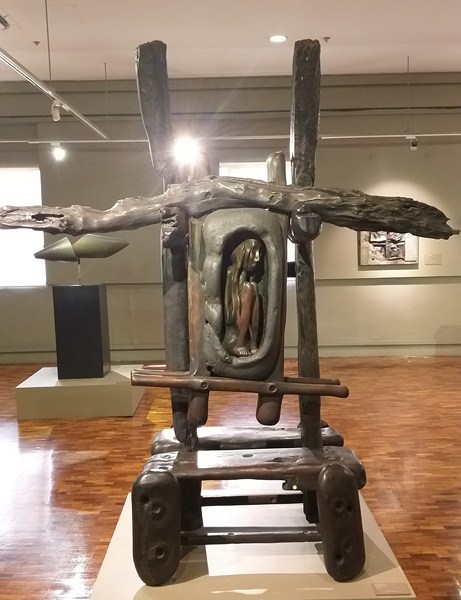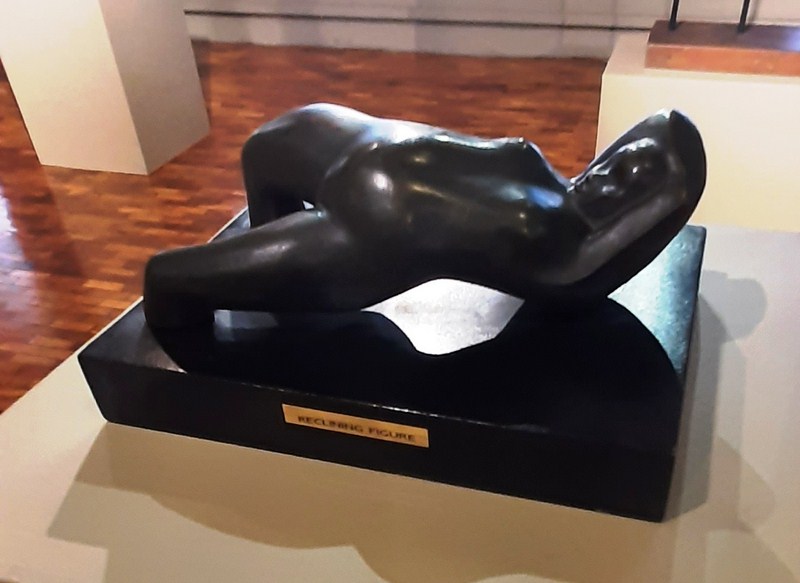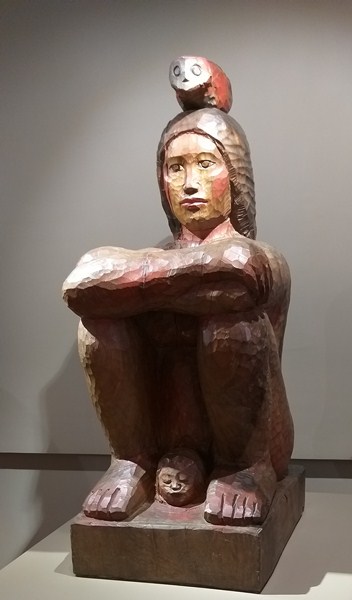
Vancouver Art Gallery (British Columbia, Canada)

Vancouver Art Gallery

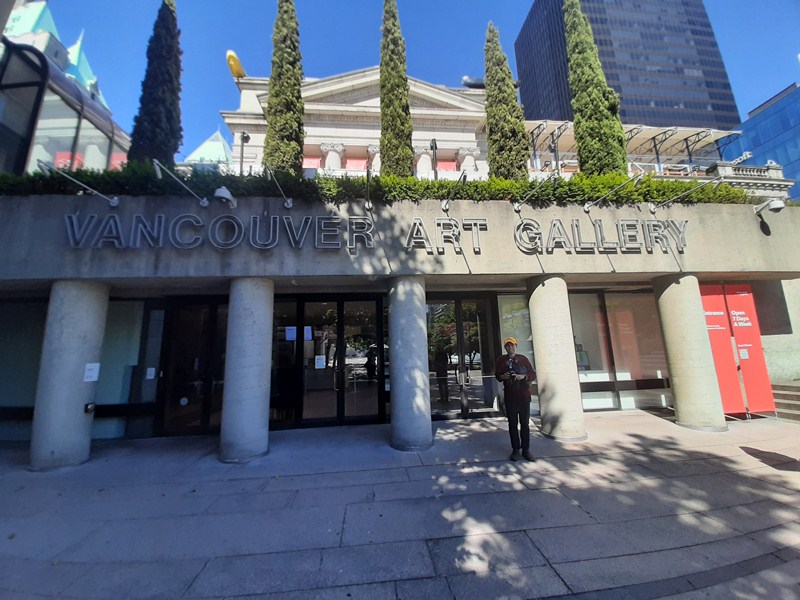
The 15,300 sq. m. (165,000 sq. ft.) Vancouver Art Gallery (VAG), the largest art museum, by building size, in Western Canada, serves as a repository of art for the Lower Mainland region. Its permanent collection consists of approximately 12,000 works (as of December 2018) by artists from Canada and around the world. Aside from exhibiting works from its collection, the museum has also organized and hosted a number of travelling arts exhibitions.The gallery connects to the rest of Robson Square via an underground passage below Robson Street.
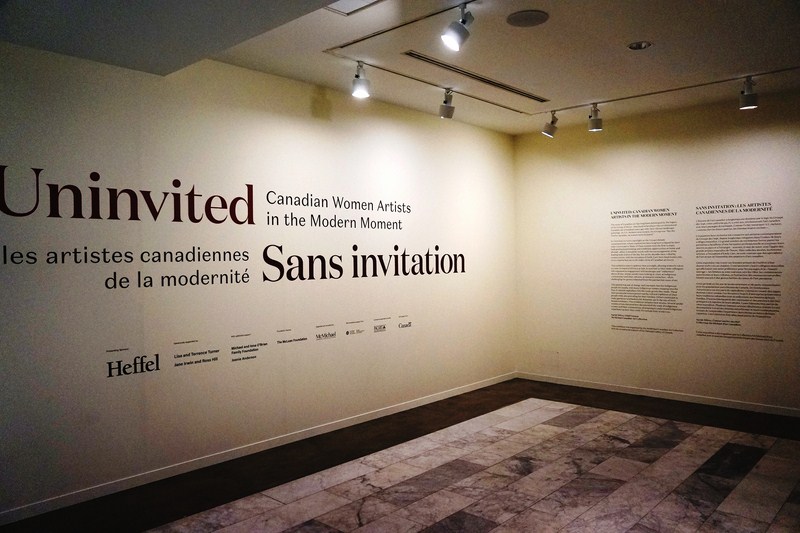
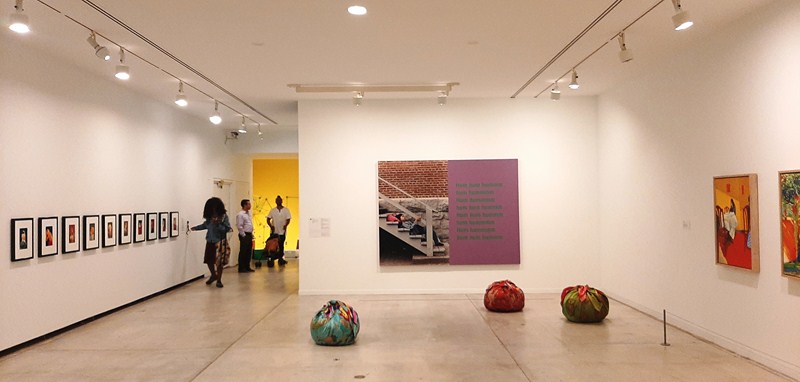
“Uninvited – Canadian Women in the Modern Moment” Exhibit

Here is the historical timeline of the museum:

  • In April 1931, in order to establish and maintain a museum for the City of Vancouver, the Vancouver Art Gallery Association was established under the provincial Society Act.
  • On October 5, 1931, the Association opened the art museum to the public in a building, designed by architectural firm Sharp and Johnston and costing approximately CA$40,000 to construct, at 1145 West Georgia Street. It featured four galleries (one of which included a sculpture hall), a lecture hall and a library. At the time of its opening, works exhibited at the museum were dominated by British, and other European artists.
  • In 1938, during a sitdown strike in the weeks leading up to Bloody Sunday, the museum was the one of the buildings occupied by unemployed protesters. Luckily, paintings were not damaged while the protesters occupied the building.
  • In 1950, the museum expanded its first building.To reshape the design of the building towards an International Style of architecture, the building’s Art Deco façade was removed. To accommodate the 157 works bequeathed to the museum by Emily Carr, renovations, costing approximately CA$600,000 (funded by the City of Vancouver government, and funds raised by Lawren Harris) were also conducted
  • In 1951, the building was reopened to the public.
  • In 1983, the institution was relocated to its present location, the former provincial courthouse adjacent to Robson Square in downtown Vancouver.It was renovated by architect Arthur Erickson, at a cost of CA$20 million, as a part of his larger three city-block Robson Square The Annex Building was the only part of the building complex that was not converted for museum use.
  • In 2004, a result from its need for more exhibition and storage space for its collections, plans to build a new building for the museum were undertaken.
  • In November 2007, the museum publicly announced plans to move, seeking approval from Vancouver City Council to build a new building at Larwill Park, a block formerly occupied by a bus depot on the corner of Cambie and Georgia streets.
  • In May 2008, the museum and the City of Vancouver government announced its intention to relocate to an area occupied by the Plaza of Nations.
  • In April 2013, the Vancouver City Council later reversed its decision, opting to approve the original proposed site in Larwill Park.
  • In September 2013, the museum formally issued requests for qualifications to construct the new building, receiving responses from 75 architectural firms from 16 countries.
  • In April 2014, the bid of Herzog & de Meuron (the first project for the architectural firm in the country) was selected by the museum.  Perkins and Will‘s Vancouver branch was contracted as the project’s executive architects. The cost to construct the building has been estimated to be CA$330 million, with the federal and provincial governments expected to provide CA$200 million, and the museum expected to raise the rest from public and private donors.  The building was originally planned to be completed in 2020. However, developments for the project stalled due to a funding dispute between the federal and provincial governments.
  • In November 2021, to help fund the new building, the museum received a $100 million donation (the largest cash donation to a public art museum in Canadian history) from Michael Audain.
  • As of November 2021, the museum still needed to raise another $160 million to fund the project.
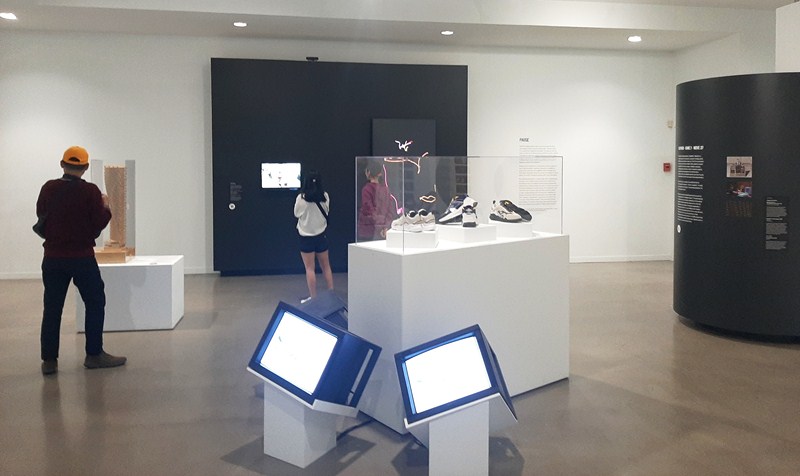
“The Imitation Game” Exhibit

The former provincial courthouse building, designed by Francis Rattenbury, after winning a design competition in 1905, was opened as a provincial courthouse in 1911, and operated as such until 1979 when the provincial courts moved to the Law Courts south of the building.  In 1980, the building was was designated as the Former Vancouver Law Courts National Historic Site of Canada. Both the main and annex portions of the building are also designated “A” heritage structures by the municipal government.

Check out “Former Victoria Law Courts Building

“Kids Take Over” Exhibit

It continues to be owned by the Government of British Columbia, although the museum occupies the building through a 99-year sublease signed with the City of Vancouver government in 1974 who, in turn, leases the building from the provincial government. The museum’s permanent collection is formally owned by the City of Vancouver, with the museum acting as the custodians for the collection under a lease and license agreement. Should the museum secure its relocation to its proposed site at Larwill Park, the museum would occupy the building under similar arrangements as the former courthouse, with the museum leasing the property from the City of Vancouver.
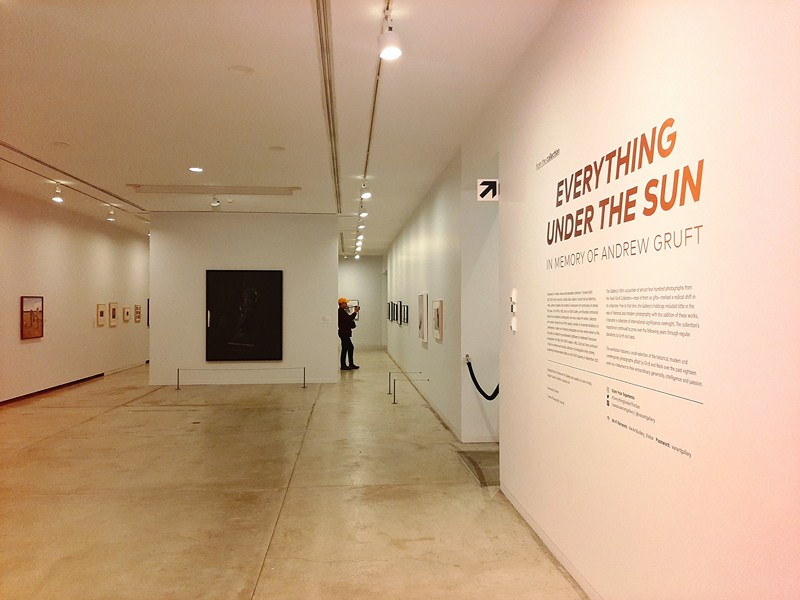
“Everything Under The Sun: In Memory of Andrew Gruft” Exhibit

The Vancouver Art Gallery has organized and hosted a number of temporary and travelling exhibitions. A select list of exhibitions held at the museum since 2005 include:

  • Brian Jungen (2006)
  • Monet to Dali: Modern Masters from the Cleveland Museum of Art (2007)
  • KRAZY! The Delirious World of Anime + Comics + Video Games + Art (2008)
  • VermeerRembrandt and the Golden Age of Dutch Art Masterpieces from The Rijksmuseum (2009)
  • Leonardo da Vinci: The Mechanics of Man (2010)
  • The Color of My Dreams: The Surrealist Revolution in Art (2011)
  • Collecting Matisse and Modern Masters: The Cone Sisters of Baltimore (2012)
  • Beat Nation: Art, Hip Hop and Aboriginal Culture (2012)
  • Grand Hotel: Redesigning Modern Life (2013)
  • Charles Edenshaw (2013)
  • The Forbidden City: Inside the Court of China’s Emperors (2014)
  • Unscrolled: Reframing Tradition in Chinese Contemporary Art (2014)
  • Cezanne and the Modern: Masterpieces of European Art from the Pearlman Collection (2015)
  • How Do I Fit This Ghost in My Mouth? An exhibition by Geoffrey Farmer (2015)
  • Embracing Canada: Landscapes from Krieghoff to the Group of Seven (2015)
  • Douglas Coupland: Everywhere Is Anywhere Is Anything Is Everything (2015)
  • MashUp: The Birth of Modern Culture (2016)
  • Picasso: The Artist and His Muses (2016)
  • Claude Monet’s Secret Garden (2017)
  • Takashi Murakami: The Octopus Eats its Own Leg (2018)
  • French Moderns: Monet to Matisse, 1850-1950 (2019)
  • Alberto Giacometti: A Line Through Time (2019)
  • Cindy Sherman (2020)
  • Growing Freedom: The instructions of Yoko Ono/ The art of John and Yoko (2022)
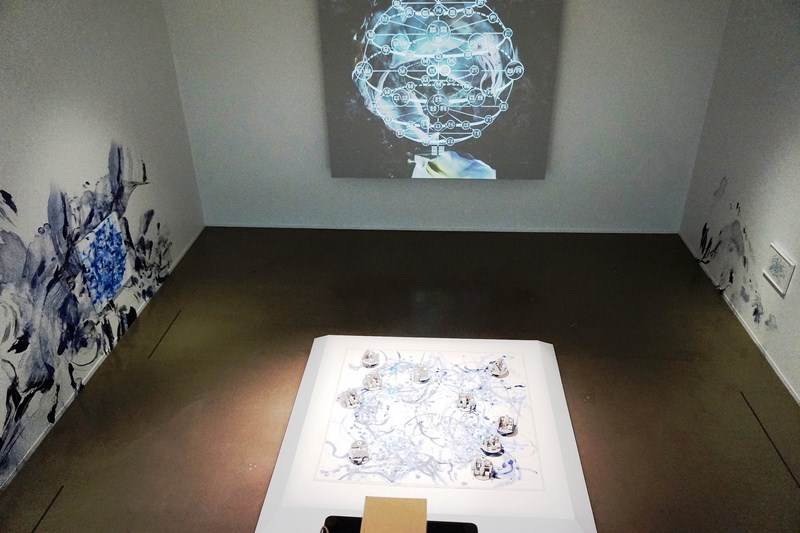
“Restless: Recent Acquisitions” Exhibit

During our visit, there were five ongoing exhibits – “Uninvited: Canadian Women Artists in the Modern Moment” Exhibit in the ground floor; “The Imitation Game: Visual Culture in the Age of Artificial Intelligence” Exhibit at the second floor; and “Kids Take Over” Exhibit, “Everything Under the Sun: In Memory of Andrew Gruft” Exhibit and “Restless: Recent Acquisitions” Exhibit at the third floor.

Check out “Uninvited: Canadian Women Artists in the Modern Moment” Exhibit, “The Imitation Game: Visual Culture in the Age of Artificial Intelligence” Exhibit,Kids Take Over” Exhibit, “Everything Under the Sun: In Memory of Andrew Gruft” Exhibit and “Restless: Recent Acquisitions” Exhibit

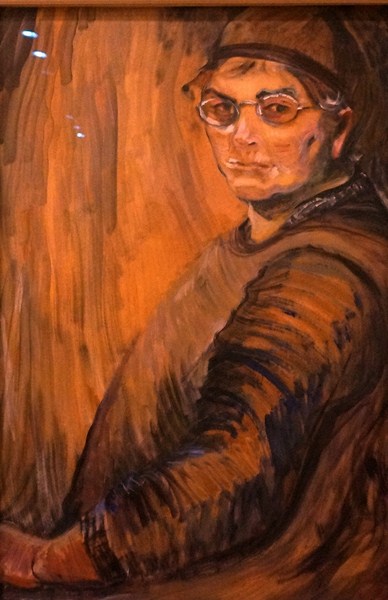
Self-Portrait of Emily Carr (1938-39, oil on wove paper)

The Centennial Fountain, on the Georgia Street side of the building, was installed in 1966 to commemorate the centennial of the union of the colonies of Vancouver Island and British Columbia.  In 2017, it was later removed as part of the Georgia Street plaza renovations.
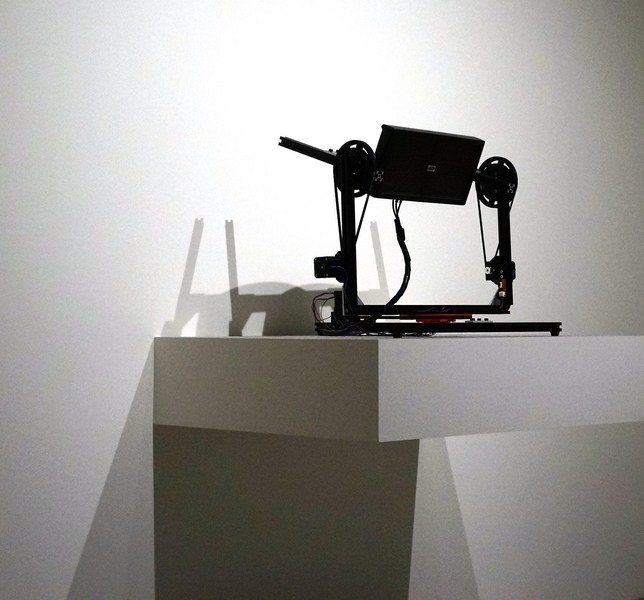
Are You Talking to Me

The Neo-Classical-style building, replacing the previous courthouse at Victory Square, wasconstructed using marble imported from AlaskaTennessee and Vermont.  It has Ionic columns, a central dome, formal porticos and ornate stonework. Construction for the building, which contained 18 courtrooms, began in 1906. In 1912, an annex, designed by Thomas Hooper, was added to the western side of the building. Declared as a heritage site, it still retains the original judges’ benches and walls as they were when the building was a courthouse.
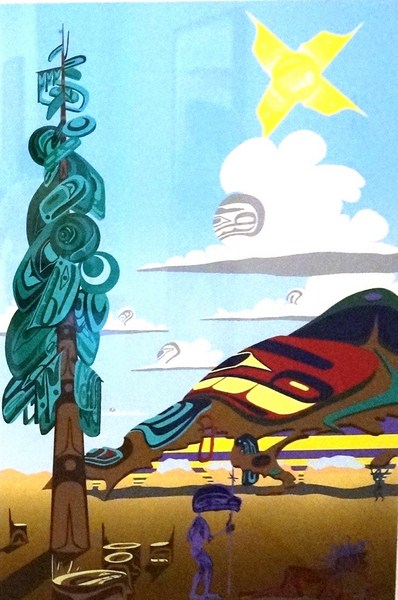
Clear Cut to the Last Tree (Lawrence Paul Yuxweluptun, screenprint on paper)

The front lawn and steps of the building has hosted a number of public gatherings and protest rallies, serving as the monthly meeting spot for Vancouver’s Critical Mass, as well as flash mobs, the Zombie Walk, pro-marijuana rallies and numerous environmental demonstrations. The steps on both the Robson Street and Georgia Street sides of the building are also popular gathering spots for protest rallies. In the summertime, the Georgia Street side is also a popular place for people to relax or socialize.
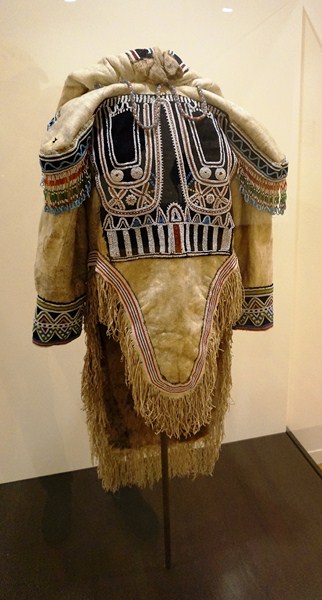
Amauti (Anne Maria Kigerlerk, 1937)

In March 2007, the 2010 Olympic countdown clock, placed in the front lawn of the building, was  opened for free for the public to see. Now disassembled, one half of the clock went to BC Place and the other to Whistler Village.In June 2021, Cheryle Gunargie created a vigil(consisting of 215 pairs of shoes) to honor the 215 children whose remains were discovered in unmarked graves at the Kamloops Indian Residential School.
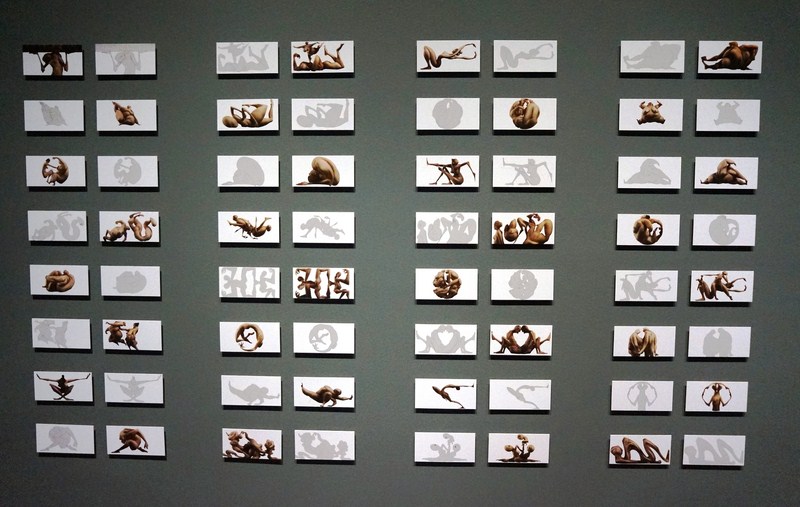
Caffeinated Diversions (Scott Eaton, 2018-19, inkjet print on paper) (1)

The permanent collection acts as the principal repository of works produced in the Lower Mainland region, with museum acquisitions typically focused on historical and contemporary art from the region. Approximately half of the works in its collection were produced by artists from Western Canada. In addition to art from the region, the collection also has a focus on First Nations art, and art from Asia. The museum’s collection is organized into several smaller areas, contemporary art from Asia, photography and conceptual photography, works by indigenous Canadian artists from the region, and artists from Vancouver and British Columbia.
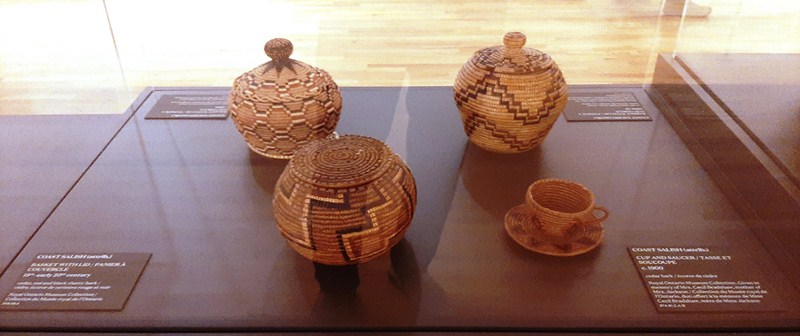
Baskets (Panier)

The museum’s photography and conceptual art collection includes photographs from the 1950s to the present, and includes photos by the N.E. Thing Co. artist collective, photographers of the Vancouver School of conceptual photography, and other artists including Dan GrahamAndreas GurskyThomas RuffCindy ShermanRobert Smithson, and Thomas Struth. The museum’s collection of contemporary Asian art includes works by Eikoh HosoeMariko MoriFiona TanJin-me YoonReena Saini KallatSong DongWang DuWang JianweiYang Fudong, and O Zhang.

Children Playing (Thomas Kakinuma, ca. 1960)

Serving as a repository for art for the region, the museum holds a number of works by artists based in the Lower Mainland, in addition to artists based in other regions of British Columbia. The museum’s collection includes works from Canadian artists, including members of the Group of SevenGathie FalkMichael Snow, and Joyce Wieland.

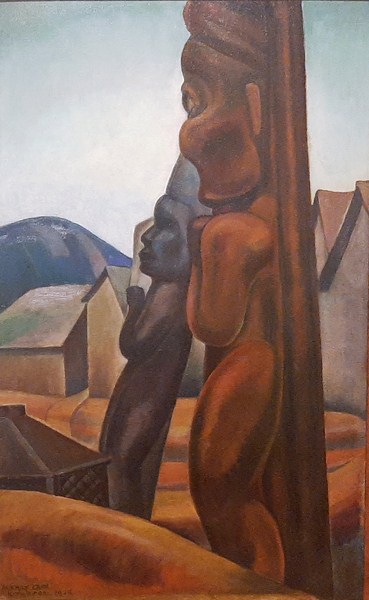
Kitwancool Totems (Emily Carr, 1928, oil on canvas)

The museum’s collection also features a significant number of works by Emily Carr, dating from 1913 to 1942. The painting Totem Poles, Kitseukla, by Carr, was among the original set of works acquired for the museum’s collection prior to opening in 1931. The permanent collections of the Vancouver Art Gallery, along with the collections of the National Gallery of Canada, hold the largest number of works by Carr of any collection in the world.
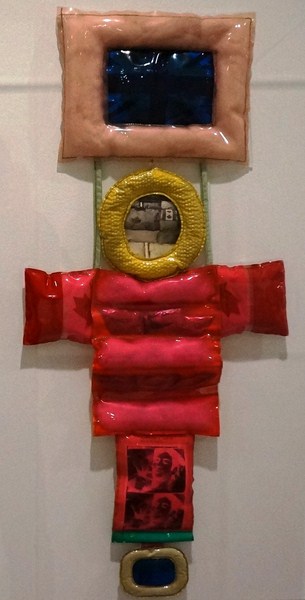
Patriotism (Joyce Wieland, 1967, vinyl, textile,photograph, paper, cotton, wood, thread)

The museum’s also features a collection of indigenous Canadian art from the region, including works from HaidaHeiltsukInuitKwakwakaʼwakwNuu-chah-nulthNuxalk, and Tlingit artists. Regular acquisitions of indigenous Canadian works was undertaken by the museum beginning in the 1980s; with the museum’s practices prior to the 1980s typically leaving the acquisition of indigenous Canadian works for the collections of ethnographic, or history museums.
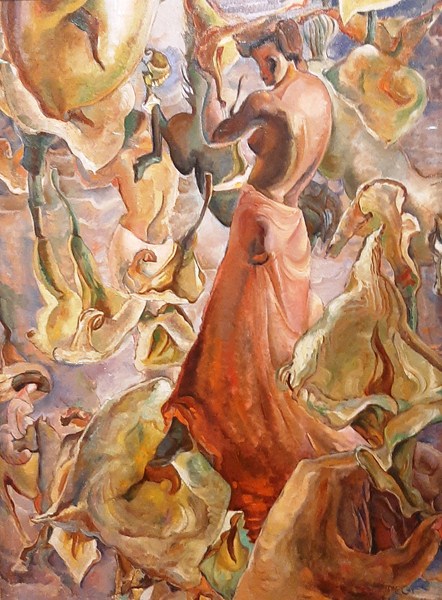
A Descent of Lilies (Pegi Nicoll MacLeod, 1935, oil on canvas)

In 2015, George Gund III bequeathed to the museum 37 First Nations works, including totem poles by Ken Mowatt and Norman Tait, drawings by Bill Reid, and thirteen carved works by Robert Davidson. Other works in the museum’s indigenous Canadian collection includes works by Sonny AssuRebecca BelmoreDempsey BobDana ClaxtonJoe DavidReg DavidsonBeau DickBrian JungenMarianne Nicolson, and Lawrence Paul Yuxweluptun.
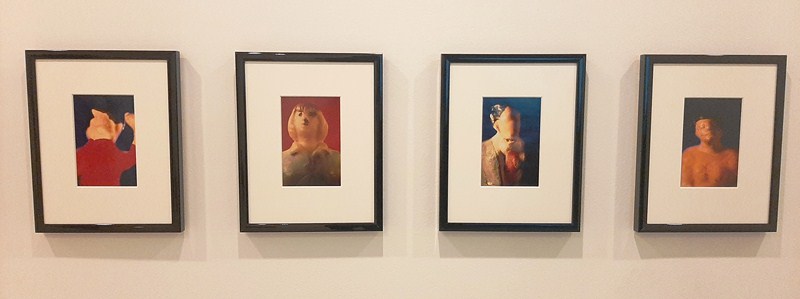
Actual Photo Series (Laurie Simmons and Allan McCollum, 1985, azo dye prints)

The Vancouver Art Gallery Library and Archives is a non-circulating library that specializing in modern, contemporary and Canadian art. Its holdings include more than 50,000 books and exhibition catalogues, 30 journal subscriptions, 5,000 files that document various artists, art forms, and works. Access to the museum’s library and archives require a scheduled appointment.
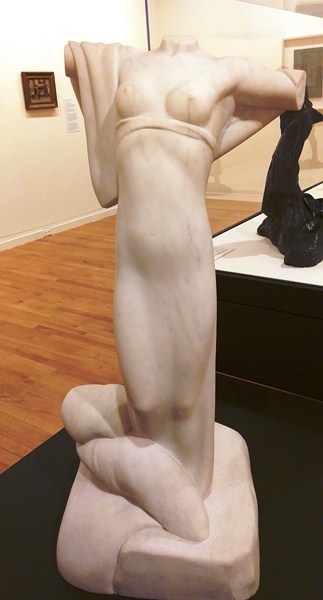
Sea and Shore (Florence Wyle, ca. 1950, marble)

The museum’s archives contain the institution’s official records since its founding in 1931. In addition to institutional documents, the archives also includes files from B.C. Binning, and the books and serials where Bill Bissett’s concrete poetry was published.
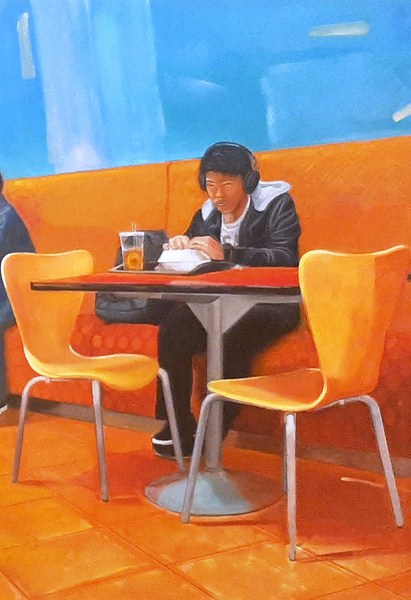
In a Food Court (Evan Lee, 2019, oil pigment, pastel on canvas) (1)

The Vancouver Art Gallery offers a wide range of public programs throughout the year, including live performances marketed under the FUSE program, scholar’s lectures, artist’s talks, as well as dance and musical performances. In its most recent year, the gallery has featured over 60 presenters, including historian Timothy Brook, writer Sarah Milroy, and Emily Carr scholar, Gerta Moray. In May 2015, the gallery welcomed architect Jacques Herzog as he presented his first lecture in Canada on architecture and the new Vancouver Art Gallery building.
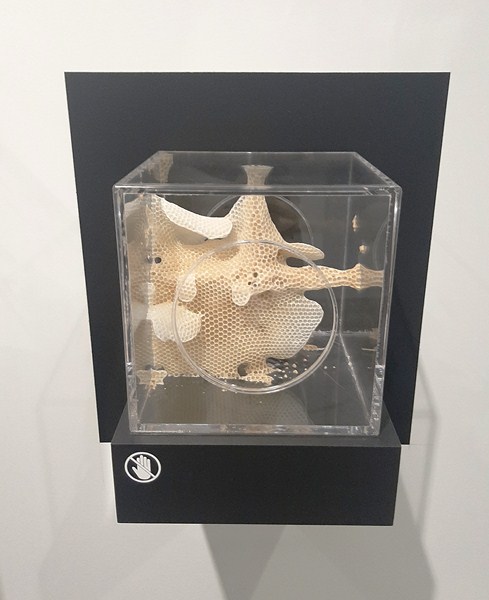
Neri Oxman and the MIT Mediated Matter Group

Vancouver Art Gallery: 750 Hornby Street, VancouverBritish Columbia V6Z 2H7, Canada.    Open Mondays, Wednesdays, Thursdays, Saturdays and Sundays, 10 AM – 5 PM, Tuesdays and Fridays, 12 noon to 8 PM. Admission: $24.00 (adults), $20.00 (seniors), $18 (students), $6.50 (children, 6 – 12 years old) and free (children 5 years old and under).  Tuesdays, from 5 – 9 PM are “donation nights” (pay whatever you want or can afford). Coordinates: 49.282875°N 123.120464°W.
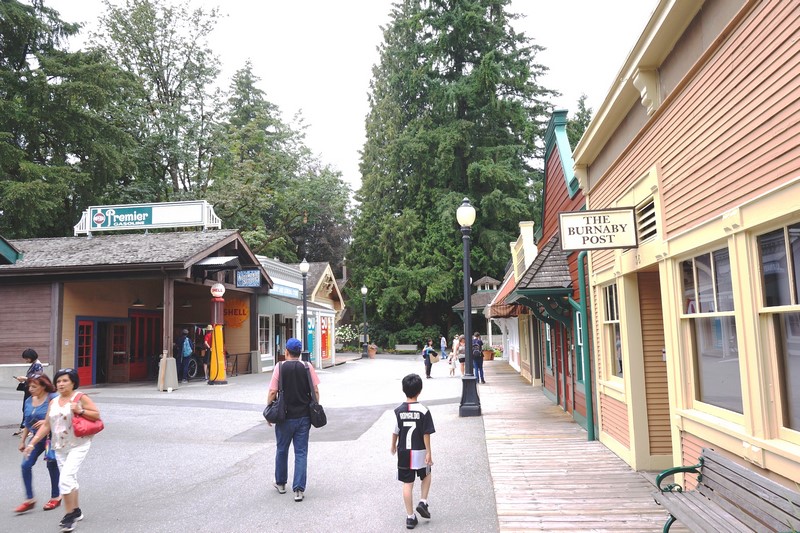
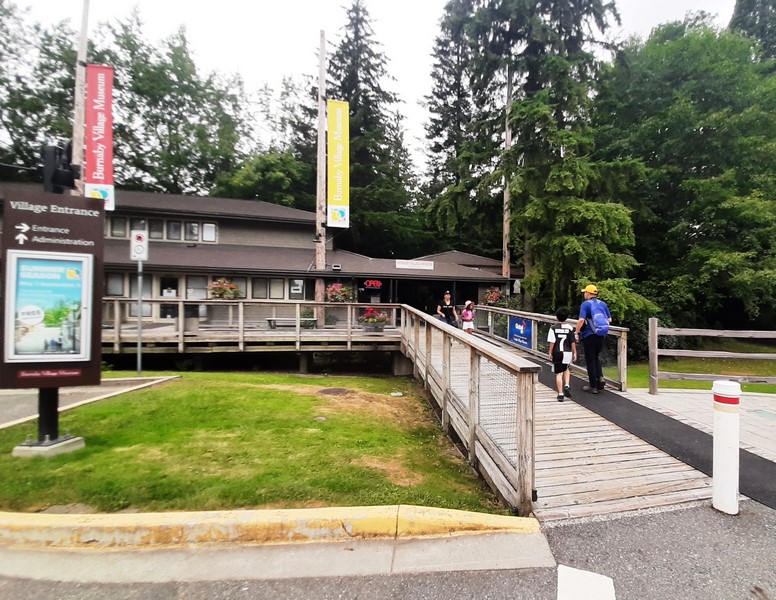
 

Burnaby Village Museum (Burnaby, British Columbia, Canada)

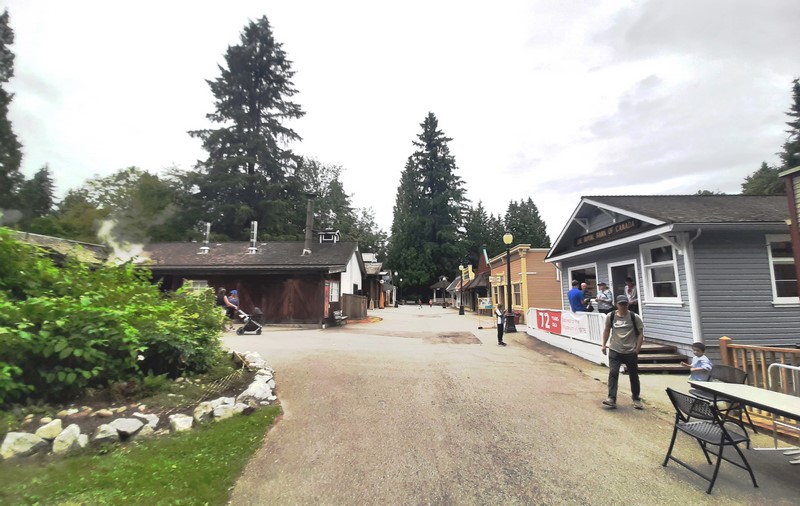
Hill Street at Burnaby Village Museum

On our 23rd day in Canada, right after lunch, Grace, Jandy, Kyle and I opted to visit the Burnaby Village Museum, an open-air museum located at Deer Lake Park.  From Holdom Station, we took the SkyTrain to Sperling-Burnaby Lake Station then rode Bus 144 to the museum.

Administration Building and Discovery Meeting Room

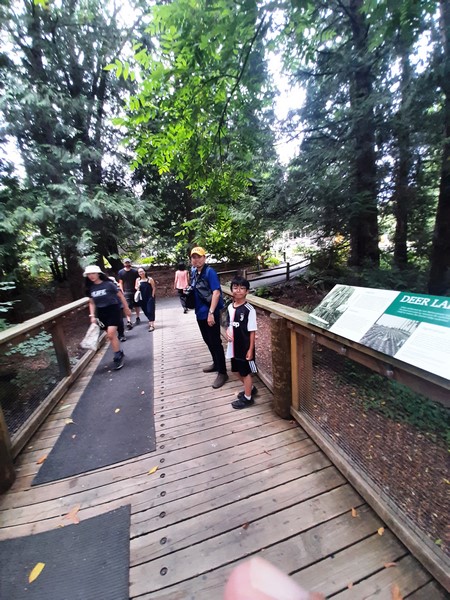
Our visit was timely as the museum only opens seasonally, from May to September, and opens for special events taking place from September to March. Upon entering, we crossed a wooden bridge, with signs talking about Deer Lake Brook and, once across, the trees opened to the reconstructed 1920s village, the most noteworthy part of the museum.

Bridge over Deer Lake Brook

Previously known as the Heritage Village the museum has grown from 1.7 hectares  (4.3 acres) site, with a small number of displays, to a 4 hectare (10 acre) heritage site and major attraction in Metro Vancouver. The Museum is affiliated with the BC Museums Association, Canadian Museums Association, and the Canadian Heritage Information Network. Burnaby Art Gallery is in the same park.

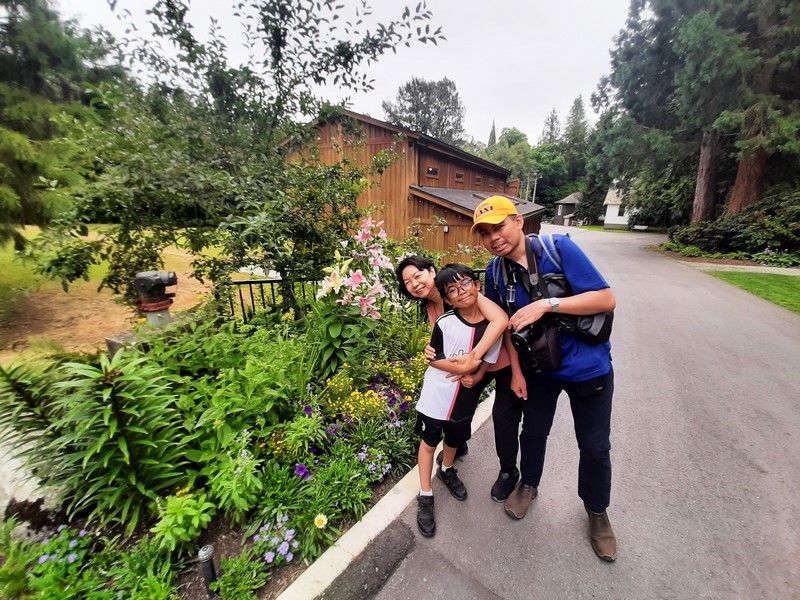
Grace, Kyle and Jandy

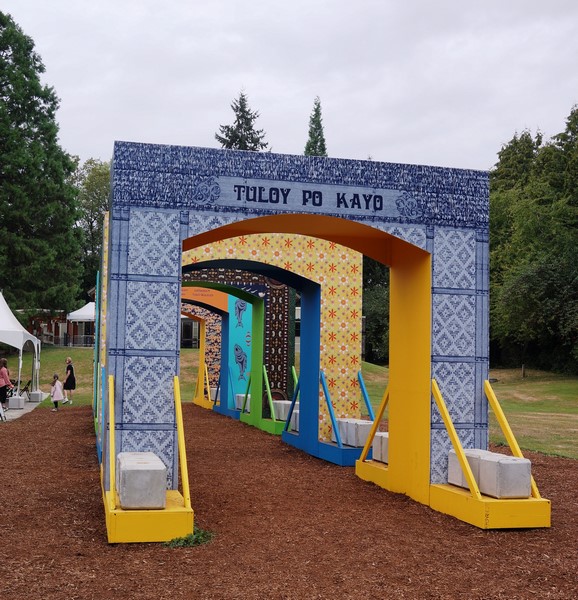
Coincidentally, our visit coincided with the museum’s 50th anniversary. and near the entrance were life-size Anniversary Arches which showcases the Museum’s evolving role in the community through the eyes of local artists.  The first arch had the Filipino greeting Tuloy Po Kayo (“Please Come In”).

Anniversary Arches

Here is the historical timeline of the museum:

  • On November 19, 1971, the museum was officially opened (officiated by Roland Michener, then Governor General of Canada). Over 15,000 visitors attended the museum during its special three-day (November 19-21) opening.
  • On July 1, 1972, 2 PM, the museum opened for its first full public season. It included several shops located in replica buildings on the main street, and the “manor house” (the 1922 home of the Bateman family, today known as Elworth). Livestock, including horses that were shod in the blacksmith shop, were part of the display. An early promotional brochure promised visitors they would be able to “smell the burning hoof.”
  • In 1975, the B.C. Society of Model Engineers opened a model railway at the Village.
  • In 1979, the Heritage Village became the set for the Canadian/German co-production of the 26-part TV series Huckleberry Finn and His Friends.
  • In 1984, the museum’s name was changed to reflect its role as Burnaby‘s community museum
  • In 1985, Iredale Partnership was hired to create an expansion concept for Burnaby’s Municipal Council to consider.
  • In 1986, the plan was completed
  • In 1987, the plan was accepted by Council. At that time, the site was expanded to approximately 9 acres, with new lands across Deer Lake Brook made available to the Museum to expand, and to create a new entrance facility and administration building.
  • In 1989, the miniature railway moved to Confederation Park.
  • In 1990, the Municipality of Burnaby took over operation of Burnaby Village Museum from the Century Park Museum Association.
  • In 1999, the Museum’s popular “Business as Usual” school program was launched
  • In 2000, the “Home Sweet Home” program was launched.
  • In 2010, the Burnaby Village Museum was an official stop for the Olympic Torch Relay.
  • For the 2011 summer and Christmas seasons, in celebration of the 40th anniversary of the Museum, Burnaby City Council agreed to offer free admission to museum visitors.

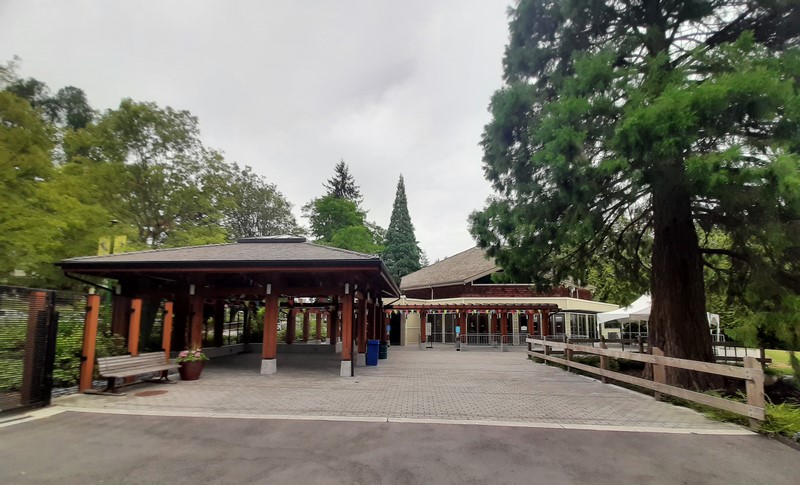
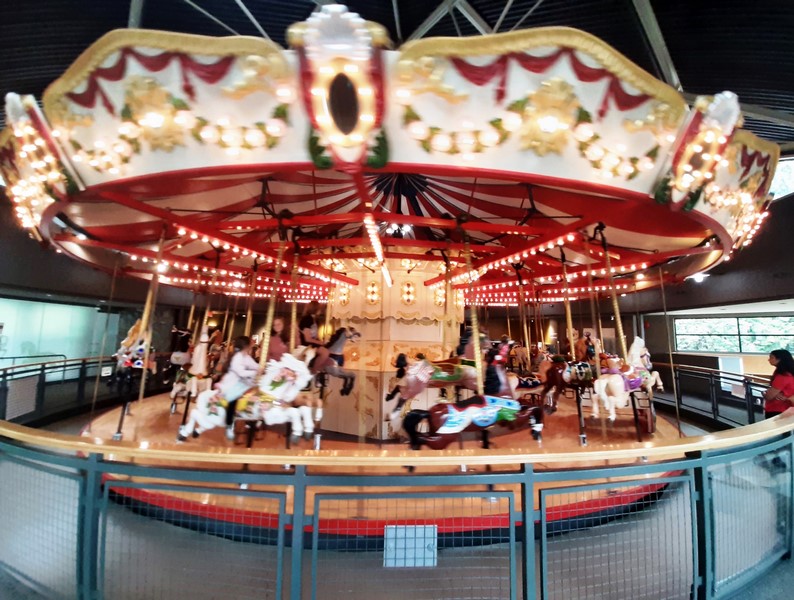
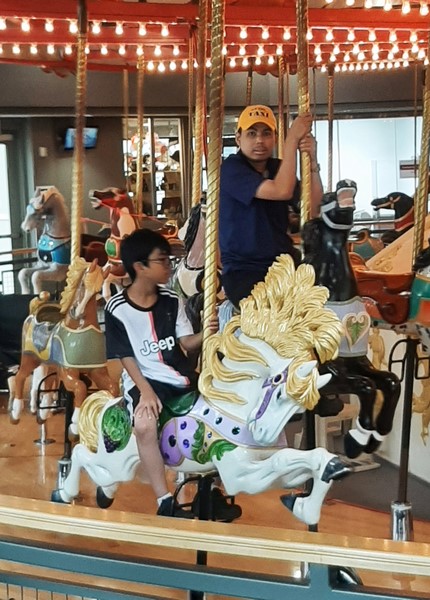
The first place we visited was the Don Wrigley Pavilion, a pavilion located at one of the museum’s two entrances (earning the entrance the name “Carousel Entrance”).  Here, my grandson Kyle, accompanied by Jandy (Kyle needed to be accompanied by an adult), tried out one of the museum’s major attractions – the C. W. Parker Carousel, a carousel  built in 1912 by Charles Wallace Parker (owner of the C. W. Parker Company at LeavenworthKansas).

Don Wrigley Pavilion

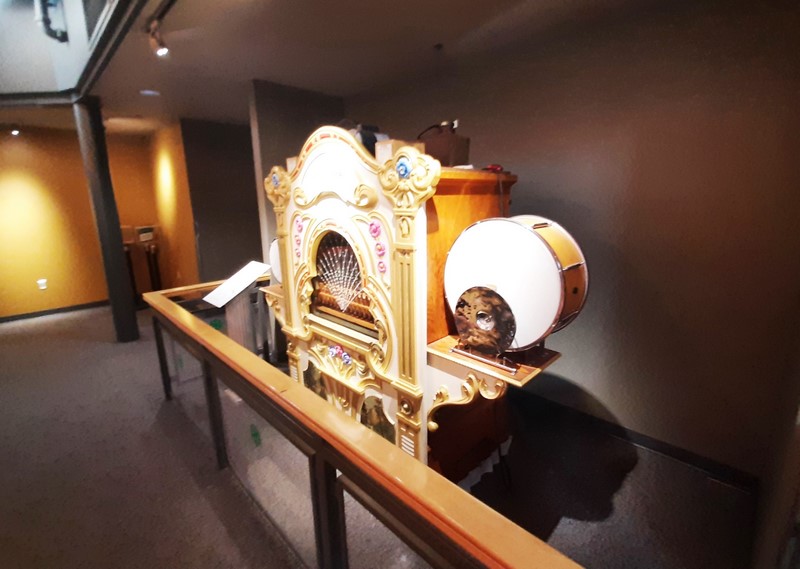
One ride cost $2.65 per person.  This would be the second time they would ride a carousel (the first was in Butchart Gardens in Victoria). Setting the tone for the carousel was a Wurlitzer Military Band Organ (Style 146B), built by the Rudolf Wurlitzer Co, ca. 1925, which recreated the sound of a 20-piece military band.   The machine was bought from a collector in Spokane, Washington who obtained it from a closed down traveling carnival in Reno, Nevada.

Check out “Butchart Gardens

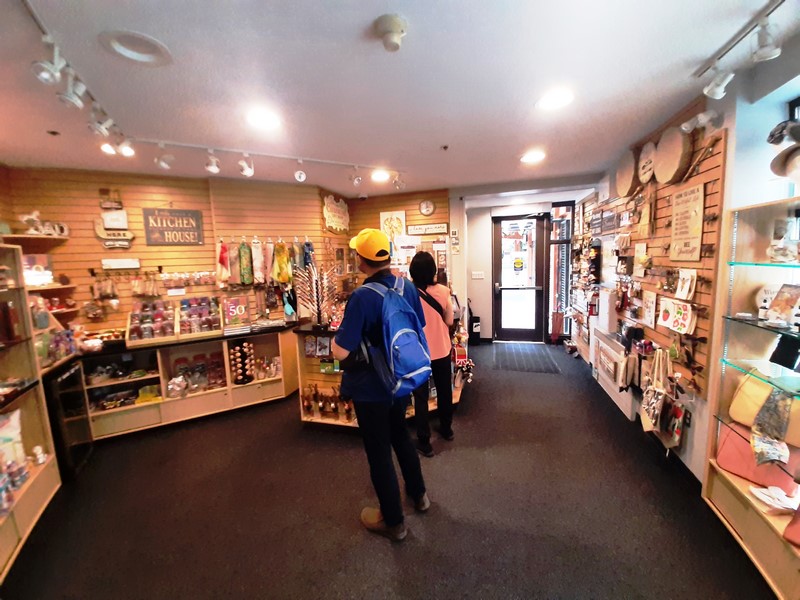
The Carousel Ticket Office and Gift Shop

The carousel also had a colored history.  Also known as the Parker #119 and the Burnaby Centennial Parker Carousel, the carousel, the 119th such machine built by the C. W. Parker Company (earning it its “Parker #119” nickname), contains 41 horses.  In 1913, it was sold for $5,886.00 and, for two years, the carousel toured Texas  with the Lone Star Circus.

The C. W. Parker Carousel

In 1915, the machine was shipped back to the factory where it is believed that the machine was rebuilt and some fancier horses and heavier rounding boards may have been added. Each horse is a work-of-art that was hand-carved and painted. Some of the horses were built in 1917 and some in 1920–1922.

1925 Wurlitzer Military Band Organ

From 1915 to 1936, the history of the carousel is unknown. In 1936, the carousel was purchased by Happyland, an amusement park in VancouverBritish Columbia and remained there until the amusement park was demolished in 1957.  The carousel was moved to the new small pavilion in Playland, (another amusement park in Vancouver) until that too was demolished in 1972.

Kyle and Jandy

From 1972 to 1989, Parker #119 was operated outdoors, and was put away each winter.  In 1989, the PNE’s historic carousel was decommissioned and it was announced that the carousel would be sold off, horse by horse, at an auction in New York but local residents came together to raise the money to purchase and save the carousel, forming the “Friends of the Vancouver Carousel Society.”  It was at this time that the carousel was nicknamed the Parker #119.

In May 1989, the Burnaby Village Museum agreed to provide a home for the carousel and the “Friends” led by President Don Wrigley, set about raising the $350,000 to purchase the machine. Keith Jamieson, a carousel expert, was brought in to coordinate the rebuilding project. In 1990, the carousel was purchased and funds were also raised to pay for the restoration.

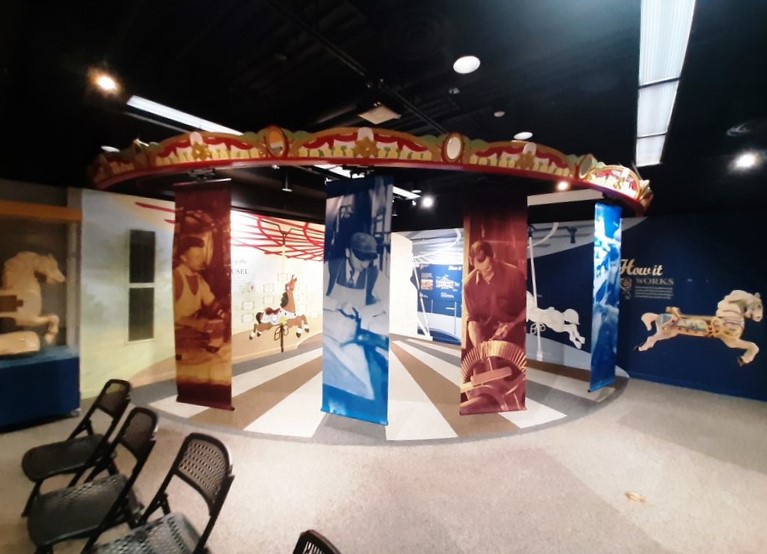
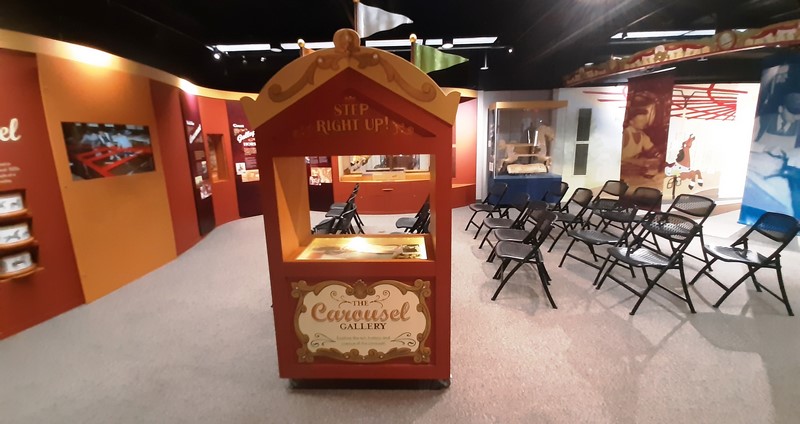
The Carousel Gallery

People who donated money could sponsor a horse and later name it. The museum agreed to build a new pavilion to house the carousel. Named the Don Wrigley Pavilion, the pavilion was completed in 1993 and, that same year, the carousel (now named the Burnaby Centennial Parker Carousel) was officially opened.

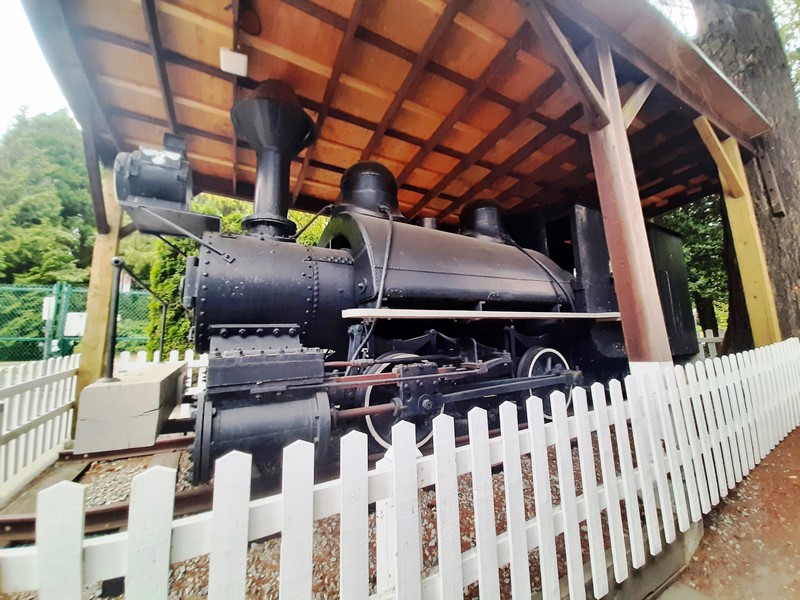
Old Curly Locomotive Shed

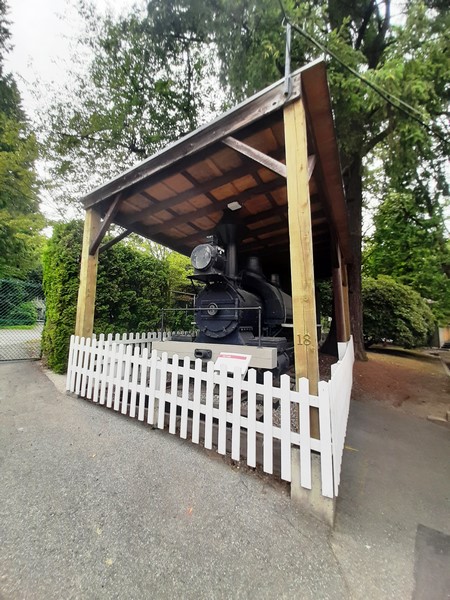
Another machine with a colorful history here is the Old Curly Locomotive, the oldest surviving steam locomotive in British Columbia.  Built in San Francisco in 1879, this “pony locomotive,” initially named Emory, was a yard locomotive employed in building a seawall in San Francisco.  In 1881, it was brought north, just outside of Yale, British Columbia, to work on the construction of part of the Canadian Pacific Railway (CPR). Four wheel tenders, with 600 additional gallons of water, was added.

Old Curly Locomotive

Following the completion of the railway in 1885, it was barged over to Vancouver Island for use to log most of the timber in Surrey as well as several railway logging operations along the coast by the British Columbia Mills Timber and Trading Company until 1927. Its name may be a reference to Satan although the broadcaster Red Robinson believes it was named after his grandfather Curly Surgenor.  After years of neglect, it was restored by the CPR in the 1930s and placed on display at Hastings Park (PNE) in Vancouver.  In 1973, it was moved to the Burnaby Village Museum.

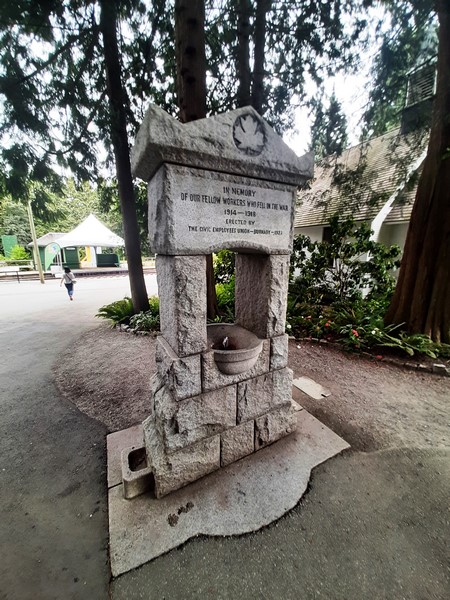
War Memorial Drinking Fountain

Along a shaded arterial pathway, we passed by the War Memorial Fountain, a granite drinking fountain built by local stonemason William Williamson. Erected in 1923 by the Burnaby Civic Employees Union (now CUPE Local 23), it was originally located in front of Burnaby‘s original Municipal Hall at Kingsway and Edmonds Street.  An engraved memorial, at the top of the fountain, commemorates Burnaby’s municipal employees who lost their lives in World War I. At the bottom of the memorial is a stone drinking bowl for dogs.  In 1974, the memorial was moved to the museum.

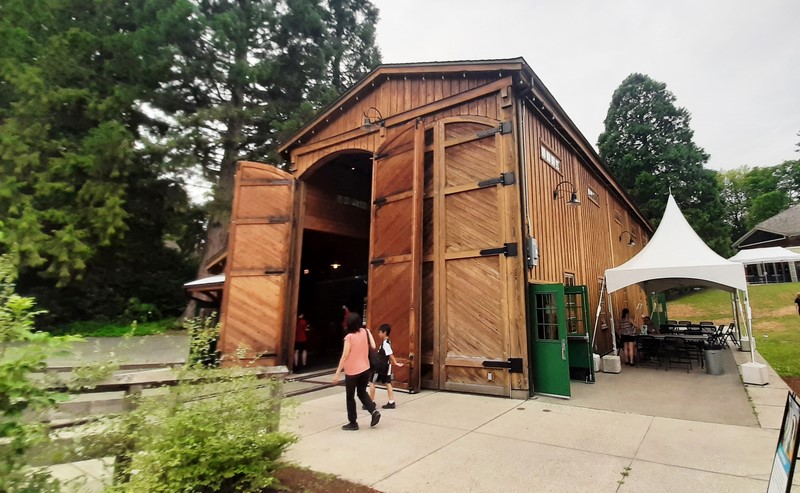
Interurban 1223 Tram Barn

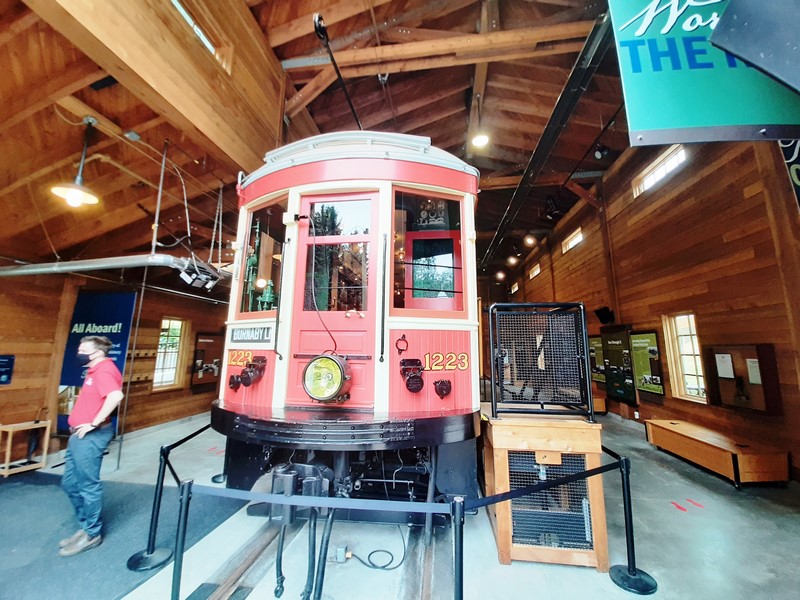
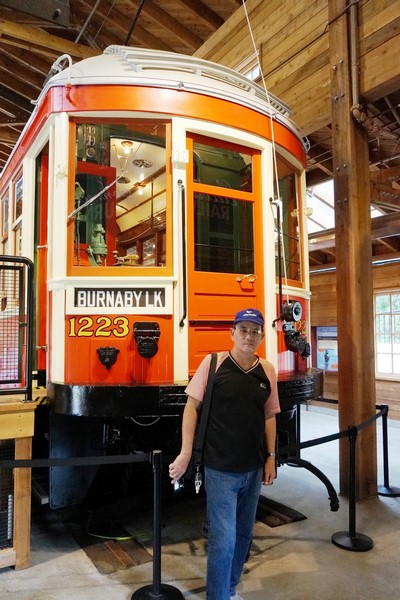
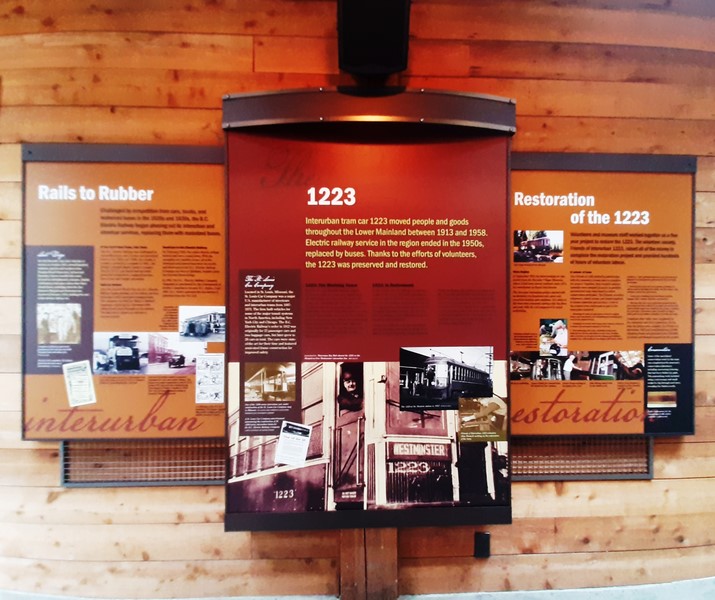
At a meadow is the Vorce Tram Station and the Interurban Tram Barn.  The Interurban 1223 Tram Barn houses a restored 1912 British Columbia Electric Railway interurban tram, complete with information about the history of the BCER and its role in the development of Burnaby.

1912 British Columbia Electric Railway Interurban Tram

The author

In 2001, the 1912 interurban tram was moved offsite to a warehouse, where it would undergo a 5-year restoration project by the Friends of Interurban 1223. In 2007, the restored Interurban 1223 was returned to the Museum, and installed in the newly constructed tram barn.

The barn also houses displays, posters, and photos, with knowledgeable staff members providing operational details to visitors (did you know that trams of the era had a unique feature?   Their seats can be reversed, allowing passengers to always face forward.

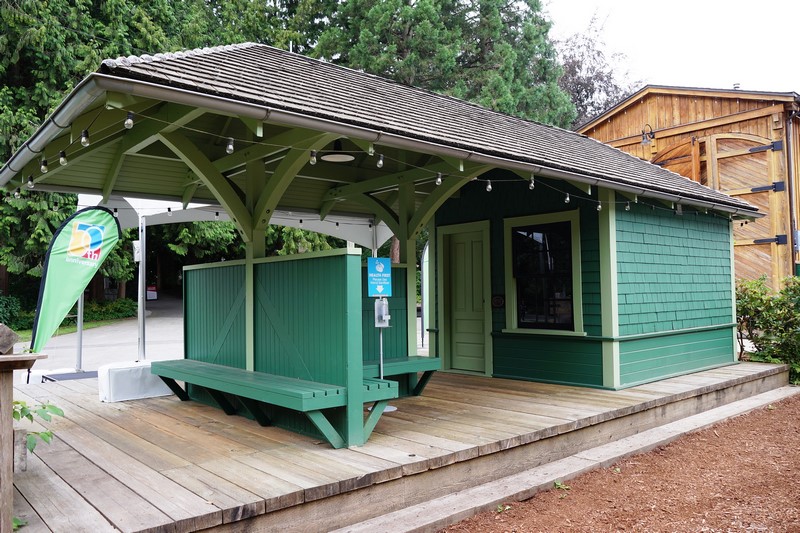
Vorce Tram Station

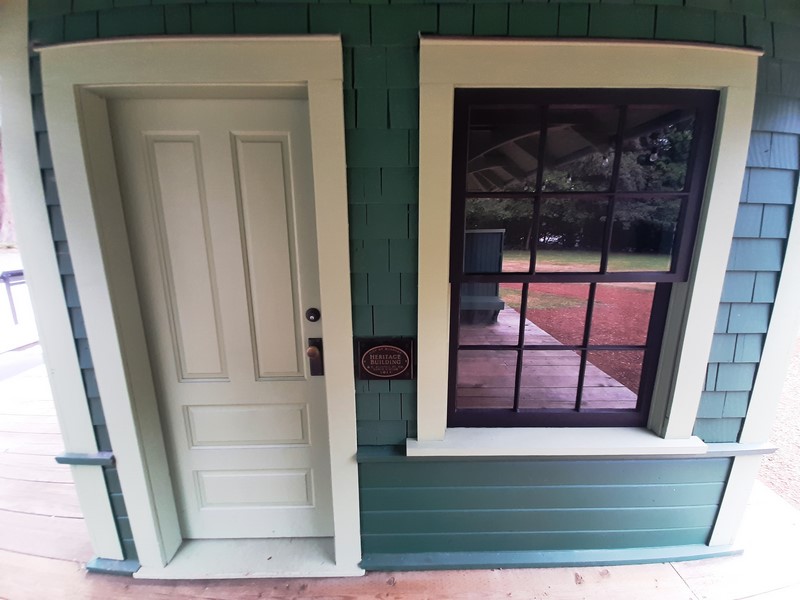
The Vorce Tram Station, a modest utilitarian passenger tram shelter, was originally built in 1911 at the foot of Nursery Street as part of the British Columbia Electric Railway Company’s (BCER) Burnaby Lake Interurban Line. In 1953, it was moved to a local farm by the Lubbock family and, in 1977, was acquired by the Burnaby Village Museum and installed adjacent to the tram barn.  In 2008, under the auspices of the City of Burnaby Community Heritage Commission, it was restored to its original appearance.

Designed and built by the BCER, it is typical of the small local passenger stations on the Burnaby Lake and Chilliwack interurban lines. The wood frame structure, with is rectangular plan and hipped roof, is enclosed on three sides, with an open side for access to the train platform and a single long built in bench across the back of the station. Named after C.B. Vorce (the Chief Engineer for the company), it is the last remaining interurban station in Burnaby and one of the few extant structures left in the Greater Vancouver region that were once part of the extensive British Columbia Electric Railway (BCER) interurban system.

Elworth

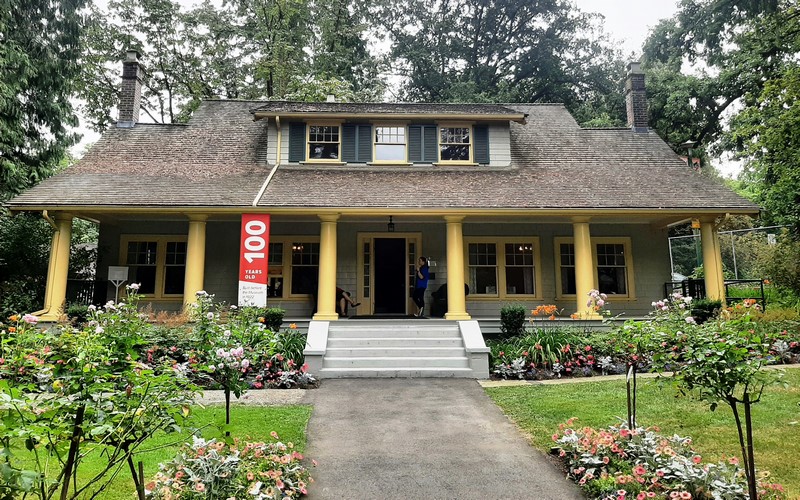
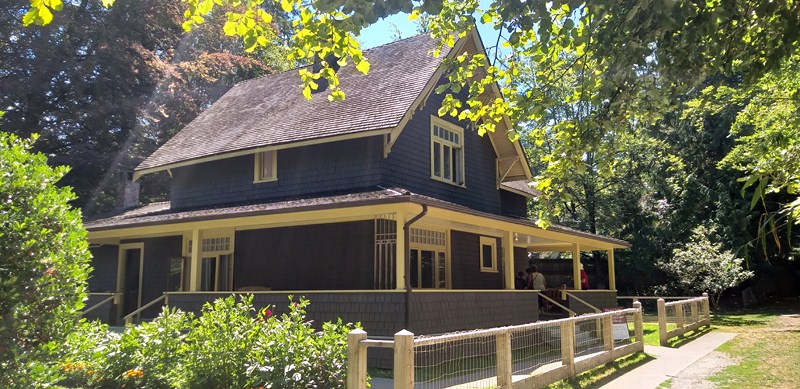
Next, we visited the one and one half storey, wood frame Elworth, the “manor house” designed by English born and trained architect Enoch Evans (1862-1939) of E. Evans and Son and built in 1922 by contractor William Dodson for retired Canadian Pacific Railway executive Edwin Wettenhall Bateman (1859-1957) and his wife, Mary (Dale) Bateman (1865-1935).

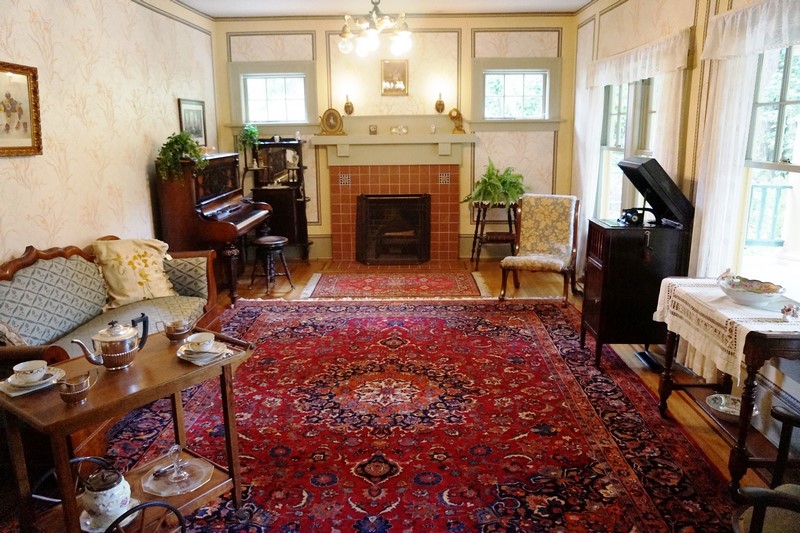
Living Room

The adjacent Elworth Garage is the original garage of the Elworth home. Both are the only historic buildings standing on their original site within the grounds of the Burnaby Village Museum.

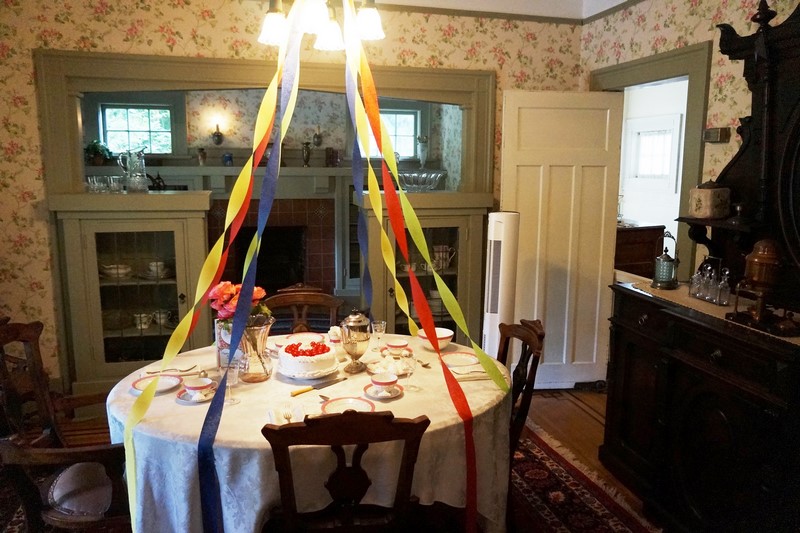
Dining Room

This beautiful home, once part of the exclusive Deer Lake neighborhood, was named after Edwin Bateman’s birthplace in Cheshire, North West England. and is a typical example of the eclectic Period Revival influences that were common to domestic architecture in the post-World War I era.

It has an imposing, full open front veranda supported by exaggerated Ionic columns, cedar shingle sidings, two flanking brick chimneys, and multi-paned, double hung wooden sash windows.

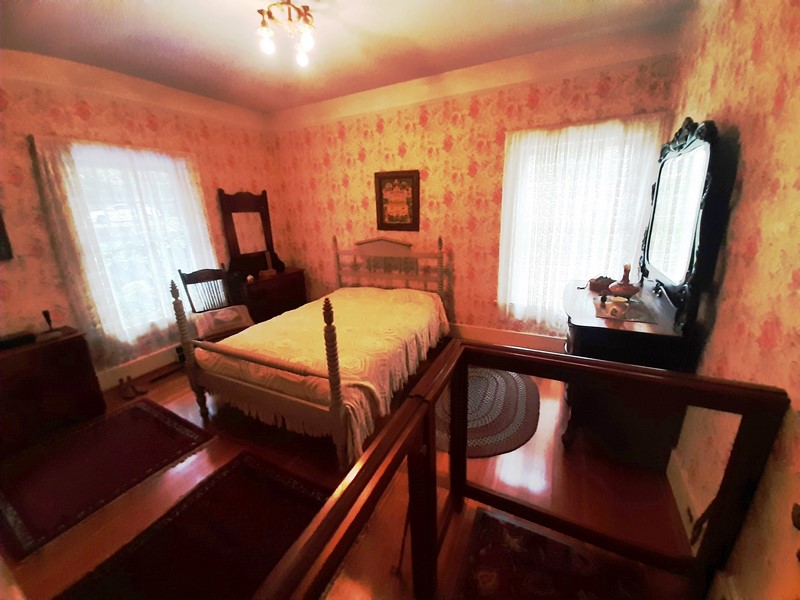
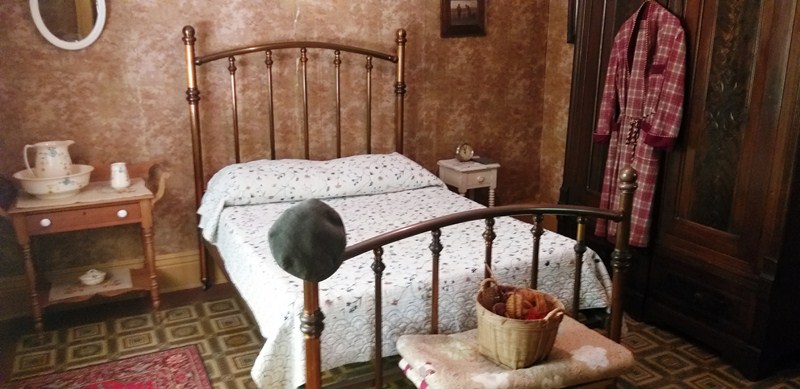
Bedroom

In 1970, Elworth was purchased by Burnaby and became the focal point for the development of the museum.

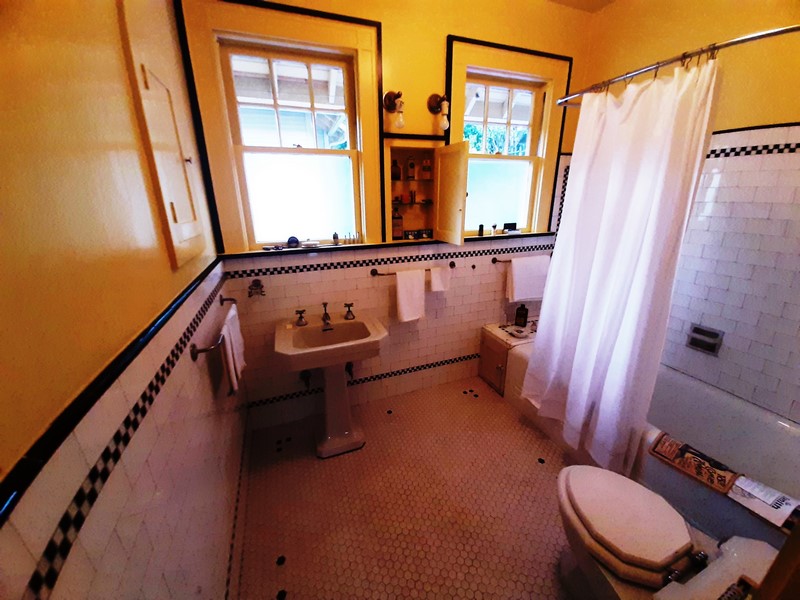
Bathroom

Both the interior and exterior of the house have been restored and interpreted to the date of original construction, including recreated room interiors and period furnishings.

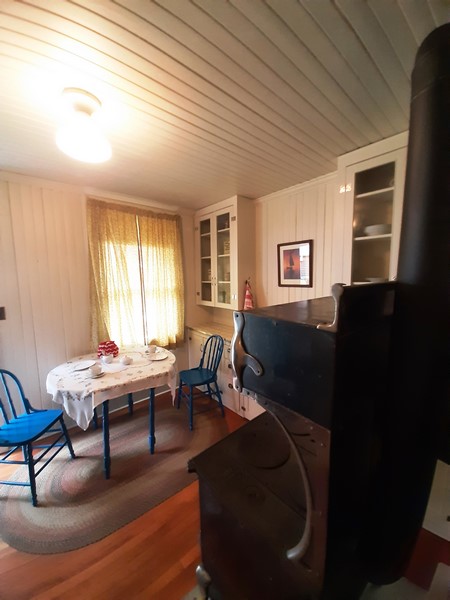
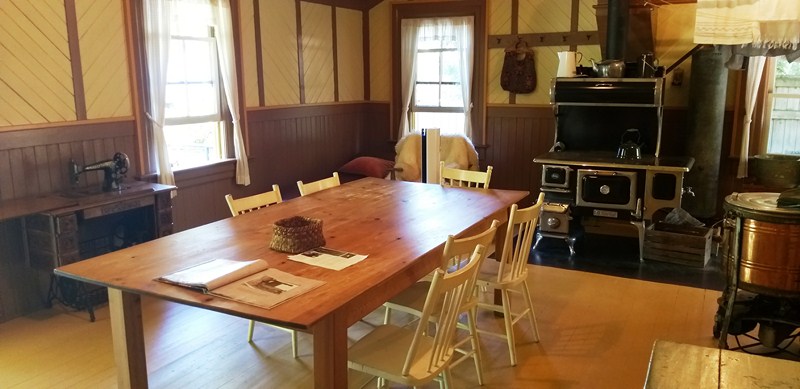
Kitchen

As we moved further along the Village, we felt we entered a movie set. In fact, a number of movies and TV series have been filmed here including LuciferHuckleberry Finn and Friends, Supernatural and Christmas in Evergreen, a Hallmark movie. The grounds of Burnaby Village Museum (BVM) has four streets – Finlayson Avenue, Hill Street, Brookfield Lane and Bate Avenue. Annually, more than 150,000 people visit the museum to experience the area’s insightful past.

Burnaby Village Museum contains 31 full scale buildings, some of them original heritage buildings, moved from other locations in the community and restored. They have designated working antiques and there are a total of 50,000 artifacts throughout the various buildings. Each building offers a little bit of history about how it contributed to the development of Burnaby.

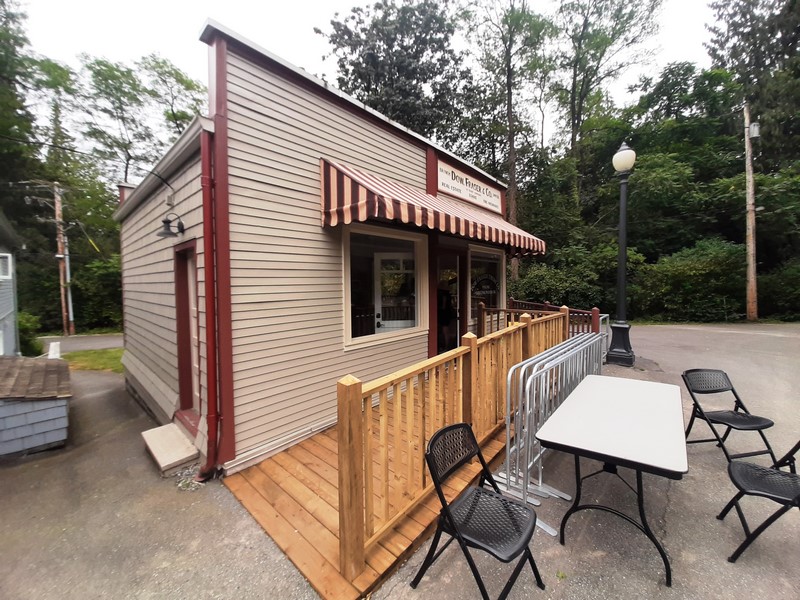
Dow, Fraser & Co. Real Estate Office

The Dow, Fraser & Co. Real Estate Office, a 1927 heritage building, was originally a grocery store annex along MacKay Avenue.  In 1976, it was set up as a real estate and surveyor’s office.

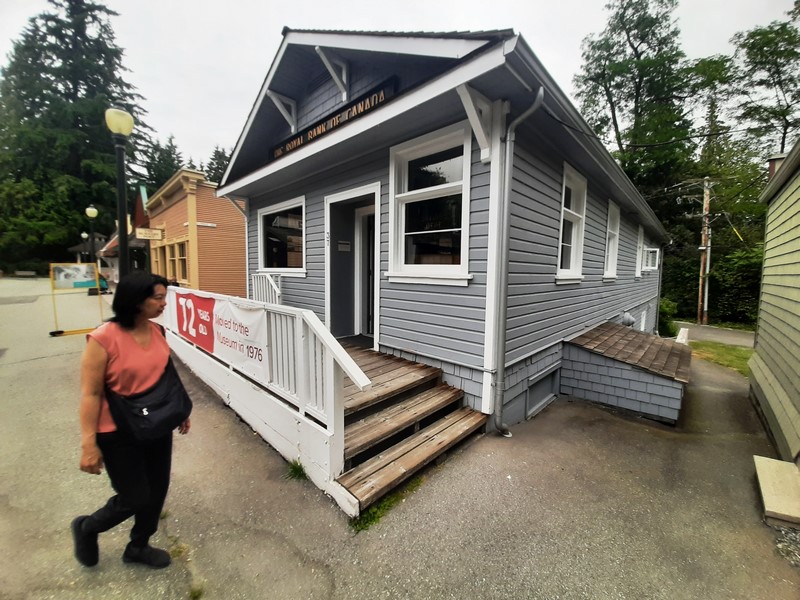
The Royal Bank of Canada Building

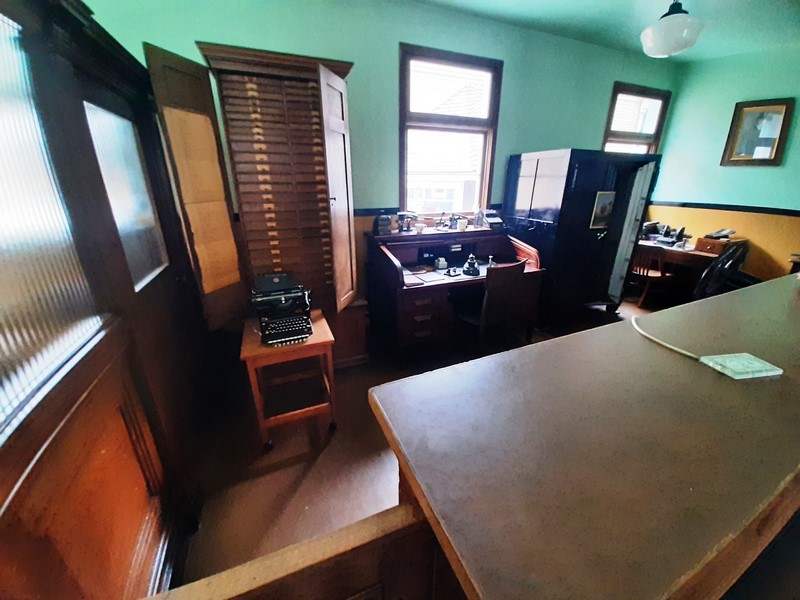
The Royal Bank Building, constructed in Britannia Beach in 1950, was moved to the village in 1976 and set up to look like Burnaby’s Royal Bank which opened in 1921. Its interior fixtures are from Nelson, British Columbia.

The Royal Bank of Canada Building – Interior

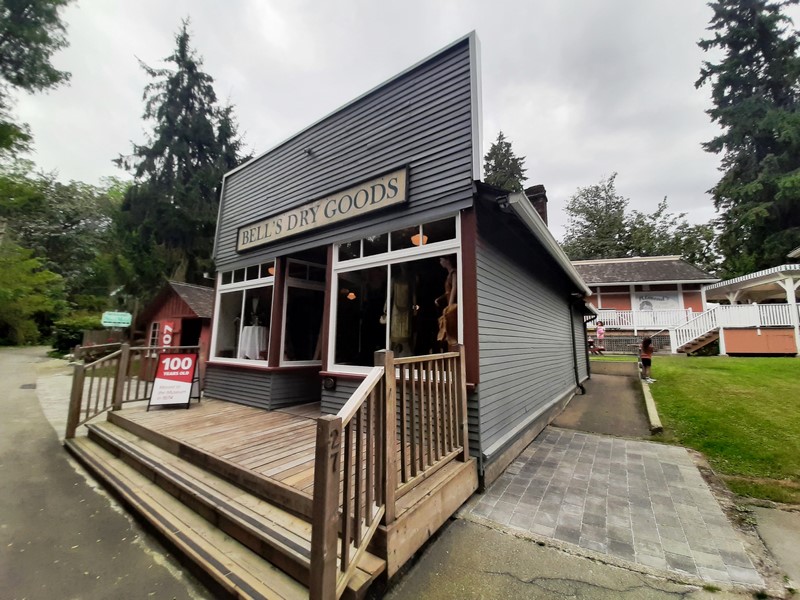
The original Bell’s Dry Goods Store Building, a typical commercial false front, single storey, wood frame building, was built in 1922 by Clifford Tuckey with a small lean-to structure on the back housing a kitchen and bedroom.

Bell’s Dry Goods Building

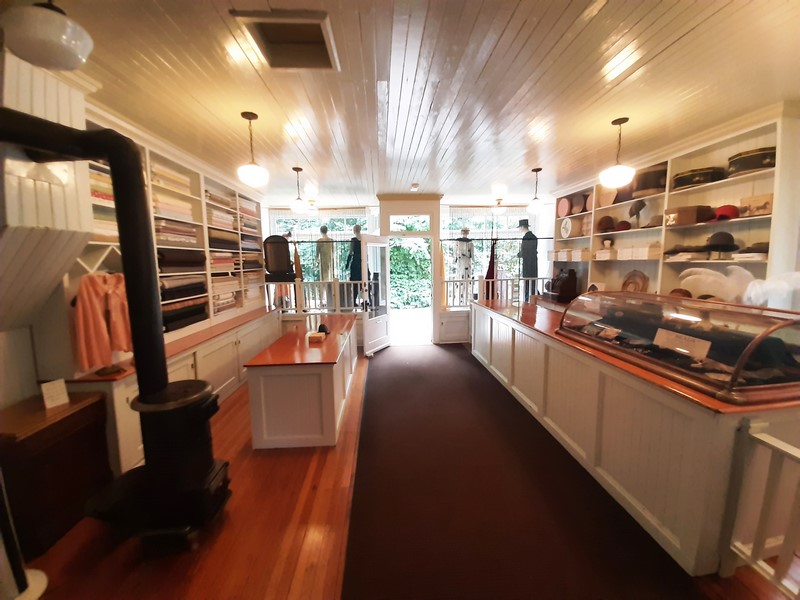
Soon afterwards, the store was sold to William and Flora Bell, who then lived and worked their dry-goods business here for a number of years until 1937.  Later, the building was sold to Maurice and Mildred Whitechurch, who ran it for many years as a hardware store.

Bell’s Dry Goods Building – Store

In 1974, the structure was relocated to its present site at the museum. Between 1993 and 1996, the building was restored to its 1925 appearance.

Bell’s Dry Goods Building – Dining Room

Originally located along Sixth Street in East Burnaby, in a small commercial district that served residents located along the streetcar line between New Westminster and Edmonds, it is one of the last remaining intact false front retail structures of its time to survive in Burnaby as well as one of East Burnaby’s few surviving early commercial buildings.

Bell’s Dry Goods Building – Bedroom

Representative of other typical commercial structures of the period, this store also served as the location of the East Burnaby Post Office, one of a number of local post offices located throughout the municipality during the early twentieth century.

Farmhouse of Jesse and Martha Love

The Farmhouse of Jesse and Martha Love, the oldest building in the village, was built by Jesse Love and his wife Martha who arrived in Burnaby in 1893 and, over the years, had 11 children.

In 1988, it was moved to the Museum to be part of the “rural zone” display established in the newly acquired museum space across Deer Lake Brook.

Decorated in a 1925 Victorian style, it has a wraparound verandah and has all the modern conveniences –  from hot-running water to a radio. Guided tours are available.

Seaforth School Building

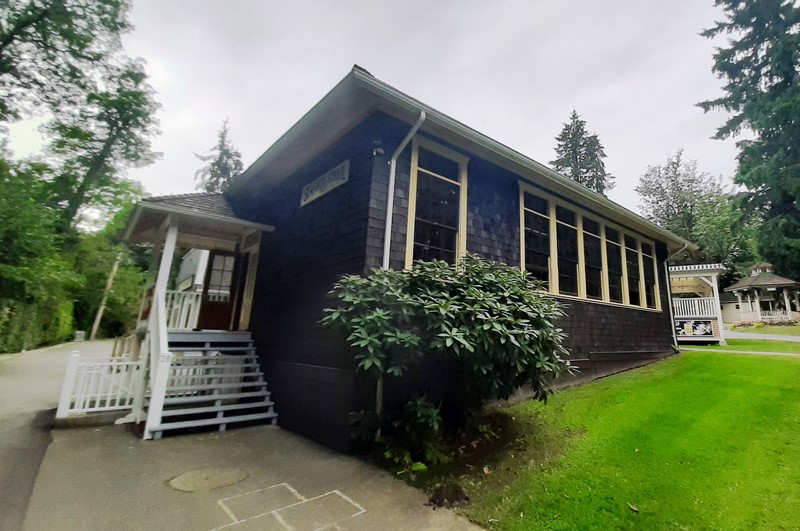
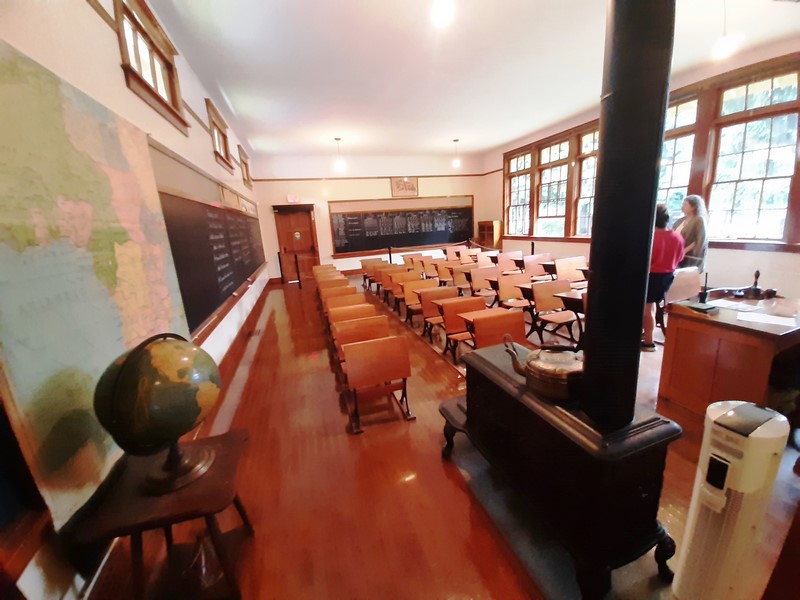
The restored Seaforth School Building was originally located on the north side of Burnaby Lake, at 7881 Government Street cor. Piper Avenue.  The one room school, designed by architects Bowman and Cullerne and constructed by local contractor Alphonse J. Toebaert, was opened in the rural Lozells District of Burnaby in 1922 with 20 students. By 1989, the popular “3R’s” school program was being offered on a regular basis at the schoolhouse.

Seaforth School – Classroom

In 1983, the historic building was moved, from its original location at Government Road to the Burnaby Village Museum and, in April 1987, the school was opened to the public as part of the Museum’s permanent exhibition.

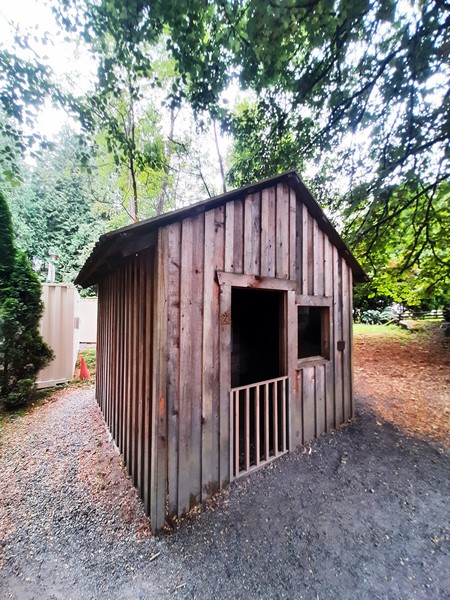
Tom Irvine’s House. At left is the outhouse

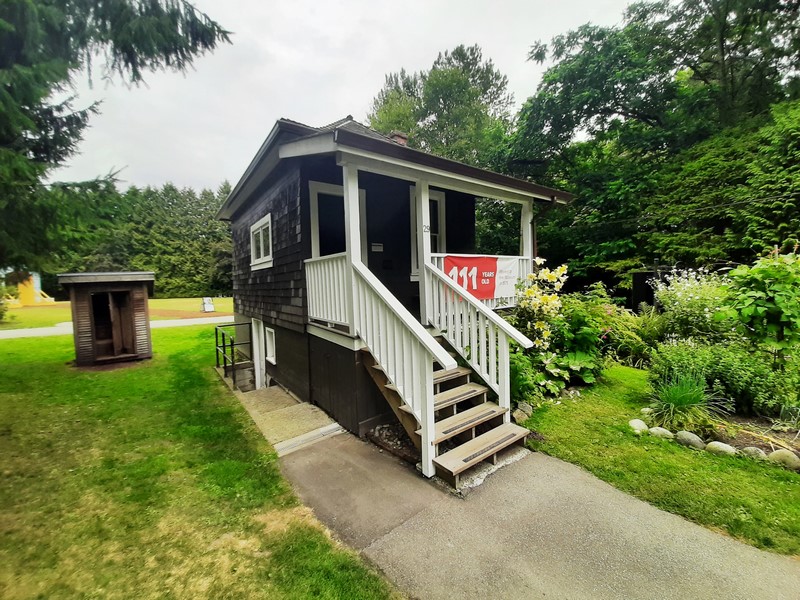
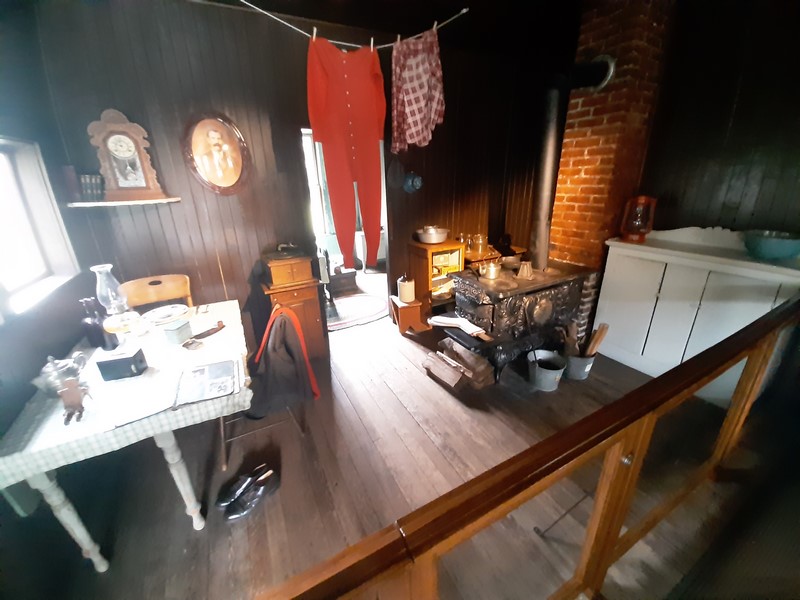
The Tom Irvine’s House, a small, two-room  (living room/kitchen and a bedroom), wood frame bachelor’s house, was built in 1911 by Irish-born Burnaby resident Tom Irvine (a prospector in the Yukon and, later, a pile driver working with the British Columbia Electric Railway Burnaby Lake Interurban Line) and his friend Robert “Bob” Moore.

Tom Irvine’s House – Interior

Bob Moore died soon afterwards but Tom lived in the house until 1958.  In 1929, running water was added and electricity in the 1950s.  Tom never married and died in 1964, aged 100.  Originally located along Laurel Street in Central Burnaby (now the site of the Burnaby Lake Sports Complex), just west of Burnaby Lake and the tram line, it was moved to the site in 1975 and restored to its 1920s appearance.

Vancouver Heights Sheet Metal Works

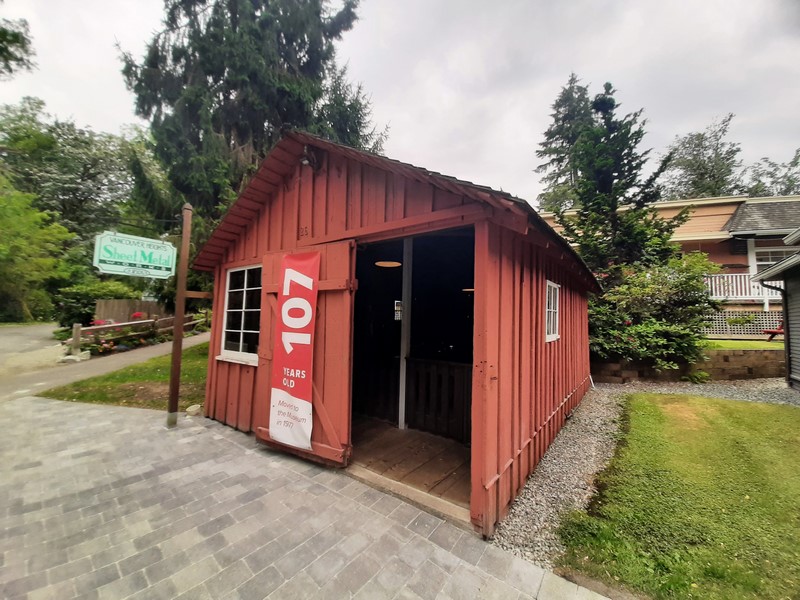
The little Vancouver Heights Sheet Metal Works Building was once a shed used for horseshoeing on Burnaby’s Lubbock Farm. Today, it houses tinsmithing tools used to make a variety of items out of sheet metal.

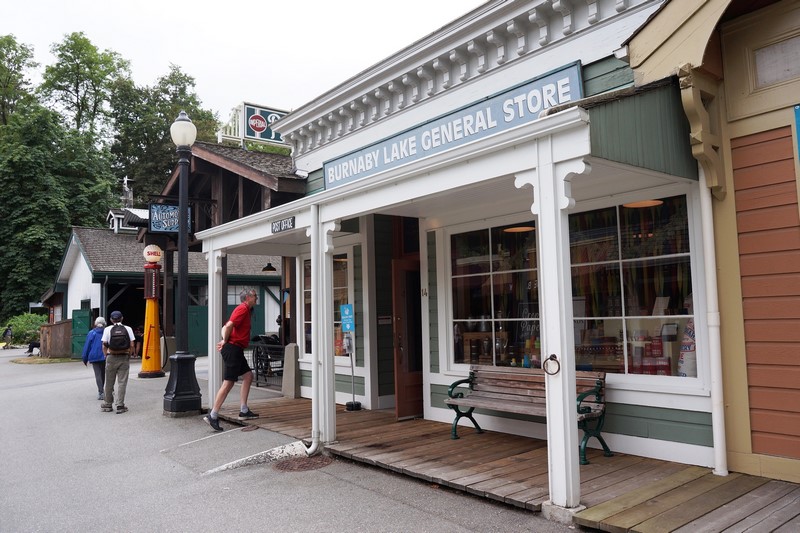
Burnaby Lake General Store

Other buildings are replica buildings, created to house specific displays and artifacts.

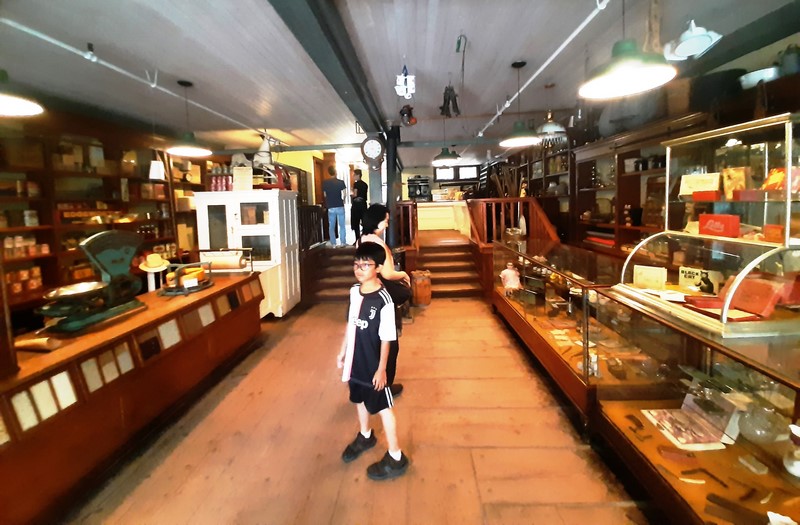
Burnaby Lake General Store – Interior

The Burnaby Lake General Store is a 1920s General Store based on an actual store from Burnaby.  On stock were cleaning items, coffee beans, daily grocery items, etc.

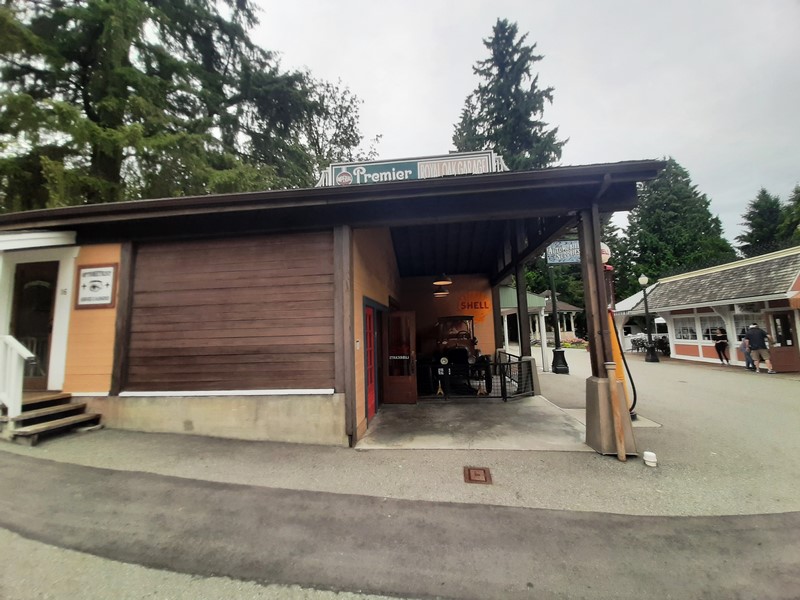
Royal Oak Garage

Royal Oak Garage – Interior

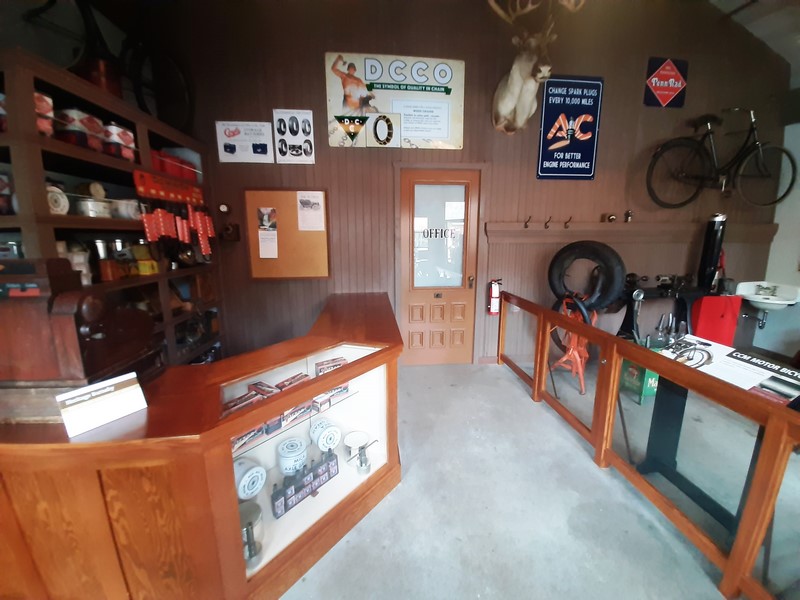
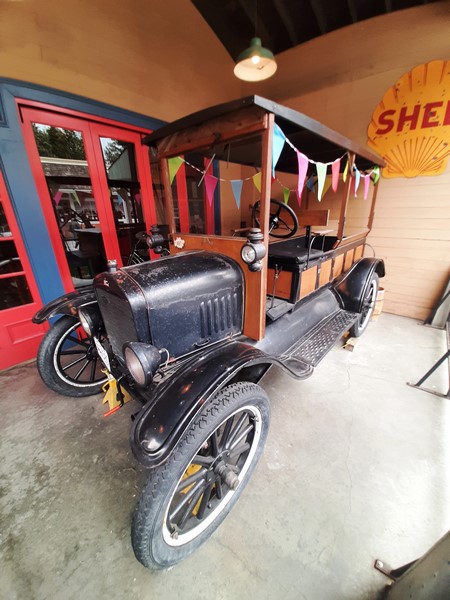
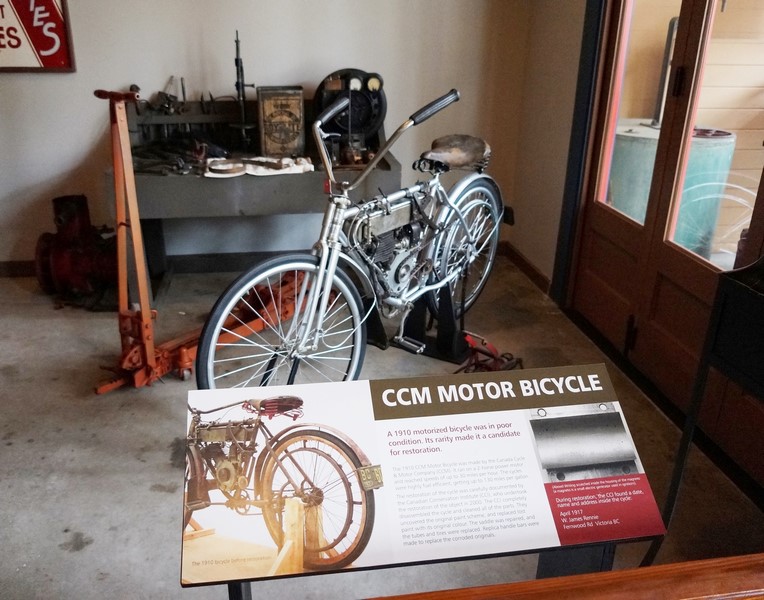
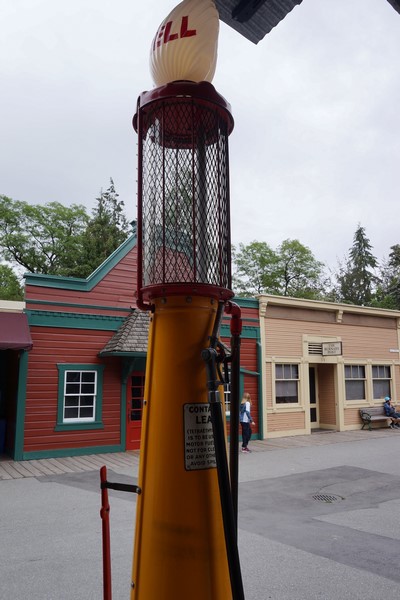
The Royal Oak Garage, based on a 1925 garage on Kingsway in Burnaby has, on display, a vintage gas pump, a 1924 Ford Model T and a CCM Motor Bicycle.

1924 Ford Model T

CCM Motor Bicycle

Vintage gas pump

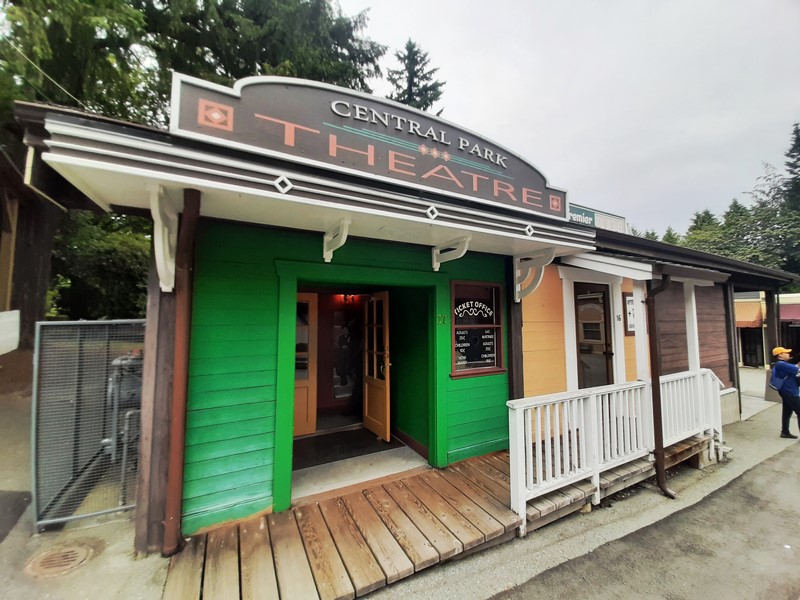
Silent movies, from the 1920s, are played in the 20-pax Central Park Theatre.

Central Park Theatre

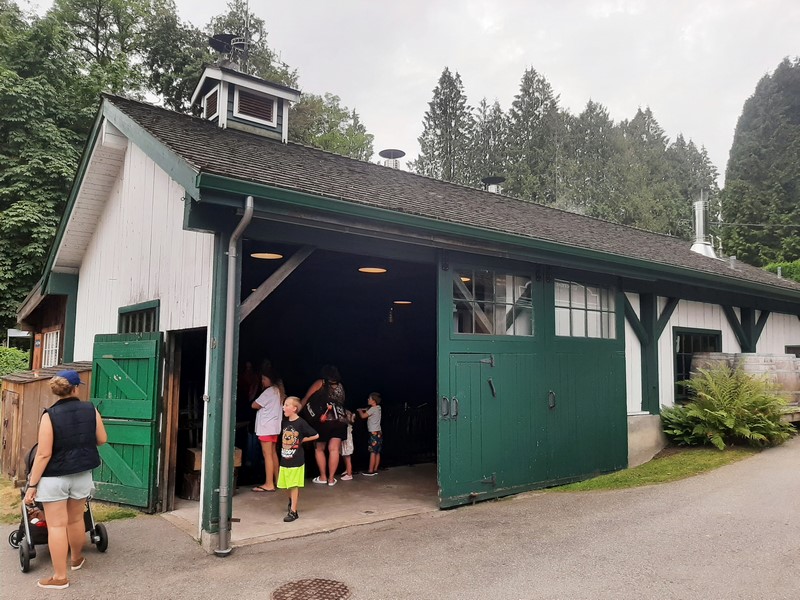
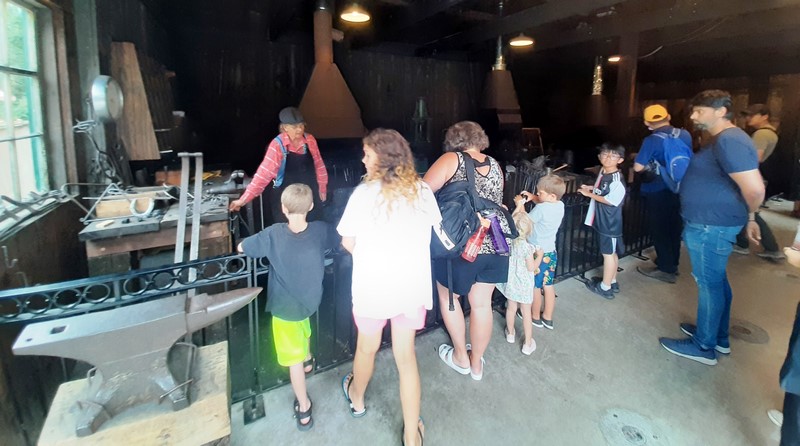
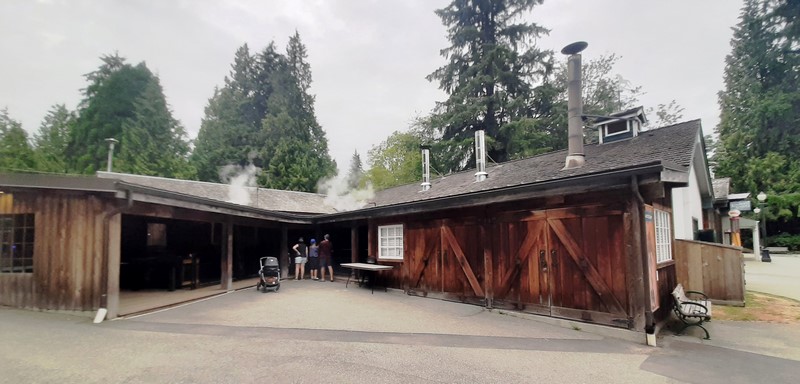
The Wagner’s Blacksmith Shop is a working blacksmith shop based on a 1925 Burnaby business.

Wagner’s Blacksmith Shop

Staff, dressed in 1920s period attire, demonstrating tinsmithing at Wagner’s Blacksmith Shop

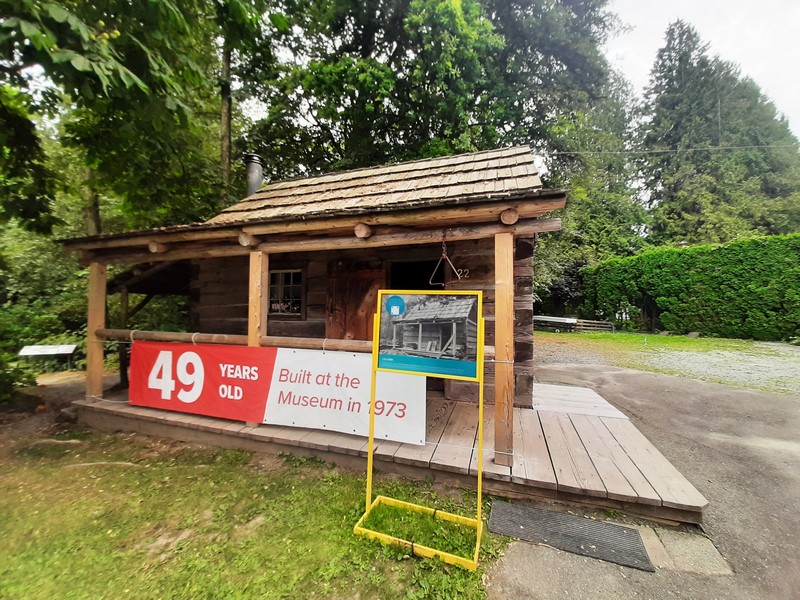
The Log Cabin, built in 1973 (as a North West Mounted Police post to commemorate the 100th anniversary of the RCMP) by Earl Robert Carter using only hand tools, is a reproduction of a log house built in 1860 by William Holmes, Burnaby’s first settler.

Log Cabin

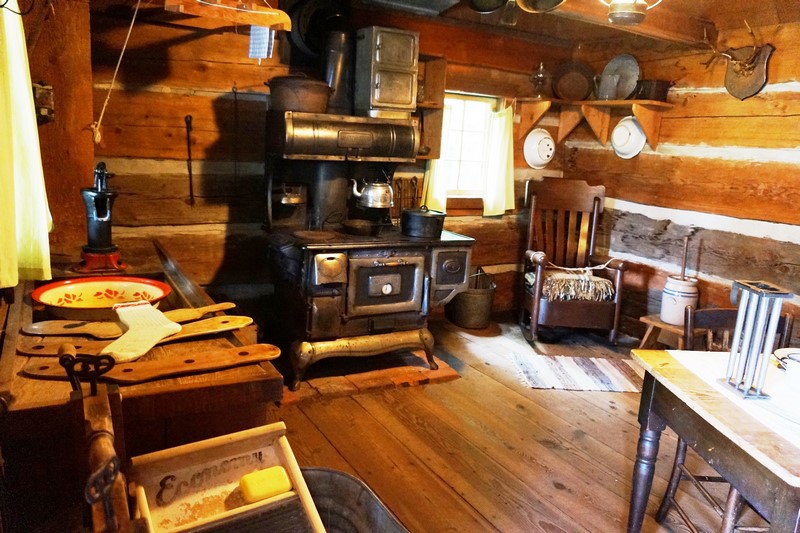
Log Cabin – Interior

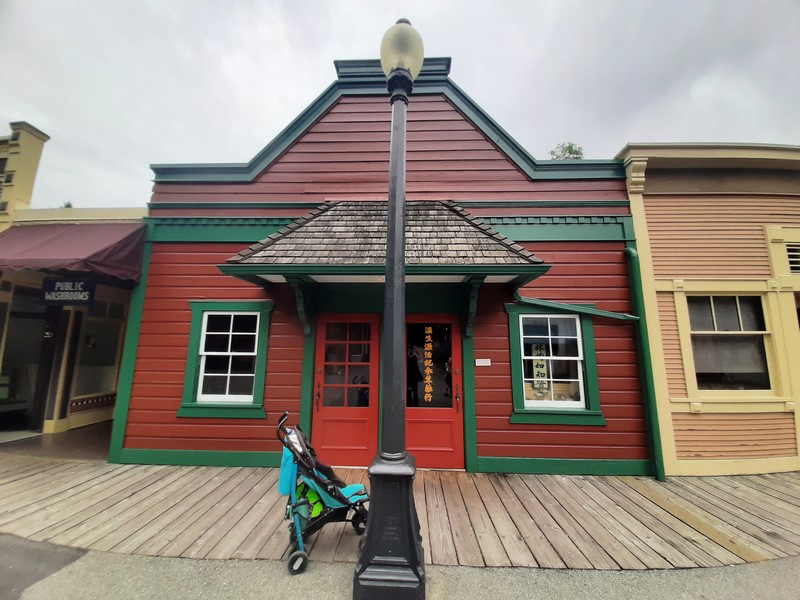
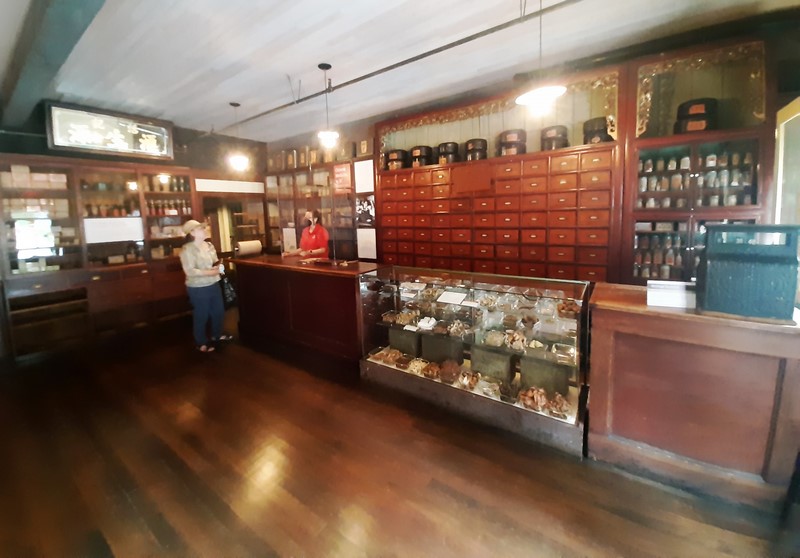
Way Sang Yuen Wat Kee, a replica Chinese herbalist’s shop opened in 1975, houses the contents from a store which operated in Victoria from about 1900 to 1971.

Way Sang Yuen Wat Kee Herbalist

Way Sang Yuen Wat Kee Herbalist – Interior

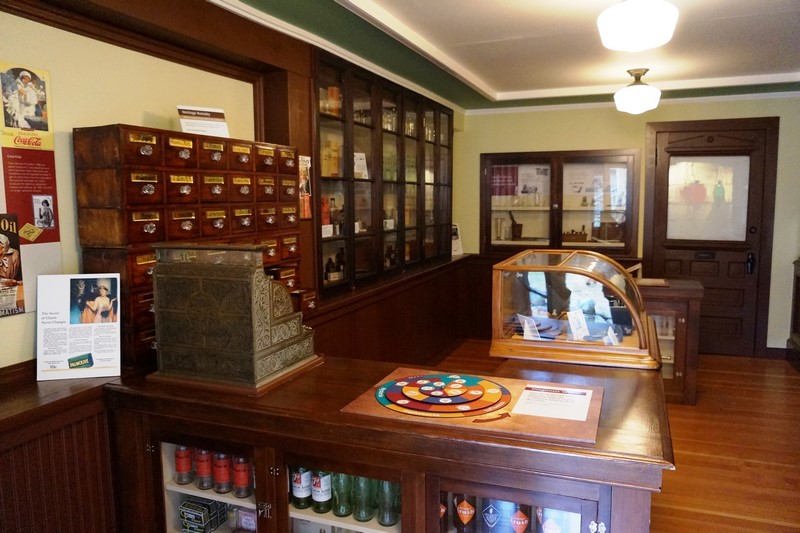
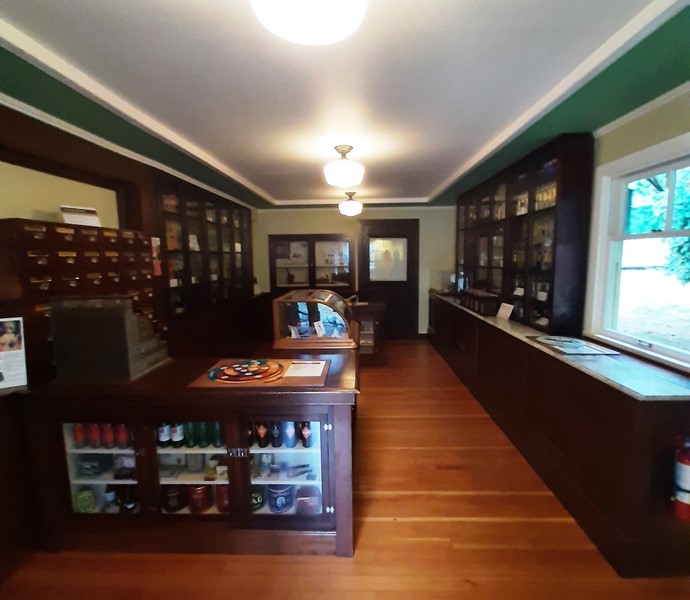
The Drugstore has a rotating chart that helps patients identify their disease based on their general symptoms.

The Drugstore

Drugstore – Interior

There’s also a shining globe, in front of the store, made up of different colors that showed how seasoned the chemist was.

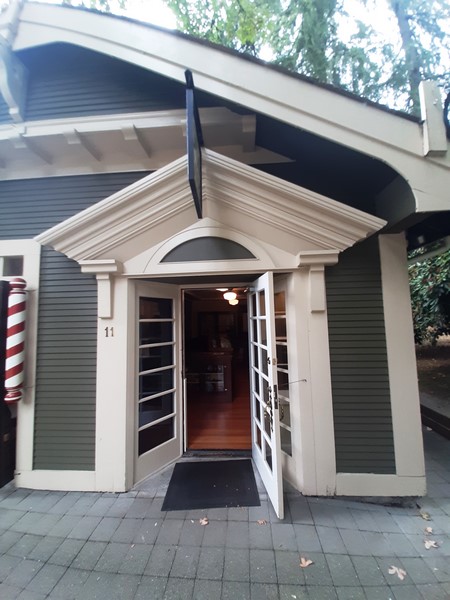
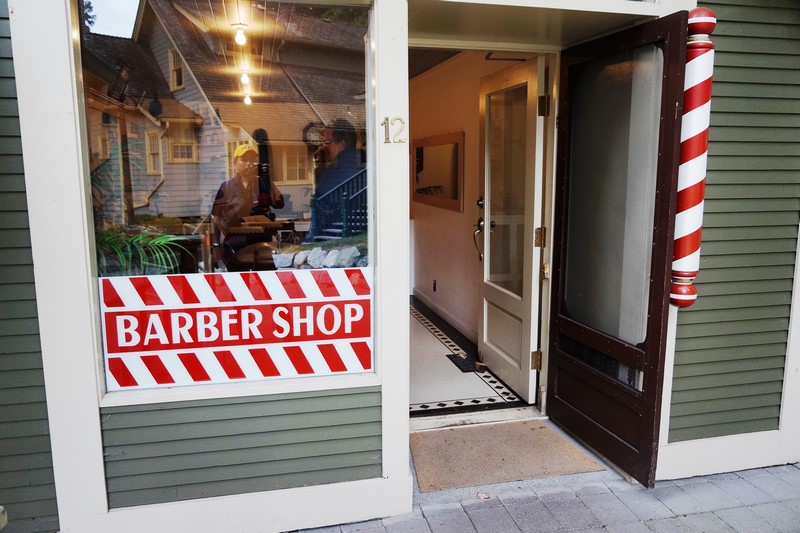
McKay Barber Shop

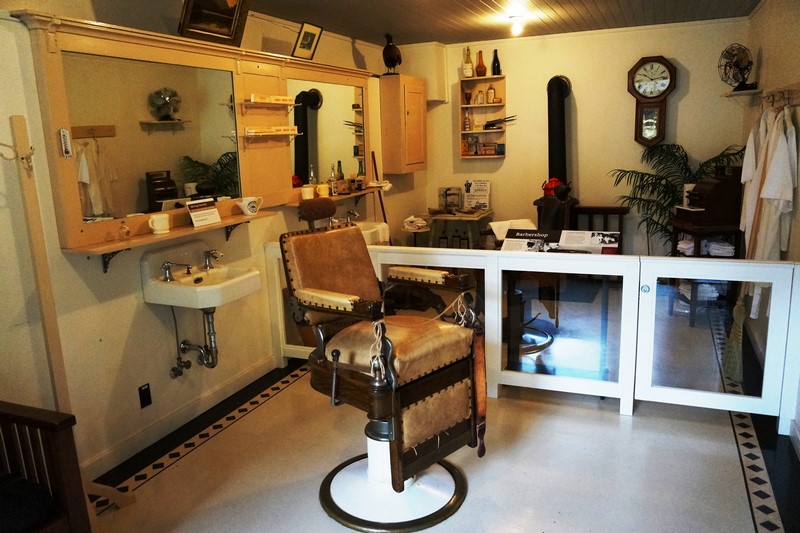
McKay Barber Shop – Interior

Beside it was the McKay Barbershop, a 1920s barbershop modeled after Burnaby’s McKay barbershop that operated on Kingsway.

Stride Studios

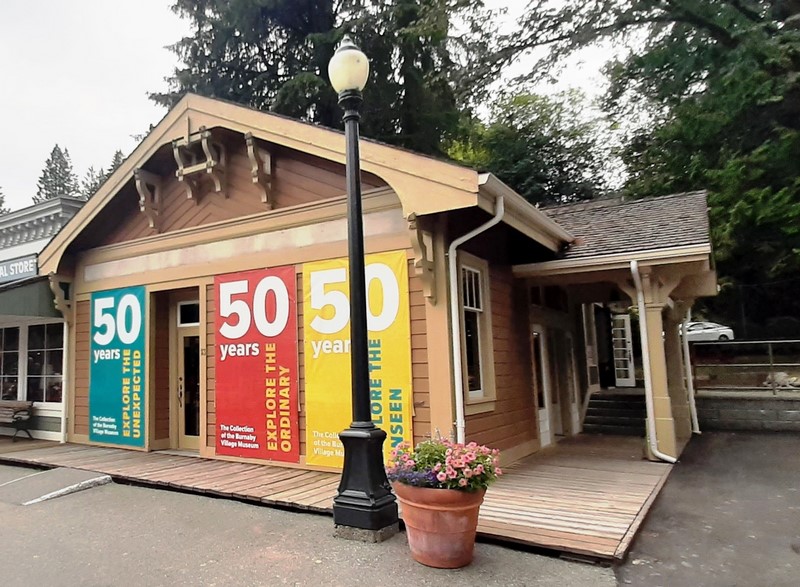
The Stride Studios, a temporary exhibit gallery on Hill Street, was opened in 2000.  Each year, it features a different special exhibit that explored topics beyond Burnaby in the 1920s to be featured as part of the visitor experience.

Stride Studios – Interior

In 2011, the gallery hosted “Prints from CPR Magic Lantern Slides, 1885-1930,” curated by Michael Lawlor and Bill Jeffries and circulated by the Simon Fraser University Gallery.

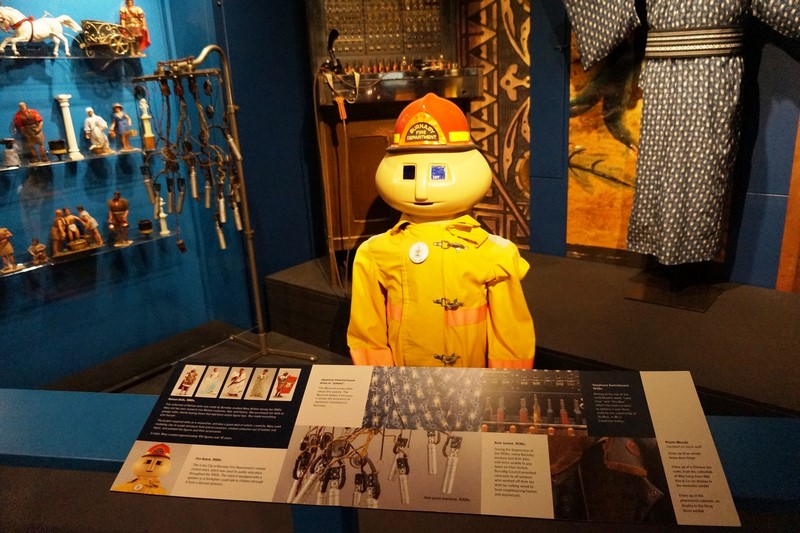
Fire Robot, 1990s

Ongoing, during our visit, was the “We Are 50: Expect the Unexpected – The Collection of the Burnaby Village Museum.”  It showcases objects rarely seen by the public before

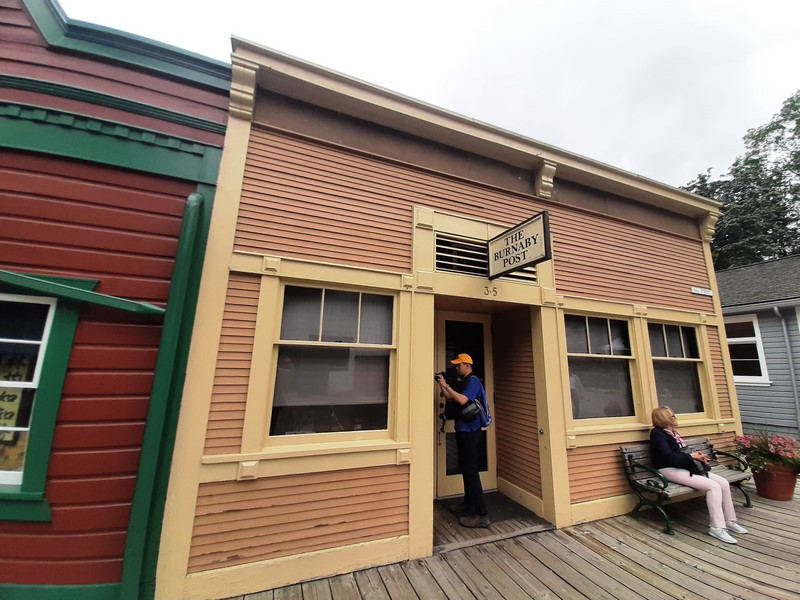
The Burnaby Post

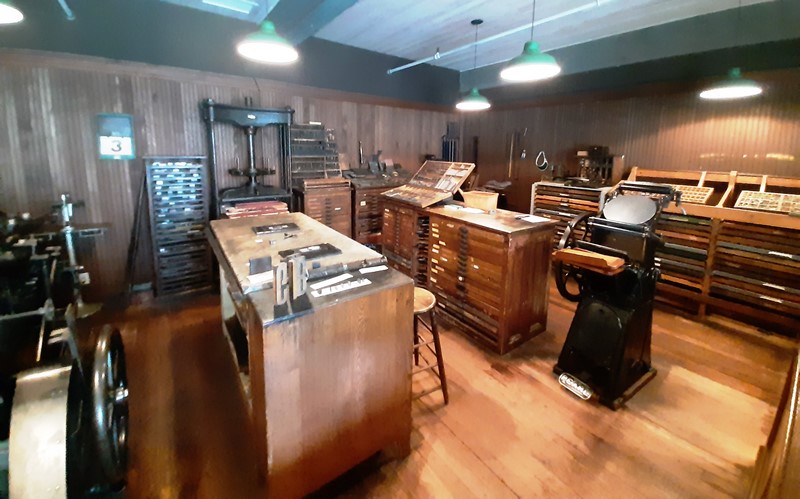
The Burnaby Post – Interior

The Burnaby Post, a working print shop representing the offices of Burnaby’s weekly paper, the Burnaby Post, demonstrates how an early printing press operates.

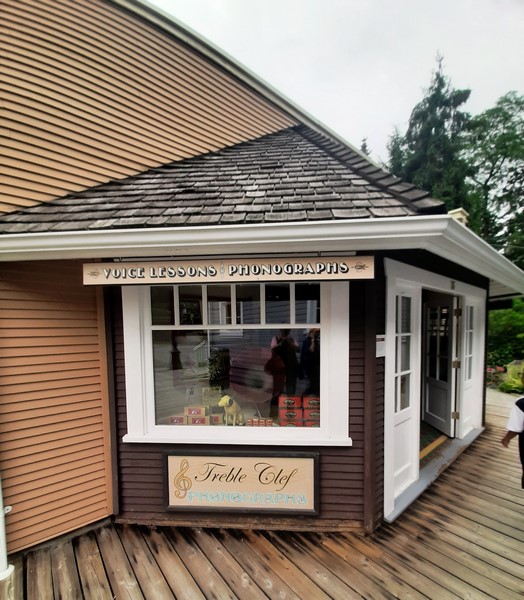
Treble Clef Phonographs

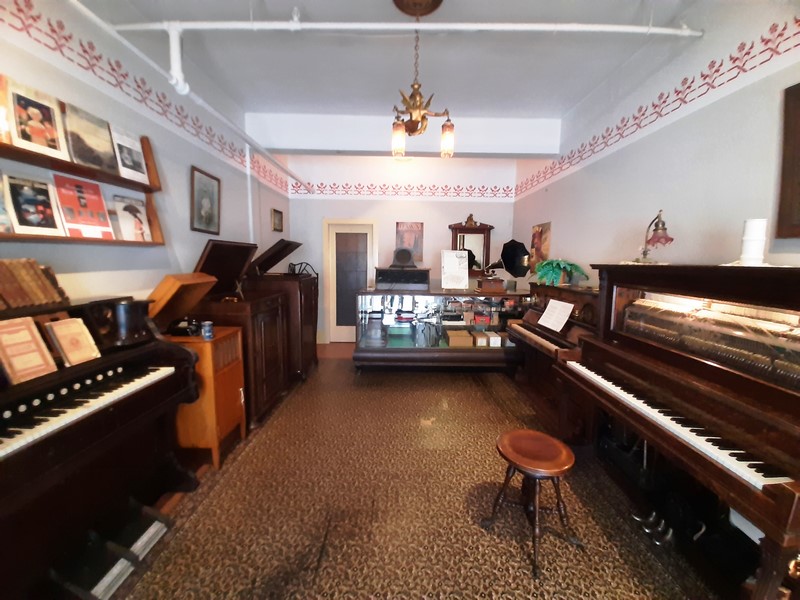
Treble Clef Phonographs – Interior

Treble Clef Phonographs is a 1920s music shop with an operating player piano.

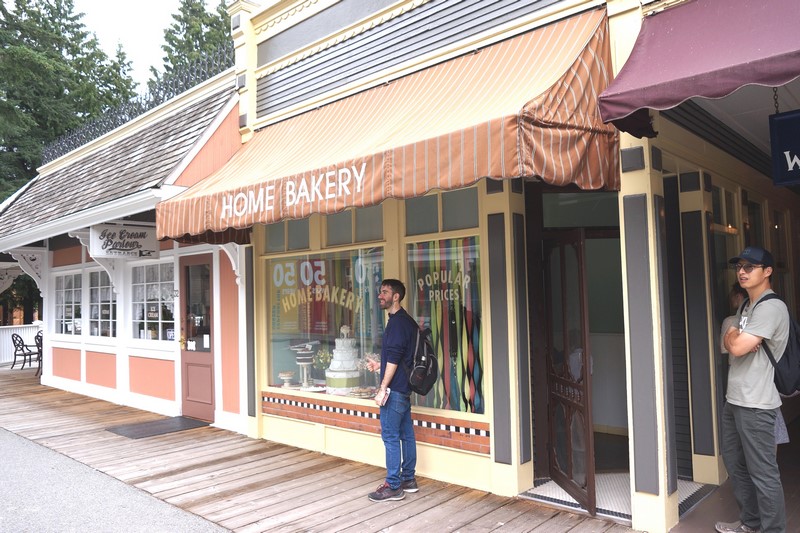
Home Bakery

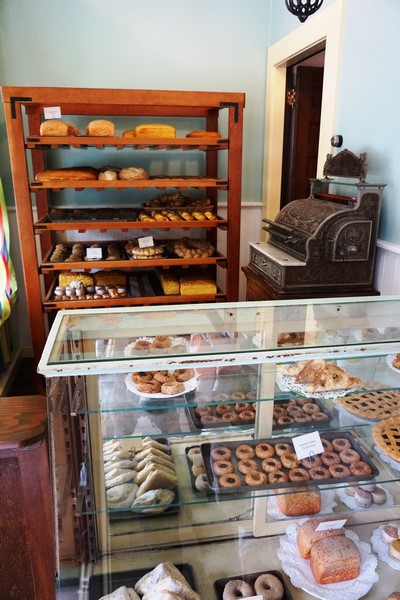
Home Bakery – Interior

The Home Bakery is a replica of the original “Home Bakery” which was located on Kingsway, just east of Boundary Road.

Japanese ofuro

There’s also a replica of an ofuru (Japanese bathhouse), built in 1977 in partnership with the Japanese-Canadian Citizens Association, to commemorate the arrival in B.C. of the first Japanese immigrant in 1877.

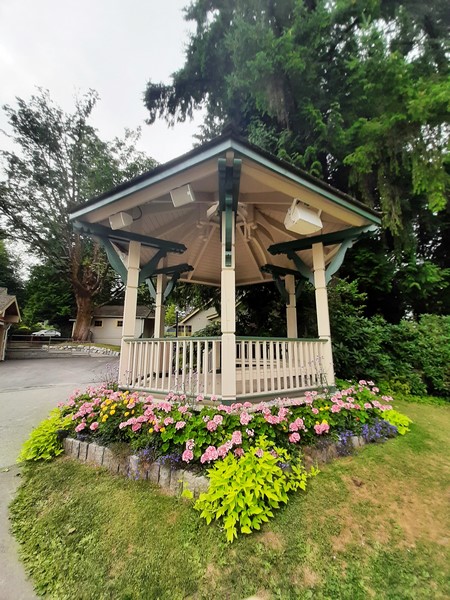
Bandstand

The Museum’s bandstand is based on the Central Park bandstand, built in 1895 and used until the 1920s.

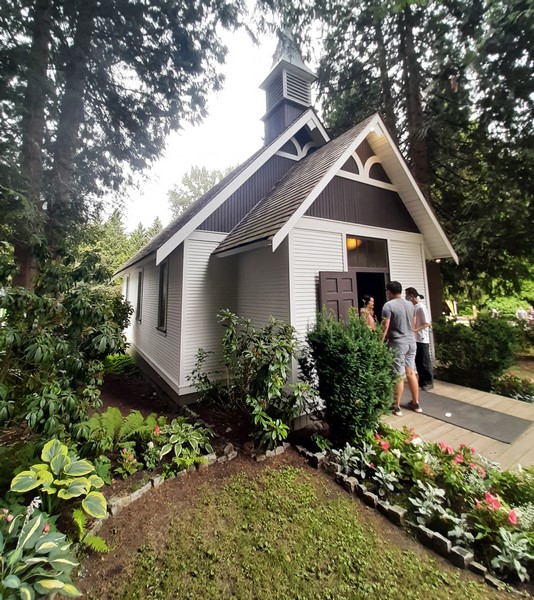
the 1920s replica church

The nearby replica 1920s church, opened in 1974, is used for small weddings, memorials or baptisms.  It has hardwood floors, an upright piano, traditional stained glass windows and 14 authentic wooden pews.

Learning House

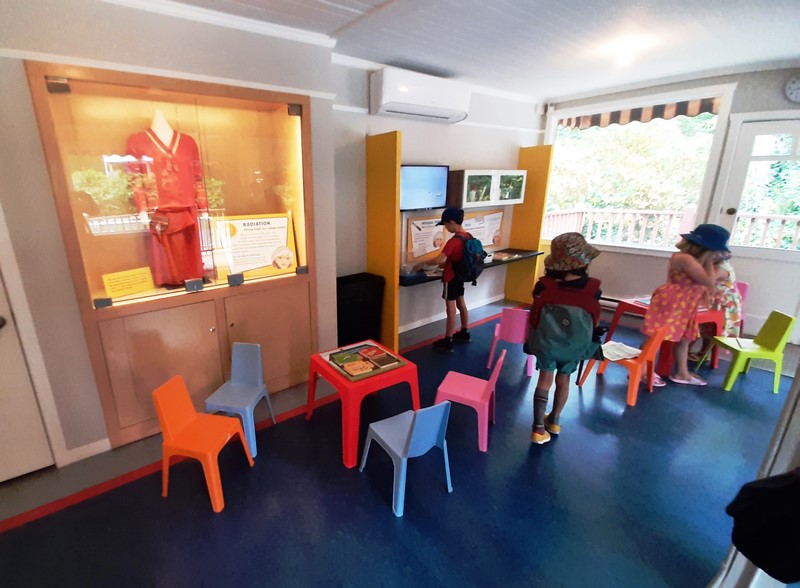
The Indigenous Learning House, an important addition to the Village, showcases the culture, language and traditions of the Skwxwu7mesh First Nations (Squamish) who lived here before Burnaby was colonized.

Learning House – Interior

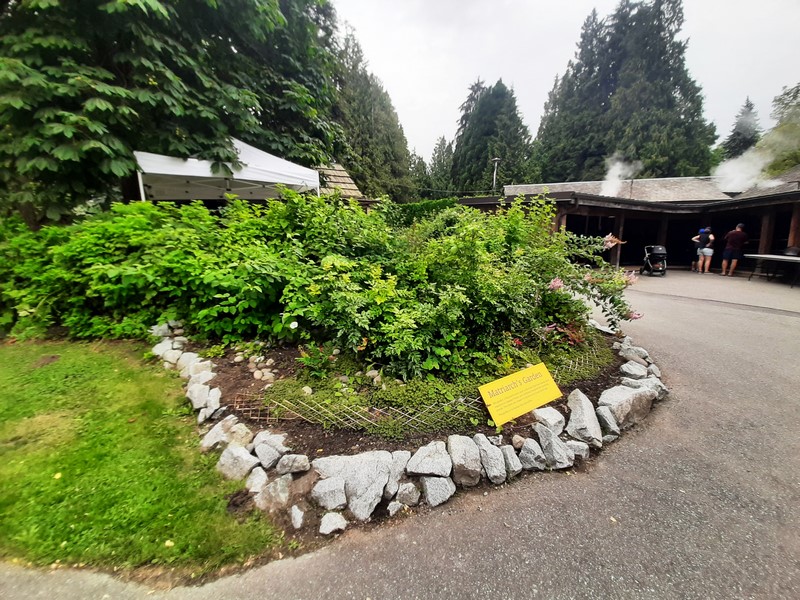
Accompanying this house is the Matriarch’s Garden which contains special indigenous Coast Salish plants, some of them endangered, used for weaving, making tea and food for both humans and animals. The stones here are shaped in a Coast Salish eye, representing the grandfathers. Here, indigenous educators share their knowledge about plants.

Matriarch’s Garden

The Museum’s costumed historic interpreters or staff members, dressed in vintage clothing of the 1920s, have expert knowledge of the era and demonstrated the traditional trades. There are steam equipment that show how steam was once used to power sawmills and industrial equipment.

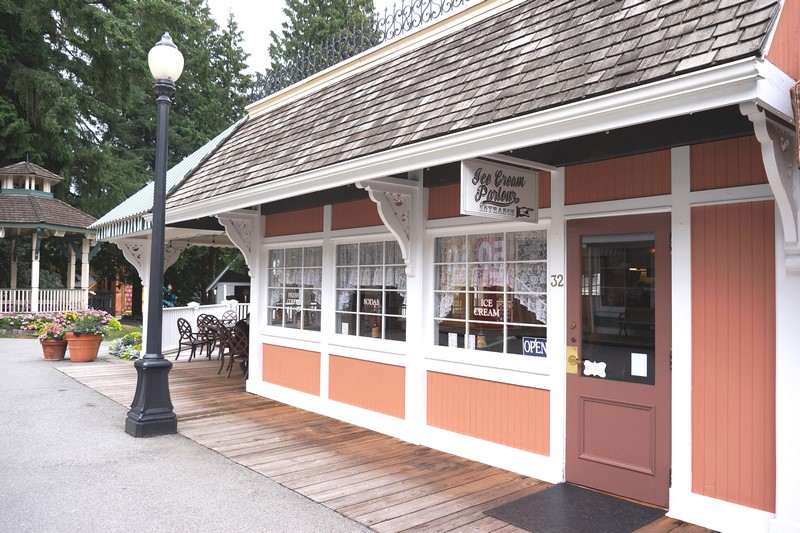
Ice Cream Parlour

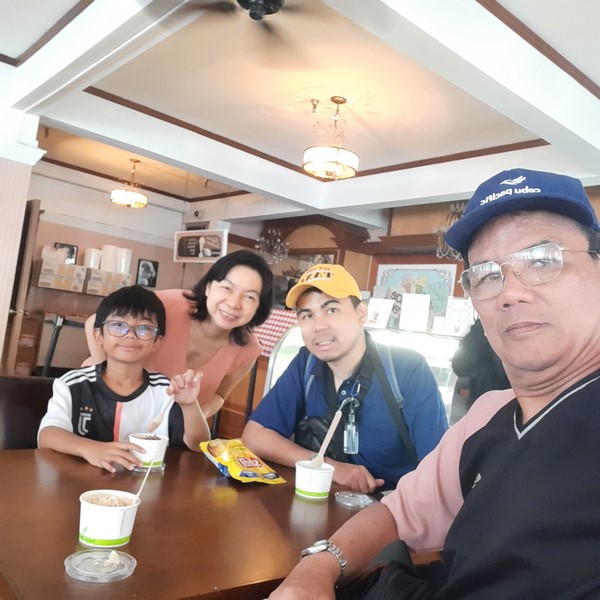
Steam donkeys were used to move logs in the forest by winching steel ropes.  After our long walk exploring each and every building, we stopped for a sweet gelato treat at the iconic, 1920s-style Ice-Cream Parlour, beside the Home Bakery.

L-R: Kyle, Grace, Jandy and the author enjoying gelato at the Ice Cream Parlour

Burnaby Village Museum and Carousel: 6501 Deer Lake Ave., Deer Lake ParkBurnabyBritish Columbia V5G 3T6, Canada. Tel: (604) 297-4565.  Fax: (604) 297-4557.  E-mail: bvm@burnaby.ca. Website: www.burnabyvillagemuseum.ca. Coordinates: 49.2391°N 122.9661°W. Admission is free, except for special events like their Spring Break Scavenger Hunt in March and Haunted Village in late October. There is also a small charge for their carousel rides (around $2.50 in normal years).
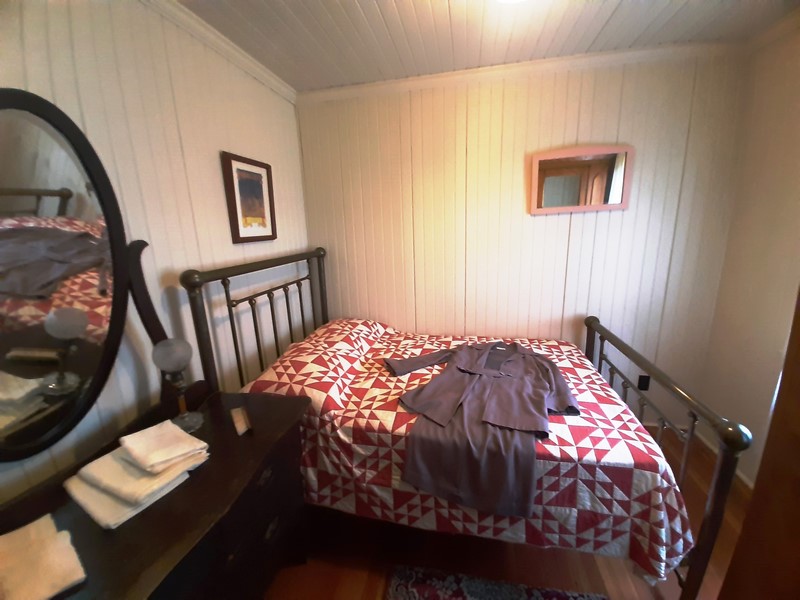
Burnaby Village Museum opens seasonally.  For 2022, it is open, from 11 AM to 4:30 PM, for school Spring Break, from March 14 to 25; and during summer, from Tuesdays to Sundays, between May 7 and September 5 (as well as on statutory holidays like Victoria DayCanada DayBC Day and Labour Day). Admission is free. The Haunted Village (also called Eerie Illusions) takes place from October 20 to 30. Admission to the Halloween attraction costs adults around $10 and $5 for children. Heritage Christmas is set to run from November 26, 2022 until January 2, 2023.

How to Get There: by bus: 110, 123, 133, 144, by SkyTrain: EXPO LINE, MILLENNIUM LINE.

Britannia Beach (British Columbia, Canada)

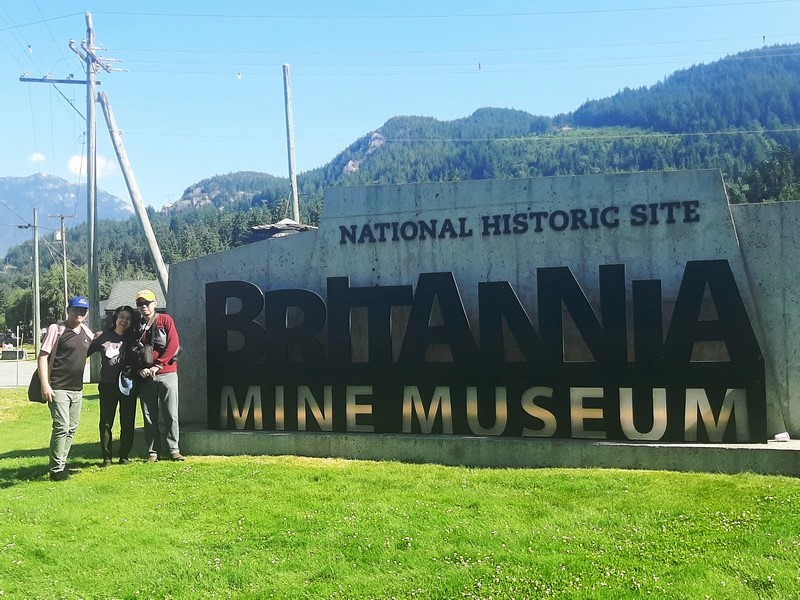
Grace and Danny at Britannia Mine Museum at Britannia Beach

The weather was sunny in Vancouver when Grace, Jandy and I accepted the offer of my Don Bosco Makati high school classmate and now Vancouver resident Danilo “Danny” Macaventa who volunteered to tour us, via his car, around Squamish and Whistler.

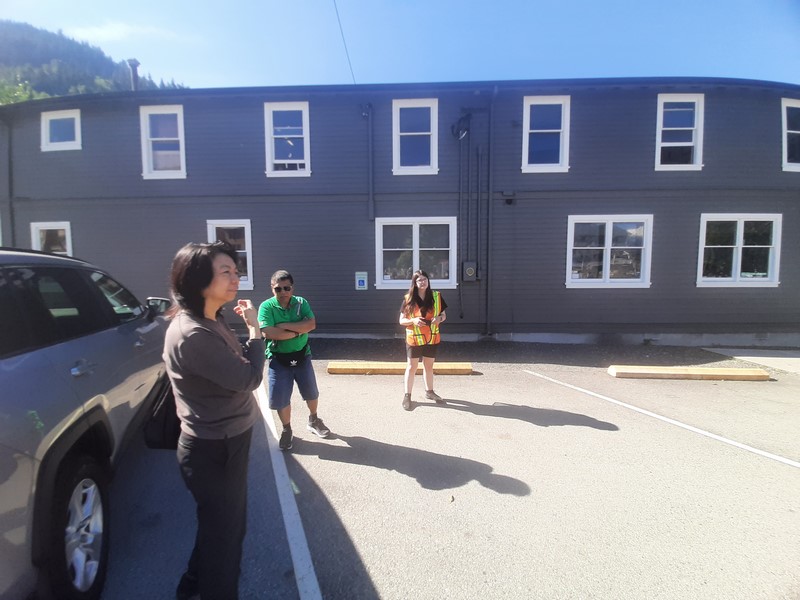
L-R: Grace, Danny and museum guide

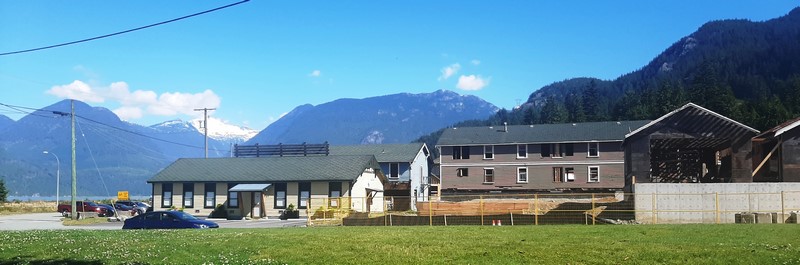
A 61.3-km. (1-hr.) drive, along the Sea-to-Sky Highway on Howe Sound, took us to our first stop, the former copper mining town of Britannia Beach, a small (population about 300) but charming unincorporated community in the Squamish-Lillooet Regional District rich with art and history approximately 10 mins. south of Squamish.

In 1888, a copper discovery on Britannia Mountain by Dr. A. A. Forbes led to the development of the Britannia Mine and, between 1900 and 1904, the community first developed as the residential area for the staff of the Britannia Mining and Smelting Company.

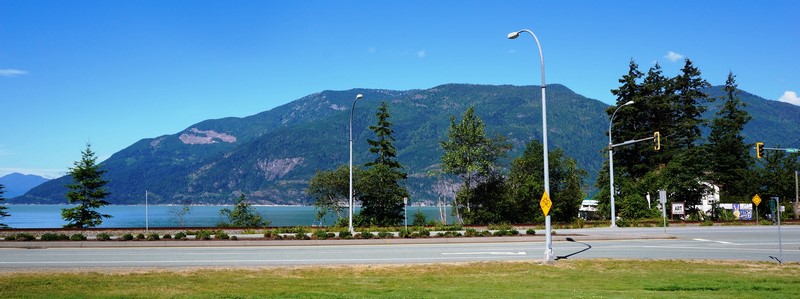
Sea-to-Sky Highway and Howe Sound

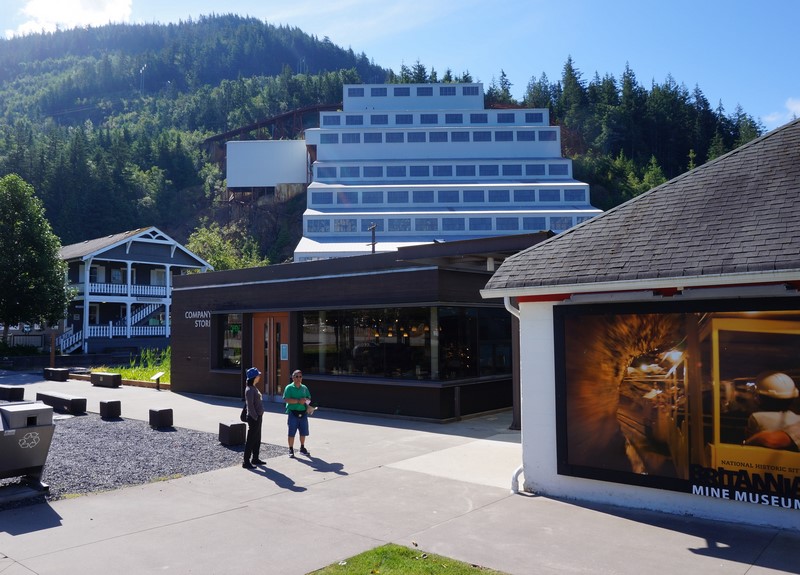
At the center of the town, now an award-winning 10-acre National Historic Site of Canada that has recently undergone a $14.7 million facelift, is the Britannia Mine Museum (formerly the British Columbia Mining Museum) which is visible from the highway itself. The museum now oversees 23 historic industrial, administrative and domestic buildings, over 7,000 artifacts, 9500 archive photos and 3,000 archival documents and maps.

As we arrived just before 10 AM, we decided not to join the 11 AM Mining Tour.  There, visitors can experience what life was really like in a busy  copper mining town by getting an up-close look at machinery, ore carts, a working Lime Tank and the famous Mill 3, also called the Concentrator where the ore was once processed.

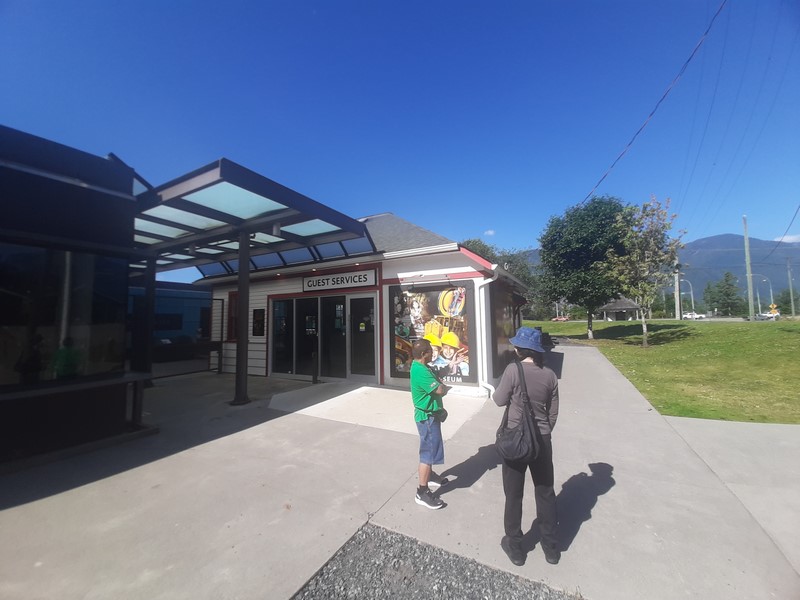
Guest Services Building

Visitors can also climb aboard the museum’s mine train to ride through an historic haulage tunnel (over 210 kms. were dug), driven in 1914 to transport ore from the original mill buildings to the shore. Historic mining and lighting equipment is demonstrated to the visitor. You can also pan for gold and sit in the original throne used in the Copper Queen pageant.

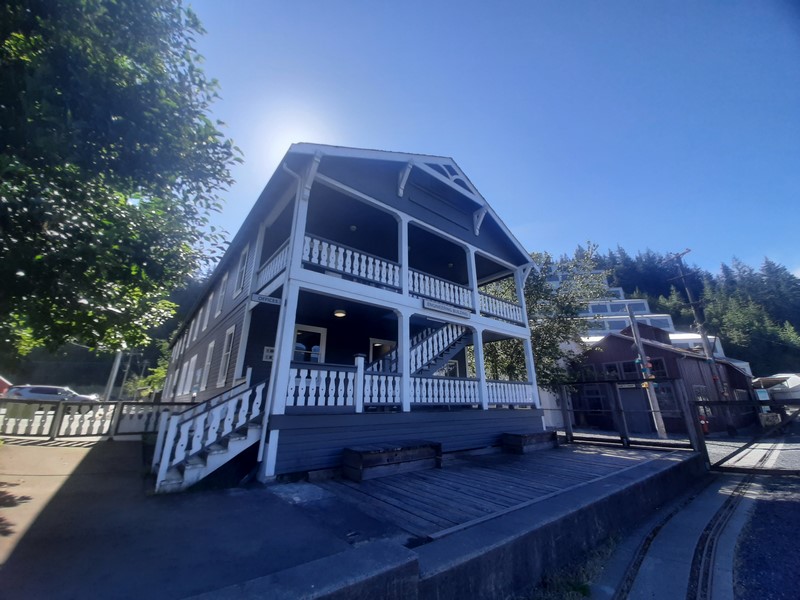
The Engineering Building

We did get to meet museum director Ms. Kristine Clausen who briefed us on the history of the town and its copper mine. According to Kristine, for almost 70 years, Britannia Beach was an important source of copper ore. During the 1920s and 1930s, it constituted one of the largest mining operations in Canada. On November 1, 1974, high operating costs and taxes eventually forced the mine to close.

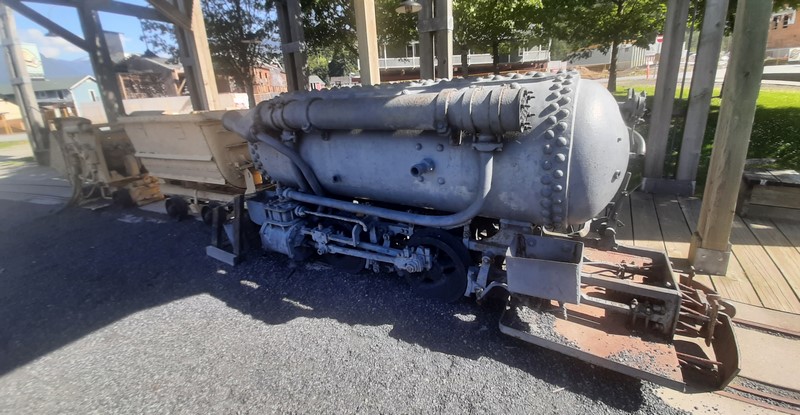
Old mining equipment

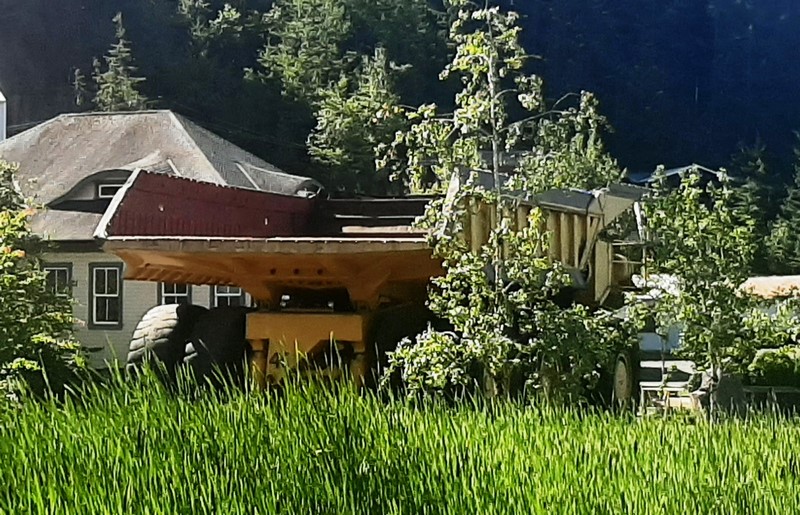
Old 1971 WABCO 3200B Haulpak mining truck

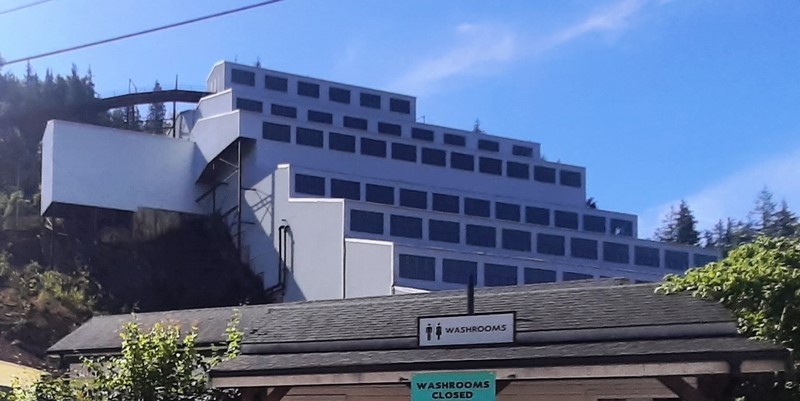
Nearby is a Squamish First Nation Info Legend Display Kiosk while a little bit further off is the old 800,000-lb., yellow 1971 WABCO 3200B Haulpak mining truck.  Further into the distance is the 20-storey Mill 3 building carved into the mountainside.  A highly innovative (using bulk froth flotation), gravity fed concentrator for ore processing, it was designated as a National Historic Site of Canada in 1987 (with a ceremony in 1988).

Britannia Mine Concentrator

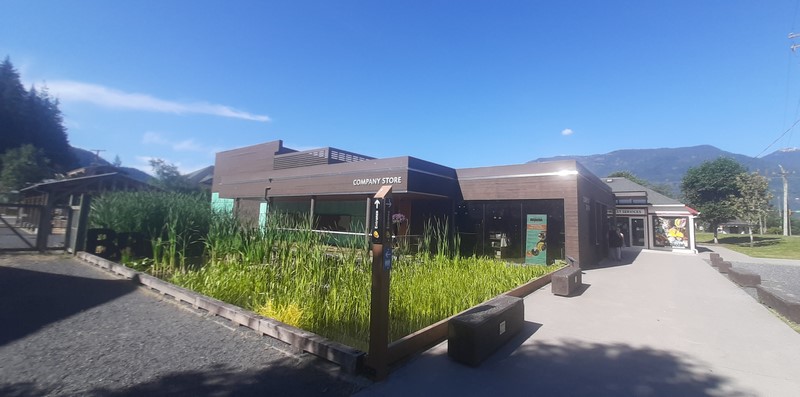
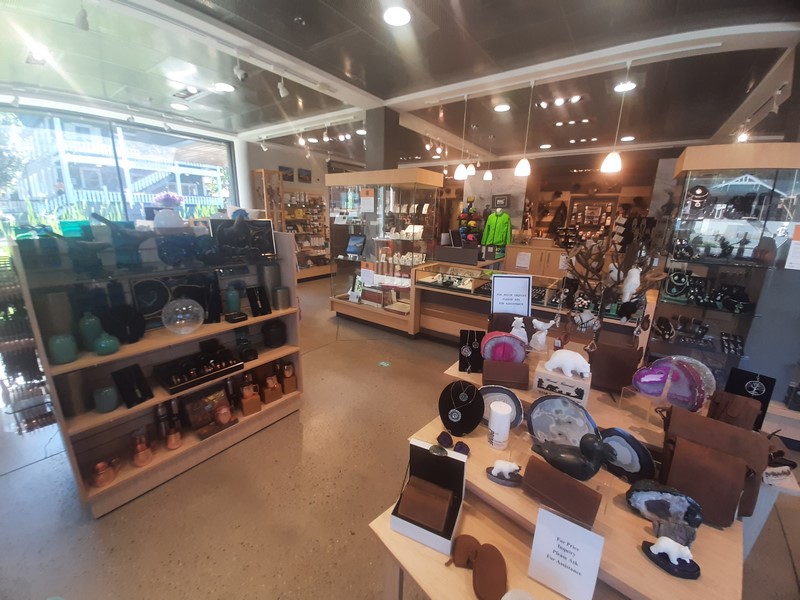
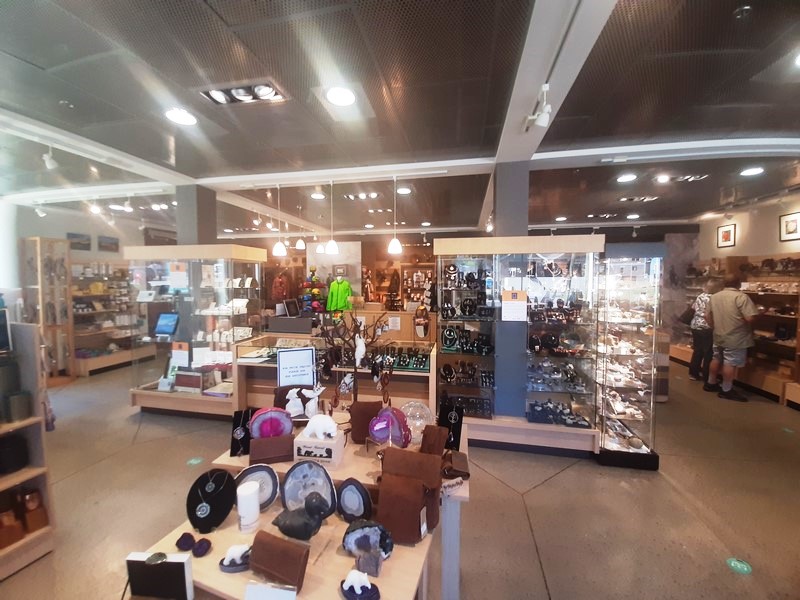
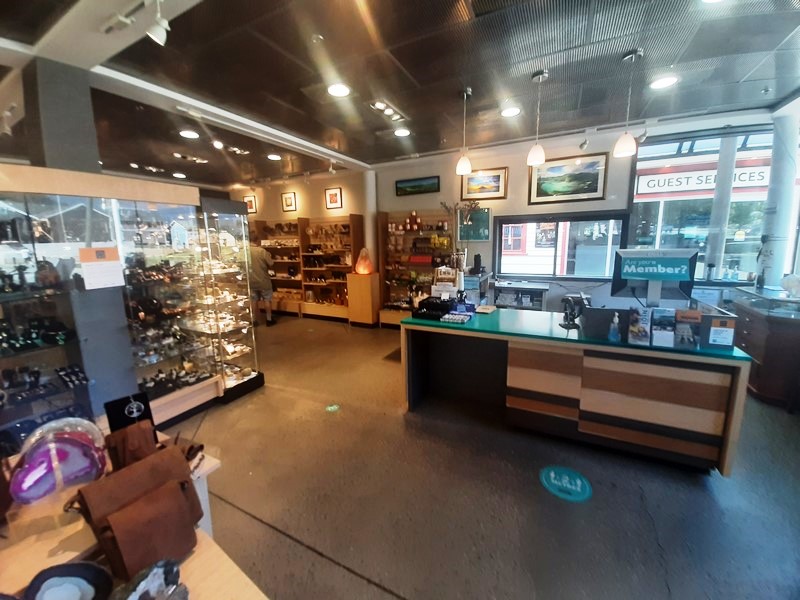
Though we didn’t join the Mines Tour, we did drop by the Company Store (Museum Gift Shop), historically the only shopping place in Britannia Beach. Here, they sell rare ammolite jewelry comprised of the fossilized shells of ammonites,  copper mugs, souvenirs, locally produced wares, books, mining memorabilia, apparel and rare minerals specimens from Canada and all over the world.

Company Store

Also offered for sale are works by leading Northwest Coast native artisans and artists from Britannia Beach, Squamish, and beyond such as Angela Muellers (beautiful paintings), Frances Solar, Niel Bennett (amazing postcards of the Mill building), Jim Unger (copper artworks), Byron Anderson (copper tree sculptures) and Sarah Groves (unique copper jewelry).

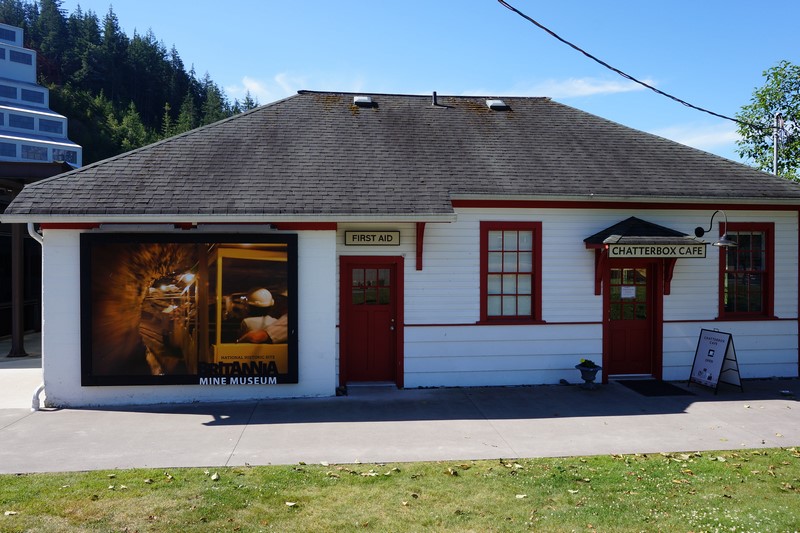
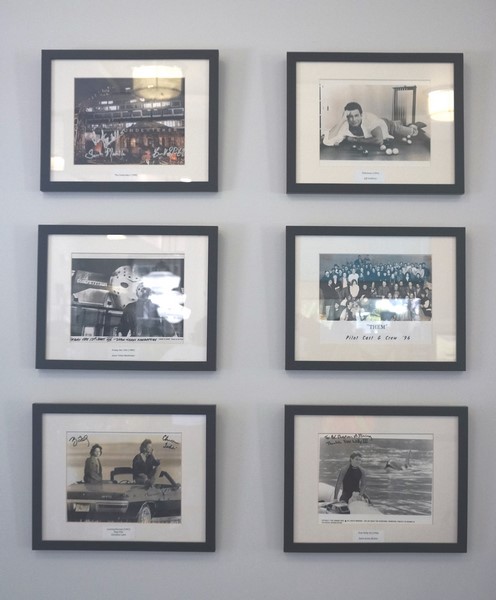
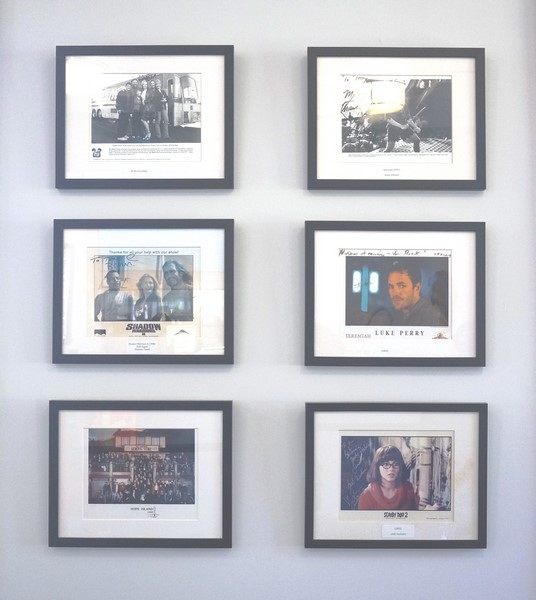
Before leaving, we also dropped by the Chatterbox Café (open 8 AM to 5 PM), located next to the admissions and the gift shop at Britannia Mine Museum, which is also home to the museum’s collection of autographed photos, chronicling the history of feature films and TV production filmed at the museum and in and around Britannia Beach. 

First Aid and Chatterbox Cafe

They include Scooby-Doo 2: Monsters UnleashedOkjaThe Man in the High Castle (TV series)MacGyverThe Flash, Supernatural, many scenes for The Crossing (TV series) in 2017, the 2010 episode of the US TV show PsychDual Spires, the episode “Paper Clip” of The X-Files, scenes for Travelers (TV series) in 2017, and 21 Jump Street.

Britannia Mine Museum: 150 Copper Drive, Britannia Beach, British Columbia V8B 1J1. Tel: +1 800-896-4044.  Website: www.britanniaminemuseum.ca. Open, 9 AM to 7 PM, with 16 tours daily.  First tour starts at 9:30 AM and the last tour at 5 PM (check in at 4:30 PM). Admission: $36.95 (adults. 18+), $33.95 (seniors, 65+, and students), $28.95 (youth, 13-17), $19.95 (child, 5-12), $130 (daily family rate) and free (pre-school, 4 and under).

Amarela Museum (Amarela Resort, Panglao, Bohol)

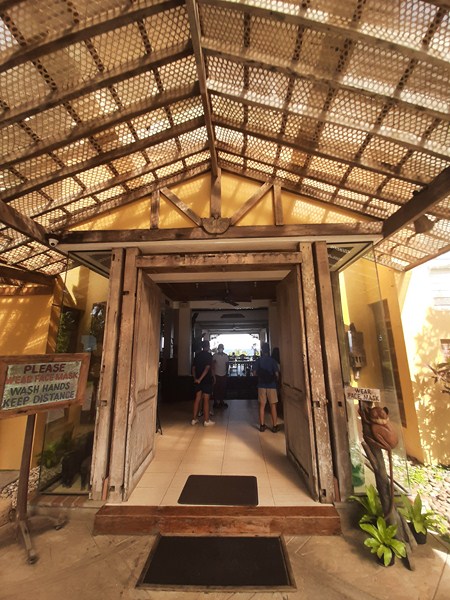
Amarela Museum

Our first stop was Amarela Resort (officially opened in May 2006), an advocate for local art and culture since its inception as a venue where Boholano heritage, art and culture could be preserved and showcased.  Amarela (from the Spanish word for “yellow”).  Perched on a cliff , this beautiful boutique hotel, with commanding views of the azure sea and the longest white sand beach in Panglao, is a two-time ASEAN Green Hotel Award recipient in Bohol.

Museum entrance

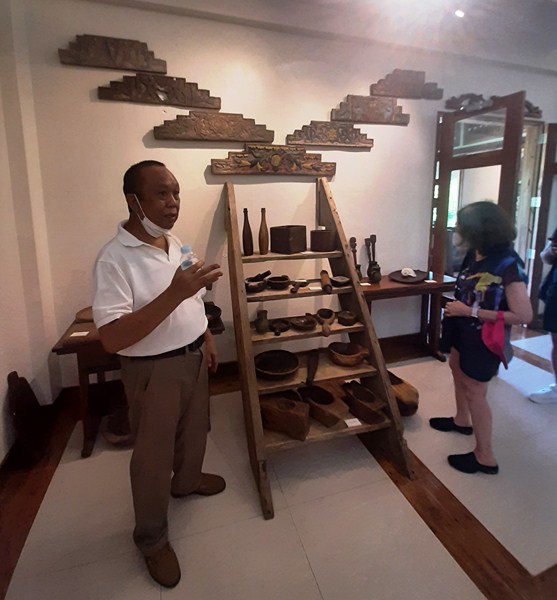
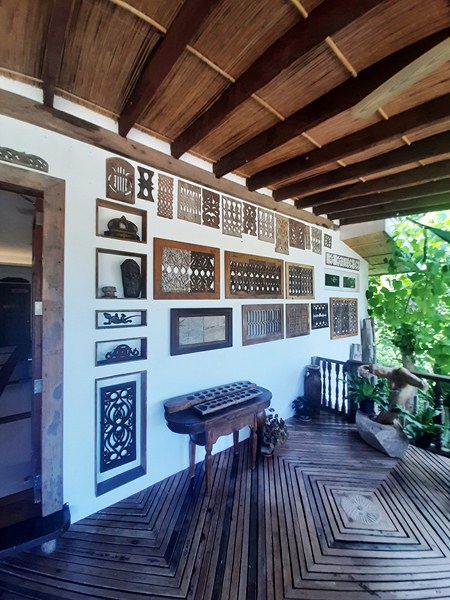
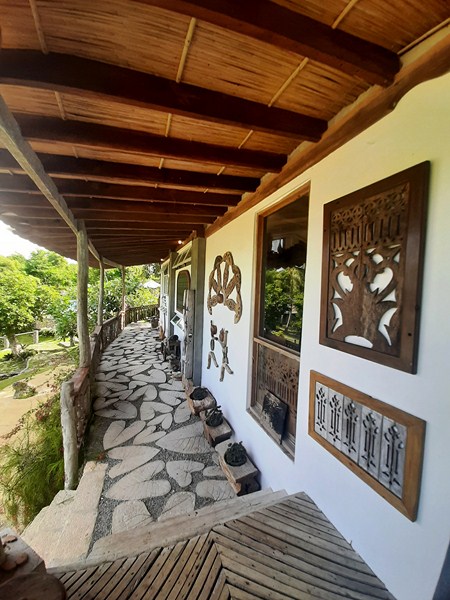
Upon arrival, we were welcomed by 73 year old resort owner Atty. Lucas “Doy” M. Nunag, former chairman of the Bohol Tourism Council. Since he was a practicing lawyer, the affable Doy has been collecting art pieces and antique décor (old wood accents such as latticework, balusters, windows and doors), old implements and furniture from Bohol.  Boholano historian Marianito Luspo accompanied us.

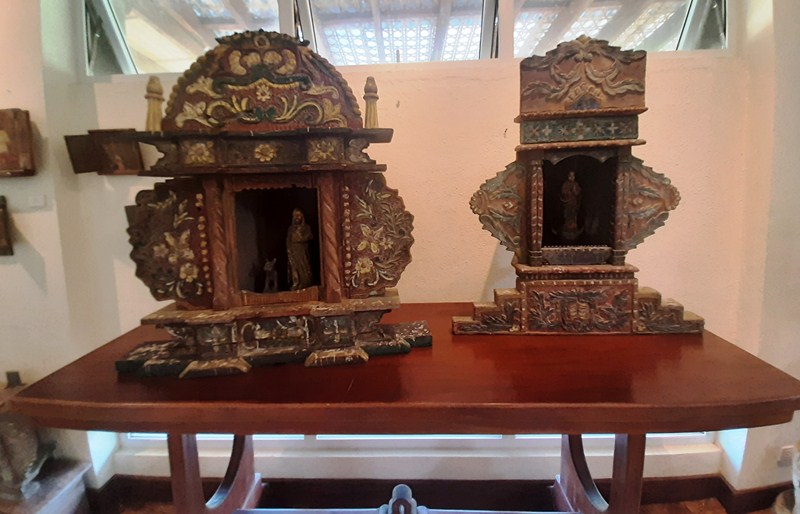
A pair of Baroque-style urnas (wooden shrines)

Started as a vacation house, Amarela Resort was the first resort project of Rosario “Chichi” Vasquez-Victorino (a former colleague of mine at Manosa-Zialcita Architects) who also designed two houses of Doy in Manila.  In its conceptualization, design and operation, the resort incorporated Bohol’s rich heritage and culture, making it a venue where people can truly experience local flavor through artistry and craftsmanship.

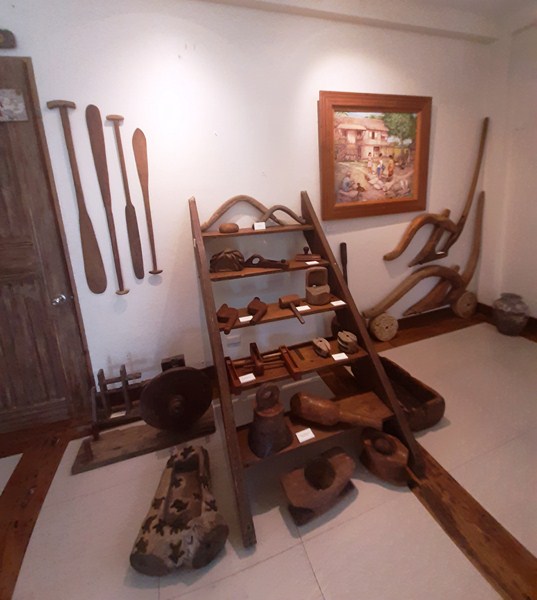
Farming and fishing implements and kitchen utensils

The main house, where we were first entertained, used repurposed and reclaimed old, beautiful and incredibly durable hardwood (the imposing, turn-of-the-century, solid wooden doors; handcrafted lattices; wooden shutters, balusters and flooring), taken from a house of a famed sculptor along the way to Antequera (Doy’s birthplace), using it as decorative elements and giving it the Boholano spirit.

Bohol historian Marianito Luspos

Doy also found old furniture, some of it needing repair.  A talented carpenter (who also doubled as a habal-habal driver during the day) from Antequera (a town known for its craftsmanship in woodworking and weaving) to refurbished these as well as craft new furniture using traditional designs.

A display of wooden latticework and sungka (Philippine mancala) game boards

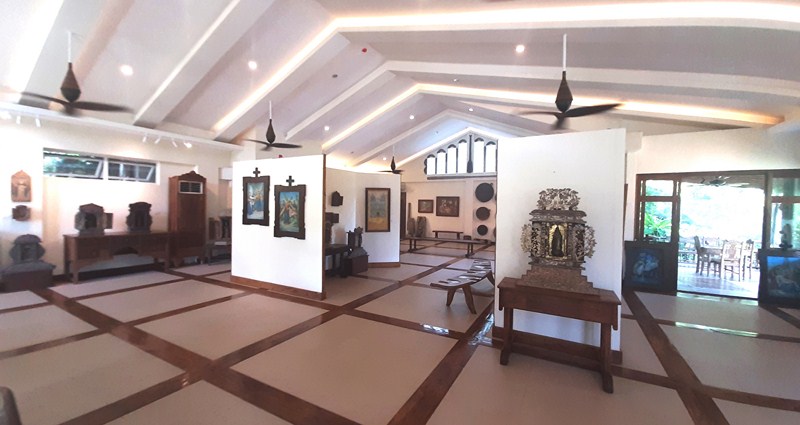
Its museum, a strong commitment to the promotion and appreciation of local art as well as the preservation of Boholano culture and heritage, houses the majority of the local art and antique collection of Doy, allowing guests to appreciate Filipino and Boholano art and craftsmanship.  Most of the paintings and sculptures were created by Boholanos.

The lovely works of the late Hermogena “Nene” Borja-Lungay, who studied under Fernando Amorsolo and a a classmate of the late National Artists Napoleon Abueva and Jose T. Joya, showcase old Boholano traditions as well as renderings of local fruits and flowers.

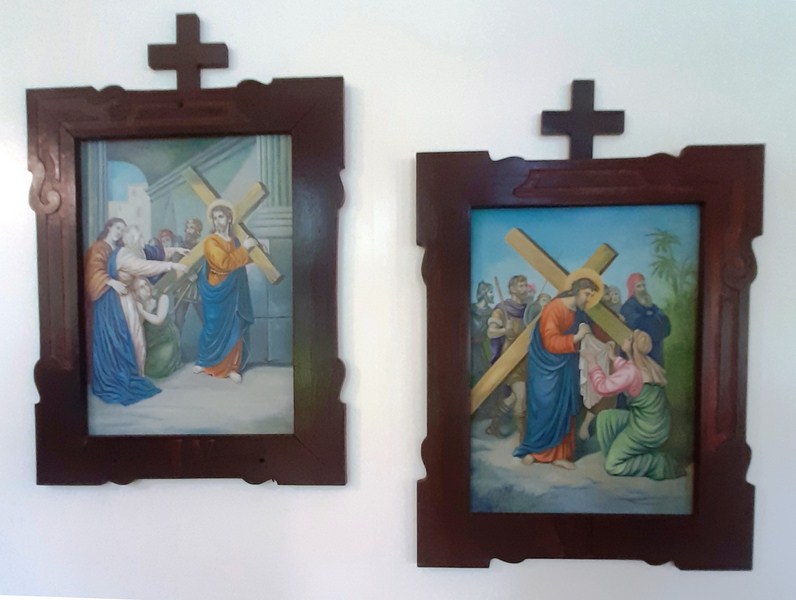
Paintings of the Stations of the Cross

Works of prominent Bohol-based Guy Custodio, who usually paints religious themes on old recycled molave hardwood, has revived the traditional “Bohol School” painting style.  On the other hand, the subjects of Sherwin Tutor are historical events done in a highly detailed figurative style. They include a painting of the two kings of the fallen Dapitan Kingdom located at Tagbilaran Strait. Tere’s also a portrait of a mother and child.

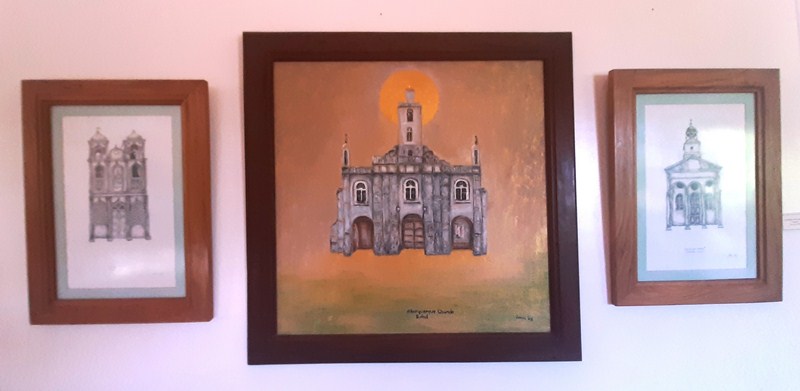
Sketches of Bohol churches

Displayed all over the resort, as well as in the museum, are Baroque-style urnas, some done in triptych (three-panelled paintings hinged together so that they could be closed).  These carved wooden shrines for religious icons, of varying sizes and styles, are evidence of the rich spiritual beliefs of Boholanos.  Also on display are home tools and antique kitchen utensils and equipment such as a duwang (wooden basin), palo-palo (laundry paddle), lusong (mortar), ganta (measuring implement for grain, sugar and salt), all made from molave wood.

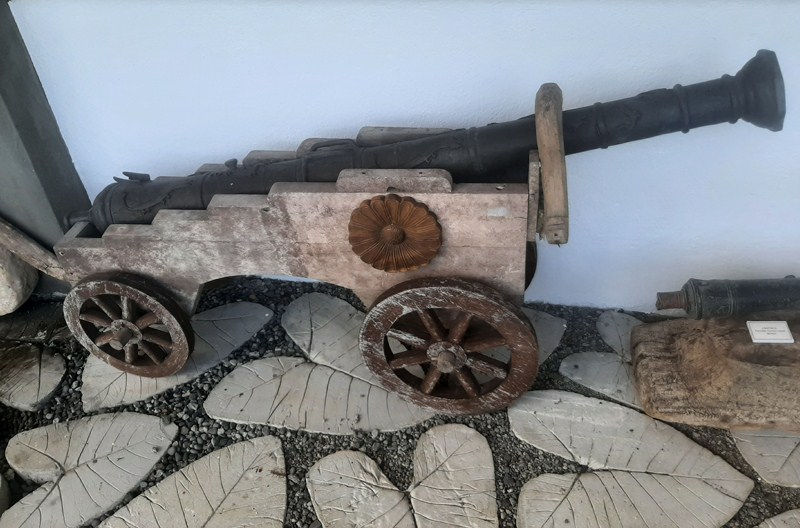
A lantaka (native cannon)

Amarela Museum: Amarela Resort, Lourdes-Libaong Brgy. Rd., Panglao, 6340. Tel: (038) 502-9497 to 99.  Mobile numbers: (0917) 819-1007 (Atty. Lucas “Doy” M. Nunag), (0917) 623-0557 (Reservations) and (0917) 774-7200 (Front Office).  E-mail: reservation@amarelaresort.com and Imnunag@amarelaresort.com.  Website: www.amarelaresort.com.  Facebook: www.facebook.com/Amarela. Instagram: www.instagram.com/amarela. Admission: A consumable entrance fee is charged. 

Bohol Provincial Tourism Office: G/F, New Provincial Capitol Bldg., C. Marapao St, Tagbilaran City, 6300.  Tel: (038) 411 3666.  Email: inquire@boholtourismph.com.  Website: www.bohol.ph.

Department of Tourism Regional Office VII:  G/F, L.D.M Building, Legaspi St, Cebu City, 6000 Cebu.  Tel: (032) 254 6650 and (032) 254 2811. E-mail: dotregion7@gmail.com.  Website: dot7@tourism.gov.ph.

Bluewater Panglao Resort: Bluewater Rd, Sitio Daurong, Brgy. Danao, Panglao, 6340 Bohol.  Tel: (038) 416-0702 and (038) 416-0695 to 96. Fax: (038) 416-0697.  Mobile numbers: (0998) 843-0262, (0998) 964-1868 (Ms. Margie Munsayac – VP-Sales and Marketing), (0998) 962-8277 (Ms. Louee Garcia), (0919) 912-9663 (Mr. Manuel Sandagaon) and (0908) 890-9013 (Ms. Kate Biol).   Email: panglao@bluewater.com.ph, resrvations.panglao@bluwater.com.phmargie.munsayac@bluewater.com.phlouee.garcia@bluewater.com.ph, manuel.sandagon@bluewater.com.ph and kate.biol@bluwater.com.ph.  Website: www.bluewaterpanglao.com.ph.  Manila sales office: Rm. 704, Cityland Herrera Tower, Rufino cor. Valera Sts., Salcedo Village, 1227 Makati City, Metro Manila.  Tel: (632) 817-5751 and (632) 887-1348.  Fax: (632) 893-5391.


Cebu Pacific Air currently flies seven times daily from Manila and thrice weekly from Davao City (every Wednesday, Friday and Sunday) to Bohol’s Panglao International Airport.  Visit www.cebupacificair.com to learn about their latest offerings, safety protocols and travel reminders.

Casa Manila (Intramuros, Manila)

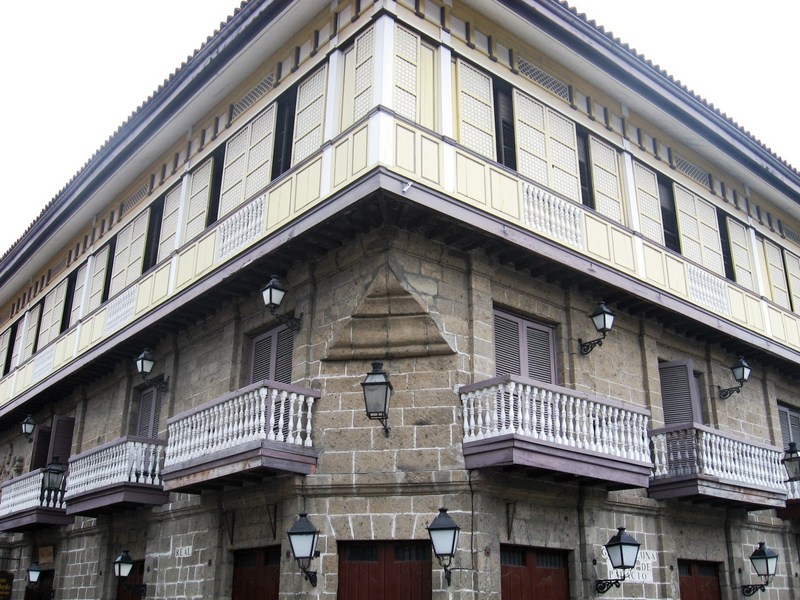
Our 9 – 11 AM Intramuros Mini Walk, hosted by Renacimiento Manila, was capped by our tour of the 3-storey, grand and imposing Casa Manila, a museum depicting colonial lifestyle during Spanish colonization of the Philippines, located across historic San Agustin Church and bounded by Calle Real, General Luna, Cabildo and Urdaneta streets.

Check out “”San Agustin Church” and “Casa Manila (2008)

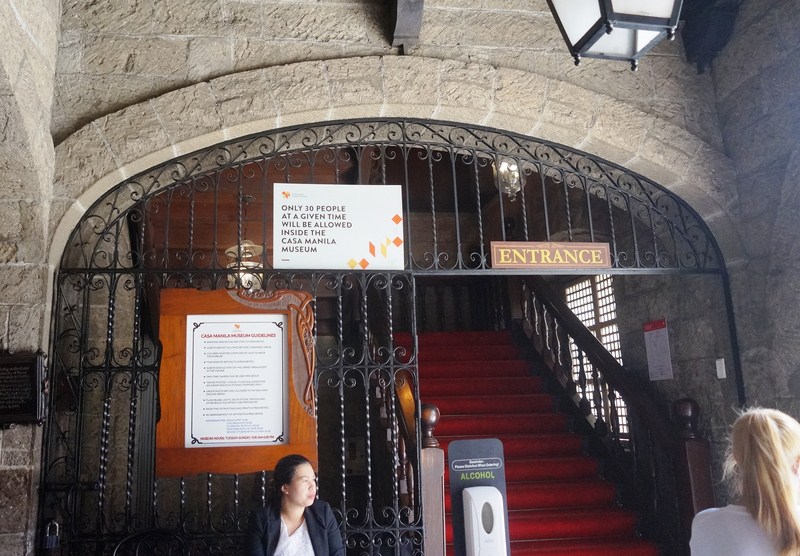
Museum entrance

I have visited this museum before but only got to see its façade of balconies, overhanging wooden gallery and its beautiful inner courtyard paved with piedra china with a decorative fountain that forms its centerpiece.  This would be our first time to explore its exhibits which chronicle the social history of Manila during the Spanish Colonial era.

Tour group at the sala (living Area)

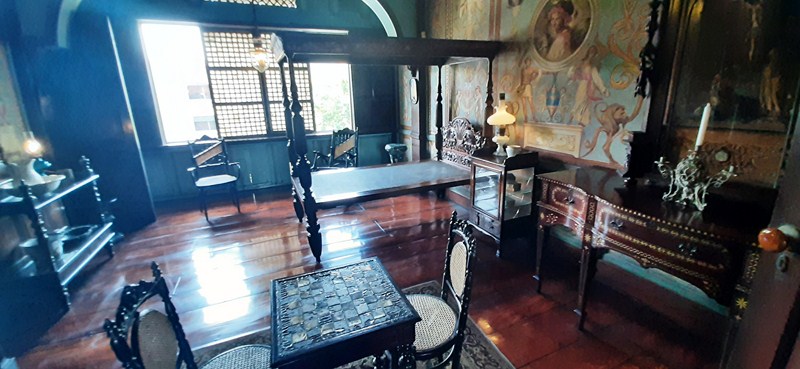
Decorated and furnished in authentic period style, it is typical of the homes of affluent Filipino families, offering a fascinating glimpse of a bygone era. Built in 1981, this museum is a faithful, beautifully-done reproduction of a typical, lavishly appointed, ca. 1850s Spanish bahay na bato (stone-and-wood) residence of Binondo merchant Don Severino Mendoza.

Antesala (Antechamber)

Oratorio (oratory)

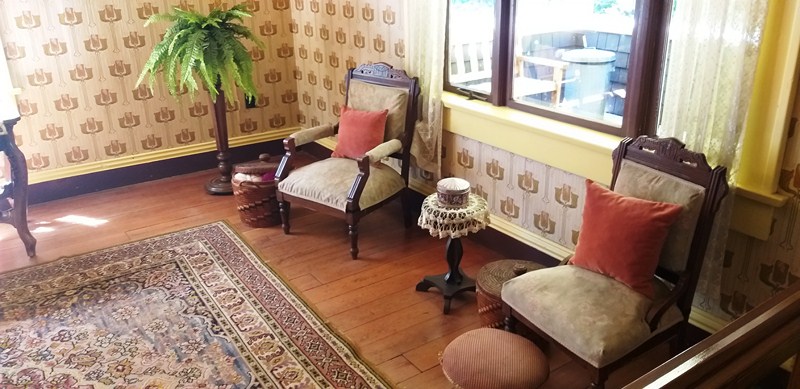
This house once stood along Calle de Jaboneros in San Nicolas, Binondo, one of the grand houses (the other two are the ca. 1650 Los Hidalgos and ca. 1890 Cuyugan Mansion) in Barrio San Luis (one of the four original villages of Intramuros ).

Dining Area

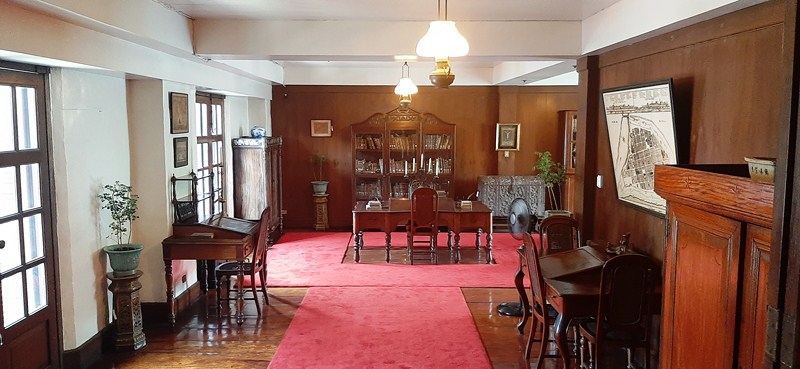
The museum, designed by Arch. J. Ramon L. Faustmann, is arranged over three floors.  Though the house is just a reproduction, its exhibits aren’t.  Its interiors, designed by Martin I. Tinio, Jr., displays finely-crafted, antique Philippine, Chinese and European furniture and furnishings; antique 17th to the early 20th century jewelry, and other items from the Intramuros Administration’s collection, offering an intriguing glimpse of 19th-century domestic life in Manila. 

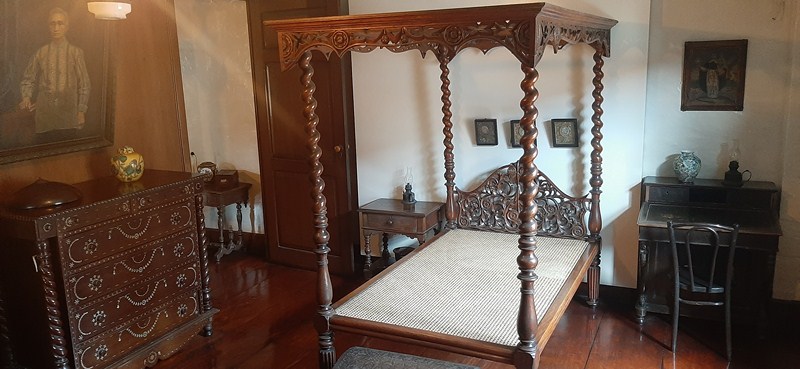
Master Bedroom

Bedroom

At the entrance is a zaguan (from the Arabic word meaning “corridor”) where the carruajes (carriages) and karitelas entered and deposited passengers by the stairs and were parked.

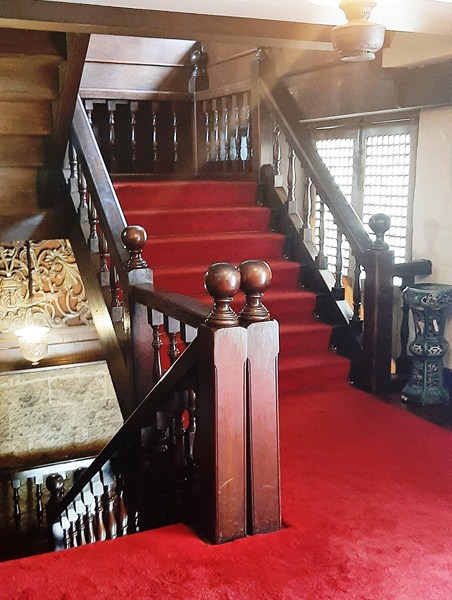
Grand Stairway

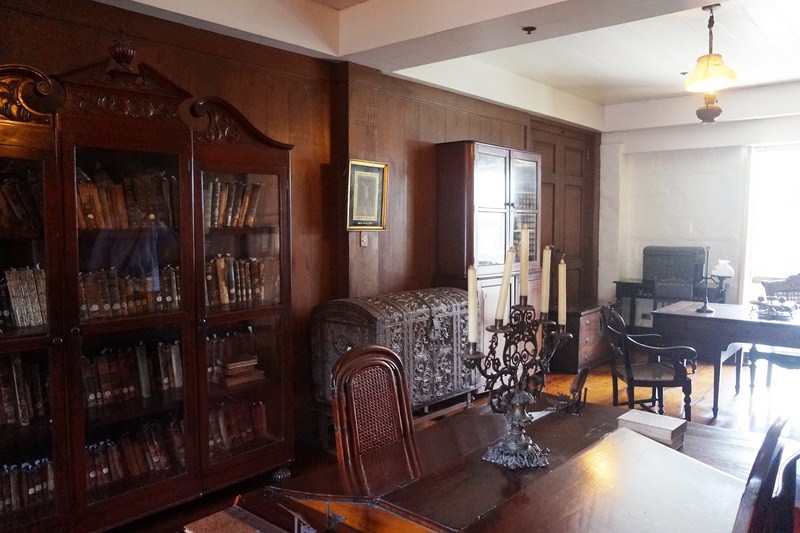
The flight of stairs leads to the middle floor which contains the two adjoining bedrooms (where immediate family member took siestas or naps as the rooms were relatively cooler in the afternoon) and the office-library.

Opisina (office)

Business is usually conducted at entre suelo or mezzanine (also where the bachelor of the house usually stays).

Entre suelo (mezzanine)

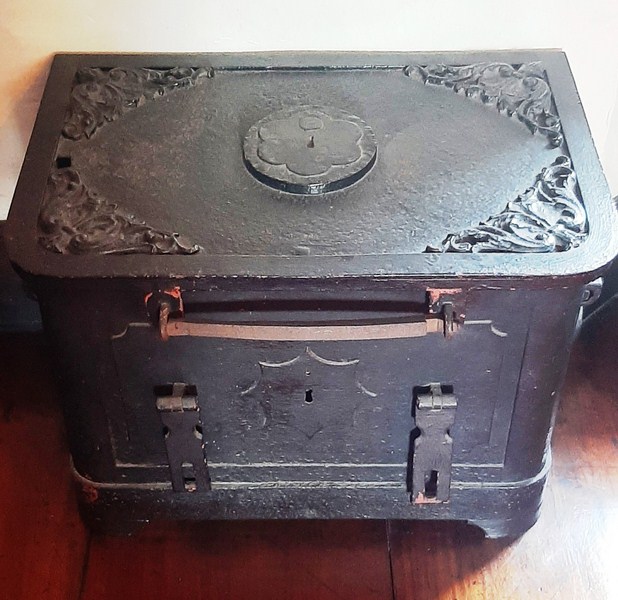
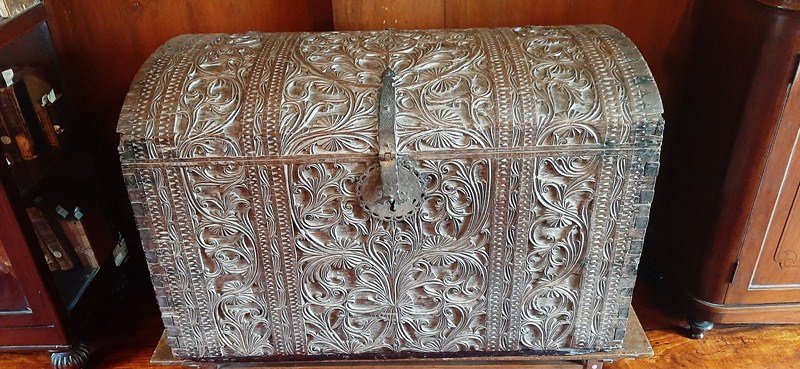
Furnishings include a caja de hiero (safe) and a baul (family treasure chest) that safely housed gold and silver coins and other valuables.

Caja de hiero (safe)

Baul (treasure chest)

We also saw a special, period-style double latrine designed for use by two people at the same time. One interesting feature of this period of architecture is the lack of hinges on any of the doors as was done during that era.

Toiley

The principal living area, occupying the topmost floor, was reached via a grand staircase. Here we admired antique furniture from China and Europe, as well as items made by local artisans that show the luxury of the era.

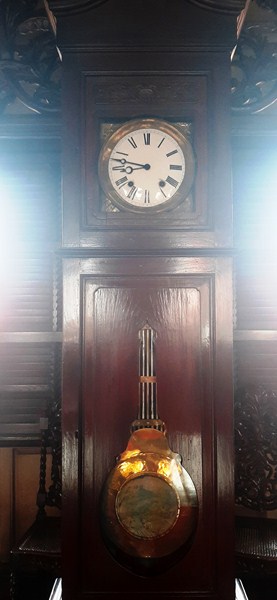
Grandfather Clock

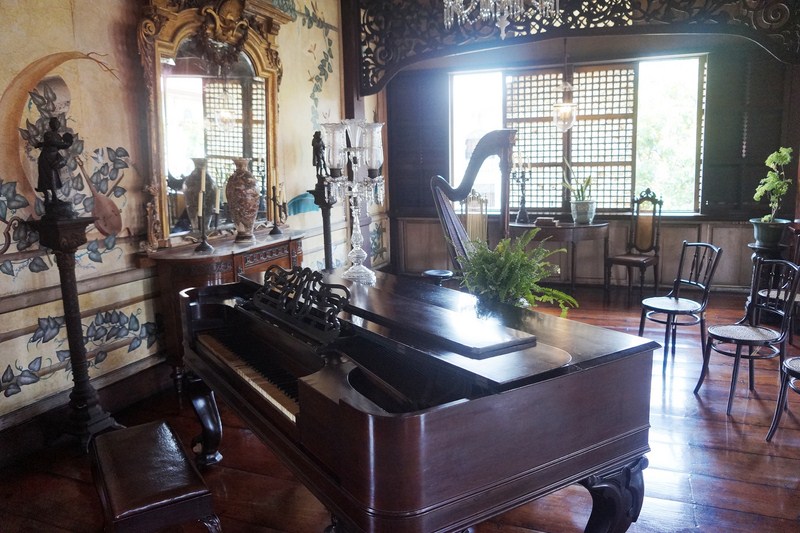
Don’t miss the impressive grandfather clock, as well as artworks, Persian rugs, Chinese ceramics, silverware, crystal chandeliers, a 4-poster ebony bed, religious images, antique grand piano (made in Boston in the 1850s), an old organ and harp, high marble top tables, pedestals holding  European sculptures and other fine decorative objects which a wealthy family would have enjoyed accumulating.

Grand Piano and Harp

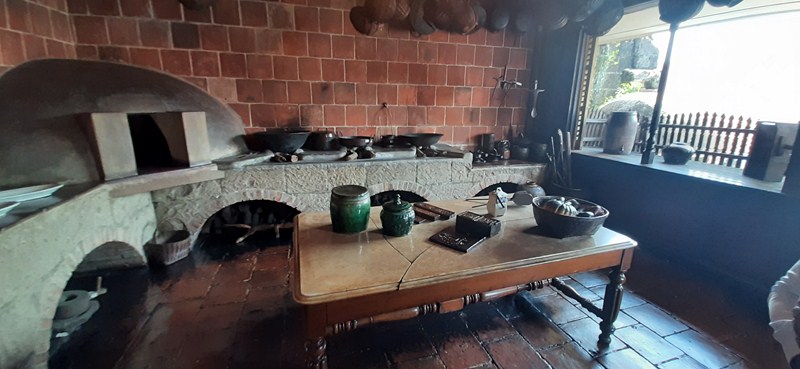
Our tour ended at the kitchen where we imagined hard-working domestic staff carrying the heavy pots and pans back and forth in the intense heat from the charcoal oven as the family waited in anticipation of a delicious feast around the 18-seater dining room table, cooled by the punkah, a ceiling fan operated manually for the comfort of themselves and their guests.

Cocina (Kitchen)

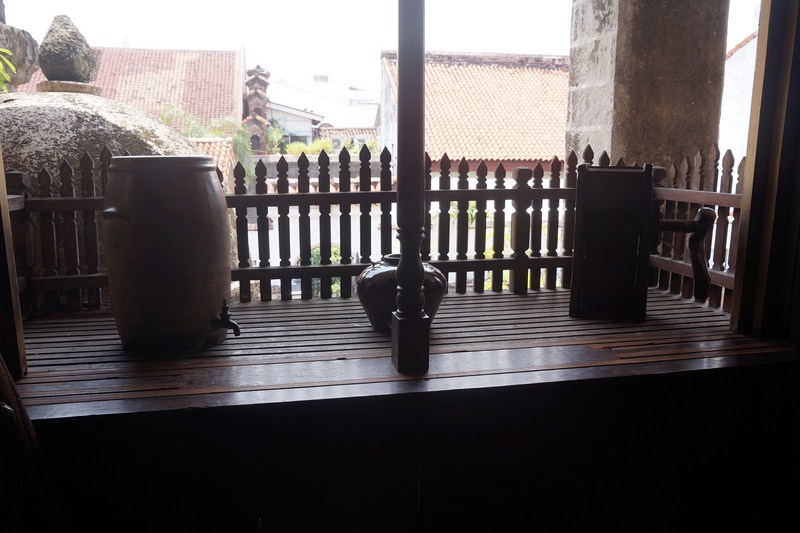
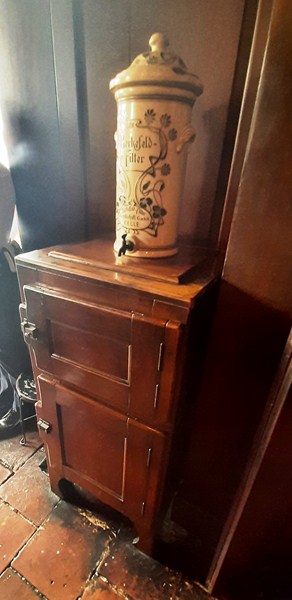
In the kitchen, we also noticed a nevera (ice box), a bangerra (dish rack) and a rainwater cistern which provided running water to the household.  After we have thoroughly explored the kitchen, we exited the museum via an external staircase to the courtyard.

Banguerra

Nevera (ice box) and Berkefeld water filter

Casa Manila: Plaza San Luis Complex, Gen. Luna cor. Real St., Intramuros, Manila 1002.  Tel: (632) 527-4084. Open Saturdays to Sundays, 9 AM to 5 PM.  Admission: Php50 for children, students with valid ID and faculty members; and PhP75 for adults.

PEFTOK Korean War Memorial Hall (Taguig City, Metro Manila)

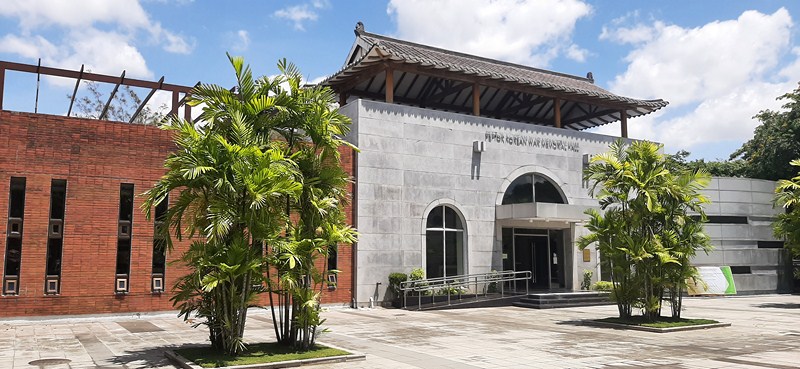
PEFTOK Korean War Memorial Hall

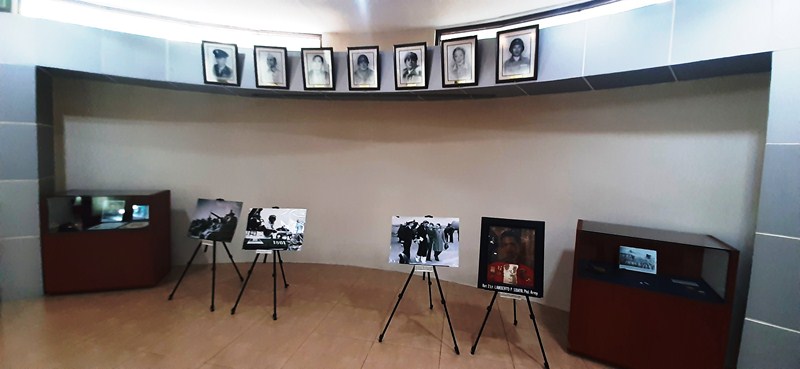
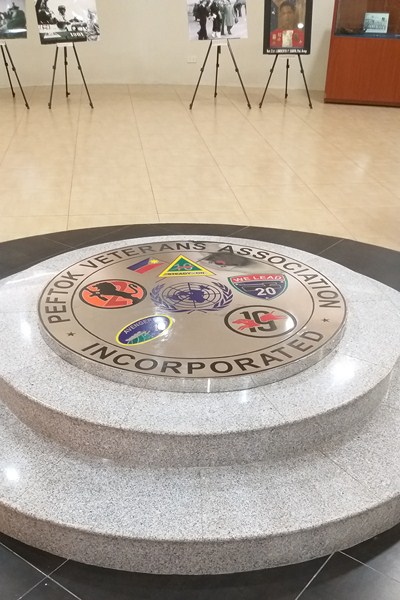
The PEFTOK Korean War Memorial Hall (PKWMH), built through the joint efforts of the Philippines and South Korea, through their respective defense ministries and veterans affairs offices among other agencies, serves to give a long overdue recognition and appreciation to the soldiers who helped defend and rebuild South Korea.

PEFTOK Korean War Memorial Museum

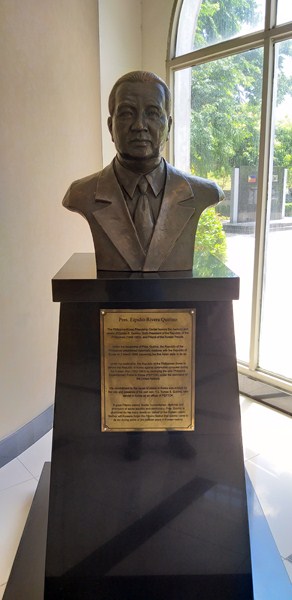
Inaugurated last March 29, 2012, it also gives recognition to President Elpidio Quirino, under whose term the country sent men to help the United Nations during the Korean War. A bust of the president stands just beside the entrance of the museum.

Bust of Pres. Elpidio Quirino

The Philippines was unique among United Nations (UN) combatants in that it was the only one with an active communist insurgency and the only one whose soldiers had immediate combat experience.

Some 7,420 officers and men (the sixth largest UN contingent) of the Philippine Army served in South Korea under the flag of the elite “Philippine Expeditionary Force to Korea” (PEFTOK), the third UNC ground combat unit to enter the Korean War.

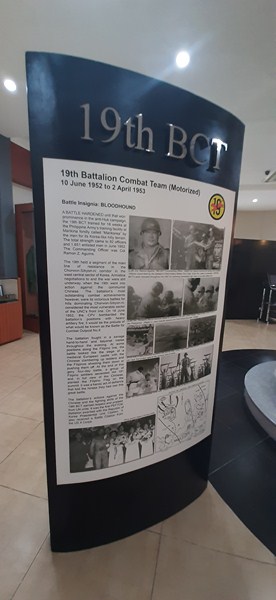
Floor panel showing the history of the 19th BCT

A significant number of PEFTOK soldiers had also fought against the Japanese during World War II. On September 19, 1950, the 10th BCT, the first of five Battalion Combat Teams from the Philippine Army, landed in Busan.

The five battalion combat teams acquitted themselves creditably in combat. Despite having to adapt to the Korean winter, the Philippine contingent fought bravely and took part in decisive battles such as in Battle of Yultong and the Battle of Hill Eerie.

On April 23, 1951, the massively outnumbered 10th BCT, with only 900 men, withstood the night attack of an entire Chinese army of 40, 000 men during the Battle of Yultong in North Korea. Considering the strength of the Chinese, all UN forces retreated, except the Filipinos who engaged the Chinese in a bitter close quarter fighting. UN Command ordered the Filipino forces to disengage but the order was ignored and, instead, they engaged the enemy up to the last man. On September 5, 1951, the 20th BCT relieved the 10th BCT which returned to the Philippines covered in glory as “The Fighting Tenth.”

The 20th BCT again seized Hill Eerie, a strategic observation post that proves invaluable to PEFTOK in the coming battles against the CPV.  On 21 June 1952, the 19th BCT, which replaced the 20th BCT, emerged victorious after a fierce four-day battle to defend Hill 191 and Hill Eerie. Heavy losses were inflicted on the Chinese at the gory “Battle for Combat Outpost No. 8″and the triumphant Filipinos plant the National Flag on the summit of Hill 191 to proclaim their victory over the Chinese.

On March 26, 1953, the 14th BCT takes over the PEFTOK colors in Korea. It was then followed by the 2nd BCT, the last PEFTOK contingent, who arrived in Korea on April 19, 1954 and returned in the Philippines on June 1955.

Not one PEFTOK battalion was overrun or made incapable of combat as a result of enemy action despite many hard-fought battles. PEFTOK fought successfully against its main enemy in scores of actions in hills, cities and towns along the 38th parallel.  They also helped rebuild South Korea after fighting ended in the Korean War.

Some 500 Filipinos were killed, wounded or captured in the Korean War. The 112 dead include Capt. Conrado D. Yap (posthumously awarded the Philippine Medal of Valor, the U.S. Distinguished Service Cross  and the First Class Taegeuk Cordon of the Order of Military Merit on the 65th anniversary of the Korean Armistice Agreement) and Lt. Jose Artiaga, Jr. (posthumously awarded the Philippine Distinguished Conduct Star).

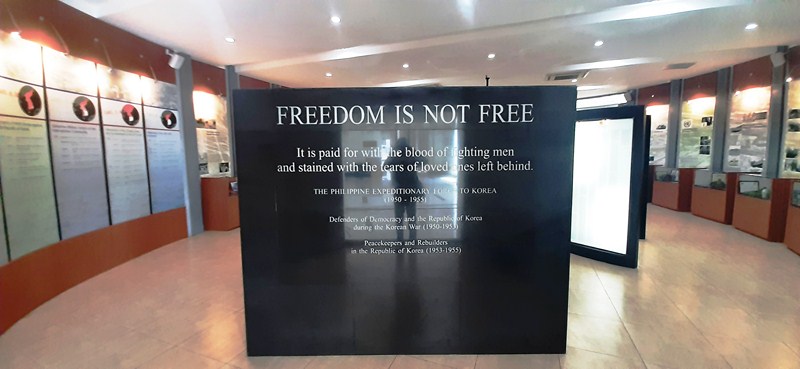
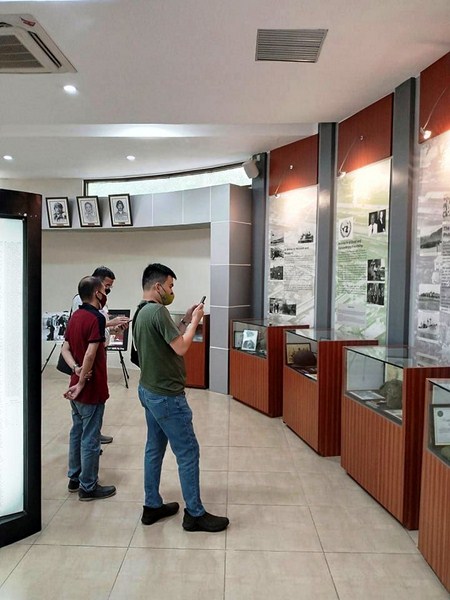
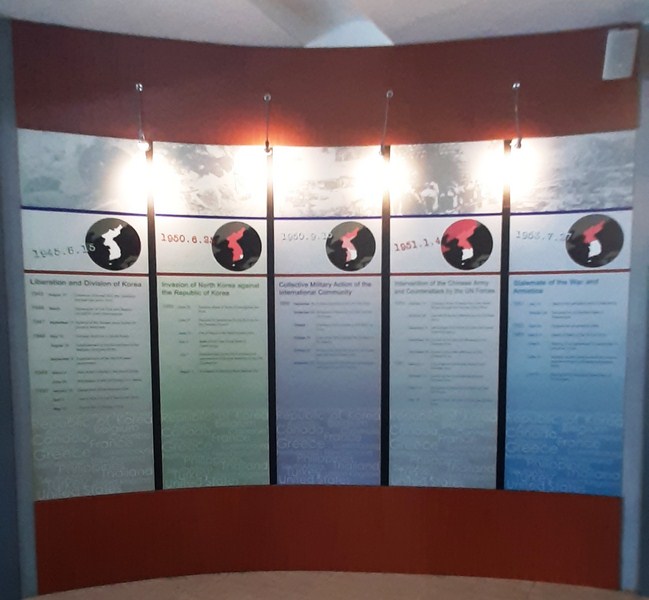
The museum details how the war went for 3 years (from 1953 to 1955), ending in a truce, but no permanent peace treaty that was signed. Inside is a sizable array of artifacts and memorabilia of those who fought in the Korean War, which included a future Philippine president, Fidel V. Ramos as well as two former Philippine ambassadors to South Korea (Col. Nicanor Jimenez and Gen. Ernesto Gidaya).

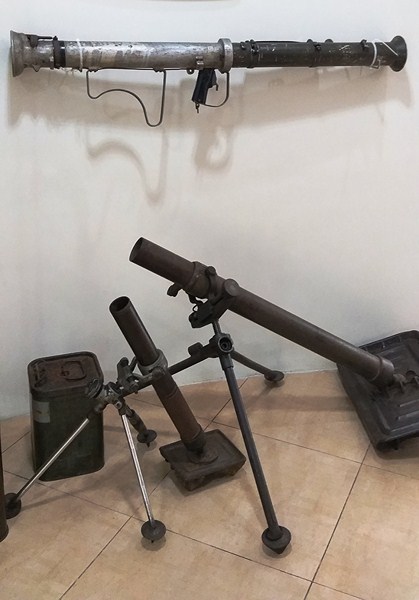
A bazooka and two mortars

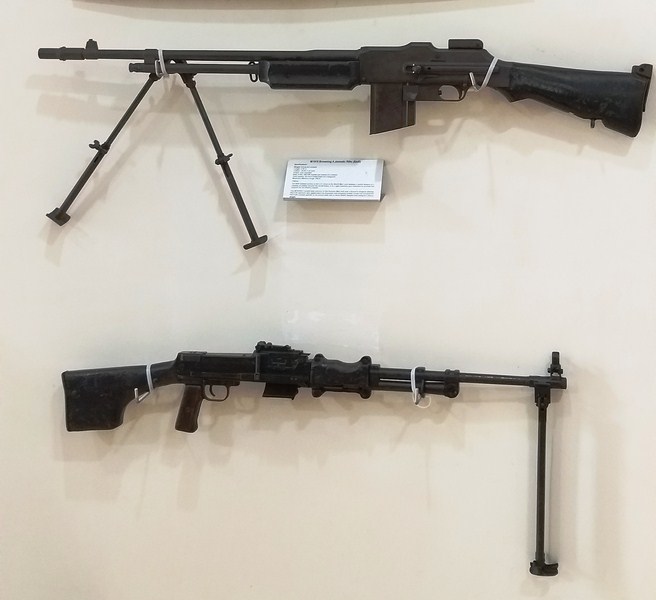
Korean War-era weapons on display include machine guns (M1917A1 .30 caliber water-cooled machine gun), mortars, the semiautomatic M1 Carbine, rifles (Mosin-Nagant Sniper Rifle, M1918 Browning Automatic Rifle, etc.), submachine guns (M3 submachine gun Caliber .45, M1A1 Thompson submachine gun Caliber .45, PPS43 Pistolet-Polemyot Sudaeva, PPSh41 Pistolet-Polemyot Shpahina, etc.), bazookas (Green bazooka portable rocket launcher), bayonets, etc..

A Browning automatic rifle (above)

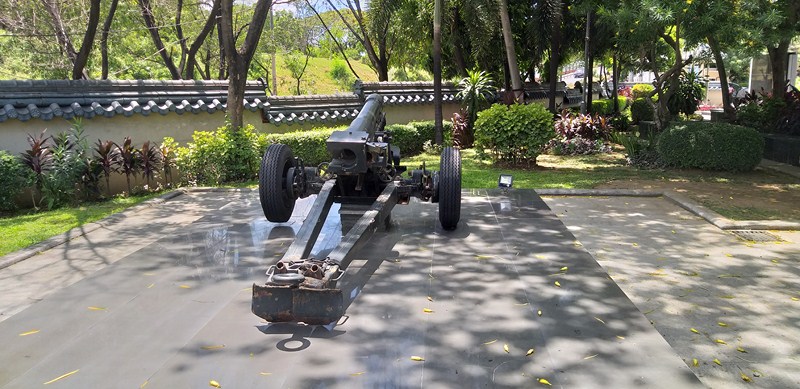
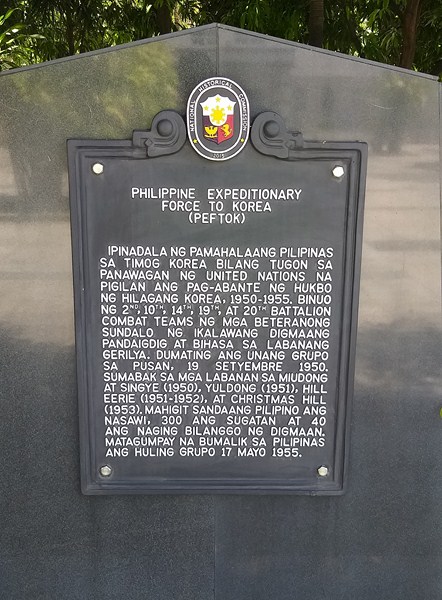
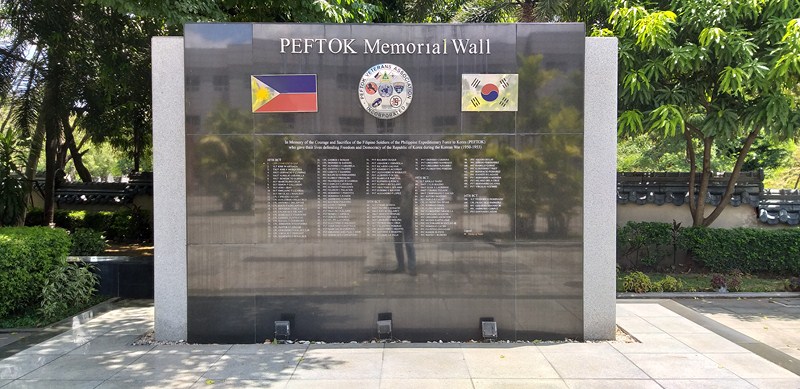
Just outside, beside the memorial building, is a 105 mm. M101 A1 howitzer.  Nearby is the PEFTOK Memorial Wall and the PEFTOK historical marker installed by the National Historical Commission of the Philippines in 2015.

105 mm. M101 A1 Howitzer

Also on display are uniforms, dog tags, belts, water canteens, mess kit and helmets; medals, campaign ribbons and citations; newspaper clippings; old photos and sketch portraits of the commanding officers of the 2nd, 10th, 14th, 19th and 20th BCTs.

PEFTOK Historical Marker installed by the NHCP in 2015

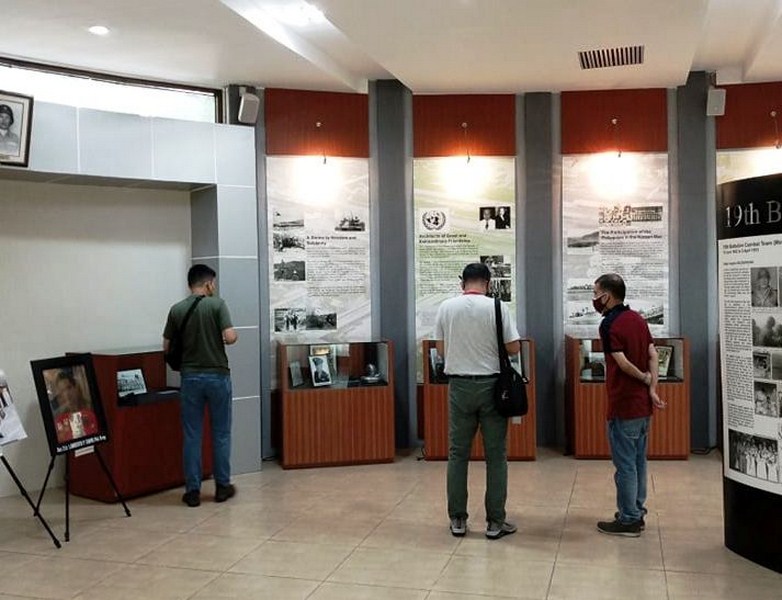
Media colleague Arthur Dominic “Art” J. Villasanta, whose late father, Juan “Johnny” Villasanta, was a war correspondent (he wrote news stories for his newspaper, The Evening News) during the Korean War, provided the pictures and wrote the narrative of the history of the Philippines‘ role in the Korean War which were printed on all the large floor panels and part of the wall panels laid out at the museum.

PEFTOK Memorial Wall

Visual aids narrate the historical timeline of the Korean War, the performance of each BCT during the war and the roster of men in each BCT.

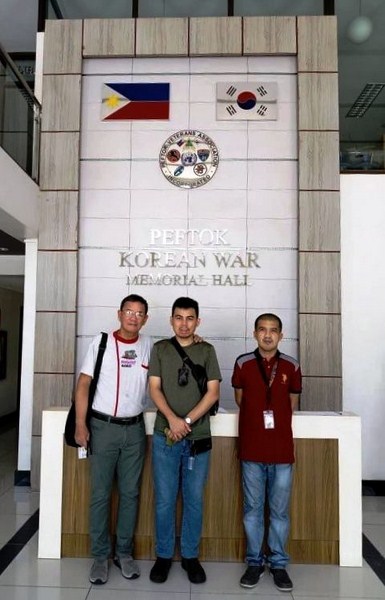
The author (left) with son Jandy and museum curator Mark R. Condeno

PEFTOK Korean War Memorial Hall: Bayani Rd., Libingan ng mga Bayani Annex, 1630 Taguig City, Metro Manila. Tel: 8844-1855. Open Mondays to Saturdays, 8 AM to 5 PM.  Curator: Mark R. Condeno. Coordinates: 14.5248637,121.0454924.

Carve, Mold, and Assemble: Modern Sculptures in the Philippines (National Museum of Fine Arts, Manila)

Carve, Mold, and Assemble: Modern Sculptures in the Philippines

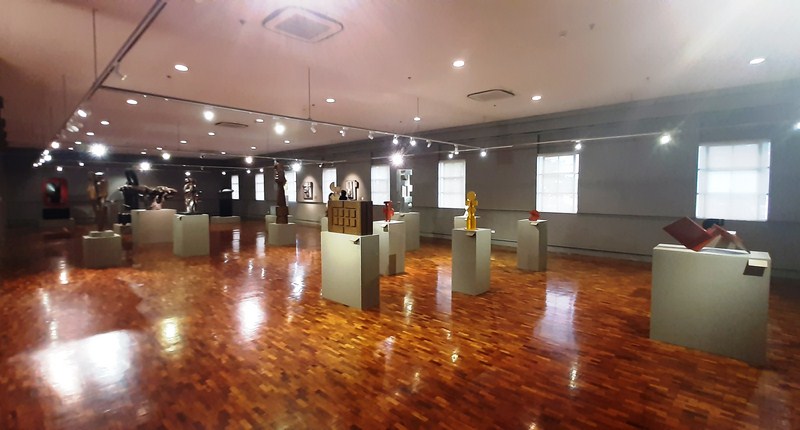
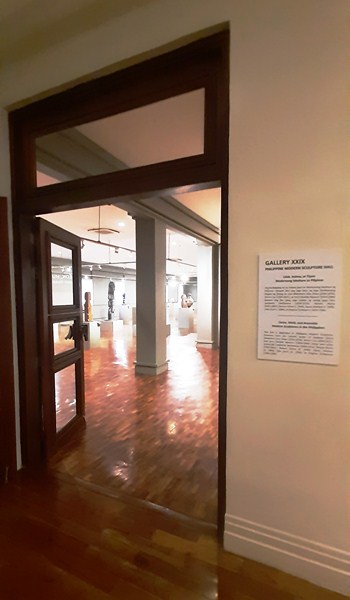
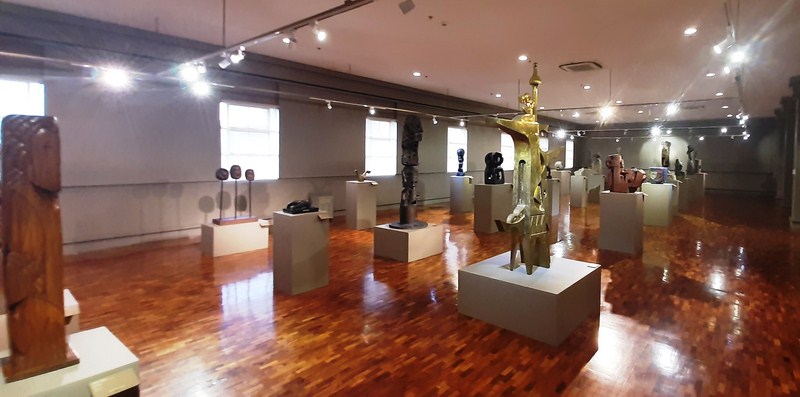
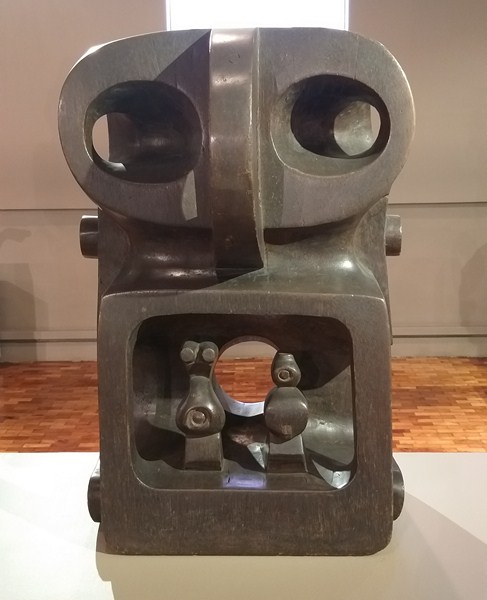
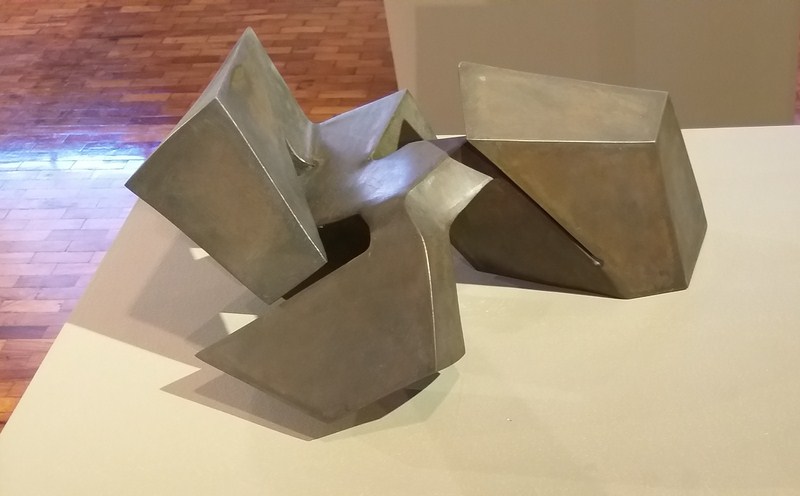
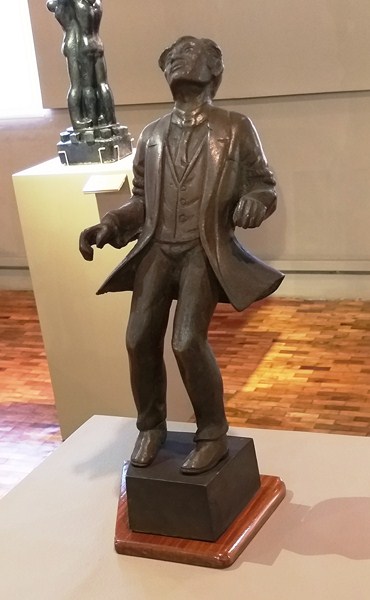
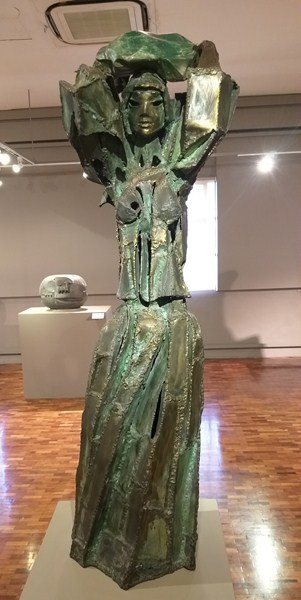
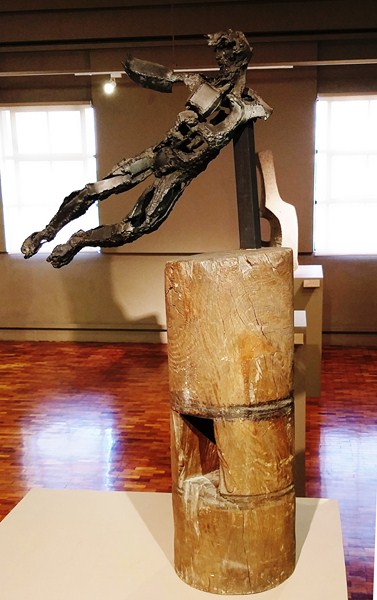
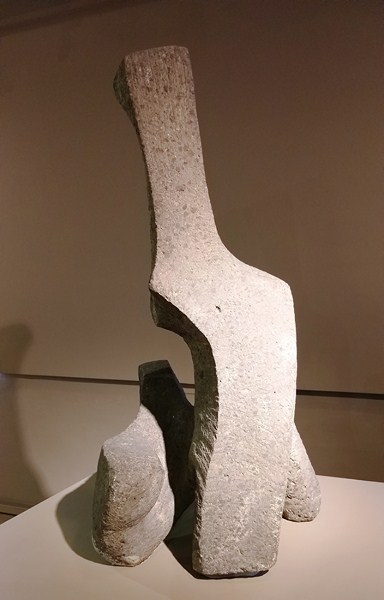
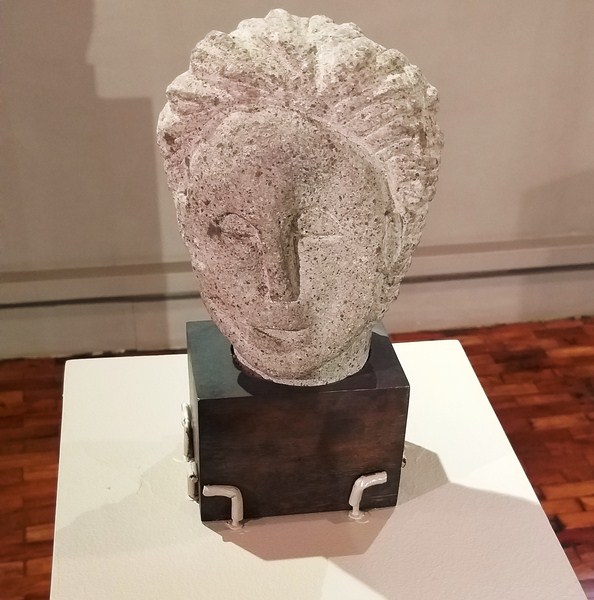
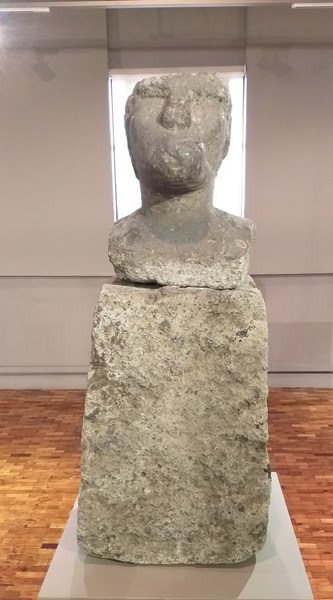
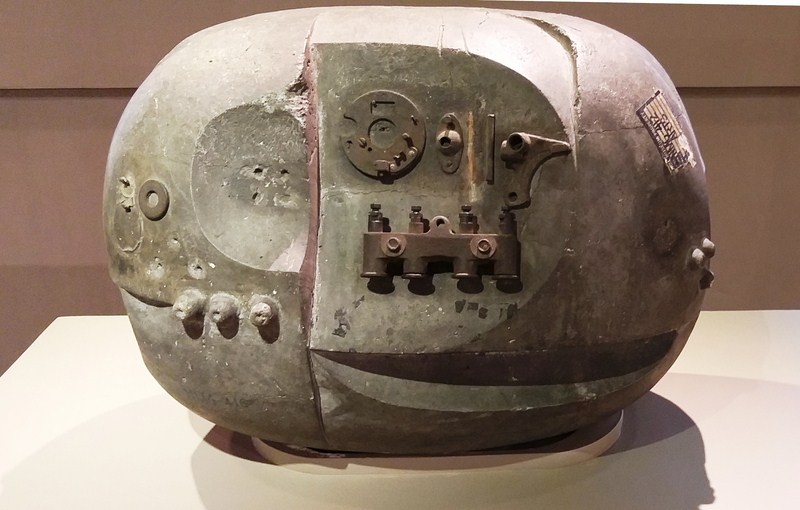
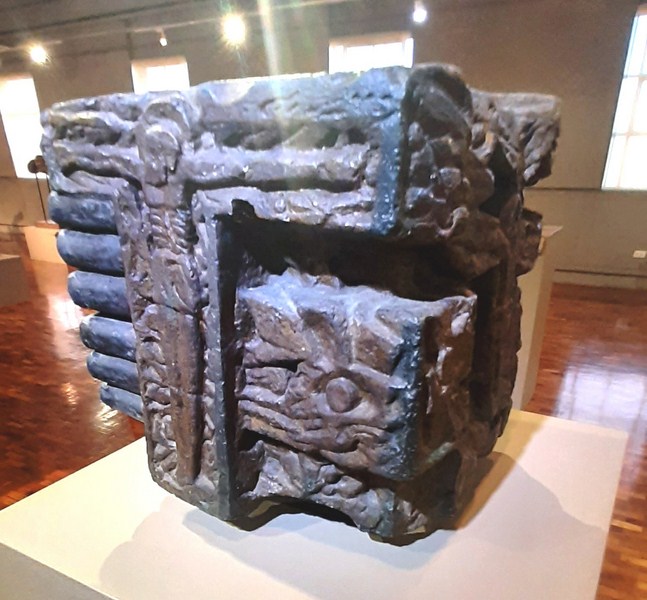
Carve, Mold, and Assemble (Lilok, Hulma at Tipon): Modern Sculptures in the Philippines, a permanent exhibit at the fourth floor of the National Museum of Fine Arts,  is dedicated to Philippine Modern Sculptures.

Check out “National Museum of Fine Arts

Gallery entrance

Featured here are notable works of Abdulmari Asia Imao (1936-2014), National Artist for Sculpture in 2006; Arturo R. Luz (1926-2021), National Artist for Visual Arts in 1997; and Jerry Elizalde Navarro (1924-1999), National Artist for Visual Arts in 1999.

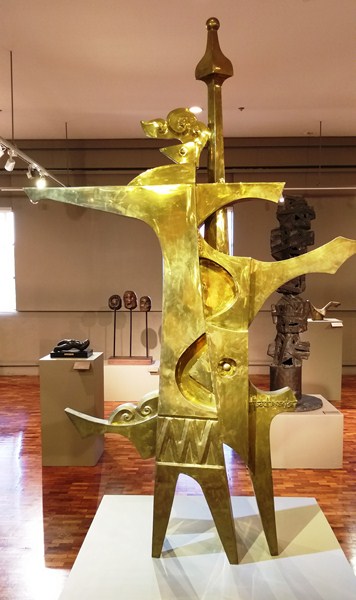
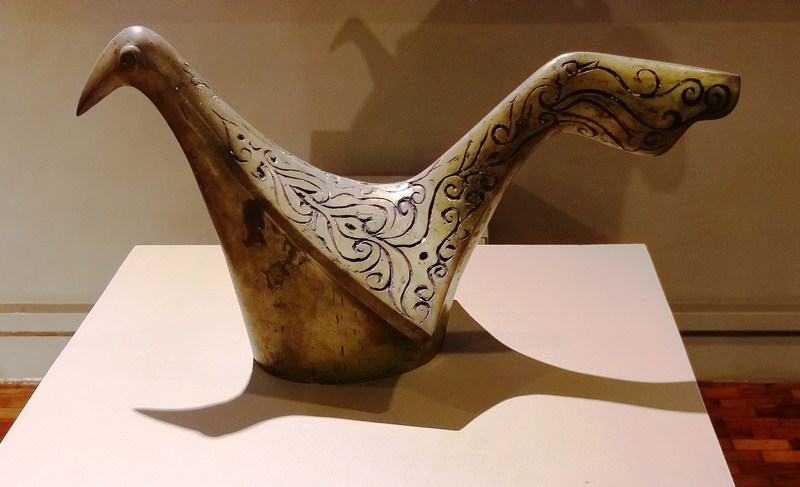
Sarimanok (Abdulmari Imao, 1996)

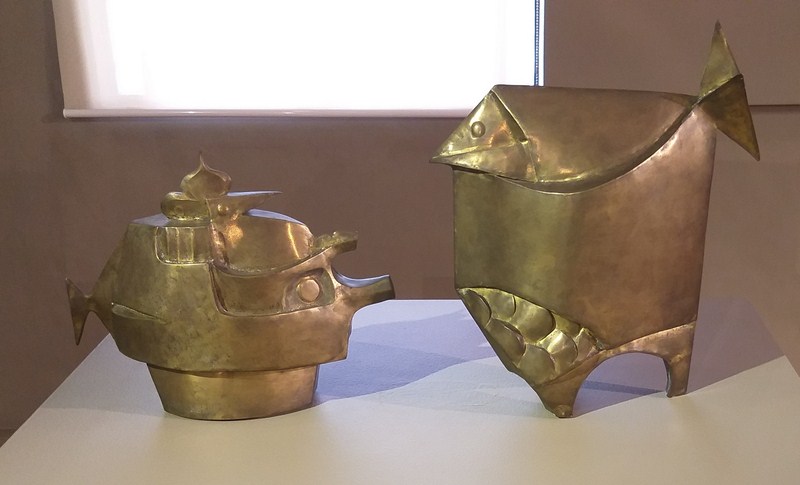
Imao wanted to improve, revitalize and popularize the sarimanok (an ornate chicken-like figure or a decorative bird notable in Maranao Art and considered to be as old as their epics) style and he produced a number of artworks of the indigenous motif from the Southern Philippines in various media.

Fishes (Abdulmari Imao, 1976, bronze)

His 1996 brass sculpture, entitled Sarimanok, a  2 m. high sculpture work of art, was given, through the Magbassa Kita Foundation, Inc., as a gift to the Filipino people by the family of the Late National Artist on July 23, 2015.

Sarimanok (Addulmari Imao, 1969, bronze)

Also in this exhibition gallery are his three bronze sculptures, two sculptures entitled as Fishes, dated 1976, and another Sarimanok (1969).

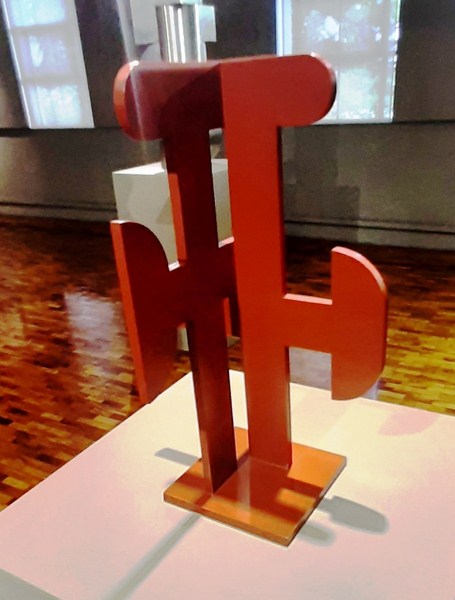
Study of Figura in Red (Arturo Luz, 2012, steel and acrylic paint)

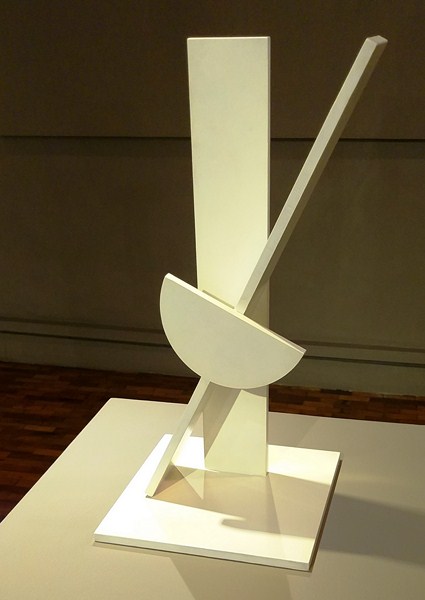
Study of Homage to Antoni Tapies in White (Arturo Luz, 2012, steeland acrylic paint)

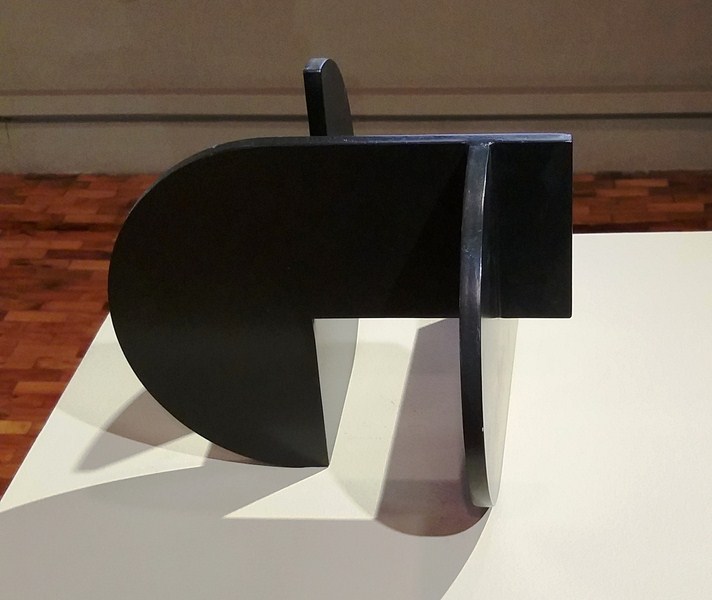
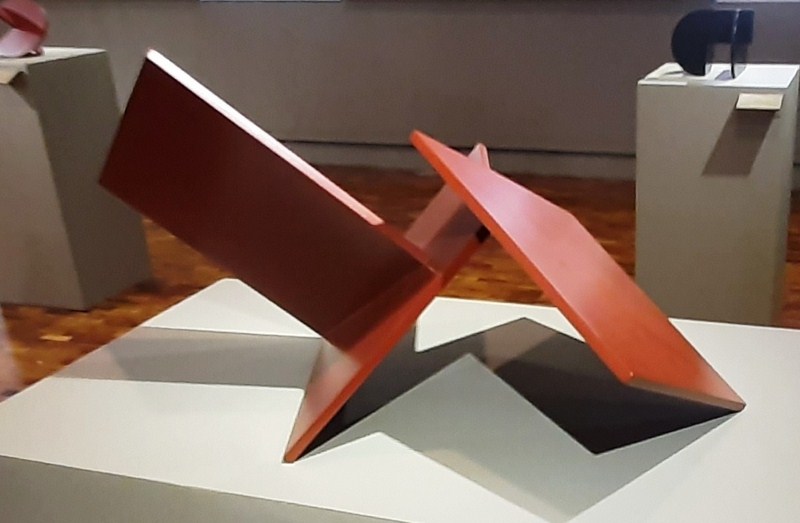
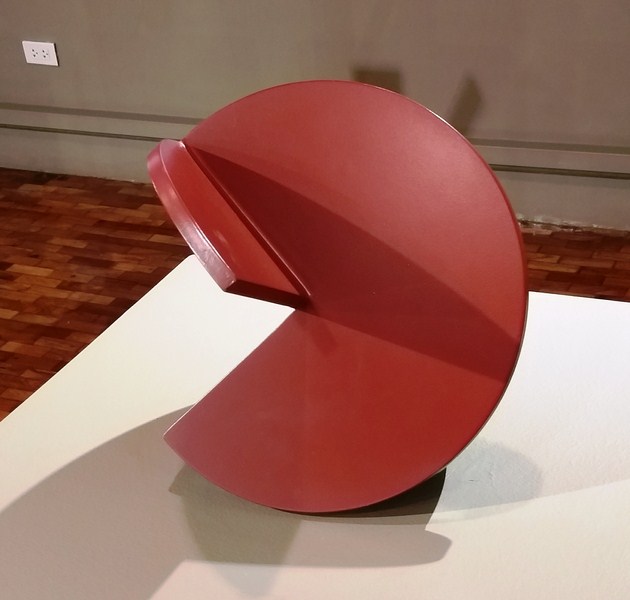
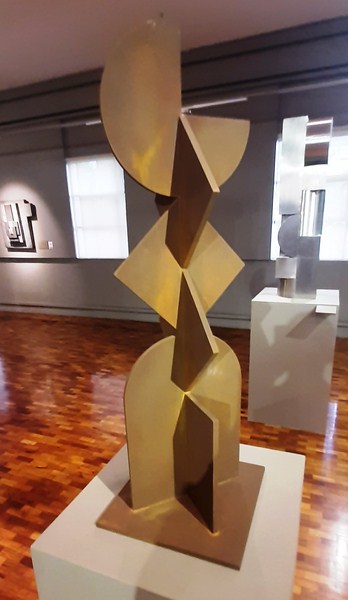
The works of Arturo R. Luz on display at the gallery are his experiment with sculptural abstraction using metal, concrete and wood which began in 1969.

Study of Homage to Eusebio Sempere (Arturo Luz, 2012, steel and acrylic paint)

Study of Homage to Fernando Zobel in Red (Arturo Luz, 201, steel and acrylic paint)

Study of Homage to Gerardo Rueda in Red (Arturo Luz, 2012, steel and acrylic paint)

As with his paintings, he continued the Neo-Realist themes and the linear simplicity and geometric form in his geometric sculptural work.

Study of Modula for the National Museum (Arturo Luz, 2012, stainless steel)

Study of Tribal in Rust (Arturo Luz, 2012, steel and acrylic paint)

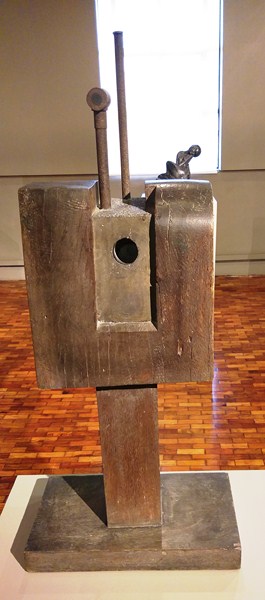
The sculpture of Jerry Elizalde Navarro, an avid experimenter and versatile craftsman, are actually assemblages constructed out of found objects and discarded machine parts.

Desparecido (Jerry Elizalde Navarro)

Man and Woman (Jerry Elizalde Navarro)

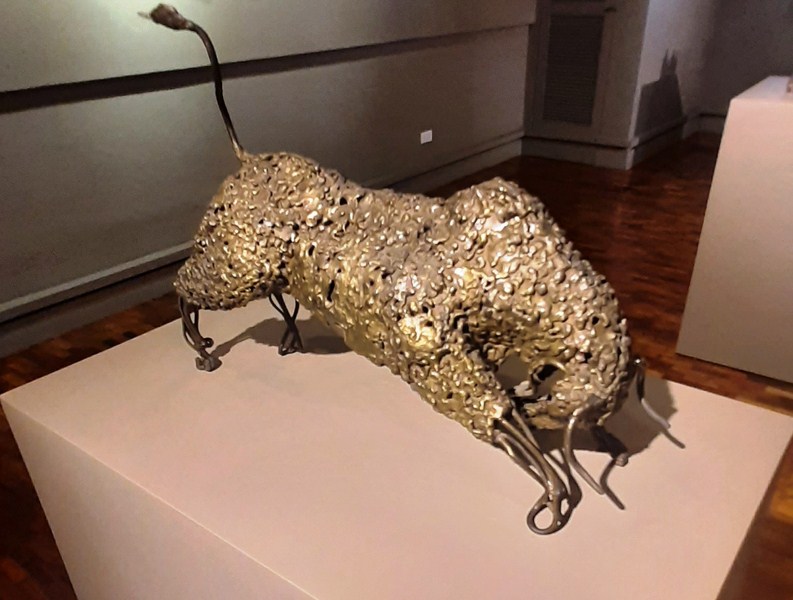
His linear sculptures use rods, pipes and mixed media using plexiglass sheets. His wife, Virginia Ty-Navarro (1924-1996), is also an artist whose bronze and brass sculpture Taurus (1975) is also on display in the gallery.

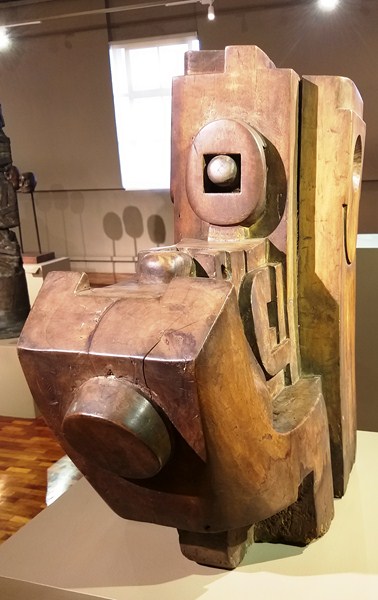
Idiot Box (Jerry Elizalde Navarro, 1964, wood)

Taurus (Virginia Ty Navarro, 1975, bronze and brass)

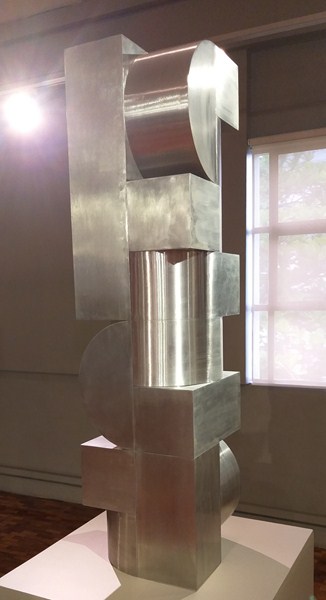
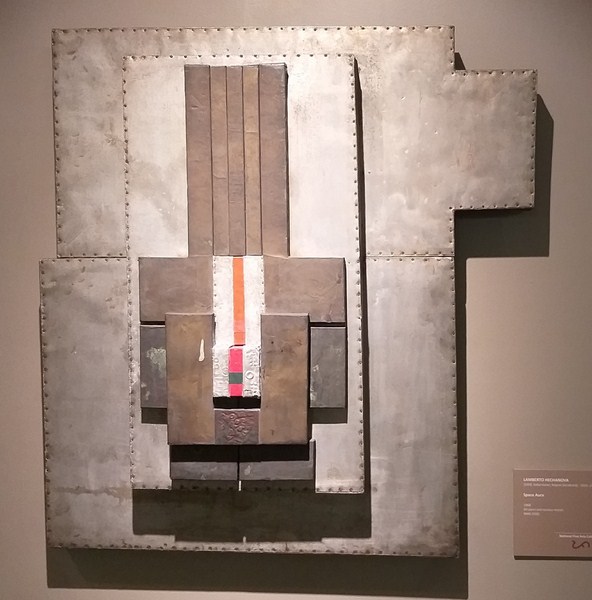
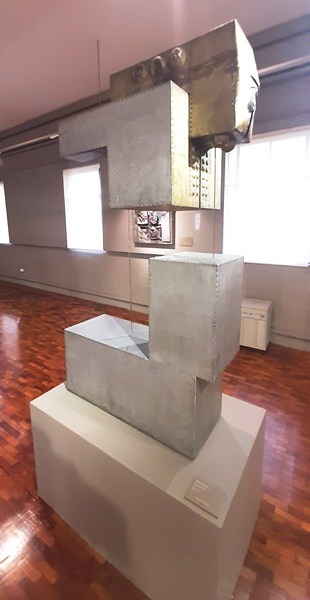
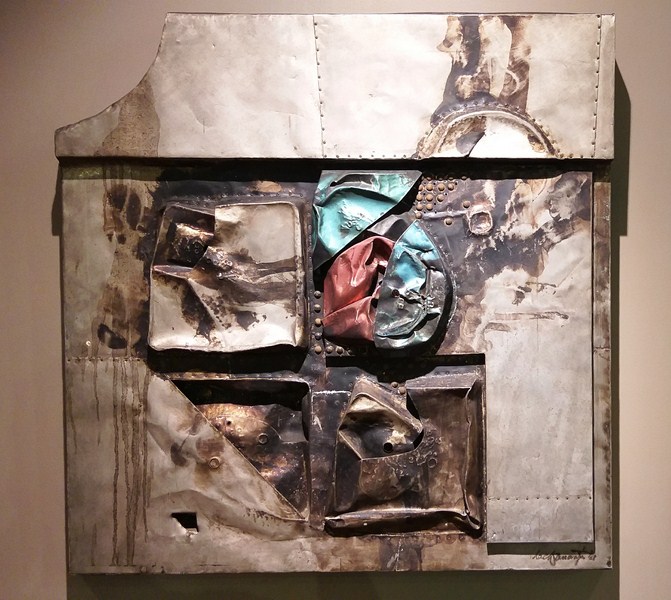
Works of other renowned artists are also on display here.  Lamberto R. Hechanova (1939-2014), reputed  as an incubator of Modernist sculpture in the 1960s, introduced the combined use of aluminum with wood and plexiglass in his massive and innovative sculptures and assemblages.

Space Aura (Lamberto Hechanova, 1963, oil paint and various metal)

Allegory in Aluminum (1968, aluminum and glass), by Lamberto Hechanova, landed first place at the First Exhibition of Philippine Sculptors in 1968

Cestae III (Lamberto Hechanova, 1969, oil paint and various metals)

Renato Rocha (1937-2001) used acacia, molave and narra in sculpting abstracted figures of animals, family, women and other free forms as they were stylishly economical, glowing with mellow warm patinas and strong and lasting in character.

Air Flight (Renato Rocha, 1973, wood)

Two Figures (Renato Rocha, ca. 1964, wood)

Federico D. Estrada (1915 – 1999), a lesser known contemporary of Vicente Manansala, was the first Filipino to work at the atelier of Pietro Amberti.

Affection (Federico Estrada, 1963, narra wood)

World Brotherhood (Federico Estrada, ca. 1960, wood)

Holy Family (Federico Estrada, 1963, narra wood) bears three faces – the Mother, Father and Son.

Pietri taught him the secrets of synthetic marble, floating strips, spray dotting, molding and general sculpturing from 1932-1940. 

Ramon Orlina glass sculptures. L-R: Lumba-Lumba (1988, carved green glass), Community of Joy (2020, carved peach amber glass), Gothic (1988, carved green glass) and Elegance in Simplicity (2020, carved green glass)

Ramon Orlina (b. 1944), who transfigured glass into art, was the first to carve figures out of blocks of glass using the cold method, cutting, grinding, and polishing his work with improvised tools and instruments,  a feat at that time yet unreplicated even in highly industrialized countries.

Paglalakbay (Rey Paz Contreras, 1990, molave wood)

Rey Paz Contreras (1950 – 2021) worked with urban refuse and environmental materials as artistic media.  He was inspired by the indigenous Filipino culture and created visual forms of contemporary images that explore a distinct Filipino aesthetics.

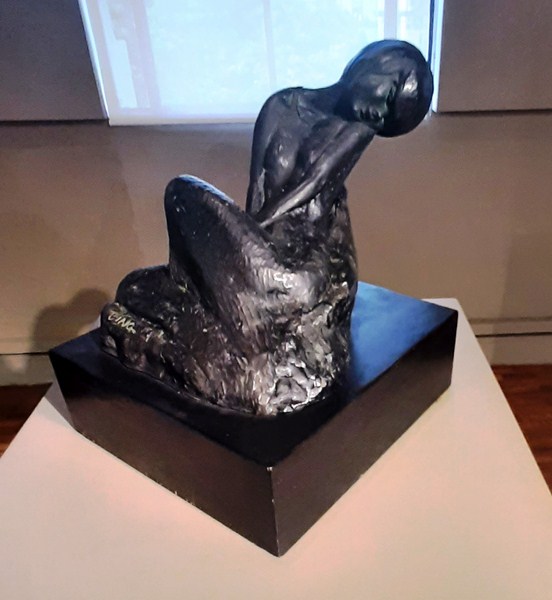
Supine (Ting Ping Lay, ca. 1995, bronze)

Early Spring (Ting Ping Lay, ca. 1990, plaster of paris)

Filipino-Chinese sculptor Ting Ping Lay’s (1927 – 2021) simple, minimalist, and semi-abstract works features figures that are quietly and gently contorted, placed in poses that are restrained, dignified, and mature. His two sculptures (Early Spring and Supine) were donated by his son Lionel Ting on December 18, 2020.

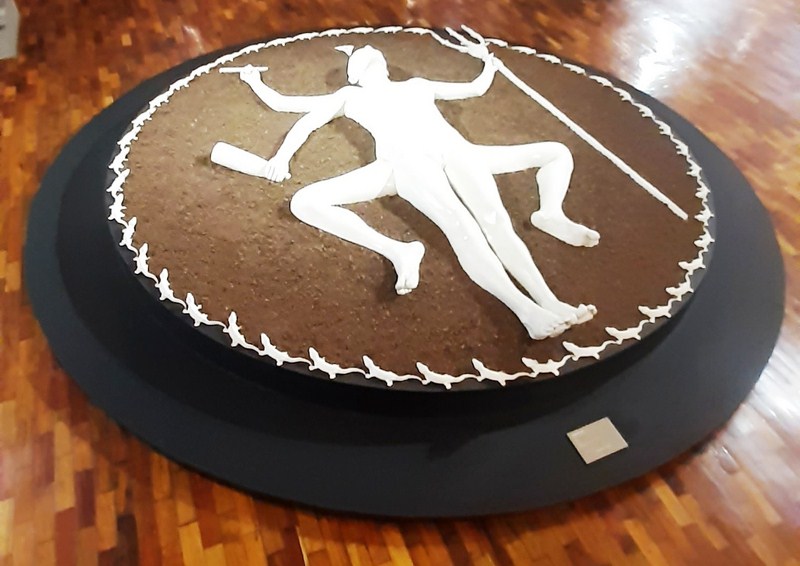
Eshu (1997, cold-cast marble and volcanic cinder), a floor piece by Agnes Arellano, was created for the Sixth Biennial of Havana and was exhibited there. Eshu, the “Lord of the Crossroads,” the mediator between men and the gods, is shown with two pairs of feet and three hands. He holds a cigar, a trident and a wine bottle.

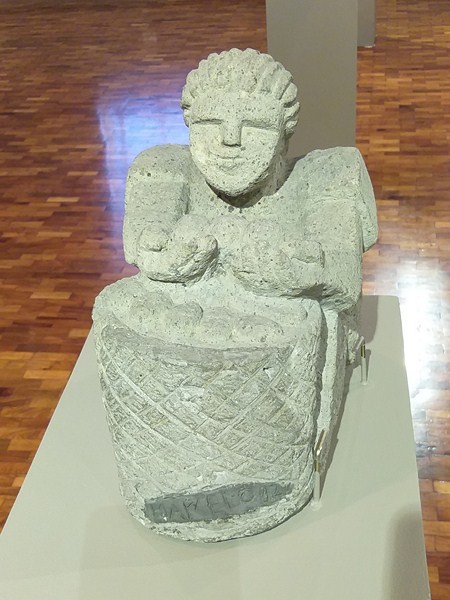
Agnes Arellano (b. 1949) works primarily in plaster, making life-size figure sculptures. Her work explores women’s issues relative to the portrayal of women in traditional Asian sculpture by reinterpreting local myths.

Mother and Child Fusion MSeries’19 (Jose Datuin, 2019)

Gemini (Jose Datuin,undated, wood and brass)

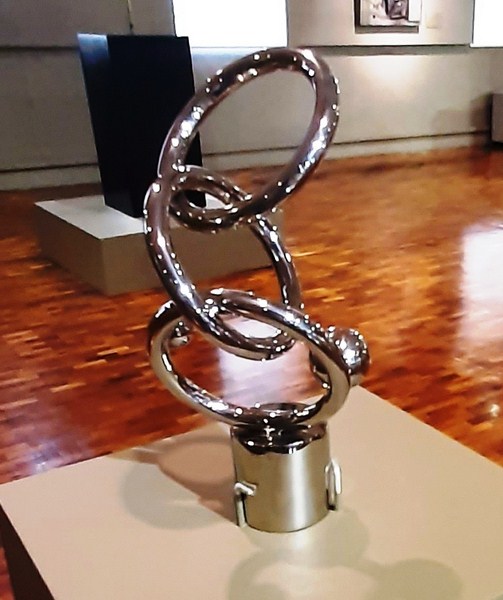
Jose F. Datuin (b. 1956) is known for his ability to use lightly visualized symbolism with stainless steel as his material. He is also known for circular abstractions which demonstrate unity, both in material and form.

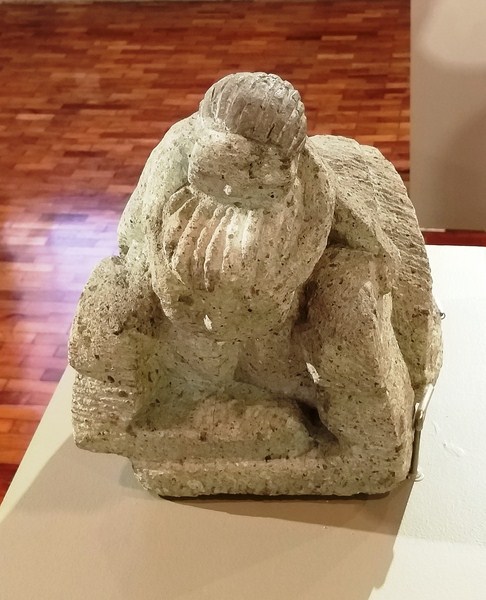
Balut Vendor (Idefonso Marcelo, 1982, adobe)

Father and Child (Idelfonso Marcelo, 1982, adobe)

Ildefonso Marcelo (b. 1941) is known for using blocks of stone in creating figures that connote strength and permanence.

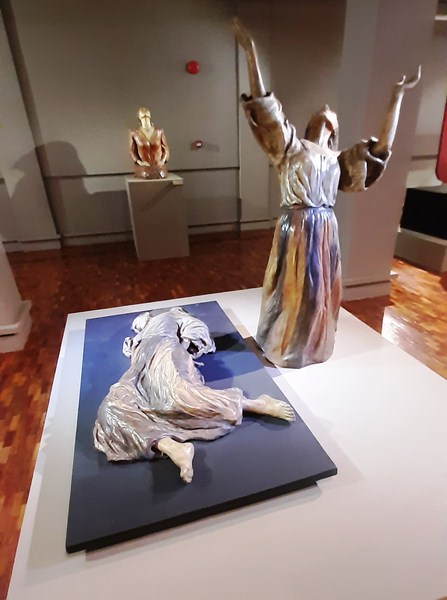
Doxology (Julie Lluch, terracotta and acrylic) consists of two life-size works representing the two selves of the same woman. One is sprawled on the ground, cold and lifeless, while the other is alive.

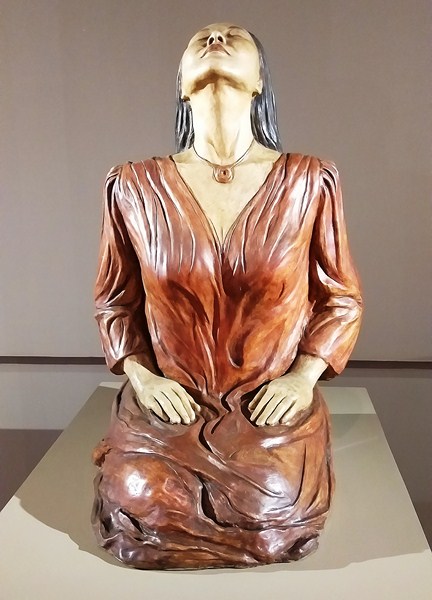
Julie Lluch (b. 1946), a self-taught sculptor, became seriously involved in art in 1976. Working in terracotta, stone, ceramic and bronze, she is known for her life-size portraits and groups that present satirical commentaries on the relationship between the sexes.

Portrait of Celia Molano (Julie Lluch, 1996)

Eduardo Castrillo (1942 – 2016), considered to be the most avant-garde sculptor in the Philippines, he created, with the help of a group of assistants, sculptures by hammering, cutting and welding metal, especially brass, bronze and steel.

Success (Eduardo Castrillo, 1980, bronze)

The Martyrdom of Dr. Jose Rizal (Eduardo Castrillo, 1991, bronze)

He also incorporated other materials (wood, plastic, plexiglass, ivory, neon lights, etc.) into his works and his oeuvre included free-standing abstract pieces, functional art pieces, art jewelry, body sculptures and liturgical art.

Jade Carrier (Solomon Saprid, 1989, metal and jadeite)

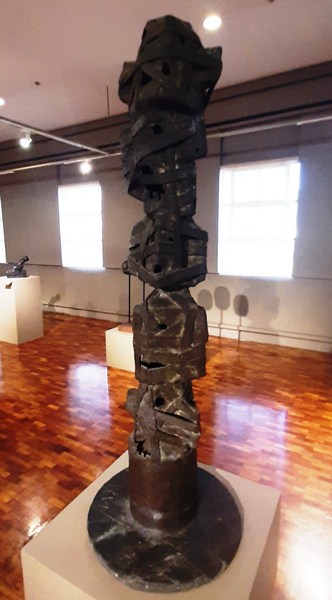
Solomon Saprid (1917 – 2003) was best known for his Brutalist School bronze sculptures. He welded scraps of metal together and the intricately sculpted brass details produced a characteristic jagged effect.

Poseidon (Solomon Saprid, 1981, black metal)

Duddley Diaz (b. 1947) created a powerful body of work that defies categorization, with sculptures that challenge notions of identity, sexuality, culture, and history.

Pagsilang (Duddley Diaz, 2006, wood and acrylic)

Departing from the impersonal and rationalist aesthetic of academic art, his work daringly combines the values of classical Renaissance sculpture with atavistic sources of inspiration in the figures of ancient mythology and Christian liturgical art.

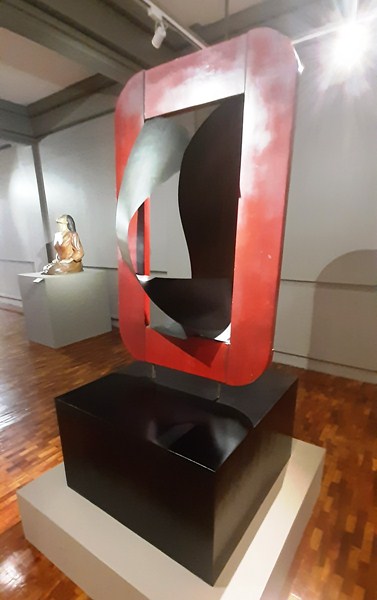
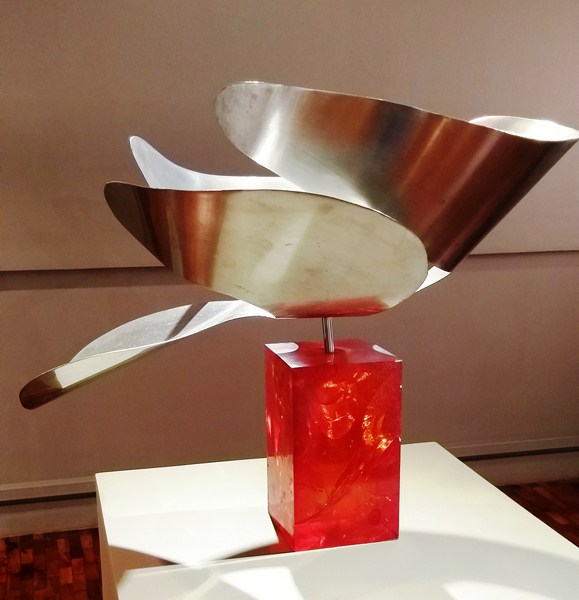
Bloom (Rosario Bitanga Peralta, 2005, stainless steel and resin)

Rosario “Charito” Bitanga Peralta (b. 1934) is the Philippines’ first and foremost woman abstract artist.​ Her creative sculpture, consisting of metal and terracotta pieces, was predominantly inspired by the 1950s Abstract Expressionism and Minimalism.

Mother and Child (Francisco Cruz, 1967, adobe)

Excessive Machine (Ruben de Vera, ca. 1969, wood)

Bust of Edgar Allan Poe (Ricaredo Demetillo, 1969, adobe)

Other artists featured include Francisco Cruz, Rosalio Alcala, Jr., Ricaredo Demetillo (1920 – 1998), T. Rivera, Roberto Balajadia (b. 1945) and Ruben De Vera (b. 1942).

Weight and Balance (T. Rivera, undated, adobe)

Modernization of Manila (Rosalio Alcala Jr., undated, adobe, cement, concrete and metal)

Homage to Botong (Roberto Balajadia, 1989, adobe)

Carve, Mold, and Assemble: Modern Sculptures in the Philippines: Gallery XXIX, Philippine Modern Sculpture Hall, 4/F, National Museum of Fine Arts (NMFA), Padre Burgos Avenue, Ermita, Manila 1000, Metro Manila. Tel: (632) 8527-1215 and (632) 8298-1100.  Email: inquiry@nationalmuseum.gov.ph.  Website: nationalmuseum.gov.ph.  Open Tuesdays to Sundays, 9 AM – 4PM. Admission is free.  Coordinates: 14°35′13″N 120°58′52″E.

Old Senate Session Hall (National Museum of Fine Arts, Manila)

Old Senate Session Hall

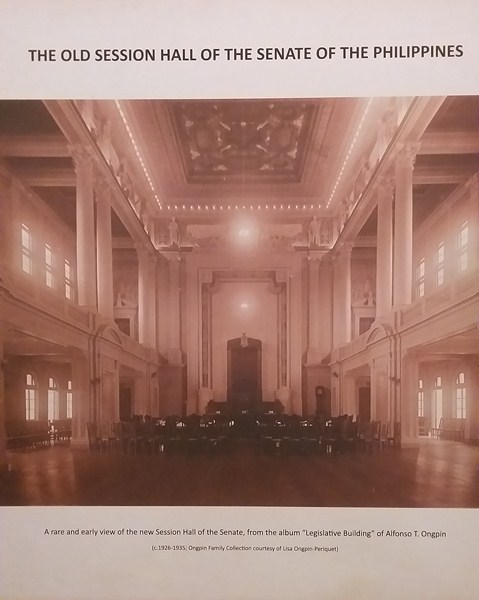
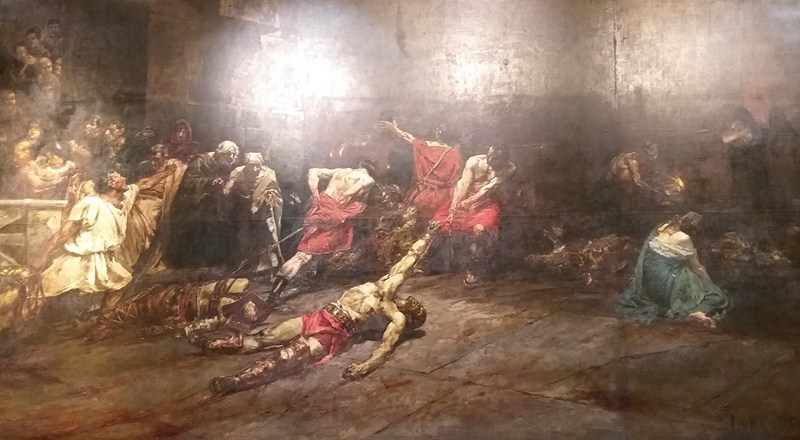
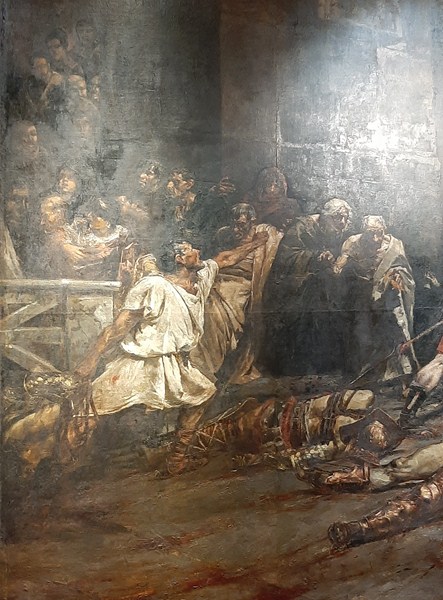
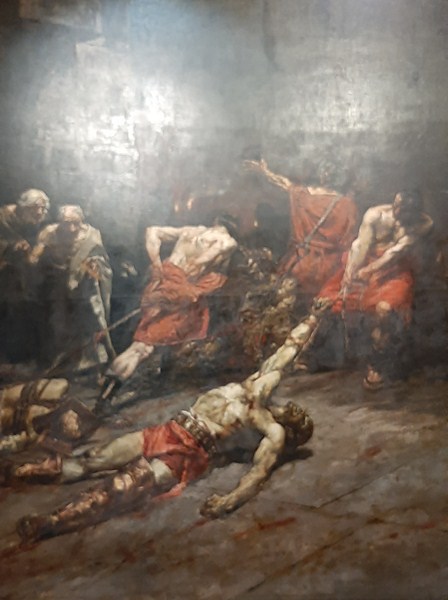
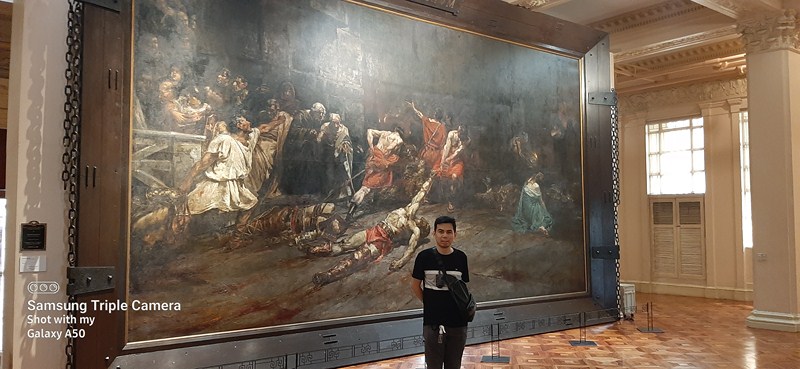
The historic Old Senate Session Hall, considered the core of the then Legislative Building (now the National Museum of Fine Arts), was home to members of the Philippine Senate from 1926 to 1996.  It had been a silent witness to history as senators, from various eras, debated and charted the future of the Philippines, from the country’s growing clamor for full independence from the United States in the 1930s to its rejection of a new US bases treaty in 1992. Directly below the Senate Session Hall is another hall once used by members of Congress. It has since been converted to a gallery displaying Juan Luna’s “Spoliarium.”

Check out “Old Legislative Building,” “National Museum of Fine Arts” and “Spoliarium Hall

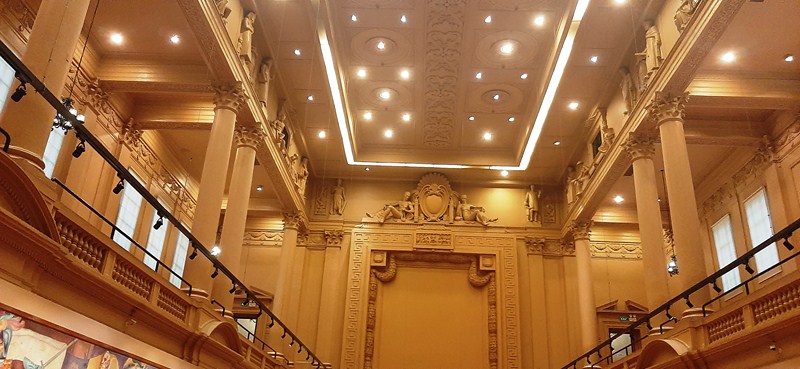
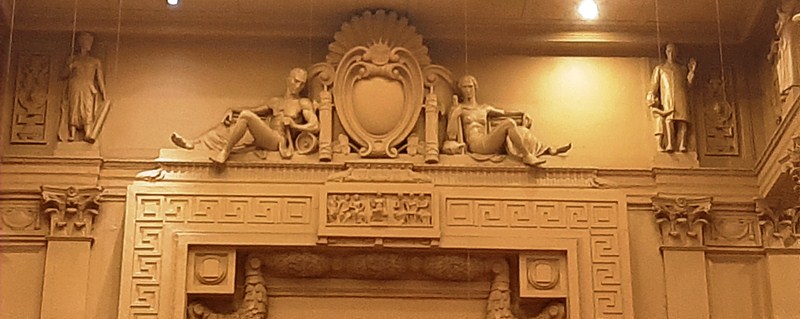
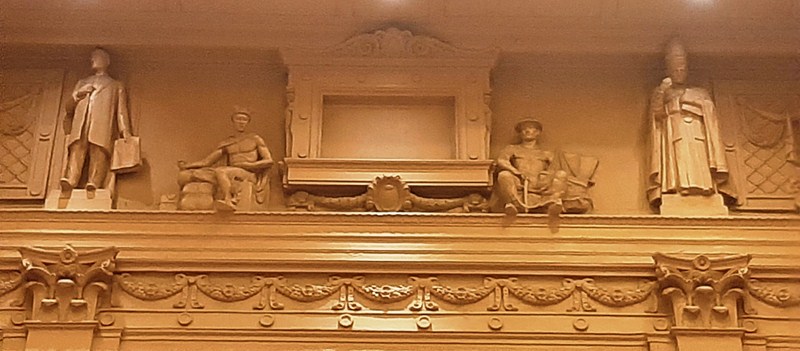
Ceiling and entablature with garlands and relief sculptures

The old Senate Session Hall was designed by American architect Ralph Harrington Doane (part of the team of architect and urban planner Daniel Burnham and a consultant to the Bureau of Public Works, a precursor of the Department of Public Works and Highways) as a high-ceiling reading room. Heavily damaged during the American liberation of Manila in 1945, the Legislative Building was in near ruins but, for some reason, the Session Hall remained intact, with only its intricately carved hardwood ceiling blown off.

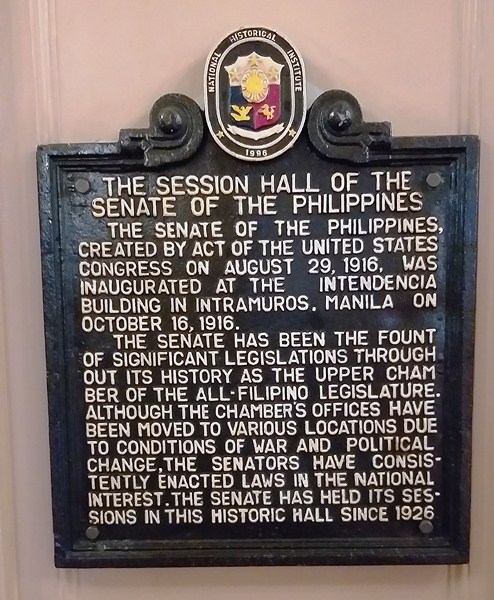
Plaque installed by National Historical Institute

When the newly independent postwar government worked on rebuilding the structure, it was able to restore much of the Session Hall to its original state.

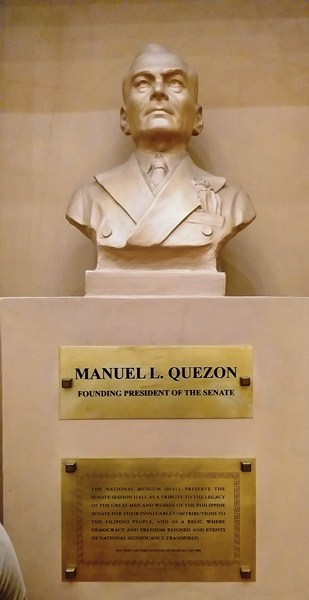
Bust of Manuel L. Quezon

Here, then Senator Benigno “Ninoy” Aquino Jr. and his allies in the opposition delivered privilege speeches during the run-up to martial law in 1972.  When martial law was declared, it was closed and later turned into one of the National Museum’s galleries during the remainder of the Marcos years. During the Marcos era, the Batasan Pambansa in Quezon City housed the parliament.

When democracy was restored after the People Power Revolution in 1986, the Senate and Congress returned to their old homes in the Legislative Building. In 1996, after the Senate moved to its new home at the GSIS Building in Pasay City, the old Session Hall was closed again.

In April 2010, work on the Session Hall’s (Php20 million) two-year restoration started, with funding coming from 2011 National Museum endowment fund (Php6 million) of the Philippine Amusement and Gaming Corp. (PAGCOR), and Php14 million from the museum’s 2012 budget. They also tapped the expertise of the museum’s four heritage architects led by Evelyn Esguerra.

During the in-house restoration project, the National Museum’s Jeremy Barns (director) and Ana Labrador (assistant director) pored over old pictures in their attempt to produce a newly restored Session Hall that’s as close as possible to the original. Its prewar look became the peg of the restoration work. Barns and Labrador chose the 1930s, because it was during this period that the country’s independence movement started to intensify.

Relief Sculptures by Isabelo Tampinco

However, in the absence of detailed pictures of the original, they left the venue’s less ornate postwar ceiling intact. Workers searched in vain for murals (painted by architect Juan M. Arellano), between the overhead concrete fretwork, that might be hidden underneath layers of old paint. In the end, the pair decided to simply give both the ceiling and spaces between the statues a fresh coat of the standard, rich color paint for nearly all public buildings during the Philippine Commonwealth period paint (which Barns described as a “Bureau of Public Works cream”).

Relief sculptures by Isabelo Tampinco

The already structurally unsound wooden parquet flooring on the first level, not part of the Session Hall’s original design, was also removed.  In keeping with the Session Hall’s original look, they decided to go for vibrant red floors (sealed with epoxy) and baseboards. A series of damaged concrete balustrades that bore the weight of a wooden floor that bisected the 15 m. high Session Hall was replaced with faithful reproductions crafted by House of Precast.  The team also replaced the venue’s lighting system and had a more modern, energy-efficient air-con system installed.

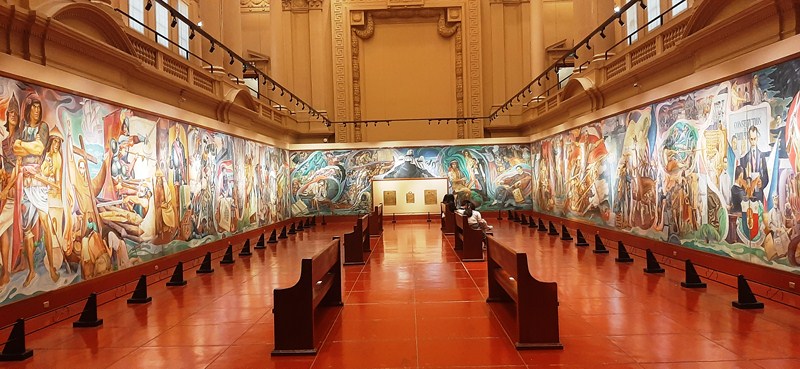
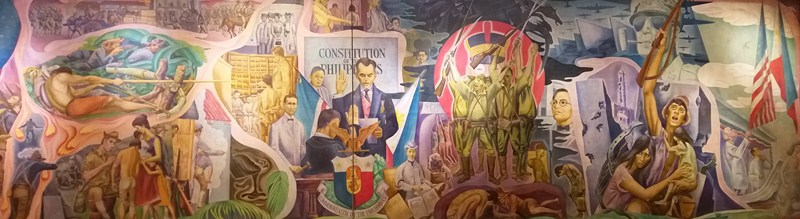
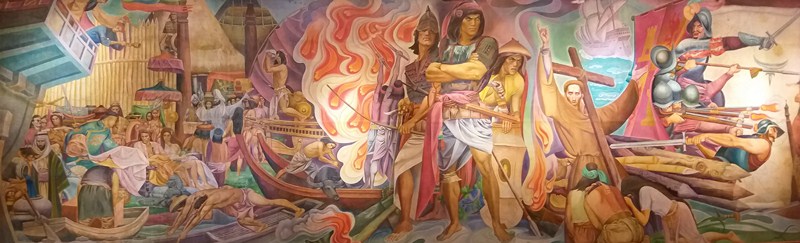
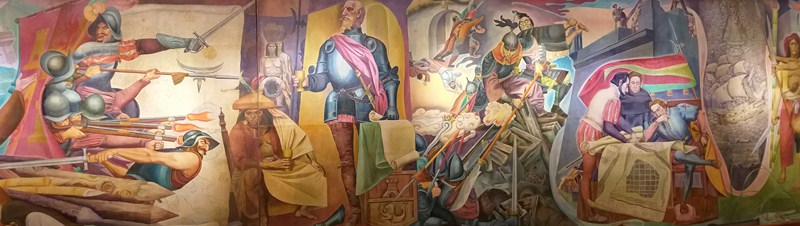
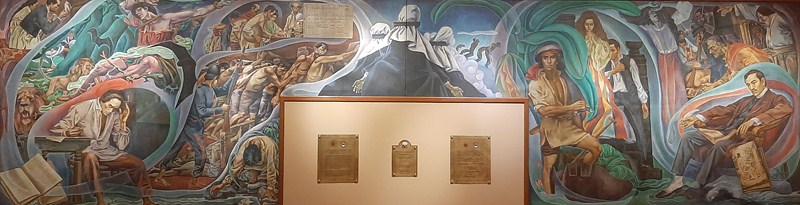
Filipino Struggles Through History by Carlos “Botong” V. Francisco

Windows that were permanently locked from the outside (because of a concrete barrier) were replaced and opened up. Workers also had to fashion, upon Barns’ instructions, a French-type window that leads to an outdoor veranda. On October 29, 2012, during a celebration of the museum’s 111th anniversary, the refurbished hall was opened.

Filipino Struggles Through History by Carlos “Botong” V. Francisco

Currently a venue for events that are of national importance, the Old Senate Session Hall features modern and contemporary Philippine art from the 20th to the 21st centuries. All the ornamentation and decoration in this Hall were done by leading Filipino prewar sculptor Isabelo Tampinco who created these figures with the help of his sons, Angel and Vidal, who inherited their father’s artistry and skills.

Filipino Struggles Through History by Carlos “Botong” V. Francisco

These exceptional, restored masterpieces make up an entablature of garlands and Filipinized, classical relief sculptures of great lawmakers, moralists, philosophers and various historical figures in history, from Biblical times to the 20th century, such as Apolinario Mabini, Pope Leo XIII, Woodrow Wilson, Moses, Hammurabi, Ramses the Great, and Charlemagne.

Filipino Struggles Through History by Carlos “Botong” V. Francisco

This hall also features seven of the ten panels of “Filipino Struggles Through History” (also known as “History of Manila”), the monumental series of paintings by National Artist Carlos “Botong” V. Francisco (1912-1969) commissioned in 1968 for the Manila City Hall by Mayor  Antonio J. Villegas.  The last three panels, depicting Mayor Antonio J. Villegas‘ vision for the city of Manila, are exhibited at Gallery XIII, within the same museum’s Vicente and Carmen Fabella Hall.

Check out “Gallery XIII

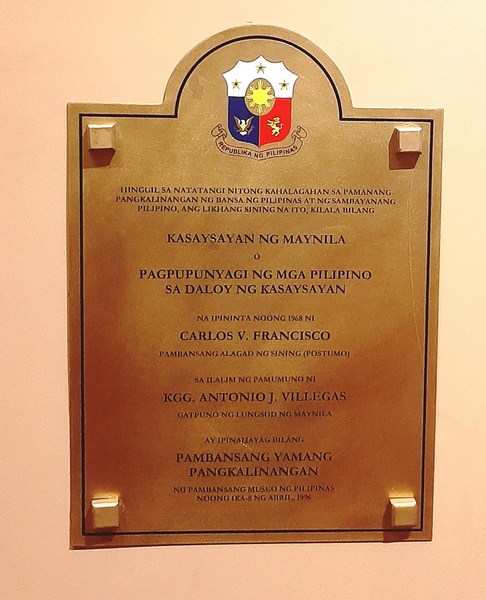
Commemorative plaque of the “Filipino Struggles Through History,” by Carlos “Botong” V. Francisco, being declared as a National Cultural Treasure

The artwork was declared as a National Cultural Treasure by then National Museum director Gabriel S. Casal on April 8, 1996. They collectively measure 2.7 m. (8.9 ft.) high and 79.4 m. (260 ft.) wide.

National Museum of Fine Arts: Padre Burgos Avenue, Ermita, Manila 1000, Metro Manila. Tel: (632) 8527-1215 and (632) 8298-1100.  Email: inquiry@nationalmuseum.gov.ph.  Website: nationalmuseum.gov.ph.  Open Tuesdays to Sundays, 9 AM – 4PM. Admission is free.  Coordinates: 14°35′13″N 120°58′52″E.

Gallery XXII (National Museum of Fine Arts, Manila)

Gallery XXII (International Rice Research Institute Hall)

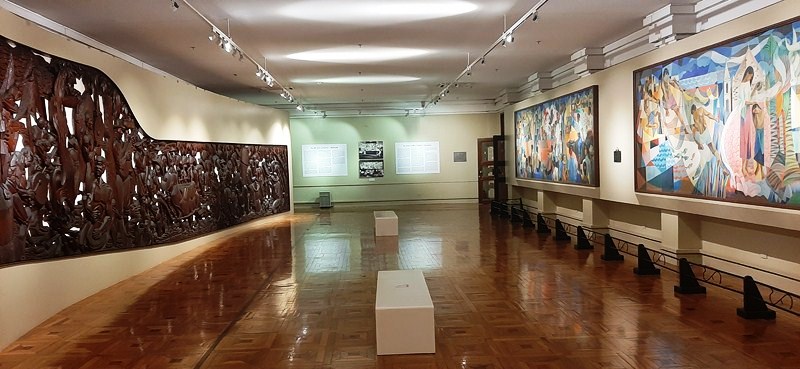
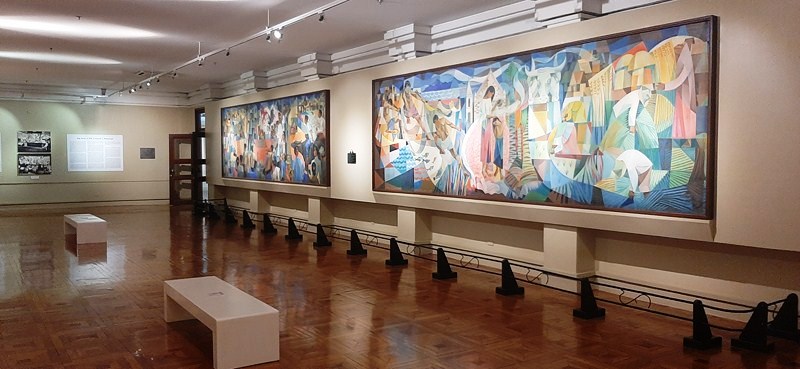
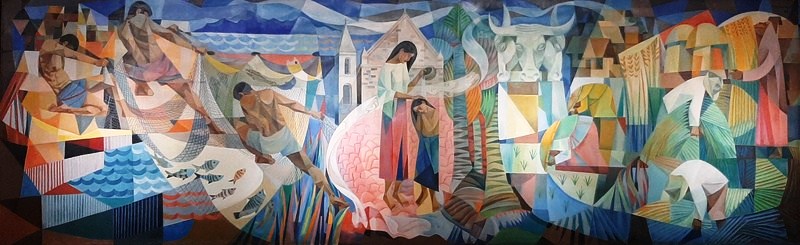
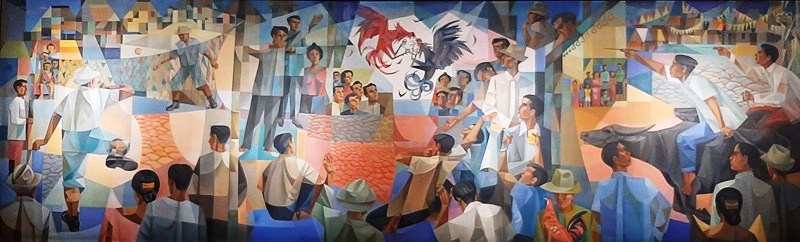
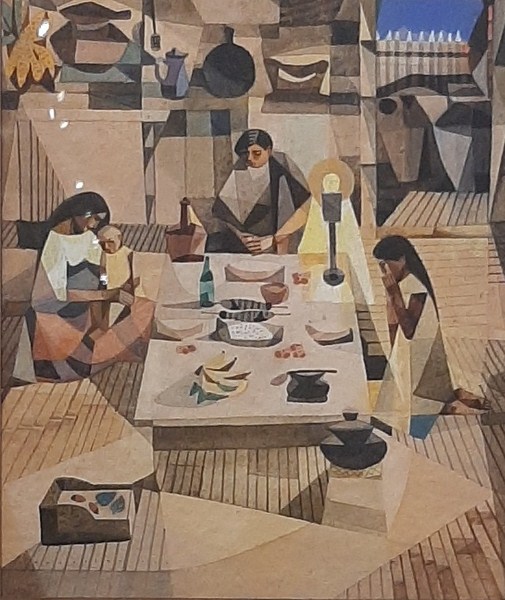
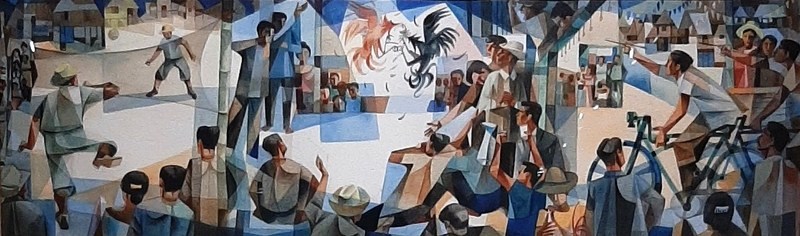
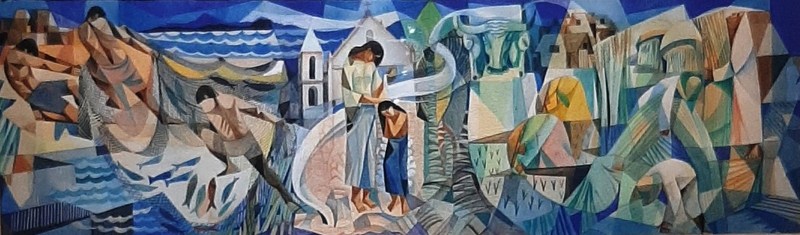
Gallery XXII, a permanent exhibit at the third floor of the National Museum of Fine Arts (NMFA), features two large-scale paintings by National Artist Vicente S. Manansala (1910-1981) from the collection of the International Rice Research Institute (IRRI).

Check out “National Museum of Fine Arts

Gallery entrance

These paintings were commissioned by the institute to depict Filipino life, labor, and leisure, and were completed in 1962. Initially, they were put on display on the walls of the dining hall and cafeteria of the IRRI headquarters in Los Baños, Laguna.

The two Manansala murals

Through a partnership between IRRI and the National Museum of the Philippines, and to protect and preserve the masterpieces, the paintings were transferred to the IRRI Hall, an art exhibition of the  National Museum of the Philippines in the historic Legislative Building. The two large paintings were elevated from Important Cultural Properties, to National Cultural Treasures (the first Manansalas to gain such status), on May 14, 2015.  That same day, an official heritage marker announcing the recognition was installed by the National Museum of the Philippines and the IRRI Hall opened for public viewing.

Check out “Old Legislative Building

The figures are rendered in trademark Manansala, with overlapping transparent polygonal cells that play up the two-dimensionality of the painting.

They are some of the most important examples of his work exploring his technique on transparent cubism in which, instead of breaking down the picture plane, Manansala devised figurative angular forms that uses, as reference, layered colors of stained glass windows, as well as the translucence of capiz shell windows and piña fabrics.

Watercolor studies


The two Manansala murals are a lighthearted narration of Filipino rural life. One is a joyful, pastel-colored medley of labor.  Flanking the two sides are scenes of fishing and rice-planting while, at the center, as focal point, is a woman bathing a child.

Kalabaw (Vicente S. Manasala, 1979, watercolor on paper)

The second painting, a spectacle of small-town festivities, depicts a game of sipa, the national sport, on the left while, on the right, are two men competing in a carabao race. The stretch of canvas is lined with a crowd of people watching two roosters in a midair cockfight.

Study of a Family Praying Before a Meal (Vicente S. Manansala, 1960, watercolor on paper)

Also on display are studies in watercolor for this series, which Manansala made for the IRRI commission, where his technique is perceptible.

Study for IRRI (1) (Vicente S. Manansala, ca. 1962, watercolor on paper)

Study for IRRI (2) (Vicente S. Manansala, ca. 1962, watercolor on paper)

Also featured in this gallery is “Philippine Folklore,” a large-scale, 1,536 cm. (50 ft.) long narra wood relief by renowned sculptor Jose P. Alcantara (1911-2005), Manansala’s childhood friend, from the Philam Life Collection which previously adorned the wall of the then newly constructed, 780-seat Philam Life Theater at United Nations Ave. in Ermita, Manila.

Jose Alcantara’s “Philippine Folklore” narra wood relief

It was made with the aid of his 4 sons and wood carvers from Paete.  It is composed of many wood panels, with gaps built together.

Women pounding rice while a guitarist serenades them

This is the second installation of his monumental work at the NMFA. Another, across the 1953 four-panel painting “The Progress of Medicine in the Philippines” by National Artist Carlos V. “Botong” Francisco (1912-1969) loaned from the Philippine General Hospital in 2012, was installed last March 14, 2019 at Gallery XVI.

Check out “Gallery XVI”  and “Gallery XXIV

Women harvesting the rice crop

It shows a continuous scene where Christians and Muslims are doing their own festivities while staying connected to each other. Four of the smaller, decorative narra wood reliefs, of rural life and folklore, are installed in Gallery XXIV.

A farmer plowing the field with a carabao

Both the IRRI murals and these Philam Life reliefs bear the themes of rice cultivation and the culture that surrounds it, including rituals, festivals and belief systems.

A northern Cordillera harvest festival

Gallery XXII: International Rice Research Institute (IRRI) Hall, 3/F, National Museum of Fine Arts (NMFA), Padre Burgos Avenue, Ermita, Manila 1000, Metro Manila. Tel: (632) 8527-1215 and (632) 8298-1100.  Email: inquiry@nationalmuseum.gov.ph.  Website: nationalmuseum.gov.ph.  Open Tuesdays to Sundays, 9 AM – 4PM. Admission is free.  Coordinates: 14°35′13″N 120°58′52″E.

Visitors shall be limited to 100 per museum per session. Visitors are required to pre-book online at https://reservation.nationalmuseum.gov at least a day before the visit. Confirmation of booking will be sent through email. Group reservations are limited to five (5) persons only.  Walk-in visitors will NOT be accommodated.

Spoliarium Hall (National Museum of Fine Arts, Manila)

Spoliarium Hall

When you enter the National Museum of Fine Arts, from Padre Burgos Ave., the first exhibit, at Level Two, you’ll see is the Spoliarium Hall.  Guarding its entrance is the reinforced concrete, 2.9 x 1.2 m. winged statue Diwata (a gift from the heirs of Hermogenes Reyes and Teodora Tantoco Reyes), sculpted by National Artist for Sculpture Guillermo Tolentino sometime in the 1950s.

Check out “National Museum of Fine Arts

Diwata (Guillermo Tolentino)

The Spoliarium Hall was formerly the House of Representatives Session Hall, site of the 1934 Constitutional Convention.  It is home to Filipino painter Juan Luna’s Spoliarium.  The largest painting in the Philippines, it measures 4.22 m. high and 7.675 m. wide.

Working on canvas and upon the instigation of Francisco de Paula Redoreda, it took Juan Luna eight months to paint this enormous and massive multi-figure mural which was rendered in frenzied fin de siecle brushstrokes. In 1884, this renowned painting was awarded, by the elitist Salon des Beaux Arts,  the first gold medal (grande prix), out of three, at the Exposición Nacional de Bellas Artes in Madrid.

Spoliarium (1884, oil on canvas) of Juan Luna

It depicts a despoiling scene in a Roman circus where dead gladiators, being mourned by relatives, are stripped of weapons and garments. Jose Rizal identified it as an allusion to the exploitation of the country by Spain.  This art achievement underscored the ability of Filipinos to compete with Europeans at their backcourt.  It was also a subtle affirmation of the Filipino’s capability to run affairs back home.

The author

In April 1884, together with other works of the Spanish Academy, the Spoliarium was on exhibit in Rome. In 1885, after being exhibited in Rome, Madrid and Paris, the painting was sold to the provincial government of Barcelona (Diputación Provincial de Barcelona) for 20,000 pesetas.

Detail

In 1887, it was transferred to the Museo del Arte Moderno in Barcelona where it was in storage until, in 1937, the museum was burned and looted during the Spanish Civil War. Under orders of Generalissimo Francisco Franco, the damaged painting was sent to Madrid for restoration, where it stayed for 18 years. In the 1950s, calls for the painting’s transfer to Manila by Filipinos and sympathetic Spaniards, led to Gen. Franco’s orders to finish the painting’s restoration and eventual donation to the Philippines.

Dying gladiators being dragged away

After the restoration work was completed in late 1957, the painting was broken up into three pieces because of its size, with each piece going into its own shipping crate. In January 1958, the painting was turned over to Ambassador Manuel Nieto, Sr. as a gift from the government of Spain.

Mourning relatives of gladiators

The painting was mounted on a wooden frame at the then Department of Foreign Affairs building (as of June 2020, currently the Department of Justice building) along Padre Faura Street.  Carlos da Silva, as head of the Juan Luna Centennial Commission, chose artist Antonio Dumlao to perform relining and cleaning of the painting. Carlos da Silva did the mounting, framing and architectural work. In December 1962, the newly restored Spoliarium was then unveiled in the Hall of Flags of the Department of Foreign Affairs.

Jandy

In 1982, the painting was cleaned by Suzanno “Jun” Gonzalez and, in 2005, another restoration was made by Art Restoration and Conservations Specialists Inc., headed by painter June Poticar Dalisay.

Across it is the equally violent The Assassination of Governor Bustamante and His Son (El asesinato del Gobernador Bustamante), the most extensive work by another Filipino 19th century master painter, Félix Resureccion-Hidalgo (February 21, 1855-March 13, 1913), Luna’s contemporary and friend, who won the silver medal for his Las Virgenes Cristianas Expuestas Al Populacho at the same Exposición Nacional de Bellas Artes in Madrid.  Circa 1853, it is also known under the more controversial title La Iglesia contra el estado (The Church against the State).

The 412 cm. (13.5 ft.) high and 338 cm. (11 ft.) wide oil on canvas painting, commissioned by Don Antonio Ma. Regidor (who never took hold of it), a Filipino nationalist, shows 18th century halberds (the 19th century halberds may have become more elaborate compared to those featured in this historical painting of the event that took place in 1719) being used by the Alaberderos (a special unit of bodyguards) belatedly coming to the rescue of the fallen Governor-General Fernando Manuel de Bustillo Bustamante.

The Assassination of Gov.Bustamante(Felix Resureccion-Hida (4)

In 1905, this painting was first exhibited at the St. Louis Exposition in the United States of America where it won a gold medal. The painting remained in Barcelona until 1914 when the painting was brought back to the Philippines by one of Regidor’s relatives. In 1965, the painting came into the possession of Mr. Manuel Lazatin Garcia and, in 1971, it was transferred to the residence of architect Leandro Locsin for safekeeping.  In 1974, in time for the celebration of Museum Week, the painting was unveiled at the National Museum.

Both paintings were declared as National Cultural Treasures.   Perpendicular to these two iconic paintings is the Arthur Walsh Fergusson Monument and the Battle of Mactan by Elmer Borlongan.  The former, the grandest and only monument in the Philippines dedicated in honor of an American bureaucrat, was completed in Madrid and Barcelona in 1912 by the eminent Spanish sculptor Mariano Benlliure (1862-1947) and was formally inaugurated in Manila on November 15, 1913.

Known for his Neo-Classic public monuments in Madrid and elsewhere, Benlliure, and his brother Jose, were classmates (from 1881 to 1884) of Filipino artists Juan Luna, Félix Resurreccion-Hidalgo and Miguel Zaragoza at the Spanish Academy in Rome.

Arthur Walsh Fergusson Monument

Fergusson, a Spanish-speaking colonial bureaucrat, served as secretary of the First Philippine Commission and later as secretary to a succession of governors-general from 1901 until he died from cardiac arrest in 1908. This bronze monument, on a Carrara marble plinth monument, was originally located in a small plaza (then known as Plaza Fergusson) fronting Ermita Church.

The monument was  replaced by a bronze representation of the Virgin of Ermita, by the late Eduardo Castrillo, and the name of the plaza was changed to Plaza del Nuestra Señora de Guia (later renamed Plaza Guerrero to honor the Filipino poet Fernando Ma. Guerrero). The Fergusson Monument was given to the US Embassy who loaned it to the National Museum of the Philippines for preservation and access to the public.

The large-scale (2.4 x 4.8 m.) Battle of Mactan” was painted by contemporary visual artist Elmer “Emong” Borlongan (who used predominantly red and blue pigments for this artwork) in 2021 to mark the 500th Anniversary of Ferdinand Magellan’s circumnavigation of the world and arrival in the Philippines.

The Battle of Mactan (Elmer Borlongan, 2021, acrylic on canvas)

Also on display are two halberds, the only examples of their kind known to exist in the country.  Officially used in the service of the Governor and Captain General between 1874 and 1898, they were taken as souvenirs by American troops and brought to the US, eventually entering the collection of Parkin Archaeological State Park (Arkansas) who, in 2016, donated them  to the National Museum of the Philippines. 

One of the two halberds of the Guard of the Captain General (1)

Spoliarium Hall: 2/F, National Museum of Fine Arts (NMFA), Padre Burgos Avenue, Ermita, Manila 1000, Metro Manila. Tel: (632) 8527-1215 and (632) 8298-1100.  Email: inquiry@nationalmuseum.gov.ph.  Website: nationalmuseum.gov.ph.  Open Tuesdays to Sundays, 9 AM – 4PM. Admission is free.  Coordinates: 14°35′13″N 120°58′52″E.