Davao International Airport (Davao City, Davao del Sur)

Davao International Airport (Francisco Bangoy International Airport)

Our gateway to Samal Island and its Pearl Farm Resort was the Francisco Bangoy International Airport, the main airport serving Davao City and the entire Davao Region in the Philippines,  also commonly known as Davao International Airport (IATA: DVO, ICAO: RPMD).

Check out “Pearl Farm Resort

Here are some interesting trivia regarding the airport:

Here is the historical timeline of the airport:

  • In the 1940s, Don Francisco Bangoy donated the land where the airport sits on. At the time it began operation, the airport merely consisted of a 1,200 m. long unpaved grass runway with quonset huts serving as terminal buildings.
  • Throughout much of the 1940s and 1950s, Philippine Airlines and the Philippine Air Force provided air service to the city.
  • By 1959, the complex consisted of a small control tower and several low-rise buildings.
  • During the latter stages of Paciano Bangoy’s gubernatorial term, right of way and access to the terminal buildings and the airport was improved through further donation of land by Bangoy.
  • In 1980, a new terminal, designed by Filipino architect Leandro Locsin, with a capacity of one million passengers, was constructed and the runway was progressively extended from its original length of 1,200 m. to its current 3,000 m.. Then-Congressman Manuel Garcia, whose congressional district covers the airport perimeter, funded both projects.
  • In 2000, construction began on a new, larger Php2.7 billion (US$128 million) terminal building which would consolidate the Php15 million interim international terminal and the airport’s then-existing terminal.
  • In 2001, the new 3,000 m. long runway (extended from its previous length of 2,500 m. to accommodate future international flights) was completed.
  • On December 2, 2003, the new terminal was inaugurated.
  • On November 12, 2007, Cebu Pacific announced the airport as its third hub.
  • On March 26, 2018, Philippine Airlines, the country’s flag carrier, announced the airport as its third hub.

One of four jet bridges

The two-level Malay architecture-inspired passenger terminal, with double the capacity of the old terminal, has an approximate area of 17,500 sq. m. (188,000 sq. ft), four times larger than the old terminal. It is fully computerized, more secure and has more commercial spaces for concessionaires (approximately 9,000 sq. m. or 97,000 sq. ft.) of gross leasable area.

Interior of terminal

For passenger boarding, it has four jet bridges plus a Flight Information Display System and closed-circuit television system that complements the terminal’s security system. The latest navigational, security and baggage handling equipment also complements the added capacity.

To handle a steady flow of passenger traffic, the terminal has 14 domestic and 14 international check-in counters equipped with electronic weighing scales and conveyors and a computerized its baggage handling system. It also has 2 arrival areas (domestic and international), with 2 baggage conveyors each. The cargo terminal building, covering almost 5,580 sq. m. (60,100 sq. ft.), can handle up to 84,600 metric tons (83,300 long tons; 93,300 short tons) of cargo annually.

Besides the main terminal building, there are also new support facilities like the Administration Building, Airfield Maintenance Building, Central Plant Building, Hangar for Military and Training aircraft and Fire/Crash/Rescue Building. It has an 800-slot car parking area and 4 slots for shuttle buses. It has a 3-megawatt (4,000 hp) standby power generator.

The airport has a single 3,000-m. (9,800 ft.) long by 45-m. (148 ft.) wide precision runway that can handle basically all passenger wide-bodied aircraft (including the Airbus A380).  Two turning pads at each end of it, which help aircraft make a back track, complement the runway.

The installation of a new instrument landing system (ILS), for both Runways 05 and 23, upgraded its compliance to International Civil Aviation Organization (ICAO) operating category-Precision Approach Category 1. Depending on size, it can accommodate 8 to 10 aircraft landings per hour and has the equivalent 9 gate holding areas for those aircraft.

The airport has also 2 dual access taxiways. Taxiways A3 and A4 are used to access the new ramp and terminal while taxiways B and C are used for access to the old airport ramp.

Today, Philippine Airlines, All Nippon, Cebu Pacific Air and South East Asian Airlines operate more frequently here. The most popular sectors from Davao are Davao to ManilaDavao to Cebu with 375, 152 weekly flights respectively.

Francisco Bangoy International Airport: Daan Maharlika Highway, Brgy. Sasa, Buhangin District, Davao City 8000.  Tel: (082) 234-0418.

Rafael’s Farm Garden Restaurant (Babatngon, Leyte)

On my fifth day on Leyte, I decided to take a much needed break, my map updating work for United Tourist Promotions (makers of EZ Maps) just about done.  My sister-in-law Paula suggested I bring along Selena and Sean, my niece and nephew respectively, and have lunch at Rafael’s Farm Garden Restaurant in the next town of Babatngon.  We brought along their family driver Cherwine Avis.  It was just a 13-km./30 min. drive to the restaurant.

The boating lagoon

This peaceful, 16-hectare place in the middle of farmland, because of its ambiance, is a perfect place to dine, get close to nature and relax  with its beautiful, well-maintained landscaping.  There were many open green spaces to walk around, a wishing well, a manmade waterfall, a calesa, a treehouse for children to play in and a lagoon where one can go rowboating.  A wooden platform leads to a gazebo at the middle of the lake.  At night, fireflies swarm at a nearby tree.  The restaurant was named after the grandson of owner/entrepreneur Rene Tampil. Rene is also the owner of meat shops and the “Join Us” fastfood eateries in Tacloban City.

Selena at entrance to main building

The thatched-roof main building, with its native decor and open on 2 sides, has a wooden floor, conversation areas with sofas, interesting coffee tables, old and lamps, sculpture pieces, and an infinity pond with koi fish around the perimeter. A favorite weekend destination, it is truly a nice place for one who wants to get out of noise and stress of city life, even if just for a few hours.

The conversation area and infinity pond

The main dining area has dining tables topped with crocheted tablecloth and wooden chairs with woven abaca backrests and seats covered with banig.  All around are artwork (done by local artists) for sale.  The menu features a wide selection of delicious Filipino dishes (fish sinigang, grilled herb chicken, kinilaw, kare-kare, crispy chicken kawali, coco chicken stew, garlic butter fish steak, yellow pork chop, baked scallops, classic baby back ribs,  etc.), salads (farmer’s salad, garden fresh salad, etc.), desserts (buko gelatin, halo-halo, turon, etc.), pastries and beverages (lemon grass tea, ginger tea, iced tea, etc.), all at reasonable prices.  You can avail of a set meal consisting of salad, a side dish, rice, main course and dessert for PhP220.


Rafael’s Farm: Brgy. Pagsulhugon, Babatngon, Leyte.  Tel: (053) 325-0729.  Mobile numbers (0918) 669-9909 and (0915) 920-0325.  E-mail: inquiry@rafaelfarm.com and reservation@rafaelfarm.com.  Website: www.rafaelfarm.com.

Church of Our Lady of the Immaculate Conception (Hilongos, Leyte)

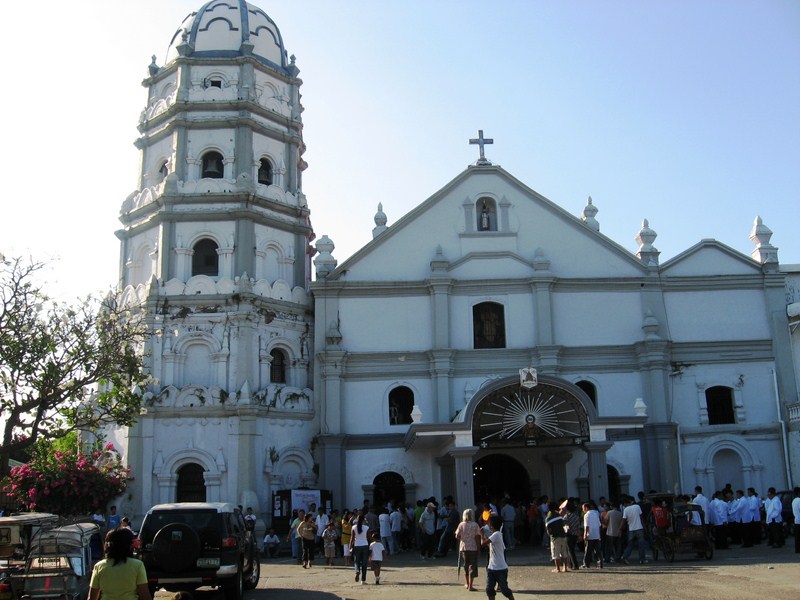
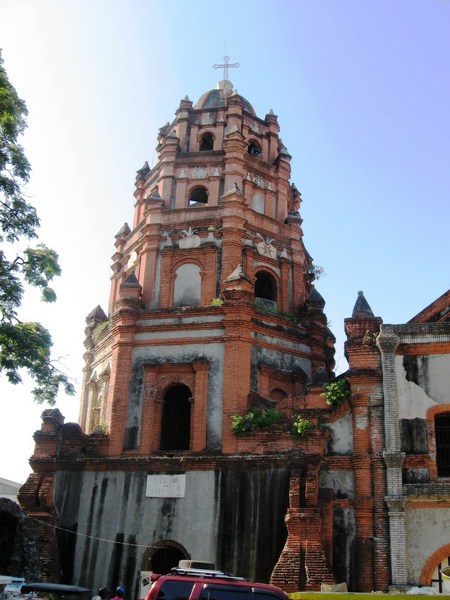
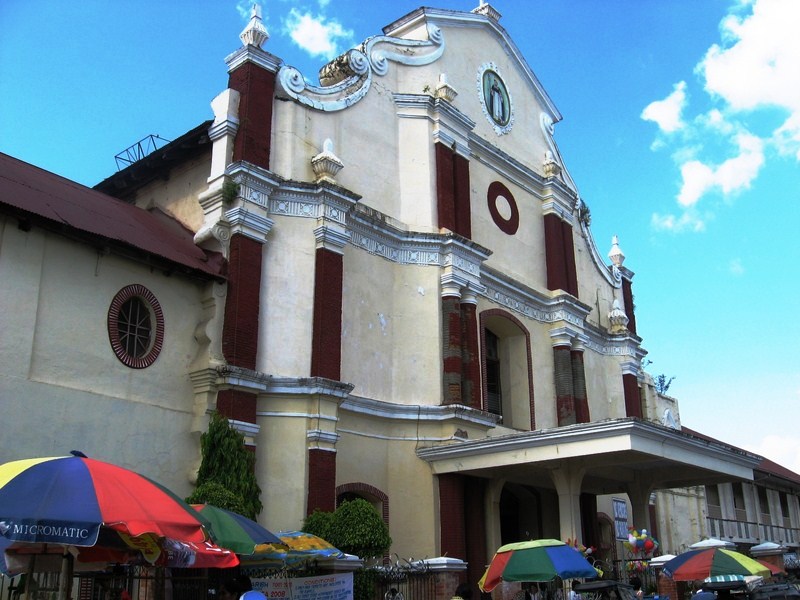
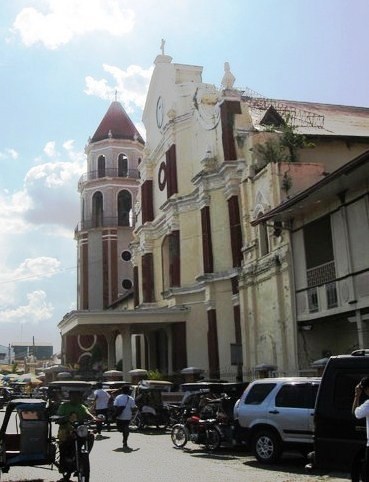
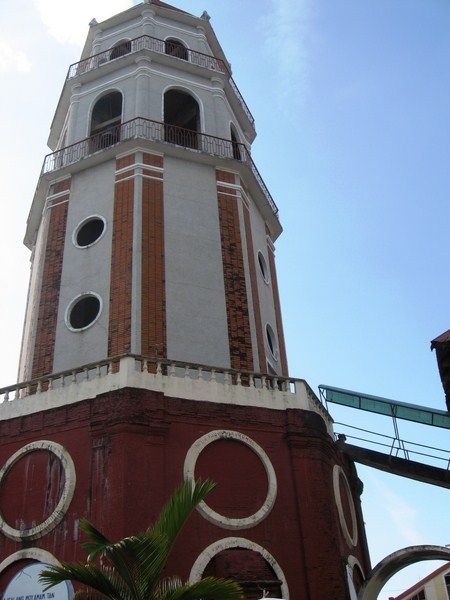
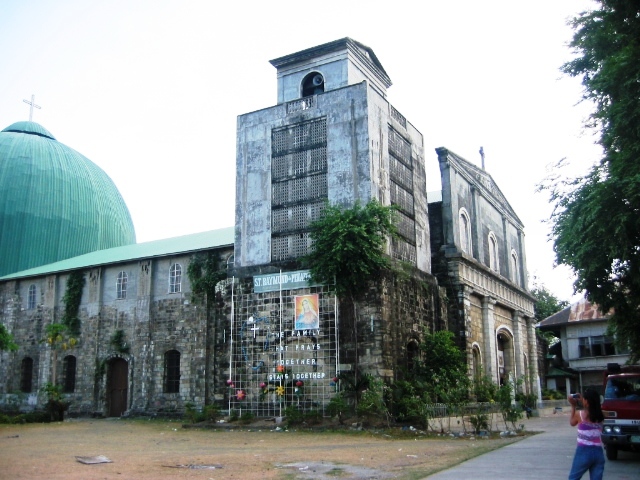
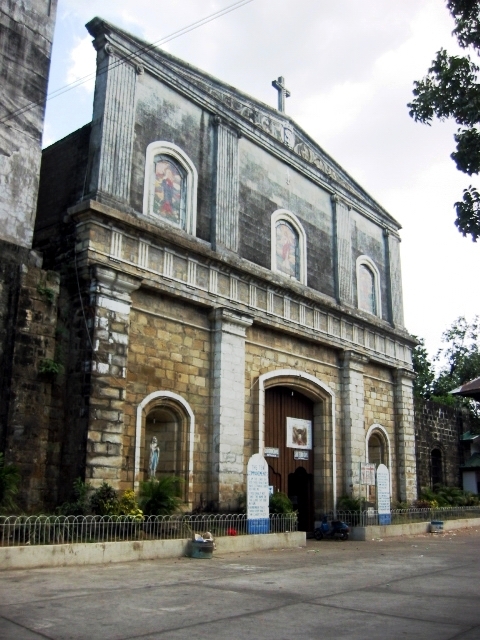
Continuing on our way to Maasin City, Doods and I traveled the next 44 kms., past the towns of Inopacan and Hindang, to Hilongos. There, we made a brief stopover at the town’s Spanish-era, fortified Church of Our Lady of the Immaculate Conception.  This church was built by Jesuit friars in the 18th century and renovated by secular Fr. Leonardo Celis-Diaz, a native of Cebu.   

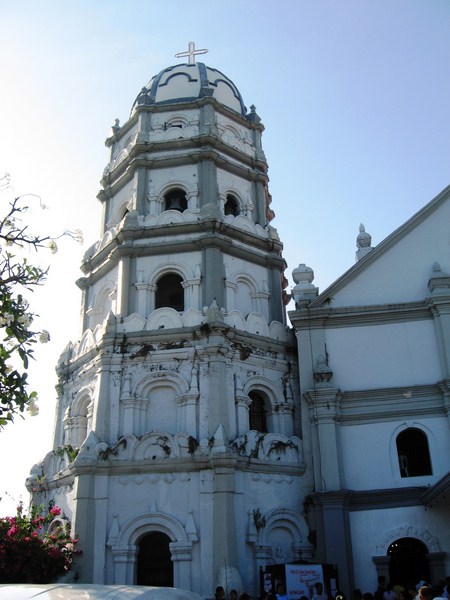
The modern Church of Our Lady of the Immaculate
Conception.  On its left is its Spanish-era bell tower

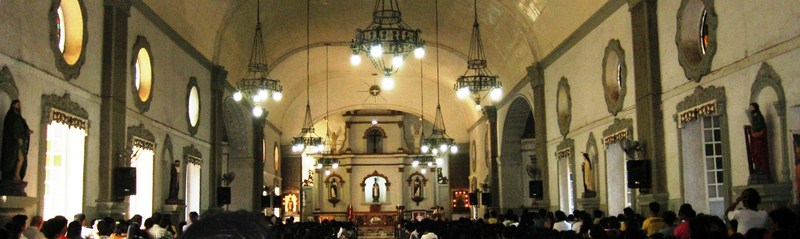
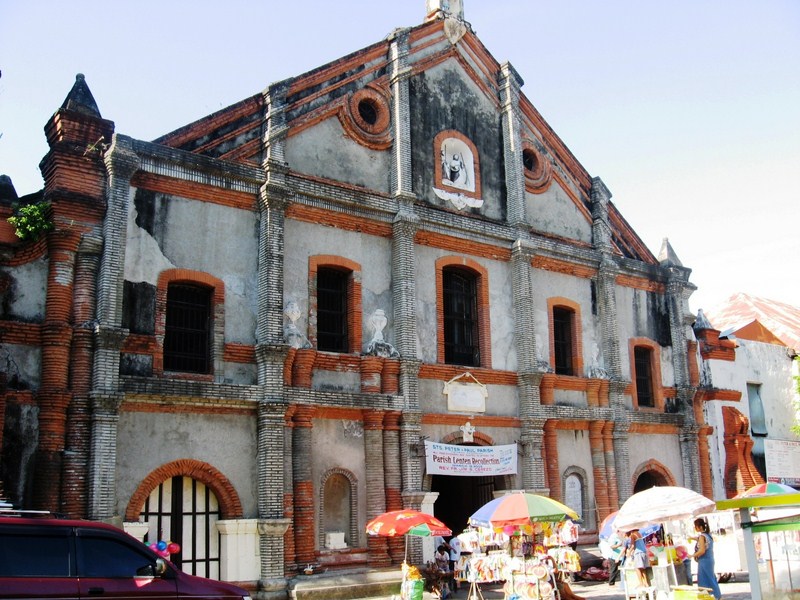
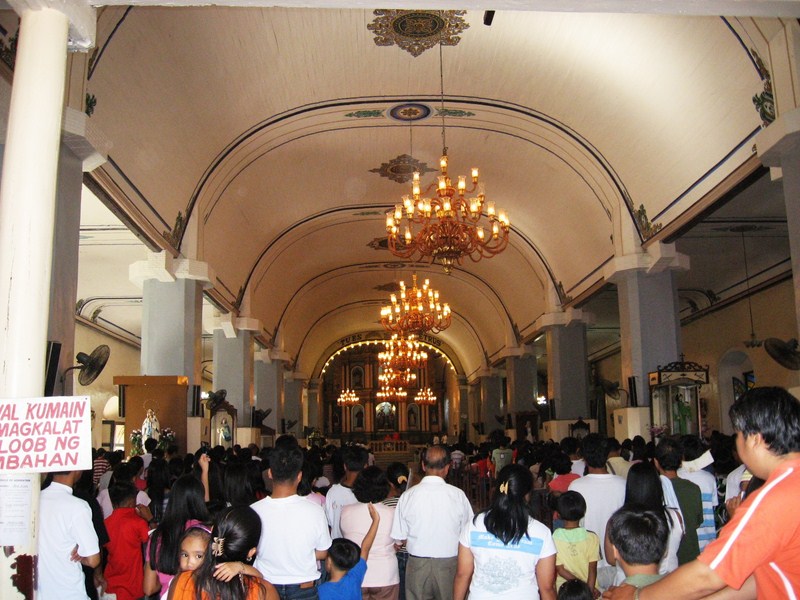
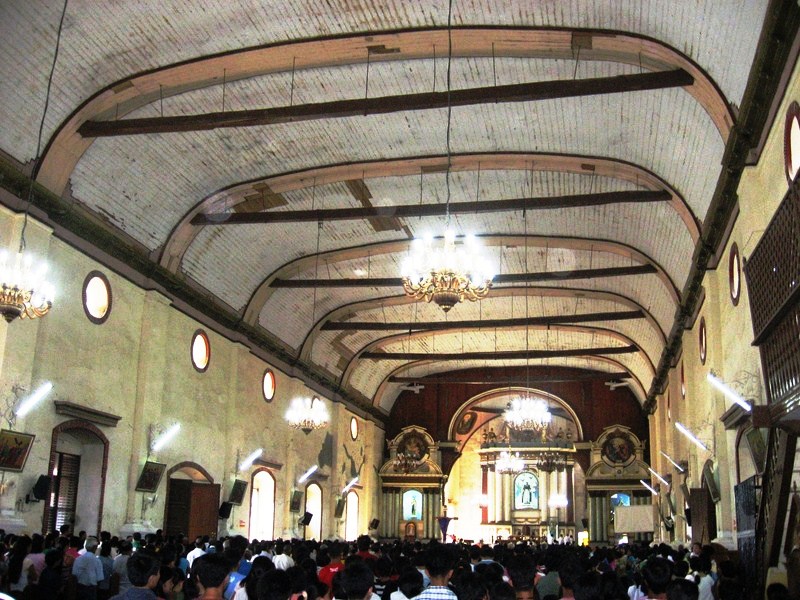
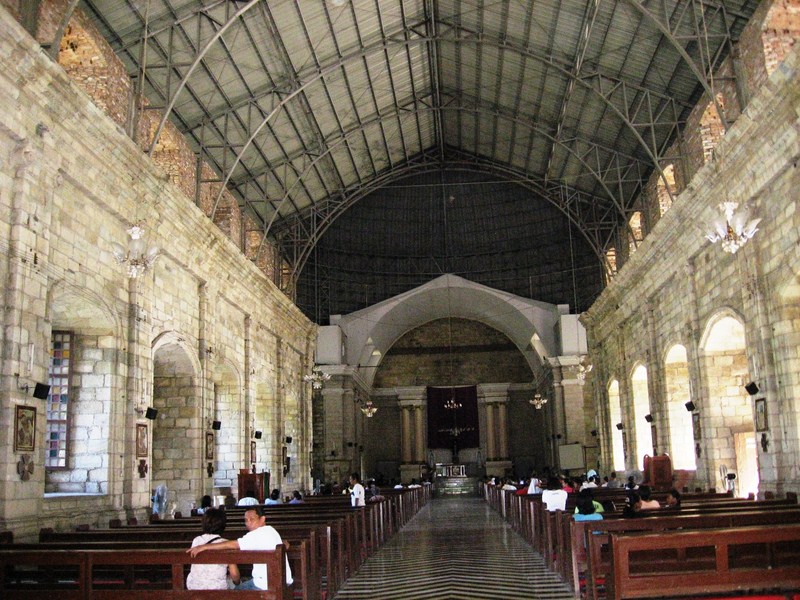
The original church, now incorporated as a transept, was a single-nave structure whose main door was also the gate to a bastioned fortification.  Some bastions and walls of that fortification still remain.  The main nave of the church is a modern construction and the church interior is completely new.

Ruins of the bastioned fortification

However, the town is more known for its octagonal flanking bell tower, now considered as the highest existing bell tower built in the Spanish era.  Also built by Fr. Celis-Diaz, this  independent multi-storey structure is now plastered over with Portland cement.   The convent, probably completed in the 19th century, houses many of the church’s antiques including silver vessels from the 18th century.

Baybay City (Leyte)

After breakfast at Bahia Coffee Shop, I was picked up at the Hotel Don Felipe lobby by Mr. Doods Alcaraz, a medical representative requested by my sister-in-law Paula to drive me to Maasin City where I was to do map updating for United Tourist Promotions (makers of EZ Maps).  We used Dood’s car for this purpose.  We left Ormoc City by 8:30 AM.  The Maharlika Highway, though concreted, was pockmarked with cracks and potholes and first time drivers along this route would have to drive with caution.  Doods, however, frequently plied this route and knew it like the palm of his hand. 

Baybay City Hall

After 46 kms., past the town of Albuera, we made our first stopover for  merienda at a Jollibee outlet at the new component city of Baybay (it became such by virtue of Republic Act No. 9389 and was ratified by a plebiscite held on June 16, 2007) on the central west coast of Leyte where ferries leave for Cebu and the other islands.  This wasn’t my first visit to the city as its port was our jump-off point for our April 22, 2000 visit to the Cuatro Islas (under the jurisdiction of Inopacan).   

Baybay Port

On November 18, 2008, the Supreme Court struck down Baybay’s cityhood law, making Baybay a municipality again.  On December 22, 2009, acting on the appeal of the so-called “League of 16 Cities” (of which Baybay is a part of), the Supreme Court reversed its earlier ruling but, on August 24, 2010, again reinstated its 2008 decision. On February 15, 2011, the Supreme Court upheld, for the third time, the cityhood of Baybay.  Baybay is a city again.

After merienda, I dropped by the town’s Spanish-era Church of Our Lady of the Immaculate Conception.  The church was built in 1852 by Fr. Vicente E. Coronado and continued under the supervision of Maestro Proceso from Manila.  In 1866, fire destroyed the church except for the Chapel of the Holy Cross.  It was repaired in 1870 and finished by painter and sculptor capitán Mateo Espinoso (probably a local dignitary and artisan). 

Church of Our Lady of the Immaculate Conception

Walking Tour of Maasin City (Southern Leyte)

Having just had a Jollibee merienda at Baybay City, I decided to forego taking lunch and proceed on my own with my ocular walking tour of the city.  It was quite hot and sunny and I decided to leave my jacket at Dood’s Honda City, a decision I was  to regret later.  I had no idea what Doods did while I was away.

City Hall

The city proper was concentrated on two main streets: R.K. Kangleon St. and Tomas Oppus St. and all around it were the city hall, public market, schools, banks, inns, restaurants, churches and bus, jeepney and tricycle terminals.  Minutes into my walking tour, it began to rain and I had to wait it out in the shade before continuing on my way.  Leyte’s weather is really fickle, sunny one minute and rainy the next.

Busy Tomas Oppus Street

Much further away was the Provincial Government Center, Maasin City being the capital of the province.  Located here were the Provincial Capitol building and other provincial government offices around a park. To get there, I had to take a tricycle.  Before going back to Tacloban City (a further 185-km./4-hr. drive away), Doods and I had a late lunch at San Pedro Lechon Manok. 

The Provincial Capitol Building

Maasin City Investment, Promotions and Tourism Office: City Hall, Maasin City, Southern Leyte.  Tel: (053) 381-2138.


Cathedral of Our Lady of Assumption (Maasin City, Southern Leyte)

From Hilongos, Maasin City was just a further 37 kms.away, past the towns of Bato and Matalom. Doods and I finally reached city by 12:30 PM and Doods conveniently parked the car in front of the city’s Spanish-era Cathedral of Our Lady of Assumption.  This church was started in 1771 by Jesuit Fr. Serapio Gonzalez, continued by Fr. Jose Paco from 1839 to 1852, destroyed by fire in 1884 and later rebuilt.  In 1968, the church was made into a cathedral and, in 1993, the cathedral was made a National Shrine by the National Historical Institute.

 Cathedral of Our Lady of Assumption

Its simple, sparsely-decorated Early Renaissance façade has a semicircular arched main entrance flanked by narrow paired columns, a pediment with a centrally located a statued niche flanked by square windows and topped by a circular window.  On its right is a tall and slender 3-storey bell tower and surrounding the church is a fortification with quadrilateral bulwarks at the corners. Part of the fortification has been demolished to give way to a school. A bulwark on the western side of the site has the inscription “San Carlos Año de 1781.” Inside the cathedral are Spanish-era images and santos found in its altar and ceiling.

The cathedral’s interior

Hong Kong Disneyland (Hong Kong)

Too excited to even wait for our check-in, from the Hollywood Hotel we all proceeded to the park via its regular complimentary airconditioned shuttle.   The actual 100-acre park, the smallest Disneyland in the world, currently features 4 themed lands similar to those at other Disneyland parks: Main Street, U.S.A., Adventureland (the biggest one among all the Disneyland parks), Fantasyland and Tomorrowland.

Entrance Promenade

We had a choice of 22 entertainment items in the park (there are 44 in Paris, 45 in Tokyo and Florida, and 65 in California).  The park’s biggest draws were its shows and there were three on our list. The Golden Mickeys, at Disney’s Storybook Theater in Fantasyland, is a spectacular musical extravaganza featuring all the glitz and glamour of a Hollywood tribute, honoring your favorite Disney films.

Golden Mickeys - Disney's Storybook Theater

Also at Fantasyland, we donned special sunglasses at Mickey’s PhilharMagic and watched a hilarious and dazzlingly immersive 3-D attraction of movies, music and mayhem featuring Maestro Mickey Mouse, Donald Duck, Alladin and other animated Disney characters as they burst forth before our amazed eyes.

Festival of the Lion King - Theater in the Wild

At the newly decorated Adventureland, temporarily renamed Pirateland (until June 30) to celebrate the release of the new feature film “Pirates of the Caribbean: At World’s End,” we watched the fantastic Festival of the Lion King at its Theater in the Wild. This colorful pageant of music and dance, inspired by and celebrating Disney’s animated classic “The Lion King,” features a vibrant collaboration of live performers (including a number of Filipinos), stunning costumes and exotic scenery. We liked it so much; we watched it again the next day.

Jungle River Cruise Pirate Takeover

Also at Pirateland, we tried out the Jungle River Cruise, Pirate Takeover!, venturing down the dangerous waters of a seemingly mysterious river filled with new surprises; and took a motorized log raft to Tarzan’s Island (inspired by Disney’s animated feature, “Tarzan”), climbing the moss-and-vine-covered Tarzan’s Treehouse, along the way  learning the story of this human child raised by gorillas.

Sleeping Beauty Castle - Fantasyland

Other park attractions are their rides.  We took one giant and tumultuous leap for fun at Space Mountain, an indoor roller coaster, where we seemingly rocketed, at warp speed, to into the inky blackness of the nether reaches of space, amidst synchronized music and sound effects.

Buzz Lightyear Astro Blasters - Tomorrowland

At Buzz Lightyear Astro Blasters, in Tomorrowland, we became Space Rangers saving the galaxy from the Evil Emperor Zurg, riding Star Cruisers and firing moveable, hand-held laser cannons as we tried to blast enemy targets and amass points. Less tumultuous was our horseback ride on the Cinderella Carousel, a sure hit for the young and the young-at-heart.

Posing with Snow White

Other favorite activities of kids, including mine, were photo opportunities with costumed Disney characters. However, you have to sometimes wait in long lines to do so.  Where the queue was short, we posed with Captain Hook at Pirateland; and Belle, Goofy and Snow White at Fantasyland.  We again got to see them, and the others we missed, at the magical 3 PM Disney on Parade, a daily cavalcade of Disney characters and music in a procession starting in Fantasyland and proceeding down to Main Street, U.S.A.

Royal Banquet Hall

In between rides and shows, we quenched our thirst and filled our stomachs with rice meals at the Royal Banquet Hall at Fantasyland, and chicken burgers and French fries at Comet Café at Tomorrowland.

With a Tricycle-Mounted Filipino Piano Player at Main Street, U.S.A.

Main Street is our favorite hangout, cooling off (and buying souvenirs such as shirts and key chains) at Main Street Emporium, again cooling off and admiring (but not buying) expensive and exquisite crystal figurines of Disney characters (including watching a demo on how they were made) at Crystal Arts.

The Disneyland Story - Main Street, U.S.A.

We also learned “How Mickey Mouse came to Hong Kong” in The Disneyland Story, or simply watching  people passing by or enjoying a nostalgic and leisurely trip along Main Street to Town Square on board quaint Paddy Wagons or Main Street Taxis or on the excursion-style train of Disneyland Railroad.

Disney on Parade

I also enjoyed chatting with many of our kababayans employed in the park, including a tricycle-mounted piano player. Main Street is also the venue for a grandstand view of the 8 P.M. Disney in the Stars, a  magnificent, magical and colorful fireworks spectacular, choreographed to classic Disney songs and music, and held over the towering and graceful spires of Sleeping Beauty Castle. We capped our evening with fine dining at the nearby Corner Café.

Disney in the Stars Fireworks

Arrival at Disney’s Hollywood Hotel (Hong Kong)

The next day, after another breakfast at MacDonald’s along Nathan Rd., we checked out of Kimberley Hotel and were all picked up by airconditioned coach for the early morning, 1.5-hour drive to the 600-room Hollywood Hotel, one of two hotels at Hong Kong Disneyland (the other is the Hong Kong Disneyland Hotel), where we were to stay overnight.  We got 2 adjoining rooms (3737 and 3738).

Hollywood Hotel

The hotel was designed with an Art Deco exterior that features design motifs incorporating Disney’s world-famous mouse.  Its 21 acre, landscaped gardens appears like a map of Los Angeles and features details such as the famous Hollywood sign and vintage Californian cars.  We also availed of the complimentary shuttle service between the hotel and Hong Kong Disneyland.

Check out “Hotel and Inn Review: Hollywood Hotel

Disney’s Hollywood Hotel: Hong Kong Disneyland, Lantau Island, Hong Kong.  Tel: +852 3510-5000.  Fax: +852 3510-5333.

Ocean Park (Hong Kong)

From the Peak Tram, we all met up at the Ocean Park main entrance where we rode cable cars in 3 groups, ascending to the headland section (1,400 ft. above sea level), during which we had an unparalleled and spectacular view of Hong Kong Island, the sublime South China Sea beyond and the expanse of the park including Atoll Reef, Shark Aquarium, Ocean Theater, the 72-m. (236-ft.) high Ocean Park Tower (with its cabin which slowly revolves from ground to top) and its rides.

Cable Car

This marine park’s main draw is its marine attractions at Marine Land.  Mark,  Nenette and their kids Gelo and Matthew watched the thrilling theatrics of adorable Pacific bottlenose dolphins and Californian sea lions (the official mascot of Ocean Park is “Whiskers,” a waving sea lion) in a huge pond at the open-air Ocean Theater.

Atoll Reef

On the other hand, we visited the Shark Aquarium where 70 sharks from 35 species are displayed. At its underwater viewing tunnel (Asia’s first), we observed Black Tip Reef Sharks, Pygmy Swell Shark, Hammerhead Sharks and other kinds of sharks, looking at them eye to eye as they safely passed overhead.  Too bad we missed seeing divers feeding or playing with sharks.

Shark Aquarium

We next visited the expansive Atoll Reef where 2,000 fish in 250 species are displayed in a huge, coral-themed aquarium. Shaped like a 3 or 4-storey, elliptical fishbowl, here we viewed a variety of fish through 6-cm. (2.4-inch) thick glass windows. Atoll Reef is divided into the shadow and the deep levels, each exhibiting its characteristic aquatic life.

Marine Life at Atoll Reef

The collection includes sharks, tropical fish, nautilus, tiny Pomacentridae fish, a gigantic Zebra Shark, morays, groupers, turtles and over 400 kinds of maritime animals from the Pacific Islands or the South China Sea, plus some corals and cays.

Sea Jelly Spectacular

Another sensory wonder was the Sea Jelly Aquarium, Southeast Asia’s first.  Here, we were awed by over 1,000 sea jellies of all sizes, shapes and colors from all over the world.

The Dragon

The park’s other attractions are its numerous exciting rides.  Too bad the Dragon, a steel roller coaster (the longest one in Hong Kong) with 842 m. of track, was closed for servicing.  I, however, tried it (alone) on my second visit. My 2.5-min. ride, travelling at a maximum speed of 77 kms. (almost 48 miles) per hour, consisted of heart-stopping twists, turns and 360-degree loops with a brief but thrilling stint of being suspended upside down.

Abyss Turbo Drop

However, Cheska and I tried out the swinging Crazy Galleon, the Eagle and the thrilling Abyss Turbo Drop.  At the latter, we were slowly raised, on a platform, vertically up a 185-ft. tower (where we had an overall view of the ocean and park). The platform then stops briefly at the top before it drops abruptly straight down in free fall in 5 sec., surprising even us who were prepared.

Flying Swing

Jandy joined us in the Ferris Wheel and Flying Swing were we were swung in chairs as high as 7 m. (23 ft.) through a gyrating wave.  We missed out on the Zamperla Mine Train (a roller coaster), the Space Wheel and the Raging River, all at Adventureland.  Upon closing time, we all left the park the same way we came in – by cable car.

Ocean Park: Wong Chuk Hang, Hong Kong.  Tel: 3923 2323.  Open Mondays-Fridays, 9 AM–5 PM.

Peak Tram (Hong Kong)

Upon arrival at the Lower Peak Tram Terminus, we bought our tickets for the Peak Tram, a 1.352 km. funicular ride through upper Hong Kong that will take us  up to around 396 m. up the 522-m. high Victoria Peak, the highest peak in Hong Kong.

Lower Peak Tram Terminus

Opened in May 1888  for the exclusive use of the British Governor and Victoria Peak residents (the first mechanical public transport in Hong Kong), this historic service remains, to this day, the steepest funicular railway in the world.  The trams were originally steam-driven.  In 1926, an electric cable haulage system was introduced and the current modernized enclosed, 2-car trams were introduced in 1989, using a 1520 mm. rail gauge.  Until the 1960s, there were 2 classes of tickets, one for the rich and the other for servants.

On Board the Peak Tram

The Peak Tram operates from 7 AM to midnight, departing within 10 to 15-min. intervals. The journey, from lower terminus to upper terminus, up the peak took us only 7 to 8 mins. but, during that short time, we were offered, as the tram ascended, an unfolding canvas of stunning views over Hong Kong Island, Kowloon and Victoria Harbor.

Cityscape View From the Peak Tram

Each red tram has a capacity of 120 people (95 seated and 25 standing). There were immediate stations at Cotton Tree Drive Terminal, Kennedy Rd., MacDonnell Rd., May Rd. and Barker Rd. though, at busy times, it may not be possible to board as the trams may be full.

Peak Tower Terminus

We arrived at the upper terminus at the distinctive, ultra-modern, 7-storey Peak Tower by 12:30 PM.  The tower’s wok-shaped upper storey looks not unlike a Japanese Shinto Gate.  The tower was designed by architect Zaha Hadid and was completed on August 29, 1972. The current tower, designed by renowned British architect Terry Farrell, was officially reopened to the public on May 1997.

Peak Tower

Upon arrival, we first had our lunch at the tower’s Burger King outlet. After lunch, we proceeded to its view platform where we had a stunning cityscape view of Hong Kong’s skyline.  With over 7000 skyscrapers built in past 2 decades, it is the world biggest, larger than New York City and, many say, the most beautiful in the world.  Also best appreciated at night, when the neon lights of Hong Kong’s giant skyscrapers are most majestic, it remains one of the greatest man-made views on Earth.

Hong Kong’s Magnificent Skyline

The tower’s retail and entertainment complex features a number of top attractions, including Ripley’s Believe It or Not Odditorium (2nd and 3rd floor), the Peak Explorer Motion Simulator (4th floor) and Madame Tussaud’s Waxworks Museum. Though we didn’t enter the wax museum, we still had a blast posing beside the available wax images of late martial arts start Bruce Lee and actress Cecilia Cheung.

Bruce Lee in Wax at Madame Tussaud’s

The tower also boasts of shopping arcades, 6 snack bars and cafes and 4 fine-dining restaurants including Hong Kong’s highest restaurant, Mövenpick Marche. After 1.5 hrs. on the tower, we decided it was time to leave for our next destination – Ocean Park, this time taking the taxi.

Peak Tram Lower Terminus: 33 Garden Road, Central, Hong Kong. Tel: (852) 2522 0922. Fax: (852) 2849 6237. Website: www.thepeak.com.hk. Email : info@thepeak.com.hk. Fares: Adults (HK$28 single, HK$40 return), Child (HK$11 single, HK$18 return), Senior (65 and over, HK$11 single, HK$18 return).