San Pablo Cathedral (San Pablo City, Laguna)

Jandy and I were on our way back to Manila from Sariaya (Quezon) when we got caught up in a horrendous traffic jam in San Pablo City.  Quite tired and hungry, we decided to leave the traffic, stay overnight in the city and leave for Manila the next day.  We went around the city looking for a place to stay before deciding on the City Inn Hotel.  Here, we got an airconditioned room with bath and TV.  After watching the Kirk Douglas classic Spartacus, a Holy week staple, in the comfort of our room, we retired to sleep.

The next day, Easter Sunday, we decided to explore, in detail, what this rapidly developing Southern Tagalog city had to offer.
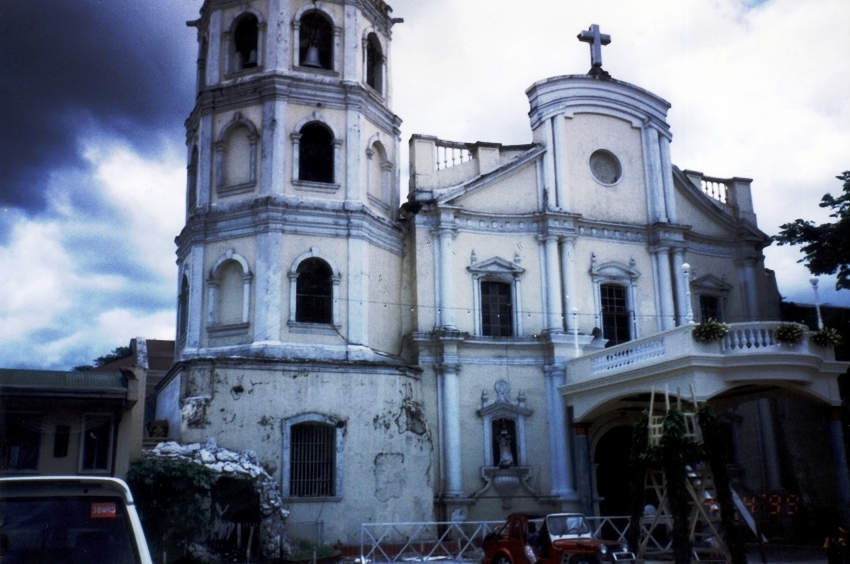
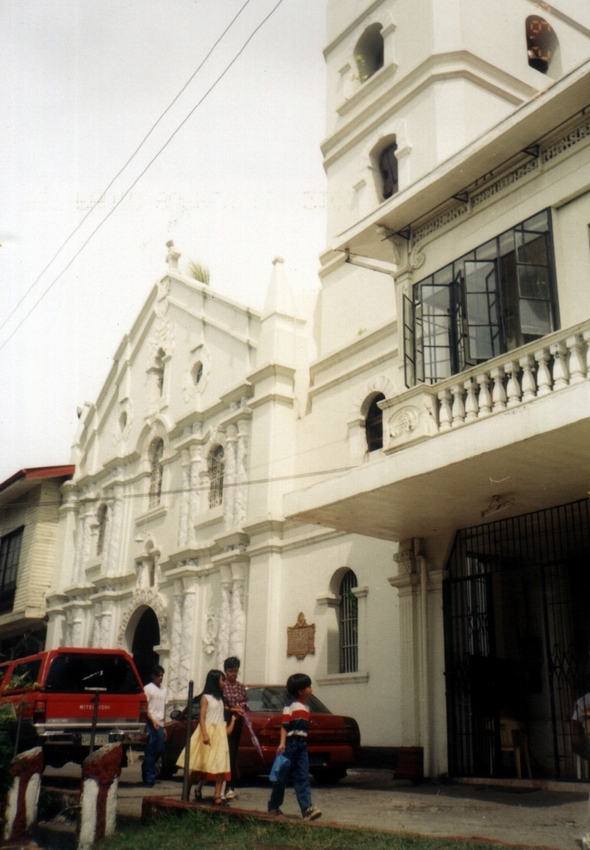
San Pablo Cathedral

Upon departing our inn, we first decided to make a belated visita iglesia to the city’s San Pablo Cathedral for prayers.  The church was first built with light materials by Fr. Mateo Mendoza in 1586 and the second, made of brick and stone, was built in 1629 by Fr.  Hernando Cabrera.  The present building was built in 1714 by Fr. Francisco Eloriaga on a foundation laid down by Fr. Juan Labao in 1680.

Its Neo-Classical facade has superimposed coupled Doric columns and windows crowned with triangular and segmented pediments on the second level.  Two balustrades, mounted on rectangular piers, flank the unique pediment embellished by a centrally located decorative round window.  On its left is a 4-storey bell tower with semicircular arched windows and topped by a pointed roof.

City Inn Hotel: 126 C. Colago Ave., San Pablo City, Laguna.

Rodriguez/Gala Residence (Sariaya, Quezon)

Saturday was a rest day, so we decided to go swimming at the  private swimming pool of the Rodriguez/Gala Residence.  Designed by Arch. Juan Nakpil, this American-era residence was built in the 1930s by Dr. Isidro Rodriguez (a relative of Jun) and Dona Gregoria Gala and its furniture was designed by Gonzalo Puyat.

Rodriguez/Gala Residence

In the 1940s, during the war, its second floor was occupied by Japanese Army officers (the family stayed at the ground floor) and was bombed during the liberation.  The first bomb exploded in the front gate, the second blasted a huge, 20-ft. deep hole (from where the big swimming pool was built) and the third, a dud, went through the roof and got stuck in the stair banisters.

Swimming at the Rodriguez/Gala Residence

Before leaving Sariaya, we decided to take home some of the  towns famous mazapan sweets for pasalubongSariaya’s other pasalubong options include pinagong apas (turtle-shaped bread), espasol, broas, ube halaya and agit-it and woven buntal and buri products.  We also visited the Sina-Una Arts and Antique Shop along the national highway (in front of the public market).  Antiques sold here include wood carvings, period furniture, cherubs, aparadors, ceramics, angelitos and santos.  

Rodriguez/Gala Residence: 44 Rizal St., Sariaya, Quezon

Good Friday Parade of Carrozas (Sariaya, Quezon)

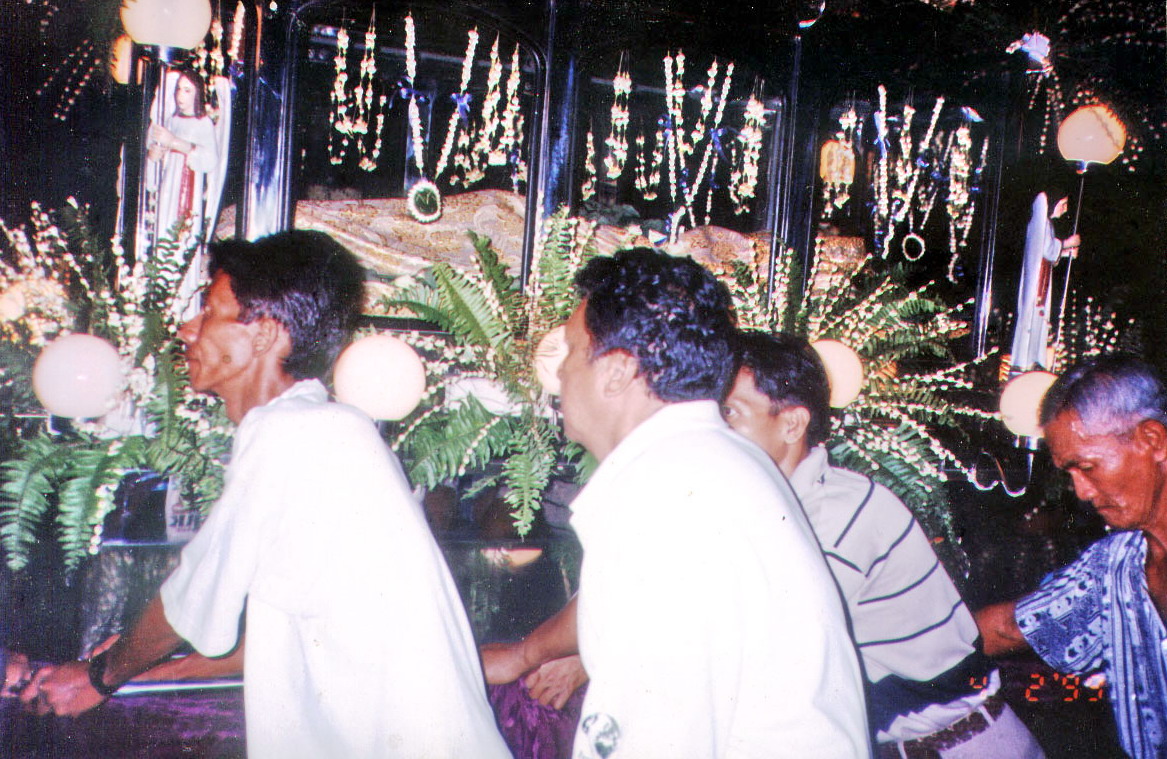
The Sto. Entierro
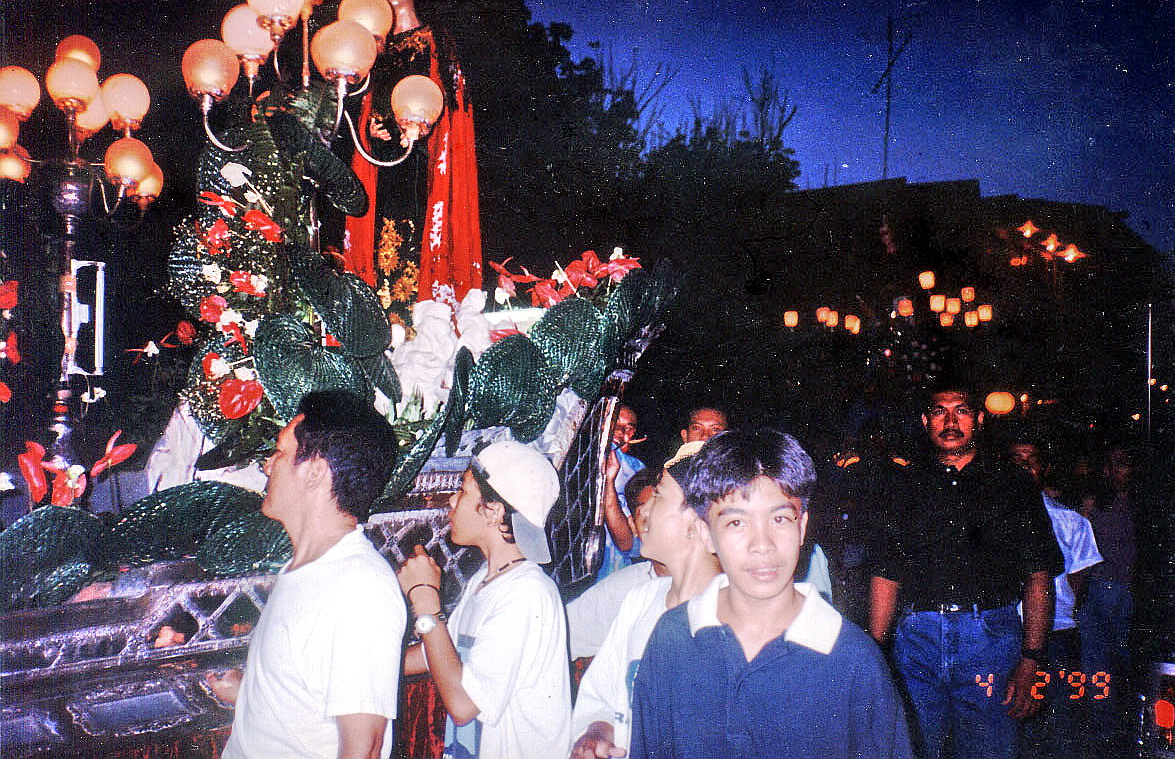
After our visita iglesia in Tayabas and Lucban, we drove back to Sariaya, in time for the traditional Good Friday parade of carrozas (carriage) at 5 P.M..  This parade, a tableaux from the ministry, passion and death of Christ, was accompanied by a huge crowd of devotees.
 
 
At the parade were about 15 tastefully-designed, silver-plated and antique carrozas (or andas) of different sizes, some grand and ostentatious beyond comprehension, and festooned with floral arrangements.  All are pulled by devotees as they navigated the streets of Sariaya in a long and winding procession after attending the late afternoon holy mass.  
 
 
Each carroza carried different images including colorfully decorated statues of heirloom santos (saints), the town’s patron saint Francis of Assisi among them, all resplendently attired with expensive finery, and the Sto. Entierro (meaning “holy burial”), glass case of the dead Jesus Christ in state.  According to Jun, one of the carrozaswas donated by his family.  The parade ended at the Church of St. Francis of Assisi.  After the procession, eager Sariayahins try their best to get the decorations and flowers (which they place in the altars of their homes) from the carrozas, especially those from the Sto. Entierro.

Visita Iglesia (Tayabas and Lucban, Quezon)

Today being Good Friday, Jandy and I also joined Jun and Jane’s relatives for the visita iglesia, the traditional visit to 7 churches.  We motored to the nearby town of Tayabas, just  23 kms. from Sariaya, and dropped by the St. Michael the Archangel Minor Basilica were we recited the 14 Stations of the Cross.  The longest Spanish colonial church in the country and also one of the oldest, this 103-m. long church was first built by the Franciscans in 1585, repaired in 1590 by Pedro Bautista, changed into brick in 1600, destroyed by an earthquake in 1743 and later rebuilt and enlarged in 1856 by building a transept and cupola. The church’s roof was changed to galvanized sheets in 1894 and its belfry contains an 18th century clock, the only one of its kind in the country, that chimes every 30 minutes.  It was made into a minor basilica on October 18, 1988 and has an antique organ, a balcony over the altar and a now unused tunnel from the altar. 

St. Michael the Archangel Minor Basilica
Our second and final stop of the visita iglesia was the town of Lucban, a quiet old Franciscan town of 35,128  people whose name was derived from a delicious fruit of the same name which looks like a small pomelo or suha. The “poor man’s Baguio,” Lucban lies 1,500 feet above sea level at the cool, damp shadow of Mt. Banahaw de Lucban whose clear, ice-cold waters flow through the little canals of the town.  It is almost as cool as  Baguio City in December.  There are also has numerous old and stately Spanish colonial houses.
 
Church of San Luis Obispo de Tolosa
Here, in front of the town’s shady plaza, is the moss and vine-covered Church of San Luis Obispo de Tolosa.  It was first built in 1593, ruined in 1629, reconstructed between 1630-1640, seriously damaged by fire in 1733 and reconstructed in 1738. Its convent was built in 1743.  It was partially destroyed in 1945 during World War II and finally reconstructed by the Philippine Historical Commission in 1966. However, it’s somewhat modern interior, which enshrines the venerated image of San Isidro Labrador, doesn’t blend in with its centuries-old exterior (my opinion).   The church is surrounded by gardens and grottos and fenced in by old stone walls called quince-quince.


Church of St. Francis of Assisi (Sariaya, Quezon)

We next walked towards the town’s church and plaza.  A typical Spanish town, the town’s church (St. Francis of Assisi) and the municipal hall all face the plaza.  The plaza has a circular patio flanked by a row of 8 torch-bearing statues of the Muses of Liberty as well as a statue of our National Hero, Dr. Jose P. Rizal, inaugurated on December 30, 1924.

Church of St. Francis of Assisi
The present St. Francis of Assisi Church was first built in 1599, the second in  1632 and the third in 1641.   The structure, on its new site after the earthquake of 1743, was built in 1748.  Ruins of the original church still remain in Brgy. Tumbaga.   Inside the church are some fine old santos and the venerable image of the famous Crucified Christ of Burgos (Sto. Cristo de Burgos).  An object of pilgrimage every Friday, the image was sent from Spain by galleon and installed in the old church at Tumbaga.  The church and the village was burned after a Moro attack but the image was found intact amid the ashes.  When the settlement was transferred to its new location, the image was wrapped in white cloth and carried by four men.  After resting under a great tree, the four men found the image  to be extremely heavy and could not lift it even with help from the other townspeople.  Taken as a sign from God, they built the new church on the site.

The Ancestral Houses of Sariaya (Quezon)

The next day, Good Friday, Jandy and I explored the town’s ancestral houses in detail, bringing along my point and shoot camera and videocam.  Sariaya is known for its ornate and imposing American-era mansions built by illustrados (landed gentry) like the Cabunags, Enriquez, Gala, Luna, Obordos, Ramas and Rodriguez clans, all coconut planters who once grew rich from 1919-30 from the once profitable coconut industry.  In 1945, the town was set afire by Japanese troops, destroying many of its stately ancestral homes.  A big fire also occurred in the 1960s.  

Dona Margarita Rodriguez Ancestral House

The burnt-out shells of these homes can still be seen around town.  Surviving ancestral homes are scattered around the town plaza and along Rizal St., perpendicular to the highway.  They create a beautiful and nostalgic setting that reflects the town’s illustrious past.  Beside the house we stayed in is the old, and equally stately, ancestral home owned by Jun’s grandmother, the late Dona Margarita Rodriguez, an old maid who died in the 1950s.

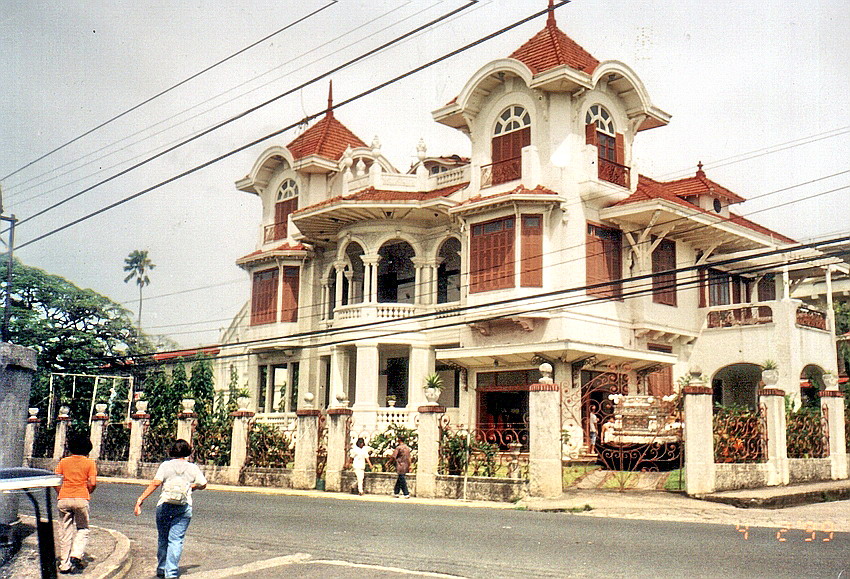
Enriquez Mansion
Beside the town’s church is the impressive Enriquez Mansion at the corner of Gen. Luna and Rizal Street, along the national highway.  Formerly owned by Natalio Marquez, Quezon’s former governor, it was sold to Bienvenido Marquez.  An American-style house, it has a red-tiled roof and Spanish-Moorish inspired arches and twin turrets.     At the back, along Rizal St., is the then Alvarez Residence.  Built in 1703, it is the oldest in the town and it once served as the town’s municipal hall. 

The Rodriguez Ancestral House (Sariaya, Quezon)

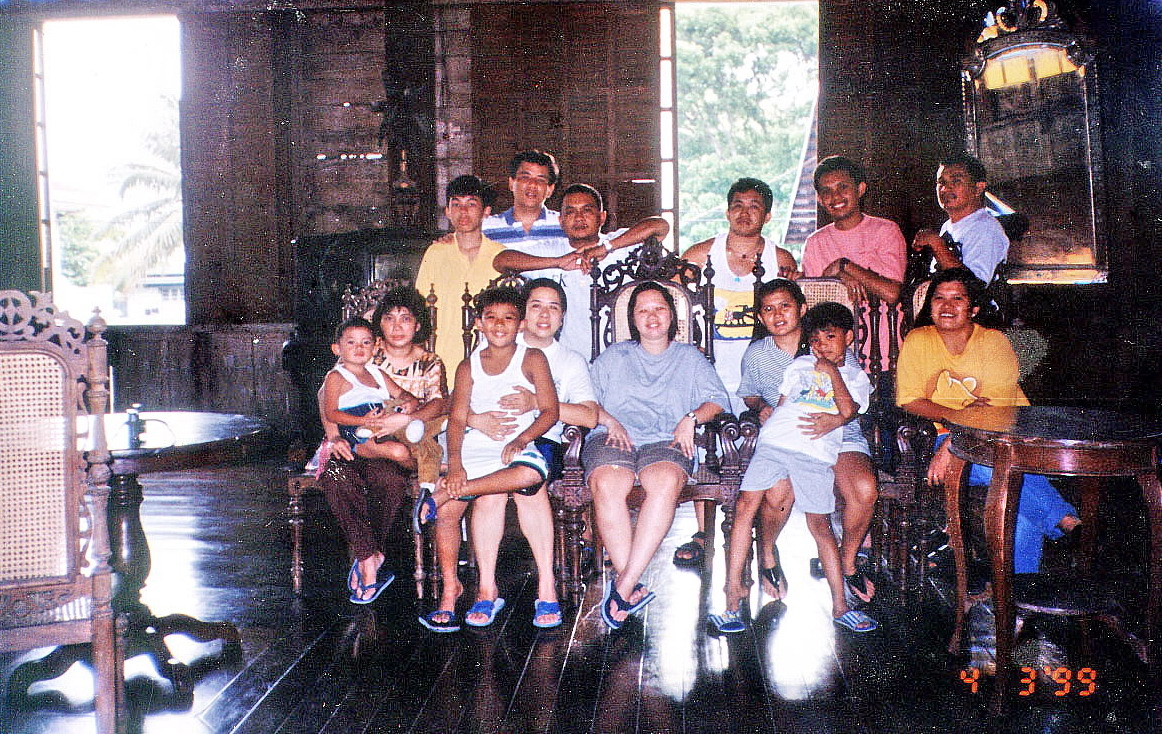
Prior to Holy Week, I got an invitation from Celso “Jun” and Jane Segismundo, my friends from Couples For Christ, to join them and Jane’s relatives to visit Jun’s ancestral home in Sariaya, Quezon.  For company, I decided to bring along my son Jandy.  Our convoy of cars departed 1:30 AM, Holy Thursday (April 1) to avoid the Holy Week rush.  It was an uneventful, leisurely but very rainy (unusual for Holy Week) 2.5-hr. (124.64-km.) trip (including 2 stops) via the South Luzon Expressway (SLEX) up to its terminus (Calamba City), then passing by Mt. Makiling, Sto. Tomas and Tanauan City in Batangas, Alaminos and San Pablo City in Laguna and then Tiaong and Candelaria in Quezon.  We arrived at the town by 4 AM.

Rodriguez Ancestral House

Sariaya is located 1,200 ft. above sea level near the foothills of 2,177-m. high Mt. Banahaw, an active volcano shrouded in legend and mysticism.  The town’s name was derived from Sadiaia, the former name of the Lagnas River. 

The second floor sala (living room)

The house that we stayed in was featured inside brochures concerning Quezon province and in pages 138-141 of the book “Philippine Ancestral Homes” by Fernando N. Zilacita and Martin I. Tinio, Jr..  Newly restored, it was built during the Spanish era by Jun’s maternal ancestors, the Rodriguez’s.  The house was enlarged in the 1920s and was partially burned during the Japanese rampage.  It had about 7 huge bedrooms, a huge second floor sala, an equally spacious dining room and kitchen and quarters for the caretakers.  Like most houses made during that era, it has a grand stairway, tall doors, high ceilings (even inside the bathrooms), antique period furniture, huge stained glass and capiz windows, verandillas, narra plank flooring and wall paintings.  

The ground floor zaguan

Upon our arrival, Jandy and I opted to sleep at the mansion’s ground floor bedroom (1 of 4).  It had its own lavatory and a silohiya bed which didn’t actually fit my 5′-10″ frame.  I found out later that it was for the children’s bedroom.  For reasons I never bothered to ask, all the others slept together at the second floor sala.  Fear of ghosts maybe?

Rodriguez Ancestral House: cor. Rizal & Daliz St., Sariaya, Quezon.

A Day Tour of Batad Rice Terraces (Banaue, Ifugao)

Batad Rice Terraces

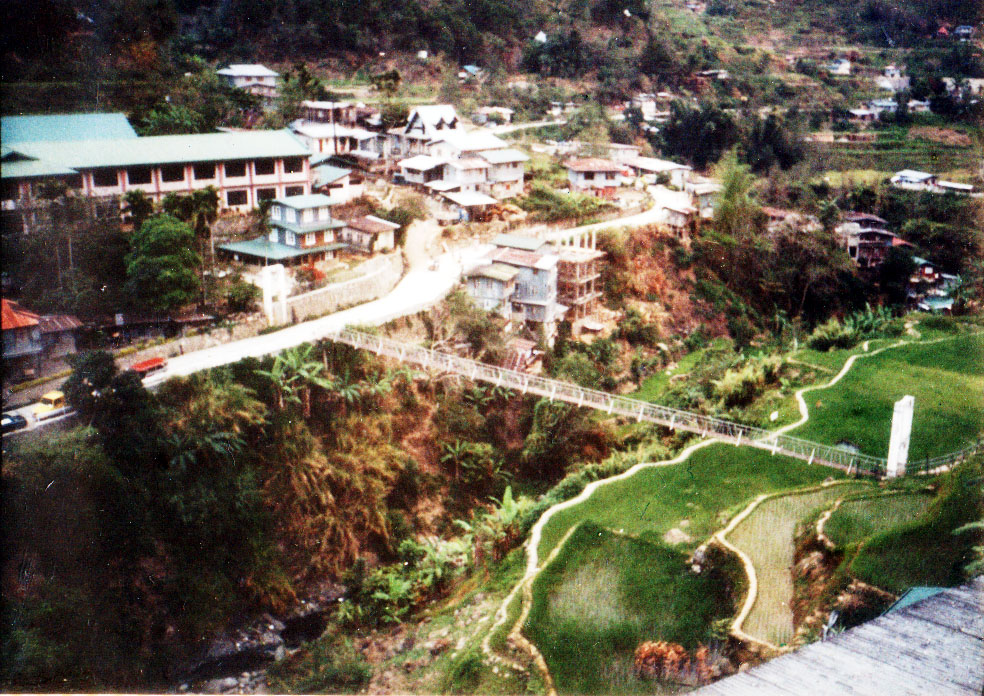
A stay in Banaue is never complete without visiting the Batad Rice Terraces.  Seeing it is a “must” but getting there is no picnic as I was soon to find out.  The next day, April 12, Easter Sunday, after an early morning breakfast at the inn, Jandy and I were joined by Asia, Min-Min and Tom as we proceeded to the Trade Center.  Here, we hired a jeepney for PhP1,500 and waited awhile for other hikers to join us, our intention being to split the bill even further.  There were no takers.  We decided for the 5 of us to go at it alone.  The Batad Rice Terraces are located 16 kms. from the town and 12 kms. of the distance can be traversed, over the dusty Mayoyao national road, by our jeepney. Luckily for us, there were no sudden occurrences of landslides triggered by too much heat, it being the peak of the El Nino season. We safely made it all the way to the junction at Km. 12.

From hereon it would be hiking for the rest of the 4-km. distance. Jandy and I had on our indispensable media jackets (with its many pockets) and I brought along bottled water and my Canon point and shoot camera and videocam. The 2 to 3-hr. uphill/downhill and winding hike is demanding, but rewarding for hardy and seasoned hikers in good physical condition.  I didn’t exactly fit in that category as I wasn’t in good shape.  Jandy, a specimen of good health, kept egging me on – as I was huffing, puffing and sweating profusedly (even in the cold mountain air) – so I could keep up with the group, being the frequent tailender.   Luckily, for me, there were about 6 waiting sheds offering refreshments (as well as souvenir items) to hikers.  The rugged mountain trail sometimes narrowed to footpaths where only one person at a time could pass.  Below us were treacherous ravines.  Fog sometimes blanketed these trails.

After a few hours we emerged at the Batad “Saddle” in Bohr-Bohr, a landmark station in Cordilleras used to gauge the distance stretching to Batad. After another arduous hike, we finally reached our destination – the Simon Inn Viewpoint and its breathtaking side vistas of the Batad Rice Terraces.    This stupendous amphitheater of stone and earth terraces, sculpted out of twin coalescing spurs of a steep, wooded mountain from riverbed to summit, are considered as the “Eighth Wonder of the World” and, unlike the more famous Pyramids of Egypt built by slave labor, were  built in the true bayanihan spirit (system of helping each other without fees).  However, the rice terraces weren’t as green as I would have wanted them to be, again it being the height of the El Nino phenomenon.

Below the viewpoint and adjacent to the rice terraces is Cambulo Village, a typical, unspoilt Ifugao village with two lodges and pale Hershey Kisses-like roofs in the midst of terraces.  My 3 companions decided to visit this rustic cobblestoned village where the ancient craft of bark cloth weaving thrives. Going down seemed easy but I dreaded the uphill return trip so I opted to stay behind and admire the view instead.  Too bad I didn’t bring any extra clothes with me.  It would have been nice to have stayed overnight.  Maybe next time.  My 3 companions returned after 2 hrs..  After a 3-hr.  stay (including lunch at the inn), we retrace our way back, under a more comfortable late-afternoon sun, to the Km. 12 junction where our jeepney waited for us.  Unlike our previous trip, our jeepney was now filled to capacity with foreign and local hitchhikers all thankful for the free ride back to town.  They then left us to settle our bill with our driver.   The nerve!!!  Jandy and I then proceeded to the Autobus ticket office at the town center to reserve bus seats as there was only one trip back to Manila. Asia, Min-Min and Tom planned to spend an extra day in Banaue.  Afterwards, we returned to People’s Lodge for a well-deserved dinner and rest.

The next day (Monday), after a very early breakfast at the inn, we proceeded to the Trade Center where we boarded our Autobus bus for the 347-km. (10-hr.) long-haul trip back to Manila via the Dalton Pass in Nueva Vizcaya.  Although the bus was branded as “aircon,” it would have been better for us to open the bus windows as the airconditioning wasn’t working.  It was hot all the way.  However, as soon as we reached the lowlands, my mobile phone became useful again.  Thank God.

People’s Lodge & Restaurant (Banaue, Ifugao)

People’s Lodge & Restaurant

It was getting late and we had to find lodgings by nightfall.  After a short but tiring uphill search at the town center, we decided to stay at the People’s Lodge & Restaurant, a pension house, where we took 1 of its 15 double rooms with common bath for PhP100 per head.  Quite cheap.  The inn also had 6 double rooms  with bath, a bakery, restaurant and an all-important telephone.

Viewof the Ibulao River from our inn.

Ever since we left Baguio City, my cellular phone just became useless baggage and I took the opportunity to make a long distance call to my wife Grace who hasn’t heard from us for 5 days.   From its restaurant, we had a beautiful view of the town, the banks of the scenic Ibulao River (traversed by a hanging steel footbridge) and a backdrop of  rice terraces. Coincidentally, Asia, Min-Min and Tom also happened to be staying here and, together, we made plans for a joint early morning trek to the Batad Rice Terraces.  After an early dinner and a very very cold shower, Jandy and I retired for the night.

People’s Lodge & Restaurant: Banaue-Mayoyao-Potia-Isabela Rd., Banaue, Ifugao.  Tel: (074) 386-4014 to 15.

Arrival in Banaue (Ifugao)

The 47-km. jeepney ride from Bontoc to Banaue, Ifugao province’s main tourism destination, was to take all of 2.5 hrs., the seemingly short distance made while climbing steep mountains via the dusty, narrow and bumpy Halsema Highway.  The discomfort was somehow alleviated by great views of some rice terraces that we passed.  By 4 PM, we arrived at the parking area for buses and jeepneys at the town’s Trade Center.   Banaue is the province’s transportation hub, being traversed by the one major highway leading south to Nueva Vizcaya and Manila and by a less-developed road going to Bontoc (Mountain Province), and from there, to Baguio City (Benguet).

Banaue town

This touristy area is the center of activity in the town and it has handicraft shops selling different kinds of traditional fabric like the woven bark cloth and dyed ikat cloth, wooden objets d’art  such as bowls, trays, oversized spoons and forks, antiques, entirely alien statues of American Indian chiefs and smiling, pot-bellied Chinese gods, and the traditional bul-ols (statues of rice gods).  Curio souvenirs include handwoven wall hangings, crocheted bedroom slippers and pfu-ong (traditional jewelry) representing good luck in hunting or prosperity of children.    At one end of it is the Municipal Hall and Post Office Sub-station.