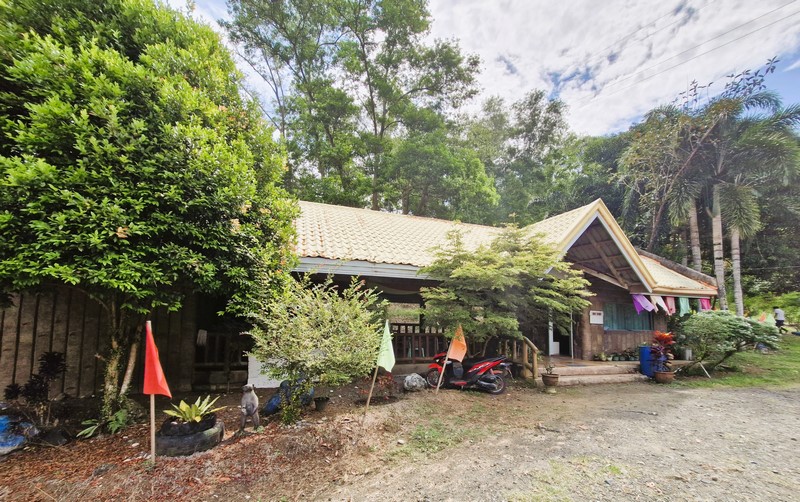
Casa Real (Basco, Batanes)

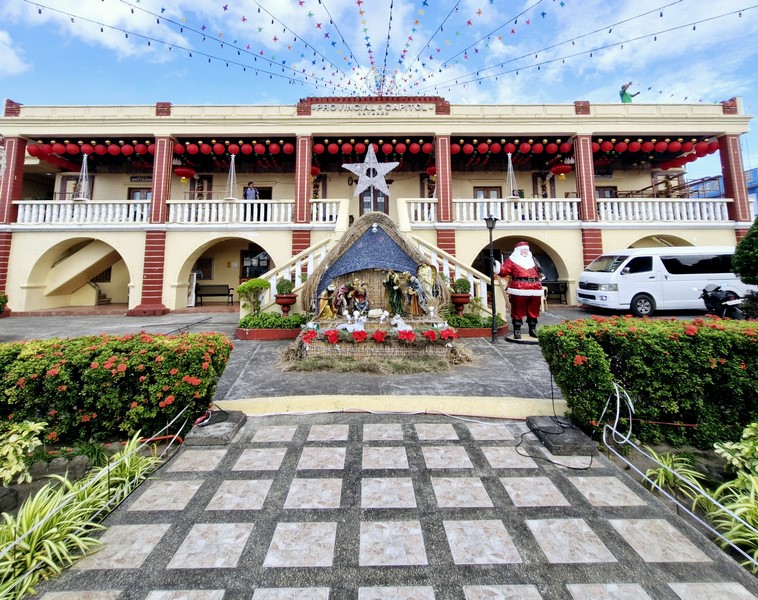
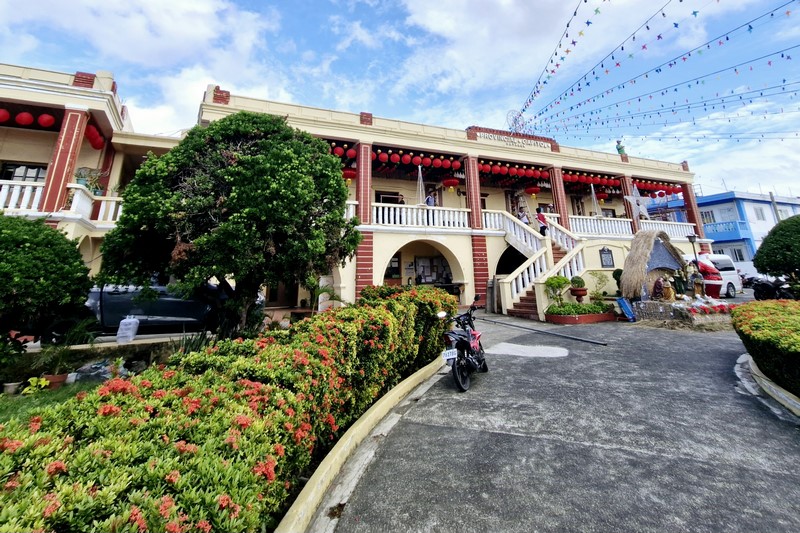
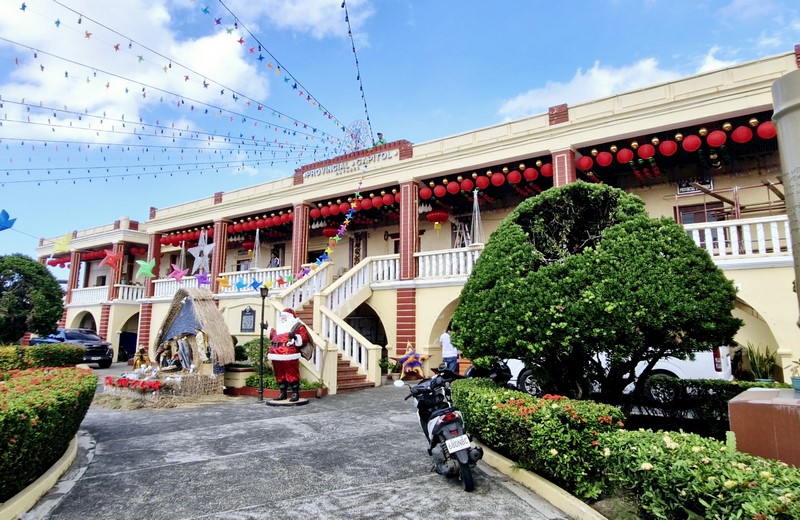
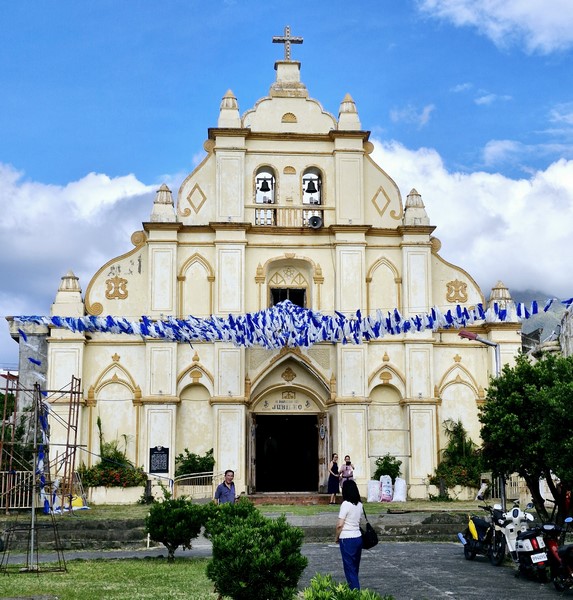
Casa Real (now the Provincial Capitol Building)

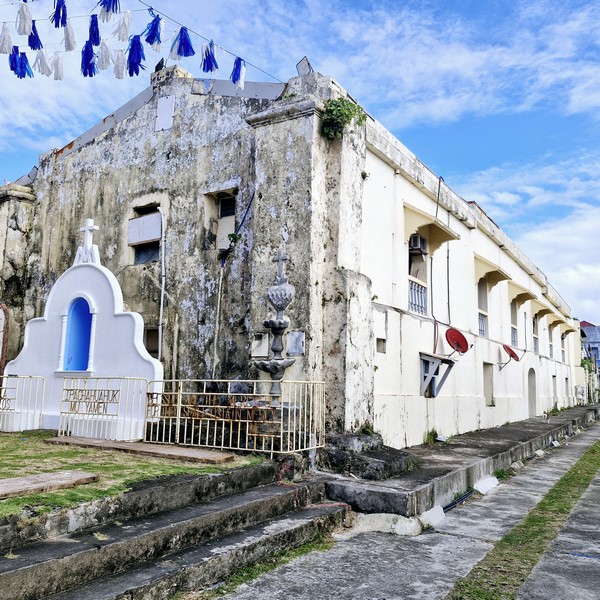
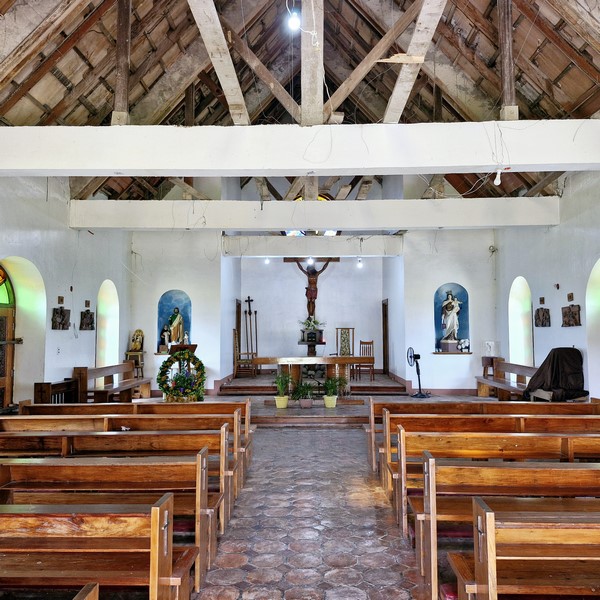
After our tour of the Valugan Boulder Beach, we again boarded our van for the short 3-km. (10-min.) drive to the 2-storey Provincial Capitol Building.  Formerly the Casa Real, it was originally built from wood, during the term (1783-1785) of Don José Huelva y Megarejo, the province’s first governor.

Check out “Valugan Boulder Beach

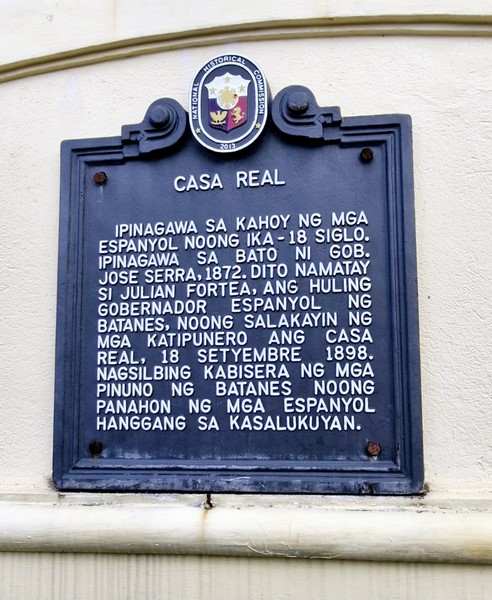
The building was renovated during the term (1794-1798) of governor Felimon Zenoreta who introduced masonry in Batanes. On December 15, 1856, the Casa Real burned down and it was reconstructed, in stone, in 1872 during the term (1872-1885) of Governor Jose Serra.

Historical plaque installed by the National Historical Commission of the Philippines (NHCP) in 2013

On September 18, 1898, Governor Julian Fortea, the last Spanish governor of Batanes, was killed here when revolutionaries stormed the building.  After World War II, under the Philippine Rehabilitation Act of 1946, the capital was restored including the façade.  The stairs was rebuilt to provide a grand entrance.

The Capitol was expanded, during the administration (1989-1998) of Governor Telesforo F. Castillejos, with the construction of the three annex buildings from August 1989 to January 1993 and, on March 18, 1993, the capitol was inaugurated by President Fidel V. Ramos.

During the term (1998-2007) of Governor Vicente Gato, the buildings in the capital building complex were expanded and renovated to address the need for provincial government’s offices. It was inaugurated on March 24, 2007.

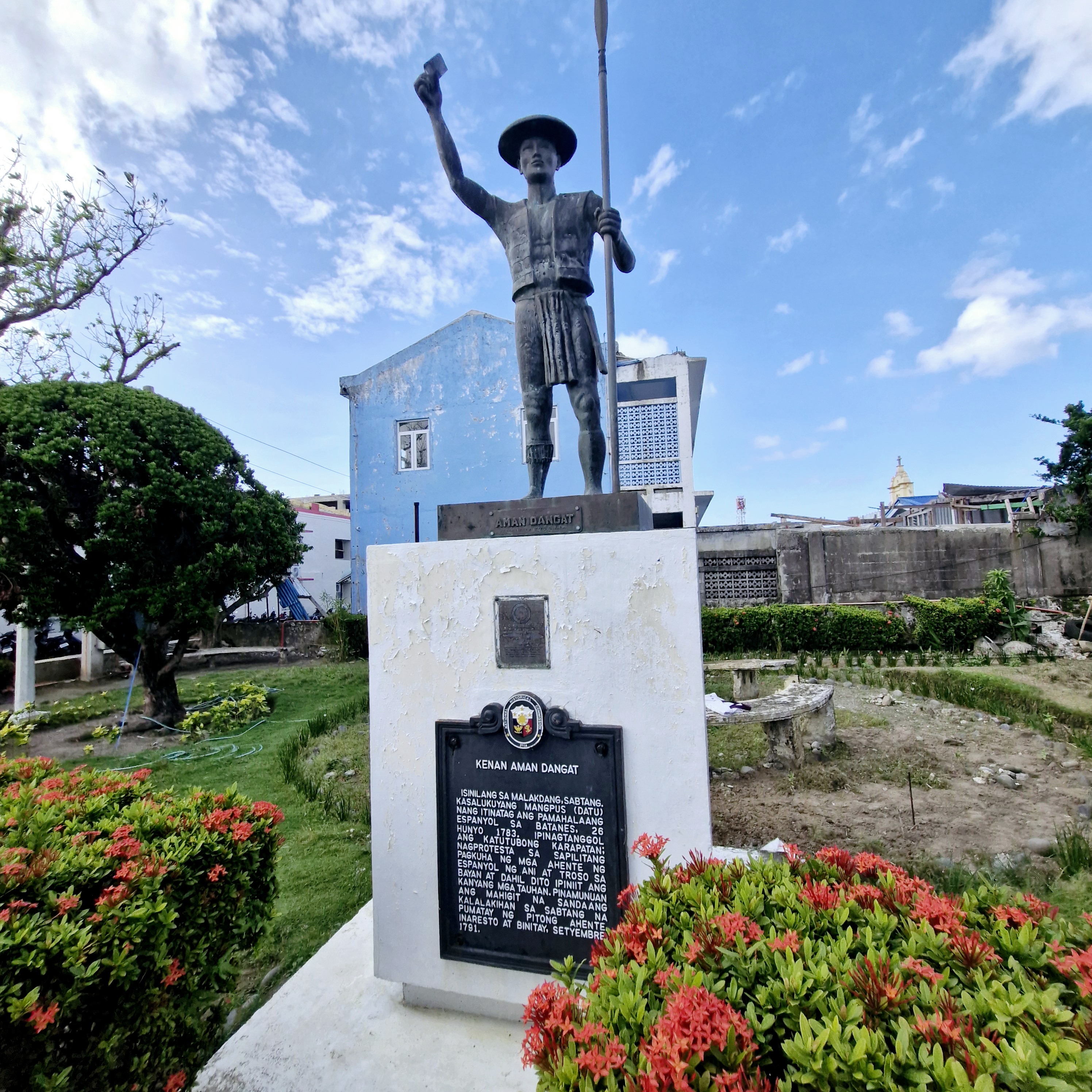
Statue of Aman Dangat

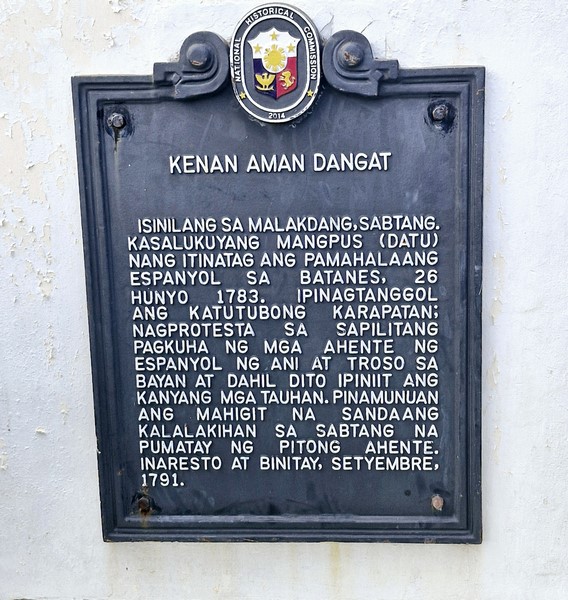
To the left of the building is the Statue of Aman Dagat. Also known as Kenan, this mangpus (tribal leader) of Malakdang led about 150 Isabtangs who rose in revolt one moonless night in September 1791 and crossed the treacherous sea to attack the Spanish mission house on Batan Island, killing seven non-Ivatan agents of the Spanish government who poached fruits and timber from Sabtang without payment.

Historical plaque installed by the National Historical Commission of the Philippines (NHCP) in 2014

Aman Dagat was later hanged and the natives of Sabtang were exiled to the districts of San Felix and San Vicente in Ivana for the next 50 years (1791-1841).

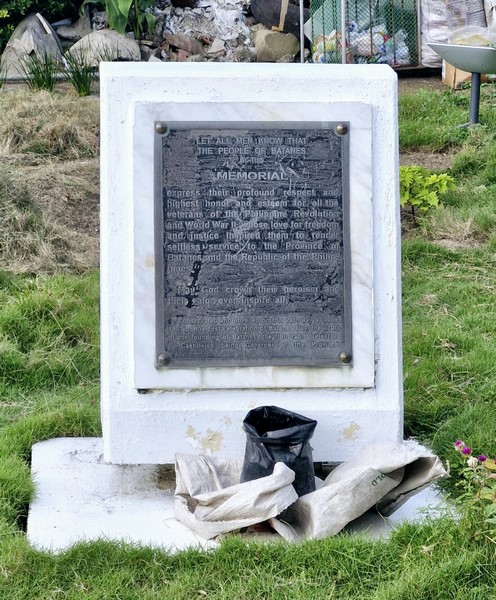
Memorial to Veterans of the Philippine Revolution and World War II

Behind this statue is the Memorial to the Veterans of the Philippine Revolution and World War II which was unveiled on June 25, 1993, the 210th founding anniversary of Batanes,

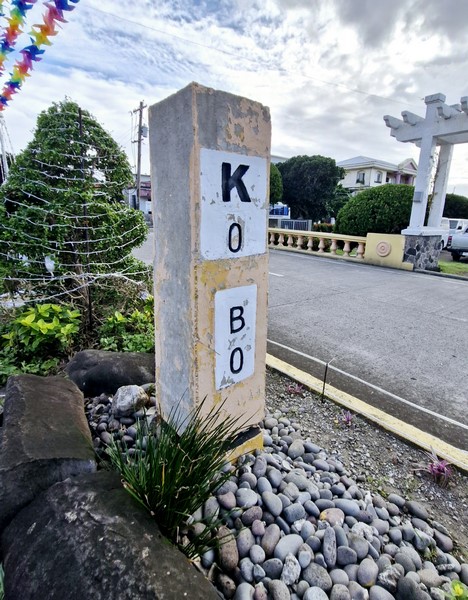
Kilometer Zero Marker

In front of the Casa Real is the Kilometer Zero Marker and the Bantayog-Wika. The former is the reference point where all distances on Batan Island are measured from.  It is one of three such in the province, the other being in Sabtang Island  (along the National Road, near the port and the Church of St. Vincent Ferrer) and the other in Itbayat  (within the Municipal Grandstand and park).

Check out “Church of St. Vincent Ferrer”

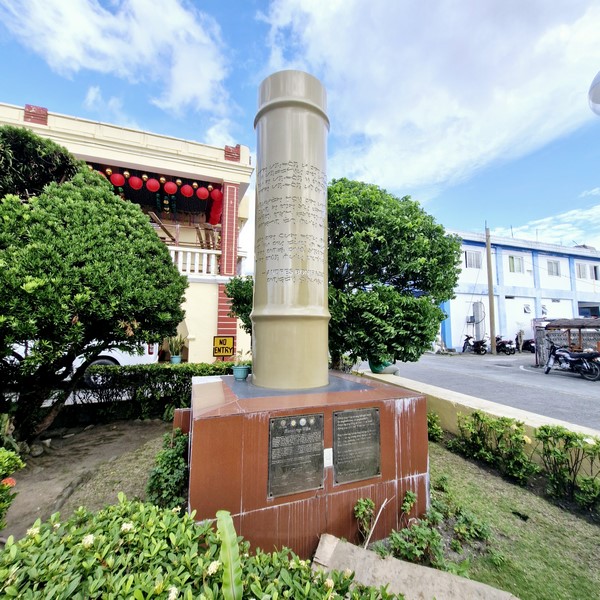
Bantayog-Wika

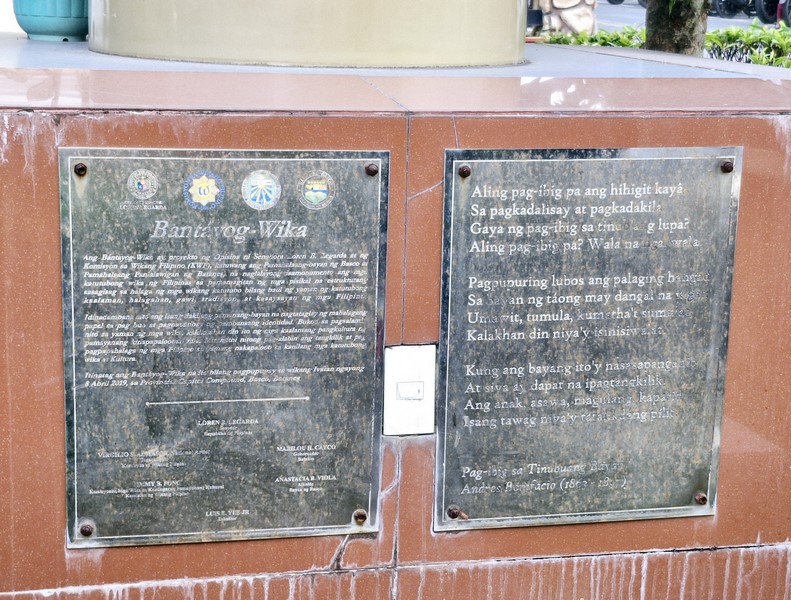
The Bantayog-Wika (Language Marker), a project of Sen. Loren Legarda, the local government and the Komisyon ng Wikang Filipino (KWF) recognizing the Ivatan language, was unveiled on April 8, 2019 (Basco Day).  This marker, the 14th installed in the country, seeks to identify areas where the country’s 130 languages originated.  Created by installation artist Luis “Junyee” Yee, Jr. in stainless steel, is inscribed (using laser technology), in baybayin letters, with several lines of Andres Bonifacio’s poem Pag-Ibig sa Tinubuang Bayan which was published in the first issue of Kalayaan, the Katipunan newsletter, in 1896.

Provincial Capitol Building: National Rd., 3900 Basco.  Mobile number: (0917) 326-3744.  E-mail: batanesinformation@gmail.com.
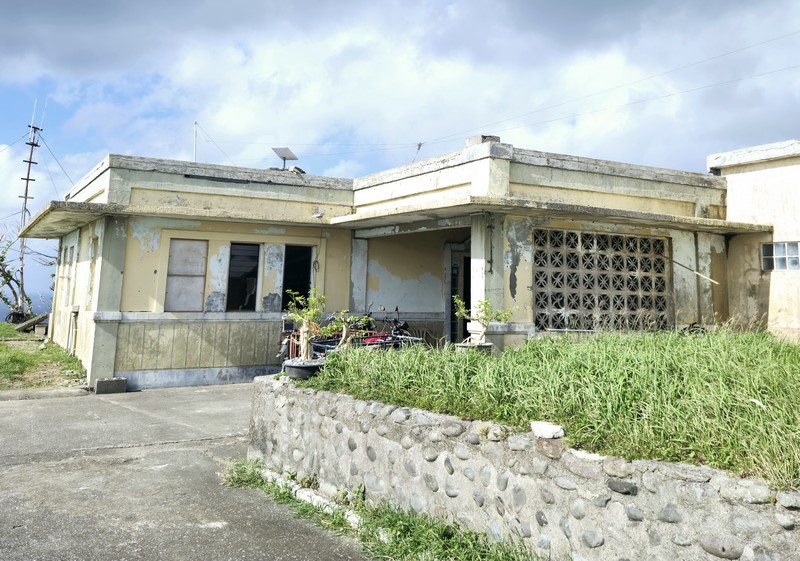
How to Get There: from Basco Airport, take the Diversion Road and turn left into National Road. The Provincial Capitol of Batanes is on the right side.

Valugan Boulder Beach (Basco, Batanes)

Valugan Boulder Beach

After our tour of the Dipnaysuhuan Japanese Tunnel, we gain boarded our van for the 8.3-km. (20-min.) drive to the 3-km. long, scenic Valugan Boulder Beach.

Check out “Dipnaysuhuan Japanese Tunnel

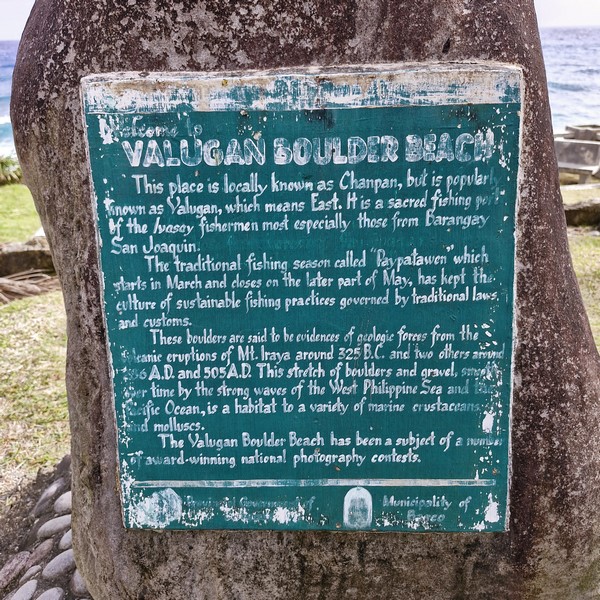
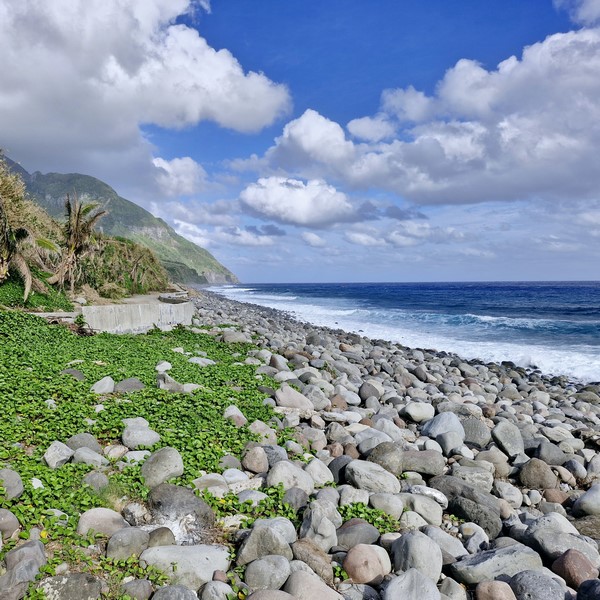
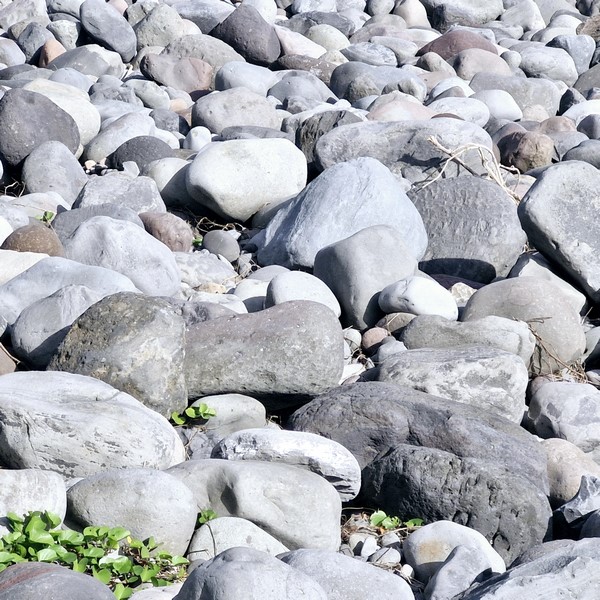
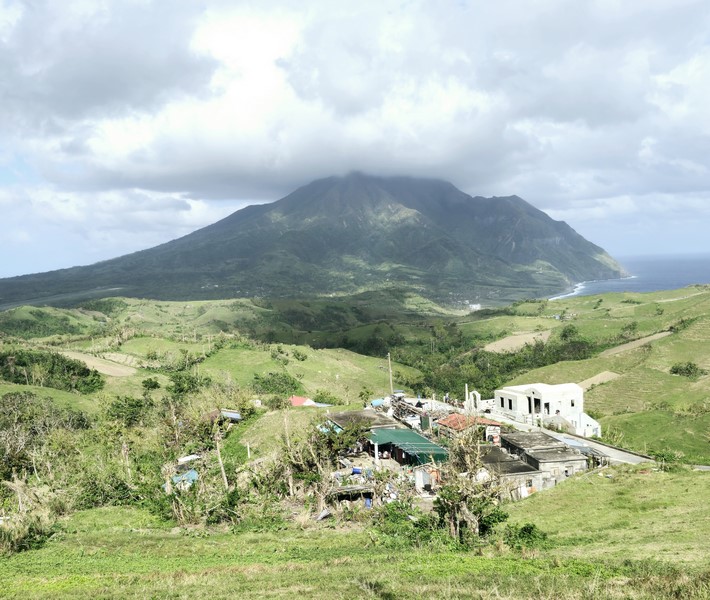
Known to the locals as Chanpan, this beach is located along the eastern (valugan means “east” in Ivatan) coast of Batan Island is, as its name suggests, made up of medium to big size boulders, of different colors, that help create an incredible landscape framed by almost vertical cliffs and rolling hills. Smaller pebbles and shingles litter the southern end.

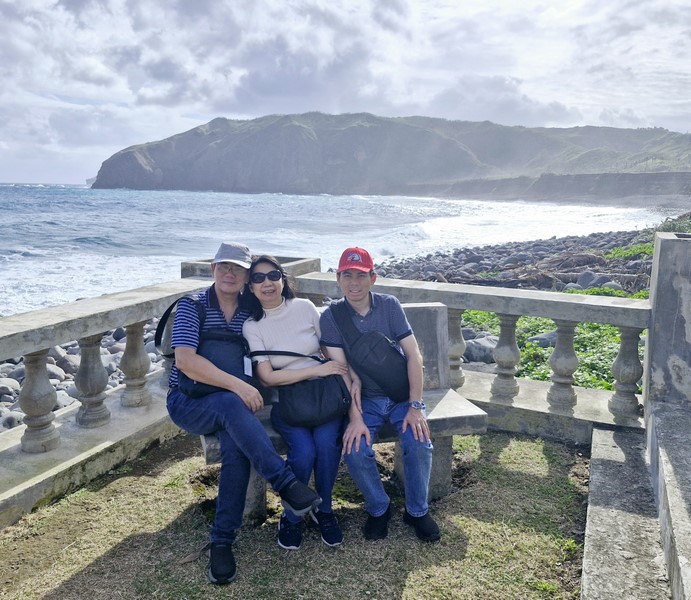
The author (left) with Grace and Jandy

The boulders here were said to have been coughed out around the northern half of Batan during a series of volcanic explosions, from 325 B.C. and 286 to 505 A.D., of Mt. Iraya, a nearby active stratovolcano, which also contributed to the formation of the impressive cliffs and rolling hills framing the beach.

Mt. Iraya seen at the end of the beach

These rough andesite rocks were then slowly polished, over time, by the tides and the mighty wind (which also help shaped the striking basalt cliffs) pushing the restless waves of the Pacific Ocean to lap the rough rocks.

The different size boulders along the beach

From the beach, only the loud whistling of the wind and constant rumbling of the Pacific Ocean can be heard as the waves come slapping the shore. While it is a beach, swimming is not allowed here due to the area’s rough terrain and the strong and unpredictable waves. Bringing home any stones from the beach is also prohibited.

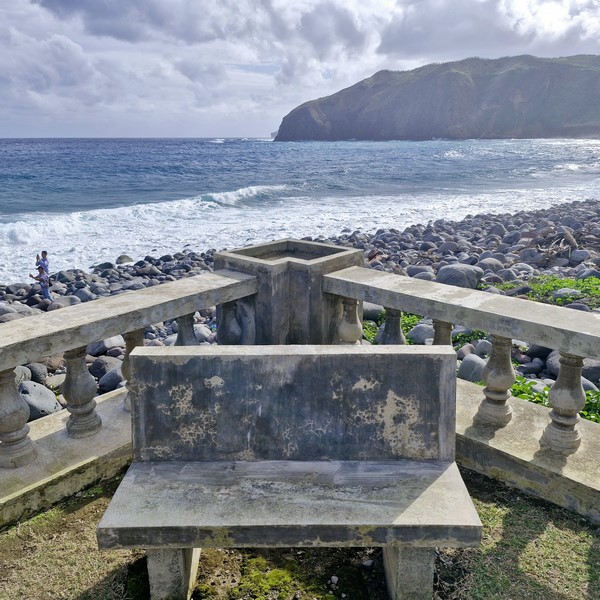
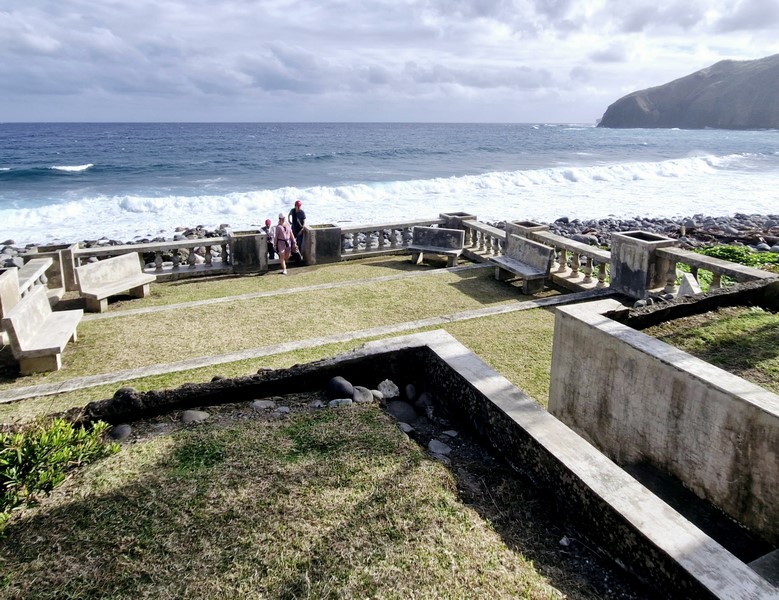
The concrete viewing deck with benches

On the rightmost area of the beach are small, intentionally segregated Zen stones piled on top of each other.  Surprisingly, this surreal and breathtaking landscape makes for a relaxing setting especially for photographers who come here to catch the sunrise.

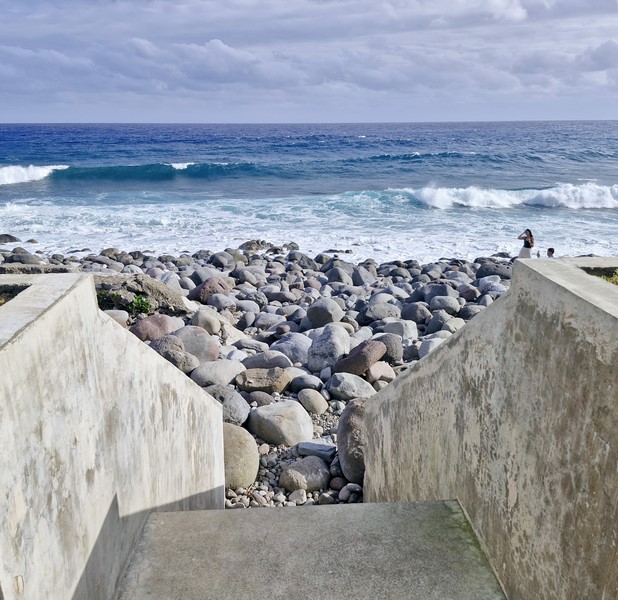
Stairs leading down to the beach

The waters off the coast are considered as a sacred fishing area of Ivatan fishermen (especially those from Brgy. San Joaquin) and the faypatawen, a traditional fishing season, is observed from March to the end of May. 

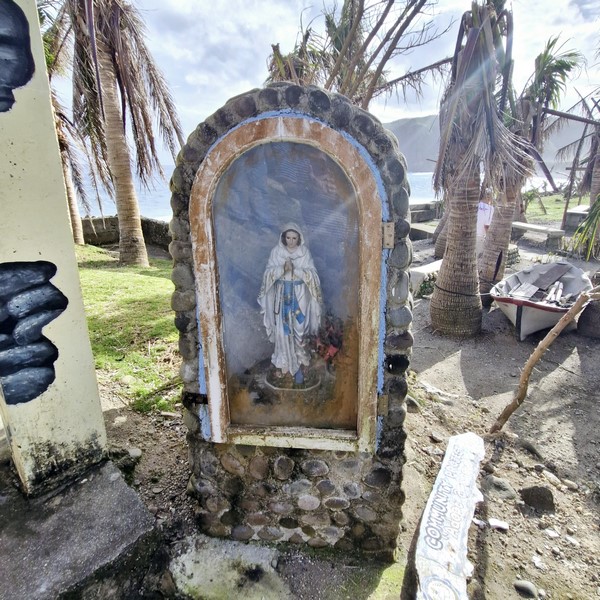
Grotto of the Blessed Virgin Mary

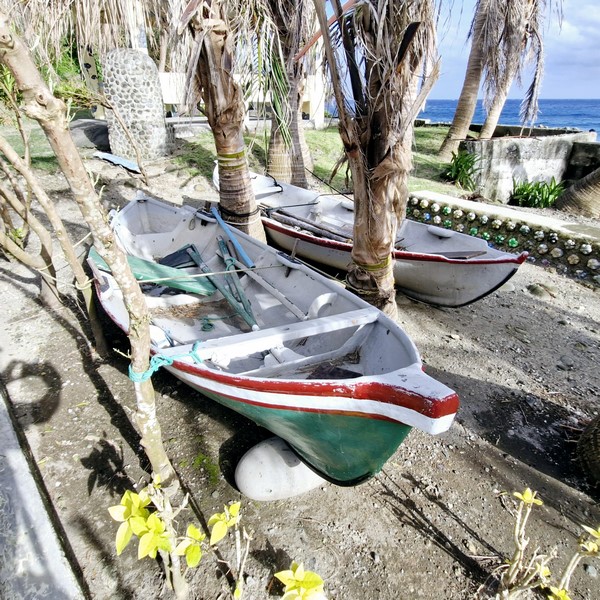
A tataya (a small, traditional Ivatan fishing boat)

Valugan Boulder Beach: Contra Costa Rd., 3900 Basco. 
How to Get There: Located 3 kms. from Basco town proper, this beach is just a short tricycle ride away. You can hire a tricycle to take you around North Batan, which includes Valugan Boulder Beach.

Dipnaysuhuan Japanese Tunnel (Basco, Batanes)

Dipnaysuhuan Japanese Tunnel

After our tour of the PAGASA Radar Station, we again boarded our van for the short drive to the Dipnaysuhuan Japanese Tunnel, making a short stopover to see the Basco idjang.  This was my second visit to both.

Check out “PAGASA Radar Station” and the “Idjangs of Batanes”


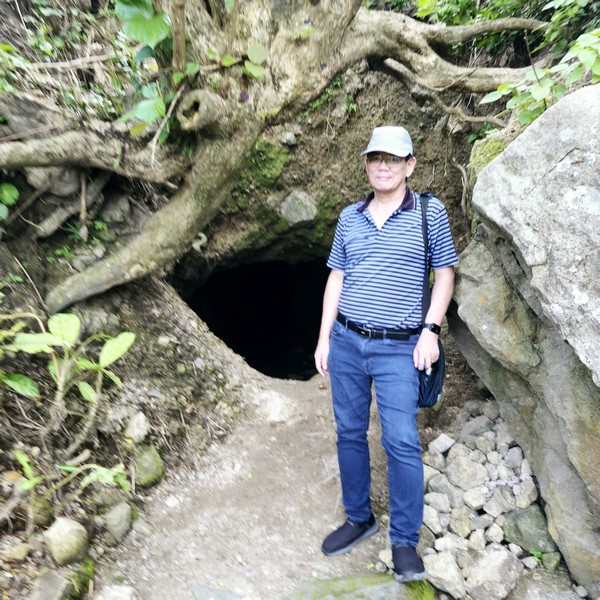
The author at second lower level tunnel entrance

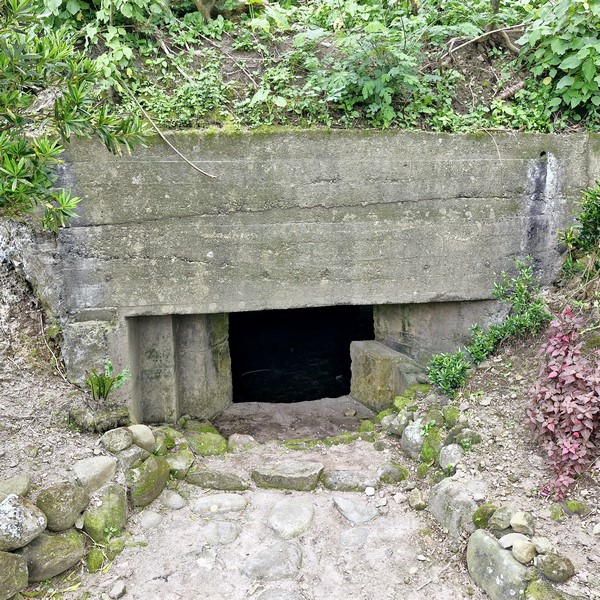
This abandoned 250-m. long interconnected network of six 8-ft. high and 6-ft. wide bat-filled tunnels running deep in the Tukon Hills, carved by local Ivatans out of volcanic rocks and plastered with cement, served as a shelter and lookout for Japanese soldiers during World War II (1941 to 1945).

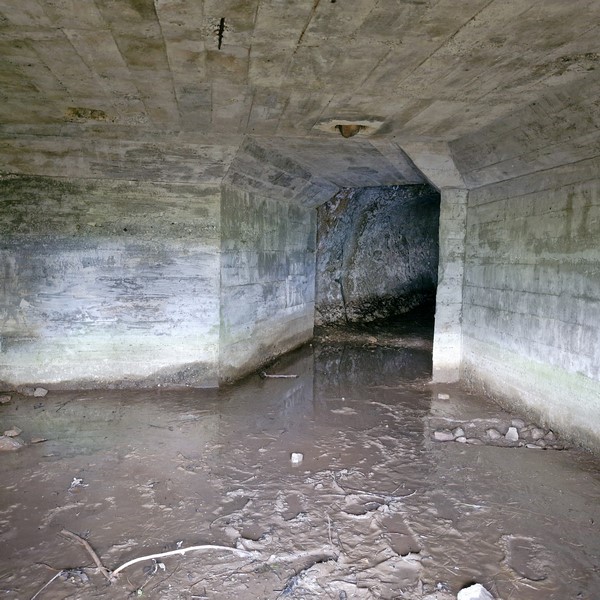
Water-logged and muddy interior of first lower level tunnel entrance

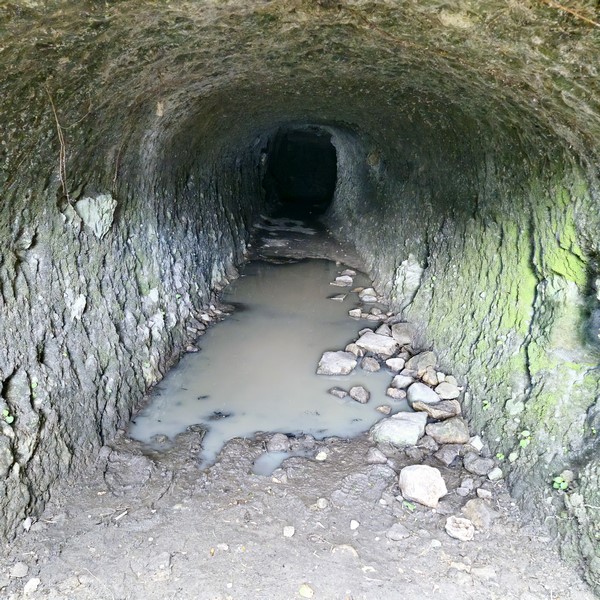
Moss-coated, water-logged and muddy inter of second lower level tunnel entrance

It has a series of chambers, bunkers, a water reservoir and five openings; three on the upper level (serving as observation points overlooking Baluarte Bay) and the remaining two are on the lower levels.  A concrete bunker on top of the network served as a machinegun nest.

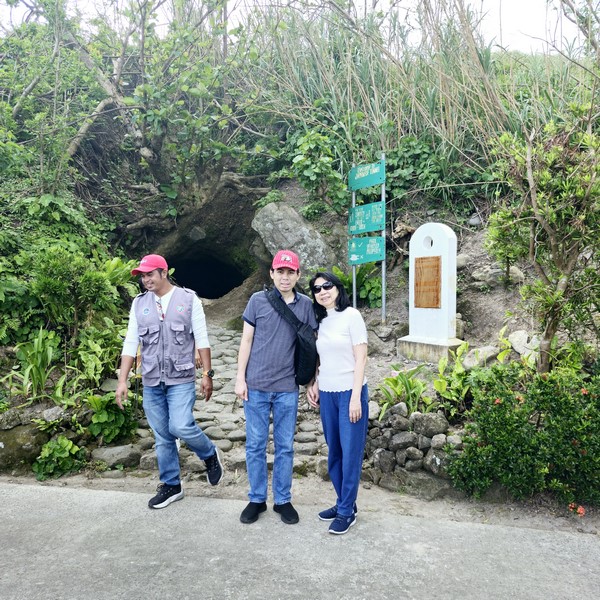
L-R: our guide Harvey Gutierrez, Jandy and Grace

We were able to see the two openings on the lower level along the road but didn’t bother to enter the tunnels as it muddy and water logged inside both openings.

Breadfruit (Tipuho)

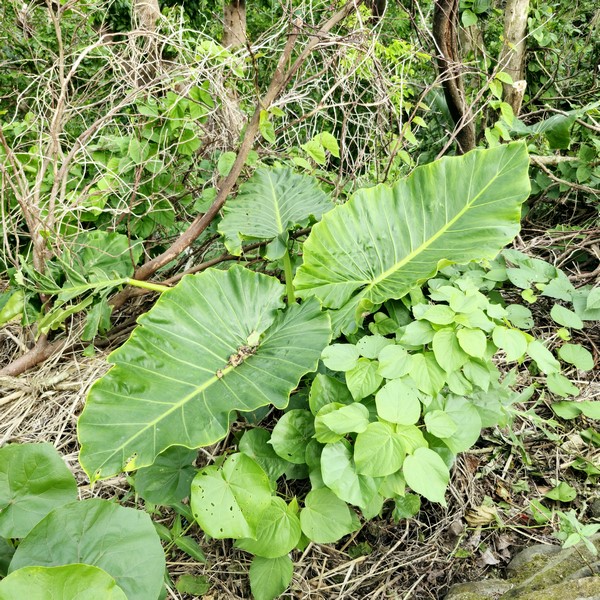
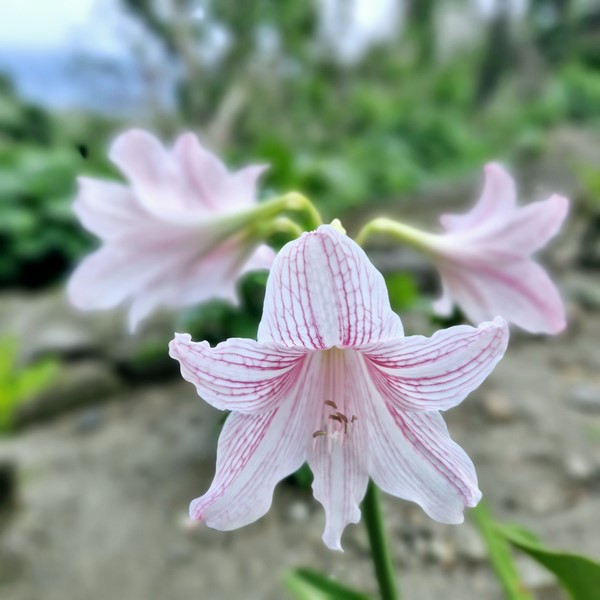
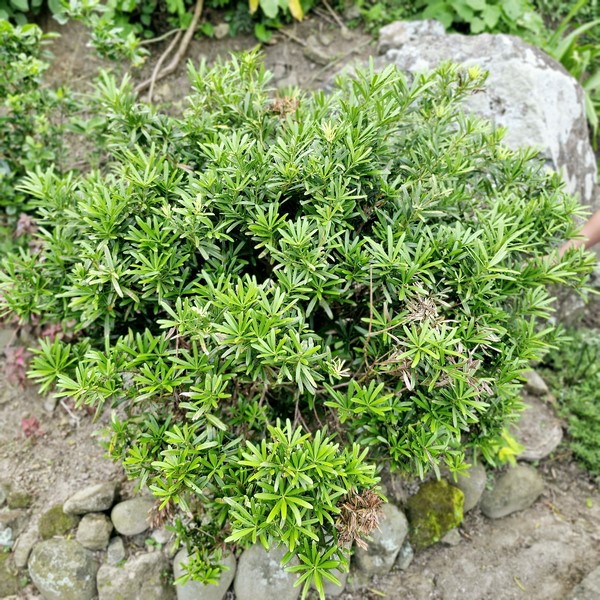
Lining the road are a number of breadfruit trees, arius (Podocarpus costalis) trees and angel,s trumpet (katuvang).  The very popular breadfruit, sometimes called abaya or bread leaves, is used to wrap cooked food with (much like the usual banana leaf), giving it a mild aroma and flavor. 

Angel,s Trumpet (Katuvang)

The endemic arius, an excellent ornamental tree, bears edible berries (comparable to that of the duhat) during the months of July to October.

Arius (Podocarpus costalis)

Dipnaysujuan JapaneseTunnels: Tukon Hills, Sitio Tukon, Brgy. Chanarian, 3900 Basco.  Open daily, 8 AM to 4 PM. Admission is free.
How to Get There: Located on Mt. Iraya, below the idjang of Basco, it is along the route from Radar Tukon weather station to Valuga Boulder Beach and is accessible via the Vajangshin Road.   The quickest route is via tricycle, from Basco town, to Dipnaysupuan Japanese Tunnel. For a more convenient trip, join a Batanes guided tour that includes this tourist spot.  Bring a reliable guide and a lamp. From Basco town, head north toward Contra Costa Rd., continue to La Fuenta St., and turn left to National Rd. Continue straight. Japanese Tunnel is on the left side.

The Idjangs of Batanes

Thousands of years before Spanish colonization, about a thousand pre-Hispanic Ivatans utilized the strategic high ground, living in villages on fortified cliffs and hilltops scattered across today’s Uyugan. These fortified settlements near rocky natural fortresses were called idjangs, derived from the Ivatan word idi or idian, which means “home” or “hometown.” Much of what is known now about idjangs, only initiated in the 1990s, comes from the oral tradition of Ivatans.  These were compiled by native Ivatan Dr. Florentino Hornedo of UST, leading historian on anything relating to Batanes.

These castle-like structures, on elevated rock formations, resemble the gusuku castles of Okinawa (Japan) and some stone-terraced formations in Taiwan.   Pre-Hispanic Ivatans lived in communities of small clans.  During tribal wars for possessions or territory, the clans would climb the idjangs when attacked and throw stones down upon their attackers.

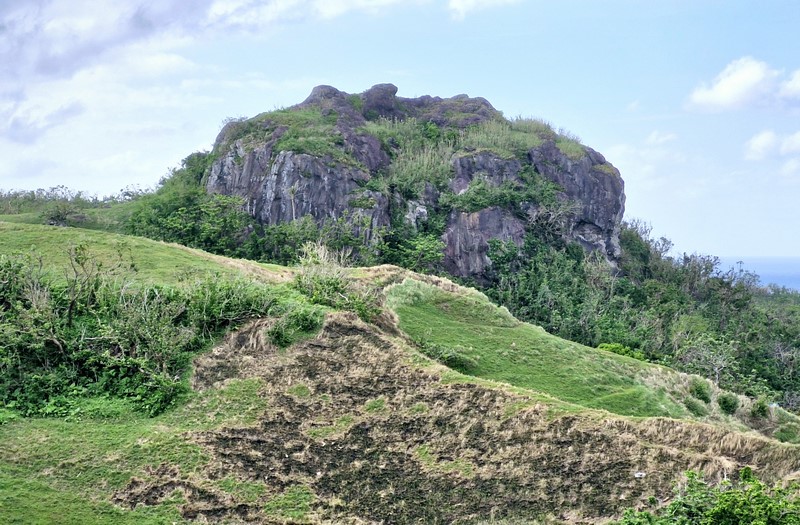
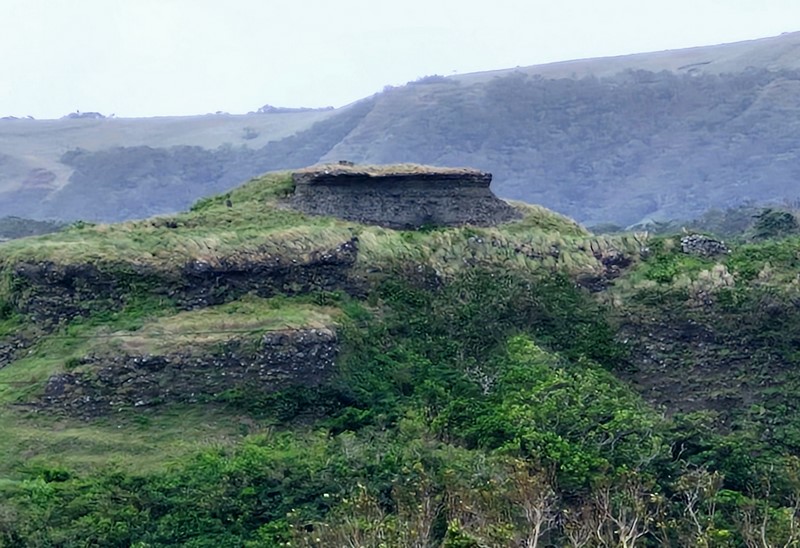
The idjang of Basco

There are 17 of these remnants of stone fortresses on large stone outcrops.  They are located at Brgy. Savidug (Sabtang), Itbayat, Ivana, Mahatao, Brgy. Itbud and Chapidan in Uyugan, Basco and Ivuhos Island (Chuhangin) and Adekey Island off Sabtang.  Artifacts found here include stone tools and implements, earthenware beads, pottery, glass, Chinese ceramics, and human and animal bones. boat-shaped burial markers.

Geologists surmise that the idjang in Basco is molten magma from Mt.  Iraya that cooled off to form a plug for an extinct volcanic crater.  The idjang in Brgy. Itbud (Uyugan) is located at a promontory at the southern end of a beach.

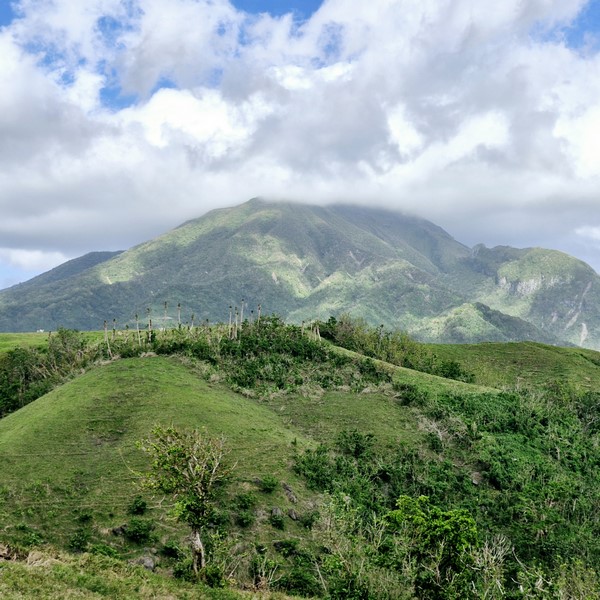
Mt. Iraya

Ancient limestone columns, with holes drilled at one end, are found littered on the idjang slopes.  They may have served as king posts for dwellings or may have once held down cogon dwellings against strong, battering winds.  Some have been recycled as posts for stone houses on Batan Island.  A wall at the idjang’s base (where a creek forks), was made with stones piled on top of each other.  Instead of mortar, they are just held together by pressure from the adjacent stones.

The Chuhangin idjang, in Ivuhos Island (Sabtang), is located on a ledge overlooking the sea and the island’s famed burial grounds.  This idjang is the only one whose sides were built by the ancient Ivatans with stones placed on top of the other without the use of mortar. The Nahini Votox idjang of Itbayat Island has a spectacular view of Dinem and the island’s eastern coast.

The idjang of Brgy. Savidug in Sabtang

The picturesque Savidug idjang, considered to be the most beautiful and perfectly shaped among the idjangs, appears to have been terraced by human hands to assume a castle-like formation. It is distinctly different from all the others in the province because its sides were carved to make entry more difficult.

Here, archaeologists have recovered, from different levels of the site, various earthenware shards, remains of wild boar and deer teeth, glass beads, shell, coral and bone fragments and some 12th century Sung type greenware.

Savidug Idjang: Brgy. Savidug, 3904 Sabtang.

PAGASA Radar Station (Basco, Batanes)

PAGASA Radar Station

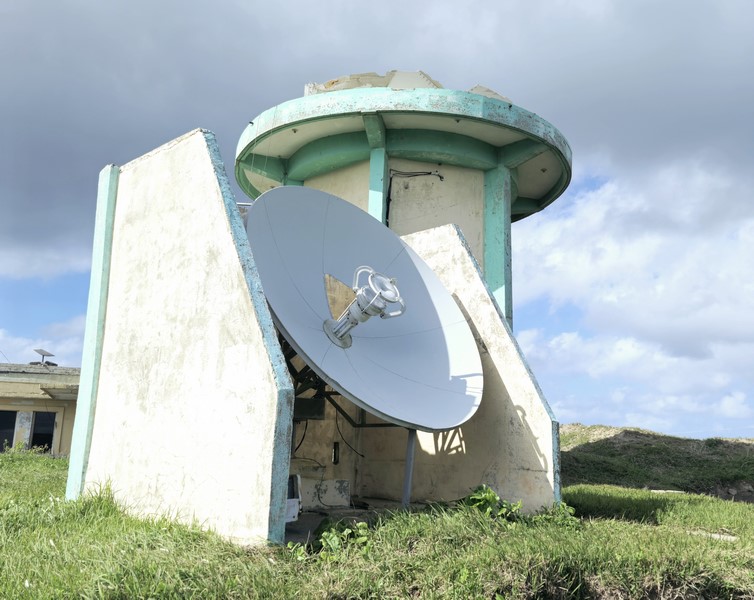
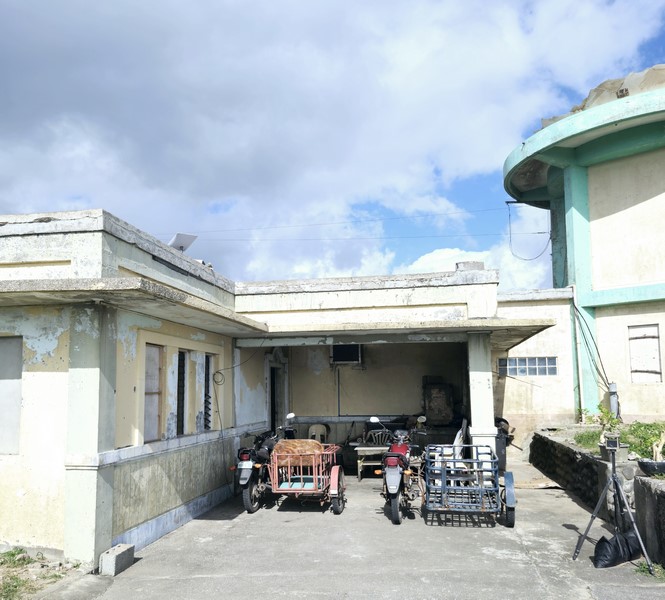
After our tour of Our Lady of Mt. Carmel Chapel, we again boarded our van for short drive, uphill, to the PAGASA Radar Station, also known as Radar Tukon.  This radar station, located on a hilltop about 300 m. above sea level, is the northernmost weather station of PAGASA (Philippine Atmospheric Geophysical and Astronomical Services Administration).

Check out “Our Lady of Mt. Carmel Chapel

Formerly a site of a lighthouse and an abandoned pre-war hilltop U.S. weather station, it monitors typhoons that enter and leave the country’s area of responsibility.  However, its huge satellite disk was ripped off by gale-force winds during September 13, 2016 super typhoon Ferdie (international name: Meranti) even before it was put to effective use.


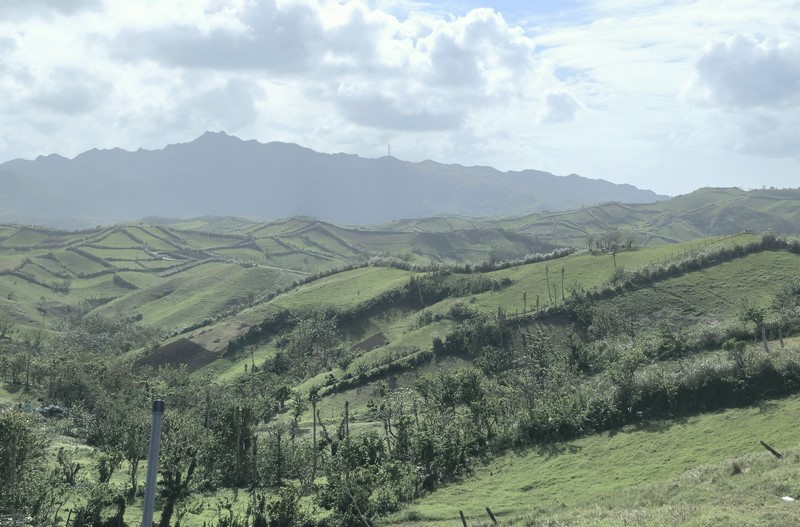
From its top, we had a magnificent and breathtaking 360-degree view of Batan Island, the West Philippine Sea, the boulder-lined cliffs, Mt. Iraya, rolling hills and the magnificent pastoral beauty of labyrinth-like hedgerows (liveng) and fields on one side and the Pacific Ocean on the other side.

Mt. Iraya

Hedgerows (liveng)

On a clear day, you can see Dinem Island in the distance and, behind it, the faint silhouette of Itbayat Island,

Our Lady of Mt. Carmel Chapel (Tukon Chapel)

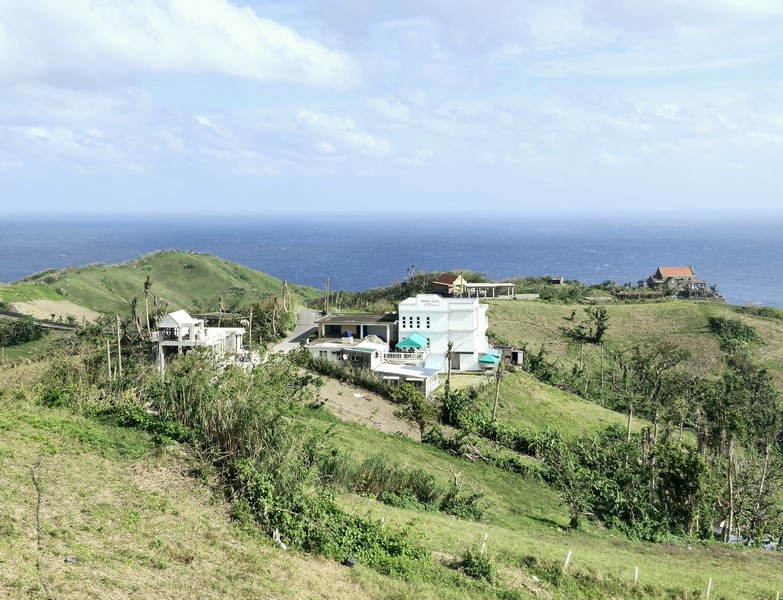
Ukuy’s Place, in the foreground, and Fundacion Pacita, in the background

PAGASA Radar Station: Sitio Tukon, Brgy. Chanarian, 3900 Basco.
How to Get There: From Basco it’s a a 2.75-km. (1.5-hour) hike, a tough 30-minute bike ride or an easy tricycle jaunt up to the Radar Station.  It is also a short 5-min. walk to Our Lady of Mt. Carmel Chapel (Tukon Chapel)

Our Lady of Mt. Carmel Chapel (Basco, Batanes)

Our Lady of Mt. Carmel Chapel (Tukon Chapel)

After checking in and having a breakfast of fried dibang (flying fish) with pako salad, fried egg and rice at Bernardo’s Lantia Hotel, we were all picked, at 12 noon, by our guide Harvey Gutierrez for our North Batan Tour on board a Toyota van of A.A.B. Travel and Tours.

Check out “Hotel and Inn Review: Bernardo’s Lantia Hotel”

Harbour Cafe

A short 2.3 km. (5-min.) drive brought us to Harbour Café where we had lunch before starting our tour.  The café has a good view of Basco Port.

After lunch, we again boarded our van for another short, 2.9-km. (7-min.) drive to Our Lady of Mt. Carmel Chapel.  Parking along the road, we climbed a short flight of steps to get to the chapel.

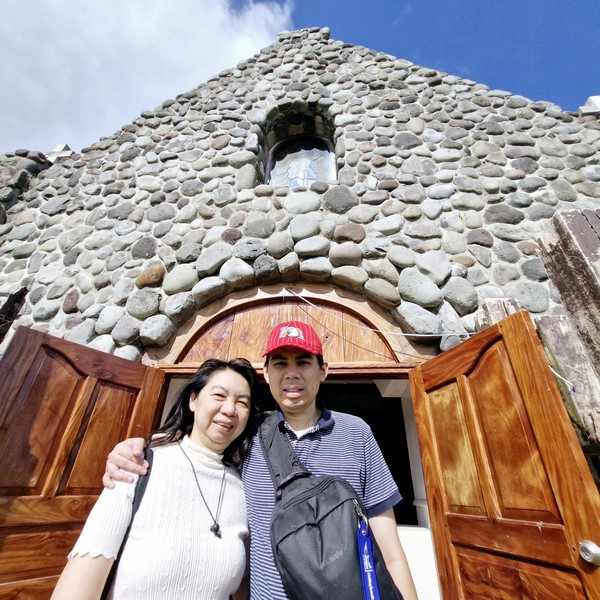
Grace and Jandy

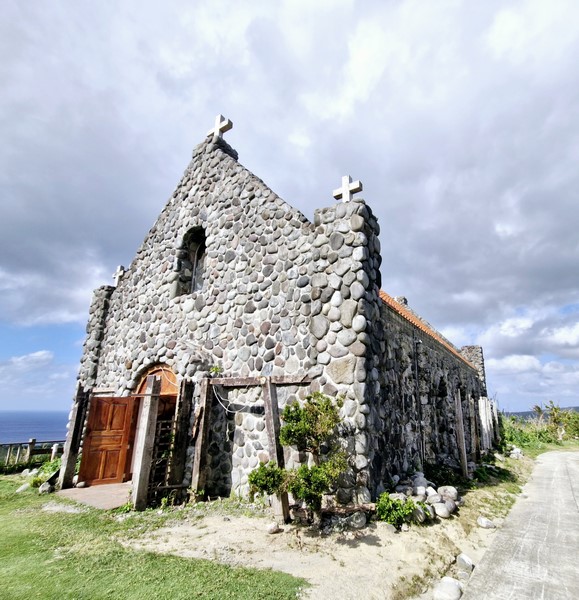
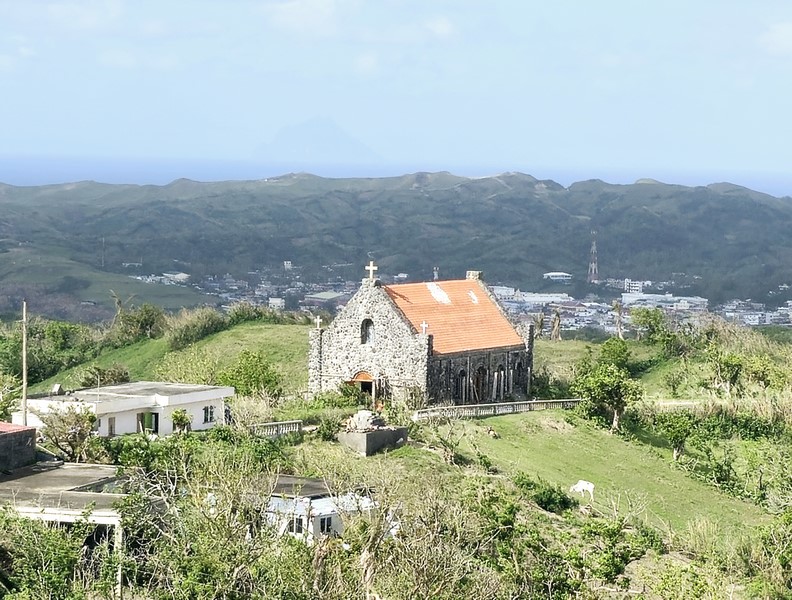
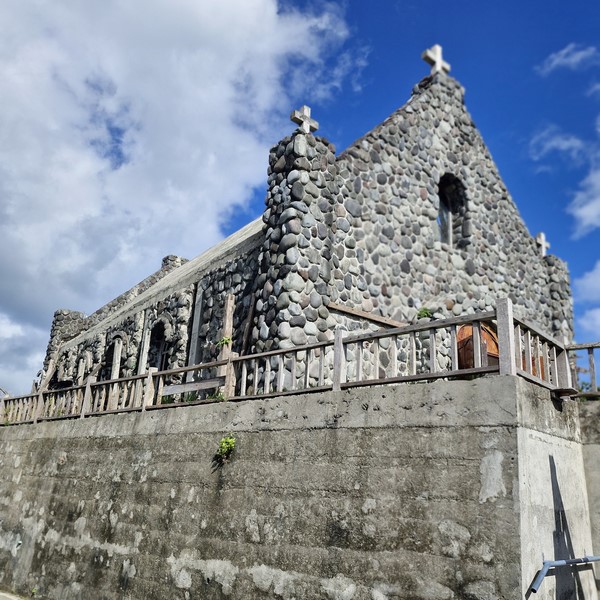
Also known as Tukon (tukon means “mountain” in the Ivatan dialect) Chapel, this project of the late Henedina “Dina” R. Abad (former Batanes Congresswoman) and her husband Florencio “Butch” B. Abad (former Department of Education Secretary) was built to help Tukon’s residents, especially the older ones, avoid the long walk to Basco to attend church services.

Interior of the chapel

Adopting the design of a traditional Ivatan house (stacking and bonding boulders to make a wall), local craftsmen, masons and carpenters built the church and it is the only chapel embodying such design.

Continue Reading →

Balangay Boat Building Site (Butuan City, Agusan del Norte)

The author (left) at the Balangay Boat Building Site

Part of Almont Inland Resort-sponsored Tour

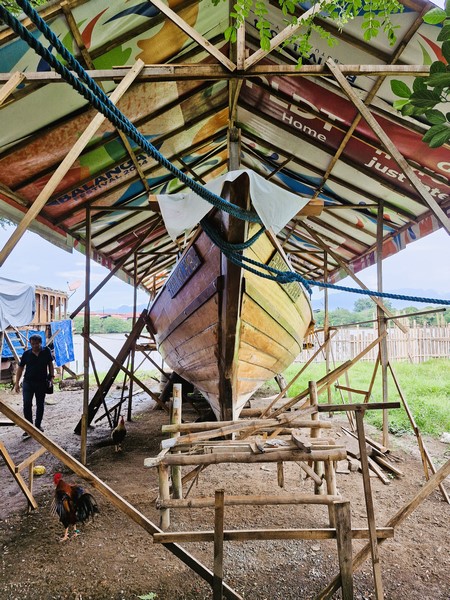
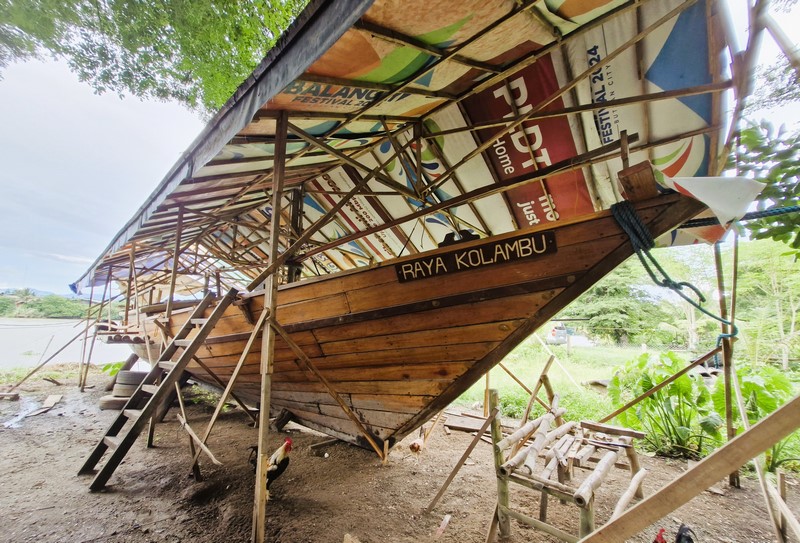
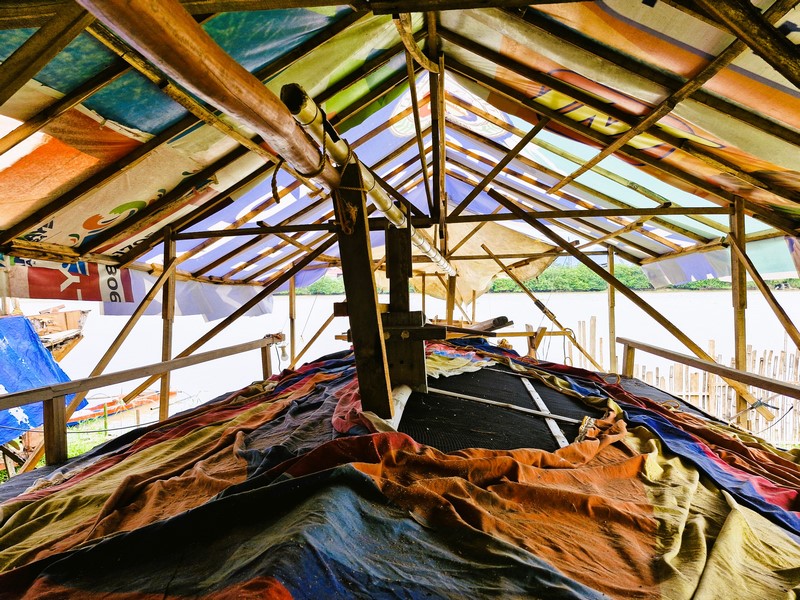
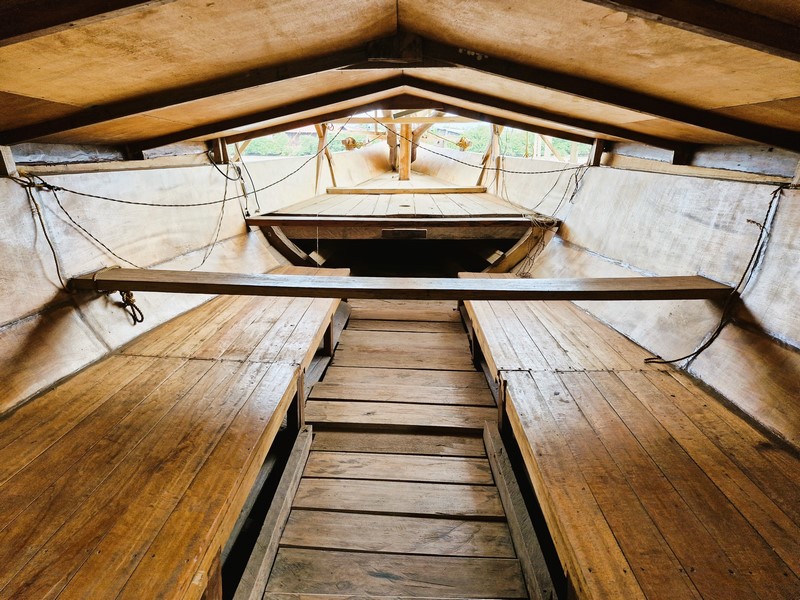
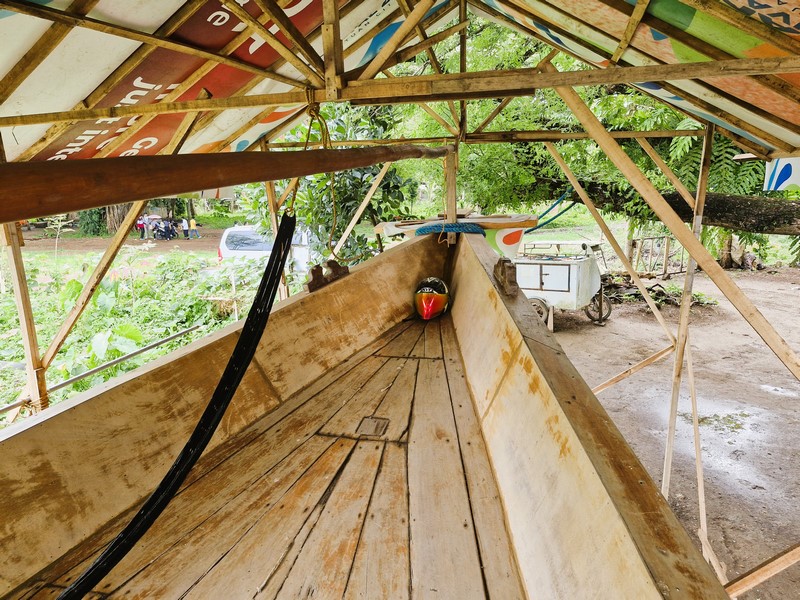
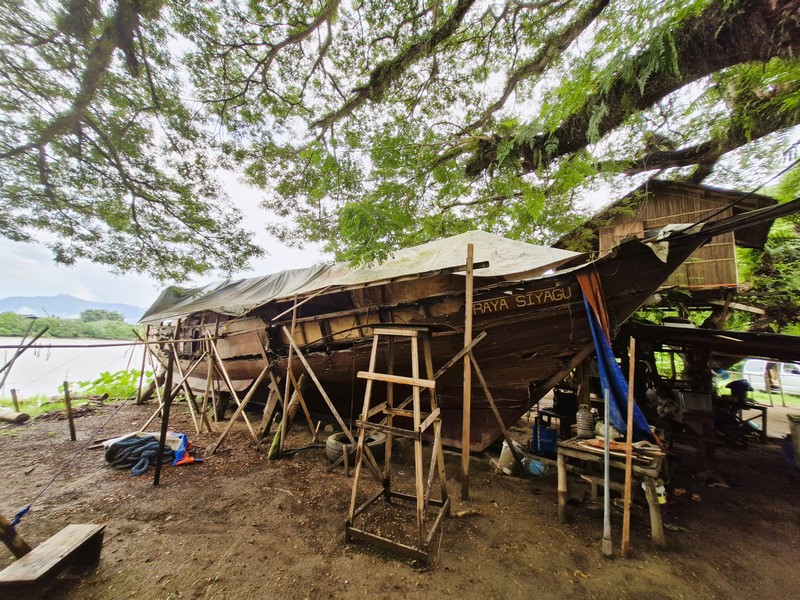
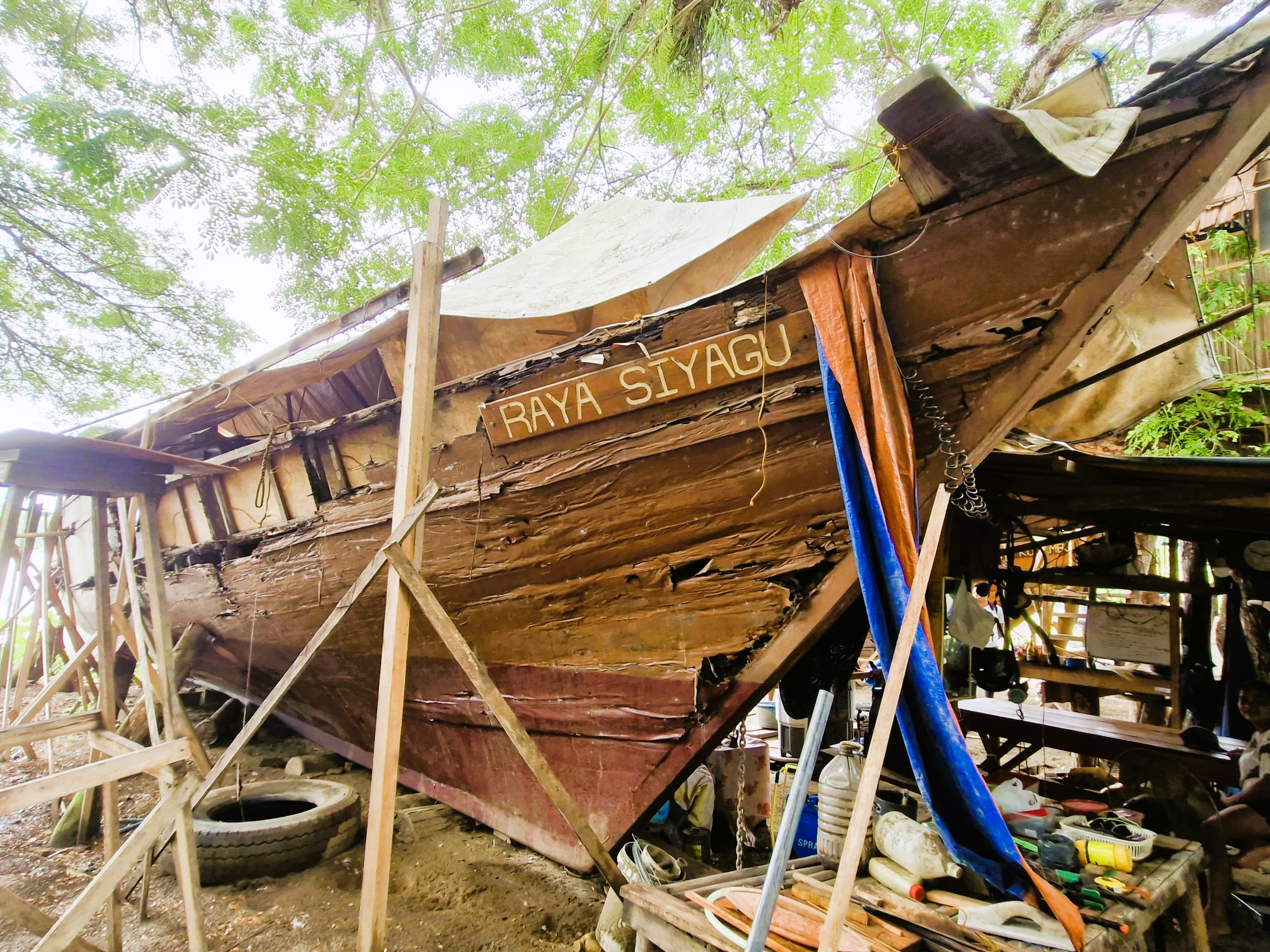
After our short ocular visit to Magsaysay Bridge, we next drove to the 10.6-acre Balangay Boat Building Area Tree Park, along the Agusan River, where the quincentennial balanghais, Raya Siyagu (with 10 gross tonnage), named after the ruler of Butuan-Caraga, and Raya Kolambu (with 8 gross tonnage), named after the former’s sibling, who was the ruler of Mazaua, are drydocked.  The former was in urgent need for repair while latter still looked seaworthy.

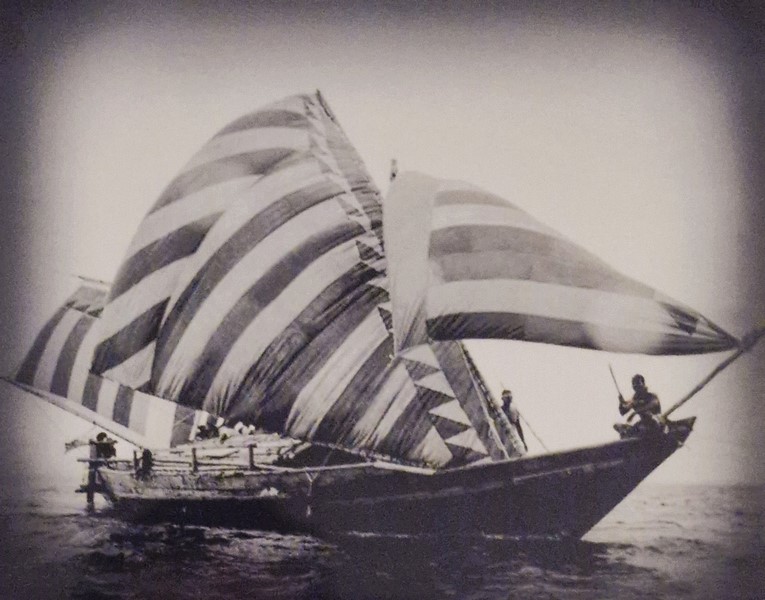
The story of the balanghai (also called balangay) replicas begins in 2009 when the Kaya ng Pinoy Inc., the team (headed by Arturo “Art” Valdez, former undersecretary of the DENR and DTI) that conquered Mount Everest in 2006, announced plans to reconstruct a balanghai boat, with the help of the Sama-Bajau (Sama Dilaya) and other tribal members, from Sibutu and Sitangkai Islands of Tawi-Tawi, who retained the lashed-lug boat-building techniques which were mostly lost in other islands.

Raya Kolambu (formerly the Lahi ng Maharlika)

Three balanghais, namely the Diwata ng LahiMasawa Hong Butuan, and the 75 ft. long, 15 ft. wide and 9 ft. high Sama Tawi-Tawi (launched 16, 2010)  were constructed, with old doongan (Heriteriera littoralis) and other Philippine hardwoods (all donated by former Sulu governor Abdusakur Mahail Tan), by the team of Arturo Valdez at Manila Bay, at a 1,000 sq. m. site at Liwasang Ullalim at the Cultural Center of the Philippines Complex. The special wood for construction came from the established traditional source in southern Philippines, specifically Tawi-Tawi. The team have pinpointed Sama-Bajau master boat builders, whose predecessors actually built such boats, and used traditional tools during the construction.

A replica balanghai at sea

The boats will try to retrace the 1417 voyage of Sultan Paduka Batara (with 340 followers) of Sulu, from the Philippines to Fujian province in China (to pay tribute to the third Ming Dynasty Chinese emperor Zhu Di (or Yongle).  In September 1417, he arrived in Quanzhou but died there, from natural causes, and is buried in in Dezhou, Shandong, 320 kms. south of Beijing.  Kamulin, the sultan’s wife, and two sons (Andulu and Wenhalla) remained in China to tend to his tomb.  The emperor granted them lands and resources.  About 3,000 to 6,000 of their descendants still live there.

On September 1, 2009, all three journeyed, from Manila Bay, to the southern tip of Sulu,  tracing the routes of Filipino ancestors during the waves of Austronesian settlement through Maritime Southeast Asia and the Pacific.  On May 1, 2010, after an 8-month cruise, they arrived in Zamboanga City, after 70 multiport stopovers, covering 2,500 kms. The balanghais were navigated via the old method used by the ancient mariners – steering by the Sun, the stars, the wind, cloud formations, wave patterns and bird migrations.  Covering a distance of 3,908 kms. (2,108 nautical mi.), along the way, they stopped off at numerous Philippine cities to promote the project.

The second leg of the voyage, from 2010 to 2011, saw them navigate around South East Asia – Brunei, Indonesia, Malaysia, Singapore, Cambodia, Thailand and up to the territorial waters of Vietnam, before heading back to the Philippines.

The bow of the Raya Kolambu

In April 2017, two more balanghai replicas, namely the Lahi ng Maharlika and Sultan sin Sulu were assembled, without any blueprints, in Maimbung, Sulu, by 7 members of the Sama-Bajau (Sama Dilaya), from Tawi-Tawi, led by master boat builder Nur Usman.  On May 10, 2017, both began sailing, from Sulu, in a mission to relive the 600 years of diplomatic connection between Sulu and ancient China.  They navigated without the use of modern instruments, and only through the skills and traditional methods of the Filipino Sama people.

Raya Siyagu (formerly the Sultan sin Sulu)

On April 28, 2018, the 33-man Philippine Balangay Expedition (headed by Valdez), on board the Sama Tawi-Tawi (the lead boat skippered by John Manginsay), Lahi ng Maharlika and Sultan sin Sulu, sailed from the Manila Yacht Club and finally reached China, arriving in Xiamen at 3 PM, May 2.  The first two boats had small engines, allowing it to move at 30 knots, while the third was propelled by sail only, with a maximum speed of 10 knots.  They returned to Manila on May 22, after a 25-day journey.

Damage to the Raya Siyagu

In 2019, the Lahi ng Maharlika (now renamed Raya Kolambu), manned by 10 personnel, and Sultan sin Sulu (now renamed Raya Siyagu), run by 8 personnel, set sail, from San Vicente, Palawan to Butuan, in a 6-day journey crossing the Sulu Sea, making stops in Palawan (Linapacan, Cuyo), Antique (Anini-y), Negros Occidental (Sipalay), Negros Oriental (Dumaguete City), Camiguin and, finally, to Butuan Bay.  From Butuan, the balanghais entered the Mactan-Cebu waters on the morning of December 14, arriving in Lapu-Lapu City to commemorate the quincentennial (500th) anniversary of the Battle of Mactan on April 27, 2021.

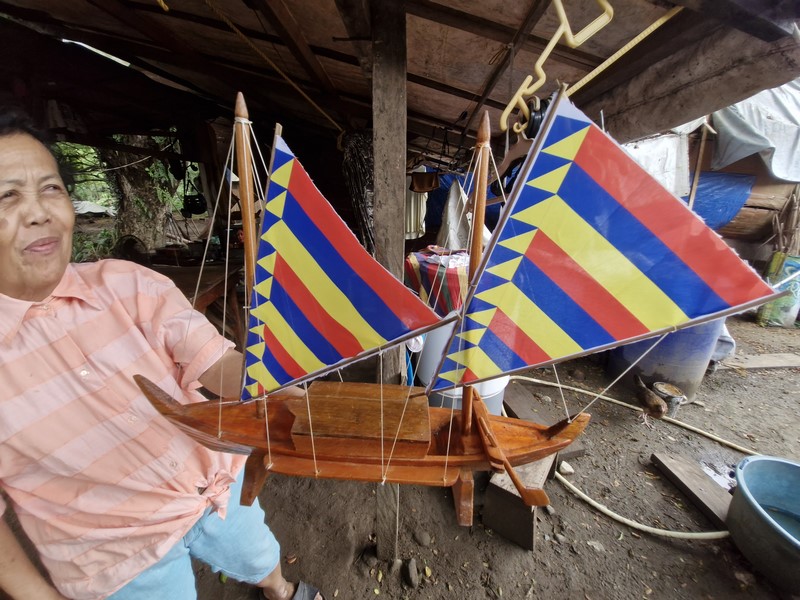
A small-scale model of a balanghai

Today, the 15 m. long Diwata ng Lahi is on permanent public display at the back of the National Museum of Fine Arts while the Masawa Hong Butuan is on a special pavilion in Butuan City.

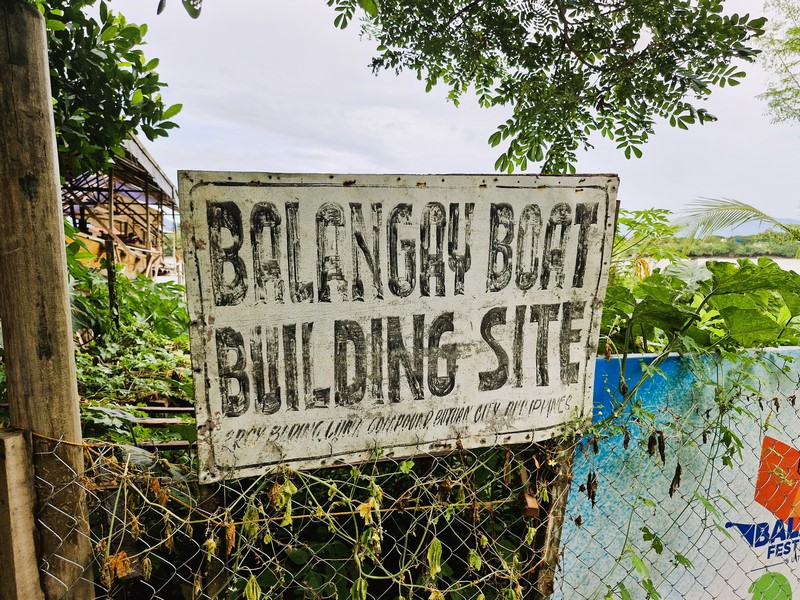
Balangay Boat Building Site: Butuan Global Forum, Inc., Luna Compound, 861 R. Calo St., Brgy. Bading, Butuan City, Agusan del Norte. 

How to Get There: Cebu Pacific Air has 20 daily flights from Manila to Butuan City. From the city center, take a habal-habal (motorcycle) ride to the site. 

Almont Inland Resort: J. C. Aquino Ave. (formerly Zamora St.), Brgy. Imadejas, 8600 Butuan City.  Tel: (085) 300-0296. Mobile number: +63977 674 3412. Email:  fo.inlandresort@almont.com.ph. Website: www.almont.com.ph/almontinlandresort.

Bood Promontory and Eco-Park (Butuan City, Agusan del Norte)

Bood Promontory and Eco-Park

Part of Almont Inland Resort-sponsored Tour

From Delta Discovery Park, it was a 9.3-km. (15-min.) drive to Bood Promontory and Eco-Park (or First Easter Mass Eco Park).  The highest elevation nearest to the seaside village of present-day Masao, it is located at a bend in the Masao River on a hill (called bood in Butuanon) overlooking the city.

Check out “Delta Discovery Park

Magellan’s Cross

Grotto of the Virgin Mary

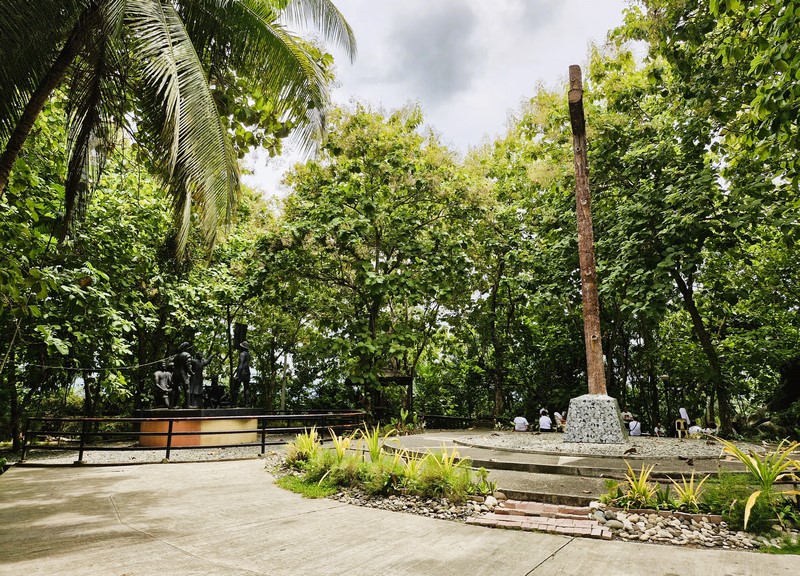
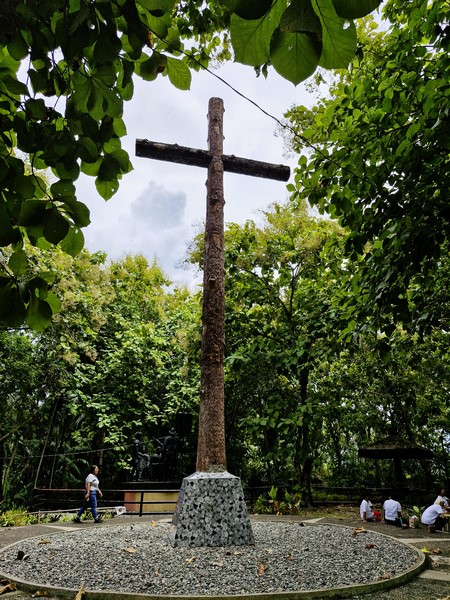
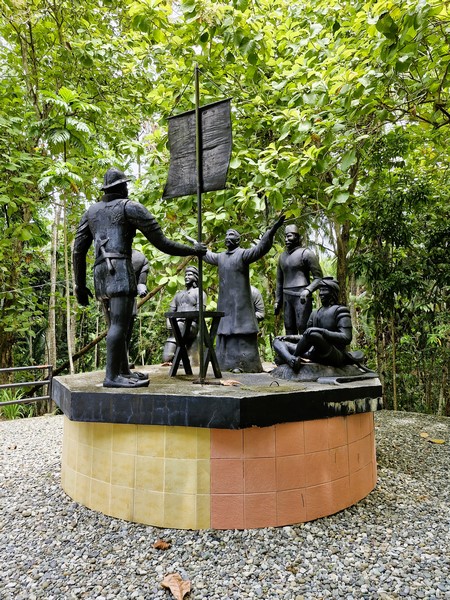
The park has a historical marker commemorating the contested first Catholic mass in Mindanao held on April 8, 1521 plus a memorial cross and a tableau with statues of Ferdinand Magellan, Rajah Kolambu (King of Butuan) and Rajah Siyagu (King of Mazaua), among others.

Tableau with statues of Ferdinand Magellan, Rajah Kolambu (King of Butuan) and Rajah Siyagu (King of Mazaua), among others

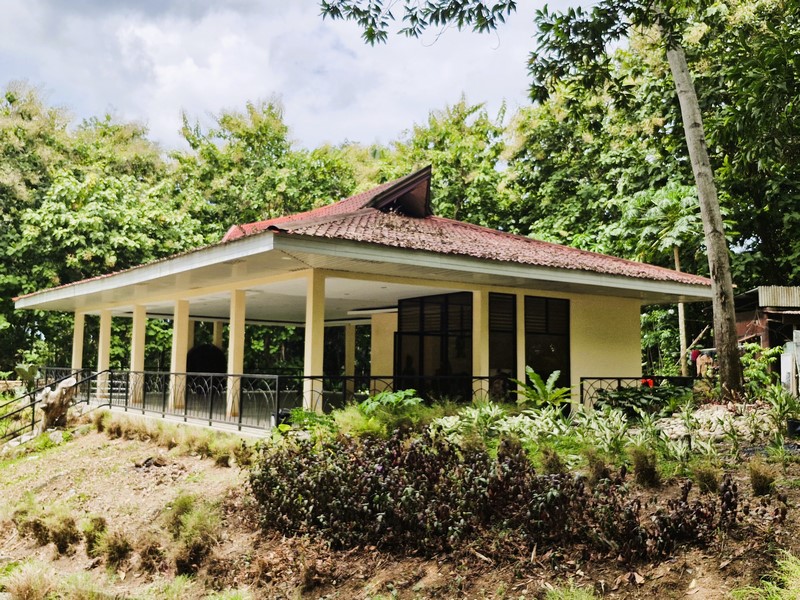
Nearby is a one-storey building housing an open-air function area plus oversized replicas of the Golden Tara (a 2-kg. (4.4-lb.), 21-karat gold statuette found, in 1917, at the banks of the Wawa River near Esperanza), and the Butuan Ivory Seal (an ivory stamp, seal stamp or a privy seal, dated 9th – 12th century, found in Brgy. Libertad).

Function Hall

Open-air function area

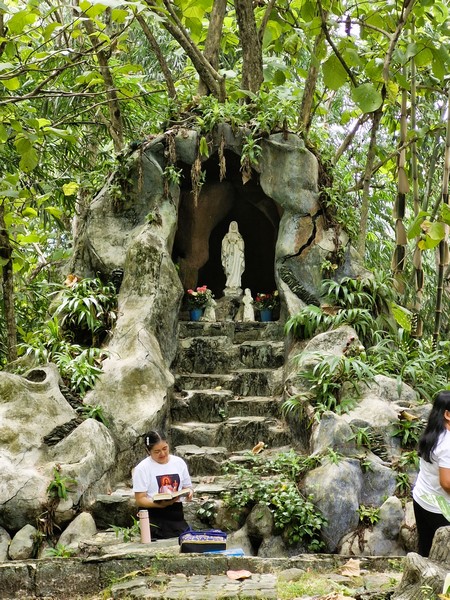
The park, situated in a non-protected 72-hectare agroforestry land, is also home to a small grotto of the Virgin Mary, walking trails and picnic spots. About 75% of the area is dominated by mahogany (Swietenia macrophylla), yakal, Philippine teak (locally called hadlayati in Butuanon), Antipolo, narra and molave trees.

Replica of Golden Tara

Replica of Butuan Ivory Seal

Bood Promontory and Eco-Park: Brgy. Pinamanculan, Butuan City. 8600 Agusan del Norte.  Tel: (085) 300-0270. Open 8 AM to 5 PM. Admission: Php50/pax. 

How to Get There: Cebu Pacific Air has 20 daily flights from Manila to Butuan City.  A 30-min. tricycle ride from Masao Beach, to get to the park you have to cross a hanging bridge. 

Almont Inland Resort: J. C. Aquino Ave. (formerly Zamora St.), Brgy. Imadejas, 8600 Butuan City.  Tel: (085) 300-0296. Mobile number: +63977 674 3412. Email:  fo.inlandresort@almont.com.ph. Website: www.almont.com.ph/almontinlandresort.

Delta Discovery Park (Butuan City, Agusan del Norte)

Delta Discovery Park

Part of Almont Inland Resort-sponsored Tour

On our second day in Butuan City, Ms. Debra Rutz Tanginan (Media Marketing Officer of Almont Inland Resort) brought Jandy and I to the 15-hectare (36.8 acre) Delta Discovery Park, a 7.6-km. (15-min.) drive from the resort.

Welcome Pavilion

Opened in May 2011, this captivating eco-tourism destination, offering a rich blend of adventure and nature, is home to what is touted as the longest zipline in the country (and in Asia) at 1.3 kms. long and, for adrenaline junkies like us, this was an opportunity we just shouldn’t miss out on.

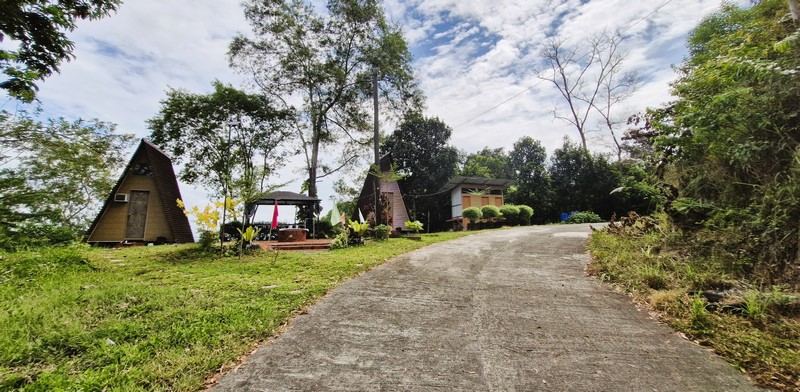
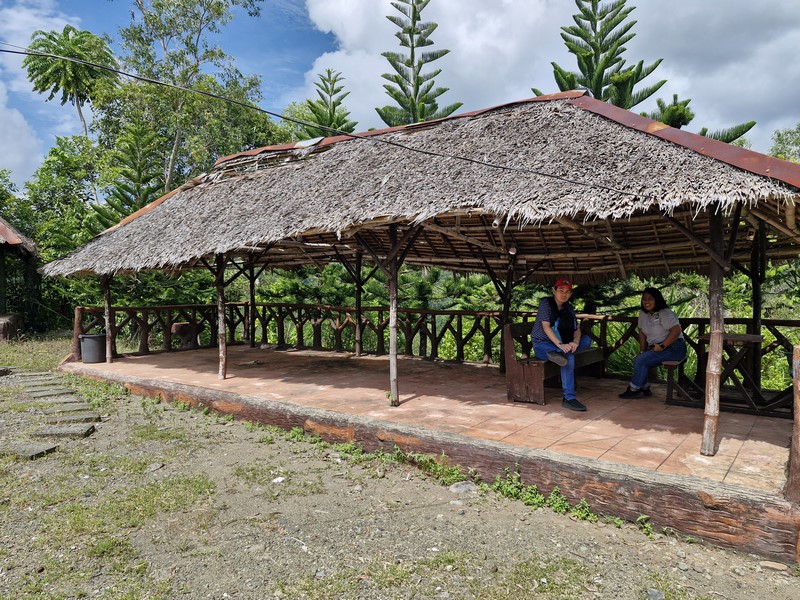
Two A-frame cottages with a view deck in between

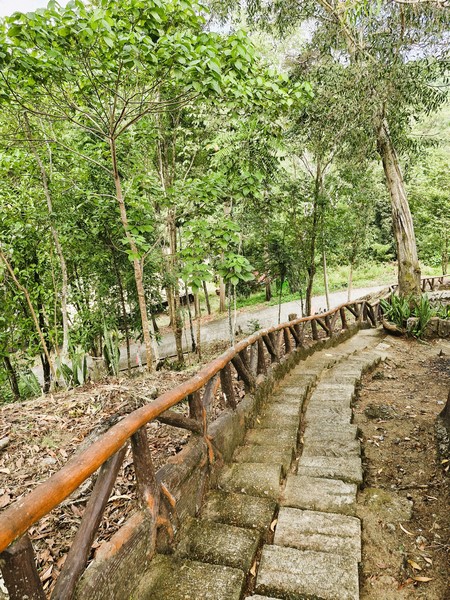
Upon arrival, we registered and paid for the zipline ride (Php500/pax) at the reception area of the park’s Welcome Pavilion.  That done, we walked all the way to the base of a concrete stairway that winds up a hill.

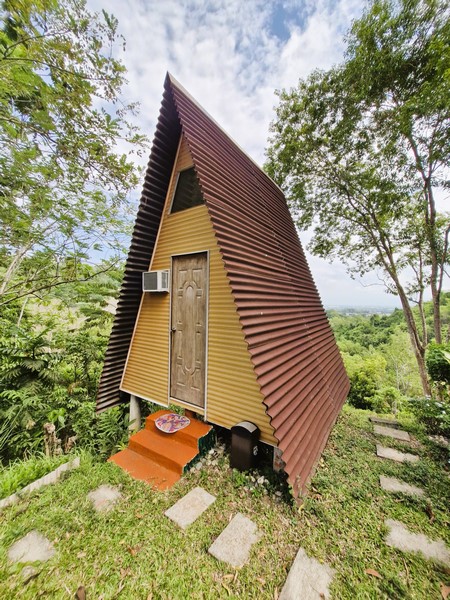
A-Frame Cottage

Before reaching the stairway, we passed a couple of A-frame, airconditioned cottages, along a ridge, where guests can stay overnight (check out video here).

Stairway going up to the waiting shed

Jandy and Debra at the waiting shed

Between the two cottages was a concrete view deck with a spectacular view of the valley below. We then went up the stairs (check out video here) to a wood and nipa waiting shed where we rested for a while.  Across the shed was a steel zipline landing platform.

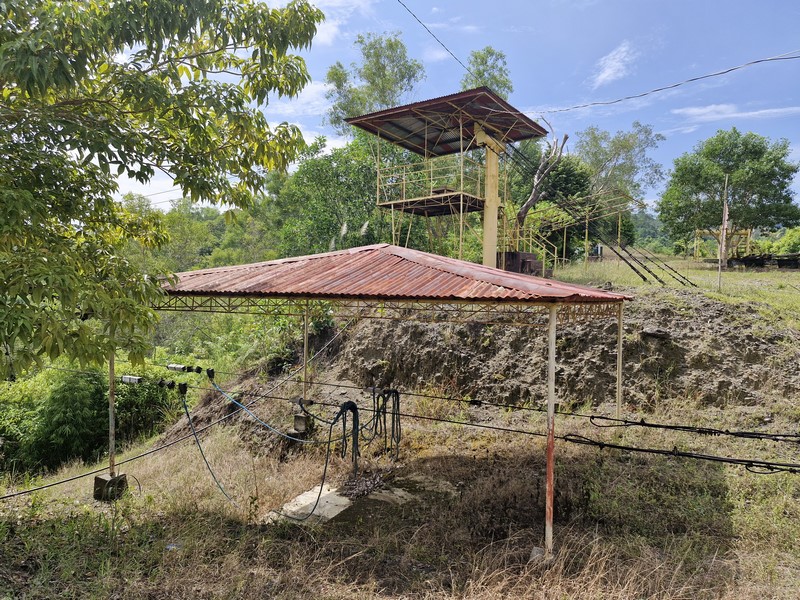
The 1.3-km. (top) and 400-m. (below) zipline platforms.

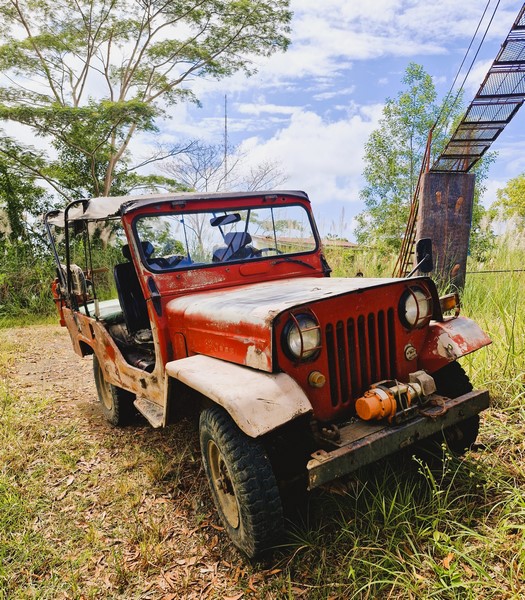
The 4 x 4 Jeep we rode going up the hill

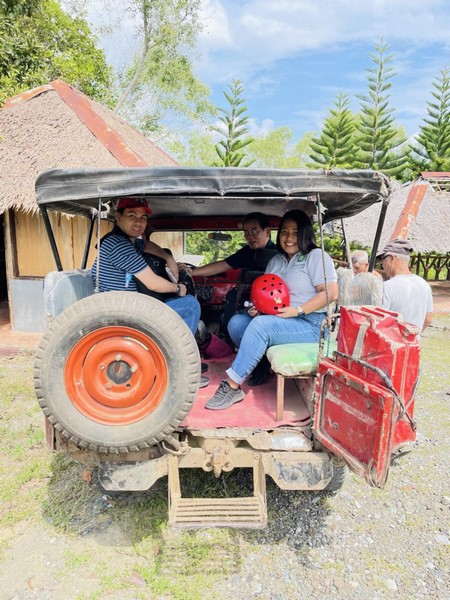
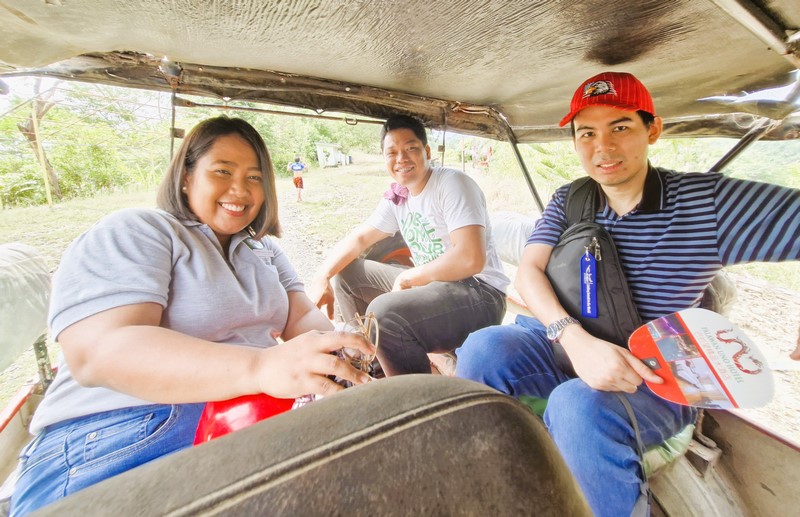
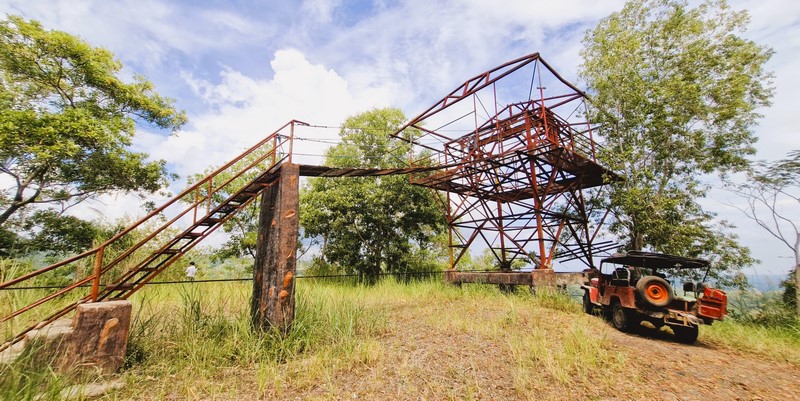
After a few minutes, a beat up, canvas soft top 4 x 4 Jeep arrived to bring us to the top of the hill and the zipline staging area.  The 5-min. long Jeep ride was part of the adventure and a thrill in itself as we were driven, on off-road tracks, over rocks and potholes.

All aboard…..

Debra, our driver and Debra on board our Jeep

Midway through the trip, we passed a building, this time a dorm where groups can also stay overnight. Like the zipline, the Jeep ride was not for the faint-hearted but, for us, it was fun as we literally jump on our seats with each pothole (check out video here).

The 1.3-km. zipline platform

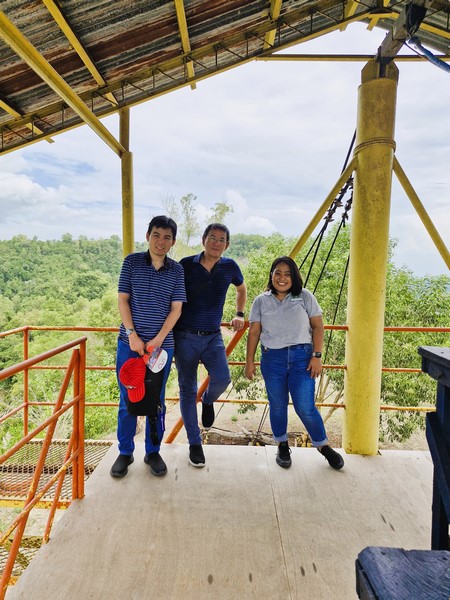
Jandy, the author and Debra

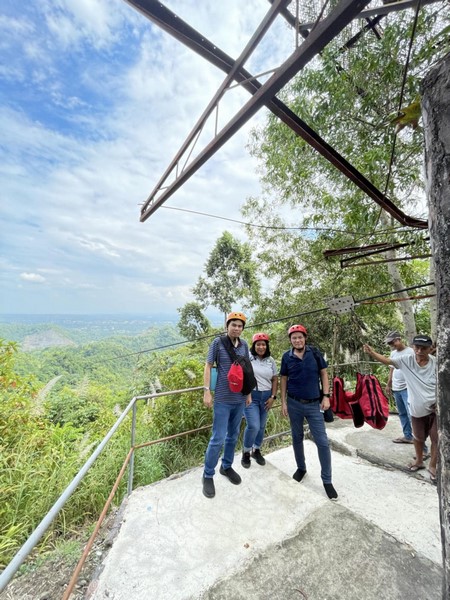
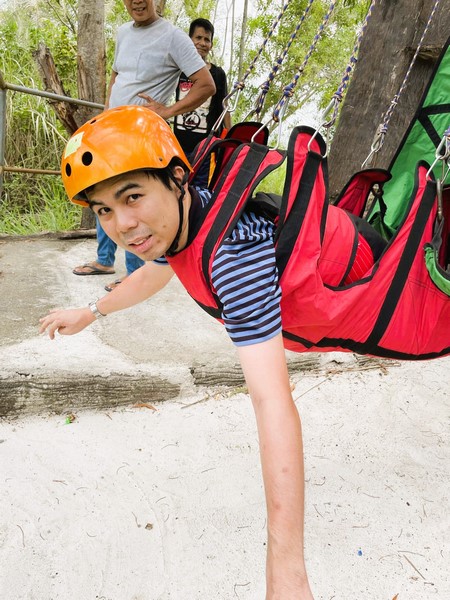
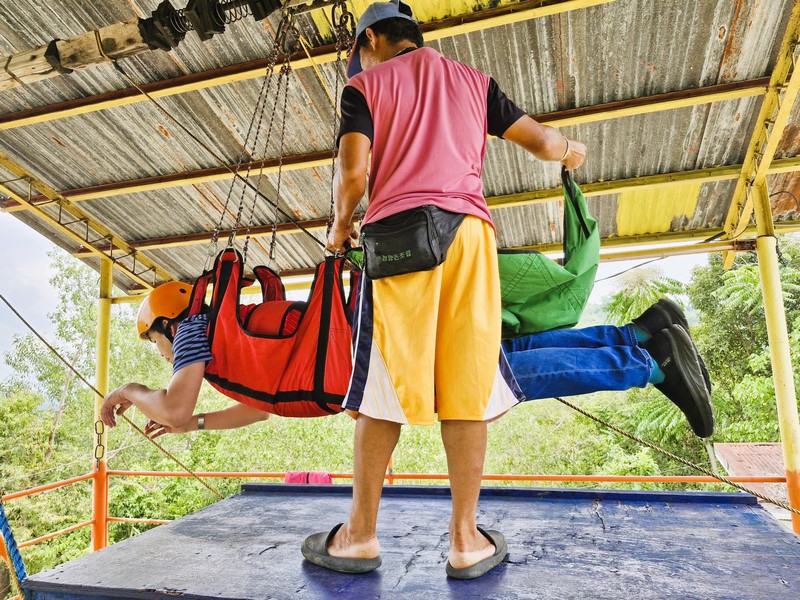
All suited up….

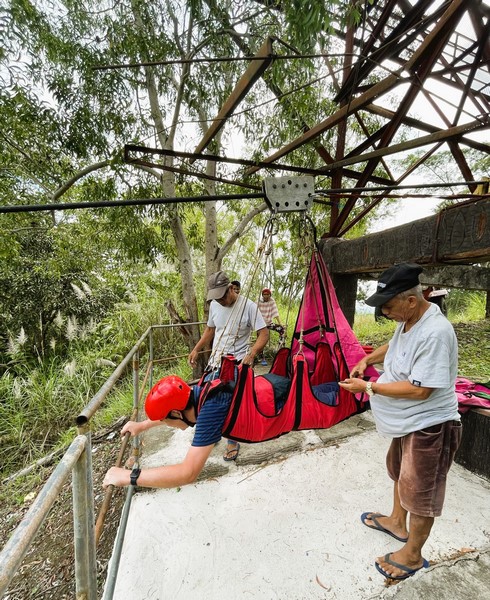
The piece de resistance, of course, was the zipline ride.  Upon reaching the top of the hill, we disembarked from our Jeep and climbed the steel stairs up to the concrete and steel platform.  I decided to try the zipline first, followed by Jandy and, lastly, Debra.

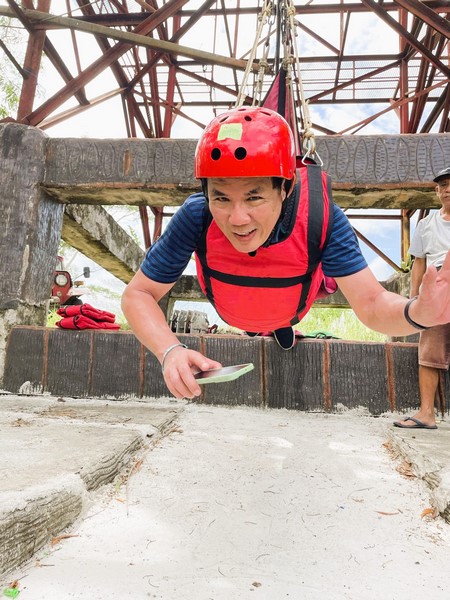
The author all suited up and ready to go Superman style …..

Jandy’s next….

After donning my helmet, I was strapped into the horizontal, Superman zipline harness.  Once strapped, suspended and ready and facing forward, I was shoved down the line and on my way to the ultimate exhilarating “flying experience” as I “flew,” head first, with the wind blowing into my face, down the zipline (check out video here)

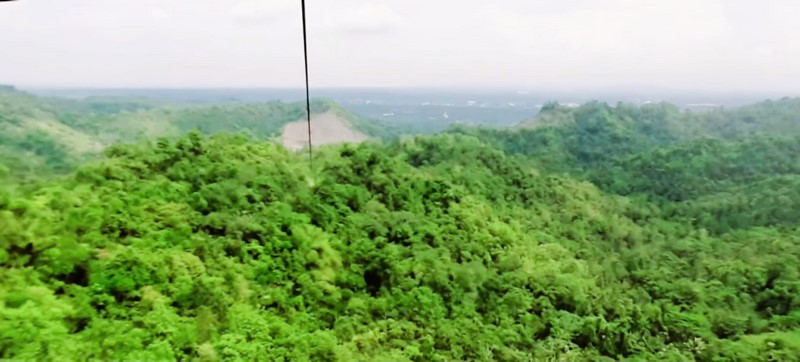
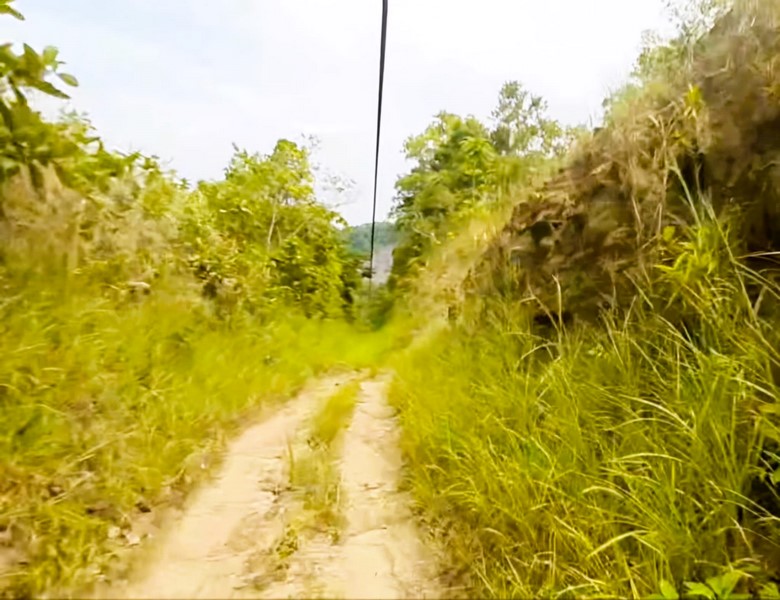
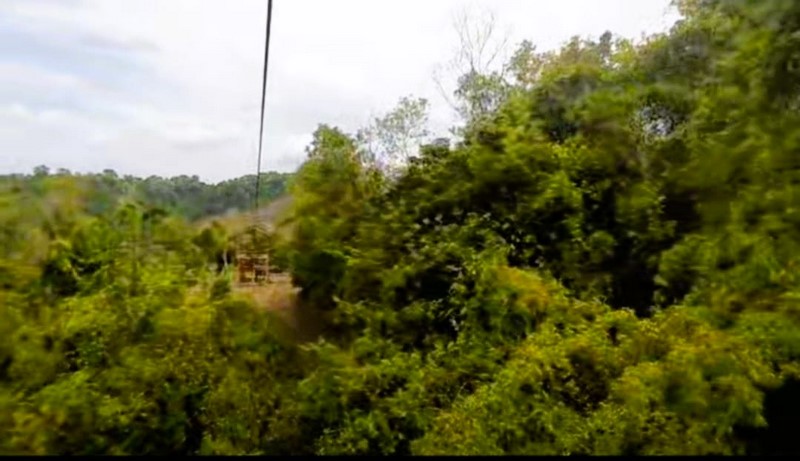
For nearly two minutes, I glided, at high speed (probably in excess of 60 kms./hour), 120 m. above the ground, over the green canopy of a scenic valley, then zip through the middle of a narrow gulley (giving me the feeling that I might scratch the sides), before emerging into another green valley as I approached the end of the line.  Truly an adrenaline rush of speed and the mesmerizing beauty of the green landscape and the winding Masao River….

The first valley I crossed…..

Jandy and Debra followed one after the other, all feeling the same rush as I did.  After our thrilling zipline, we descended down stairs and walked backed to the Welcome Pavilion.

The narrow gulley….

The park also has another shorter, more relaxing 400-m. long zipline (Php350/pax) that goes over a small canyon.  These 2 ziplines gives it the capacity to entertain up to 250 riders per day. They also have a swimming pool fed by a small waterfall, a butterfly sanctuary and eco-trails.

Approaching the end of the line…..

Delta Discovery Park: Purok 7 Ugabang, Brgy. Bonbon, Butuan City, 3600 Agusan del Norte.  Tel: (085) 345-8891.  Mobile numbers: (0975) 717-4505 and (0912) 444-2946.  Open daily, 9 AM – 5 PM.  Other rates: Entrance viewing (Php35/pax), Swimming Pool (Php50/pax), Cottages (Php350, Php400 and Php500), Table (Php200).  A-Frame House Overnight Rate (Php2,500, maximum of 5 pax, 2 PM to 10 AM).  Short Time Rate (Php500 for first 3 hours, maximum of 5 pax). 

How to Get There: Cebu Pacific Air has 20 daily flights from Manila to Butuan City. From the city center, ride a jeepney and drop off at the turn-off to Brgy. Bonbon.  From there, take a habal-habal (motorcycle) ride to the park. 

Almont Inland Resort: J. C. Aquino Ave. (formerly Zamora St.), Brgy. Imadejas, 8600 Butuan City.  Tel: (085) 300-0296. Mobile number: +63977 674 3412. Email:  fo.inlandresort@almont.com.ph. Website: www.almont.com.ph/almontinlandresort.

Banza Church Ruins (Butuan City, Agusan del Norte)

Banza Church Ruins.  On the left is the mighty Agusan River, the third longest in the country

Part of Almont Inland Resort-sponsored Tour

From the Butuan Regional Museum, a 6.6km. (15-min.) drive brought us to the Banza Church Ruins, the oldest stone church ruins in Mindanao.  Getting there was very difficult, for first time visitors like us, as there are hardly any signs to point us in the right direction.
Check out “Butuan Regional Museum”

The balete tree enclosing the ruins of the church bell tower

This church, built by Augustinian Recollect friars beside the Agusan River (the third longest river in the country and the widest and most navigable in Mindanao) in 1625, was reputedly one of the most beautiful stone churches in the region.

The author and son Jandy beside the balete tree

However, in 1753, Moro pirates burned it down. Although the old church was rebuilt, it succumbed to decay and disuse when, in 1865, the town center was ordered transferred, by Surigao Province Gov. Manuel Boscasa, from Maug (Banza) to Baug (Magallanes).

Opening in the balete tree where you can see the interior wall of the bell tower

What is left of its former beauty is a bell tower engulfed inside a giant banyan (Ficus benjamina, locally called balete) tree.  From a small opening on the side of the tree, you can take a peek at the ruins and see its coralstone wall.

The steeple-like kiosk with pyramidal roof and balustrade

The ceiling of the kiosk

The steeple-like kiosk, with its pyramidal roof and balustrade, besides it houses a marble marker (its upper right hand corner chipped off) narrating the history of the place.  The place is a great spot to view the mighty 349 km. long Agusan River and to watch the sunset.

The slightly damaged marble historical plaque

Banza Church Ruins: Lilo, Brgy. Banza, 8600 Butuan City.

How to Get There: Cebu Pacific Air has 20 daily flights from Manila to Butuan City.  Located 6.8 kms. (a 15-20 min. drive) from the city center, from the main highway, travel 2.5 kms. then take the track on the left. After 500 m., veer left again.

Almont Inland Resort: J. C. Aquino Ave. (formerly Zamora St.), Brgy. Imadejas, 8600 Butuan City.  Tel: (085) 300-0296. Mobile number: +63977 674 3412. Email:  fo.inlandresort@almont.com.ph. Website: www.almont.com.ph/almontinlandresort.