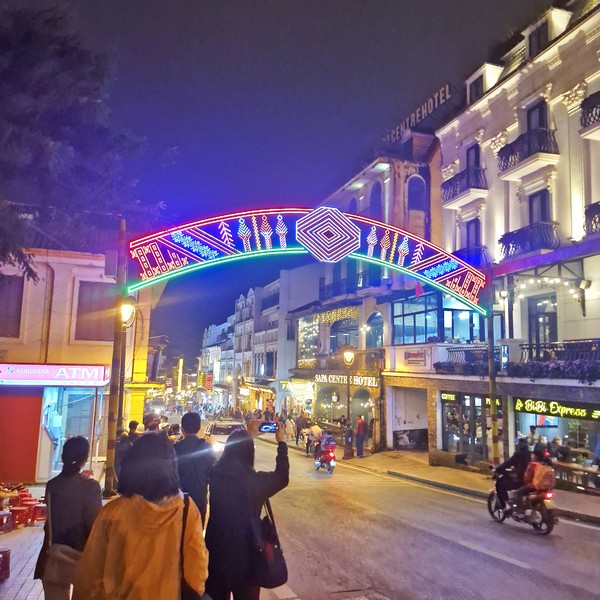
Cau May Walking Street (Sapa, Vietnam)

Cau May Walking Street

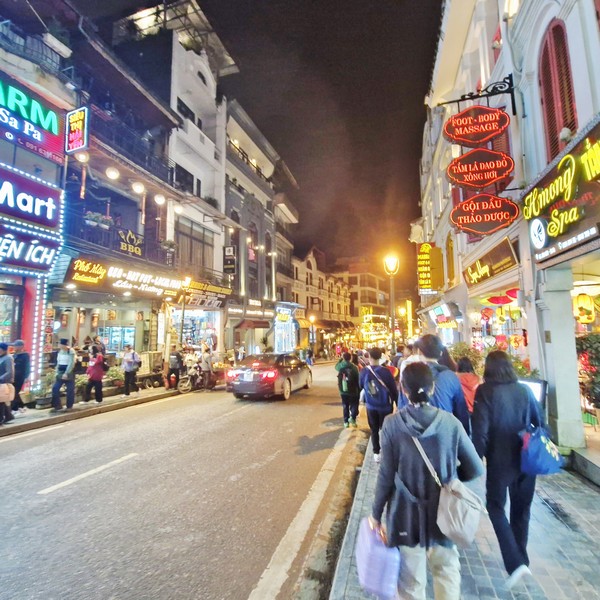
After our tour of Sapa Square and the Church of the Holy Rosary, we all proceeded to walk along the historic Cau May Walking Street, to reach Bora Hotel where we were to stay overnight.  Also known as Western Street, it is nestled in the grandeur of the Northwest mountains. 

Check out Sapa Square and Church of the Holy Rosary

This popular and vibrant, though relatively small pedestrian-only street, in foggy Sapa town, is known for its lively atmosphere and local street food, with numerous modern restaurants, bars, cafes and 3 to 5-star hotels, and is a cultural hub where locals and tourists can interact, stroll, explore the bustling night market, sample local street food, and relax at a bar. 
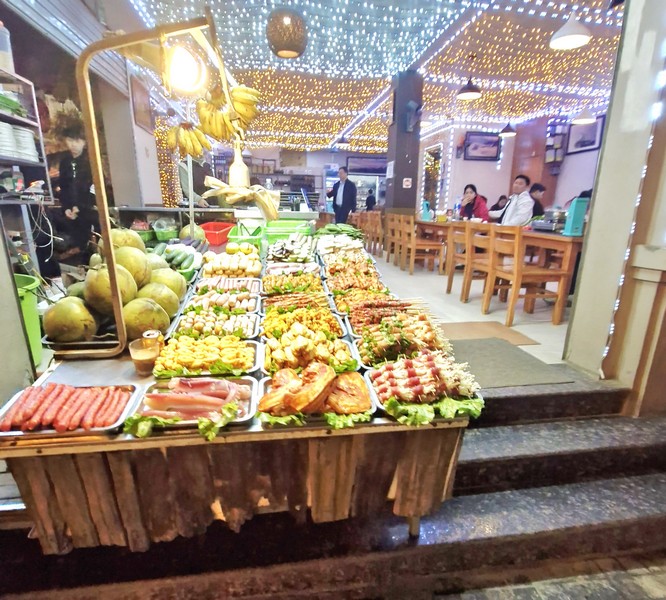
Food stall and restaurant

It was built in 1905, during the French colonial era as a retreat for French officials and Vietnamese locals alike, and serves as a convenient point to access other tourist spots in Sapa. At night, the street comes alive with colorful displays and many shops and stalls selling local street food and traditional handmade crafts.  
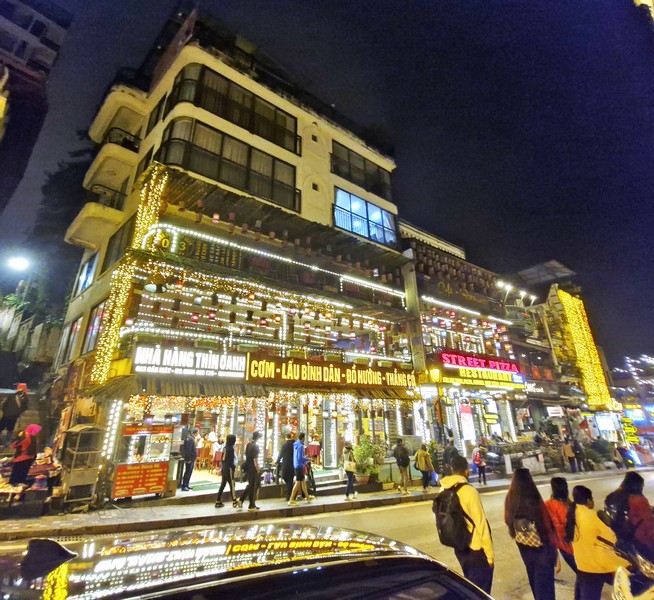
Sapa’s nightlife is often described as a blend of liveliness and an atmosphere that remains more tranquil than in large cities. Visitors can enjoy a variety of delicious and high-quality local Northern Highland specialties, ranging from humble to upscale culinary experiences.
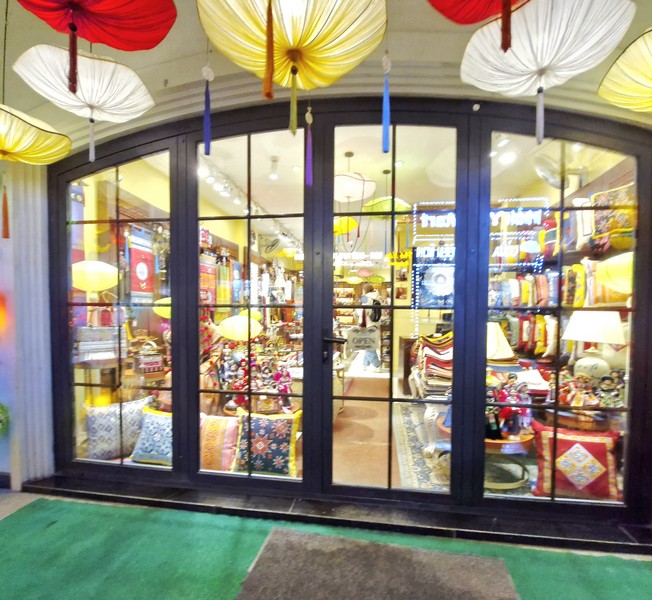
They include dishes like sour salmon hotpot, Sapa green vegetable stir-fry, grilled deer with lemongrass, local pork, honey-glazed grilled duck, hotpot with gang hot sauce, butter lemon sauce fish, Sapa mushroom and lotus seed braised chicken, thang co (a famous horse meat soup), thit trau gac bep (dried buffalo meat), xoi ngu sac (five-color sticky rice), grilled skewers (lamb and bird) and bamboo-cooked rice as well as more modern dining options.
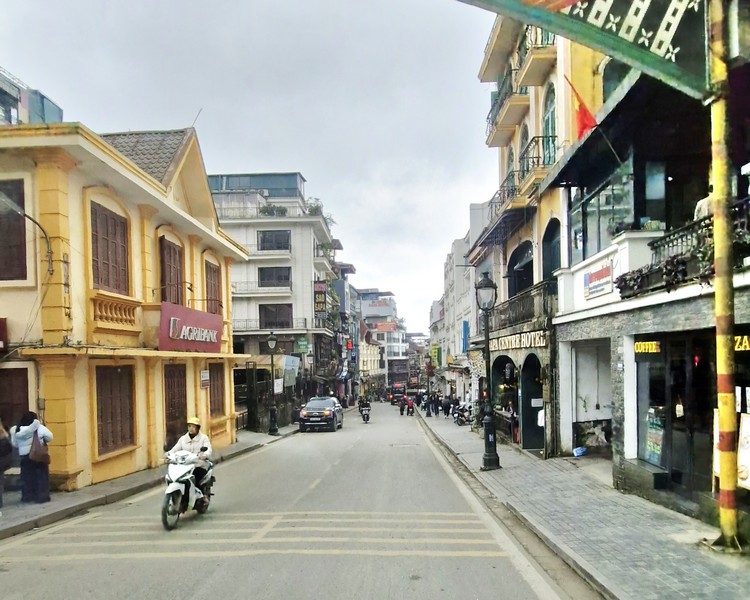
Cau May Walking Street in daytime

The street has a unique ambiance that harmoniously combines the allure of vintage and classic Western charm of the past century, with a touch of modernity, the captivating culture of local ethnic minorities, such as the H’mong and Tay. The street occasionally hosts cultural events and festivals that showcase the region’s heritage. 
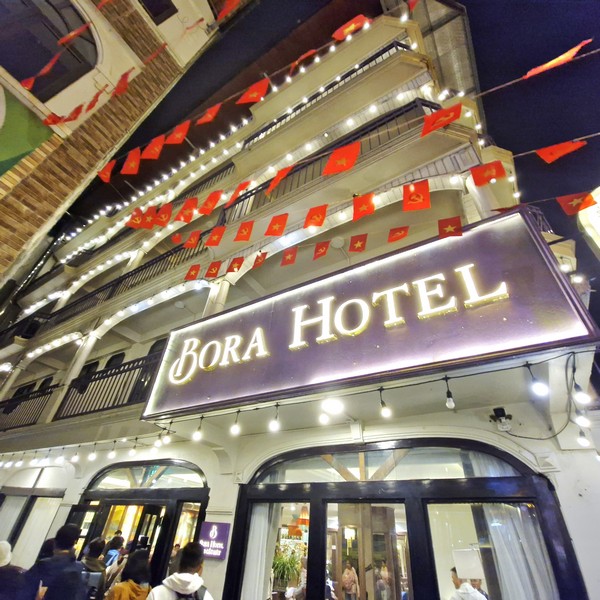
Bora Hotel

Cau May Walking Street: 19 Cau May Street, Sapa Town, Lao Cai Province.
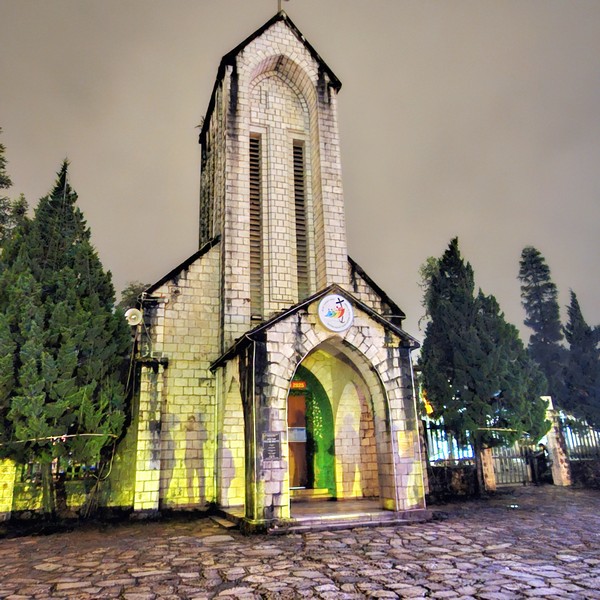
Church of the Holy Rosary (Sapa, Vietnam)

Church of the Holy Rosary

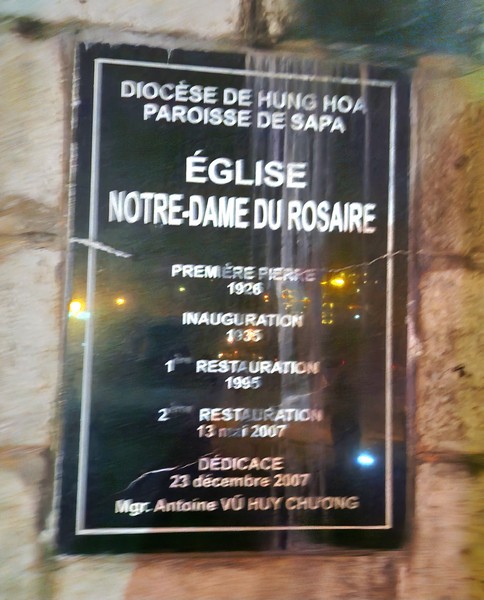
As a visitor come to Sapa, we must have at least once photo opportunity with the Church of the Holy Rosary. This symbol is an indispensable check-in point for visitors when coming to the city in the mist.  Located at Sapa Square in the center of town, Sapa stone church at the foot of the Ham Rong Mountain Range, was started in 1926 and completed in 1935.

Check out “Sapa Square

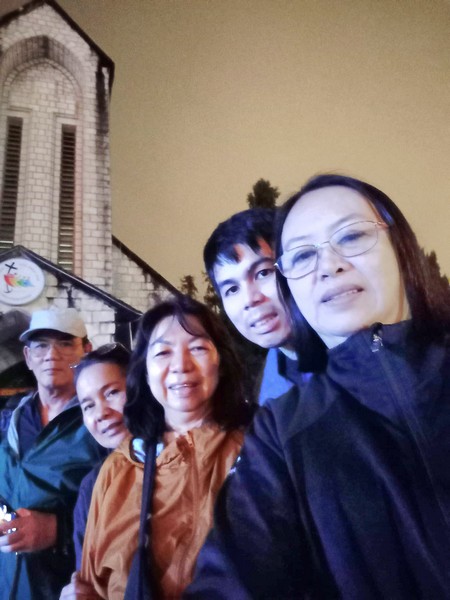
L-R: the author, Lourdes, Grace, Jandy and Lorraine

During World War II, the church was closed and, after the war, was used for storing rice and agricultural produce. In 1995, local governors started to restore and repair this church more than 5 times (the last in 2007) and the parish began to come back here to practice their religion. The church yard has become a familiar gathering point for the Mong and Dao people.

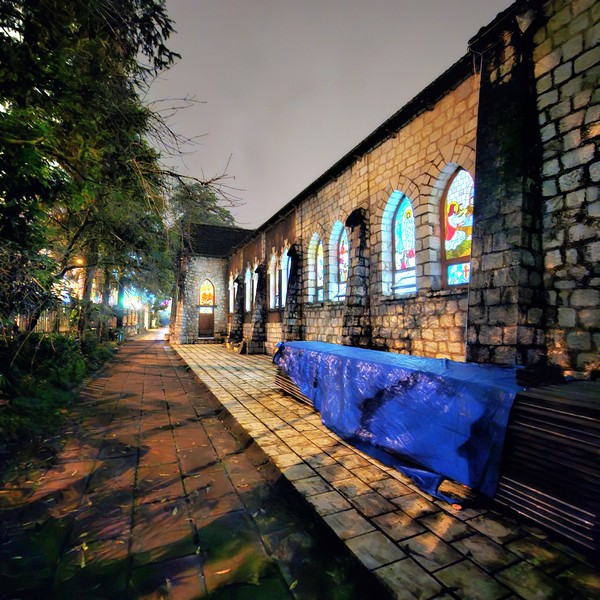
The left side of the church

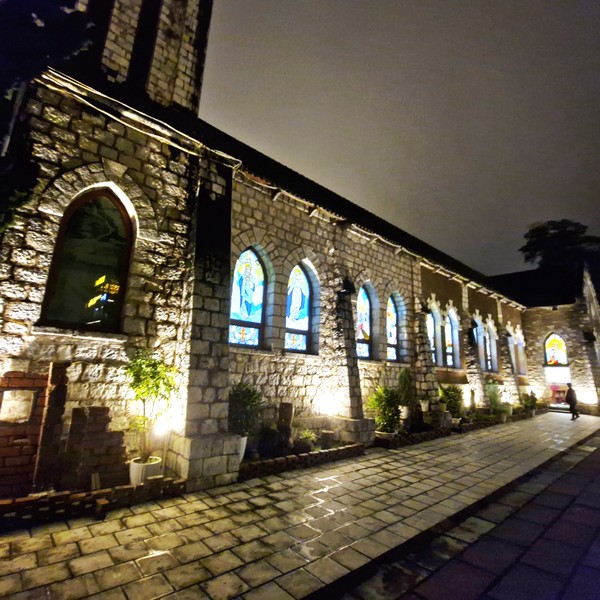
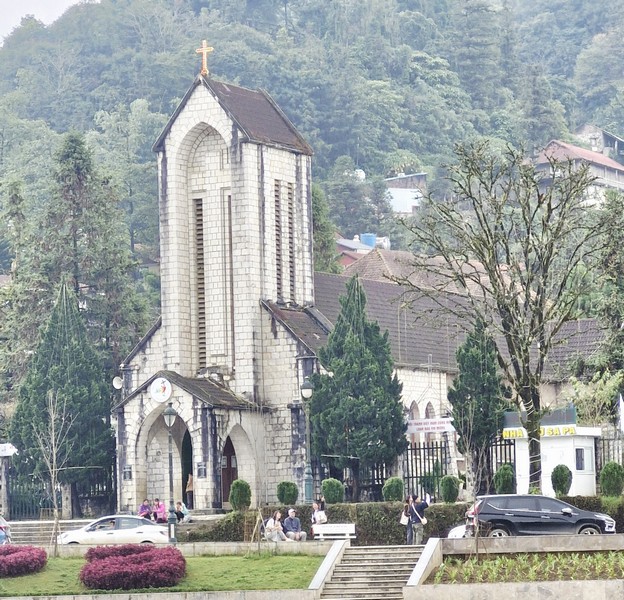
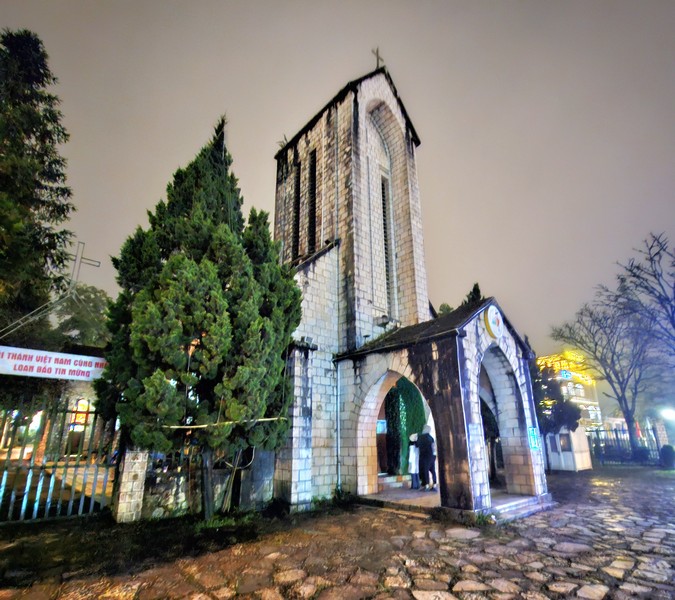
This impressive church, also called the Sapa Stone Church, is the main religious activity point of parishioners in Sapa.  Designed by a French architect, it is one of three significant buildings in Sapa that remain intact from the period of French rule (the other two are what are now Hoang Lien Hotel and the main Sapa Tourism Information Centre) and is also one of the few remaining works to this day that still retains the original Roman Gothic architectural style which is boldly reflected in the pyramidal roof, bell tower, arches, and windows.

The right side of the church

It was built with monolithic, roughly hewn sandstone blocks linked by a mortar of sand, lime and molasses and is the only remained structure in Sapa which still preserves the soul and beauty of Catholic architecture. At night, vibrant LED lights cover the church.

Historical plaque

With a total area of ​​6,400 square meters, it is divided into 7 compartments (the church area, the angel house, a row of parish cottages, the parish house, the holy garden, etc.) each of 500 square meters. The angel house consists of three floors and one basement while the five-section parish house is equal to the church site. The holy garden has 5 (four of which grow on rocks) big trees which are more than one hundred years old.

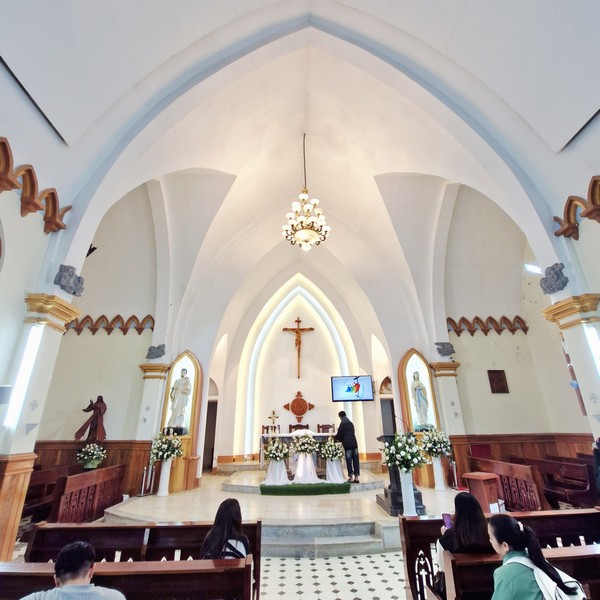
The main altar

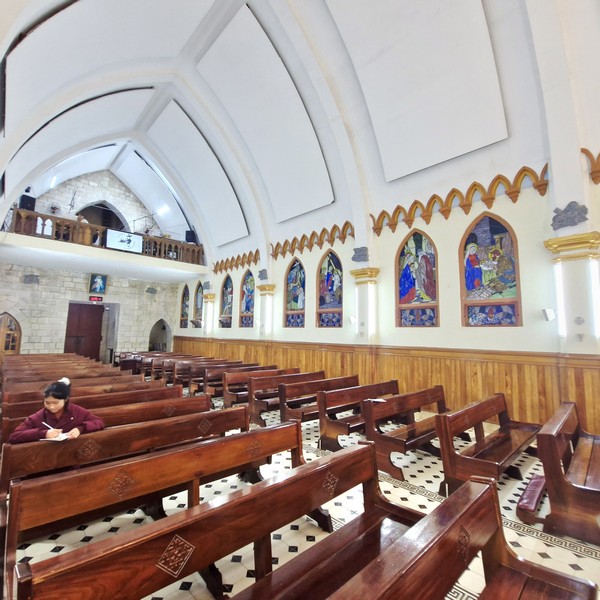
The church features 32 colorful stained-glass windows, depicting the Mysteries of the Holy Rosary, the Saints and the journey to the Cross, and an elegant, cross-shaped, 20-meter high and more than 80-year old bell tower, facing towards the west (Christ‘s birthplace), with and a 1.5-meter high bell weighing 500kgs..

View towards the choir loft

The white-painted interior, with a striking use of white, yellow and brown tones from the varnished wood, features a ceiling made of a combination of iron, straw and lime.

Daytime view of the church

Church of Our Lady of the Rosary: P. Hàm Rồng, TT. Sa Pa, Sa Pa, Lào Cai 333100, Vietnam. Open daily, 6 AM to 8:30 PM. Admission is free.

How to Get There: from Tran Quy Cap station in Hanoi, tourists can take the train for the 8-hour trip to get to Lao Cai province. Choose the train with departures at 8-10 PM to get to Lao Cai Province at around 5-6 AM the next morning. From Lao Cai Train Station, take a bus or a taxi to Sapa. Tourists can also get to Sapa Stone Church via motorbike, private car or sleeper buses, which usually leave at 7 AM or 9 PM, for the 6-hour journey to the center of Sapa without any transshipment. The church is located approximately 1 kilometer from the town center.
Sapa Square (Sapa, Vietnam)

Our visit to the north of Vietnam was never complete without a visit to the cool highland town of Sapa.  From Hanoi, the capital city, it was a six-hour drive, via coach, to this highland destination and it was already evening when we arrived. We still had time to tour Sapa Square (Quang Truong Square), also called Love Square.  As it was evening, the weather outside was chilly.

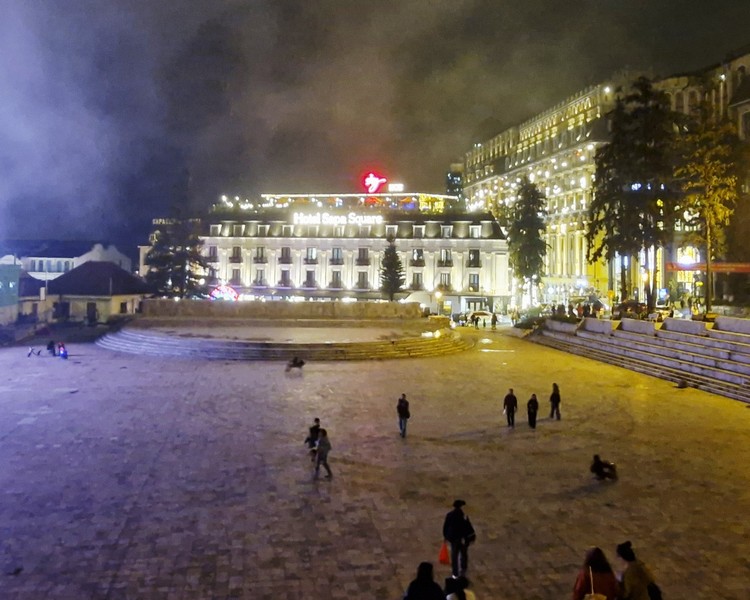
Sapa Square with Hotel Sapa Square in the background

Too bad we arrived on a Thursday as we missed the Sapa Love Market, a cultural event and traditional gathering, held every Saturday night, from 6:00 PM to 7:30 PM, where young men and women from the geographically dispersed H’Mong and Dao meet, socialize, and find potential partners or lovers through music and dance to show their love and affection. 

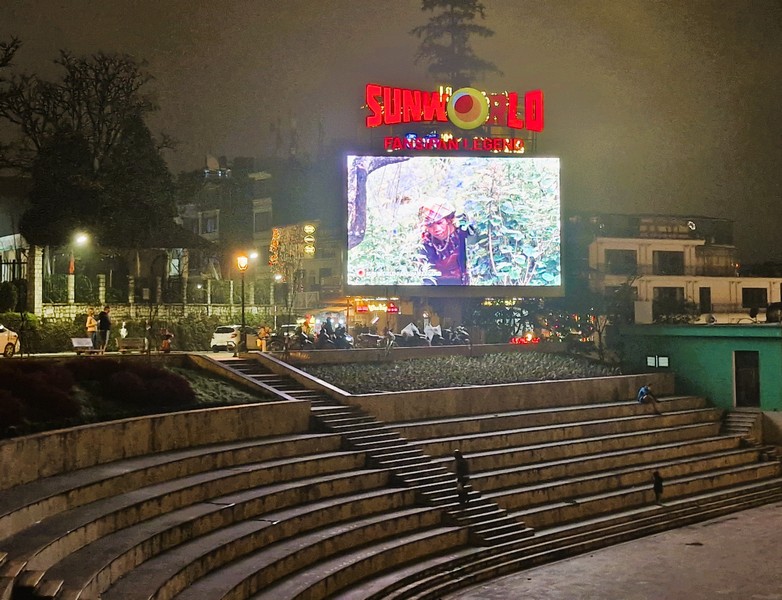
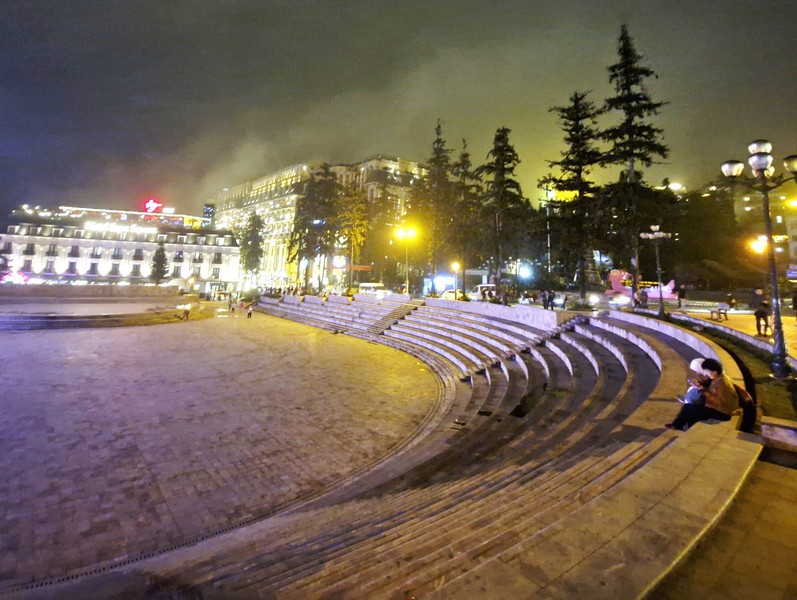
The sunken square’s perimeter, reminiscent of the Sunken Garden of the University of the Philippines Diliman, features distinct, concrete tiered seating area akin to that of a classic amphitheater (and similar to the rice terraces surrounding the town) which is perfect for watching events.  Even in the evening, it was well illuminated, creating a charming spot for locals and tourists alike.

The square reflects Sapa’s French colonial past.  In front of the square is the impressive Church of the Holy Rosary, also called the Sapa Stone Church, designed by a French architect and one of three significant buildings in Sapa that remain intact from the period of French rule (the other two are what are now Hoang Lien Hotel and the main Sapa Tourism Information Centre). 

It is also one of the few remaining works to this day that still retains the original Roman Gothic architectural style which is boldly reflected in the pyramidal roof, bell tower, arches, and windows.

Check out “Church of the Holy Rosary” and “Sun Plaza Sapa

Church of the Holy Rosary

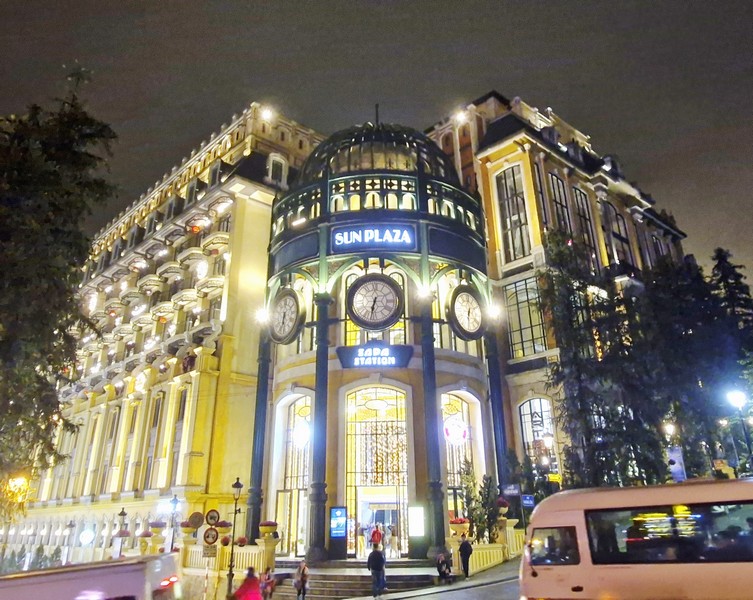
Also around the square are the distinctive Sun Plaza Building (a stunning backdrop often used for photos), Sapa Convention Center and Hotel Sapa Square, all modern buildings built in the charming French Colonial style.  The square also serves as a general gathering place for locals and tourists, with activities like sports, concerts and performances. The Lantern Festival is also held there.

Sun Plaza Building

Sapa Square: D. Thach Son,Sapa, Lao Cai 31786 Vietnam.

Hoan Kiem Lake (Hanoi, Vietnam)

Hoan Kiem Lake

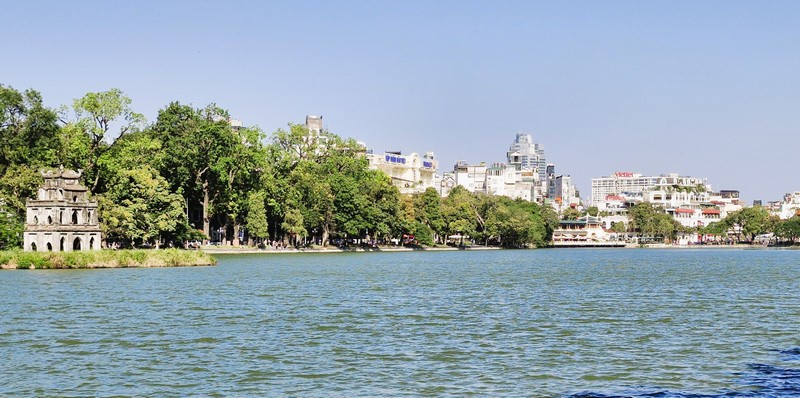
From Hanoi Train Street, a short 2-km. (10-min.) drive brought us to the 11.551-hectare (1,243,350 sq. ft.) Hoàn Kiếm Lake (Vietnamese: Hồ Hoàn Kiếm), a fresh water lake in the heart of Hanoi that is a popular cultural and historical landmark for both locals and tourists.  In the past, the lake was variously named as “Lục Thủy Lake” (Vietnamese: Hồ Lục Thủy, meaning “Green Water Lake,” aptly named for the water’s color), “Thủy Quân Lake” (Vietnamese: Hồ Thủy Quân, meaning “Mariner’s Lake”), Chữ Hán (meaning “Lake of the Returned Sword” or “Lake of the Restored Sword”), Sword Lake (Hồ Gươm) or Tả Vọng Lake (Hồ Tả Vọng, its first name). 

Check out “Hanoi Train Street”

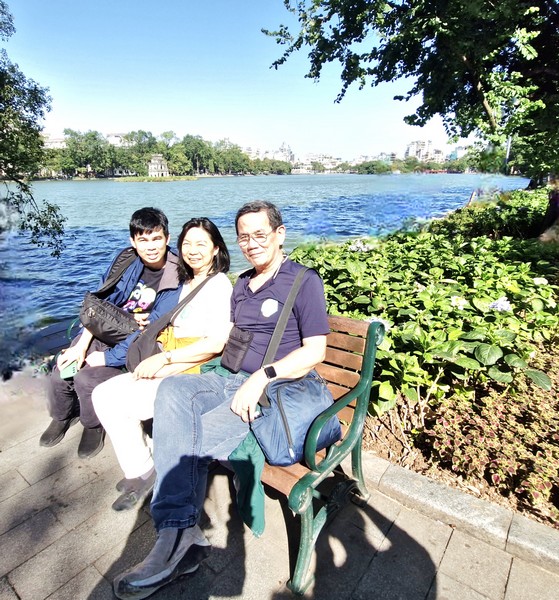
L-R: Grace, Jandy and the author

The area, one of the major scenic spots in the city and a focal point for its public life, is a powerful symbol of Vietnamese independence and resilience. Connected to the city’s Old Quarter, it is surrounded by several major streets (including Dinh Tien Hoang, Le Thai To, and Hang Khay), walking paths, flower gardens and age-old trees, making it an ideal place for a morning jog, a leisurely stroll, Tai Chi sessions, or simply unwinding while enjoying the scenic view, reflecting the harmonious balance between urban life and nature.  In 1891, the French built a road around Hoan Kiem Lake and, on New Year’s Eve 1893, it was officially inaugurated.
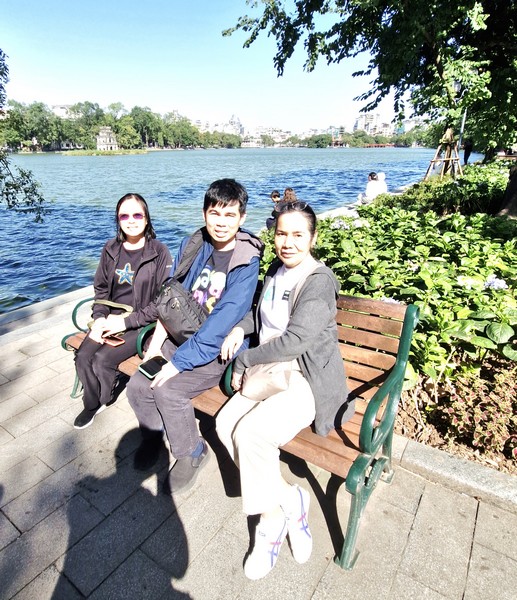
L-R: Lorraine, Jandy and Lourdes

During weekends, the area around the lake becomes a pedestrian-only zone, coming alive with street performances, cultural showcases, and local delicacies, offering a vibrant energy and experience for travelers.  It has a maximum length of 700 m. (2,300 ft.), a maximum width of 250 m. (820 ft.), an average depth of 1.2 m. (3.9 ft.) and a maximum depth of 2 m. (6.6 ft.).

The lake’s name comes from a legend which is deeply intertwined with Vietnam’s history and folklore.

During the 15th-century, Emperor Lê Lợi, while boating on the lake, was given Heaven’s Will, a magical sword, by the Dragon King (Long Vương) , a local god,  to defeat the Ming Dynasty of China. After his victory, the Golden Turtle God (Kim Qui) surfaced to reclaim the sword and return it to its divine realm, and the king renamed the lake to commemorate the event. 

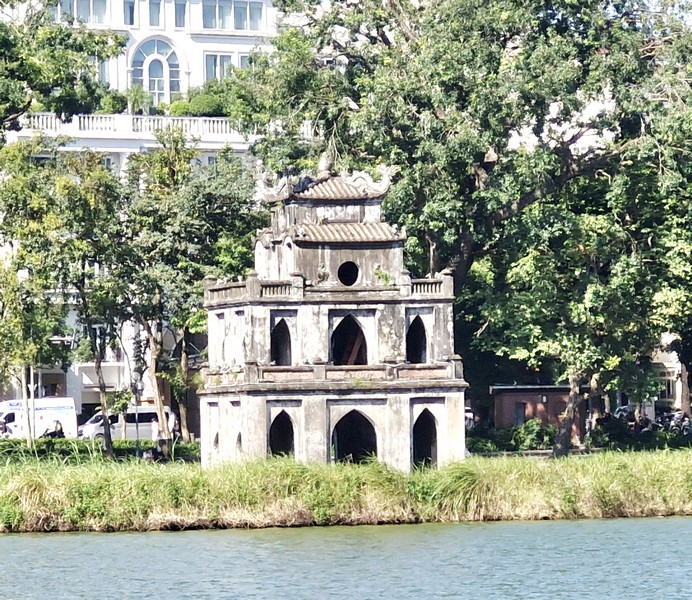
Turtle Tower (Tháp Rùa)

The iconic Turtle Tower (Tháp Rùa), a small tower standing on a small island near the center of the lake, is linked to the legend. For many years, large soft-shell turtles (either the species Rafetus swinhoei or a separate species named Rafetus leloi in honor of the emperor), have been sighted in the lake but the last known individual was found dead on January 19, 2016. There are three remaining turtles of the species Rafetus swinhoei.

Jade Islet, near the northern shore of the lake, is home to the Temple of the Jade Mountain (Ngoc Son Temple).  Built in the early 19th century, the temple, originally dedicated to “Three Sages” Wenchang DijunGuan Yu and Lü Dongbin, also honors Trần Hưng Đạo, a 13th-century military leader  and national hero who distinguished himself in defeating the Mongol invasions of Vietnam thrice; the classic scholar Văn Xương; Taoist master La To and Nguyễn Văn Siêu, a famous writer and official who undertook repairs of the temple in 1864.

Its architecture is a blend of traditional Vietnamese styles, with intricate wooden carvings, red-lacquered pillars, and delicate dragon motifs, while inside, visitors can observe ancient artifacts, calligraphy, and a preserved specimen of the sacred turtle believed to be linked to the legend of the lake.  Buildings of the temple, all with symbolic meaning, include the Tháp Bút (“The Pen Tower,” it is inscribed with the words “Ta Thanh Thien,” which means “Writing on the Blue Sky”, symbolizing the importance of literature and education in Vietnamese culture), the Đài Nghiên (ink-slab), the Đắc Nguyệt (“moon contemplation pavilion”) and the Đình Trấn Ba (pavilion against waves). 

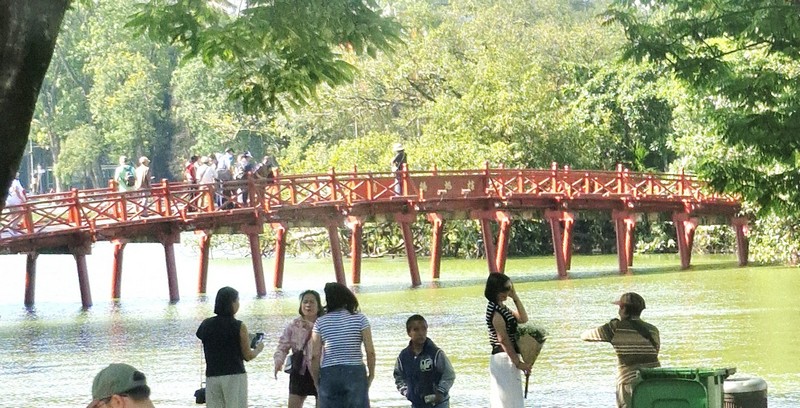
Jade Island is accessed, from the shore, by the wooden Thê Húc Bridge (Cầu Thê Húc).  Painted vermillion red, the bridge’s name is poetically translated as “Perch of the Morning Sunlight.” One of the most photographed spots in Hanoi, it stands out against the emerald-green waters of Hoan Kiem Lake.

Thê Húc Bridge

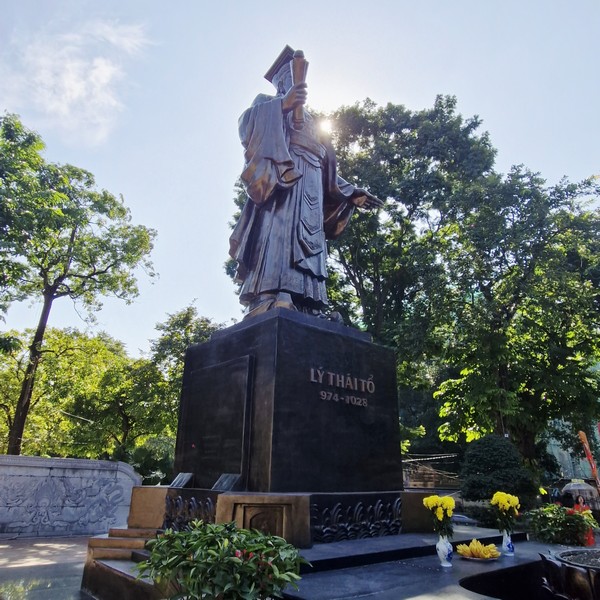
On the western bank of Hoan Kiem Lake, along Le Thai To Street, is the “Ly Thai To Monument” with its statue honoring King Ly Thai To (974–1028), the first emperor of the Ly dynasty, who reigned from 1009 to 1028 AD.  He is best known for moving the capital to Hanoi (then called Thang Long), in 1010 AD, and for leading the resistance against the Ming army in the 15th century.

Ly Thai To Monument

Hoan Kiem Lake: Hàng Khay Street, Hoan Kiem District, Hanoi, Vietnam. Coordinates: 21°01′44″N 105°51′09″E.

How to Get There: The lake is conveniently located near the Old Quarter and is easily accessible. 

Hanoi Train Street (Vietnam)

Hanoi Train Street

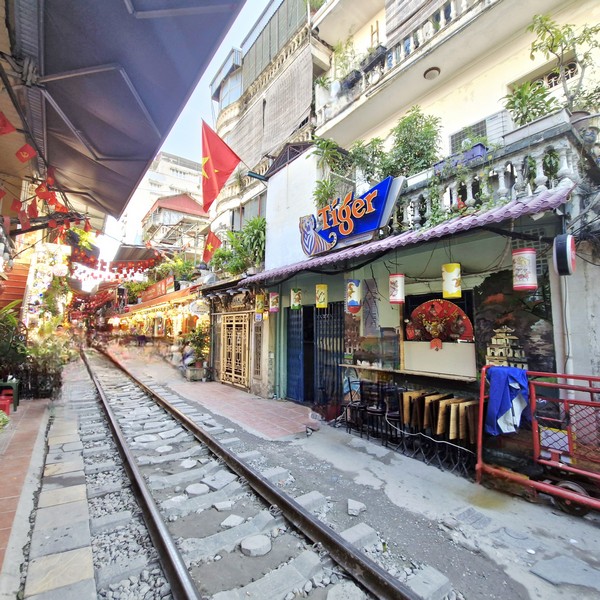
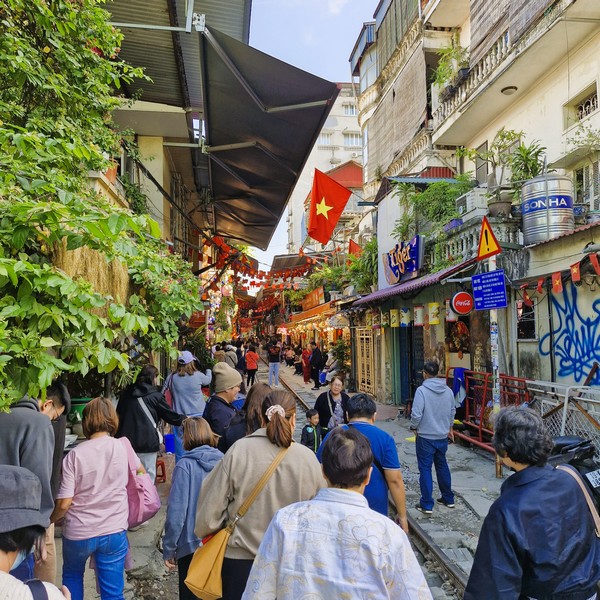
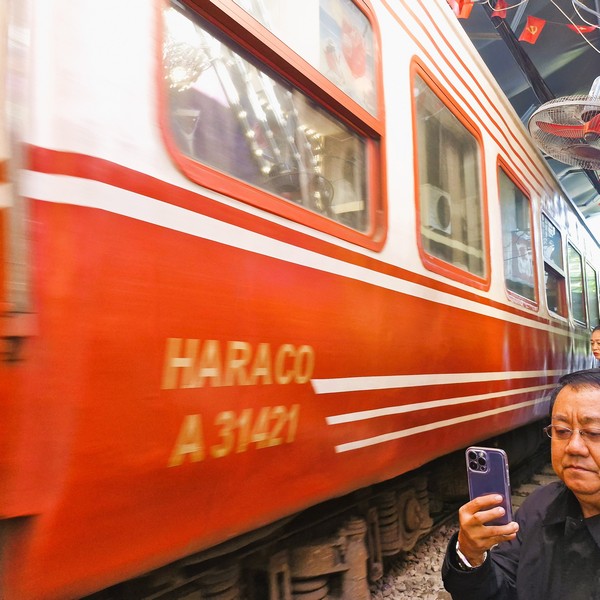
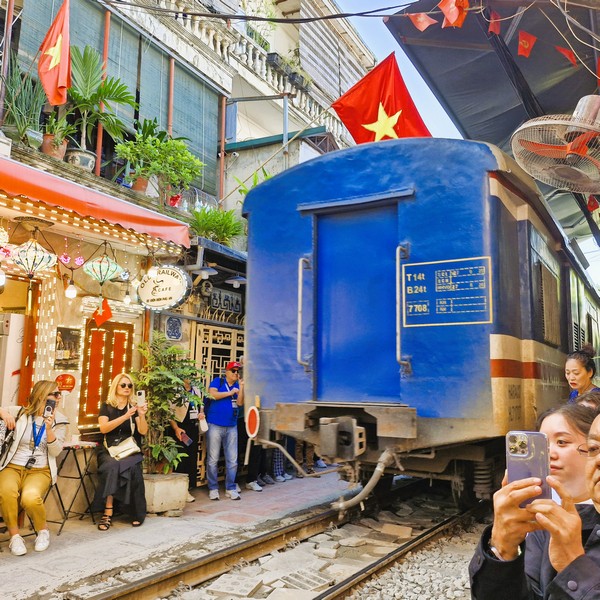
Upon our arrival in Hanoi’s Noi Bai International Airport, we met up with our Vietnamese guide from Hava Travel and boarded our coach for our city tour.  Our first destination was Hanoi Train Street, a 25.2-km. (45-min.) drive away.  This captivating blend of old-world charm and vibrant modern life winds its way through several bustling streets, including Phung Hung, Dien Bien Phu, and Le Duan. Here, we were to experience something unique many visitors enjoy – the thrill and excitement of sipping coffee while watching trains pass just inches away.

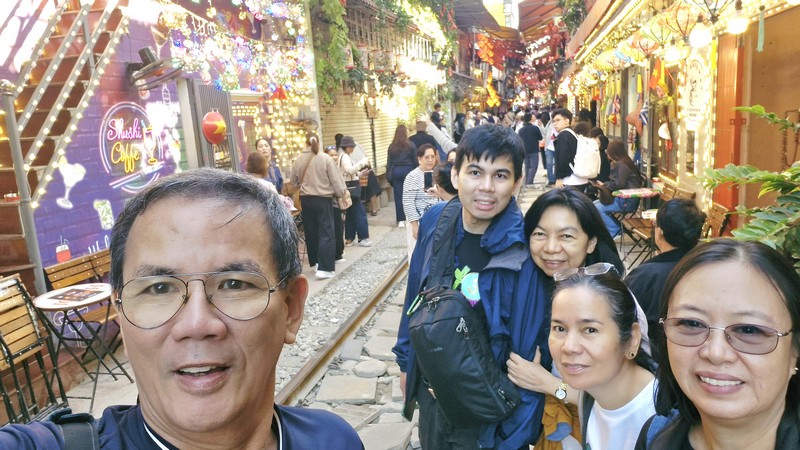
L-R: the author, Jandy, Grace, Lourdes and Lorraine

This narrow train bypass in Hanoi was built in 1902, during the French colonial era, when the French established the railway system to connect Hanoi with other parts of Vietnam.  As of 2025, it is still an active rail line.  It sees, several times daily, a train pass close to buildings on either side of the single train track line.  It runs north from south, to Hanoi railway station whose width takes up nearly the entirety of the famous Hanoi Train Street which refers to the narrow railway tracks running through residential neighborhoods, along Tran Phu and Phung Hung streets, in the Old Quarter.

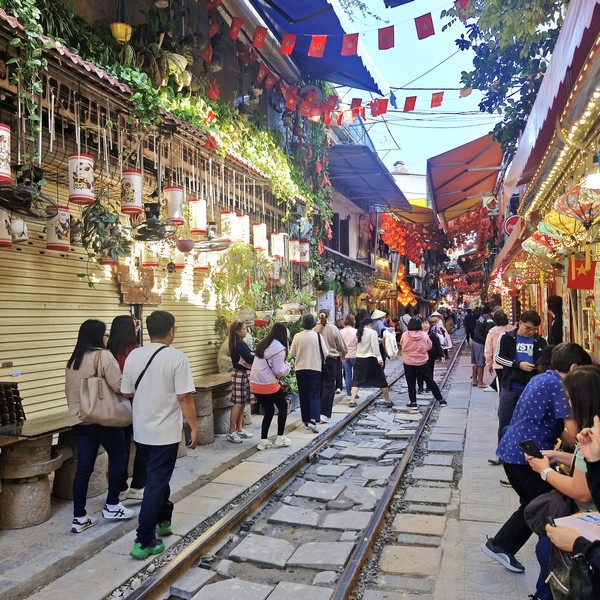
When trains approach, local residents living alongside the tracks clear their belongings from the narrow space. During other times, they often use the space for daily activities like drinking tea and playing board games. The street developed into a tourist destination and, along the narrow alley, tourists would often stop and take pictures to post on social media. In recent years, safety concerns have increased as tourism has grown.
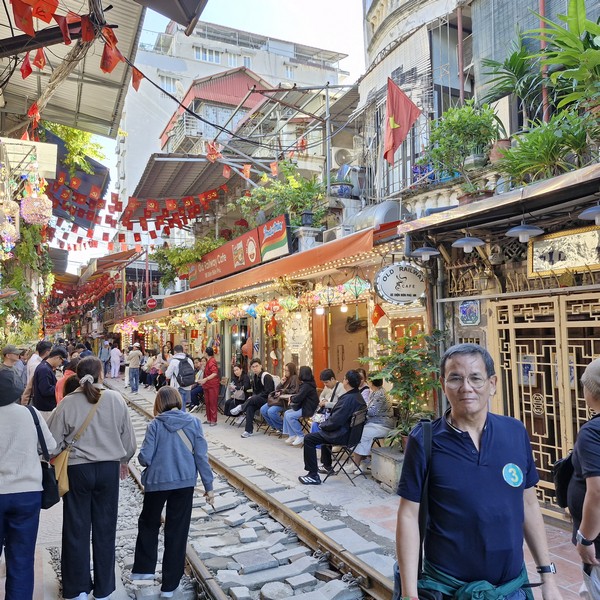
One of the cozy cafes lining the tracks

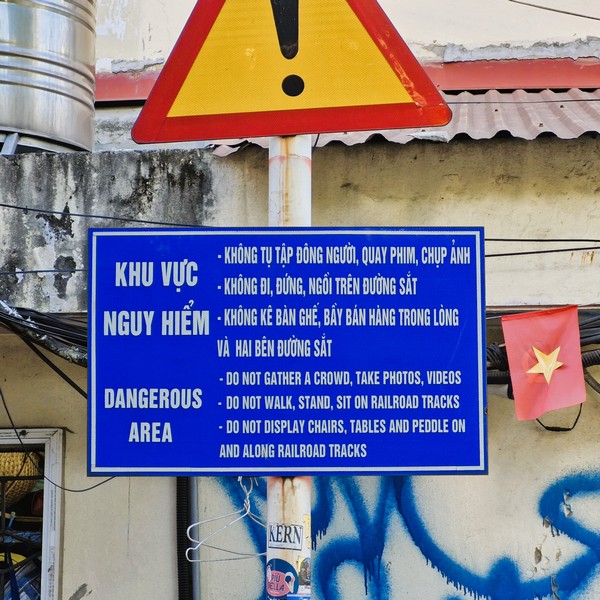
The street attracted widespread recognition and, eventually, became a tourist attraction. In October 2019, citing safety concerns, Vietnamese government directed businesses along the train track to close and implemented barriers and police presence to restrict tourist access to the street. This prompted thousands of complaints on social media and negatively affected local tourist businesses. In early 2023, the train street has reopened for tourists. 

Since it became popular with world tourists, Hanoi Train Street has seen a growth in local businesses and, as the number of visitors increased, many residents around the area turned their colorful homes into small, cozy cafes (Cafe Đường Tàu, Cafe Ga Đông Hương, etc.) and small businesses selling drinks, food and a range of traditional handmade local handicrafts (railway paintings, conical hats, embroidered wallets, ceramic teapots, etc.). Along the streets near the railway, numerous souvenir shops also line both sides of the road.

A reminder of the dangers on the track…..

Upon arrival, we approached the train tracks crossing Dien Bien Phu Street and the crowds were beginning to gather.  As we walked along Train Street, we caught the rich aroma of coffee and the enticing scents of traditional beef pho and fragrant grilled meat from roadside stalls.

We all sat down at outdoor seating areas closer to the wall at one of the local cafes, its façade adorned with colorful hanging lanterns and flags.  Along the alley are vibrant murals, in bright, vivid colors, that beautifully depict scenes from the past, such as Hanoi trams (which ran from 1901 to 1991), bustling streets, street vendors, festivals, and old houses that capture the everyday life of Hanoians.

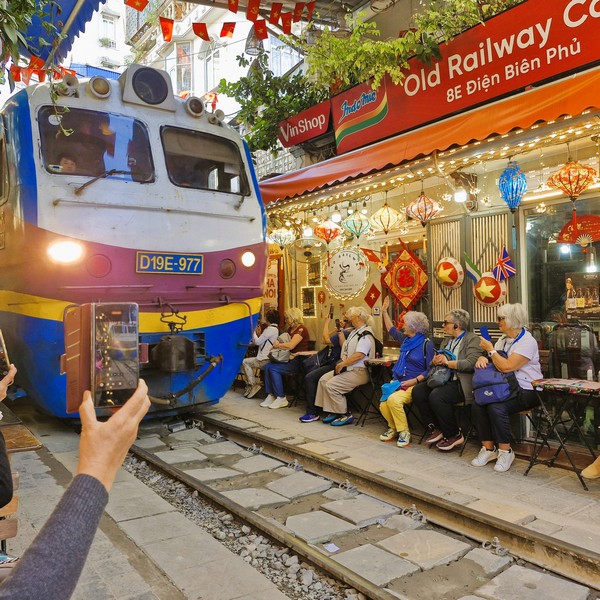
The train arrives….

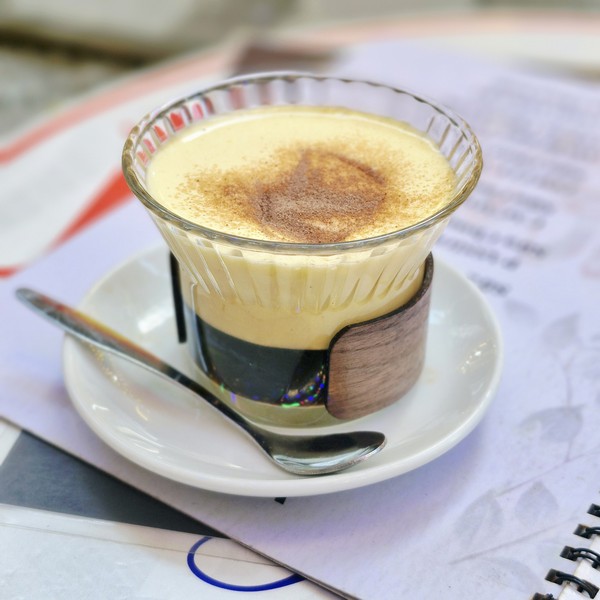
While waiting for the train to arrive, we ordered aromatic and creamy egg coffee (Cà Phê Trứng), a rich, creamy and decadent Vietnamese drink featuring a sweet, airy foam of whisked egg yolk, sugar, and condensed milk and served atop strong, dark coffee, often brewed with a traditional phin filter. Prices typically range from 25,000 to 60,000 VND (USD 1 – USD 3).

While sipping our strong Vietnamese coffee from our front-row seat, street vendors, residents, and children were playing near the tracks. Soon, we heard the blaring of the train horn and the locals quickly pulled in tables and chairs just in time as, seconds later, a train barreled past us.

Egg Coffee

It was an exhilarating experience, as the rumbling train sped by, just inches away from us.  Watching the train race through Hanoi Train Street was a thrilling spectacle.  Truly, Hanoi Train Street was a place where the soul of Hanoi thrives, framed by the hum of trains and the warmth of local life.
Hanoi Train Street: P. Trần Phú, Hàng Bông, Hoàn Kiếm, Hà Nội 100000, Vietnam. Usually, there are over 7 trains passing by, from 7AM to 11PM. There is no entrance fee to visit Hanoi Train Street. Popular viewing times are around 3 to 3:30 PM and 7 to 7:30 PM. Local cafes, on both sides, indicate the train timetable. You could also request train passing by time from cafe in advance.  The stretch through Phung Hung Street is, undoubtedly, the most vibrant, drawing visitors with its lively atmosphere and the thrilling spectacle. You can also watch along the alley of 224 Lê Duẩn street, specifically, along Điện Biên Phủ and Phùng Hưng streets, Alley 5 on Tran Phu Street and the main Hanoi Railway Station.
Ho Chi Minh City Museum of Fine Arts (Vietnam)

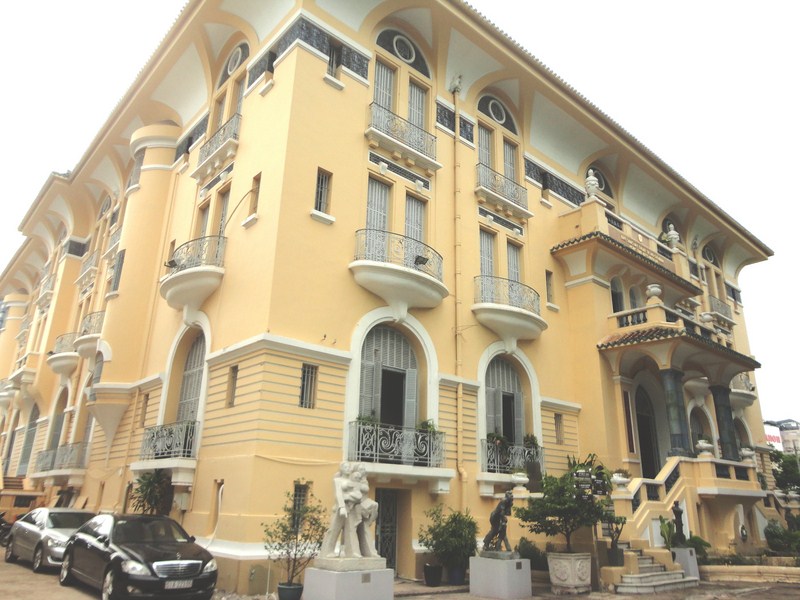
HCMC Museum of Modern Art

HCMC Museum of Modern Art

On our third day in Ho Chi Minh City, we decided, for a change, to sample Vietnamese art and culture by visiting the HCMC Museum of Fine Arts, the major art museum of Ho Chi Minh City and the second largest in the country after the Vietnam National Museum of Fine Arts in Hanoi.

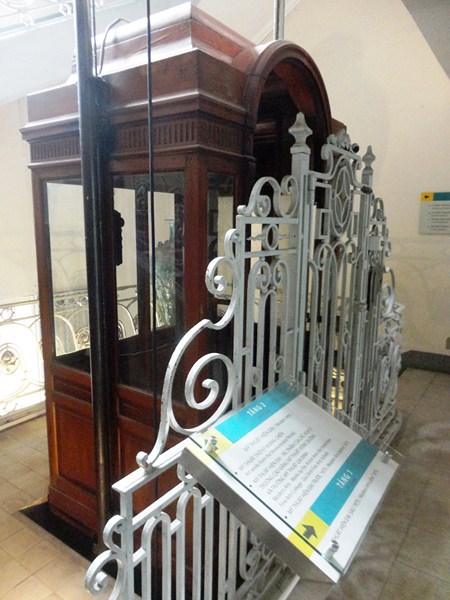
An antique wooden lift

An antique wooden lift

Originally the classic and elegant, mansion of the Chinese-born businessman Mr. Jean Baptiste Hua Bon Hoa (1845-1901), the wealthiest man of Saigon at the time (he owned the famous Majestic Hotel and Tu Du Hospital), was built between 1929 and 1934 as the Saigon headquarters of the Société Immobilière Hui Bon Hoa.  On September 5, 1987, the 3-storey building was reformed into a museum, as the result of a decision of the City’s People’s Committee.  However, it was not officially opened until 1991.

Modern Arts Exhibit

Modern Arts Exhibit

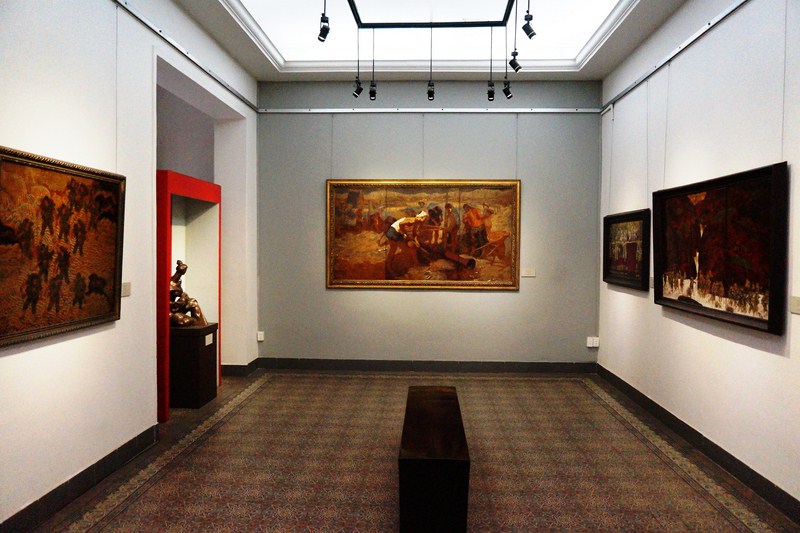
The museum houses contemporary Vietnamese art  works (much of it, unsurprisingly, focusing on resistance to colonial rulers) on sculpture, oil, silk painting and lacquer painting, as well as traditional styles including woodcut paintings in the Hàng TrốngĐông Hồ, and Kim Hoàng styles; Vietnamese ceramics; a collection of ancient Buddhist art and historical pieces dating back to the 4th century, including elegant Funan-era sculptures of Vishnu, the Buddha and other revered figures (carved in both wood and stone), and Cham art dating from the 7th to 14th century.

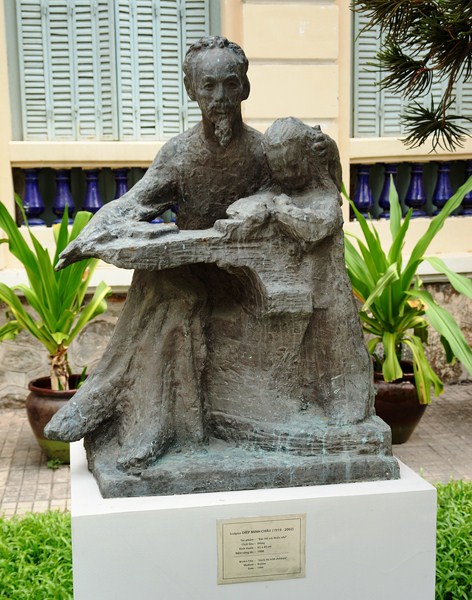
Uncle Ho with Children - Diep Minh Chau

Uncle Ho with Children – Diep Minh Chau

One room is devoted to a collection of totem-like funeral sculptures from the Hill Tribes of the Central Highlands. The museum focuses on collecting, keeping, preserving and displaying fine artworks typical of Vietnamese people, especially Ho Chi Minh City and the South.

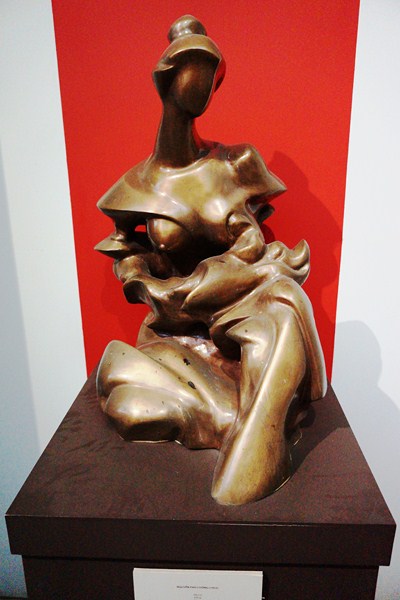
Mother & Child - Nguyen Phu Cuong (1953)

Mother & Child – Nguyen Phu Cuong (1953)

Even before entering the museum, we already admired statuary scattered around the grounds. We entered a huge hall with beautiful, exuberantly tiled floor, some fine (albeit deteriorated) stained glass and one of Saigon’s oldest wooden lifts.  Though not airconditioned, the museum had airy corridors and breezy verandas. Hung from the walls is an impressive selection of art, including thoughtful pieces from the modern period.

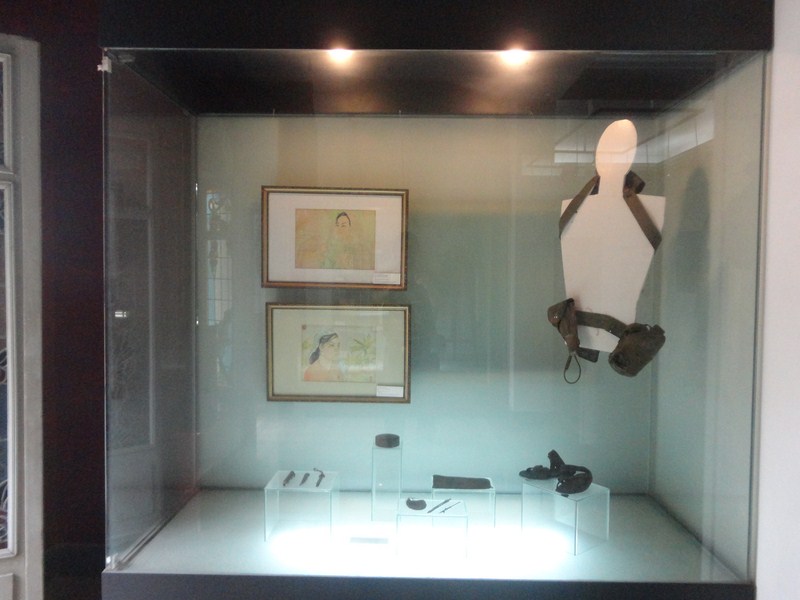
Display of sketches and materials used by wartime artists in the field,

Display of sketches and materials used by wartime artists in the field,

It comprises three floors of exhibition space. The first floor features a changing exhibit of contemporary domestic and international art while the second floor exhibits both contemporary oil paintings, sketches, lacquerware  and sculptures of leading Vietnamese (Thái Hà, Quách Phong, Nguyễn Sáng, Hoàng Trầm, Tú Duyên, Nguyễn Thanh Châu, Trần Văn Lắm, Nguyễn Hải, Dũng Tiến, Phan Mai Trực, Hồ Hữu Thủ, Nguyễn Trung, Trịnh Cung, Đỗ Quang Em, Diệp Minh Châu and Nguyễn Gia Trí) and foreign artists of the last 50 years from its permanent collection.
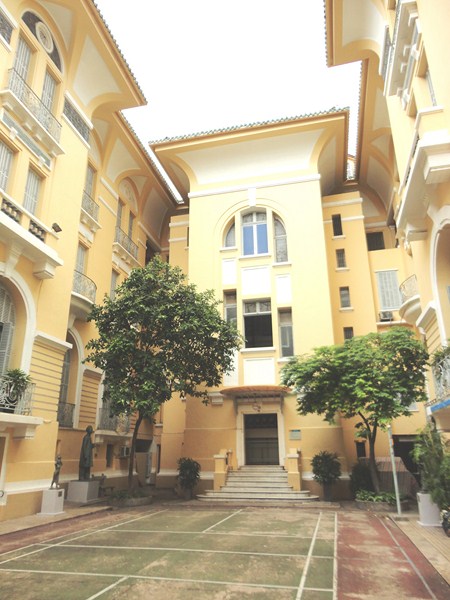
The museum courtyard

The museum courtyard

The third floor displays an interesting collection of historic arts ranging from 7th century to early 20th century.  They include Cham kingdom and earlier civilizations such as Óc Eo archaeological site in Mekong Delta and 17th-20th century decorative Vietnamese furniture.
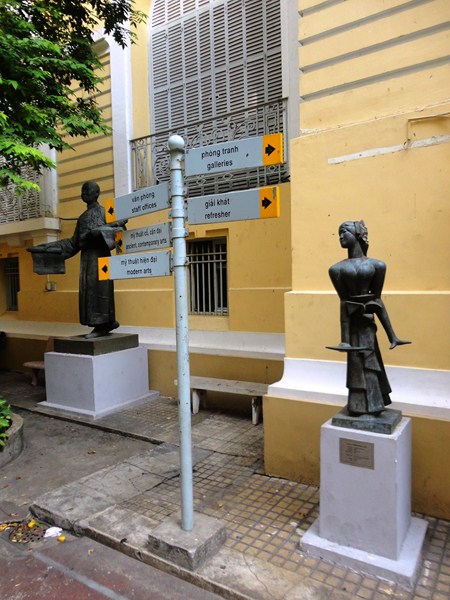
Statuary at the courtyard

Statuary at the courtyard

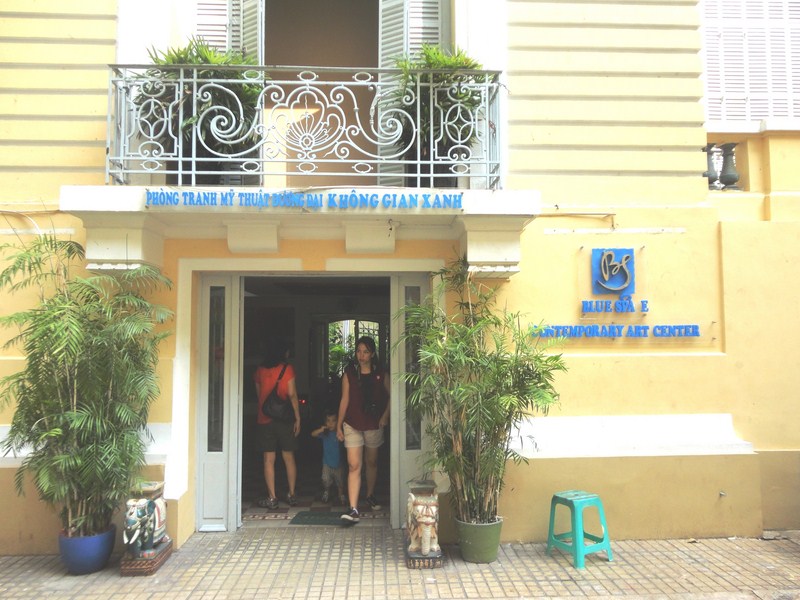
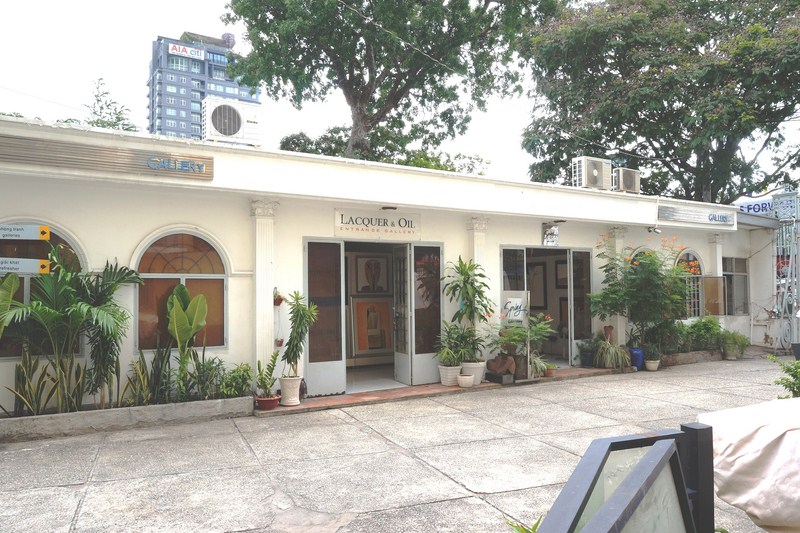
The central courtyard in the center of the building, accessed from the rear of the building, has more statuary scattered around the grounds.  We checked out a cluster of 3 small commercial galleries in the basement. One shop has a selection of lovely prints for sale (costing from around 80,000 VND) while Building No 2 hosts lesser known works and stages exhibitions. The contemporary Blue Space Contemporary Art Center, located near the entrance, is run by the museum.
Blue Space Contemporary Art Center

Blue Space Contemporary Art Center

The Fine Arts Museum, indispensable for those who are keen on Vietnam arts and culture, is not big and modern but its abundant collections more than make up for it. Conveniently located near the Ben Thanh Market, the massive but beautiful French villa that houses the museum, a combination of French and Chinese styles, is an attempt to meld elements of Art Deco with local decorative motifs and spatial principles.

Commercial galleries

Commercial galleries

Through its marble floors; elegant columns; wrought-iron work on its windows and balconies; Chinese-style roof tiles; and spacious, airy rooms, it brings about a typical colonial feeling. It is considered as a work of art itself by most people.

The author

The author

Ho Chi Minh City Museum of Fine Arts: 97 A- Pho Duc Chinh, District 1, Ho Chi Minh City, Vietnam.  Tel: +84 8 3829 4441. Website: www.baotangmythuattphcm.vn.  Admission: 10,000 VND (adult), 3,000 VND (child). Open Tuesdays to Sundays, 9 AM – 4:30 PM.

Reunification Palace (Ho Chi Minh City, Vietnam)

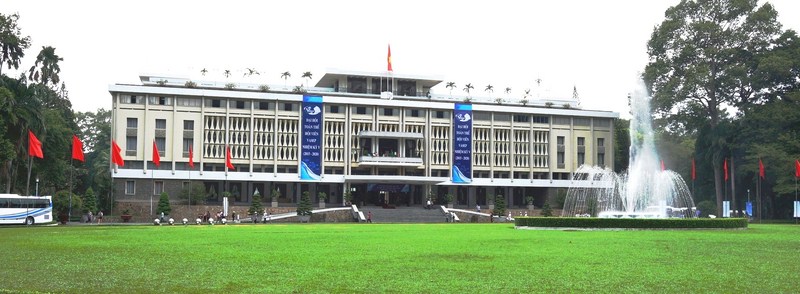
The Reunification Palace

The Reunification Palace

From the St. Francis Xavier Church in Chinatown, we next moved on to the Reunification Palace, one of the most fascinating sights in Ho Chi Minh City. On February 23, 1868, the foundation for a residence was laid on this site for by Adm. Pierre de la Grandiere, the French governor-general of Cochinchina. It was completed in 1873. Gradually, it expanded to become Norodom Palace (Dinh Norodom).

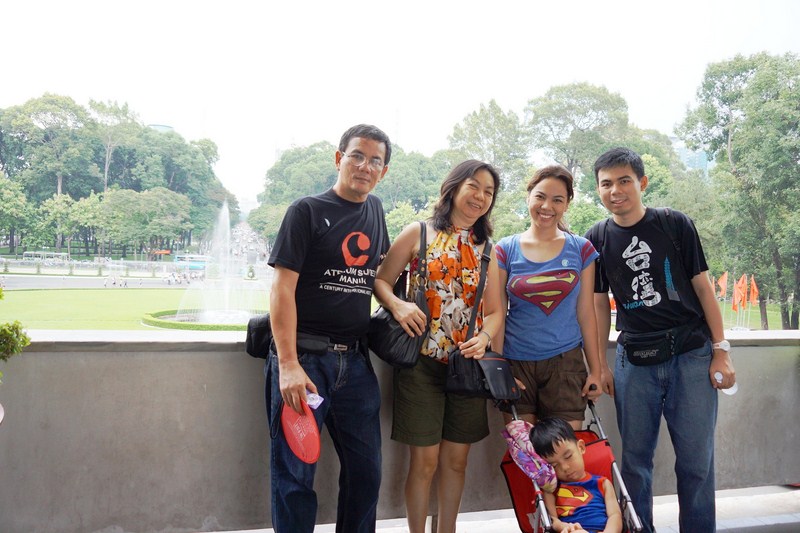
The author, Grace, Cheska, Jandy and a sleeping Kyle at the balcony

The author, Grace, Cheska, Jandy and a sleeping Kyle at the balcony

When the French departed, the palace became home to the unpopular South Vietnamese President Ngô Đình Diệm. On February 27, 1962, 2 pilots (Nguyễn Văn Cử and Phạm Phú Quốc) on two A-1 Skyraider (A-1D/AD-6 variant) aircraft of Diem’s own air force bombed the palace, almost destroying the entire left wing, in an unsuccessful attempt to kill him.

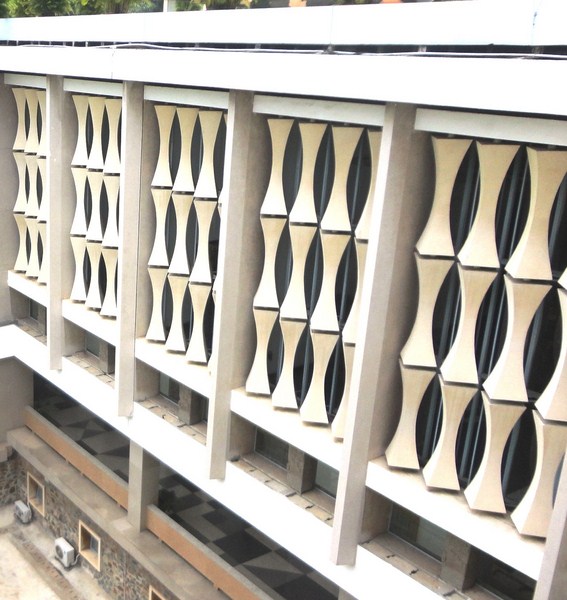
Sun canopies that evoke tall bamboo

Sun canopies that evoke tall bamboo

As it was almost impossible to restore the palace, Diệm ordered it demolished and commissioned a new residence to be built in its place. This time it had a sizeable bomb shelter in the basement. Diem did not get to see his dream house as he, together with his brother and chief adviser Ngô Đình Nhu, were killed by his own troops on November 2, 1963.

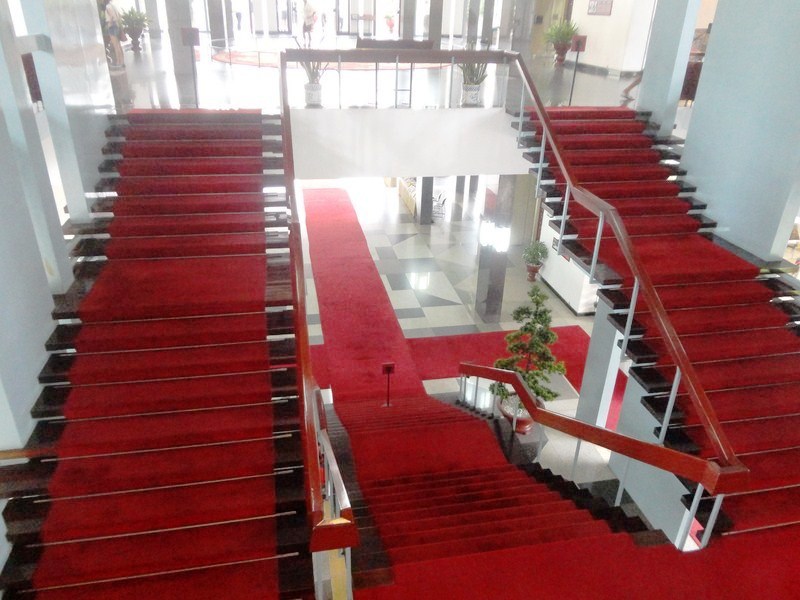
Main central stairway

Main central stairway

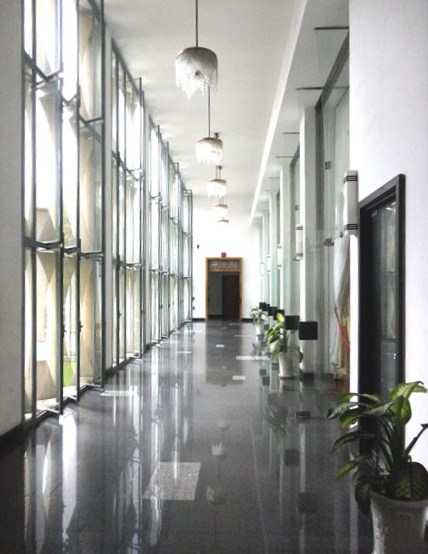
A grand corridor

A grand corridor

The newly completed building was inaugurated on October 31,1966 by General and later president Nguyễn Văn Thiệu, the chairman of the National Leadership Committee and head of the military junta, and was named Independence Palace (Dinh Doc Lap). It served as Thiệu’s home and office.

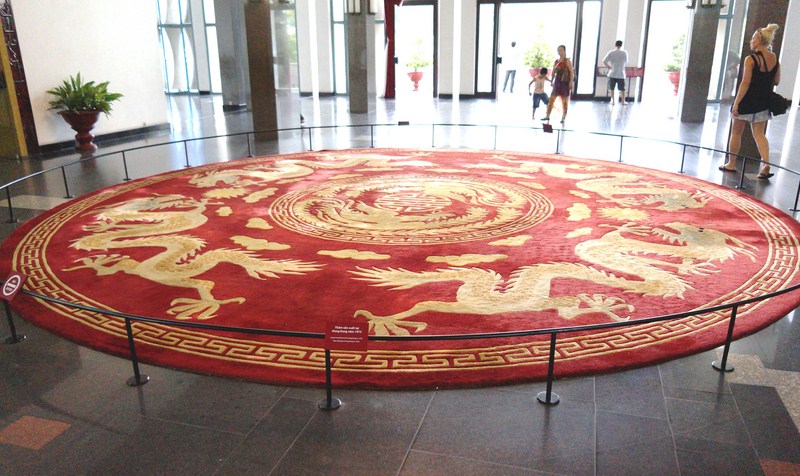
Lobby with a Hong Kong-made (1973) circular carpet

Lobby with a Hong Kong-made (1973) circular carpet

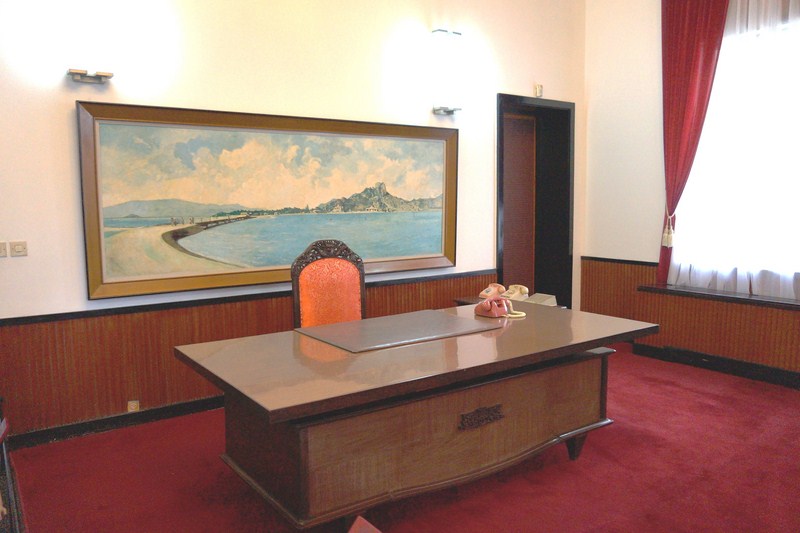
The Presidential Office

The Presidential Office

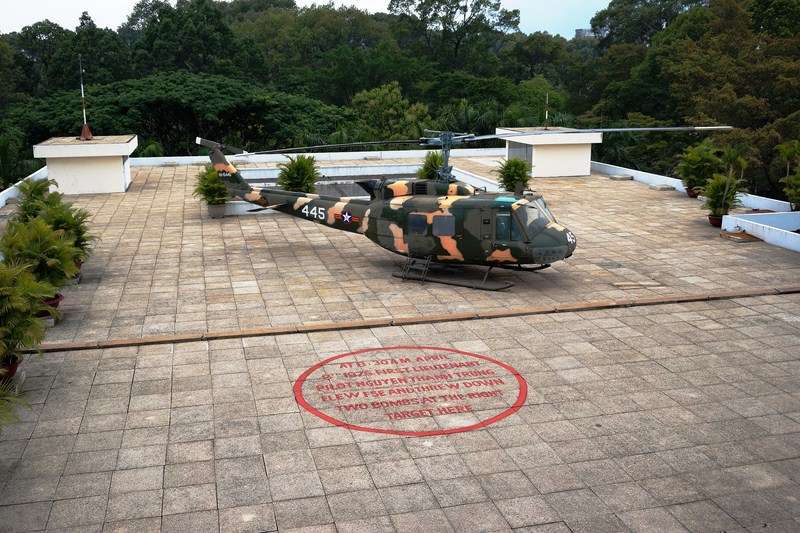
On April 8, 1975, Nguyễn Thanh Trung, a pilot of the Vietnam Air Force and an undetected communist spy, flew an F-5E aircraft from Biên Hòa Air Base and bombed the palace, causing no significant damage. On April 21, 1975, prior to the Fall of Saigon, Thieu hastily fled the palace and went into exile.

After a day of bombardment, the North Vietnamese were ready to make their final push into Saigon. On April 30, 1975, 10:45 AM, a Russian-made  North Vietnamese Army T-54/55 (No. 843) tank of Tank Corps 203, 2nd Army, crashed through its wrought-iron gates, a dramatic scene recorded by Australian photo journalist Neil Davis and shown around the world. After crashing through the gates, a soldier ran into the building and up the stairs to unfurl a Vietcong flag from the balcony at 11:30 AM.

In an ornate reception chamber, Gen. Dương Văn Minh, who had become head of the South Vietnamese state only 43 hours before, waited with his improvised cabinet. “I have been waiting since early this morning to transfer power to you,” Minh said to the Vietcong officer who entered the room. “There is no question of your transferring power,” replied the officer. “You cannot give up what you do not have.” At 3:30 PM, Minh broadcast over the radio, stating “I declare the Saigon government…completely dissolved at all levels.” The dissolution of the South Vietnamese government effectively ended the Vietnam War.

Designed by Paris-trained Vietnamese architect Ngô Viết Thụ, this outstanding example of typical, strikingly modern 1960s architecture was built on a block of 12 hectares bordering four streets: Nam Ky Khoi Nghia in the front (the main entrance is open to Le Duan Boulevard), Huyen Tran Cong Chua in the back, Nguyen Thi Minh Khai on the right and Nguyen Du on the left.  Its external sun canopies evoke the shape of tall bamboo.  Its spacious rooms open onto grand corridors grouped around a monumental central staircase.

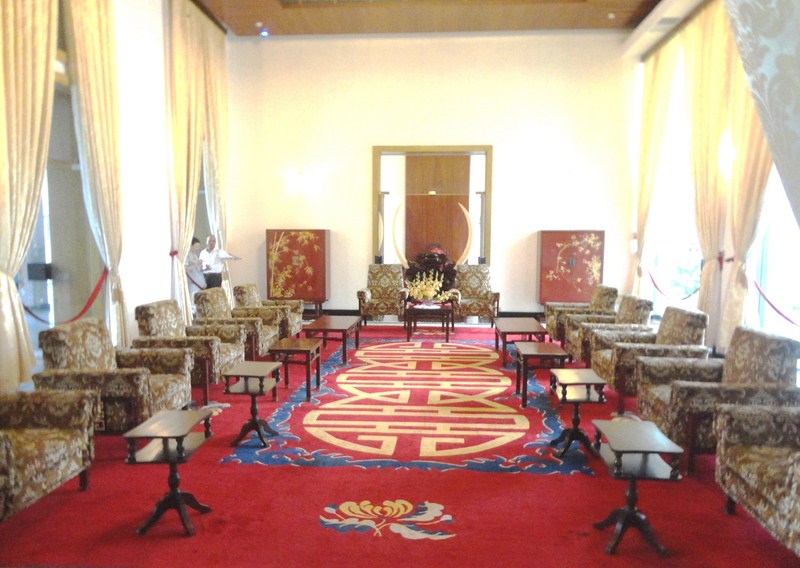
Presidential Reception Room

Presidential Reception Room

Following the liberation of Saigon, the Palace became the headquarters of the Municipal Military Administrative Committee. In 1975 the building was renamed Truong Thong Nhat to commemorate the national reunification. Before 1975, access to the palace and some surrounding areas was prohibited to the public. Today, the palace has become a famous tourist attraction in HCMC, hosting, on average, about 700-1,000 tourists per day (2,500-3,000 on Sundays).

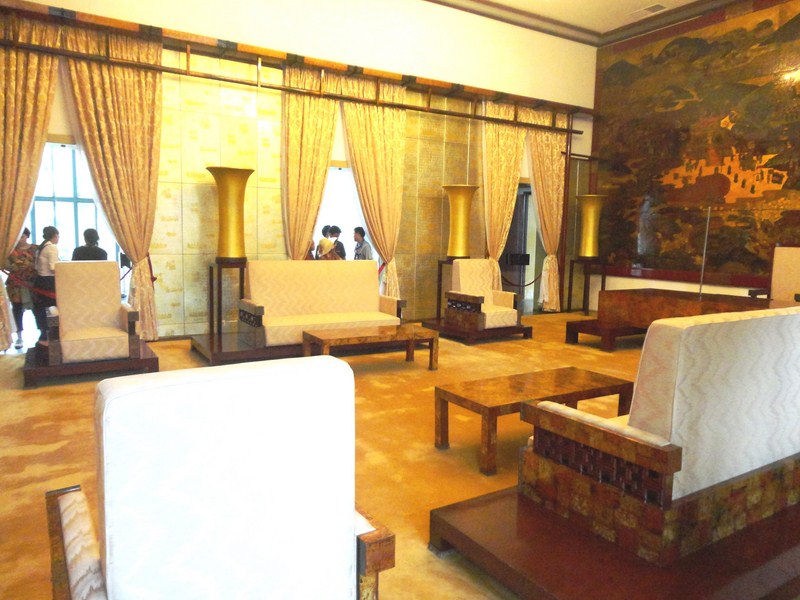
Vice-President's Reception Salon

Vice-President’s Reception Salon

The 5-storey, handsomely-designed building consists of 95 rooms and chambers, each decorated, according to its function, with the finest modern Vietnamese arts and crafts.  Merging classic 1960’s architecture with the principles of feng shui and Chinese calligraphy, the design of the building is said to represent the Chinese character Hung which means “the nation to be prosperous forever.” It features two exhibition rooms, a 33-room guesthouse, bomb shelter, Catholic chapel, helipad and numerous entertainment facilities.

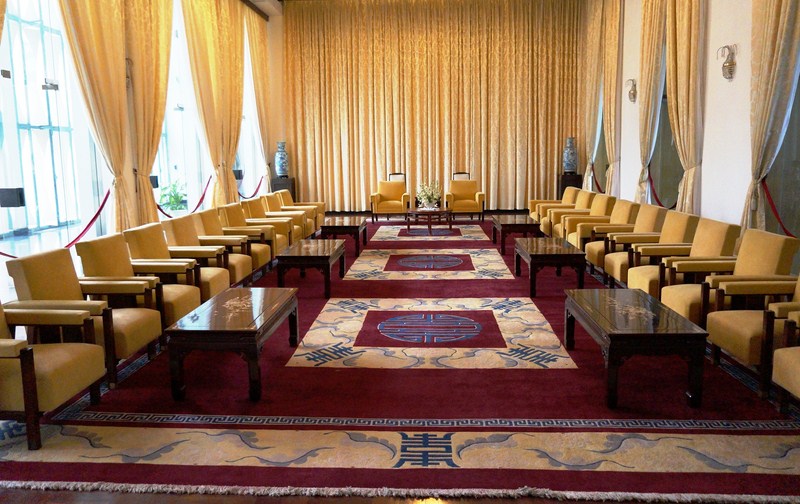
Ambassadors Chamber

Ambassadors Chamber

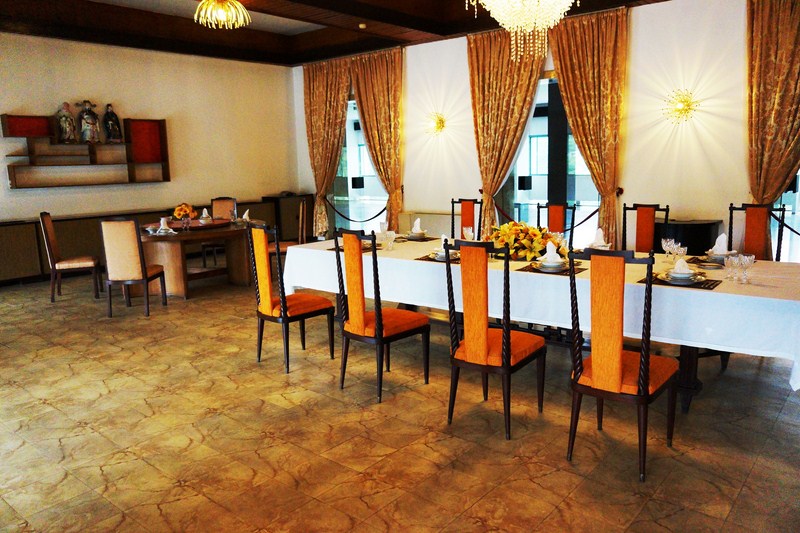
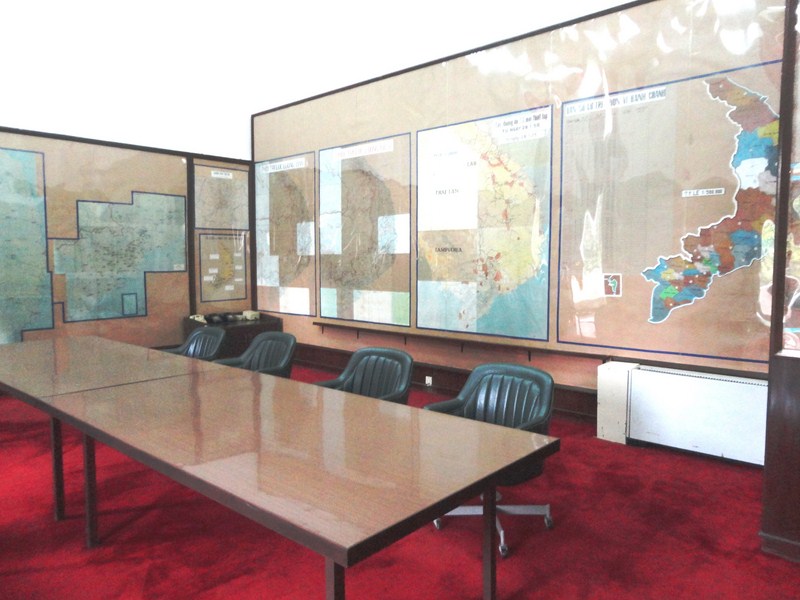
The ground floor has various meeting rooms including a room with a boat-shaped table that was often used for conferences. In the back of the building are the president’s living quarters (check out the model boats, horse tails and severed elephants’ feet). Upstairs are a grand set of reception rooms used for meeting foreign and national dignitaries.  A room called Phu Dau Rong was where Pres. Nguyen Van Thieu received foreign delegations. The upstairs office with maps was actually just a decoy.

The private apartments

The private apartments

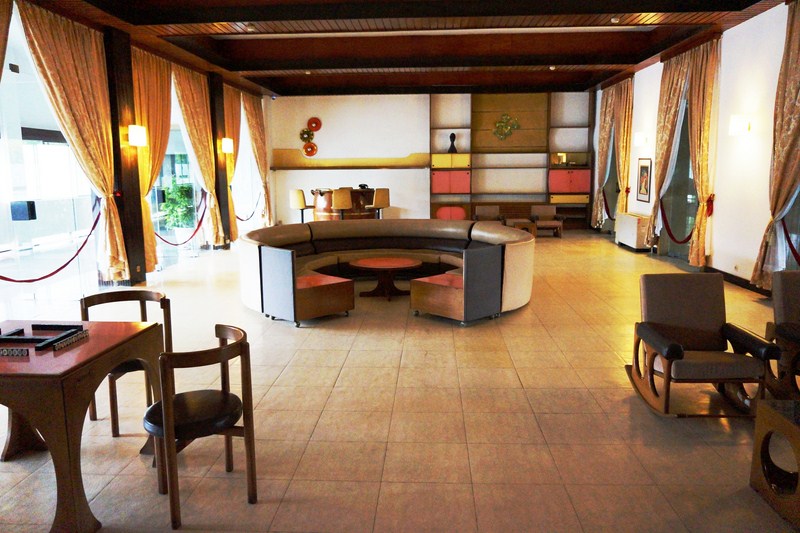
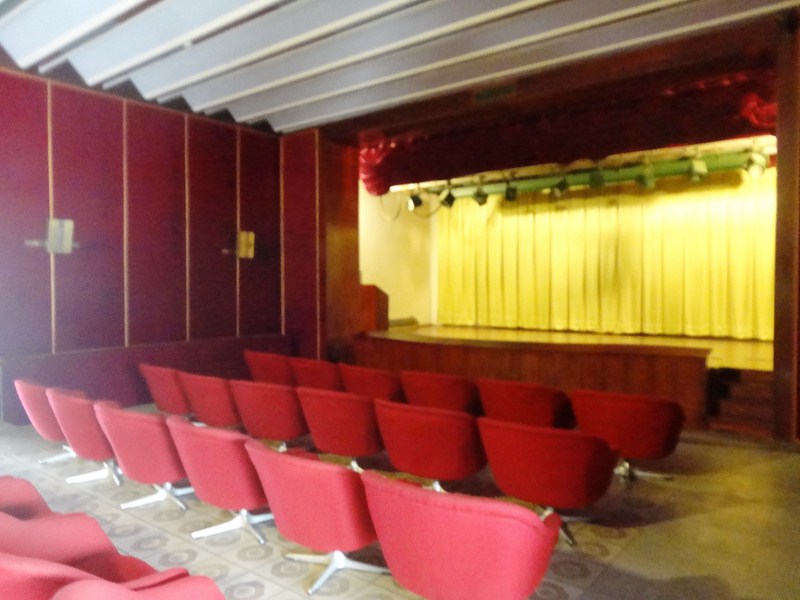
On the third floor is a shagadelic card-playing room , complete with a round leather banquette, a barrel-shaped bar, hubcap light fixtures and groovy three-legged chairs set around a flared-legged card table. There’s also a cinema and a rooftop nightclub, complete with a terrace with a heliport where a helicopter similar to that used for the evacuation of Pres. Thieu before the Viet Cong arrived is parked. From the balcony is a nice view of the surrounding park. The fourth floor, used for dancing, even had a casino.

First Lady's Reception Room

First Lady’s Reception Room

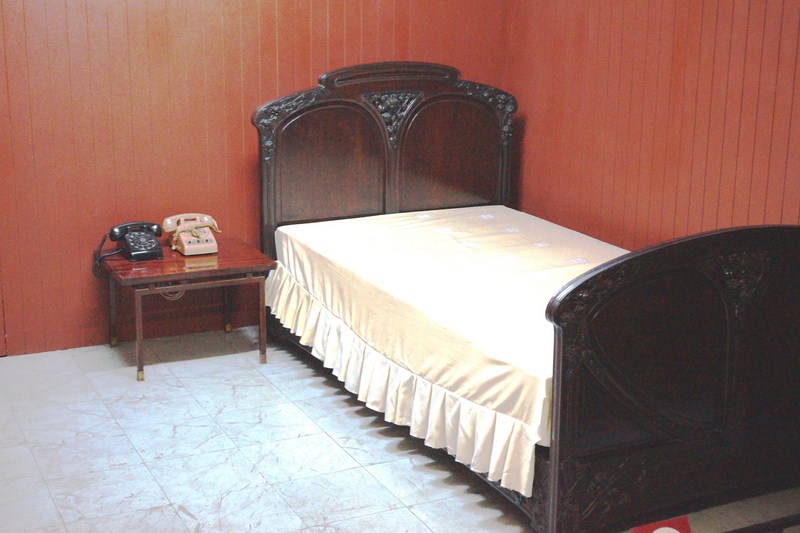
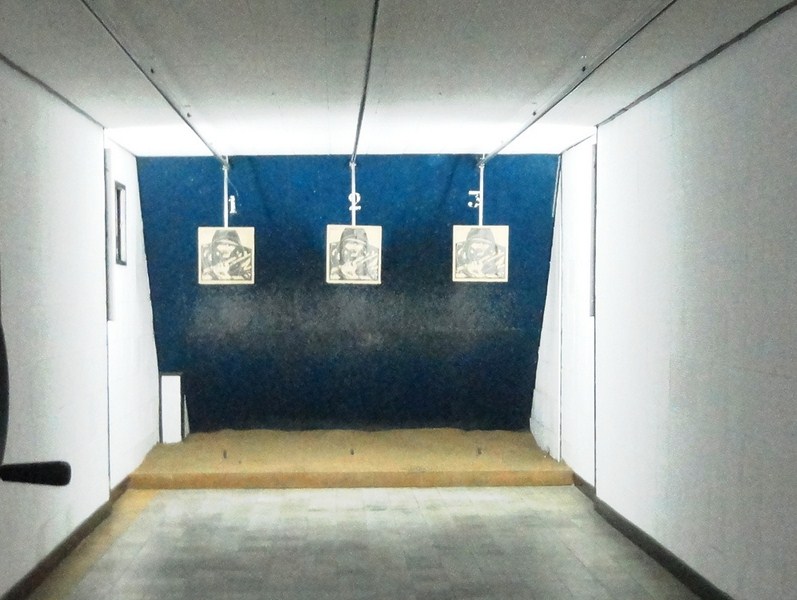
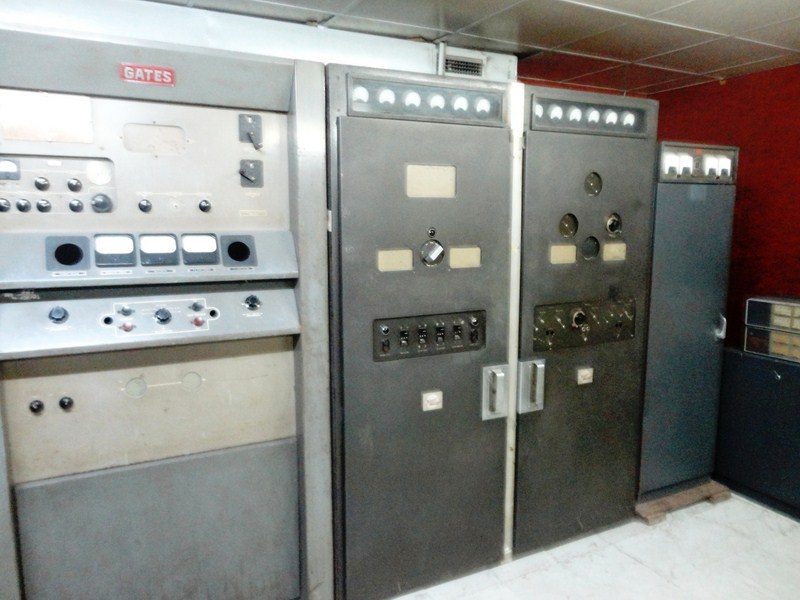
The most interesting part of this 4,500 sq. m. building is probably the eerie basement’s extensive command center which contains a network of tunnels, a telecommunication center, mobile radio section, a spare radio station, the President’s bedroom, a large kitchen, a shooting range and a war room, full of ancient 1960s and 1970s phones, radios and office equipment.

The Game Room

The Game Room

Cinema

Cinema

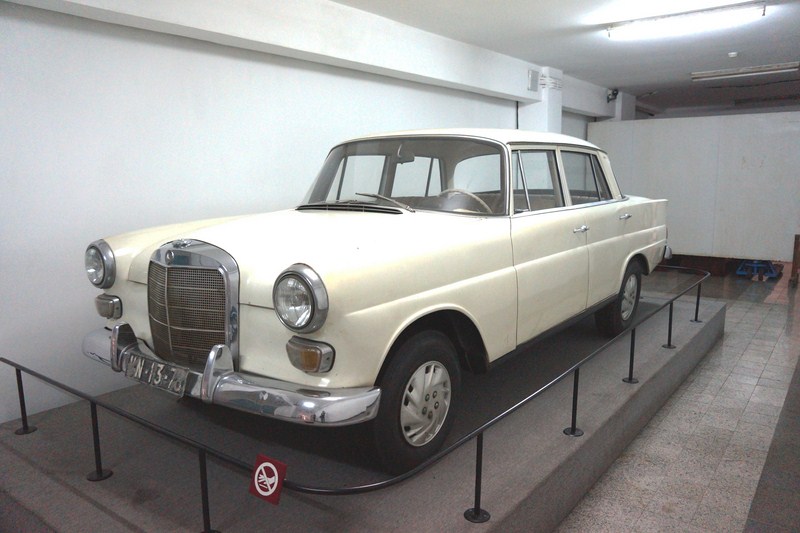
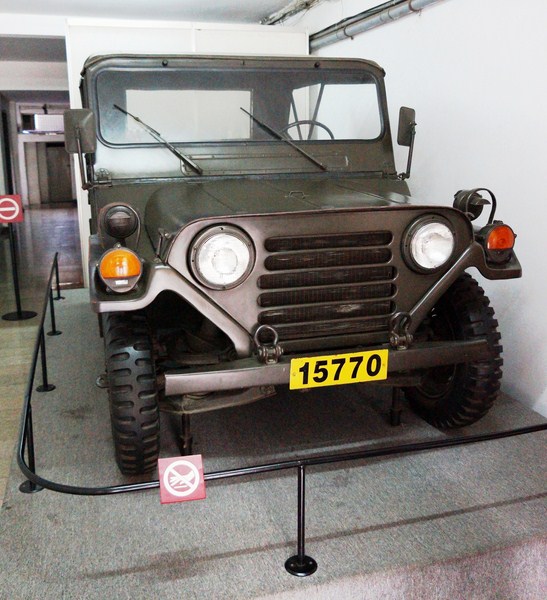
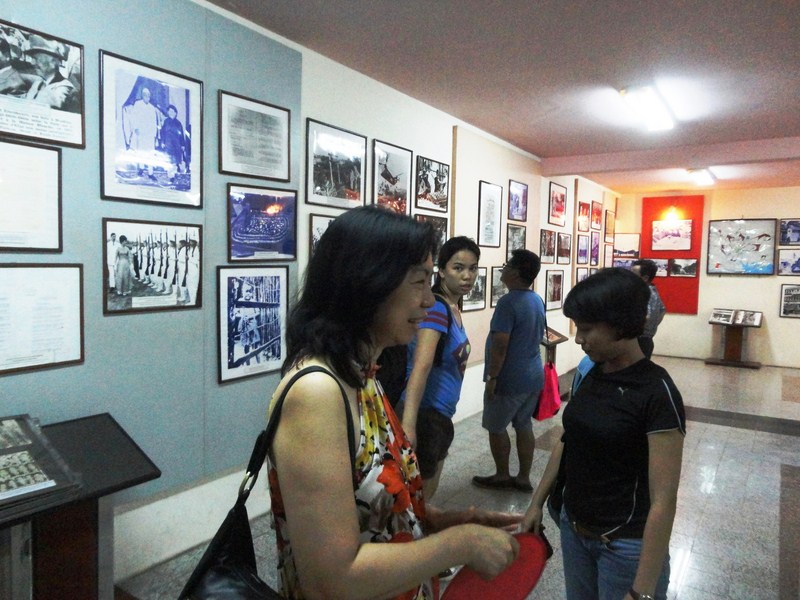
Also on display are a Mercedes Benz 200 W110 car and a XE Jeep M151A2, a gallery with historical pictures on the walls (including many photos of US soldiers and personnel making a mad dash for the departing helicopters during the Fall of Saigon) and the best map of Vietnam you’ll ever see pasted on the wall, all supposedly left exactly as it was found when the North took over.  It made me feel like I was on the set of “MASH.”

National Security Council Chamber

National Security Council Chamber

President's bunker bedroom

President’s bunker bedroom

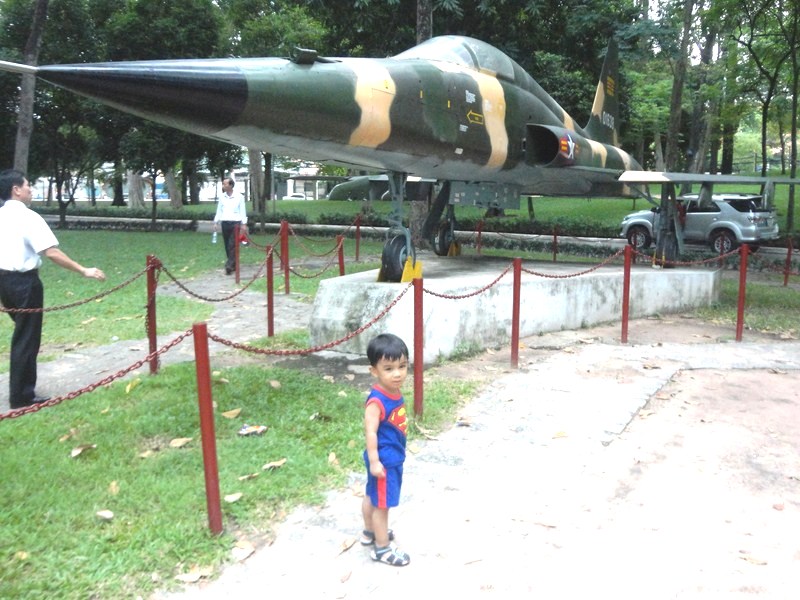
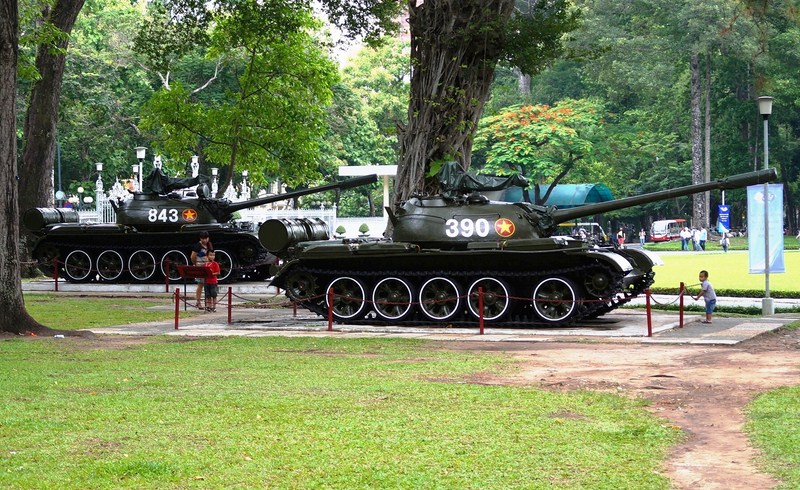
Outside, on the parade ground, is a F-5E fighter plane (similar to the one which bombed the palace on April 8, 1975) as well as a Russian-made T-54/55 tank (Tank 843) and a Chinese-made T-59 tank (Tank 390), both identical to the armored vehicles that broke through the palace gates.

Mercedes Benz 200 W110

Mercedes Benz 200 W110

XE Jeep M151A2

XE Jeep M151A2

The Reunification Palace may not be the most opulent of palaces but it is interesting to see because of its place in history. The very nice grounds, surrounded by immense lawns and high trees in its gardens, provide an airy and open atmosphere, a peaceful respite in the heart of a bustling area.

Target practice range

Target practice range

Photo gallery at the bunker

Photo gallery at the bunker

The eerie feeling of the empty hallways and the smell of damp air of the basement’s dark and forbidden, maze-like bunker system truly has a surrealistic quality to it. A time warp, it’s as if time has stood still since morning of April 30, 1975 (except for new gates).

Heliport.  The circle marks the spot where Nguyễn Thanh Trung bombs fell

Heliport. The circle marks the spot where Nguyễn Thanh Trung’s two bombs fell

1960s communication equipment at the bunker

1960s communication equipment at the bunker

Still, it is well worth the time to visit this section of the Reunification Palace, the real heart of it all. The cracked old furniture, fixtures and fittings are very kitsch and don’t feel out of place on the set of a 1960’s James Bond movie or even an Austin Powers film. This fantastic place, one of the best museums I have ever seen in my life, has to be visited for the history and architecture alone. A must see in HCMC.

Kyle in front of a F-5E Freedom Fighter

Kyle in front of a F-5E Freedom Fighter

T-54 Tank (Tank 843) and T-59 Tank (Tank 390)

T-54 Tank (Tank 843) and T-59 Tank (Tank 390)

Reunification Palace: 135 Nam Kỳ Khởi Nghĩa, Bến Thành, Quận 1, Hồ Chí Minh, Vietnam.  Tel:+84 8 3822 3652. Open daily (so long as official receptions or meetings aren’t taking place), 7:30AM to 11:30AM and 1 to 5PM. Admission: adult (VND15,000) and children (VND2,000). English- and French-speaking guides are on duty during opening hours (prices are ‘up to you’). Some rooms in the palace are available for hire for meeting and banquets.

Church of St. Francis Xavier (Ho Chi Minh City, Vietnam)

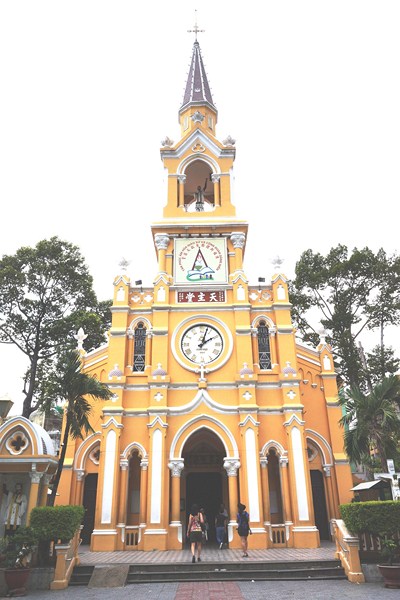
St. Francis Xavier Church

St. Francis Xavier Church

From Thien Hau Pagoda, we again boarded our van and proceeded to Church of St. Francis Xavier, one of the most popular attractions in Ho Chi Minh City. Located at the center of Cho Lon (Chinatown), this pleasing light-caramel and white painted church, built for the Chinese in Saigon, exudes a sleepy, tropical feel.

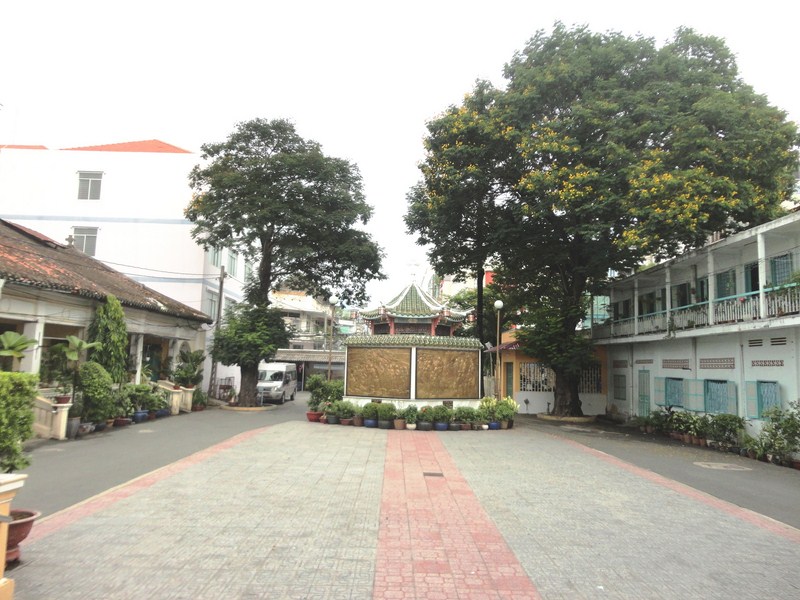
The spacious church compound

The spacious church compound

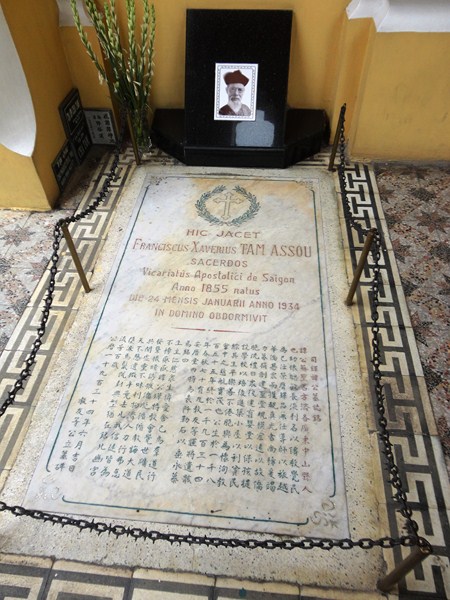
In 1898, Fr. François Xavier Tam Assou (1855–January 24,1934), a Chinese-born vicar apostolic (delegate of the pope) of Saigon, was sent to Cho Lon by the local bishop to take care of the city’s Chinese Christians. His first act was to build a church for them and construction of the church began on December 3, 1900, the Feast of St. Francis Xavier, when Lucien-Émile Mossard (October 24, 1851-February 12, 1920), Bishop of Saigon, placed the first stone for the church.

Tomb of Fr. François Xavier Tam Assou

Tomb of Fr. François Xavier Tam Assou

On January 10, 1902, the church was inaugurated and dedicated to St. Francis Xavier (whom Fr. Tam was named after). After that, Fr. Tam also built a school, a kindergarten, a boarding house, and houses for rent in the church. In 1990, the church steeple and the sanctuary were refurbished.

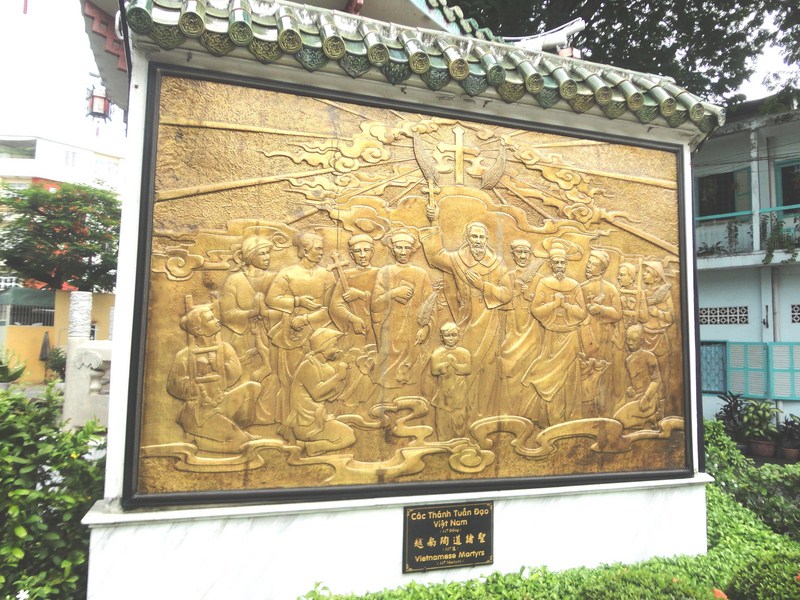
Plaque commemorating Vietnamese martyrs

Plaque commemorating Vietnamese martyrs

However, any discussion of this church’s history needs to include its darker side. On November 2, 1963, then South Vietnamese President Ngo Dinh Diem and his brother Ngo Dinh Nhu were seized inside this church.  They sought refuge here in a doomed effort to escape a coup attempt after fleeing the Presidential Palace (now the Reunification Palace) through a secret tunnel network.

When their efforts to contact loyal military officers (of whom there were almost none) failed, Diem and Nhu agreed to surrender unconditionally and revealed where they were hiding. Another version states that an informant recognized the brothers as they walked across the church’s courtyard on the morning of the 2nd. The coup leaders sent an M-113 armored personnel carrier to the church and, around 10 AM, the two were taken into custody while they were praying inside.

The plan was to transport them to the Vietnamese Joint General Staff Headquarters, then exile the brothers to a new country, far from Southeast Asia. However, before the vehicle reached central Saigon, the zealous and angry soldiers had killed Diem and Nhu by shooting them at point-blank range and then repeatedly stabbing their bodies. Diem was subsequently buried in an unmarked grave not far from the US ambassador’s residence. What followed was a political scandal, an attempted cover-up and an international investigation that ended with no one being prosecuted for the killings.

When news of the deaths was broadcast on radio, Saigon exploded with jubilation. Portraits of the two were torn up and political prisoners, many of whom had been tortured, were set free. The city’s nightclubs, which had closed because of the Ngos’ conservative Catholic beliefs, were reopened. Three weeks later the US president, John F. Kennedy, was assassinated. As his administration had supported the coup against Diem, some conspiracy theorists speculated that Diem’s family orchestrated Kennedy’s death in retaliation.

The church compound (which can be accessed even when the church is closed), covering a large area, offered a good space for us to stroll around. An interesting plaque here commemorates Vietnamese  martyrs. This Gothic-style church is somewhat unique in that it’s decorated with horizontal lacquer boards and wood panels with inscriptions much like the surrounding Chinese style temples.  Pretty red lanterns adorn the church walls.

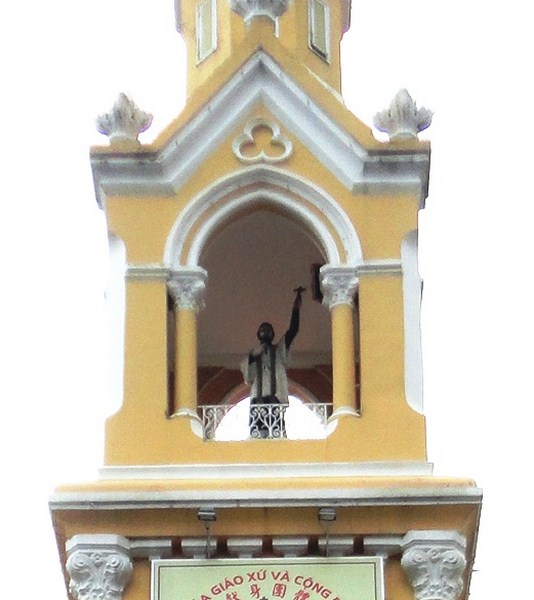
Statue of Fr. François Xavier Tam Assou at the church steeple

Statue of Fr. François Xavier Tam Assou at the church steeple

The centrally located, 38 m. high tower has a peculiar statue of Fr. Tam and his tomb is located at the entrance wall of the church. The church is often called Cha Tam (Father Tam) Church (Nha Tho Cha Tam).

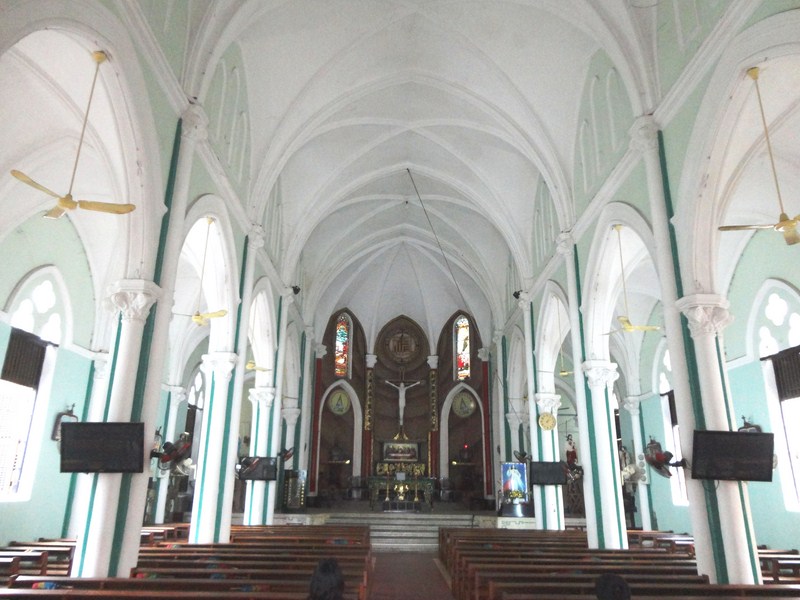
The rib vaulted church interior

The rib vaulted church interior

The mint green and white interior, with its rib vault ceiling, is decorated with images of the Stations of the Cross, while holy water is dispensed from huge clam shells. A pew in the church is marked with a small plaque identifying the spot where President Ngo Dinh Diem was seized.  Today, the church, one of Saigon’s more active, is far removed from the brutality of yesteryears and has a very active congregation of 3,000 ethnic Vietnamese and 2,000 ethnic Chinese parishioners.

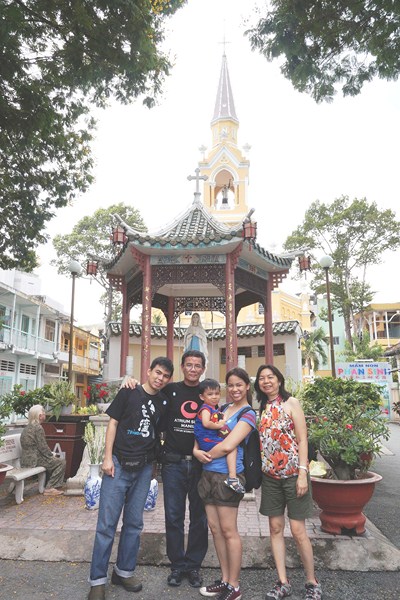
L-R: Jandy, the author, Kyle, Cheska and Grace

L-R: Jandy, the author, Kyle, Cheska and Grace

Cha Tam Church: 25 Học Lạc St.,  District 5, Hồ Chí Minh, Vietnam. Tel: +84 8 3856 0274. Open daily, 7 AM – 12 noon, 2 – 6 PM and 7 – 9 PM. Masses, in both Vietnamese and Chinese (Mandarin), are held daily.

Thien Hau Pagoda (Ho Chi Minh City, Vietnam)

Thien Hau Pagoda

Thien Hau Pagoda

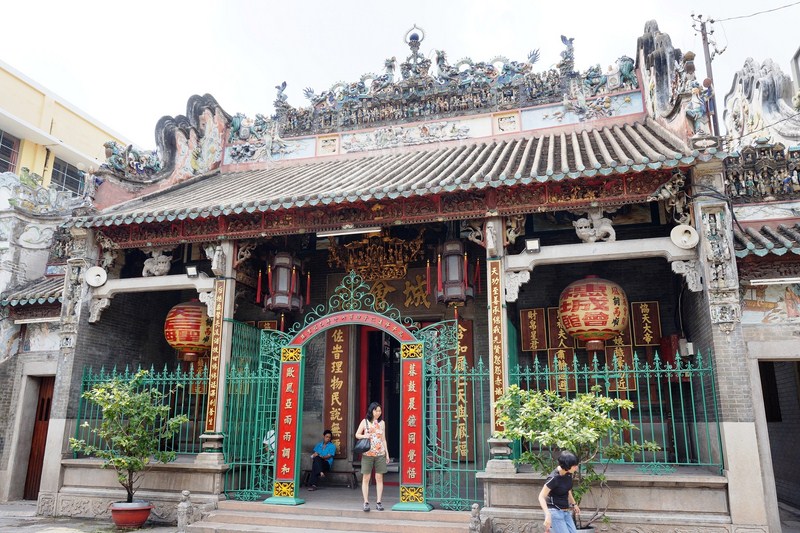
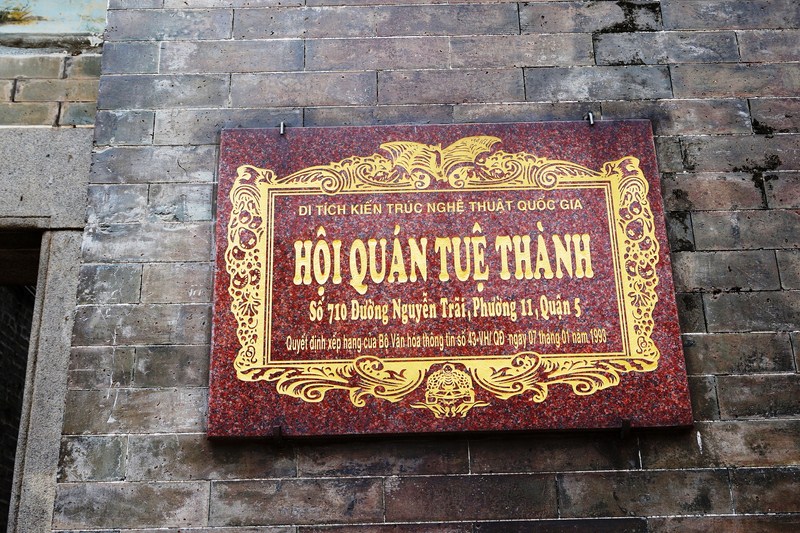
After our lunch at Pho 24, we continued with the afternoon leg of our day-long city tour, first dropping by the beautiful Thien Hau Temple, one of Cholon district’s (Chinatown) most popular and most active  pagodas, located right on very busy Nguyen Trai Street.  The temple, also known as Chua Ba Thien Hau (literally means “Pagoda of the Lady of the Sea”), was originally built in 1760 (the oldest Chinese temple in Saigon) by the Cantonese Congregation as an expression of gratitude by Chinese immigrants coming from Tue Thanh Province, Quang Dong, for Thien Hau’s protection during their initial trip to Saigon by sea.

Thien Hau Pagoda (2)

All the materials used for its construction were brought from China. The pagoda was then continuously restored in 1800, 1842, 1882, 1890 and 1916.  On July 1, 1993, the pagoda was recognized as a National Architectural and Art Monument.

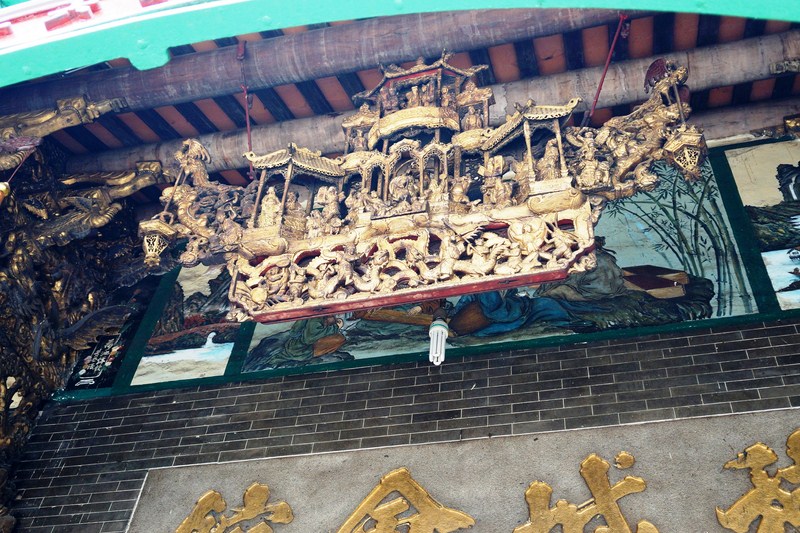
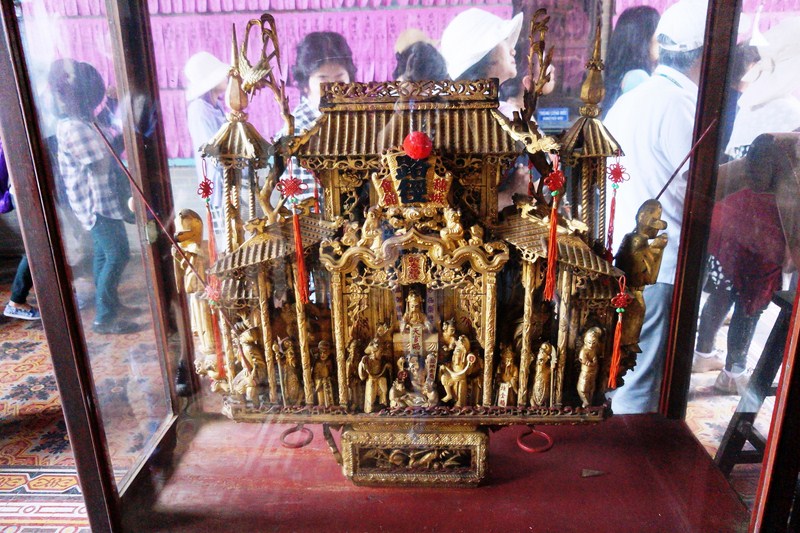
Wooden model of a Chinese theater

Wooden model of a Chinese theater above the entrance

The deity Thien Hau, , the goddess of the sea and protector of sailors and fishermen (also known as Tuc Goi La Ba and Mazu, is a traditional Chinese goddess who is not specifically Buddhist or Taoist. Revered by seafaring cultures, she has the ability to travel over the sea, on a mat or the clouds, to wherever she pleases, to protect or rescue stranded seafarers on the high seas. This very popular goddess’ temples are included on so many tour-group itineraries in Hong Kong and Taiwan.

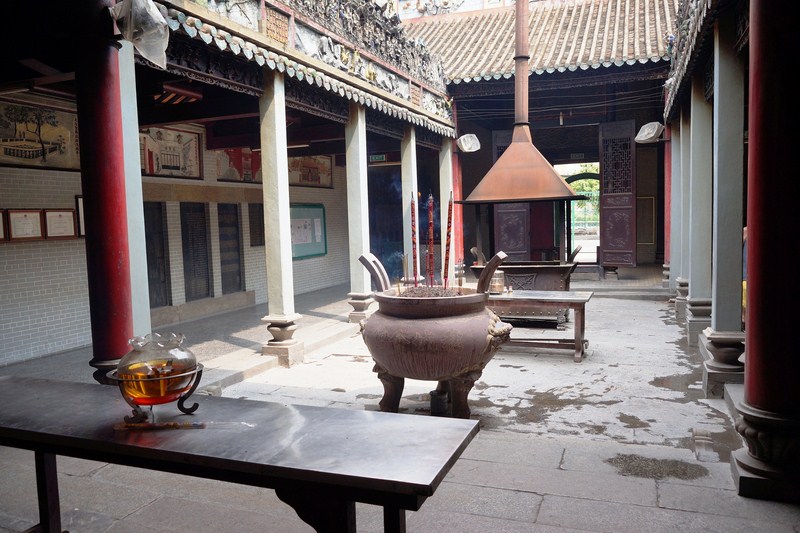
The inner courtyard

The inner courtyard

The pagoda houses over 400 meticulously crafted antiques including seven god statues, six stone statues, nine stone steles, two small bells, four copper censers produced in 1886, one stone censor, 10 horizontal lacquered boards, 23 parallel sentences and others.

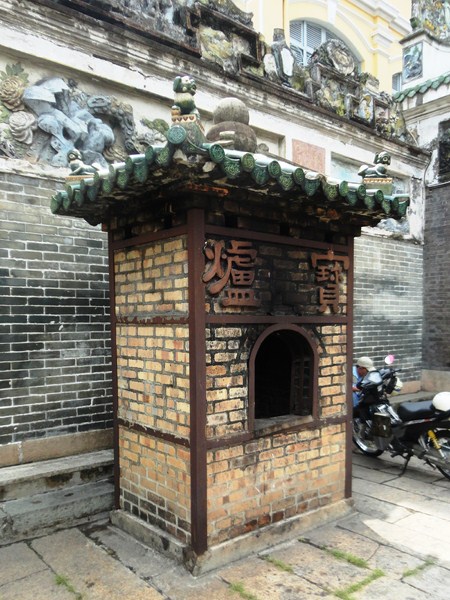
A fire pit for burning money, paper clothes or gifts to send to ancestors

A fire pit for burning money, paper clothes or gifts to send to ancestors

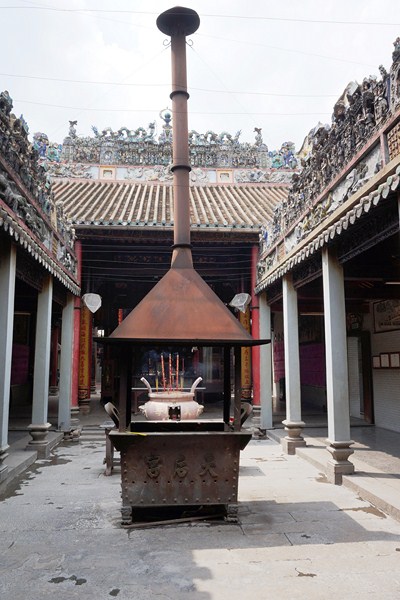
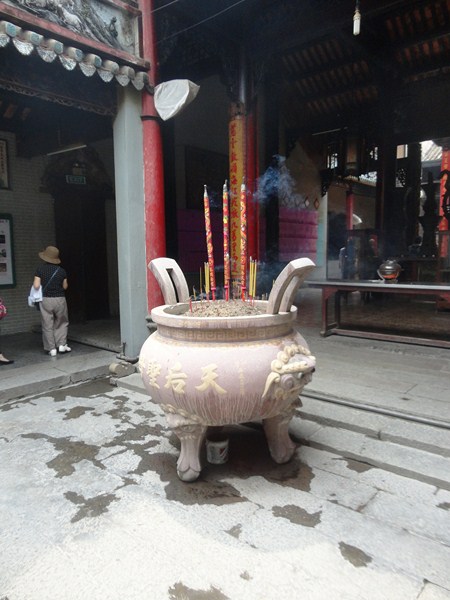
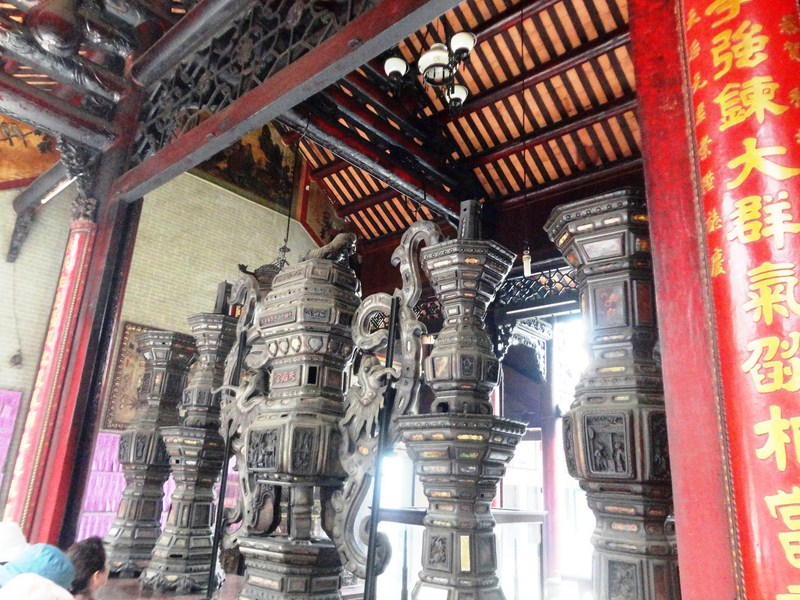
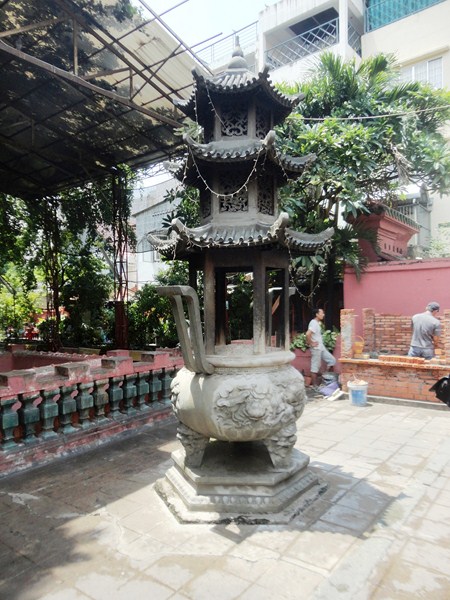
Large incense brazier

Large incense brazier

We entered the temple by entering an iron gate and then crossing a small, partially covered courtyard.  Though there are guardians on each side of the entrance, it is said that the real protectors of the pagoda are the two land turtles that live there. Lanterns and wooden models of Chinese theaters hang over the entrance.

Thien Hau Pagoda (41)

Thien Hau Pagoda (42)

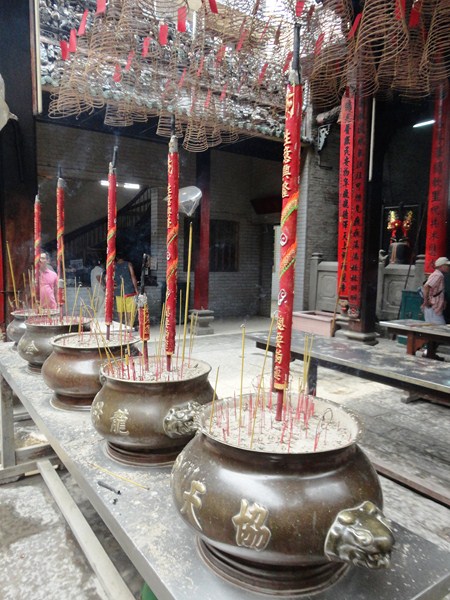
The exposed portions of the courtyard contain large braziers, pots where burning joss sticks are placed. Near the braziers are two miniature wooden structures in which a small figure of Thien Hau is paraded, on the 23rd day of the third lunar month, around the nearby streets. To one side of the temple is an alcove containing a pool of fish, among which, is a giant.

Porcelain dioramas at the roof

Porcelain dioramas at the roof

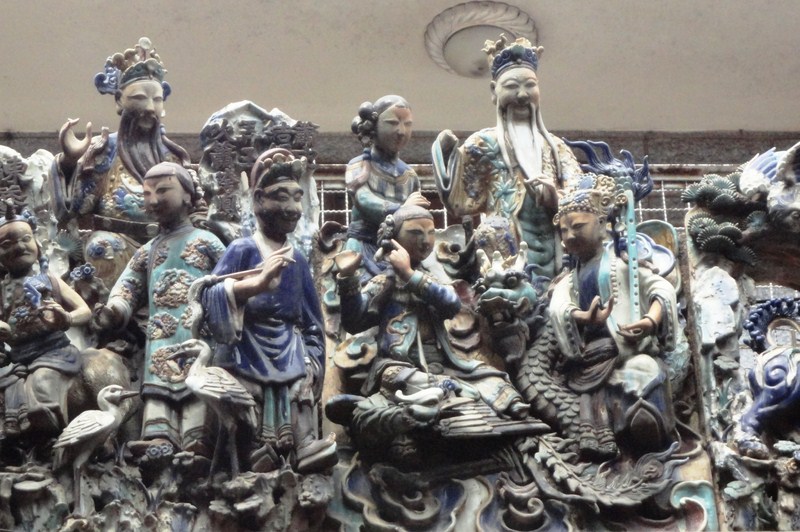
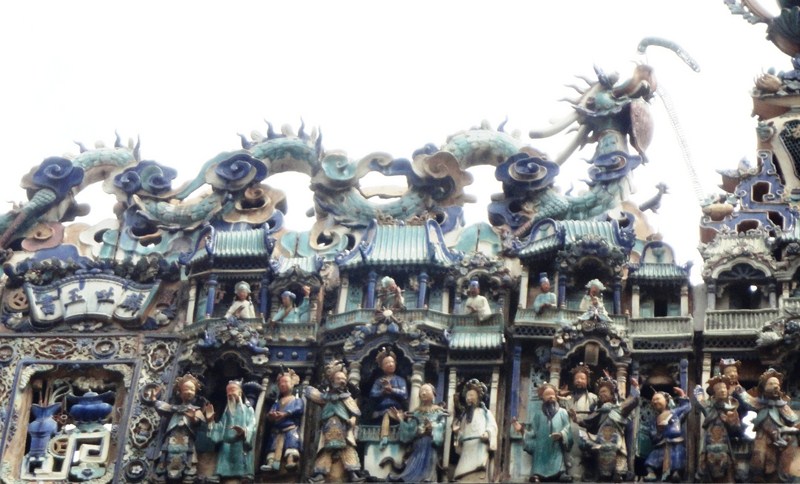
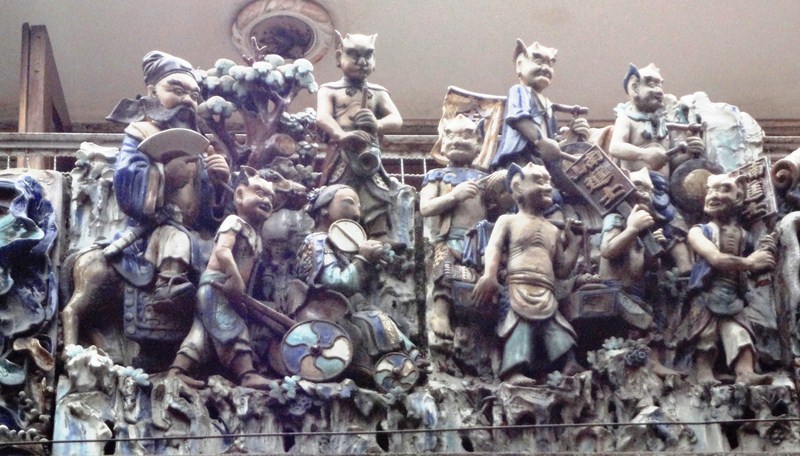
Above the roof line of the interior courtyard are remarkable friezes decorated with small, delicately fashioned porcelain ceramic figurines manufactured by two famous pottery kilns (Buu Nguyen and Dong Hoa)) in 1908, all elaborate dioramas that express whimsical themes from Chinese religion, customs (such as “fighting in an arena”, “kowtow before ancestor’s altar”, etc.) and legends. In one scene, actors depict a duel on horseback between the revered, halberd-wielding general Guan Yu (of the epic novel Three Kingdoms) and another fighter.

Thien Hau Pagoda (88)

Thien Hau Pagoda (90)

Another scene depicts the three Taoist sages representing longevity, fecundity and prosperity. They also show scenes from a 19th-century Chinese city, including such colorful figures as actors, demons,  dragons, turtles, Persian and European sailors and traders, musicians playing instruments, couples conversing on balconies, wise old men in earnest discussion and even a white crane, seated on a rocky ledge, loping past people.

Altar of Thien Hau

Altar of Thien Hau

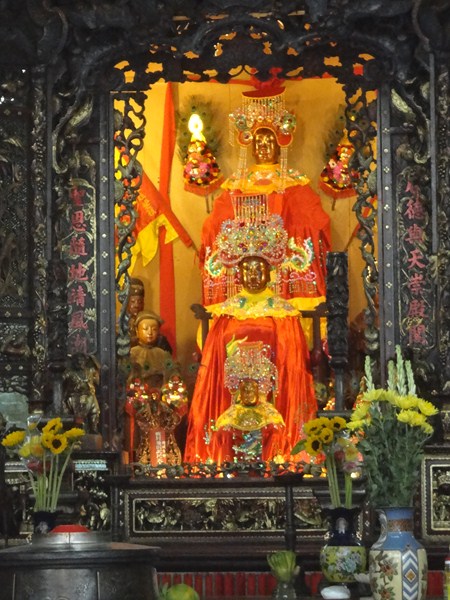
The three statues of the goddess Thiên Hậu

The three statues of the goddess Thiên Hậu

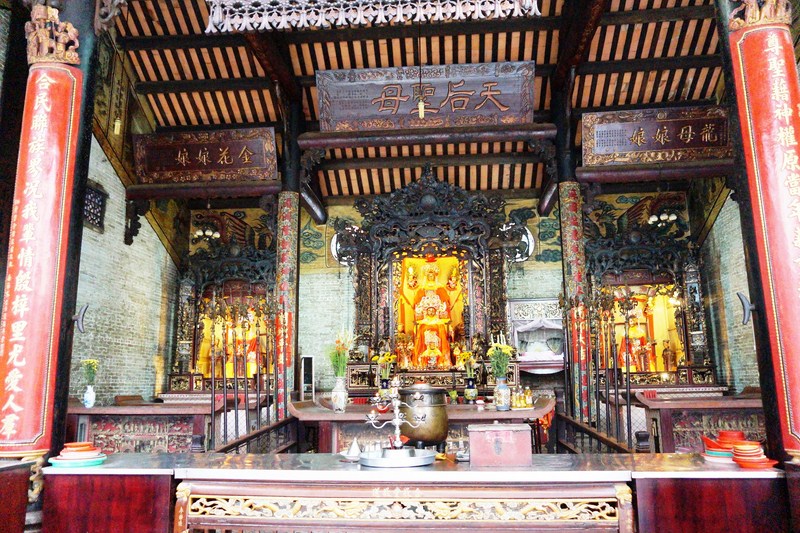
At the end of this gorgeous pagoda’s courtyard is the altar dominated by the three statues of the goddess Thiên Hậu on the main dais. The statues, one behind the other, have bronze faces and multi-colored clothes and crowns. Incense burners are all about, filling the open area with swirling pale white smoke and the pungent aroma of burning incense.  The three figures of Thien Hau are all flanked by two servants or guardians, one can see very far while the other can hear very well.

Thien Hau Pagoda (20)

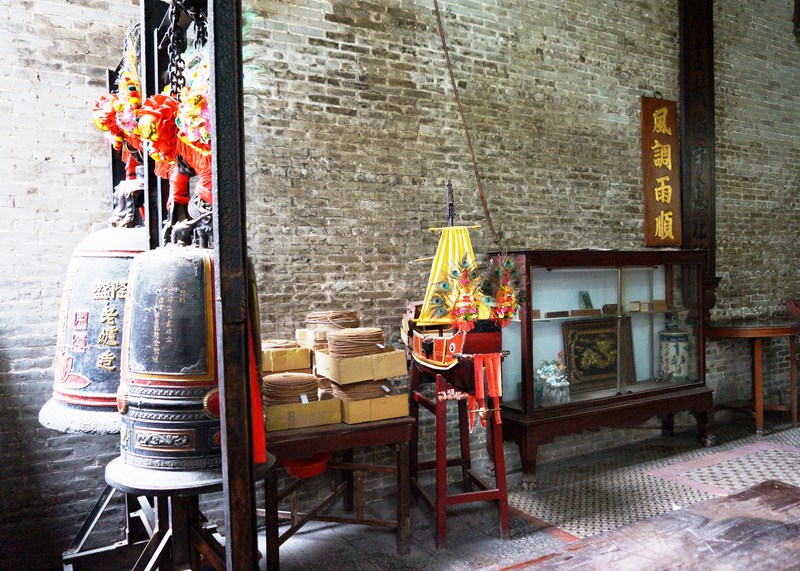
Of special note is a scale model boat, to the right, that commemorates the first Chinese arriving from Canton. On the far right is the goddess Long Mau (protector of mothers and infants) while to the left of the dais is Thien Hau’s bed.

Thien Hau Pagoda (70)

The pagoda also has alcoves dedicated to other Chinese gods such as the Money God (it is said that good luck in doing business will be granted after some money is offered to him), Meh Sanh (the goddess of fertility) and the Mermaid. Several women were busy lighting bundles of incense sticks and then praying within the alcove at the rear of the temple.

Thien Hau Pagoda (65)

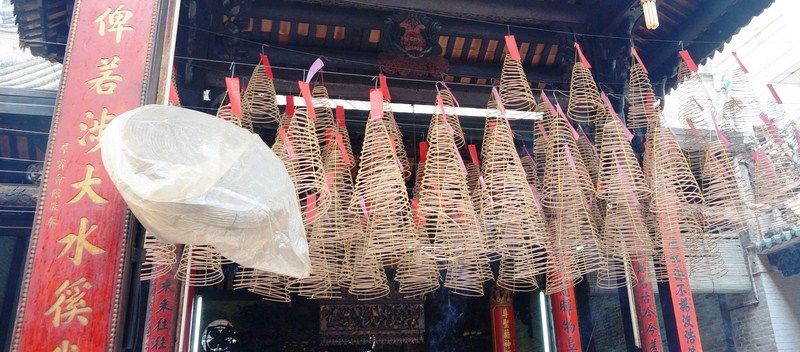
While the Thien Hau Pagoda isn’t the largest or most elaborate in the city, it is most popular, with worshippers from the local Chinese community and visitors, for its dozens of large amazing coils of incense suspended from the ceiling rafters over the main worship area, in front of the altar of Thien Hau. Some are quite large, with a diameter of more than a meter, and can burn for upwards of a month.

Conical incense coils with red tags

Conical incense coils with red tags

IncensIncense urnse urns

All coils are attached with a red tag with prayers that get sent when the incense burns out at the top of the coil. For luck, good health and good business fortune, the buyer’s name is written on the prayer tag after an incense coil or bundle is purchased. With a small donation to the pagoda, you can have your own coil lit and hung. Several people inside and outside sell incense, with 20,000 VND enough to purchase a large quantity.

Thien Hau Pagoda (25)

Thien Hau Pagoda (26)

Thien Hau Pagoda, probably the finest largest and most popular pagoda in Saigon and easily one of the most favorite tourist destinations in the city,is a valuable work of history, architecture and sculpture as well as an important religious site of the city’s Chinese-Vietnamese community. It truly has an atmosphere of otherworldly reverence owing to the smoking coils of swirling incense hanging from the room and majestic interior and furnishings. When visiting, be sure to keep an eye out for (bring binoculars) the intricate porcelain dioramas that decorate the beautiful roof.

L-R: our guide, Kyle, Grace and Cheska

L-R: our guide, Kyle, Grace and Cheska

Thien Hau Pagoda (93)

Thien Hau Pagoda: 710 Nguyen Trai St., District 5, Ho Chi Minh City, Vietnam.  Open daily, 8 AM -4:30 PM. Admission is free but, if you wish to give something towards the building’s preservation, there is a donation box inside. It will cost 5,000 VND to park.

Jade Emperor Pagoda (Ho Chi Minh City, Vietnam)

Jade Emperor Pagoda

Jade Emperor Pagoda

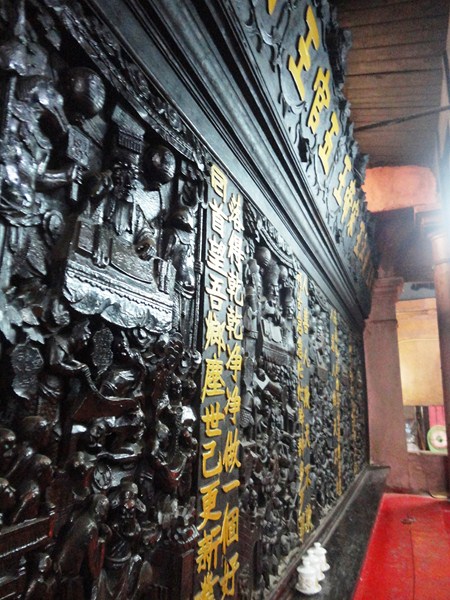
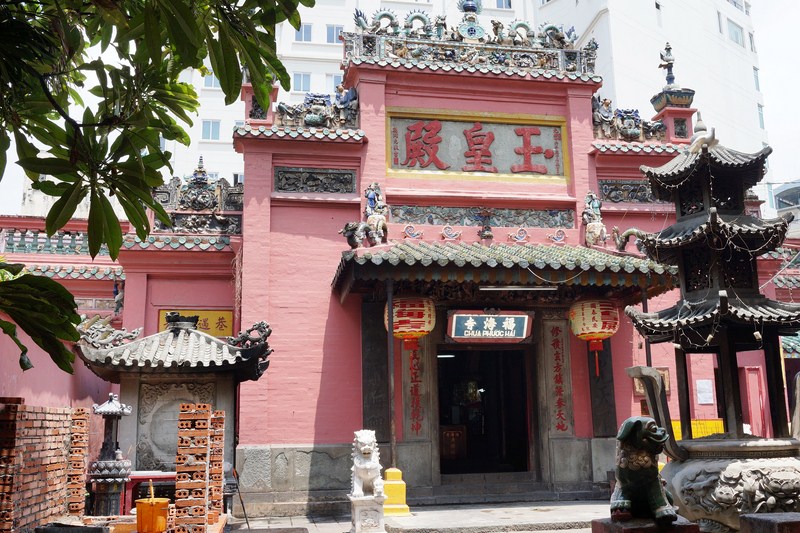
From the War Remnants Museum, we again boarded our van for the Jade Emperor Pagoda, one of the more colorful temples in HCMC, hidden in a small street, between high buildings. The facade of the Jade Emperor Pagoda is made with brick painted in pink and had exquisite and elaborate woodcarvings on tablets decorated with gilded Chinese characters. Its very striking and unique YinYang-shaped roofs are also works of art, with characteristic sharp peaks and sprinkled with numerous sculptures of dragons (the symbol of the divine) and completed with structures of red wood bound with elaborate, green-colored ceramic tiles.

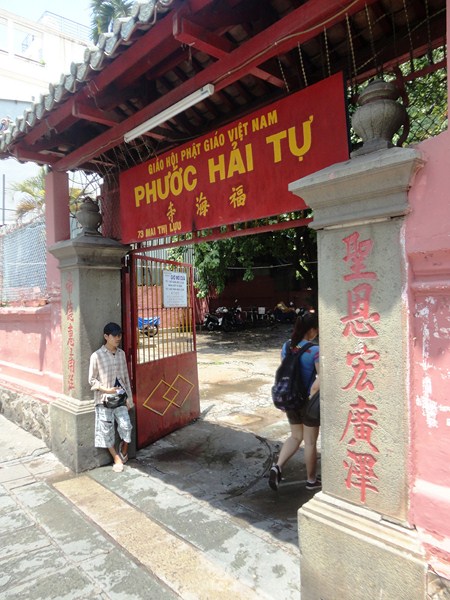
The pagoda gate

The pagoda gate

Built from 1892 to 1909 by the Cantonese (Quang Dong) Congregation from Guanzhou, this spectacularly atmospheric pagoda (Vietnamese: Chùa Ngọc Hoàng; official name: Ngọc Hoàng Điện) is dedicated to various Taoist and Buddhist gods, especially to the supreme Taoist god Ngoc Hoang (the Jade Emperor or King of Heaven), the emperor monitoring entry through the gates of heaven by deciding who will enter and who will be refused. Originally known as Pagoda Ngoc Hoang, this pagoda was renamed in 1984 as Pagoda Phuoc Hai Tu (“Luck Sea Temple”), a new Chinese name which it still retains to this day.

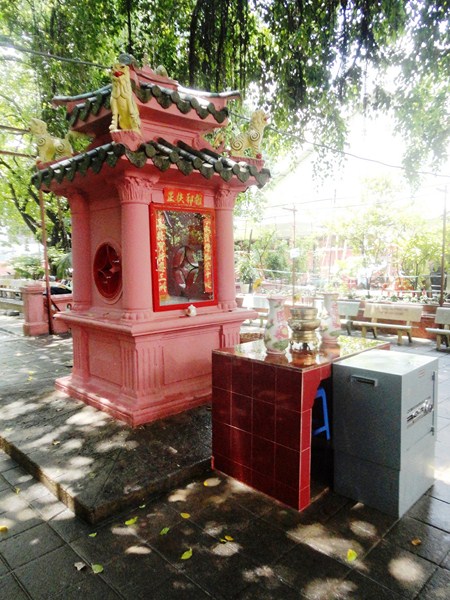
A small shrine with a safe

A small shrine with a steel safe

We entered the temple via Phuoc Hai Tu, the only door to the temple, passing under a red porch into a courtyard where we were greeted by a huge banyan tree, after which we passed a small shrine with a steel safe (a reminder that, though admission is free, donations are accepted). Within the courtyard are benches for sitting.

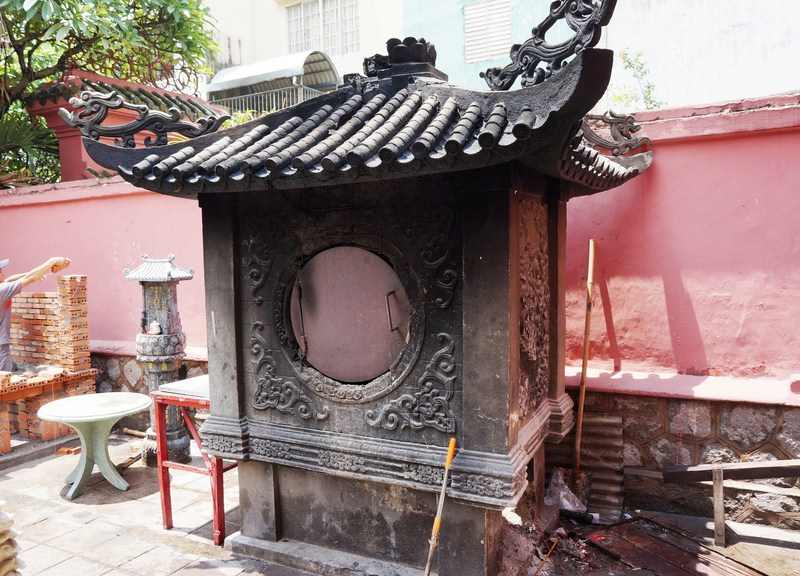
The incinerator

The incinerator

To the left of the entrance to the Jade Emperor pagoda is the so-called incinerator, a chimney-shaped structure where believers burn offerings of paper. According to religious beliefs, smoke from the burning paper reaches the ancestors and deceased in heaven.

The pagoda courtyard

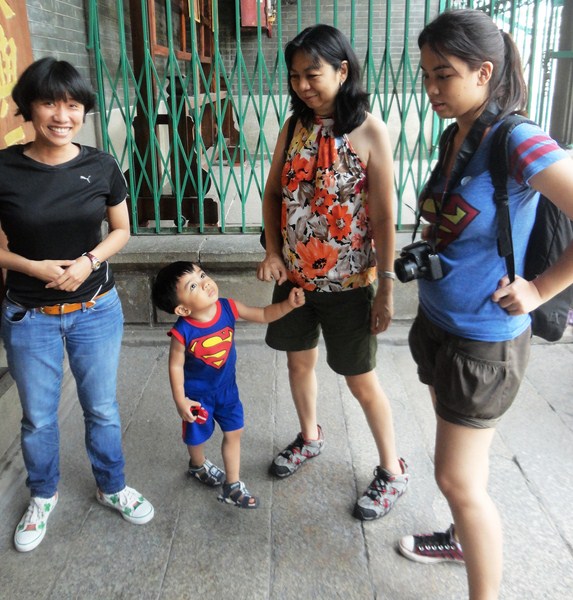
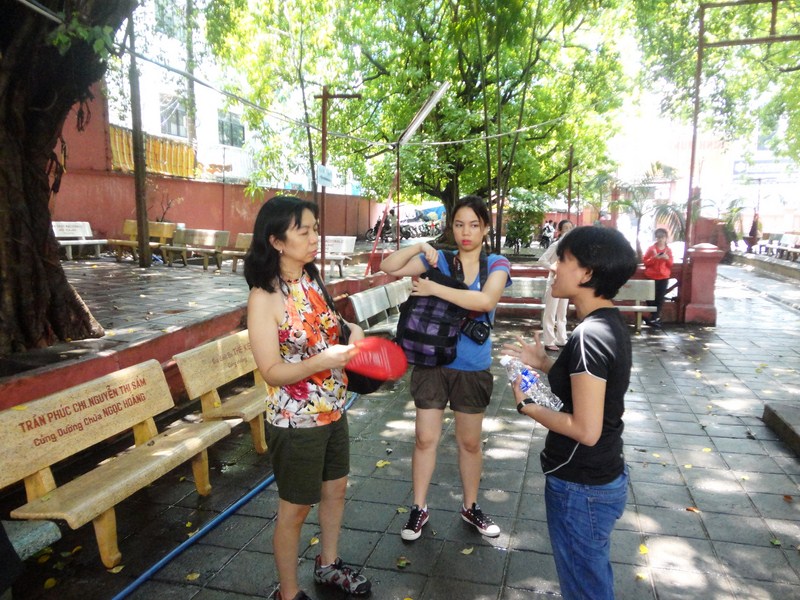
Grace, Cheska and our guide at the pagoda courtyard

Jade Emperor Pagoda (41)

Jade Emperor Pagoda (42)

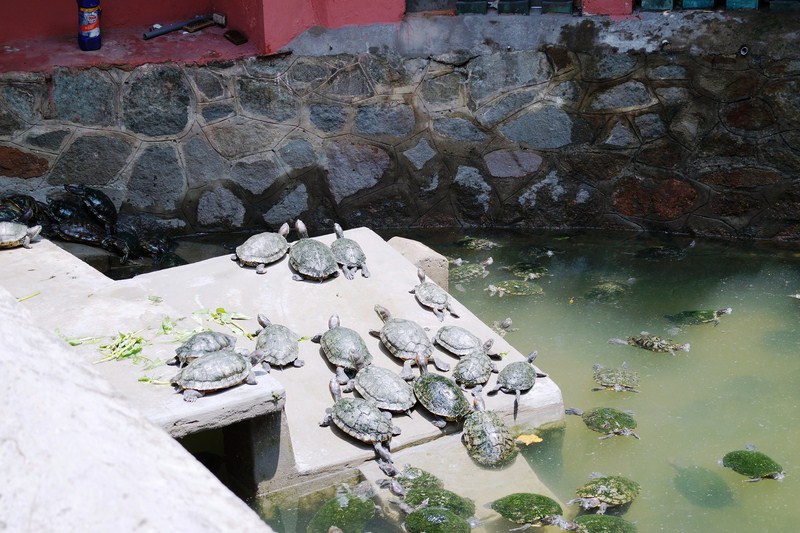
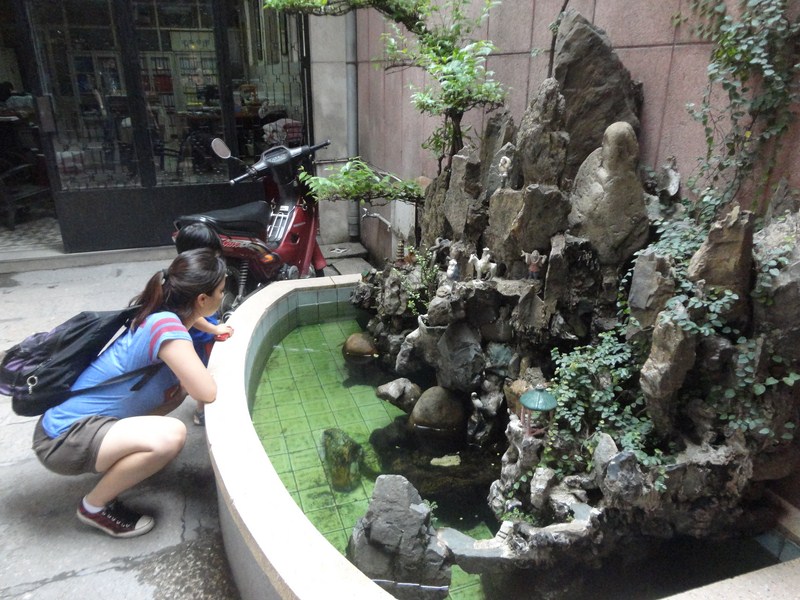
To the right of the entrance is the shelter for hundreds of turtles (the temple is also called thePagoda of Turtles” or “Tortoise Pagoda”). Turtles, in Asian culture, represent longevity.  In Vietnam, they are also considered as a symbol of fortune and good luck.

Turtle pond

Turtle pond

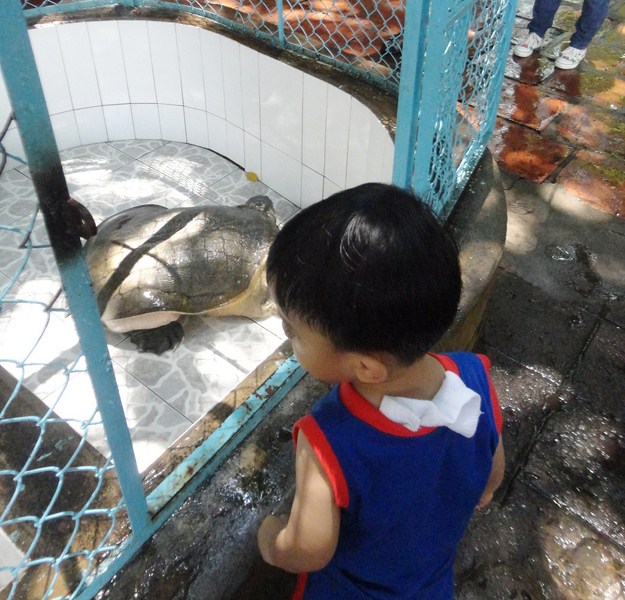
Kyle's close encounter with a land turtle

Kyle’s close encounter with a land turtle

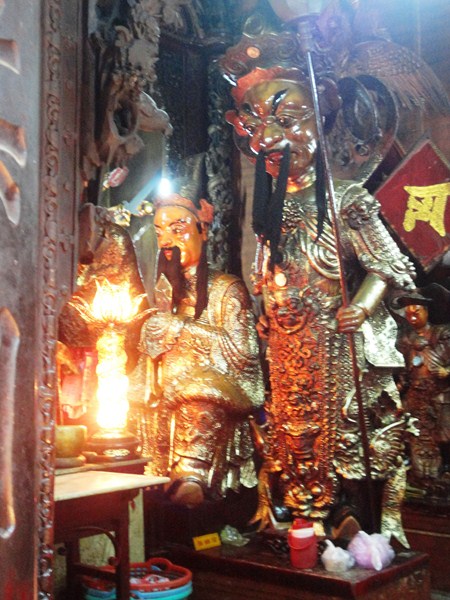
In decorating the pagoda, the Cantonese community was inspired by many Buddhist legends and myths. The pagoda is filled with towering and really impressive statues, made with wood and reinforced papier mâché, of phantasmal divinities and grotesque heroes which represent characters from both the Buddhist and Taoist traditions.

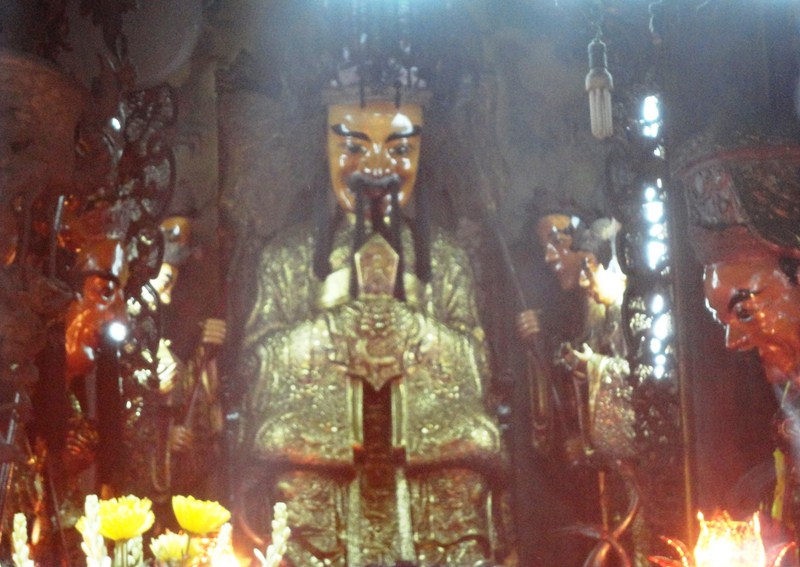
The Jade Emperor

The Jade Emperor

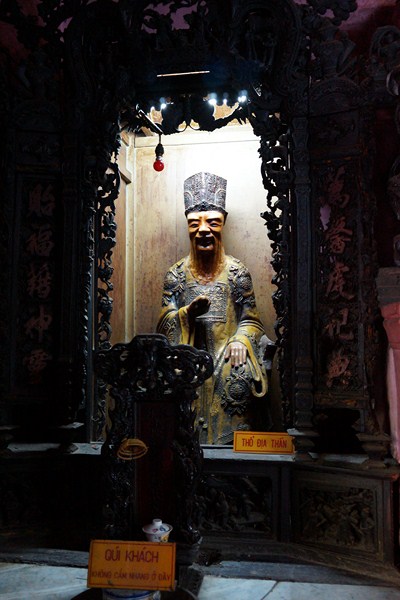
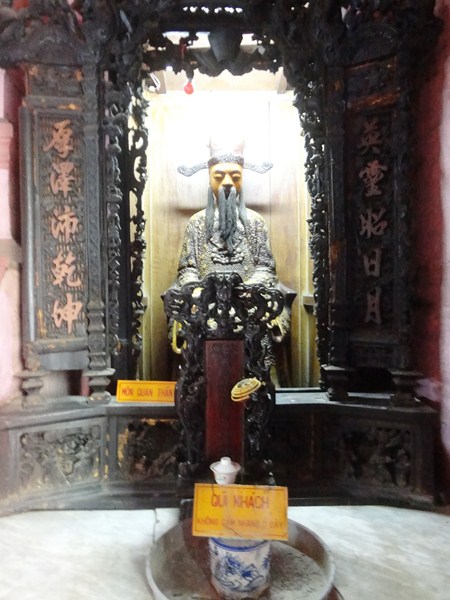
Undoubtedly, the best of the Jade Emperor Pagoda is in the main building. Beside impressive carved wooden doors with human and divine figures, to the right, is Mon Quan, the God of the Gate while opposite him is Tho Than (Tho Dia), the God of the Land.

Guardian of the door of the Jade Emperor Pagoda

Mon Quan, the God of the Gate

Jade Emperor Pagoda (47)

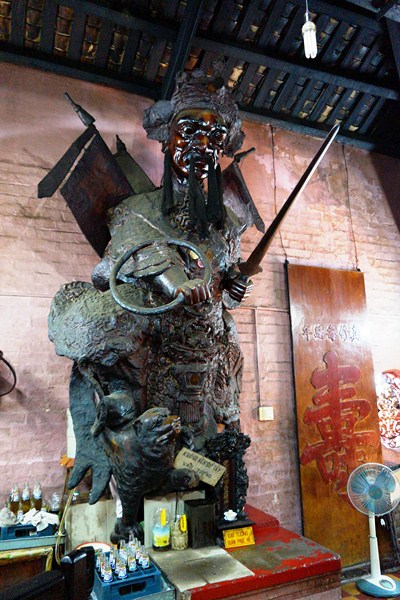
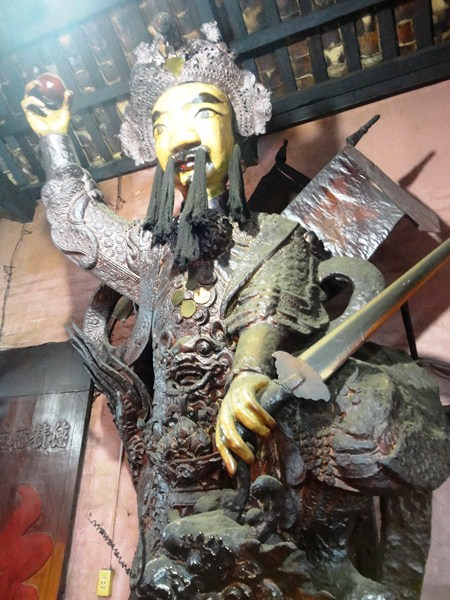
Against the wall are two 4 m. high, especially fierce and menacing figures of demons flanking the main sanctuary, both guardians of the gate. On the right (as you face the altar) is the statue the general who defeated the Green Dragon (depicted underfoot), while on the left is the general who defeated the White Tiger (which is also being stepped on).

The general who defeated the Green Dragon

The general who defeated the Green Dragon

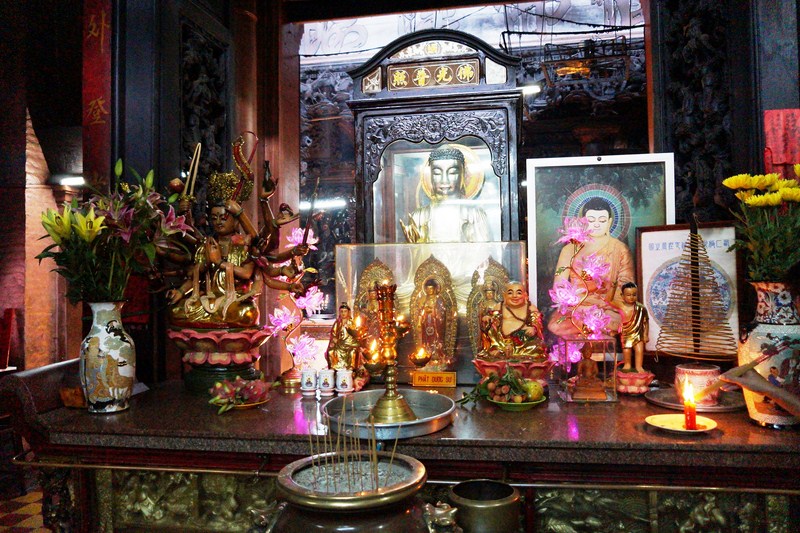
Straight on is an altar on which are Phat Mau Chuan De, who gave birth to the five Buddhas of the cardinal directions; Dia Tang Vueng Bo Tat (Ksitigartha), the King of Hell; the Di Lac Buddha (Maitreya), the Buddha of the Future; Quan The Am Bo Tat; and a portrait of the Thich Ca Buddha. Behind the altar, is the Duoc Su Buddha, or Nhu Lai Buddha.

The altar of  Phat Mau Chuan De

The altar of Phat Mau Chuan De

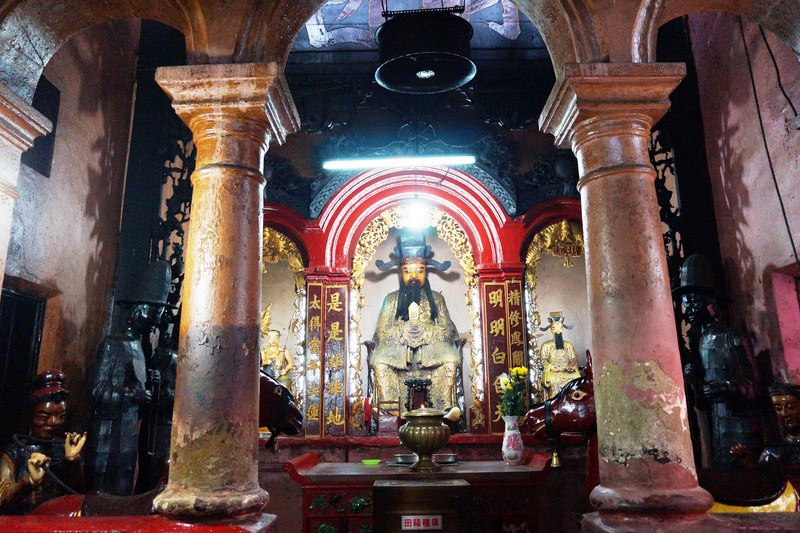
The air inside is thick with the pungent smell of incense smoke from burning joss sticks. Presiding over the main sanctuary is the Jade Emperor Ngoc Hoang (easily recognizable by its large mustache typical of Cantonese culture), draped in luxurious robes, flanked by his guardians, the Four “Big Diamonds” (Tu Dai Kim Cuon). They are so named because they are said to be as hard as diamonds.

Four Big Diamonds (Tu Dai Kim Cuong)

Four Big Diamonds (Tu Dai Kim Cuong)

In front of the Jade Emperor, on the left, is Bac Dau, the Taoist God of the Northern Polar Star and Longevity, flanked by his two guardians; and, on the right, is Nam Tao, the Taoist God of the Southern Polar Star and Happiness, also flanked by two guardians. To the right of the Jade Emperor is 18-armed Phat Mau Chuan De.

Jade Emperor Pagoda (19)

On the wall to her right is Dai Minh Vuong Quang,reincarnated as Sakyamuni. Below are the Tien Nhan (the ‘God Persons’). To the left of the Jade Emperor sits Ong Bac De, one of his reincarnations. On the wall, to the left of Ong Bac De, is Thien Loi, the God of Lightning, who slays evil people. Below him are the military commanders of Ong Bac De and Thien Loi’s guardians. At the top of the two carved pillars that separate the three alcoves are the Goddess of the Moon and God of the Sun.

Guardian demon of the Hall of the Ten Hells

Guardian demon of the Hall of the Ten Hells

We then went out a door, on the left-hand side of the Jade Emperor’s chamber, to another room. To the right is a semi-enclosed area presided over by Thanh Hoang, the Chief of Hell, while to the left is his life-sized effigy of red horse. Closest to Thanh Hoang are Am Quan, the God of Yin, and Duong Quan, the God of Yang. The other four figures, the Thuong Thien Phat Ac, are gods who dispense punishments for evil acts and rewards for good deeds.

Hall of the Ten Hells

Hall of the Ten Hells

Thanh Hoang faces in the direction of the Hall of the Ten Hells, usually filled with the smoke of incense sticks as well as multitude of candles, fruit offerings and lucky money. Ten interesting and magnificently carved wooden panels, lining the walls on the sides of the room, represent the 1,000 torments or storms awaiting evil people in each of the Ten Regions of Hell.  Each panel is topped with a representation of a King of Hell perusing a book that details the very evil acts perpetuated by the dead. This depiction of the horrors awaiting the ungodly is the equivalent of “Judgment Day” in Chinese mythology.

Quan Am Thi Kinh on a lotus blossom holding her “son.”

Quan Am Thi Kinh on a lotus blossom holding her “son.”

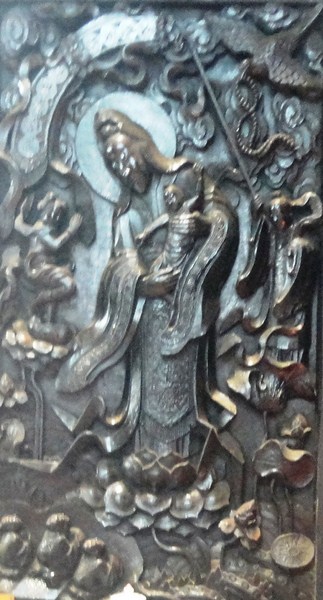
On the wall opposite Thanh Hoang is a wood panel depicting Quan Am Thi Kinh on a lotus blossom holding her “son.” To her left is her protector Long Nu while to her right is her guardian spirit Thien Tai. To the right of the panel of Quan Am Thi Kinh is a panel depicting Dia Tang Vuong Bo Tat, the King of Hell.

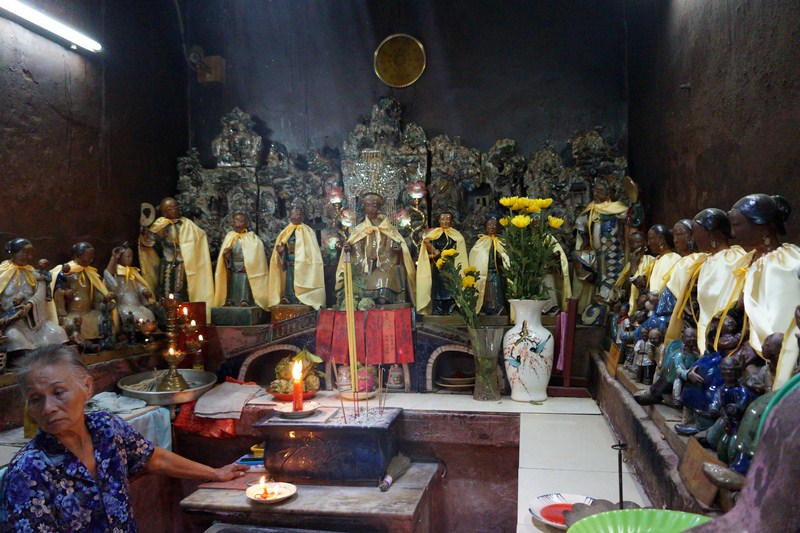
Kim Hoa Thanh Mau

Kim Hoa Thanh Mau

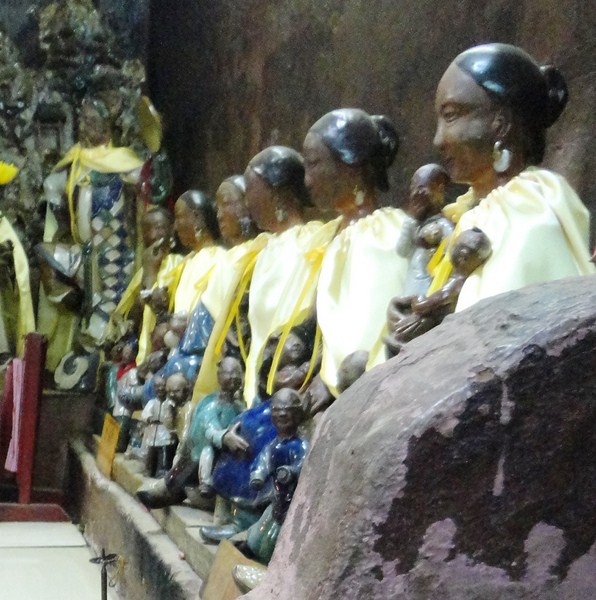
Facing the Chief of Hell, on the other side of the wall, is a fascinating little room with ceramic figures of 12 women wearing colorful clothes, overrun with many babies and sitting in two rows of six. They are presided over by Kim Hoa Thanh Mau, the Chief of All Women and the protector of all mothers and children. Each figurine exemplifies a particular human characteristic, either good or bad (as in the case of the woman drinking alcohol from a jug), and also represents a year in the 12-year Chinese astrological calendar. Childless Vietnamese couples often visit this small chapel to pray to be granted a child. Off to the right of the main chamber, stairs lead to a second floor sanctuary and balcony.

Figurines of 6 women in a row with babies

Figurines of 6 women in a row with babies

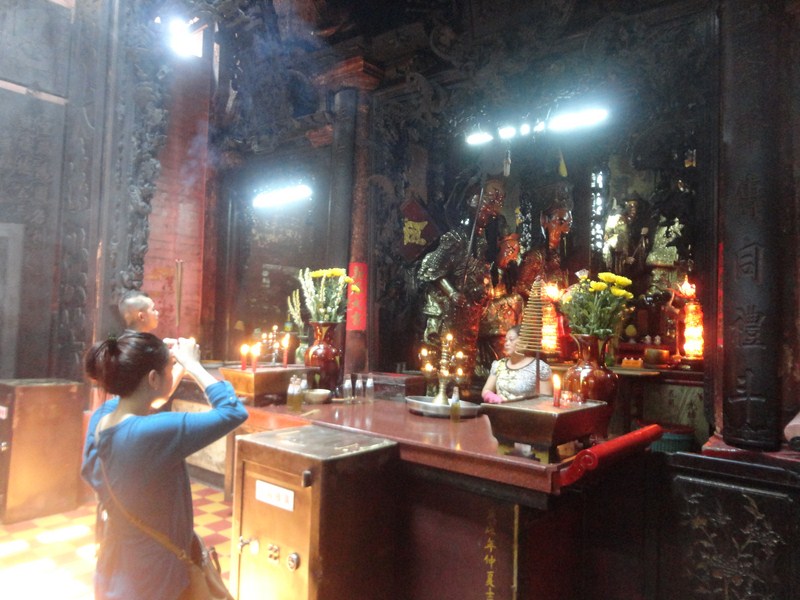
The rather interesting Jade Emperor Pagoda, a lovely and quiet place of worship, is a gentle and exotic little spot full of character. I liked looking at all these rather nasty and mean statues (they may scare very young children!) but also liked seeing the young and old local worshippers who came to pray, make offerings and burn incense. Set within a calm leafy courtyard with a rare spiritual glow, this island of tranquility in the sea of frenetic activity that is HCMC is definitely worth a look.

A pagoda worshipper

A pagoda worshiper

Jade Emperor Pagoda: 73 Mai Thi Luu Street, District 1Ho Chi Minh CityVietnam. Tel: +84 8 3820 3102.  It is open daily, 6 AM – 6 PM.

How to Get There: City buses 36 And 54 stop in the vicinity of the pagoda. Bus 36 leaves from the Ben Thanh bus station (just opposite Ben Thanh Market) and stops along Tran Quang Khai Street while bus 54 departs from the Mien Dong bus station and stops closest to the pagoda along Vo Thi Sau Street.