Goldenberg Mansion (City of Manila, Metro Manila)

The Goldenberg Mansion

Fifth Part of NCCA Heritage Tour

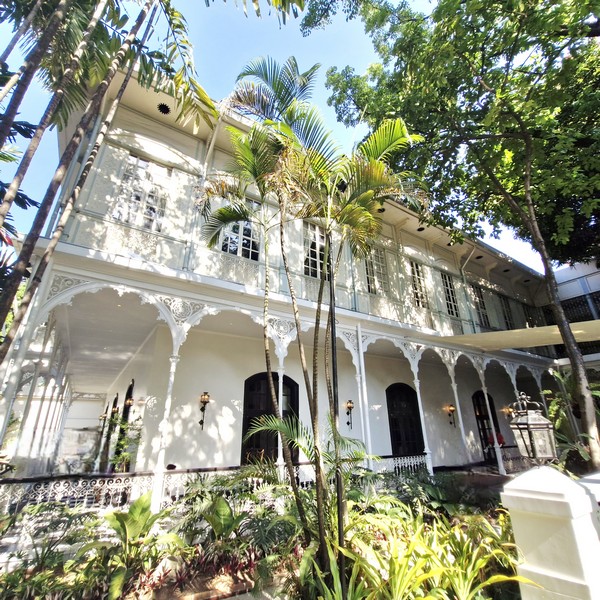
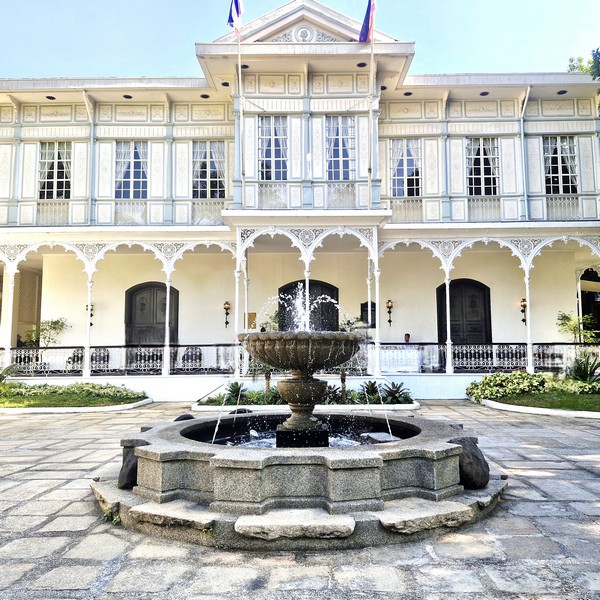
The historic Goldenberg Mansion, a stately 19th-century residence nestled in the heart of Manila, beside the Teus Mansion, stands as a timeless symbol of elegance, boasting a rich historical background.  This beautifully restored ancestral home now serves as a venue for cultural events, art exhibitions, and official receptions. This heritage house’s grand architecture, intricate details, and rich legacy offers a glimpse into the opulence of the colonial era while continuing to play a vibrant role in the country’s contemporary cultural landscape.

Check out “Teus Mansion

The right side of the mansion

It was built in the 1870s by the affluent Eugsters, a Spanish merchant family who owned the trading company Eugster, Labhart y Cia. It was later purchased by Spanish lawyer, writer, and colonial official (he previously served as the Oidor de la Audiencia or Hearing Officer of the Real Audiencia of Manila) Jose Moreno Lacalle who revamped it, heavily incorporating  Moorish Revival style into the design and infusing elements of his native region of Granada.
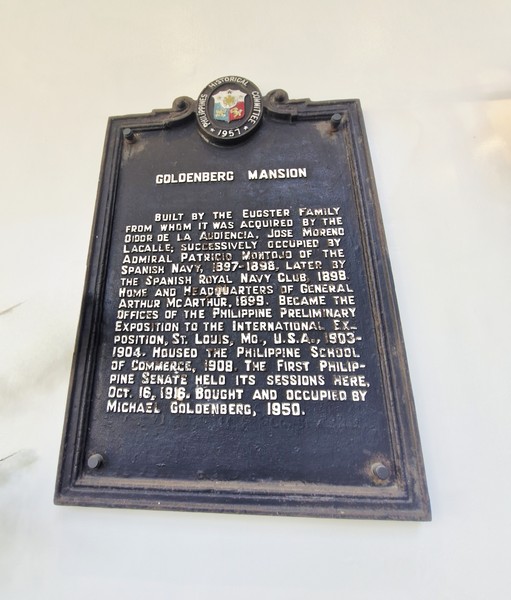
Philippine Historical Committee plaque (1957)

Constructed using indigenous materials such as Philippine hardwood, alongside European materials such as pre-fabricated steel from Belgium, Italian marble, and bricks and tiles from Spain, the mansion showcases window sashes using capiz shells, an arcaded veranda, a paved courtyard, and a splashing circular fountain.
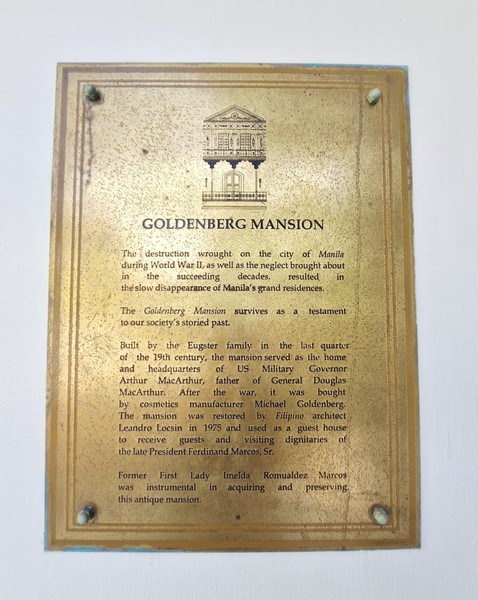
A more recent historical plaque

Over the course of the next 53 years, the house underwent several changes in ownership, being leased to various government and military offices. Between 1897 and 1898, it was rented to the Spanish Navy, serving as the residence for Admiral Patricio Montojo, its commanding officer, and housing the exclusive Spanish Navy Club’s headquarters.
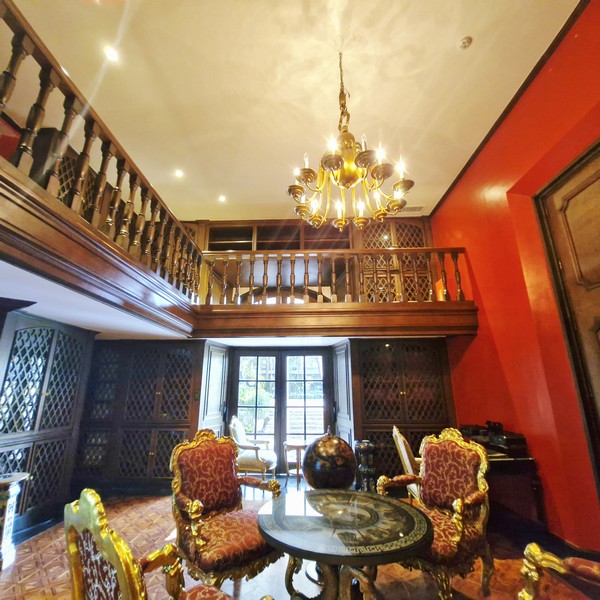
The mansion’s interior

After Admiral Montojo’s defeat at the Battle of Manila Bay and the surrender of Manila to the Americans under U.S. Navy Commodore George Dewey, it became the residence of Gen. Arthur MacArthur Jr. (father of Gen. Douglas MacArthur), the battalion commander, until his appointment, in 1900, as Military Governor of the Philippines, after which, he moved to Malacañang Palace. Responsible for maintaining public order of the city of Manila, Gov. MacArthur Jr. established the Metropolitan Police Force of Manila in 1901, with himself as its inaugural chief, and the police force was initially stationed on the mansion’s grounds.
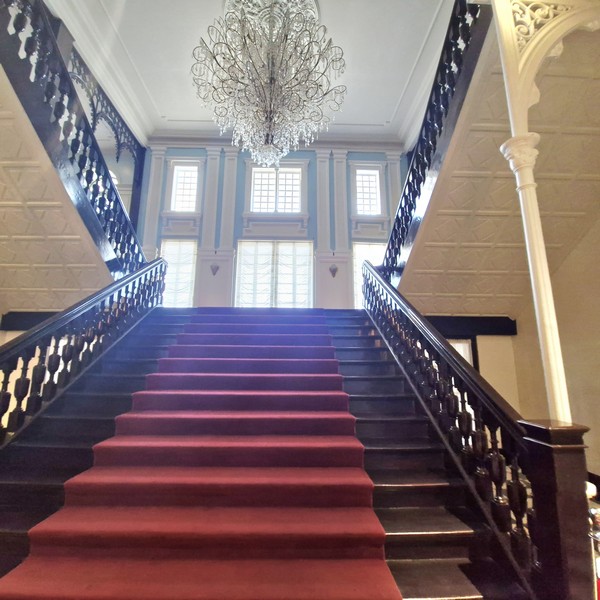
Grand double staircase

The year 1903 marked the mansion’s initial role as a museum when it functioned as the office of the Philippine Preliminary Exposition to the International Exposition in St. Louis, Missouri, exhibiting artifacts before their transfer to the Louisiana Purchase Exposition in 1904. Before shipping the items to the United States, the mansion hosted the first public exhibition of Philippine art, featuring works by Felix Resurreccion-Hidalgo, Fabian dela Rosa as well as Juan Luna’s famous The Blood Compact, which now resides in Malacañang Palace’s collection.
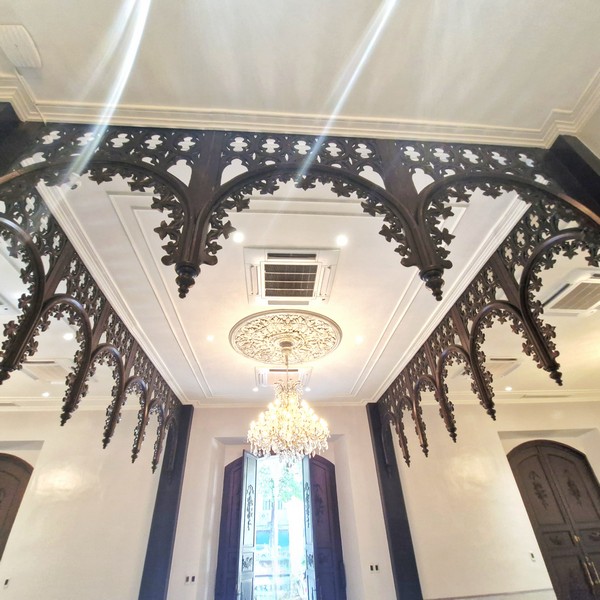
Glass chandelier bordered by intricate wooden fretwork

In 1908, it was the inaugural location of the Philippine School of Commerce (now the Polytechnic University of the Philippines) and, by 1915, the property was acquired by Ricardo Esteban Barretto, whose family established the San Miguel Brewery. On October 16, 1916, it hosted the first session of the Senate of the Philippines. In the 1930s, it also housed the Adamson School of Industrial Chemistry (the present Adamson University main building, in San Marcelino, was inspired by the mansion’s architecture).
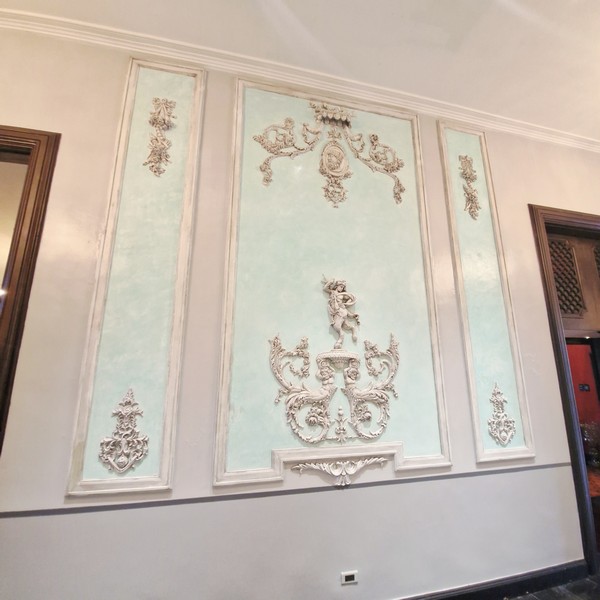
Intricate wooden bas-reliefs at the walls

During World War II, it served as the residence of a Japanese general.  After the war, it was converted into the Ye Olde Mansion, a restaurant-nightclub for American troops. In 1950, the mansion was acquired by cosmetic magnate, businessman and philanthropist Michael Goldenberg (1889–1963), an American of French-Jewish descent, who initially arrived in the Philippines as a young boy in 1896 (he personally witnessed the execution of National Hero Jose Rizal in Bagumbayan).
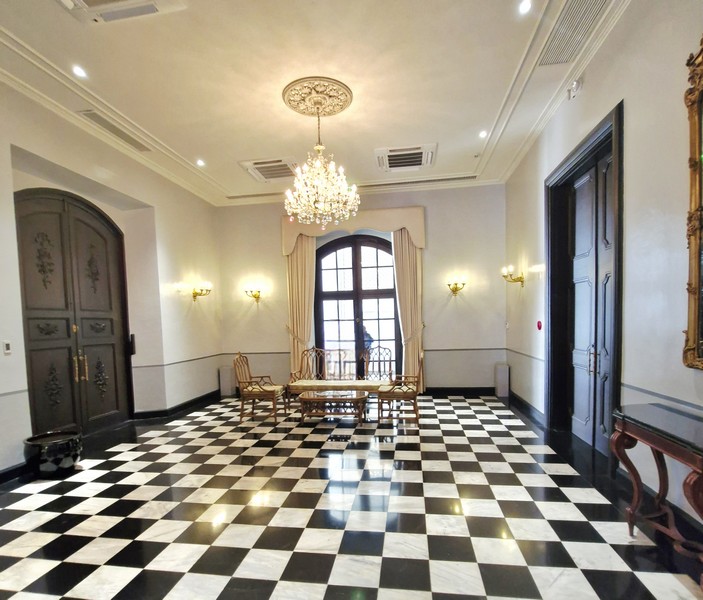
The main hall with checkerboard tile pattern

Amassing his wealth in retail, Goldenberg founded the Goldenberg Department Store situated in Escolta and held exclusive distribution rights, in the Philippines, for distributing Helene Curtis Shampoo Plus Egg beauty products.
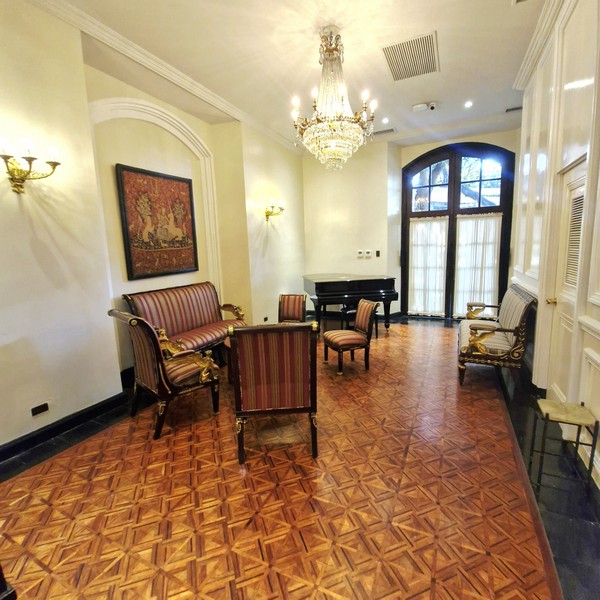
Receiving area with wooden parquet flooring

A keen stamp collector and a trailblazer in organized philately in the Philippines, Goldenberg amassed a collection of over 4,000 books, journals, maps, old photographs, pamphlets, and other ephemera on the Philippines and, subsequently, established the Goldenberg Filipiniana Library, a private institution dedicated to the study of Philippine history and culture. As a consequence, the mansion came to be known as the Goldenberg Mansion.
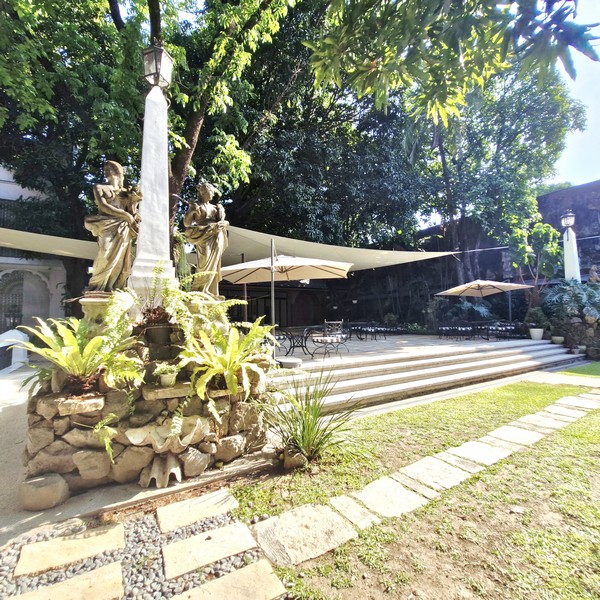
Mansion garden

In 1966, following Goldenberg’s death in 1963, the Goldenberg Mansion was acquired, from his heirs, by First Lady Imelda Marcos  as one of the Marcos mansions. Subsequently, it became the offices of the Marcos Foundation and, after undergoing extensive restoration and renovation of the interiors by National Artist for Architecture Leandro Locsin, served as the office and guest house of the Marcos Foundation and renamed Ang Maharlika.
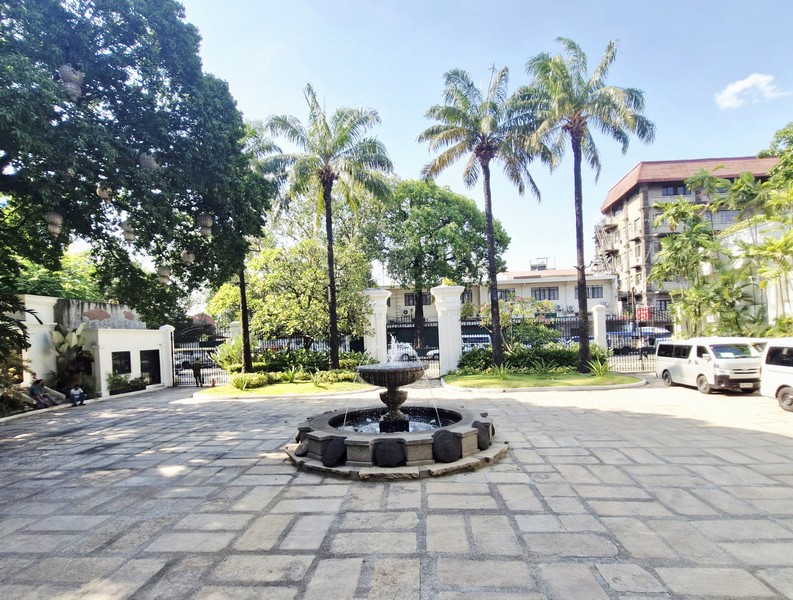
View looking towards Gen. Solano Street

As a guesthouse, it hosted notable dignitaries such as King Hussein and Queen Alia of Jordan; Prince Juan Carlos and Princess Sofia (later King and Queen) of Spain; Prime Minister Indira Gandhi of India; Prime Minister Pierre Elliott Trudeau of Canada; UN Secretary-General Kurt Waldheim; celebrated American pianist Van Cliburn and renowned ballerinas Dame Margot Fonteyn and Alicia Markova.
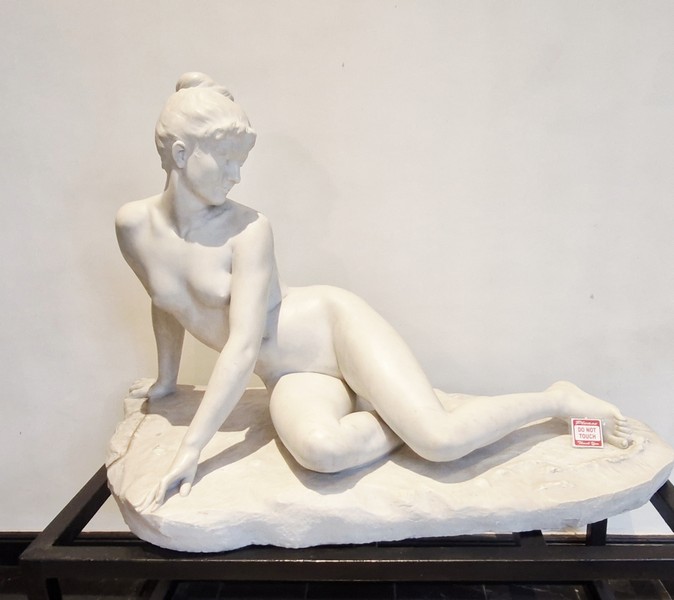
Sculpture of a reclining nude female figure

After the People Power Revolution of 1986, ownership of the Goldenberg Mansion and other properties within the Malacañang Palace complex transferred to the Government of the Philippines, with restricted public access. From 2022 to 2023, following the initiative of First Lady Liza Araneta Marcos, the Goldenberg Mansion underwent renovation to be made into a cultural center and events space.  A glass house, designed and conceptualized by Jonathan G. Matti (an in-demand interior designer with a background in architecture), was also added on the grounds of the Goldenberg Mansion.  The mansion was reopened to the public as a cultural center and events space.
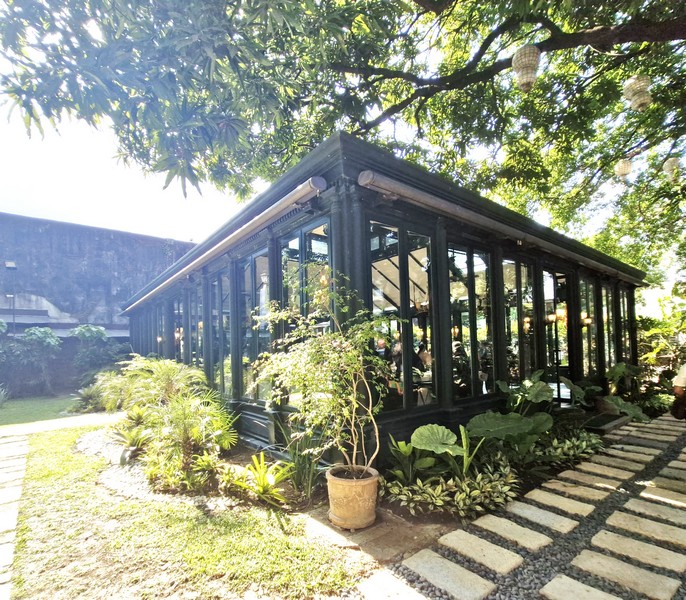
The Glass House

On May 12, 2023, President Bongbong Marcos issued Executive Order No. 26 to conserve and protect cultural heritage sites around Malacañang Palace, including the Teus Mansion and the Goldenberg Mansion. The supervision of these properties was transferred, from the former Office of the Deputy Executive Secretary for General Administration, to the Social Secretary’s Office.
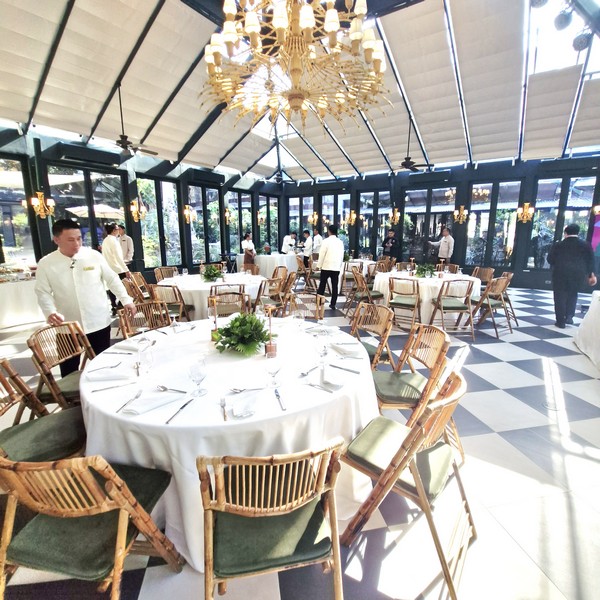
Interior of Glass House

In April 2023, the Goldenberg Concert Series, part of the “Konsyerto sa Palasyo,” was launched. In March 2024,  Araneta Marcos’ inaugural concert, starring the Manila Symphony Orchestra musicians, was held there. The Series, featuring exceptional Filipino performing artists, especially the youth, was the brainchild of Stella Goldenberg Brimo (daughter of Michael Goldenberg). In April 2024, Indak ng Musika, a piano concert, was performed by alumni of Santa Isabel College’s Conservatory of Music. In the fourth event violinist Adrian Ong and pianist Jet Chong performed for former First Lady Imelda Marcos, and her sister-in-law Irene Marcos-Araneta.

In addition to the Goldenberg Mansion’s library, the mansion housed Imelda Marcos’s extensive art collection and a significant collection of oriental ceramics and artefacts, including Chinese jade furniture, excavated porcelain and pottery, and Ban Chiang pottery from Thailand.

Its interiors features a living room with wood filigree arches and chandeliers; tapestries depicting Diana the Huntress; a “Della Robbia” style mirror (which once belonged to Catherine de Medici); several paintings by the American artist Grandma Moses (forfeited, in 2019, by the Sandiganbayan  in favor of the Government); a 16th-century European devotional altar adorned with ivory figures depicting the life and martyrdom of Catherine of Alexandria; and Persian rugs adorning the floors.

Goldenberg Mansion: 838 Gen. Solano St., San MiguelManila. Tel:  (02) 8249 8310 local 8188. E-mail: goldenbergevents@op.gov.ph.  Wensite: www.goldenbergmansion.gov.ph. Open  Tuesdays to Sundays, 9 AM to 6 PM.  Coordinates: 14°35′30″N 120°59′22″E

How to Get There: The mansion can be visited, by the public, upon reservation, via socsec@malacanang.gov.ph.

National Commission for Culture and the Arts (NCCA): NCCA Bldg., 633 General Luna St., Intramuros, Manila, 1002. Tel: (632) 8527-2192. E-mail: info@ncca.gov.ph. Website: www.ncca.gov.ph.
Teus Mansion (City of Manila, Metro Manila)

Teus Mansion

Fourth Part of NCCA Heritage Tour

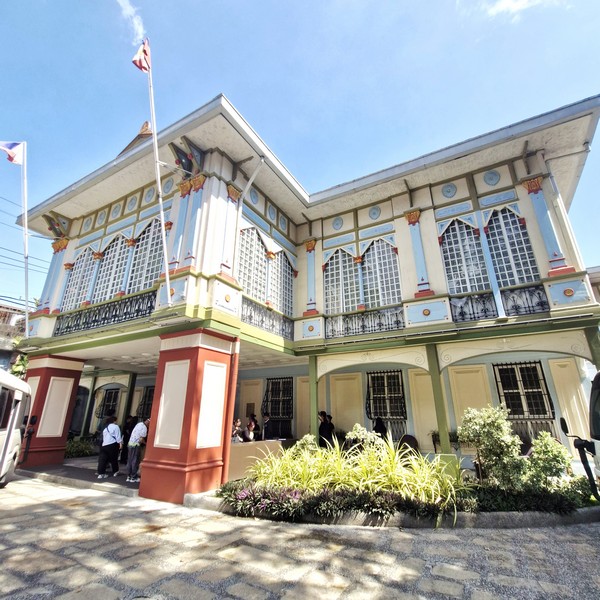
The stunning, Spanish-Era, Neo-Gothic-style Teus Mansion (beside the Goldenberg Mansion), preserving the legacy of Philippine leadership by displaying rare portraits and historical memorabilia of the nation’s 17 Philippine presidents (that were previously shown in the Kalayaan Hall Presidential Museum and Library), takes its name from Valentin Teus Yrissari (1832-1909), a Spanish businessman, of Basque descent, from Navarra (at the foot of the Pyreness), who arrived in the Philippines in 1847 at the age of 15.  

Check out “Goldenberg Mansion

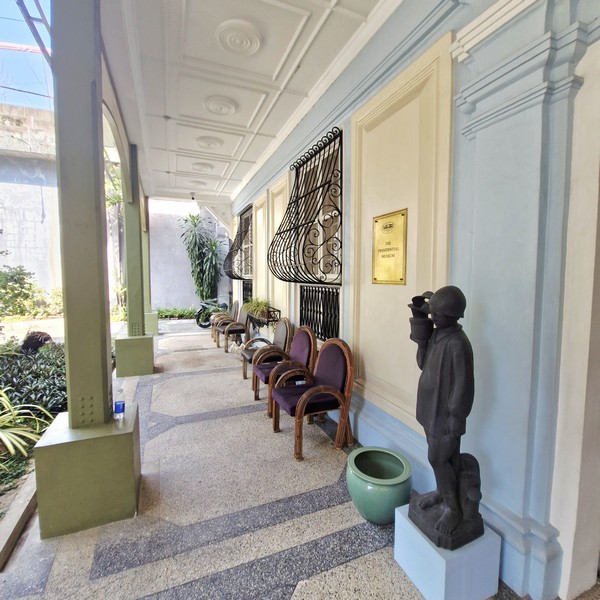
Entrance porch

In 1856, Teus acquired a local distillery in Hagonoy, Bulacan, owned by Elias Menchatorre.  Later, he merged his operations with Ynchausti y Cia, a company supplying equipment and abaca rope (for ship’s rigging) for steamships, which evolved into the renowned Tanduay Distillers

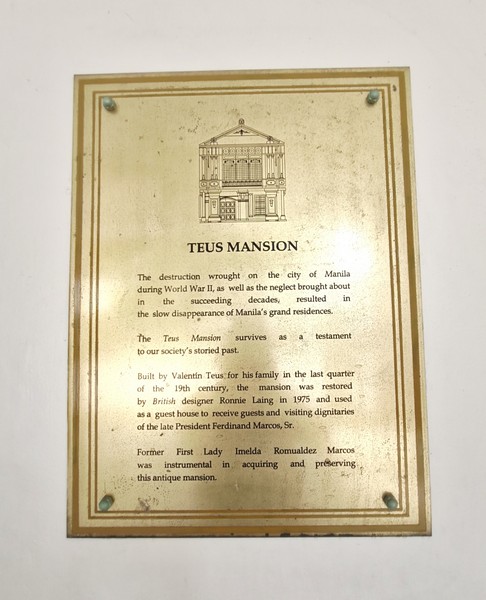
Historical plaque

In 1871, Valentin became alcalde primero of the Ayuntamiento (City Council) de Manila and, the following year, was honored as Comendador de la Real Orden de Isabela la Catolica. He later married Teresa Ferrater Ponte (1847 – 1892), the niece of the capitán general. Following Ponte’s demise, Valentin, now 62, married Maria Dolores Menendez Valdes de Cornellana Ferrater, Teresa’s 20-year old niece, at San Miguel Church. They had 4 children: Valentin Jr. (who died young), Concepcion (known as Concha), Valentin III (or Tito), and Dolores (affectionately called Lolin).

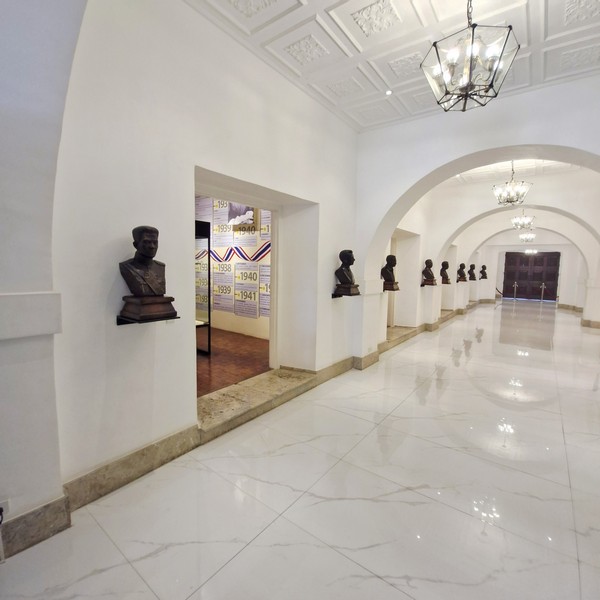
Busts of presidents lining the main hall

Initially residing in Binondo, Valentin, in a gesture of affection, surprised Dolores with Teus Mansion in the 1890s, a new residence, in the fashionable arrabal of San Miguel, built on the ruins of an older convent probably destroyed during the 1880 earthquake. He and his family would occupy this residence in Manila but, periodically, every five years, Valentin would journey to Spain. In 1909, Valentin unexpectedly died, leaving Dolores to manage the household and the family affairs. After Dolores’s own demise, the family eventually relocated to Spain by selling their interests there.

Presidential Museum
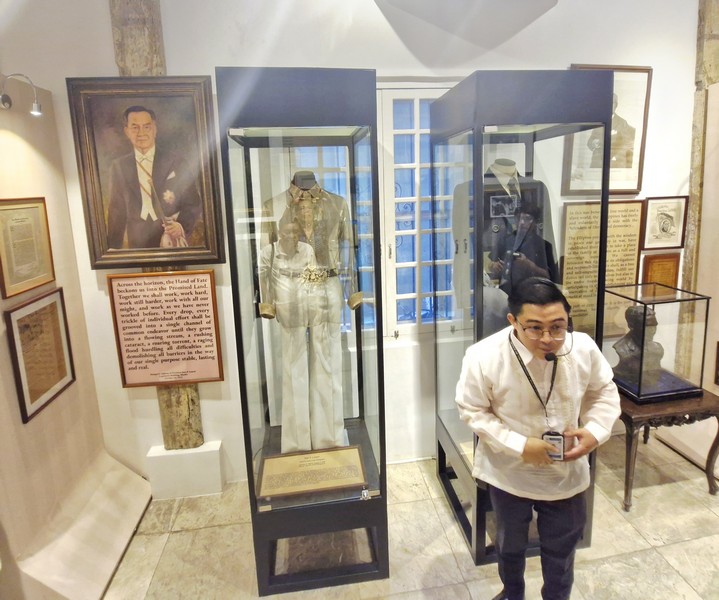
Presidential staff assistant Mr. Ronnie W. Balastigue touring media guests around the museum

The mansion was inherited by Concepción Teus, the eldest child, who rarely visited it, leaving an old man as caretaker.  The once proud mansion deteriorated.  The kitchen roof fell in and the attic became home to a bat colony. In 1974, Concepción opted to sell the mansion (none of her 7 children and 48 grandchildren were interested) to First Lady Imelda Marcos. In 1975, she engaged British interior designer Ronnie Laing and antique dealer Viring de Asis to renovate the Teus Mansion as a guest residence, becoming one of the Marcos mansions

Emilio F. Aguinaldo Exhibit
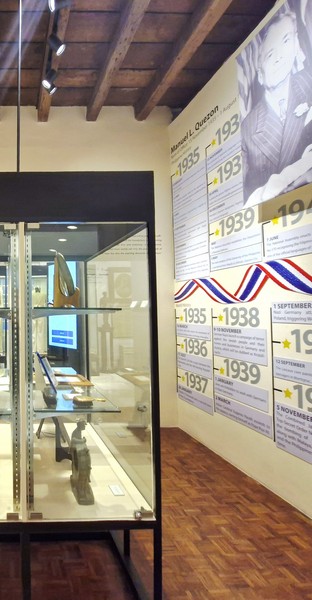
Manuel L. Quezon Exhibit
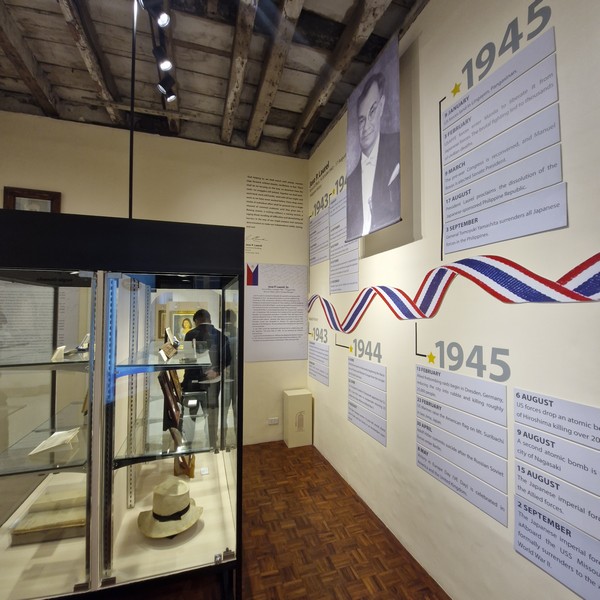
Jose P. Laurel Exhibit
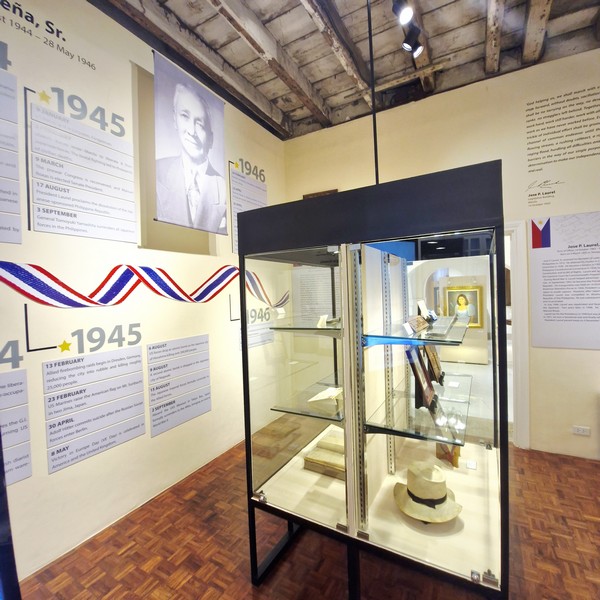
Sergio Osmena Exhibit

The former dining room was made into two bedrooms and partitions, in another bedroom, were taken down to create a spacious living-dining area. Bathrooms and closets were cleverly added, their entrances cleverly camouflaged behind aparador (cabinet) fronts. The original downstairs carriageway now serves as an entrance hall. The rest were transformed into 12 bedrooms which, with the existing five upstairs, gave the old home a total of 17 bedrooms.  Notable guests at the Teus Mansion included the Italian-American socialite Cristina Ford, who was close associate of Imelda.

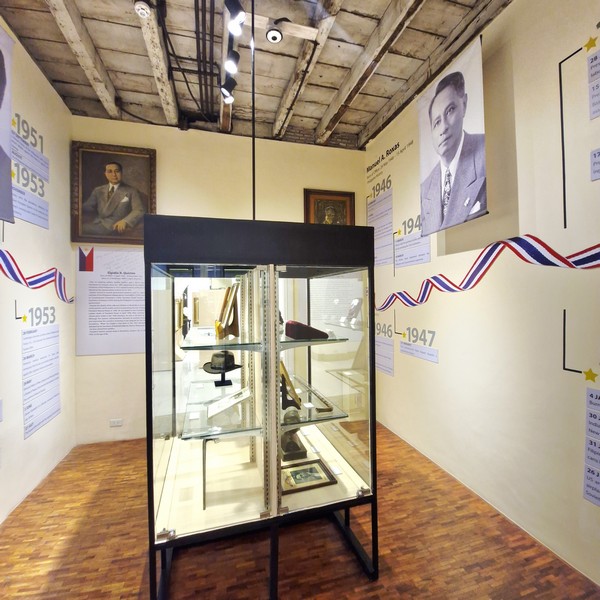
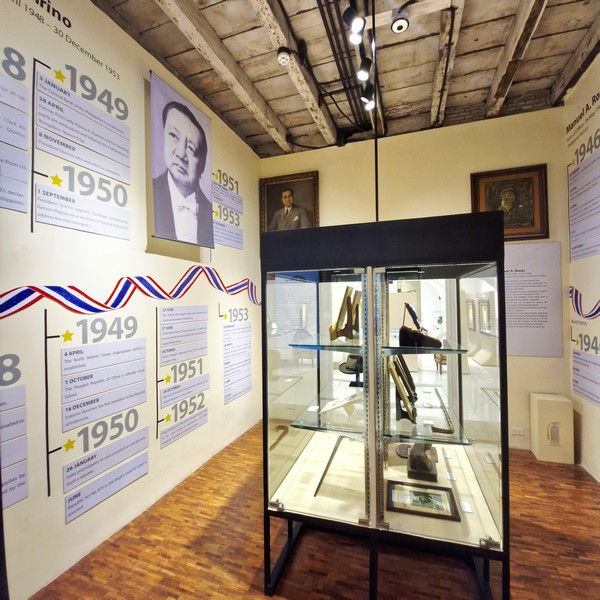
Manuel A. Roxas Exhibit
Elpidio Quirino Exhibit
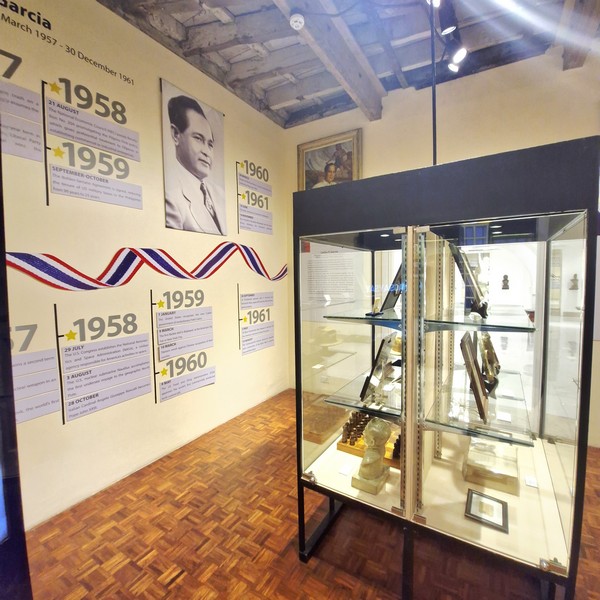
Carlos P. Garcia Exhibit
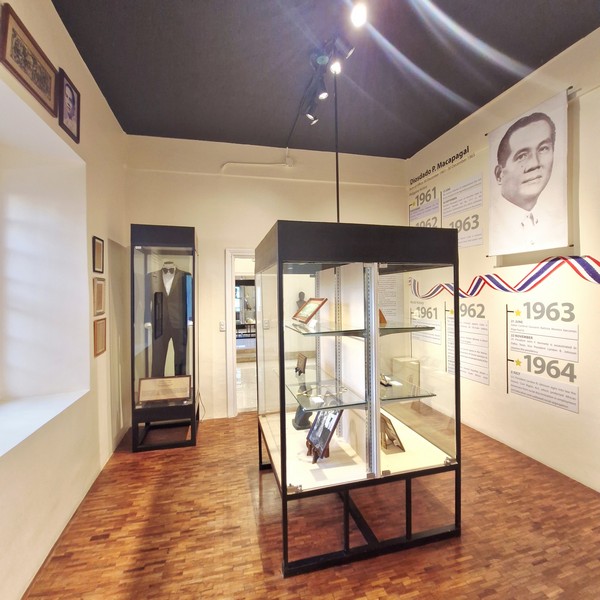
Diosdado Macapagal Exhibit

After the People Power Revolution of 1986, the Teus Mansion, and other properties within the Malacañang Palace complex, became possessions of the Government of the Philippines but was left unused and remained closed to the public.

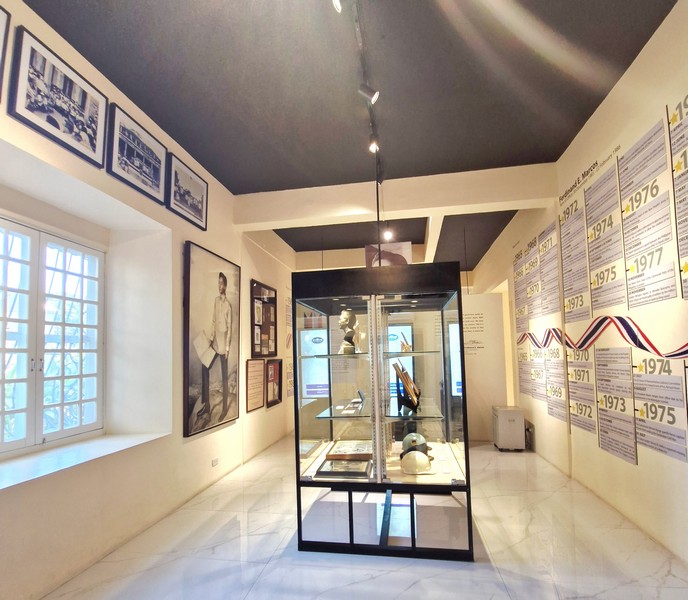
Ferdinand E. Marcos Exhibit
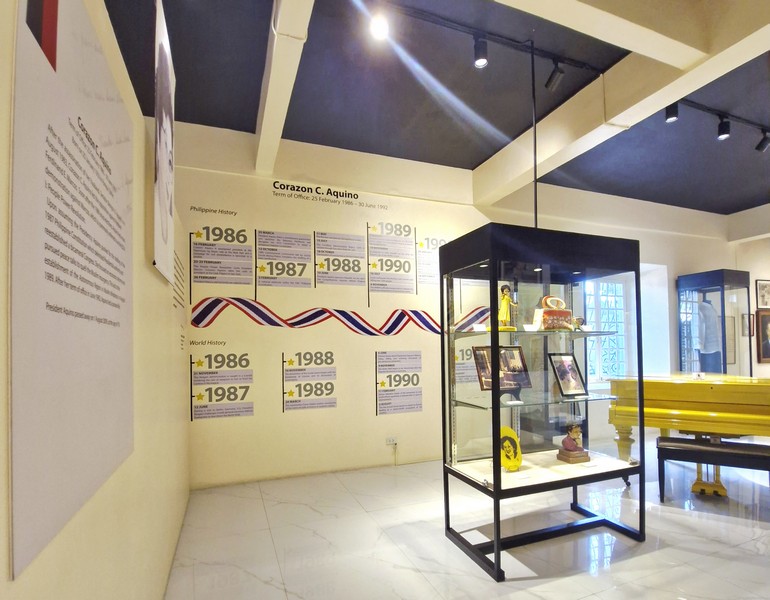
Corazon C. Aquino Exhibit
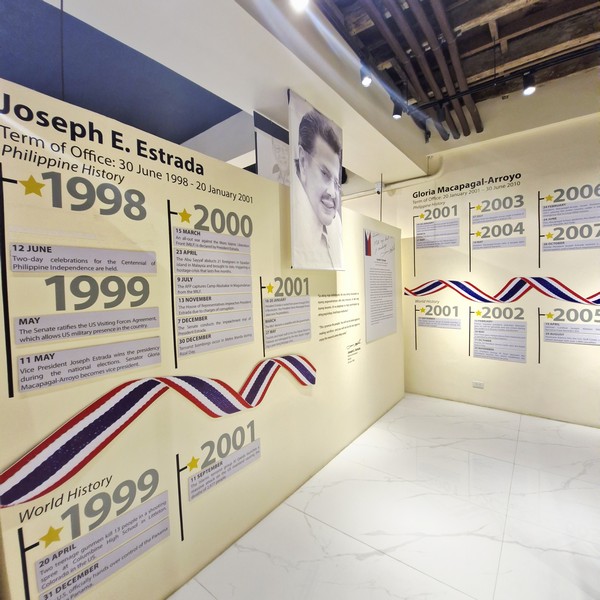
Joseph E. Estrada Exhibit
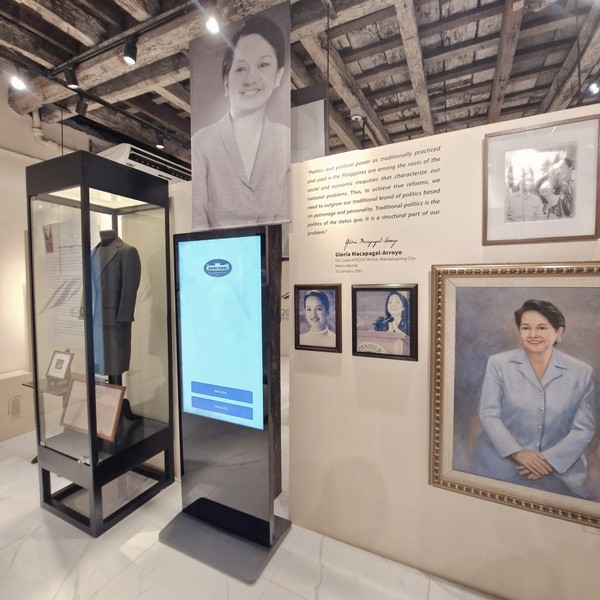
Gloria Macapagal-Arroyo Exhibit
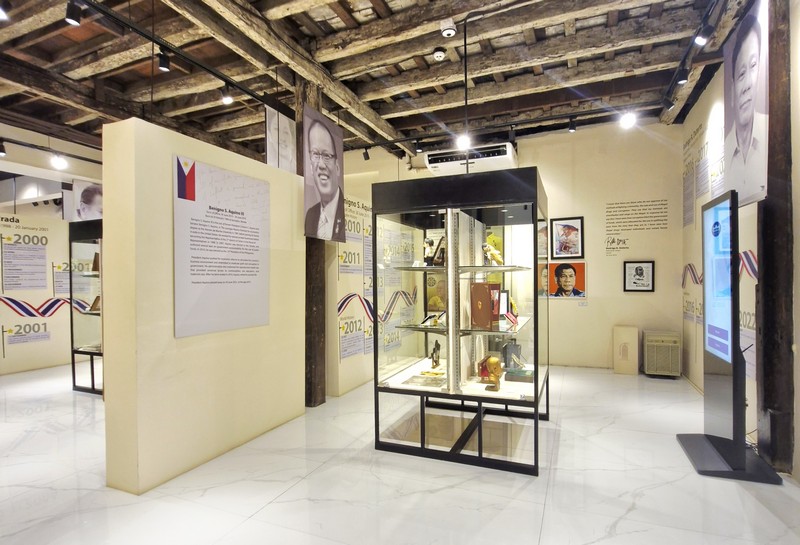
Benigno C. Aquino Exhibit
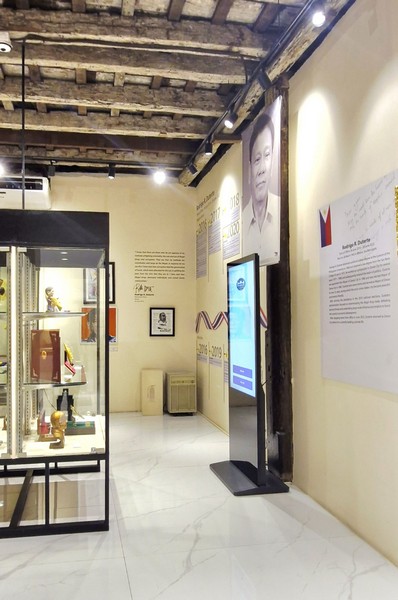
Rodrigo R. Duterte Exhibit

On May 12, 2023, President Bongbong Marcos issued Executive Order No. 26 to conserve and protect cultural heritage sites around Malacañang Palace, including the Teus Mansion. That same year, the Teus Mansion underwent renovations, overseen by First Lady Liza Araneta Marcos, to house collections from the Presidential Museum (formerly located in Kalayaan Hall). The supervision of these properties was transferred to the Social Secretary’s Office from the former Office of the Deputy Executive Secretary for General Administration.

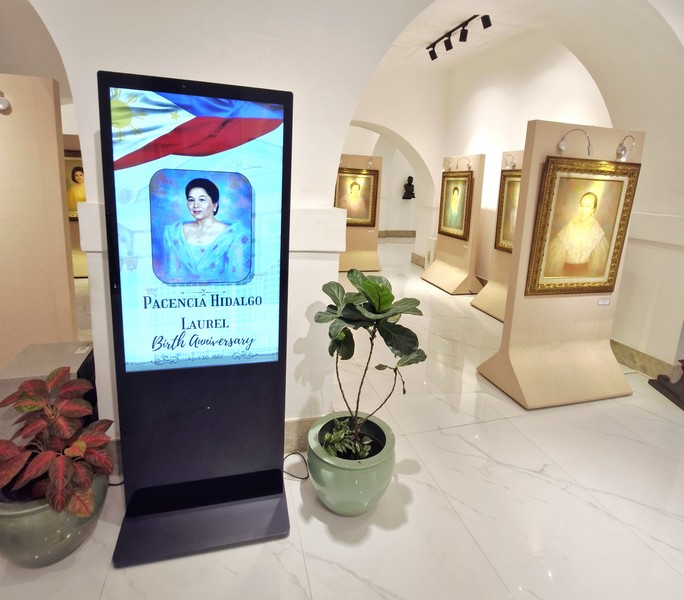
Gallery of First Ladies

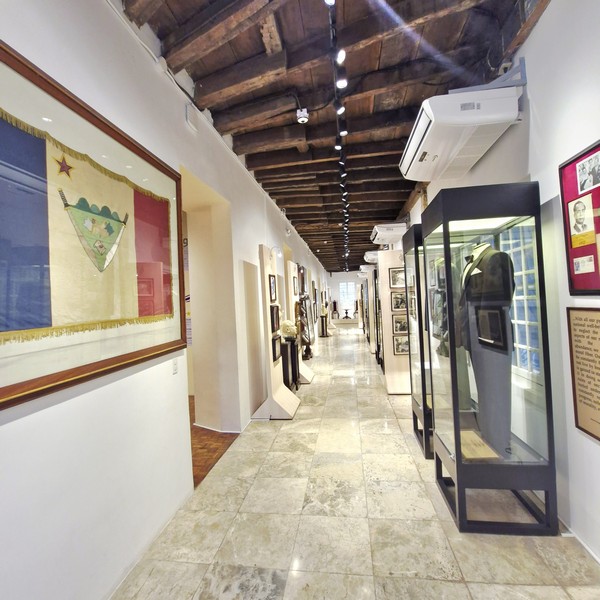
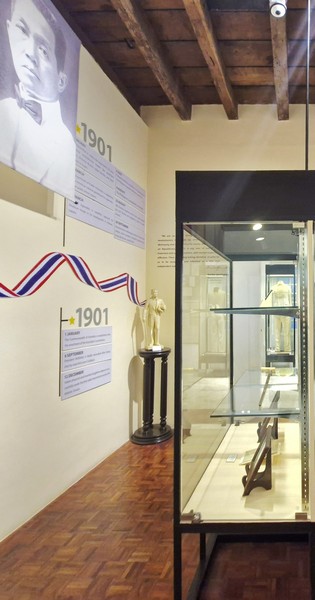
The rooms were transformed into galleries exhibiting artifacts, personal belongings, clothing, souvenirs, gifts, photographs, and memorabilia of Philippine Presidents, from Emilio Aguinaldo to Rodrigo Duterte. One or two rooms is devoted to each president,.  Wall text and photographs sustain the main narrative.  Memorabilia from government collections and loans or gifts from presidential families include medals and decorations, commemorative coins, and miscellanea like eyeglasses, a golf club, chess pieces, automobile license plates, a buntal hat and a cap, flyers from long-ago elections, souvenirs of EDSA I, and sculptures like one of President Ramos’ head puffing on a cigar.

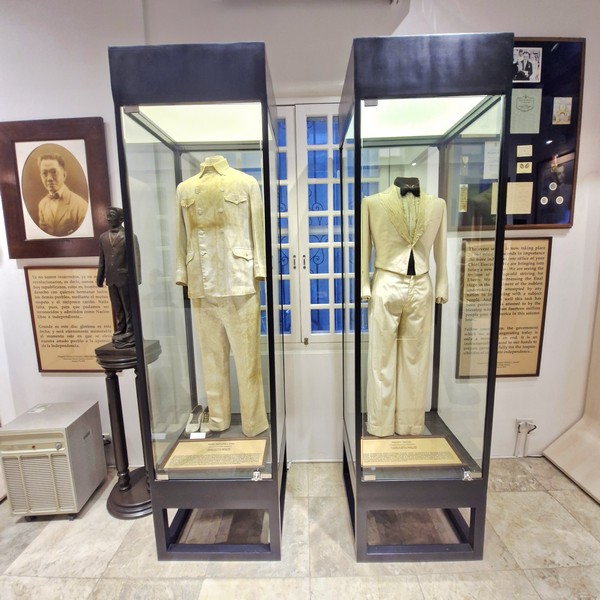
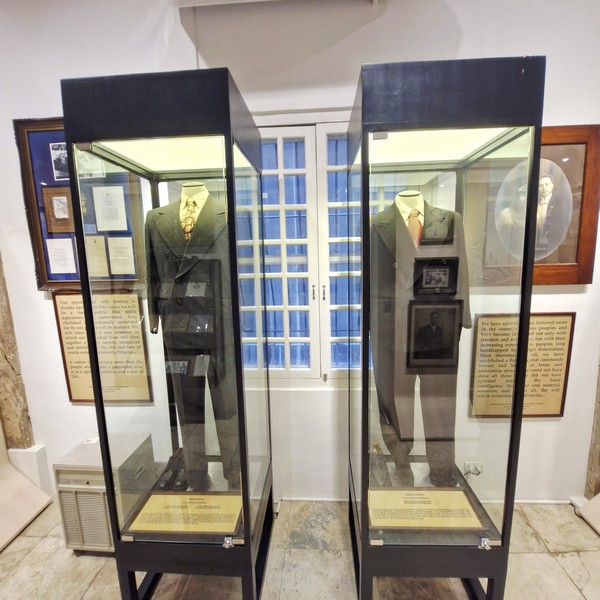
Suits of Emilio Aguinaldo and Manuel L. Quezon
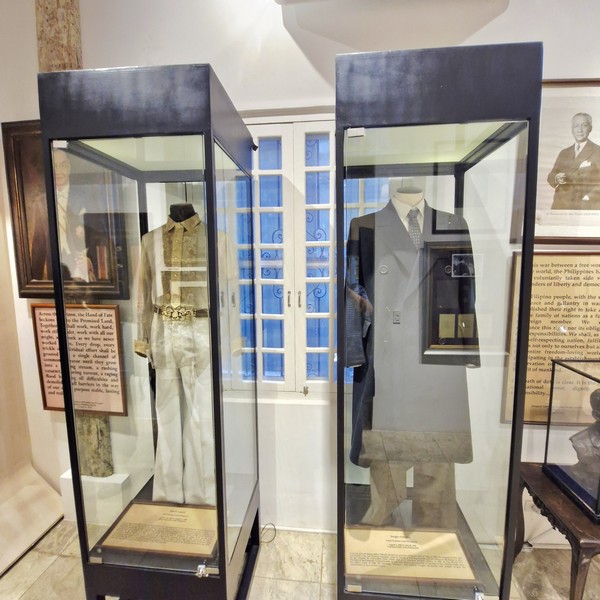
Barong tagalog of Jose P. Laurel and suit of Sergio Osmena

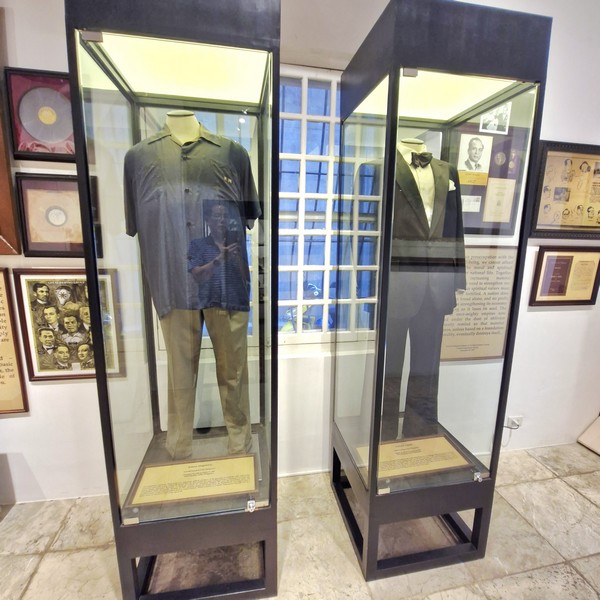
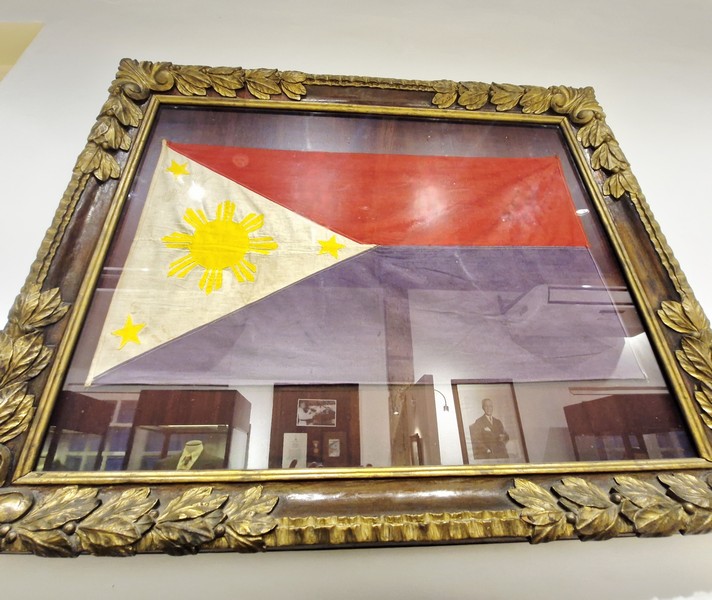
The Osmeña Room has a Philippine flag signifying that the Republic was then at war, with the red section above the blue. Barong Tagalog and/or suits of most of the presidents, on mannequins, provide an unintended history of Philippine men’s fashion. The main hall is lined with busts of presidents and there is also a gallery with portraits of First Ladies.

Suits of Manuel A. Roxas and Elpidio Quirino
Casual attire of Ramon Magsaysay and suit of Carlos P. Garcia

AUTHOR’S NOTES:

The two-storey façade, with Neo-Gothic windows (flanked by paired and single flat pilasters), on the upper floor, and quadrilateral windows, on the ground floor, features a protruding central section, topped by a triangular pediment (flanked by 8-petalled finials and topped by an acroterion), holding the porte cochere below.  Below the windows are grilled ventanillas. The massive wrought iron gate of the mansion opens up to a stone courtyard with a circular fountain.

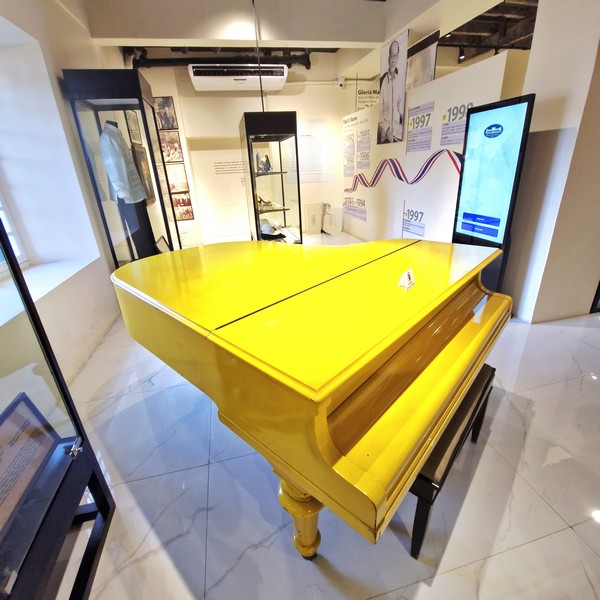
Grand piano at the main sala (living room)
The Osmena flag with the red section above the blue signifying that the country was at war.

Teus Mansion: Gen. Solano cor. J. Nepomuceno (formerly Tanduay) Sts., San Miguel, Manila. Tel:  (02) 8249 8310 local 9009. Open Tuesdays to Sundays, 10 AM to 6 PM. Admission is free.  E-mail: tours_mht@op.gov.ph. Website: www.teusmansion.gov.ph. Coordinates: 14°35′30″N 120°59′22″E.

National Commission for Culture and the Arts (NCCA): NCCA Bldg., 633 General Luna St., Intramuros, Manila, 1002. Tel: (632) 8527-2192. E-mail: info@ncca.gov.ph. Website: www.ncca.gov.ph.
Bahay Ugnayan (City of Manila, Metro Manila)

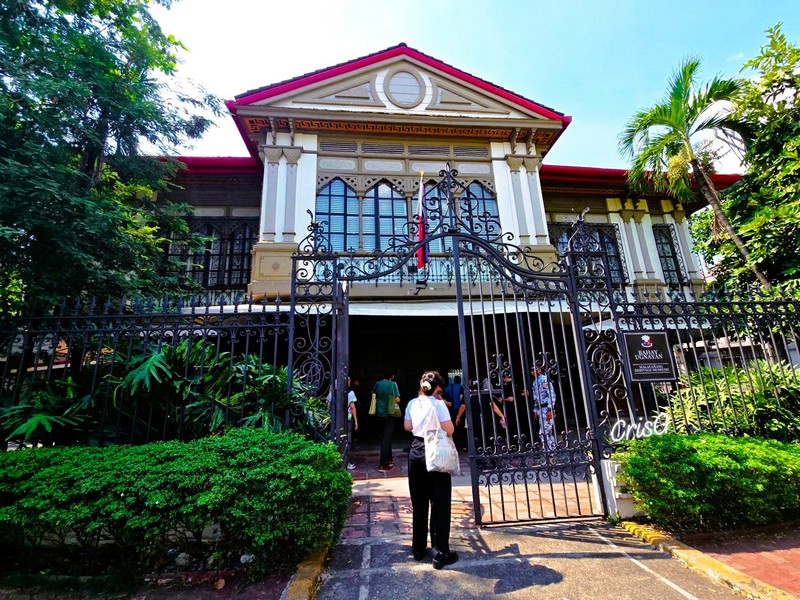
Bahay Ugnayan (photo: Ms. Cris Gadion)

Third Part of NCCA Heritage Tour

The Spanish Colonial-period Bahay Ugnayan (Tagalog word for “connection” or “relationship”), formerly a compound for priests, was built around the 1800s though not much is known about it.  Located meters away from the Teus Mansion, it was donated to the government, by the Madrigal family, shortly before World War II, making it one of the first, if not the first, of the mansions outside the Malacañang complex that came into government possession. 

Check out “Teus Mansion

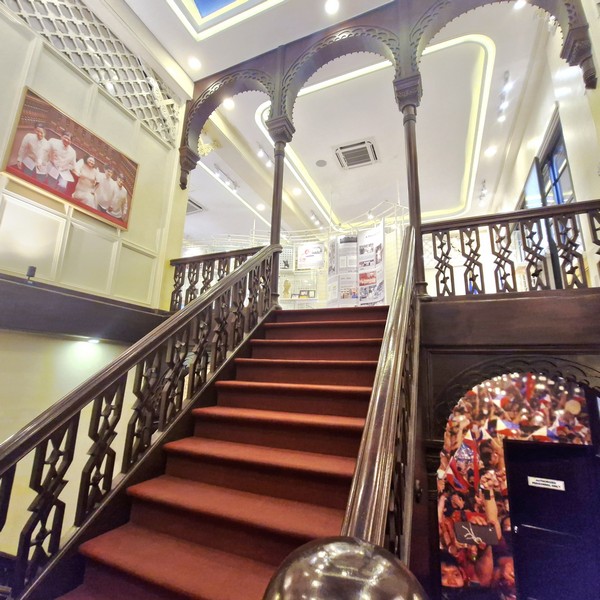
Grand Staircase

For many years, it served as a government office, for various agencies under the Office of the President (such as the Presidential Complaint Center and the 8888 Citizens’ Complaint Center), until May 12, 2023, when President Ferdinand “Bongbong” Marcos, Jr. issued Executive Order No. 26 to conserve and protect cultural heritage sites around Malacañang Palace, including the Bahay Ugnayan, Teus Mansion and Goldenberg Mansion. That same year, the mansion underwent renovations, overseen by First Lady Liza Araneta Marcos

Check out “Goldenberg Mansion

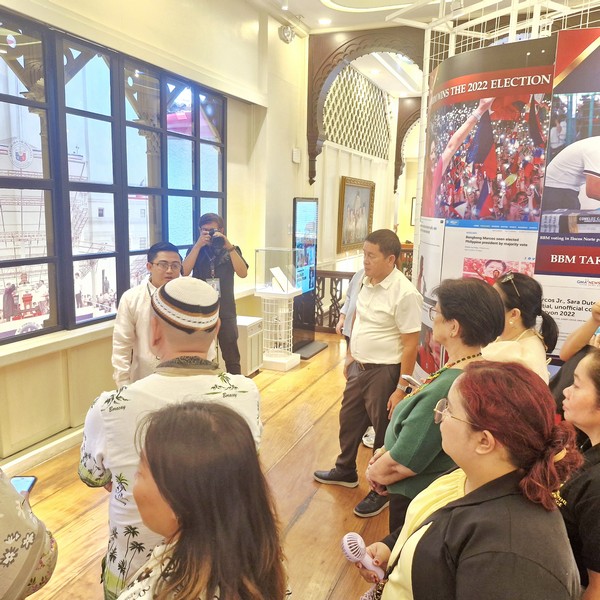
Presidential Staff Assistant Mr. Ronnie W. Balastigue (upper left, facing camera) touring media guests around the museum

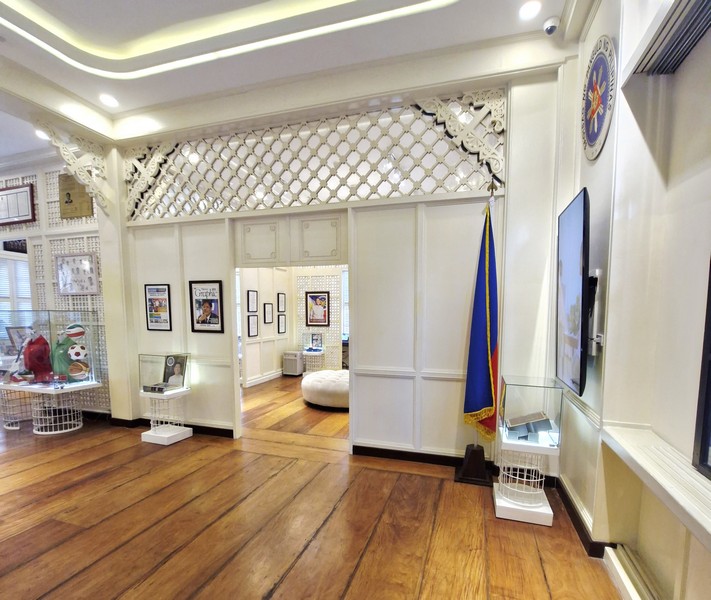
Bahay Ugnayan, reimagined as a dynamic museum, has been designated as a “changing” museum, which would showcase the life and accomplishments of the current president, in this case that of the “Road to Malacañang” exhibit of Pres. Ferdinand “Bongbong” Marcos, Jr.. which houses memorabilia from his childhood to his 2022 campaign.

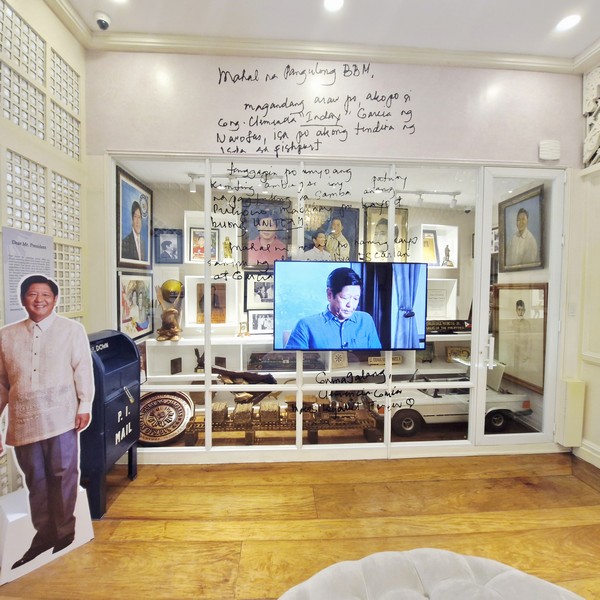
Exhibit of photographs and the president’s childhood toys
The “Road to Malacanang” Exhibit

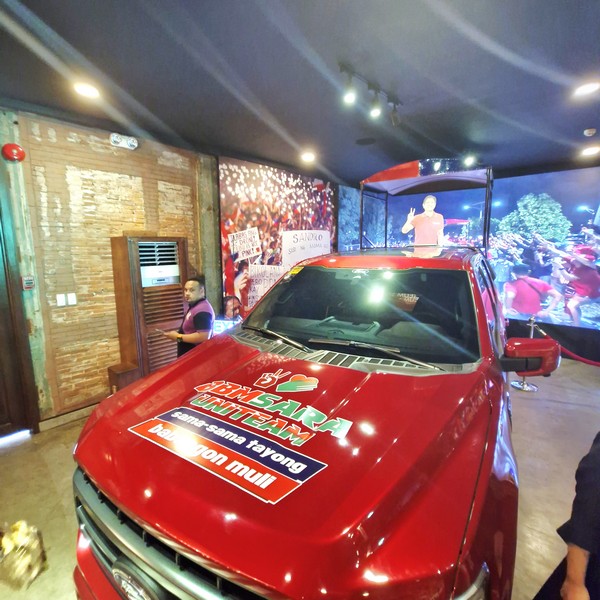
Items in its carefully curated displays and artifacts include the red Ford F-150 pickup he frequently used during the campaign period; copies of the original documents submitted during his electoral protest against former Vice-President Leni Robredo after the 2016 elections (the Supreme Court junked Mr. Marcos’ electoral protest against Robredo in February 2021) and a piece of barbed wire tied with a yellow ribbon, a prominent symbol during the People Power Revolution that led to the ouster of the President’s father and namesake in 1986.

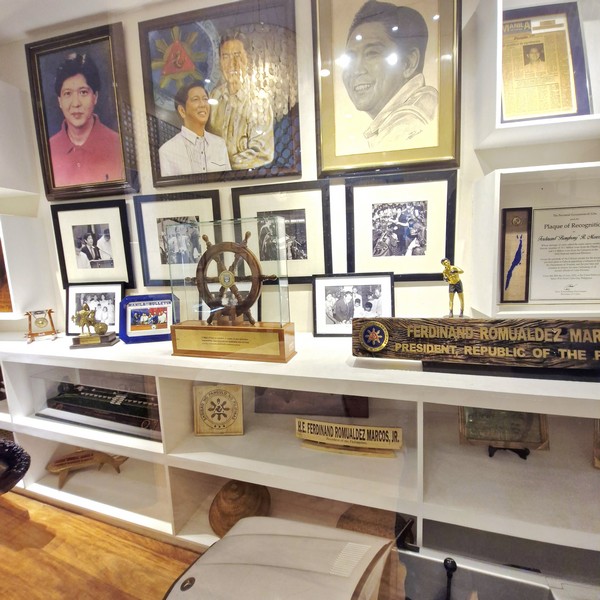
Exhibit of photographs of father and son and desk name signs

Whoever succeeds Marcos Jr as president in 2028 will be showcased in the Bahay Ugnayan venue by then, while the memorabilia of Marcos Jr. will be moved to the Teus Mansion.  As it stands, the Bahay Ugnayan not only showcases the life of the current president but also serves as a political statement of sorts.

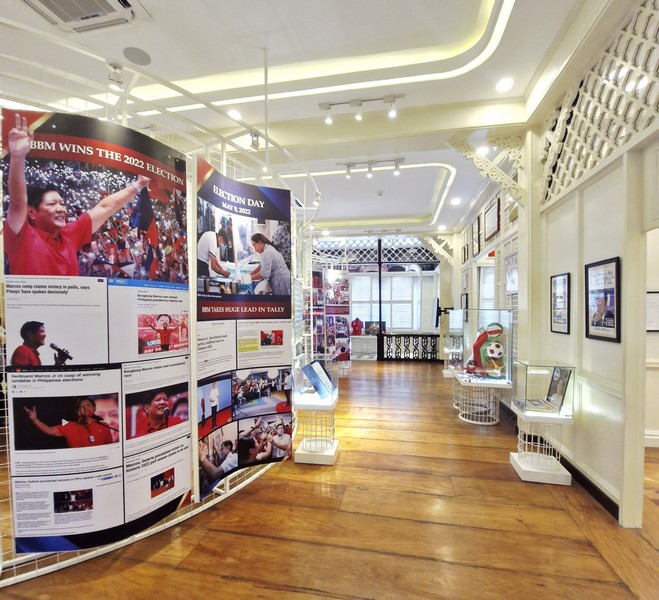
Exhibit of 2022 presidential campaign

Apart from the campaign materials used during the elections, one can find the certifications about Marcos Jr.’s college education (a controversial topic that props up from time to time) as well as a section dedicated to his electoral protest which came about after his loss in the vice-presidential race in 2016.

Ford F-150 Pickup the president used during his 2022 campaign

Bahay Ugnayan: Jose P. Laurel Sr. St., (fronting Gate 2 of the Malacañang Palace), San Miguel, Manila, 1005. Open Tuesdays to Sundays, 10 AM to 4 PM. Admission is free. Website: www.bahayugnayan.gov.ph. For private guided tours, please email to arrange separately tours_mht@op.gov.ph.

National Commission for Culture and the Arts (NCCA): NCCA Bldg., 633 General Luna St., Intramuros, Manila, 1002. Tel: (632) 8527-2192. E-mail: info@ncca.gov.ph. Website: www.ncca.gov.ph.
Namba Jinja Shrine (Osaka, Japan)

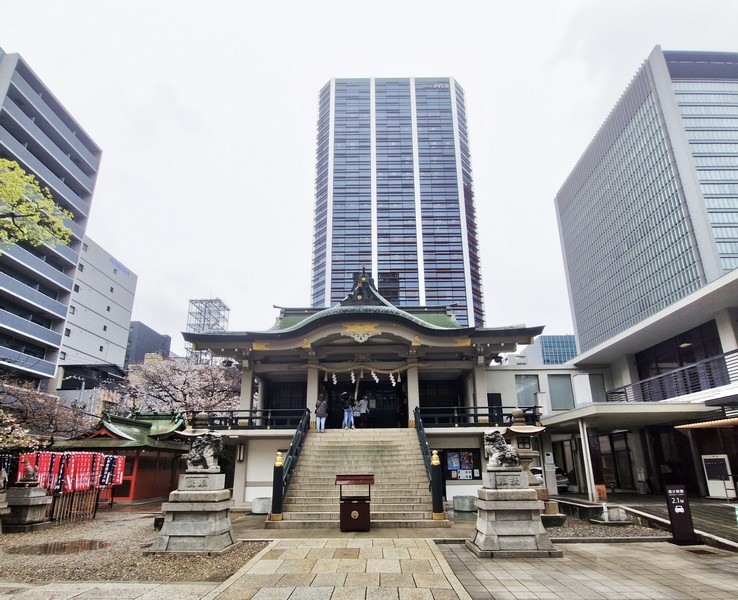
Namba Jinja Shrine

We were now on our last day in Osaka and we still had time to explore the city as our Cebu Pacific flight back to Manila was still in the late afternoon.  After breakfast at the hotel, my nephew Miguel, who was proficient in Japanese, offered to tour us around before returning to Kyoto to work and study.  We decided to walk to the nearby Namba Jinja Shrine. It was rainy that day.
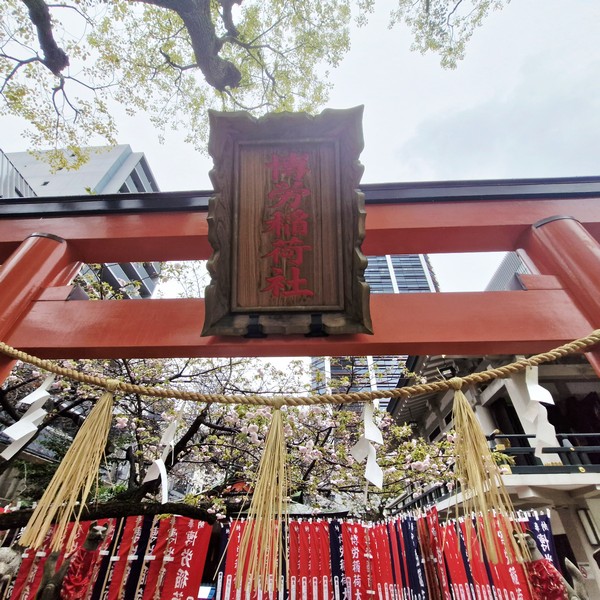
Torri (Gate)

Nestled along Midosuji Avenue in Osaka’s Chūō Ward, the tranquil, restored Namba Jinja Shrine complex was said to have been founded in the 5th century by Emperor Hanzei, who established Shibagakinomiya Shrine in Matsubara City, Osaka Prefecture, to enshrine his father, Emperor Nintoku. 

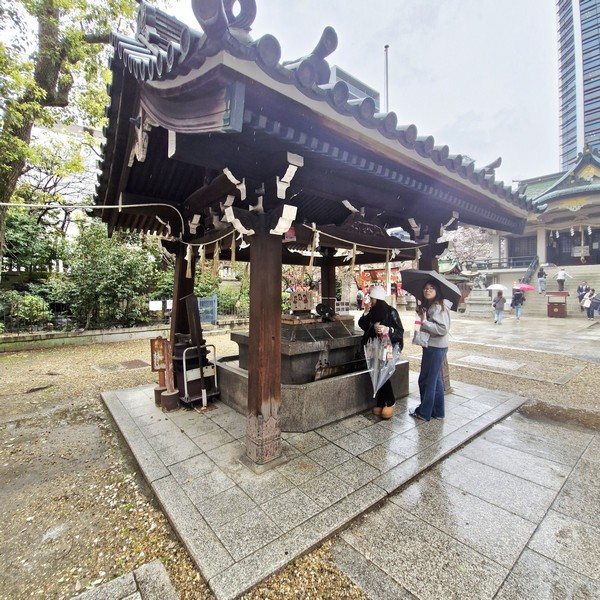
Purification Fountain (Temizuya)

It holds the weight of ancient Imperial reverence and civic memory and stands as a historical anchor amid the city’s pulse.  The shrine was later moved to Hommachi, Tennoji Ward, and then moved to its current location in 1583 (Tensho era) after Toyotomi Hideyoshi built Osaka Castle.

Shrine with Offertory Box (Saisen-bako)

It was named “Kami-Namba Shrine” after the area and, later, adopted its current name in 1875 (Meiji era). During the Edo period, with the rise of Inari worship, the Inari Shrine, a branch shrine within the grounds, commonly known as “Bakuromachi no Oinari-san,” became more famous than the main shrine. Uemura Bunrakuken opened a puppet theater troupe within the shrine grounds in 1811 (Bunka era 8).  Destroyed during World War II, the shrine was rebuilt in 1974, with reinforced structures that echo its pre-war architecture.

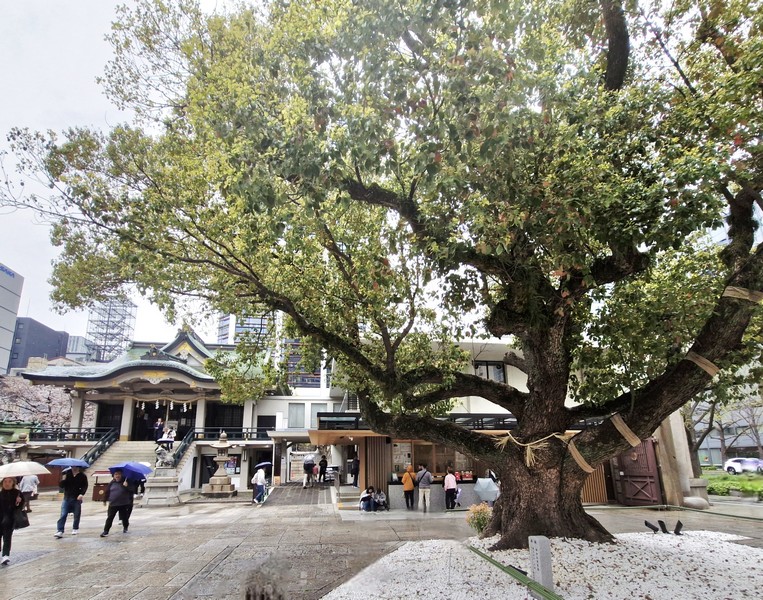
Camphor Tree

Passing through the sturdy stone torii, we were welcomed by a sacred courtyard framed by modern buildings yet rooted in centuries-old tradition. Today, it has three different shrines with different deities, offering a gentle yet powerful pause with the rustle of leaves, flicker of lanterns, and soft murmur of prayers—a tender heartbeat within Osaka’s fast rhythm.

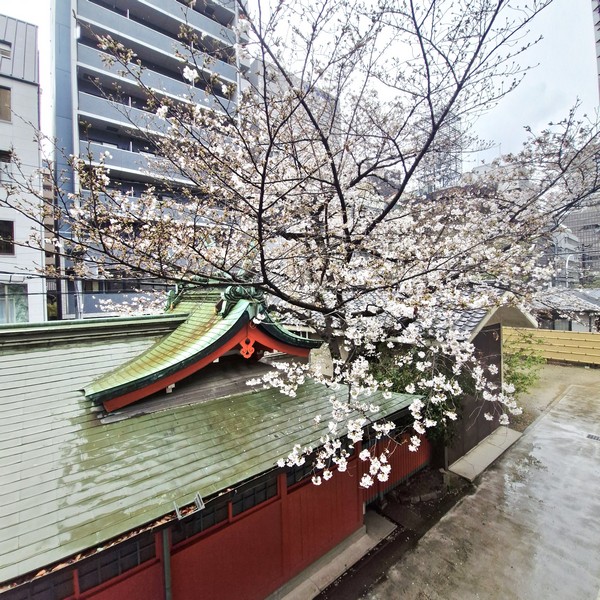
Cherry Blossom Tree

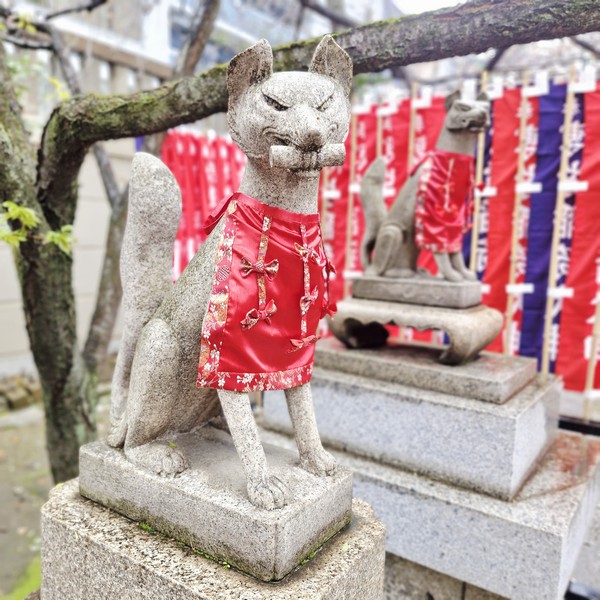
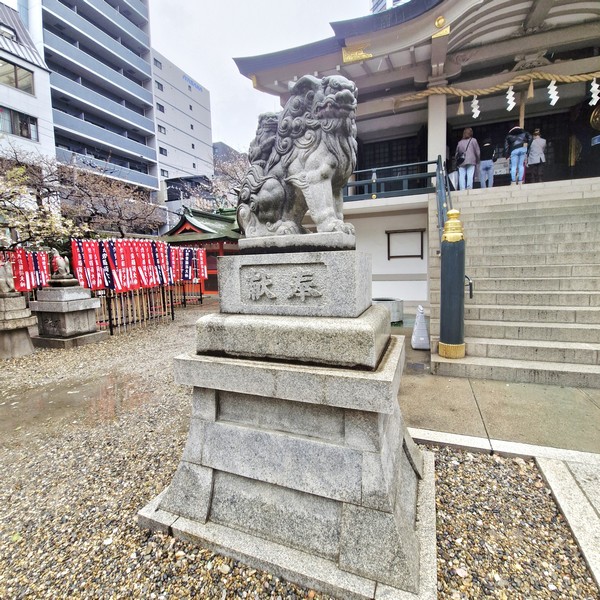
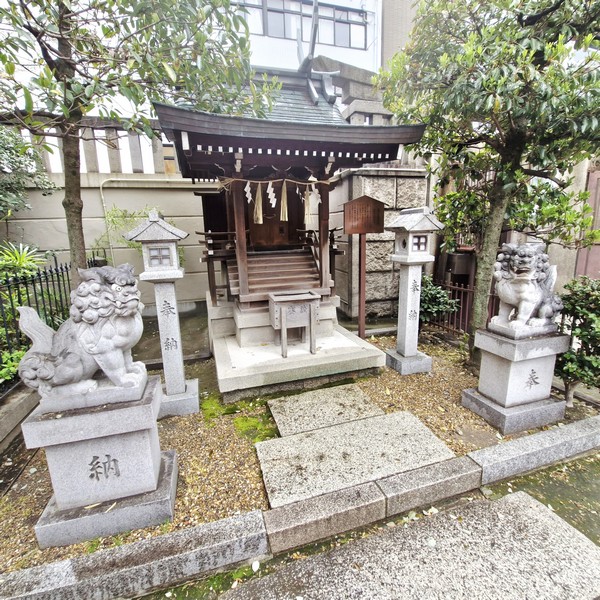
Known for its lion-dog (komainu) and fox (kitsune) statues and cherry blossom gardens, the shrine is also home to a scorched but unbowed and majestic 400-year-old camphor tree, one of the oldest in Osaka, whose trunk radiates quiet resilience and offers visitors a moment of grounding in the midst of urban haste. There is a belief that if you touch it, you will receive the “power” to rejuvenate yourself.

Fox Statues (Kitsune)
Lion-Dog Statue (Komainu)

Revered within Settsu Province’s Soja shrine network, Namba Jinja Shrine invites prayers for health, prosperity, and protection from calamities. At the beginning of the Meiji era, when Bunrakuken moved to the new development in Kujo, the “Hikorokuza” troupe opened on the site.

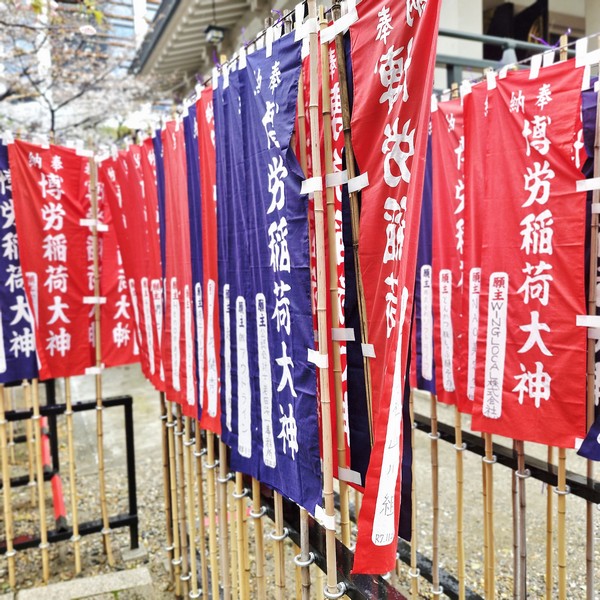
Red and Blue Banners (Nobori)
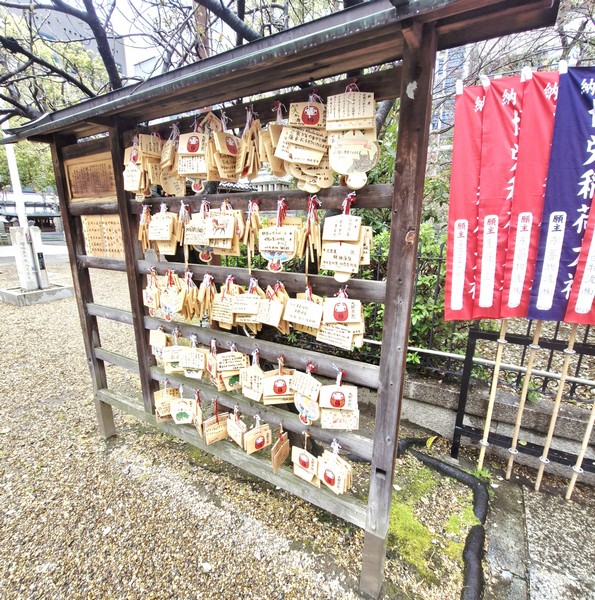
Wish Cards (Ema)

Each summer, the Himuro Ice Festival, held every year from July 20 to 21, visitors and worshippers are cooled by being given crushed kachiwari ice, a charming ritual reminding us of ancient ways to beat the heat.  It is said that if you eat this ice, you will not be defeated by the summer.

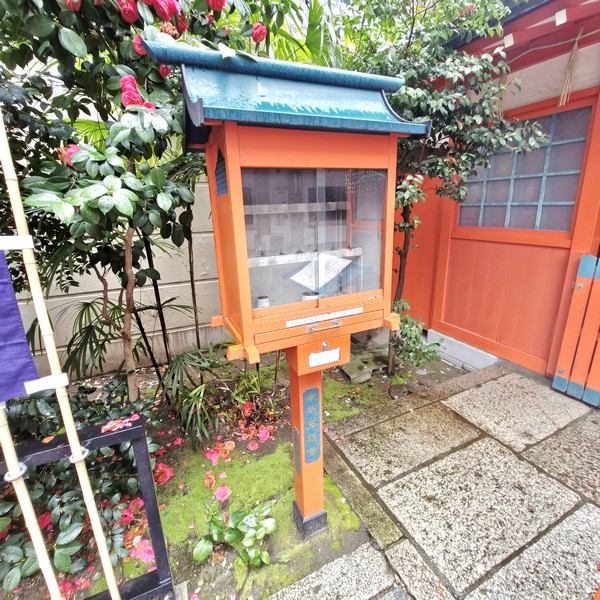
Sacred Lottery (Omikuji)

Namba Jinja Shrine: 4 Chrome 1-3 Bakuromachi, Chuo-ku, Osaka 541-0059. Tel: 06-6251-8000.  Fax: 06-6251-5110. Website: www.nanba-jinja.or.jp. Open daily, 7 AM – 6 PM. Admission is free.

How to Get There: Osaka Metro Midosuji Line “Shinsaibashi Station” Exit 3.  It is a 5-min. walk from Exit 13 of Osaka Metro Hommachi Station.