
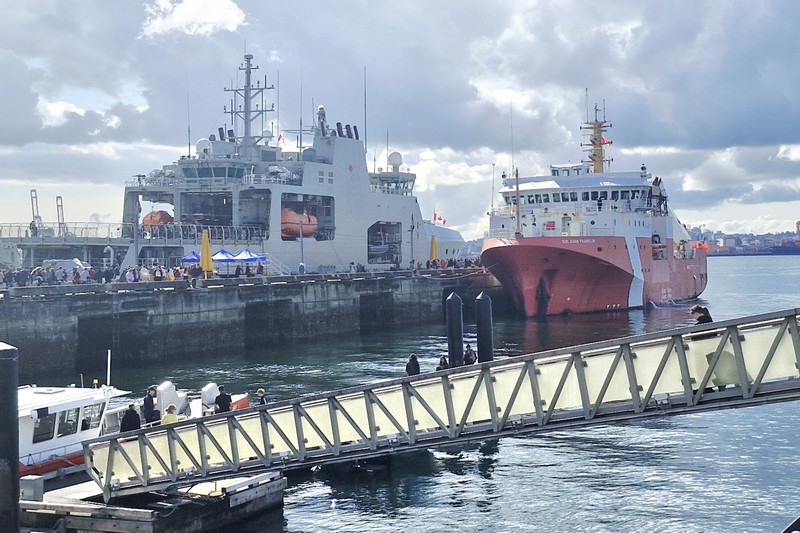
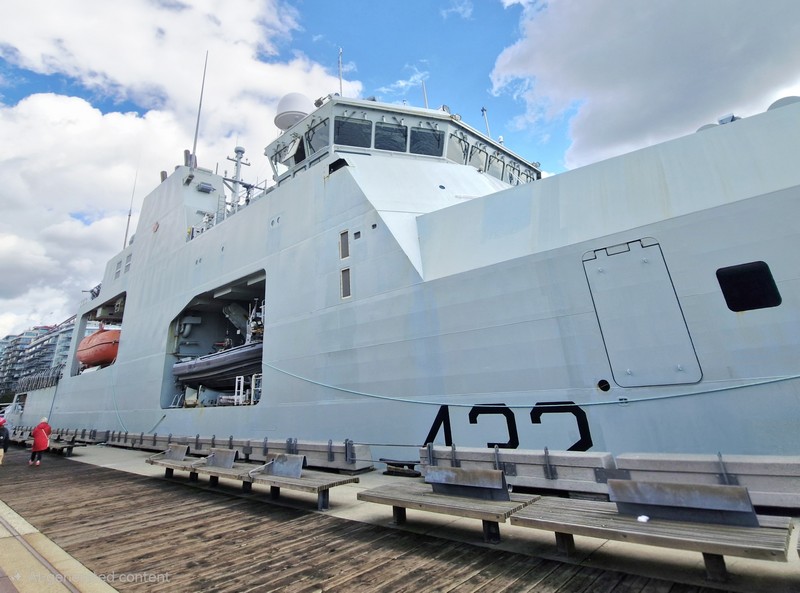
For one day, residents of North Vancouver got a free sneak peek at two ships are docked at the Shipyards (Burrard Dry Dock Pier) for the Vancouver Marine Careers Expo – the CCGS Sir John Franklin, a state-of-the-art offshore fisheries research ship and science vessel of the Canadian Coast Guard, and HMCS Max Bernays, an Arctic Offshore Patrol Vessel (AOPV) operated by the Canadian Navy.
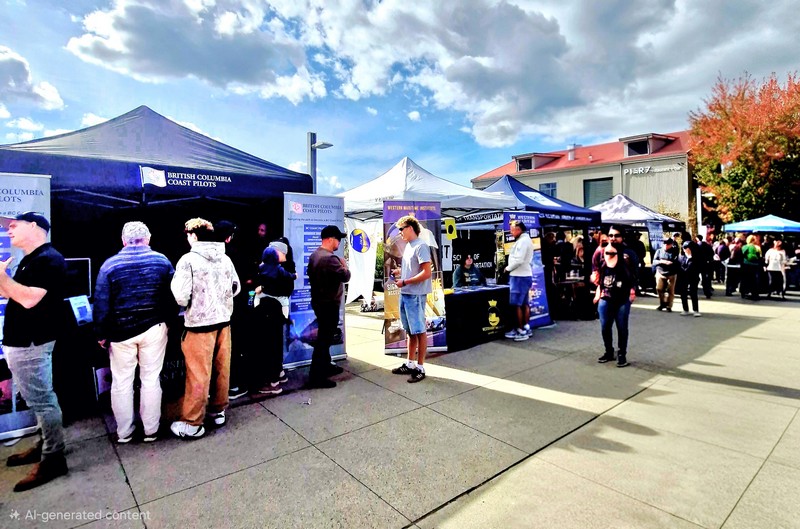
Scheduled for Saturday, Sept. 26, between 10 AM and 4 PM, the one-day event featured ship tours, equipment demonstrations and interactive exhibits, as well as the opportunity to meet and speak with a variety of people working in the marine industry. The expo included equipment demonstrations, interactive marine exhibits, career networking, and recruitment opportunities with organizations like BC Ferries and the Royal Canadian Navy.
Representatives of the Royal Canadian Navy, the Canadian Marine Careers Foundation and the Canadian Coast Guard where on site, along with industry partners such as BC Ferries, HaiSea Marine, BC Coast Pilots, and the Seafarers International Union of Canada, among others. Attendees who wish to tour the vessels were reminded to wear closed-toed shoes, as open-toe footwear is not permitted on board.
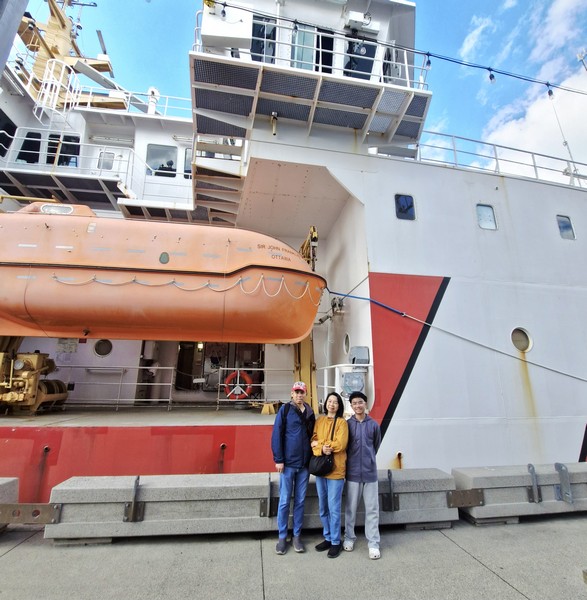
Jandy, Grace, Kyle and I arrived by 1 PM and the line was very long for the HMCS Max Bernays so we opted to just queue at the shorter line of the CCGS Sir John Franklin. The ship, named for Sir John Franklin, an arctic explorer who led two Royal Navy expeditions in search of the Northwest Passage (the second ending with the death of all his crew around 1848), was ordered in 2011 as part of the Canadian National Shipbuilding Strategy (NSS) as a replacement for aging Canadian Coast Guard vessels and launched on December 8, 2017, The first of three vessels, the 63.4 m. (208 ft.) long and 16 m. wide Sir John Franklin, with a displacement of 3,212 metric tons (3,161 long tons), has a maximum speed of 12.5 knots. It is the sister ship of CCGS Capt. Jacques Cartier and CCGS John Cabot.
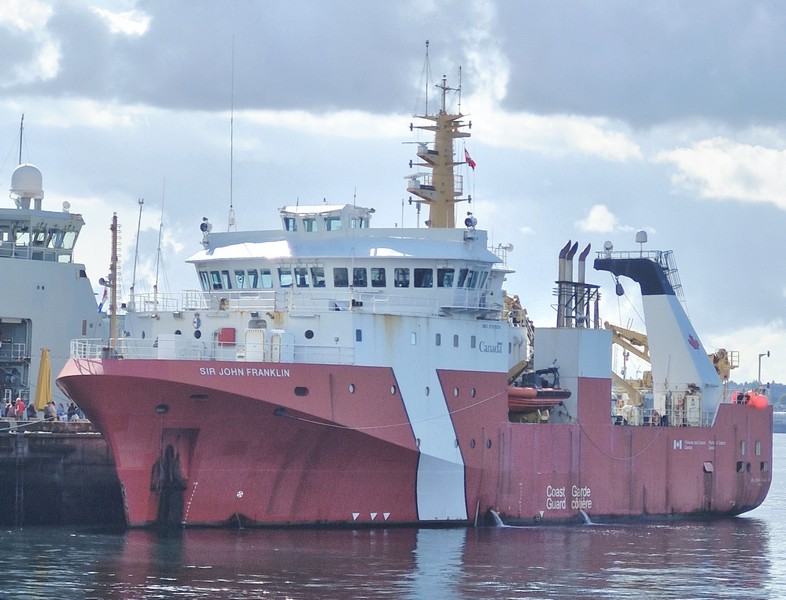
As a research vessel, it is mainly used by Department of Fisheries and Ocean (DFO) scientists for fish surveys along the coast. The ship is equipped with four laboratories – a 162-sq. m. wet lab, a 66-sq. m. dry lab, a 73-sq. m. oceanographic lab and a 46-sq. m. acoustics lab.
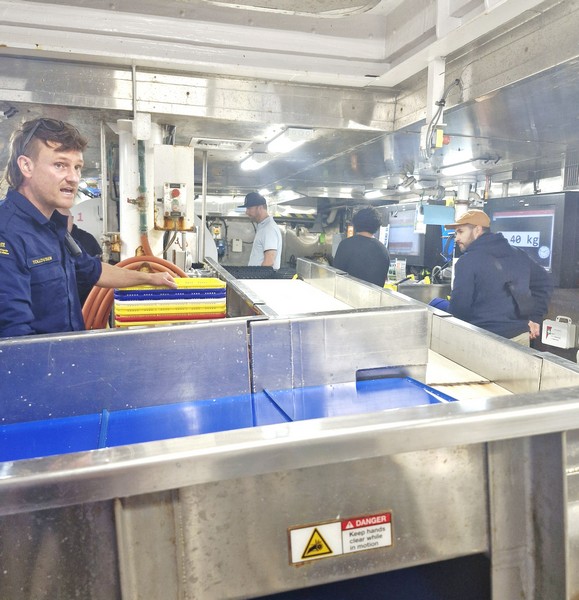
It was our first time on a larger vessel that was not a passenger vessel, like a ferry or cruise ship, and we were impressed with the size of the vessel, and how well equipped it was for so many different types of research. With so many corridors and small connecting rooms, it was almost like a maze, and it’s easy to get lost exploring the different decks, hence the importance of the guide Mr. Pickrell who showed us around the vessel and explain how everything works onboard. We learn a lot about how the ship runs and the jobs of the crew members.
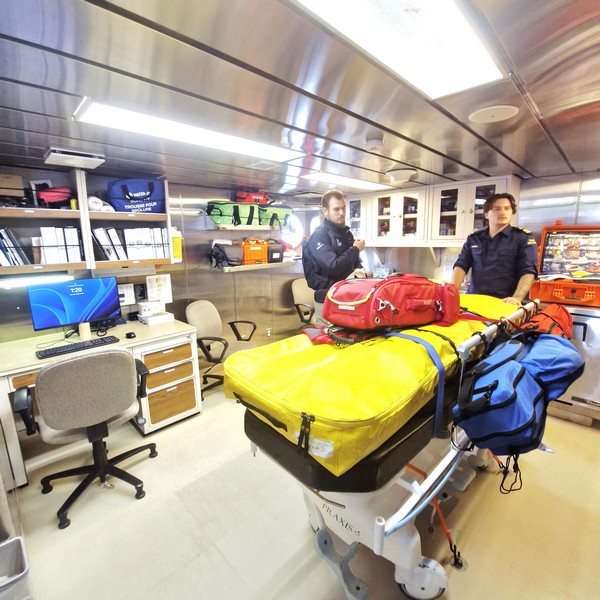
We first visited its fully-equipped medical bay. A critical safety hub, it provides emergency care, primary treatment and stabilization for its crew and visiting scientists. Although the CCGS Sir John Franklin is a research vessel, in the event of an emergency, any Coast Guard vessel could be asked to respond to a search and rescue event.
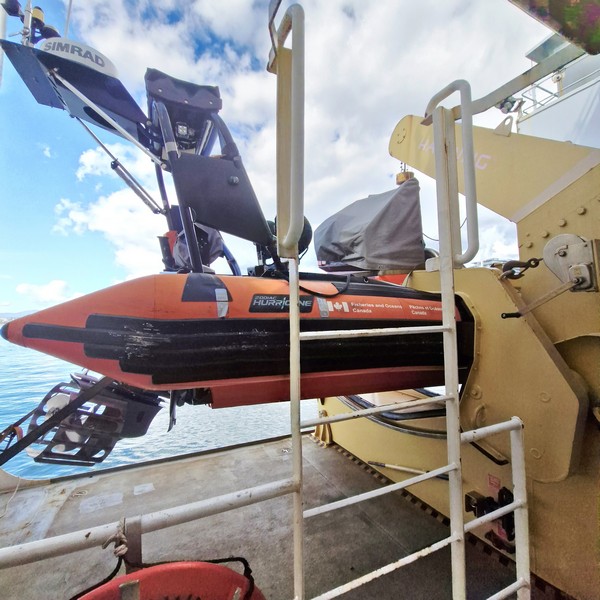
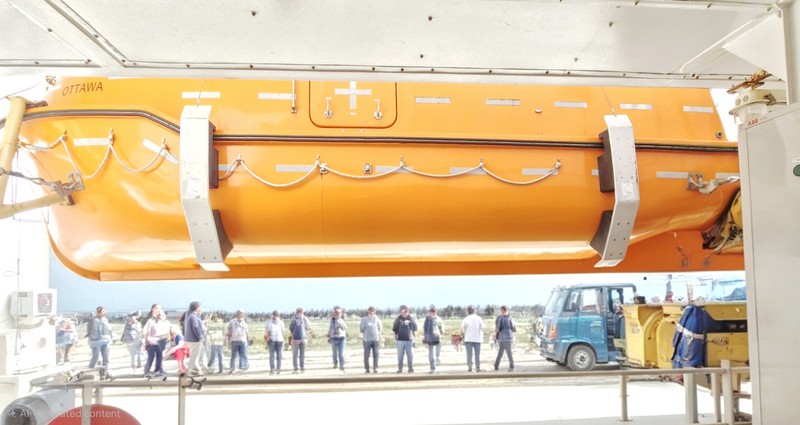
We saw its onboard fast rescue craft (FRC/RHIB) used for deploying equipment, sampling and short-range safety or transfer operations as well as its. standard commercial marine emergency life raft system stowed securely in hard-shell canisters on the deck and engineered for rapid deployment during an abandon-ship scenario.
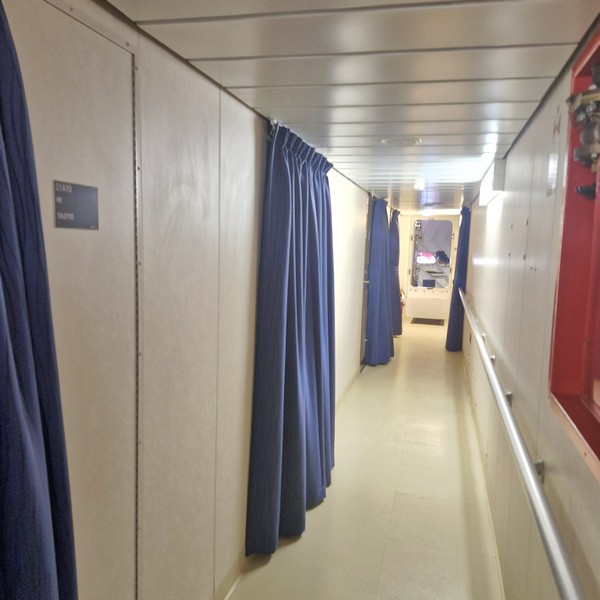
We next inspected the crews’ quarters. Aside from the 13 berths for the crew, there are five double cabins with bunk beds set aside for the research team, and one single cabin for the head scientist. The 23-man crew (10 officers and 13 crew members) have a 28-day shift at sea and, after the end of their shift, are off for 28 days.
Our guide also explained the key scientific activities done on board such as midwater trawling (midwater trawls are deployed in the upper 50 m. of the ocean to catch and size juvenile and adult salmonids), diet and stomach analysis (stomach content data are collected to map prey proportions, digestion levels, and feeding habits during early marine winter survival); oceanographic & food web sampling (oceanographic equipment and plankton nets are deployed to measure marine conditions, food web dynamics, and climate impacts affecting low salmon returns in British Columbia) and open access data (the collected catch, event, specimen, and diet datasets are managed through platforms like the Pacific Salmon Foundation and the North Pacific Anadromous Fish Commission Data Catalogue).
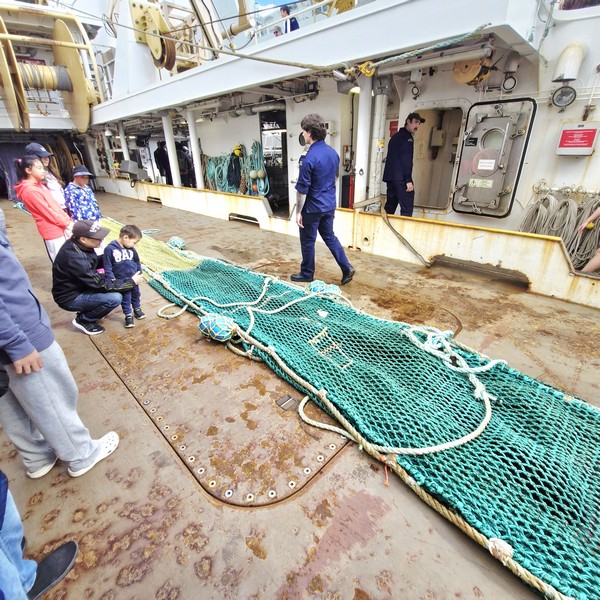
We also got to see the scientific equipment of board. The very large offshore midwater trawl is a funnel-shaped fishing net built by LFS in Bellingham, WA. The front of a midwater trawl is generally constructed from large hexagonal or rhombic mesh or near-parallel ropes. Trawling involves the towing of net behind the fishing vessel. Large trawl doors that are essentially “kites” pull the net open sideways (50 m.) and the mouth of the net 50 m. is held open vertically by floats on the top and a weighted lead line on the bottom. The net is towed at 2.5-3 knots and the fish are swept back in the narrow end of the net called the codend. It takes consider able power to fly the net with the headrope at the surface to catch salmon that tend to live in the top 50 m.
A bongo net consists of two plankton nets mounted next to each other. The nets have a long funnel shape with a small mesh width (0.2336mm) used for collecting plankton. The bongo net can be configured to be towed vertically (up and down) or horizontally towed at 1-2 knots with a weight attached between the nets.
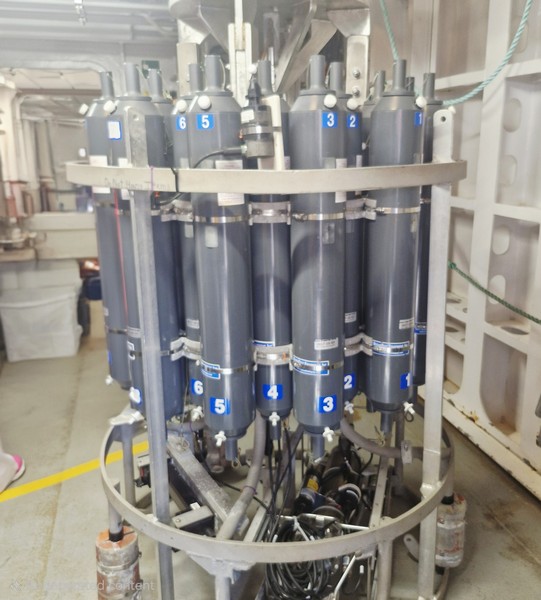
CTD (conductivity, temperature, and depth), with 24-bottle rosette, detects how conductivity and temperature of the water column changes relative to depth. Conductivity is a measure of how well a solution conducts electricity, and it is directly related to salinity, or the concentration of salt and inorganic compounds in seawater. CTDs are attached to a metal frame called a rosette, which holds water-sampling bottles that collects seawater at different depth. The information that is generated from CTD data can be used to calculate the speed and direction of ocean current as well as map the distribution of temperature and salinity throughout a survey area spatially as well as at depth.
The MOCNESS (an acronym for Multiple Opening and Closing Nets and Environmental Sampling System) is, basically, is a set of nets stacked on top of each other in a single frame that can be towed behind a ship. Scientists can trigger each of these nets to open independently of each other. The MOCNESS delivers data in real time, which allows scientists to control exactly where the nets are and what they are sampling.
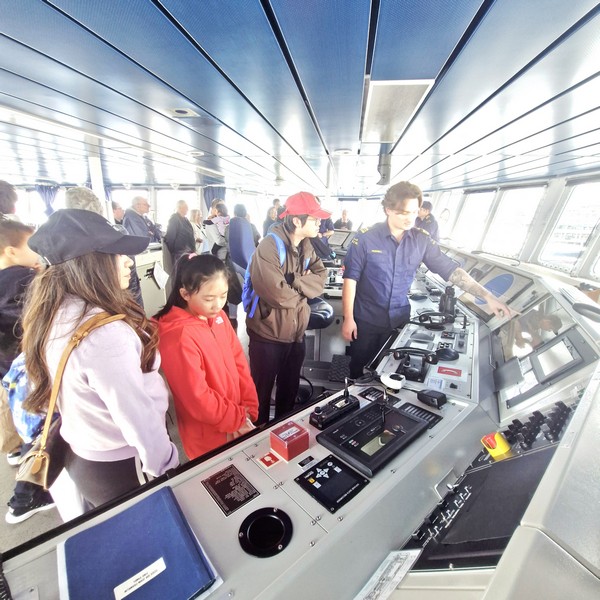
A highlight of the tour was the bridge of the vessel, home of communication and steering systems, navigational charts, and command controls. The bridge features a highly sophisticated integrated bridge system, designed by Thales and Anschütz, that spans 10 task stations across 7 separate consoles, integrating 24 distinct subsystems. While designed for multiple crew members during intense operations, the bridge layout utilizes an advanced data integration platform (SYNAPSIS) that allows a single operator to command the entire ship from a centralized control station during baseline transit or unexpected scenarios.