
I still had the whole morning for sightseeing on our fourth and last day in Taipei so I availed of the Northern Coast Tour (Keelung City) offered by Edison Travel Service (NT$1,000/pax). After breakfast at the hotel, Jandy and I, as well as a 69 year old retired USAF serviceman named Gerald and his wife Leona, were picked up at the hotel lobby by our tour guide. The sun was already up and shining (this after 3 days of rain) when we boarded our van for the 45-min. drive to Keelung City. Nicknamed the “Rainy Port” (due to its frequent rain and maritime role), Keelung City is Taiwan’s second largest seaport (after Kaohsiung).

Keelung City Proper
From the city proper, our van drove up a hill, east of the city, to Chung Cheng Park (derived from Chiang Chung-cheng, a given name of Chiang Kai-shek). Situated on the side of Ta Sha Wan Shan, atop a hill off Hsieh Road, Chung Cheng Park (also spelled as Jhongjheng Park) was formerly called Kang Park in the past. The first immigrants to Taiwan used to fight with each other for land. In order to stop these disputes, they set up a temple for yearly worship. During the Japanese occupation, the temple was in Kao Sha Park and later moved to Chung Cheng Park.

Entrance to Chang Chung Park
There are three levels in the park. On the first level is a historic cannon fort. On the second level is a Buddhist library, Chung Lieh Temple and Chu Pu Tan Temple. The temple attracts many worshipers on July 15, the Chung Yuan (Hungry Ghost) Festival, when families lights a lamp in front of their door in order to light the way for ghosts at night.

Chang Chung Park
Our destination was the Kuan Hai Pavilion, on the third level. Here, we had a scenic view of Keelung City, its excellent 2,000 m. long and 400 m. wide harbor (embraced by mountains to its east, west and south); luxury passenger ships; smaller commercial craft; naval and coast guard vessels: and the azure Pacific Ocean.

Naval and commercial ships

Dock facilities

The city proper
Also here is the 22.5 m. (74-ft.) high, white smiling statue of Guan Yin (the Buddhist message of compassion and peace), the Buddhist Goddess of Mercy. The landmark of Chung Cheng Park, it is the biggest goddess statue in Southeast Asia. Inside the statue, Jandy and I climbed a steep stairway leading to the top. From portholes on the sides, we could take in views of the harbor and the city.

For me, Chung Cheng Park is a combination of a Buddhist holy site and amusement theme park. The grounds by the Guanyin statue are crowded with snack vendors and souvenir shops while toy vehicles for children to ride around on, some of them musical, are offered for rent.

The souvenir shop and children’s rides for rent
Behind the statue is a Buddhist temple. We noticed a backwards swastika, a Buddhist symbol of peace (as opposed to the forward facing Nazi symbol), on top of a bell tower (you can ring the bell for a NT$50 donation). Further downhill are several 3-storey pagodas, a museum and a martyrs’ shrine. Since this park is near downtown, it is popular with city folk as well as tourists.

The backward swastika symbol
Chung Cheng Park: Keelung City, Taiwan. Tel: (+886-2) 2428-7664.
How to Get There: take 206 bus and stop at provincial hospital. The park entrance is on the other side.
Guang Hua Digital Plaza (Taipei City, Taiwan)
It was raining when we woke up on the third day of our stay in Taipei. It seems the city was also feeling the effects of Typhoon Ambo (international name: Mawar) which struck the Philippines. Not really a good day for sightseeing much less photography. Instead, I decided to just check out the Guang Hua Digital Plaza, just south of Song Jiang Rd.. After breakfast at the hotel, Jandy and I donned our jackets and opted to just walk to the mall. Along the way, we searched for, but did not find, the Miniatures Museum along Jianguo North Rd..

Guang Hua Digital Plaza
Guang Hua Digital Plaza ( also known as the“Taipei Akihabara”), attracting tens of thousands of visitors each day, is an indoor, technological and electronics one-stop shopping paradise located at the intersection of the Zhongzheng and Daan Districts. It was established in 1973 as a retailer market, originally using the space beneath the old Guanghua Bridge and just specializing in old books (thus the nickname “old books street”). Within a decade, however, electronics retailers gained presence in the market and surrounding streets.

The ground floor exhibition area
Due to underground railroad construction in 1992, Guang Hua Market was moved to an underground location at the corner of Bade Rd. and Xinsheng South Rd.. By this time, the area became known for electronics, with many new stores opening, and the establishment of other electronic markets such as the International Electronics Market, Contemporary Life Market and Sanpu Market.

In 2006, due to the demolition of the Guanghua Bridge, Guang Hua Market was moved to a temporary location at the corner of Jinshan North Rd. and Civic Blvd.. The temporary building consisted of 5 warehouse-like halls, providing a total of 196 retail stores. Not soon after the market moved into its temporary location, construction began on the current six-story Guang Hua Digital Plaza building, which has been its current location since July 2008.

The lone sporting goods store
Today, the purpose-built Guang Hua Digital Plaza building consists of 6 floors and a basement. The first floor houses an exhibition space for new electronic products and a food court. The second and third floors are the new locations for the 196 vendors of the original Guang Hua Market while the fourth and fifth floors are the new locations for the vendors of Xining Guozhai Electronics Market. The sixth floor is reserved for repair shops, education classes and offices while the basement floor is for parking.

A camera store
Even with the rain outside, the building was pulsating with a steady stream of IT gadget lovers fervently shopping for the latest desktop computers, laptops, digital cameras, mobile phones, electronic accessories and parts and related gadgets and peripherals, many of which are Taiwan-made, at this sprawling mess of shops selling everything electronic. There’s also a lone sporting goods store and stores selling VCDs and DVDs (mostly Taiwanese or Chinese titles).

A store selling VCDs and DVDs
However, checking out their prices, they still can’t match prices in Hong Kong but they could compete with European and U.S. prices. My problem here, especially when you need to techno-speak, was that most of the vendors don’t speak or only speak a little English. The foreign tourists I saw shopping here were accompanied by their English-speaking guides. I had no such luxury. Oh well, maybe next time. We returned to the Gala Hotel the same way we came to Guang Hua – by walking. We made a stopover at a MacDonald’s outlet for a take-out lunch of burgers then backtracked to our hotel.
Guang Hua Digital Plaza: 8 Civic Blvd., Section 3 (between Jinshan and Xinsheng Rds.), Taipei City, Taiwan. Tel: (+886-2) 2391-7105 and (+886-2) 2341-2202. Open daily, 10 AM-9 PM (closed on the second and fourth Tuesday of each month). Website:www.guanghuamall.com.tw.
How to Get There: take the Bannan Line to Zhongxiao Xinsheng Station, Gate G1, and then walk for around 10-15 mins.
Hwahsi Tourist Night Market (Taipei City, Taiwan)
From Longshan Temple, Jandy, Isha and I walked, a few streets away, to a nearby night market to do some souvenir shopping. A well-lit Chinese-style arch pointed us to an excellent night market divided into two segments. We went to the part of the market with the roof called Snake Alley a.k.a. the Hwahsi Street Tourist Night Market, said to be the oldest night market in Taipei. The surrounding area is the local market. Night markets are listed among Taiwan’s most popular tourist spots.

Gateway to Hwahsi Tourist Night Market
The “Tourist” in the official name is something of a misnomer as the market is a bit overrated and can be a bit creepy, if you are not into snakes or exotic foods. One store had one of these huge writhing, white and yellow serpents at their shopfront (the snake handler cum store owner, however, didn’t allow me to take pictures). Snake meat, according to traditional Chinese lore, have health (and libido) enhancing properties (something to do with this reptile’s impressive length). Before its conversion into a night market, Snake Alley used to be notorious for its prostitution (banned since the 1990’s).

Its no surprise that snake meat (and snake blood, bile or sperm is mixed with a local liquor called gao liang) is served up as dinner at rows of eateries within the market. These eateries also serve red bean soup, Taiwanese-style muah chee, danzi noodles (also called tan tsai noodles), thick cuttlefish soup, eel noodles, shrimp in wine, grilled Taiwanese sausages, etc. There are also eateries serving even more unusual and “special” (and controversial) turtle meat and soup, stir-fried mouse as well as crocodile meat. Truly a place for people who live by the motto “I’ll try anything at least once.” It just so happen that we weren’t one of those people.
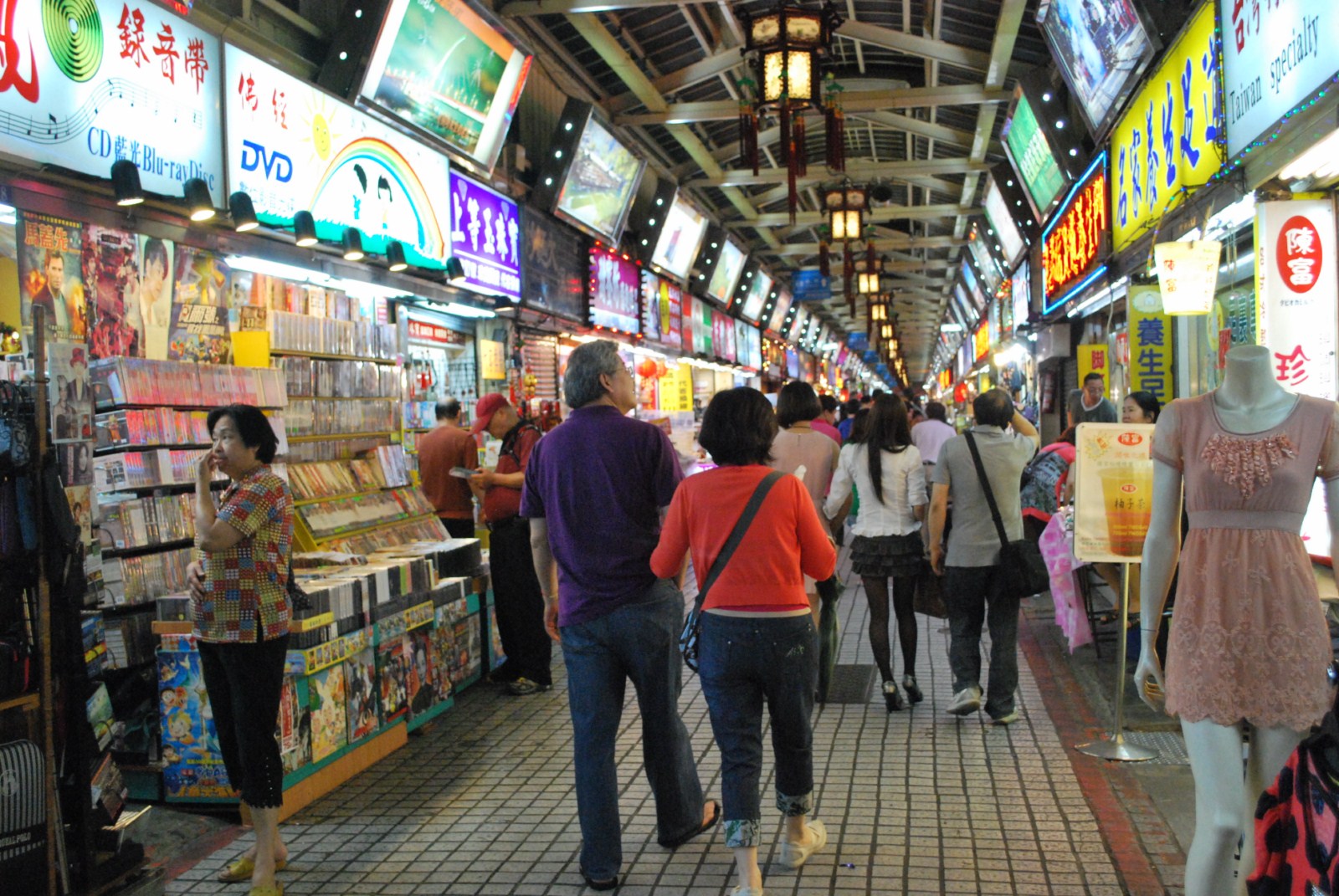
Apart from the eateries, the night market is actually just one row of shops selling bags, cheap watches, hats, DVD and VCD movies, and souvenir items such as fans, place mats, key chains, Buddha figurines,brass sculptures, jade amulets, etc. Isha bought some these souvenir items as gifts for friends back home. I bought a number of brass key chains. There were also shops selling sex toys as well as kinky key chains (some were smaller, brass key chain versions of the wooden Ifugao barrel man, a man in a barrel which, when lifted, triggers a spring that releases a penis). There were also a number of legitimate massage parlors (offering foot, half body or whole body massages) and stores where artists sell their paintings.

Kinky brass key chains
Having finished our souvenir shopping, we took a taxi and dropped off at the first MacDonald’s outlet we saw. After another burger dinner here, we all boarded another taxi, dropping off Isha at her hotel before proceeding to the Gala Hotel. It was now very late in the evening and, quite tired from a fruitful day of sightseeing and shopping, decided to call it a night.
Hwahsi Street Tourist Night Market: Hwahsi St., Wanghwa District, Taipei, Taiwan. Tel: (+886-2) 2336-9781. Open daily, 7 PM-2 AM.
How to Get There: from Taipei Main Station on the Blue Line, go two stops west to the Longshan Temple MRT. Come out Exit 1 and take a right.
Mengjia Longshan Temple (Taipei City, Taiwan)
From Taipei 101, Jandy, Isha and I again walked to the Taipei City Hall MRT Station where we boarded the MRT to Longshan MRT Station. It was just about dusk when we arrived at the station. Before exiting, we all bought cups of coffee for take out and, upon exiting, leisurely sipped it while watching a Chinese dance being performed, beside the fountain, at Manka Park.

Gateway of Mengjia Longshan Temple
After finishing our coffee, we all walked over to the Mengjia Longshan (also spelled as Lungshan) Temple in front of the park, one of Taiwan’s most important places of worship. Surrounding the temple are antique shops, Buddhists article shops, fortune tellers, traditional Chinese medicine shops and paper stores selling paper products that are burned for the deceased.

Waterfall of Cleaning Your Heart
Built in 1738 (during the Qing Dynasty), on a much smaller scale, as the spiritual center of Han settlers from the Jinjiang, Nan’an and Hui’an districts of Quanzhou County, Fujian, China, the temple has been destroyed, either in full or in part, by numerous earthquakes and fires. Nevertheless, Taipei residents have consistently rebuilt and renovated it. From 1919-1924, it was renovated, in large scale, under the direction of famous architect Wang Yi-shun, a master of temple building in Fukien.

The Fore (or Front) Hall
On June 8, 1945, during World War II, it was hit by American bombers, who claimed that the Japanese were hiding armaments inside. The whole main hall and a part of the right annex were damaged and many precious artifacts and artworks were lost in the ensuing fire. The fire somehow missed the statue of Avalokiteshvara (in Sanskrit) or Guanyin (short for Guanshiyin which means “observing the sounds of the world”), the Buddhist Goddess of Mercy (only her toes were singed), even though the iron railing around her melted. After the end of the war, a few months later, the temple was again rebuilt.

The main deity Guanyin with 2 bodhisattvas (Manjusri at the left and Samantabhadra on the right)
On August 19, 1985, Longshan Temple was designated as Taipei City’s fourth official historical site (after the Chang Kai-shek Memorial Hall, National Palace Museum and Taipei 101). The temple, one of the oldest and largest in Taiwan, has also been declared a Secondary National Heritage Site.

The temple courtyard packed with worshipers
We entered the temple’s gateway and, at the courtyard, noticed a small, man-made waterfall (the Waterfall of Cleaning Your Heart) on one side and a lucky dragon fountain on the other. The temple was already packed with locals either praying, reciting religious chants, lighting candles or burning incense sticks. They worship a mixture of Buddhist, Taoist and folk deities such as Guanyin (also called Kuan-in), the main deity, Buddha, Matsu and other divine spirits. Thus, it is often called “meeting place of the gods” for the wealth of deities worshipped here. We didn’t see any Western tourists.

A bronze dragon pillar, the only one of its kind in Taiwan
The resplendent Longshan Temple, with southern Chinese influences commonly seen in older buildings, is an emblematic example of Taiwanese Classical architecture. Facing the south and mixing traditional Chinese siheyuan (“four-building courtyard”) with palace architecture in its design, it has a fore hall, main hall, a rear hall (added around the end of the 18th century) and a left and right wing.

Yuan Tung Grand Hall, the main hall
The Yuan-Tung Grand Hall, the main hall, is the center of the whole complex. It houses the statue of Guanyin. The rear hall is divided into 3 parts. The center is for the veneration of Matsu, the goddess of marine voyage, the left is dedicated to the gods of literature (or patrons of examination for civil service in the olden days) and the right is for Lord Kuan, the god of war.

The Rear Hall
The octagonal ceiling in its fore hall, the clock tower roof, and the circular ceiling (with its 7-layered spiral plafond) in the main hall are exceptionally elegant. Its doors, beams and poles are also beautifully decorated.

Exquisite and elaborate carvings
A treasure trove of folk art, its fore hall is graced by a pair of unique bronze dragon pillars while the main hall has four pairs. The walls and ceilings are covered by exquisitely delicate sculptures as well as many Chinese poems, verses and lyrics on signs, adding a touch of literature. The temple walls are graced with paintings of vivid creatures while stone statues of mystical creatures guard the temple grounds. The wall and the roof are joined without the use any nails or braces made of metal.

A phoenix figure on roof edge
The temple roof, representing the pinnacle of mosaic art in Taiwan, is covered with overlapping tiles and is decorated with figures of dragons, phoenixes and other auspicious creatures, all decorated with porcelain, clay, and shards of colored glass.

Drum Tower (West)

Bell Tower (East)
Two 2-storey buildings, one housing the bell on the east and a drum on the west side of the courtyard, between the fore hall and the main hall, have conic, hexagonal roofs with double eaves that forms a converse “S” curve, the first such roof design in Taiwan.
Mengjia Longshan Temple: 211 Guangzhou St., Old Town Center, Wanhua District, Taipei City, Taiwan. Tel: (+886-2) 2302-5162. Website: http://www.lungshan.org.tw. Open daily, 6 AM-10:20 PM. Admission is free.
The Taipei 101 Building (Taiwan)
The rain had stopped when we returned to the mall and, after snacks at a MacDonald’s outlet at Jason’s Marketplace, the mall’s 1,000-pax basement foodcourt, Jandy, Isha and I exited the building to avail of this window of opportunity. We all walked, some distance, to a nearby park to appreciate the enormity and grandeur of the 357,721 sq. m. Taipei 101, the first record-setting skyscraper to be constructed in the 21st century. From afar, its repeated segments and inclined tiers simultaneously recall the rhythms of an Asian pagoda, a tower linking earth and sky (also evoked in the Petronas Towers of Kuala Lumpur, Malaysia)’ a stalk of bamboo, an icon of learning and growth (also emphasized by its blue green-tinted windows) or a stack of ancient Chinese ingots or money boxes, a symbol of abundance.

Our worm’s eye view of Taipei 101 Building
In 2004 (until the opening of the Burj Khalifa in Dubai in 2010), Taipei 101, formerly known as the Taipei World Financial Center (until 2003), was officially ranked as the world’s tallest building, displacing the Petronas Towers in Kuala Lumpur, Malaysia (check out my visit here at http://worldstotrek.wordpress.com/2010/12/31/kuala-lumpur-new-years-day/), by 56.1 m (184 ft). It also displaced the 85-storey, 347.5 m. (1,140 ft.) high Tuntex Sky Tower in Kaohsiung as the tallest building in Taiwan and the 51-storey, 244.2 m. (801 ft.) high Shin Kong Life Tower as the tallest building in Taipei. That same year, it also received the Emporis Skyscraper Award. In July 2011, the building was awarded the Leadership in Energy and Environmental Design (LEED Platinum certification, becoming the tallest and largest green building in the world. Its own roof and façade recycled water system meets 20–30% of the building’s water needs.
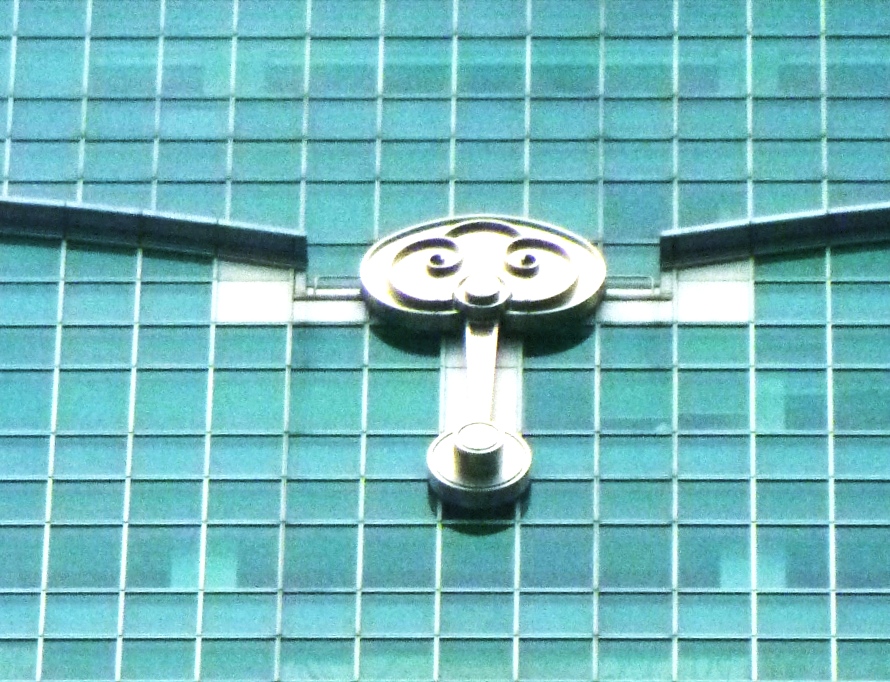
Curled ruyi figures, appearing throughout the structure as a design motif, are ancient symbols associated with heavenly clouds that connote healing, protection and fulfillment. Each ruyi ornament on the exterior of the Taipei 101 tower stands at least 8 m. (26 ft.) tall.
An icon of modern Taiwan ever since its opening, the structure appears frequently in travel literature and international media. Taipei 101 was designed by C.Y. Lee & Partners and constructed primarily by Samsung C&T and KTRT Joint Venture. It comprises 106 floors, 101 above ground and 5 floors underground.

The circular motif, the “zero” in Taipei 101, is also the shape of a traditional Chinese coin, a potent symbol of wealth
Architecturally created as a symbol of the evolution of technology and Asian tradition, this building’s Post Modernist approach to style incorporates traditional design elements and gives them modern treatments. Designed to withstand typhoon and earthquakes, Taipei 101, upon its completion, claimed the official records for:
- Ground to highest architectural structure (spire): 508 m. (1,667 ft.). Previously held by the Petronas Towers 451.9 m. (1,483 ft.), the record now rests with the Burj Khalifa in Dubai (UAE): 828 m (2,717 ft).
- Ground to roof: 449.2 m. (1,474 ft.). Formerly held by the Willis Tower‘s 442 m (1,450 ft), the record briefly passed to the Shanghai World Financial Center in 2009 which, in turn, yielded it to the Burj Khalifa.
- Ground to highest occupied floor: 438 m. (1,437 ft.). Formerly held by the Willis Tower 412.4 m. (1,353 ft.), the record also briefly passed to the Shanghai World Financial Center and then to the Burj Khalifa. .
- Fastest ascending elevator speed: designed to be 1,010 m. per min., which is 16.83 m./sec. (55.22 ft./sec.) (60.6 kms./hr., 37.7 miles/hr.), 34.7% faster than the 12.5 m. (41 ft) per second (45.0 kms./hr., 28 mile/hr.) speed of Yokohama Landmark Towers‘ elevator, the previous record holder.
- Largest countdown clock which was displayed on New Year’s Eve (fireworks launched from Taipei 101 also feature prominently in international New Year’s Eve broadcasts).
- Tallest sundial: The design of circular Millennium Park, which adjoins Taipei 101 on the east, allows it to double as the face of a sundial. The tower itself casts the shadow to indicate afternoon hours for the building’s occupants.
- Taipei 101 is the first building in the world to break the half-kilometer mark in height.
Taipei 101: Xin Yi Rd., Xin Yi District, Taipei City, Taiwan. Tel: (+886-2) 8101-7777. Website: http://www.taipei-101.com.tw.
Treasure Sky (Taipei City, Taiwan)

As we exited the Taipei 101’s Tuned Mass Damper, Jandy, Isha and I passed through the Treasure Sky showroom on the 88th floor, the world’s highest jewelry arts boutique (438 m.). It showcases art pieces made from Taiwan’s coral gemstones (momo, oxblood, pink, white), blue chalcedony, jade and other gemstones such as amethyst. Three famed gemstones are found in eastern Taiwan – hornblende (commonly known as Taiwan jade), blue chalcedony and red coral. In the 1960s and 1970s, Taiwan hornblende held a 90% share of the global jade market.

Treasure Sky
Taiwan has been given the name of “Coral Kingdom” as more than 80% of the world’s coral gemstones come from Taiwan. The boutique’s Coral Arts Gallery houses the world’s tallest gemstone coral tree, with 6 shrimp fossils and measuring 141 cm. in height and 131 cm. in width. It was found northeast of Taiwan, from 200 m. below the Pacific Ocean. Also on display in this gallery are exclusive artworks made with authentic coral gemstones, revealing the sophisticated beauty of coral. Gemstone corals take 10 years to grow 1 cm..

The world’s tallest gemstone coral tree
Oxblood (a.k.a. red coral, Corallium rubrum), long treasured as a symbol of dignity and felicity in traditional Chinese culture, is the most rare and precious of the coral gemstones and its durable and intensely colored red or pink skeleton makes it a highly sought-after material in jewelry manufacture. It is dark red in color with white veins and a translucent kind of sheen. Only 3 countries (Italy, Japan and Taiwan) in the world produce red coral jewelry. The boutique claims to have the world’s largest oxblood coral necklace.

Chinese Dragon (momo coral)

Double the Fortune (momo coral)

Happy Buddha (momo coral)

Rich and Fortune (momo coral)

Seven Fairies (momo coral)

The Tree of Wealth (momo coral)

The Wonderland (momo coral)

The Tree of Fortune (momo coral)
Momo coral are larger and more suitable for carved artworks. Colors vary from pink, orange to dark red. Pink coral exists in the deepest part of the ocean and their colors can be faint pink or spotted pink. Due to water pressure, when corals are taken from such depths, certain lines will naturally form on the surface. White coral, found in the eastern part of Taiwan, is naturally white in color.

Taiwan Jade
Taiwan’s blue chalcedony, distributed over ranges in Hualien and Taitung, are the world’s most beautiful “natural” specimen of the quartz. Unlike blues from abroad, Taiwan’s stones do not need heat treatment to improve their color and they naturally possess a pure luster and clarity, which make them the darlings of Japanese collectors.
From Treasure Sky, we next proceeded to the elevator lobby where we again queued up for our turn at the passenger elevators. This time, we made it to the 5th floor, again via high-speed elevator, in a much longer 57 secs..
Taipei 101 Tuned Mass Damper (Taiwan)
From the Inner Observatory, Jandy, Isha and I proceeded to see Taipei 101’s much publicized, massive Tuned Mass Damper (TMD). Also called a harmonic absorber, a tuned mass damper is a device mounted in structures to reduce the amplitude of mechanical vibrations, moving in opposition to the resonance frequency oscillations of the structure by means of springs, fluid or pendulums. Their application can prevent discomfort, damage or outright structural failure. Taipei 101’s TMD was specially designed to reduce movement caused by strong gusts of wind. This motion can be in the form of swaying or twisting, and can cause its upper floors to move more than a meter. Certain angles of wind and aerodynamic properties of a building can accentuate the movement and cause motion sickness in people.

Isha trying out the Interactive Hallway
On our way to the TMD’s interior viewing platform, we were entertained by a dimly-lit interactive hallway where clouds cleared as we stepped on them, revealing a satellite top view of Taipei City. Once inside the platform, we espied the much hyped up, sphere-shaped mass block/wind vibration damper suspended from the 92nd floor to the 87th floor by 8 steel cables. Measuring 42 m. in length and 9 cm. in width, each cable is comprised of over 2,000 smaller cables to ensure flexibility and durability. A tuning frame supports the suspended steel cables, monitoring building vibration and adjusting cable movement to regularize building movement and optimize damping. The TMD cuts building vibration by up to 40% and can, on occasion, move by as much as 35 cm., moving with the building at the rate of one oscillation every 7 secs..

The Tuned Mass Damper
Taipei 101’s TMD, the largest, heaviest and only publicly visible damper sphere in the world, consists of 41 circular steel plates, each with a height of 125 mm. (4.92 in.) being welded together to form a 5.5 m. (18 ft.) diameter sphere. It has a gross weight of 660 metric tons (728 short tons). The TMD was designed, manufactured and constructed by Motioneering, Inc. (Canada), at a cost of NT$132 million (US$4 million), while Thornton-Tomasetti Engineers along with Evergreen Consulting Engineering, Inc. were responsible for the overall structural design.The pinnacle, at 450-508 m. in height, features 2 smaller TMD units of 6 tons (7 short tons) apiece. The pinnacle may oscillate up to 180,000 times a year due to strong wind loads.

Again posing with another Damper Baby mascot
Beneath the TMD, a specially designed bumper system of 8 primary hydraulic viscous dampers automatically absorbs and dissipates vibration impacts, particularly during major typhoons or earthquakes where movement may exceed 150 cm. The TMD’s movements are not always visible.
Taipei 101 Indoor Observatory (Taiwan)

Our primary purpose for visiting Taipei 101 was to get 360-degree views of the city which attract visitors from around the world. This is made possible either through the 383.4 m. (1,258 ft.) high Indoor Observatory at the 89th floor or the 391.8 m. (1,285 ft.) high Outdoor Observatory at the 91st floor, the second-highest observation deck ever provided in a skyscraper and the highest such platform in Taiwan.

Inside the high-speed elevator
From the shopping mall, Jandy, Isha and I went up to the 5th floor to purchase our admission tickets (NT$450/person, around US$13), me paying via my Mastercard credit card and Isha paying in cash. As it was drizzling outside, we weren’t allowed to go out the Outdoor Observatory.

The Damper Baby mascot
Upon purchase of our tickets, we all queued, at a long line (it being a Sunday), for our turn at one of the 2 high-speed, double deck elevators (which access’ the 88th through 91st floors) built by the Japanese Toshiba Elevator and Building Systems Corporation (TELC). While on line, all visitors are requested to pose, for souvenir photos, beside a picture of Taipei 101. Isha posed alone while Jandy and I posed together. The resulting photoshopped photos can then be purchased at the Indoor Observatory (NT$400 for Isha’s single pose and NT$600 for our joint pose). We didn’t bite at the offer.

Taipei 101 Indoor Observatory
Once inside the NT$80 million (US$2.4 million) elevator (which accommodates 24 persons or 1,600 kgs.), we could still hear our ears pop (in spite of its atmospheric pressure control) as we ascended 1,010 m. per min., which is 16.83 m./sec. (55.22 ft./sec.) or 60.6 kms./hr. (37.7 miles/hr.). We arrived at the 89th floor in 39 secs. flat. In 2004, the elevator held the the Guinness World Record of the world’s fastest passenger elevator. Each elevator, which features an aerodynamic body, has state-of-the art emergency braking systems and the world’s first triple-stage, anti-overshooting system.

Special exhibit
Upon arriving at the 89th floor Indoor Observatory, we were welcomed by the Damper Baby mascot. Before exploring on your own, we were given a free multimedia guides to listen to, with recorded self guided voice tours, in 8 languages, detailing sights and the history of the Taipei Basin from 30,000 years ago to the present. While listening, we all went around to appreciate the somewhat hazy view of the entire city from large, blue green-tinted windows with UV protection. Green mountains seem to embrace the valley city of Taipei. Appropriate labels and names of the buildings and structures are posted to assist visitors. There were also informative displays and special exhibits.

Taipei City Hall (foreground)

Taipei World Trade Center Hall 1 (foreground)
The observatory also has an outlet of Big Tom’s Ice Cream. Posted flavors here include “Obama Brownie,”“L.F. Marionberry Cheesecake,” “Soy Cream Cinnamon Caramel” and more. Like most ice cream joints, you can choose to get your scoops in a waffle bowl. They also offer bagels, cakes, waffles, freshly ground coffee, tea, orange juice and other specialty items to go with your ice cream.

Big Tom Ice Cream
Taipei 101 Indoor Observatory: 89/F, No.7, Hsin Yi Rd., Section 5, Taipei 110, Taipei City, Taiwan. Tel: (+886-2) 8101-8899. Website: Taipei-101.com.tw.
Taipei 101 Mall (Taiwan)
Upon our arrival at the Taipei City Hall MRT Station, Jandy, Isha and I took the escalator up to the mall where we had an unusual and quick lunch of croissants at a pastry shop. That done, we went out the mall to a sidewalk waiting shed where, we were told, a free shuttle (scheduled to arrive by 12:30 PM) to Taipei 101 can be taken. It was starting to drizzle when the shuttle arrived to pick us up.

Taipei 101 Mall’s atrium lobby
It was already raining quite hard when our shuttle arrived at Taipei 101’s parking lot, momentarily dashing any hope of us observing the iconic building from outside, much less taking good photographs. Instead, we decided to enter the multi-story, 185,806.51 sq. m. retail mall adjoining the tower. One of the newest shopping malls in Xin Yi District, it was opened on November 2003, a month before the office tower’s opening.

Taipei 101 Mall’s atrium lobby
The posh mall’s 6 massive floors, 5 above and 1 basement, are home to hundreds of fashionable stores, restaurants, clubs and other attractions. Here, you can find many high-end stores of the most expensive fashion brands in the world under the LVMH group (Bulgari, Burberry, Calvin Klein, Celine, Chanel, Dior, Estee Lauder, Giorgio Armani, Louis Vuitton, Prada, Swarovski, Tommy Hilfiger, Van Cleef & Arpels, etc.) as well as top Swiss watch brands such as Breitling, Cartier, Hublot, Omega, Rolex, TAG Heuer, etc., truly a paradise for rich people. As commoners, it was much too rich for our taste so we just stuck to window shopping. The fourth floor Page One bookstore, from Singapore, houses the highest-roofed coffee house in Taipei.
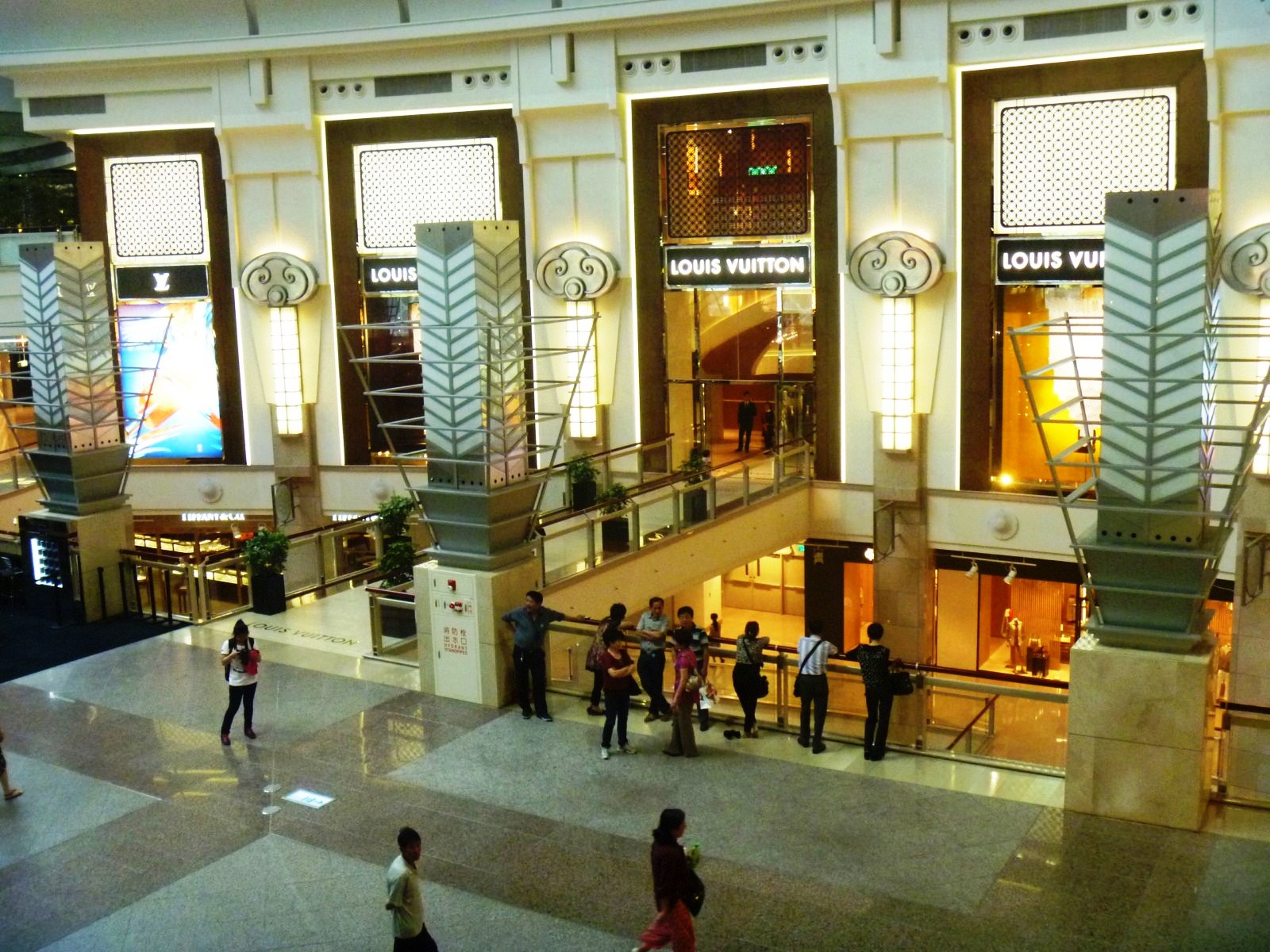
The lobby surrounded by ruyi symbols
The mall’s interior is modern in design even as it makes use of traditional elements. The curled ruyi symbol, an ancient symbol associated with heavenly clouds that connote healing, protection and fulfillment, is a recurring motif inside the mall. Many features of the interior also observe feng shui traditions.

Top brand Dior’s storefront
Taipei 101 Mall: No. 45, Shifu Rd., Xin Yi District, Taipei City, Taiwan. Tel: (+886-2) 8101-8282, (+886-2) 8101-8934 and (+886-2) 8101-8939. Website: http://www.taipei-101.com.tw. Open daily, 11 AM-9:30 PM.
The Taipei Metro (Taiwan)
After our short visit at Shandao Temple, Jandy, Isha and I now entered the Shandao Temple MRT Station where we plan, for the first time, to try out the Taipei Metro, more commonly known as the MRT (Mass Rapid Transit or Metro Rail Transit) or formally as the Taipei Rapid Transit System, to get to Taipei City Hall, the gateway to the iconic Taipei 101 Building.

Shandao Temple Station Entrance
This rapid transit system, Taiwan’s first metro system, was built and operated by the Taipei Rapid Transit Corporation (TRTC) and it first began operations on March 28, 1996. It consists of 96 stations and 110.1 kms. (68.4 miles) of revenue track. The system, an essential part of life in Taipei, carried an average of over 1.66 million passengers per day in December 2011.

Token vending machines
The Automatic Fare Collection (AFC) System operates in all 69 stations of the network. We purchased our IC Single Journey RFID (radio frequency identification) tokens (in our case, blue as we were traveling along the Blue Line) from a token vending machine (NT$30 each). They are valid only on the day of purchase. These tokens replaced the existing magnetic single journey cards in 2007 (turnstiles were also replaced with speed gates during this time). We then have our tokens scanned at the speed gates to enter the station. Upon reaching Taipei City Hall Station, our tokens were retrieved, again at the speed gates, once we exited the station.

IC Single Journey RFID token
The MRT system operates daily, from 6 AM to midnight, with extended services during special events such as New Year festivities. The trains operate at intervals of 1.5 to 15 mins., depending on the line and time of day. Stations become extremely crowded during rush hours, especially at transfer stations such as Taipei Main Station, Zhongxiao Fuxing Station and Minquan West Rd.

Station speed gates
Automated station announcements are recorded in Mandarin, Taiwanese, Hakka and English. High-traffic stations, including Taipei Main Station, Zhongxiao Fuxing Station and Taipei City Hall Station, have platform gates to prevent passengers and other objects from falling onto the rails.

Taipei City Hall MRT Station
Taipei Rapid Transit Corporation (TRTC): 7, Lane 48, Sec. 2, Zhongshan North Rd., 10448, Taipei City, Taiwan. Tel: (+886-2) 2536-3001. Fax: (+886-2) 2511-5003. Website: http://english.trtc.com.tw