Kampong Ayer (Brunei)

Kampong Ayer - The Water Village

Kampong Ayer – The Water Village

This Water Village (MalayKampung Air), along the banks of the Sungai Brunei (Brunei River), is an area situated over Brunei Bay that is home to a sizable population of 39,000, representing roughly 10% of the nation’s total population.  The district, a culturally important part of Brunei that preserves the nation’s river dwelling origins, has a unique architectural heritage of wooden homes with ornate interiors.

The mainland jetty

The mainland jetty

Built entirely of stilt houses and wooden walkways, it is the world’s largest water village and the most famous water settlement of Southeast Asia.  One of the most important centers of trade in Borneo, people have lived in Kampong Ayer for over 1,300 years. When the fleet of Ferdinand Magellan visited in 1521, Venetian scholar Antonio Pigafetta dubbed it the “Venice of the East.” Kampong Ayer has been the capital of the Brunei Sultanate for hundreds of years.

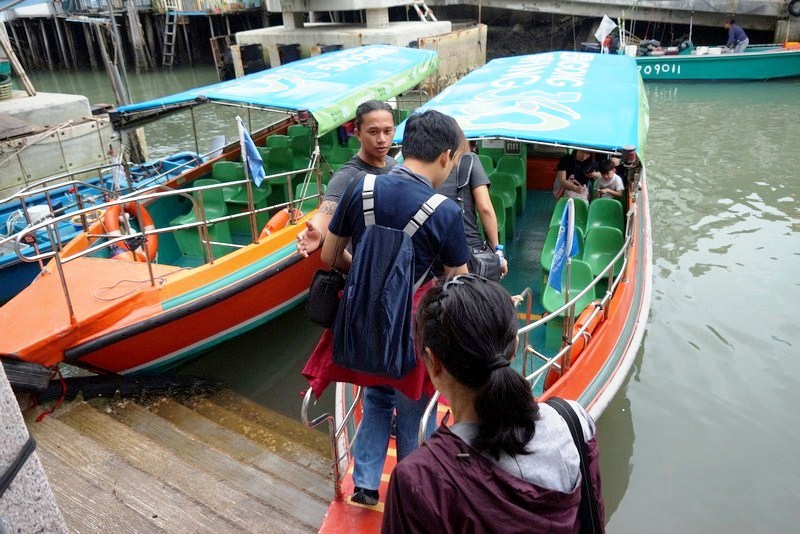
The modern-looking, 20-pax bot penambang (covered water taxis)

Boarding our modern-looking, 20-pax bot penambang (covered water taxi)

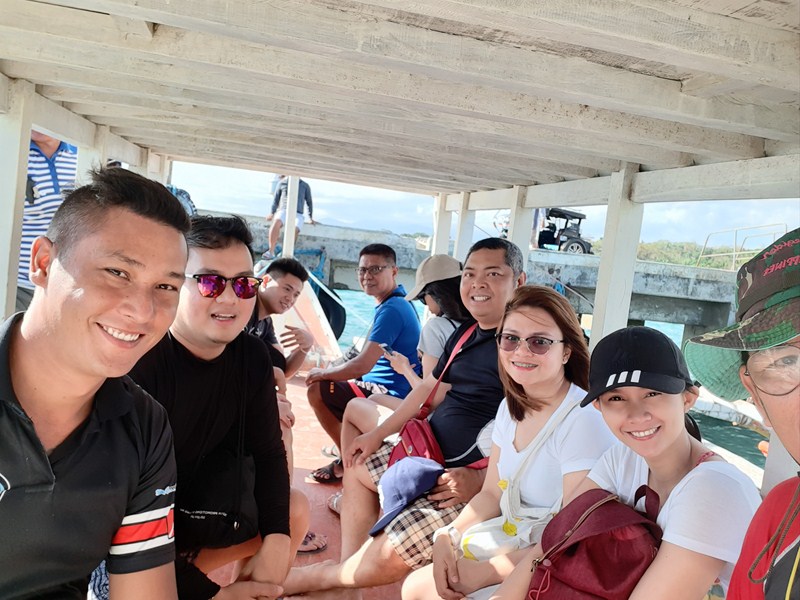
The author (right) with members of BEAT

The author (right) with members of BEAT (led by president Mr. York Virtucio at left) on board our water taxi

The establishment of the land town, acting as a population magnet, did not lead to its depopulation and arrival of new residents and natural increase maintained the population balance. Most of Kampong Ayer had survived heavy World War II bombardment. Around 2013-2014, smart new, two story stilt houses made of concrete were built in the center of the Kampong Ayer and given to the people in need of a new house but not wishing to live on land. Even today, many Bruneians still prefer the lifestyle of the water village to residency on dry land.

dsc01107

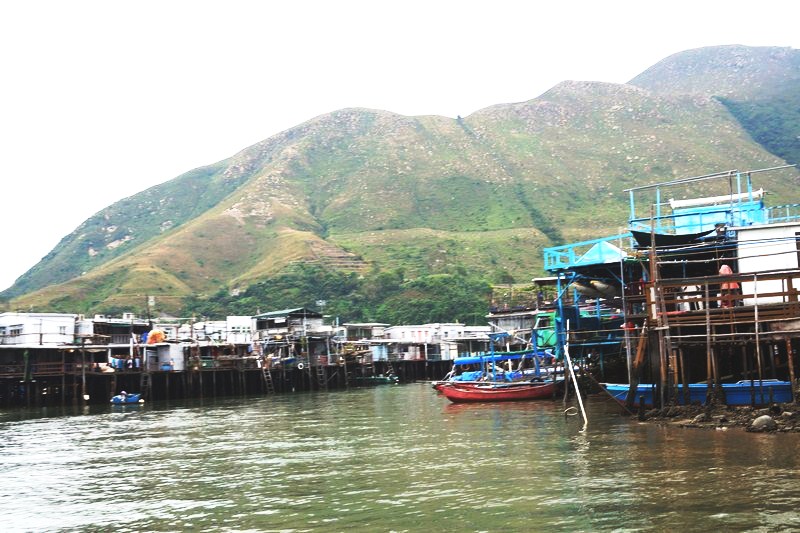
View of the mainland

The villages on the river’s north bank (the same side as the city center) used to cover a much larger area, but many of the stilt houses have been razed to spruce up the waterfront area around the Sultan Omar Ali Saifuddien Mosque.

dsc04955

Entering the narrow waterway

We were to have a personal experience of this heritage as we took one of the many 20-pax bot penambang (modern-looking, covered water taxis) that provide rapid transit daily between the Yayasan Sultan Haji Hassanal Bolkiah, in the center of town, and the water village itself. Our private water taxis resembled a long wooden speedboat. Before leaving the jetty, we all wore life jackets.

dsc01129

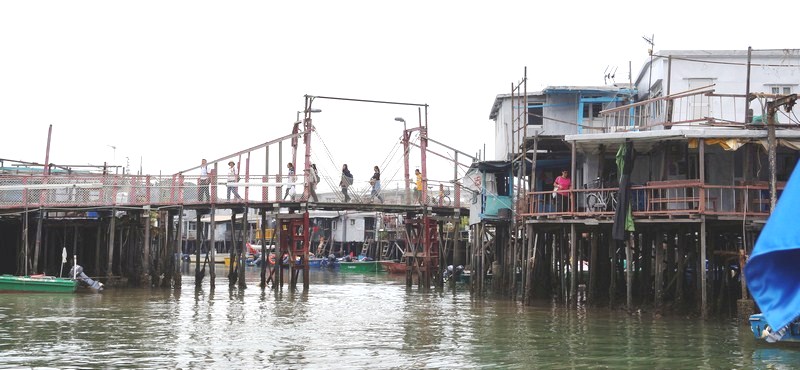
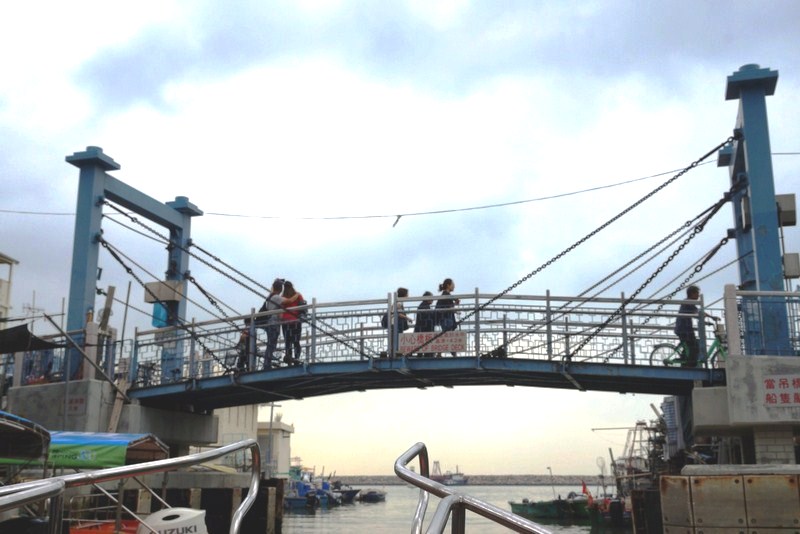
A foot bridge

The Water Village is really made up of a cluster of 42 small, contiguous and relatively cramped stilt villages (kampongs) linked together by more than 29,140 m. of foot-bridges.

dsc01119

dsc01132

dsc01133

dsc01138

This self-contained, close-knit community consists of over 4,200 structures, including homes, mosques, restaurants, shops, schools and a hospital, all interconnected by maze of 36 kms. of boardwalks. All of the six water village mukims (districts) are collectively known as the water village (Kampong Ayer) but, for administrative purposes, are identified as separate mukims.

mosque

One of two mosques

fire-department

The marine fire brigade

From a distance the water village looked like a slum but it actually enjoys modern amenities. The government, through the District Office, has provided it with numerous facilities including foot-bridges, concrete jetties, piped water, plumbing, electricity, telephones, schools, two mosques, clinics, seafood restaurants, a police station, a museum and a marine fire station.

dsc01128

A colorfully painted house on stilts

Many of the houses also have air conditioning, satellite television and internet access. Some of the residents even keep potted plants, in container gardens, and raise chickens. They even say that if you look at the main roads on the banks opposite the village, you’ll see luxury cars lined up on the shoulder of the road.  Many of these cars belong to water-village residents.

dsc01126

A village jetty

The wooden, sun-bleached houses, painted with shades of green, blue, pink and yellow, have not been done-up for tourists. From afar, we could see the 30 km. long Temburong Bridge, which is still under construction (it is expected to be completed in 2019), and the golden roof of the largest residential place in the world, the Sultan’s Istana Nurul Iman.  We made our first and only stopover at a village jetty.  Getting off the boat was an adventure on its own as we had to climb some worn-out concrete steps.

A second mosque

A second mosque

The unfinished Temburong Bridge

The unfinished Temburong Bridge

Upon reaching the top of the jetty, we walked along a treacherous, banister-less boardwalk, some with loose or missing planks, again another adventure by itself. Walking along these planked walkways (a bit of balance is required) while observing the various homes is probably what draws visitors here. However, while the houses were far from squalid, we noticed rubbish floating or carpeting the inter-tidal mud at low tide. For an apparently affluent country like Brunei which could afford to tidy it up, it was disgusting and disappointing.

Climbing the stairs up the jetty

Climbing the stairs up the jetty

We finally arrived at a local concrete home which was way too nice to be anything close to an authentic village house. The entry hall even had a chandelier. Just like in a mosque, we had to remove our shoes before entering.  Inside, there were lots of tourists like us. Obviously, it’s part of the tourist trail.  There, a good refreshment was served – 3 kinds of colorful kuih bingka, a local traditional sweet cake, plus tea. Our snack here capped our Water Village tour and we again made our back to our boat for the trip back to the mainland.

Traversing the wooden boardwalk

Traversing the wooden boardwalk

Removing our shoes prior to entering

Removing our shoes prior to entering

Our tour of the nondescript Kampong Ayer wasn’t really a visit into the past. Rather, it was just a peek into the everyday lives of some very friendly Bruneians while seeing some of the changes that has taken place over the last thousand years or so. Interesting but not amazing. Venice it isn’t by a mile.

Three different kinds of kuih bingka

Three different kinds of kuih bingka

Kampong Ayer: Bandar Seri Begawan, Brunei.  Kampong Ayer is accessible by boat or land bridges. To get across the river, just stand somewhere where a water taxi can dock and flag one down (the fare is B$1, one way). To get to these villages from the Yayasan Complex, itself built on the site of a one-time water village, follow the plank walks, behind the Hua Ho Department Store, that lead west, parallel to the river.

Baluarte Zoo (Vigan City, Ilocos Sur)

Baluarte Zoo

Baluarte Zoo

It was our last day in Ilocos Sur and, as we still had a whole day for sightseeing prior to our evening departure for Manila, we decided to visit Baluarte Zoo, former Ilocos Sur Gov. Luis “Chavit” Singson’s home in Vigan City and one of the top tourist destinations in Ilocos Sur.  Along the highway in Napo, Magsingal, we took a bus or the 13-km./25-min. ride to Vigan City proper.

Zoo entrance

Zoo entrance

From the city proper, we all boarded two tricycles for the 10-min. ride to Baluarte. As it was Holy Week, there was a traffic queue as we neared the entrance so we alighted, paid our fare, and walked the rest of the way.  Prior to entering, we had lunch at an eatery just outside the zoo. Entrance to the zoo was free.

Zoo rates

Zoo rates

Zoo Map

Zoo map

The approximately 80-hectare Baluarte Zoo, where Chavit’s numerous pets can be found, sits on a hill that provides an awesome panoramic view of Vigan City. This interactive free-roaming animal sanctuary is home to albino and spotted deer; miniature horses; impalas; one-humped camels; goats; zebras; ostriches; monkeys; llamas and buffalo plus a slew of bird species, from the common African love birds, ducks, swans, midget chickens and parrots to the more exotic hornbills.

Spotted Deer

Spotted Deer

Zebras

Zebras

For caged animals, they have some reptiles like snakes, iguanas, monitor lizards, pythons, crocodiles and then there’s Bengal tigers and birds such as eagles, owls and peacocks.  Baluarte also features live daily animal shows (three times a day, 10 AM, 2 PM an 4 PM) and tell times when audiences are introduced to the animals.

Ostriches (2)

Free roaming ostriches

There’s also a petting zoo, a butterfly garden inside the garden where one can observe and have a more serene interaction with thousands of butterflies, some endemic to the Philippines; a track or horse riding; a skeet shooting range and a chapel, among others.

Chapel

Chapel

Singson's gold-clad resthouse

Singson’s gold-clad resthouse

The gold-clad building (called by locals as the “Golden Building”), topped with a burning bush sculpture up its roof, is Chavit’s personal multi-storey rest house which has a grand view of Vigan and the West Philippine Sea.

Singson's "Yellow Submarine"

Singson’s “Yellow Submarine”

Within the grounds, we had a glimpse of Chavit’s personal and functional one-man mini-submarine with its iconic yellow color (one can easily hazard a guess on what its name is), said to have been used by Chavit to track treasures during his free time. Kids will definitely enjoy the Jurassic Park background because of those life-size concrete dinosaurs. There was also a safari tour, using a long-seater golf cart, with a minimal fee of Php20 per person.

Life-size concrete dinosaurs

Life-size concrete dinosaurs

To interact and get a close encounter with the animals you can, for a price, also ride some ostriches, horses and ponies and can touch or carry an anaconda (PhP20) and iguana (PhP20). For a closer encounter with parrots and hornbills, visitors may choose to openly approach and feed them with bananas and seeds in a more open area. Each animal has there own designated attendant. The place also has souvenir shops (T-shirts, key chains, ref magnets, etc.) and food outlet.

Souvenir shop

Souvenir shop

The climax of our visit to the place is the Safari Gallery perched on top of the hill.  It houses a collection of deer heads (and other few animals) hanging on the wall; the collection of stuffed animals such as a lion, Bengal tiger, wildebeasts, bison, bear, buffalo, gazelles, elephant, sheep, and so many more killed in his safari adventures (paintings and photos of Chavit beside the dead animal are also posted).

Safari Gallery

Safari Gallery

Some are just skins of these wild animals. While I do not like the idea of killing these animals, it still looks awesome looking at them preserved and mounted. It is also well maintained with properly labeled items.

Stuffed animals at the Safari Gallery

Stuffed animals at the Safari Gallery

Melissa and Albert also tried out the Water Walking Ball (PhP50/pax/15 mins.), a large inflatable sphere that allows a person inside it to walk across the surface of a pool of water. Before leaving, Almira and Jandy tried out the tiburin ride, a rickshaw driven by a miniature horse. It allowed them a close-up view of the free roaming animals.

Water Walking Ball

Water Walking Ball

From Friday to Sunday, 6 – 9 PM (last entry 8:30 PM) there is a Night Zoo. Admission: (Discovery Trail): PhP50 for adults, PhP20 for children and PhP40 for senior citizens and persons with disability.  Tram on Tour:  PhP100 for adults, PhP40 for children and PhP80 for senior citizens and persons with disability. On weekends, from 7 – 8:30 PM, there’s  a Sala ti Darang (The Art of Fire Dancing) show.

Almira and Jandy's tiburin ride

Almira and Jandy’s tiburin ride

Baluarte Zoo: Brgy. Salindeg, Vigan City, Ilocos Sur.  Tel: (077) 722-7186. Open daily, 8 AM – 5 PM (last entry 4:30 PM).

Onse Reef Off Road & Sandboarding Adventure (Paoay, Ilocos Norte)

Paoay sand dunes

Paoay sand dunes

One of the highlights of our Holy Week sojourn in Ilocos Norte was our Onse Reef Off Road & Sandboarding Adventure.  From Pamulinawen Hotel, Jandy, Melissa, Almira, Albert and I had to take a 17-km./25-min. jeepney ride to Paoay town proper.  From there, we all boarded a tricycle for the 20-min. drive to the sand dunes. As we neared the dunes, Albert and I had to alight as the tricycle had a hard time climbing up a dune. Upon arrival, we met up with Mr. Jake A. Texon, the Operations Manager.

Onse Reef

Onse Reef Off Road & Sandboarding  Adventure

Ilocos Norte is the only place across the Southeast Asian region where one can find a desert environment. Technically known as the “Ilocos Norte Sand Dunes,” it spans four Ilocos Norte towns. In 1993, due to its superlative natural beauty, geological uniqueness and scientific relevance, the sand dunes have been declared as a National Geological Monument (NGM) in the Philippines (other NGM sites include  the Hundred Islands National Park off  the coast of Pangasinan, the Taal Lake and Volcano Protected Landscape in Batangas, and the Chocolate Hills in the island of Bohol). The dunes have been used as the setting for the desert scenes in for Mel Gibson’s “Mad Max” (1979), Tom Cruise’s “Born on the Fourth of July” (1989) and local blockbuster flicks such as Nora Aunor’s “Himala” (1982), the “Ang Panday” series and “Temptation Island” (2011).

The desert-like terrain

The desert-like terrain

The sand dunes of Ilocos Norte, a one of a kind “extreme adventure” destination in the Philippines, is also ideal for 4 x 4 rides, similar to dune bashing in the Emirate of Dubai in the United Arab Emirates (a booming tourist attraction in the Middle East), and sandboarding. Dune bashing has the feeling and excitement of riding a roller coaster because of the up and down route of the off-road vehicle through the very high and very steep terrain and mountain-like features of the dunes.

A lone tree

A lone tree

The Paoay Sand Dunes, 88 hectares of wide expanse of sand, has the vast sandy characteristics of the Dubai desert (though the sand there is considerably pure because it doesn’t have particles like twigs, barks, stones and leaves), making it suitable for dune bashing and sand boarding.  However, the vehicles used in Dubai (such asToyota Land Cruisers) have roofs while the jeeps in Paoay are open-air and only have a single roll bar.

1934619_660384717433067_2886121895443945289_n

In 2011, during our Lakbay Norte Media Tour, we tried the dune bashing and sandboarding at La Paz in Laoag City.  However, it is widely accepted that Paoay boasts the best terrains there are to find in the sand dunes complex and, recently, an outdoor group discovered an area in the village of Bacsil that is a good addition to the options present for sand dunes safaris.  This I wanted to find out.

The West Philippine Sea

The West Philippine Sea

How do the sand dunes of Paoay differ from earlier established commercial areas in the sand dunes complex? For one, it was only recently discovered so its terrain is as pristine as they can get plus not many tourists have visited the place. Also, the combination of wide sandy plains, clusters of closely-formed dunes, several oases and outlying vegetation plus a good view of the coast towards the West Philippine Sea, and the height of its dunes (some at 70 m. high) will surely not disappoint anyone visiting Bacsil. Aside from Onse Reef Off Road & Sandboarding Adventure, there are two other registered 4 x 4 operators at the Paoay sand dunes – Suba Sand Dunes and Culili Point Sand Dunes Double-Extreme-Adventure.

The staging area

The staging area

Onse Reef Off Road & Sandboarding Adventure, according to Jake, was established on October 28, 2014 as a 15 member club whose members pitch in their time, talent and treasure to build the place. It has 21 4 x 4 units – five locally-manufactured Wrangler-type jeeps, 14 Toyota Land Cruisers and two modified Toyota Surfs, all diesel-powered and tuned for dune bashing by being equipped with large tires (underinflated to 10 psi) and heavy duty suspension systems.  Conversions usually cost PhP400,000 per unit.

Some of Onse Reef's 4 x 4s

Some of Onse Reef’s 4 x 4s

All units are manned by 25 drivers and 40 guides (who also teach sandboarding). The drivers and guides have to strictly adhere with safety nets for their passengers who are standing in open jeepney vehicles. Drivers also stay on existing tracks and areas, and do not create new ones in the limited vegetation, so they are caring for the area. For the site to become globally competitive, without disturbing the natural ascent, descent and curbs of the place, the trails were designed in consultation with expert adventure builders in the U.S.A., with names such as the “Snake Pit,” the “Devils Ride,” the “Blind Drop,” the “Triple Fall,” the “Roller Coaster,” etc.

Wrangler-type jeep

A Wrangler-type jeep

We tried out the dune bashing first. We hopped on the back of our blue Toyota Land Cruiser and, in a standing position (you can also do it seated but it is less fun), were asked to hold on tight to the roll bar. No seat belts, harness or head gear at all. Our 4 X 4 ride was more thrilling and enjoyable than any roller coaster ride I have ever experienced and we all felt a different kind of rush as we watched the road from above and screamed for our lives during the times when we felt like the vehicle would topple over.

Boarding our Toyota Land Cruiser

Boarding our Toyota Land Cruiser

You must have strong grip to prevent being thrown out, plus a strong heart to last the trip.  The drive on bumpy routes and very steep 45 degree angle downward slopes were very exciting. The driver knew how to give us an adrenaline rush. We soon learned how to move with the vehicle, especially on high deep hills and side-winding curves. It’s literally like riding a wild horse and surely an experience I’d be glad to do again.
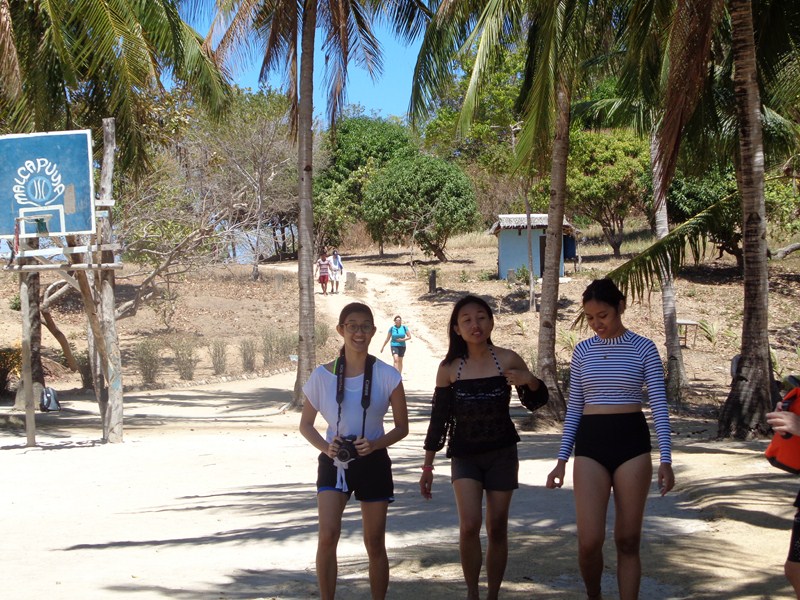
On our way ......

On our way ……

We made a stopover on top of the dunes for some photo shoots. As we arrived during the long arid dry season, the dunes before us were barren and brown, with only wild grasses, shrubs and some sturdy trees. The beautiful, late afternoon sunset here, along the crimson skyline, is also said to be indescribable.  We also learned that offshore is Onse Reef, a 12-hectare-protected marine sanctuary and a beautiful diving site located within the territory of Barangays Bacsil, Mumulaan and Nagbacalan.

Stopover for photo shoot

Stopover for photo shoot

DSC09491

After our 4 x 4 ride, the others tried sandboarding, an insane sport which, though so much harder than surfing and a little easier than wakeboarding and skiing, was still worth trying. All you need here is body balancing. You need to squat in order to balance and properly surf. Each tried to keep their balance on the stretch of roughly 10 to 15 m. run with the board still on their feet.  The board is geared up with oil to make it glide smoothly over the sand but still they tumbled. Good thing the sand is soft, with no rocks.

Jandy getting ready to surf

Jandy getting ready to surf

However, falling from the sand boards would get lots of sand in your pants. Only Melissa made a successful run while seated on the board. Though you would tumble down at first, you’ll get the hang of it after two or more tries. You will have to walk up the slope every time you surf down and the hard part is just climbing up the sand hill again as it does get very tiring.

Albert bends to balance himself

Albert bends to balance himself

A very nice place to test your nerves, don’t leave Paoay without trying dune bashing and sandboarding! It’s both exhilarating and scary and good for adrenalin junkies. It also gives you the authentic feeling of being in the Middle East as you do not have to travel to Dubai just to experience this. The drivers and the guides all make sure that you get a thrilling ride going up and down the sand dunes. It’s absolutely fun. At the staging area, there is a store that sells snacks, halo-halo and souvenirs.

Melissa makes it down the hill on her butt.....

Melissa makes it down the hill on her butt…..

It is best to try dune bashing when the sun’s not too punishing. As they operate as early as 5 AM, you can try out dune bashing either very early in the morning or late in the afternoon (to also view the nice sunset) as the really fierce heat of the noontime sun can burn your skin. Don’t go there between 10 AM and 4 PM. Bring bottled water with you, as it does get dry and tiring, bring sunblock lotion, a small towel plus wear sunglasses, rubber shoes (because the sand is hot) and a hat that won’t blow off.  Also make sure to have extra clothes and be prepared to get dirty. For those who want to take videos, better use a small camera that you can attach to its stand and hold it in front of you, since it will be hard to hold on to the big cameras while your ride is going down fast.

L-R: Melissa, Jandy, Albert and Almira

L-R: Melissa, Jandy, Albert and Almira

The 4 x 4 ride and sandboarding is not for the faint hearted, anxious, nervous, pregnant, the newly operated, have high blood pressure, fractures, epilepsy or heart disease. Only children 10 years old and above are allowed at the back of the vehicle.  Participants have to sign a waiver.  Peak season is summer, weekends and December.   Rates: PhP1,500 for a 30- minute ride and PhP2,500 for a 1- hr. ride. Maximum number of people is 5.

Posing with Jake A. Texon (in light blue shirt)

Posing with Jake A. Texon (in light blue shirt)

Onse Reef Offroad & Sandboarding Adventure: Brgy. 23, Bacsil, 2902 Paoay, Ilocos Norte. Mobile numbers: (0919) 650-4633 (Smart), (0917) 503-9543 (Globe), (0921) 738-0616 (Smart) and  (0999) 710-2779 (Globe). Email: Paoay.sandunes@yahoo.com. . Website: www.onsereef.com. Open daily, 5 AM – 7 PM.

CYC Beach (Coron, Palawan)

CYC Beach

CYC Beach

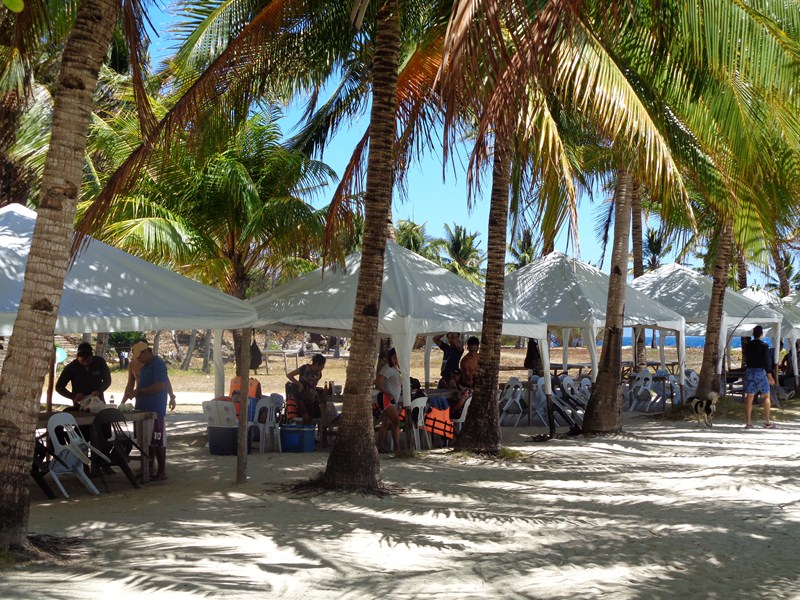
After lunch at Atwayan Beach, we again boarded our boat and proceeded on to our next destination – CYC Island, a part of the Coron Island Ultimate Tour we availed of from Asia Gran View Hotel.  From our boat, we had to alight into the waist-high and clear waters of the sea and walk, a little way, to the island’s beach.
Approching CYC Island

Approching CYC Island

Guests are advised to put on booties and be extra careful walking as there are rocks under the water and they may injure their feet.  Although there were other tourists already there, the beach was not too crowded.
Cheska, Kyle and Jandy land on the beach

Cheska, Kyle and Jandy land on the beach

CYC, short for Coron Youth Club, is the only free beach in the area.  Other beaches charge a PhP100 entrance fee (Coron’s islands are jokingly called the “Hundred Islands”). The island’s beach sand is white (though not as white as Banol’s and the other beaches in Coron) and its surrounding waters are crystal clear.

DSC07693

Kyle playing in the sand

There were also some rock formations and beautiful mangrove trees located all over the island but guests are discouraged to go there by the guides due to the possible presence of stonefish partly hidden in the sand. There are also sea urchins and sea snakes (locally known as walo-walo).

Some of the mangroves surrounding the island

Some of the mangroves surrounding the island

Being a public beach, I expected the beach to be dirty but, surprisingly, it was clean. Its long, shallow sand approach makes it ideal for kids to swim in and its water temperature is perfectly lukewarm.  The sea breeze adds to the memorable experience.  Two dogs were serenely watching us as Kyle played with the sand.

The island's two resident dogs

The island’s two resident dogs

The dogs were said to have come from the opposite island, swimming back and forth before the day ends. The monkey who used to live here is already dead.  The wide beach has a division as part of its white sand was said to have been illegally quarried by a politician for his private beach, thus deforming the island’s beach.

View of the main island from CYC Beach

View of the main island from CYC Beach

The island has no cottages but the area is suitable for camping (just bring your own tent, food and water). Go there when it’s off season so you can get the most out of it. If you love snorkeling, you will love this beach as well.

A tangle of mangrove roots

A tangle of mangrove roots

There’s not much sea life in the shallows, with just a few sporadic clown fishes, but there’s some very good snorkeling farther off, in deeper water, to a coral forest on the reef to the east of this pretty beach. Here, you will find beautiful colorful coral walls and much sea life.  If you’re a non-diver, you can have your Discover Scuba Skills Test here.

DSC07692

CYC Beach, great for a swim and relaxation, is still good for a 30-minute to 1-hour stay even if you are not into snorkeling or camping.

The author at CYC Beach

The author at CYC Beach

Asia Grand View Hotel: Governor’s Ave., Jolo, Brgy. 5, Coron, Palawan.  Tel:(+632) 788-3385. Mobile number: (0999) 881-7848. E-mail: gsd@asiagrandview.com. Manila sales office: Unit 504, Richmonde Plaza, 21 San Miguel Ave., Ortigas Center, Pasig City.  Tel: (+632) 695-3078 and 531-8380.  Mobile number: (0917) 550-7373 to 75 Fax: (+632) 695-3078.  E-mail: info@asiagrandview.com. Website: www.asiagrandview.com.

Skeleton Wreck (Coron, Palawan)

Skeleton Wreck site

Skeleton Wreck site

From Twin Lagoon, we again swam back to our waiting outrigger boat.  Once boarded with my family, we proceeded to Skeleton Wreck, a snorkeling destination near Banol Beach off the northwest corner of Coron Island. When we arrived at the site, there were already a number of boats, divers and snorkelers milling around the site.  We donned our masks and snorkels and swam towards it.

Approaching the site

Approaching the site

The Skeleton Wreck’s name comes from the fact that the keel, ribs and stringers of this old, 25 m. long steel-hulled fishing boat wreck are almost all that are left, giving it a skeletal appearance. It was beached, with the bow a dozen meters from Coron Island, and the stern pointing directly away from the island. The top of the wreck is in about 6 m, of water and it sits on a pretty reef.

Donning masks an snorkels, Cheska, Jandy an our guide Japeth take to the water

Donning masks an snorkels, Cheska, Jandy an our guide Japeth take to the water

The wreck slopes along the reef from 5 m. deep at the bow to 22 m. at the stern. Because the water is so clear, it can already be viewed from the surface.  Around it are beautiful corals. Somebody threw some bread to the sea and a variety of fish, with an amazing array of lovely colors, all shapes and sizes, came towards us

Bow of Skeleton Wreck (photo Christian Lucas Sangoyo of www.divesitedirectory.co.uk)

Bow of Skeleton Wreck (photo Christian Lucas Sangoyo of www.divesitedirectory.co.uk)

The Skeleton Wreck can also be done as a dive. A pass through on the starboard side of the hull, at 14 m., allows one to swim from the inside of the boat out over the coral reef. It won’t take long to cover the wreck, so those intending to have a long dive here will probably want to finish up on the reef. Beware of sea urchins. This is also a good spot to have lunch and you can have a quick dip before continuing on your tour. It costs PhP100 per person to moor up here.

(photo: www.cheaptravel-coron.weebly.com)

(photo: www.cheaptravel-coron.weebly.com)

Asia Grand View Hotel: Governor’s Ave., Jolo, Brgy. 5, Coron, Palawan.  Tel:(+632) 788-3385. Mobile number: (0999) 881-7848. E-mail: gsd@asiagrandview.com. Manila sales office: Unit 504, Richmonde Plaza, 21 San Miguel Ave., Ortigas Center, Pasig City.  Tel: (+632) 695-3078 and 531-8380.  Mobile number: (0917) 550-7373 to 75 Fax: (+632) 695-3078.  E-mail: info@asiagrandview.com. Website: www.asiagrandview.com.

Bulalacao Falls – Small Falls (El Nido, Palawan)

B.E.A.T. Familiarization Tour to Bulalacao Falls

B.E.A.T. Familiarization Tour to Bulalacao Falls

On our third day in El Nido, after breakfast at The Resort Bayview Hotel El Nido, members of B.E.A.T. (Business Executives Alliance in Tourism) again boarded their van for another round of resort-sponsored familiarization tours of the town.  Our first destination was to be Bulalacao Waterfalls, one of the most beautiful falls in the town.  It is actually a series of waterfalls aptly named Big Falls and Small Falls.

The start of the trail

The start of the trail

The 70-ft. high Big Falls is a 2-part trek that first requires you take a 45-min. tricycle ride to Brgy. Pasadeña and, upon arrival, make a grueling 1.5 to 2-hour hike (not to be undertaken without a guide and must not be attempted during the August to October rainy season) down a heavily-vegetated trail that courses through rice paddies and a thicket of towering ipil, balete and kamagong trees.

The well-marked trail

The well-marked trail

We were to visit the easier and more accessible Small Falls (also called Naganlec Falls). Upon arrival at the start of the trail, we first paid the PhP25/pax entrance fee (payment for the family that keeps the trail clean). The trail to the falls was well shaded by trees and marked. The hike through the forest took all of 20 mins. and we had to make 5 boulder-strewn river crossings, its cool waters a refreshing break for us as it was quite humid that day.

One of five river crossings

One of five river crossings

As we got closer to the falls, we again had to pay a PhP50/pax entrance fee, this time for the family that keeps the area around the falls clean. This place was a really nice and there were two huts with picnic tables. The Small Falls, with 4 accessible levels, was calm and inviting. The first and lowest has a large pool that people can jump into from the cliff above as it has a 3 m. depth.  A number of foreigners tried it.

The lower level

The lower level

A foreigner takes the plunge

A foreigner takes the plunge

View of the lower level's pool from the escond level

View of the lower level’s pool from the escond level

However, most of us tried out the easy-to-reach second level which has a beautiful low cascade and a shallow, swimmable pool that everyone enjoyed. It was a nice, cool and refreshing break from the heat of the morning sun. It may not be a large fall but it has a great little swimming area. 

The second level

The second level

Frolicking at the second level pool

Frolicking at the second level pool

Bulalacao Falls: Sitio Naganlec, Brgy. Pasadena, El Nido, Palawan.

The Resort Bayview Hotel El Nido: Sitio Marimegmeg, Brgy. Corong-Corong, El Nido, 5313, Palawan.  Tel: + 66(0) 76 281 406. Fax: + 66(0) 76 384 369. Mobile numbers: (0915) 250-7368 (Globe) and (0920) 975-8690. E-mail: theresortelnido@gmail.com. Website: www.elnidobayview.com.

Seven Commando Beach (El Nido, Palawan)

Seven Commando Beach

Seven Commando Beach

The last part of our Island Tour A was to be spent at the picturesque and very laid back Seven Commando Beach which boasts the clearest beach waters in El Nido. Accessible only by boat, it is called as such because, a long time ago, seven soldiers (others say 7 fishermen) were stranded on the island. According to locals, their names can be seen printed on the rocks here.

Picnic huts along the beach

Picnic huts along the beach

Store selling food and drinks

Store selling food and drinks

Ideal for swimming, beach volleyball, silhouette shots or just beach bumming, it has fine and clean but a little coarse white sands, turquoise clear waters, calm waves (very nice for snorkeling and swimming), fabulous rock formations and coconut trees.Despite having a souvenir shop, a stall that sells quite pricey smoothies, water, alcoholic drinks (beer, pina coladas, mango daiquiris, etc.)and food (chips and bananacue), and a restroom facility in this area, the wide, clean and white beach still retains its natural charm.

Swinging hammock

Swinging hammock

Sunset at Seven Commando Beach

Sunset at Seven Commando Beach

For those who are not into swimming, you can just lounge around and have very refreshing halo-halo on a coconut shell (PhP150), fruit shakes, fresh coconuts (PhP50) and other thirst quenching refreshments at the store while enjoying the view, especially during sunset time. There is also a swinging hammock seat and sheltered beach tables which can be used for free.

The author (third from left) with, L-R, Meng, Osang and Melissa

The author (third from left) with, L-R, Meng, Osang and Melissa

Also within this beach is the 4-room Vellagio’s Resort which opened last January 2015. Full moon parties are held on this island in February. As the beach is only a 10-min. boat ride from the mainland, it is sometimes the first stop on the island hopping tour as it gets really crowded by beach bums in the afternoon.

Small Lagoon (El Nido, Palawan)

The Small Lagoon

The Small Lagoon

From Secret Lagoon, we again boarded our motorized outrigger boat for the continuation of our Island Tour A, this time to the Small Lagoon.  Along the way, we passed by, but didn’t stop, at the entrance of the Big Lagoon. On arrival, our outrigger boat parked , alongside other boats, just outside the entrance of the Small Lagoon as it could not access the interior as its entrance is narrow and its waters are shallow.

The entrance of the Small Lagoon

The entrance of the Small Lagoon

Boats parked at the entrance

Boats parked at the entrance

To view the wonders of the lagoon, we would have to either swim the 150-300 odd meters into the lagoon from our boat, if you’re a good swimmer, or kayak. Those who opt to swim usually get really tired going to the end of the lagoon, since the waters are deep inside.  We all chose the latter.

Jandy, Melissa and Osang get on their way ......

Jandy, Melissa and Osang get on their way ……

Our boatman, Luchie and I follow suit ......

Our boatman, Luchie and I follow suit ……

Kayaks here are rented for PhP300. Though made for two people, a third person was allowed to seat between the two sitting compartments.  Jandy joined Melissa and Osang in one kayak while I was joined by Luchie and another boatman.  Tess, Venus, Sandy, Pam, Melai, York, Lydia and Weng also rented kayaks.

Melai and Pam with their boatman

Melai and Pam with their boatman

Sandy, Venus and Tess

Sandy, Venus and Tess

York, Lydia

York, Lydia

Donning our orange-colored life jackets, we made our way to the narrow archway between the rock face.  Once through, we were ushered into eerily quiet and serene waters of a beautiful, turquoise lagoon enclosed by towering limestone cliffs. The giant limestone walls towering over us bounced around our echoes of wows.

The massive limestone cliffs enclosing the lagoon

The massive limestone cliffs enclosing the lagoon

The small cave at one end of the lagoon

The small cave at one end of the lagoon

We were always on the lookout as we kayaked as there were also a number of swimmers inside the lagoon. This place is also great for snorkeling and there were also some snorkelers checking out the underwater creatures beneath.

The author paddling away

The author paddling away

There was a rocky area where people could climb up and dive off or use it as a stage where they can do their selfies. We also checked out a small cave and pool at the end of the lagoon.

The Resort Bayview Hotel El Nido: Sitio Marimegmeg, Brgy. Corong-Corong, El Nido, 5313, Palawan.  Tel: + 66(0) 76 281 406. Fax: + 66(0) 76 384 369. Mobile numbers: (0915) 250-7368 (Globe) and (0920) 975-8690. E-mail: theresortelnido@gmail.com. Website: www.elnidobayview.com.

Secret Lagoon (El Nido, Palawan)


Boats parked offshore during low tide

Boats parked offshore during low tide

After lunch at Star Beach, we again boarded our motorized outrigger boat for Secret Lagoon, a part of Island Tour A. As it was low tide, our boat docked some distance from the shore of a white sand beach lined with coconut palms beneath a massive and towering limestone cliff face.  Alighting our boat, we had the choice of carefully wading on top of sharp rocks (aqua shoes highly recommended) or be pulled by our guides while floating on a life jacket. Most chose the latter while I did the former.

Being pulled to shore by our guides while floating on a life jacket

Being pulled to shore by our guides while floating on a life jacket

We came ashore a very beautiful beach, with huge alien-like limestone formations surrounding it, offering you majestic views of the open water between the cliffs and a peek of Shimizu Island. To the left of the beach is a huge cliff with a small opening.  That, my friends, was the entrance to the Secret Lagoon, also known as Hidden Lagoon of Miniloc Island.

The beautiful palm-lined white sand beach

The beautiful palm-lined white sand beach

Some of the huge alien-like limestone formations

Some of the huge alien-like limestone formations

During high tide, it might be impossible to access the Secret Lagoon as, due to safety reasons, tourists might bump their heads on the sharp rocks of the tiny opening while swimming through it.

Entering the Secret Lagoon via a small opening

Entering the Secret Lagoon via a small opening

Fortunately, since it was low tide, the opening was now above the water so we didn’t have to swim through it. We just had to carefully crawl in or twist our body, like a pretzel, into the Secret Lagoon, making it the trickiest attraction of the day to get into. The water leading to the lagoon was shallow, so we were extra careful with the sharp rocks and corals to avoid scrapes and wounds.

Limestone cliffs surrounding the Secret Lagoon

Limestone cliffs surrounding the Secret Lagoon

Once through, we were mesmerized by the majestic limestone rock formations and cliffs surrounding it, its shadows making the temperature inside much cooler. As it was low tide, swimming was not enticing since the stagnant water was quite murky. The water inside looked shallow, but it gets deeper as you go farther so we didn’t dare. As it’s quite small, there’s not much to inside. For the adventurous, there’s a small passageway meters deep into the water where one can deep dive into.

Posing inside the Secret Lagoon

Group posing inside the Secret Lagoon

However, we just posed beneath the massive, quite photogenic cliffs then left as there were lots of tourists waiting in the wings. It’s hard to consider the lagoon a secret with dozens of other tourists milling around you. To avoid the crowds, pay a bit extra and go later in the day. However, its adjacent, quieter white sand beach is one great spot for swimming and snorkeling.

Star Beach (El Nido, Palawan)

Star Beach

Back to the wharf, we again boarded our boat for the short trip to the simple yet pretty Star Beach, a small, secluded area of white sand nestled between two large rock outcroppings. It was named Star Beach because this is the place in El Nido where you can find a lot of blue starfish. Unfortunately, I didn’t even see one.

Star Beach

Star Beach

Star Beach (8)

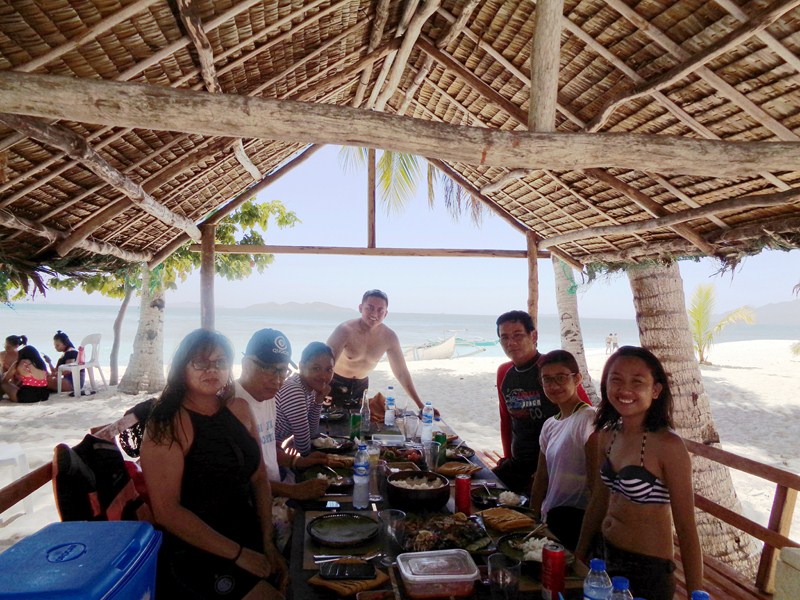
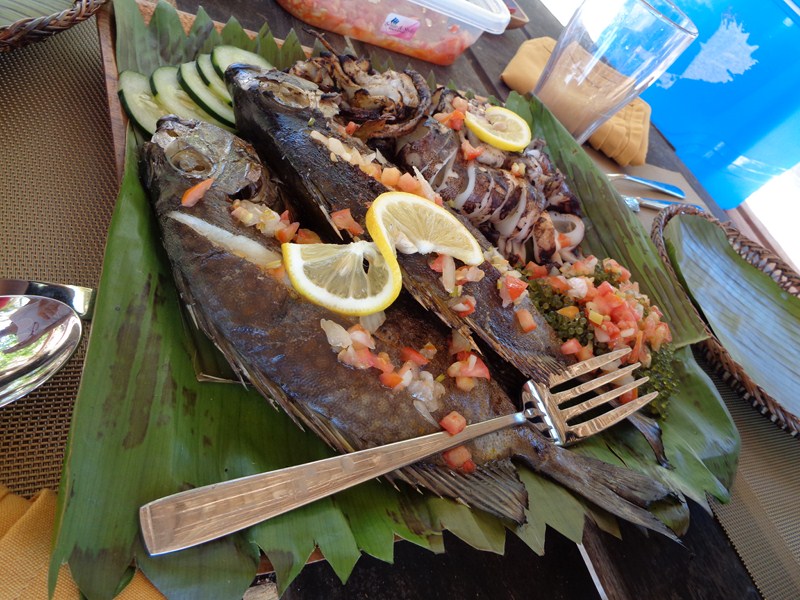
Located on one side of the narrow Tapiutan Strait, the relatively small Star Beach is nothing remarkable.  However, it offered rest and yes, food! Here, we had lunch of grilled fish, squid and chicken; steamed crab and fruits (pineapple, bananas and water melon).

Star Beach (7)

An overhang, over a small cave, offered us protection from the noontime sun. Star Beach offered good photographic opportunities, with the towering limestone formation as a background, and the place is also good for snorkeling just a few meters off the beach without walking over sharp rocks to see different corals and plenty of species of colorful little fish and other marine life from its vast reef.

Star Beach (26)

After lunch, we floated around the clear crystal blue-green waters. It was oh-so relaxing! The place can be littered with boats on peak season.