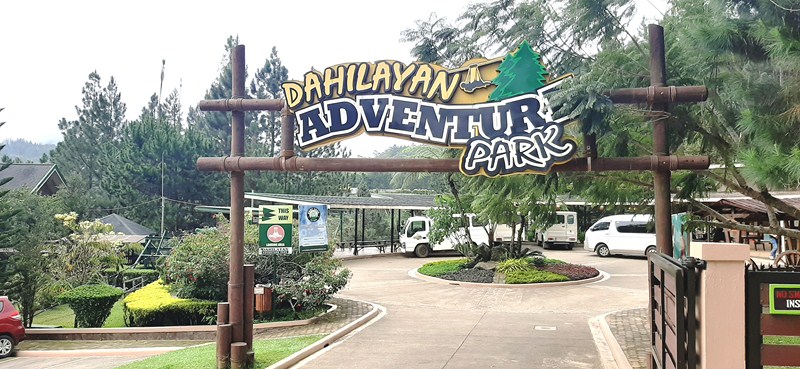
Dahilayan Adventure Park (Manolo Fortich, Bukidnon)

Dahilayan Adventure Park

After covering the opening of the Kain Na! Food and Travel Festival and checking into and freshening up at Seda Centrio Hotel, we met up with tourism officer Ezra Glinogo at the hotel lobby. Instead of continuing with our coverage of the food festival, we were instead treated to a visit to the Dahilayan Adventure Park in the town of Manolo Fortich in the adjoining province of Bukidnon.

Check out “Kain Na! Food and Travel Festival” and “Hotel and Inn Review: Seda Centrio Hotel

The 57.3 km. drive, along the Sayre Highway, took 1.5 hours and, at the Manolo Fortich boundary, quarantine staff there stopped our vehicle and requested all of us to step down and step on foot baths to protect Bukidnon from foot and mouth diseases.

Moving on, we enjoyed the breathtaking countryside and mountain views along the way and, before reaching the park, we passed by Camp Phillips where the massive, 23,000-hectare  pineapple plantation of Del Monte, one of the biggest in the world, is located.

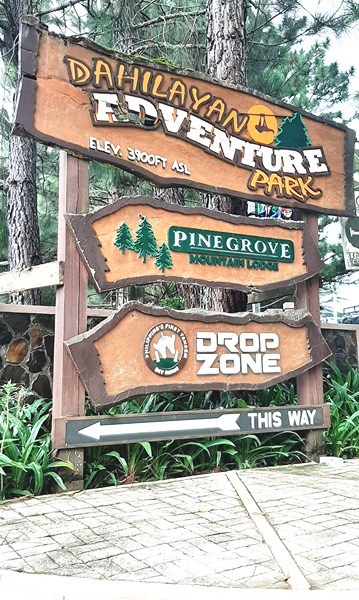
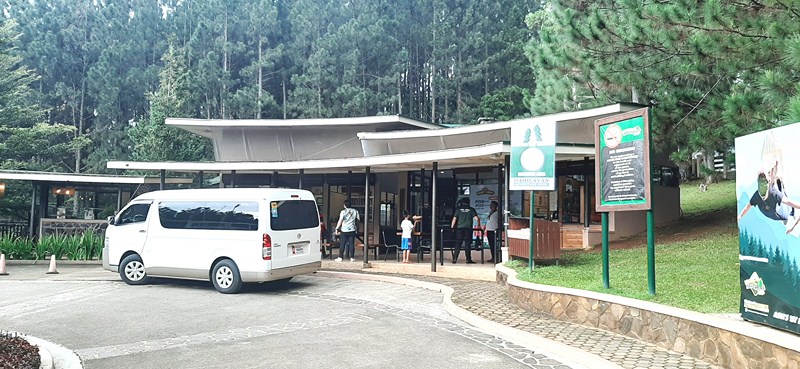
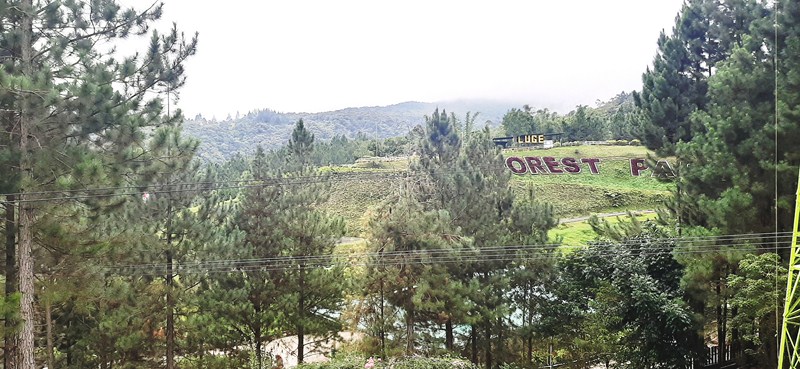
After passing through lush greenery and breathtaking views, we arrived at Dahilayan Adventure Park, nestled at the foot of Mount Kitanglad, by 4:10 PM.  Its cool and invigorating climate reminded me of Baguio or Tagaytay.

Since its opening in September 2009, Dahilayan is famous for its Zipzone, two dual ziplines, with a drop of 100 m., which are said to be the longest in Asia at 840 m. long.

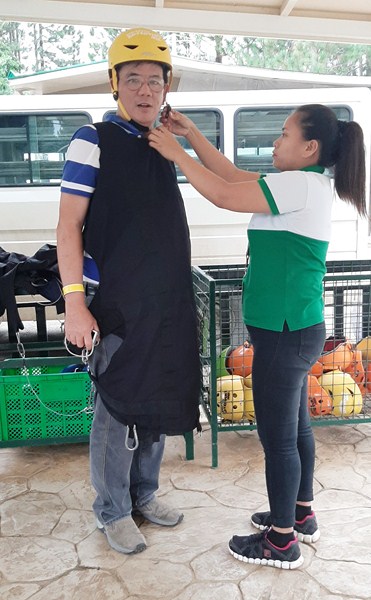
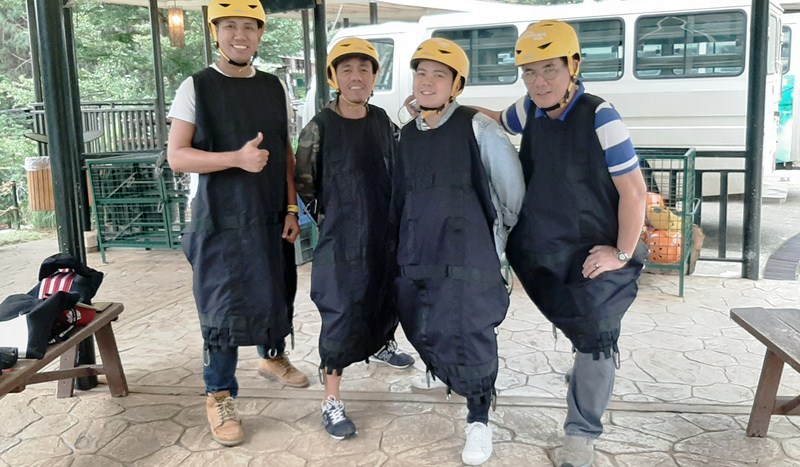
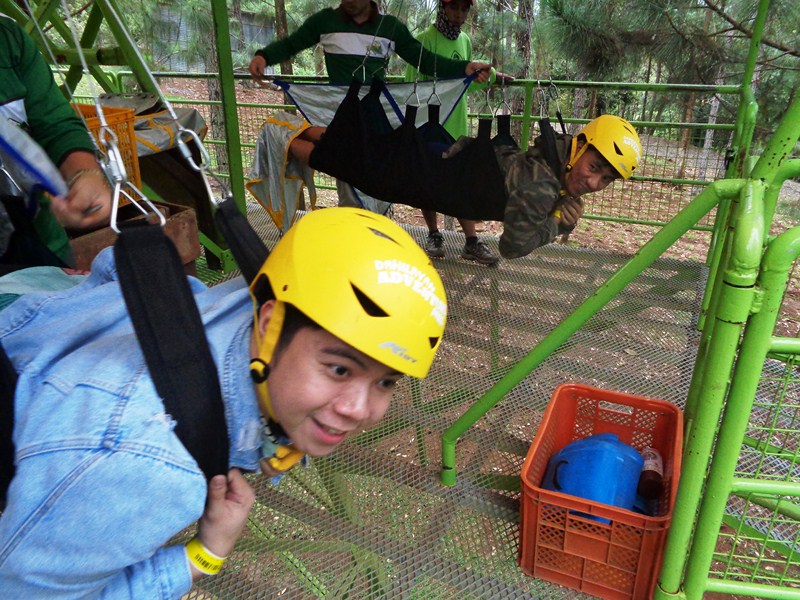
The author being suited up by a park staff

Guaranteed safe and fun for every age, Zipzone has been visited to over a thousand enthusiasts and has become the ultimate adventure destination for young and old alike, including a courageous 2 year old and a 77 year old grandfather. It was an opportunity too good to miss, and Kristian, Marco, Paolo and I were excited to try it out.

L-R: Kristian, Marco, Paolo and the author

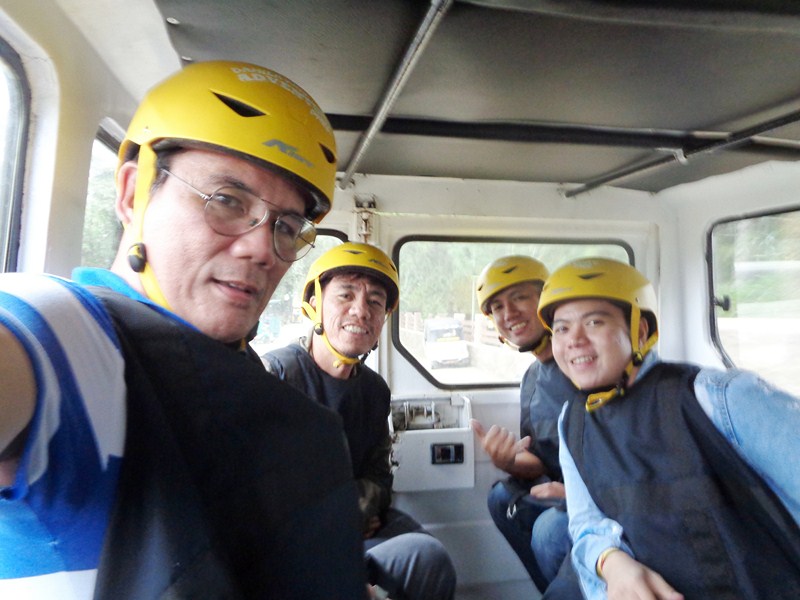
First, the staff suited all four of us with helmets, harness and other safety gears. Once suited up, we all boarded a 4WD Safari vehicle for the short drive to the launch tower 4,500 ft. above sea level. Marco and Paolo were the first to try followed by Kristian and me.

On board our $WD Safari vehicle

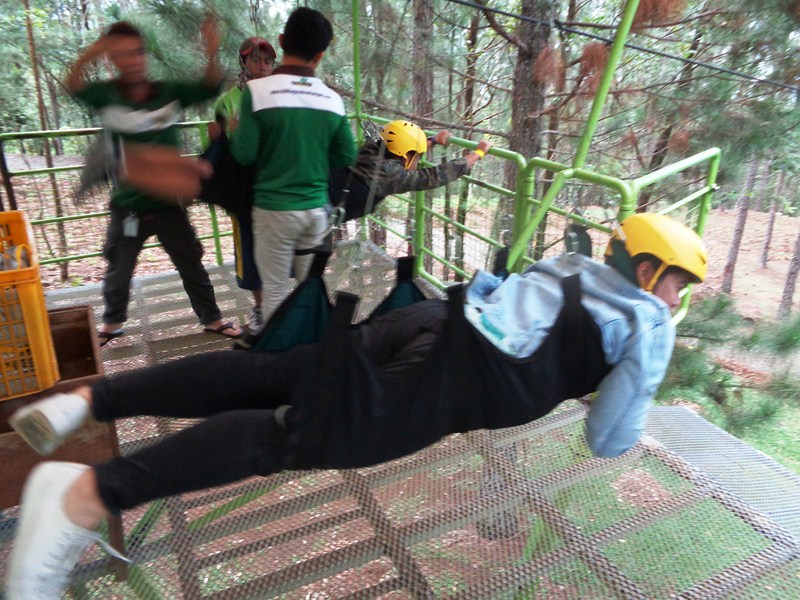
We were strapped in a face-down position, Superman-style and, upon taking off, zoomed through the lush rainforest canopy at 60 to 80 kms./hour.

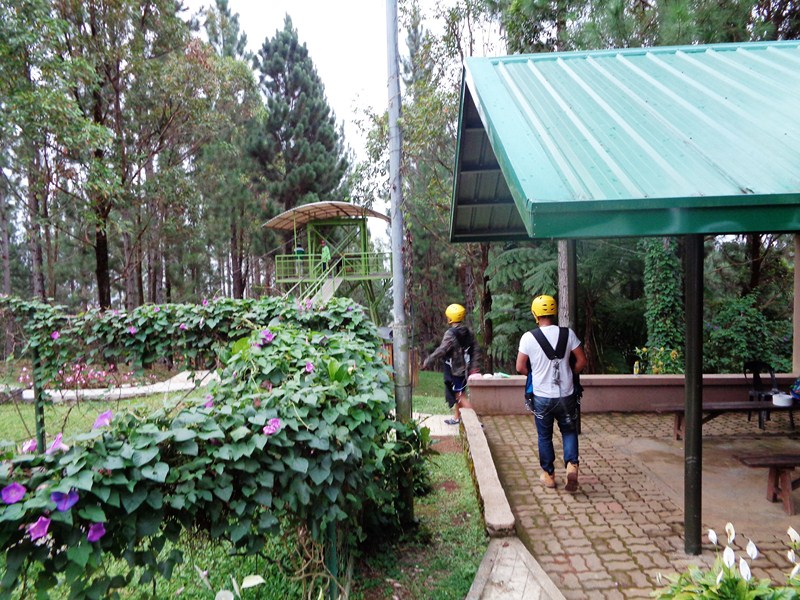
Arriving at the launch tower

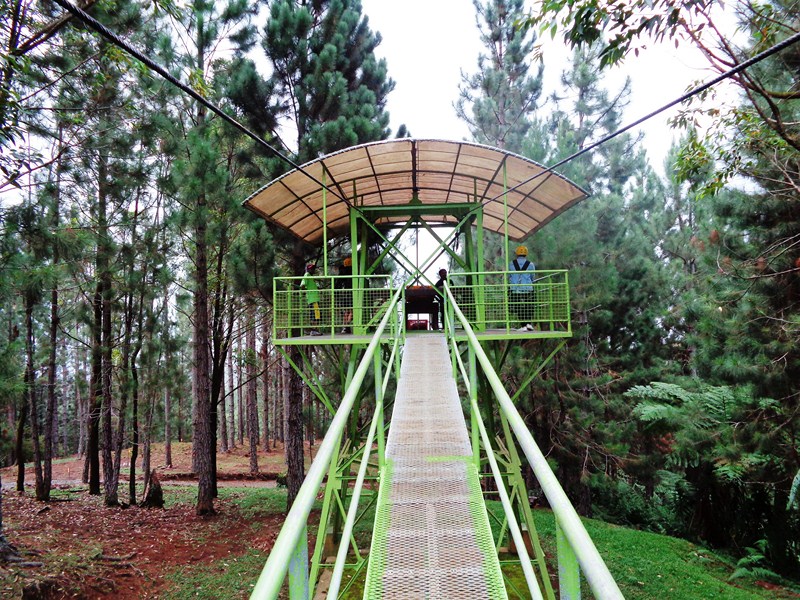
The launch tower

Midway through my flight, it had already started to rain and I was already soaked when we landed safely at a platform deck using a special arresting gear system. Still, we got the thrill of our life from this scream inducing ride.
Paolo and Marco strapped face down in a Superman position

All strapped upand ready to go……

We were also slated to try out the Skytower Base Jump ride, the highest parajump in the Philippines, but the persistent rain prevented us doing so.

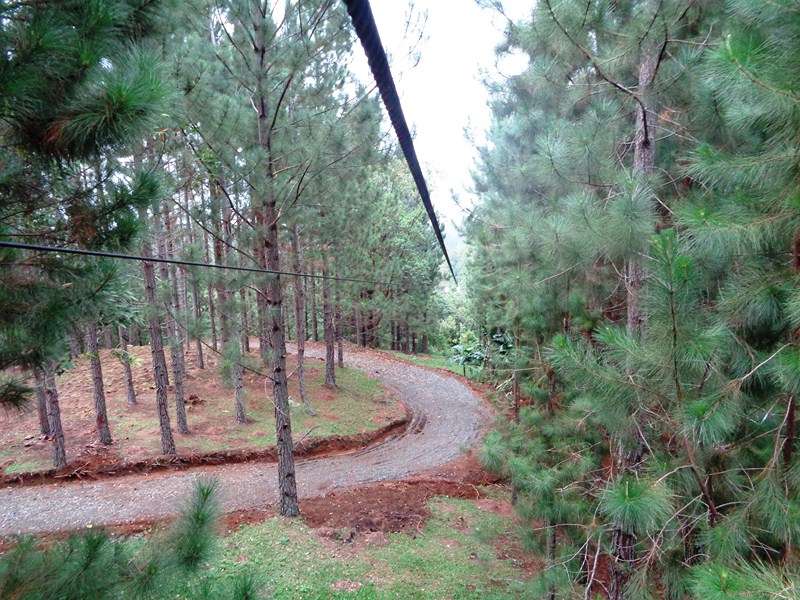
The zipline

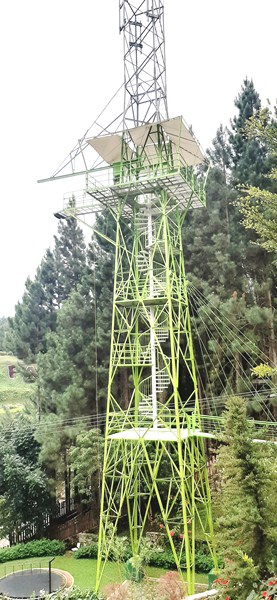
From an 8-storey platform on a cell site tower, riders first experience a split second free fall, followed by a gradual descent and ending in a soft landing, all in less than 10 seconds.

The cell site tower – site of the Skytower Base Jump. Maybe next time ……

Dahilayan Adventure Park: Brgy. Dahilayan, Manolo Fortich, Bukidnon. Tel: (088) 309-4708. Mobile numbers: (0922) 880-1319 and (0917) 715-4399. E-mail: zipzoneinq@yahoo.com.  Website: www.dahilayanadventurepark.com.
Zipzone Booking Office: Parasat Centrio Ayala Mall, 3rd Floor Building (in front of Centrio Cinema), CM Recto Highway, Cagayan de Oro City.  Open daily, 11 AM to 8 PM.

Laguindingan Airport (Misamis Oriental)

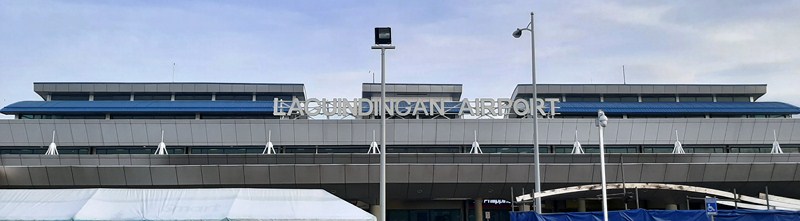
Laguindingan Airport

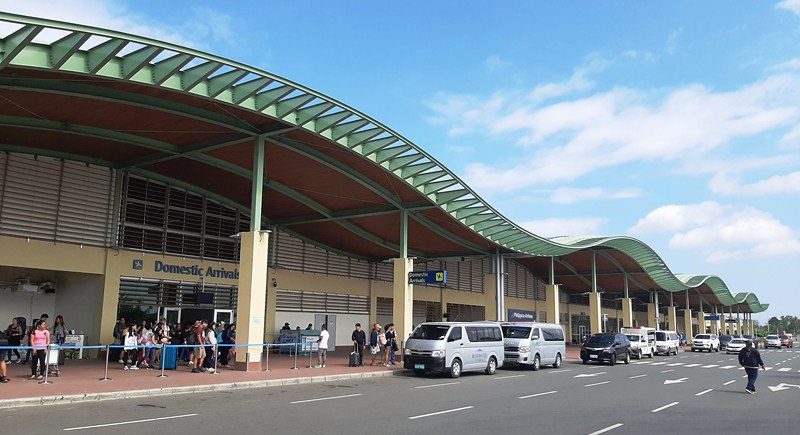
The PhP7.85 billion Laguindingan Airport is the first airport in Northern Mindanao that serves the cities of Cagayan de OroIligan, and Marawi, as well as the provinces of Misamis OrientalLanao del Norte and Bukidnon. Mindanao’s second-busiest airport (after Francisco Bangoy International Airport in Davao City), it is classified as a Principal Domestic Airport Class 1 by the Civil Aviation Authority of the Philippines (CAAP).

This airport, sitting on a 4.17 sq. km. (1.61 sq. mi.) site, is 46 kms. (29 mi.) from Cagayan de Oro and 57 kms. (35 mi.) from Iligan City. it replaced both the old, worn-out Lumbia Airport (now Lumbia Airfield, a military air base for the Philippine Air Force) in Brgy. Lumbia, Cagayan de Oro and Maria Cristina Airport in Brgy. Maria Cristina, Iligan City.

Here is the historical timeline of the airport’s construction:

  • On January 10, 2006, the Laguindingan Airport Development Project was inaugurated, with groundbreaking ceremonies presided by President Gloria Macapagal-Arroyo.
  • By July 2007, the construction of the 4.4-km., 4-lane access road had started to connect the new airport to the national road.
  • On August 30, 2007, the cost of the airport project (US$09 million or 7.853 billion) was duly approved by the National Economic and Development Authority Board.
  • In early 2008, grading of the airport site area, headed by the Department of Transportation and Communications and its foreign and local consultants, South Korea-based Yooshin Engineering Corporation and Ortigas CenterPasig-based SCHEMA Konsult, Inc. respectively, and Hanjin Heavy Industries and Construction Company(as the general contractor for the project), was
  • On June 13, 2013, the airport was inaugurated by President Benigno Aquino III
  • On June 15, two days after its inauguration, the airport was opened.
  • In August 2013, the Project Development and Monitoring Facility Board approved the revision of the operations and maintenance of the airport.
  • By December 2014, the installment of the Instrument Landing System and other equipment was completed.
  • On March 12, 2015, the airport began to accommodate night flights and operating hours were increased, from the previous 6 AM –6 PM daily schedule, to 5 AM–9 PM.
  • In September 2017, Ayala Land (which owns 183 of the 417 hectares of land acquired by the government to develop the airport complex), is set to build its first industrial estate outside Luzon within the planned aerotropolis around the airport.
  • On October 20, 2017, Cebu Pacific made Laguindingan Airport its seventh hub, with its wholly owned subsidiary Cebgo adding flights to Caticlan and Dumaguete at the same time.
  • On February 26, 2019, Aboitiz Infra Capital Inc. was granted by CAAP an Original Proponent Status (OPS) for its unsolicited proposal for the airport’s upgrade, expansion, operations, and maintenance.

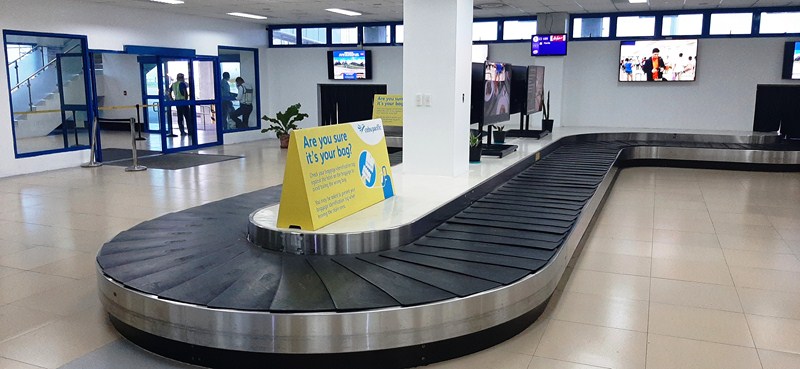
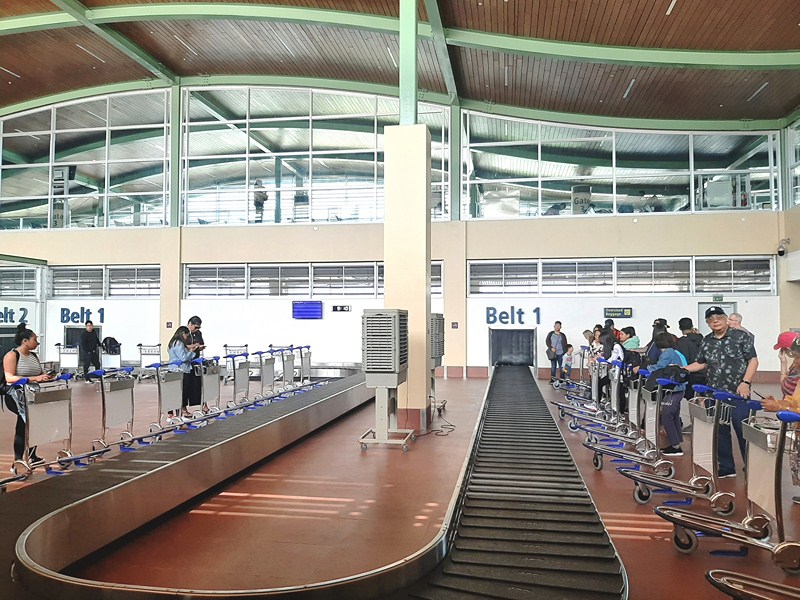
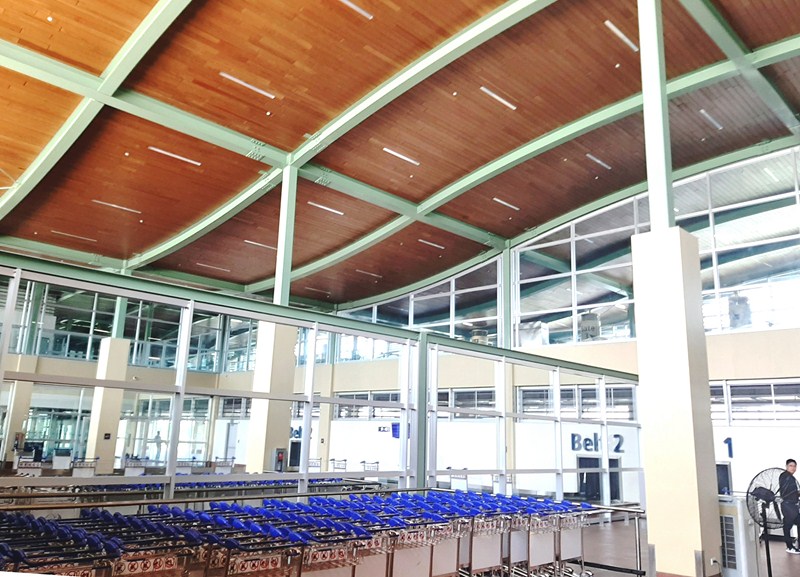
One of two conveyor belts for baggage claim

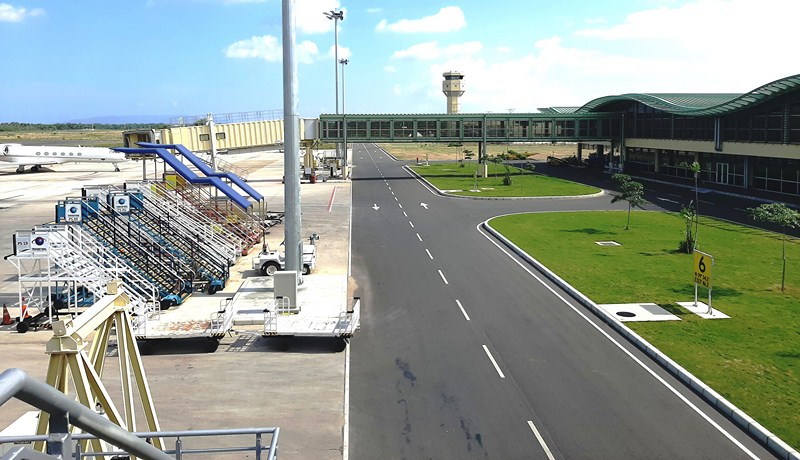
The airport has a single 2,100 m. x 45 m. runway which can accommodate four takeoffs and landings an hour and features a cargo terminal that has a built up area of 350 sq. m.; a 46,150 sq. m. apron area for Code C/E aircraft (10,000 sq. m. for ATRs); 23 m. wide taxiway and facilities for general aviation and ground support facilities.

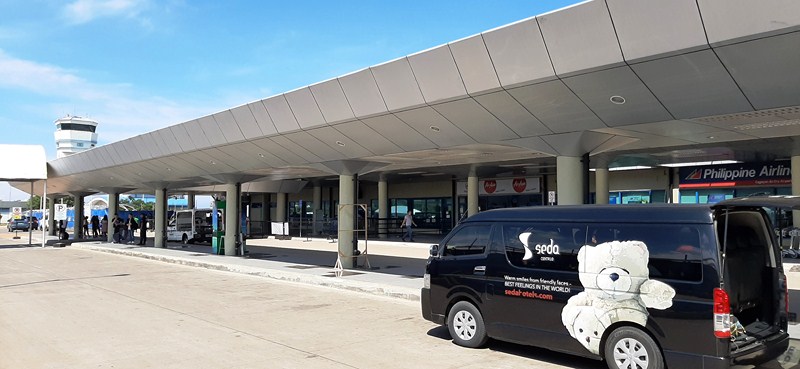
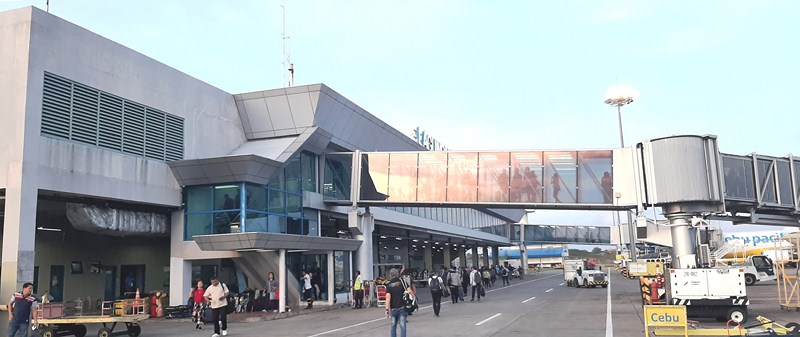
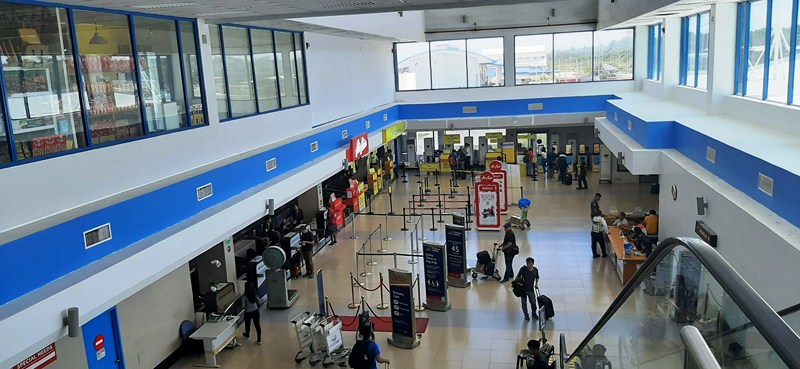
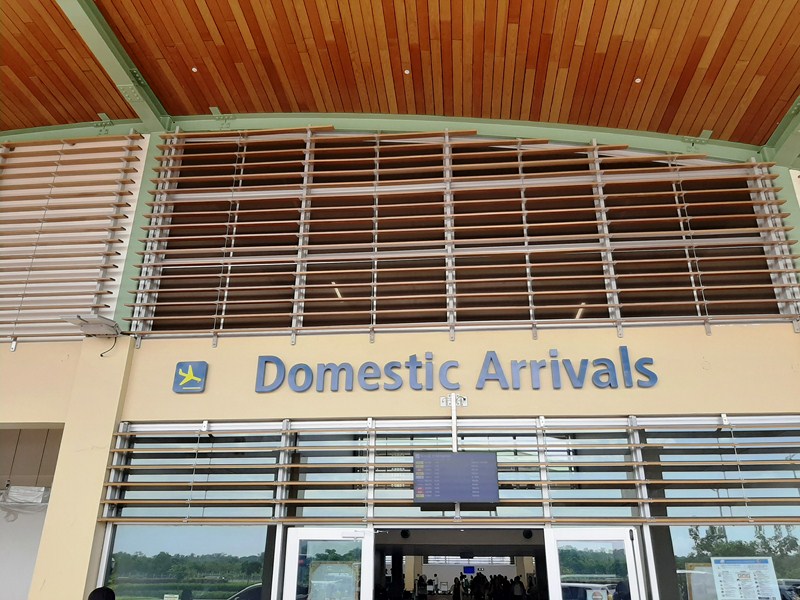
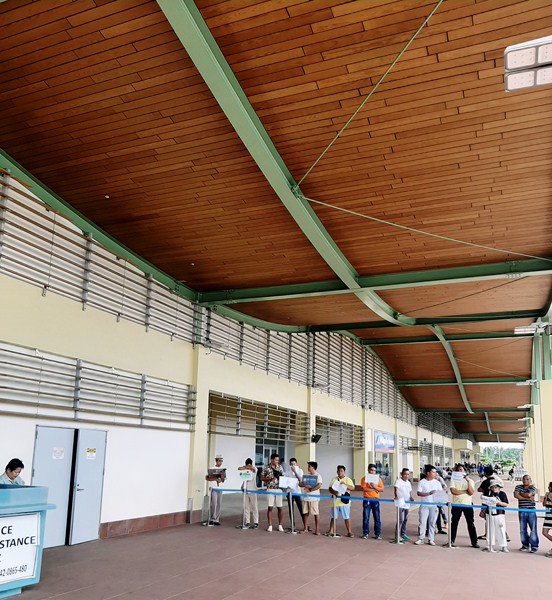
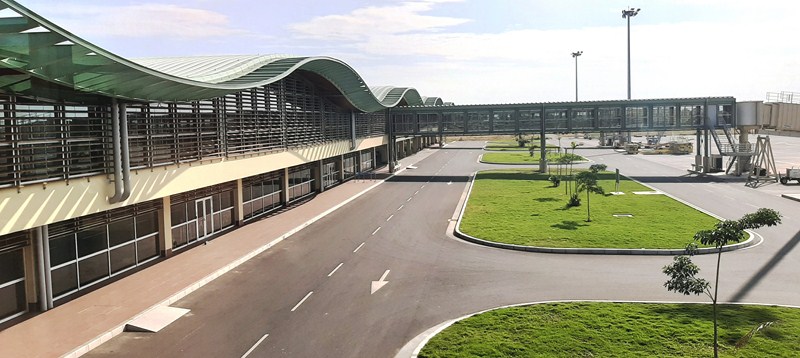
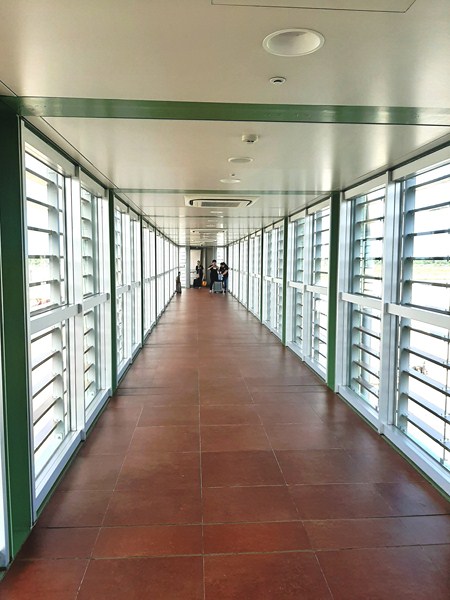
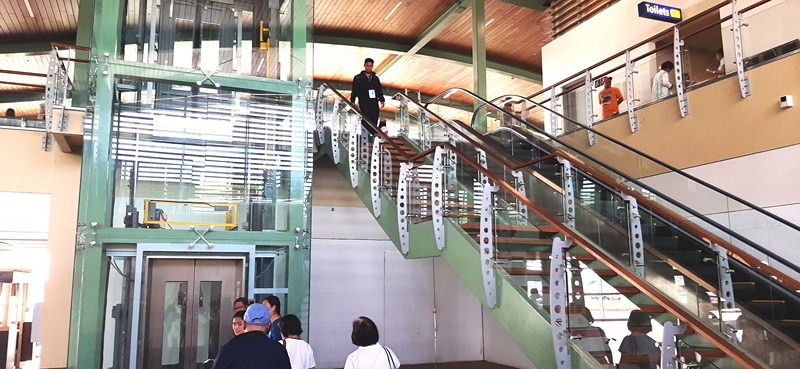
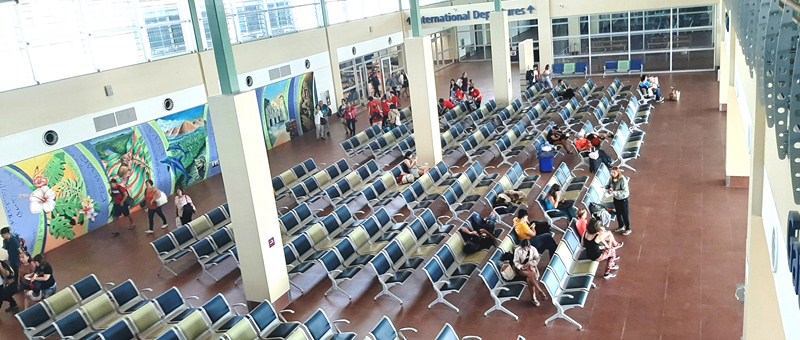
The 7,184 sq. m., 1.5-level very clean and modern passenger terminal building, overlooking the sea, can accommodate 2,000 passengers a day and 1.6 million passengers a year. It has 2 conveyor belts for baggage claim and two passenger boarding bridges.

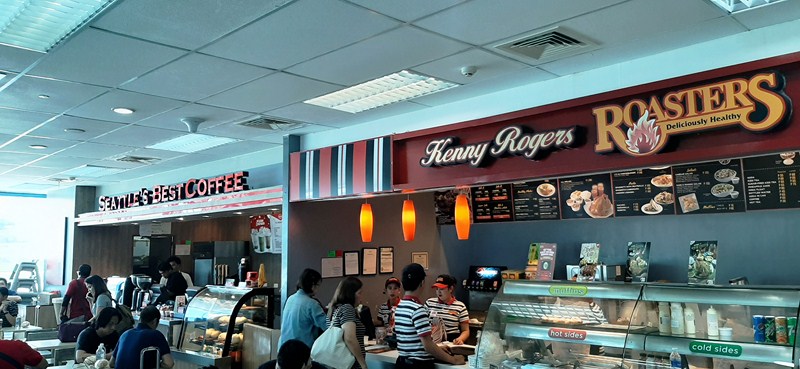
Branches of Seattle’s Best Coffee and Kenny Rogers at the Pre-Departure Area

Its Pre-Departure Area, at the second floor, has branches of Kenny Rogers and Seattles Best Coffee.  As of 2019, Laguindingan Airport was the 6th busiest airport in the country, with an estimate of 2,000,000 passengers passing through it.

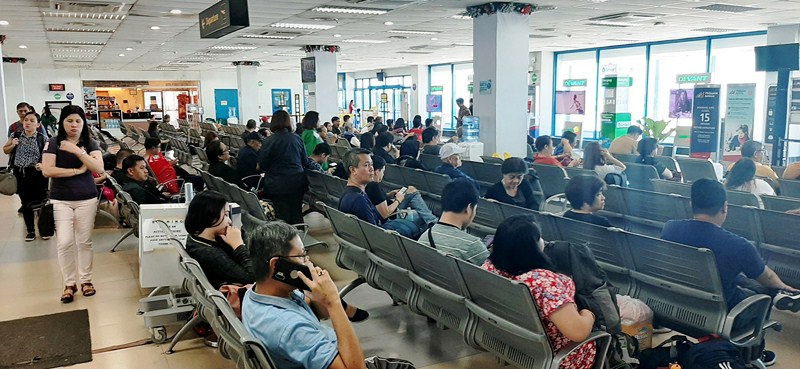
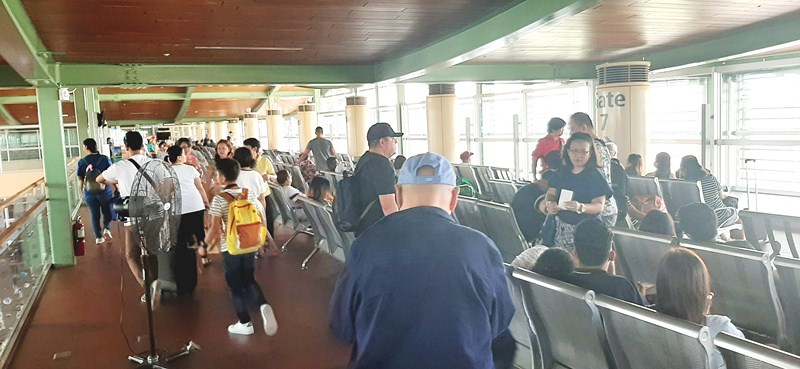
Pre-Departure Area

It serves flights from Manila, Davao City, Cebu City, Iloilo City, Bacolod City and Zamboanga City through Cebu Pacific Air, Philippine Airlines or PAL Express and Air Asia.

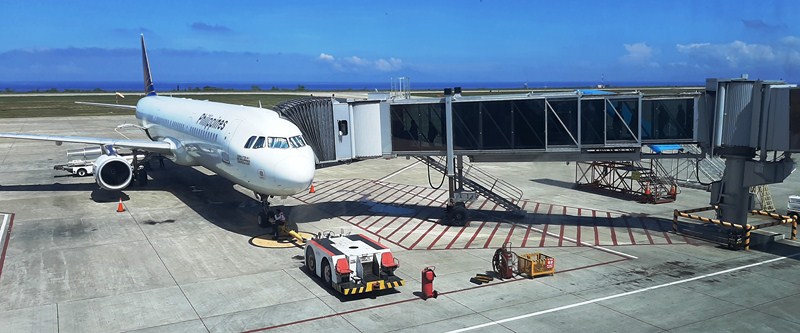
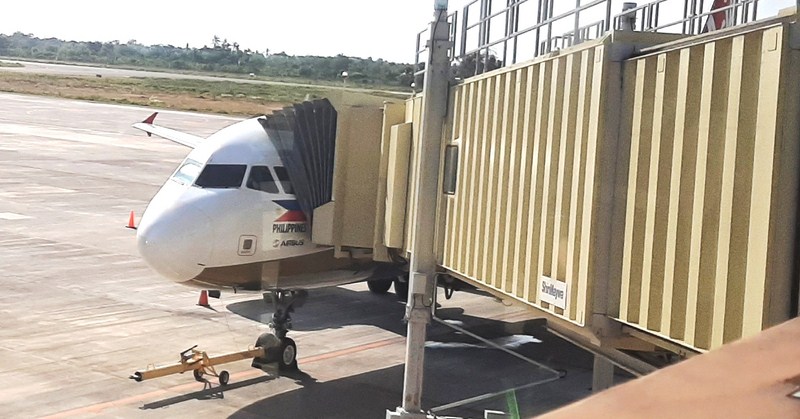
One of two jet bridges service a PAL Express jet

Laguindingan Airport (IATA: CGY, ICAO: RPMY): Brgy. Moog, LaguindinganMisamis Oriental. Open daily, 4 AM- 11 PM.

Isola di Francesco (Panglao, Bohol)

Isola de Francesco

Part of the Panglao Bluewater Resort-sponsored CountrysideTour

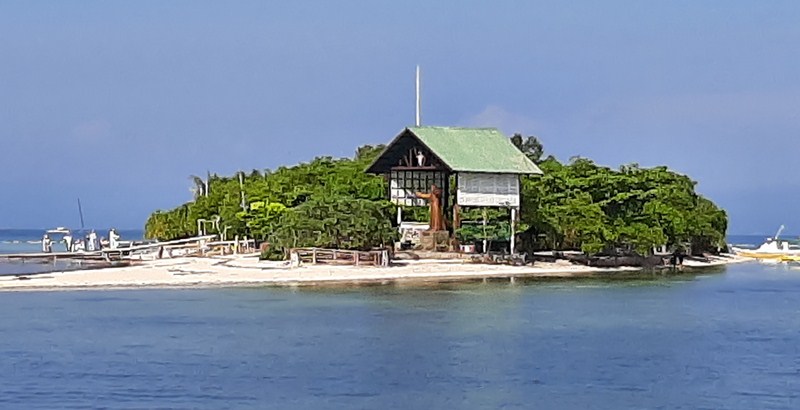
After our Dolphin Watching Tour, we proceeded to the nearby Isola di Francesco (“Island of St. Francis”) on Pungtud (or Pontod) Island.

In the past, I have seen this island only from afar, from the vantage point at nearby Virgin Island.

Check out “Virgin Island

The island is owned by the Philippine Centre of St. Pio of Pietrelcina and Mr. Ramon Rodriguez, a devotee of Italian Capuchin monk St. Pio (Francesco Forgione) of Pietrelcina, who was said to have been once blind. He was said to have prayed to St, Pio and his eyesight was restored.

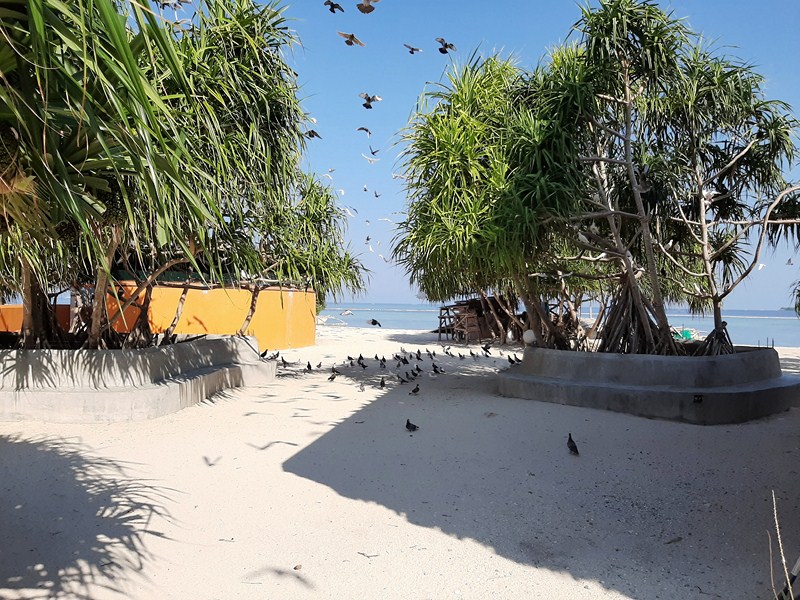
A mere 10-min. boat ride from Panglao town proper, Isola di Francesco is a destination for meditation, silent prayer and reflection in harmony with the lapping of the waves and the chirping of the island’s resident birds.

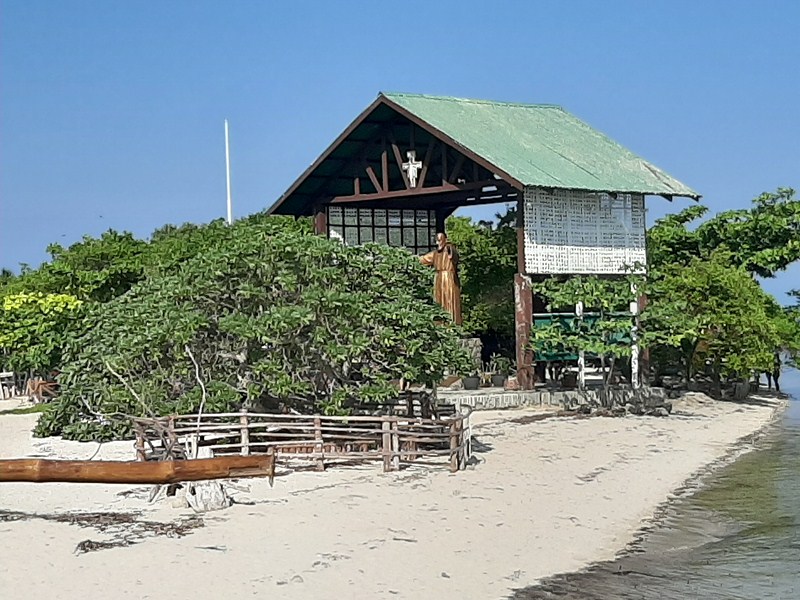
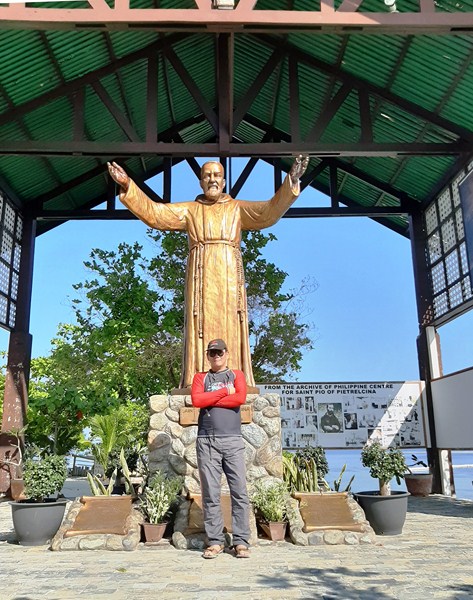
Upon arrival on the island, we were greeted by the welcoming arms of a huge statue of St. Pio of Pietrelcina.

The author with the huge statue of St. Pio of Pietrelcina

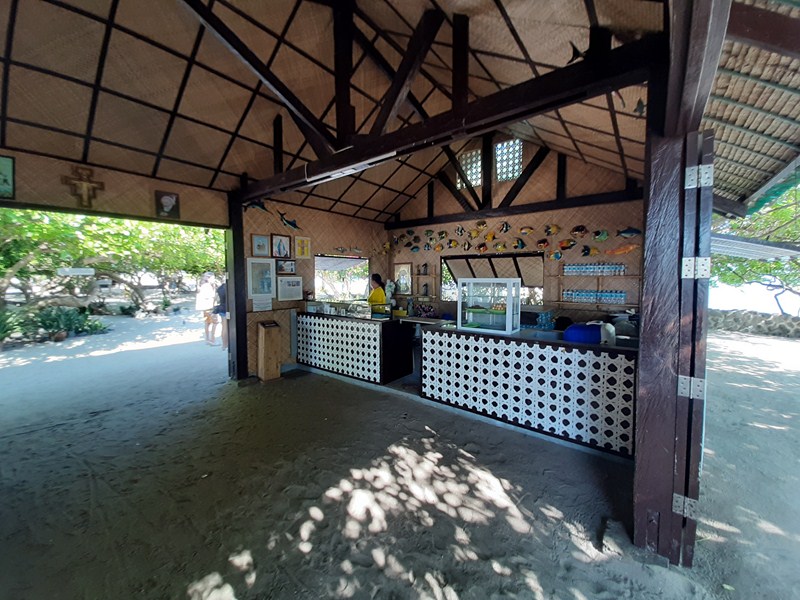
This solemn and peaceful island has a chapel (opened in 2016), a visitor’s center, a mini museum, clean restrooms, water tanks, changing rooms and guest houses.

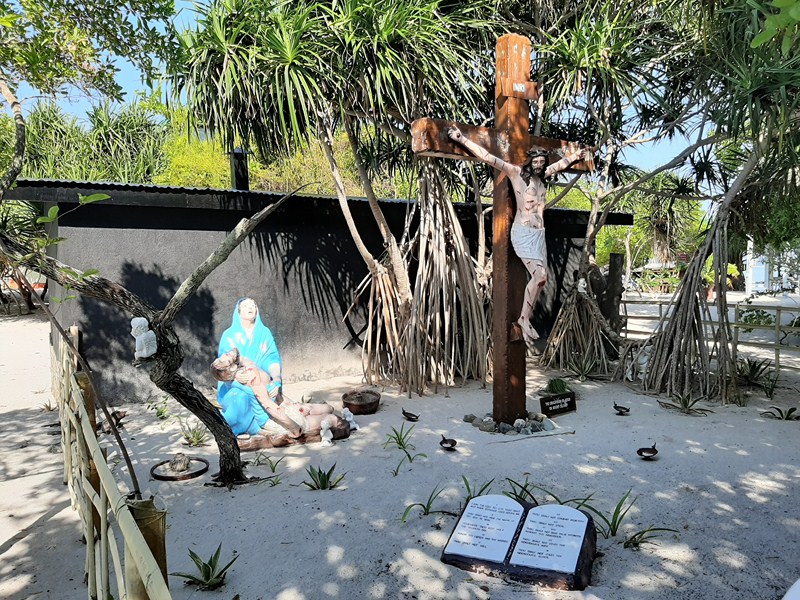
Tableau of the Crucifixion

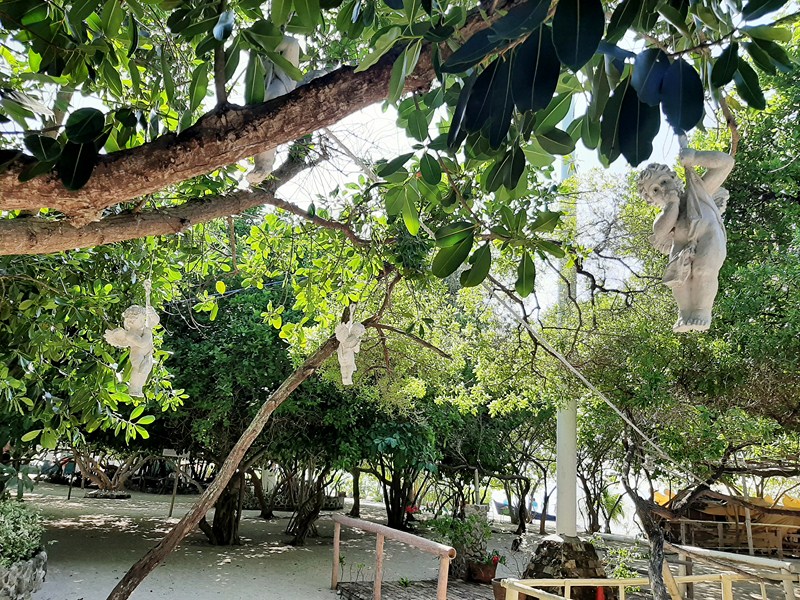
There are also several religious sculptures (some in the middle of the sea) of Jesus Christ, the saints, angels, cherubs, and the Holy Family.

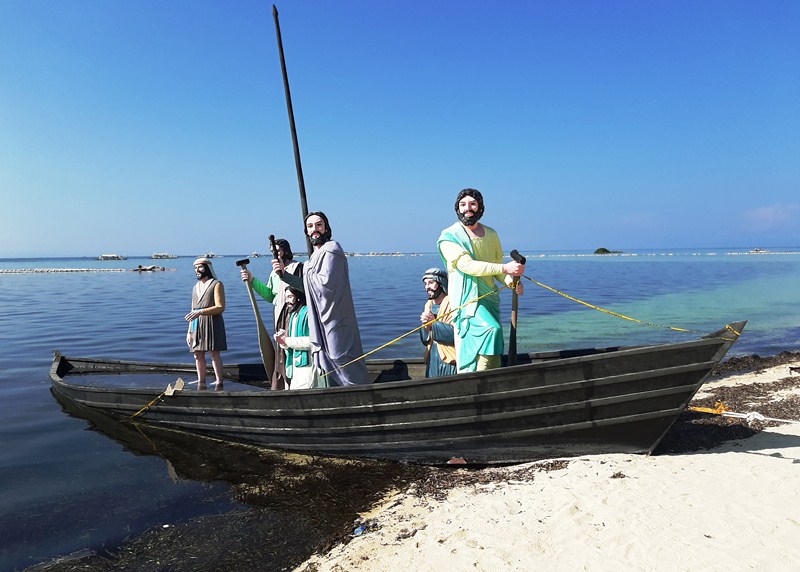
Life-size statues of Jesus and the Apostles on a fishing boat

Just off the waters of the beach are  quite unique, life-size statues of Jesus and the apostles. Most of the cost to develop this place was donated.

Cherubs hanging from trees

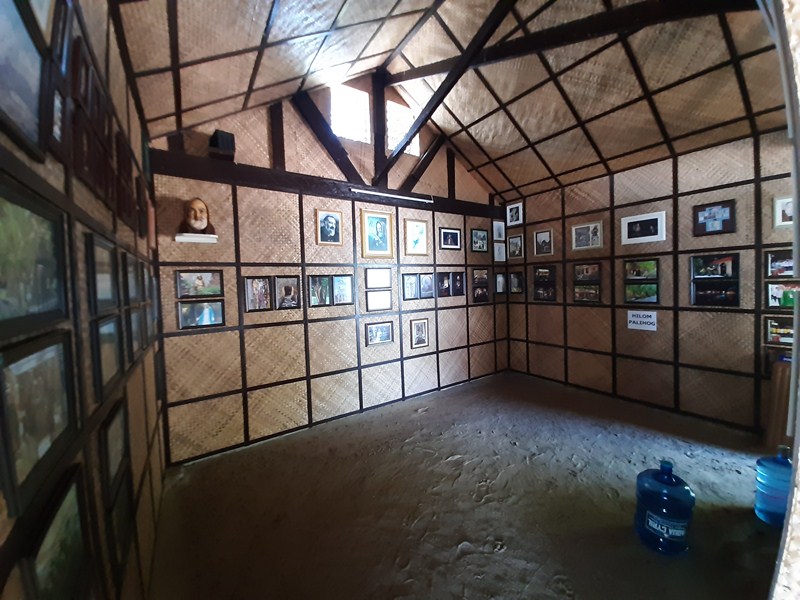
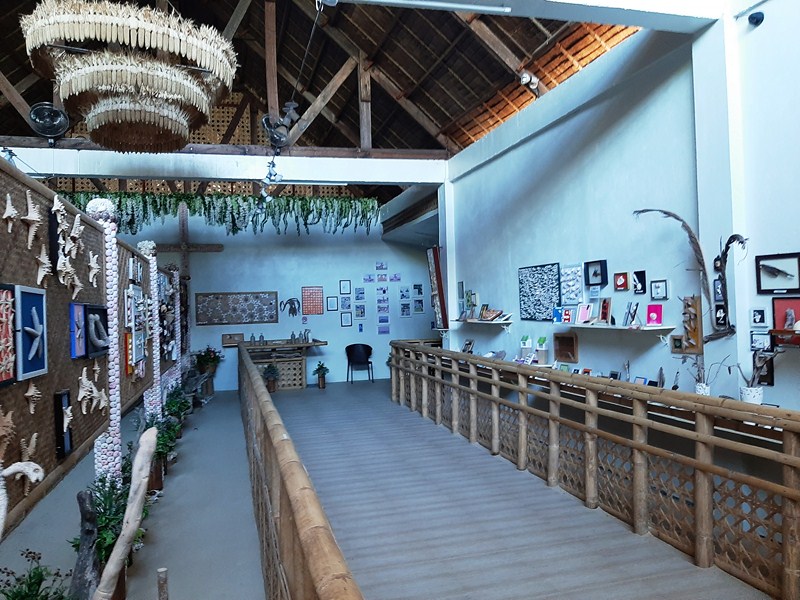
The interesting Isola di Francesco’s Nature’s Art Museum, filled with photos of the Franciscan friars as well as artwork that speak of the grandeur of God and His Creation, was opened last March 2017. A 10 AM holy mass is said every 23rd day of the month in the chapel.

Nature’s Art Museum

This serene island, maintained by the faithful as religious shrine, is not your usual tourist trap and is not often included in the island hopping packages, an exact opposite of the much crowded and touristy island and beach destinations of Panglao. You only need an hour or so to explore the island.

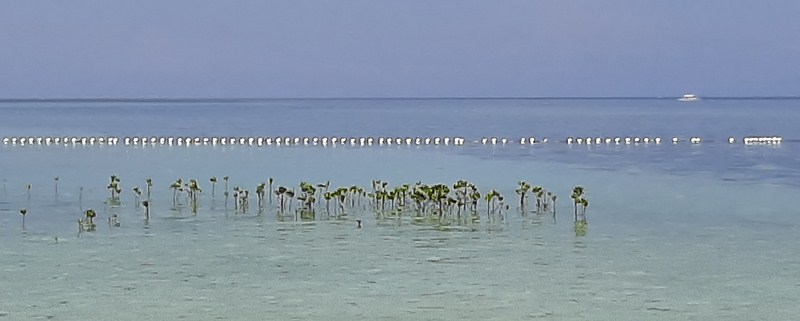
Young mangroves shoots found offshore

This beautiful sandbar is open to the public and there is free boat shuttle service, at Poblacion Panglao, near the church, going to and from the island for those who wish to offer prayers for healing, pay tribute or simply just want to visit the place.

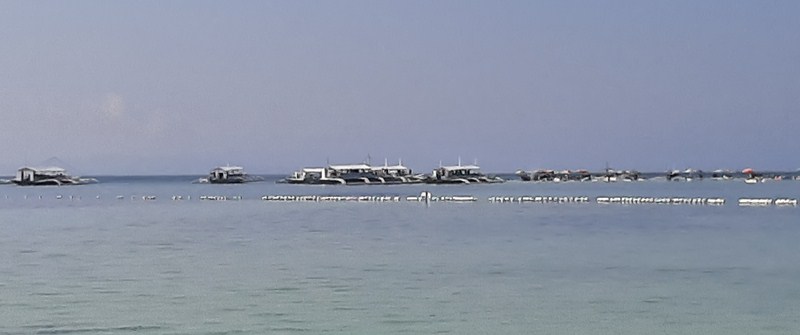
The tourist trap called Virgin Island seen from Isola di Francesco

Visitors can stay as long as you want. Even the use of the kayaks, snacks (bottled water, soft drinks, etc.)  and birds’ food to feed pigeons are free (however, donations are welcome). There’s a souvenir shop selling religious items.

Visitors Center

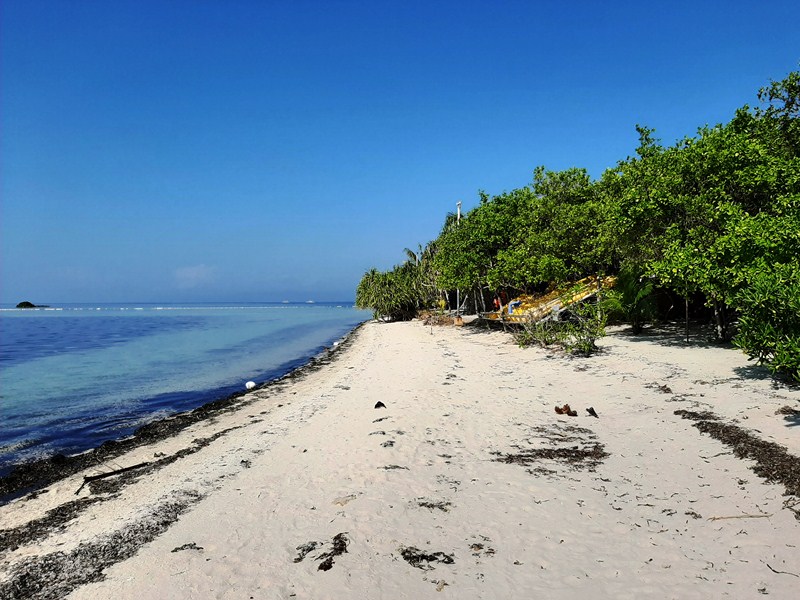
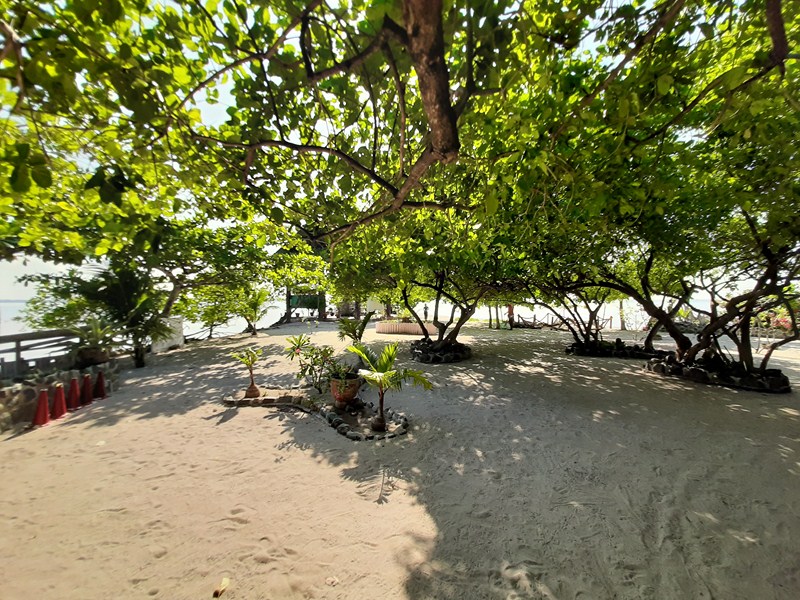
The beautiful island has white sand all over, with plenty of seaweed, some mangroves and big and small starfish but no fish. The waters around the sandbar are pristine and clean and very good for swimming.

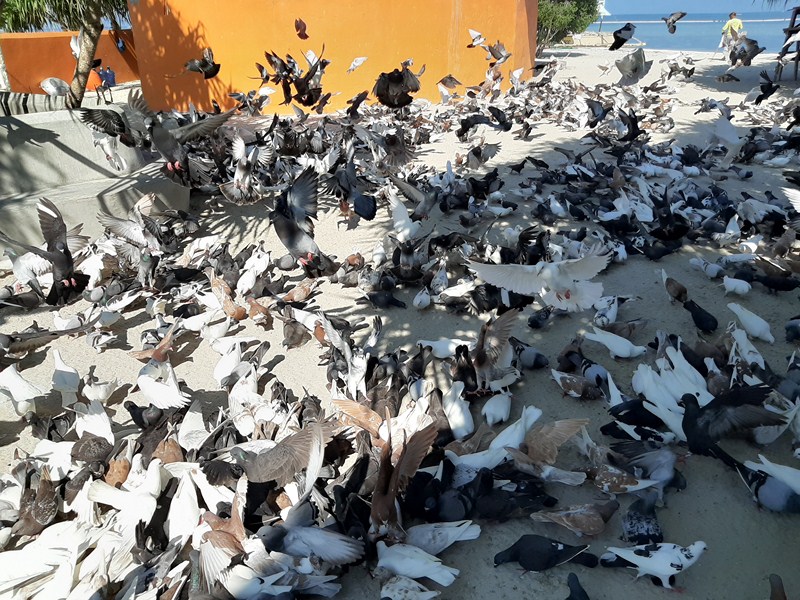
The doves and pigeons of Isola de Francesco

The island is a dove and pigeon sanctuary and you can see eggs and babies in nests in the central garden area.

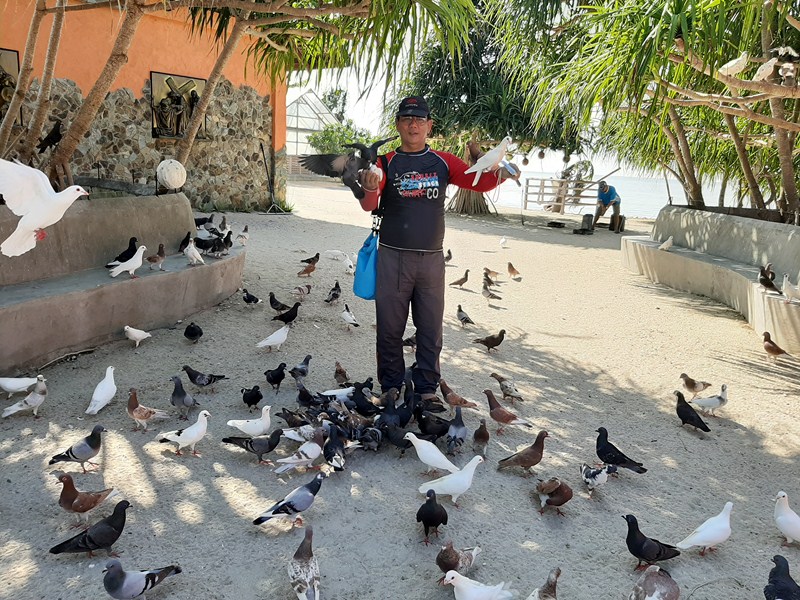
The author hand feeding some of the doves and pigeons

You can feed the doves and pigeons by donating any amount in the store for a plastic of bird feed. Even when there’s a sign to not scare them, some people scare the doves away to get a beautiful picture of it with them.

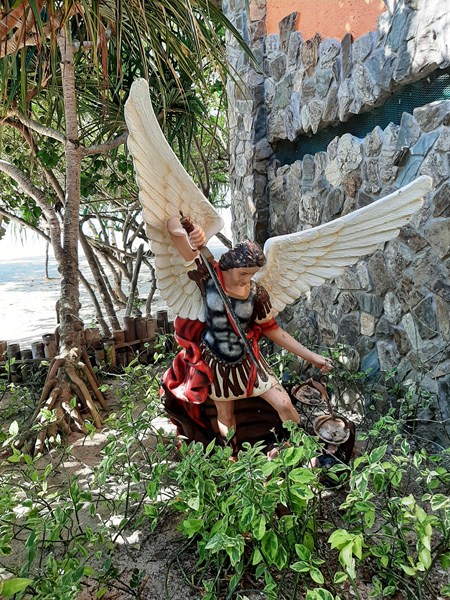
Statue of St. Michael the Archangel

However, here are rules to be followed.  You cannot bring any food or drinks on the island.

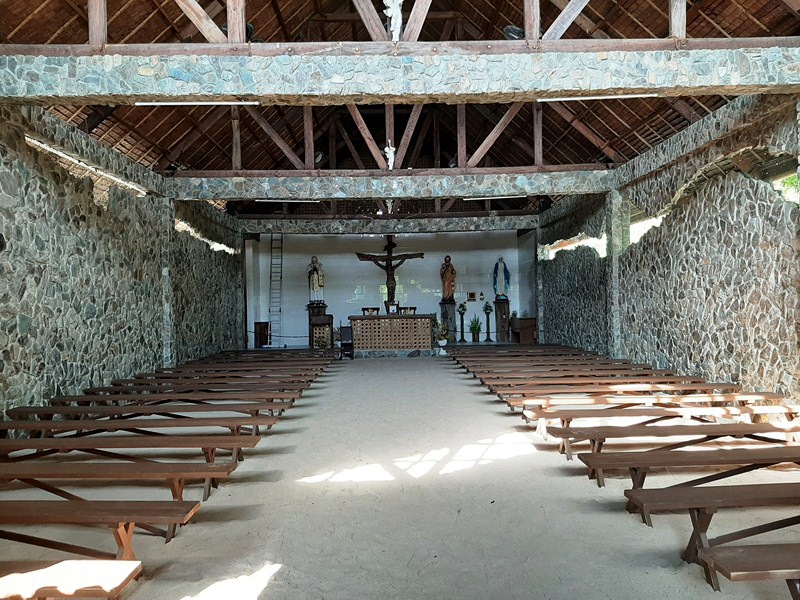
The chapel

At the chapel, you cannot enter if you are wearing shorts, short skirts, sleeveless, etc. (however, they can lend you a sarong to cover yourself).

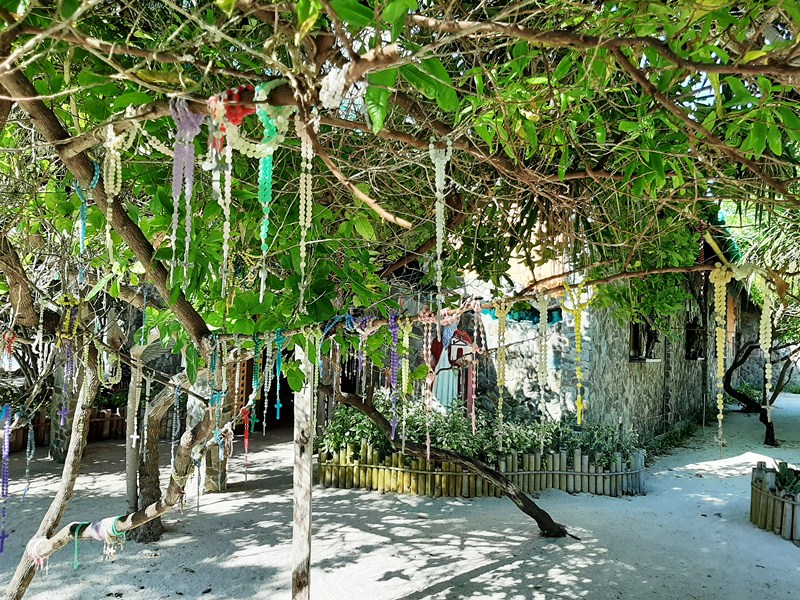
Rosaries hanging from trees

As this is a shrine, peace and soft talk is very much appreciated and public displays of affection and ogling is frowned upon here. 

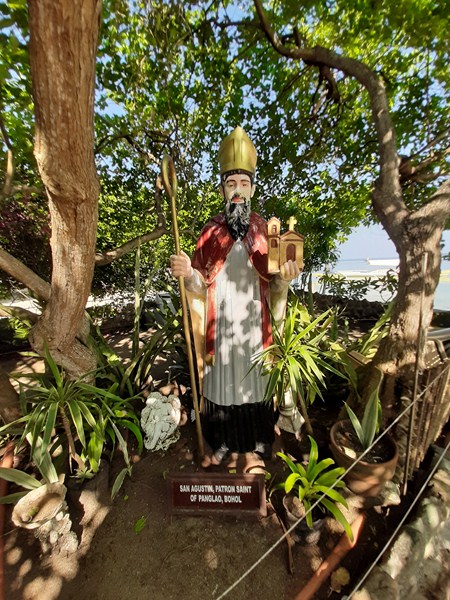
Statue of St. Augustine of Hippo, the patron saint of Panglao

Bohol Tourism Office: Governor’s Mansion Compound, C.P.G. Ave. North, Tagbilaran City, 6300 Bohol.  Tel: +63 38 501-9186.  E-mail: inquire@boholtourismph.com. 

Panglao Bluewater Resort: Bluewater Rd., Sitio Daurong, Brgy. Danao, Panglao, 6340 Bohol.  Tel: (038) 416-0702 and (038) 416-0695 to 96. Fax: (038) 416-0697.  Email: panglao@bluewater.com.ph. Website: www.bluewaterpanglao.com.ph.  Manila sales office: Rm. 704, Cityland Herrera Tower, Rufino cor. Valera Sts., Salcedo Village, 1227 Makati City, Metro Manila.  Tel: (632) 817-5751 and (632) 887-1348.  Fax: (632) 893-5391.

Loboc Night River Cruise (Bohol)

Loboc Night River Cruise

Part of the Panglao Bluewater Resort-sponsored CountrysideTour

From the Bohol Biodiversity Center in Bilar, we again boarded our coaster for the 19.3-km. (30-min.) drive to the Loboc River Port where we were to try out the Loboc Night River Cruise of Village Floating Resto and Cruises as guests of Loboc Mayor Leon A. Calipusan and cruise owner Ms. Maria Lourdes Tuyor-Sultan, both of whom were joining us on the cruise. This would be my first nighttime cruise of the river (the others were during the day).

Check out “Bohol Biodiversity Complex,” “Loboc River Cruise (2014)” and “Loboc River Cruise (2003)

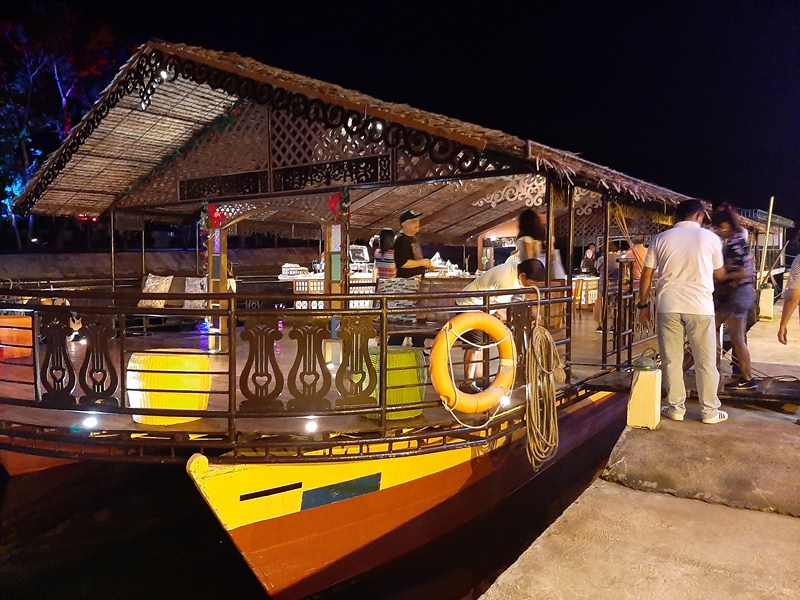
Boarding the Village Floating Resto

The first of its kind in the Philippines, this nighttime cruise is a welcome diversion to the day cruise which, for quite a time now, has caught the fancy of local and foreign tourists. The four floating restaurant operators (the others are Mary Jo Varquez of Busay Monarch, Sonia Balbido of Long River Cruise Floating Resto and Tessie Labunog-Sumampong of Loboc Riverwatch Floating Resto) have been servicing an average of 800 guests daily for the upstream daytime cruising.

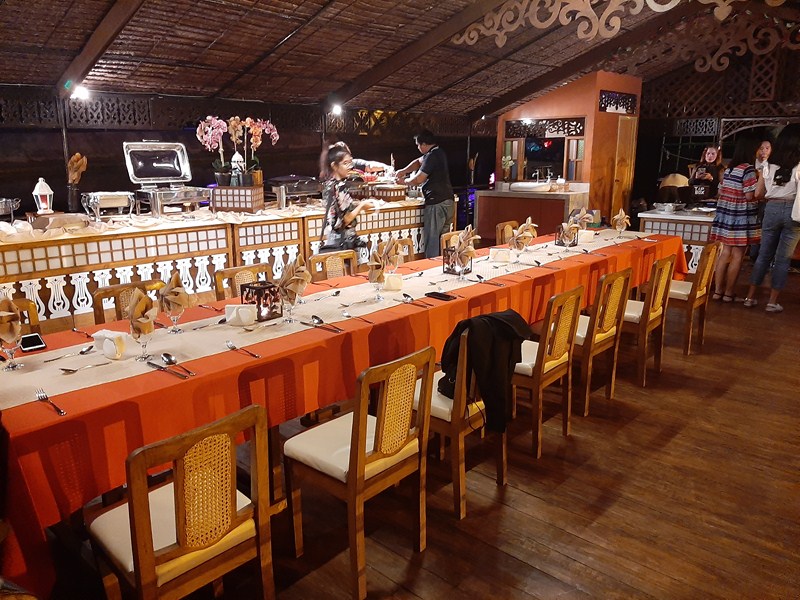
The table setup…..

All 19 floating restaurants are served by a commissary which employed a chef to oversee food preparations for the hundreds of tourists who board and eat at the restaurants each month.

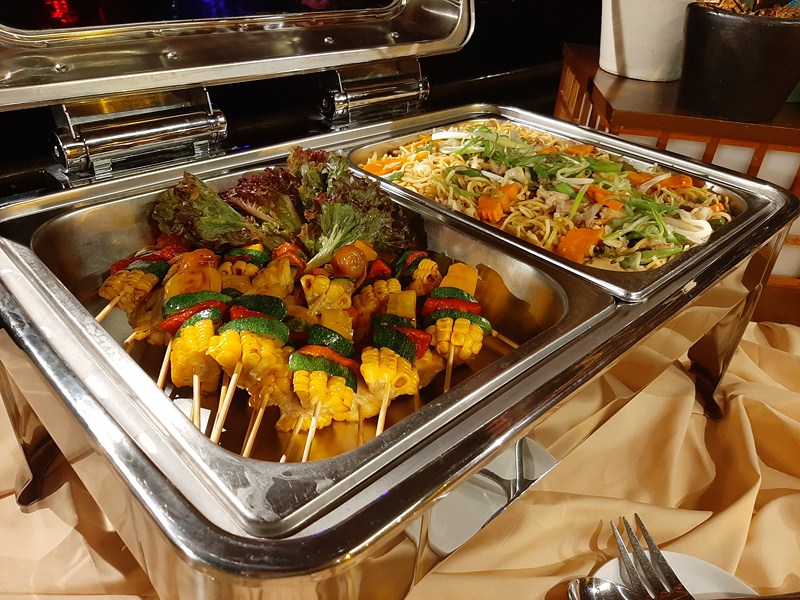
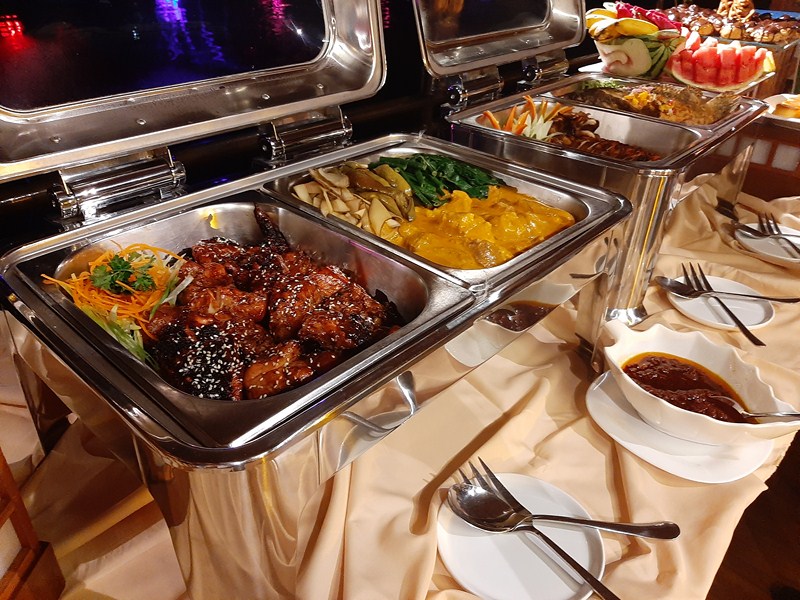
The buffet spread…..

The night cruise, introduced by the Provincial Tourism Council as an option to help ease congestion at the river, actually had its beginnings in 2006.

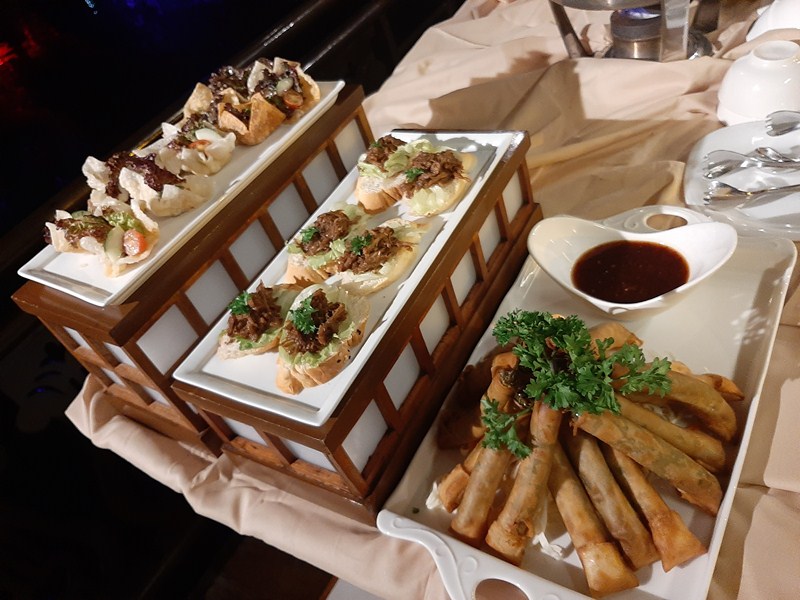
Appetizers…..

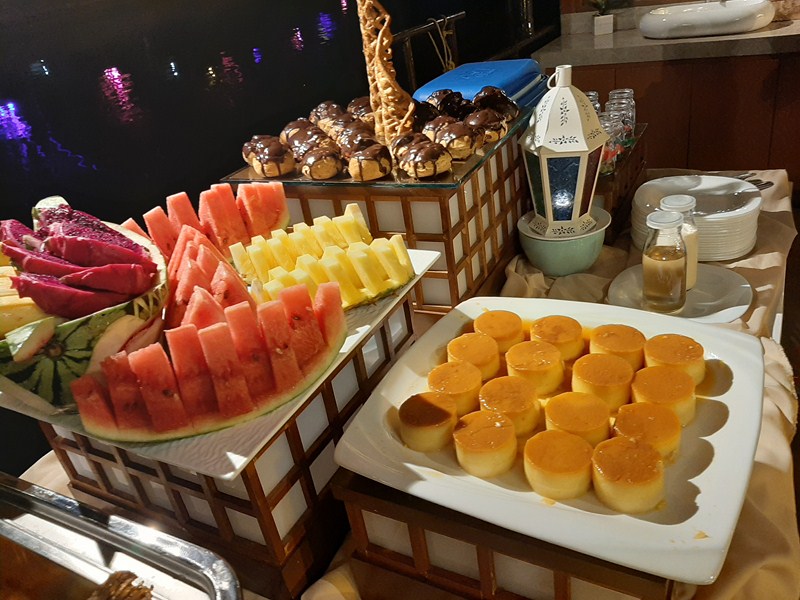
Dessert…..

That year, Gov. Erico Aumentado embarked on the lighting of the Loboc River, with Chinese businessman (the chairman of Filipino multinational Liwayway Group whose flagship enterprise is the manufacture and distribution of Oishi snacks) and Philippine Special Ambassador to China Carlos Chan funding the riverbank lighting project and commissioning lighting experts from China to determine the requirements of Loboc River.

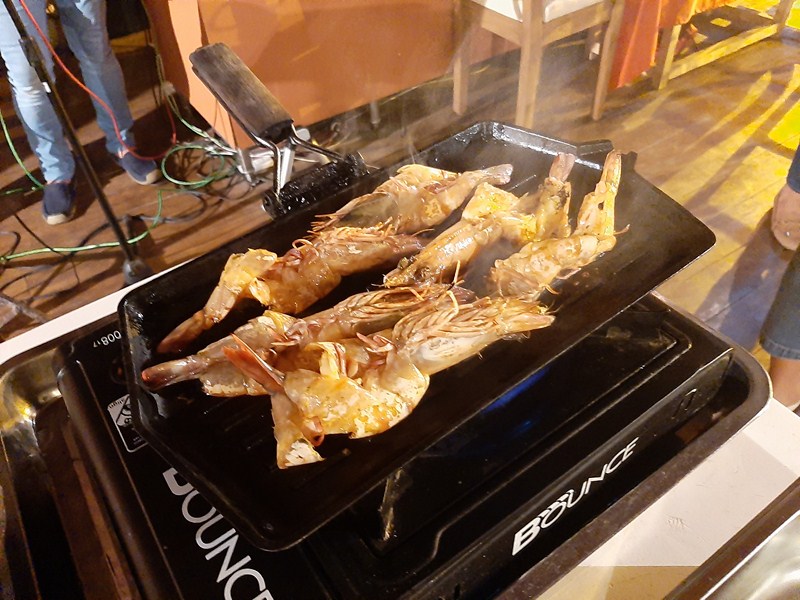
Grilled prawns ….

Thus, the P13.5 million project of lighting the whole 2.85 km. stretch of the Loboc River was born, with some 450 lampposts and floodlights being installed from the modern, PhP10-million (also partly funded again by Mr. Chan), 120-m. long docking port (which houses the eco-tourism center and includes the tourism office, a visitor’s lounge and air-conditioned comfort rooms) all the way up to the Busay Falls, including the two bailey bridges crossing the river.

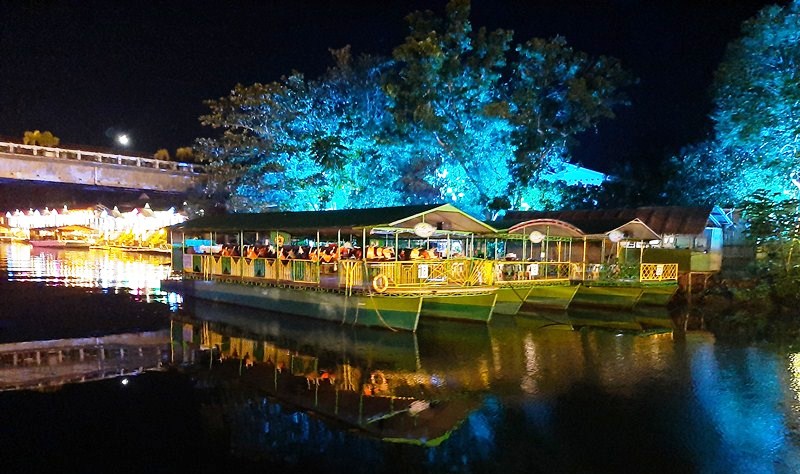
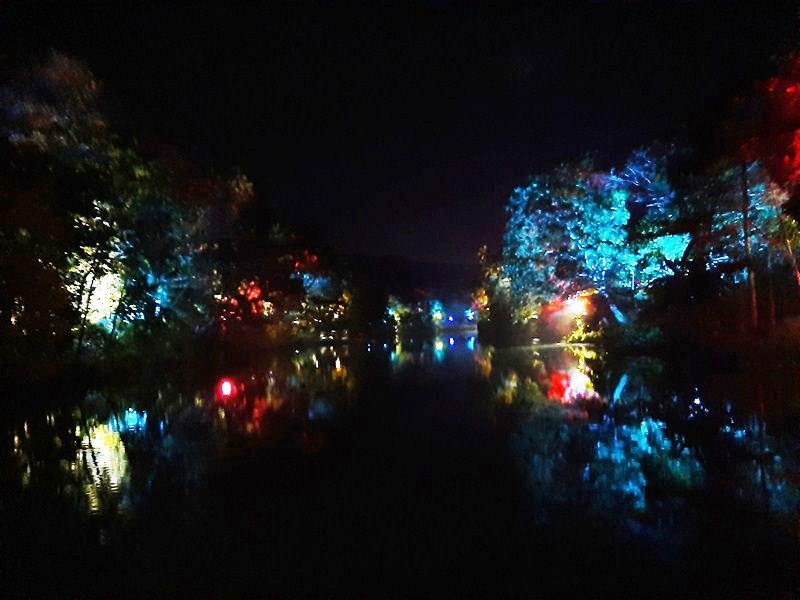
The very Christmas-like light show along the riverbank

Our cruise was sort of an inaugural run as the original night cruise was discontinued after the October 15, 2013 earthquake damaged the lighting system.  Cruising the Loboc River at night, soothing to the spirit, was a different experience altogether, relaxing both body and mind and infusing peace and harmony to weary souls.

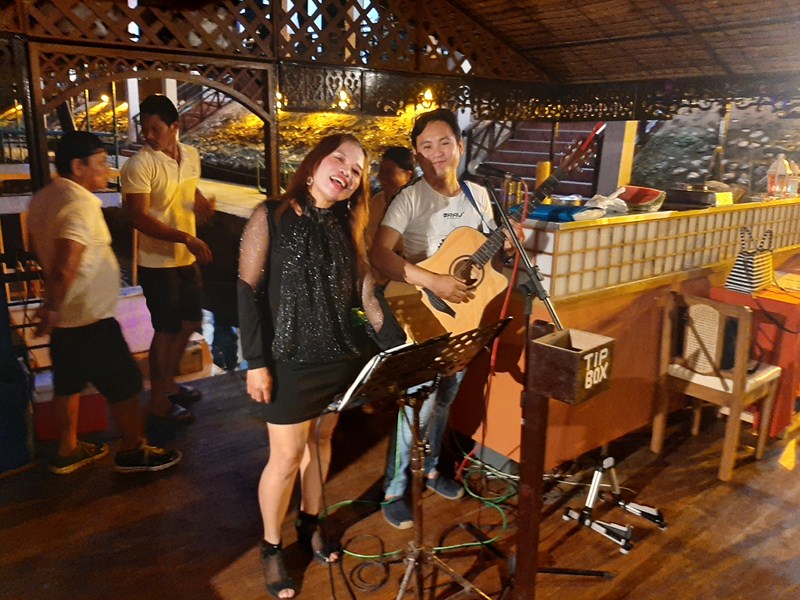
The on-board live entertainment…..

The cool night air, the eerie lights on the riverbanks (lighting up the palm trees and putting to shadow other vegetation) and their colorful reflections shimmering on the waters coupled with the soft serenading music of the performing band while we dined on a delicious buffet spread lent a romantic air to the night cruise.

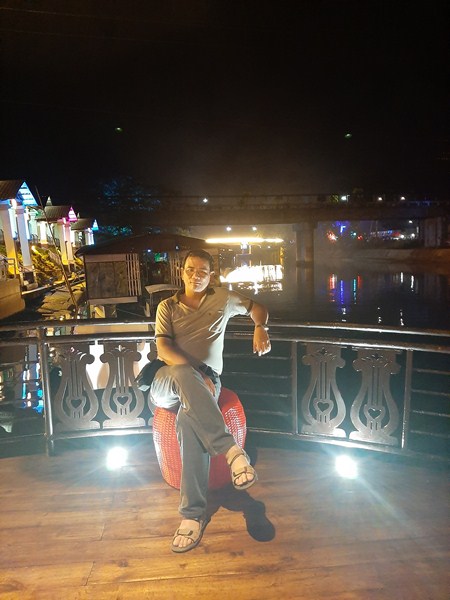
The author enjoying the cruise…..

The night scene, with myriads of shimmering lights reflected on the waters, casted a shimmering splendor on the river.

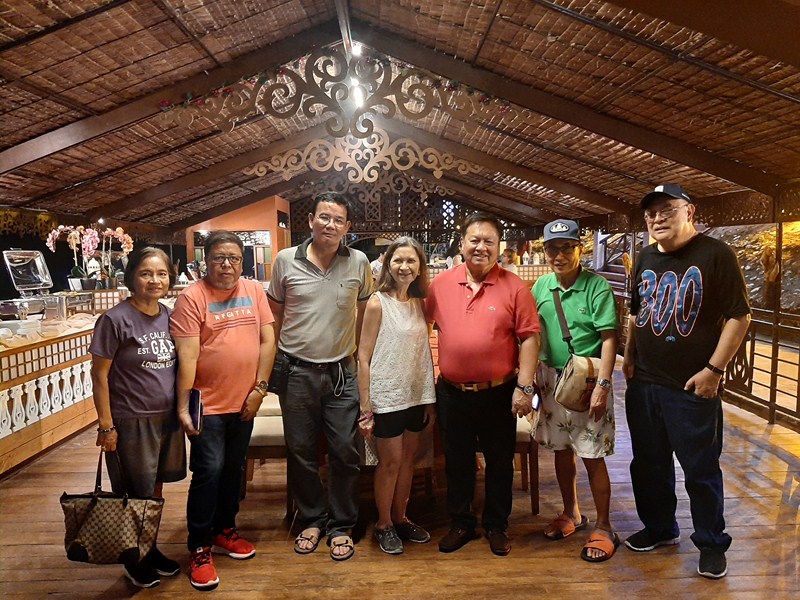
L-R: Ms. Corazon Cagahastian, Mr. Diego Cagahastian, the author, Ms. Teresa Chanco, Loboc Mayor Leon A.Calipusan, Mr. Pete Dacuycuy and Mr. Pedro “Boo” Chanco.

Village Floating Resto & Cruises: Brgy. Valladolid, Loboc, Bohol. Tel: (038) 537-9223  and (038) 501-8078. Mobile number: (0928) 507-7627. E-mail: villagefloatingresto@yahoo.com.

Bohol Tourism Office: Governor’s Mansion Compound, C.P.G. Ave. North, Tagbilaran City, 6300 Bohol.  Tel: +63 38 501-9186.  E-mail: inquire@boholtourismph.com.  

Panglao Bluewater Resort: Bluewater Rd., Sitio Daurong, Brgy. Danao, Panglao, 6340 Bohol.  Tel: (038) 416-0702 and (038) 416-0695 to 96. Fax: (038) 416-0697.  Email: panglao@bluewater.com.ph. Website: www.bluewaterpanglao.com.ph.  Manila sales office: Rm. 704, Cityland Herrera Tower, Rufino cor. Valera Sts., Salcedo Village, 1227 Makati City, Metro Manila.  Tel: (632) 817-5751 and (632) 887-1348.  Fax: (632) 893-5391.

Bohol Biodiversity Complex (Bilar, Bohol)

Bohol Biodiversity Complex

Part of the Panglao Bluewater Resort-sponsored CountrysideTour

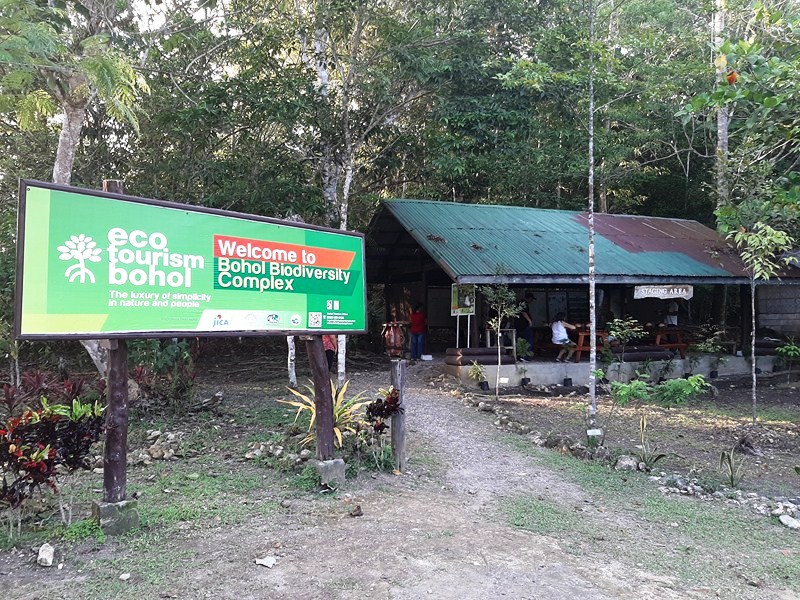
After our visit to Loay, we boarded our coaster for 24-km. (40-min.) drive, via the Loay Interior Road, to the 25-hectare (6.5 hectares occupied as ecotourism site) Bohol Biodiversity Complex (BBC) in Bilar. Along the way, we passed its man-made forest of mahogany trees.

Check out “Church of the Holy Trinity” and “Museo ng Pamana at Kasaysayang Boholano

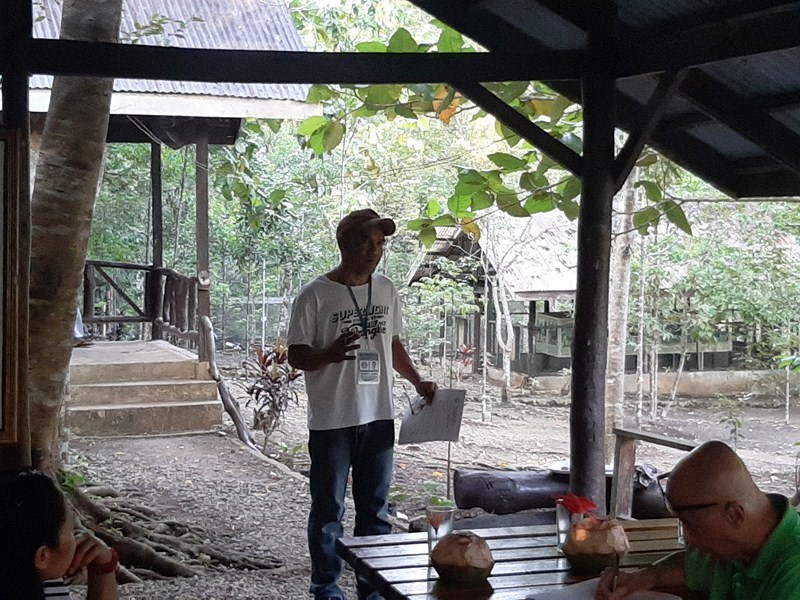
Our lecturer….

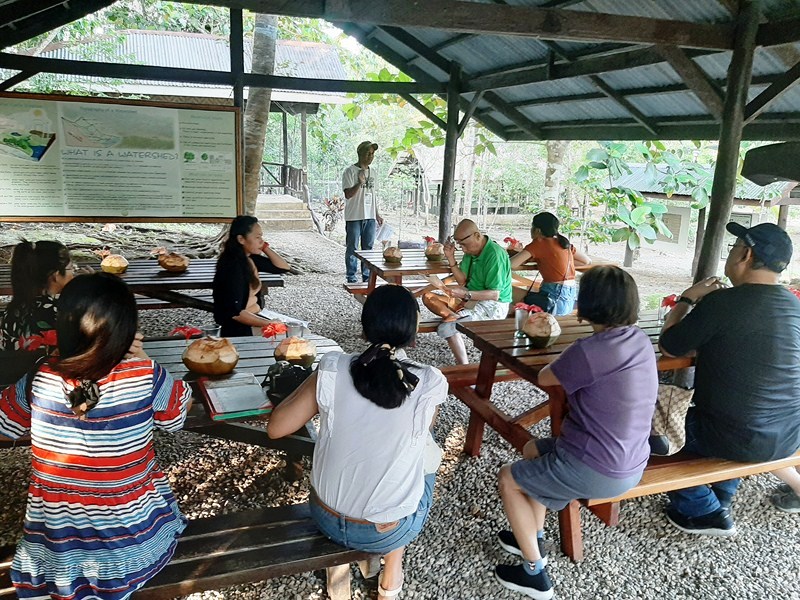
We were slated to do the Tree Planting for Legacy eco-tour (individual tree planting), undoubtedly the highlight of a visit here but, due to our tight schedule, just attended a lecture (with fresh buko juice) on sustainable development and toured its facilities.

The BBC, surrounded by 1.2 hectares of rainforest, is perfect for the nature lover and the environmentally-conscious. It showcases various endemic tree seedlings and continues to raise awareness and conservation concerns among both locals and tourists.

This facility, and the eco-tour it offers, is the fruit of the Bohol Environment Code of 1998, which had the Bohol provincial government and the DENR sharing the responsibility of protecting and conserving Bohol’s amazing plant and animal species, particularly its endemic tree species.

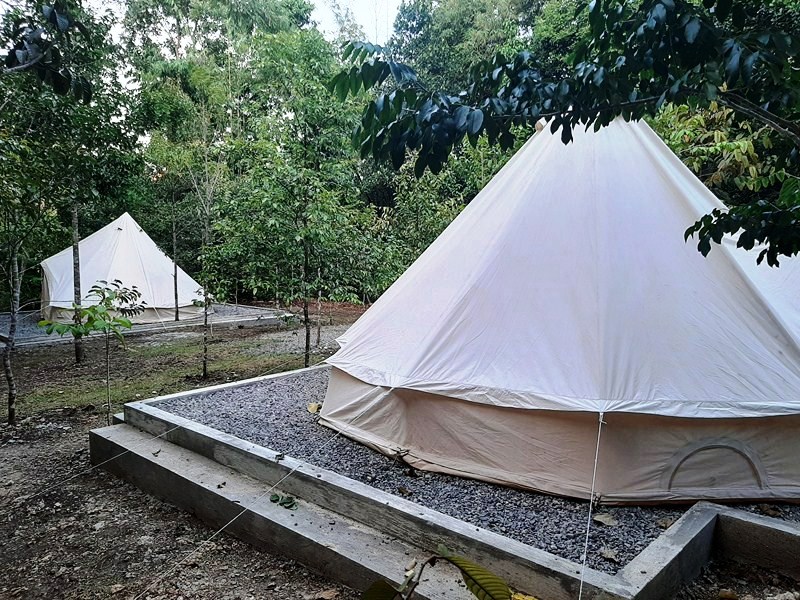
Glamping Area

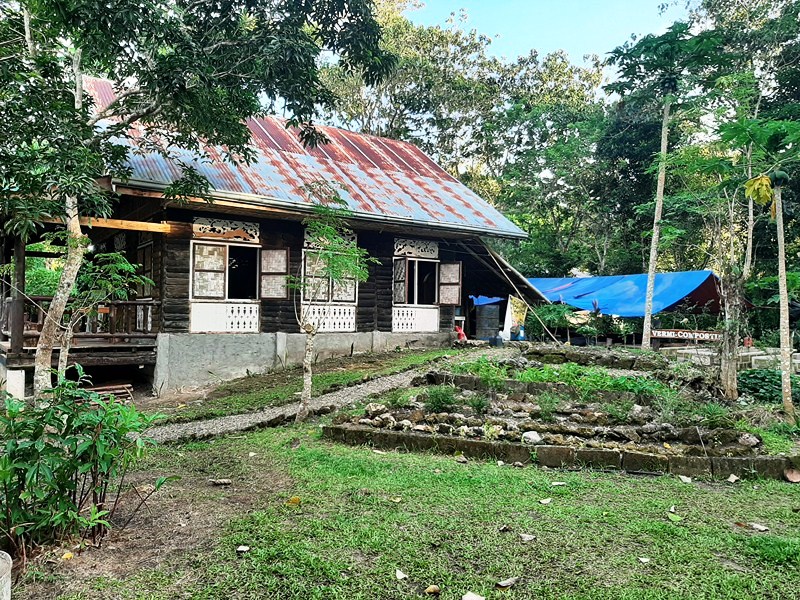
The complex, a unique and memorable alternative to a typical Bohol tour, houses a training center, organic vegetable gardens, a greenhouse, vermin-composting facility, farm animal sheds, reforestation area, Karst trail, gene bank, a dipterocarp mini laboratory and lodging quarters for anyone keen on lending a hand to sustainability and tackling all the BCC has to offer.

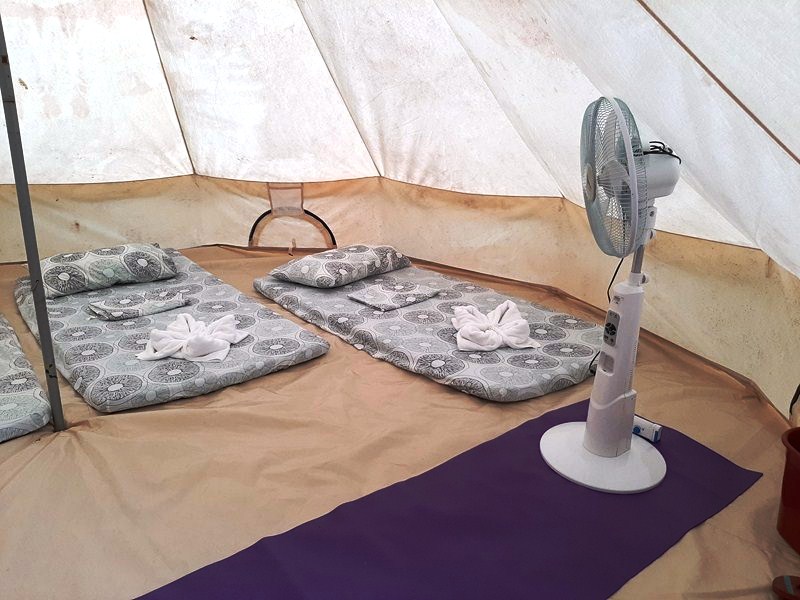
Setup inside tent

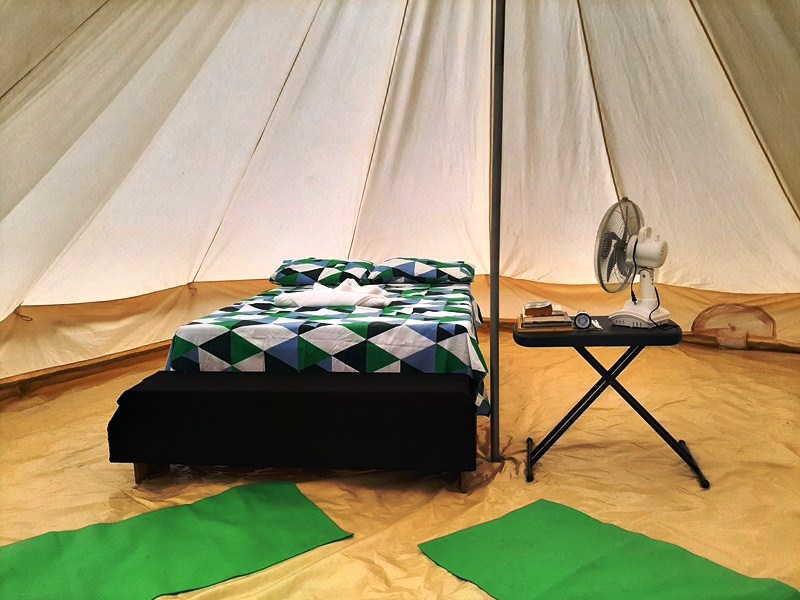
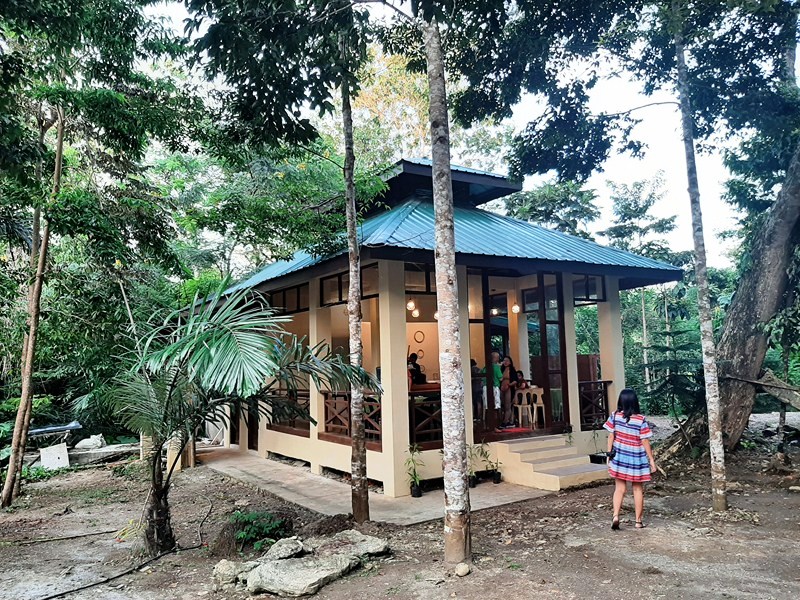
The sprawling grounds of the complex also make it ideal as a camping ground or a picnic site. Our guide showed us the glamping site with tents set up.  Each tent, which can accommodate 5 pax, is rented out for PhP2,000/per night (breakfast not included).  Near the site is a cottage housing communal shower and toilet facilities and a dining facility.  We culminated our visit with a merienda of corn coffee, steamed kamote, puto and fried saging na saba.

A honeymooner’s setup

The Tree Planting for Legacy eco-tour is a great way, whether going solo or traveling in a group, to proactively support conservation while having fun. It takes travelers beyond sightseeing and into environmentally-friendly and fun activities, letting everyone join and pitch in the efforts of restoring the breathtaking forests of Bohol by giving them the chance to leave a “tree for legacy,” their very own green thumb mark on the island of Bohol.   The endemic tree saplings they planted are taken care of by the center until they reach maturity.

Cottage housing shower and toilet facilities and dining area

Currently, with the help of the Provincial Government Offices of Provincial Economic Enterprises Management Office, Bohol Environmental Management Office, Office of the Provincial Veterinarian, Bohol Island State University and NGO Soil and Water Conservation Foundation Inc., the complex is undergoing development to help improve its services, Aspiring to become a model eco- agritourism site in Bohol, it promotes conservation of Bohol’s unique flora and fauna and appreciation of Boholano culture, especially in its agricultural industry.

Bohol Biodiversity Complex (BBC): Bilar, Bohol. Mobile number: (0950) 124-6588. E-mail: boholbiodiversity@gmail.com. Admission: PhP100/pax. Tour Group Price: PhP1,850/15 pax maximum. Admission includes seedling, name plate, laminated label and corn coffee/bottle of water (included only for group tours).  Open Mondays to Fridays, 8 AM – 5 PM, on request basis for holidays and weekends (Saturdays and Sundays).

Bohol Tourism Office: Governor’s Mansion Compound, C.P.G. Ave. North, Tagbilaran City, 6300 Bohol.  Tel: +63 38 501-9186.  E-mail: inquire@boholtourismph.com. 

Panglao Bluewater Resort: Bluewater Rd., Sitio Daurong, Brgy. Danao, Panglao, 6340 Bohol.  Tel: (038) 416-0702 and (038) 416-0695 to 96. Fax: (038) 416-0697.  Email: panglao@bluewater.com.ph. Website: www.bluewaterpanglao.com.ph.  Manila sales office: Rm. 704, Cityland Herrera Tower, Rufino cor. Valera Sts., Salcedo Village, 1227 Makati City, Metro Manila.  Tel: (632) 817-5751 and (632) 887-1348.  Fax: (632) 893-5391.

Museo ng Pamana at Kasaysayang Boholano (Loay, Bohol)

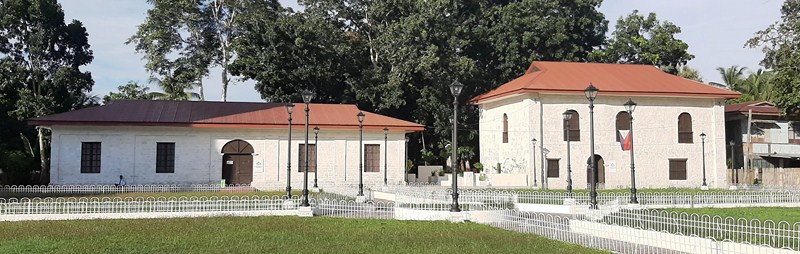
Museo ng Pamana at Kasaysayang Boholano.  The escuela de los Ninos is on the left and the Casa Tribunal on the right

Part of the Panglao Bluewater Resort-sponsored CountrysideTour

After lunch at Panglao Bluewater Resort, we met up with Mr. Christopher “Boyet” Boncales, our guidefor our resort-sponsored Countryside Tour, at the reception area.  Boyet, 43, a tour guide of 25 years, has been guiding VIPs, ambassadors and other high ranking officials to Bohol. We all boarded our Travel Village coaster for the 33-km. (1-hour drive) to Loay’s Holy Trinity Church Compound.

Check out “Resort Review: Panglao Bluewater Resort

Check out “Church of the Holy Trinity

Upon arrival, we were welcomed by Ms. Perlina Alo, curator of the Museo ng Pamana at Kasaysayang Boholano (Museum of Boholano Heritage and History).

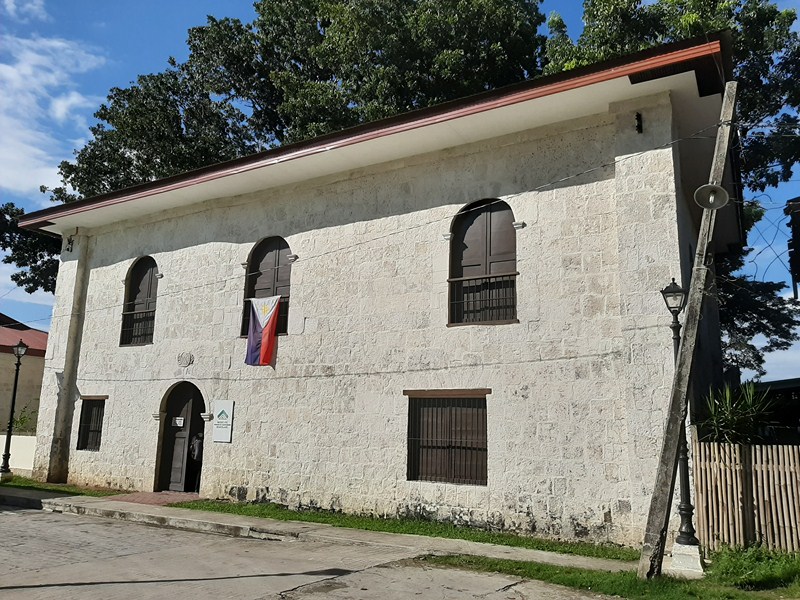
The 2-storey Casa Tribunal. Notice the non-centering of openings. Above the main entrance is an anagram of the Blessed Virgin Mary

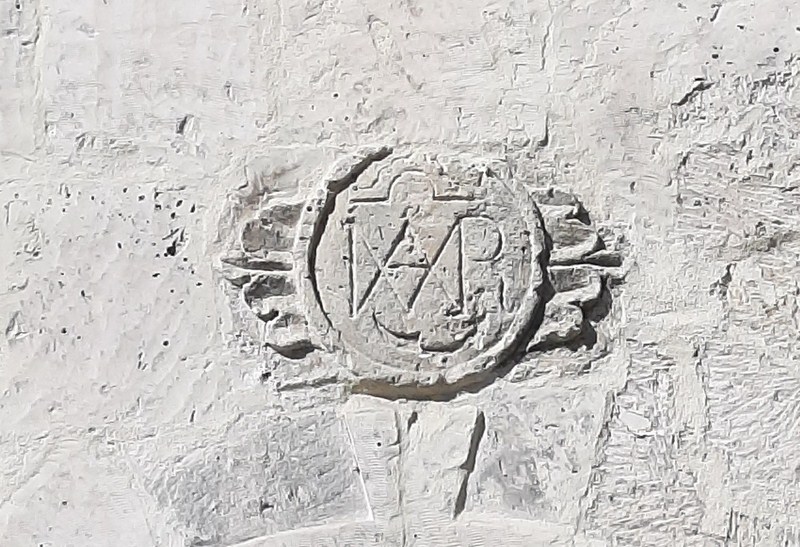
Anagram of the Blessed Virgin Mary above the entrance door of Casa Tribunal

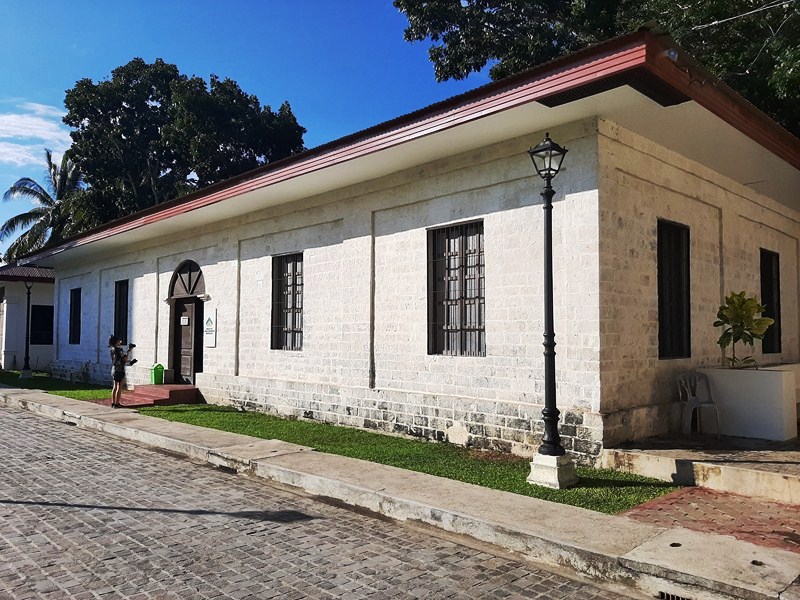
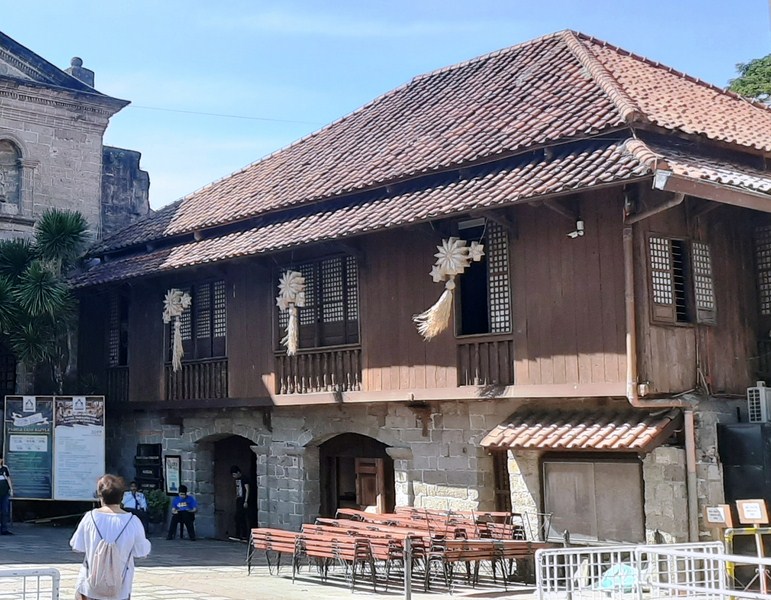
Under the jurisdiction of the National Historical Commission of the Philippines (NHCP), the museum is housed within two buildings at the compound– the 2-storey Casa Tribunal (the old tribunal or municipal building) and the single-storey Escuela de los Ninos (school for boys).

The one-storey Escuela de los Ninos

The former’s solid stone architecture and non-centering of openings probably makes it one of the earliest structures in the compound and the 18th century anagram of Blessed Virgin Mary over main door belies its construction under the supervision of Recollect parish priests.

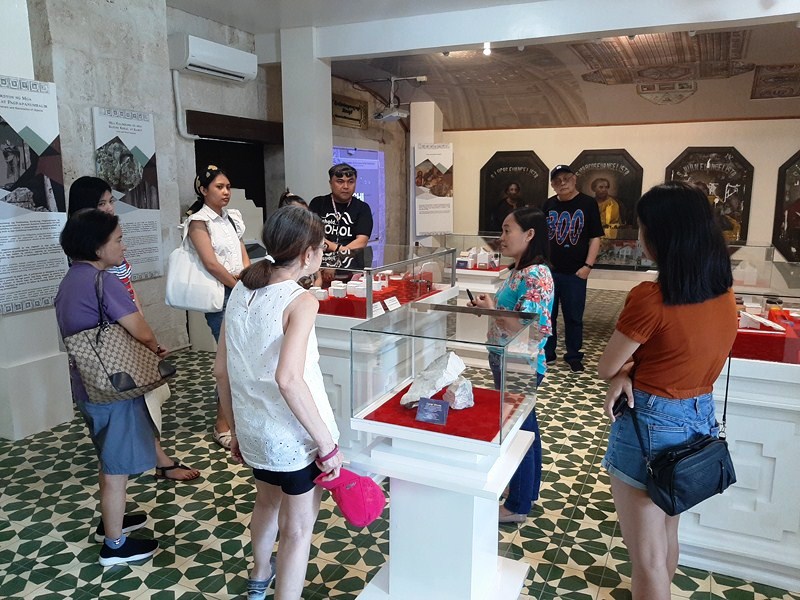
Ms. Perlita Alo (center) briefing our media group

The latter, one of two schoolhouses (the other one, for girls, faces it from across the plaza), was also built by the Recollects and dates from the last quarter of the 19th century.

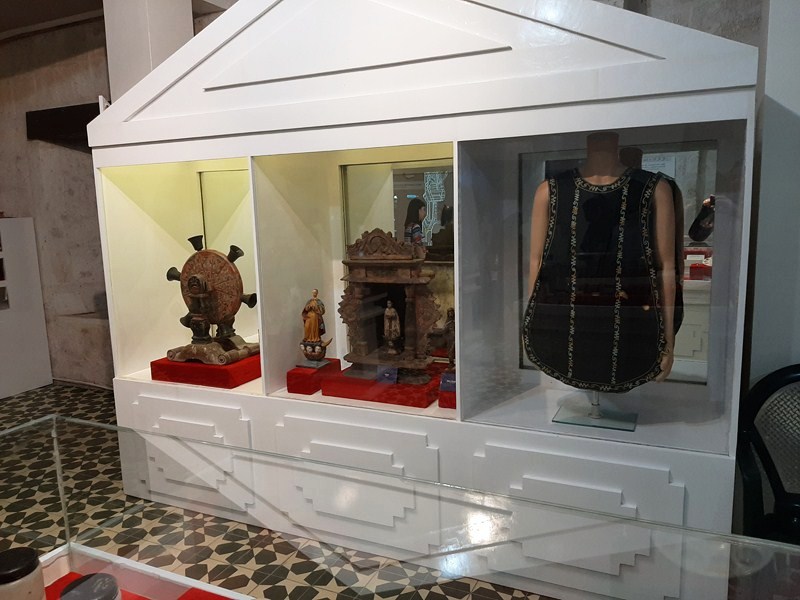
Religious paraphernalia and statuary

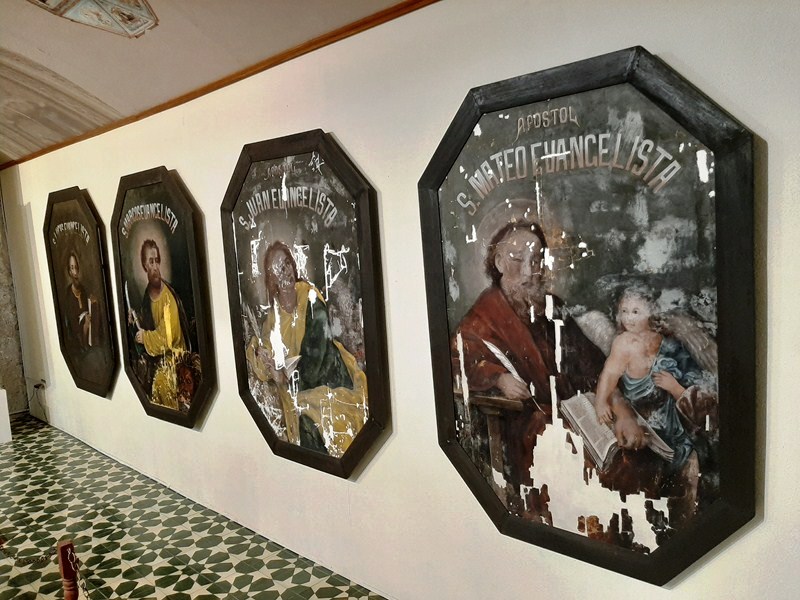
Paintings of Four Evangelists by Ray Francia

Ms. Alo first toured us inside the Casa Tribunal. The exhibit on the ground floor centers on the materials used in the construction of the church complex – coralstone, limestone, batikuling (Litsea leytensis, wood used for religious images), apitong (Dipterocarpus grandiflorus, a local hardwood), narra (Pterocarpus indicus); bakan (Melia azedarach); etc.

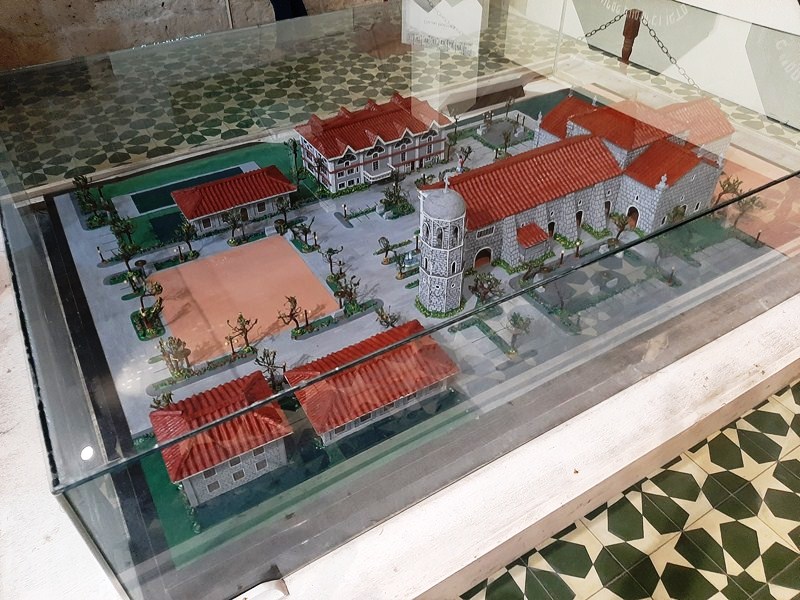
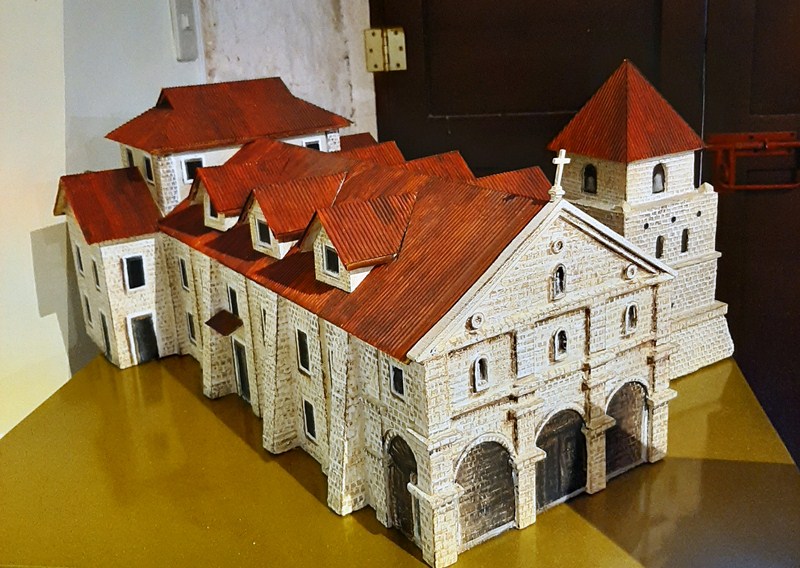
Scaled model of the church compound

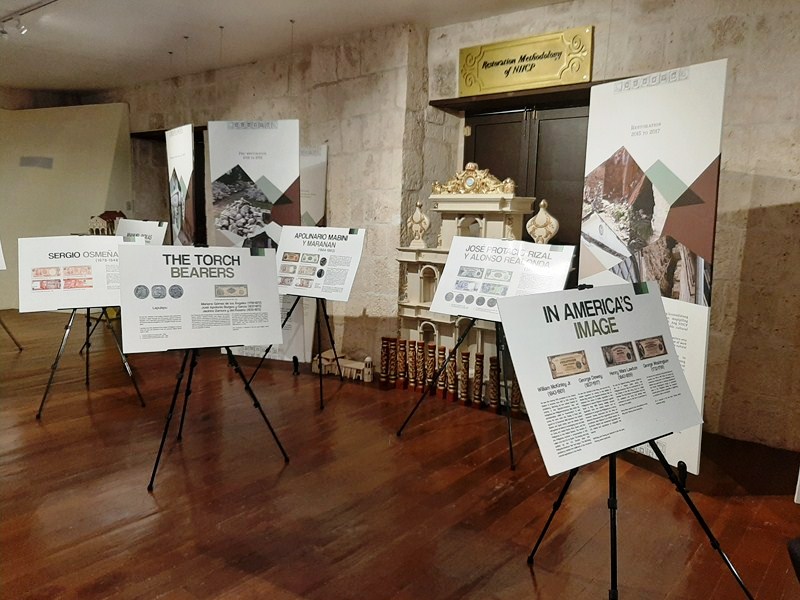
Face Value: The Faces of Philippine Numismatics

Also on exhibit are religious statuary and paraphernalia; a scaled model of the church complex and currently being restored paintings (from the spandrels at the church dome ceiling) of the Four Evangelists (Luke, John, Matthew and Mark) done by Ray Francia.

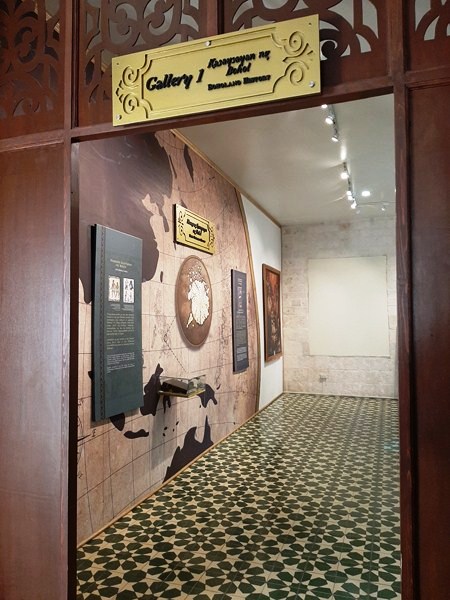
Gallery 1

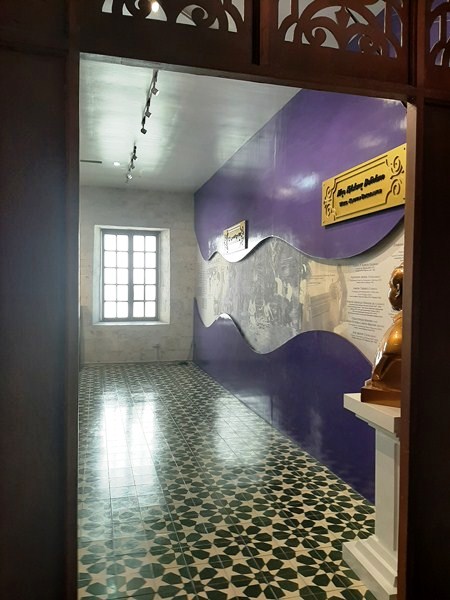
Gallery II

At the second floor are exhibits on the methods of construction; the evolution of churches in the 1600s; the restoration methodology of the NHCP plus 3 scaled models of Loay’s church.  Also at the second floor is the exhibit entitled:” FACE VALUE: THE FACES OF PHILIPPINE NUMISMATICS” ongoing from October 30 to November 10, 2019.

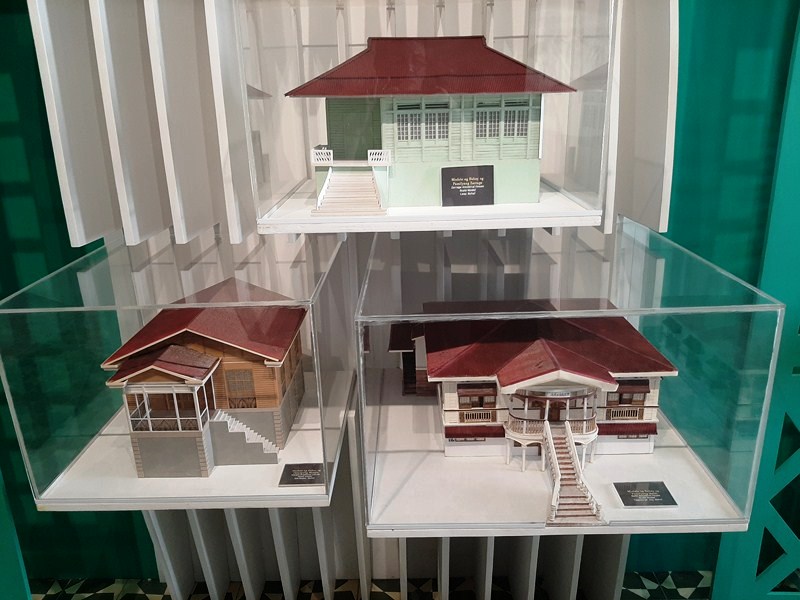
Scaled Models of Ancestral Houses

Scaled model of Loay Church

Moving on to the Escuela de los Ninos, we watched an audio-visual presentation of the history of Bohol at the foyer.  Exhibits at the two galleries centers on episodes in Bohol’s history – Early Boholano History; Arrival of the Spaniards; Changes Under the Spanish; Tamblot’s Revolt; Dagohoy’s Revolt; The Cantonal Government; Resistance Against the Americans; Change Under the Americans; Resistance Against the Japanese during World War II; and Rehabilitation and Growth.

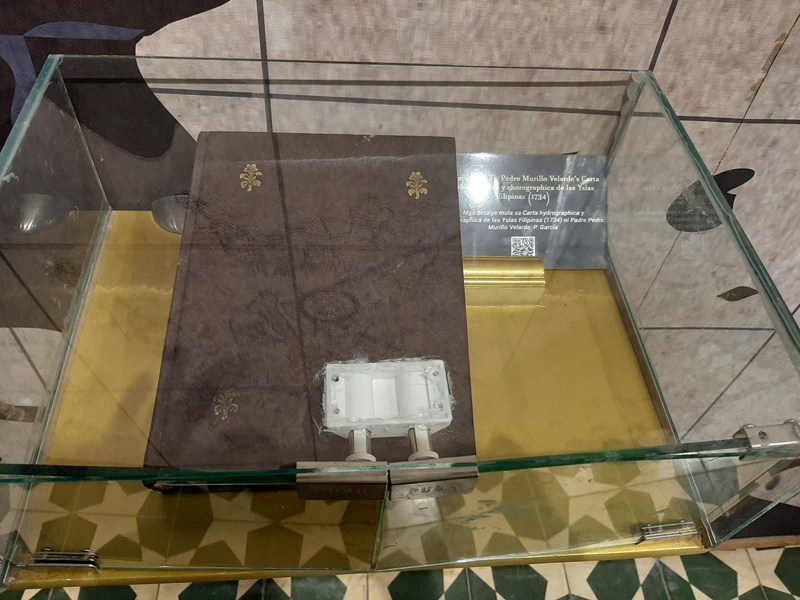
Copy of Fr. Pedro Murillo Velarde’s Carta Hydrographica y Chorographica de las Yslas Filipinas (1734, A Hydrographical and Chorographical Chart of the Philippine Islands)

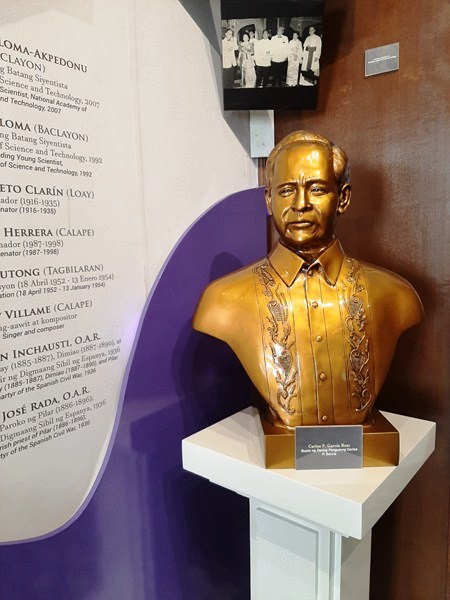
Also on display here are scaled models of Bohol’s bahay na bato or stone houses (Zarraga Ancestral House and Clarin Ancestral House in Loay; Rocha Ancestral House and Balili Heritage House in Tagbilaran City; etc.); a copy of Fr. Pedro Murillo Velarde’s (1696-1753) Carta Hydrographica y Chorographica de las Yslas Filipinas (1734, A Hydrographical and Chorographical Chart of the Philippine Islands); a painting of the Blood Compact; a church confessional; seals of the Cantonal Government; and a bust of Pres. Carlos P. Garcia.

Bust of Pres. Carlos P. Garcia, Bohol’s first and, so far, only native-born Philippine president

Painting of the Blood Compact

Check out “Balili Heritage House” and “The Ancestral Houses of Sitio Ubos

Museo ng Pamana at Kasaysayang Boholano: Holy Trinity Church Compound, Loay, Bohol. Open Tuesdays to Sundays, 8 AM to 4 PM. Admission is free.  Mobile number: (0915) 178-0325.

Bohol Tourism Office: Governor’s Mansion Compound, C.P.G. Ave. North, Tagbilaran City, 6300 Bohol.  Tel: +63 38 501-9186.  E-mail: inquire@boholtourismph.com. 

Panglao Bluewater Resort: Bluewater Rd., Sitio Daurong, Brgy. Danao, Panglao, 6340 Bohol.  Tel: (038) 416-0702 and (038) 416-0695 to 96. Fax: (038) 416-0697.  Email: panglao@bluewater.com.ph. Website: www.bluewaterpanglao.com.ph.  Manila sales office: Rm. 704, Cityland Herrera Tower, Rufino cor. Valera Sts., Salcedo Village, 1227 Makati City, Metro Manila.  Tel: (632) 817-5751 and (632) 887-1348.  Fax: (632) 893-5391.

Bohol–Panglao International Airport

Panglao International Airport

The PHP8.9 billion (US$169 million) Bohol–Panglao International Airport (also known as New Bohol International Airport), on a 216-hectare area in Panglao Island, serves as the gateway to Tagbilaran and the rest of mainland Bohol for domestic air travelers, replacing Tagbilaran Airport (which is 10 times smaller), to support Bohol’s increased passenger traffic due to tourism.

This airport is officially classified as the international airport by the Civil Aviation Authority of the Philippines and though Philippine Airlines ended its Tagbilaran-Seoul flights on February 9, 2019, it welcomed the twice weekly (Mondays and Fridays) Royal Air Philippines’ Hong Kong-Bohol-Hong Kong flights which started last September 30.

Covered area in front of the terminal building

Bohol’s new international airport was partially funded with PHP5.862 billion (US$123.5 million, about 79% of its total project cost) by an official development assistance (ODA) loan from the Japan International Cooperation Agency (JICA) with the remaining amount coming from the general appropriations fund of the Department of Transportation and Communications (DoTr). JICA also  provided JPY4.37 billion ($38.96 million) for the second phase of the airport project.

The airport apron

A Japanese consortium of Chiyoda Corporation and Mitsubishi Corporation was the prime contractor for the project. EEI Corporation, the sub-contracting partner, handled the civil works while the design and consultancy work on the projectwas awarded to Japan Airport Consultants (JAC) in association with Phil JAC.

The airport was inaugurated on November 27, 2018. After the DoTr upgraded the airport’s navigational equipment to allow it to handle planes landing at night, the Bohol gateway began operating flights up to 10 p.m. on September 1, 2019.

Passenger boarding bridge

The BPIA (IATA code: TAG) has a 2.8 km. (9,184 ft.) long asphalt runway with a width of 45 m. (147.6 ft.) and running in a 03/21 direction. It has a 55,585 sq. m. concrete apron that features four parking bays for aircraft as large as the Airbus A330 or a maximum of seven parking bays for narrow bodied aircraft and is flanked by two taxiways which allows 10 takeoffs and landings per hour.

Bridge

Currently, the airport’s parking tarmac can hold, at a time, up to seven Airbus A321 aircraft or four Airbus A330 or Boeing 777 aircraft, enough to handle the deluge of foreign and local travelers even during peak seasons. The airport also has enough space to build another terminal in case expansion is needed in the future plus the runway could also still be extended up to 3.2 kms., making it possible to accommodate as many as 3.4 million passengers annually.

Baggage handling conveyor belt

The airport, dubbed as the first eco-airport in the Philippines and the country’s green gateway, boasts of environment-friendly features with advanced Japanese technology such as:

  • A photo voltaic power generation system set-up that aims to eventually power all of the airport’s energy requirements
  • A rainwater catchment mechanism that would utilize the abundant rainwater that the province gets for various uses
  • A sewerage disposal system that is at par with those often found in eco-conscious Scandinavian nations
  • An energy-efficient air-conditioning system, powered by solar energy, is available only in the pre-departure area.  The airport’s primarily uses  natural ventilation.
  • Geotextile sheets are used in the soaking yard to avoid the drainage water from seeping into the surroundings.
  • Energy-saving features integrated in the airport’s design include installation of LED lights, natural lights and ventilation for most public areas.

The single-level passenger terminal, spread over 8,500 sq. m., has a multi-curved roof that appears to be floating over the building and takes inspiration from the rolling Chocolate Hills, one of the province’s famous landmarks. The external 1,958 sq. m. covered area in front of the terminal building is dedicated for sending off and welcoming passengers’ relatives.

This new international airport can annually accommodate 2,000,000 passengers, more than double the 800,000 capacity of the decommissioned Tagbilaran Airport (the provincial government is eyeing to manage the 26-hectare property and convert it into an information technology hub or a commercial park).

BPIA’s location also makes it ideal to divert aircraft bound for Cebu (it is only 90 kms. away, way nearer than Manila or Clark, which are 600 and 700 kms. away, respectively) in case the Mactan-Cebu International Airport, a gateway to the Central Philippines for international tourists, in Mactan is closed due to unfortunate circumstances. Panglao is also accessible by fast craft from Cebu City.

Bohol–Panglao International Airport: Panglao; 6340 Bohol. Mobile number: (0936) 277-9019.

National Shrine of St. Michael and the Archangels (Manila)

National Shrine of St. Michael and the Archangels

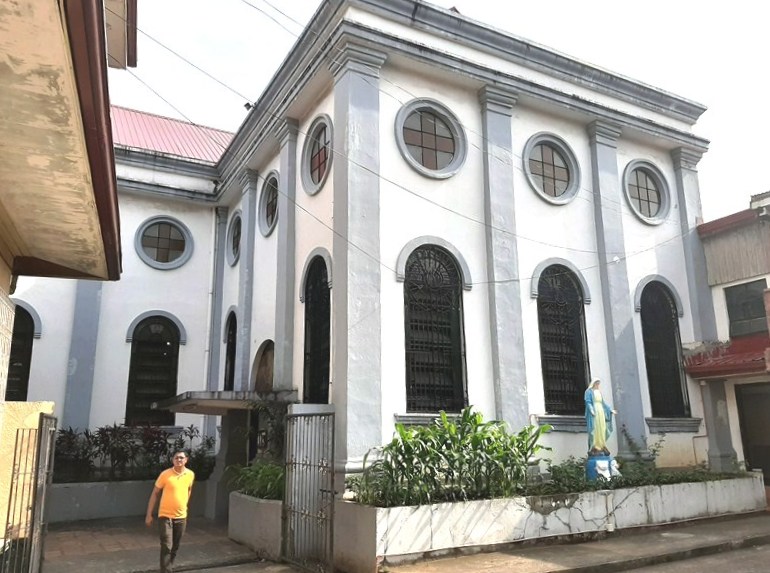
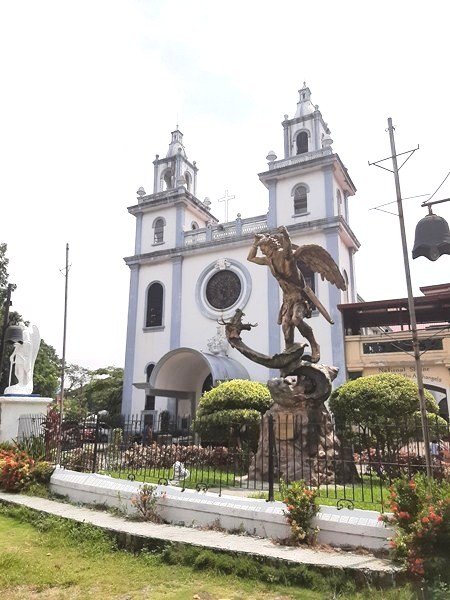
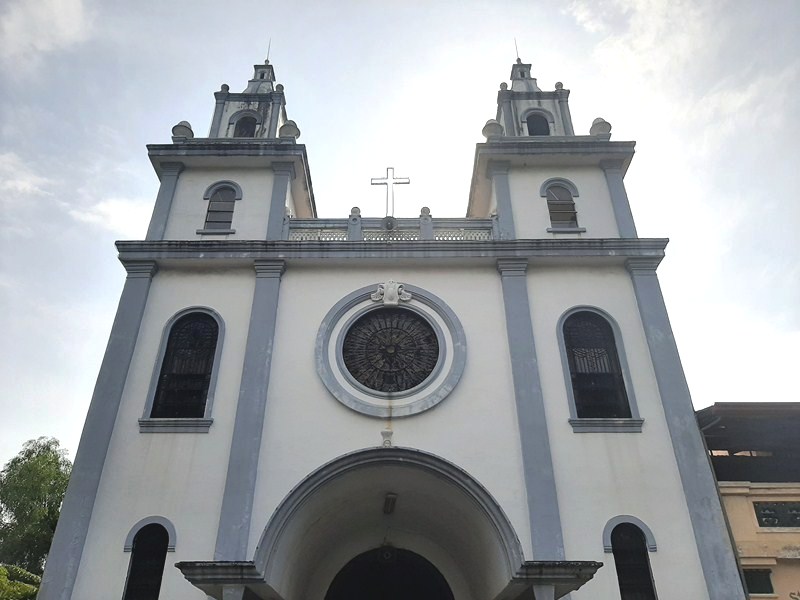
The century-old National Shrine of St. Michael and the Archangels, also known as San Miguel Church or Malacañang Church (as it adjoins the Malacañang Palace complex, the official residence of the President of the Republic of the Philippines), is located on the former site of La Fábrica de Cerveza de San Miguel (now San Miguel Brewery).

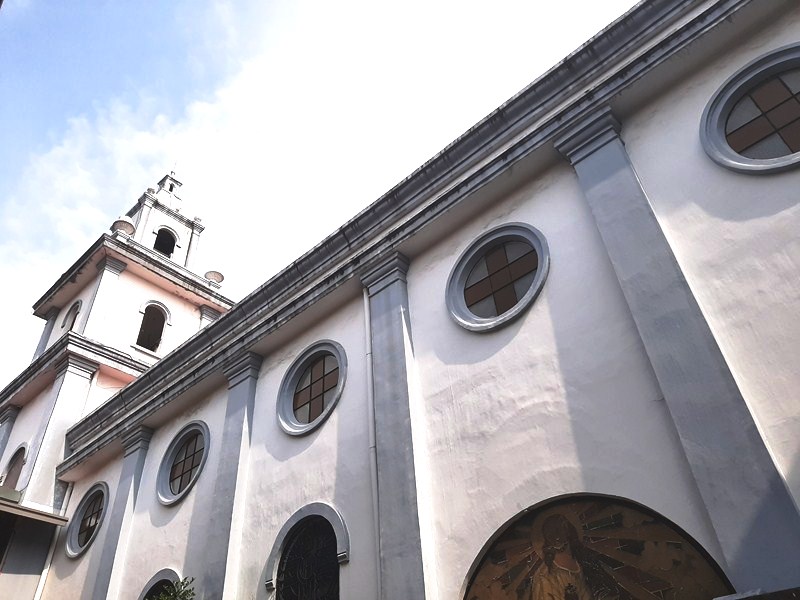
The church’s Neo-Classical facade

This Catholic church of the Latin Rite is dedicated to the seven archangels who fought against the Lucifer, the fallen angel who rebelled against God – Saint MichaelSaint GabrielSaint RaphaelSaint UrielSaint SelatielSaint Jhudiel, and Saint Barachiel.

An archangel is supposedly assigned to a person depending on the day he is born – St. Gabriel for Monday, St. Raphael for Tuesday, St. Uriel for Wednesday, St. Sealtiel for Thursday, St. Jhudiel for Friday, St. Barachiel for Saturday and St. Michael for Sunday.

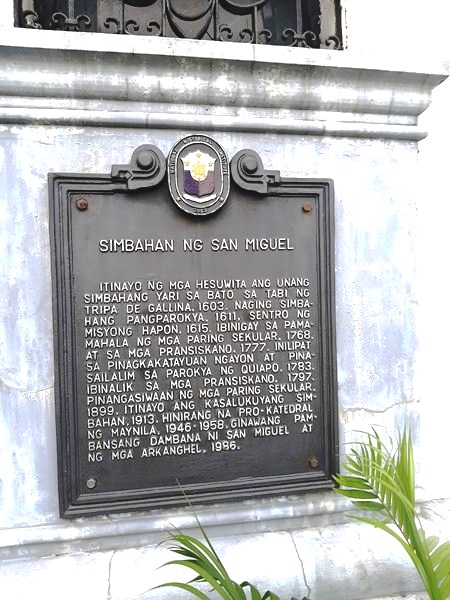
Historical plaque

Here are some interesting trivia regarding this church:

  • It is the only shrine in the whole world dedicated to the aforementioned seven archangels
  • As it almost next door to the most important address in the country, a number of presidents have heard Mass at the shrine – Carlos P. GarcíaGloria Macapagal-Arroyo (usually accompanied by her husband Mike Arroyo) and Fidel V. Ramos (who is not even Catholic but Protestant). Then-Ilocos Norte Representative (and later President) Ferdinand E. Marcos also married then-beauty queen Imelda Romuáldez in the shrine (at that time a pro-cathedral) on May 1, 1954. Their wedding, tagged as the “Wedding of the Year,” followed almost two weeks of courtship.  President Ramon Magsaysay stood as Principal Sponsor.
  • Unlike most Catholic churches in the country that are usually overflowing with parishioners on Sundays, the prominent location of this church seems not to entice parishioners to hear Mass here. St. Michael only has about 1,500 parishioners, some of whom are descended from old-rich families (who were the benefactors of the church) in San Miguel District (most of these families, however, left this district during Marcos’ time).  One reason churchgoers might be staying away is the abundance of checkpoints all over the Malacañang Complex.
  • It only holds three Masses on Sundays – two in the morning and only one in the evening.
  • The national shrine is also, notably, the only Catholic church in the country where priests (instead of bishops) are canonically permitted to administer the sacrament of Confirmation twice a week (on Thursdays and Sundays).
  • A few blocks away is the National Shrine of St. Jude Thaddeus, the patron saint of desperate cases
  • Among those buried in San Miguel are Don Enrique M. Barreto (founder of San Miguel Brewery) and Don Domingo Roxas (patriarch of the Zóbel-de Ayala-Roxas-Soriano clans). Archbishop Gabriel M. Reyes, the Archdiocese of Manila’s first Filipino ordinary (served from 1949 to 1952), was initially buried in the shrine before his remains were transferred to the crypt of Manila Cathedral.

The church has a Neo-Classical façade with a semicircular arched main entrance and windows, a rose window at the second level and flanking, symmetrical bell towers with melon-shaped domes topped by turrets.

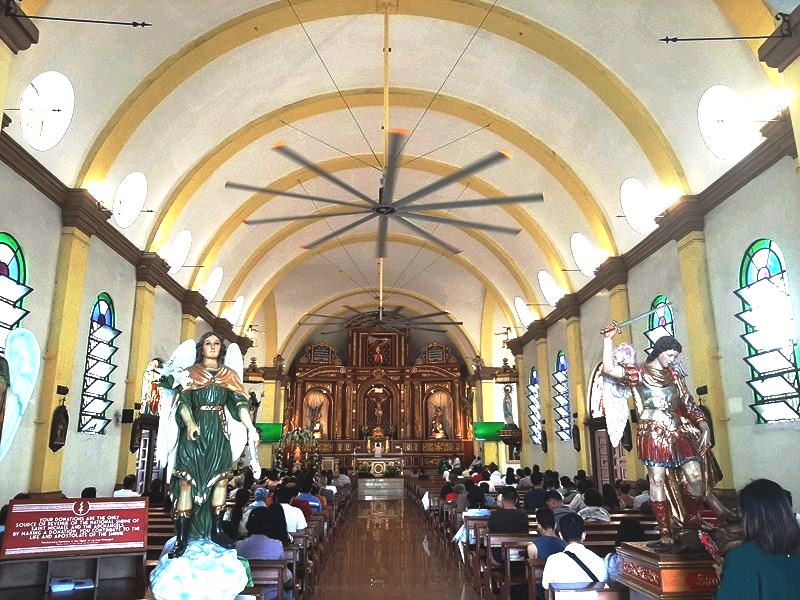
The church’s interior

Here is the historical timeline of the church:

  • In 1637, San Miguel Church was first built in stone by the Jesuits, along the left bank of the Pasig river (where the Tabacalera,  Mirador Hotel and the old PCSO office are now located) in Paco, Manila (formerly known as Dilao).
  • During the 1645 Luzon earthquake, the church was damaged.
  • In 1779, a provisional church, along the north bank of the Pasig River, was started by Fr. Malo de Molina.
  • In 1783, it was transferred to its present site and placed under the jurisdiction of the Quiapo Parish.
  • In 1835, the first church on this site was built by Franciscan Fr. Esteban Mena
  • In 1852, after an earthquake, Fr. Francisco Febres repaired the church and rebuilt the destroyed bell tower.
  • During the July 19, 1880 earthquake, the church was destroyed.
  • In 1886, the church and its bell towers were repaired by Fr. Emilio Gago.
  • In 1913, the church was rebuilt by Fr. Hipolito Arce (parish priest from 1900 – 1940), through the generous assistance of Doña Margarita Róxas de Ayala, on its present site and inaugurated on September 29, 1913.
  • From 1946 till December 8, 1958, following the city’s destruction in World War II, the church was designated as the pro-cathedral of the Archdiocese of Manila by Monsigñor Michael O’Doherty while Manila Cathedral was being rebuilt.
  • On February 22, 1986, the church was elevated to the rank of National Shrine by the Catholic Bishops’ Conference of the Philippines (CBCP), with Ricardo Cardinal Vidal of the Archdiocese of Cebu and Papal Nuncio Bruno Torgigliani in attendance.  The CBCP made the decision via de jure, citing the church’s rich history.

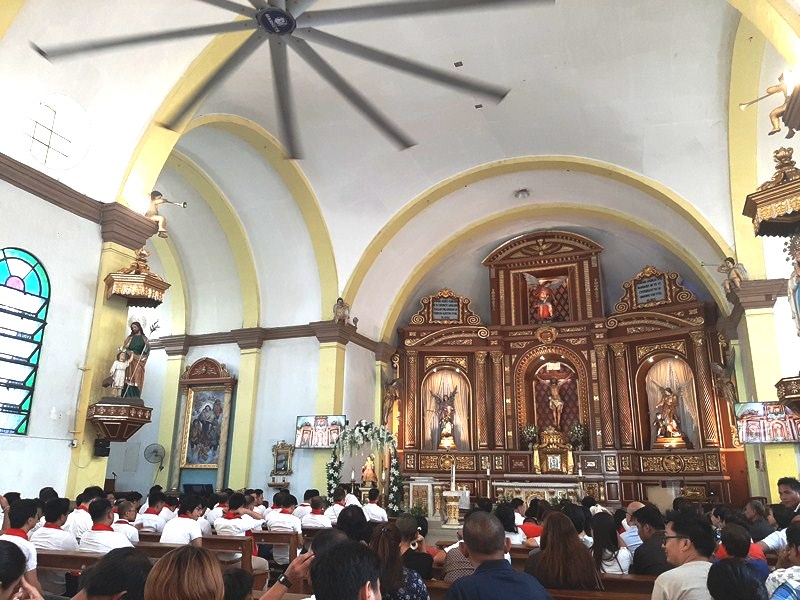
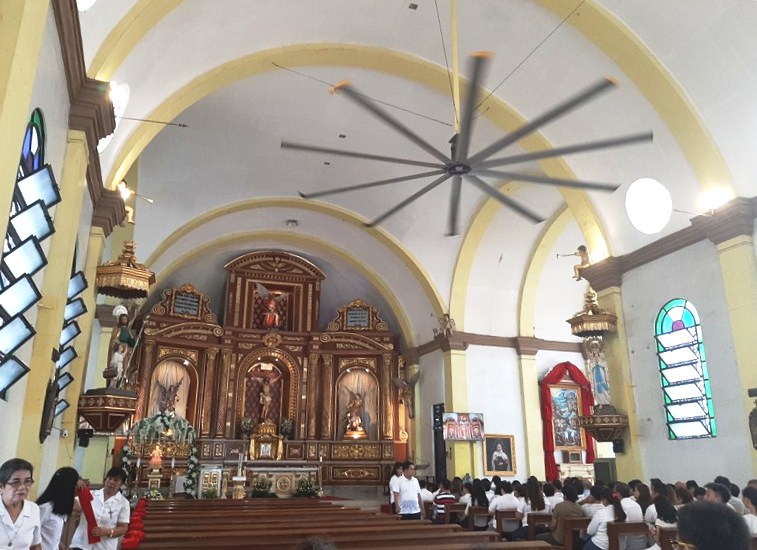
Its main altar, built with fine wood and stately marble and designed by Fr. Ramon Dodero, an Opus Dei priest, in 1985, is a replica of the old altar built in 1800.  It has a statue of St. Michael crushing the enemy, in the center, with the other six archangels flanking him.

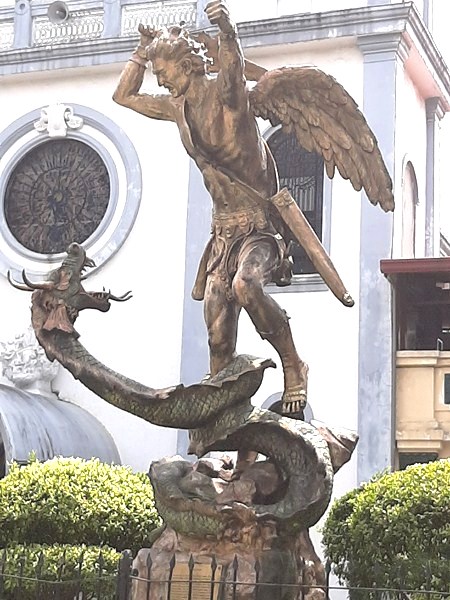
In front of the church is the beautiful 12-ft. high bronze statue of St. Michael in his traditional pose, triumphantly looming over a dragon (Satan). Done by renowned Filipino sculptor Florante “Boy” Caedo, it was blessed in September 29, 1984 by Papal Nuncio Bruno Torpigliani with His Eminence Jaime Cardinal L. Sin, D.D. and Col. Antonio Cabangon Chuas as unveilers.

Bronze statue of St. Michael the Archangel

National Shrine of St. Michael and the Archangels: 1000 Jose Laurel St. cor. General Solano St., San Miguel district, Manila, Metro Manila.  Tel: (632) 735-1611 and 734-1271.  Fax: (632) 736-1105.

Diocesan Shrine of the Divine Mercy (Sindangan, Zamboanga del Norte)

Diocesan Shrine of the Divine Mercy

We still had extra time for some sightseeing prior to our Cebu Pacific flight back to Manila so, on our drive to Dipolog Airport from Sindangan, we made a short stopover at the Diocesan Shrine of the Divine Mercy.  Before we drove up the hill, we already espied the Statue of the Virgin Mary along the highway.

Entering the chapel

The interior of the chapel

Stairs lead to the foot of the Statue of the Virgin Mary, located on another mountain below the Divine Mercy Shrine, while another flight of stairs lead directly to the Divine Mercy Shrine.  An arch along the highway marked the entrance to the shrine. The shrine, administered by Rev. Fr. Danilo Alpuerto, was declared as one of the pilgrim spot for the 2015-2016 Jubilee Year of Mercy.

Statue of the Virgin Mary

The shrine has a whitewashed chapel with the words “Jesus I Trust in You,” “Jesus Misalig Ako Kanimo” (Cebuano translation) and “Jesu Ufam Tobie” (Polish translation) painted into the upper façade. To the left of the chapel is a tower with a square base and octagonal upper storeys with a cross on top of the pointed roof.
The tower on the chapel’s left

Inside the chapel are walls of clear glass panels, which afford a scenic view of the ocean, while above them are stained glass windows. On the flanks of the chapel are outdoor shrines, with boxes for petitions or prayers, dedicated to the Divine Mercy and Sister Maria Faustina Kowalska, Polish nun who inspired the Roman Catholic devotion to the Divine Mercy and earned her the title of “Secretary of Divine Mercy.” There is also a statue of the St. Michael the Archangel and the Virgin Mary on a boat.

Outdoor shrine dedicated to Sister Faustina Kowalska

Outdoor shrine dedicated to the Divine Mercy

A flight of stairs lead to the chapel’s roof deck with railings where the huge statue of the Divine Mercy is located.

Statue of the Divine Mercy

The deck has a panoramic view of the expanse of mountains at the rear and the verdant lowlands and blue ocean in front.

Panoramic view of the verdant lowlands and ocean

There’s also a “Healing Walk,” leading down from the shrine, where you are required to observe silence and remove your footwear to enter.  A sign quotes Exodus 3:5 – “Do not come any closer,” God said. “Take off your sandals, for the place where you are standing is holy ground.”

The Healing Walk

Along the way are rows of statues of 30+ saints and the Gethsemane Garden with its statue of a kneeling Jesus Christ.

Alcove with statues of saints

Also within the shrine is a candle gallery, the shrine office, a souvenir shop and public toilets. 

Statue of a kneeling Jesus Christ at the Gethsemane Garden

Diocesan Divine Mercy Shrine: Siari Hills, Brgy. Siari, Regional Highway Dipolog – Sindangan, Bayan ng Sindangan, 7112 Zamboanga del Norte. Admission is free.  There is a dress code in the shrine.  No wearing of short pants (as well as long pants for females) and sleeveless shirts or blouses.
How to Get There: Buses and vans going to Ipil and Zamboanga City from Dipolog, and vice versa, pass by the Regional Highway. Under the shrine’s entrance arch are habal-habal drivers who charge P20-50 for a one way trip to the Shrine.

Dapitan City Plaza (Zamboanga del Norte)

Dapitan City Plaza

In front of the Church of St. James the Greater is the  Dapitan City Plaza (“Liwasan ng Dapitan”), also known as the City Square.  During his exile, Dr. Jose Rizal beautified and developed this plaza.  With the assistance of Spanish Politico-Military Governor of Dapitan, Gov. Ricardo Carnicero, he made the plaza comparable to the ones he saw in Europe.

Check out “Church of St. James the Greater

With an estimated land area of 1 hectare, the plaza was laid out in the traditional rectilinear Spanish colonial manner. The plaza was already in existence when Dr. Jose P. Rizal arrived in on July 17, 1892.

With the P500 one of his patients paid him, Rizal equipped the town with lighting system, as part of Carnicero’s project, using coconut oil lamps hung on trees and cut tree trunks placed around the plaza. Rizal also beautified Dapitan by planting white santans, red gumamelas and acacia trees.

Relief Map of Mindanao

With the help of Francisco Paula de Sanchez, his teacher in Ateneo de Manila (he studied here from 1872-77), he also made a huge relief map of Mindanao (based on the map done by French Jesuit Fr. Pedro Murillo Velarde in 1752) out of earth, stones and grass during his first two months in Dapitan. Located in the southeast part of the plaza, he intended it to be a teaching aid for geography and history lessons. On June 20, 2005, the Relief Map was declared by the National Museum as a National Cultural Treasure.

The Jose Rizal Monument (center). On the left is the kiosk

Before Dr. Jose P. Rizal became the country’s National Hero, a kiosk was located in the center of the plaza. Later, the kiosk was moved to the northwest side to give way to the monument in honor of Rizal. The two cannons, formerly placed on top of Ilihan Hill, can now be found in the north of the plaza. Except for its elevated border (constructed in 1996), the City Plaza has maintained its original design.

Dr. Jose Rizal Monument

The plaque at the Dr. Jose P. Rizal’s monument has snippets from one of his letters written in Spanish in 1893. It states: “Yo estoy dispuesto a hacer todo lo que pueda en obsequio de este pueblo. No tengo inconveniente ninguno en quedarme para siempre en este distrito” (“I’m willing to do everything I can for the sake of the people. I have no problem to stay forever in this district”).

Casa Real Historical Plaque

Near the plaza is a plaque marking the site of the Casa Real where Dr. Jose P. Rizal stayed with Governor Ricardo Carnicero, from his arrival until he moved to Rizal Shrine at barangay Talisay in March 1893.

Check out “Rizal Park and Shrine

Pablo Page Ancestral House

Around the plaza are a number of old structures and ancestral houses, all part of t he Dapitan Heritage Zone or Dapitan Historic Center. Most are in dire need of major repair.

Office of the Sangguniang Panglungsod

They include the Antera Adaza Bajamunde residence (Justice Florentino Saguin St.), the Philippine Coconut Authority Office, the Public Services Division of Dapitan, the Office of the Senior Citizens Association and the Office of the Sangguniang Panglungsod.

Office of the Senior Citizens Association

Philippine Coconut Authority Office

The Antera Adaza Bajamunde Residence, more popularly known as the Pablo Page Ancestral House, was built in 1919.

Public Services Division of Dapitan

Dapitan City Tourism Office: Josephine Bracken St., Dapitan City, Zamboanga del Norte.  Mobile numbers:(0977) 803-1497 (Globe) and (0908) 884-1650 (Smart).