Calinawan Cave (Tanay, Rizal)

Calinawan Cave

Calinawan Cave

This natural, multi-level cave, part of several series of caves in the area, was said to have been discovered in 1901 (by a grandfather of one of the cave guides).  It was used as a local hideout by refugees during the Philippine-American War and by the Japanese during World War II.

Calinawan Cave (2)

Media group

We detoured to this cave before proceeding to Daranak Falls. It’s a long and bumpy ride getting there since most of the road isn’t paved yet and the cave isn’t signposted that well.

Calinawan Cave (8)

The author at Level 1

This cave is mostly dry and many of the stalactites and stalagmites, though still impressive, are dead. The cave’s name was derived from the word linaw (clear).  During the 15th-18th century, opposing parties used to convene inside the cave to settle disputes.  It’s a long cave system with different levels and openings.

The cave opening

The cave opening

This cave has 7 levels but most visitors only explore the first two levels. The less visited and seldom explored Levels 3-5 are more challenging to explore as you may need to get your hands dirty.

Calinawan Cave (23)

An eerie column

It also requires squeezing your body to fit inside the narrow and small cave openings.  It can only be explored during summer as, during the rainy season, they’re flooded and muddy. Levels 6-7 are closed. Our tour took about 30 mins.

Calinawan Cave (5)

Our guide Jason told us that one path leads to as far as the town of Montalban (others say that there are those that lead to the neighboring towns of Baras and Pililia).

Calinawan Cave (29)

The local TV fantasy series “Encantadia” was filmed here and, more recently, the Coco Martin TV series “Ang Probinsyano.” The TV series “Imortal” disturbed level 1 with silver and gray paint and glued glitters on the cave walls and other indelible and irreversible damage.

Calinawan Cave (14)

In case you get hungry or thirsty after the cave exploration, small sari-sari stores in the area sell sandwiches, soft drinks, halo-halo, mais con yelo, and biscuits.

Calinawan Cave (31)

As a spelunking experience, this is a relatively easy cave to explore, requiring no technical or special skills, especially for the first 2 levels. Well suited for first timers with no previous spelunking experience.  Levels 3-5, taking about half a day to explore, are just satisfying enough for the veterans.

Calinawan Cave (36)

Calinawan Cave: Calinawan Road, Brgy. Tandang Kutyo, Tanay, Rizal. Admission: PhP20. Tour guide fee: PhP 200 (good for 10 pax). You are provided with safety helmets and LED flashlights (however, these are very weak and you won’t be able to take great photos inside) as the second level of the cave has zero visibility. For that mandatory picture taking, use a camera with low light function. If you wish to explore layers 3-5, the guide may ask you for a consideration fee.

How to Get There: Calinawan Cave can be reached by tricycle (PhP200) from Tanay Market. For those with cars, there’s a parking area in front of the cave entrance.

Tanay Tourism Office: G/F, New Tanay Municipal Hall, M. H. del Pilar St., Tanay, Rizal 1980.  Tel: (02) 7361059 and (02) 6551773 loc 212-213.  Mobile number: (0998) 988-1590. E-mail: tanaytourism11@gmail.com. Website: www.tanay.gov.ph.

Church of St. Ildephonsus of Toledo (Tanay, Rizal)

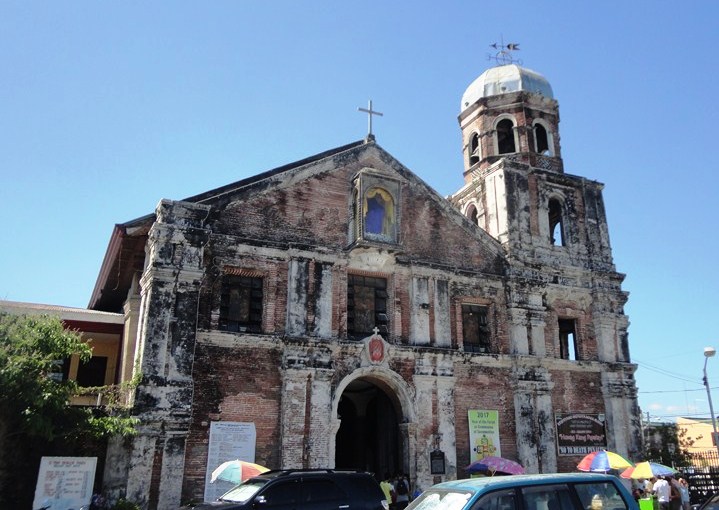
Church of St. Ildephonsus of Toledo

Church of St. Ildephonsus of Toledo

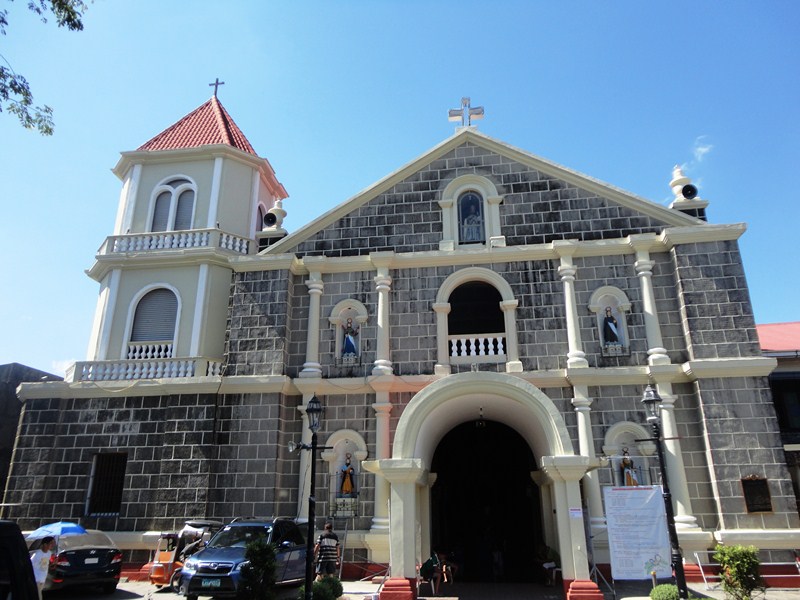
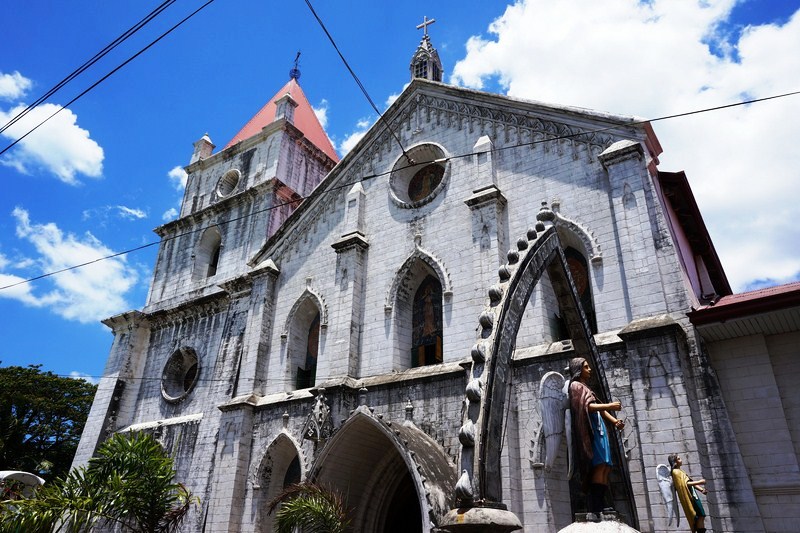
The best-preserved church complex in the province, this church was first built in nipa and bamboo in 1606.  In 1678, a church built with stone was started by Fr. Pedro de Espallargas, completed in 1680 (the first mass was celebrated on April 20, 1680) but was demolished due to its deteriorating condition as a result of natural calamities.

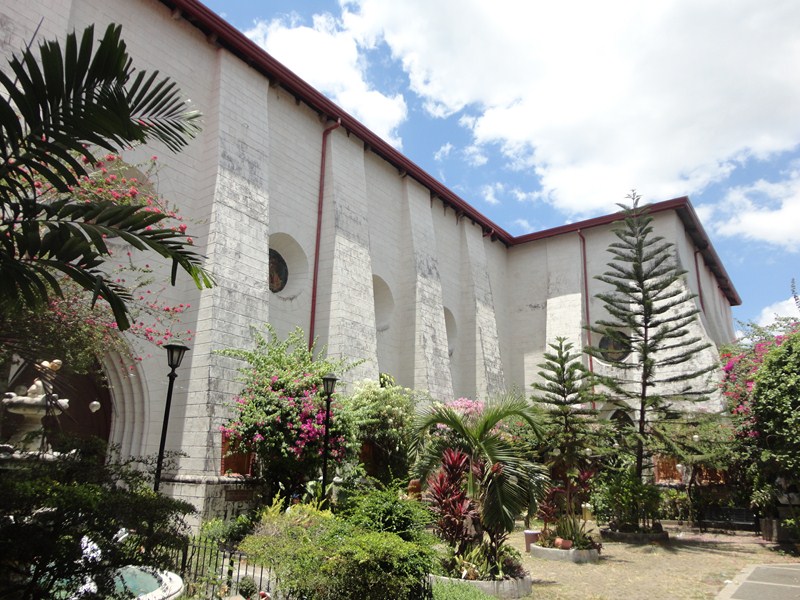
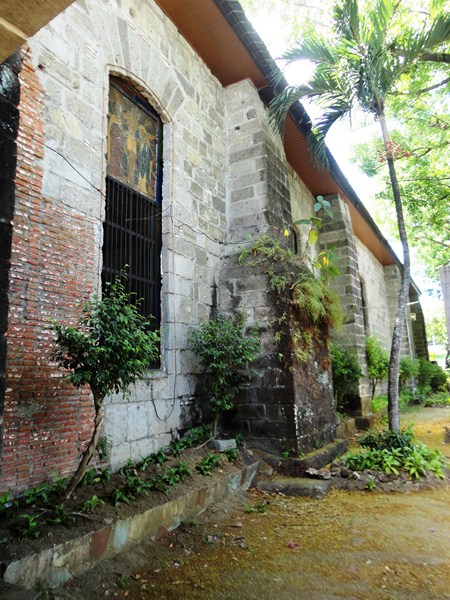
The side entrance

The side entrance

The present church was started in 1773 and completed in 1783 by Franciscan Fr. Alfonso de Fentañes with good local stone from the Tanay quarry. The six retablos were installed in 1786.

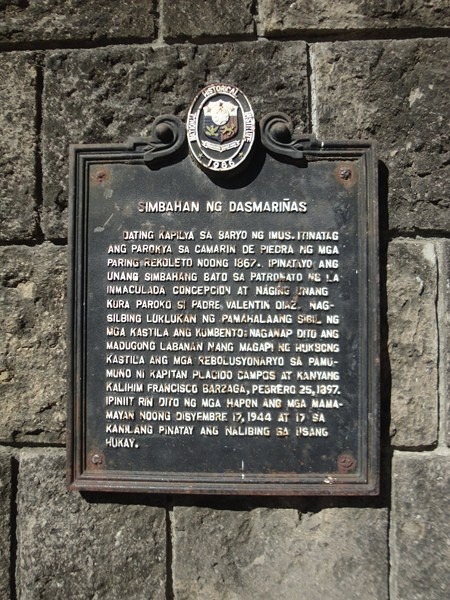
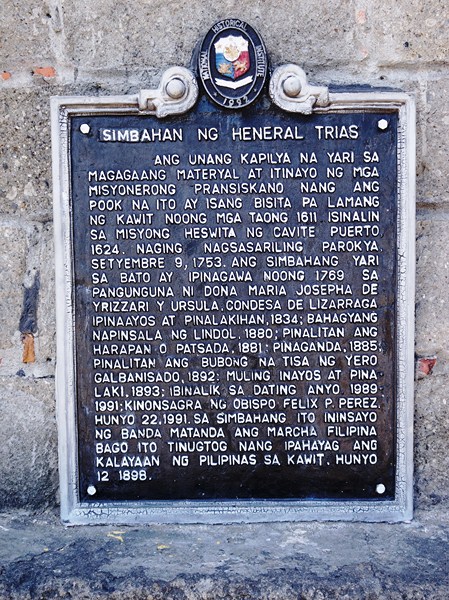
Philippine Historical Committee plaque

Philippine Historical Committee plaque

On July 31, 2001, it was declared as a National Cultural Treasure by the National Commission for Culture and the Arts and, near the end of 1999, was declared as one of the five Jubilee churches of the Diocese of Antipolo.

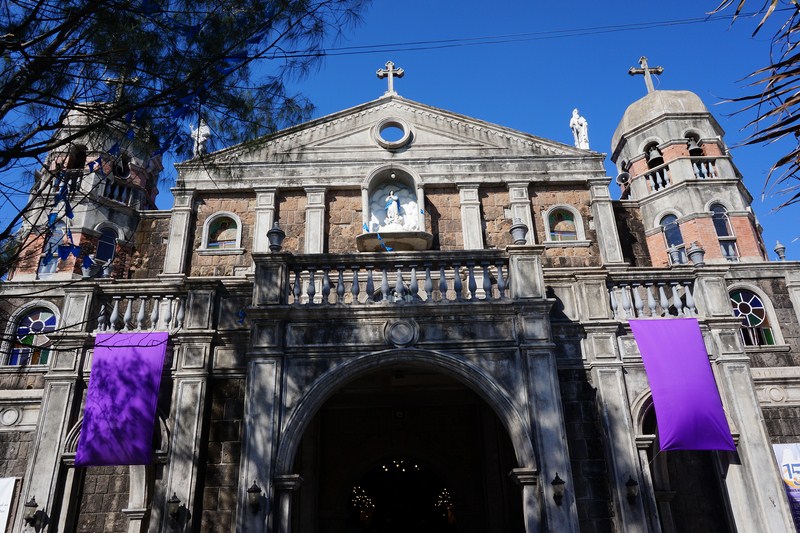
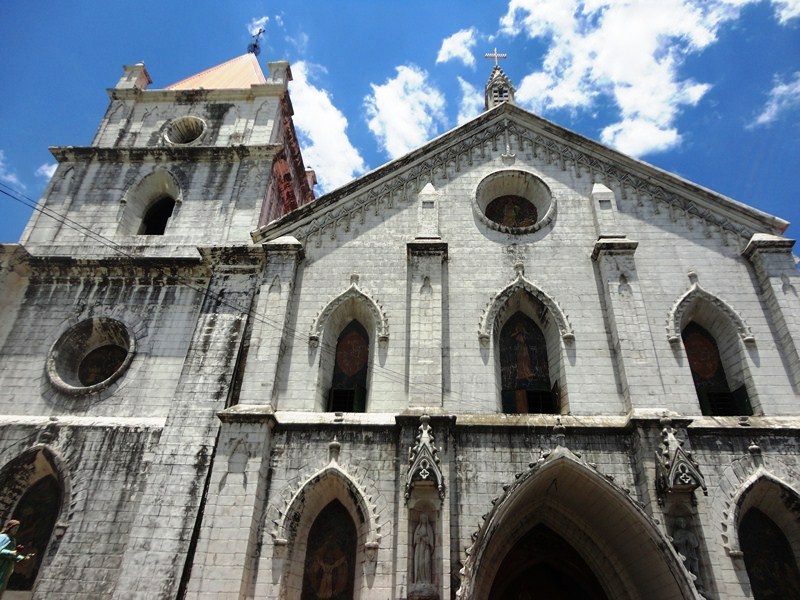
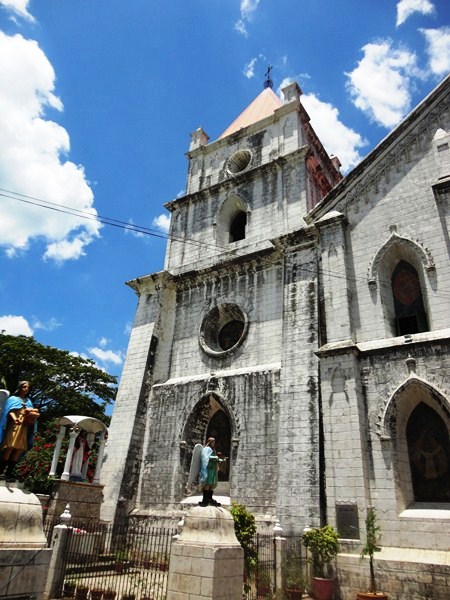
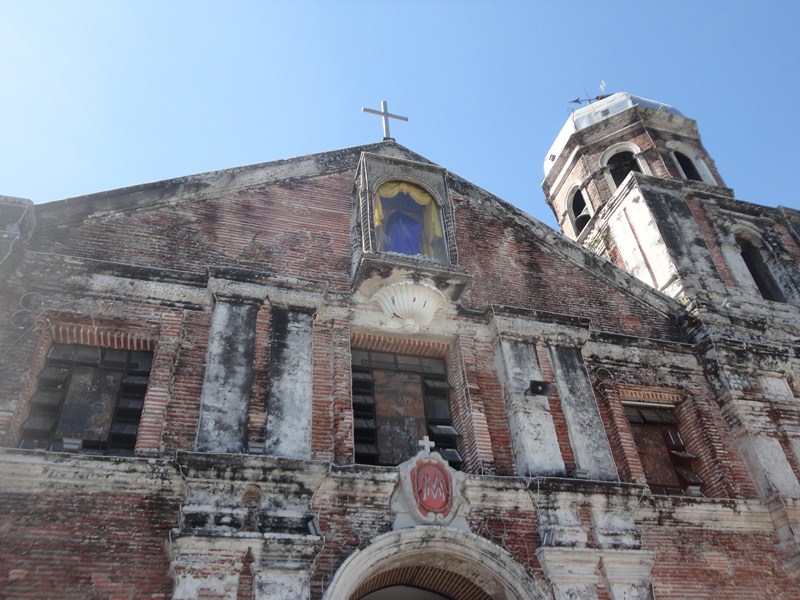
The church's Baroque-style facade

The church’s Early Renaissance-style facade

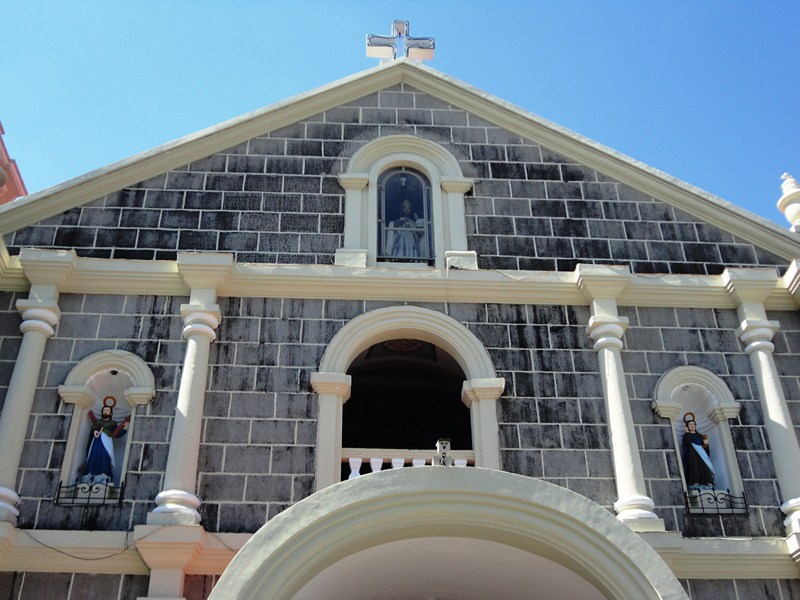
The church’s massive Early Renaissance, adobe-faced, three-level facade features superpositioned columns topped by carved pineapples, semicircular arched main entrance and windows and a triangular pediment with a statued niche framed by an order.

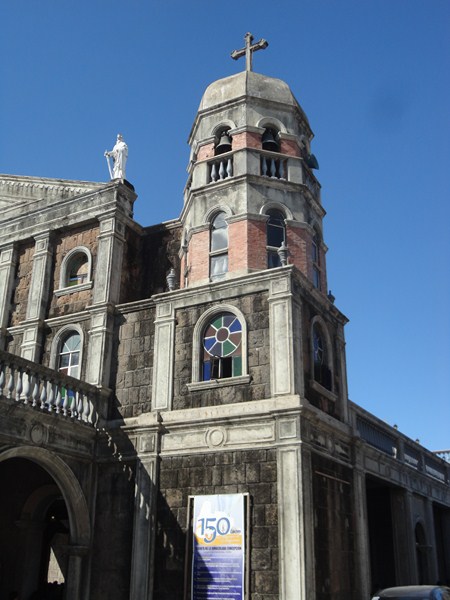
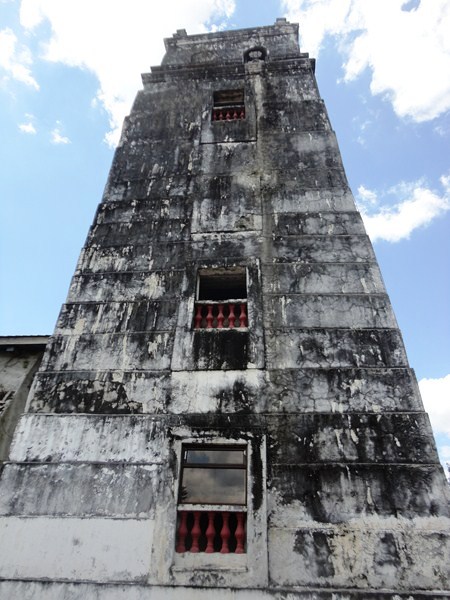
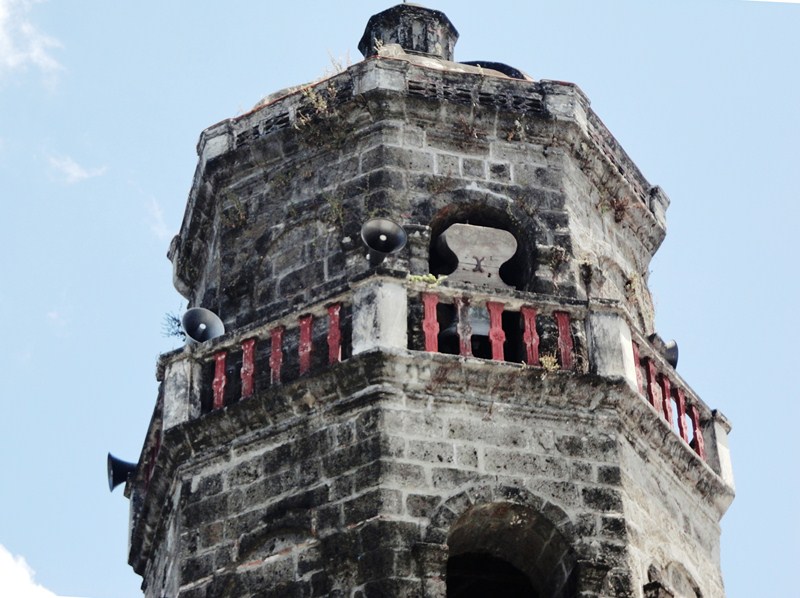
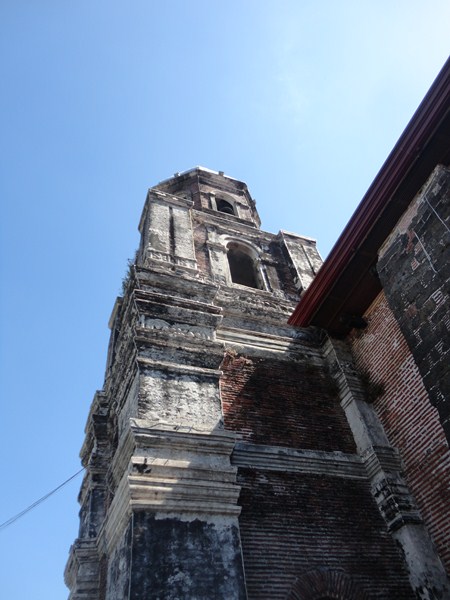
The octagonal bell tower

The octagonal bell tower

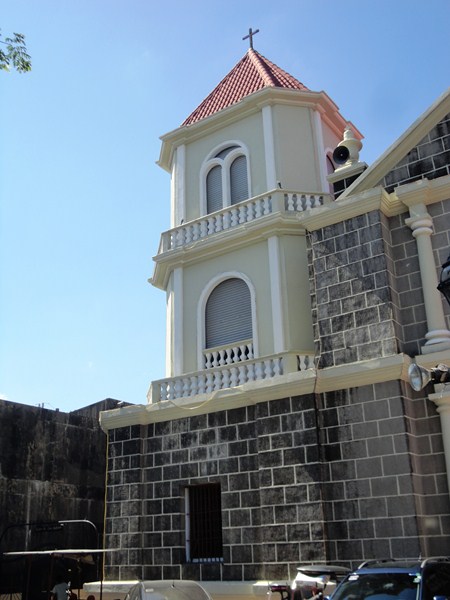
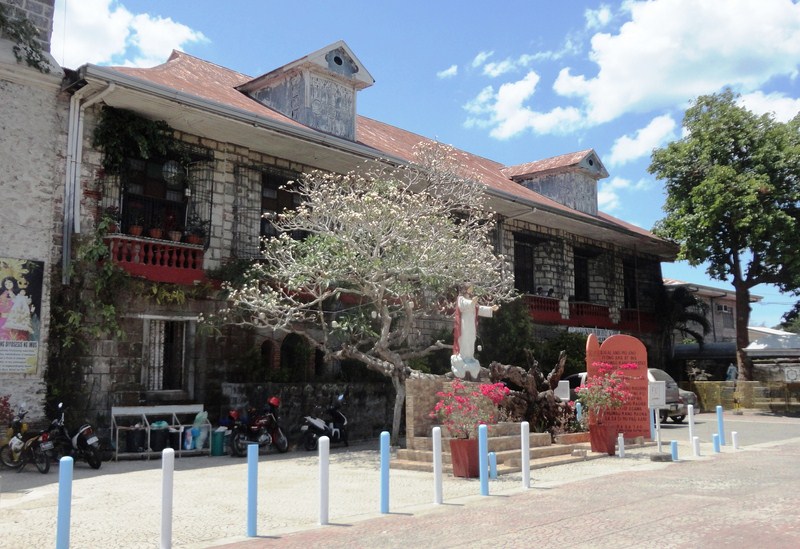
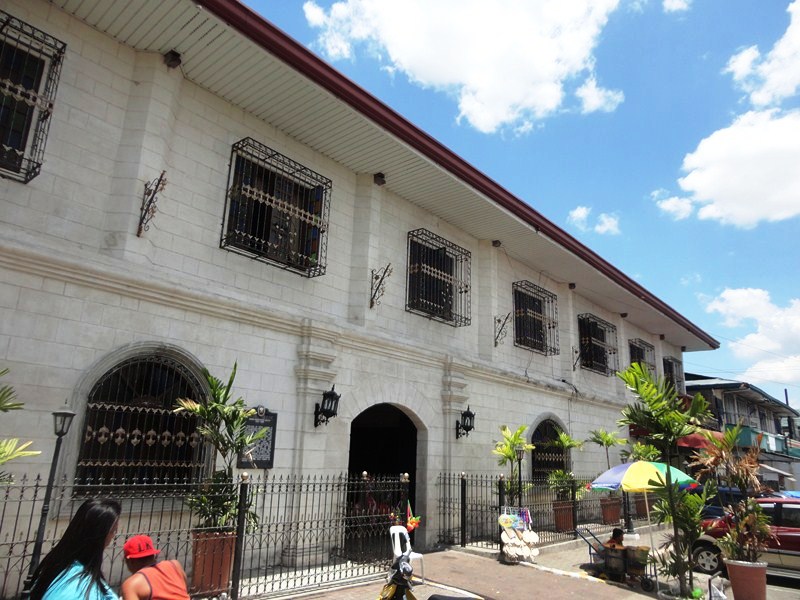
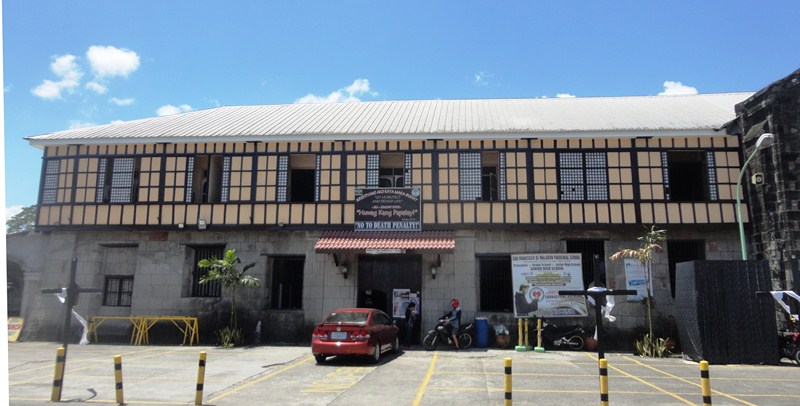
On its left is its four-storey octagonal bell tower with semicircular arched windows and, on its right, is the two-storey convent and courtyard. The convent, now housing the rectory, multi-purpose hall and San Ildefonso College, was started in 1640, repaired in 1773, finished in 1783 by Fr. Fentañes and was repaired and improved in 1851.

The convent

The convent

The convent interior

The convent interior

The courtyard

The courtyard

In front of the church is the “Pamana sa Tanay, Hane!!” a 16 ft. high sculpted from an old acacia tree. Designed by Yvette Beatrice Y Co, it was sculpted by Roel Lazarro, Frank B Gajo and sculptors from both Kalayaan and Paete, Laguna. It depicts the Virgin Mary appearing before St. Ildephonsus.

Pamana sa Tanay, Hane!!

Pamana sa Tanay, Hane!!

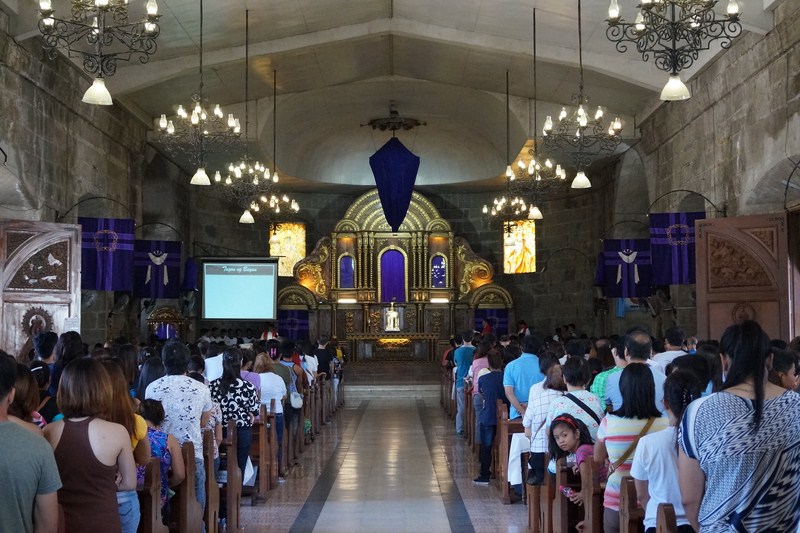
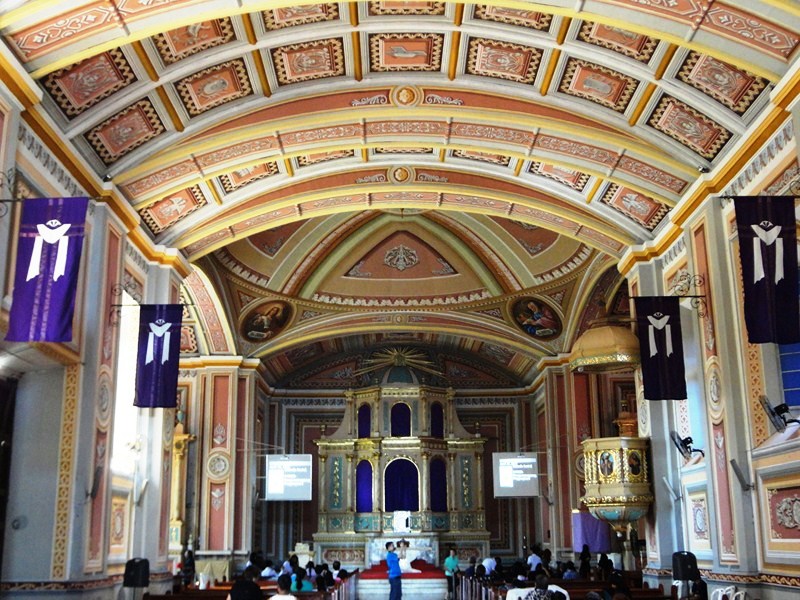
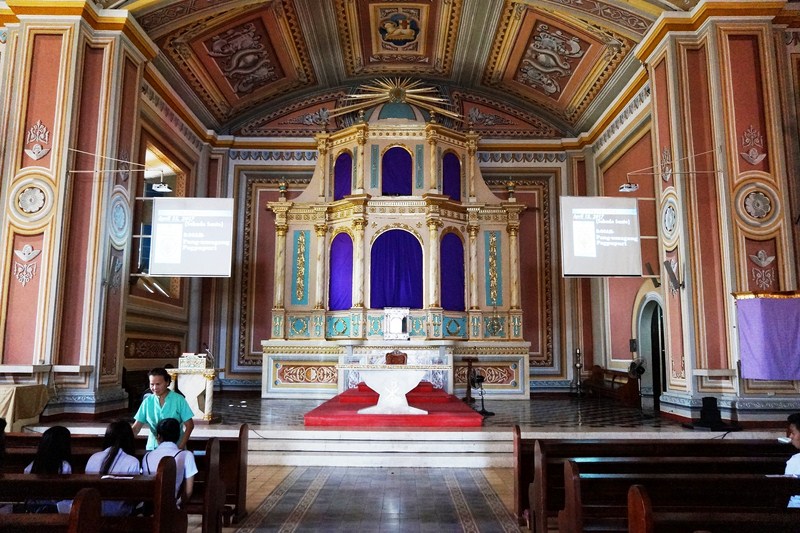
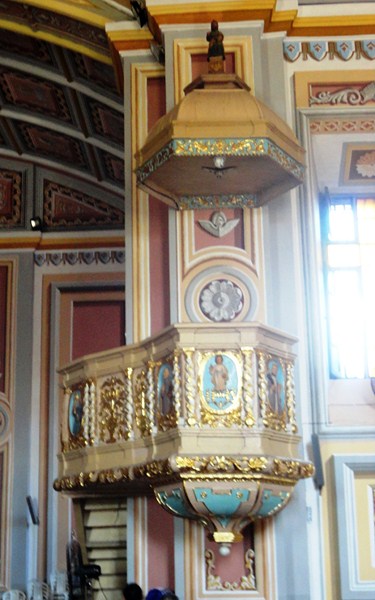
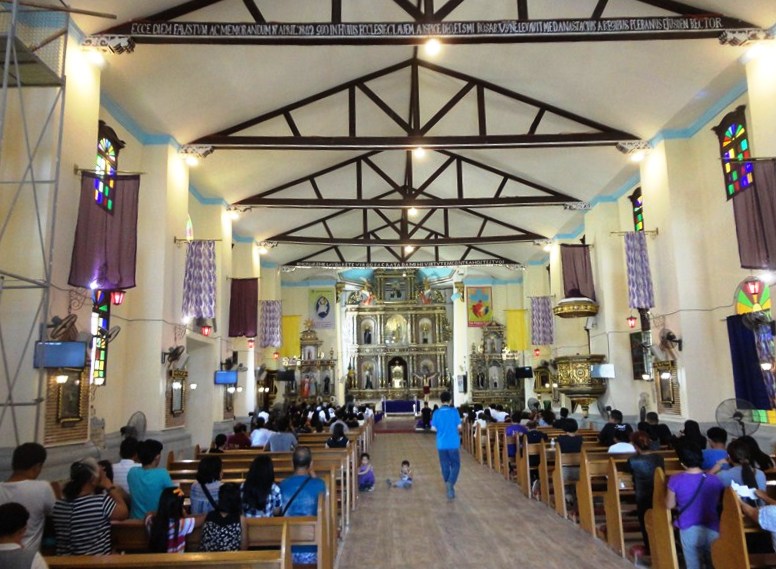
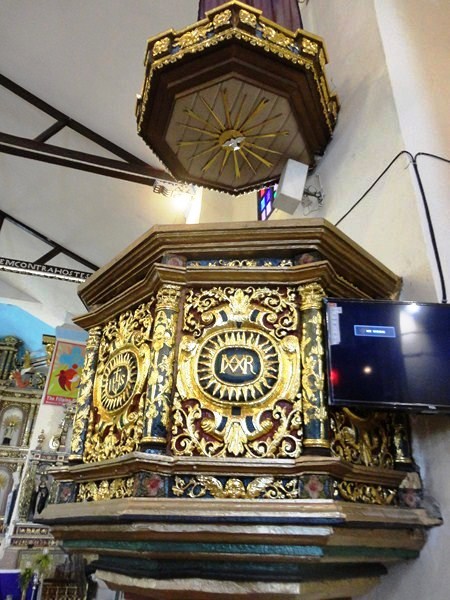
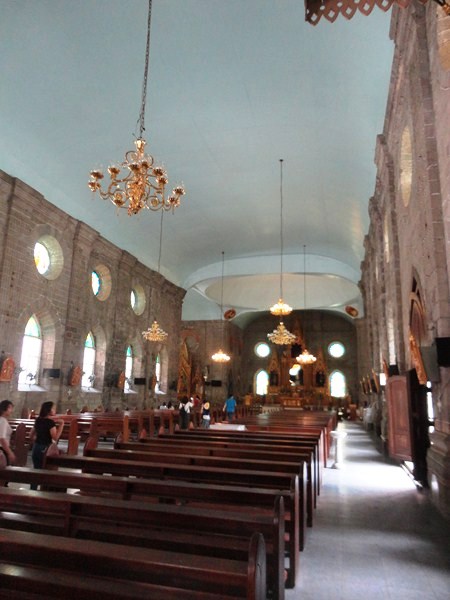
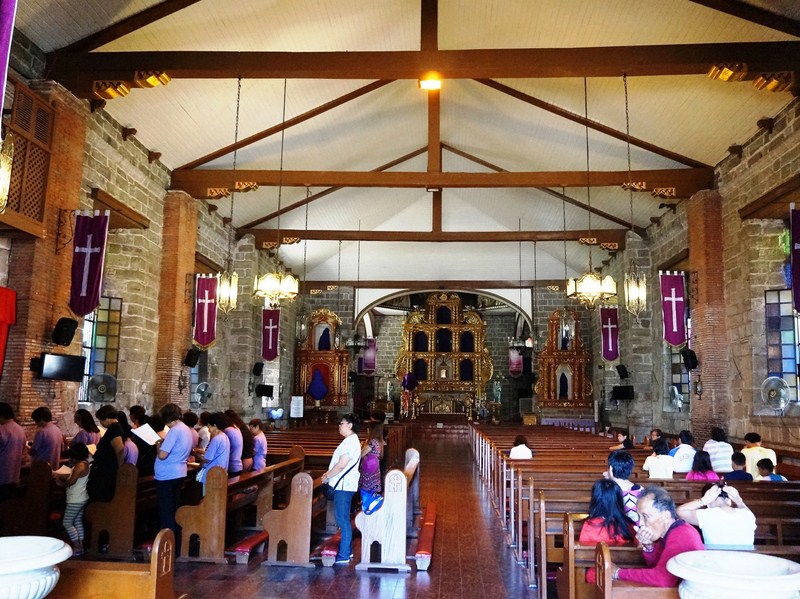
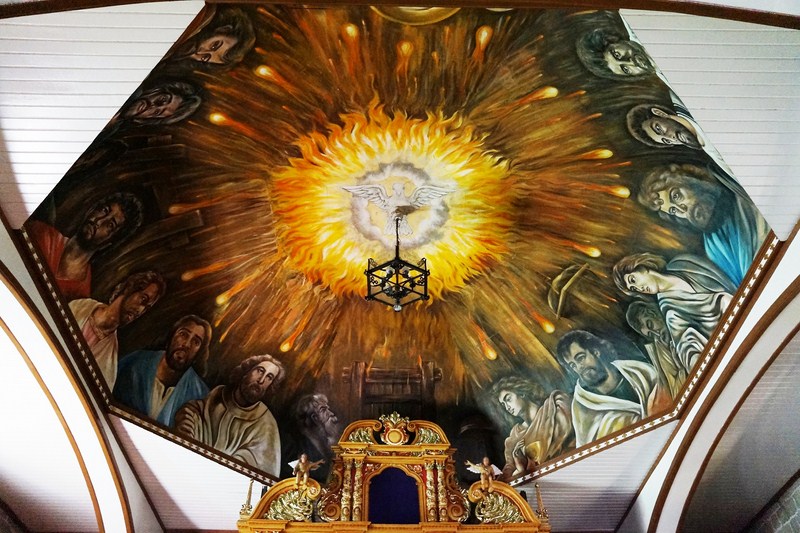
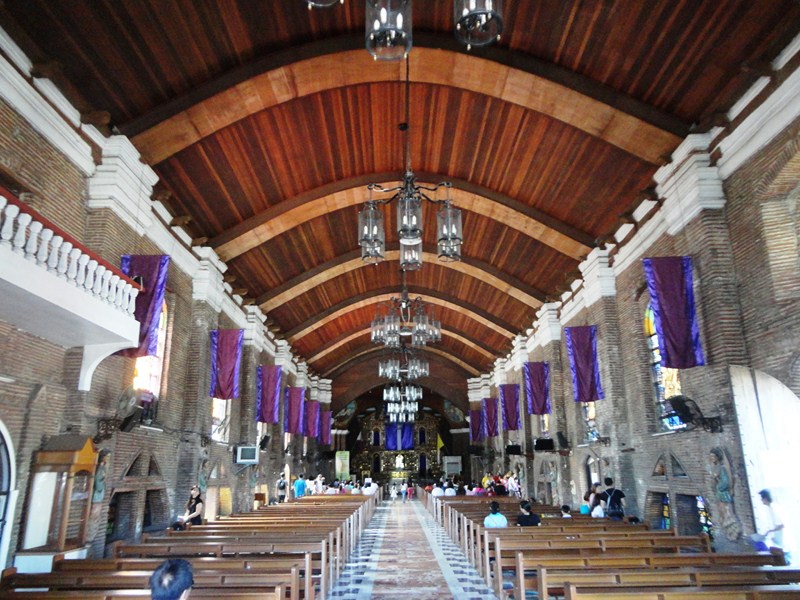
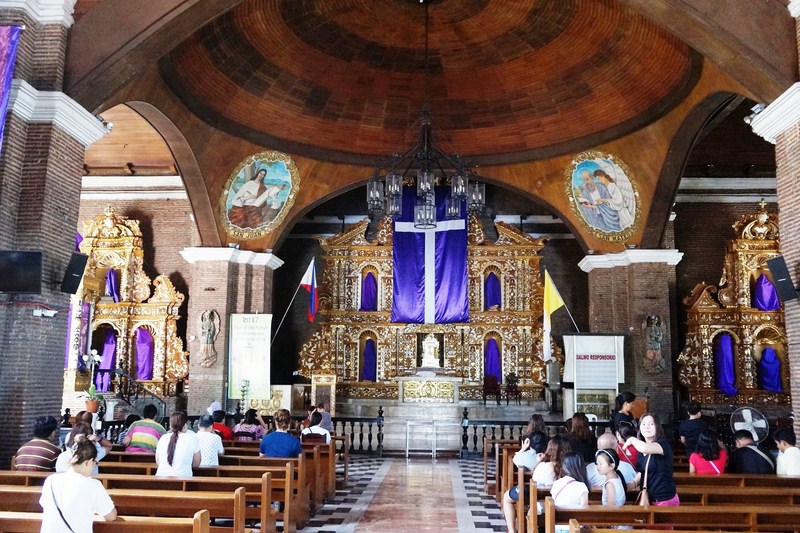
Inside is a long nave, an intricately decorated wooden pulpit and a silver-plated main altar.    A relic of a piece of bone of St. Ildephonsus, from Zamora, Spain (where the body of the patron saint lies), is housed in a monstrance.  It, was given by Rev. Fr. Felipe Pedraja on October 2006.

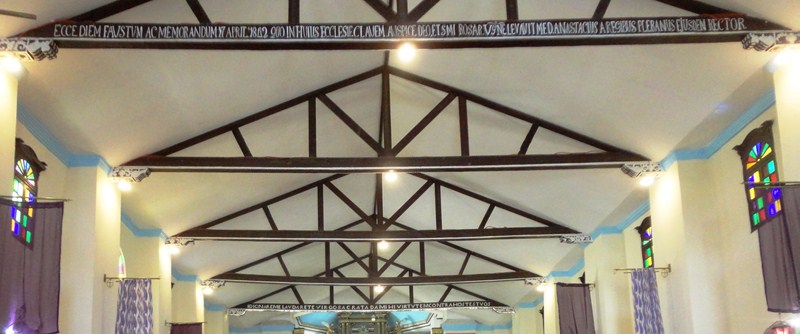
The church's interior

The church’s interior

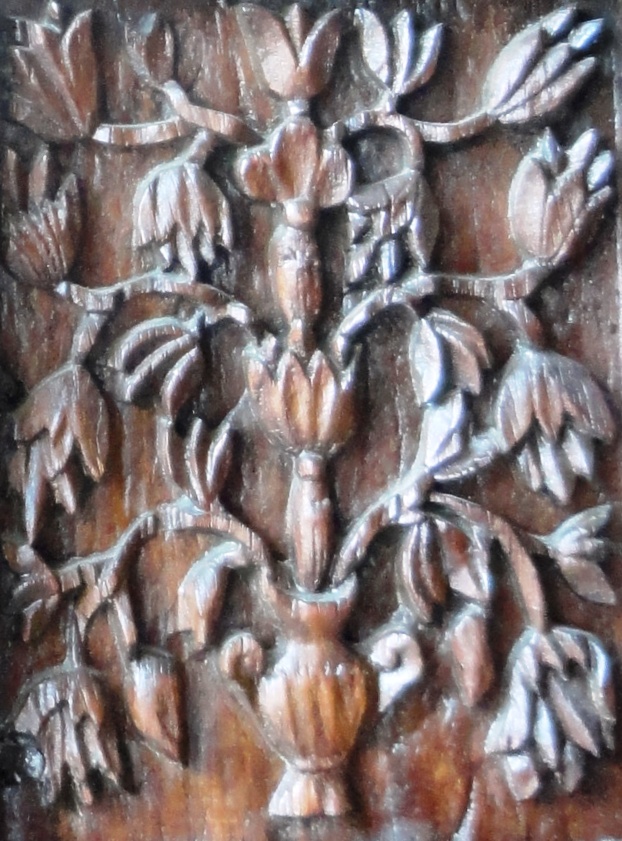
The intricately decorated wooden pulpit

The intricately decorated wooden pulpit

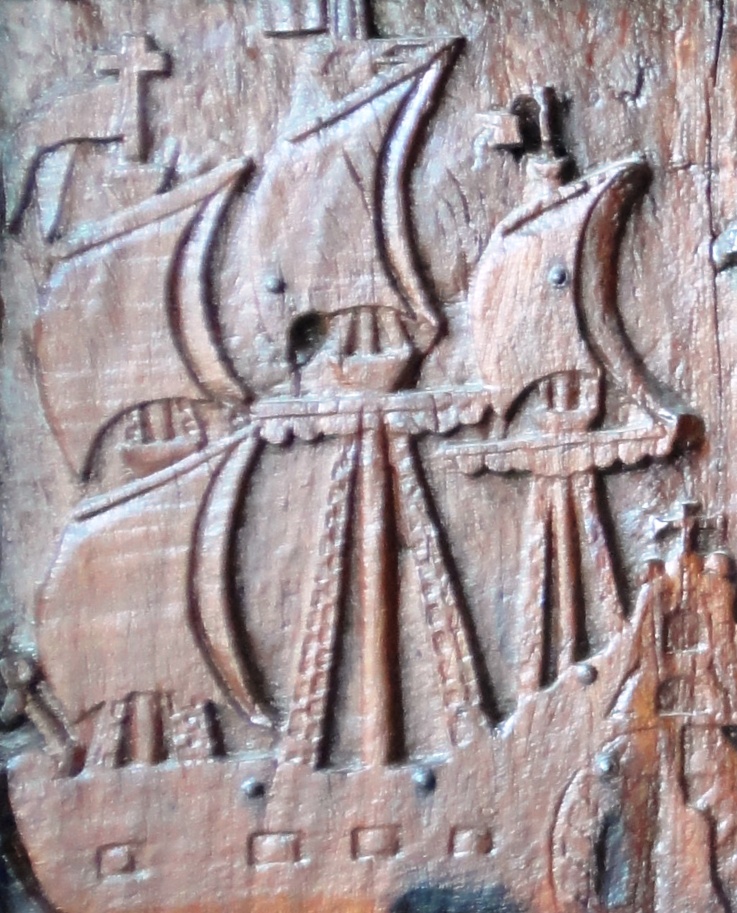
The celebrated 200-year old bas-reliefs of the 14 Stations of the Cross (Via Crucis), encased in large glass windows across each side of the the nave’s walls, are considered as one of the most beautiful in Asia. Indigenized from Western styles, they are believed to have been created by native Tanay artists.

Stations of the Cross

Stations of the Cross

The seventh station

The seventh station.  The soldier wearing sunglasses is fourth from left

The natives in the carvings have Malay features, with brown skin and squat figures. Native culture is distinctly depicted in the tambuli, made of carabao, and the bolo instead of the typical Roman sword. At the seventh station, one soldier even wears sunglasses.

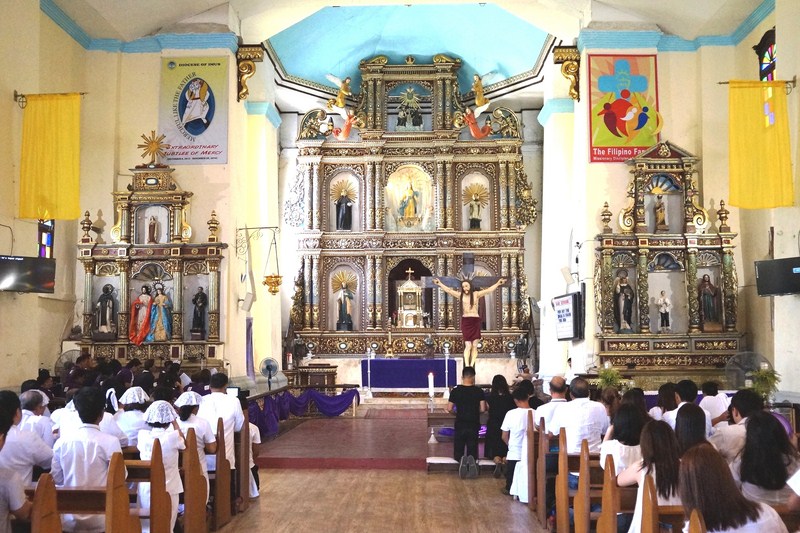
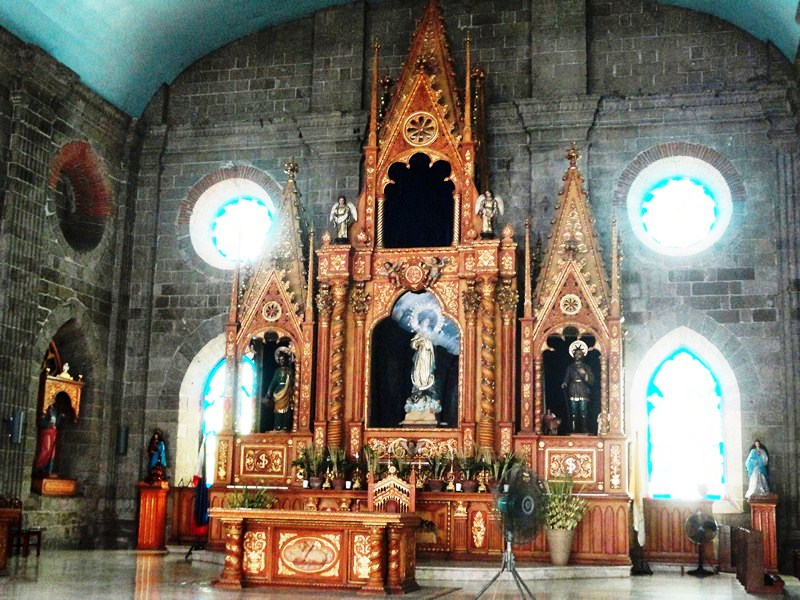
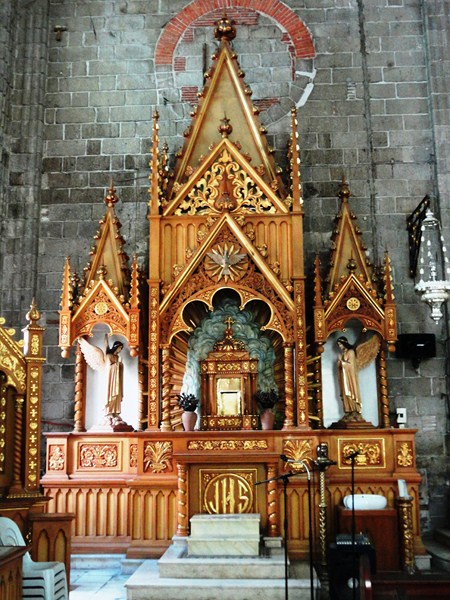
The main retablo

The main retablo

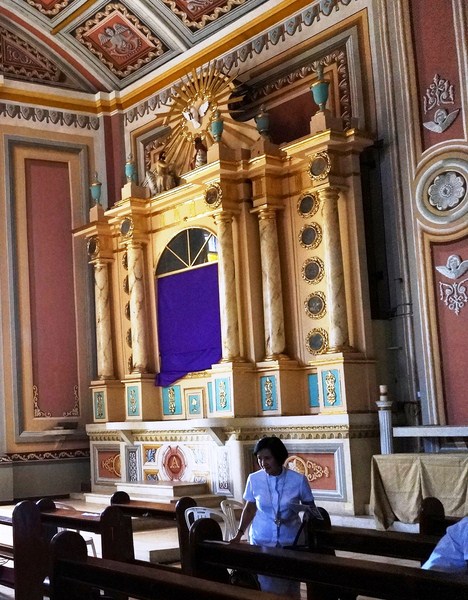
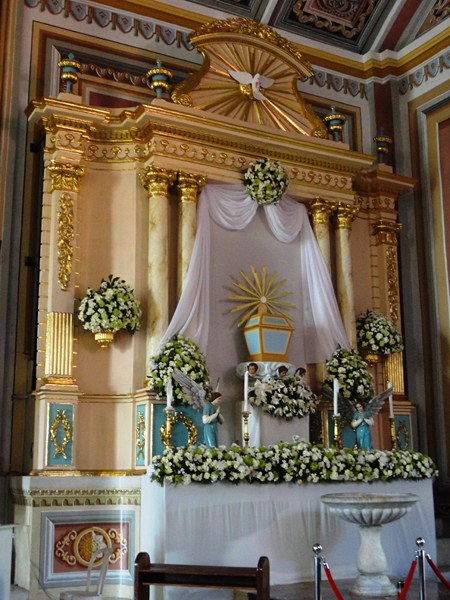
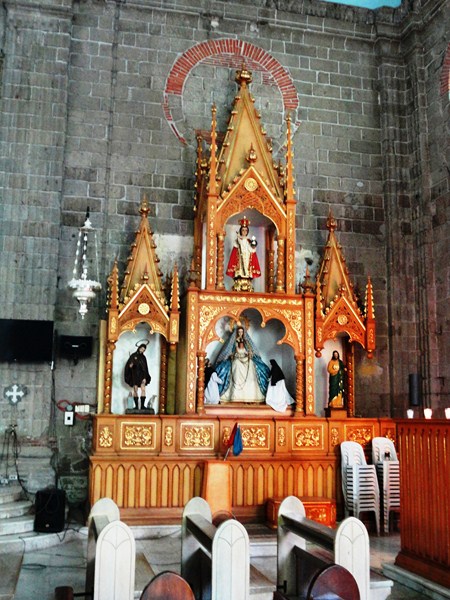
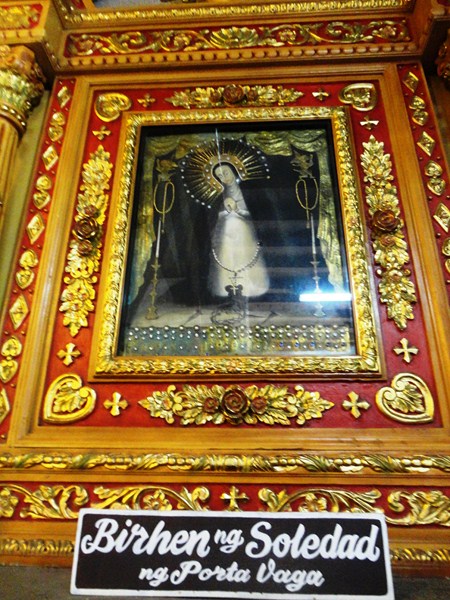
The five ornate retablos, with Rococo design, honor of Our Lady of Anguish (Nuestra Señora de las Angustias), the Immaculate Conception (La Purísima Concepción), Saint Joseph, Saint Peter of Alcantara and the Baptism of Jesus Christ.

Retablo dedicated to Our Lady of Anguish

Retablo dedicated to Our Lady of Anguish

Retablo dedicated to St. Joseph

Retablo dedicated to St. Joseph

Retablo dedicated to St. Peter of Alcantara

Retablo dedicated to St. Peter of Alcantara

Retablo dedicated to the Immaculate Conception

Retablo dedicated to the Immaculate Conception

Retablo dedicated to the Baptism of Jesus Christ

Retablo dedicated to the Baptism of Jesus Christ

Church of St. Ildephonsus of Toledo: M.H. Del Pilar St,   Brgy. Plaza Aldea, Tanay 1980, Rizal. Tel:  (02) 654 1015. Feast of St. Idelfonsus of Toledo: January 23.

How to Get There: Taytay is located 55.37 kms. from Manila and 43.7 kms. (a 1 hour 10 min. drive) from Antipolo City.
Tanay Tourism Office: G/F, New Tanay Municipal Hall, M. H. del Pilar St., Tanay, Rizal 1980.  Tel: (02) 7361059 and (02) 6551773 loc 212-213.  Mobile number: (0998) 988-1590. E-mail: tanaytourism11@gmail.com. Website: www.tanay.gov.ph.

Church of St. James the Greater (Santiago, Ilocos Sur)

Church of St. James the Greater

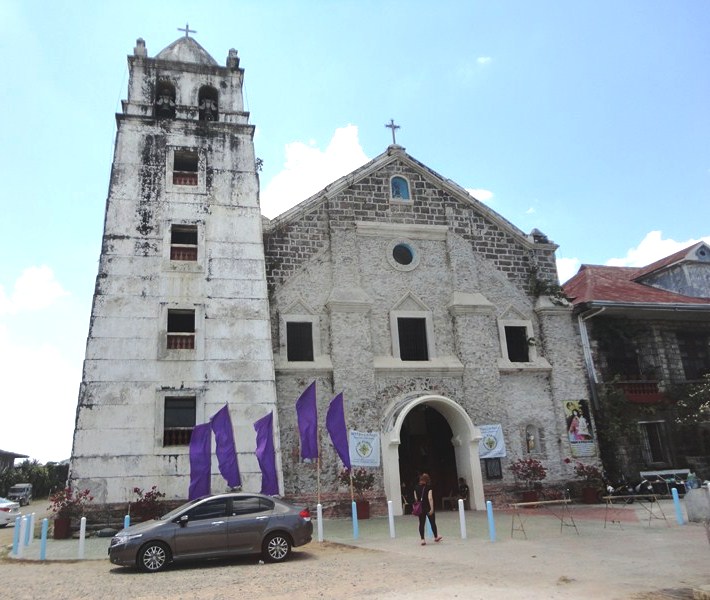
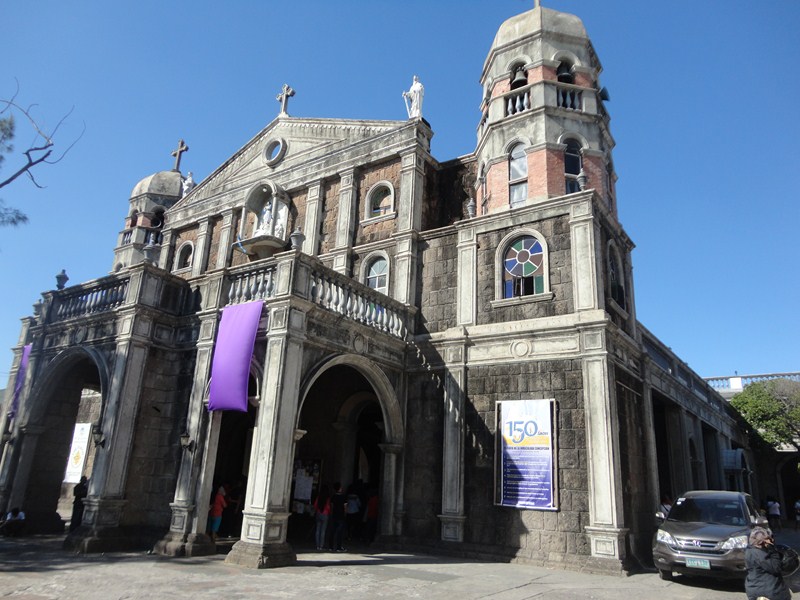
The town’s stone and brick church, built in the late 18th or early 19th century, is located on top of a hill reached by steps made of cut stones. It was burned by lightning in 1823, damaged by the July 18, 1880 earthquake, was repaired by Fr. Juan Martin in 1883 and the rotten harigues (wooden posts) replaced in 1887 by Fr. Pedro Ibanez.   In 1830, Fr. Manuel Foj enlarged the convent.

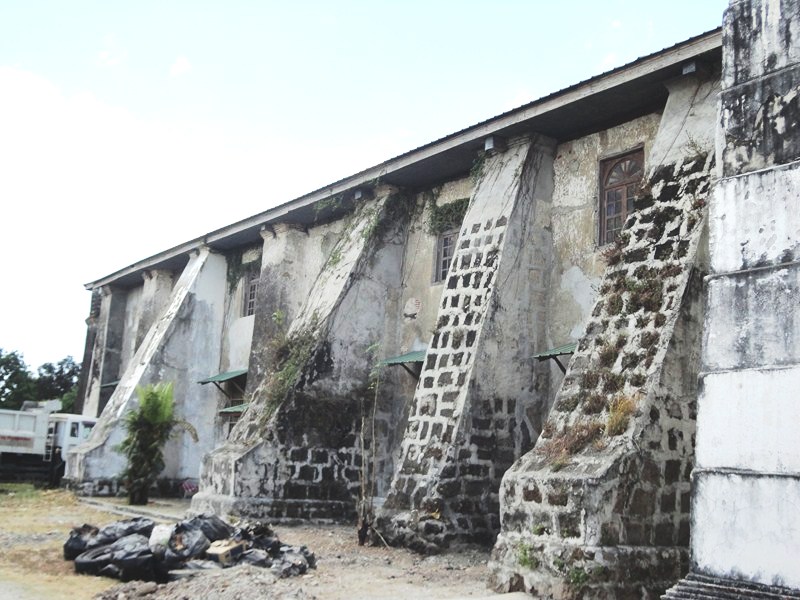
Buttresses at the left side o the church

Its simple, single level Baroque facade (blended with some Neo-Classic elements) has massive, circular buttresses, a recessed arched entrance flanked by two lateral, semicircular arched statued niches, a triangular pediment decorated with striped ornamentation (the only ones in the façade) at the edges and a statued niche, with its elliptical arch, on the upper central portion.

The right side of the church

Its unusually shaped piers were said to have been copied from the form of a cigar popular in the region. The heavy cement coating steals the appeal of the “folk” Baroque pilasters and hides the texture of the stone and brick.

The church interior

Church of St. James the Greater: Manila North Rd., Santiago 2707, Ilocos Norte. Feast of St. James the Greater: July 25.

How to Get There: Santiago is located 358.75 kms.  from Manila and 49.25 kms. south of Vigan City.
Church of Our Lady of the Assumption (Sta. Maria, Ilocos Sur)

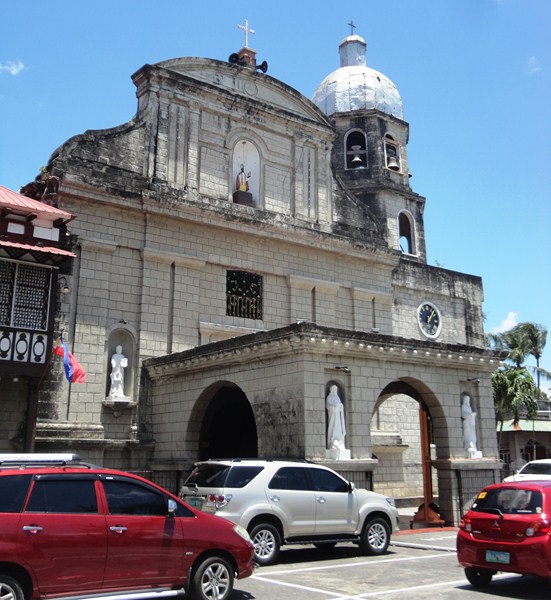
Santa Maria’s fortress-like, earthquake Baroque-style Church of Our Lady of the Assumption, together with the convent and separate bell tower, were built on roughly 1.25 hectares on a 19 m. (60 ft.) high hill surrounded by a 1.6 m. thick defensive retaining wall on all sides like a fortress, The wall is augmented by stone buttresses every 10 m..

Church of Our Lady of the Assumption

Church of Our Lady of the Assumption

The church is a National Historical Landmark (by virtue of Executive Order nos. 260 on August 1, 1973, 376 on January 14, 1974 and 1515 on June 11, 1978) and was also chosen as a UNESCO World Heritage Site on December 11, 1993 as part of the Baroque Churches of the Philippines, a collection of four Baroque Spanish-era churches.

NHI Plaque

NHI Plaque

It was probably built by Fr. Alejandro Peyrona before the close of the 18th century, totally burned by fire in 1822, reconstructed in 1824, restored in 1859 by Fr. Lorenzo Rodriguez and finished in 1889 by Fr. Juan Zallo.  During the revolution, the church was a rebel stronghold.

The grand stairway

The grand stairway

The church is 99 m. (325 ft.) long and 22.7 m. (74 ft.) wide and is approached by climbing a wide 85-step, 4-flight piedra china (granite) stairway, the first and second flight having 20 steps each, the third 22 and the fourth 21 plus two additional steps. The gently rising stairway, with three landings, tapers from 13 m, wide at street level to 1.5 m. narrower at the top. It has a sweeping view of the lower plains and the town of Santa Maria.

View of Sta. Maria town

View of Sta. Maria town

The simple, solid brick façade, with its three windows and one blind niche, has a recessed arched entrance framed by a pair of exaggerated rectangular pilasters, dividing the whole façade into three well-defined planes, and thick, massive walls with delicately carved side entrances (with few openings) and heavy circular buttresses or corner drums that end up in decorative urn-like finials. A stringcourse extends from one corner drum to the other across the façade, .

Side entrance

Side entrance

The eastern and western side of the outer walls are reinforced by 13 huge quadrangular buttresses, typical of Earthquake Baroque architecture.

Huge quadrangular buttresses typical of Earthquake Baroque architecture

Huge quadrangular buttresses typical of Earthquake Baroque architecture

The first buttress from the front is adorned by a huge bas relief, visible as one ascends the front stairway, retelling how the statue of Our Lady of Assumption was found on top of a tree.

According to tradition, the statue was washed up on the beach, undamaged from the wreck of a Spanish galleon.  It was installed on the original ermita (chapel) built at the foot of the mountain.  It would periodically disappear, only to be subsequently found on the same guava tree on top of the knoll where the church now stands.

Huge relief retelling how the statue of Our Lady of Assumption was found on top of a tree

Huge relief retelling how the statue of Our Lady of Assumption was found on top of a tree

The middle buttress on the eastern wall (back) is built like a staircase for easy maintenance of the roof, back when thatched roof was the norm in Philippine churches (now lighter corrugated galvanised iron roofing is used).

Middle buttress built like a staircase for easy maintenance of the roof

Middle buttress built like a staircase for easy maintenance of the roof

The main entrance and the blind niche on the curvilinear,  cock comb-shaped open pediment (topped by a small cupola) have circular arched forms.  Lateral ones have segmental pediments.

The church interior

The church interior

Inside is a long single nave with 9 pairs of Ionic pilasters dividing the interior elevation into 8 bays. Wind chimes hang from the lamps inside and the huge altar features some fine old tiles. A series of smaller altars, 3 on each side of the apse, flank the main altar.  There’s also a pulpit and a lectern. The church houses the statue of the one-meter tall, dark Virgin of Santa Maria.

The main altar

The main altar

The church pulpit

The church pulpit

The celebrated, 4-storey, squat leaning bell tower, consisting of stacked octagonal horizontal cross-sections of decreasing diameter (typical of Earthquake Baroque church towers), stands separately near the middle of the nave. Covered by a dome with balustrade that is capped by a cupola (with a cross on top), this Chinese pagoda-like tower is decorated with single pilasters, finials and blind and real semicircular arched fenestrations.  A clock, on the third level, faces the stairway for churchgoers to see.

The 4-storey, octagonal bell tower

The 4-storey, octagonal bell tower

The tower was built in 1810, during the renovation of the church, and furnished with a bell the following year. After the bell tower was remodeled in 1863, its foundation gradually settled down and, today, the imposing structure is slightly leaning or tilting.

The currently roofless onvent

The currently roofless onvent

Partly blocking the frontal view of the façade of the church and accessible from the church by an elevated stone walkway (underneath which is a gate that leads to the back courtyard) is the convent. Damaged during the 1880 earthquake, it was rebuilt by Fr. Benigno Fernandez and greatly renovated in 1895.  An 8 m. high stone fence, erected in 1859 by Fr. Rodriguez, surrounds the buildings.

Part of the 8 m. high wall

Part of the 8 m. high wall

From the back courtyard, another wide stairway, similar to the front but on the opposite side (also built by Fr. Rodriguez in 1859), leads down to a brick walkway that leads to an old abandoned circular camposanto (cemetery) at the foot of the hill now overwhelmed by exuberant foliage. Within the brick fence of the cemetery are the ruins of a former old brick chapel (ermita) and old graveyards.

The back stairway

The back stairway

Address: Santa Maria – Burgos Rd,, 2705 Santa Maria, Ilocos Sur. Tel: (075) 732-5568. Feast of Our Lady of the Assumption: August 15.

How to Get There: Sta. Maria is located 369.75 kms. from Manila and 38.25 kms. south of Vigan City.
Church of St. William of Aquitaine (Magsingal, Ilocos Sur)

Church of St. William of Aquitaine

Church of St. William of Aquitaine

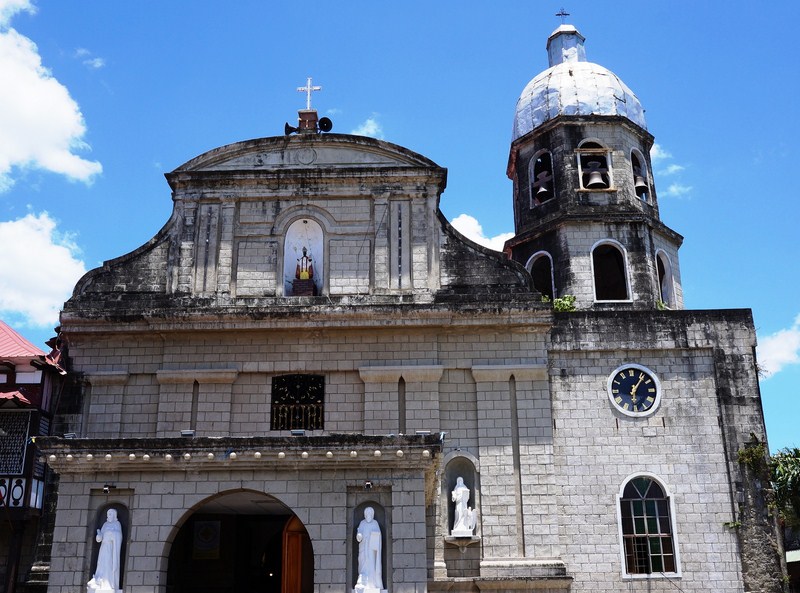
Magsingal‘s 3-storey, cream and white Church of St. William of Aquitaine, the town’s second, was built in 1827, restored in 1848 and again by Fr. Jose Vasquez.  Its Neo-Classical facade, built within a light wall frame and supported by steep and imposing buttresses (like other Ilocos churches), is divided into 3 levels.

The church complex

The church complex

The first level has a semicircular arched portal flanked by two statued niches and topped by triangular canopies between paired and single Tuscan columns.  A rectangular piece, atop the main entrance’s keystone, contains the Augustinian symbol.

The Neo-Classical facade

The Neo-Classical facade

The second level, a repeat of the first, has a large semicircular window at the center flanked by two windows with triangular pediments, with all 3 having baluster shafts. The third level has a single, semicircular niche (with the statue of St. William the Hermit) flanked by two occoli (small circular windows).  The elaborate curvilinear pediment ends up in finials.  Its tympanum also has a circular window

The adjoining convent

The adjoining convent

The church is linked to the 2-storey convent/school by a capiz window-lined upper corridor mounted over two arches.

The octagonal bell tower

The octagonal bell tower

The nearby 30-m. high, 4-level octagonal brick bell tower, with blind and real semicircular arched fenestration of various sizes, was allegedly built in 1692 and finished by Fr. Pedro Berger (parish priest from 1824 to 1829).

The church interior

The church interior

On July 31, 2001, it was one of the Philippine colonial churches declared by the National Museum as a National Cultural Treasure and the National Commission for Culture and the Arts (NCCA) had identified and selected it as one of 26 Spanish Colonial Era churches to be under its conservation program.

Side altar

Side altar

Inside are the most important examples of Baroque-influenced art in the Ilocos notably the ornate Baroque reredos made of molave (which contain no nails), a choir loft, molave columns, a well-preserved retablo (a total seascape) and an incomparable pulpit.

The altar retablo

The altar retablo. The statues of the mermaids are on the sides of the topmost niche 

Atop the topmost niche (housing the statue of St. William) of the retablo are two nude mermaids.  It is said that the sculptor, Nepomuceno Tolentino, a Magsingal native, used his pregnant wife as a model for the pregnant mermaids.The  whole retablo is topped by a clam shell and the ceiling of the niches are also in clam shell form. On the sides are Classically designed seahorses, above which are big waves (with moderate forms of starfishes on their hold) accented with smaller waves.

The altar

The altar

The richly-carved main altar features Salomonic columns adorned with plant motifs. The pulpit has a statue of a boy with a tambuli or native horn, both made by a certain Pablo Tamayo, a talented Magsingal fisherman. He also designed the choir loft.

The richly carved pulpit

The richly carved pulpit

Commencing from the church and linking various streets are the 14 stone shrines of the Via Crusis (Way of the Cross).

Stairway leading up to the pulpit.

Stairway leading up to the pulpit. On top of the canopy is the statue of the boy with a tambuli (native horn) 

Address: Manila North Road, 2730 Magsingal, Ilocos Sur.  Tel: (077) 726-3565. Feast of St. William of Aquitaine: February 10.

How to Get There: Magsingal is located 419.2 kms. from Manila and 11.2 kms. north of Vigan City.
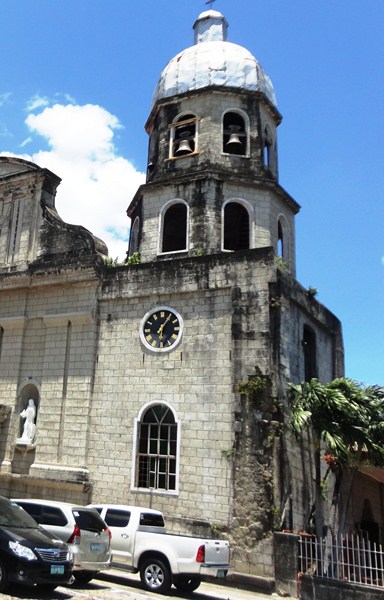
 

Church of St. Augustine (Bantay, Ilocos Sur)

Bantay‘s restored 18th century Church of St. Augustine, also known as the Shrine of Our Lady of Charity, was first built from 1691 to 1692 by Fr. Alonso Cortes.  Evacuees took refuge here during the Basi Revolt of 1807. It was rebuilt and restored by Fr. Eduardo Navarro (parish priest from 1870 to 1875) and was finished by Fr. Lizardo Villanueva in 1892.

Church of St. Augustine

Church of St. Augustine

Fr.  Alfredo Versoza patched the roof with galvanized iron.  Damaged during World War II, the church was repaired in 1950 and the interior decorated by Fr. Jose Brillantes. This 45.09 m. long and 11.69 m. wide brick church is flanked by massive rectangular twin towers.

The church complex. The separate bell tower is on the far left

The church complex. The separate bell tower is on the far left

Its facade has Baroque (decorative volutes around the second level windows), Neo-Gothic (pointed lancet-like arch flanked by blind pointed arcading at recessed main entrance) and pseudo-Romanesque (central window’s shaft with balustrade) features.

The church facade

The church facade

The facade’s only decorated parts are broken curves along the top of the triangular pediment and the inverted traceries below the eaves. The imposing church once was in the shape of a cross but the two wings that formed the arms of the cross were damaged during the Second World War.

The church interior

The church interior

The eerie but romantic “Chapel by the Ruins,” an open air chapel at the remains of the right wing of the original structure, was said to have been the place where priests were imprisoned by Diego Silang during the 1763 revolt against the Spaniards.

The Chapel By The Ruins

The Chapel by the Ruins

Its separate 3-storey hilltop and slightly crumbling square bell tower, which served as a lookout for approaching enemies, could be climbed for a fine view of an old nearby cemetery and the surrounding area.

The separate bell tower

The separate bell tower

Inside the church is the miraculous and greatly venerated image of Our Lady of Charity (Nuestra Señora de La Caridad), the oldest Marian image in the Ilocos.  Legend has it that it was found my some local fishermen in a wooden box which was floating on Bantagay River. The 50-inch tall image is made of wood, except for the ivory face and hands (its ivory parts were stolen in 1928). On January 13, 1956, the image was officially crowned by Egidio Vagnozi, Apostolic Nuncio to the Philippines.

Historical plaque

Historical plaque

Address: Manila-North Road, Zone 5, 2727 Bantay, Ilocos Sur. Tel. (075) 722-4072. Bell Tower open 6 AM – 6 PM. Feast of St. Augustine: May 5. Feast of Our Lady of Charity: Second Sunday of January.
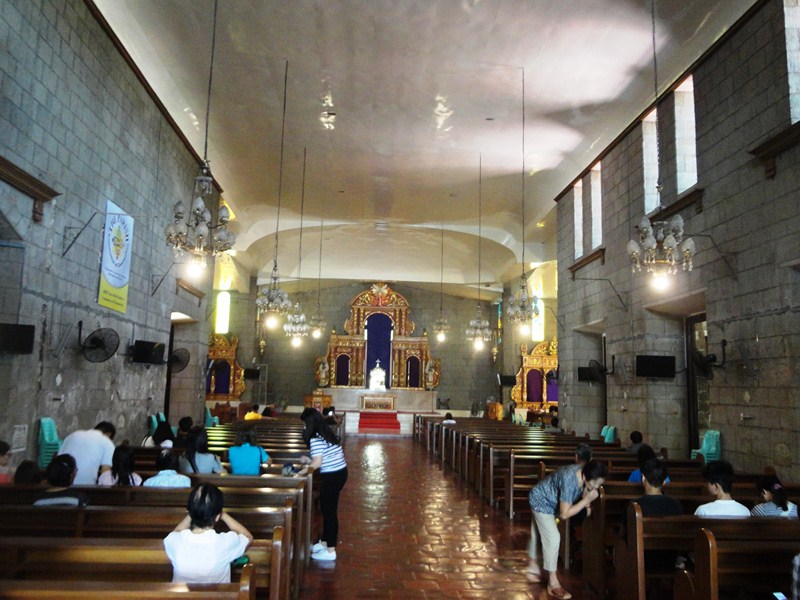
How to Get There: Bantay is located 406.17 kms. from Manila and 1.83 kms. north of Vigan City.
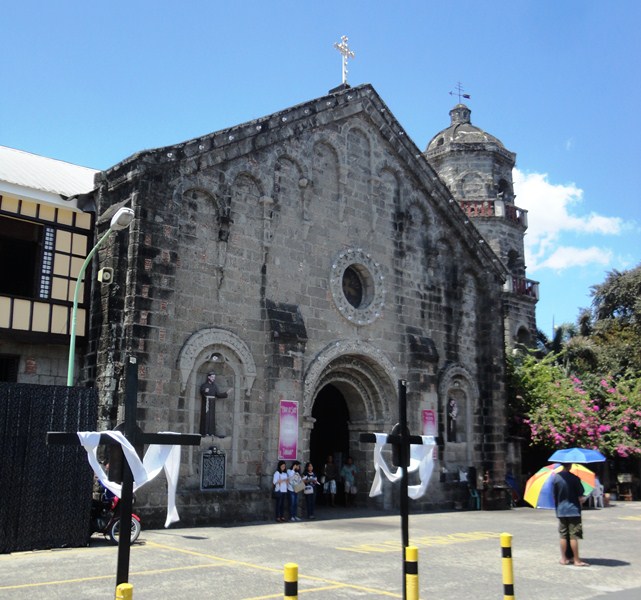
Old Quirino Bridge (Bantay, Ilocos Sur)

The old Quirino Bridge

The old Quirino Bridge

The scenic Old Quirino Bridge, also called Banaoang Bridge, is an old Parker-type (camelback) bridge named after the late former Philippine President Elpidio Quirino, who hails from Vigan. Spread across the Abra River, it majestically connects the two beautiful, transcending rocky mountain slopes of the town of Santa and the tail end of Bantay, both in Ilocos Sur.

The mighty Abra River

The mighty Abra River

Considered as one of the country’s most beautiful bridges, this arch bridge, next to the Vigan Gap,  is considered an iconic symbol of Ilocos Sur. Aside from its magnificent views, it is also widely praised for its marvelous engineering and grand architectural design. The approach to the bridge is as scenic as the bridge itself.

Quirino Bridge (5)

The original bridge trusses

At the height of Super Typhoon Feria (which devastated the province from  July 4-6, 2001), one of its steel spans was damaged and washed away.  The old, 4-span bridge was reconstructed, with a different third quarter K-truss portion, and is still presently passable.  However, on December 2007, Chinese engineers and a local construction company started to build a new, 456 m.-long replacement, a stone’s throw (350 m.) from the original bridge.

The replacement span

The replacement span

The new Quirino Bridge is a component of the Japan-funded Urgent Bridges Construction Project for Rural Development which plans to replace old bridges with new bridges, on national roads that lead to urban centers all over the country. On December 30, 2009, it was officially opened by then-President Gloria Macapagal Arroyo. The old truss type bridge, currently preserved as a tourist attraction, doubles up as a backup in case the new main bridge is damaged by typhoons.

The new Quirino Bridge

The new Quirino Bridge

Old Quirino Bridge: Vigan Gap, Bantay, Ilocos Sur

Church of St. Catherine of Alexandria, Virgin and Martyr (Santa, Ilocos Sur)

Church of St. Catherine, Virgin and Martyr

Church of St. Catherine, Virgin and Martyr

This interesting and picturesque church is situated near the sea, one kilometer off the highway.  It was first built by Fr. Pedro Torrices from 1849-1855 and was finished by Father Luis Lagar in 1875. In 1886, Fr. Jose Rodriguez Prada restored the church and built a belfry.  A convent, built by Fr. Rafael Redondo, was eventually destroyed.

Church of St. Catherine, Virgin and Martyr (3)Its one-storey Neo-Baroque facade has well emphasized super-positioned coupled piers;   a horizontal string cornice designed with block modillon and a undulating Baroque-style triangular pediment.  The three-centered depressed arch main entrance, flanked by semicircular arched windows, has jambs bordered by protruding blocks of stone.  A circular window,  on the choir loft, has lace-like carvings. The bell tower on the right is a new construction.

Church of St. Catherine, Virgin and Martyr (4)

Address. National Highway, Santa, Ilocos Sur. Tel: (077) 725 5033. Feast of St. Catherine, Virgin and Martyr: November 25.

How to Get There: Santa is located 366.8 kms. from Manila and 41.2 kms. south of Vigan City.

Sultan Omar Ali Saifuddien Mosque (Bandar Seri Begawan, Brunei)

Sultan Omar Ali Saifuddien Mosque

Sultan Omar Ali Saifuddien Mosque

The Sultan Omar Ali Saifuddien Mosque, often considered as one of the most beautiful Islamic mosques in the Asia Pacific is, aside from being a place of worship (Brunei’s first national mosque) for the Muslim community and solemnization ceremony site for Muslim weddings, a major historical site and a famous tourist attraction of Brunei.

sultan-omar-ali-saifuddien-mosque-32

A side entrance

An example of modern Islamic architecture named after Omar Ali Saifuddien III, the 28th Sultan of Brunei (the current sultan’s late father) who also initiated its construction, the mosque serves as a symbol of the Islamic faith in Brunei and, being the tallest structure in Bandar Seri Begawan, dominates the skyline of the city.

sultan-omar-ali-saifuddien-mosque-56

Sitting on a 5-acre lot, the building was started on February 4, 1954 and inaugurated on September 26, 1958. The mosque is 68.6 m. (225 ft. long), 26.22 m. (86 ft.) wide, 52 m. (171 ft., it can be seen from virtually anywhere in Bandar Seri Begawan) high and has a capacity of about 3,000.

sultan-omar-ali-saifuddien-mosque-15

Pool at the grandiose wudhu (ablution area)

The mosque unites Mughal architecture and Malay styles and was designed by the Italian architect and sculptor Cavaliere Rudolfo Nolli (with architectural plans prepared by Booty and Edwards Chartered Architects), probably his last commission (he died in 1963). Construction work was done by Chinese and Malay engineers and total cost of construction was between $7.7 and $9.2 million.

The Brunei River

The Brunei River

Built in an artificial lagoon on the banks of the Brunei River at Kampong Ayer– the “village in the water,” the mosque has marble minarets and golden domes supported by walls of Italian marble (which also forms the mosque’s columns, arches and towers), a courtyard and is surrounded by a mini water fountain, a large number of treesfloral gardens.and benches for congregants and visitors to rest their weary feet.

Mini water fountain

Mini water fountain

Located right outside the mosque are wudhu (ablution areas) for men and women.The musalla (prayer hall) can be accessed through  the main entrance, which is elaborately decorated with verses from the Quran, as well as side entrances. The separate prayer area for women is located towards the left side of the entrance and up a spiral staircase.

The winding rope-shaped design on the exterior columns

The winding rope-shaped design on the exterior columns of the wudhu

The kalat (a very thick rope) shaped design, one of the local elements incorporated into the design, are plastered winding on all the outside columns. In the Brunei tradition of building lapau (halls), the kalat (rope) is actually used to install the columns and it is usually dyed with gold and other colors.

The bridge leaing to the Sultan Bolkiah Mahligai Barge

The bridge leaing to the Sultan Bolkiah Mahligai Barge

A bridge reaches across the lagoon to Mukim Sungai Kedayan in the middle of the river. Another marble bridge leads to a structure in the lagoon meant as a replica of a 16th century Sultan Bolkiah Mahligai Barge from the reign of Sultan Bolkiah, the fifth ruler of Brunei..

The Sultan Bolkiah Mahligai Barge

The Sultan Bolkiah Mahligai Barge

The barge itself, costing US$250,000, was completed in 1967 to commemorate the 1,400th anniversary of Nuzul Al-Quran (coming down of the Quran) and was used to stage the Quran reading competitions. It is a perfect spot for getting a good photo of the mosque.

The author

The author

The mosque’s most recognizable feature, the main dome, is covered in pure gold is made up of 3.3 million pieces of Venetian mosaic covering 520 sq. m. The 44 m, high main minaret, the mosque’s tallest feature, incorporates a unique mix of  Renaissance and Italian architectural styles not seen in many mosques in the world. It is equipped with four 50-watt loudspeakers that allows the voice of the muezzin (official who makes the call to prayer) to be heard as far as 4 kms. away during the azan (call to prayer). The minaret has an elevator and a 244-step spiral staircase to the top, where a visitor can enjoy a panoramic view of the city.

A minaret

A minaret

The interior of the mosque, for prayer only, features stained glass windows, archessemi-domes and marble columns and is filled with elements of Islamic art especially the calligraphy, flowers, geometric patterns and the likes.

Chandelier and stained glass windows in the interior

Chandelier and stained glass windows in the interior

The domed ceiling is inscribed with a single Quaranic verse that reads; “Whosoever is in the heavens and whatsoever is on the earth glorifies Allah. His is the dominion and to Him belong all the praises and thanks and He is Able to do all things.” (Surah Al-Taghabun, 64:1). To the right of the slender marble minbar (which rises to the right of the mihrah which sits prominently at the end of the prayer hall) is an escalator that leads to a separate enclosure, a quiet sanctum for the royal family. Khutbah (Friday sermons) are delivered by the imam who holds a 179 cm. long staff made of impas wood and capped with a miniature of the mosque’s golden dome.

The gold-clad dome

The dome covered in pure gold

Nearly all the material used for the building were imported from abroad: the marble from Italy; the granite of the outer walls from Shanghai (China); the crystal chandeliers (weighing 2 tons) and stained glass windows (weighing 4 tons) from England; and the handmade  carpets from Saudi Arabia and Belgium.

L-R: Dyan, Karren, Tess, Luchie, Erlie and Rosanna wearing black polyester robes required for entrance into the mosque

L-R: Dyan, Karren, Tess, Luchie, Erlie and Rosanna (with hijab) wearing long black polyester jubahs required for entrance into the mosque

Members of B.E.A.T. at Sultan Omar Ali Saifuddien Mosque

Members of B.E.A.T. at Sultan Omar Ali Saifuddien Mosque

Sultan Omar Ali Saifuddien Mosque: Jalan MacArthur, Bandar Seri Begawan BS8711, Sultanate of Brunei. Tel:+231 88 090 9413. Visiting hours: 8.30 AM to 12 noon, 1.30 to 3 PM and 4.30 to 5.30 PM, Saturdays to Wednesdays, and 4.30 to 5 PM on Fridays. Closed on Thursday and during religious activities. Visitors can walk around the exterior compound from 8 AM to 8.30 PM, daily, except during prayer times. When entering the mosque, shoes must be removed and women should cover their heads with a hijab and not have their knees or arms exposed. There are jubahs (long dresses) available outside the entrance that visitors can borrow while visiting the mosque. Visitors also are not allowed to pass in front of a person in prayer or touch the Quran. They are also not allowed to take pictures inside the mosque.

Royal Regalia Museum (Bandar Seri Begawan, Brunei)

Royal Regalia Museum

Royal Regalia Museum

After our visit to the Jame’asr Hassanil Bolkiah Mosque, we proceeded to the Royal Regalia Museum (MalayBangunan Alat-Alat Kebesaran Diraja), built on the site of the Winston Churchill Memorial Museum (perhaps the only such memorial to Churchill in this part of the world), constructed in 1971.

The domed ceiling

The domed ceiling

A fire destroyed the previous roof and the domed roof was built by a Japanese company. The builing was modernized and considerably extended and, on September 30, 1992, was opened as the Royal Regalia Museum which has a profusion of exhibits related to the commemoration of the 25 years of Sultan Hassanal Bolkiah‘s rule of Brunei.

The Royal Regalia Exhibition Hall

The Royal Regalia Exhibition Hall

This large gold-domed, semicircular structure is fitted with specially-designed mosaics. Gleaming marble has been used extensively in its interior.  The floor is covered with plush carpets and the spectacular, beautifully-lit circular gallery is topped with a mosaic-tiled dome sitting on the cup of the original crescent-shaped building.   

The gold-leafed Royal Chariot

The gold-leafed Royal Chariot

Prior to entering, we all removed our shoes.  On display at the entrance hall is the huge, stunning Royal Chariot, a winged chariot covered in gold leaf, surrounded by regalia from the royal crowning ceremony, that was used for the parade carrying the Sultan through the streets of the city on the occasion of his 1992 silver jubilee celebration of his coronation in 1968. In front of the chariot are a bevy of headless mannequins dressed in traditional attire.

Pedang Dan Perisai

The “pedang dan perisai” are 16 swords, with gold, silver and brass bands on the hilt, and 16 shields that were carried by 16 “awang-awang” (aristocrats)

At the reception desk, we were required to sign our names and nationality in the guest book and then deposit our bags, cameras and mobile phones (photography is only allowed in the lobby) in plastic bins before proceeding on our guided tour. Lockers are also provided free of charge, and you keep the key yourself. A historical review of the present Sultan’s life was then narrated by our guide Mohammad through the Sultan’s family pictures with detailed narrative texts (one particular photograph of interest shows the Sultan smiling at his circumcision ceremony), many of his portraits and a hologram.

The Payung Berwarna

The “payung berwarna” are 40 (8 yellow, 8 green, 8 red, 8 white and 8 black) multi-colored umbrellas with golden tops borne by 40 “awang-awang” (aristocrats) who stand on either side of the area below the “peningkah lapau”

Payung Kawan

40 “payung kawan” (yellow and red umbrellas) are carried by 40 “orang muda-muda” (the young) who stand at both sides at the area below the “peningkah lapau”

Payung Dadu

8 “payung dadu” (umbrellas with gold tips) were carried by “awang-awan” (aristocrats) who stand on both sides of the area below the “peningkah lapau”

It recreates his early childhood, chronicling his schooling in Brunei Darussalam, Malaysia and finally in Britain at the Sandhurst Royal Military Academy. Other historic pictures cover independence, the Sultan meeting his people afterwards in the mosque and in the districts; and his return from the Hajj.

Lembing Kerajaan Dan Taming

The 6 special “lembing” (royal spears) and “taming” (shields), with golden tips, are borne by 6 “beduanda kecil” (pages)

Film footage of the magnificent ceremony is screened in a small theater. A small room also houses the many military honors and decorations to his military service from well over twenty different countries.

Tumbak Benderangan

The 16 “tumbak benderangan” (royal ceremonial spears), plated in gold and silver, are borne by 16 “awang-awang” (aristocrats) decked in ceremonial attire

Artifacts that were used for royal ceremonies coronation in the country were also exhibited.  They included gold and silver ceremonial weaponry; ornate gold crown embedded with jewels; ceremonial costumes;  the symbolic Golden Cats; the silver kris; the Sultan’s costume; a solid golden forearm with  upturned palm  (which are depicted on the Royal state crest) that the Sultan used as a prop for his chin at his coronation; and orchestral instruments used during the ceremony.

Puan Kerajaan

The 4 octagonal “puan kerajaan”” (royal betel boxes), made with silver, are used for keeping flowers and are usually borne by the 4 sons of the “cheterias” (common nobles), in ceremonial attire, on both sides o the “petarana”  (throne)

A large side room on the ground floor depicts the 1968 coronation scene at the Lapau using models, pictures, words and exhibits.  Inside is an enormous, house-like and more modern (the Sultan’s tiger-skin throne was airconditioned) second chariot, equipped with an engine, which was used in the coronation of the sultan.

Sinipit Dan Taming

40 “sinipit” (spears) decorated with red “bendera pisang-pisang” at each tip, an 40 “taming” (shields) are carried by 40 warriors in red suits an “dastar”

Rows of life-size mannequin figures, clad in black and red military uniforms, stand proudly in front and behind the chariot. On the outskirts of the room are life-size photographs of adoring onlookers, probably people who were actually in the crowd that day.

The Chanang

The Chanang is a gong used in the MajlisBerjaga Jaga (before the proclamation and coronation), Gendang Jaga Jaga and other royal ceremonies

There is a scaled replica of the entrance gates of Istana Nurul Iman, the world’s largest residential palace (incidentally designed by my uncle, the late National Artist Arch. Leandro V. Locsin). Also of interest are the costumes worn by the Sultan and his two consorts during the Silver Jubilee. Queen Saleha’s costume is decorated with gold and diamonds while that of Pengiran Isteri Hajah Mariam, the Sultan’s then second wife, is decorated with gold and pearls.

Dian Alam Bernaga

The 8 readily lit Dian Alam Bernaga (candles) are placed before the Petarana (throne), at the time when the Sultan sits on the throne. During the procession, they are borne by 8 Pengarah (overseers).

Also on display are gifts from heads of state to the Sultan. They include gold-plated as well as sparkling glass miniatures of world-famous national landmarks; diamond encrusted vases; delicate porcelain tea sets; ceremonial daggers; stunning wooden carvings;, eye-catching paintings; jewel-encrusted ornaments; commemorative plates with inscribed messages and blessings; objects made from shining silver; ornate coffee tables; decorative glassware; intricate hand-made textiles; and more.

Gendang Labik

Gendang Labik (cylindrical drum)

To the left of the main entrance is the Constitutional History Gallery. Set up in 1984 as part of the country’s independence celebrations, it traces the history and development of the constitution – from 1847 when the first Treaty of Friendship and Cooperation was signed with Britain, to the proclamation of the 1959 constitution.

The author at the Royal Regalia Exhibition Hall

The author at the Royal Regalia Exhibition Hall

Jandy in front of the Royal Chariot

Jandy in front of the Royal Chariot

Inside is the signed APAC plaque from the time Brunei held the conference (November 15–16, 2000.) The plaque contains signatures of the APAC members leaders including then US President William “”Bill” Clinton’s.

Members of B.E.A.T. in front of the Royal RegaliaMuseum

Members of B.E.A.T. in front of the Royal RegaliaMuseum

Royal Regalia Museum: Jln Sultan Omar Ali Saifuddien, Bandar Seri Begawan, BS8611, Brunei. Tel: +673 224 4545 extension 201. Admission is free. Open 9 AM – 5 PM, Sundays – Thursdays, 9-11:30 AM and 2.30 – 5 PM, Fridays (closed 11:30 AM to 2:30 PM for Friday prayer), and 9:45 AM – 5 PM, Saturdays.  Last entry at 4.30 PM. You can only take photographs in the lobby and visitors are required to remove their shoes before entering the building.