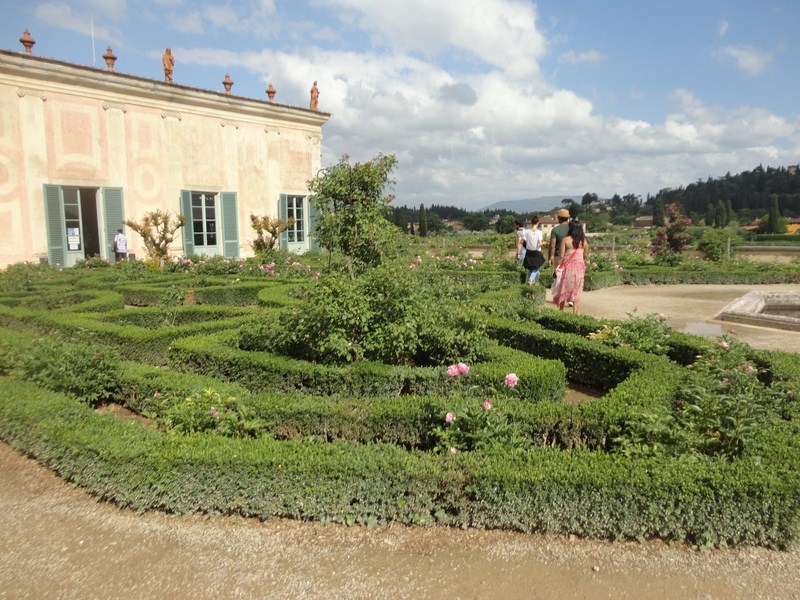
Palazzo Pitti – Boboli Gardens (Florence, Italy)

Boboli Gardens

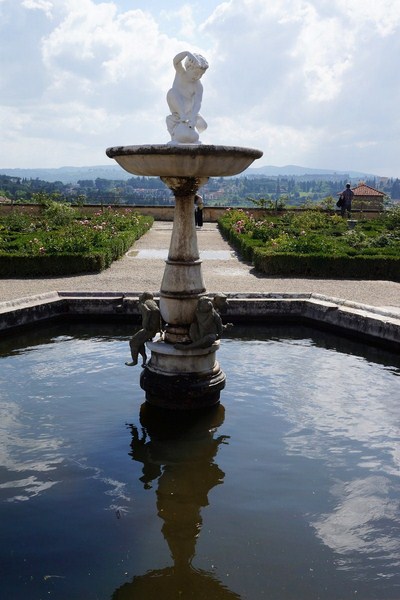
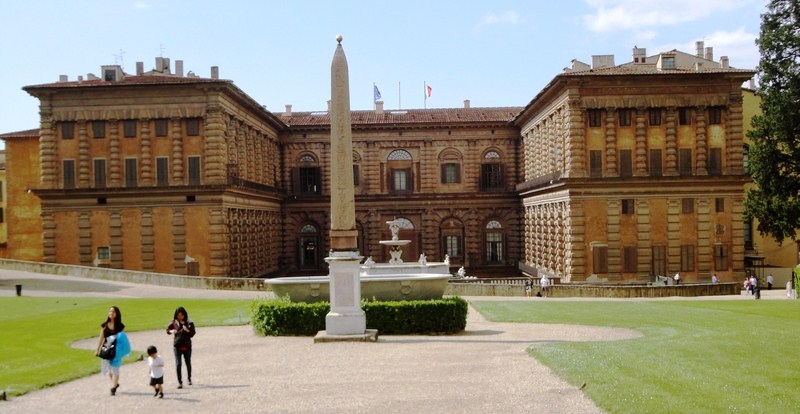
From the Pitti Palace (the main seat of the Medici grand dukes), we crossed the Cortile dell’Ammannati (the palace courtyard) and proceeded to the historical Boboli Gardens (Giardini di Boboli) via a staircase that lead to the Artichoke Fountain whose large octagonal basin, decorated with numerous statues of Tritons and Nereids, is crowned by a bronze lily. Begun in 1639 and installed between 1641 and 1642, the fountain is the work of Florentine sculptor Giovan Francesco Susini and his collaborators.
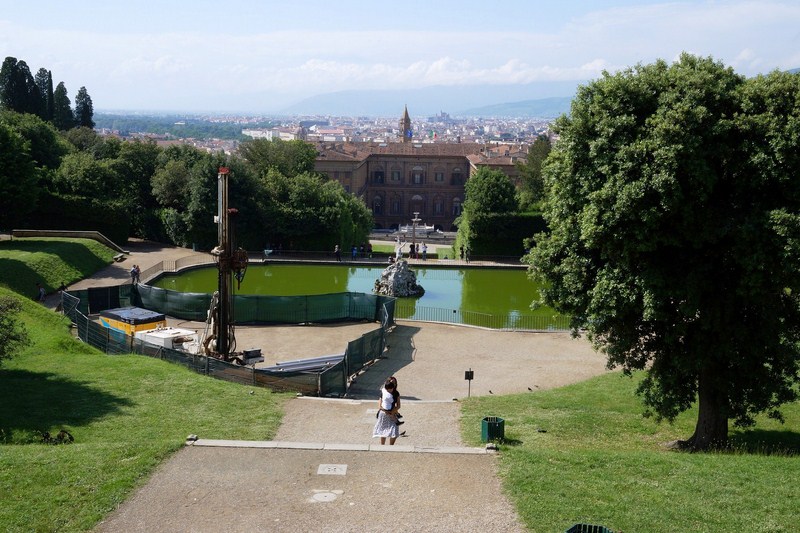
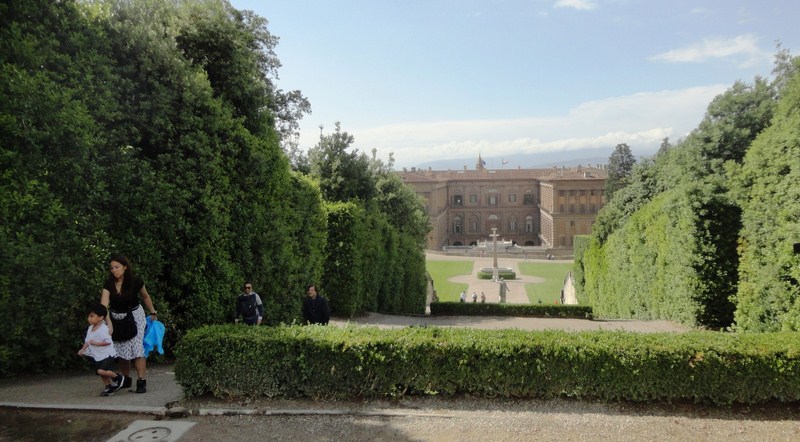
Looking out into the garden from the Artichoke Fountain

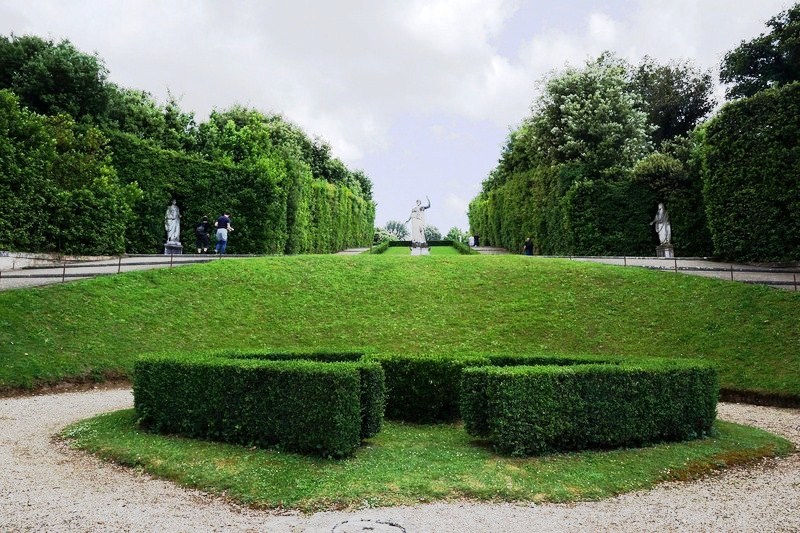
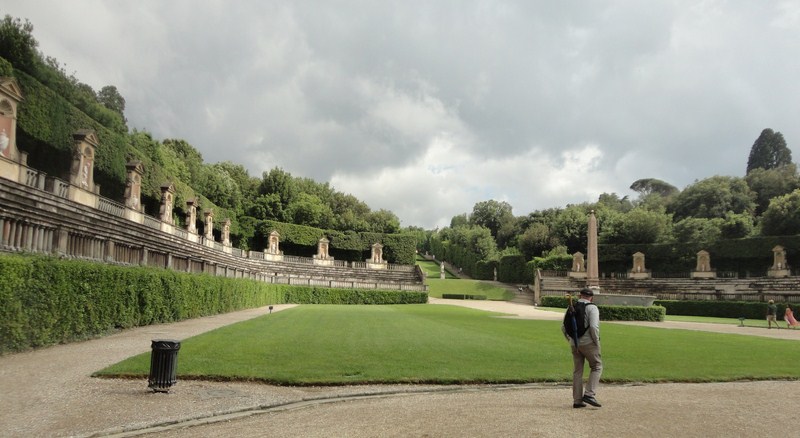
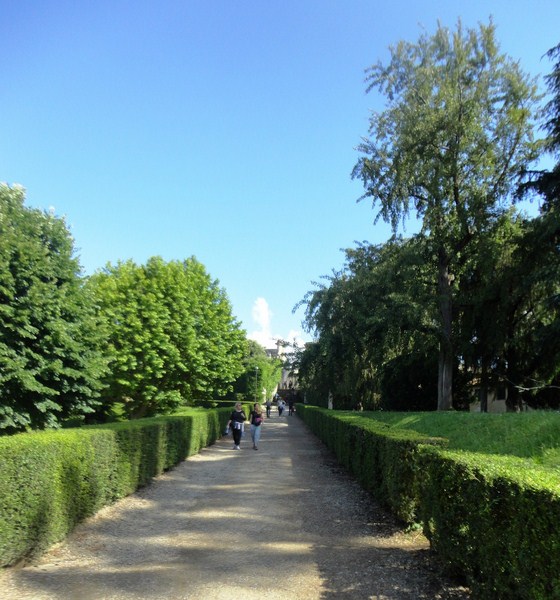
From here, the sight opened up on to the large “amphitheater” of the Boboli Gardens, a park and real outdoor museum behind the palace and the “green lung” of Florence.  Opened to the public in 1766, it is home to some of the first and most familiar formal 16th-century Italian gardens, hosting centuries-old oak trees plus a collection of sculptures dating from the 16th through the 18th centuries (with some Roman antiquities).

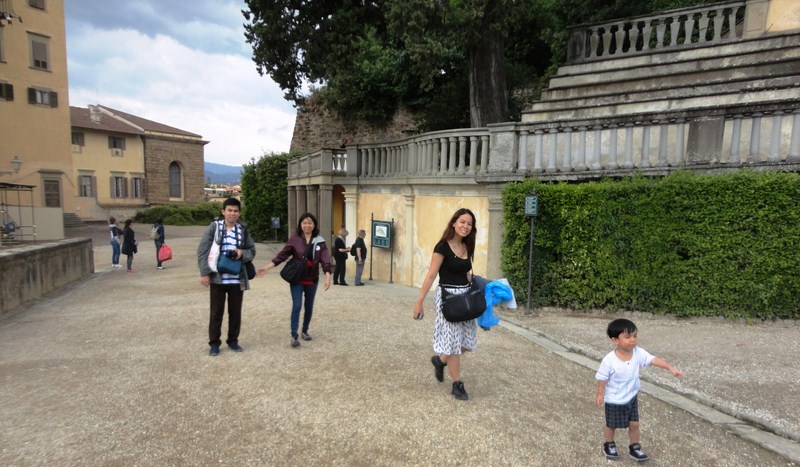
Jandy, Grace, Cheska and Kyle making their way to the garden

Representing one of the first and most important examples of the Italian garden, it later served as a prototype and inspiration for many European royal gardens (in particular, Versailles). Just a year before our visit, in 2015, the garden underwent restoration work.

Check out “Versailles Palace

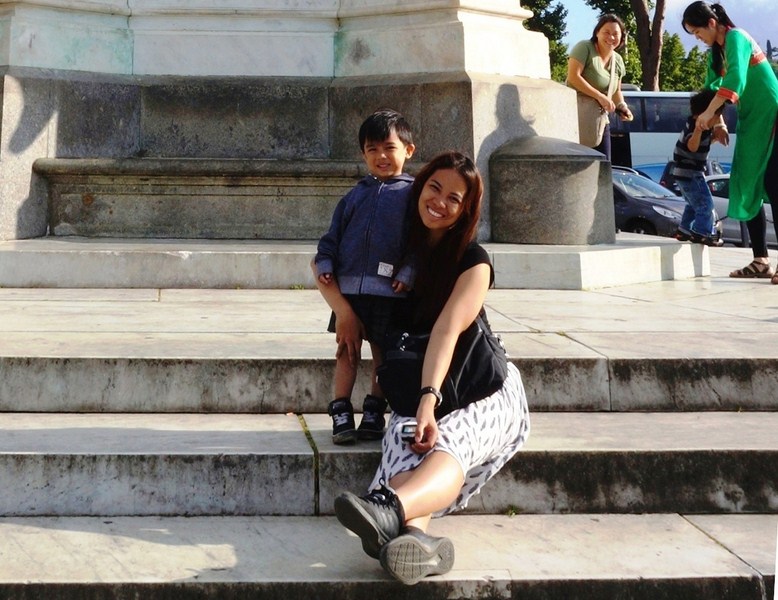
Cheska, Kyle and Grace with Palazzo Pitti in the background

Developed in the mid-16th-century garden style, it incorporated longer axial developments, wide gravel avenues and a considerable “built” element of stone. Lavishly employing statuary and fountains, its proliferation of detail was coordinated in semi-private and public spaces that were informed by Classical accents such as grottos, nympheums, garden temples and the like. Unconventional for its time, the garden, with it expansive view of the city, was very lavish, considering that no access was allowed (outside of the immediate Medici family) and no entertainment or parties ever took place in the gardens.

The name of the gardens is a corruption of “Borgoli,” the name of the family who laid out the original fields and gardens behind Santa Felicita in the Oltrarno. In 1418, Luca Pitti bought the land from them and, in 1549, the property was purchased by Eleonora di Toledo (the wife of Cosimo I de’ Medici). The land was greatly enlarged to become the Medici family‘s new city residence.

The first stage was scarcely begun by Medici court artist Niccolò Tribolo who drew the original plan before he died the next year in 1550.  Under the reign of Francesco I, who succeeded his father Cosimo I, it was continued by Bartolomeo Ammanati, Giorgio Vasari (who contributed in the planning and the laying out of the grottos from 1598 to 1561) and, in the sculpture, by the artist, architect and sculptor Bernardo Buontalenti who was also responsible for the elaborate architecture of the splendid Buontalenti grotto, built between 1536 and 1608, in the courtyard that separates the palace from its garden.

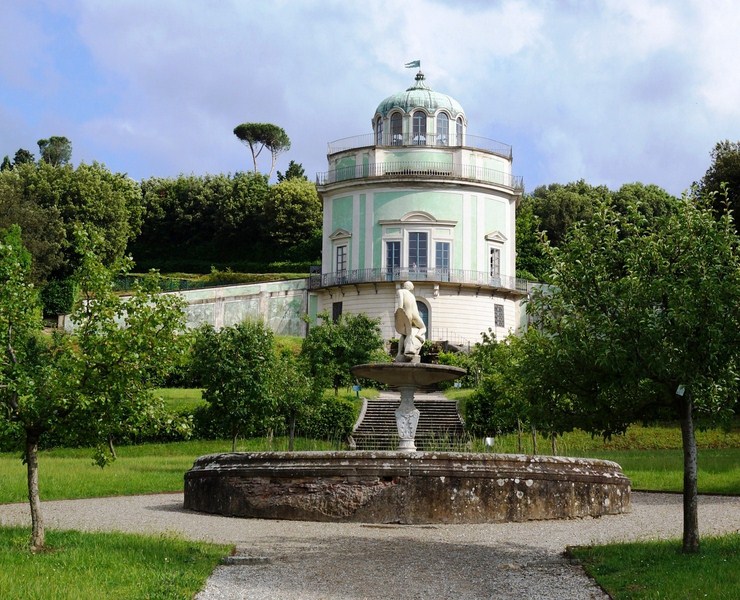
The Kaffeehaus. One of the most interesting buildings inside the Boboli Gardens, it is also one of the works carried out at the wishes of Grand Duke Peter Leopold of Lorraine, between 1774 and 1785. An airy pavilion, it is circular in shape and has an onion-shaped dome on the top. Designed by Zanobi Del Rosso, its interiors were done by Giuseppe del Moro, Giuliano Traballesi and Pasquale Micheli.

Lacking a natural water source to water the plants in the garden, a conduit was built from the nearby Arno River to feed water into an elaborate irrigation system. Passing through several stages of enlargement and restructuring work, the gardens were enlarged in the 17th century to their present extent of 45,000 sq. m. (111 acres).

The Amphitheater

In the 17th, 18th and 19th centuries, the Medici and the Lorraine families continued to enrich and enlarge the garden, generating an outdoor museum and a scenic setting to exhibit both Roman and 16th and 17th century Renaissance statues. In the 18th century, the Lorraine family made further additions including the green Kaffeehaus (a multiple-tiered garden coffeehouse constructed from 1774 to 1785), with its glazed dome, and the “Lemon House,” both designed by Zanobi del Rosso.

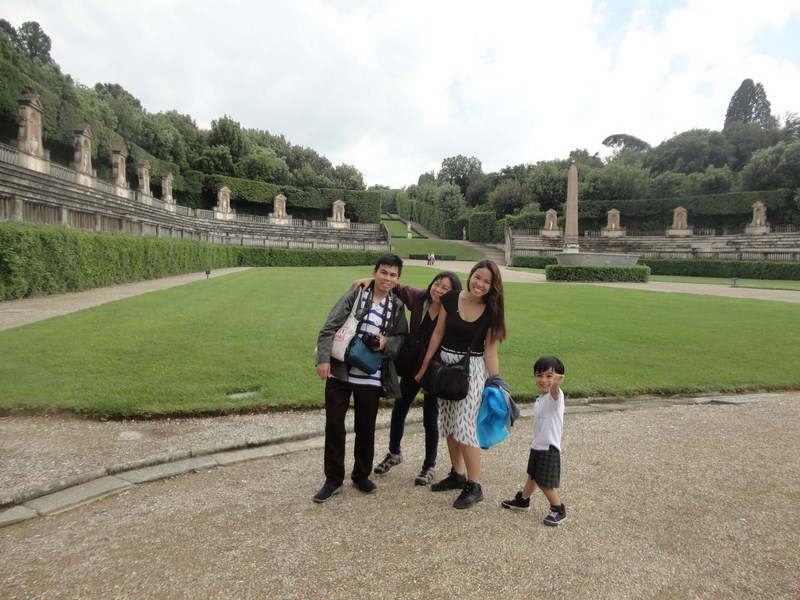
Jandy, Grace, Cheska and Kyle at the Amphitheater

Centered on the rear façade of the Pitti Palace, the primary axis rises on Boboli Hill from a deep amphitheater, behind the corps de logis of the palazzo, that is reminiscent, in its shape, of one half of a classical hippodrome or racecourse. In the first phase of building, the amphitheater was excavated in the hillside behind the palace, initially formed with clipped edges and greens and, later, formalized by rebuilding in stone decorated with statues based on Roman myths.

In 1476, the play Andria by Terence was performed there for the amusement of the cultivated Medici court. Later, it followed by many classically inspired plays, featuring elaborate sets designed by the court architect Baldassarre Lanciof Florentine playwrights such as Giovan Battista Cini.  .

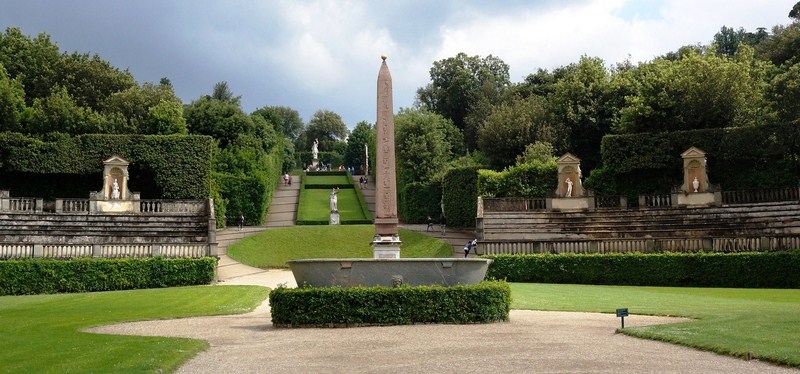
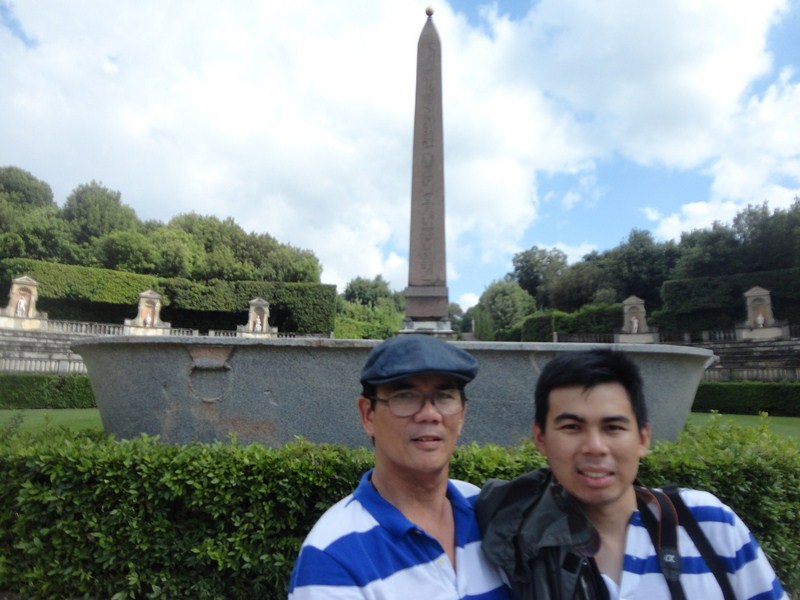
The author and Jandy with the Egyptian obelisk in the background. This obelisk is suspected to have been first erected in the city of Heliopolis during the reign of Ramesses II. In the first century AD, it was moved to Rome by Domitian and placed in the Temple of Isis in the Campus Martius, along with three other obelisks still in Rome. In the sixteenth century, Cardinal Ferdinand I de’ Medici bought the 6 m. high obelisk in Rome and placed it in the gardens of the Villa Medici.

The ancient Egyptian Boboli obelisk, brought here in 1789 from the Villa Medici (in turn, brought there from Luxor) at Rome, is at the center of the amphitheater and is rather dwarfed by its position.

Neptune Fountain

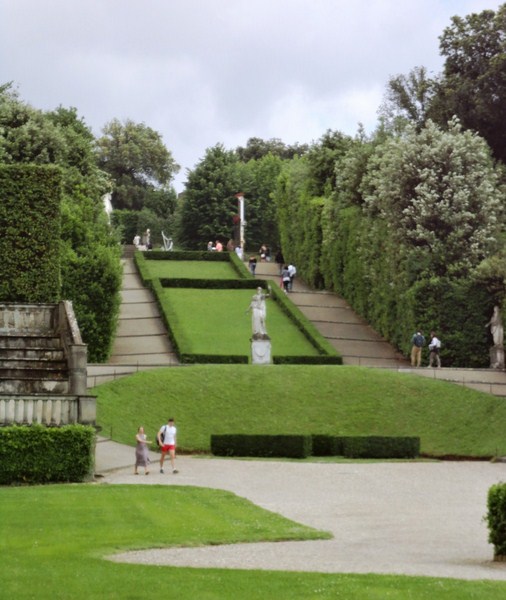
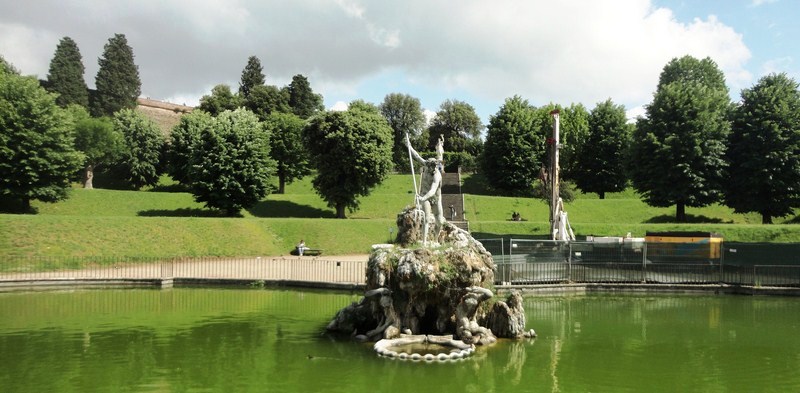
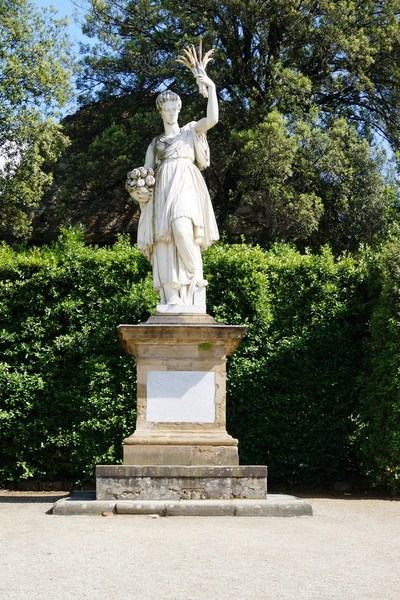
This primary axis terminates in the Neptune Fountain known, to the irreverent Florentines, as the “Fountain of the Fork” for Neptune’s large trident.  As we climbed further up the slope, at the very top of the hill, we found the large statue of Abundance, by Giambologna  (which featured the likeness of Giovanna of Austria, Francesco I’s wife) visible against the skyline.

Abundance by Giambologna

The steep, sloping Cyprus Road (or Viottolone, “large avenue”), the long secondary axis a right angle to the primary axis, was laid out by Giulio Parigi.  This road, which led up through a series of terraces, tunnels and water features (the main one being the Isolotto complex, with the bosquets on either side), is flanked by cypresses and statuettes and heads back down the hill toward at Porta Romana (Roman Gate), one of the main gates of the walled city. The Grotto of Vulcan (Grotticina di Vulcano), also along this axis, was constructed in 1617 by Parigi.

Check out “Porta Romana

The oval shaped isolotto, an island in a large, tree-enclosed pond nearly at the end of the alternative Viottolone axis, was laid out around 1618 by Giulio and Alfonso Parigi.  It has another fountain of Neptune (here as god of the oceans), known as the Fountain of the Ocean in the center, a replica of the original sculpted by Giambologna which is now in the Bargello Museum. It is surrounded by three sculptures representing the great rivers of the Nile, Ganges and Euphrates.

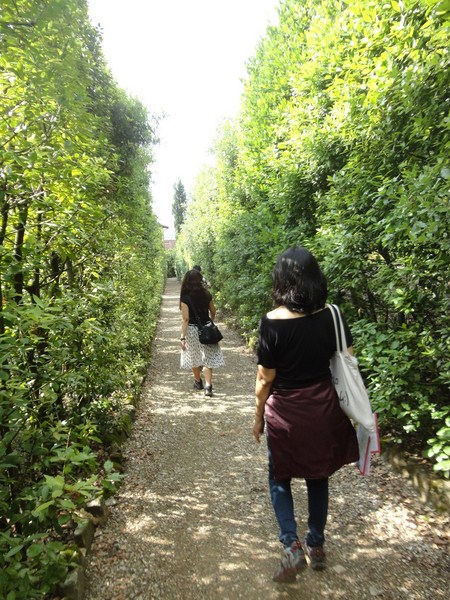
Strolling along one of the alleys of the gardens

All around are other statues based on Classic and popular subjects, belonging to the 17th and 18th centuries,  like those that shows groups of children playing traditional games. Emerging from the moat surrounding the island are the marble groups, by Giambologna and his pupil, of Perseus on horseback and of Andromeda, whose ankles are chained to the rock.

Check out “Bargello Museum

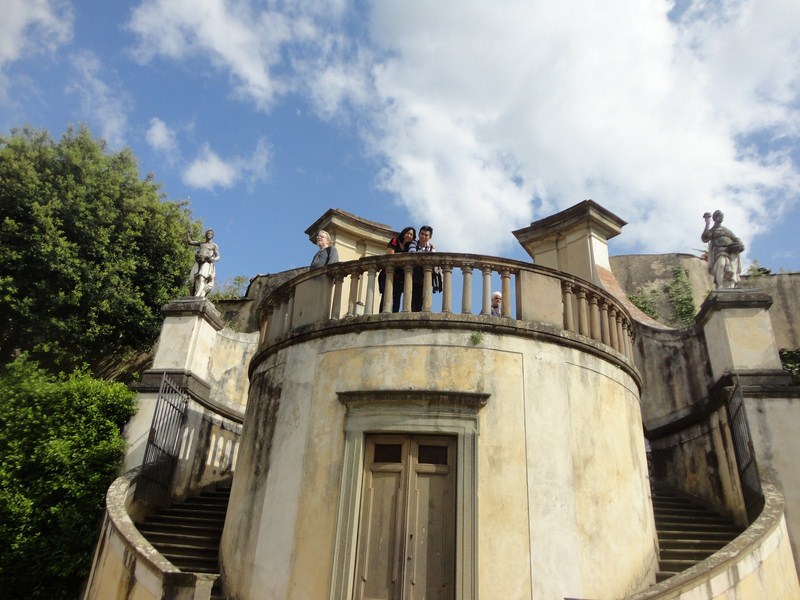
The double staircase

Then, we climbed a double staircase, designed in 1793, by Giuseppe del Rosso.  It curves around a cylindrical structure topped with a circular terrace, at either side of which stood two statues of the Muses.

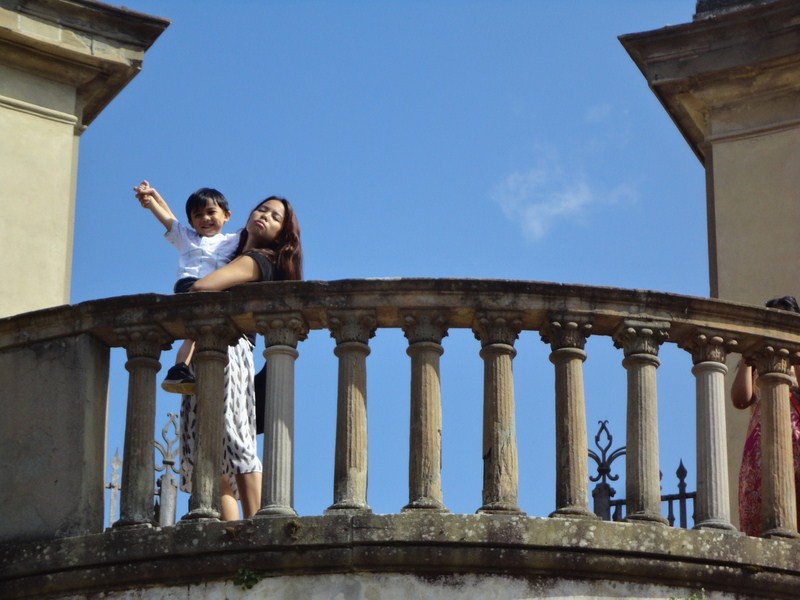
Cheska and Kyle at the terrace of the double staircase

Upon reaching the top, we visited the beautiful Knight’s Garden (Giardino del Cavaliere) which stands on an eponymous rampart (Bastione del Cavaliere)  built by Michelangelo in 1529.

Giardino del Cavaliere with the Neo-Classical-style Knight’s Building (now housing the Porcelain Museum) on the left

Beside this garden is the Neo-Classical-style Knight’s Building (Palazzina del Cavaliere)  housing the Porcelain Museum of the Pitti Palace.  Underneath the building is the Trout Reservoir (Conserva delle Trote), a large water storage area, built in 1614, from which the pipes that supply water to the entire garden lead off.

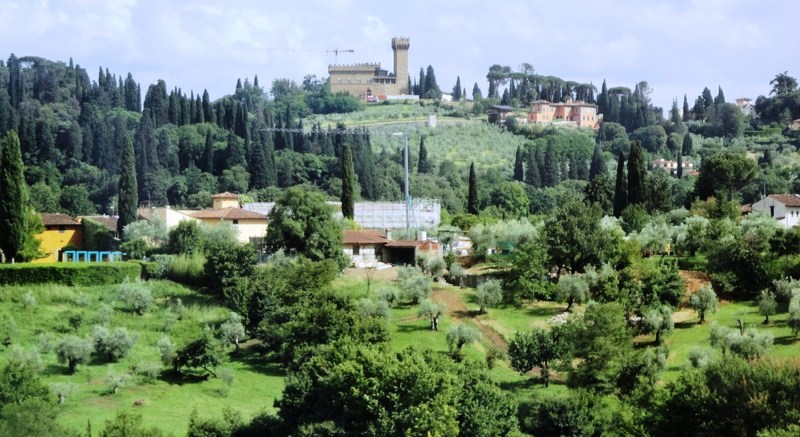
View from the Giardino del Cavaliere.  On the top of the hill is the Torre al Gallo

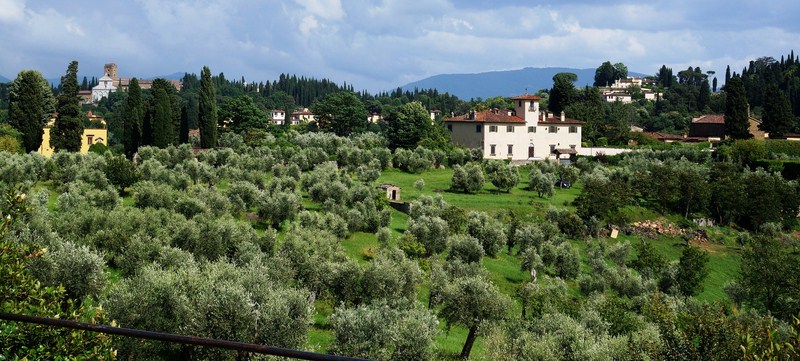
From this colorful garden rich with blossoming roses, we enjoyed a wonderful view of the Torre al Gallo as well as elegant private Florentine manors nearly hidden inside the lavish vegetation of the hills.

Check out “Palazzo Pitti – Porcelain Museum

View from Giardino del Cavaliere

The Large Grotto, decorated internally and externally with stalactites and originally equipped with waterworks and luxuriant vegetation, is divided into three main sections decorated with remarkable examples of Mannerist sculptures. The first one, frescoed to create the illusion of a natural grotto, is a natural refuge for shepherds to protect themselves from wild animals.

It originally housed The Prisoners of Michelangelo, statues that were first intended for the tomb of the Pope Julius II and are now in the Gallerie dell’ Accademia. They are now replaced by copies. The third and furthest hall in the grotto contains the famous Bathing Venus of Giambologna and the second section contains Paris Abducts Helen, an 18th-century group by Vincenzo de’ Rossi. These last two chambers were created as the perfect setting for the secretive, amorous meetings of the Duke Francesco I de’ Medici.

Check out “Gallerie dell’ Accademia

Boboli Gardens Piazza de’ Pitti, 1, 50125  FlorenceItaly.  Open from 8:15 AM to 6:30 PM (May, September and October) and 8:15 AM to 7:30 PM (July and August).  It is closed the first and last Monday of the month.  Admission: €10.

Piazza della Santissima Annunziata (Florence, Italy)

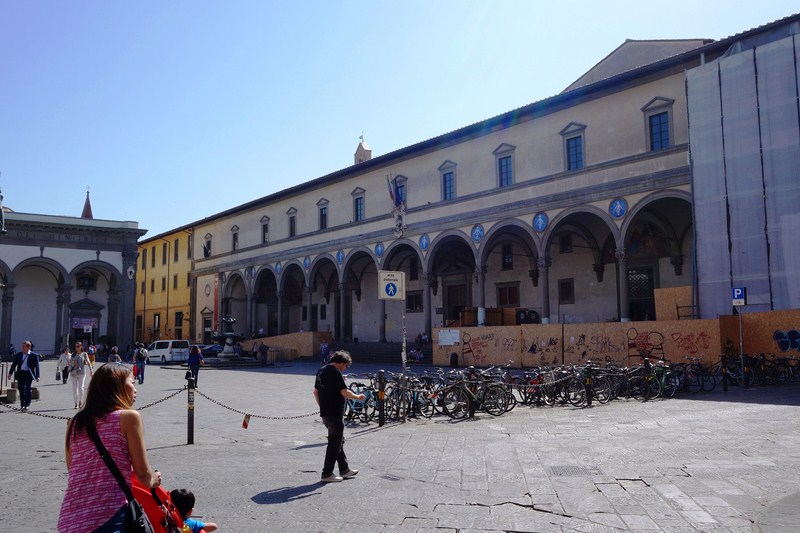
Piazza della Santissima Annunziata

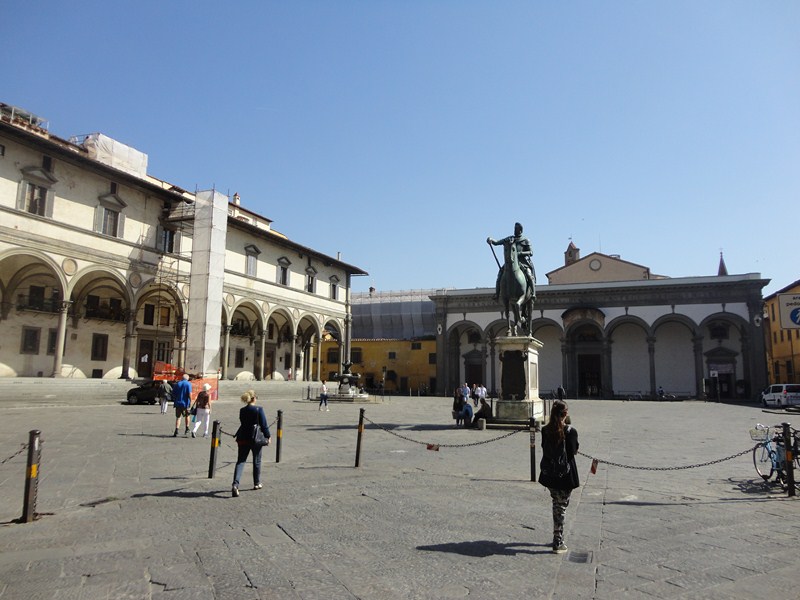
On our way to the National Archaeological Museum of Florence, we passed by the Piazza della Santissima Annunziata.  Named after the Basilica della Santissima Annunziata (Basilica of the Most Holy Annunciation) at the head of the square, in the center of the piazza is the large, bronze equestrian statue of Ferdinando I flanked by the Fountains of the Marine Monsters. The piazza was not designed by Brunelleschi, as is sometimes reported in guide books.

Check out “National Archaeological Museum of Florence

This square doesn’t find itself on many mainstream itineraries but, for a very long time, it was actually the heart of the city and, even today, the piazza is a crossroad for those going to the train station, the Duomo or Piazza Beccaria.

This open, peaceful and airy space, one of the few spaces in Florence that was purposely built in the Renaissance style (which meant that it embraces the idea of a “Utopian society”- ordered and accessible to all men), was designed to be appreciated for its elegance and harmonizing colors.

Equestrian Statue of Ferdinando I

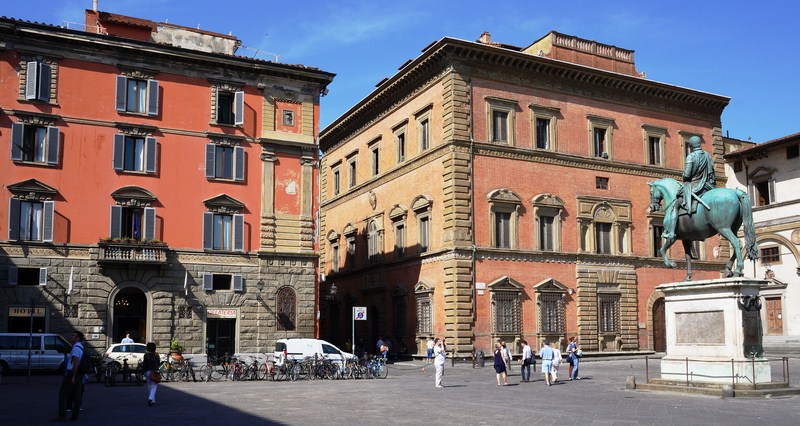
The massive and life size bronze equestrian statue of Ferdinand I of Tuscany (Ferdinando I de’ Medici), astride a stallion, was executed by noted sculptor  Giambologna  (who had, by now, reached international fame for his equestrian statues), was cast in 1602 using bronze from cannons on Turkish galleys captured in war, and was placed in the square in 1608.

Fountains of the Marine Monsters

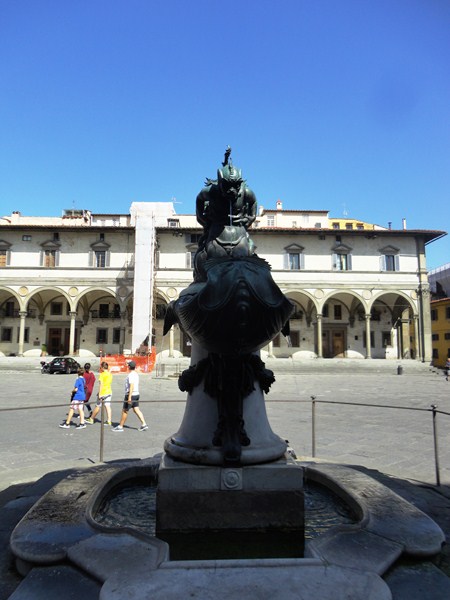
The Fountains of the Marine Monsters are two Late Mannerist-style fountains, with fantastical figures, all works completed by the late-Renaissance sculptor Pietro Tacca (1577-1640), a loyal student and successor to Giambologna.

Tacca was asked to design them to decorate the port of Livorno, near the Monument of the Four Moors (“Quattro Mori”) he had created between 16th and 17th century. However, in 1641 Ferdinando II, the grandson to Ferdinando I insisted that the two fountains remain in Florence where they still are today.

In addition to the square, there are several important structures to visit – the Palazzo Budini Gattai, the Loggia dei Servi di Maria, the aforementioned National Archeological Museum, the Ospedale degli Innocenti and the Palazzo delle Due Fontane. The piazza’s eastern side is defined by the Ospedale degli Innocenti, the wet by Loggia dei Servi di Maria, and the north by the Basilica della Santissima Annunziata

Basilica della Santissima Annunziata

The Renaissance-style Basilica della Santissima Annunziata, considered the mother church of the Servite Order, was founded in 1250. The facade was added in 1601 by the architect Giovanni Battista Caccini, imitating the Renaissance-style of Brunelleschi‘s facade of the Ospedale degli Innocenti.

Ospedale degli Innocenti

The historic Spedale degli Innocenti, designed by Filippo Brunelleschi (he received the commission in 1419 from the Arte della Seta or Silk Guild of Florence), is regarded as a notable example of early Italian Renaissance architecture.  Originally a children’s orphanage and hospital, it features a nine bay loggia facing the piazza.   Today, it houses a small museum of Renaissance art with works by Luca della RobbiaSandro BotticelliPiero di Cosimo and an Adoration of the Magi by Domenico Ghirlandaio. In 2016, it was restored and restructured.

Palazzo Budini Gattai

The Palazzo Budini Gattai (also known as Palazzo Grifoni), an aristocratic red-brick residence dating from the 16th century, was begun by Giuliano di Baccio d’Agnolo (a pupil of Michelangelo) and was continued, on his death, by Bartolomeo Ammannati, who probably also designed the Italian-style garden laid out in around 1573. At the end of the 18th century, the Grifoni family line died out and the property passed into the hands of the Riccardi family and finally to the Budini Gattai, the present owners of the property.

Why is the last window on the right hand side, at the second floor of Palazzo Budini-Gattai, always open?  Well, according to a legend, the Grand Duke Ferdinand I was called to the army to fight a war with the noble and patrician families of Florence and he had to leave Bianca Cappello, his beautiful young bride of a few months, who gave him the last greeting from the window of the palace. She waited for the return of her beloved husband, spending her days embroidering, and sitting on an armchair beside the window overlooking the square, never giving up hope until the day she died. 

Upon her death, the family carried her body out and closed the window only to find themselves haunted by a frenzy of books flying, furniture dancing, paintings falling down and the lights going out. From that day forward the window remains open, just in case he comes home. Another version tells about the neighborhood of the square who, moved by that sad love story, decided to keep the window open in memory of the woman,

The arches and columns of the Loggia dei Servi di Maria, the romantic loggia (or portico) next to the Palazzo Budini Gattai, complete the symmetry in the square.  It was built, between 1516-1525, on a design created by Antonio da Sangallo the Elder.  Originally, Brunelleschi intended for the circles between the columns on the Loggia for the Hospital to remain empty but, Andrea della Robbia (selected in 1490, long after Brunelleschi’s demise) decorated the six frontal and 4 lateral concaves.

Loggia dei Servi di Maria

The 10 tondi (medallions) have the standard light blue background, with white putti, dressed in swaddling cloth, to represent the abandoned children and orphans. Originally built for the mendicant order, today the Servi di Maria, together with Palazzo Budini Gattai, are now a hotel.

Palazzo delle Due Fontane

Palazzo delle Due Fontane, between via dei Servi and via dei Fibbiai, was originally a building of ancient construction, reconfigured between the end of the nineteenth century and the early twentieth century to provide an adequate backdrop to the square. Its relatively recent façade repeats, while simplifying them, the shapes and colors of the nearby Palazzo Budini Gattai. The building is currently occupied by the Albergo le Due Fontane, an accommodation facility. The ground floor, in particular, has a stone ashlar.

Piazza della Santissima Annunziata: Florence, Italy.

Michaelerplatz (Vienna, Austria)

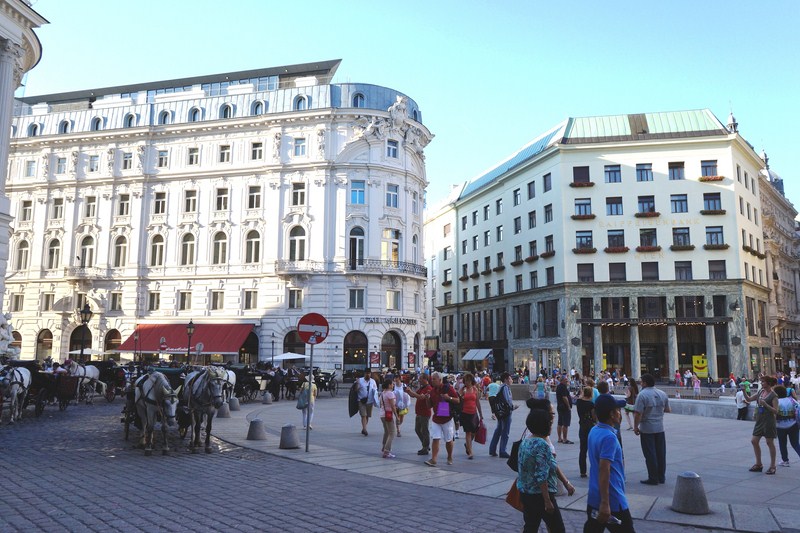
Michaelerplatz

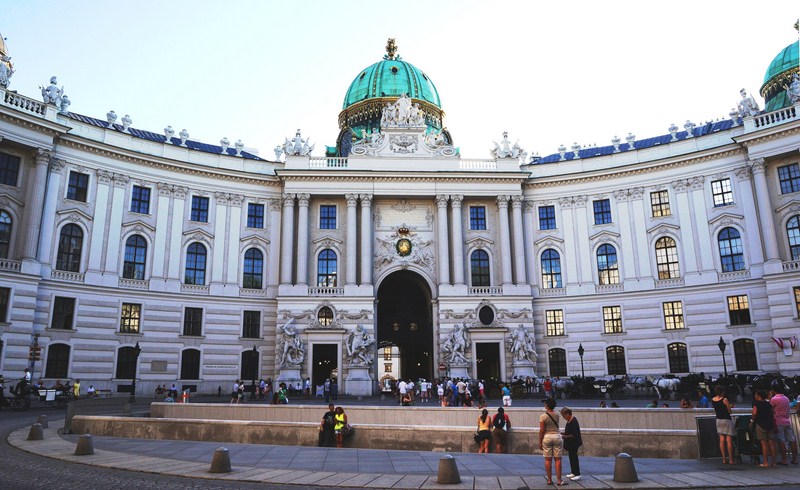
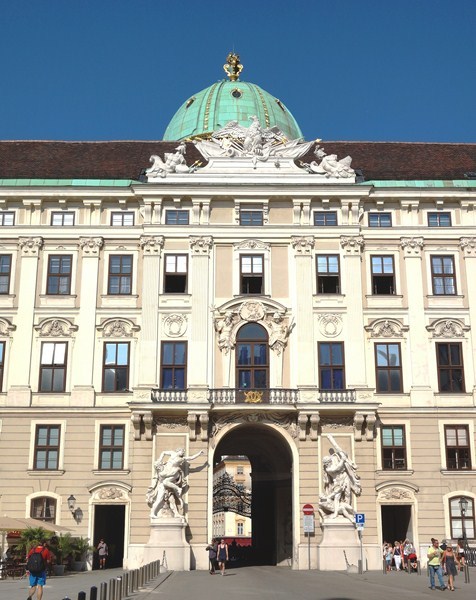
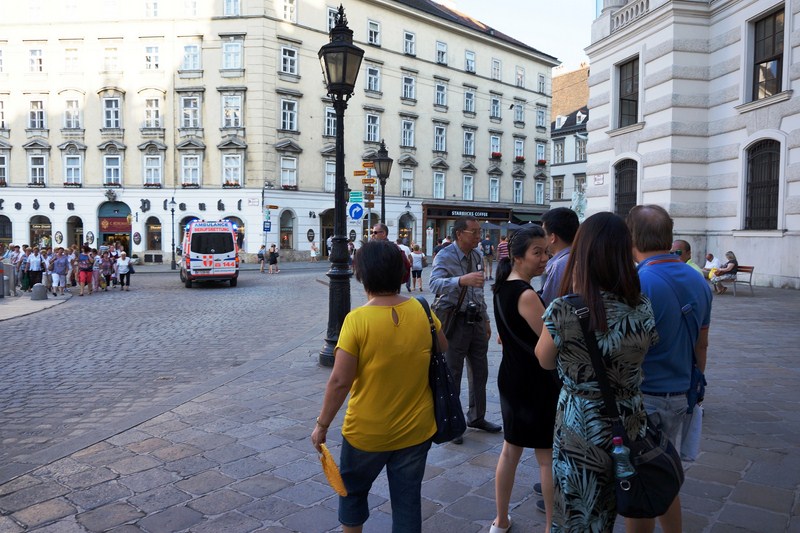
The most common way to enter the Hofburg, one of the world’s biggest palace complexes, is from the extremely irregular, cobblestoned  Michaelerplatz (St. Michael’s Square), a major pick-up point for tours by fiaker  (horse-drawn carriages). An amazing display of the mixed Austrian architectural historical styles, the square (its actually circular) has had its name since around 1850. The square is dominated by the impressive Neo-Baroque Michaelertor (Michael’s Gate), the entrance gate to the Hofburg.

Michaelertor

Here’s the historical timeline of the square:

  • In 1725, the square was redesigned around the plans of Joseph Emanuel Fischer von Erlachs for the Michaeler wing of the Hofburg
  • In 1729, construction on the left wing began but stagnated during the last years of the reign of Emperor Charles VI. 
  • In autumn 1838, Vienna’s first public gas lighting was installed at the Michaelerplatz via a gas (the gas came from the Roßau gas works via a line)  candelabrum with six flames set up by entrepreneur Georg Pfendler, founder and director of the “Austrian Society for Lighting with Gas.”
  • From 1889 to 1893, the Baroque plans were realized by Austrian architect Ferdinand Kirschner when the old Hoftheater (castle theater), the predecessor of today’s Burgtheater, standing in the middle of the square was demolished in 1888.
  • In 1927, Vienna’s first roundabout was set up at Michaelerplatz.

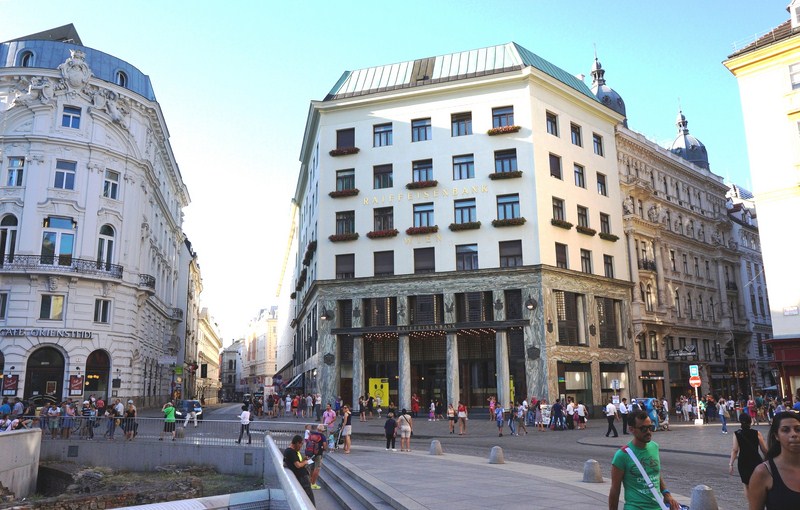
Palais Herberstein and Looshaus in the background with the Roman Ruins in the foreground

At the center of the square is an open area with the excavated and now exposed ruins of a Roman house as well as some medieval foundations and remains of the former Burgtheater, all seen from street level. A number of remarkable buildings are grouped around the Michaelerplatz.

Check out “Roman Ruins

Michaelertrakt

The Michaelertrakt, with its curving façade and 50 m. high dome,  dominates the façade of the palace which faces the centre of the city. One of the most exuberant wings of the imperial palace, it was completed in 1893 by Ferdinand Kirschner following the original Baroque design of Josef Emanuel Fischer von Erlach von Erlach in the 1720s. At the center of this wing is the monumental Michaelertor gate, leading through the Michaelertrakt, to the Hofburg’s inner courtyard.

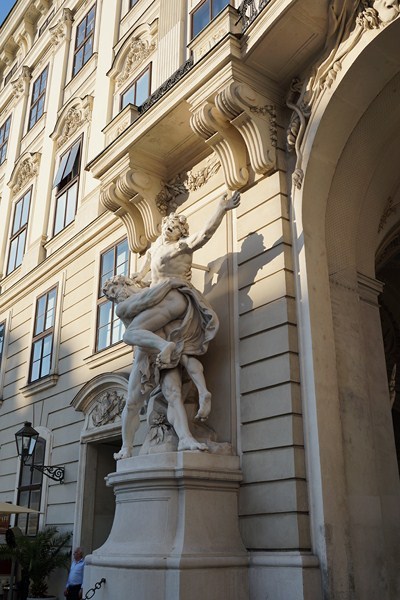
Statue of Hercules Fighting Antaeus (Lorenzo Mattielli)

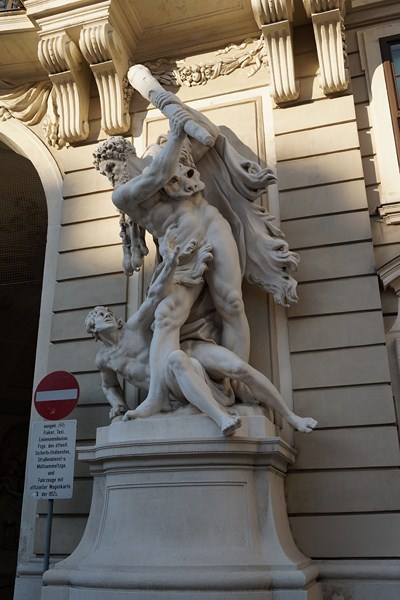
Along the sides of the three entrances are colossal statues of Hercules and on both sides of the doorway are large 19th-century wall fountains with sculpture groups done by artists who were alumni of the Akademie der bildenden Künste (“Academy of Fine Arts”).

Statue of Labor of Hercules (Lorenzo Mattielli)

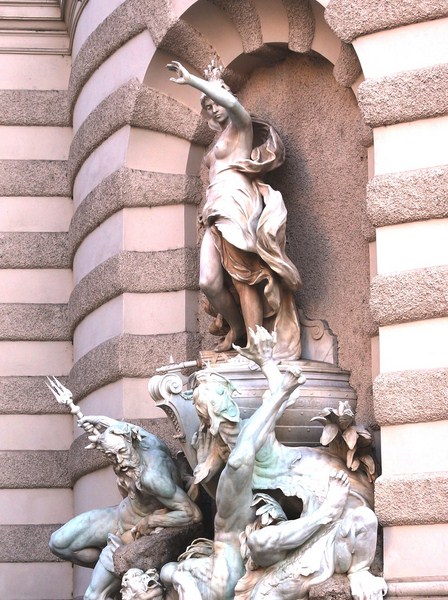
The fountain on the right, known as the Macht zu Lande (“Power on Land”) was designed in 1897 by Edmund von Hellmer and symbolizes the Austrian army. The fountain on the left, known as the Macht zur See (“Power at Sea”), was sculpted in 1895 by Rudolf Weyr and symbolizes the Austrian naval power.

Power at Sea Fountain (Rudolf Weyr)

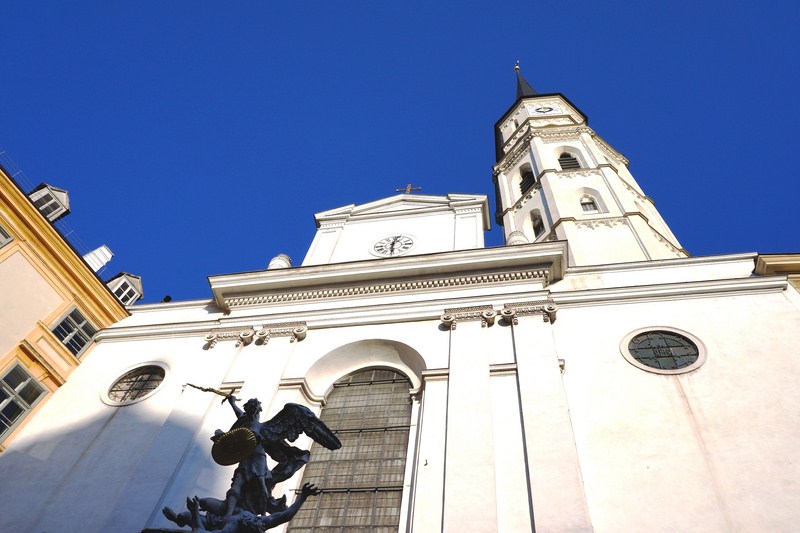
Opposite the Michaelertor is the grand Michaelerkirche (St Michael’s Church), the oldest building at Michaelerplatz (which lends its name to the square itself) and considered as one of the most historically and culturally significant church buildings in Vienna.  The former parish church of the Austrian imperial court, it is one of the oldest Baroque churches in the city.

Michaelerkirche (St. Michael’s Church)

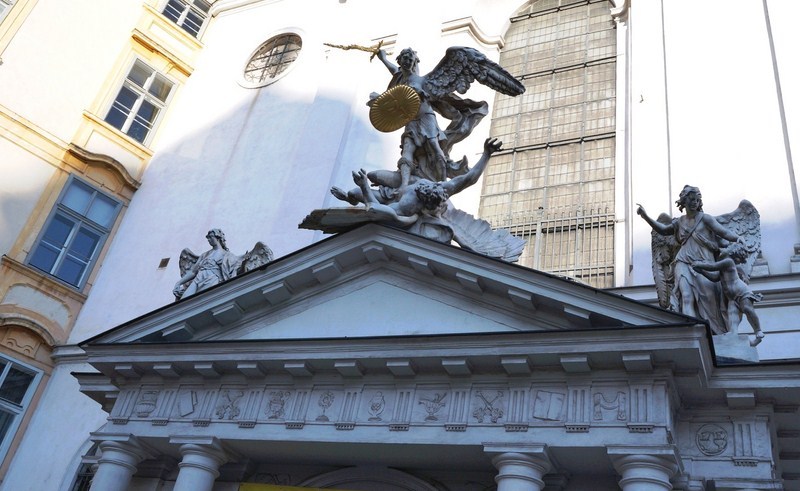
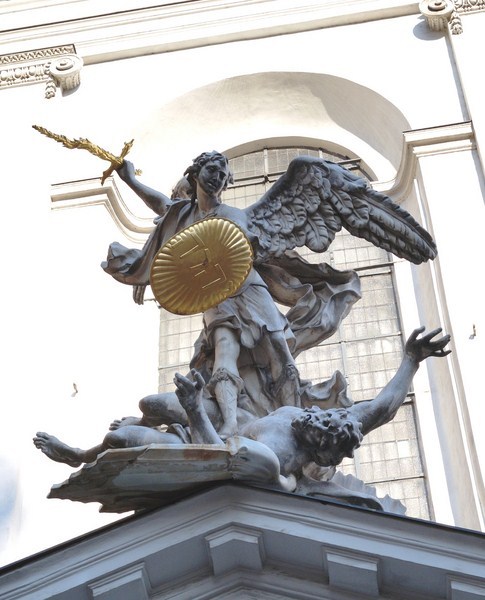
Originally built in 1221, it was regularly expanded and modified to such an extent that it now consists of an amalgam of architectural styles and its present Neo-Classic facade originated in 1792. Its Baroque porch is topped by Baroque sculpture group, depicting the Fall of the Angels, created by Lorenzo Mattielli. The still Gothic tower dates from the fourteenth century.

The church’s Baroque porch

The Baroque interior is decorated with 14th-century and Renaissance frescoes.  The magnificent, vividly carved, gilded organ, the largest in Vienna, was built by Johann David Sieber in 1714 and was once played by Joseph Haydn.

Fall of the Angels (Lorenzo Mattielli)

At the crypt (only be accessed in company of a guide, the catacombs entrance is off the north choir), you can viewed, in open coffins, well preserved (made intact due to the consistent climate) bodies of parishioners buried here between the 15th and 18th centuries and clothed in their burial finery.

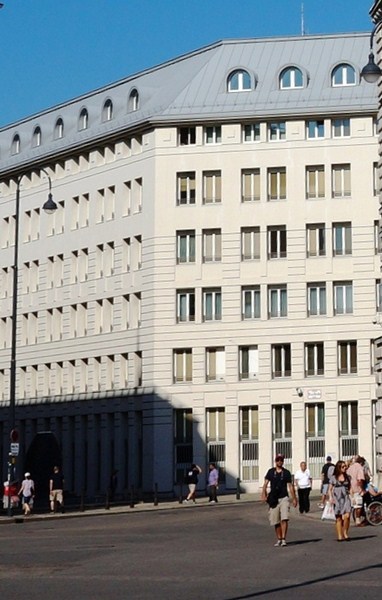
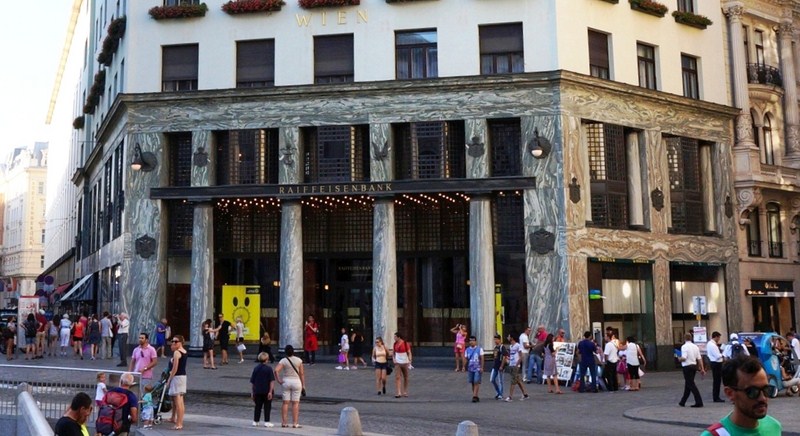
Looshaus

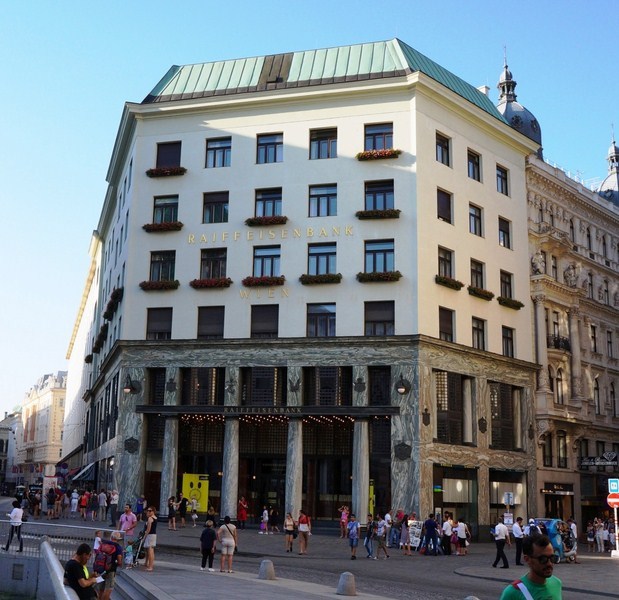
When walking towards Michaelertrakt, we hardly noticed the Looshaus (Michaelerplatz 3), one of Vienna’s first modern buildings, opposite the Michaelertor. Built from 1911 – 1912, it was designed by Adolf Loos  who was influenced by the nascent skyscraper architecture that he had seen on a trip to the United States He employed a business-like style, with straight lines and little or no decoration.

This building, considered an eye sore back in the day, caused quite a controversy and an outcry due to its modern but rather simple, unadorned façade void of decorations, very unusual in Baroque Vienna, so much so that construction was even temporarily halted and only allowed to continue after Loos promised to decorate the facade with balcony flower boxes. Still, the starkly functional upper facade contrasted dramatically with the nearby fine ornate Baroque architecture.

Raiffeisenbank (Looshaus)

The building caused so much outrage on the part of the Emperor Franz-Joseph I who despised the modern façade of the Looshaus.  Declaring that he would never use the Michaelertor ever again, it is said that the curtains in the wing opposite the Looshaus were always closed so that the emperor wouldn’t have to look at it. Today, the Looshaus is a working bank and is considered a groundbreaking example of modern architecture.  Visitors are only allowed into the lobby to view the elegant, richly clad interior of polished timber, green marble and mirrors.

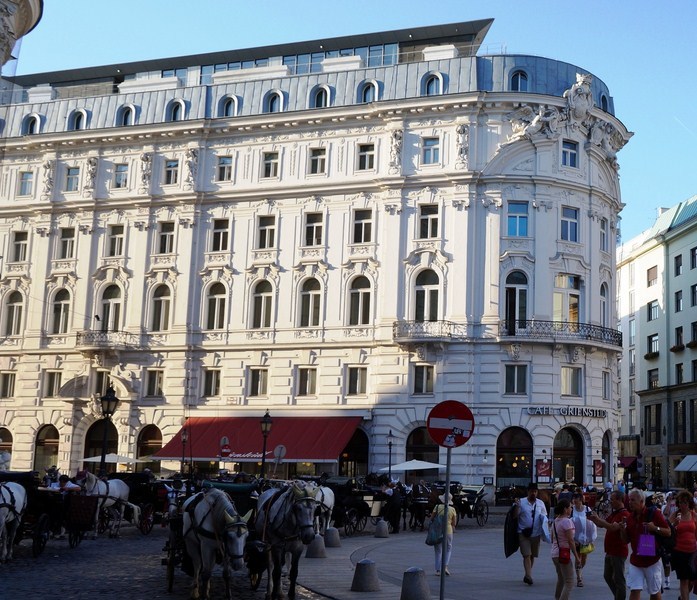
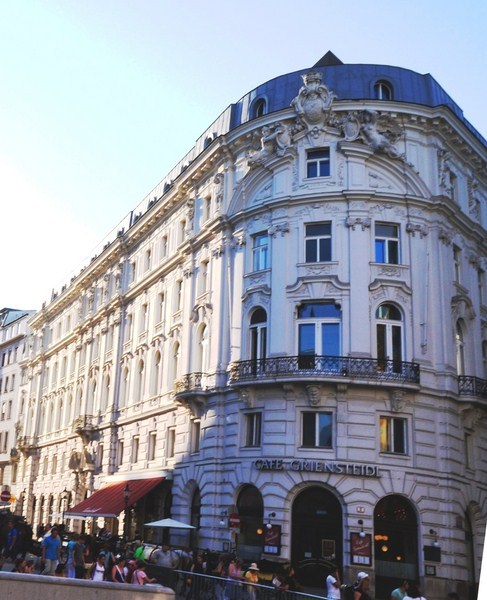
Palais Herberstein

Sitting just across from the Looshaus, opposite Herrengasse, is the  more conventional Palais Herberstein (Michaelerplatz 2). Built in 1896-1897, it replaced the Palais Dietrichstein-Herberstein, an older structure which was famous for its Café Griensteidl, where a group of young poets, artisans and writers known as Jung-Wien gathered on a regular basis.

Café Griensteidl

The café moved to the nearby Café Central in Palace Ferstel, now the most famous of all cafés in Vienna. In 1990 a new, reconstructed Griensteidl Café opened in Palais Herberstein.

Vicky, Manny, Grace, Jandy, Cheska and Freddie at Michaelerplatz

MichaelerplatzVienna, Austria.

Volksgarten (Vienna, Austria)

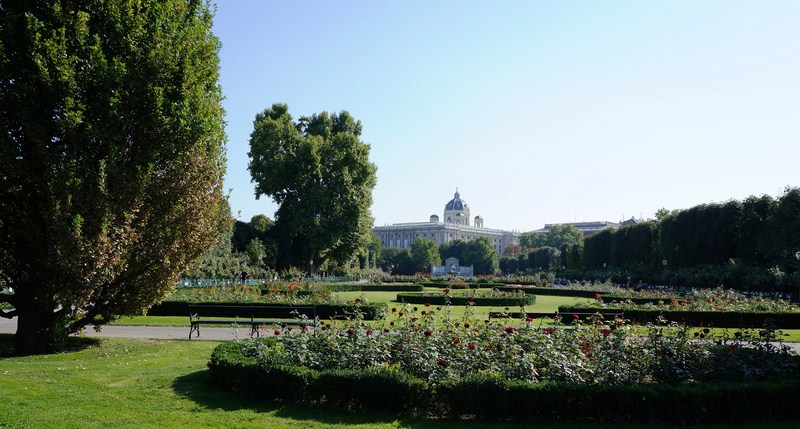
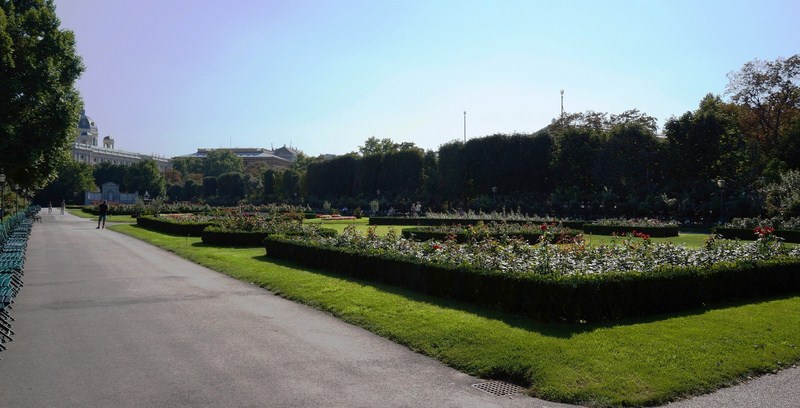
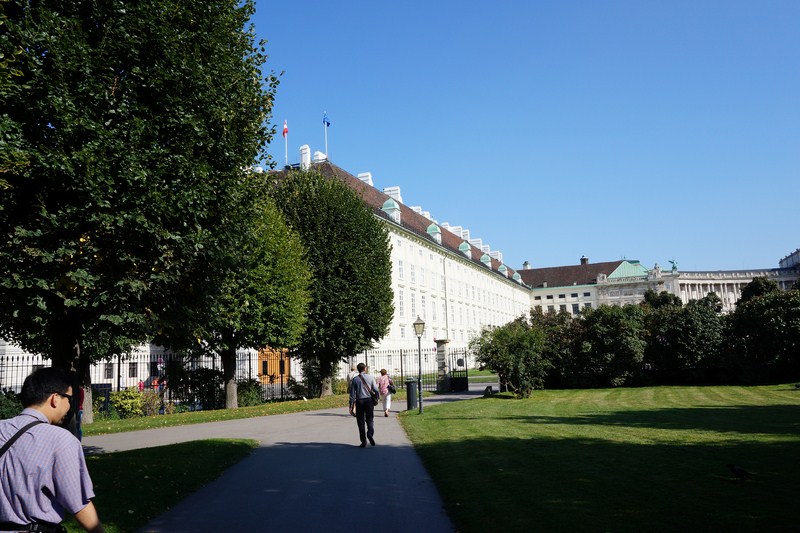
The free, accessible  Volksgarten (“People’s Garden”), a lovingly maintained public park and garden in the Innere Stadt first district of , offers a relaxing atmosphere in the center of Vienna to the citizens and tourists.  Originally used for fortifications, the park was built over the city fortifications (Burgbastei) that were destroyed by Napoleon in 1809. Part of the Hofburg Palace, it is located directly beside the Heldenplatz and the Hofburg buildings.

Check out “Hofburg Palace

Volksgarten (People’s Garden)

The Volksgarten area, designed in the manner of the Luxembourg Garden in Paris, was laid out in the French Baroque style in 1821 by Ludwig van Remy and its gardening design was done by court gardener Franz Antoine. Now often used by wedding photographers for its romantic scenery, the park is famous for its beautiful rose gardens (with over 3,000 rose bushes of about 400 different cultivars of roses) shady alleys and comfortable park chairs and benches.

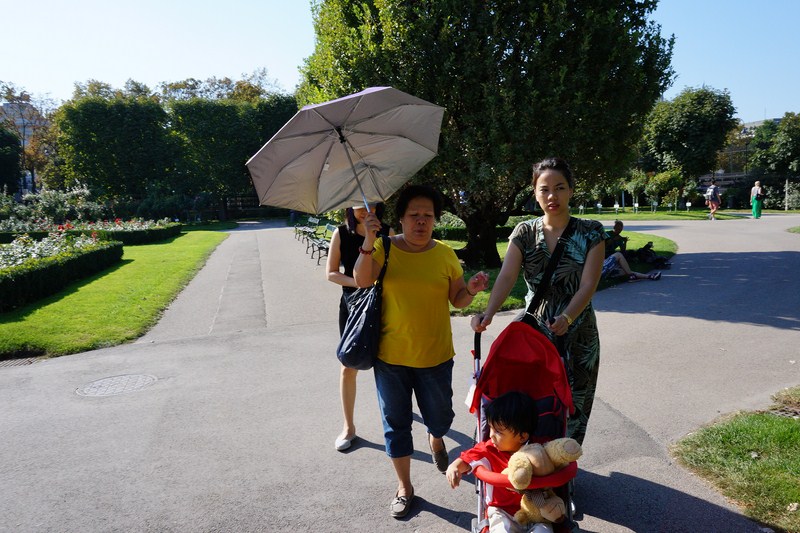
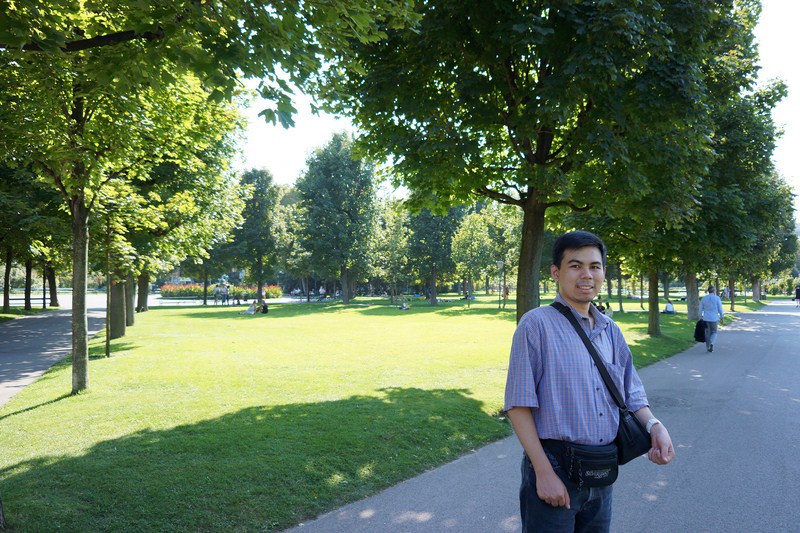
Grace, Vicky, Cheska and Kyle at the Volksgarten

Here’s the historical timeline of the park:

  • Between 1596 and 1597, a fortress wall was built on the eastern side of park.
  • In 1639, additional fortifications were built on the southern side.
  • In 1809, these fortifications were destroyed by Napoleon’s French troops.
  • Between 1817 and 1821, the area near Ballhausplatz square was converted to gardens originally intended for a private garden for the archdukes. These plans were changed through a proposal by the court garden administration to turn the area into the first public park in the city.
  • On March 1, 1823, the park was officially opened to the public.
  • Starting in 1825, the name Volksgarten was commonly used.
  • In 1862, the gardens were extended toward Ringstraße after the city moat had been filled in.

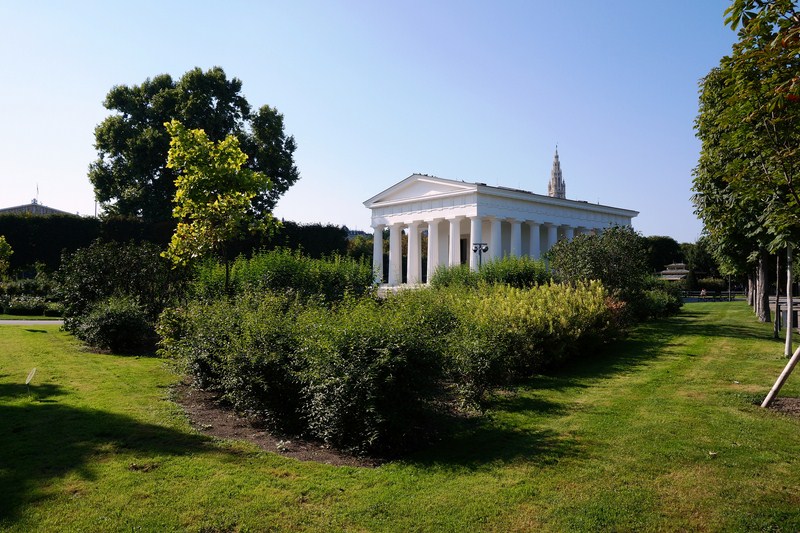
The white, shining, Neo-Classical Theseus Temple (Theseustempel), a particularly impressive photo scene at the center of the park, is a small-scale replica of the Temple of Hephaestus (Theseion) in Athens. Designed by Pietro di Nobile and completed in 1821, it was originally designed to house the sculpture, of Antonio Canova (who was also involved in the construction of the temple), of Theseus Battling the Centaur.  In 1890, Canova’s sculpture at the Theseus Temple was moved to the Museum of Fine Arts.

Temple of Theseus (Theseustempel)

The park has a couple of cafes.  The Cortisches coffee house, built between 1820 and 1823 by Peter Nobile was where Austrian Romantic composers and waltz kings Johann Strauss I and Joseph Lanner performed.  The Cafè Meierei, an excellent place to interrupt your walk, was originally built in 1890 as a water reservoir and converted to a milk drinking hall (Milchtrinkhalle) in 1924. Here, you can have a breakfast, a snack or a wiener melange- (coffee with milk).  The Milchpavillon was built in 1951 by Oswald Haerdtl.

The Sisi (Empress Elizabeth) Monument, at the northern end of the park, was designed by Hans Bitterlich and Friedrich Ohmann and completed in 1907. A 2.5 m. high statue of a seated Empress Elisabeth, at the center of the monument, was sculpted by Hans Bitterlich from an 8,000 kg. block of Laaser marble. The monument was dedicated on June 4, 1907 in the presence of Emperor Franz Joseph I of Austria.

Jandy

The Franz Grillparzer Monument, at the southern end of the park, has the seated marble figure of Austrian poet and writer Franz Grillparzer  sculpted by Carl Kundmann and completed in 1875.  He is shown in contemplation holding a book in his left hand.

The Volksgarten contains two fountains – the Triton and Nymphenbrunnen (Nymph Fountain, built in 1880 by Viktor Tilgner) and the Volksgarten Fountain (erected in 1866 by Anton Dominik Fernkorn).

Café Meierei: Open 9 AM – 9 PM (April – September).
Volksgarten: Dr. K. Lueger Ring, 1010 Vienna, Austria. Open 6 AM – 10 PM (April – October) and 7 AM -5:30 PM (November – March).  Website: www.bundesgaerten.at.

How to Get There: there’s a tram stop (Ring/Volkstheater) and subway station (Volkstheater) outside, served by the U2 and U3 train lines and the 1, 2, D, 46, 49, and 71 trams.  Entrances are available from Heldenplatz, Burgtheater and Ringstrasse across from the Austrian Parlament (a 3-min. walk).

Residenzplatz (Salzburg, Austria)

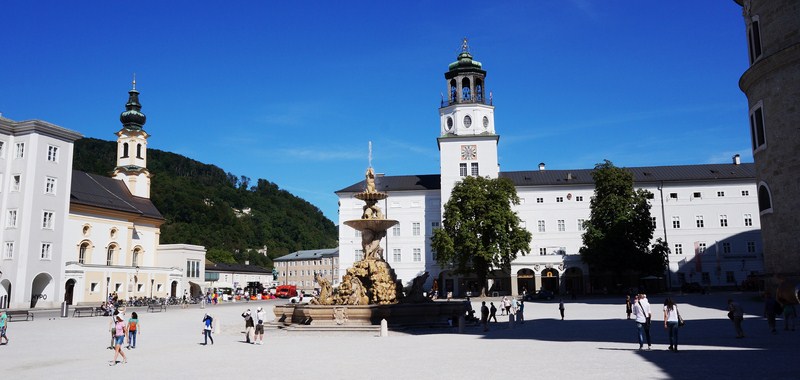
Residenzplatz (Residence Square)

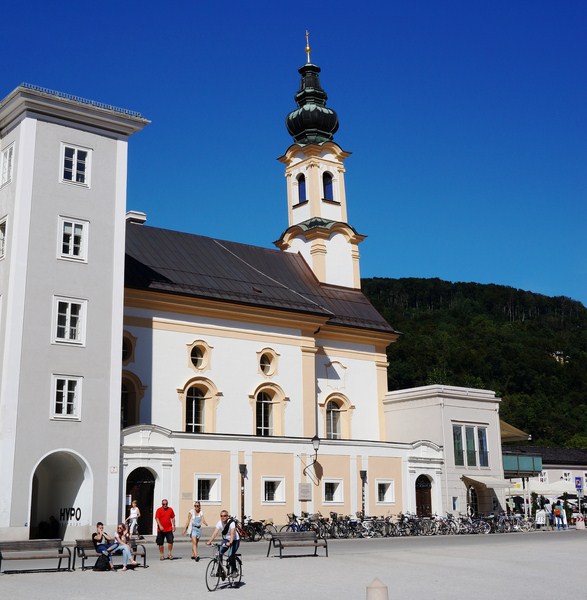
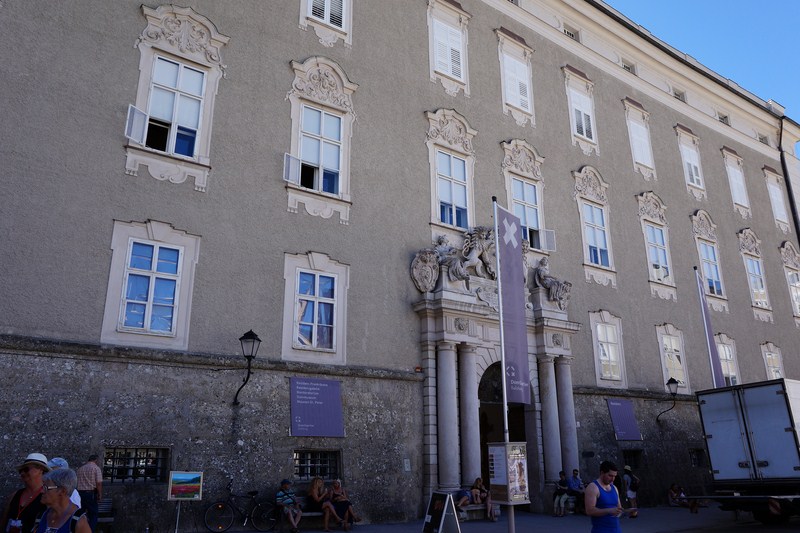
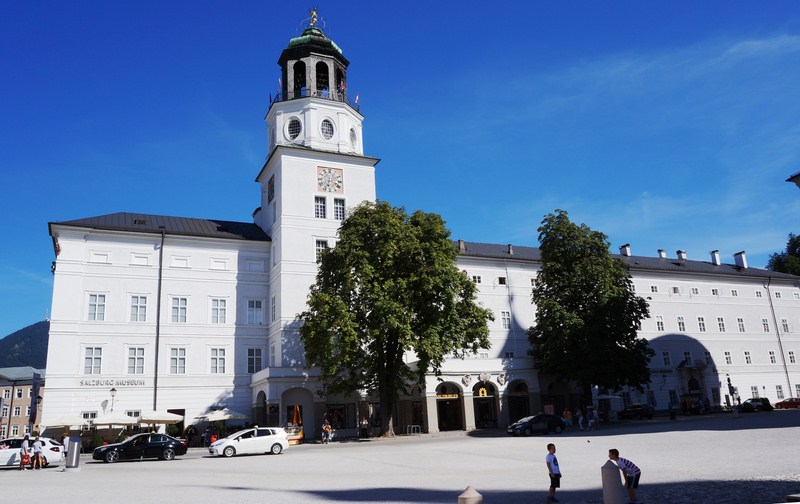
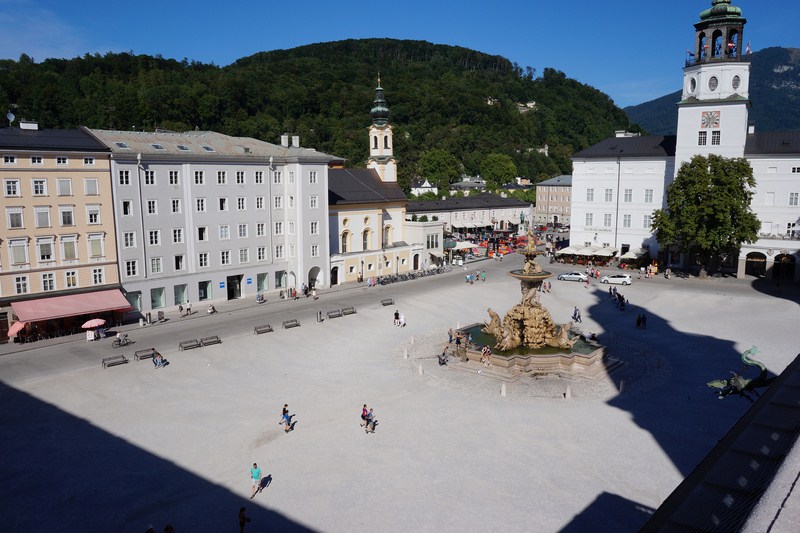
Residenzplatz (Residence Square), a large, stately especially magnificent forecourt in the historic centre (Altstadt), is one of the city’s most popular places to visit. It was named after the Residenz building of the Prince-Archbishops of Salzburg, adjacent to and enclosed by Salzburg Cathedral (Salzburger Dom) in the south, the Alte Residenz in the west and the Renaissance–style Neue Residenz (New Residence, erected from 1588 onwards), with its prominent bell tower, in the east.

Check out “Salzburg Cathedral” and “Residenz Palace

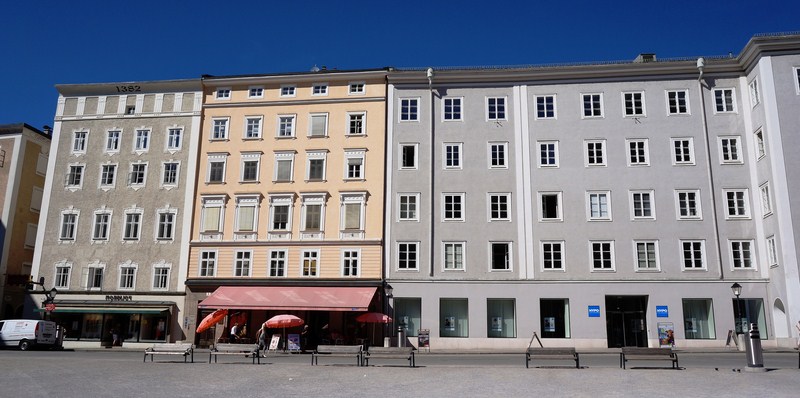
To the north, several historic bürgerhäuser (private houses) frame the square among them the temporary home, at No. 2, of the Baroque painter Johann Michael Rottmayr  where, around 1690, he stayed while creating the ceiling frescoes in the Alte Residenz . The adjacent Mozartplatz leads to the Salzburg Museum.

Check out “Mozartplatz

The setting for the annual kermesse (Kirtag), celebrating the feast of Saint Rupert on September 24, and the Salzburg Christmas market during Advent, Residenzplatz is also a popular venue for big sports or music events, including public airings of football games, live rock concerts in the 1980s and 1990s (Joe CockerTina TurnerNeil Young, etc.) and New Year’s Eve parties. Every summer (July and August), the square is also transformed into an open air cinema where, typically, taped performances of the Salzburg Festival are shown.

Alte Residenz Building

From 1587 onwards, the Residenzplatz, probably the largest and most beautiful of the five squares built at the behest of Prince-Archbishop Wolf Dietrich Raitenau, was laid out, Then called Hauptplatz (“Main Square”), the new public plaza corresponded with the reconstruction of Salzburg Cathedral, according to the Mannerist plans laid out by the Italian architect Vincenzo Scamozzi.

Neue Residenz

Von Raitenau ordered the cemetery of the former medieval monastery north of Salzburg Cathedral abandoned (remnants of the cemetery were recently discovered underneath the square’s surface). Fifty-five medieval buildings were also torn down to provide space for the square.

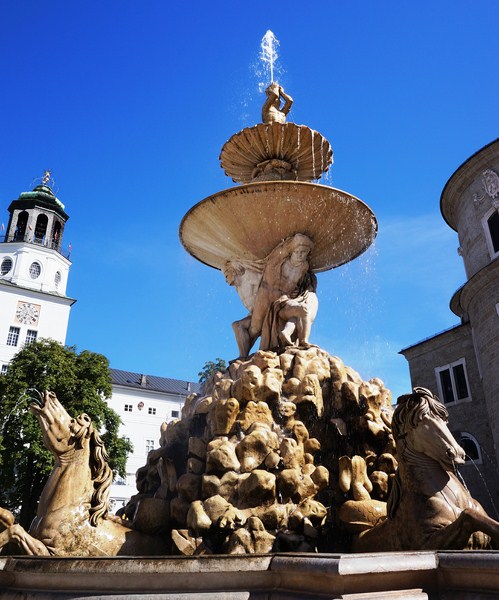
Residenzbrunnen (Residence Fountain)

The Residenzbrunnen (Residence Fountain), the richly decorated fountain in the center of the square, was commissioned by Archbishop Guidobald von Thun, a fountain enthusiast, designed by Tommaso di Garona and was erected with Untersberg limestone (Untersberger Marmor) between 1656 and 1661.

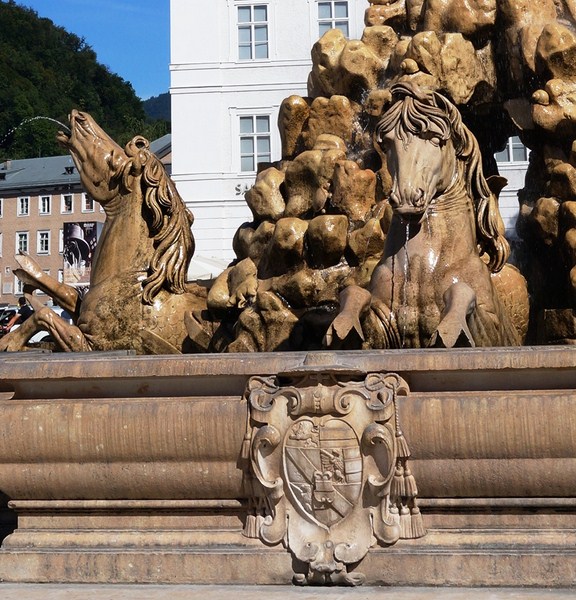
Two of the four horse statues on the fountain

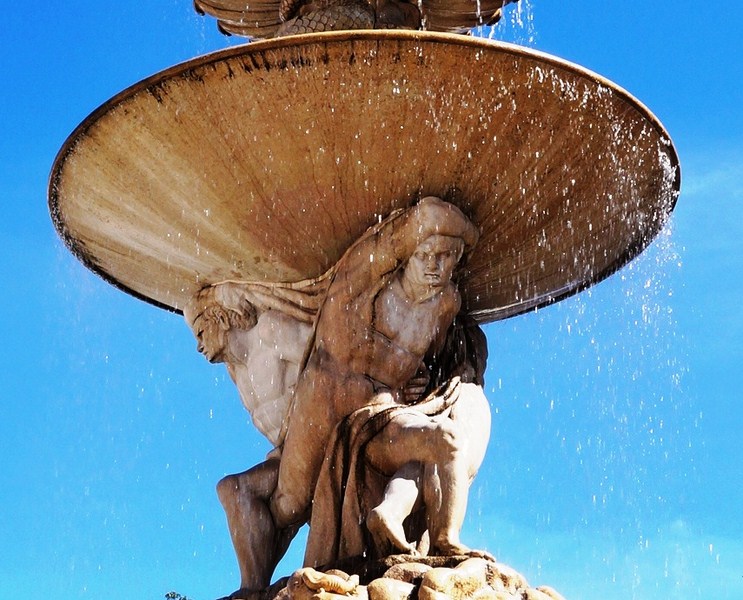
Considered to be the most beautiful fountain in the city of Salzburg and the largest and most significant Baroque fountain in Central Europe, it has four snorting horses seem to spring forth from the spouting rock plus giants, rooted in the rock, carrying the lower basin.

Statues of giants carrying the lower basin

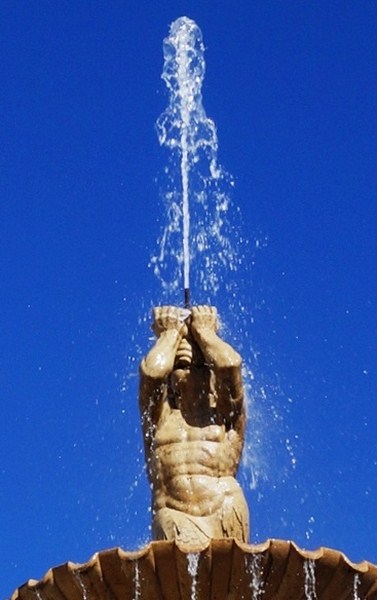
Three dolphins balance the scalloped upper basin which is topped by a Triton statue ejecting the waters upwards into the air from his conch-shell trumpet.

The scalloped upper basin with the statue of Triton

In the Hollywood movie The Sound of Music, as Maria leaves to take up her post with the Von Trapp family, I Have Confidence in Me was filmed in the Residenzplatz, through which Maria enters, and the Residenzbrunnen, in which she splashes. Also, during their carriage ride through the city, Maria and the children sing as they pass the fountain. The Anschluss scene (Austria’s enforced unity with Nazi Germany) was staged in the Residenzplatz.

Check out “Original Sound of Music Tour 

Bird’s eye view of the square

Relatively recently, a patch of the original river-stone surface was revealed, prompting the city to overhaul and refurbished the Residenzplatz completely  with the addition of new paving and a monument commemorating a Nazi book burning conducted at the site on April 30, 1938.

Residentzplatz: Salzburg, 5020 Austria

Mozartplatz (Salzburg, Austria)

Mozartplatz (Mozart Square)

The Mozartplatz (Mozart Square), a rectangular square located in the center of the old Salzburg  historical district, is flanked by Residenz- and Waagplatz squares. This popular tourist attraction in the heart of Salzburg’s Old City is an ideal starting point for city tours.

The main traffic axis, from west to east, ran across the square from Universitätsplatz via Alten Markt and Residenzplatz, which gained additional importance with the construction of the Sigmundstore . From the square, you have direct access to Neue ResidenzSalzburg Cathedral and Traklhaus on Waagplatz.

Check out “Salzburg Cathedral

The square was planned by Wolf Dietrich von Raitenau  in 1588. In 1620, Paris Lodron left the building plots, in the east of the square, to the cathedral architect Santino Solari while on the north, he left the plots to the High Prince Council of Friedrich von Rehlingen. House Mozartplatz 1, the New Residence, now houses the Salzburg Museum .

Wolfgang Amadeus Mozart

Mozart Square and its buildings have close ties to the story of the famous boy genius Wolfgang Amadeus Mozart. Constanze Mozart-Nissen, Mozart’s wife, once lived at the house at No. 8 Mozart Square. A plaque, installed on the wall of the house, reminds us of that time.

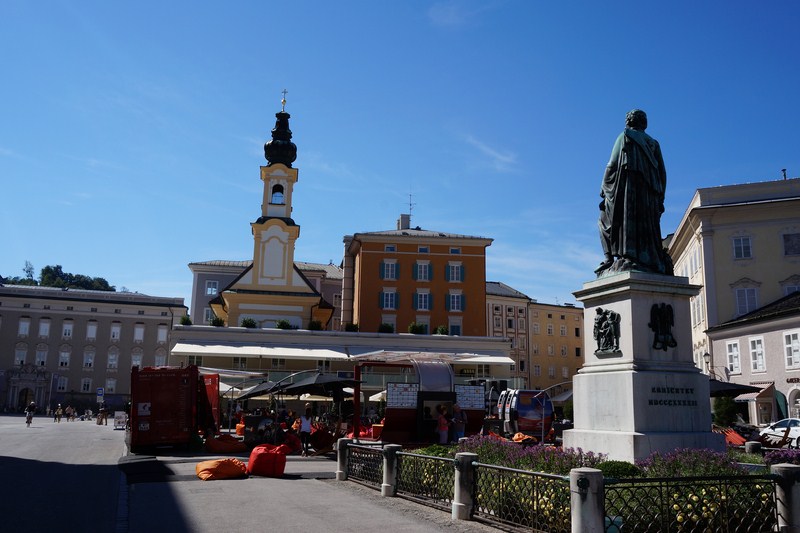
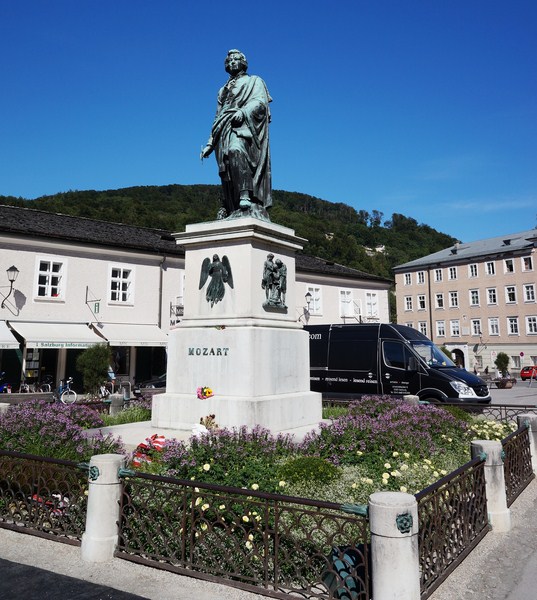
Mozart Memorial

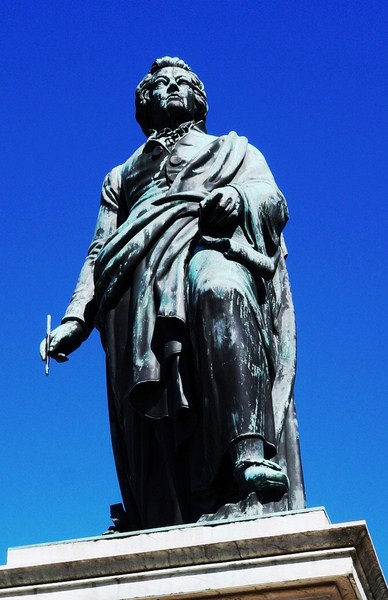
The focal point and standing in the middle of Mozart Square is the Mozart Monument, designed by Ludwig Schwanthaler and cast in bronze by Johann Baptist Stiglmaier, the memorial was solemnly unveiled on September 5, 1842 in the presence of Franz Xaver and Carl Thomas, both Mozart’s surviving sons. However, Mozart’s widow could no longer experience the inauguration (She died on May 1842). King Ludwig I of Bavaria donated  the marble plinth of the bronze statue.

Antretterhaus

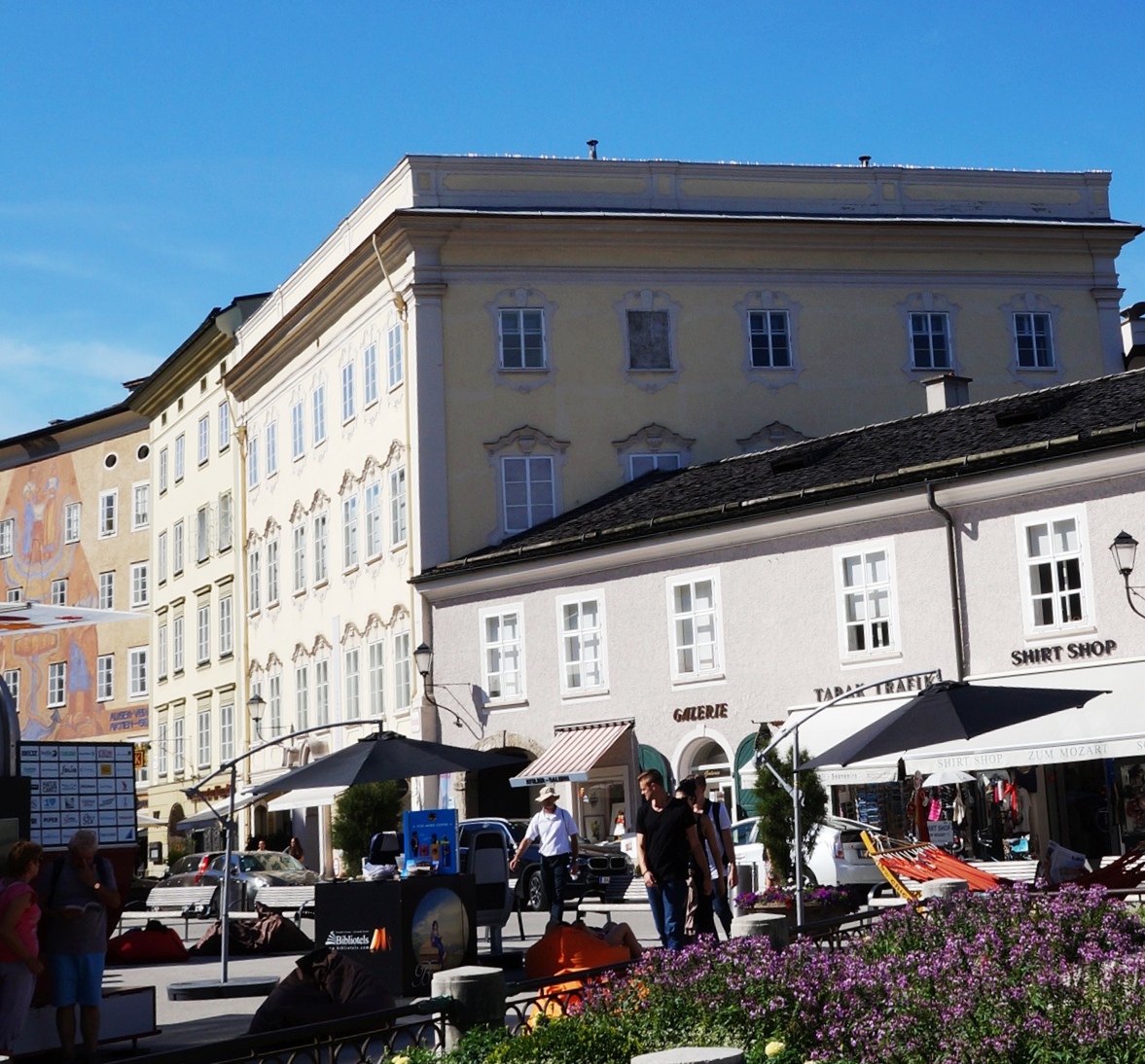
The well-structured Rehlingen (Antretterhaus), a splendid and lively Rococo building at Mozartplatz 4, is the former city palace (Stadpalis Rehlingen) of the noble family of the Lords of Rehlingen  who lived here around 1592 until September 25, 1765 when Johann Ernst von Antretter, the chancellor of the Salzburg countryside and court war councilor, and his wife Maria Anna bought this house.

Subsequently, the Antretter family closely involved Leopold Mozart and his family. Together with Wolfgang Amadeus Mozart, Johann’s son Cajetan Antretter was a member of the Bölzlschützenkompanie, while Johann’s daughter was a student of Maria Anna (“Nannerl”) Mozart.

The Antretter family also commissioned the Antretter Serenade, KV 185, a well-known serenade for orchestras in D major by Wolfgang Amadeus Mozart. On January 28, 1793, the property was auctioned off to the court book printer Franz Xaver Duyle (ca.1743 – 1804 ) and his wife Theresia Weibhauser.  Others who lived in the house were, among others, Johann Alois Duregger (died 1876) and Otto Spängler (1841 – 1919).

It has two courtyards, a richly structured wicker arch portal built between the 16th and 18th centuries and elegant, artfully shaped facade with curved window frames that date from around 1760.  The portals, on the first floor of the house, are made of red marble with relief medallions (lion heads, portraits, Caesar head, pictures of stork, pelican and phoenix) made around 1550 (the coat of arms of the Eberl von Strasenegg bears the year 1656). In addition to the law firms of various lawyers, the Antretterhaus also houses the Institute for Musicology at the University of Salzburg.

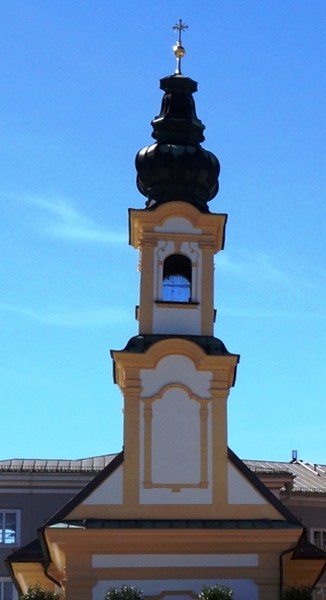
Bell tower of Hauskapelle Mariae Himmelfahrt

The noteworthy, private house chapel (Hauskapelle Mariae Himmelfahrt) attached to the main house, built in 1592 by Friedrich von Rehlingen  on the old city ​​wall and clearly visible from Rudolfskai, is adorned with delicate framed Rococo windows and a bell tower with an onion helmet.

Imhofstöckl

The Antretterhaus is adjoined by the low, two-storey  Imhofstöckl (Mozartplatz 5–7).  Built shortly before 1620,  it is a simple, elongated house covered with wooden shingles and divided by arched, basket-handle portals.  It is only separated from the old Paris Lodron wall by a narrow courtyard. Today, among other things, an official building of the magistrate (cultural department) is housed here.

Kanonikalhöfe

The three Kanonikalhöfe  (Mozartplatz 8, 9 and 10), courts that date from the 17th century, have a uniform facade and. House No. 9 bears the coat of arms of Prince Archbishop Sigismund von Schrattenbach and a coat of arms of Max Gandolf von Kuenburg, including the inscription (1670), can be found above the northern side portal.

After the first owner Santino Solari sold the buildings to the cathedral chapter, the cathedral canons lived here for a long time. Today, apart from apartments, the main offices of the Salzburg State Government and the State School Council are housed there.

Kapitelplatz (Salzburg, Austria)

Kapitelplatz (Chapter Square)

On our way to Hohensalzburg Fortress, we passed by the small but beautiful Kapitelplatz (Chapter Square). This square, a place of concentrated activity in Salzburg’s old town, is bordered by  Salzburg Cathedral, on the south, by the Cathedral Provostry (Dompropstei) and Archiepiscopal Palace in the east, the Novice’s Wing of St. Peter’s Abbey in the west and the Cathedral Chapter’s mills.

Check out Salzburg Cathedral” and “Hohensalzburg Fortress

The cathedral as seen from the square

The Cathedral district was comprised of austere, sovereign residences lined up on Kapitelgasse, Kaigasse and Chiemseegasse and Chapter Square was once the site of the Cathedral Abbey.  Until the archbishopric was dissolved in 1803, the high clergy once resided on the square and in the palaces in the adjacent streets. Dominated by the cathedral canon, this area was defined by majestic and imposing residences lined up along Kapitelgasse, Kaigasse and Chiemseegasse.

Cheska, Kyle, Grace and Jandy browsing at one of the souvenir stalls inside the square

The constant water supply of the canal for the millstones of St. Peter and the Cathedral, diverted through Mönchsberg to the Kapitelplatz,  still supplies water to St. Peter Bakery and the Chapter Fountain (which dates from the 17th century) on the square.

Grace, Kyle and Cheska with the Chapter Fountain in the background

Slightly secluded from the spacious square, the fountain (or horse flood) was modeled on Roman fountains and built under Archbishop Leopold Freihher von  Firmian  in 1732 to plans by  Franz Anton Danreiter. The winged horse ( Pegasus ) which once stood there is now in the Mirabell Gardens.

Check out “Mirabell Palace and Gardens

Te statue of Neptune

Framed by a marble balustrade, it has a niche architecture built in front of the fountain house. The ramp, used by the horses to access the water, leads straight up to the monumental figure of Neptune (God of the Sea), in a high arched niche carried by double pilasters, holding a trident and crown as well as the mane of the horse with one hand and mounted on a seahorse with a fishtail and with water leaping from its nostrils.

The tritones on the left

The tritones on the right

The two water-spitting and much older (made in 1691) Tritones  came to their present place only later.  The water flows in a wide band, under the seahorse, into the lower-lying pool. The Baroque figure, one of the most stylish in Salzburg, was sculpted by  Josef Anton Pfaffinger.  Above the display bell  is a vase decorated with putti with a  chronogram (” LeopoLDVs prInCeps Me eXtrVXIt “) with Archbishop Firmian’s coat of arms found above the niche.

The chronogram above the niche

Filling the square with life are a number of giant communal chess-boards (where people play a game of chess with oversized chess pieces), plenty of colorful souvenir stalls and the “Sphaera,” a work of art by German artist Stephan Balkenhol.

The Sphaera, designed by German artist Stefan Balkenhol, is part of the “Salzburg art project.” Standing about 9 m. high (including the pedestal), this work of art is better known under the slang term “Balkenhol-Mozartkugel.” This abstract, gold-plated, two-ton ball, with a diameter of 5 m., is made of glass fiber reinforced plastic and lies on a wrought iron frame with a weight of 3.5 tons. On top is a 300 kg., bronze male figure dressed in white shirt and black trousers and emanating a neutral expression.

Kapitelplatz: Salzburg 5020, Austria

Place de la Concorde (Paris, France)

Place de la Concorde seen from Jardin des Tuileries

The 7.6-hectare (18.8-acre) Place de la Concorde, situated along the right bank of the Seine River in the  eighth arrondissement, separates the Tuileries Gardens from the beginning of the Boulevard Champs-Elysées. (see map). At the bottom of the Champs Elysées, set in the center, stands an ancient Egyptian obelisk from the Luxor Temple.

Here is the historical timeline of the Place de la Concorde and its sumptuous obelisk:

  • In 1754, construction of the royal square began. First called Place Louis XV, it was designed by Ange-Jacques Gabriel, Louis XV’s architect, for the purpose of showcasing an equestrian statue of the King (commissioned in 1748 by the city of Paris, mostly sculpted by Edmé Bouchardon.and completed by Jean-Baptiste Pigalle after the death of Bouchardon)
  • In 1763, the square was completed.
  • During the French Revolution, the square was renamed as Place de la Révolution and the statue of the king was replaced by the guillotine.
  • With the restoration of the Bourbons, the square was renamed Place Louis XVI and an equestrian statue of King Louis XVI, designed by Jean-Pierre Cortot, was installed.
  • During the July Revolution in 1830, the equestrian statue of King Louis XVI was destroyed.
  • In 1829, Muhammad Ali Pasha (also known as Mehmet Ali Pesha), the self-declared Khedive  of Ottoman Egypt, deciding to dramatically reform the military, cultural and economic aspects of Egypt, offered to France the two obelisks of the first pylon at the front of Luxor Temple (the temple of the god Amon), that Ramesses II had raised in the 13th century BC.
  • In August 1832 (they had to wait for the flood of the river to leave), the French steam paddle ship Sphinx sailed to Alexandria to rendezvous there with the Louqsor. The French seamen then lowered the obelisk with an array of blocks and tackles, yardarms and capstans.
  • On April 1, 1833, the Sphinx and Louqsor depart Alexandria
  • On May 10, 1833, both ships reached Toulon.
  • On August 12, 1833, the ships arrived at Cherbourg port within the Basse Normandie region.
  • On December 21, 1833, the Parisian obelisk arrived in Paris. Sphinx then towed Louqsor back to France.
  • On October 25, 1836, the obelisk was moved to the center of Place de la Concorde and re-erected during a carefully planned ceremony watched and applauded by King Louis-Philippe I and his family, gathered on the balcony of the Hotel de la Marine, and an eager crowd of 200,000 people. The lifting of the obelisk began at 11:30 AM.
  • In 1936, the Luxor Obelisk was officially classified as a Monument Historique.
  • On the morning of December 1, 1993, to mark World AIDS Day, the anti-AIDS Charity Act Up Paris covered the Parisian obelisk with a giant pink condom.
  • In May 1998, as part of the celebrations to mark Franco-Egyptian relations, a 3 m. high pyramid, made of bronze and gold leaf, was added to the top of the monolith by the government of France under then French President Jacques Chirac, to cap the top of the obelisk (its original pyramidion was believed stolen in the 6th century BC).
  • In 1998 and 2000, French urban climber Alain Robert scaled the Parisian obelisk without the use of any ropes or other climbing equipment or safety devices.

The square marks an intersection of two axes. The Voie Triomphale (Triumphal Way), the major axis, extends east-to-west, in a perfectly straight line, from the former royal palace (now the Louvre Museum), past the Arc du Carrousel and through the Tuileries Gardens, up the Champs-Elysées to the Arc de Triomphe, and beyond — now culminating at the Grande Arche in the Paris suburb of La Défense. The second (minor) axis, formed by the line between Place de la Madeleine, down rue Royale through the square and across the Pont de la Concorde, culminates at the Palais Bourbon.

Check out “Arc de Triomphe” and “Arc de Triomphe du Carrousel

Statues, at each corner of the octagon (at one time, the pedestals under these statues were inhabited by citizens of Paris), were initiated by architect Jacques-Ignace Hittorff. They represent the French cities of Brest and Rouen by Jean-Pierre Cortot, Lyon and Marseille by Pierre Petitot, Bordeaux and Nantes by Louis-Denis Caillouette, and Lille and Strasbourg by James Pradier.

Horses of Marly.  These are copies of Costeau’s horses, masterpieces of French sculpture, that were moved to the Louvre in 1984 to be conserved.

The Horses of Marly (Chevaux de Marly), monumental statues of French sculptor Guillaume Coustou the Elder located at the beginning of the Champs Elysées, are copies of the originals which are now exhibited at the Louvre Museum.

The Pont de la Concorde, at the south end of the square, was built between 1787-1790 by Jean-Rodolphe Perronnet and widened between 1930-1932.  It crosses the Seine, leading to the Palais Bourbon, home of the French National Assembly (Assemblée Nationale).


Cheska and Kyle at the rain-swept Place de la Concorde

Bordering the Place de la Concorde are the Galerie Nationale du Jeu de Paume (originally Napoleon III’s indoor tennis court) and Musée de l’Orangerie, both in the Tuileries Gardens; and the Embassy of the United States, located in the corner of the square at the intersection of Avenue Gabriel and Rue Boissy d’Anglas.

Here are some interesting trivia regarding the Place de la Concorde.

  • Measuring 359 m. (1,178 ft.) long by 212 m. (696 ft.) wide, Place de la Concorde is the largest public and, possibly, the most infamous square in Paris and is one of the most well known traffic circles in the world.
  • The square is actually in the shape of an octagon (because of its cut-off corners) and was once bordered by large moats which no longer exist (filled in during the reign of Napoleon III) .
  • Between 1793 and 1795, during the French Revolution, Louis XVI (January 21, 1793),  Princess Élisabeth of FranceMarie Antoinette, Charlotte Corday, Georges Danton,  Camille DesmoulinsAntoine LavoisierMadame du BarryMaximilien Robespierre  Louis de Saint-Just, and Olympe de Gouges and nearly 1,300 others were executed there. It is said that the scent of blood was so strong in the square that a herd of cattle once refused to cross the grounds.
  • Following the Revolution, the square underwent a series of name changes – Place de la Concorde (as a gesture of reconciliation after the turmoil of the revolution), Place Louis XV (again), Place Louis XVIPlace de la Chartre and, once again, Place de la Concorde.
  • Its obelisk, and twin that still stands in front temple in Luxor (formerly the city of Thebes, the second largest city in Egypt at the time), were the largest obelisks to have been erected by Ramses II (others were set up at temples in Heliopolis and Tanis).
  • Obelisks were popular among the Roman emperors so much so that 13 of them were taken to Rome. Today, in addition to that in Paris and the Cleopatra’s Needles in London and New York, historic Egyptian examples are also found in Florence in Italy.
  • Mediating between the Egypt and France was Jean-Francois Champollion, first decipherer of Egyptian hieroglyphs and curator of Egyptian collections at the Louvre Museum. Dying in 1832, he never had the chance to see the completion of his work.
  • Through the efforts of Jean Baptiste Apollinaire Lebas, the two ancient obelisks were presented as a gift to King Charles X. However, King Charles X had already abdicated from the throne, even before the first of the two obelisks was even destined to arrive in Paris, and King Louis Philippe took over.
  • Only the right-hand obelisk in Luxor Temple was transported and erected. The left-hand obelisk remained in its location in Egypt as President Francois Mitterand, on September 26, 1981, renounced the French claim to second Luxor obelisk as a symbolic gesture and one of peace between nations.
  • The original sculpted Egyptian pedestal (both obelisks had identical pedestals), which included the statues of 16 fully sexed carved baboons raising their legs, revealing their sexes (at dawn, ancient Egyptians observed baboons in nature making such a gesture and interpreted this as the animals ‘adoring’ the sun), was deemed too obscene for public exhibition. It is now displayed in the Egyptian section of the Musée du Louvre. A block of granite for the new pedestal was ordered in Brest.
  • To transport the monolith, the 49 m. long, specially designed, purpose-built, flat bottomed and 3-masted barge Louqsor (the first naval steamer), a seagoing freighter, was built by the Toulon naval yard to be able to navigate the Atlantic and the Mediterranean, sail up the Seine and the Nile, and pass under the bridges of Paris.
  • In Luxor, 300 workmen dug a canal to allow the Louqsor to come close to the obelisk. After packing and felling the monolith, it had to be dragged for 400 m. to join the Nile.
  • To lift the obelisk at the Place de Concorde, a counterweight system was developed by engineer Apollinaire Lebas, with 350 gunners operating the lift, with the strength of their arms, while the engineer remains voluntarily under the obelisk.
  • The successful French transport operation of the obelisk (a 9,000-km. journey that lasted seven long years), not an easy engineering feat as the effort, manpower and expertise was tremendous.  It predates, by more than 30 years, the eventful transport of Cleopatra’s Needle by the British.
  • The large mechanical clock, offered in 1845 by King Louis Philippe in exchange for the obelisk, was discovered to be faulty, having probably been damaged during transport. The still not working clock exists in a clock-tower in a mosque at the top of the Cairo Citadel.
  • Compared to the rest of this old monument, the new and shiny pyramidion makes it now known as the most cheerful obelisk in the world for what it represents.
  • In the Star Trek novels, the Place de la Concorde is the location of the offices of the President and the Council of the United Federation of Planets.

The 3,000 year-old, so-called Luxor Obelisk (French: Obélisque de Louxor), of yellow granite and inscribed with hieroglyphs in honor of the Pharaoh Ramesses II, is one of a pair of ancient Egyptian obelisks carved to stand either side of the portal of the Luxor Temple.

The Luxor Obelisk

Flanked on both sides by fountains (Fontaine des Mers and Fontaine des Fleuves) constructed at the time of its erection, the Paris obelisk rises 22.83 m. (74.9 ft,) high, including the base, and weighs over 250 metric tons (280 short tons). Its hieroglyphics depict the rule of Ramses II and Ramses III.

The obelisk’s pedestal

Its present-day pedestal , originally intended for the equestrian statue of King Louis XVI, is now with drawn gilded diagrams explaining the procedures and the complex machinery and different devices that were used for the transportation and erection on the square (just as the pedestal of the Obelisk of Theodosius has relief carvings showing that ancient Egyptian obelisk’s re-erection in Constantinople).

Check out “Louvre Museum” and “Louvre Museum – Egyptian Antiquities Department

Hôtel Crillon, north of the obelisk, was where Marie Antoinette, in happier times, took piano lessons and where, in 1778, France signed a treaty (first in the world) recognizing a free and independent United States of America.

The new pyramidion of the obelisk

Place de la Concorde: 75008 ParisFrance. 

How to Get There:

  • Concorde, the nearest Métro station, is located beneath the Place de la Concorde, at the beginning of the Rue de Rivoli, next to the Jardin des Tuileries.  It serves Lines 1, 8 and 12.  Walking in a northerly direction gets you to the Madeleine stop that serves lines 8, 12 and 14 while walking in a westerly direction, up the famous Avenue des Champs Elysees, you have the Champs-Elysees – Clemenceau stop serving Lines 1 and 13.
  • Several Bus Lines that gets you close by to this historical monument including 24, 42, 72, 73, 84, 94 along with the Noctilien Night Bus Service via lines N11 and N24.  However, the nearest RER train station is the Invalides stop on the left bank of the River Seine, which serves the RER C Line.24, 42, 52, 72, 73, 84, 94.

Tuileries Garden (Paris, France)

Tuileries Garden

The Tuileries Garden (FrenchJardin des Tuileries),  a public garden located between the Louvre and the Place de la Concorde, a place where ordinary Parisians celebrated, met, strolled, relaxed, enjoyed the fresh air and greenery and be entertained.

Check out “Louvre Museum” and “Place de la Concorde

The name of the garden, as well the Tuileries Palace (burned in 1870 during the uprising of the Paris Commune), was derived from the tile-making factories called tuileries (from the French tuile, meaning “tile”) which once occupied the area since the 13th century.

View of Eiffel Tower from the gardens

Here is the historical timeline of the garden:

  • In 1564, Queen Catherine de Medici commissioned Bernard de Carnesse, a landscape architect from Florence, to create an Italian Renaissance garden (the largest and most beautiful garden in Paris at the time) in an enclosed space 500 m. long and 300 m. wide, separated from the new Tuileries Palace by a lane. It was to have fountains, a labyrinth, a grotto and was decorated with faience images of plants and animals, made by Bernard Palissy, whom Catherine had tasked to discover the secret of Chinese porcelain. Six alleys divided it into rectangular compartments which were planted with lawns, flower beds, and small clusters of five trees (called quinconces) and, more practically, with kitchen gardens and vineyards. Catherine used this garden for lavish royal festivities honoring ambassadors from Queen Elizabeth I of England, and the marriage of her daughter, Marguerite de Valois, to Henri III of Navarre (better known as Henry IV, King of France and of Navarre).
  • In 1588, after King Henry III was forced to flee Paris, the gardens fell into disrepair.
  • Henry IV (1589–1610), his successor, and his gardener, Claude Mollet, restored the gardens.  They built a covered promenade the length of the garden, and a parallel alley planted with mulberry trees (where he hoped to cultivate silkworms and start a silk industry in France). He also built a rectangular, 65 m. by 45 m. ornamental lake of with a fountain supplied with water by the new pump called La Samaritaine (built in 1608 on the Pont Neuf). The area between the palace and the former moat of Charles V was turned into the “New Garden” (Jardin Neuf) with a large fountain in the center. Henry IV used the gardens for relaxation and exercise.
  • In 1610, at the death of his father, the Tuileries Gardens became the enormous playground of 9 year old Louis XIII who used it for hunting and where he kept a menagerie of animals. On the north side of the gardens, Marie de’ Medici established a riding school, stables and a covered manege for exercising horses. The gardens were turned into a pleasure spot for the nobility when the king and court were absent from Paris.
  • In 1630, a former rabbit warren and kennel, at the west rampart of the garden, was made into a flower-lined promenade and cabaret (where the daughter of Gaston d’Orléans and the niece of Louis XIII, known as La Grande Mademoiselle, held a sort of court). The “New Garden” of Henry IV (the present-day Carousel) became known as the “Parterre de Mademoiselle.”
  • In 1652, “La Grande Mademoiselle” was expelled from the chateau and garden for having supported the Fronde, an uprising against her cousin, the young Louis XIV.
  • In 1662, to celebrate the birth of his first child, Louis XIV held a vast pageant of mounted courtiers in the New Garden (enlarged by filling in Charles V’s moat and had been turned into a parade ground). Thereafter, the square was known as the Place du Carrousel.
  • In 1664, Colbert, the king’s superintendent of buildings, commissioned the landscape architect André Le Nôtre (the grandson of Pierre Le Nôtre, one of Catherine de’ Medici’s gardeners, and his father Jean had also been a gardener at the Tuileries), to redesign the entire garden. Le Nôtre immediately began transforming the Tuileries into a formal jardin à la française (a style he had first developed at Vaux-le-Vicomte and perfected at Versailles), based on symmetry, order and long perspectives.
  • In 1667, at the request of Charles Perrault (the famous author of Sleeping Beautyand other fairy tales), the Tuileries Garden was eventually opened to the public (with the exception of beggars, “lackeys” and soldiers). It was the first royal garden to be open to the public.
  • In 1682, furious with the Parisians for resisting his authority, the king abandoned Paris and moved to Versailles. The garden was abandoned for nearly forty years.
  • In 1719, La Renommée and Mercure, two large equestrian statuary groups  by the sculptor Antoine Coysevox, were brought from the king’s residence at Marly and placed at the west entrance of the garden. Along the Grande Allée, other statues by Nicolas Coustou and Guillaume Coustou the Elder, Corneille Van Clève, Sebastien Slodz, Thomas Regnaudin and Antoine Coysevox were placed. To make access to the garden easier, a swing bridge was placed at the west end over the moat. A grand vestibule to the garden was created with the place Louis XV (now Place de la Concorde). Certain holidays, such as August 25, the feast day of Saint Louis, were celebrated with concerts and fireworks in the park.
  • On October 6, 1789, as the French Revolution began, King Louis XVI was brought against his will to the Tuileries Palace and the garden was closed to the public except in the afternoon. A part of the garden, first at the west end of the Promenade Bord d’eaux, then at the edge of the Place Louis XV, was given for the private use of Queen Marie Antoinette and the Dauphin.
  • On the evening of September 18, 1791, after the king’s failed attempt to escape France and during the festival organized to celebrate the new French Constitution, when the alleys of the park were illuminated with pyramids and rows of lanterns, the royal family was allowed to walk in the park.
  • On August 10, 1792, a mob stormed the Tuileries Palace and the king’s Swiss guards were chased through the gardens and massacred.
  • After the king’s removal from power and execution, the Tuileries became the National Garden (Jardin National) of the new French Republic.
  • In 1794, the painter Jacques-Louis David, and to his brother in law, the architect August Cheval de Saint-Hubert were assigned the renewal of the gardens by the new government, conceiving a garden decorated with Roman porticos, monumental porches, columns, and other classical decoration. The project was never completed and all that remains today are the two exedres, semicircular low walls crowned with statues by the two ponds in the center of the garden. While David’s project was not finished, large numbers of statues from royal residences were brought to the gardens for display. The garden was also used for revolutionary holidays and festivals.
  • On June 8, 1794, Robespierre organized a ceremony in the Tuileries in honor of the Cult of the Supreme Being, with sets and costumes designed by Jacques-Louis David. After a hymn written for the occasion, Robespierre set fire to mannequins representing Atheism, Ambition, Egoism and False Simplicity, revealing a statue of Wisdom.
  • In 1780, public toilets were added.
  • On December 1, 1783, a famous early balloon ascent, by Jacques Alexandre César Charlesand Nicolas Louis Robert, was made from the garden. Small food stands were placed in the park, and chairs could be rented for a small fee.
  • On April 2, 1810, Napoleon Bonaparte used the garden as passage of his own wedding procession when he married the Archduchess Marie-Louise of Austria.
  • After the fall of Napoleon, the garden briefly became the encampment of the occupying Austrian and Russian soldiers.
  • After the restoration of the monarchy, and the new King Charles X renewed an old tradition and celebrated the feast day of Saint Charles in the garden.
  • In 1830, after a brief revolution, the new king Louis-Philippe, wanting a private garden within the Tuileries, separated a section of the garden in front of the palace with a fence, decorating the new private garden with a small moat, flower beds and eight new statues by sculptors of the period.
  • In 1852, following another revolution and the short-lived Second Republic, the new Emperor Louis Napoleon enlarged his private reserve within the garden further to the west as far as the north–south alley that crossed the large round basin, so that included the two small round basins. His new garden was decorated with beds of exotic plants and flowers and new statues.
  • In 1859, Louis Napoleon made the Terrasse du bord-de-l’eau into a playground for his son, the Prince Imperial. He also constructed the Jeu de paume and the Orangerie, twin pavilions at the west end of the garden and built, at the west entrance, a new stone balustrade. From May to November, when The Emperor was not in Paris, the entire garden, including his private garden and the playground, were usually open to the public.
  • In 1883, the ruins of the burnt out palace were torn and the empty site, between the two pavilions of the Louvre, became part of the garden.
  • At the 1900 Summer Olympics, the Gardens hosted the fencing
  • In the years between the two World Wars, the Jeu de paume tennis court was turned into a gallery, its western part was used to display the Water Lilies series of paintings by Claude Monet. The Orangerie became an art gallery for contemporary western art.
  • At the end of the 19th and beginning of the 20th century, the Tuilieries Garden was filled with entertainments for the public (acrobats, puppet theaters, lemonade stands, small boats on the lakes, donkey rides, and stands selling toys).
  • In 1914, during the First World War, the statues in the garden were surrounded by sandbags.
  • In 1918, two German long-range artillery shells landed in the garden.
  • During the German Occupation of World War II (1940 to 1944), the Jeu de paume was used by the Germans as a depot for storing art they stole or expropriated from Jewish families.
  • In 1927, the Jeu de Paume became an annex of the Luxembourg Palace Museum for the display of contemporary art from outside France.
  • In 1944, the liberation of Paris saw considerable fighting in the garden and, during the battle, Monet’s paintings Water Lilies were seriously damaged.
  • From 1947 until 1986, the Jeu de Paume served as the Musée du Jeu de Paume, which held many important Impressionist works now housed in the Musée d’Orsay.
  • In 1964–65, André Malraux (the Minister of Culture for President Charles de Gaulle) removed the 19th century statues which surrounded the Place du Carrousel and replaced them with contemporary sculptures by Aristide Maillol.
  • In 1994, as part of the Grand Louvre project launched by President François Mitterrand, the Belgian landscape architect Jacques Wirtz remade the garden of the Carrousel, adding labyrinths and a fan of low hedges radiating from the triumphal arch in the square.
  • In 1995, the Jardin du Carrousel was remade to showcase a collection of 21 statues by Aristide Maillol, which had been put in the Tuileries in 1964.
  • In 1998, under President Jacques Chirac, works of modern sculpture by Jean DubuffetHenri LaurensÉtienne MartinHenry MooreGermaine RichierAuguste Rodin and David Smith were placed in the garden.
  • In 2000, the works of living artists (Magdalena AbakanowiczLouise BourgeoisTony CraggRoy LichtensteinFrançois MorrelletGiuseppe PenoneAnne Rochette and Lawrence Weiner) were added. At the same time, another ensemble of three works by Daniel DezeuzeErik Dietman and Eugène Dodeigne, called Prière Toucher (Eng: Please Touch), was added.
  • At the beginning of the 21st century, French landscape architects Pascal Cribier and Louis Benech have been working to restore some of the early features of the André Le Nôtre garden.

Check out “Musee d’Orsay

The Grand Carré (Large Square), the eastern, open part of the Tuilieries Garden, still follows the formal plan of the Garden à la française created in the 17th century by André Le Nôtre. The eastern part, surrounding the round pond, was the private garden, separated from the rest of the Tuileries by a fence, of Louis Philippe and Napoleon III.  Most of its statues were put in place in the 19th century. 

Statue of Diane Chasseresse (Louis-Auguste Levesque)

Nymphe (1866) and Diane Chasseresse (Diana the Huntress) (1869), both done by Louis Auguste Lévêque, marks the beginning of the central allée which runs east-west through the park.

Statue of Nymphe (Louis-Auguste Levesque)

Tigre terrassant un crocodile (Tiger overwhelming a crocodile, 1873) and Tigresse portant un paon à ses petits (Tigress bringing a peacock to her young, 1873), both by Auguste Cain, are located by the two small round ponds.

The large round pond is surrounded by statues on themes from antiquity, allegory, and ancient mythology and in violent poses alternating with those in serene poses. On the south side, starting from the east entrance of the large round pond, they are:

The Good Samaritan (François Sicard)

On the north side, starting at the west entrance to the pond, they are:

The Centaur Nessus Carrying Off Dejanire (Laurent Honoré Marqueste)

Le Grand Couvert, the part of the garden covered with trees, has  two cafes named after two famous cafes once located in the garden – the Café Very (which had been on the Terrace des Feuiillants in the 18th–19th century) and the Café Renard (which in the 18th century had been a popular meeting place on the western terrace).

The Oath of Spartacus (Louis Ernest Barrias)

It also contains the two exedras (low curving walls built to display statues which survived from the French Revolution), built in 1799 by Jean Charles Moreau (as part of a larger unfinished project designed by painter Jacques-Louis David in 1794), now decorated with plaster casts of moldings on mythological themes from the park of Louis XIV at Marly.

Pericles Giving Crowns to Artists (Jean-Baptiste Debay Pėre)

The Grand Couvert also contains a number of important works of the 20th century and contemporary sculpture, including:

The Standing Woman (Gaston Lachaise)

The Orangerie (Musée de l’Orangerie), built in 1852 by the architect Firmin Bourgeois, is located at the west end of the garden, close to the Seine River. Since 1927, it has displayed many large examples of Claude Monet‘s Water Lilies series as well as the Walter-Guillaume collection of Impressionist painting.

Bassin Octogonal

On the terrace are four works of sculpture by Auguste RodinLe Baiser (1881–1898); Eve (1881) and La Grande Ombre (1880) and La Meditation avc bras (1881–1905). It also has a modern work, Grand Commandement blanc (1986) by Alain Kirili.

The partially installed Roue de Paris, a 60-m. (200-ft.) tall transportable Ferris wheel, originally installed on the Place de la Concorde for the 2000 millennium celebrations.

The Jardin du Carrousel, also known as the Place du Carrousel, is the part of the garden that used to be enclosed by the two wings of the Louvre and by the Tuileries Palace. In the 18th century it was used as a parade ground for cavalry and other festivities. The Arc de Triomphe du Carrousel, its central feature, was built to celebrate the victories of Napoleon, with bas-relief sculptures of his battles by Jean Joseph Espercieux.

Check out “Arc de Triomphe du Carrousel


La Comédie (Julien Toussaint Roux)

The elevated Terrasse (terrace), between the Carrousel and the rest of the garden, used to be at the front of the Tuileries Palace which, after the Palace was burned in 1870, was made into a road, which was put underground in 1877. The terrace is decorated by two large vases which used to be in the gardens of Versailles, and two statues by Aristide Maillol; the Monument to Cézanne on the north and the Monument aux morts de Port Vendres on the south.


From the Terrasse, two stairways descend to the moat named for Charles V of France, (who rebuilt the Louvre in the 14th century), part of the old fortifications which originally surrounded the palace. On the west side are traces left by the fighting during the unsuccessful siege of Paris by Henry IV of France in 1590 during the French Wars of Religion.

Since 1994, the moat has been decorated with statues from the facade of the old Tuileries Palace and with bas-reliefs made in the 19th century during the Restoration of the French monarchy which were meant to replace the Napoleonic bas-reliefs on the Arc de Triomphe du Carrousel, but were never put in place.

The Jeu de Paume (Galerie nationale du Jeu de Paume), built in 1861 by the architect Viraut, was enlarged in 1878. Today, it is used for exhibits of modern and contemporary art.  On the terrace in front of the Jeu de Paume is the Le Bel Costumé (1973), a work of sculpture by Jean Dubuffet.

Tuileries Garden: 1st arrondissement, ParisFrance

Sta. Fe Forest Park (Sta. Fe, Nueva Vizcaya)

For the second time around, I was asked to cover the Kalanguya Festival (the first time was in March 15, 2003), now on its 20th year, in Sta. Fe, Nueva Vizcaya, joining a media group consisting of two other print media representatives (Roel Hoang Manipon, Asst. Editor of The Daily Tribune, and Alexis B. Romero, reporter of The Philippine Star) and three staff from the Department of Tourism (Rolando “Rollie” Cagasca, Ramon “Mon” Rebulado and Gener Carlos).

San Jose City (Nueva Ecija)

San Jose City (Nueva Ecija)

We all left Manila by 7:15 AM and the 216.85-km. trip took all of 6 hrs., including a stopover for lunch at a Chowking branch in San Jose City (Nueva Ecija). We arrived at the town by 1:30 PM and were warmly welcomed by Mayor Liwayway C. “Liway” Caramat and Municipal Tourism Promotion & Development Officer Ma. Theresa Farrah C. Dugay.

Ms. Ma. Theresa Farrah C. Dugay and Mayor Caramat

Ms. Ma. Theresa Farrah C. Dugay and Mayor Caramat

After our courtesy call on Mayor Caramat, , we were checked in at cottages within the 2,200-hectare Santa Fe Forest Park, a reforestation project with Benguet pine and West Indian mahogany (Swietenia mahagoni). The Grand Parade was to also start here and contingent members were billeted within buildings in the park.

Sta. Fe Forest Park

Sta. Fe Forest Park

Mahogany trees along the driveway

Mahogany trees along the driveway

The Santa Fe Forest Park was an erstwhile reforestation project of the DENR that commenced in the mid-1950s. It covers around 2,200 hectares of areas in Barangays Bacneng, Baliling Villa Flores and Poblacion. On September 22, 1997, the Sta. Fe Forest Park was established for nature-based tourism, covering about 1,000 hectares within the 11,664 ha Consuelo Reforestation Project.

Cottages

Cottages

Multi-Purpose Hall

Multi-Purpose Hall

P1230744

The DENR, through a Memorandum of Agreement, handed over the management of the reforestation project to the LGU of Sta. Fe, which eventually paved towards the development of the erstwhile project into a forest park.