Kapitelplatz (Salzburg, Austria)

Kapitelplatz (Chapter Square)

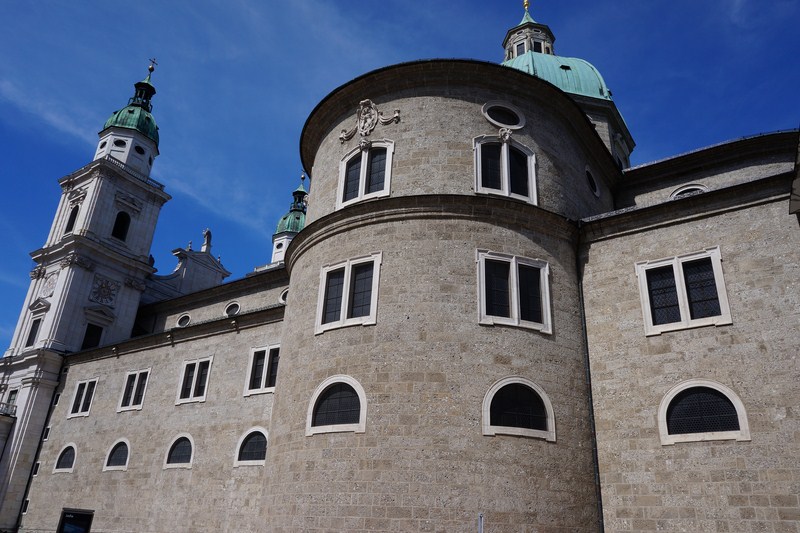
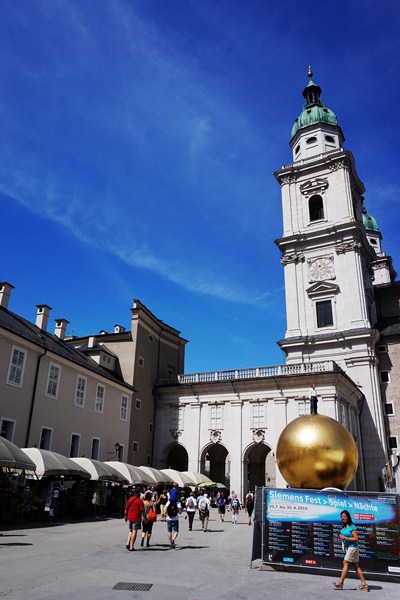
On our way to Hohensalzburg Fortress, we passed by the small but beautiful Kapitelplatz (Chapter Square). This square, a place of concentrated activity in Salzburg’s old town, is bordered by  Salzburg Cathedral, on the south, by the Cathedral Provostry (Dompropstei) and Archiepiscopal Palace in the east, the Novice’s Wing of St. Peter’s Abbey in the west and the Cathedral Chapter’s mills.

Check out Salzburg Cathedral” and “Hohensalzburg Fortress

The cathedral as seen from the square

The Cathedral district was comprised of austere, sovereign residences lined up on Kapitelgasse, Kaigasse and Chiemseegasse and Chapter Square was once the site of the Cathedral Abbey.  Until the archbishopric was dissolved in 1803, the high clergy once resided on the square and in the palaces in the adjacent streets. Dominated by the cathedral canon, this area was defined by majestic and imposing residences lined up along Kapitelgasse, Kaigasse and Chiemseegasse.
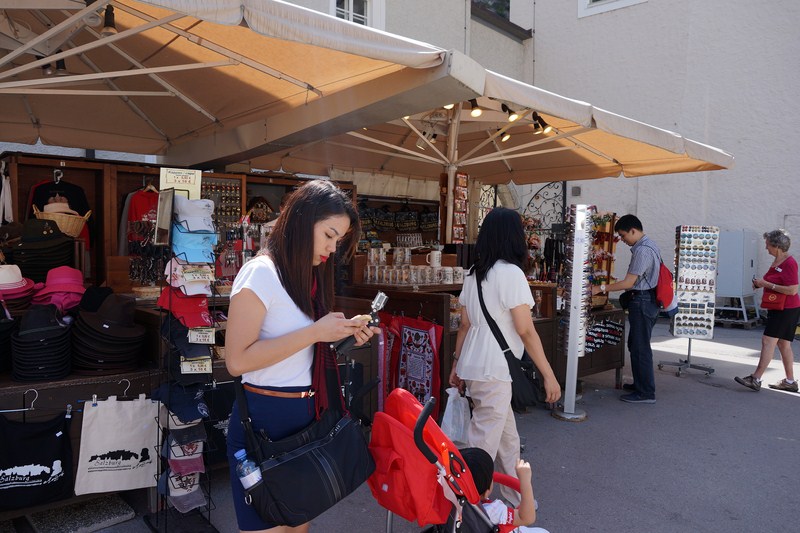
Cheska, Kyle, Grace and Jandy browsing at one of the souvenir stalls inside the square

The constant water supply of the canal for the millstones of St. Peter and the Cathedral, diverted through Mönchsberg to the Kapitelplatz,  still supplies water to St. Peter Bakery and the Chapter Fountain (which dates from the 17th century) on the square.
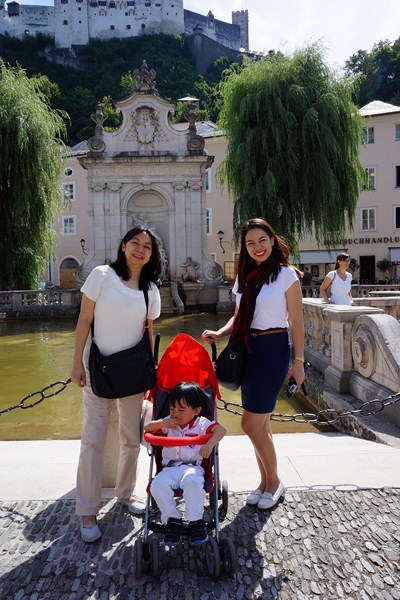
Grace, Kyle and Cheska with the Chapter Fountain in the background

Slightly secluded from the spacious square, the fountain (or horse flood) was modeled on Roman fountains and built under Archbishop Leopold Freihher von  Firmian  in 1732 to plans by  Franz Anton Danreiter. The winged horse ( Pegasus ) which once stood there is now in the Mirabell Gardens.

Check out “Mirabell Palace and Gardens

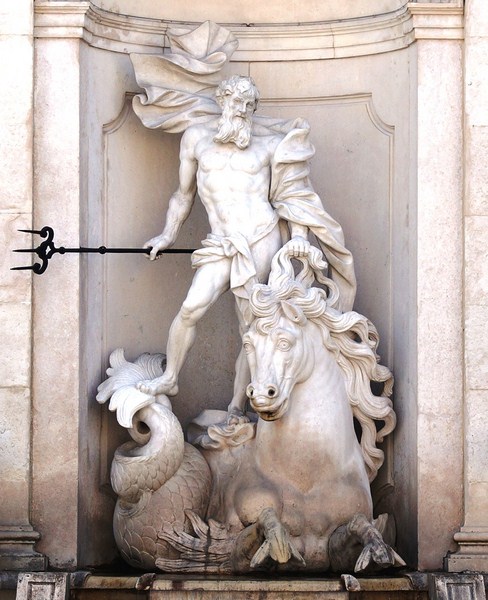
Te statue of Neptune

Framed by a marble balustrade, it has a niche architecture built in front of the fountain house. The ramp, used by the horses to access the water, leads straight up to the monumental figure of Neptune (God of the Sea), in a high arched niche carried by double pilasters, holding a trident and crown as well as the mane of the horse with one hand and mounted on a seahorse with a fishtail and with water leaping from its nostrils.
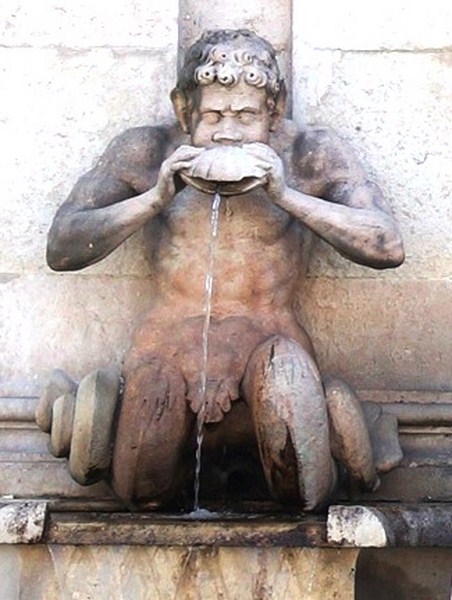
The tritones on the left
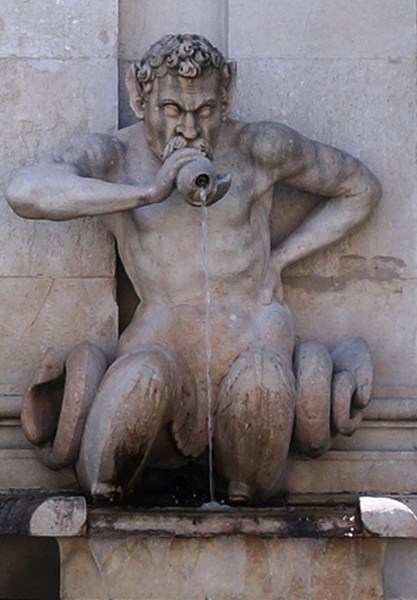
The tritones on the right

The two water-spitting and much older (made in 1691) Tritones  came to their present place only later.  The water flows in a wide band, under the seahorse, into the lower-lying pool. The Baroque figure, one of the most stylish in Salzburg, was sculpted by  Josef Anton Pfaffinger.  Above the display bell  is a vase decorated with putti with a  chronogram (” LeopoLDVs prInCeps Me eXtrVXIt “) with Archbishop Firmian’s coat of arms found above the niche.
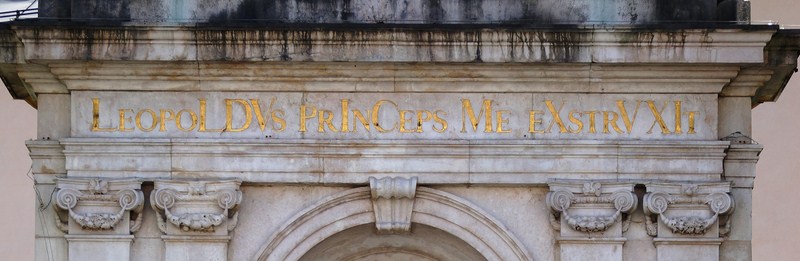
The chronogram above the niche

Filling the square with life are a number of giant communal chess-boards (where people play a game of chess with oversized chess pieces), plenty of colorful souvenir stalls and the “Sphaera,” a work of art by German artist Stephan Balkenhol.
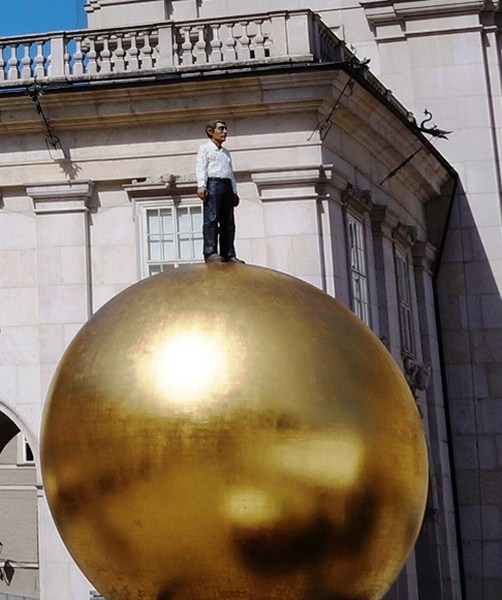
The Sphaera, designed by German artist Stefan Balkenhol, is part of the “Salzburg art project.” Standing about 9 m. high (including the pedestal), this work of art is better known under the slang term “Balkenhol-Mozartkugel.” This abstract, gold-plated, two-ton ball, with a diameter of 5 m., is made of glass fiber reinforced plastic and lies on a wrought iron frame with a weight of 3.5 tons. On top is a 300 kg., bronze male figure dressed in white shirt and black trousers and emanating a neutral expression.

Kapitelplatz: Salzburg 5020, Austria
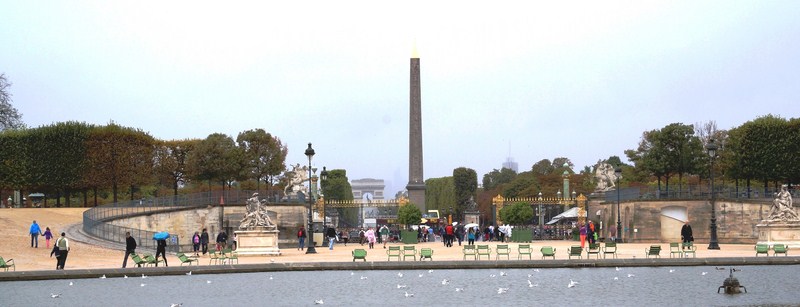
Place de la Concorde (Paris, France)

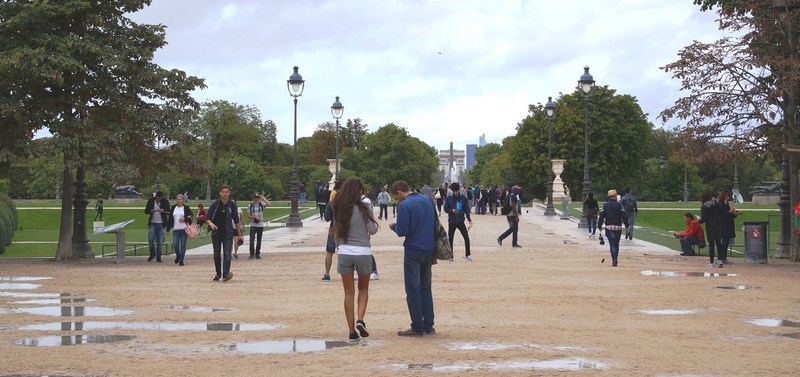
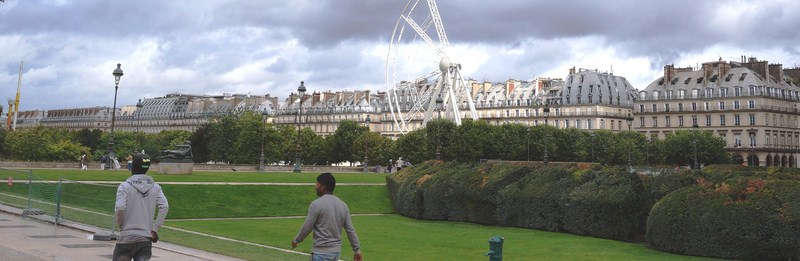
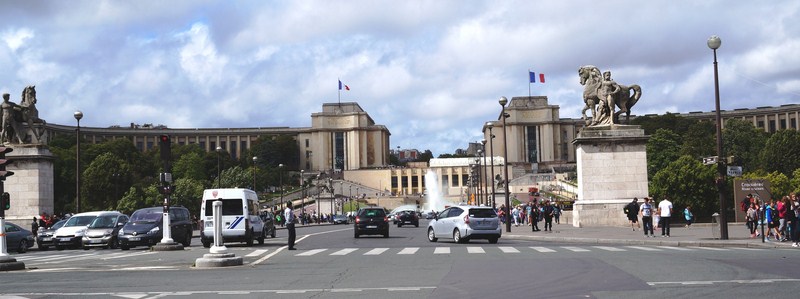
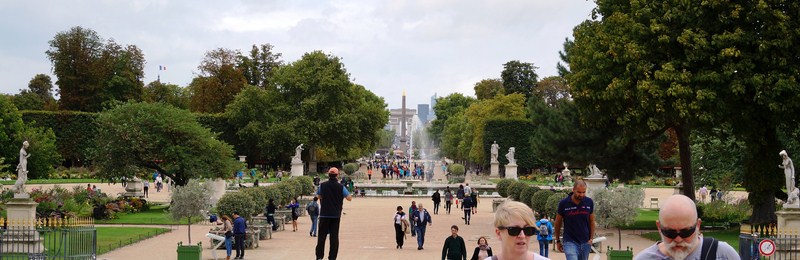
Place de la Concorde seen from Jardin des Tuileries

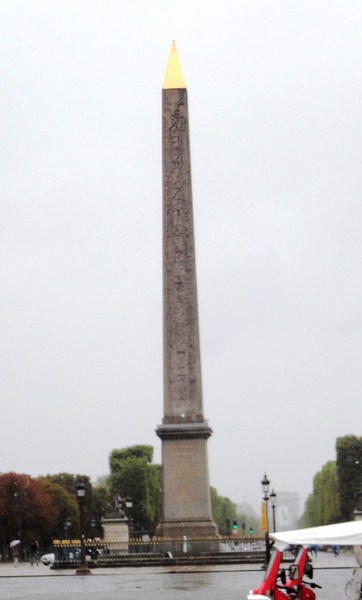
The 7.6-hectare (18.8-acre) Place de la Concorde, situated along the right bank of the Seine River in the  eighth arrondissement, separates the Tuileries Gardens from the beginning of the Boulevard Champs-Elysées. (see map). At the bottom of the Champs Elysées, set in the center, stands an ancient Egyptian obelisk from the Luxor Temple.

Here is the historical timeline of the Place de la Concorde and its sumptuous obelisk:

  • In 1754, construction of the royal square began. First called Place Louis XV, it was designed by Ange-Jacques Gabriel, Louis XV’s architect, for the purpose of showcasing an equestrian statue of the King (commissioned in 1748 by the city of Paris, mostly sculpted by Edmé Bouchardon.and completed by Jean-Baptiste Pigalle after the death of Bouchardon)
  • In 1763, the square was completed.
  • During the French Revolution, the square was renamed as Place de la Révolution and the statue of the king was replaced by the guillotine.
  • With the restoration of the Bourbons, the square was renamed Place Louis XVI and an equestrian statue of King Louis XVI, designed by Jean-Pierre Cortot, was installed.
  • During the July Revolution in 1830, the equestrian statue of King Louis XVI was destroyed.
  • In 1829, Muhammad Ali Pasha (also known as Mehmet Ali Pesha), the self-declared Khedive  of Ottoman Egypt, deciding to dramatically reform the military, cultural and economic aspects of Egypt, offered to France the two obelisks of the first pylon at the front of Luxor Temple (the temple of the god Amon), that Ramesses II had raised in the 13th century BC.
  • In August 1832 (they had to wait for the flood of the river to leave), the French steam paddle ship Sphinx sailed to Alexandria to rendezvous there with the Louqsor. The French seamen then lowered the obelisk with an array of blocks and tackles, yardarms and capstans.
  • On April 1, 1833, the Sphinx and Louqsor depart Alexandria
  • On May 10, 1833, both ships reached Toulon.
  • On August 12, 1833, the ships arrived at Cherbourg port within the Basse Normandie region.
  • On December 21, 1833, the Parisian obelisk arrived in Paris. Sphinx then towed Louqsor back to France.
  • On October 25, 1836, the obelisk was moved to the center of Place de la Concorde and re-erected during a carefully planned ceremony watched and applauded by King Louis-Philippe I and his family, gathered on the balcony of the Hotel de la Marine, and an eager crowd of 200,000 people. The lifting of the obelisk began at 11:30 AM.
  • In 1936, the Luxor Obelisk was officially classified as a Monument Historique.
  • On the morning of December 1, 1993, to mark World AIDS Day, the anti-AIDS Charity Act Up Paris covered the Parisian obelisk with a giant pink condom.
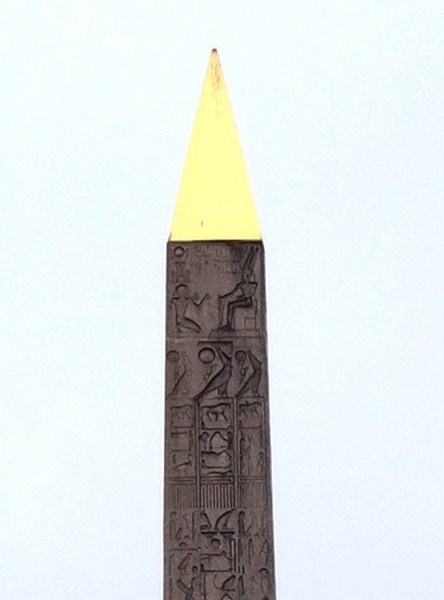
  • In May 1998, as part of the celebrations to mark Franco-Egyptian relations, a 3 m. high pyramid, made of bronze and gold leaf, was added to the top of the monolith by the government of France under then French President Jacques Chirac, to cap the top of the obelisk (its original pyramidion was believed stolen in the 6th century BC).
  • In 1998 and 2000, French urban climber Alain Robert scaled the Parisian obelisk without the use of any ropes or other climbing equipment or safety devices.

The square marks an intersection of two axes. The Voie Triomphale (Triumphal Way), the major axis, extends east-to-west, in a perfectly straight line, from the former royal palace (now the Louvre Museum), past the Arc du Carrousel and through the Tuileries Gardens, up the Champs-Elysées to the Arc de Triomphe, and beyond — now culminating at the Grande Arche in the Paris suburb of La Défense. The second (minor) axis, formed by the line between Place de la Madeleine, down rue Royale through the square and across the Pont de la Concorde, culminates at the Palais Bourbon.

Check out “Arc de Triomphe” and “Arc de Triomphe du Carrousel

Statues, at each corner of the octagon (at one time, the pedestals under these statues were inhabited by citizens of Paris), were initiated by architect Jacques-Ignace Hittorff. They represent the French cities of Brest and Rouen by Jean-Pierre Cortot, Lyon and Marseille by Pierre Petitot, Bordeaux and Nantes by Louis-Denis Caillouette, and Lille and Strasbourg by James Pradier.

Horses of Marly.  These are copies of Costeau’s horses, masterpieces of French sculpture, that were moved to the Louvre in 1984 to be conserved.

The Horses of Marly (Chevaux de Marly), monumental statues of French sculptor Guillaume Coustou the Elder located at the beginning of the Champs Elysées, are copies of the originals which are now exhibited at the Louvre Museum.

The Pont de la Concorde, at the south end of the square, was built between 1787-1790 by Jean-Rodolphe Perronnet and widened between 1930-1932.  It crosses the Seine, leading to the Palais Bourbon, home of the French National Assembly (Assemblée Nationale).


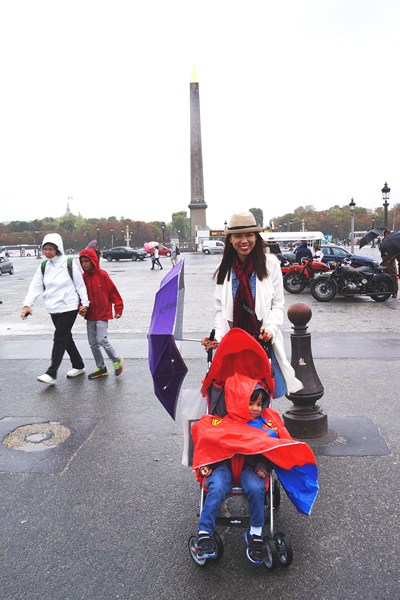
Cheska and Kyle at the rain-swept Place de la Concorde

Bordering the Place de la Concorde are the Galerie Nationale du Jeu de Paume (originally Napoleon III’s indoor tennis court) and Musée de l’Orangerie, both in the Tuileries Gardens; and the Embassy of the United States, located in the corner of the square at the intersection of Avenue Gabriel and Rue Boissy d’Anglas.

Here are some interesting trivia regarding the Place de la Concorde.
  • Measuring 359 m. (1,178 ft.) long by 212 m. (696 ft.) wide, Place de la Concorde is the largest public and, possibly, the most infamous square in Paris and is one of the most well known traffic circles in the world.
  • The square is actually in the shape of an octagon (because of its cut-off corners) and was once bordered by large moats which no longer exist (filled in during the reign of Napoleon III) .
  • Between 1793 and 1795, during the French Revolution, Louis XVI (January 21, 1793),  Princess Élisabeth of FranceMarie Antoinette, Charlotte Corday, Georges Danton,  Camille DesmoulinsAntoine LavoisierMadame du BarryMaximilien Robespierre  Louis de Saint-Just, and Olympe de Gouges and nearly 1,300 others were executed there. It is said that the scent of blood was so strong in the square that a herd of cattle once refused to cross the grounds.
  • Following the Revolution, the square underwent a series of name changes – Place de la Concorde (as a gesture of reconciliation after the turmoil of the revolution), Place Louis XV (again), Place Louis XVIPlace de la Chartre and, once again, Place de la Concorde.
  • Its obelisk, and twin that still stands in front temple in Luxor (formerly the city of Thebes, the second largest city in Egypt at the time), were the largest obelisks to have been erected by Ramses II (others were set up at temples in Heliopolis and Tanis).
  • Obelisks were popular among the Roman emperors so much so that 13 of them were taken to Rome. Today, in addition to that in Paris and the Cleopatra’s Needles in London and New York, historic Egyptian examples are also found in Florence in Italy.
  • Mediating between the Egypt and France was Jean-Francois Champollion, first decipherer of Egyptian hieroglyphs and curator of Egyptian collections at the Louvre Museum. Dying in 1832, he never had the chance to see the completion of his work.
  • Through the efforts of Jean Baptiste Apollinaire Lebas, the two ancient obelisks were presented as a gift to King Charles X. However, King Charles X had already abdicated from the throne, even before the first of the two obelisks was even destined to arrive in Paris, and King Louis Philippe took over.
  • Only the right-hand obelisk in Luxor Temple was transported and erected. The left-hand obelisk remained in its location in Egypt as President Francois Mitterand, on September 26, 1981, renounced the French claim to second Luxor obelisk as a symbolic gesture and one of peace between nations.
  • The original sculpted Egyptian pedestal (both obelisks had identical pedestals), which included the statues of 16 fully sexed carved baboons raising their legs, revealing their sexes (at dawn, ancient Egyptians observed baboons in nature making such a gesture and interpreted this as the animals ‘adoring’ the sun), was deemed too obscene for public exhibition. It is now displayed in the Egyptian section of the Musée du Louvre. A block of granite for the new pedestal was ordered in Brest.
  • To transport the monolith, the 49 m. long, specially designed, purpose-built, flat bottomed and 3-masted barge Louqsor (the first naval steamer), a seagoing freighter, was built by the Toulon naval yard to be able to navigate the Atlantic and the Mediterranean, sail up the Seine and the Nile, and pass under the bridges of Paris.
  • In Luxor, 300 workmen dug a canal to allow the Louqsor to come close to the obelisk. After packing and felling the monolith, it had to be dragged for 400 m. to join the Nile.
  • To lift the obelisk at the Place de Concorde, a counterweight system was developed by engineer Apollinaire Lebas, with 350 gunners operating the lift, with the strength of their arms, while the engineer remains voluntarily under the obelisk.
  • The successful French transport operation of the obelisk (a 9,000-km. journey that lasted seven long years), not an easy engineering feat as the effort, manpower and expertise was tremendous.  It predates, by more than 30 years, the eventful transport of Cleopatra’s Needle by the British.
  • The large mechanical clock, offered in 1845 by King Louis Philippe in exchange for the obelisk, was discovered to be faulty, having probably been damaged during transport. The still not working clock exists in a clock-tower in a mosque at the top of the Cairo Citadel.
  • Compared to the rest of this old monument, the new and shiny pyramidion makes it now known as the most cheerful obelisk in the world for what it represents.
  • In the Star Trek novels, the Place de la Concorde is the location of the offices of the President and the Council of the United Federation of Planets.

The 3,000 year-old, so-called Luxor Obelisk (French: Obélisque de Louxor), of yellow granite and inscribed with hieroglyphs in honor of the Pharaoh Ramesses II, is one of a pair of ancient Egyptian obelisks carved to stand either side of the portal of the Luxor Temple.

The Luxor Obelisk

Flanked on both sides by fountains (Fontaine des Mers and Fontaine des Fleuves) constructed at the time of its erection, the Paris obelisk rises 22.83 m. (74.9 ft,) high, including the base, and weighs over 250 metric tons (280 short tons). Its hieroglyphics depict the rule of Ramses II and Ramses III.

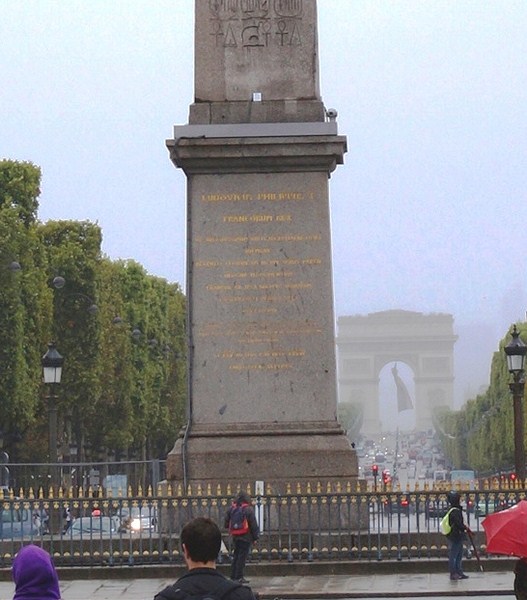
The obelisk’s pedestal

Its present-day pedestal , originally intended for the equestrian statue of King Louis XVI, is now with drawn gilded diagrams explaining the procedures and the complex machinery and different devices that were used for the transportation and erection on the square (just as the pedestal of the Obelisk of Theodosius has relief carvings showing that ancient Egyptian obelisk’s re-erection in Constantinople).

Check out “Louvre Museum” and “Louvre Museum – Egyptian Antiquities Department

Hôtel Crillon, north of the obelisk, was where Marie Antoinette, in happier times, took piano lessons and where, in 1778, France signed a treaty (first in the world) recognizing a free and independent United States of America.

The new pyramidion of the obelisk

Place de la Concorde: 75008 ParisFrance. 

How to Get There:

  • Concorde, the nearest Métro station, is located beneath the Place de la Concorde, at the beginning of the Rue de Rivoli, next to the Jardin des Tuileries.  It serves Lines 1, 8 and 12.  Walking in a northerly direction gets you to the Madeleine stop that serves lines 8, 12 and 14 while walking in a westerly direction, up the famous Avenue des Champs Elysees, you have the Champs-Elysees – Clemenceau stop serving Lines 1 and 13.
  • Several Bus Lines that gets you close by to this historical monument including 24, 42, 72, 73, 84, 94 along with the Noctilien Night Bus Service via lines N11 and N24.  However, the nearest RER train station is the Invalides stop on the left bank of the River Seine, which serves the RER C Line.24, 42, 52, 72, 73, 84, 94.

Tuileries Garden (Paris, France)

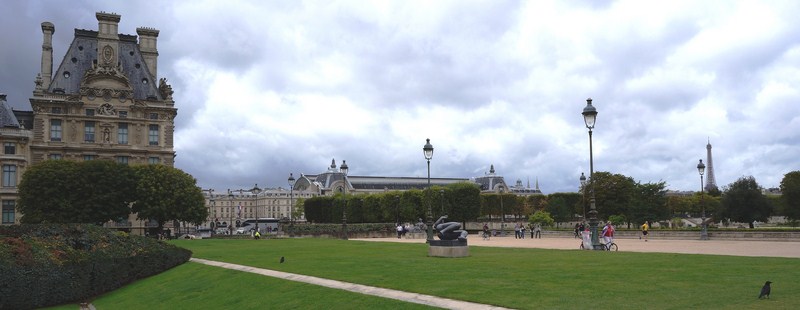
Tuileries Garden

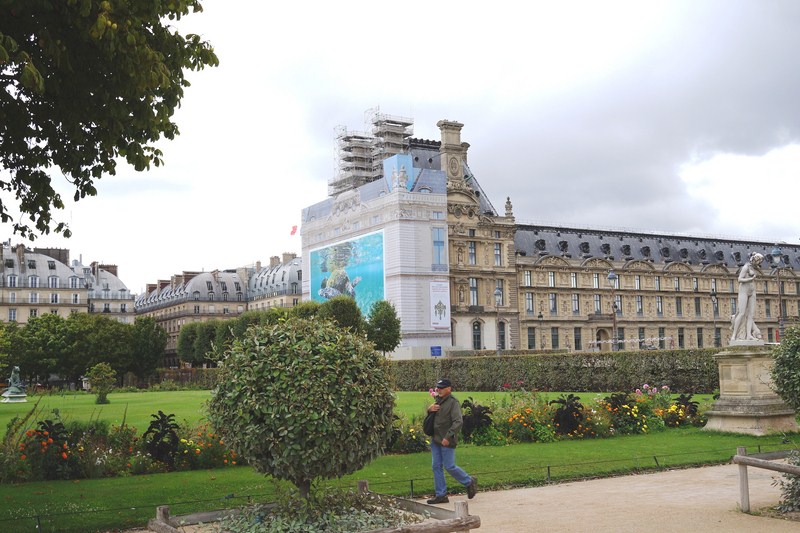
The Tuileries Garden (FrenchJardin des Tuileries),  a public garden located between the Louvre and the Place de la Concorde, a place where ordinary Parisians celebrated, met, strolled, relaxed, enjoyed the fresh air and greenery and be entertained.

Check out “Louvre Museum” and “Place de la Concorde

The name of the garden, as well the Tuileries Palace (burned in 1870 during the uprising of the Paris Commune), was derived from the tile-making factories called tuileries (from the French tuile, meaning “tile”) which once occupied the area since the 13th century.

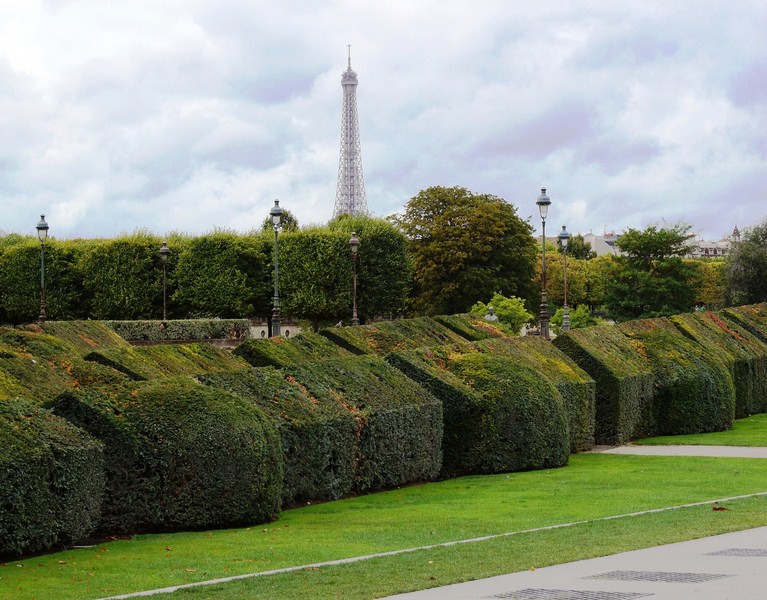
View of Eiffel Tower from the gardens

Here is the historical timeline of the garden:

  • In 1564, Queen Catherine de Medici commissioned Bernard de Carnesse, a landscape architect from Florence, to create an Italian Renaissance garden (the largest and most beautiful garden in Paris at the time) in an enclosed space 500 m. long and 300 m. wide, separated from the new Tuileries Palace by a lane. It was to have fountains, a labyrinth, a grotto and was decorated with faience images of plants and animals, made by Bernard Palissy, whom Catherine had tasked to discover the secret of Chinese porcelain. Six alleys divided it into rectangular compartments which were planted with lawns, flower beds, and small clusters of five trees (called quinconces) and, more practically, with kitchen gardens and vineyards. Catherine used this garden for lavish royal festivities honoring ambassadors from Queen Elizabeth I of England, and the marriage of her daughter, Marguerite de Valois, to Henri III of Navarre (better known as Henry IV, King of France and of Navarre).
  • In 1588, after King Henry III was forced to flee Paris, the gardens fell into disrepair.
  • Henry IV (1589–1610), his successor, and his gardener, Claude Mollet, restored the gardens.  They built a covered promenade the length of the garden, and a parallel alley planted with mulberry trees (where he hoped to cultivate silkworms and start a silk industry in France). He also built a rectangular, 65 m. by 45 m. ornamental lake of with a fountain supplied with water by the new pump called La Samaritaine (built in 1608 on the Pont Neuf). The area between the palace and the former moat of Charles V was turned into the “New Garden” (Jardin Neuf) with a large fountain in the center. Henry IV used the gardens for relaxation and exercise.
  • In 1610, at the death of his father, the Tuileries Gardens became the enormous playground of 9 year old Louis XIII who used it for hunting and where he kept a menagerie of animals. On the north side of the gardens, Marie de’ Medici established a riding school, stables and a covered manege for exercising horses. The gardens were turned into a pleasure spot for the nobility when the king and court were absent from Paris.
  • In 1630, a former rabbit warren and kennel, at the west rampart of the garden, was made into a flower-lined promenade and cabaret (where the daughter of Gaston d’Orléans and the niece of Louis XIII, known as La Grande Mademoiselle, held a sort of court). The “New Garden” of Henry IV (the present-day Carousel) became known as the “Parterre de Mademoiselle.”
  • In 1652, “La Grande Mademoiselle” was expelled from the chateau and garden for having supported the Fronde, an uprising against her cousin, the young Louis XIV.
  • In 1662, to celebrate the birth of his first child, Louis XIV held a vast pageant of mounted courtiers in the New Garden (enlarged by filling in Charles V’s moat and had been turned into a parade ground). Thereafter, the square was known as the Place du Carrousel.
  • In 1664, Colbert, the king’s superintendent of buildings, commissioned the landscape architect André Le Nôtre (the grandson of Pierre Le Nôtre, one of Catherine de’ Medici’s gardeners, and his father Jean had also been a gardener at the Tuileries), to redesign the entire garden. Le Nôtre immediately began transforming the Tuileries into a formal jardin à la française (a style he had first developed at Vaux-le-Vicomte and perfected at Versailles), based on symmetry, order and long perspectives.
  • In 1667, at the request of Charles Perrault (the famous author of Sleeping Beautyand other fairy tales), the Tuileries Garden was eventually opened to the public (with the exception of beggars, “lackeys” and soldiers). It was the first royal garden to be open to the public.
  • In 1682, furious with the Parisians for resisting his authority, the king abandoned Paris and moved to Versailles. The garden was abandoned for nearly forty years.
  • In 1719, La Renommée and Mercure, two large equestrian statuary groups  by the sculptor Antoine Coysevox, were brought from the king’s residence at Marly and placed at the west entrance of the garden. Along the Grande Allée, other statues by Nicolas Coustou and Guillaume Coustou the Elder, Corneille Van Clève, Sebastien Slodz, Thomas Regnaudin and Antoine Coysevox were placed. To make access to the garden easier, a swing bridge was placed at the west end over the moat. A grand vestibule to the garden was created with the place Louis XV (now Place de la Concorde). Certain holidays, such as August 25, the feast day of Saint Louis, were celebrated with concerts and fireworks in the park.
  • On October 6, 1789, as the French Revolution began, King Louis XVI was brought against his will to the Tuileries Palace and the garden was closed to the public except in the afternoon. A part of the garden, first at the west end of the Promenade Bord d’eaux, then at the edge of the Place Louis XV, was given for the private use of Queen Marie Antoinette and the Dauphin.
  • On the evening of September 18, 1791, after the king’s failed attempt to escape France and during the festival organized to celebrate the new French Constitution, when the alleys of the park were illuminated with pyramids and rows of lanterns, the royal family was allowed to walk in the park.
  • On August 10, 1792, a mob stormed the Tuileries Palace and the king’s Swiss guards were chased through the gardens and massacred.
  • After the king’s removal from power and execution, the Tuileries became the National Garden (Jardin National) of the new French Republic.
  • In 1794, the painter Jacques-Louis David, and to his brother in law, the architect August Cheval de Saint-Hubert were assigned the renewal of the gardens by the new government, conceiving a garden decorated with Roman porticos, monumental porches, columns, and other classical decoration. The project was never completed and all that remains today are the two exedres, semicircular low walls crowned with statues by the two ponds in the center of the garden. While David’s project was not finished, large numbers of statues from royal residences were brought to the gardens for display. The garden was also used for revolutionary holidays and festivals.
  • On June 8, 1794, Robespierre organized a ceremony in the Tuileries in honor of the Cult of the Supreme Being, with sets and costumes designed by Jacques-Louis David. After a hymn written for the occasion, Robespierre set fire to mannequins representing Atheism, Ambition, Egoism and False Simplicity, revealing a statue of Wisdom.
  • In 1780, public toilets were added.
  • On December 1, 1783, a famous early balloon ascent, by Jacques Alexandre César Charlesand Nicolas Louis Robert, was made from the garden. Small food stands were placed in the park, and chairs could be rented for a small fee.
  • On April 2, 1810, Napoleon Bonaparte used the garden as passage of his own wedding procession when he married the Archduchess Marie-Louise of Austria.
  • After the fall of Napoleon, the garden briefly became the encampment of the occupying Austrian and Russian soldiers.
  • After the restoration of the monarchy, and the new King Charles X renewed an old tradition and celebrated the feast day of Saint Charles in the garden.
  • In 1830, after a brief revolution, the new king Louis-Philippe, wanting a private garden within the Tuileries, separated a section of the garden in front of the palace with a fence, decorating the new private garden with a small moat, flower beds and eight new statues by sculptors of the period.
  • In 1852, following another revolution and the short-lived Second Republic, the new Emperor Louis Napoleon enlarged his private reserve within the garden further to the west as far as the north–south alley that crossed the large round basin, so that included the two small round basins. His new garden was decorated with beds of exotic plants and flowers and new statues.
  • In 1859, Louis Napoleon made the Terrasse du bord-de-l’eau into a playground for his son, the Prince Imperial. He also constructed the Jeu de paume and the Orangerie, twin pavilions at the west end of the garden and built, at the west entrance, a new stone balustrade. From May to November, when The Emperor was not in Paris, the entire garden, including his private garden and the playground, were usually open to the public.
  • In 1883, the ruins of the burnt out palace were torn and the empty site, between the two pavilions of the Louvre, became part of the garden.
  • At the 1900 Summer Olympics, the Gardens hosted the fencing
  • In the years between the two World Wars, the Jeu de paume tennis court was turned into a gallery, its western part was used to display the Water Lilies series of paintings by Claude Monet. The Orangerie became an art gallery for contemporary western art.
  • At the end of the 19th and beginning of the 20th century, the Tuilieries Garden was filled with entertainments for the public (acrobats, puppet theaters, lemonade stands, small boats on the lakes, donkey rides, and stands selling toys).
  • In 1914, during the First World War, the statues in the garden were surrounded by sandbags.
  • In 1918, two German long-range artillery shells landed in the garden.
  • During the German Occupation of World War II (1940 to 1944), the Jeu de paume was used by the Germans as a depot for storing art they stole or expropriated from Jewish families.
  • In 1927, the Jeu de Paume became an annex of the Luxembourg Palace Museum for the display of contemporary art from outside France.
  • In 1944, the liberation of Paris saw considerable fighting in the garden and, during the battle, Monet’s paintings Water Lilies were seriously damaged.
  • From 1947 until 1986, the Jeu de Paume served as the Musée du Jeu de Paume, which held many important Impressionist works now housed in the Musée d’Orsay.
  • In 1964–65, André Malraux (the Minister of Culture for President Charles de Gaulle) removed the 19th century statues which surrounded the Place du Carrousel and replaced them with contemporary sculptures by Aristide Maillol.
  • In 1994, as part of the Grand Louvre project launched by President François Mitterrand, the Belgian landscape architect Jacques Wirtz remade the garden of the Carrousel, adding labyrinths and a fan of low hedges radiating from the triumphal arch in the square.
  • In 1995, the Jardin du Carrousel was remade to showcase a collection of 21 statues by Aristide Maillol, which had been put in the Tuileries in 1964.
  • In 1998, under President Jacques Chirac, works of modern sculpture by Jean DubuffetHenri LaurensÉtienne MartinHenry MooreGermaine RichierAuguste Rodin and David Smith were placed in the garden.
  • In 2000, the works of living artists (Magdalena AbakanowiczLouise BourgeoisTony CraggRoy LichtensteinFrançois MorrelletGiuseppe PenoneAnne Rochette and Lawrence Weiner) were added. At the same time, another ensemble of three works by Daniel DezeuzeErik Dietman and Eugène Dodeigne, called Prière Toucher (Eng: Please Touch), was added.
  • At the beginning of the 21st century, French landscape architects Pascal Cribier and Louis Benech have been working to restore some of the early features of the André Le Nôtre garden.

Check out “Musee d’Orsay

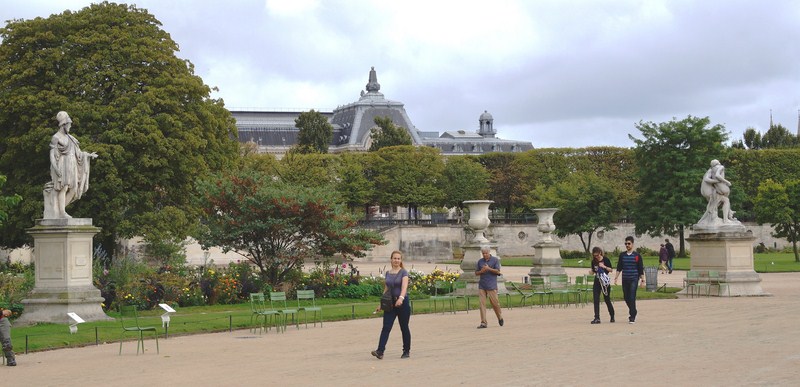
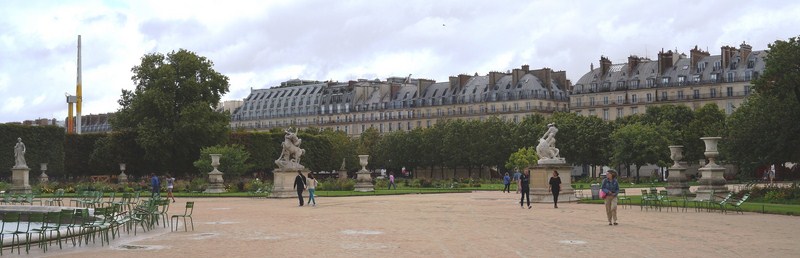
The Grand Carré (Large Square), the eastern, open part of the Tuilieries Garden, still follows the formal plan of the Garden à la française created in the 17th century by André Le Nôtre. The eastern part, surrounding the round pond, was the private garden, separated from the rest of the Tuileries by a fence, of Louis Philippe and Napoleon III.  Most of its statues were put in place in the 19th century. 

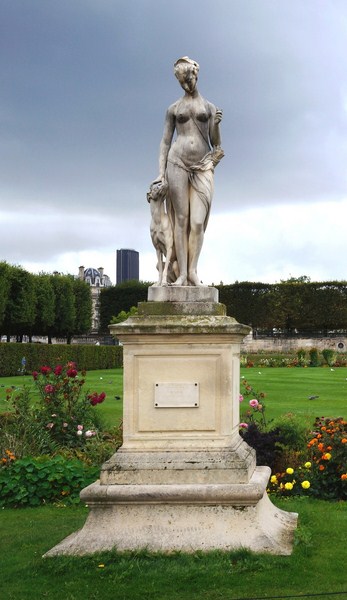
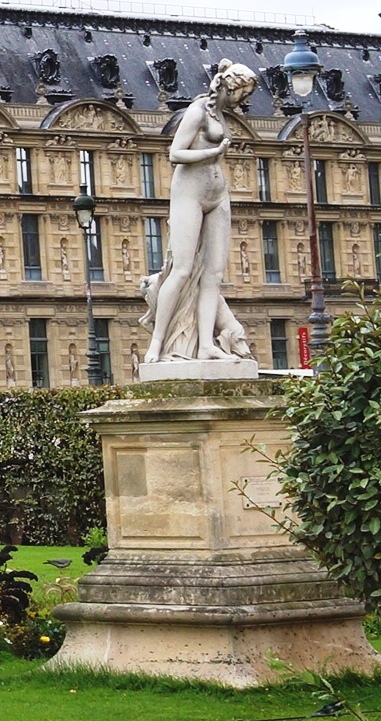
Statue of Diane Chasseresse (Louis-Auguste Levesque)

Nymphe (1866) and Diane Chasseresse (Diana the Huntress) (1869), both done by Louis Auguste Lévêque, marks the beginning of the central allée which runs east-west through the park.

Statue of Nymphe (Louis-Auguste Levesque)

Tigre terrassant un crocodile (Tiger overwhelming a crocodile, 1873) and Tigresse portant un paon à ses petits (Tigress bringing a peacock to her young, 1873), both by Auguste Cain, are located by the two small round ponds.

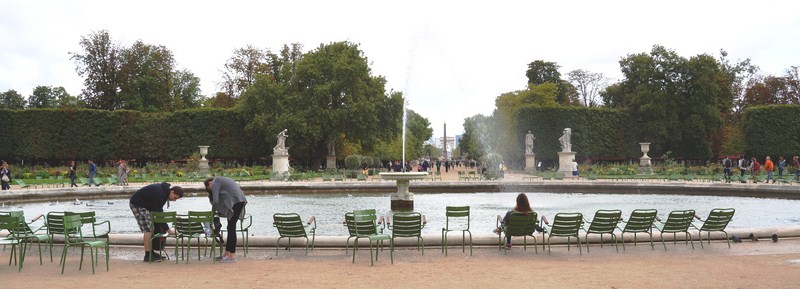
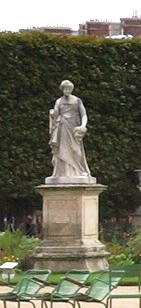
The large round pond is surrounded by statues on themes from antiquity, allegory, and ancient mythology and in violent poses alternating with those in serene poses. On the south side, starting from the east entrance of the large round pond, they are:

The Good Samaritan (François Sicard)

On the north side, starting at the west entrance to the pond, they are:

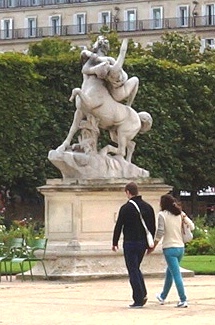
The Centaur Nessus Carrying Off Dejanire (Laurent Honoré Marqueste)

Le Grand Couvert, the part of the garden covered with trees, has  two cafes named after two famous cafes once located in the garden – the Café Very (which had been on the Terrace des Feuiillants in the 18th–19th century) and the Café Renard (which in the 18th century had been a popular meeting place on the western terrace).

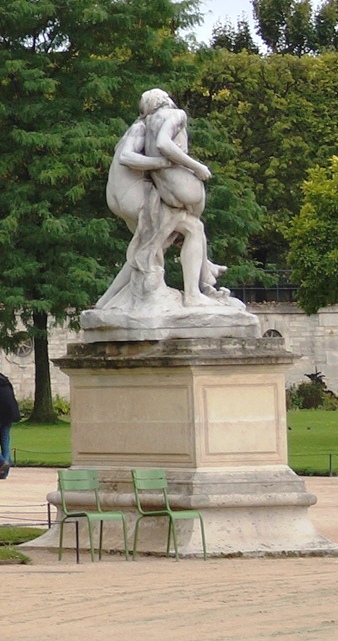
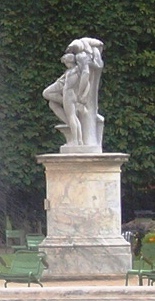
The Oath of Spartacus (Louis Ernest Barrias)

It also contains the two exedras (low curving walls built to display statues which survived from the French Revolution), built in 1799 by Jean Charles Moreau (as part of a larger unfinished project designed by painter Jacques-Louis David in 1794), now decorated with plaster casts of moldings on mythological themes from the park of Louis XIV at Marly.

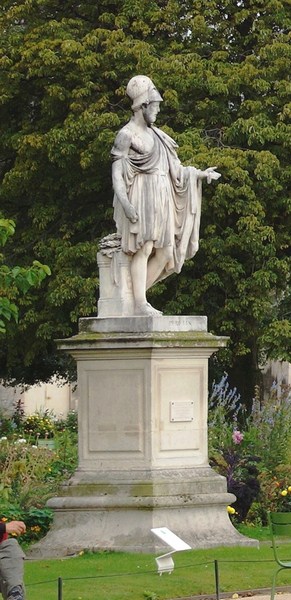
Pericles Giving Crowns to Artists (Jean-Baptiste Debay Pėre)

The Grand Couvert also contains a number of important works of the 20th century and contemporary sculpture, including:

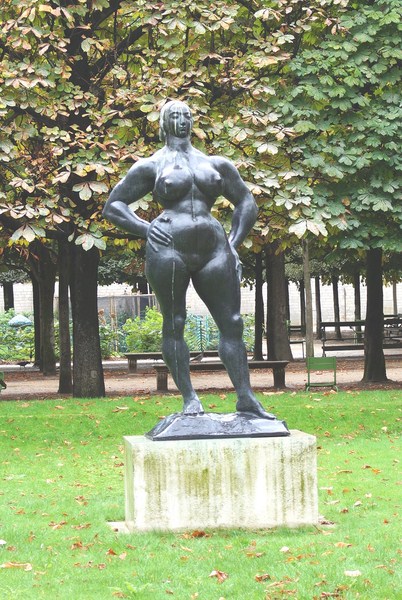
The Standing Woman (Gaston Lachaise)

The Orangerie (Musée de l’Orangerie), built in 1852 by the architect Firmin Bourgeois, is located at the west end of the garden, close to the Seine River. Since 1927, it has displayed many large examples of Claude Monet‘s Water Lilies series as well as the Walter-Guillaume collection of Impressionist painting.

Bassin Octogonal

On the terrace are four works of sculpture by Auguste RodinLe Baiser (1881–1898); Eve (1881) and La Grande Ombre (1880) and La Meditation avc bras (1881–1905). It also has a modern work, Grand Commandement blanc (1986) by Alain Kirili.

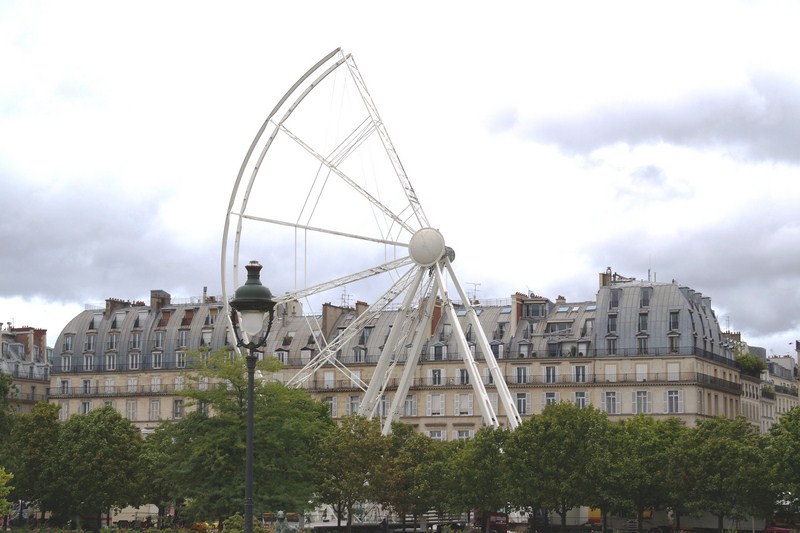
The partially installed Roue de Paris, a 60-m. (200-ft.) tall transportable Ferris wheel, originally installed on the Place de la Concorde for the 2000 millennium celebrations.

The Jardin du Carrousel, also known as the Place du Carrousel, is the part of the garden that used to be enclosed by the two wings of the Louvre and by the Tuileries Palace. In the 18th century it was used as a parade ground for cavalry and other festivities. The Arc de Triomphe du Carrousel, its central feature, was built to celebrate the victories of Napoleon, with bas-relief sculptures of his battles by Jean Joseph Espercieux.

Check out “Arc de Triomphe du Carrousel


La Comédie (Julien Toussaint Roux)

The elevated Terrasse (terrace), between the Carrousel and the rest of the garden, used to be at the front of the Tuileries Palace which, after the Palace was burned in 1870, was made into a road, which was put underground in 1877. The terrace is decorated by two large vases which used to be in the gardens of Versailles, and two statues by Aristide Maillol; the Monument to Cézanne on the north and the Monument aux morts de Port Vendres on the south.


From the Terrasse, two stairways descend to the moat named for Charles V of France, (who rebuilt the Louvre in the 14th century), part of the old fortifications which originally surrounded the palace. On the west side are traces left by the fighting during the unsuccessful siege of Paris by Henry IV of France in 1590 during the French Wars of Religion.

Since 1994, the moat has been decorated with statues from the facade of the old Tuileries Palace and with bas-reliefs made in the 19th century during the Restoration of the French monarchy which were meant to replace the Napoleonic bas-reliefs on the Arc de Triomphe du Carrousel, but were never put in place.

The Jeu de Paume (Galerie nationale du Jeu de Paume), built in 1861 by the architect Viraut, was enlarged in 1878. Today, it is used for exhibits of modern and contemporary art.  On the terrace in front of the Jeu de Paume is the Le Bel Costumé (1973), a work of sculpture by Jean Dubuffet.

Tuileries Garden: 1st arrondissement, ParisFrance

Sta. Fe Forest Park (Sta. Fe, Nueva Vizcaya)

For the second time around, I was asked to cover the Kalanguya Festival (the first time was in March 15, 2003), now on its 20th year, in Sta. Fe, Nueva Vizcaya, joining a media group consisting of two other print media representatives (Roel Hoang Manipon, Asst. Editor of The Daily Tribune, and Alexis B. Romero, reporter of The Philippine Star) and three staff from the Department of Tourism (Rolando “Rollie” Cagasca, Ramon “Mon” Rebulado and Gener Carlos).

San Jose City (Nueva Ecija)

San Jose City (Nueva Ecija)

We all left Manila by 7:15 AM and the 216.85-km. trip took all of 6 hrs., including a stopover for lunch at a Chowking branch in San Jose City (Nueva Ecija). We arrived at the town by 1:30 PM and were warmly welcomed by Mayor Liwayway C. “Liway” Caramat and Municipal Tourism Promotion & Development Officer Ma. Theresa Farrah C. Dugay.

Ms. Ma. Theresa Farrah C. Dugay and Mayor Caramat

Ms. Ma. Theresa Farrah C. Dugay and Mayor Caramat

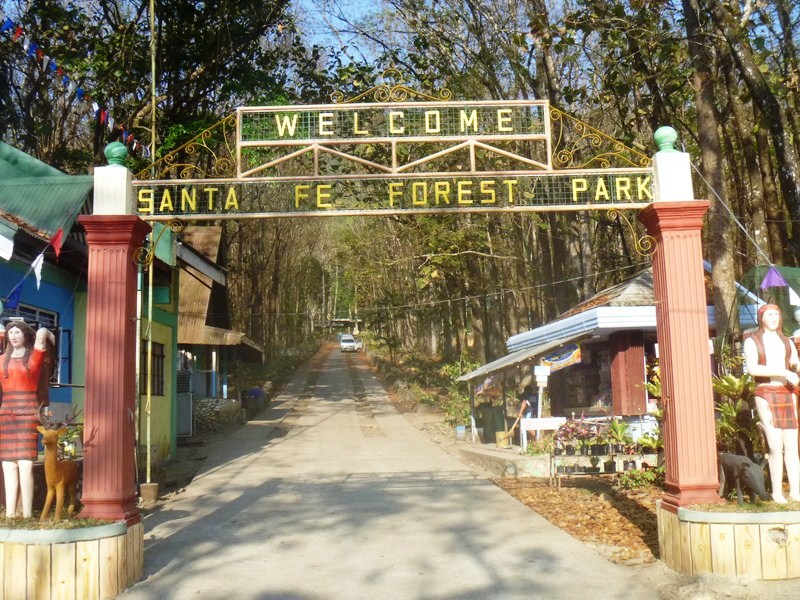
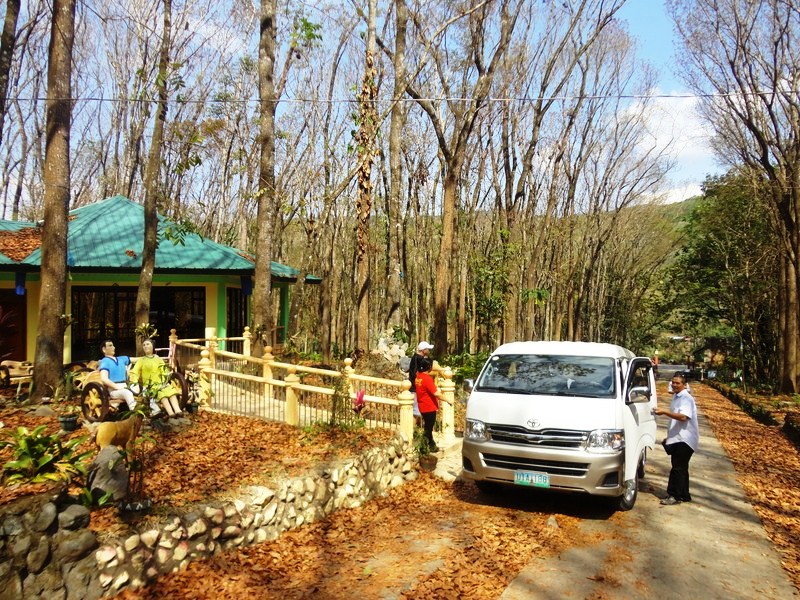
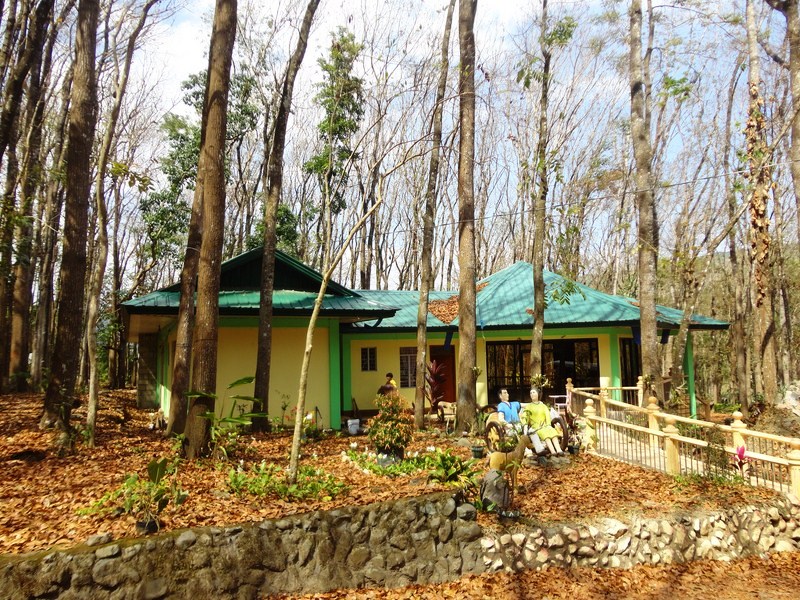
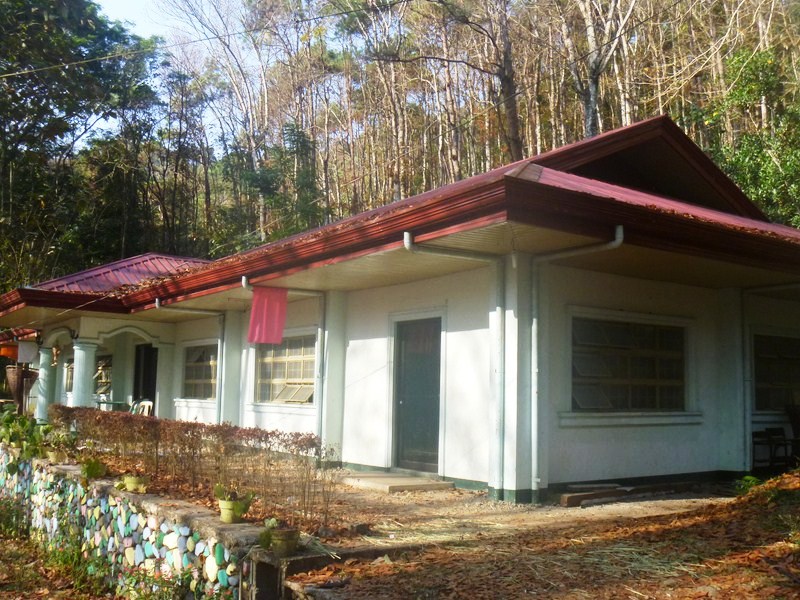
After our courtesy call on Mayor Caramat, , we were checked in at cottages within the 2,200-hectare Santa Fe Forest Park, a reforestation project with Benguet pine and West Indian mahogany (Swietenia mahagoni). The Grand Parade was to also start here and contingent members were billeted within buildings in the park.

Sta. Fe Forest Park

Sta. Fe Forest Park

Mahogany trees along the driveway

Mahogany trees along the driveway

The Santa Fe Forest Park was an erstwhile reforestation project of the DENR that commenced in the mid-1950s. It covers around 2,200 hectares of areas in Barangays Bacneng, Baliling Villa Flores and Poblacion. On September 22, 1997, the Sta. Fe Forest Park was established for nature-based tourism, covering about 1,000 hectares within the 11,664 ha Consuelo Reforestation Project.

Cottages

Cottages

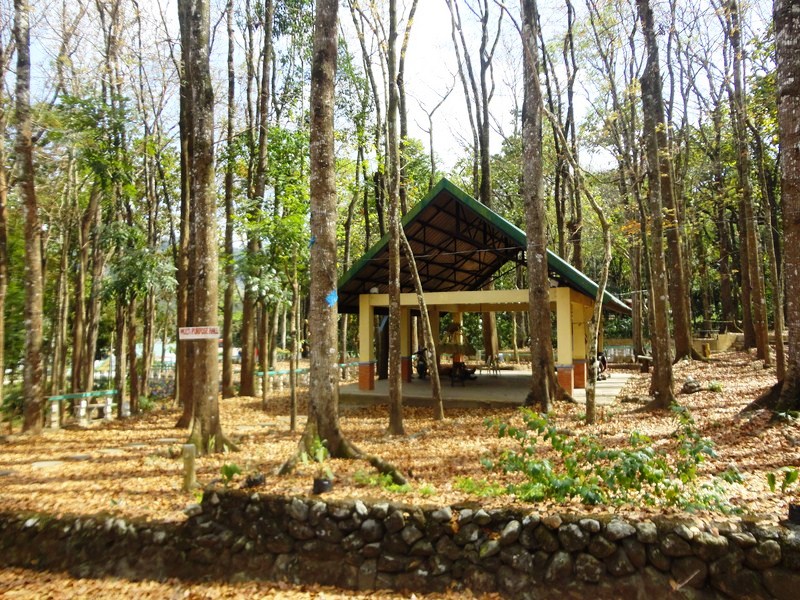
Multi-Purpose Hall

Multi-Purpose Hall

P1230744

The DENR, through a Memorandum of Agreement, handed over the management of the reforestation project to the LGU of Sta. Fe, which eventually paved towards the development of the erstwhile project into a forest park.

Burnham Park (Baguio City, Benguet)

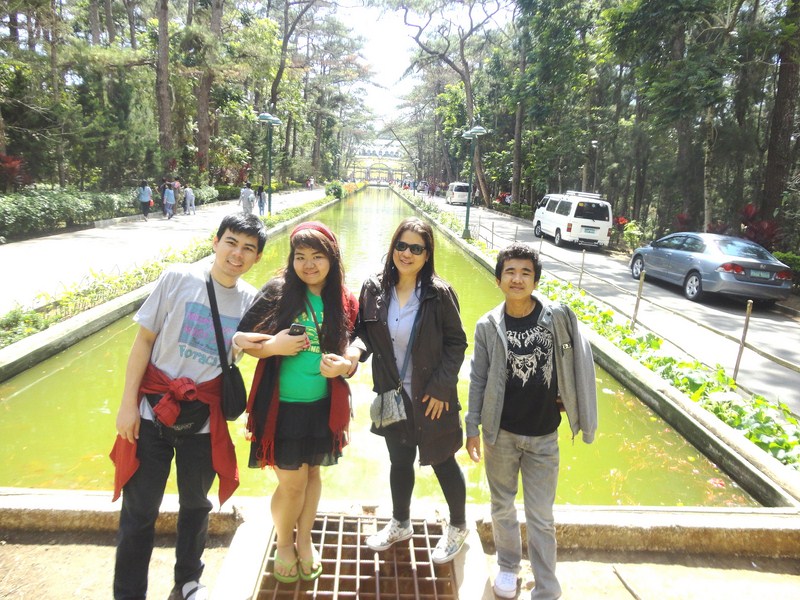
From Mines View Park, Melissa, Almira, Albert, Jandy and I walked back to EGI Albergo de Ferroca Hotel, where we rested a while, then took a taxi for Burnham Park, the city’s foremost and oldest park that forms the heart of the city.  The ‘mother of all parks’ in the Summer Capital of the Philippines, it is almost as familiar to Filipinos as Luneta Park in Manila.

Burnham Park - green lung of Baguio City

Burnham Park – green lung of Baguio City

This 32.84-hectare urban park, located at the heart of Baguio City, was named after the American architect and urban planner, Daniel Hudson Burnham who simultaneously designed the park and the original plans for the city. Construction began around 1904. During the devastating earthquake on July 16, 1990, the park played an important role when it served as a place of refuge for the people of Baguio.

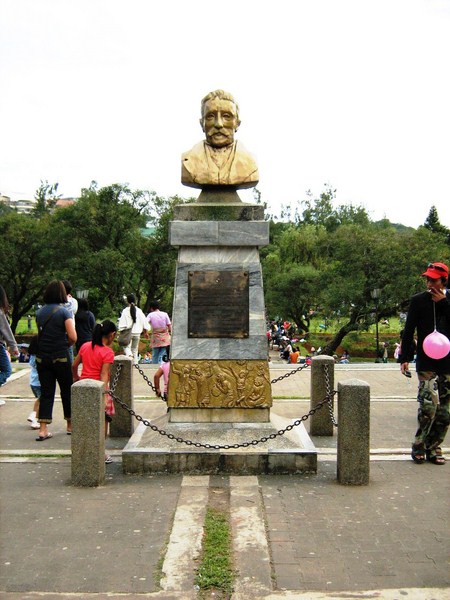
Daniel  Burnham Bust

The bust of Daniel H Burnham

Burnham Park, overlooking Mt. Kabuyao, covers the only large expanse of level ground within hilly surroundings and was originally intended to serve as a much-needed green lung for the bustling city by providing it with wide open green spaces and a peaceful environment. The modern park, although smaller than the original park due to urban development, still retains much of Daniel Burnham’s original design and layout a century ago.

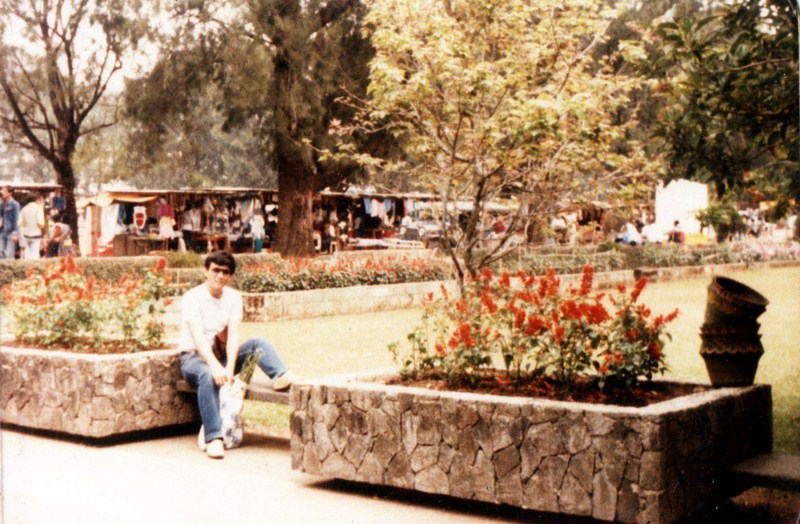
Author at Burnham Park, April 3, 1986

Author at Burnham Park, April 3, 1986

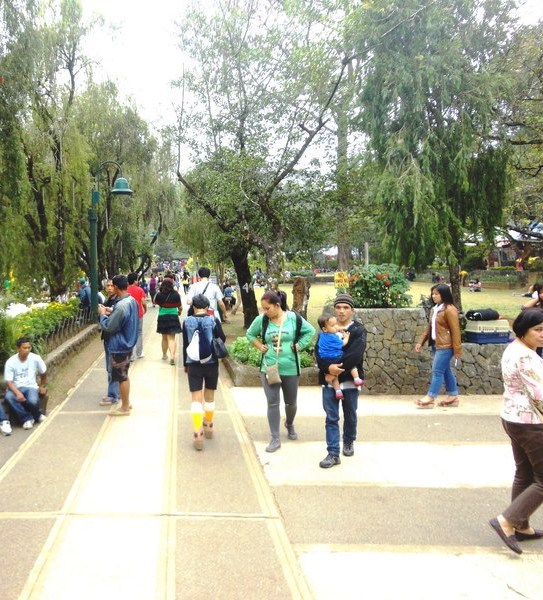
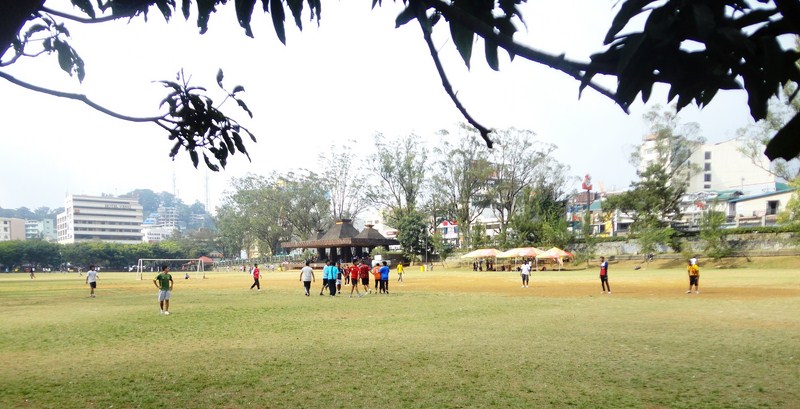
Under Filipino administration, a number of features were added and now, in true Filipino fashion, Burnham Park is now more of an amusement park with boating, bicycle and skating areas, sports and gaming areas (football field,  tennis courts and basketball courts), plus a few restaurants and eateries that cater to park-goers. In the morning, residents jog around the lake or the children’s playground while groups do healthy exercise routines such as zumba, tae-bo and sometimes tai-chi.

Burnham Park

Baguio Blooms Exhibition And Exposition at Burnham Park

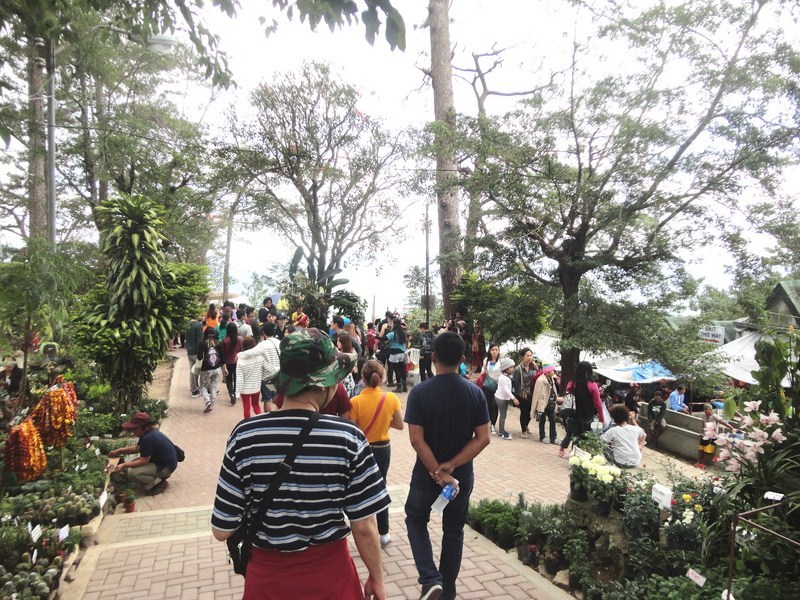
The centrally located and thickly-wooded Burnham Park has a man-made lake; lawns; wooded areas; paved flower-punctuated pathways, with seats and benches throughout;  and numerous flower beds planted with roses, marigolds, daisies and hollyhocks that thrive in the temperate environment of Burnham Park, an unusual sight considering that the Philippines is mostly tropical. During the June to September rainy season, the park is often shrouded in fog and takes on a misty atmosphere. Following the end of the rainy season, flowers bloom in abundance.

Football Field

Football Field

Burnham Park, a scenic venue for walking and photography, has 12 cluster areas: the man-made Burnham Lake, the Children’s Playground (at the western part), the circular Skating Rink (at the southern part), the Rose Garden (with a bust of Daniel Burnham), the Orchidarium (at the western part, with various plants, flowers and orchids on display and for sale), Igorot Garden, Melvin Jones Grand Stand and Football Field (at the eastern part), the Athletic Bowl, a Picnic Grove, Sunshine Park, the Japanese Peace Tower and a section called “Pine Trees of the World.”

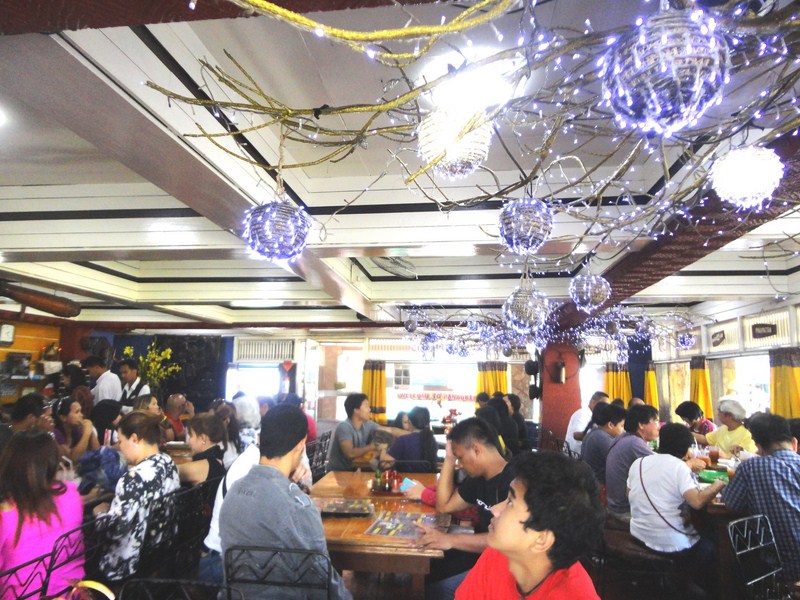
Solibao Restaurant

Solibao Restaurant

The Melvin Jones Grandstand is used periodically for several activities such as parades, concerts and political rallies. On certain Sundays, cadets from the Philippine Military Academy practice silent drills and the occasional parade.  The park may be accessed from either Harrison Road, Kisad Road, Governor Pack Road and Magsaysay Road. Several stretch of roads around the park lead to Camp John Hay, a former recreational base of the United States Armed Forces in the Philippines.

Typical fare at Solibao Restaurant

Typical fare at Solibao Restaurant

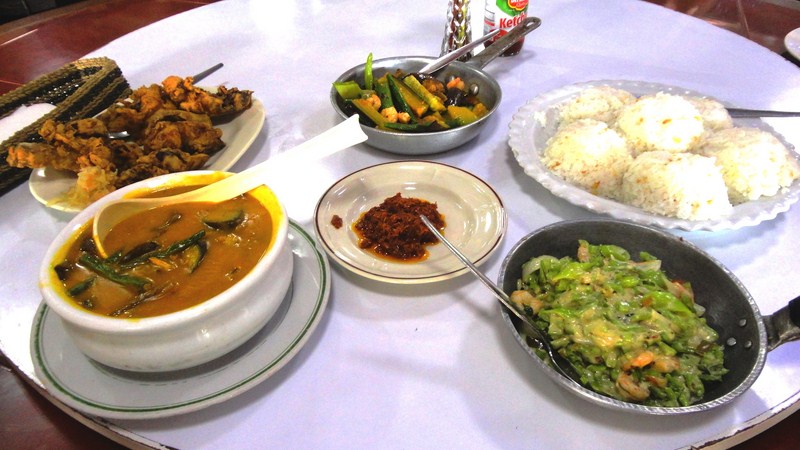
It being a long Chinese New Year weekend, the park was filled with lots of tourists and residents.  We checked out the Baguio Blooms Exhibition and Exposition, an activity of the 20th Panagbenga Festival along Lake Drive. It was already past noon and, since we had lunch yet, proceeded to nearby Solibao Restaurant where we dined on kare-kare, fried chicken, gising-gising and pinakbet and topping it off with a dessert Solibao Restaurant is famous for – puto bumbong (steamed glutinous rice with freshly grated coconut, brown muscovado sugar and melted butter).

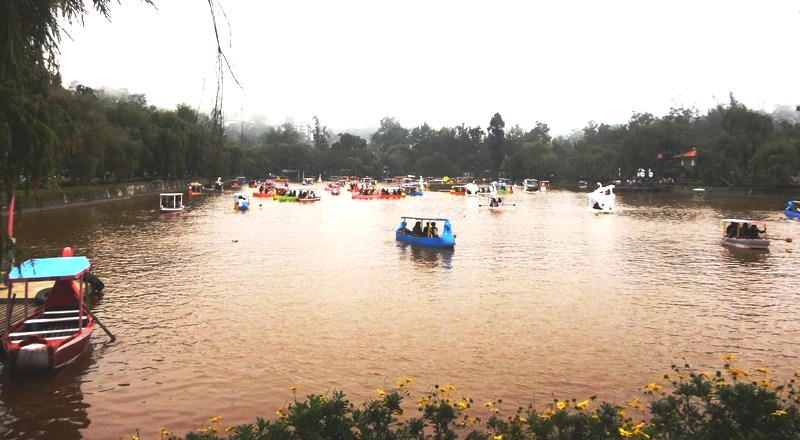
Burnham Lake

Burnham Lake

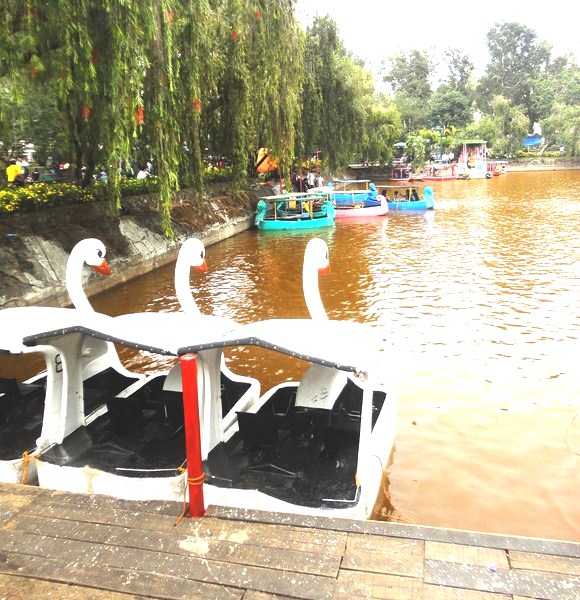
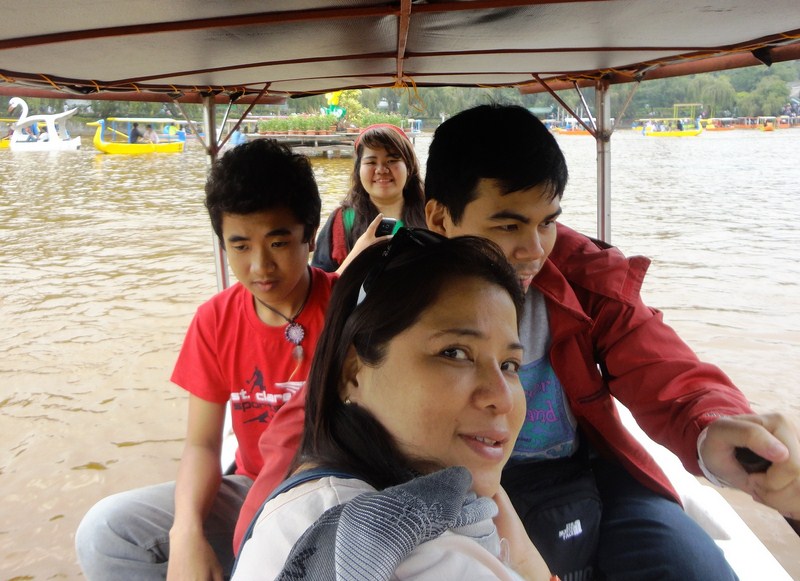
After lunch, we then proceeded to romantic, photogenic and man-made Burnham Lake, the park’s focal point that is often referred to as Burnham Lagoon.  The lake was formerly a natural spring which drained northward to the foot of Session Rd. to join with the Balili River in La Trinidad. Here, we decided to rent (PhP150 for a 5-pax boat) a swan-themed rowboat for going around the lake and exercising our arm muscles.  They say that any visit to Baguio City wouldn’t be complete without trying this out.

Swan boats at Burnham Lake

Swan boats at Burnham Lake

Albert, Melissa, Almira and Jandy at Burnham Lake

Albert, Melissa, Almira and Jandy at Burnham Lake

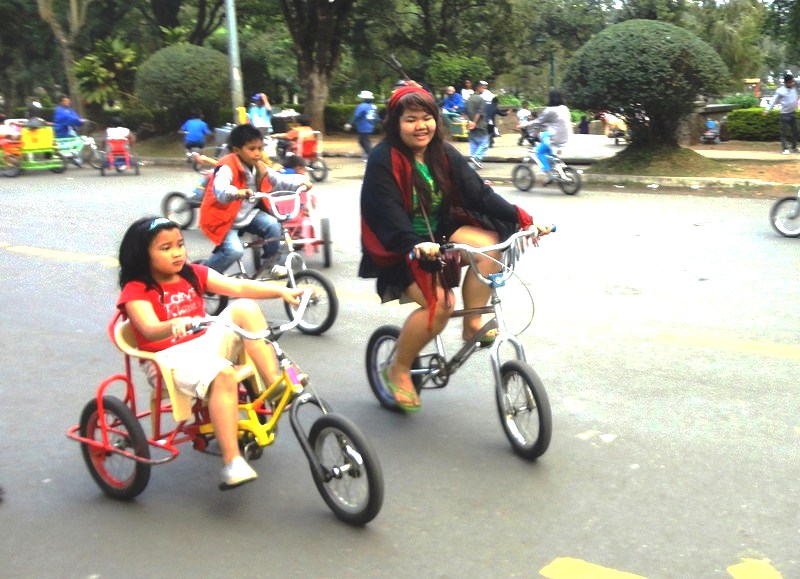
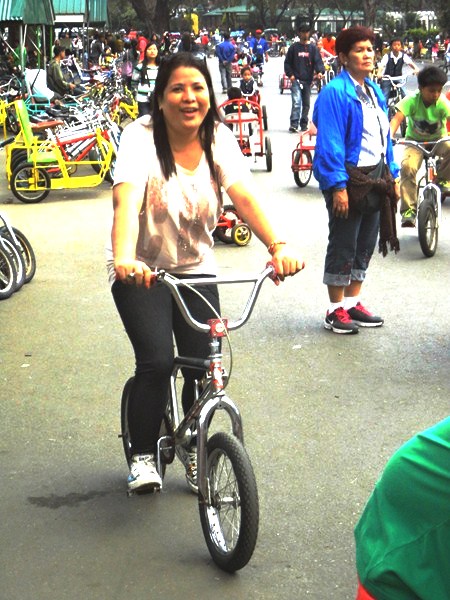
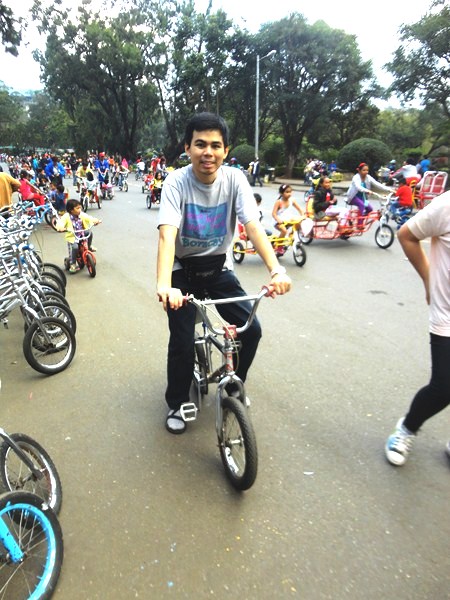
Then it was off to the bicycle rink where kids and adults could rent a range of bicycles if they so wish. You can rent either single bikes (PhP40/hour), tandem bikes or even bikes with side cars (PhP50/hour). They even have small children’s’ bikes of both two and three wheel versions. It is pedestrian-friendly and you don’t need to worry about bumping a motorized vehicle. Albert, Almira, Melissa and Jandy alternately tried out single BMX bikes for an hour.

Biking for the very young, young  ...........

Biking for the very young, the young ………..

...... and not so young

…… and even the not so young

Burnham Park’s truly is the very heart of Baguio City and, to this day, it remains one of the Philippines’ most well known and best-loved parks, making it a vibrant center of activity for everyone to enjoy.

Jandy at the bike rink

Jandy at the bike rink

Burnham Park: Legarda-Burnham-Kisad, Baguio City, 2600 Benguet

Mines View Park (Baguio City, Benguet)

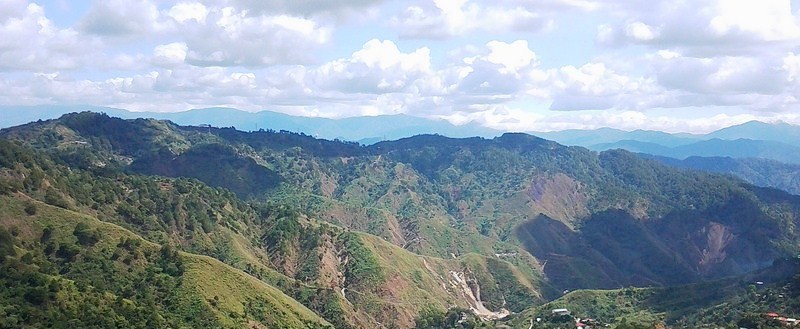
After our visit to Wright Park and The Mansion, Melissa, Almira, Albert, Jandy and I all took a taxi for Mines View Park,  an overlook park located on a land promontory  on the extreme northeastern outskirts of Baguio City, about 4 kms from downtown.  The park overlooks the mining town of Itogon.  One of the most popular and most visited parks in the city, it should not be missed when visiting Baguio.

Mines View Park

Mines View Park

In decades past, I have visited this park every time I was in the city with my parents and siblings during Christmas and, when I got married, with my own family.

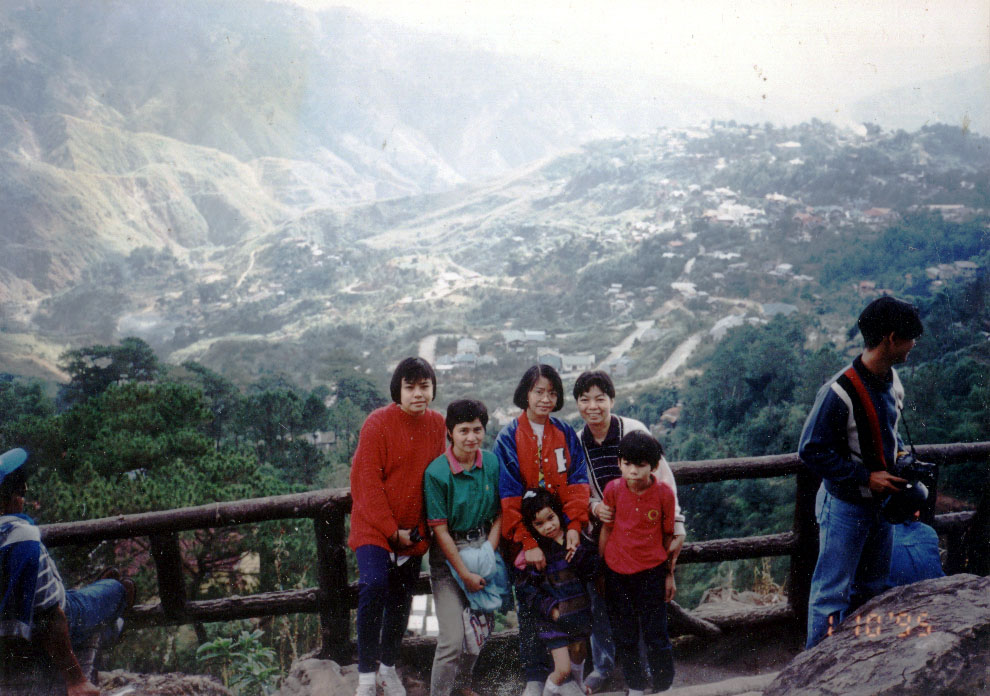
Mines View Park, January 10, 1995.  9 year old Jandy and 5 year old Cheska with my wife Grace (standing at right)

Mines View Park, January 10, 1995. 9 year old Jandy and 5 year old Cheska with my wife Grace (right)

During the early 1960s and 1970s, the main attraction here was throwing coins from the uniquely shaped and still much photographed observation gazebo structure, down the mountain ridge, to little boys wearing g-strings who would run like crazy catching them or search for them, even through the rocks and small cracks of the ground below.

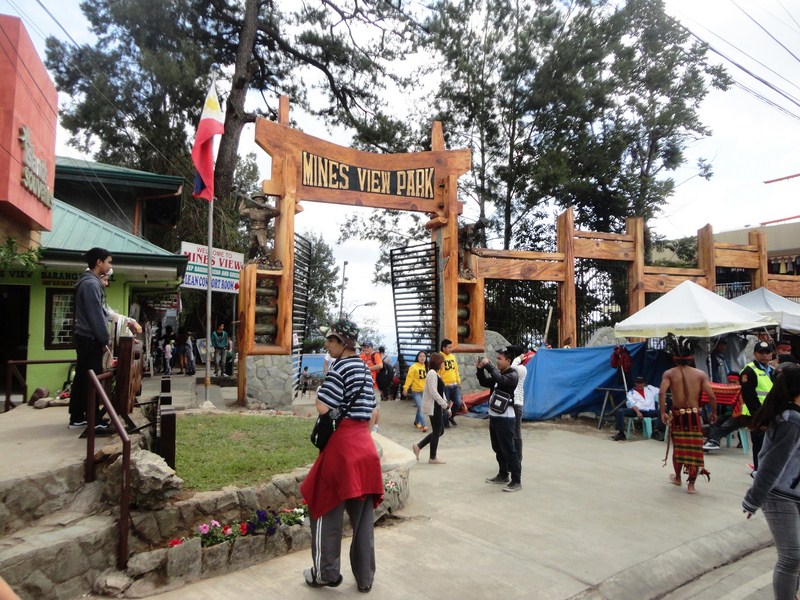
The park entrance

The park entrance

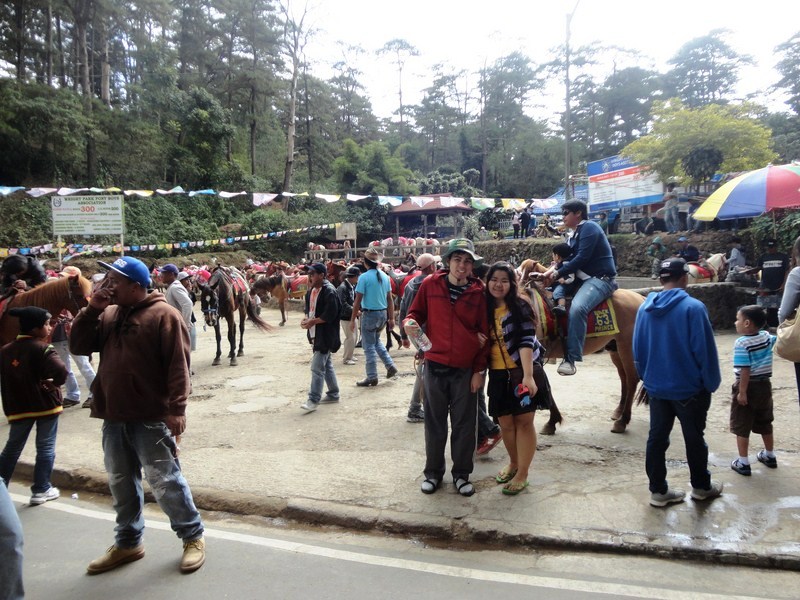
Later on, as residential communities started sprouting below the ridge, the children had to be more deft and creative in catching the coins, using homemade cups attached to long poles. This practice has been stopped due to the risk of accidents. Instead, a wishing well was built in memory of the Igorot kids who started this unique attraction in Baguio City.  Also back then, horses from the Wright Park Riding Circle and the Baguio Country Club were allowed to pass the area, allowing riders to actually get off there, have some snacks or do some quick souvenir shopping, get back on their horse and then head back downhill.

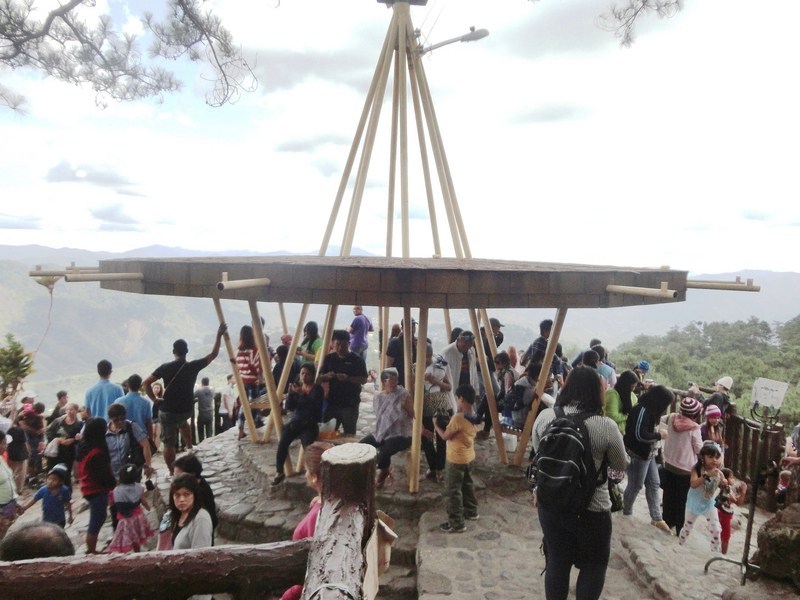
The much photographed gazebo

The much photographed gazebo

Jandy and Almira at the observation deck

Jandy and Almira at the observation deck

It being a long Chinese New Year holiday, there were many visitors when we arrived at the park. At the entrance to the park and at the open parking area at the vicinity of the park are souvenir stalls plus a number of canteens, snack stores and ambulant vendors selling food and beverages such as grilled dried squid, jumbo hotdogs on a stick, fried squidball and corn on a cob (or shredded in a cup).  Across it is Ibay Zion Plaza which sells silver jewelry made by the popular silver shop, Ibay.

The panoramic view of the Central Cordillera mountains

The panoramic view of the Central Cordillera mountains

One of the charming denizens in this really gigantic tourist trap is a popular, cute, cuddly and friendly but huge St. Bernard dog wearing sunglasses named “Doglas” who is available for picture-taking with tourists (PhP20.00). Other photo op gimmicks include having your picture taken riding a small, lazy, pink-maned (and tail) pony wearing a cowboy hat (PhP10 per shot), pose with or take pictures of (both for a fee) natives in Igorot attire (g-strings, vest and headdress for men, plus spear and shield, and tapis for women), or also rent the aforementioned native costumes and have your photo taken (with your own camera) for PhP10 per shot.

The somewhat disappointing view of creeping development

The somewhat disappointing view of creeping development

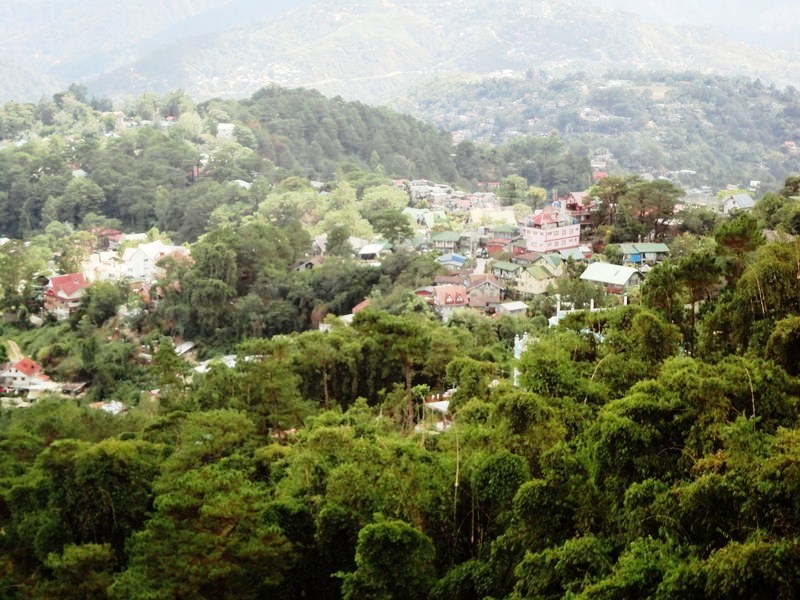
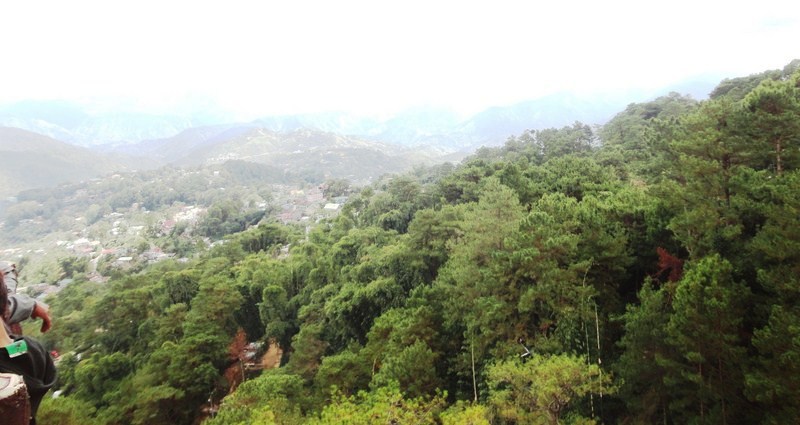
We all walked down the winding stone-covered stairway to the observation deck situated below. From the observation deck, we had a spectacular and breathtaking panoramic view of the abandoned gold and copper mines of the Benguet Corporation, the surrounding Central Cordillera mountains, a glimpse of the Amburayan Valley and the quite disappointing view of homes below. Here, you can rent a binocular (PhP10 for 5 mins.) for a better view. At the promontory, we sat down at benches to rest and enjoy the view.

Some pine-clad mountain slopes remain

Some pine-clad mountain slopes remain

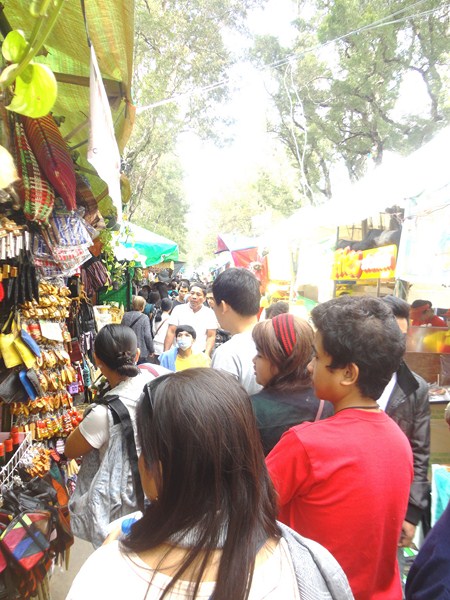
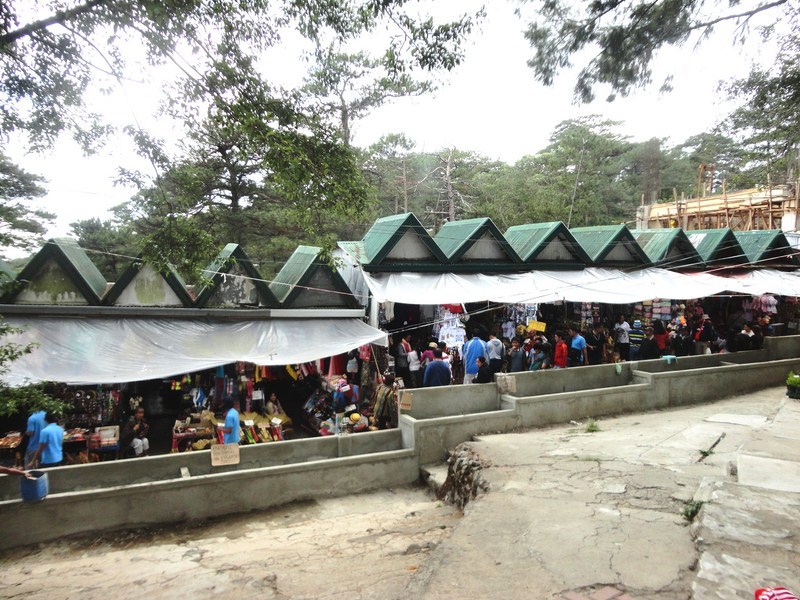
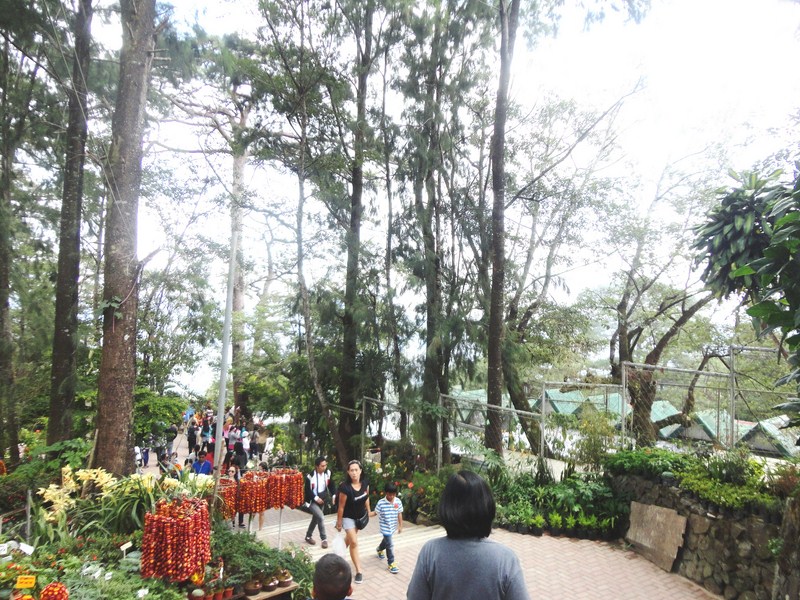
Later on, we did some souvenir shopping.  The souvenirs stalls here have multiplied over the years.  They now extend to the sides of Gilbraltar Road and Outlook Drive and many are located closer to the ridge itself.  There were some good bargains at the stores and, before deciding to buy a particular item, we checked and compared prices. Stalls here sell native handicrafts such as wood carvings (including the iconic but obscene “barrel” man), locally-made silver products and jewelry (rings, pendants, bracelets, etc.), baskets, scarves, wallets, T-shirts, sweet preserves, tiger grass brooms, sweaters, peanut brittle, native bags, blankets, knitted bonnets and a variety of other items all similar to those found in the dry goods section of the Baguio City Market but only at a much smaller scale.The selections, though, are said to be better here.

Souvenir stalls

Souvenir stalls

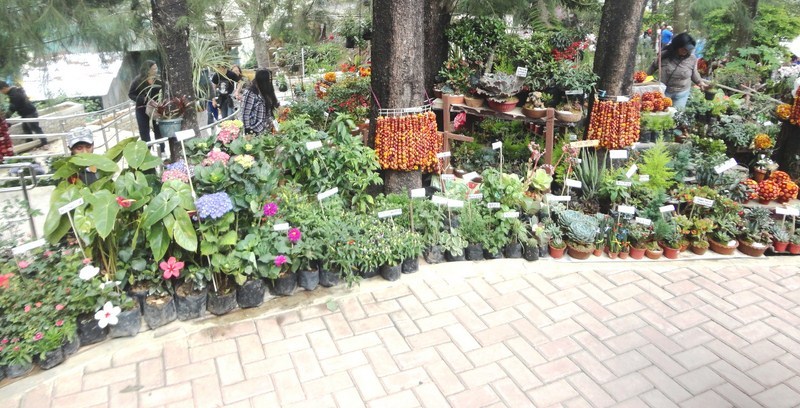
For those who love gardening, a variety of plants and flowers such as bromeliads, mums, busy daisy, everlasting, money tree, cactus, and other succulents are also sold along the walkway.

Plants and flowers for sale along the walkway

Plants and flowers for sale along the walkway

On certain months of the year, plan your visits to the park d earlier during the day as the view may not be visible when the fog starts to move in during the afternoon.

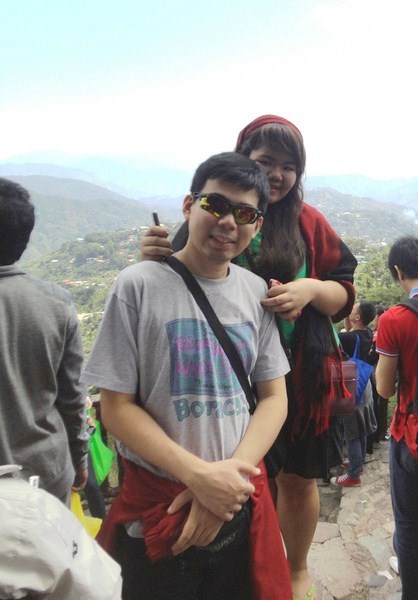
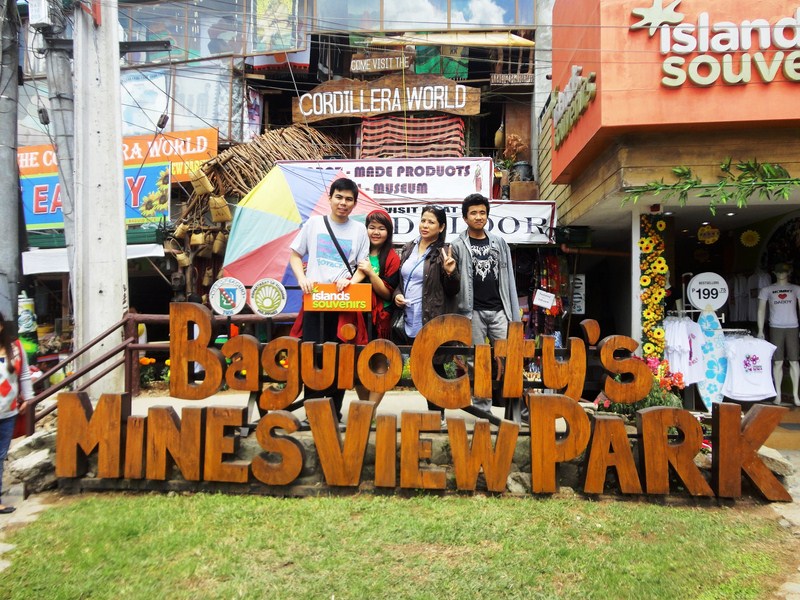
Jandy, Almira, Melissa and Albert at Mines View Park

Jandy, Almira, Melissa and Albert at Mines View Park

How to Get There By private transportation: From MacDonald’s, Sesion Road, climb up and turn at Leonard Wood Road, passing iconic Baguio attractions such as Teachers Camp and Botanical Garden and the Pacdal Rotunda, then go straight up C. P. Romulo Drive, passing Wright Park Riding Circle and The Mansion. Climbing up, the road curves to the left to Outlook Drive.  Once you see Baguio Townhouse on the right, Mines View Park will be at the top.  Do not take the road going straight down to Itogon (Benguet).  A more direct route is to pass Gibraltar Road, to the left of Wright Park Riding Circle. Once you see the Good Shepherd Convent on your left, Mines View Park is just a few meters away. The winding stone-covered stairway leading to the observation deck By Public Transportation: Public utility jeepneys (PUJ), using the Plaza-Mines View line, are available along Mabini Street (10 to 20-min. ride). You can also hire a metered taxi to take you there.  Tou can also contract the taxi driver by the hour or for the day. For larger groups, it may be better to hire a jeepney instead.

Wright Park (Baguio City, Benguet)

After breakfast at EGI Albergo de Ferroca Hotel and Sunday mass at nearby St. Joseph Church, I decided to tour my guests Melissa Tinonas and her children Almira and Albert, all first timers in Baguio, around the city.  As our hotel was right across the Wright Park Riding Circle, it was only fitting that this would be the first place we visit and explore.

Wright Park Riding Circle

Wright Park Riding Circle

The Wright Park Riding Circle is located within the flat and wide triangle below Wright Park. Here, 200 horses are available for hire. Wright Park, one of the many scenic parks in Baguio City, is located at the eastern part of the city and fronts the main gate of The Mansion.

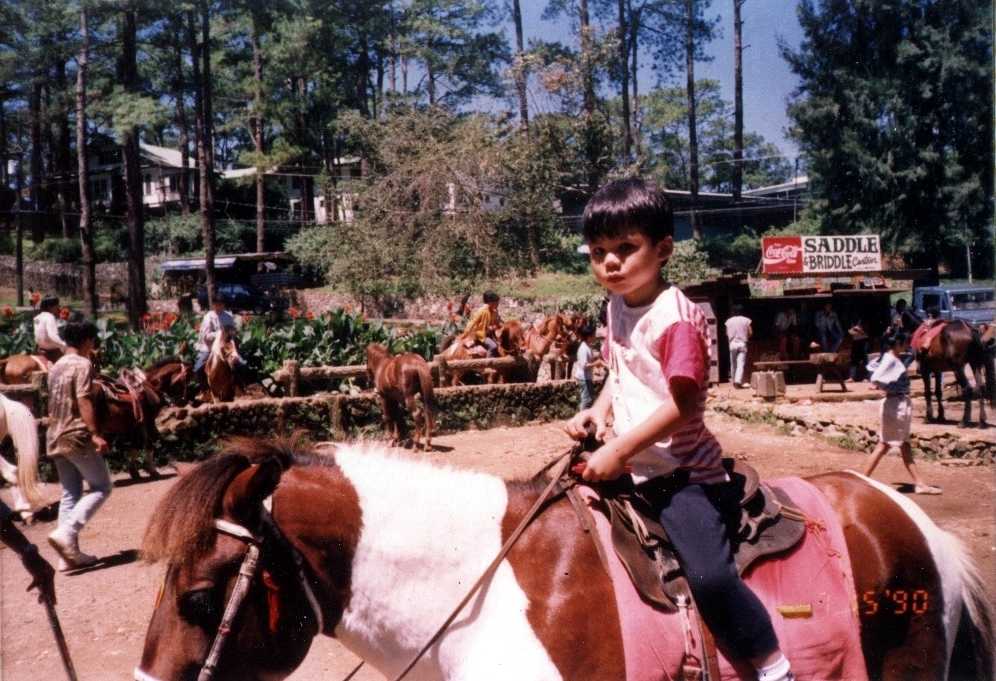
4 year old Jandy at Wright Park, July 15, 1900.  The next day, a destructive earthquake struck the city.

4 year old Jandy at Wright Park, July 15, 1990. The next day, a destructive earthquake struck the city.

Named after American Gov.-Gen. Luke E. Wright (1906-1909), the park’s horseback riding area is often referred to, by children, as “Ride Park” because of the horses.  After all, children have no idea who Luke E. Wright is. Although there are now other riding areas in the City of Pines, the Wright Park Riding Circle is still the most popular venue for horseback riding for visitors and locals alike.

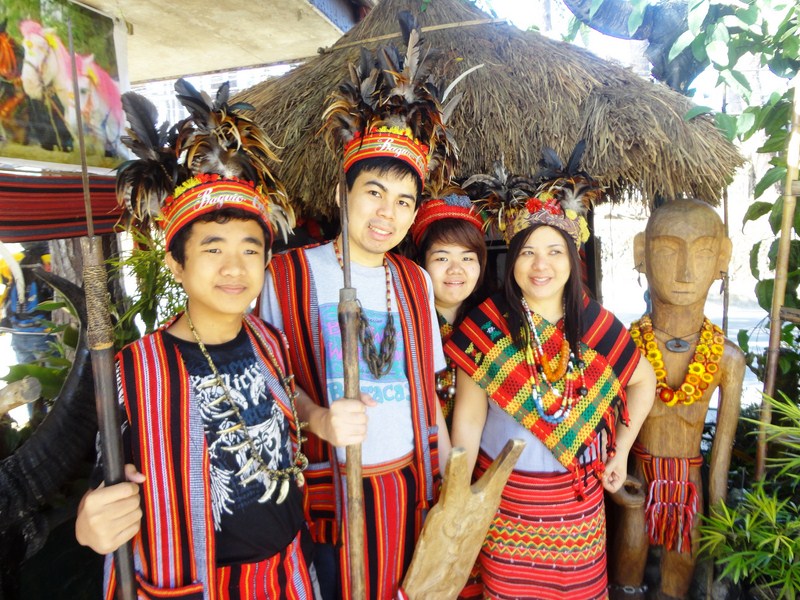
Dressing up in Igorot attire

Dressing up in Igorot attire

It being a long and sunny Chinese New Year weekend, the place was crowded with residents and tourists.  I am no stranger to the park, having visited it during Christmas vacations with my parents and siblings and, when I got married, with my family.  In the 1970s, the hourly rates for horse rides back then was just Php5.  Four decades later, it was now PhP300 (PhP200 for half an  hour) an hour and another PhP300 for a guide to tour you around.

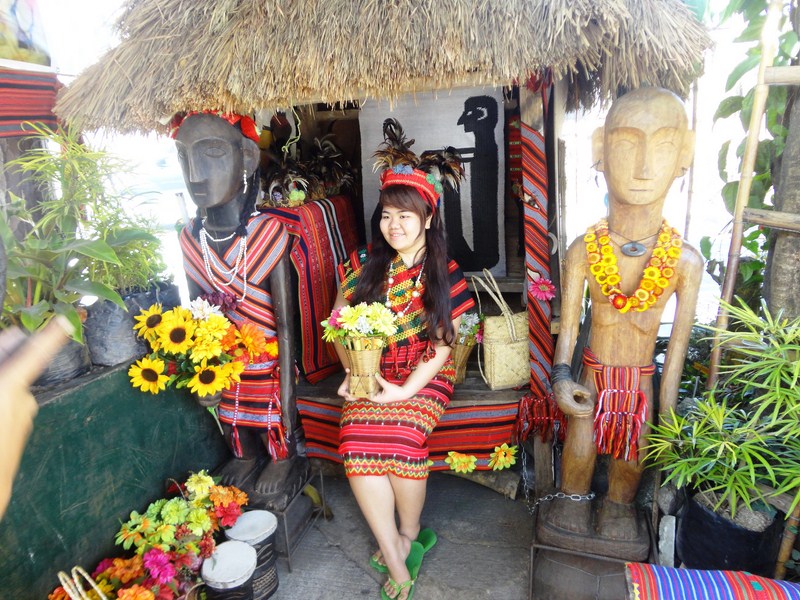
Princess for a day

Princess for a day

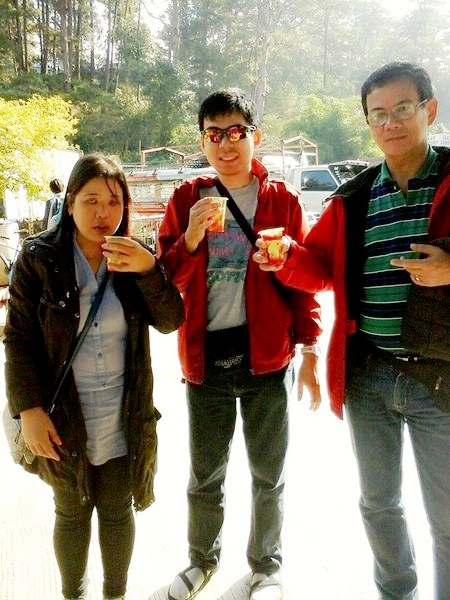
However, before the horseback riding, Melissa, Almira, Albert and my son Jandy decided to have their photos taken while dress up in full Cordillera regalia (PhP20 per pax) – vests and headdresses for the gents and ladies, shield and spear for the men (without the g-string or bahag) and tapis for the ladies.  We also tried our first taste of strawberry flavored taho.

Trying out strawberry-flavored taho

Trying out strawberry-flavored taho

Then, it was off to the horse riding field. The riding field has an inner circle (best for first-timers) for walking horses and an outer circle for the running horses for more experienced riders who want to make the horse trot or canter. Only the riders and the pony boys (usually the horse owner himself, or his assistant) are allowed within the Riding Circle. So the Riding Circle is NOT a park as only horses, pony boys and riders are allowed in the ring.  All experienced handlers, pony boys lead the horse, walk alongside it or ride behind the child for the latter’s protection and enjoyment of a faster ride. Parents and nannies (yayas) can only observe their kids from viewing decks and benches, documenting their kid’s ride with photos, using their camera’s zoom lens, and videos.

A horse of Wright Park

A horse of Wright Park

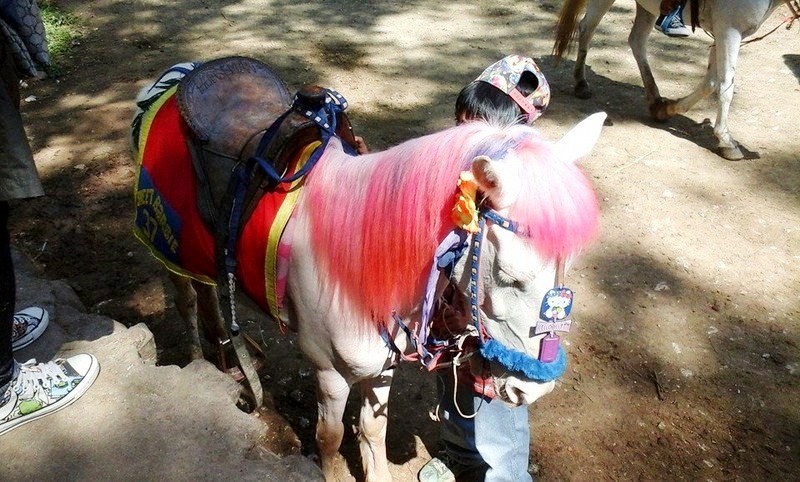
There were lots of horses to choose from. There were horses of different sizes and colors. Some horses wore their natural colors (brown, black, and white or mixed) while others wore artificial colors (pink, blue, yellow, etc). Most of the time, children choose the ones which are in pink or blue. I was surprised to see white ponies with a shock of pink hair (Melissa and Jandy chose to ride on this kind) or, sometimes, a brown one with a bright orange mane.

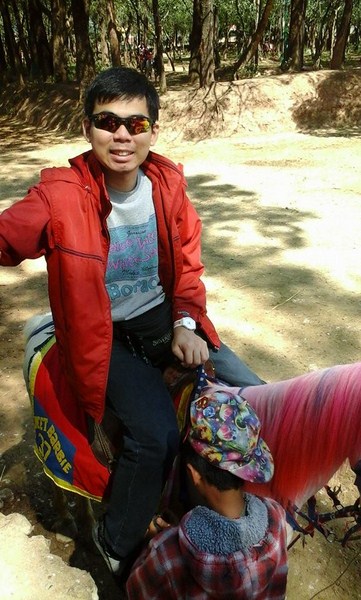
Jandy riding a pink-maned horse

Jandy riding a pink-maned horse

Pony Boys have noticed, in recent years, that children prefer white horses, thinking they’re nicer” or “gentler” (mas mabait) than the brown ones.  To make the white ones even more attractive to customers, the pony boys have taken to dying the horse’s mane (but  hardly ever their tails to match the manes), putting a little pink paper flower on their hair, giving them “bangs by cutting off a piece of the tail and attaching the extra hair to the bridle.

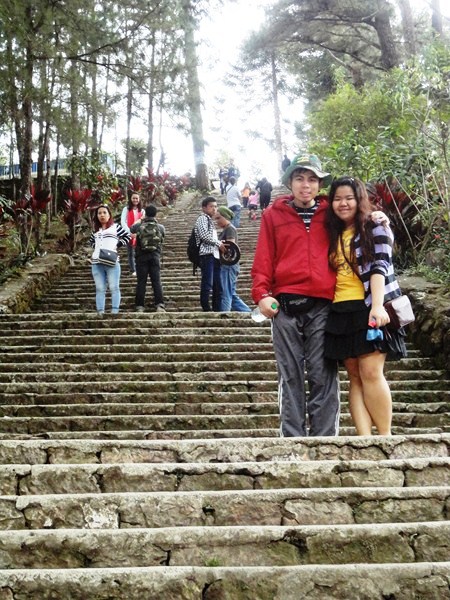
The stone stairway leading up to the Pool of Pines

The stone stairway leading up to the Pool of Pines

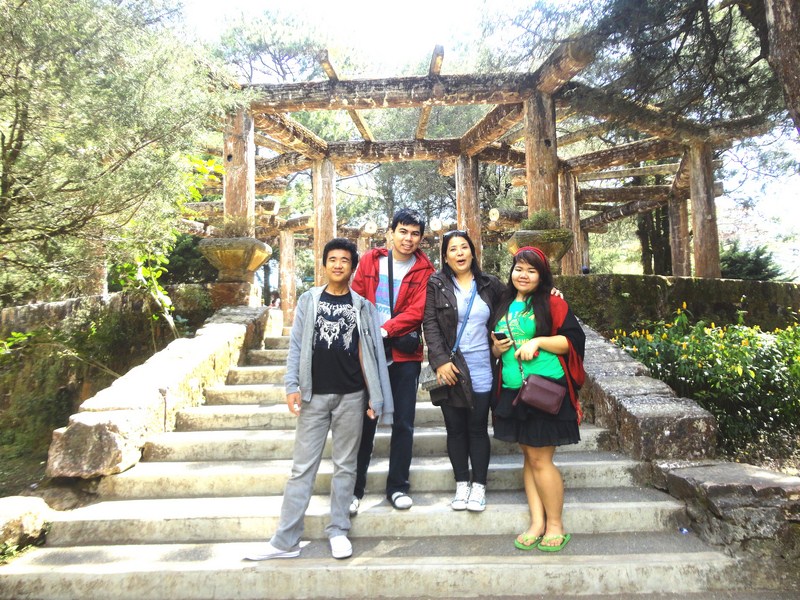
After the pony ride, we walked towards and climbed a wide stone stairway leading to the pine-forest preserve of Wright Park itself.  On the way up, we had wonderful views of the place, the horses and the people riding on them. At its end is a pergola-like stone structure or gazebo.

The concrete, pergola-like gazebo at the top

The concrete, pergola-like gazebo at the top

Igorots, dressed in their native attire and regalia, can be found here, willing to pose for a photograph … of course, for a fee of PhP10.  At stalls on the far side of the stairs, you can buy souvenirs such as woven products, key chains, T-shirts, peanut brittle, strawberry jams and a lot more. Beautiful and colorful plants are also displayed and sold here in affordable prices.

The Pool of Pines

The Pool of Pines

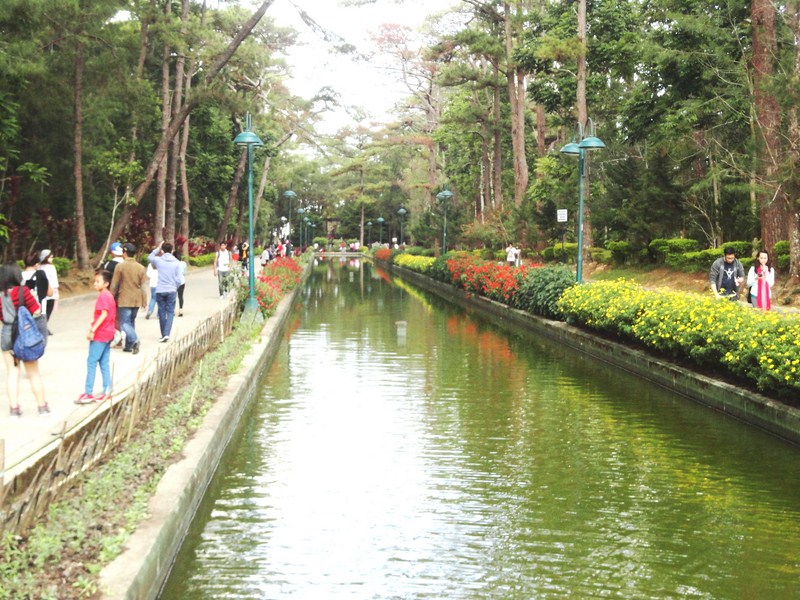
The park’s main feature is the beautiful and much photographed Pool of Pines, a 100-m. (328-ft.) long and narrow 5-m. (16.4-ft.) wide, shallow and elongated rectangular reflecting pool filled with lotus. Postcard-type photographs are usually taken here.

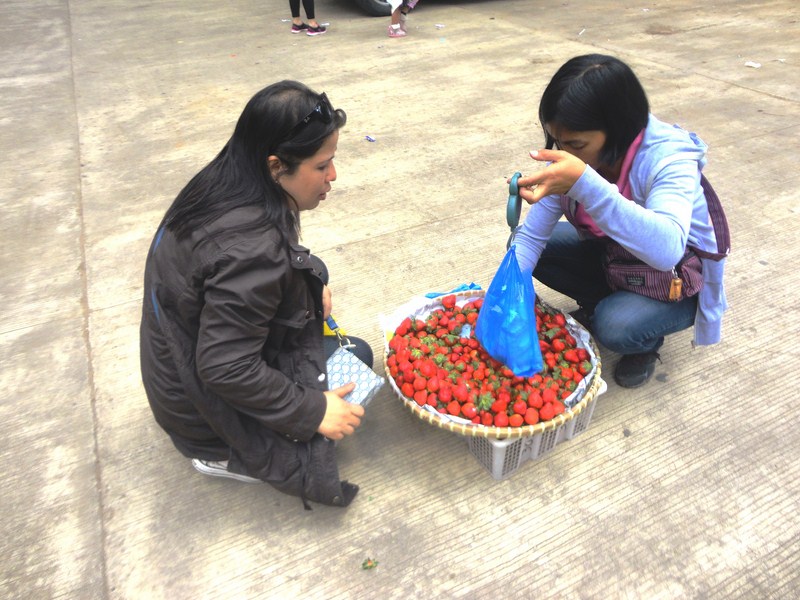
Melissa buying strawberries from a vendor

Melissa buying strawberries from a vendor

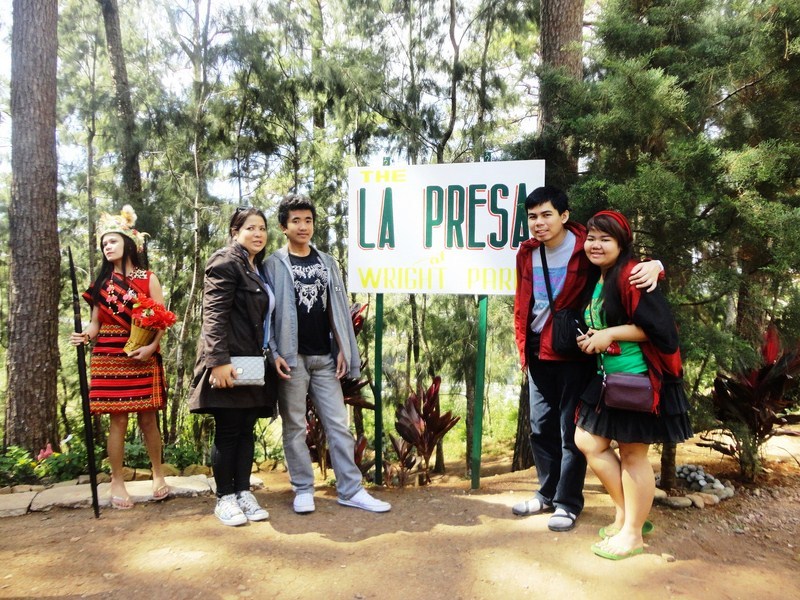
On the way to the pool, we noticed on the left, a photo booth with the sign “Forevermore” and “La Presa.” The fictional La Presa, in reality Sitio Pungayan of Tuba town, some 40 mins. away from Baguio City, is the location where most of the scenes from the popular ABS-CBN hit teleserye “Forevermore” (starring Enrique Gil and Liza Soberano) were shot. There you have it.  

The La Presa photo booth area

The La Presa photo booth area

It just so happened that Wright Park, together with Burnham Park and The Manor (which, in the series, is a hotel called Hotel Grande owned by the family of Gil’s character) were also featured in the series.

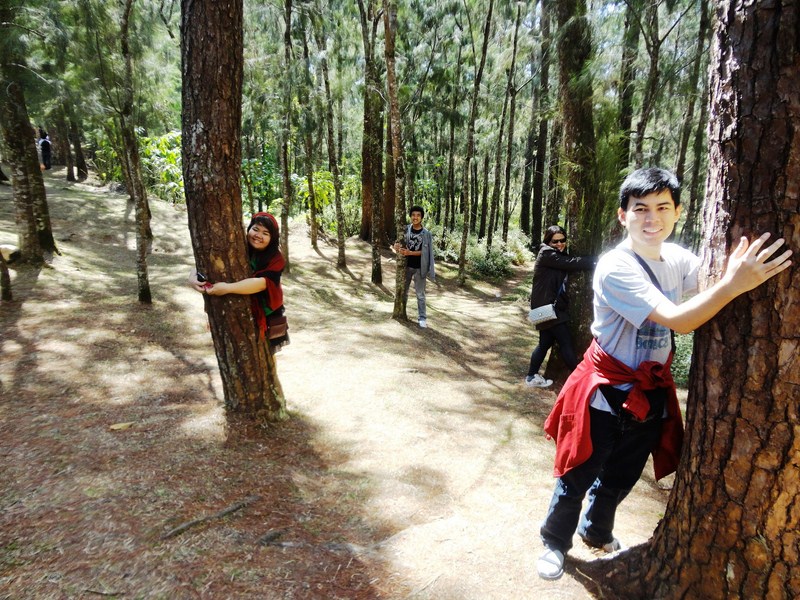
Frolicking among the tall pine trees

Frolicking among the tall pine trees

Here, fans get to dress up in native attire and pose for PhP5.At the Pool of Pines, we walked along a walkway lined, on both sides, with tall pine trees, weeping willow trees and decorative street lights.  Native handicrafts are also sold at the Mansion end of the park by a few Igorot peddlers.

Pool of Pines (20)

Wright Park: Leonard Wood Rd, Baguio, Benguet.

When going horseback riding, choose a horse that is proportionate in size to your child. It would be better if you asked around first or observed other riders before choosing one. For those who intend to take a pony farther out along South Drive, the Mines View Park area or to Outlook Drive, it is advisable to first agree on the hourly cost to be charged.

Borjomi Mineral Water Park (Borjomi, Georgia)

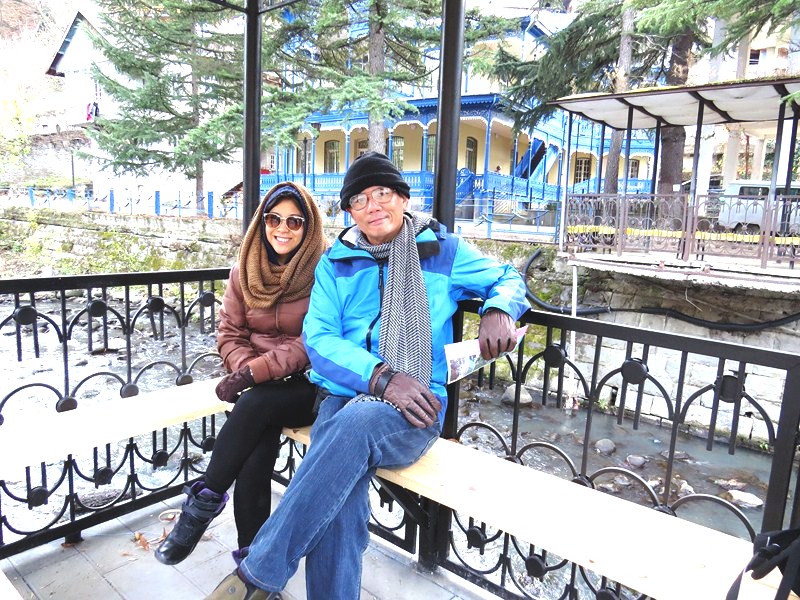
The next day (my second day in Georgia), after breakfast at our hostel, Filipina expat Ruby and I dropped by the nearby hostel where Buddy, Pancho, Melissa and Riva were staying, hoping to invite any of them to join us in going to Borjomi.  Riva, who just arrived early that morning, was game and all three of us walked to the nearby Avlabari Metro Station where we all took the Metro to Didube Metro Station.

The mountain spa town of Borjomi

The mountain spa town of Borjomi

Upon arrival, we all boarded a Borjomi-bound marshrutka (minibus). The fare was 8 GEL and the 156.4-km. journey, via the Tbilisi-Senaki-Leselidze Highway/E60, took us about two hours. Along the way, we passed by Tserovani, a village of about 2,000 identical houses built to house Georgians who fled South Ossetia during the war.

The author with Ruby

The author with Ruby

The attractive resort town of Borjomi, in south-central Georgia, is one of the districts of the Samtskhe-Javakheti region and is situated in the northwestern part of the region, in the picturesque Borjomi Gorge on the eastern edge of the Borjomi-Kharagauli National Park, between the Vakhani and Trialeti Ridges.  Clinging to the hills on either side of the Mtkvari River, 850 m. above sea level, it is the largest mountain spa in Georgia, with an estimated population of 14,445.

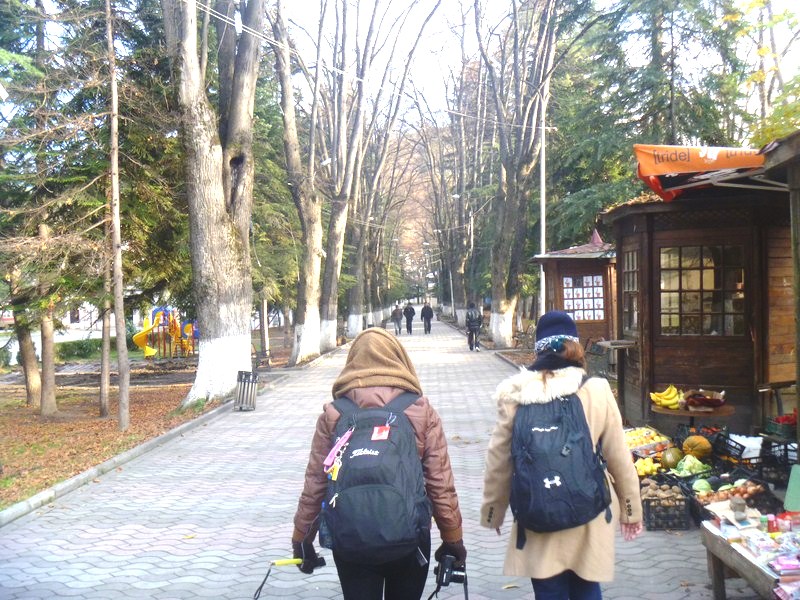
The author and Ruby walking the sidewalks of Borjomi

The author and Riva walking along the sidewalks of Borjomi

The town is famous for its love-it-or-hate-it but curative mineral water, the number one export of Georgia.  As early as in the 15th century, the mineral waters of Borjomi were already mentioned but it only gained wide notoriety when a daughter of Evgeny Golovin, viceroy of the Russian Tsar in the Caucasus, was cured of her gynecological problems there. Yekaterinsky Spring, one of the mineral water sources, was named after this girl while the second one, Yevgeniyevsky Spring, was named after the viceroy himself.

The Tourist Center

The Tourist Center

The Romanov House got interested in these mineral sources and the first bottling plant producing bottled Borjomi mineral water was opened by the tsar’s order. The first bottles, made with transparent crystal glass, were later replaced by dark bottles, and every bottle was packed in a reed “case” and sealed with the factory stamps. Drinking it is said to benefit the digestive system and body metabolism. Borjomi mineral water can now be bought in shops in over 30 countries throughout the world and I’ve already tried it during dinner the night before.

Bridge of Beauty

Bridge of Beauty

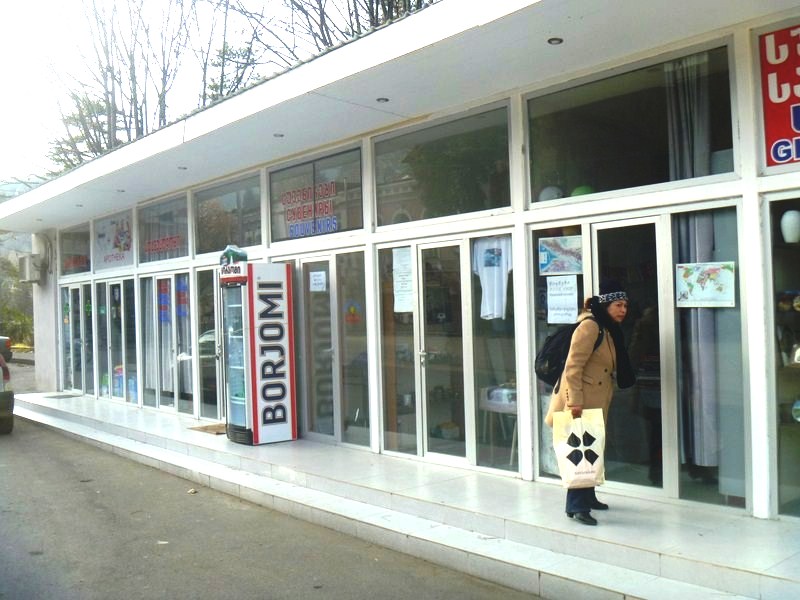
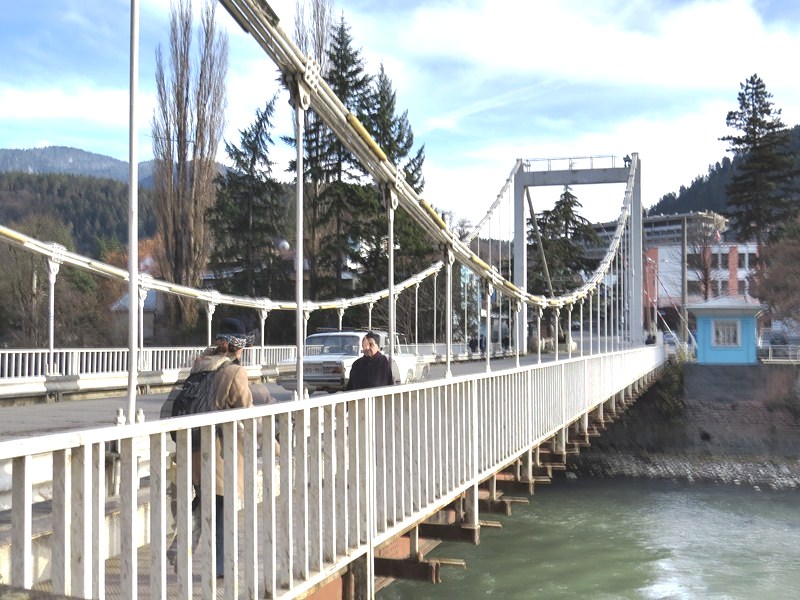
We dropped off at Rustaveli Street, the main commercial street of Borjomi which runs along the northern bank of the Mtkvari River.  Walking along this street, we dropped by the tourist office housed in a glass pavilion between Rustaveli Street and the river. Here, we left our backpacks and luggage in a bookshop owned by the sister of the landlady of Likani Guesthouse where we will all be staying overnight. Thus unburdened, we crossed over the Bridge of Peace, a white painted suspension bridge over the Mtkvari River, leading to the southern half of the town where Borjomi Mineral Water Park is located.

Borjomi Mineral Water Park

Borjomi Mineral Water Park

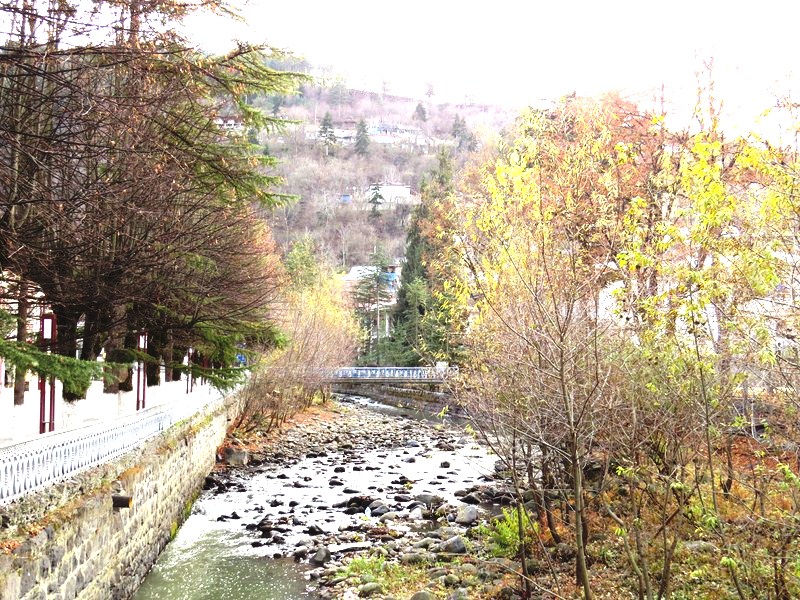
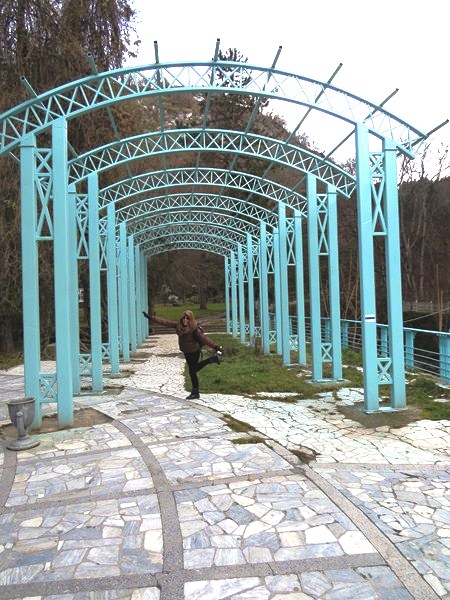
Stretched along the small Borjomula River, this city park contains the source of Borjomi mineral water. A lovely place for us to do a brisk hike in the chilly mountain air, the park occupies a lovely stretch of forest following the narrow, wooded valley along the Borjomula River. There are several dozen health institutions, recreation complexes, sanatoriums and rest houses in Borjomi and all of them are located in the vicinity of the park. About 300 m. west of the bridge, Rustaveli Street changes its name to Meskheti Street.

Borjomula River

Borjomula River

The author and Riva at a viewpoint by the river

The author and Riva at a viewpoint by the river

Dating from 1850, the park has recently been renovated and reopened in 2005, its opening attended by the presidents of Georgia and Ukraine. Today, it is the most extensive ecologically-themed amusement park in the Caucasus, with a number of attractive themed playgrounds, a few amusement-park style attractions, a swimming pool and a cinema theater. The first part of the park contains the amusement park and cafes.

The Soviet-era railway station

The Soviet-era railway station

However, most of the park’s facilities – cafes, funfair attractions, the cinema, the cable car and the hilltop Ferris wheel – only operate from about late June to early September. During the summer, a park admission fee of 0.50 GEL is charged but, as it was the onset of winter, admission was free.  Near the entrance to the park, local vendors here sell homemade jam made from pine tree cones. It is claimed that the jam is good for improving immunity and useful for curing upper respiratory tract infections.

_MG_7987

IMG_0753

IMG_0789

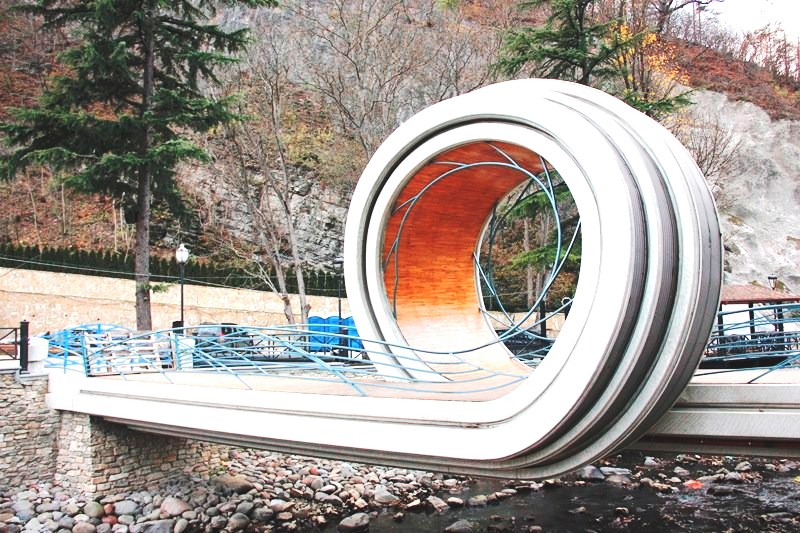
On the south bank of the river, just east of the bridge is the renovated, Stalin-era Borjomi Park Train Station. The railway here opened in 1894. East of the station, we turned right along 9 Aprili and walked another 600m. Along the way, we passed by a new pedestrian bridge, a quite stunning example of the wave of new Georgian architecture that perfectly symbolizes the restorative water that has made Borjomi famous.

The new pedestrian bridge

The new pedestrian bridge

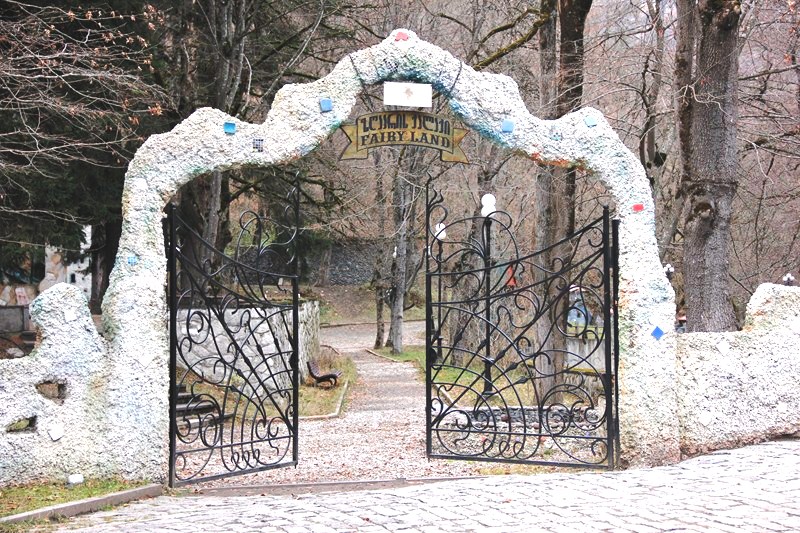
Fairy Land

Entrance gate of Fairy Land

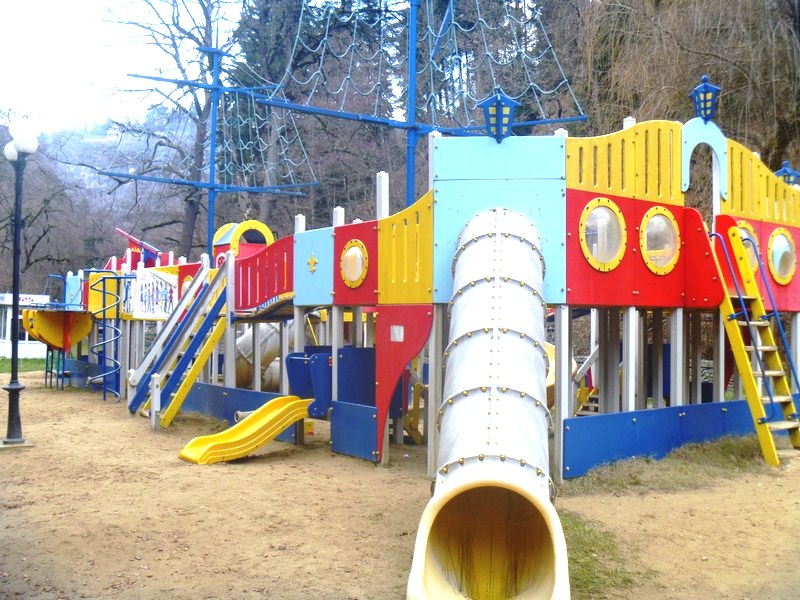
Children's playground

Children’s playground

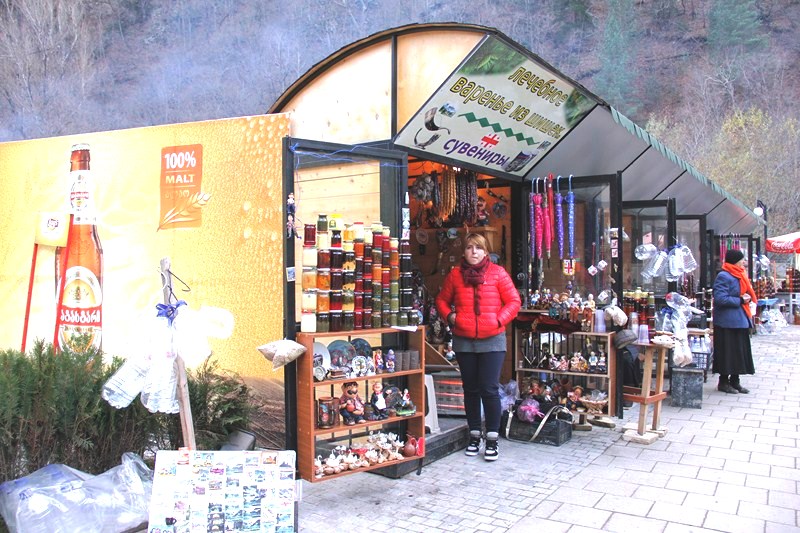
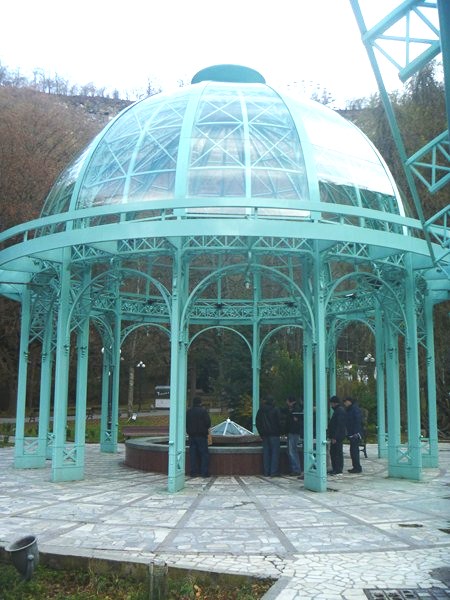
Beside the roller-coasters and the pools are the mineral water springs where locals go to get their drinking water, filling bottles with it. Warm mineral water flows from taps in a green pavilion straight in front of the entrance where, nearby, plenty of stalls sell souvenirs and empty plastic bottles of various volumes.

Souvenir shops

Souvenir shops

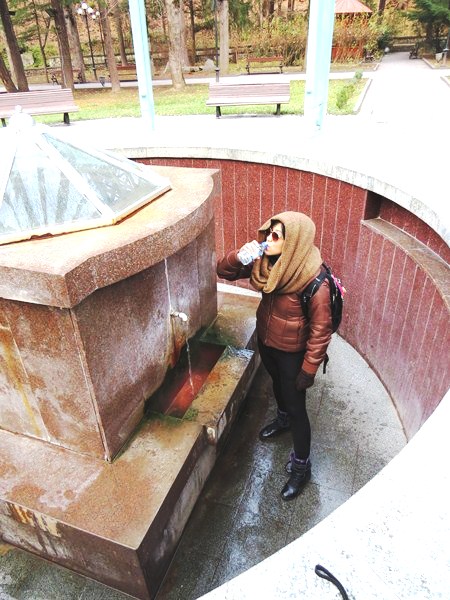
Ruby and I drank the water in the main spring’s two battered taps.  Though slightly warm, sour and a bit salty, with a tang of sulfur, very different from the slender glass bottled water I tried the night before, we still managed to ingest this stronger tasting water.  As it is flavored with sodium carbonate, it was said to taste like Vichy water.

The drinking pavilion

The drinking pavilion

Riva trying out Borjomi's mineral water

Riva trying out Borjomi’s mineral water

It was a different story with Riva who couldn’t find the courage to swallow it. There are said to be other springs with fresh water that have no strong taste. We continued on to the rear part of the park where, near the entrance, is the cable car (1 GEL each way) that brings visitors up to plateau where the view over Borjomi was said to be fantastic.

The closed cable car station

The closed cable car station

If we continued past the asphalted part for another 2.5 kms., we would have reached a lovely clearing in the forest where there’s small, a concrete, Soviet-era, hot spring-fed swimming pool with a constant temperature of about 27°C.

Qatar Airways has daily flights from Diosdado Macapagal International Airport (Clark, Pampanga) to Tbilisi (Republic of Georgia) with stopovers at Hamad International Airport (Doha, Qatar, 15 hrs.) and Heydar Aliyev International Airport (Baku, Azerbaijan, 1 hr.). Website: www.qatarairways.com.

Japanese Garden of Peace Park (Corregidor Island)

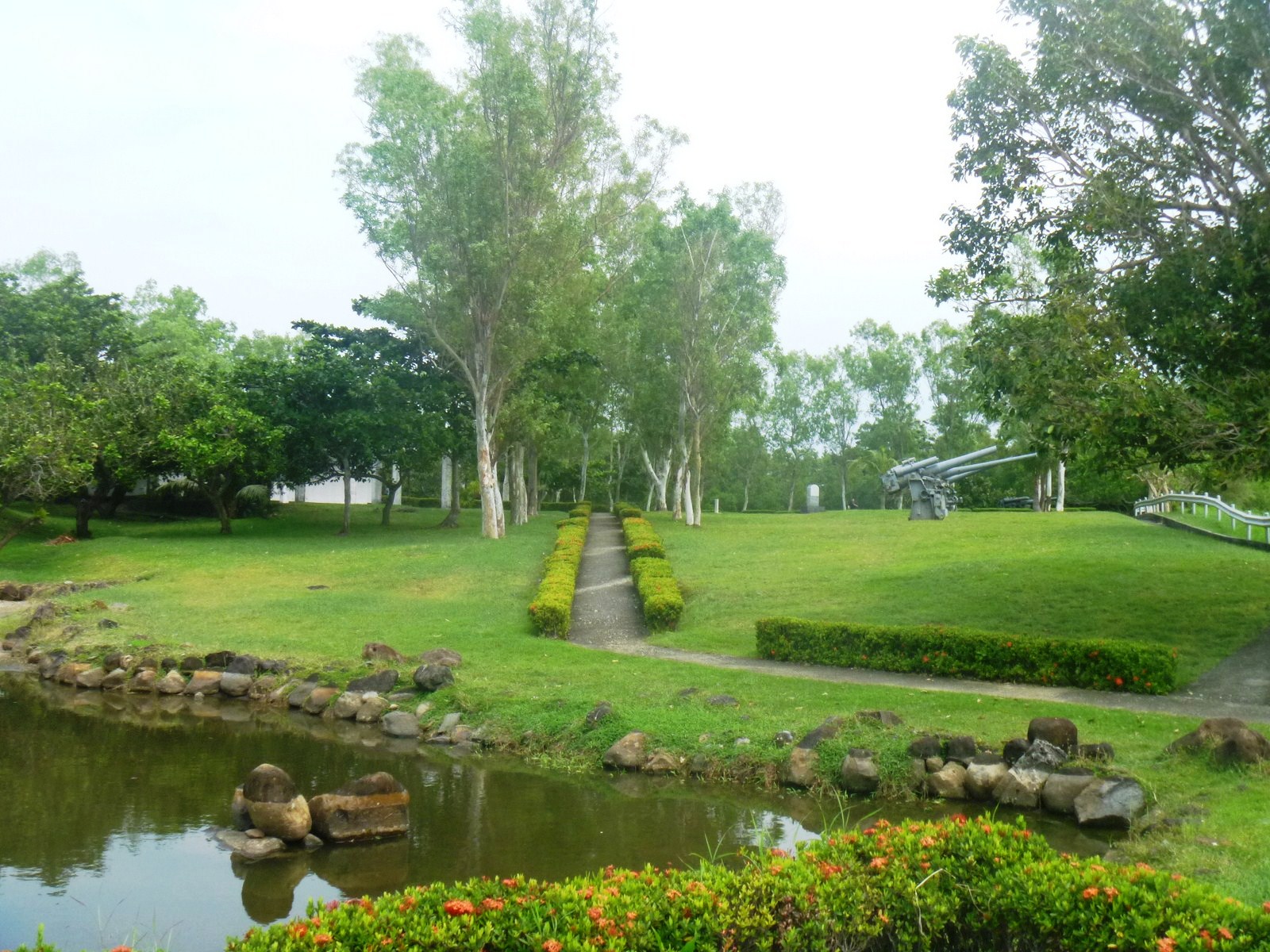
The 2.2-hectare Japanese Garden of Peace Park is a Shinto shrine and garden built as a memorial to the Japanese soldiers who served and died on Corregidor during World War II.  The garden was the site of the only cemetery, built by the Americans, in Asia where Japanese soldiers, who perished during World War II, were accorded proper burial rites as a sign of respect for the dead.

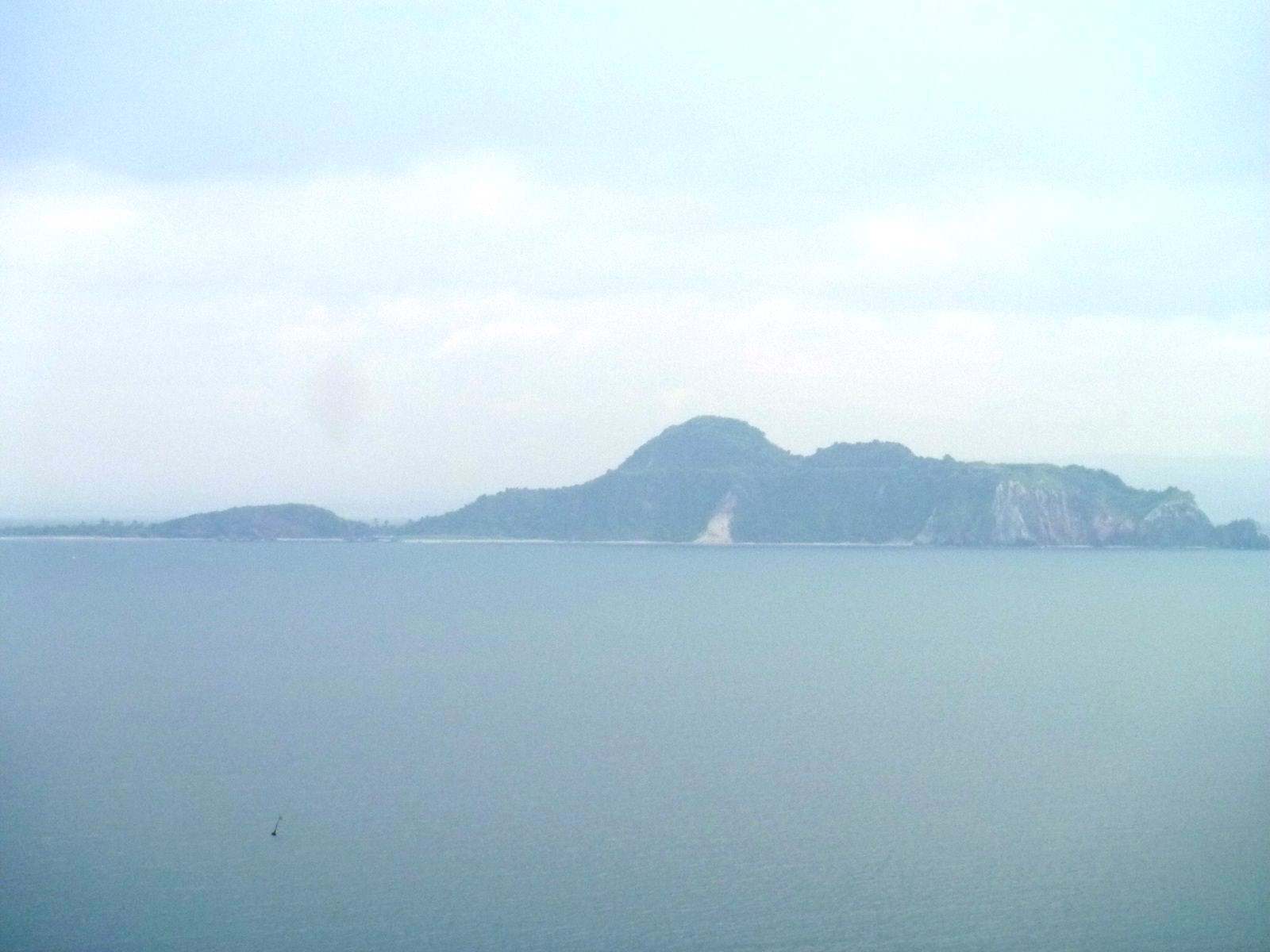
Caballo Island - the view that led to the discovery of the cemetery

Caballo Island – the view that led to the discovery of the cemetery

Its location was lost among the rubble of war until a photo of the cemetery was found, possibly by a GI, and bought in a garage sale in the U.S.. The clue that led them to the exact spot, in spite of the overgrown forest, was the view of Caballo Island in the distance.

Japanese Garden of Peace

Japanese Garden of Peace

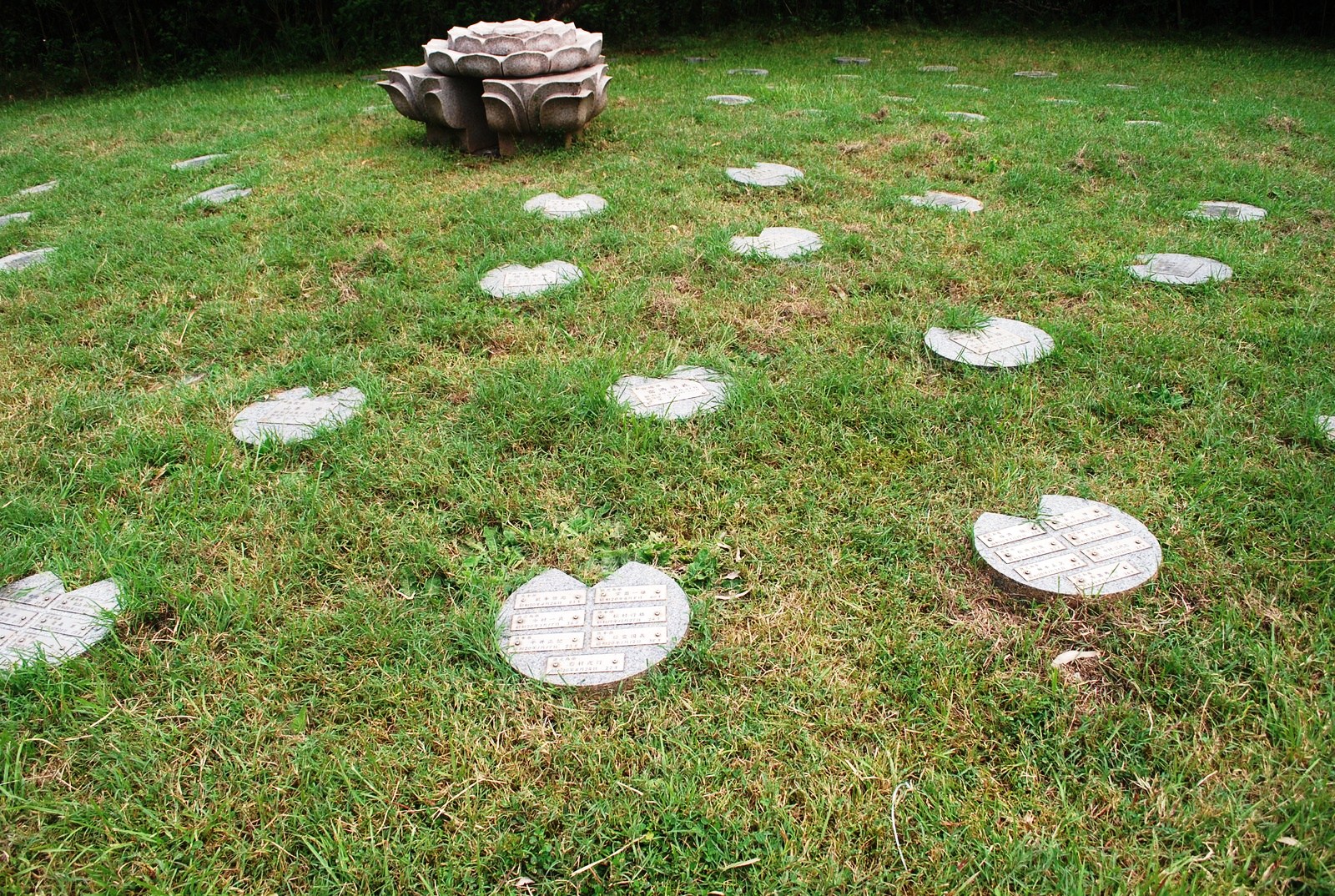
Their remains were later unearthed, cremated and sent back to Japan for their own burial rites.  As such, this garden is on the Japanese tourist route but is rarely visited by Americans.  In fact, the Americans and Japanese have different sets of tours and are never joined together in large groups.

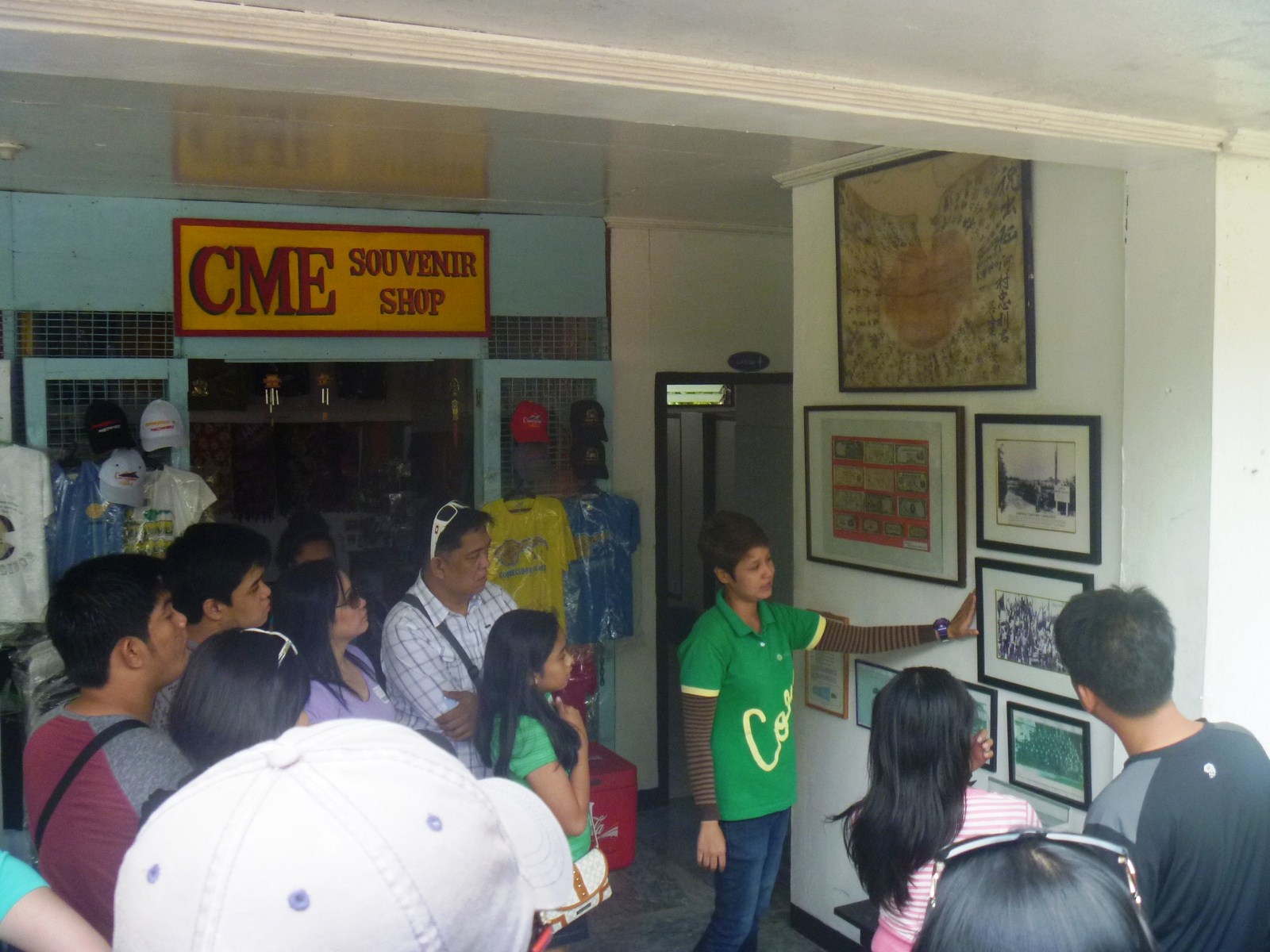
Pavilion and souvenir shops

Pavilion and souvenir shops

The park includes a praying area for Japanese war veterans and the families and relatives of Japanese soldiers who served or were killed in Corregidor during World War II.  A small pavilion houses mounted photographs (including the discovered cemetery photo) and memorabilia.dedicated to the crew of the Japanese super battleship Musashi which sank on October 24, 1944 during the Battle of Leyte Gulf.

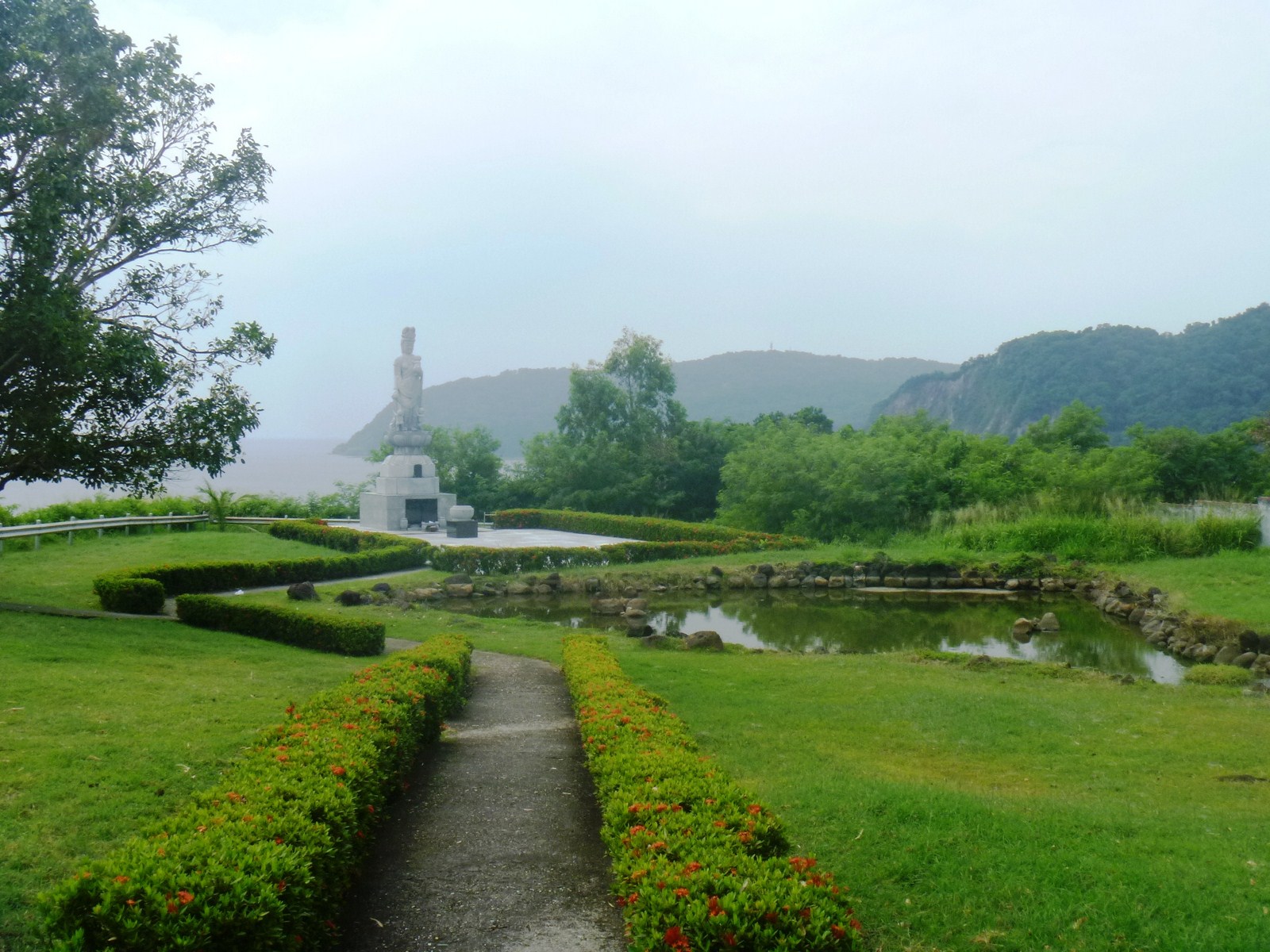
Jibo-Kannon stone Buddha and its reflecting pool

The Jibo-Kannon stone Buddha and its reflecting pool

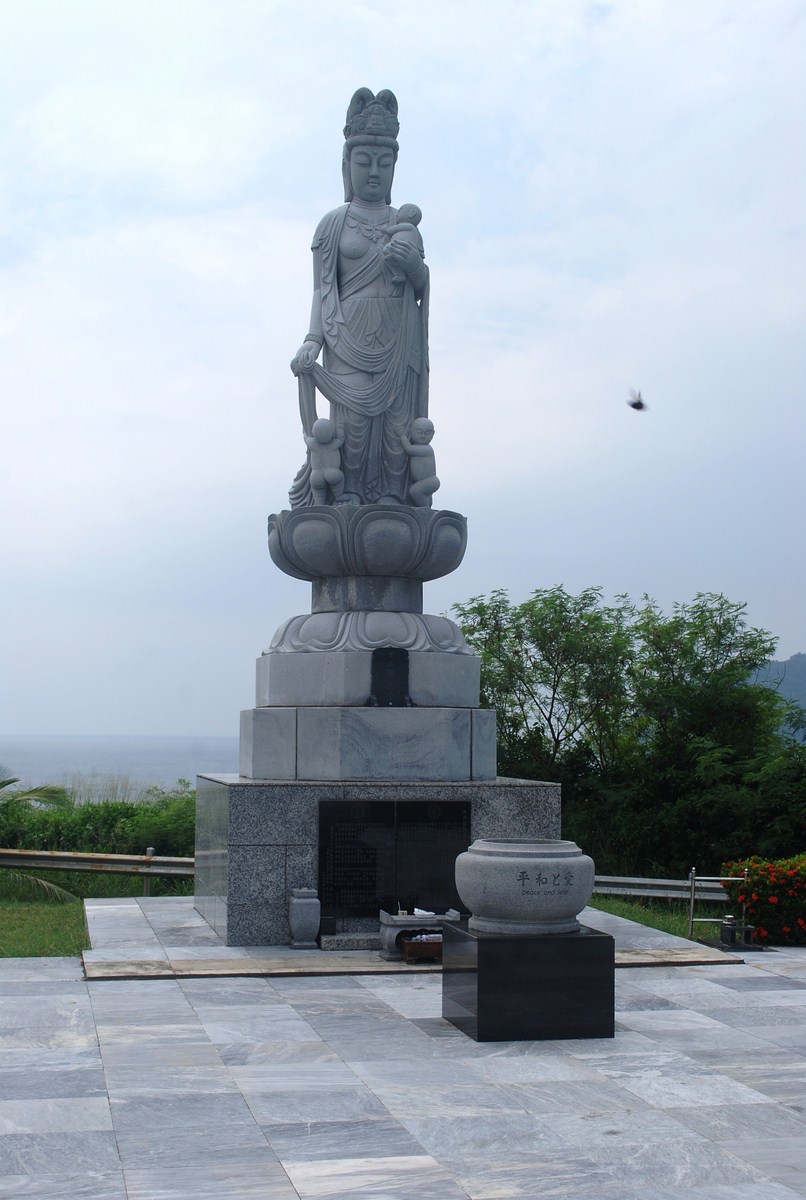
This garden also features a towering, 10-ft. high Jibo-Kannon stone Buddha, showing a Japanese woman holding her baby while two toddlers tug at her skirt.  Beside it is a reflecting pool.  The stone Buddha is said to be a fertility idol and quite a few couples visit the island just to touch the statue in hopes of bearing a child.

The Jibo-Kannon stone Buddha

The Jibo-Kannon stone Buddha

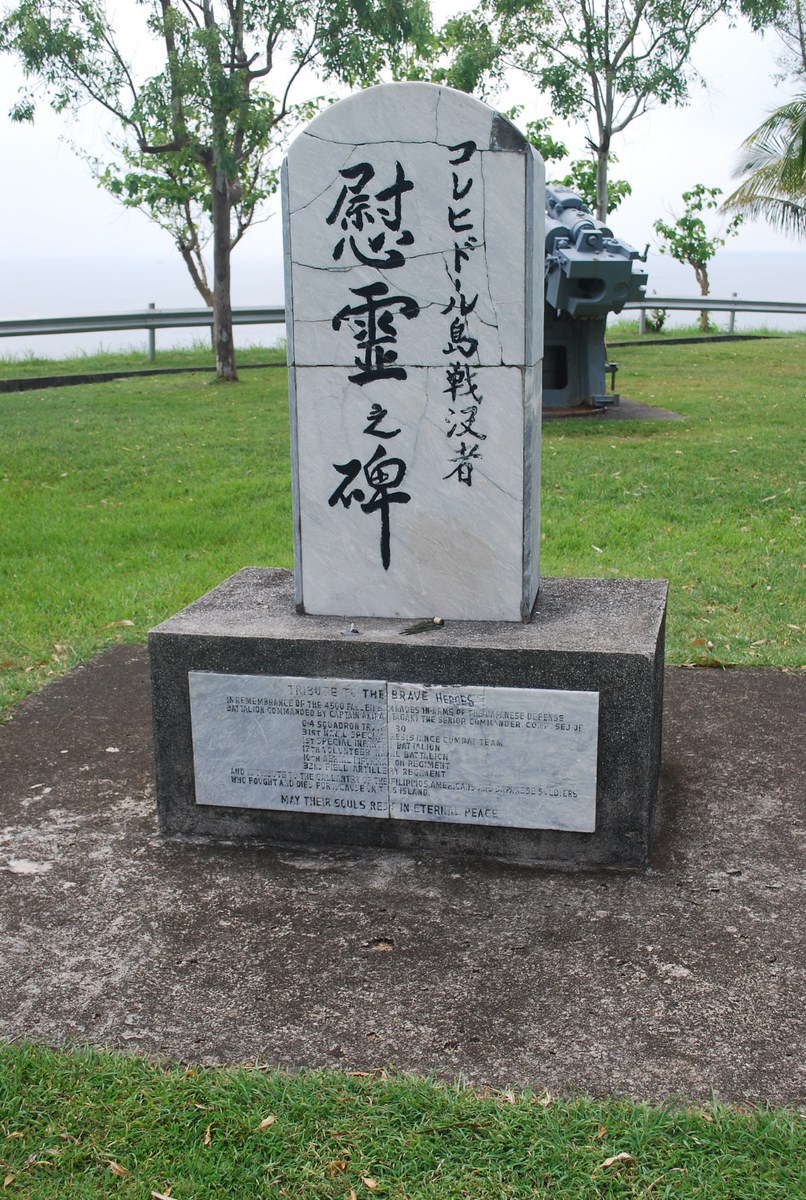
Tribute to the Brave Heroes

Tribute to the Brave Heroes

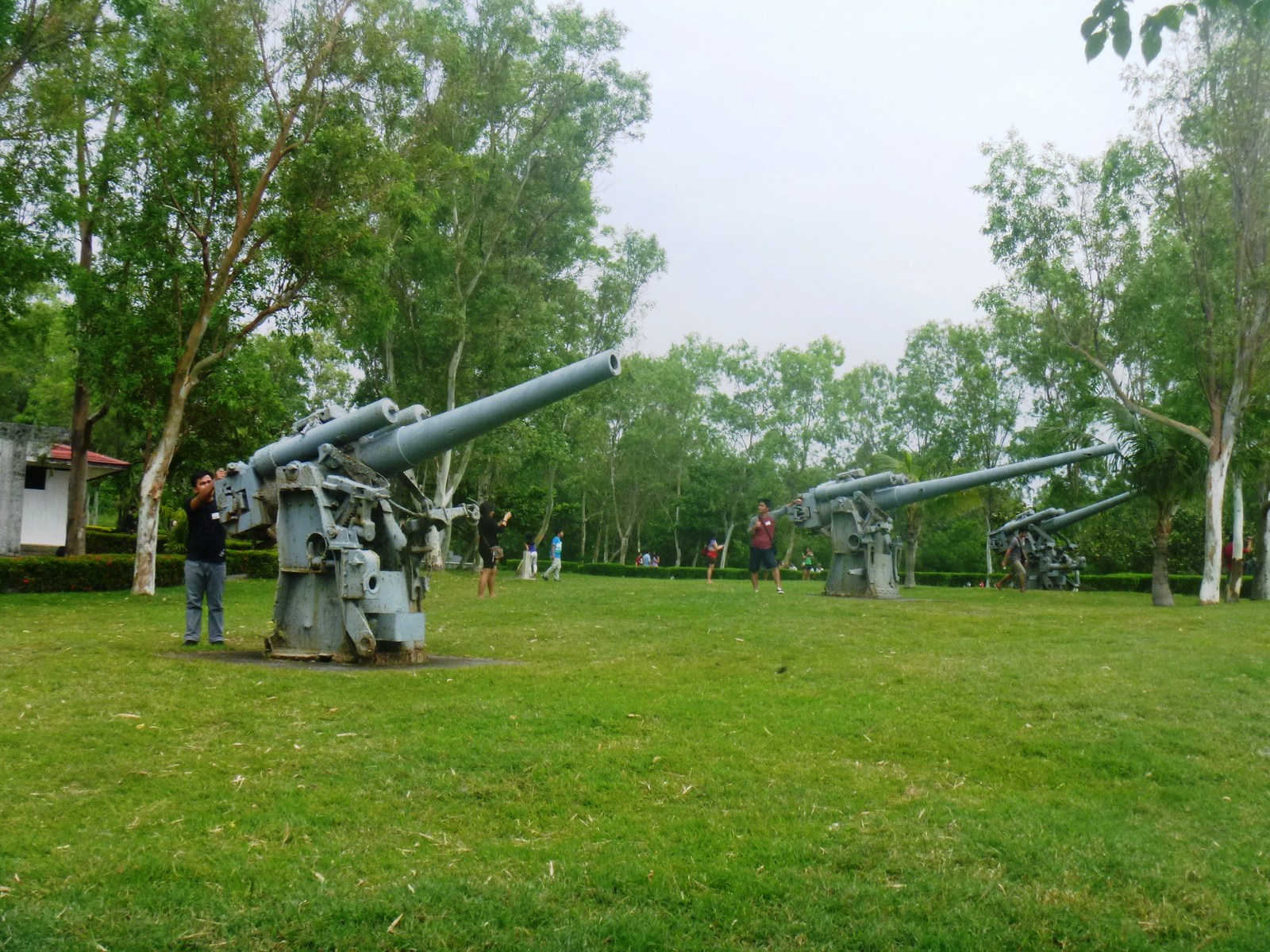
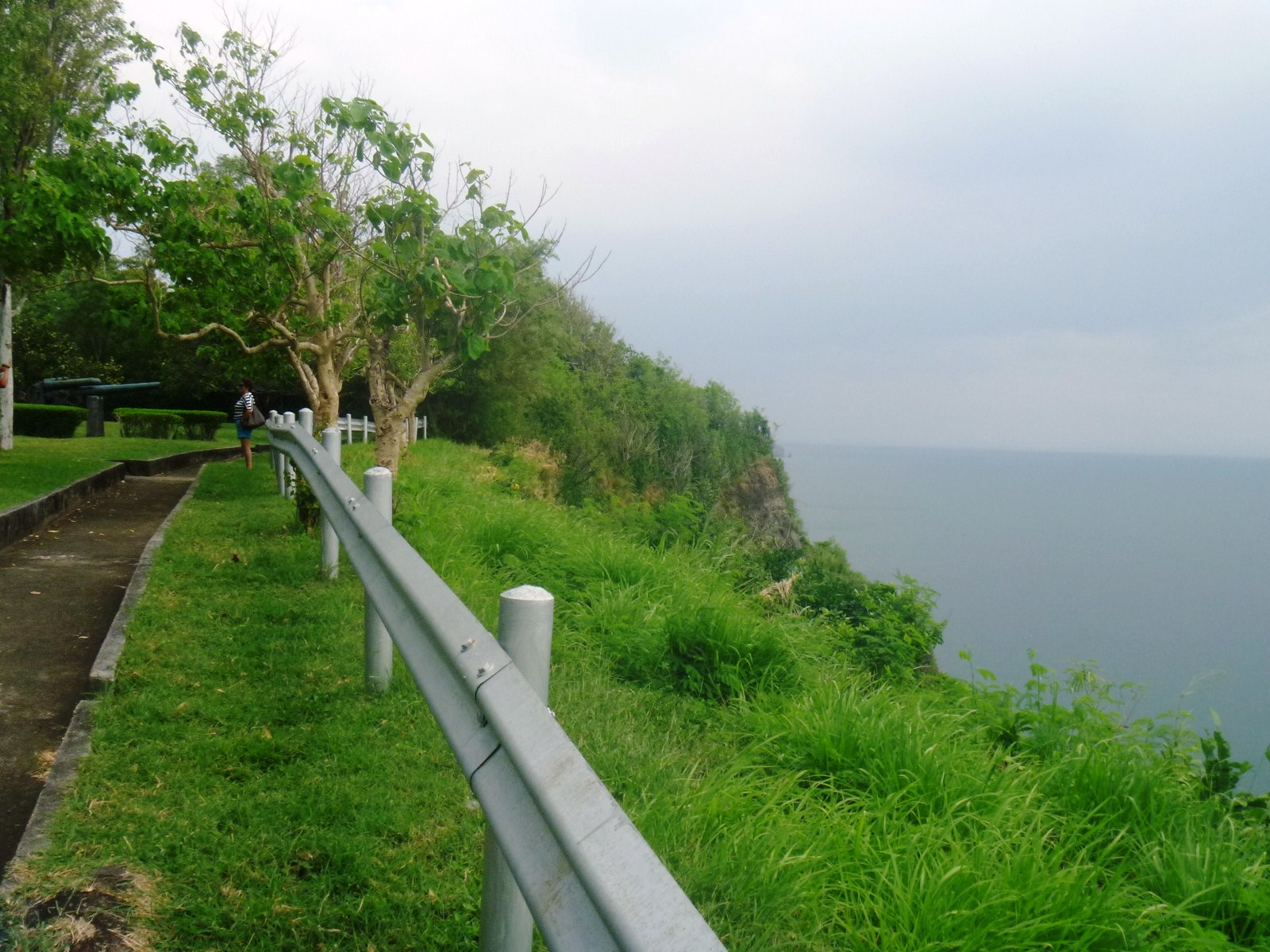
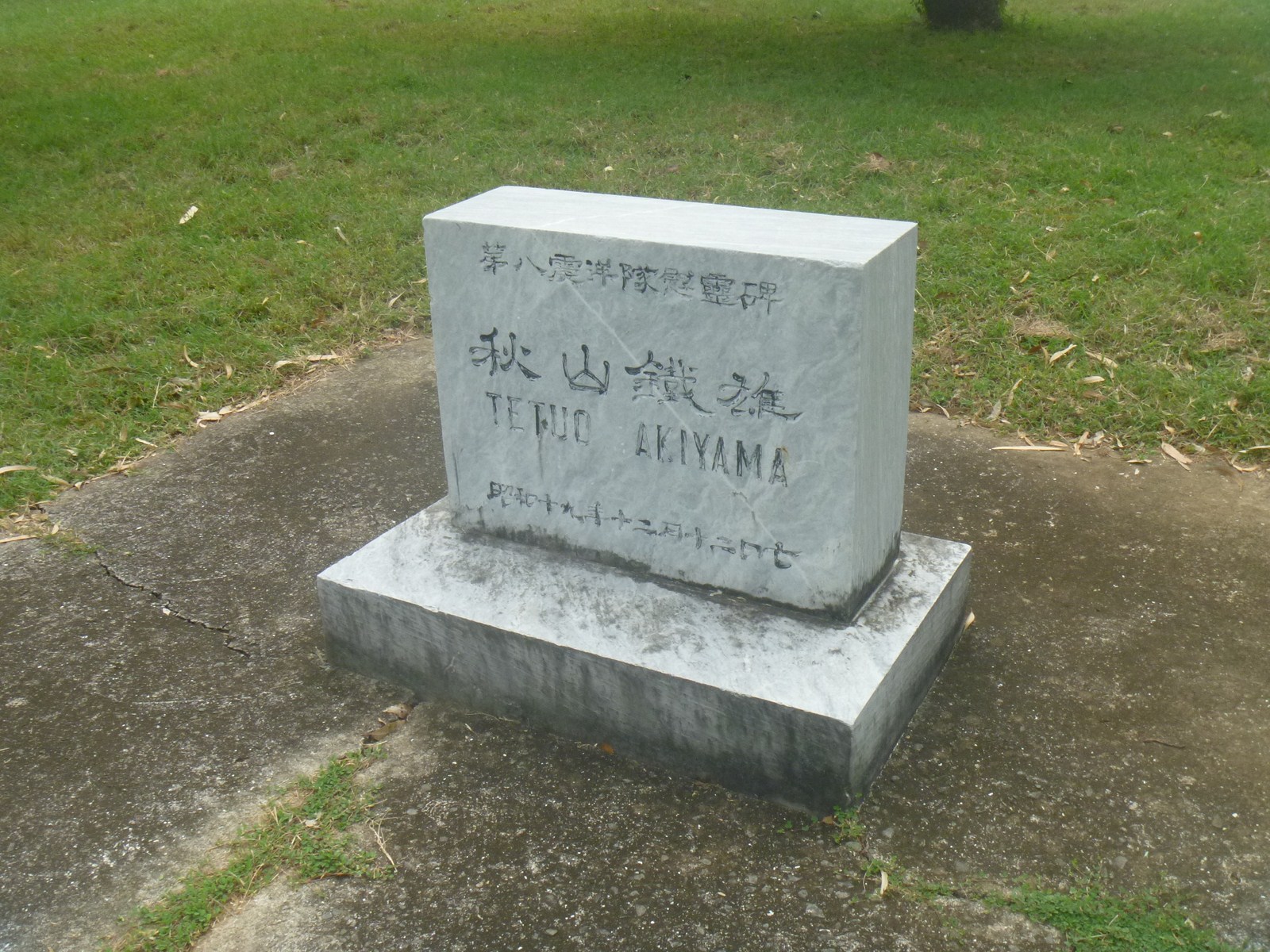
On the edge of the hill are a battery of Japanese anti-aircraft guns facing out to sea. Nearby is a cliff where Japanese defenders committed suicide.  Around are other Japanese soldier memorial shrines and various markers with Japanese inscriptions, including one dedicated to Vice-Adm. Tetuo Akiyama.

Japanese Anti-Aircraft Guns

Japanese Anti-Aircraft Guns

Japanese suicide cliff

Japanese suicide cliff

Also within the garden is a souvenir shop with items such as old Japanese and American currencies, some old photographs, printed t-shirts, key chains, beverages and snacks. The construction of this garden was made possible through funds generated by a Japan-based private group.

Tetuo Akiyama Marker

Tetuo Akiyama Marker

Various markers with Japanese inscriptions

Various markers with Japanese inscriptions

Sun Cruises, Inc. (SCI) – Reservation Office: CCP Terminal A, CCP Complex, Roxas Blvd., Manila.  Tel: (632) 831-8140 and (632) 834-6857 to 58.  Fax: (632) 834-1523.  E-mail: suncruises@magsaysay.com.ph.

Sun Cruises, Inc. (SCI) – Sales Office: 21/F,  Times Plaza Bldg., Ermita, Manila.  Tel: (632) 527-5555 local 4511 and 4512.  Fax: (632) 527-5555 local 4513.  E-mail: sales@suncruises.com.ph.

Arroceros Forest Park: Manila’s “Last Lung”

I was slated to join a group being assembled  by Mr. Lawrence “Rence” Chan (who hosts the Royal Postal Heritage Tour) as part of a special documentary tour with the GMA 7 I-Witness team tasked to feature the sorry plight of the now-abandoned and unused Metropolitan Theater.  However, as I arrived very early, I decided to explore the nearby Arroceros Forest Park.

Arroceros Forest Park

Arroceros Forest Park

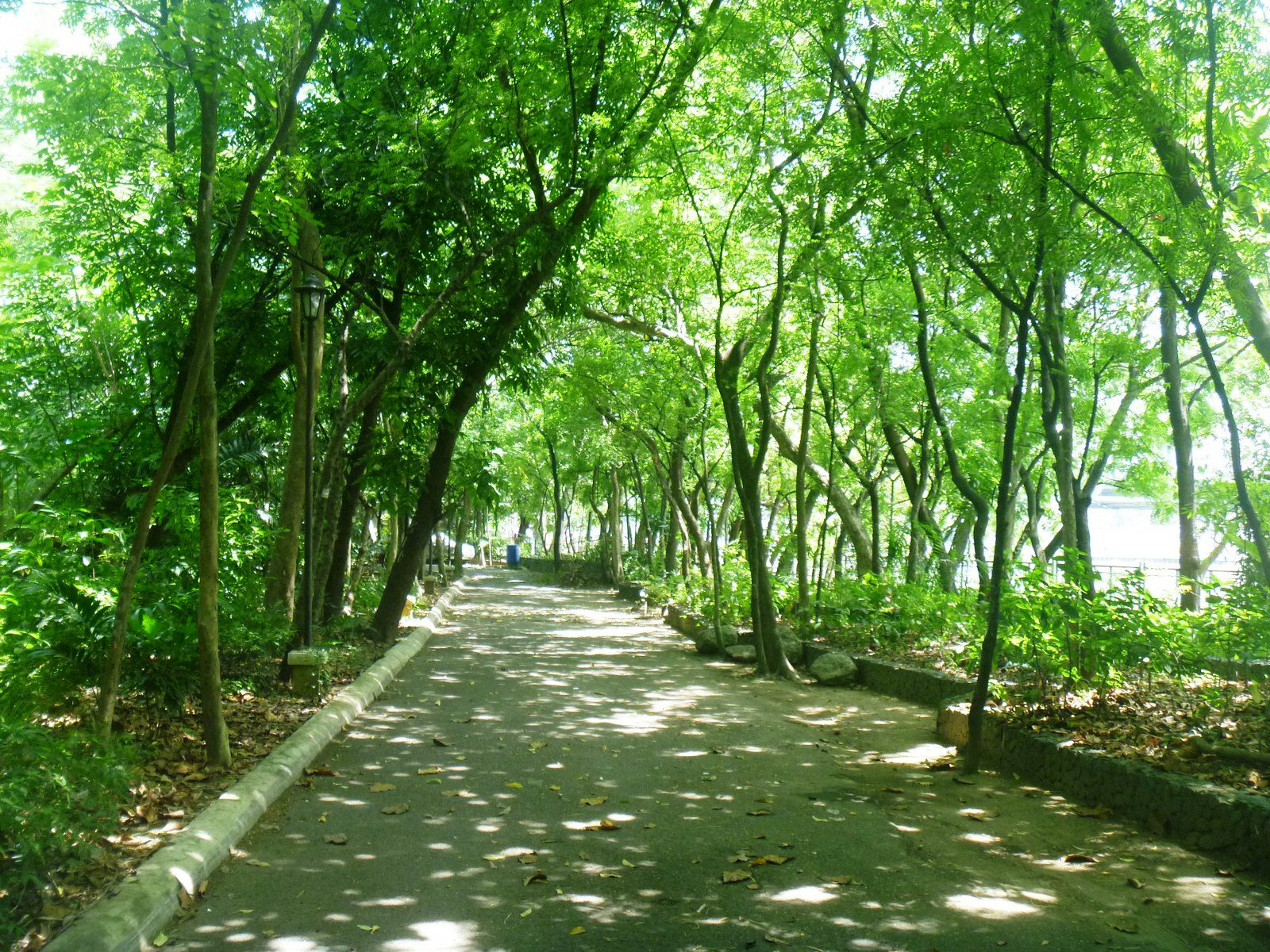
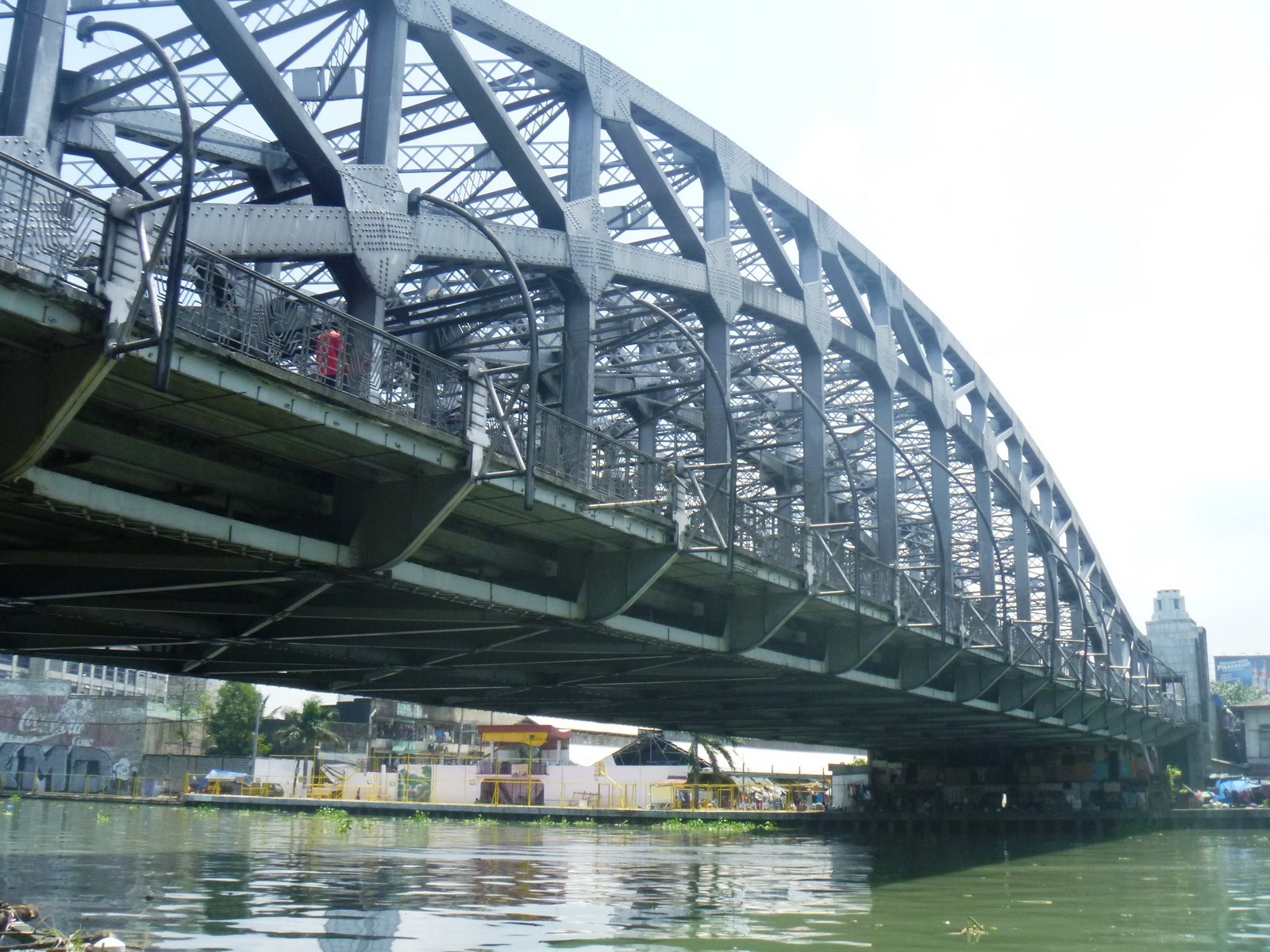
Located in the  middle of Manila, on the western bank of the Pasig River, beside the LRT Central Terminal Station and right beside the point where one end of the Quezon Bridge (formerly Puente Colgante) is situated, this small but valuable pocket of green is the only secondary forest left in the entirety of this noisy and polluted metropolis.

Quezon Bridge over the Pasig River

Quezon Bridge over the Pasig River

Upon entering its gate, I was literally transported to a different world as this 2.1428-hectare mini forest park was intended, by former Mayor Alfredo Lim, as a refuge of Manileños from the chaos and pollution of this rapidly urbanizing city.  In 1992, the city government purchased this abandoned riverside lot, for PhP60 million, from the Land Bank of the Philippines.

The park entrance

The park entrance

The park has a rich history, though, it being the site of a 16th and 17th century trading post where Filipino rice dealers in Pasig River engaged in barter with visiting Malay and Chinese traders.  The name arroceros was derived from the Spanish words meaning “rice dealer.”  Later, it became the site of the historic Fabrica de Tabacos. during the 19th century and, site of a military barrack (Estado Mayor) during the American era.

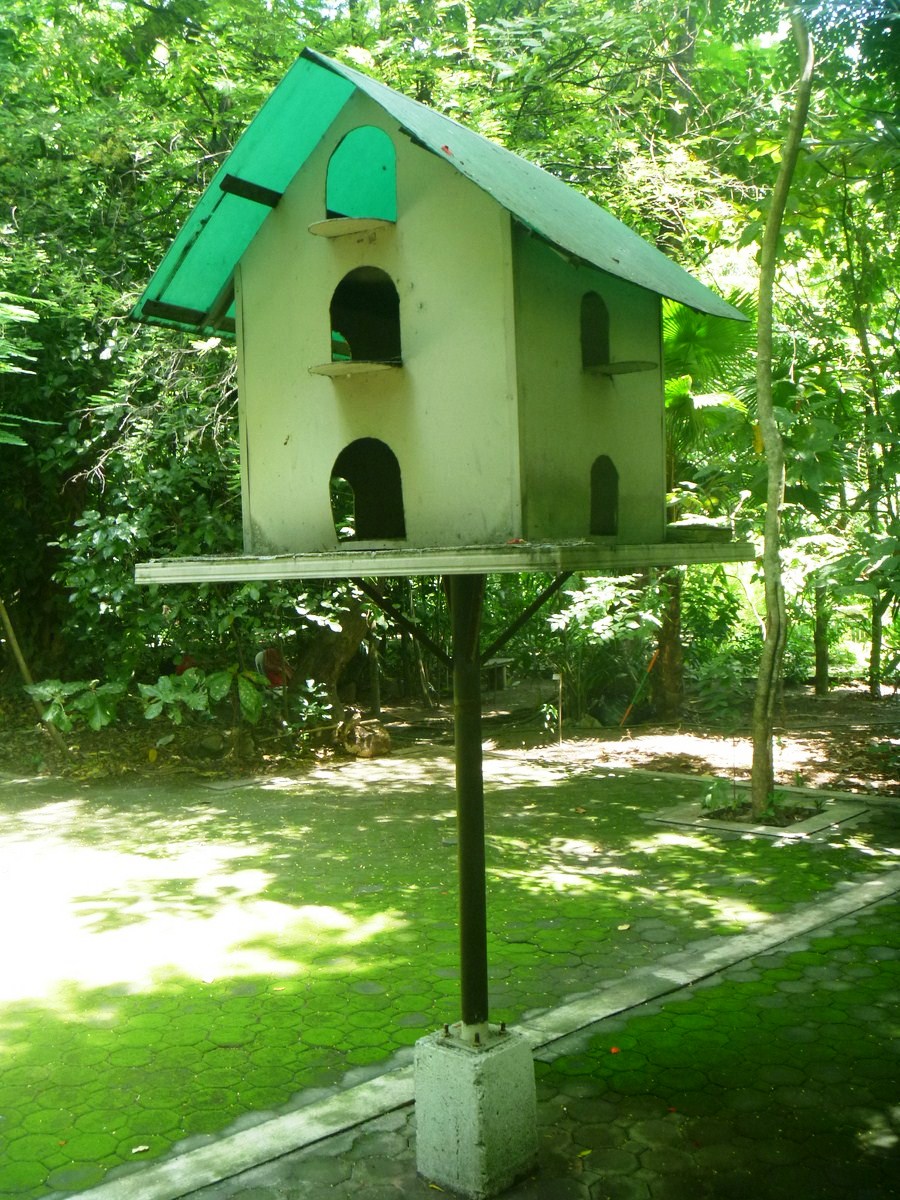
A man-made home for the birds

A man-made home for the birds

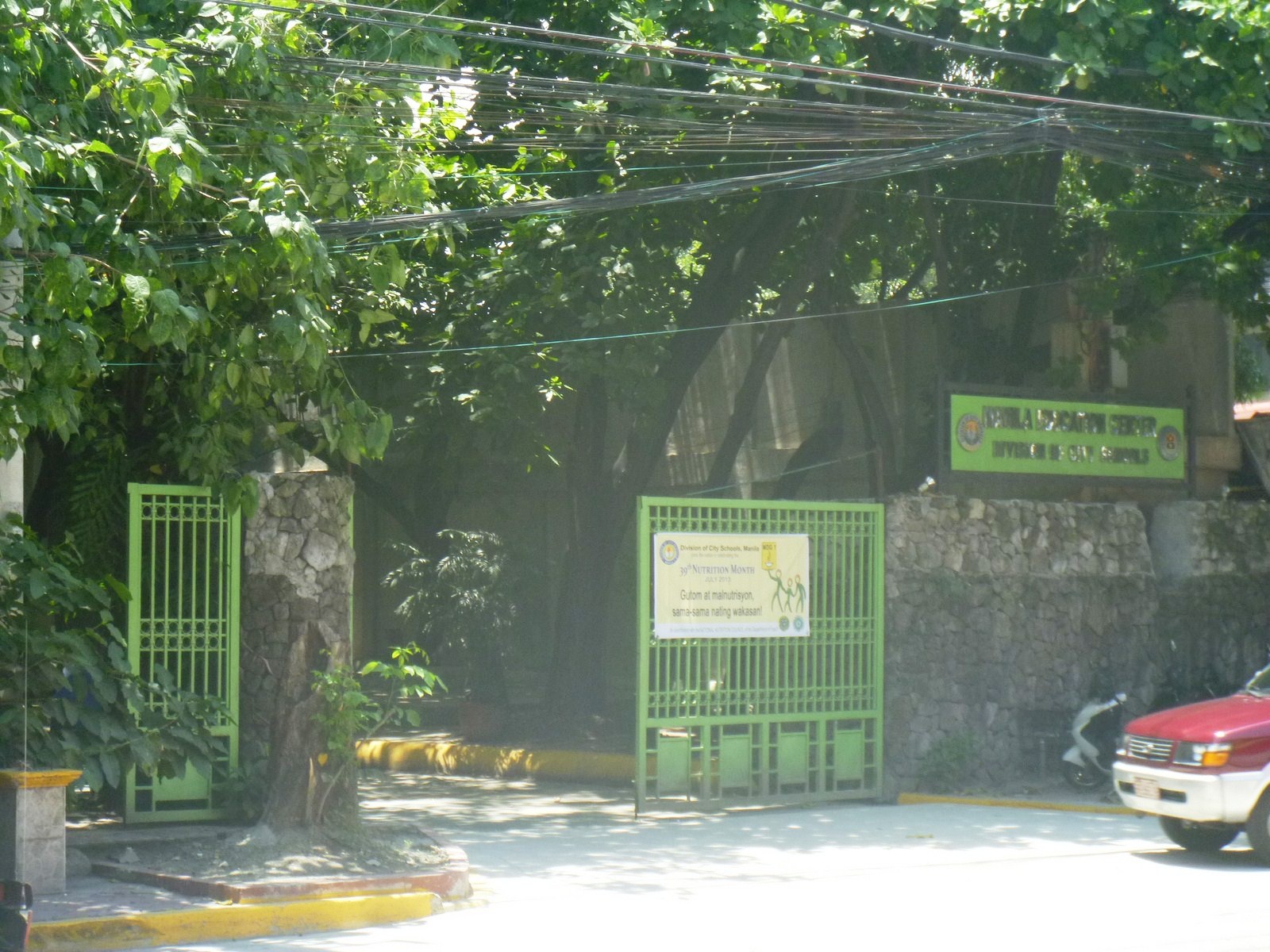
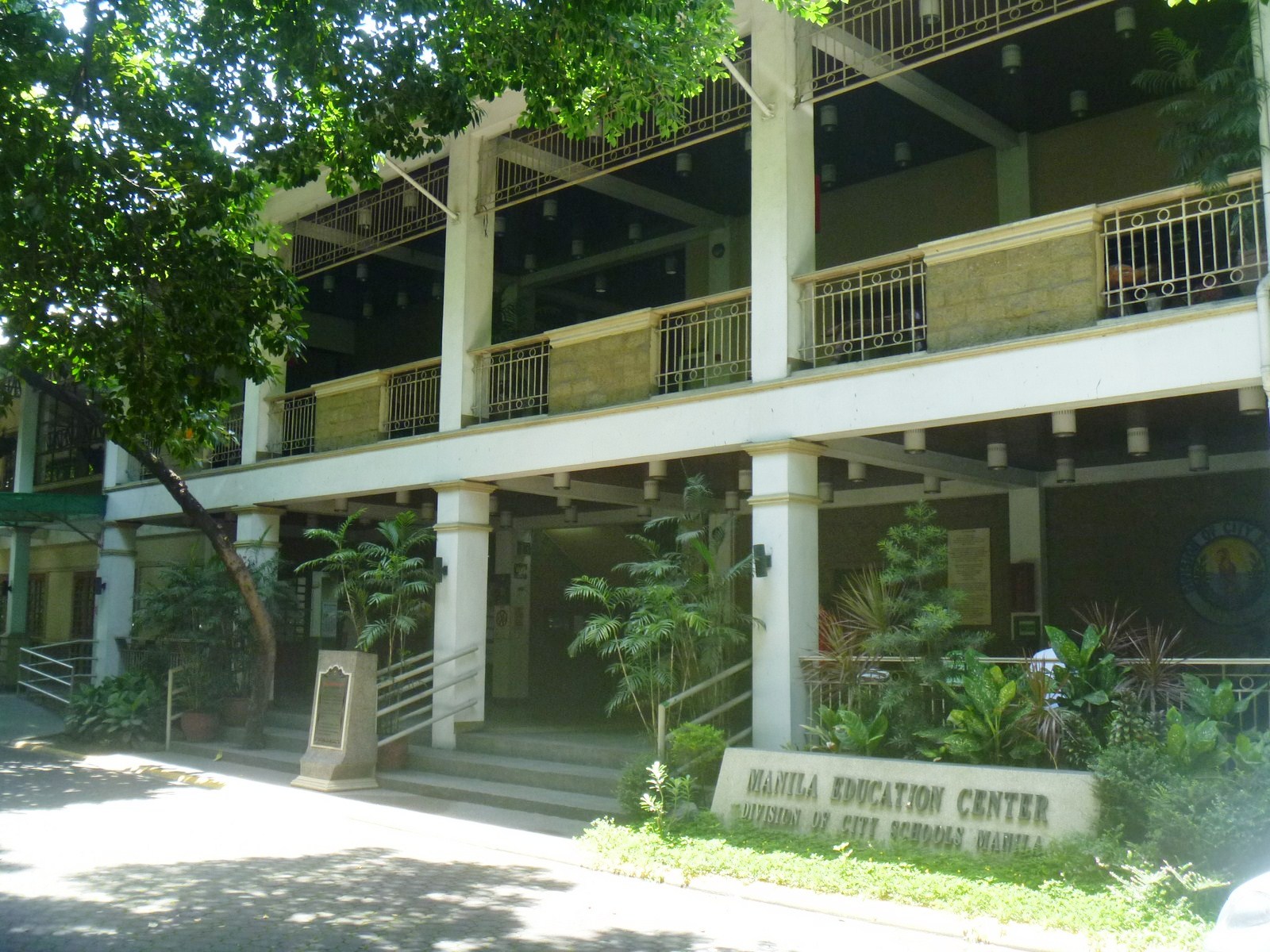
Though almost a half of its original area (and 70% of the trees) has been irretrievably lost to the concrete structure of the Manila Education Center of the Division of City Schools (another ill-conceived project, built in 2002, of former city mayor Lito Atienza), it still plays host to a diverse array of 8,000 ornamental plants (pink frangipani, palm fronds, etc.) as well as 10 kinds of city-dwelling avian wildlife (sparrows, bulbuls, etc.). Currently, the park is being maintained by Winners’ Foundation Inc. with the help of the Catholic Women’s Club.

The ill-conceived Manila Education Center

The ill-conceived Manila Education Center

To enhance the park’s visual appeal, some minimal landscaping was done, mostly in the form of walking paths, thus enabling visitors to walk within the park. The 61 varieties of trees in the park (labeled accordingly), which insulate the visitor from the noise, heat and pollution, include talisay trees (Terminalia catappa), acacia trees (Acacia confusa), narra trees (Pterocarpus indicus), mango trees, ficus rubber trees (Ficus elastica), mahogany trees (Swietenia mahogani) and Indian neem trees (Azadiratsa indica). Despite its diminished size, this accessible and calm oasis, the “last lung of Manila,” was still worth a visit.

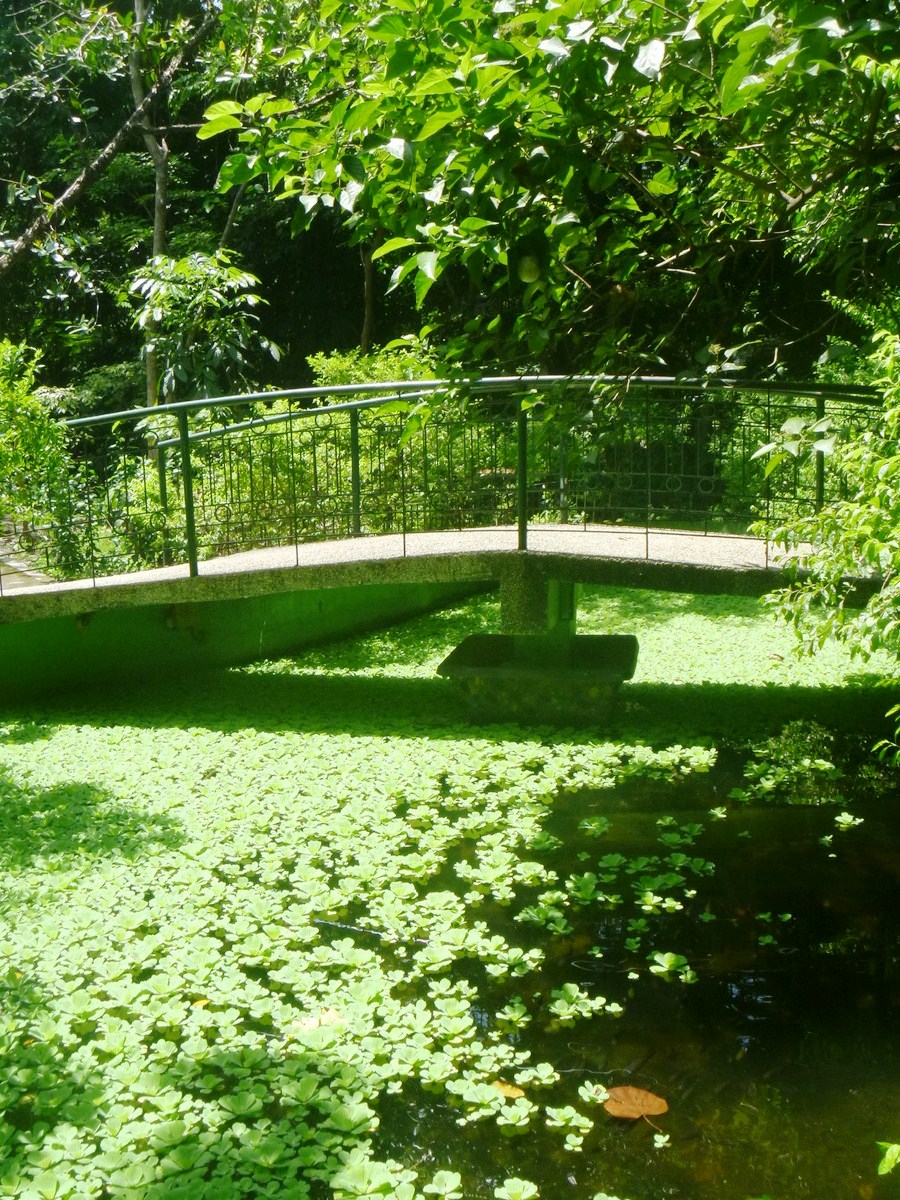
Bridge over a pond

Bridge over a pond