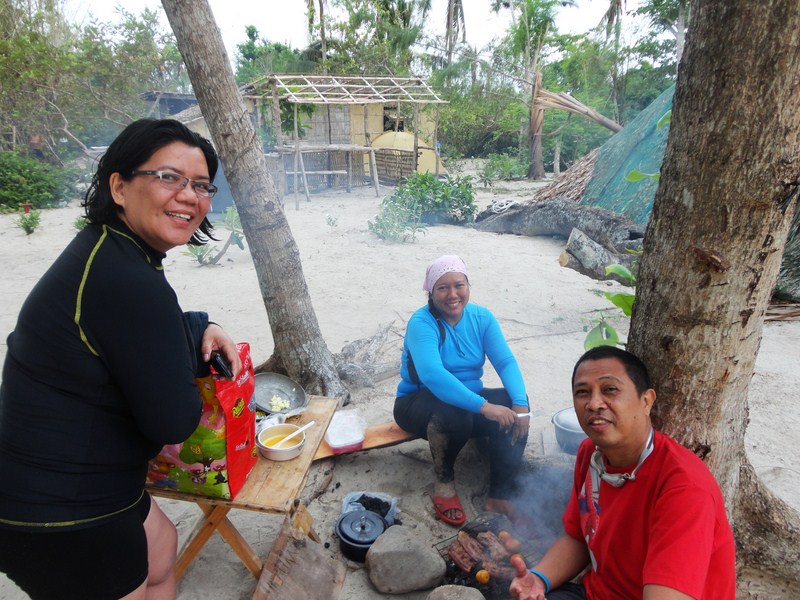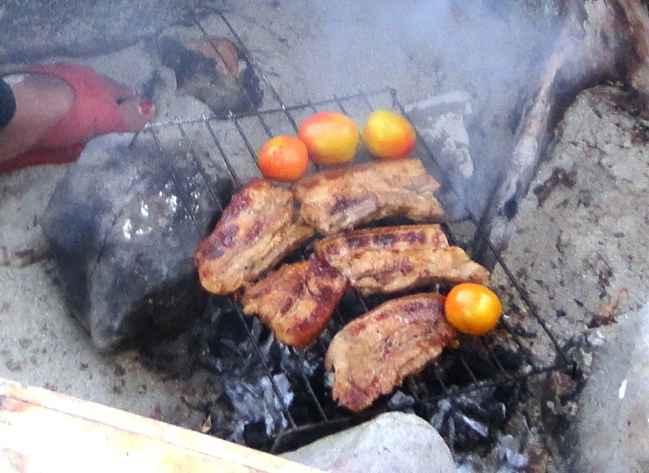
Borawan Beach (Padre Burgos, Quezon)

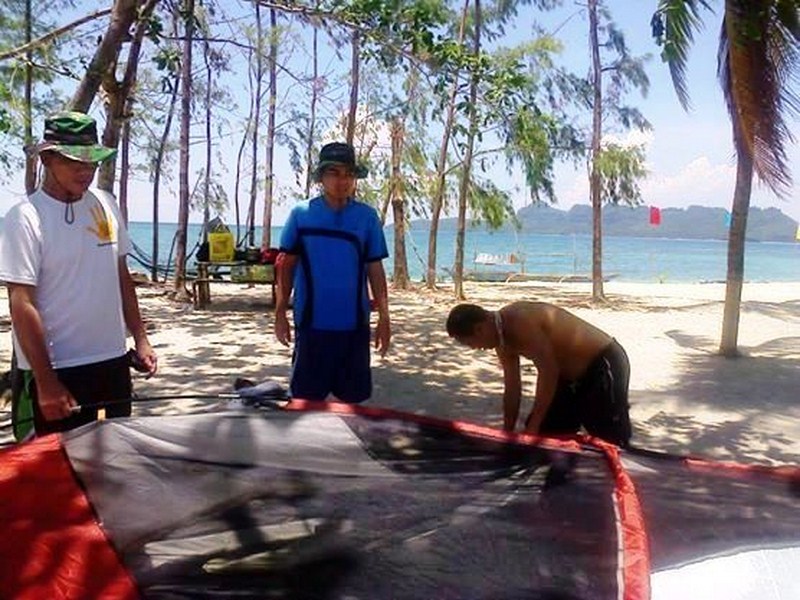
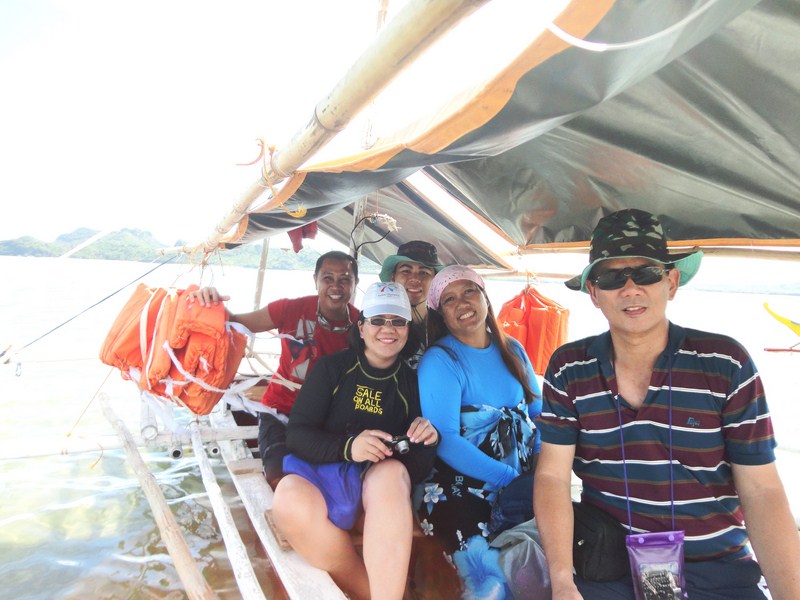
After an early breakfast of corned beef and rice at Basiao Resort, Jandy, Maricar, Violet, Lanny and I double checked all the stuff we were to bring for our island hopping and beach camping (at Dampalitan Island) trip – tent, portable stove, rechargeable lamp, provisions, extra clothes, etc. Our boatman arrived by 8 AM and he started to load all our stuff.

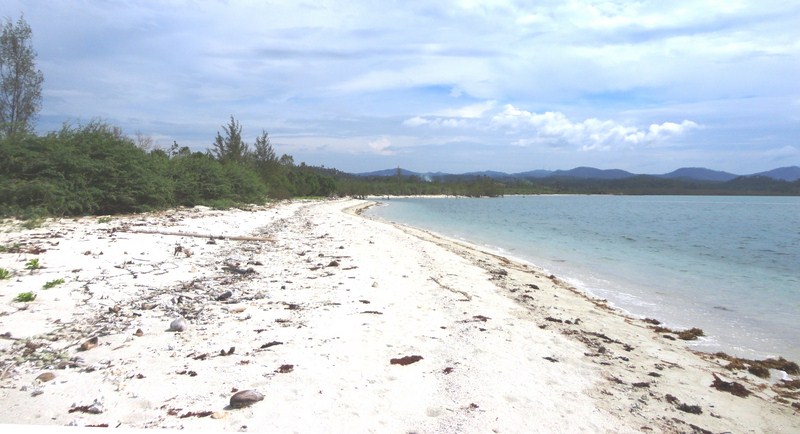
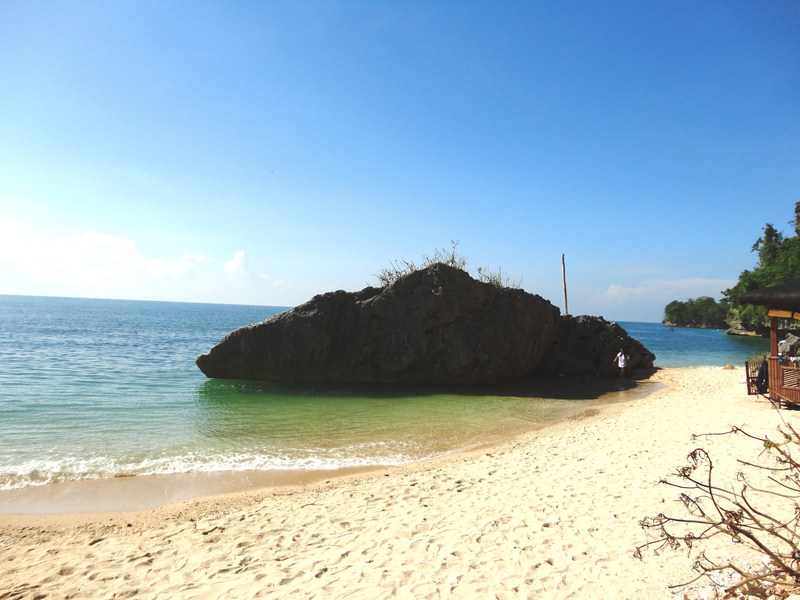
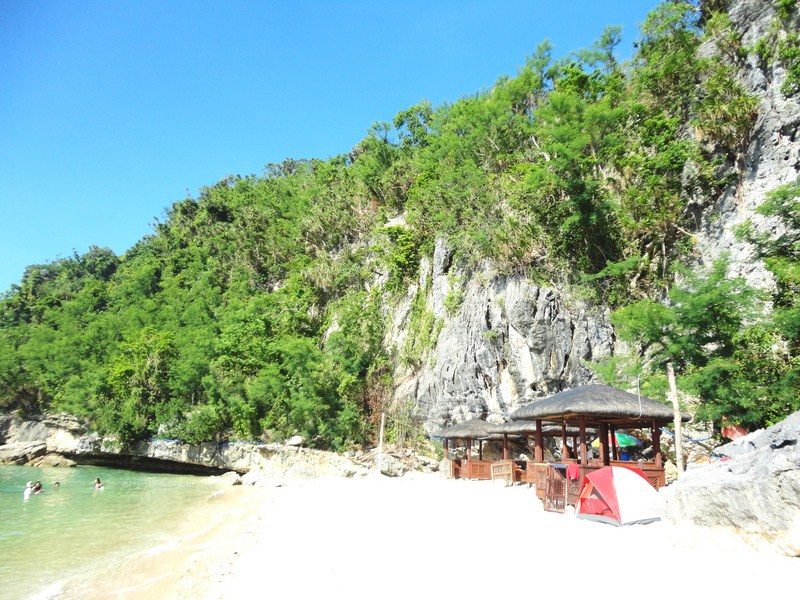
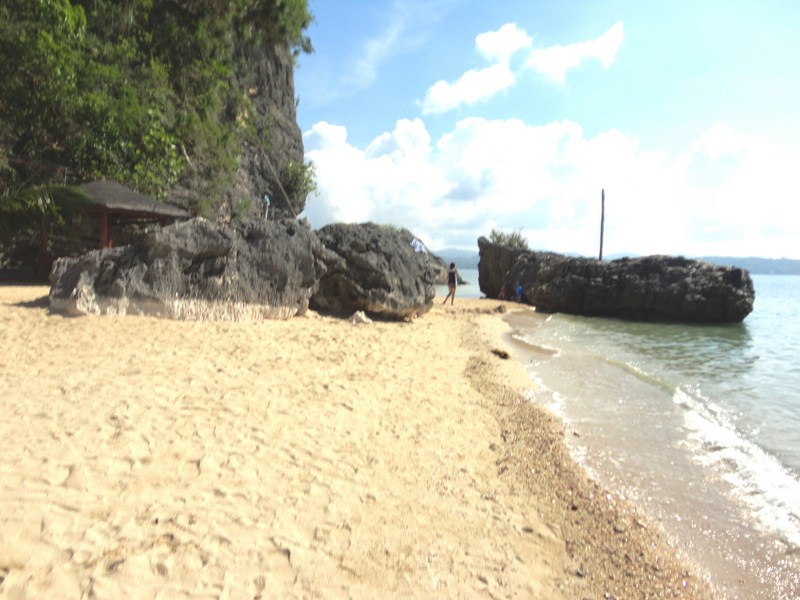
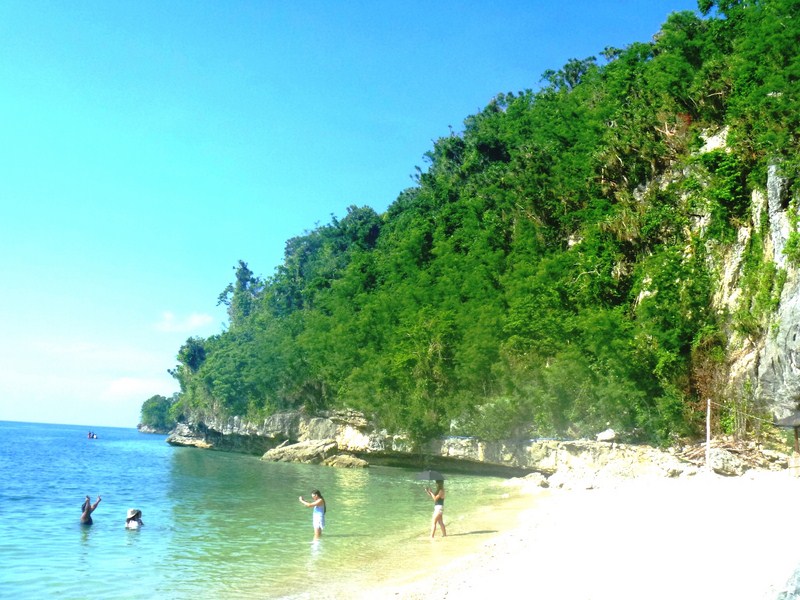
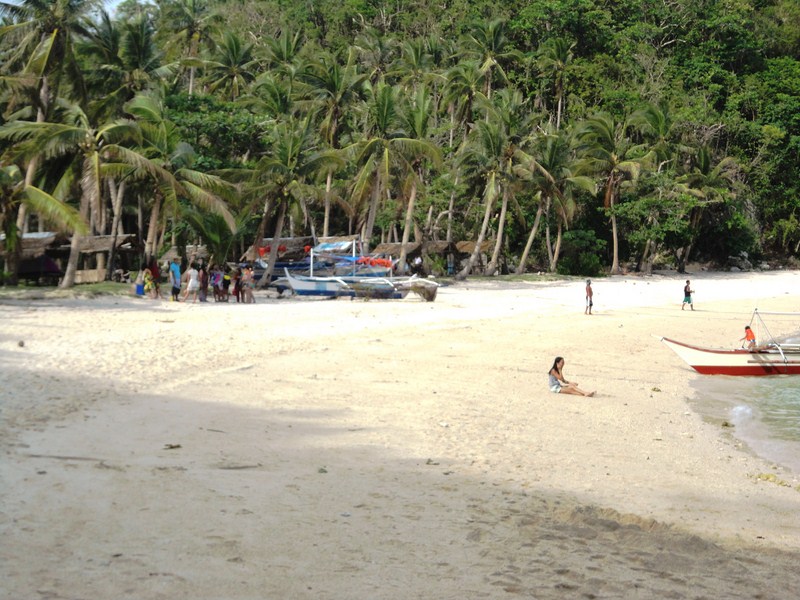
Borawan Beach

Borawan Beach

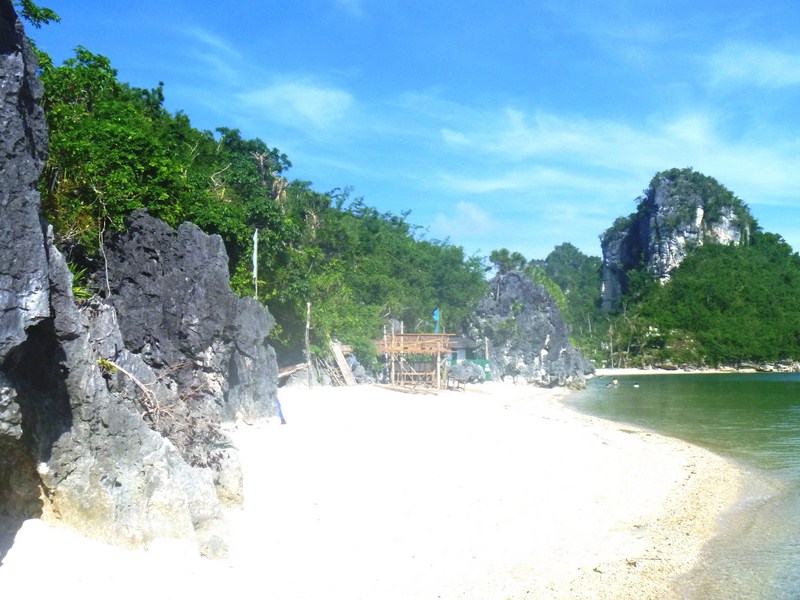
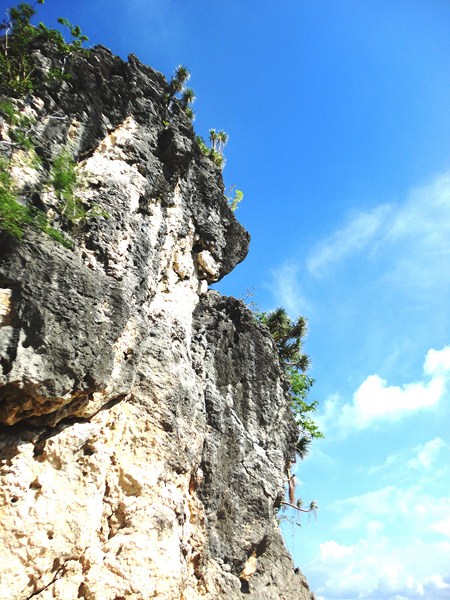
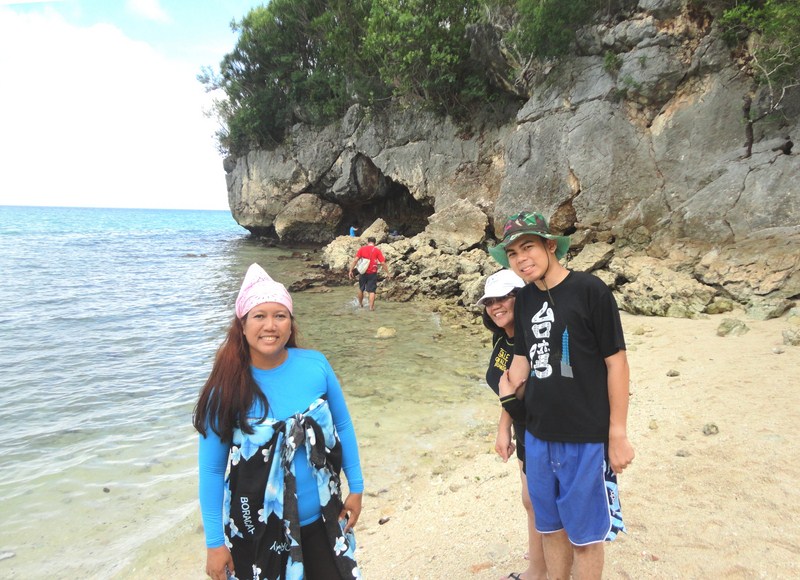
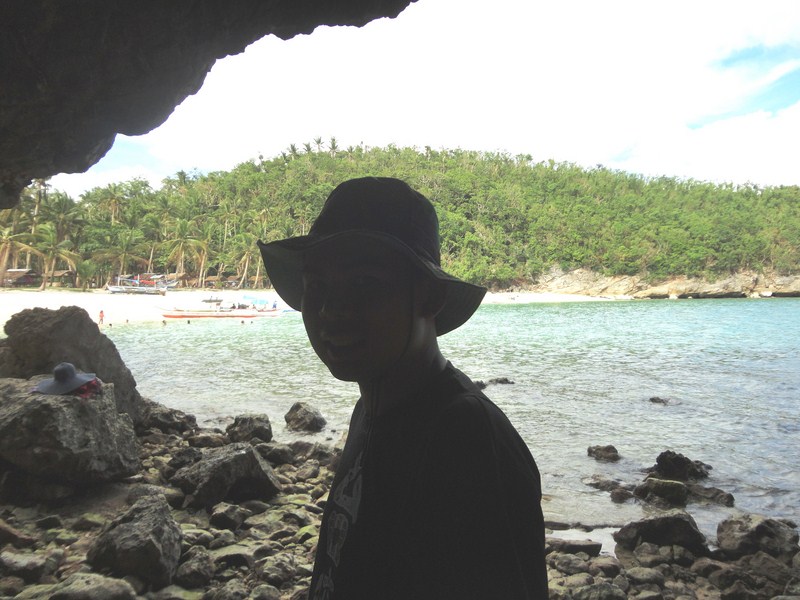
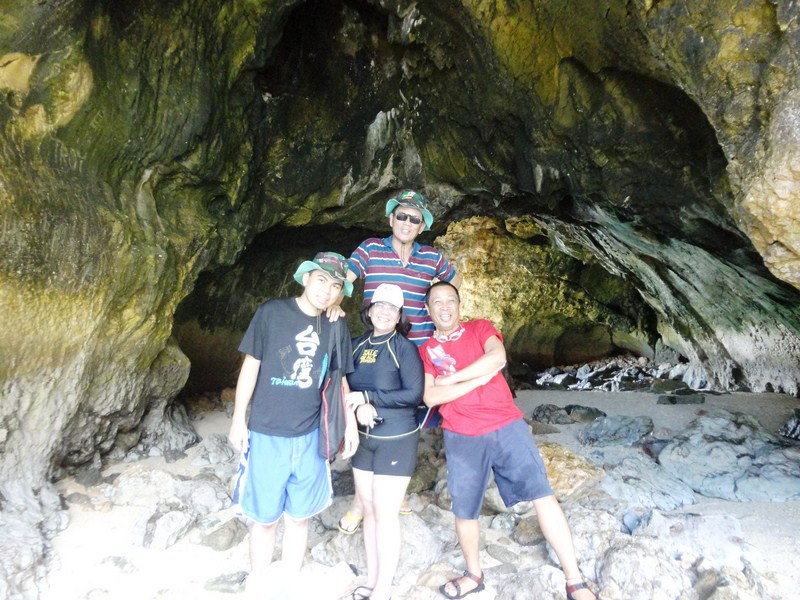
Limestone cliffs

Limestone cliffs

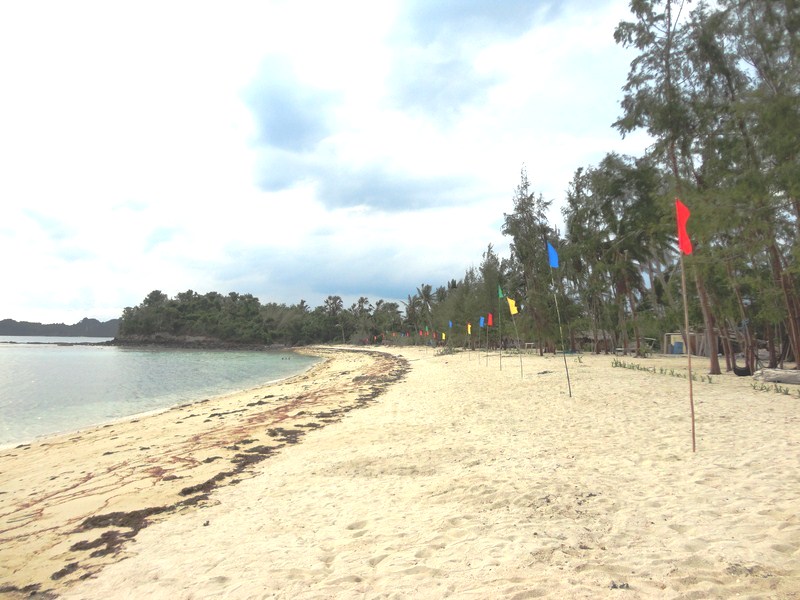
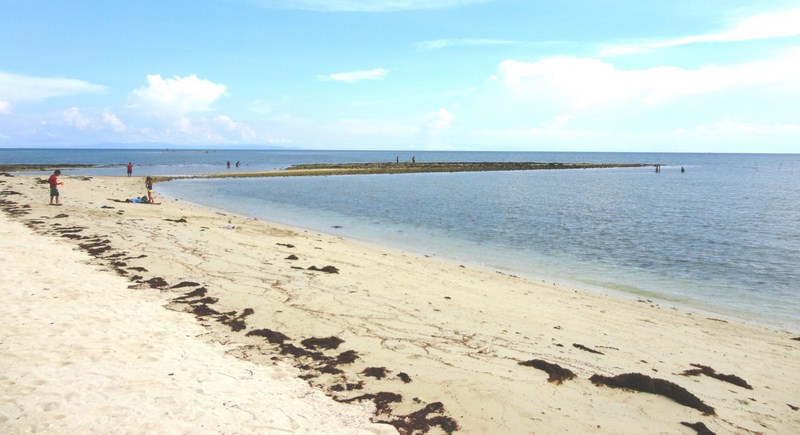
Soon we were off to our first destination – Lipata Island.  We arrived there after a short 15-min. boat trip.  The island is the site of Borawan Beach, situated within lush mountains and rocky cliffs overlooking the Tayabas Bay in the Sibuyan Sea.  Day trippers here are required to pay an admission fee of PhP80 per person (plus another fee if you will stay overnight).

DSC04342

DSC04349

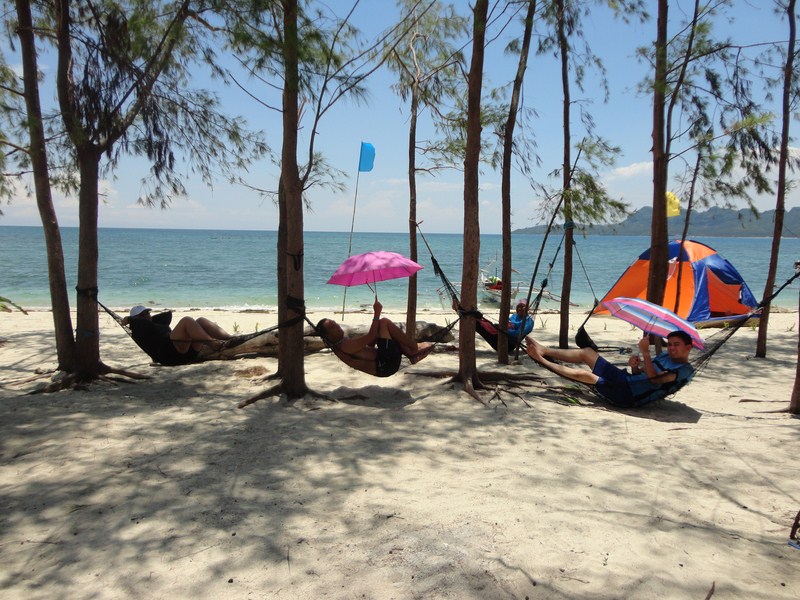
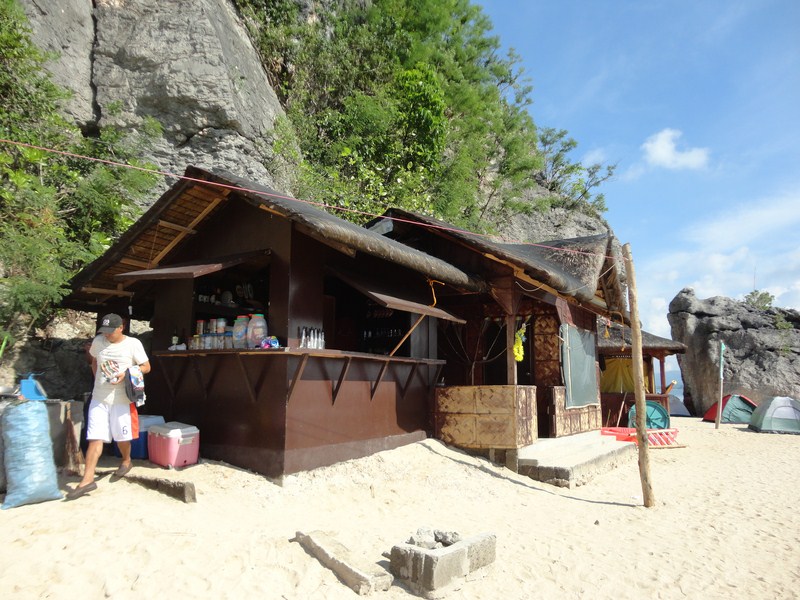
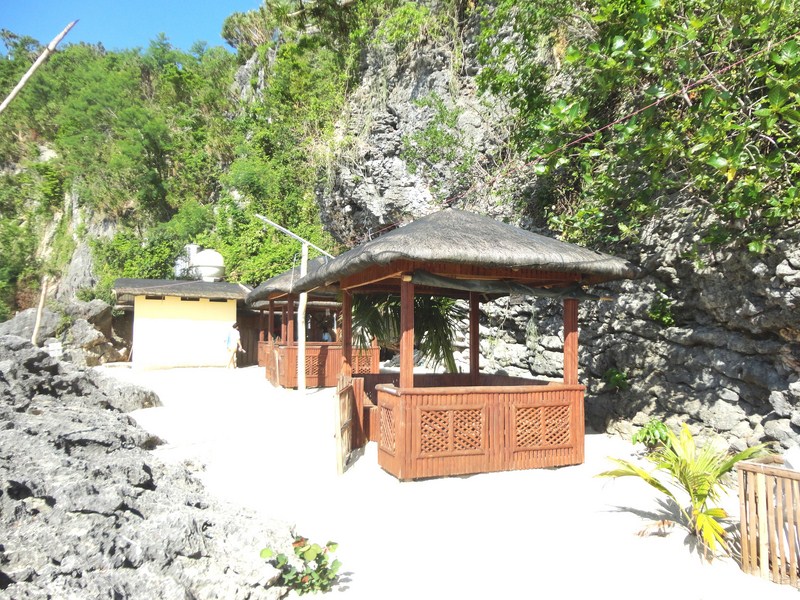
When we arrived, the island was somehow pack with a number of overnight guests who stayed in tents (for those without one, these can be rented for PhP500).  The island also has communal showers (PhP20) and toilets (PhP10) with fresh water.  There are also a few nipa picnic huts for rent and a small store selling overpriced food and snacks.

DSC04350

P1210436

The island’s name is said to be a portmanteau (blend) of the world-famous islands of Boracay and Palawan. Indeed, the beach has its own spectacular (though not as grand) rock formations like the limestone cliffs of Palawan but, sorry to say, not the crystal-clear waters and the fine, white sand of Boracay. The coarse sand beach is actually beige and it certainly isn’t a long stretch dotted with coconut trees. Instead, the shoreline of this short stretch of beach is dotted with huge rock boulders with a backdrop of high limestone walls.

A small store selling food and drinks and renting out tents

A small store selling food and drinks and renting out tents

The shower room and picnic huts

The shower room and picnic huts

Still, its towering, Palawan-like karst formations and limestone cliffs are perfect for rock climbing, bouldering and rappelling.  It’s also a good venue for photo ops.  Swimming here is done cautiously as there are a lot of sea urchins and jellyfish.  The overnighters also told us that they saw 3 sea snakes near the huge boulder.  Anyway, we didn’t plan to stay overnight on the island.  After partaking of our packed lunch of adobo and rice, we left the island by 11 AM.

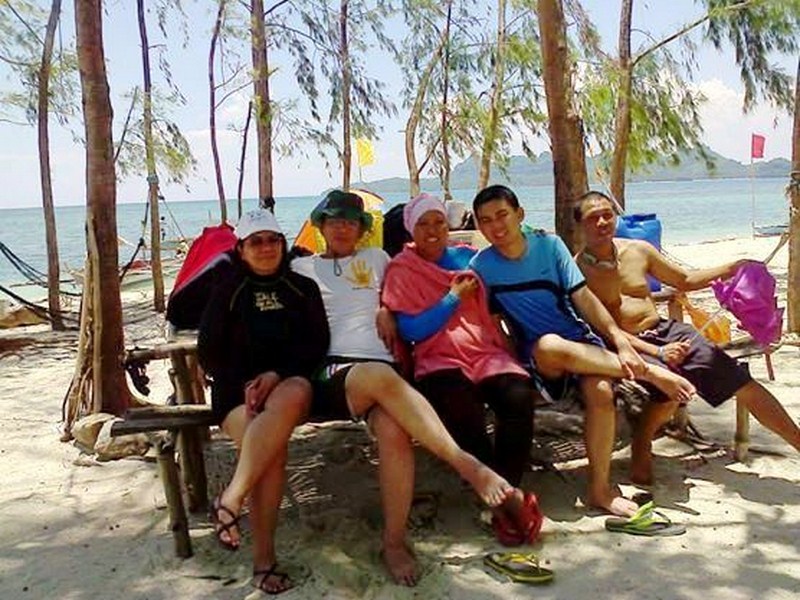
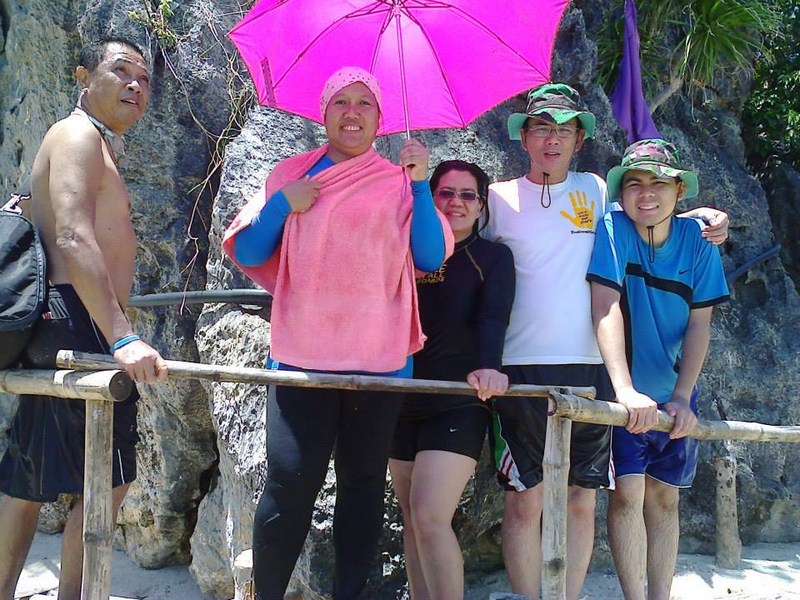
Lanny, Violet, Maricar, the author and Jandy

Lanny, Violet, Maricar, the author and Jandy

How To Get There: Go to Brgy. Marao in Padre Burgos and, from there, you can rent a boat bound for Borawan.

Return to Puting Buhangin Beach (Pagbilao, Quezon)

Jandy, Maricar, Violet, Lanny and I have barely caught our breath upon arriving at Basiao Resort but, as it was still early in the afternoon, we decided to avail of a island hoping tour.   Normally, it cost PhP1,800 for a day tour but, as we were doing it over 2 days, we were to pay PhP2,000.  We had a choice of 3 islands – Dampalitan Island, Lipata Island and Pagbilao Grande Island.

On our way to Pagbilao Grande Island

On our way to Pagbilao Grande Island

The first two, part of Padre Burgos town, were just nearby so we chose the latter which was part of Pagbilao town.  This wouldn’t be my first visit to the island, having done so during a media tour at Pagbilao a little over 4 months ago.  However, this would be the first time I would leave for the island from Padre Burgos which is, distance-wise, nearer to the island than Pagbilao town.

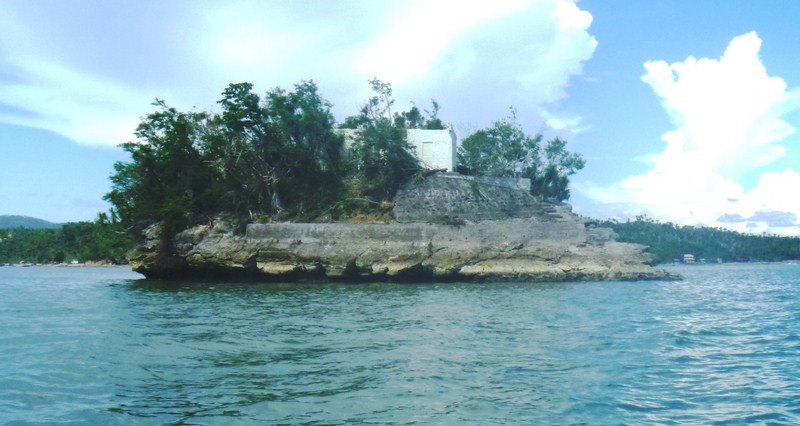
The Bagosina island with a house on top

The Bagosina island with a house on top

For this island tour, we just donned our swimming attire.  The boat trip took just 45 mins. Along the way, we passed the nearest of the Bagosina Islands, which had an unsightly roofless house (damaged by typhoon Glenda) on top.

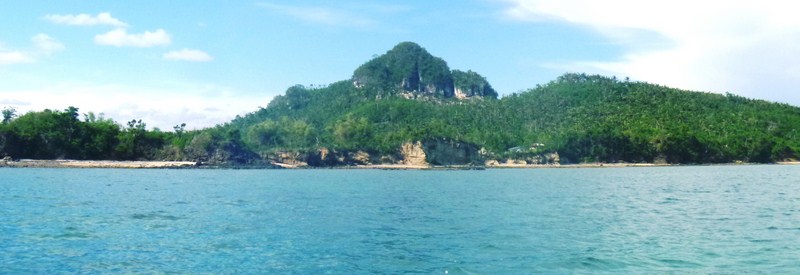
Lipata Island

Lipata Island

We also passed the white sand beaches and towering rock formations of Lipata Island (site of Borawan Beach), one of our 2 island destinations scheduled for tomorrow (the other is Dampalitan Island).

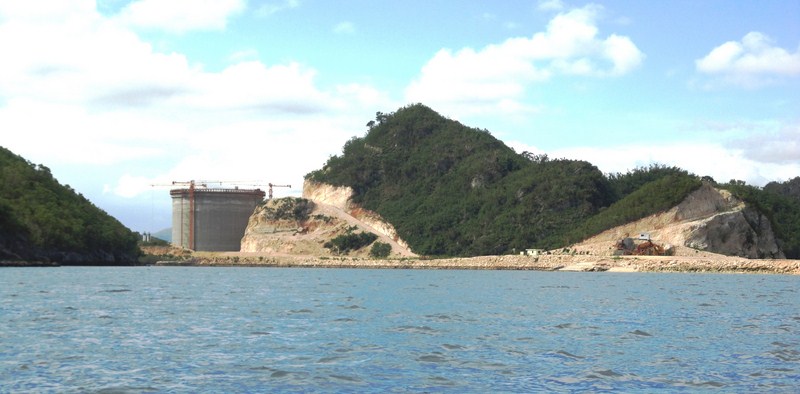
A hill being graded at the TEAM Power Plant in Pagbilao Grande Island

A hill being graded at the TEAM Power Plant in Pagbilao Grande Island

At Pagbilao Grande Island, only the tall chimney of 735-MW Team (Tokyo Electrification and Marubeni) Energy coal-fired thermal power plant  could be seen during our boat trip.  We also saw the damage being done on the nearby hill, possibly to create a new road for the power plant.  It wasn’t a nice sight.

Puting Buhangin Beach

Puting Buhangin Beach

We soon made landfall at the beautiful cove of the 70 m.  long and 10 m. wide Puting Buhangin (which literally means “white sand”) Beach with its white sand, clear emerald waters and coconut trees.  Unlike my first visit, the beach (also called Lukang Beach  after the Lukang family) wasn’t  as  packed with picnickers and beachcombers.

Violet, Maricar and Jandy near the Kuwebang Lambas' beachside entrance

Violet, Maricar and Jandy near the Kuwebang Lambas’ beachside entrance

However, we were more interested at the small, unique and tunnel-like  Kwebang Lampas, located at one end of the beach, than with the beach itself.  During my first visit, the waters inside the cave were waist deep and we didn’t venture to go out its seaside entrance.  This time around, it was low tide and the cave floor was exposed.  What’s more, we were able to venture out its seaside exit, below beautiful rock limestone formations, and enjoy the warm waters.

Kuwebang Lampas (2)

Back at our boat, we paid the mandatory PhP80 entrance fee per person (PhP400 for all five of us).  It was now late in the afternoon when we returned to the mainland and our boat had to dock some distance from the shore as it was now low tide.

Jandy, Maricar, the author at Lanny at Kwebang Lampas

Jandy, Maricar, the author at Lanny at Kwebang Lampas

Puting Buhangin Beach: Pagbilao Grande Island, Brgy. Ibabang Polo, Pagbilao, Quezon.

Church of St. Catherine of Alexandria (Pagbilao, Quezon)

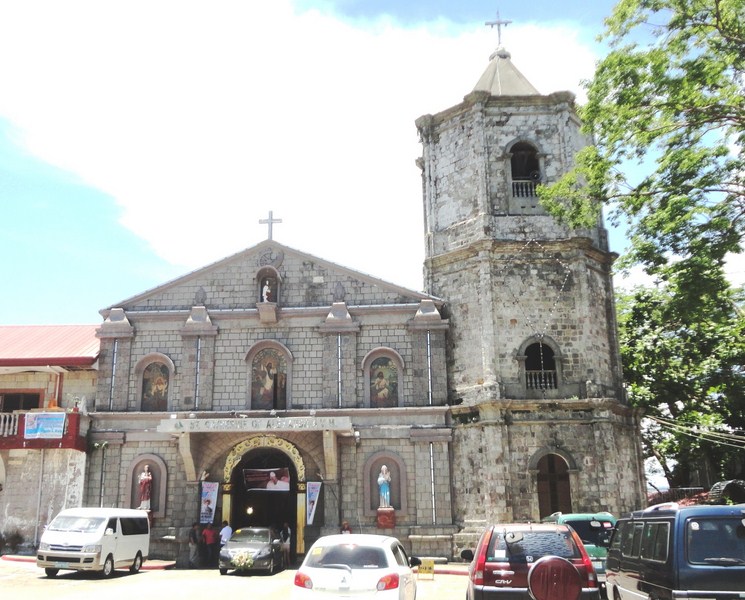
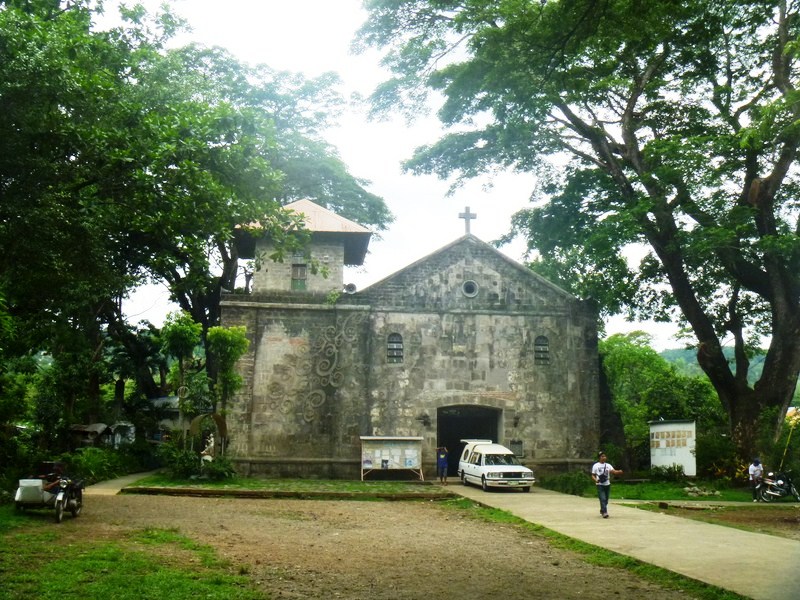
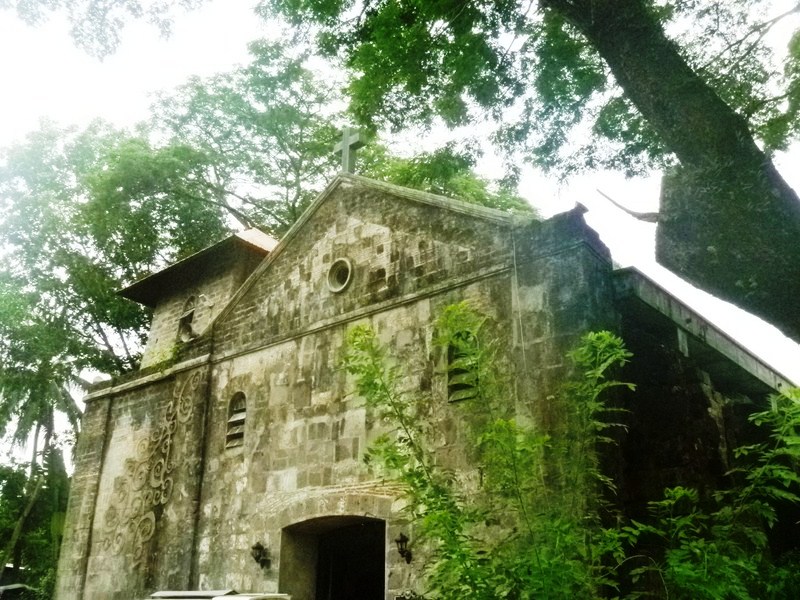
We arrived at Pagbilao town by noon time and, as it was now lunch time, I parked the Toyota Revo at the compound of the town’s Church of St. Catherine of Alexandria.  A number of eateries were located around the compound.

Church of St. Catherine of Alexandria

Church of St. Catherine of Alexandria

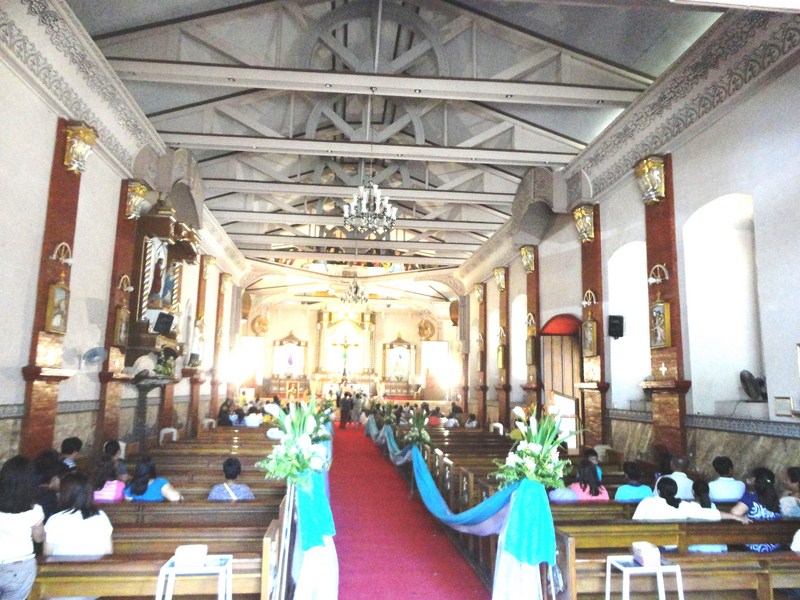
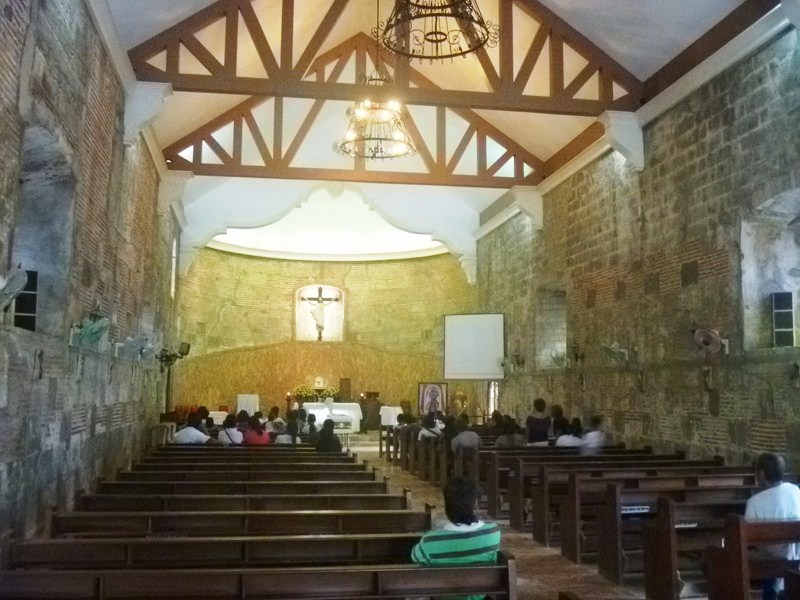
The church interior

The church interior

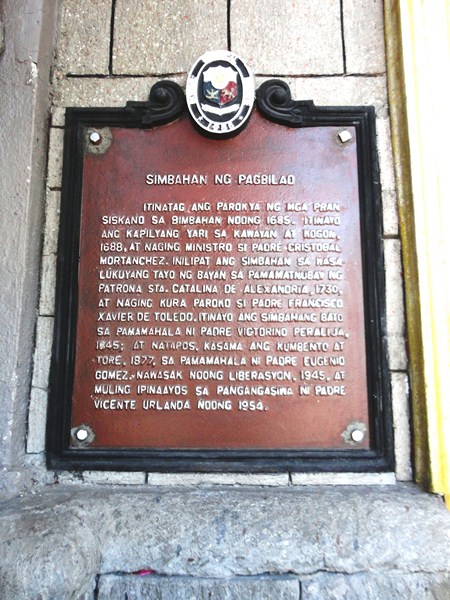
The church was first built in bamboo and nipa in 1688 by Fr. Cristobal Mortanchez, In 1730, the church was transferred to its present site by Fr. Francisco Xavier de Toledo.  In 1845, it was rebuilt in stone by Fr. Victorino Peralija and was completed, together with the belltower and convent, by Fr. Eugenio Gomez.

Plaque detailing the history of the church

Plaque detailing the history of the church

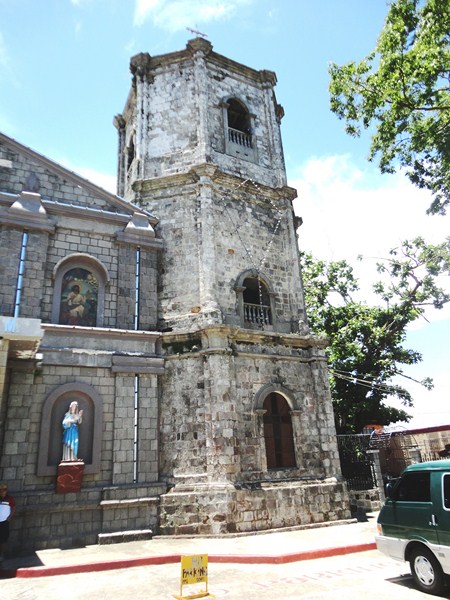
The 3-level bell tower

The 3-storey bell tower

However, the church and convent were heavily damaged by American bombing during the liberation in 1945, leaving only the 3-storey, hexagonal bell tower intact.  It was rebuilt in 1954 by Fr. Vicente Urlanda.  Beside the church is the 2-storey Casa del Niño Jesus de Pagbilao, a private Catholic school.

Jandy, the author and Maricar at the bell tower

Jandy, the author and Maricar at the bell tower

View of town from the top of the bell tower

View of town from the top of the bell tower

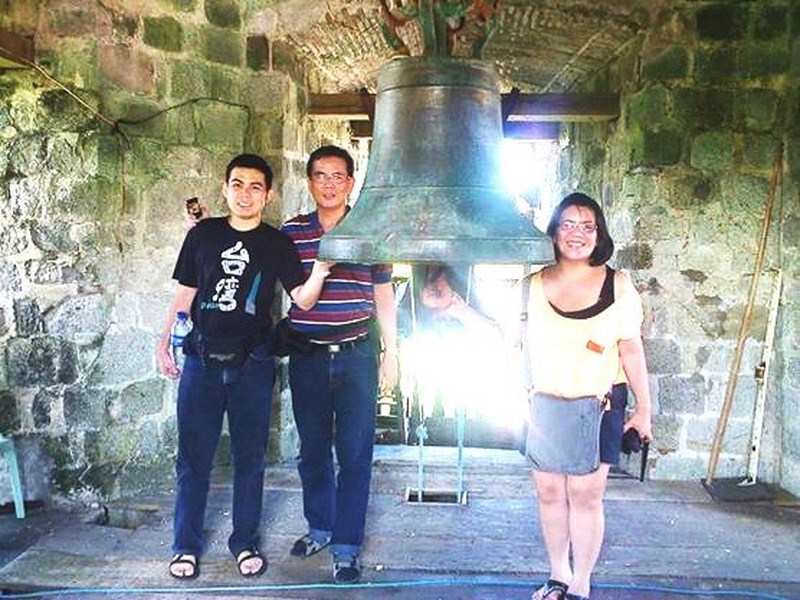
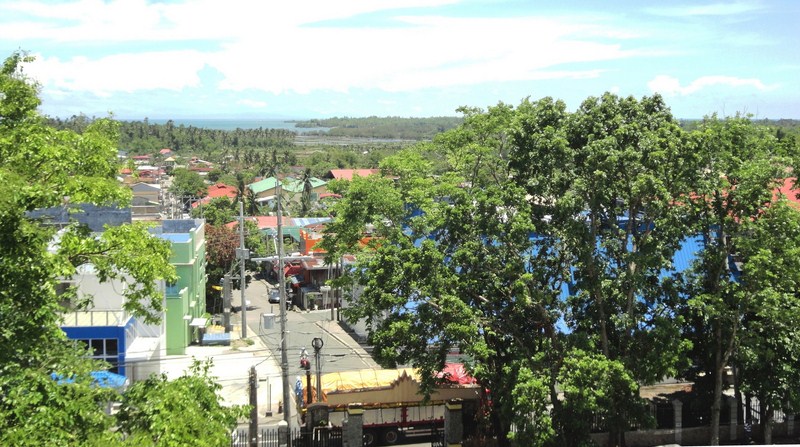
Jandy, Maricar, Violet and I were in luck as we were able to go up the bell tower, the only part of the church that wasn’t damaged by American bombing.  At the left side of the church, we went up the stairs up the choir loft.  From there, we crossed over to the right of the loft then went up the tower via a very narrow and steep wooden stairs .  The tower had three bells, one them dated 1890.  Here, we had a good panoramic view of the town.

The Beached Ships of Tacloban City (Leyte)

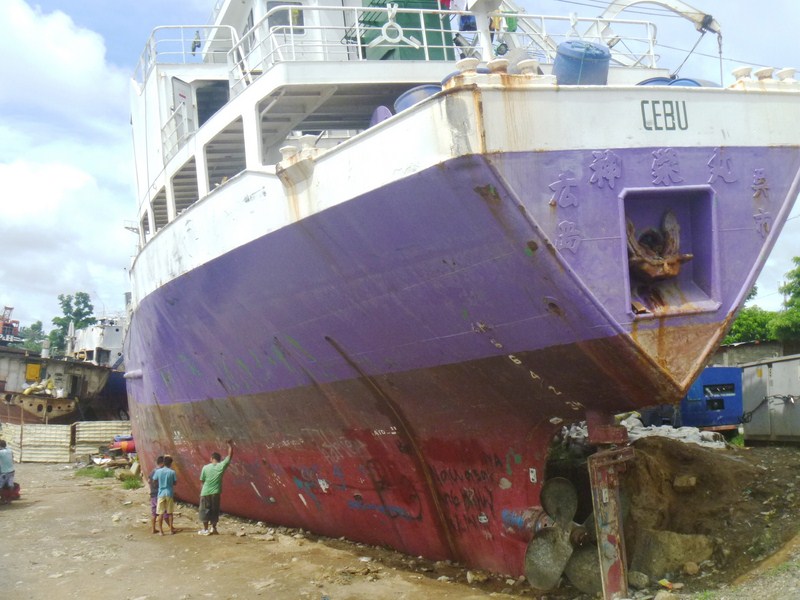
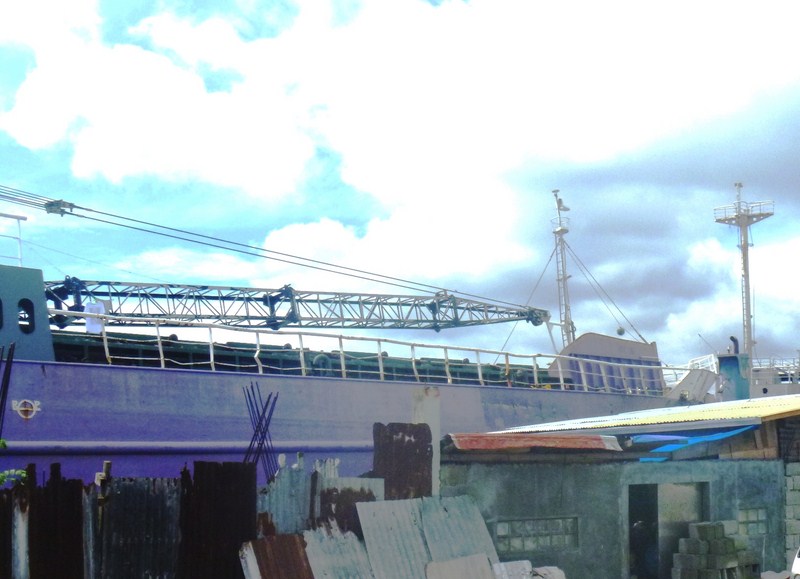
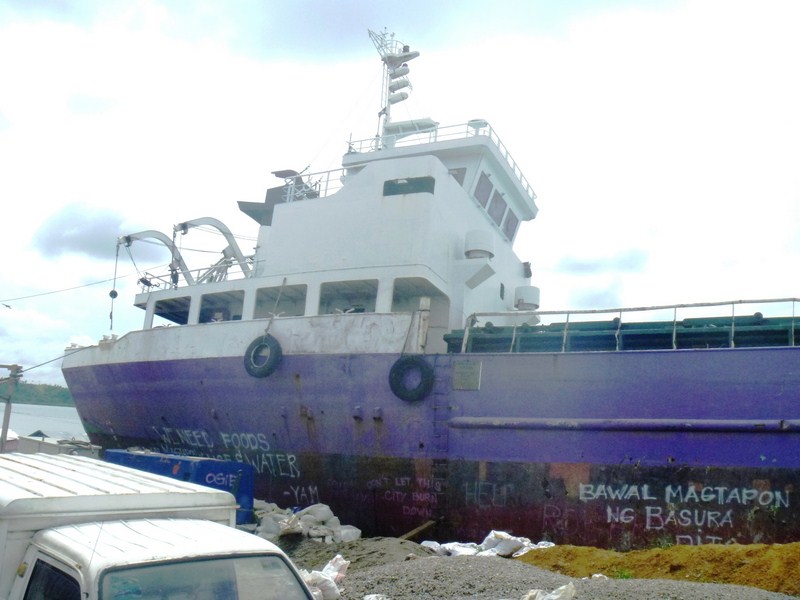
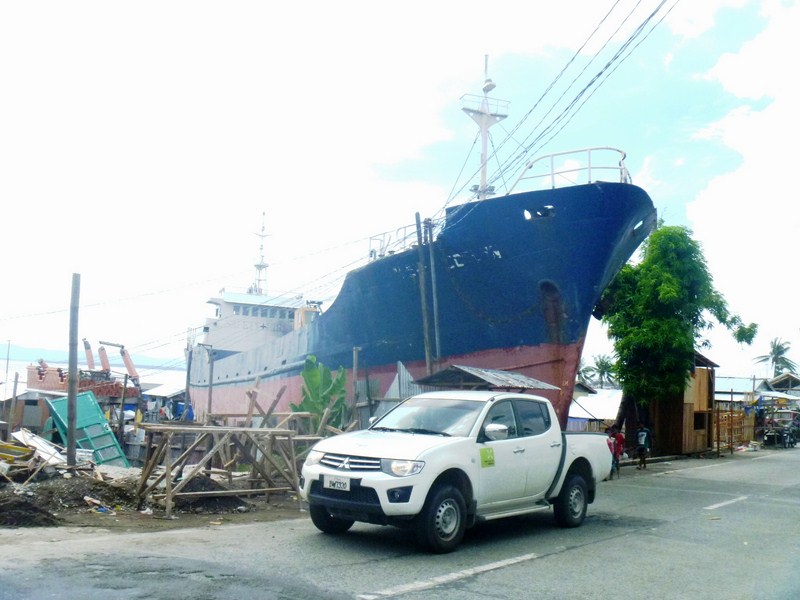
As a consequence of Typhoon Yolanda (international name: Haiyan) hitting Tacloban City and the ensuing tsunami-like storm surge, a number of ocean-going ships were beached. These hulking ships are fast becoming a tourist destinations by themselves. During my visit to Tacloban, 8 months after Yolanda, I made it a point to visit some of these huge boats.

MV Eva Jocelyn (4 were pinned here)

MV Eva Jocelyn (4 were pinned here)

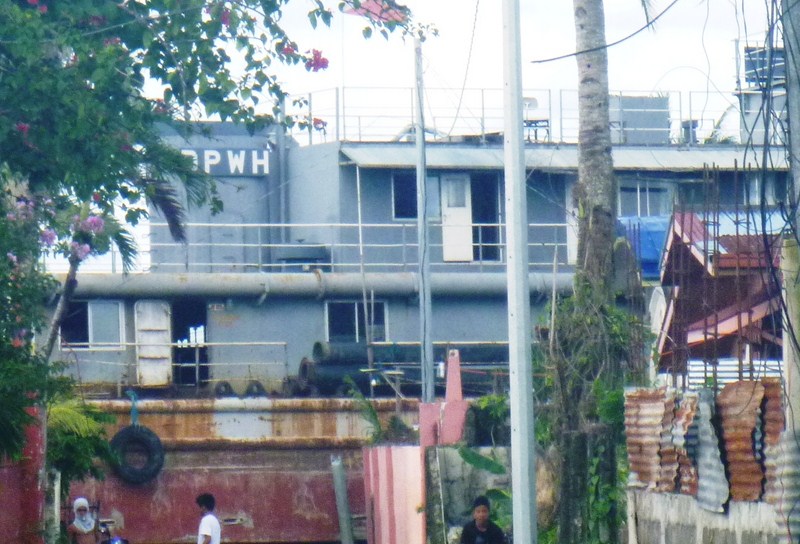
A total of 10 commercial ships were were swept inland during the onslaught of Typhoon Yolanda. Eight were stuck in Rawis and Anibong Districts, one in Brgy. Diit, and one near San Juanico Bridge. In addition, two government vessels; a dredger found in Fatima Village in Brgy. 75, owned by the Department of Public Works and Highways; and a ship owned by the Bureau of Fisheries and Aquatic Resources; were also beached.

Beached Ships at Anibong (16)

Five more ships were beached in Quinapondan and Guiuan (Eastern Samar) – the MV Eastern Samar (Lilygene Shipping Lines Inc in Guiuan, Eastern Samar, owned by Mr. Generoso Yu), the MV Lady of Fatima (owner unknown); and 2 tugboats (MT Maharlika-A and MT Maharlika-B) and a barge (Vicente Uno) of Vicente Lao Construction based in Davao City.

Beached Ships at Anibong (12)

The MV Gayle (Unilink Shipping Corp., owned by Alfred Yanglua of Cebu), a big part of which was already floating on the water (making it easier to pull away from the shore), was removed from the shore last April in a salvage operation that lasted for 30 minutes. Afterwards, it was brought to Cebu City to be fixed (its propeller was destroyed and its engine needed to be replaced).

Beached Ships at Anibong (13)

Nine other ships have yet to be removed – the MV Eva Jocelyn (Eva Shipping Lines of Mandaue City, Cebu); the  MV RKK 1 (RKK Shipping Lines, Inc.); the MV Star Hilongos (Roble Shipping Corp., owned by Joey Roble of Cebu); MV David Legaspi (Candano Shipping Corp., owned by Elena Candano of Tabaco City, Albay); the MV Jaguar (Tacloban Oil Mill of Tolosa, Leyte); the MV Ligaya V (Avega Brothers Integrated Shipping Corp. in Makati City); the MV Lancer (Matsya Shipping of Cebu City) the MV Tomi Elegance (Tacloban Oil Mill ); and LCT Rosman (owned by businessman Richmond Ng of Quezon City, Metro Manila).

Beached Ships at Anibong (17)
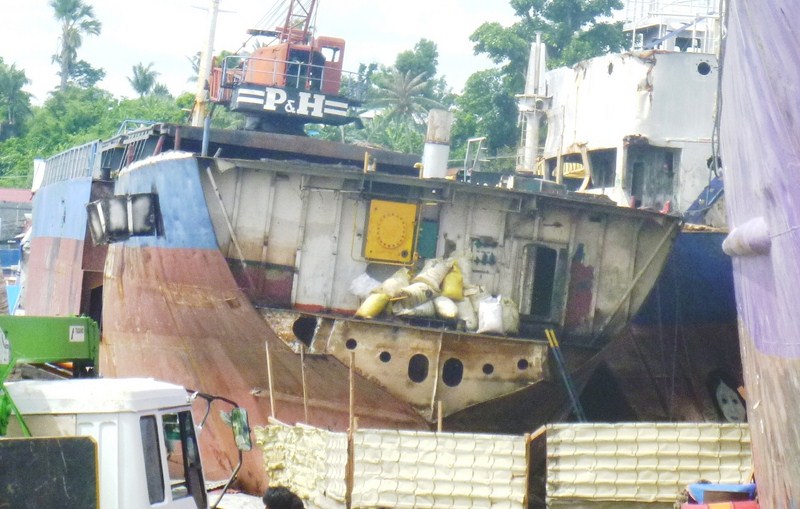
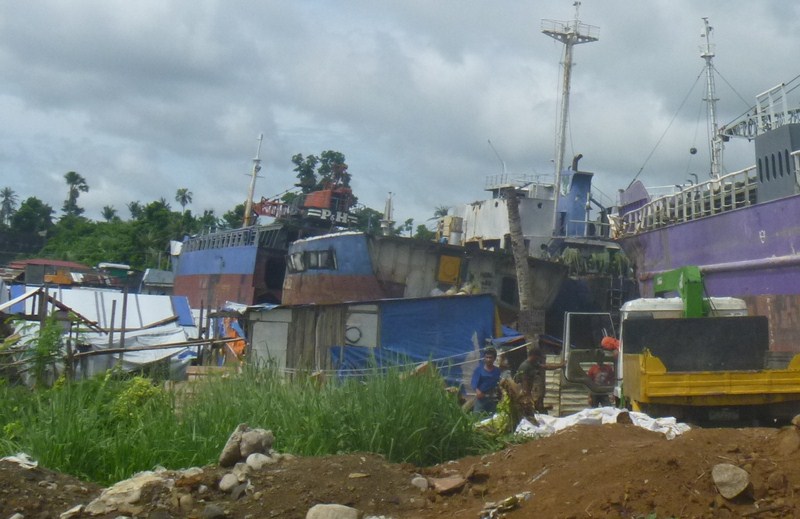
At Brgy. 68 (where the typhoon claimed 20 lives), we visited the 3,000-ton, red and blue MV Eva Jocelyn.  When the supertyphoon smashed through Tacloban, a dozen cinderblock houses were directly hit by the ship and 4 residents were later found dead, pinned by the ship. Now sitting on unstable ground composed of debris, this ship is tilting due to the movement of the deteriorating ground. This could crush surrounding makeshift houses that were repaired by their owners.  A bizarre sight was tourists having their picture taken right in front of this ship’s massive hull that flattened homes and killed people.

Beached Ships at Anibong (19)

However, these beached ships are temporary “tourist attractions” as the Philippine Coast Guard (PCG) wants the ship owners to retract, refloat or make into scrap their vessels by the end of January or mid-February 2015, otherwise, the PCG would salvage the ships at the owner’s expense.

The DPWH Barge

The beached DPWH dredger at Fatima Village

The owners, however, appear hesitant to immediately remove the vessels because of unfinished documentation for insurance claims.  The residents want them removed as they have been “imprisoned” by these cargo vessels. They are also a painful reminder to them and hinder the removal and cleaning of the debris as well as in restoring the devastated coastal areas.

Remembering the Victims of Typhoon Yolanda (Leyte)

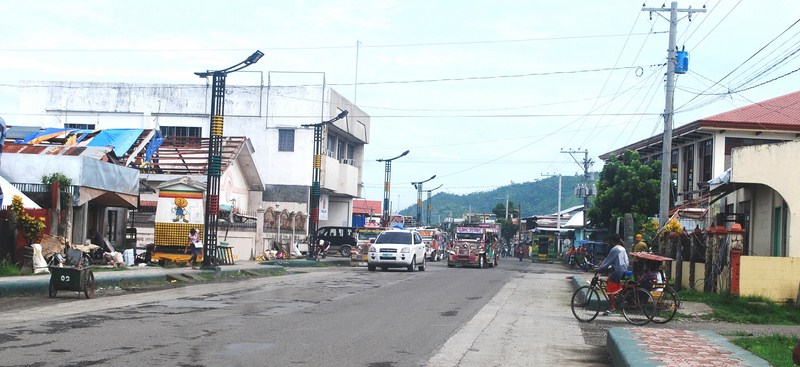
Palo town 8 months after Typhoon Yolanda

Palo town 8 months after Typhoon Yolanda

One of the most moving highlights of my return to Leyte, 8 months after super typhoon Yolanda (international name: Haiyan) hit the province, was our visit to the town of Palo, one of the most heavily hit places.

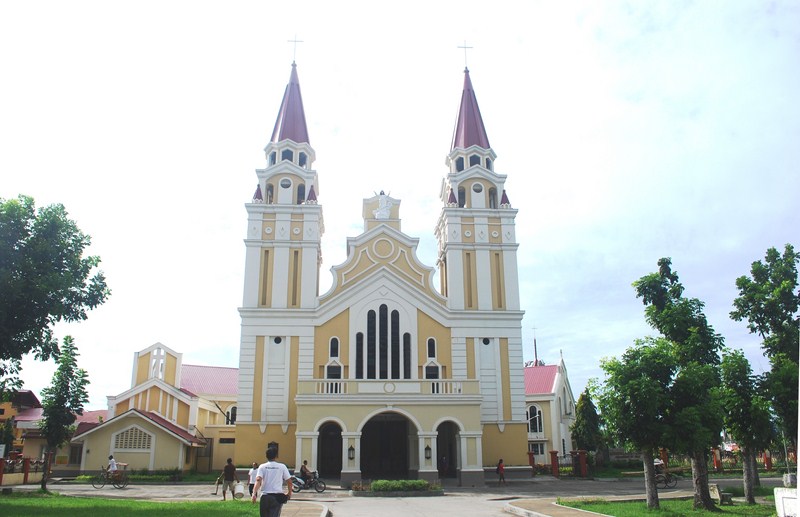
Palo Metropolitan Cathedral

Palo Metropolitan Cathedral

Still vivid in my memory was TV footage of the town’s Cathedral of Our Lord’s Transfiguration (which underwent a US$35 million renovation a year ago) and its convent where GMA 7’s Unang Hirit reporter Ms. Lovella “Love” Anover, a native of Alang-Alang, and 500 other people sought shelter at the height of Yolanda. They all watched in horror as the full force of the winds slowly tore off the roof of the newly-renovated cathedral.  The traumatized Love later broke down in tears while reporting live on camera.

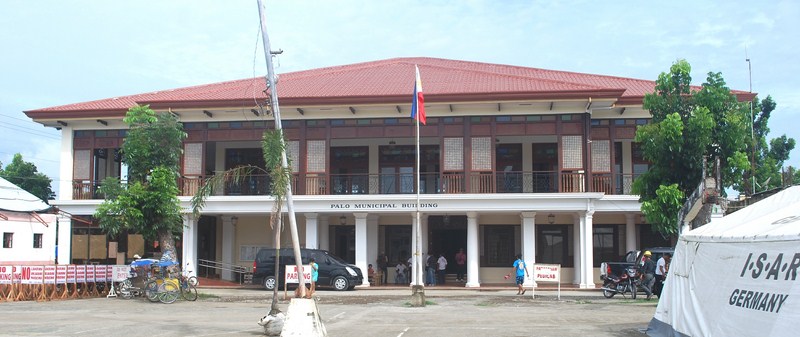
Palo Municipal Hall

Palo Municipal Hall

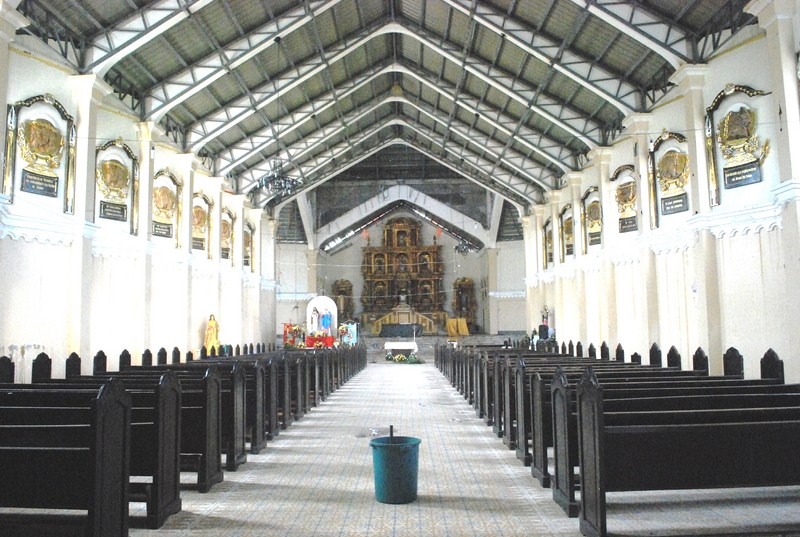
Of the 76 churches in the Palo Archdiocese, only six remained intact. Palo back then was celebrating its 75th anniversary (diamond jubilee) as an archdiocese. When we arrived there, a new roof had already been installed but much still has to be done as it still needs a ceiling, the main door was still unrepaired and the broken glass at its windows still have to be replaced.  A new sight awaited us – a mass grave, fenced off by white ribbon and marked by flowers, for about 100 typhoon victims.

The partially repaired cathedral interior

The partially repaired cathedral interior

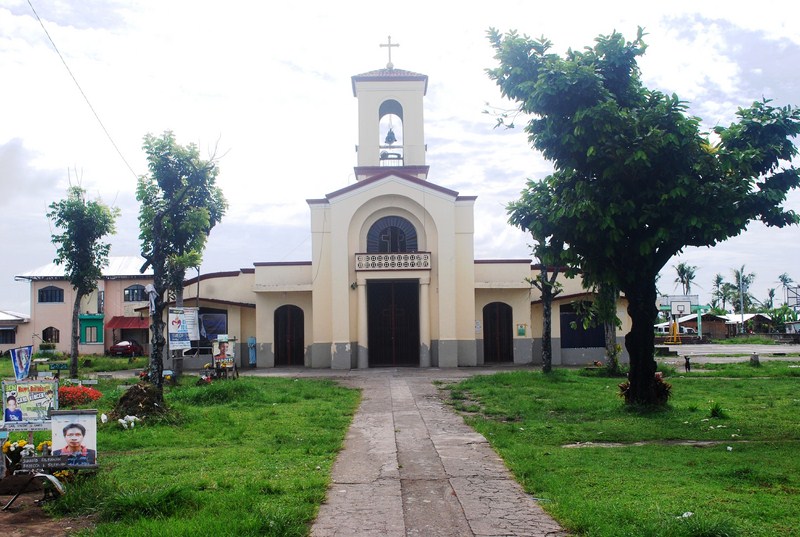
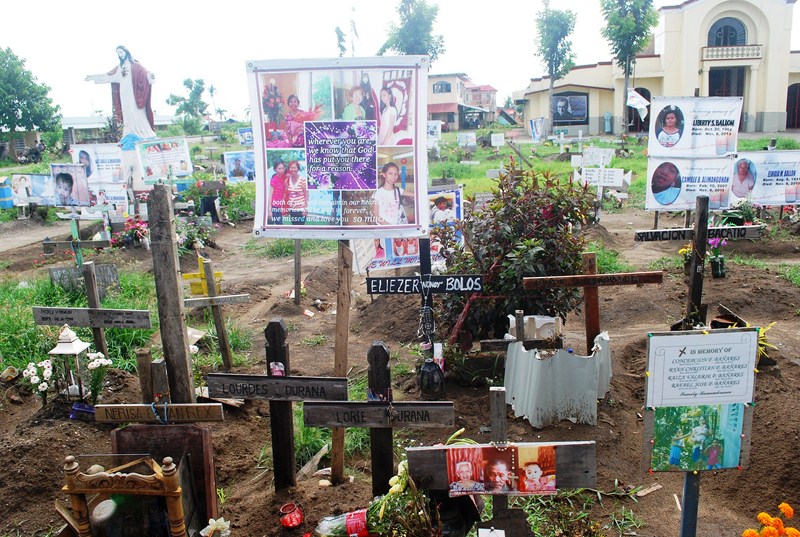
This scene was repeated when we dropped by the church of Brgy. San Joaquin. At the church’s de facto plaza, once a grass yard where youth groups would practice hip-hop dances, a much larger mass grave could be found.  Here, over 400 people were laid to rest. A statue of Jesus Christ of the Sacred Heart, with one arm outstretched and the other broken off, towers over the makeshift graves. Youngsters were playfully running around the graves.

Mass grave at cathedral grounds

Mass grave at cathedral grounds

At the height of Yolanda, a tsunami-like storm surge reaching 18 ft. hit the barangay.  Many drowned in the school beside the church.  Luckily, no one was able to seek shelter within the church as the strong early morning winds prevented the opening the church doors to residents.  They would have surely drowned. However, at least 25 children lost their lives at another evacuation center. Fr. Kelvin Apurillo, the parish priest, and his 11 sacristans who were trapped in the second floor of his house beside the church, all survived. However, some sacristans lost family members in the flood.

San Joaquin Church

San Joaquin Church

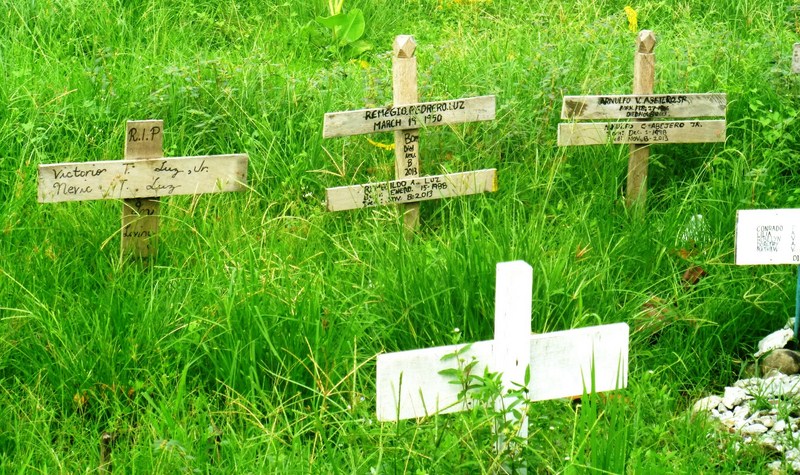
Each marker, with rolls of names (numbering from 2 to 20 with others too long to fit) etched by felt-tip pens on boards fastened to sticks, tells a story. The surnames listed are often the same – spouses, children, in-laws, etc.   Beside their names are their dates of birth, many born only past the year 2000 (the most vulnerable and helpless were the babies and young kids).  Often, the date of death is not indicated anymore as everyone here knows when all these people died – November 8, 2013.

The mass grave at the grounds of San Joaquin Church

The mass grave at the grounds of San Joaquin Church

The mounds of this sudden, eerie cemetery along the highway, some shallow (the holes dug were only thigh-deep) graves containing almost entire clans  (in one, 22 died out of 25 members of the Lacandazo family), are marked with tarpaulins or simple plaques and crosses and littered with candles (some lit), keepsakes of the departed (stuffed animals, toys, watches, bracelets, portraits, etc.) and offerings to the missed (plastic or real flowers, rosaries, etc.).

Children and babies were the most vulnerable and helpless

Children and babies were the most vulnerable and helpless

Fittingly, I said a short silent prayer over this final resting place of lives cut short by the same fate.  Each one was special.  They had names, families, friends and dreams.  May the loved ones they left behind continue on living amidst the ruins of their former lives.

The tarpaulin says it all

The tarpaulin says it all

Sangyaw Pasasalamat Parade (Tacloban City, Leyte)

Jandy and I arrived at typhoon-ravaged Tacloban, via a Cebu Pacific flight, on the morning of June 29.  Grace, Cheska, Marve and Kyle were already in the city, having left the day before.  We arrived at my brother-in-law Manny’s house just in time for lunch.

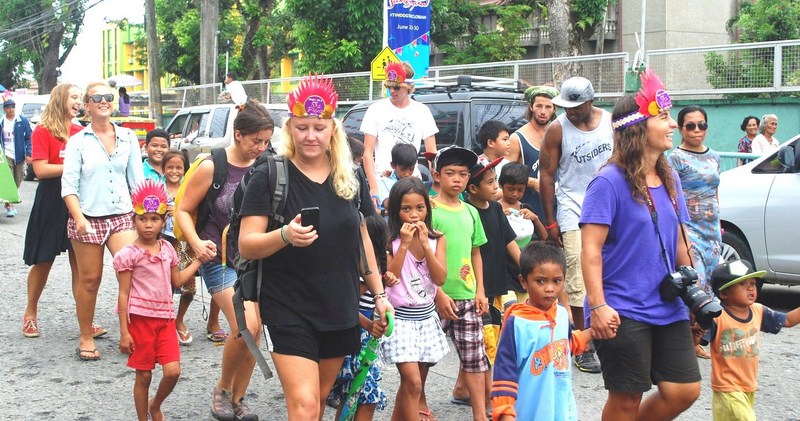
The Sangyaw Pasasalamat Parade

The Sangyaw Pasasalamat Parade

His house was conveniently located along Avenida Veteranos, one of the major city streets that the Sangyaw Pasasalamat Festival (which honors Señor Santo Niño de Leyte, Tacloban City’s patron saint) parade would pass through (Real to Imelda then Rizal towards Romualdez and will end at the Kanhuraw Hill).

The Sto. Nino de Leyte is a favorite theme

The Sto. Nino de Leyte is a favorite theme

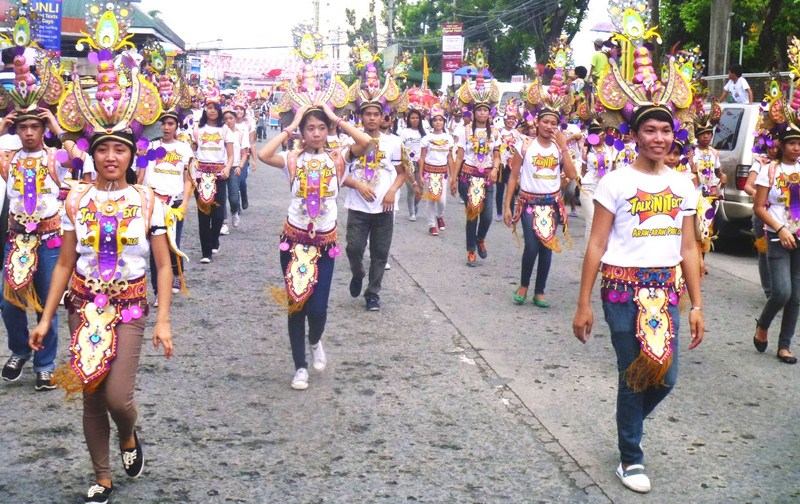
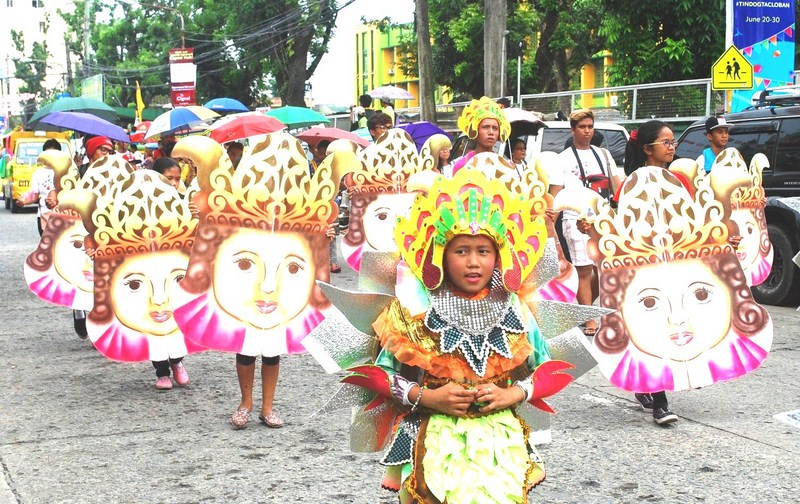
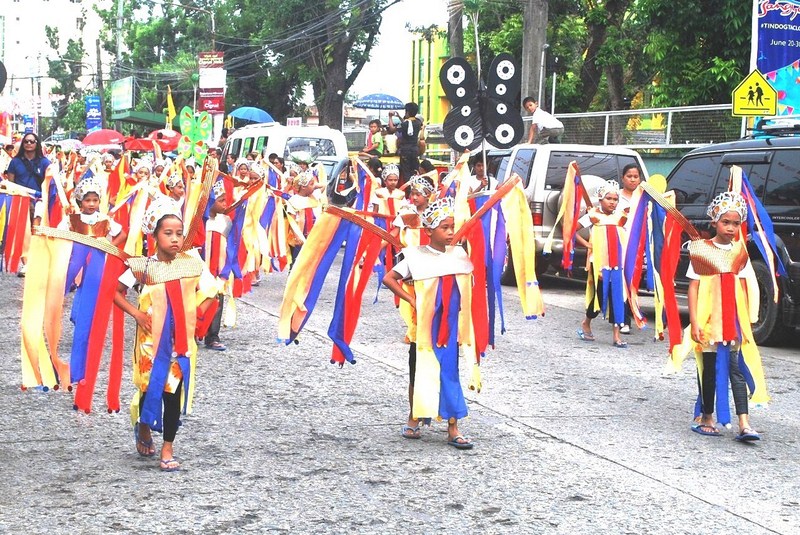
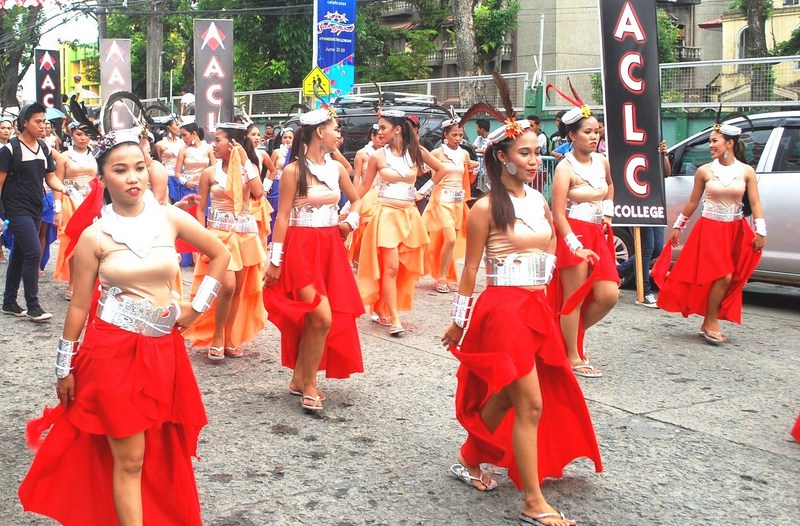
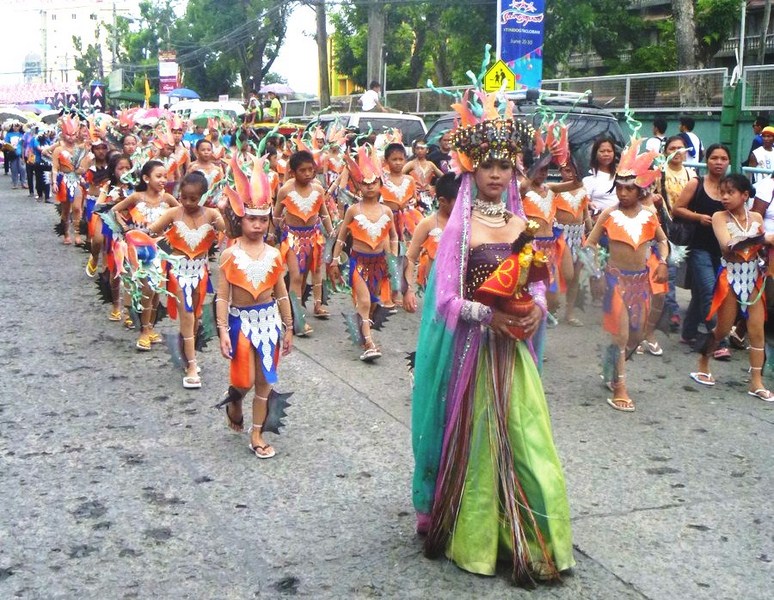
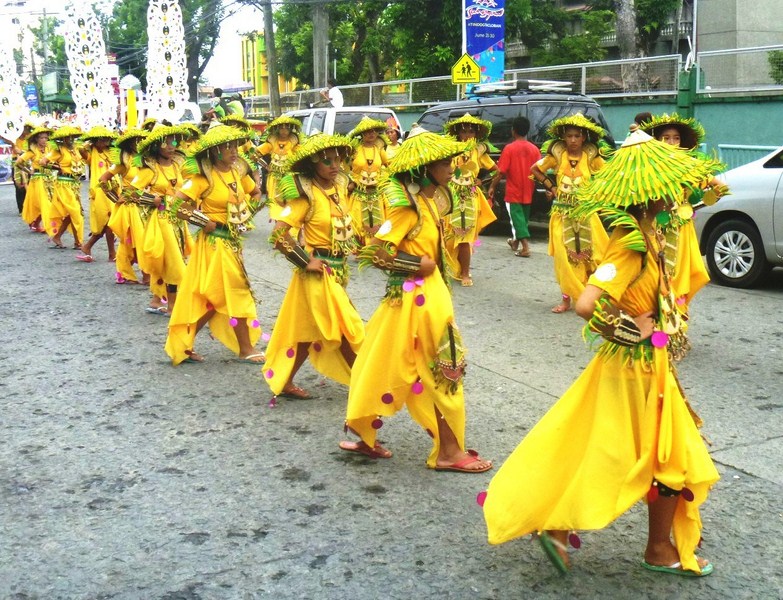
The parade, held nearly 8 months after Typhoon Yolanda (international name: Haiyan) devastated the city and other parts of the Visayas, was a simple affair, tame and devoid of much extravagance and glamour as with previous festival parades.

Thank you in many languages

Thank you in many languages

Foreign aid workers also join in

Foreign aid workers also join in

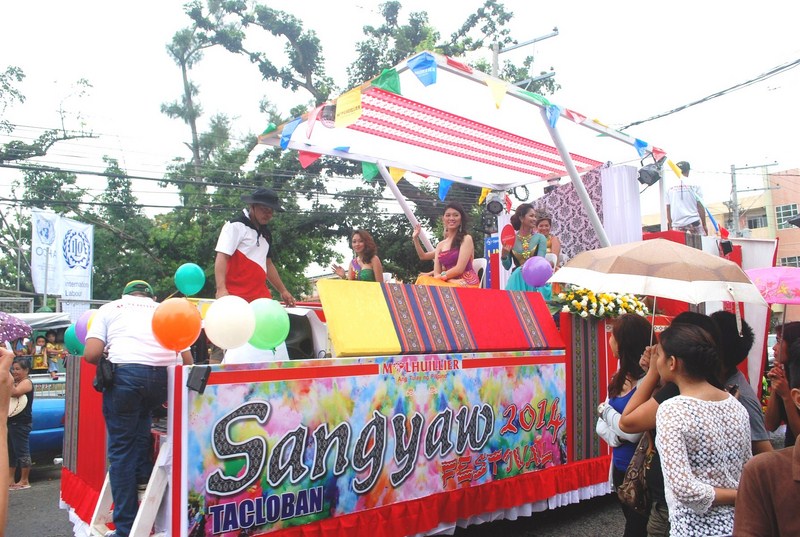
The parade was participated in by more than a thousand merrymakers from 8 schools, 5 barangays, private companies (LBC, Talk and Text, Monterey, ABS-CBN, etc.), government agencies (PhilHealth, Department of Health, Department of Education, etc.), delegates from the various branches of the country’s armed services, and the humanitarian international non-government organizations (iNGOs) such as Oxfam, Save the Children, Volunteers for the Visayans, World Vision, Plan Philippines, Care Philippines, and the United Nations High Commissioner for Refugees (UNHCR), etc.. Eleven non-competing and six competing groups will join in the merrymaking. There were only 5 participating floats.

One of the participating floats

One of the participating floats

With its theme “Pasasalamat,” the parade now focuses on thanksgiving for those who survived the wrath of the super typhoon as well as for Taclobanons and Leyteños to express their gratitude to the different iNGOs whose heartwarming assistance and support helped Tacloban and the Taclobanons get back on their feet.

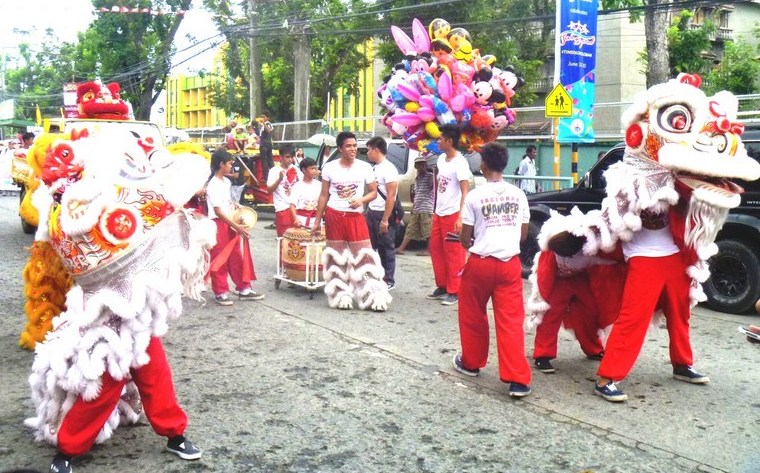
Lion dancers from the Fil-Chinese community

Lion dancers from the Filipino-Chinese community

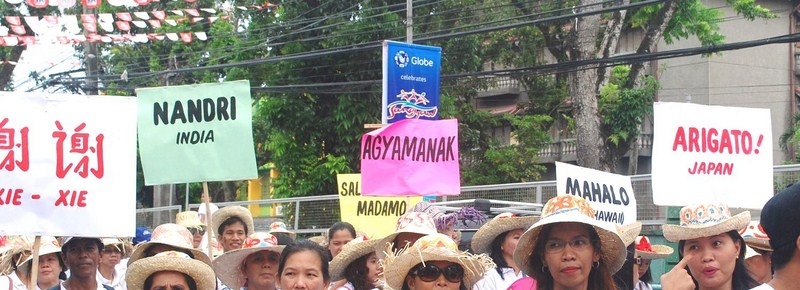
The iNGOs also made this parade possible by taking care of the logistics, giving a subsidy of not less than PhP30,000 to each participating barangay and contingent.  During, the parade, thanks was expressed in the languages of the iNGOs –  Australia (Thoinks Moite), Belgium (Dank U), China (Xie Xie), France (Merci),  Germany (Dankeschön),  Greece (Efharisto), Hungary (Koszonom), India (Nandri), Indonesia (Terima Kasih), Italy (Grazie), Japan (Arigato), Korea (Kamsahamnida), New Zealand (Kiaora Koe), Russia (Blagodarya), Spain (Gracias), U.S.A. (Thank You), etc.

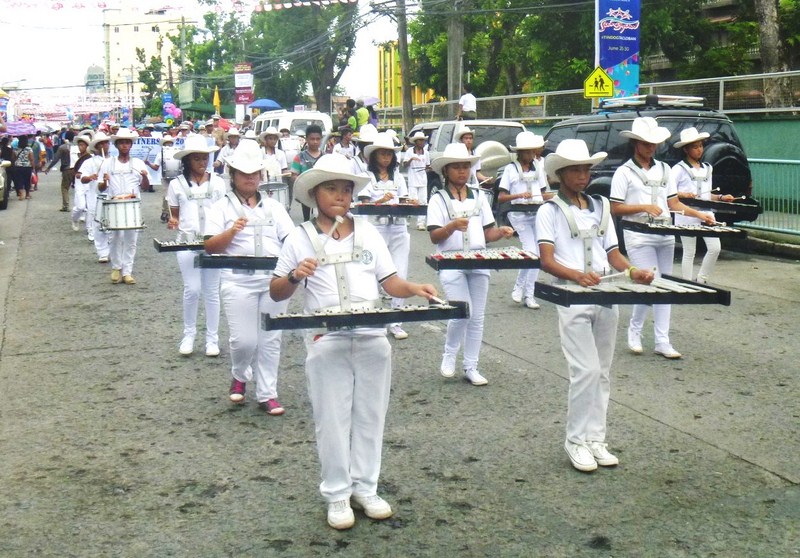
A drum and lyre band

A drum and lyre band

Though it was a gloomy Sunday, with scattered rain showers (but no excruciating heat from the sun), it was nice to see the people enjoying again and the city colorful, with many Taclobanons, in colorful costumes, joining the parade, exhibiting their unique innovations and creativity.

Sangyaw Parade (27)

Sangyaw Parade (37)

Sangyaw Parade (147)

It was still a parade with a rainbow of colors

It was still a parade with a rainbow of colors

The parade somehow relieved the stress and trauma that the Taclobanons have experienced after Typhoon Yolanda.  At the same time, it also helped people in the area to feel that life is returning back to normal in the city.

Kyle, Marve, Grace, Cheska and Jandy enjoying the parade

Kyle, Marve, Grace, Cheska and Jandy enjoying the parade

City Tourism Operations Office: City Hall, Kanhuraw Hiil, Tacloban City, Leyte. Tel: (053) 325-8955, (053) 325-2491, (053) 523-9671 & (053) 325-6248.

Our Lady of Annunciation Church (Antipolo City, Rizal)

After lunch at a Kentucky Fried Chicken outlet near the Antipolo Cathedral, Jandy and I returned to our Toyota Revo for the last leg of our Antipolo City tour – the Our Lady of Annunciation Church, the first Catholic church built in Antipolo.  The church isn’t easy to find as it is located almost outside Antipolo, on the fringe just before getting to Tanay.  We found our way there via the Marcos Highway (and asking for directions).

Our Lady of Annunciation Church

Our Lady of Annunciation Church

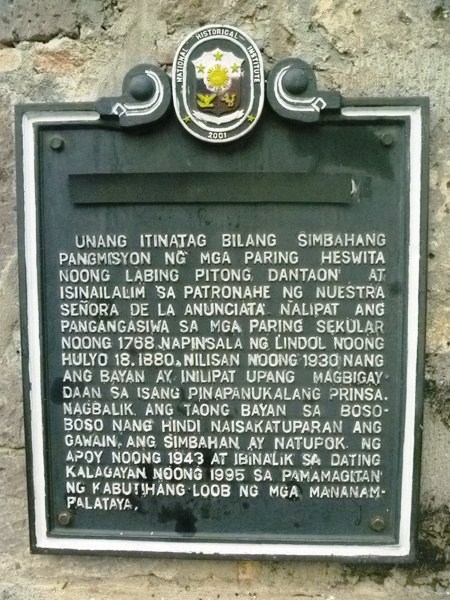
The stone and brick church was constructed by the Jesuits in 1700 under the patronage of Our Lady of Annunciation (Nuestra Señora de la Anunciata). In 1768, when the Jesuits were expelled, its management was transferred to Recollect priests. The church was destroyed during  the July 18, 1880 earthquake. Since then, the population started dwindling and, as it did not seem important to rebuild the church, it was left in ruins.

The church's simple facade

The church’s simple facade

The church's interior

The church’s interior

In 1930, it was totally abandoned when the townspeople were ordered moved to another location to give way for the construction of a proposed dam that would flood the mountain valley of Boso-Boso.  When the project didn’t prosper (due to the discovery of an earthquake fault line), the people slowly came back.

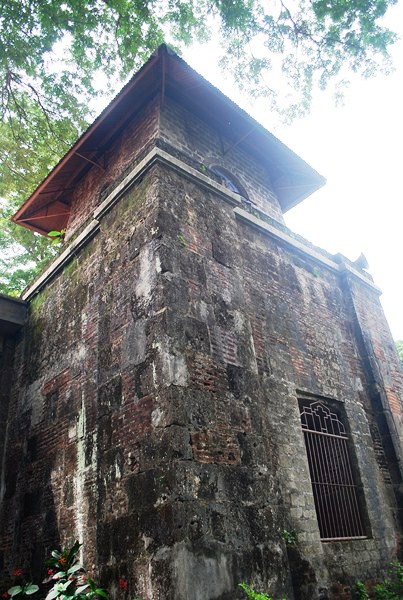
The church's square bell tower

The church’s square bell tower

In 1943, during World War II, what remained of the church was destroyed by fire by the Japanese. In 1995, it was again restored, with the help of the townspeople, to its original design.

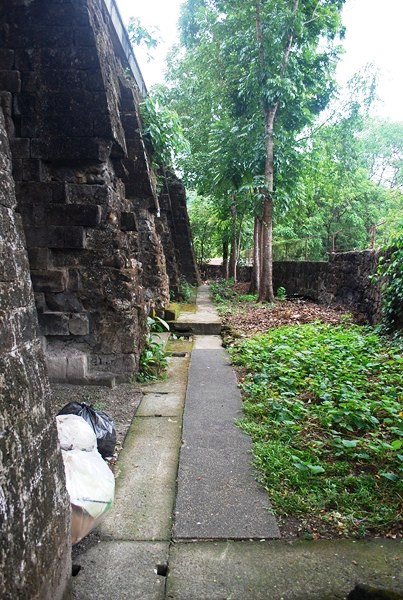
Buttresses on the side walls

Buttresses on the side walls

The present reconstructed church has a simple, single level facade with a centrally located main entrance flanked by two small, semicircular arched windows.  Above it is a triangular pediment with a centrally located oculus.  On the church’s left is a square bell tower.  The side walls are supported by buttresses.  Its interior reveal traces of its brick construction.

National Historical Institute plaque

National Historical Institute plaque

Our Lady of Annunciation Church: Sitio Old Boso-Boso, Brgy. San Jose, Antipolo City, Rizal.

How To Get There: From the Masinag/Sumulong intersection, ride a jeepney along Marcos Highway. Upon seeing the Boso-Boso Highlands Resort on the left side, it is a further 2 kms.  to dirt road on the left marked with a big metal archway (“Old Boso-Boso, Brgy. San Jose, Antipolo City”).  Here, take a 2-km. tricycle ride to the church located on your left.

Antipolo Cathedral (Rizal)

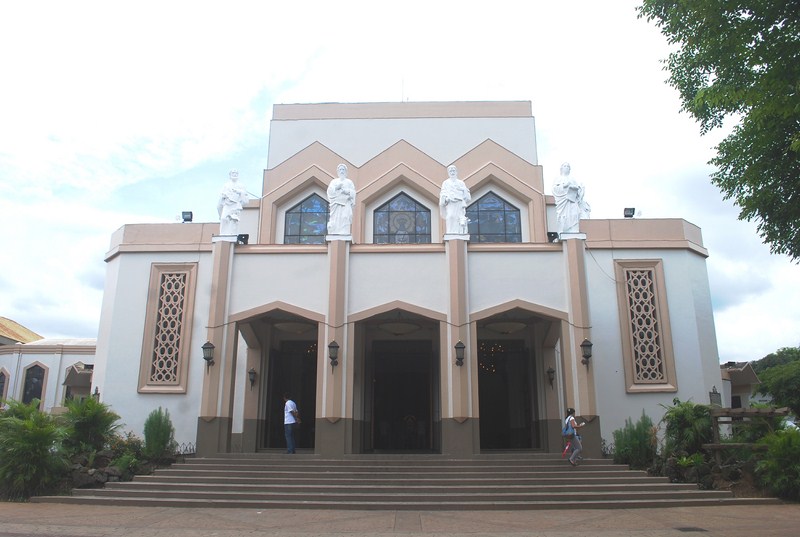
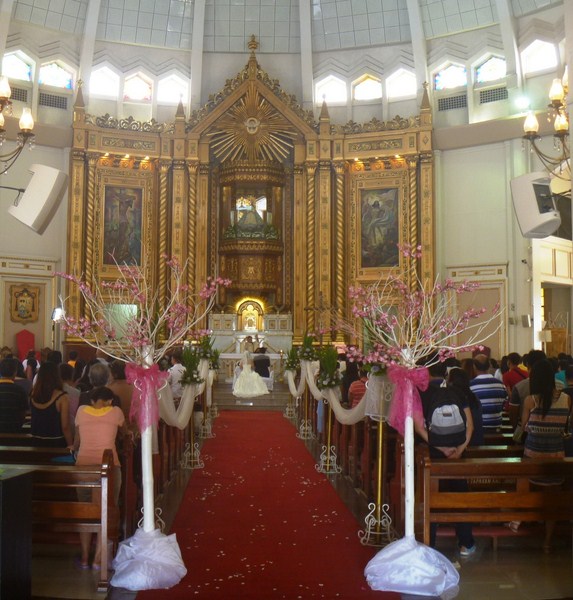
From the Hinulugang Taktak, Jandy and I next proceeded to the nearby Antipolo Cathedral, a favorite pilgrimage site formally known as the Cathedral of the Immaculate Conception National Shrine of Our Lady of Peace and Good Voyage of Antipolo.  We were lucky to be able to park at the cathedral grounds and when we entered, a wedding was ongoing.  

Cathedral of the Immaculate Conception National Shrine of Our Lady of Peace and Good Voyage of Antipolo

Cathedral of the Immaculate Conception National Shrine of Our Lady of Peace and Good Voyage of Antipolo

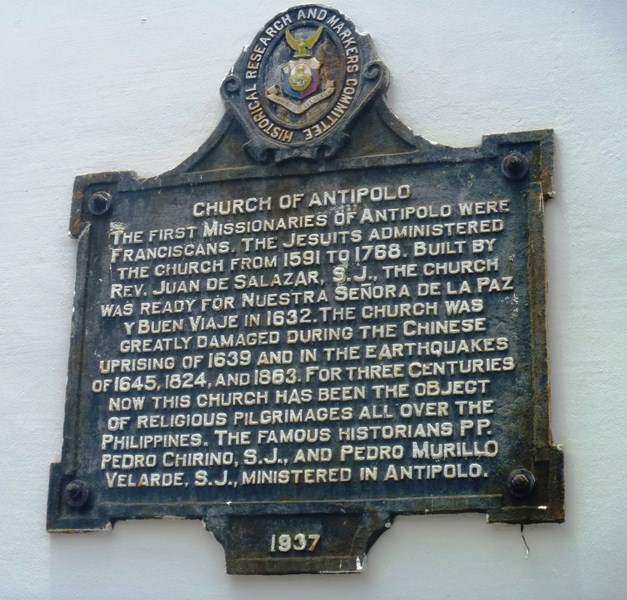
The church was first built from 1630 to 1633 by Jesuit Fr. Juan de Salazar but was burned during the Chinese uprising of November 1639-March 1640.  It was rebuilt by Fr. Salazar in 1637 but was destroyed during the earthquakes of 1645, 1824 and 1863.  Notable Filipino historians Pedro Chirino and Pedro Murillo Velarde ministered in this shrine.

The cathedral interior

The cathedral interior

The present church was reconstructed by Msgr. Francisco Avendano and was declared a National Shrine by the bishops of the Philippines in 1954.  This modern church, built on the site where the statue of the Virgin was discovered leaning against the trunk of a  tipolo  (breadfruit)  tree (artocarpus incisa), has a circular layout topped by a huge dome and has three main entrances.  Gothic influence in the façade is seen from the triangular windows and mouldings.   It houses the image of Nuestra Senora de la Paz y Buen Viaje (Our Lady of Peace and Good Voyage).

Image of Our Lady of Peace and Good Voyage

Image of Our Lady of Peace and Good Voyage

The brown wooded statue was brought to Manila from Mexico by newly appointed Gov.-Gen. Don Juan Niño de Tabora in 1626, via the galleon El Almirante, enshrined in St. Ignatius Church in Intramuros and later entrusted to the Jesuits at Antipolo when Gov. Tabora died in 1632. Declared patron saint of the Manila galleons, it made six successful round trips across the Pacific to Acapulco without mishap from 1648 to 1649 (on the San Luis), 1650 (on the Encarnacion), 1651 to 1653 (on the San Diego), 1659 to 1662 (on the San Javier), 1663 (on the Nuestra Señora del Pilar) and from 1746 to 1748 (on the San Jose). On November 26, 1926, the image was canonically crowned, before 100,000 people in the Luneta,  by Manila Archbishop Michael J. O’Doherty. 

Historical Research and Markers Committee plaque

Historical Research and Markers Committee plaque

Cathedral of the Immaculate Conception National Shrine of Our Lady of Peace and Good Voyage of Antipolo: Pascual Oliveros St., Antipolo City, Rizal.


Save Hinulugang Taktak!!! (Antipolo City, Rizal)

Upon arrival at Antipolo City, the first place Jandy and I visited was the 12 m. high Hinulugang Taktak, one of the two most popular tourist spots in Antipolo City, the other being the Antipolo Cathedral, and the nearest waterfall to Metro Manila. Officially the Hinulugang Taktak Protected Landscape, it was formerly called the Hinulugang Taktak National Park, declared as such by the Department of Environment and Natural Resources (DENR).

Hinulugang Taktak Falls

Hinulugang Taktak Falls

According to legend, there was a large bell that caused undue disturbance whenever it was rung at Angelus. Its sound was so loud that the people could not endure it. They demanded that the local priest get rid of the bell. They threw it at the waterfall.  Thus, “Hinulugang Taktak” means “the place where the bell was dropped.”

Hinulugang Taktak Falls (11)

Historical accounts say that our National Hero Jose Rizal frequented this falls.  On June 15, 1952, it was declared a  recreation area by then Pres. Elpidio Quirino and, in 1990, the waterfall was proclaimed as a National Historical Shrine by the National Historical Institute (NHI) by virtue of Republic Act No. 6964.  It became an integral part of the country’s system of protected areas under Republic Act No. 7586, the National Integrated Protected Areas System (NIPAS) Act of 1992.  It is now under the control of the DENR by virtue of Proclamation No. 42 and it’s area has been expanded from 0.89 hectares to 3.2 hectares.
Hinulugang Taktak Falls (12)

The park was closed to the public and undergoing rehabilitation when we arrived but we were allowed in by the caretaker. We went down a series of concrete steps flanked by kupang, acacia, ilangilang and mahogany trees.  There are also cottages, common barbecue pits, public toilets and swimming pools.

Hinulugang Taktak Falls (6)

Concrete walkways and stairways

When we arrived at falls’ basin, I was greeted by an awful smell and the sight of a pool with waters thick with foam and soap suds (from detergent diluted in dirty water), more like a giant washing machine. At its fringes are raw waste, sewage and assorted garbage, coming from illegal settlers and some of the city’s drainage systems, which flow into the river and its tributaries (including the Pasig River), all prey to rapid urbanization. As such, its waters are polluted and not suitable for swimming (visitors here just use the swimming pool located downstream). The falls is just for viewing.

Garbage and foam at basin

Garbage and foam at basin

However, the city government and the DENR are now working with private groups for a PhP100 million makeover, in 10 to 20 years, to restore and preserve the glory and natural beauty of this once famous and idyllic waterfall.

Downriver from the falls

Downriver from the falls

Hinulugang Taktak was the subject of a bouncy native song (Tayo na sa Antipolo) composed by German San Jose (Gerry Brandy) of Malate, Manila. This song captures the now unpracticed tradition, as part of the pilgrimage to the Shrine of Our Lady of Peace and Good Voyage, of taking an excursion to the falls. Its lyric are as follows: “Tayo na sa Antipolo at doon maligo tayo.  Sa batis na kung tawagin ay Hinulugan Taktak.”

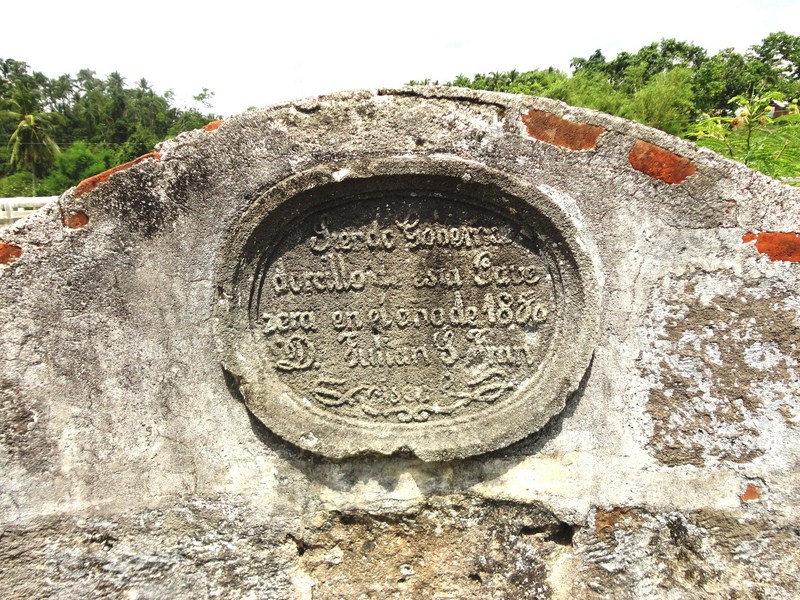
Bridge over the river

Bridge over the river

The basin is regularly cleaned but this is an exercise in futility as illegal settlers upstream continuously throw garbage. Studies to clean the water included putting up fences along the river, diverting the dirty water (and using artificial water for the falls) or setting up a filter to clean the water before it drains into waterfall, but these ways only tolerate those who throw the garbage.  They have to make the people realize the importance of Hinulugan Taktak and that saving it is everybody’s responsibility.  They have to CHANGE people’s attitudes.

The swimming pool

The swimming pool

Picnic huts along the riverbank

Picnic huts along the riverbank

Hinulugang Taktak Protected Landscape: Taktak Road, Brgy. Dela Cruz, Antipolo City, Rizal.  Email: admin@hinulugangtaktak.com. Admission: PhP8 per pax, additional PhP15 per pax if you use the swimming pool.

City Tourism Office: City Hall, Antipolo City, Rizal. Tel: (632) 630-6974, (632) 697-1021 & (632) 644-2837.

How To Get There: Antipolo City is located 29.45 kms. from Manila. The city is accessed by 3 routes: from Marikina via Sumulong Highway from Cubao Quezon City; via Marcos Highway (which extends to Quezon Province) through the Marikina-Infanta Road; and from Makati City and San Juan via the Ortigas Ave. Ext..  Jeepneys to Antipolo City are available in Cubao (Quezon City).  Upon reaching Taktak Rd., alight and then take a tricycle or walk towards the falls.

Manila Bay Cruise


I recently accepted an invitation from Mr. Roland J. Portes, Gen. Manager of Sun Cruises (who are behind the Manila to Corregidor ferry), to experience, with my family, their one-of-a-kind Manila Bay Cruise on board their newly refurbished M/V Spirit of Manila.  Launched in 2010, this double-decker cruise yacht is docked beside the Jumbo Palace, just after the Tanghalang Francisco Balagtas (Folk Arts Theater).   Joining my wife Grace, son Jandy, daughter Cheska, Marve, my grandson Kyle and I is Grace’s boss Engr. Eulalio “Loy” Ganzon, president of E. Ganzon, Inc., and her officemate Arch. Mamel Yap.

Sunset at Manila Bay

This world-class dinner cruise service, available for Filipinos and international tourists alike, has 3 sailing times – 4:30PM to 5:45PM; 6:15PM to 7:30PM; and 8 PM to 9:15PM.  We opted for the popular second schedule to catch the famous Manila Bay sunset as well as the 7 PM fireworks spectacle of the nearby SM Mall of Asia.  Even before the ferry left at 6:15 PM, the sun was already starting to set, fully round and spectacularly painting the sky with a reddish or orange hue.

MV Spirit of Manila

The M/V Spirit of Manila, which can accommodate between 90 to 120 passengers, has two decks with the dining room just about taking up all the decks. The lower deck is enclosed and airconditioned while the open-air, upper deck is for al fresco dining. Its crew appears to be professionally trained, as Sun Cruises’ parent company, the Magsaysay Group, is known for its training center for seamen.

The airconditioned lower deck

This extraordinary cruise, at a leisurely 13 knots, took at least an hour and fifteen minutes and the waters were calm during this pleasantly tropical Saturday evening.  The clean and seaworthy boat was generally stable throughout the cruise and we traveled between decks without any difficulty. Once we left the dock and got under way, our route across Manila Bay took us southwards, toward the vicinity of SM Mall of Asia, Asia’s third largest mall, before heading toward Roxas Boulevard then turning around and heading back to the dock.

The dinner buffet table

After the sun set, we were awed with the towering skyline of the Ermita and the Makati Business District, visible for a time, as well as Manila’s fine buildings such as GSIS and the Manila Film Center.  Not many get to see Manila’s skyline by the bay, one of the best natural harbors in the world.
Dusk at the Manila Film Palace

Then, as dusk fell, it started to fade as the garish and magnificent lights along Roxas Boulevard, seemingly more attractive when seen from a distance, came to life against the black velvet night sky, its reflection also seen on Manila Bay as we felt the sea breeze.  Come 7 PM, we were treated to a fireworks display set amidst the spectacular changing lights of SM Mall of Asia’s The Eye Ferris Wheel, truly a sight to behold.

The acoustic duo – Irene D. Uriat and Alfredo M. Ladera

An important and much anticipated part of this cruise is the sumptuous, full course (appetizer, soup, main course, dessert) gourmet buffet dinner of Filipino and international (Continental, Oriental and Spanish) cuisine that will surely satisfy anyone’s palate. Catered by Manila Catering Services, the official caterer of the cruise, Sun Cruises’ meals are cooked elsewhere then re-plated on board. The menu for this night consisted of an appetizer of tempura crackers; onion soup; four main courses (pancit bihon with chicharon, fish fillet with sweet and sour sauce, roasted chicken and pork Korean); and dessert of buko pandan and coffee jelly.

Sunset Over Manila Bay

The dinner cruise also included live entertainment in the form of the acoustic duo consisting of vocalist Ms. Faye Irene D. Uriat accompanied by guitarist Mr. Alfredo M. Ladera.  They added to an already relaxing, soothing and romantic atmosphere and, after singing a number of tunes, they gladly asked for the audience’s requests as well as serenaded birthday and wedding anniversary celebrants. It was all great fun.  This enchanting, exhilarating and romantic experience is ideal for those who want to have a quick but unforgettable getaway from the hustle and bustle of Metro Manila.
The garish and magnificent lights along Roxas Boulevard

Sun Cruises: Fernando Ma. Guerrero cor. Paseo Palisoc St., CCP Complex, Roxas Blvd., Pasay City. Tel: (632) 834-6857 to 58, (632) 966-9391 to 92 or (632) 527-5555.  Website: www.corregidorphilippines.com. Cost: Php550 per person (includes roundtrip fee, dinner and live entertainment, drinks not included). Ticketing booth is located at the entrance of the dock. They don’t operate during bad weather and typhoons.