Ganduyan Museum Tour with Ms. Christina Aben (Sagada, Mountain Province)

Ganduyan Museum

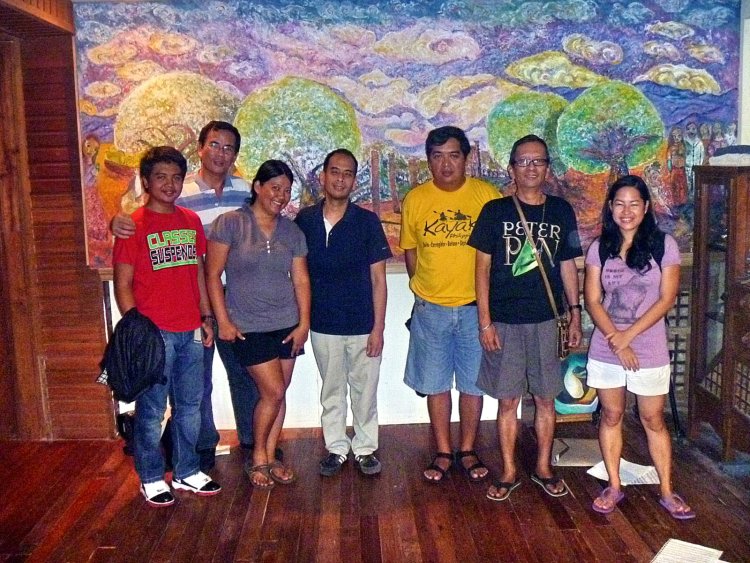
Jandy and I were now on our third and final day in Sagada and we still had time to kill before leaving on the 10 AM G.L. bus.  After a Filipino breakfast at Ganduyan Inn’s cafe, we decided to visit the next door Ganduyan Museum, managed by Marina Biag’s mom Ms. Christina Aben.   Since the early 1970s, Ms. Aben has amassed a spectacular and meticulous collection of tribal artifacts with a passionate curator’s eye for quality and rarity, all detailing the rich but vanishing Cordillera Igorot culture.  Wishing to share her passion for unique Igorot art and culture with the world, she placed them all in a one-room, second floor museum which she opened in 1984. Because of the museum’s limited space,  Ms. Aben, with a designer’s eye for presentation, carefully chooses what to display and how to display it.

Ms. Christina Aben

The museum closed down in 1986 and it remained so when Jandy and I first visited Sagada in 1998.  It was open that morning and we were personally met by Ms. Aben who escorted us up the stairs to the museum, removing our shoes first at the stair’s foot before going up.  She’s a cancer survivor and a housewife with a high school education who speaks impeccable English. Ms Aben is also an enthusiastic, erudite and well-informed hostess who loves to share the meaning and importance of every museum piece to anyone willing to listen.

Ganduyan Museum – Display

The museum was a veritable treasure trove of antique basketry, weapons, farm tools, trade beads, jars, wooden items and textiles from the Cordillera region, all offering an insight into the rich culture of the Cordillera Igorots.  Ms. Aben gladly explained the history and significance of each individual item on display, starting with her trade bead collection which came at a time when the Igorots traded with the Chinese, Indians, Arabs and other foreigners from the lowlands.   Beads include alligator teeth and mother-of-pearl shells not found in the Cordilleras.  Beaded necklaces from different tribal groups of the Cordilleras (Kalinga, Nabaloi, Ifugao or Igorot)have beading patterns that differ from one ethnic tribe to another.

Ganduyan Museum – Display

We next moved on to the men’s accessories section.  These include a money belt, a warrior’s purse,  pipes, caps (used as pillow and water cup), woven g-strings, anklets, armlets, spoons and amulets (including a snake vertebra believed to increase the warrior’s physical and internal prowess). Drinking  cups for wine, both for men and women, vary in size and kind. Igorots treated status with utmost importance, from clothing (the rich could wear clothes that the poor could not), kitchenware (made from wood,  metal and, sometimes, animal bone, all  classified by social class) and even in death.  Doors, scarves, table runners, warrior’s shields and other accessories are decorated with the lizard (or gecko), animals said to bring luck and longevity.  The many weapons of head hunters of the Cordilleras on display include shields with concave ends (meant to trap the enemy at the neck before the warrior goes for the kill and chops the head off).

Ganduyan Museum: Poblacion, Sagada, Mountain Province.  Open daily, 8 AM-7 PM.  Admission: PhP25.

Back to Sagada (Mountain Province)

Ganduyan Inn

It was raining during more than half of our 6.5-hr.  trip from Baguio City to Sagada and it was still raining when our bus arrived at Sagada by 6:30 PM.  From the bus stop, Jandy and I ran towards the accommodation  nearest the bus stop – the 3-storey Ganduyan Inn.

This wasn’t our first time to stay here, having been here 13 years ago (in 1998).  Back then, we stayed in a spartan room without private bath (PhP75 per head).  The common baths then had no hot water.  Still managing the inn were Marina and Hanzel Biag.  This time, Jandy and I stayed in a slightly bigger (though still spartan) room with twin beds and a private bath with hot water (PhP750 per day).

Twin room with private bath

Since the inn’s coffee shop didn’t offer dinner (they only serve breakfast), Jandy and I walked to the basement of the nearby Edward Longid Centrum, an Episcopalian church-raised commercial building inaugurated last January 25, 2010, where we had a delicious dinner of pork asado and roast chicken plus a cup of Sagada’s signature brewed coffee at Cuisina Igorota.

The basement also has 2 other local restaurants (Dap-Ayan Sagada and 7J’s Diner & Snack Haus), all offering various local cuisine at a very cheap price. The town’s pharmacy is also located at the second floor of the building.

Edward Longid Centrum


Ganduyan Inn
: Poblacion, Sagada, Mountain Province.  Mobile number: (0921) 273-8097 (Smart) and (0927) 434-0212 (Globe).  E-mail : ganduyan_inn@yahoo.com.

Home of "The Other Rizal" (Los Banos, Laguna)

The Paciano Rizal Shrine

My next stop in my Laguna (Calamba City to Sta. Cruz) joy ride with my son Jandy was the charming resort town of Los Banos.  The town is famous for its hot medicinal sulfur springs that flow from the foot of Mt. Makiling and its present name is derived from the Spanish word for “The Baths.” These thermal springs were discovered in 1590 by Franciscan martyr St. Peter Baptist (San Pedro Bautista).   Today, most of the sulfur springs are piped into the pools and baths of the many hot spring resorts that line the National Highway.  This is the Los Banos that most people know and not many people know this town’s association with “the other Rizal.”

The old Los Banos Municipal Hall

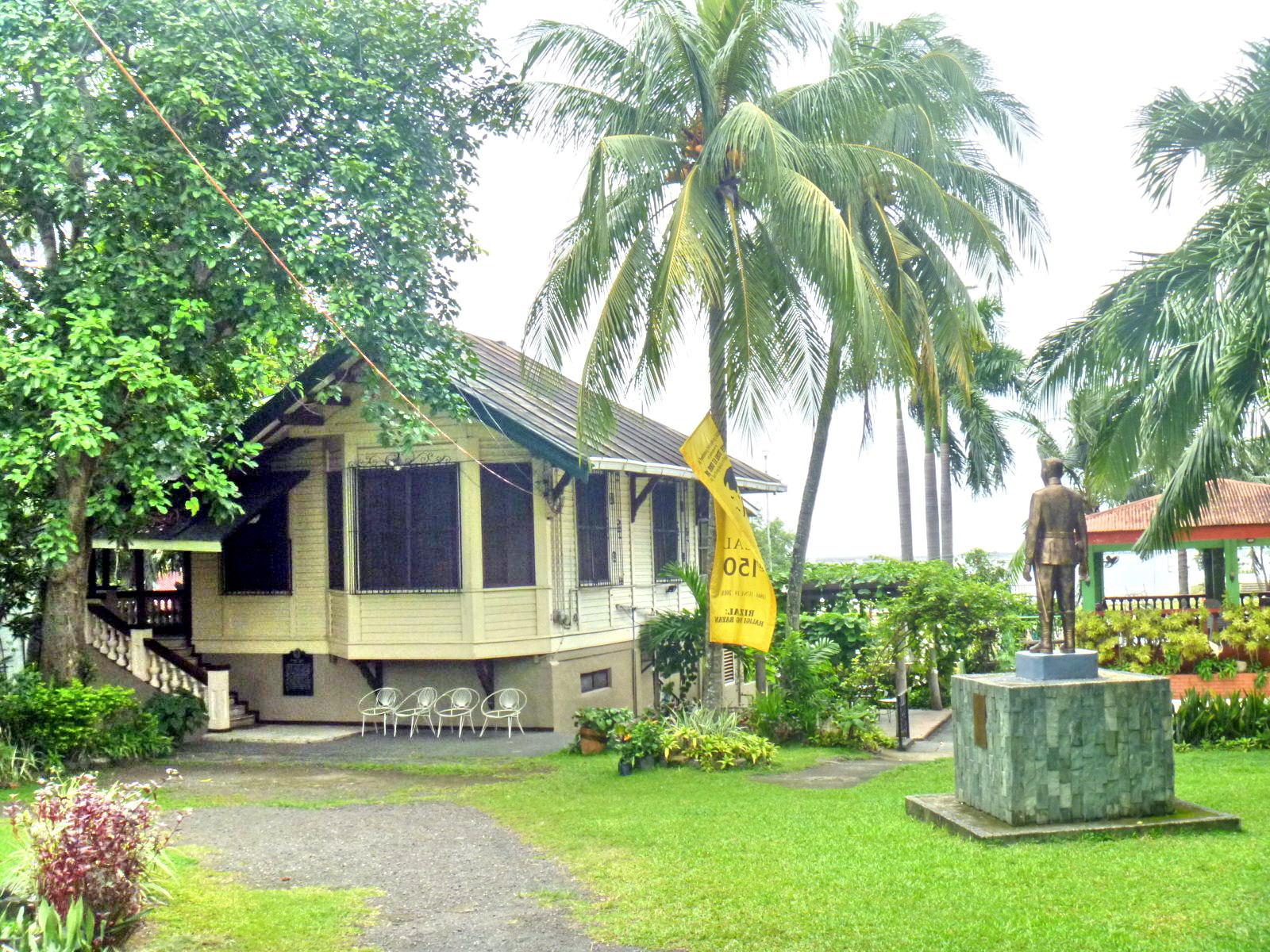
To find out, I parked my Toyota Revo at the old municipal hall (a new one is being built along the National Highway).  Beside the town’s fire station is the inconspicuous retirement home of Paciano Mercado Rizal, Jose Rizal‘s elder (and only) brother who was also a revolutionary general (he led the defense of Laguna) and Emilio Aguinaldo‘s first Minister of Finance.  Though not as popular as the Jose Rizal Shrine in Calamba, this shrine, jutting out to Laguna de Bay, was built atop a hot spring in 1927 by Andres Luna de San Pedro (son of master painter Juan Luna) when Paciano’s original nipa hut was destroyed in a typhoon in 1926.

The back of the house

Rizal lived here, as a gentleman-farmer, with 2 helpers (with occasional visits from his grandsons, from daughter Emiliana, Franz and Edmundo), until his death from tuberculosis on April 30, 1930.  First buried in Manila North Cemetery, his remains were later transferred here, with full military honors, in 1985.  A historical marker was installed here on April 13, 1983 and the house was declared as a National Historical Shrine by the National Historical Institute on July 31, 1992.

Laguna de Bay

This modest American-style, one-bedroom bungalow was turned into a Japanese garrison during World War II, resulting in the loss of much of Paciano’s personal effects. Still around are some photos of his grandchildren, binoculars he used during the revolution, a pair of his shoes and a Quiroga bed.  Rizal’s spinster sisters Josefa and Trinidad are also buried in the sprawling garden which has a bronze statue of Paciano Rizal, on a pedestal, in his general’s uniform.  The shrine has a view of Talim Island. At the back of the house is the Paciano Rizal Park.

A Walking Tour of Mauban (Quezon)

The Municipal Hall

We finally arrived at Mauban, at the midst of its Maubanog Festival, by 4 PM and we made a stopover at the municipal hall were we all dropped by the Municipal Tourism Office and paid a courtesy call on Mayor Fernando Q. Llamas, the uncle of our good friend Lee Llamas.  Prominently displayed outside the municipal hall is an old cannon, 1 of 3 (the other 2 are at the Museo ng Mauban) bestowed by Spanish Gov.-Gen. Rafael Maria Aguilar to the town as a reward for the rescue efforts done for the Spanish friars captured by Moro pirates. The cannon were later used against the Spanish to effect the surrender of Tayabas to the revolutionaries in 1898.  All 3 were  restored on April 16, 2004.  

Traditional Mauban products

After our courtesy call on the Mayor, we  all dropped by the Mauban Product Development Office, beside the municipal hall, to check out the town’s traditional products such as finely-crafted nilala woven hats, baskets, slippers, wallets, bags, boxes, caddies, etc.;  delicacies such as pinangat, binalawan, pinais, tikoy, kalamay, pastillas, botarts, mazapan, suspiro, etc.; and nipanog, wine made with sasa (toddy palm nectar) instead of coconut and available in different flavors such as liputi, katmon, guyabano, mango, pineapple, guava, jackfruit, kalamias, tamarind and santol. Being a fiesta, booths selling these products, and more, were found in front of the municipal hall as well as along the major streets. 

Church of St. Bonaventure

While they were checking out the products, I took time out to visit the town’s present, modern Church of St. Bonaventure (the town’s patron saint).   This church underwent a lot of rebuilding since it was first built in 1647 and demolished in 1769.  The second structure, built in 1773, was badly damaged during the 1830 earthquake and rebuilt between 1836 and 1845.  The church collapsed during the July 1880 earthquake and the present church was built in 1891.  The bell tower, built in 1773, was seriously damaged during the 1880 earthquake and the portion that remained was partially destroyed again during the August 20, 1937 earthquake. 

Gat Uban Park

With the sun still up, we still had time to make a walking tour to Gat Uban Park, at the end of Gomez St., along the sea wall.  The park has a seaward facing statue the legendary Dumagat warrior and leader Gat Pangil who defended the town against ruthless Moro attacks.  Gat Pangil was also known as Gat Uban because of his gray hair (uban).  Accordingly, the town was named after the fact.  The well-lighted promenade area, with its gentle sea breeze, is a favorite meeting place for Maubanons. 

View from Rizal Hill Park

It was near sunset when we dropped by Rizal Hill Park (locally called Calvario Hill), along San Buenaventura St. in Brgy. Rizaliana.  To get to the top, we had a  choice of taking the shorter route (climbing a steep concrete stairway) or the longer route via a winding ramp skirting the hill.  Of course, we chose the latter.  At the top of the hill is a statue of National Hero Jose Rizal, erected on December 1912 by the Mauban Circle Association of Students.  The  park offers a panoramic view of the whole town.  In olden times, the hill was used as a sentinel post and a place for religious activities during the Spanish era, as headquarters by American troops, as an outpost by the Philippine Constabulary during the Japanese Occupation and, after the war, by the Civilian Emergency Administration.

Rizal Hill Park

Soon after our arrival,  Mr. Ludovico Badoy and Ms. Carminda R. Arevalo, Executive Director  and Officer-in-Charge (NHCP Research, Publications and Heraldry Division), respectively, of the National Historical Commission of the Philippines (NHCP), formerly the National Historical Institute (NHI), also arrived.  They supervised the installation of a historical marker recognizing the hill for its historical significance.  The marker was to be unveiled the next day, with Mayor Llamas and Mr. Badoy leading the ceremony.  It was now evening when we left the hill and, after dinner at the house of Mayor Llamas, we were billeted for the night at the nearby Llamas ancestral house.

Municipal Tourism Office – Municipal Hall, Poblacion, Mauban, Quezon.  Tel: (042) 784-1205 and 713-0314.  E-mail: gat_uban@yahoo.com.

Pinyasan Festival 2011 (Daet, Camarines Norte)

Pinyasan Street Dancing Competition

My last visit to Camarines Norte literally hit two birds with one stone as we covered the 150th birth anniversary of National Hero Jose Rizal (June 19) and the Pinyasan Festival (June 15-24) which coincided with Daet‘s 428th foundation anniversary and the quadricentennial of its St. John the Baptist parish.  Daet Mayor Tito Sarion, who was a town councilor in 1993, started the town’s Pinyasan Festival. Back in the1990s, while attending a Philippine Travel Mart Convention, Tito conceived of the idea of promoting a local festival in honor of the Formosa pineapple, the sweetest variety among home-grown pineapples in Camarines Norte and a major fruit product. The festival has significantly boosted the popularity of the pineapple (its other potentials then only known by local farmers and traders) and fortified industries related to it.   Today, foreign firm Sunzu Agri-Development, Inc. has a pineapple processing plant at Brgy Caayunan in Basud while another newly-established agro-industrial firm (Flora Farms Integrated, Inc.) in Brgy. Pamorangon in Daet has ventured into the production of food and other products derived from pineapple. There is also a Pineapple Island Resort-Hotel (Calasgasan, Daet), a new bus firm (Pineapple Gold Express) and countless newly created food recipes that include pineapple as ingredient.  Neighboring Basud town and local cooperatives, with the help of the local government and national agencies, have created new fiber products and the popular pineapple pie,  a contribution to the One Town One Product (OTOP) program, harnessing local creativity in to exploring product possibilities extracted from the fruit and sustaining a now major industry.

Mayor Tito Sarrion

This year is the 19th edition of the festival and this would be my first Pinyasan. Our three-day (June 17-19) visit to Daet didn’t extend to June 23, the day of the Grand Float Parade, but we did get to see the Miss Pinyasan/Miss Daet 2011 beauty contest and the Street Dancing and Best Marching Band Competition the next day. We had just returned from our Calaguas Islands tour when Bernard, Lee, TJ and I were invited to cover the beauty contest’s Coronation Night.   From the Bagasbas Lighthouse Resort (where we were booked), we were brought first to the Terrace Grille for dinner.  Here, we espied the candidates and guest Ms. Universe runner-up Ms. Venus Raj as they were about to leave and met up with Daet Mayor Tito Sarrion.  The pageant proper was held at Provincial Gym.  Ms.  Abigail “Abby” Ortega was crowned as Miss Pinyasan.  Runners-up were Ms. Renei Victoria Almoneda (Miss Daet, also Best in Swimsuit, Festival Costume Design and Evening Gown), Ms. Nicole Anne C. Gange (Miss Tourism and Miss Photogenic), Ms. Princess Joy Burce (First Runner-up), and Ms. Erika Bianca “Ekaa” Lasay (Second Runner-up).

Miss Pinyasan/Miss Daet 2011 winners
The next day, all four of us had our lunch at the K Sarap Snack Bar along Vinzons Ave.  Right after lunch, we went out along the Vinzons Ave. (and, later, to the First Rizal Monument) to watch the Street Dancing and Best Marching Band Competition.  The winners of the Miss Pinyasan (minus First Runner-up Ms. Burce) and town officials in a float (led by Mayor Sarrion) also joined the parade.  There were also a number of karetelas bedecked with pineapples and flowers.  The winners of the Street Dancing Competition were Barangay Cobangbang (first), Barangay 7 (second) and  Barangay Lag-on (third).  In the elementary school level, the Best Marching Band Competition winners were Talisay Elementary School (first), Daet Elementary School (second) and Gregorio Pimentel Elementary School (third), while at the high school level, the winners were St. Francis Parochial School (first), Tulay na Lupa National High School (second) and San Roque National High School (third).
 
Best Marching Band Competition

Labo Town Proper (Camarines Norte)

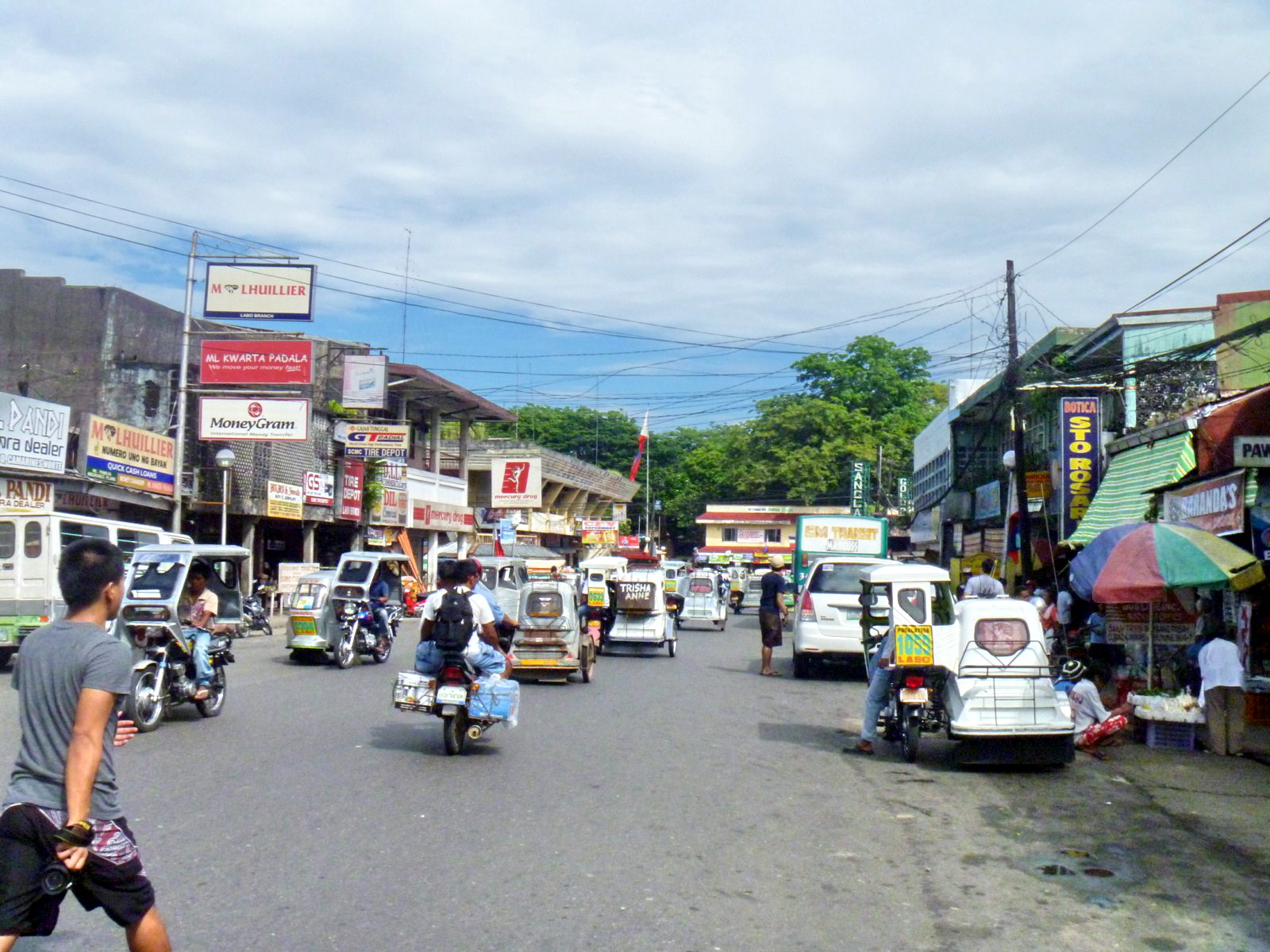
About 15 kms. out of Daet, we again made a short stopover at the busy, 648.84 sq. km. (more than 25% of the province’s total land area) and first-class municipality of Labo (2010 population: 92,041, the province’s most populous) where Bernard and I bought some shades at the market.

Labo town proper

Labo town proper

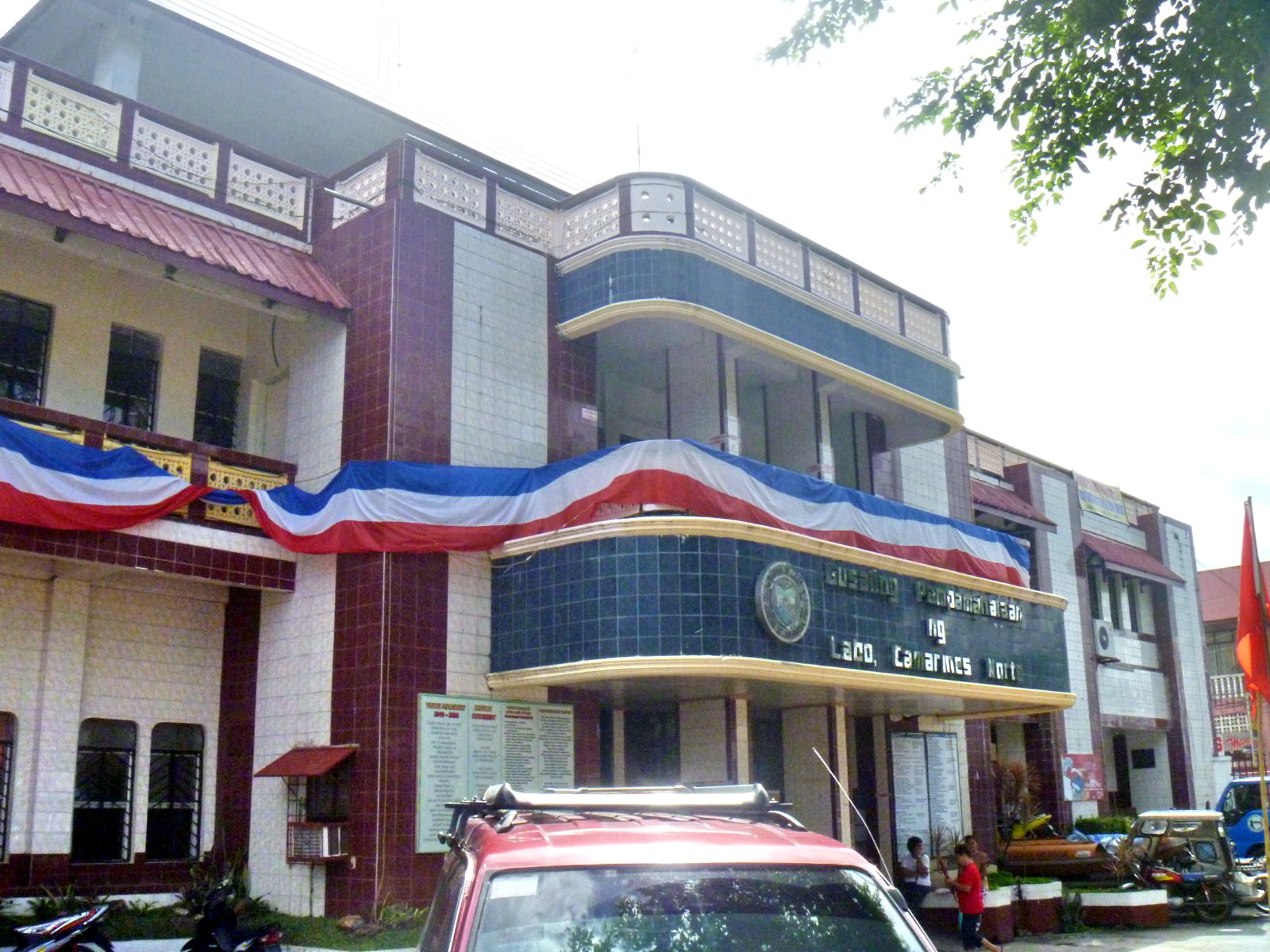
From the market, I walked over to the nearby Church of St. John the Apostle and Evangelist and the modern, 2-storey municipal hall for my own photo ops.

Labo Municipal Hall

Labo Municipal Hall

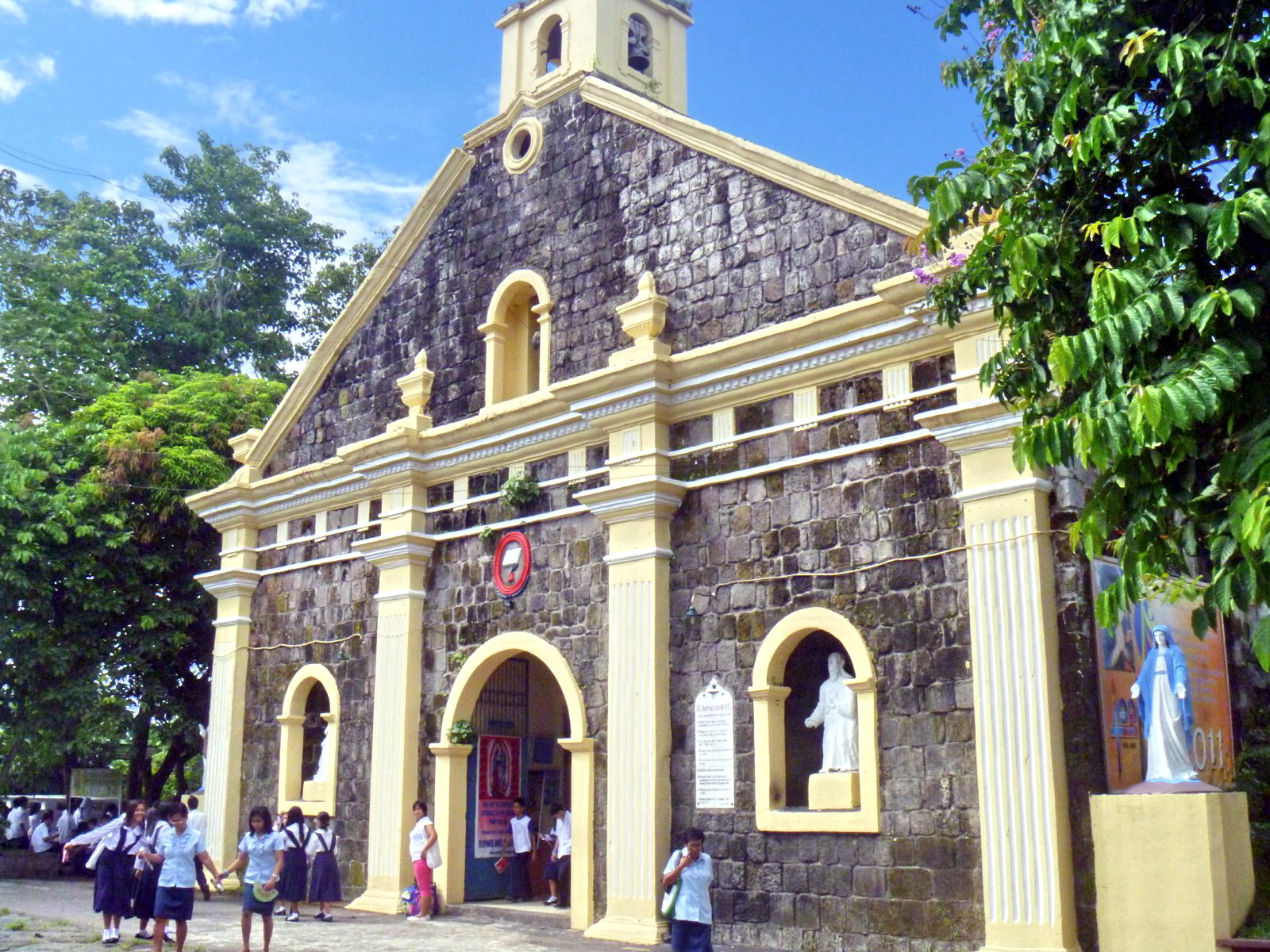
The church was built in 1890 by Fr. Sotero Martin (parish priest from 1891 to 1894).

Church of St. John the Evangelist & Apostle

Church of St. John the Apostle and Evangelist

AUTHOR’S NOTES:

The church has a 2-level, Baroque-style coralstone facade with a triangular pediment with a centrally located, semicircular arched statued niche and topped by a square bell tower.

The lower level has a centrally located, semicircular arched main entrance flanked by fluted pilasters (topped by urn-like finials) and semicircular arched statued niches.

Church of St. John the Apostle and Evangelist: Brgy. Burgos, Labo 4604. Tel: ()54) 447-6325. Feast of St. John the Apostle and Evangelist: May 6.

Labo Municipal Hall: National Highway, Labo 4604. Tel: (054) 721-7412.  E-mail: inquiries@labo.gov.ph. Website: www.labo.gov.ph.

Casa San Miguel: Zambales’ Center for the Arts

The Pundaquit Virtuosi in concert


Upon the culmination of the 3-km. Novice Race, Bernard, Lally, Kara, Art, Amadis and I left Anvaya Cove in Morong (Bataan) to attend the concert of the Pundaquit Virtuosi at Casa San Miguel (CSM), in San Antonio in Zambales as guests of internationally-acclaimed violinist Alfonso “Coke” Bolipata.  Bernard and Lally’s 15-year old son George, a violin student at CSM, went there earlier. CSM, the CCP of Zambales, is the province’s sole center for culture and the arts and is the venue for the annual Pundaquit Arts Festival. The concert, held at the Ramon Corpuz L. Concert Hall for intimate performances, was already at its closing stages when we arrived in the evening, just in time to witness its final number and, after heartwarming applause, its accompanying encore.  After that performance, we joined in on the dinner prepared for guests by Coke.     

Casa San Miguel


Casa San Miguel, a 45-min. drive from Subic, is set amidst a mango orchard between the mountain and the sea, a setting which encourages and inspires artists to hone their skills freely as they play harmoniously with the sounds of the surrounding scenery.  It started out as a seaside family retreat built in 1921. In 1993, Coke, after returning from his studies at the Julliard School of Music in New York and the University of Indiana, established an art center there after the old house burned down. To start up the center, Coke offered workshops designed to identify and develop potential talents in classical music, theater, shadow play and visual arts. He even taught the children of farmers and fisher folk for free. The center is committed to exposing the community to different cultural forms, particularly classical music, as well as to the continued development and support of the Filipino artist and to the development of the new artist and audiences for the next generation.

 
Ramon L. Corpus Concert Hall


This art center, now a playground for the music, theater and visual art prodigies of Zambales, has a grand 3-storey brick building that serves as the home of the Bolipatas’ protégés. The airconditioned, 300-pax Ramon L. Corpus Concert Hall (named after Coke’s grandfather), on the ground floor, has a 7-ft. grand piano and crisp, clear acoustics.  It houses several chamber orchestra concerts, theater plays, operettas, and ballet productions.  Celebrated Filipino classical pianist Cecile Licad performed here during a recent concert.  

Casa San Miguel bedroom


Upstairs are separate concert halls for intimate performances and music lessons while at the third and attic floors are 7 bedrooms with views of Mt. Pundaquit and Mt. Maubanban on one side and the South China Sea on their other.  The 2-storey Anita Gallery (at the center’s western wing), whose wide spaces and translucent walls are a blank canvas for creativity, was named after the modernist/genre painter Anita Magsaysay-Ho, a native and niece of Ramon L. Corpuz.  This gallery has exhibited the works of brilliant artists such as Carlo Gacubo, Don Sanlubayba and Borlongan.  A coffee shop, called Kapepe, serves light snacks, dinner and refreshments using organically grown vegetables harvested from the Casa San Miguel farm and the nearby sea. Outside is a 1,000-seat, circular outdoor theater that serves as an alternative venue for productions  that require more space such as full-orchestra concerts and elaborate theater and dance performances. There is also a sunken terraced garden, with a miniature stage (where masses are held on Sundays), designed to offer visitors a meditative retreat while waiting for the beginning of a performance.

 
Pundaquit Virtuosi rehearsal with Coke Bolipata


Every 3 months, CSM regularly holds classes for violin, cello, viola, visual arts, theater production and shadow play with young and talented students attending classes given one-on-one by Coke and assistant teachers every weekend. To date, the center has 150 scholars (1,200 since 1996) who are provided with free board and lodging.  In exchange, they are required to devote a portion of their residency period to lecturing, giving demonstrations and workshop-seminars; or to teaching skills to the surrounding communities as part of their development and enhancement. The artists also have the optional opportunity to present their products, finished or unfinished (as a work-in-progress), at CSM’s different venues.   Classes culminate with a performance or exhibit held at CSM. Some of CSM’s graduates make up the Pundaquit Virtuosi which is divided into Quadros (those skilled in arts) and Cuedras (those skilled in music). Last June 6, 2007, in Makati City, the Pundaquit Virtuosi had the honor of performing with the famed New York sextet of Juilliard School, violinists William Harvey and Frank Shaw, and cellist Jeremiah Shaw. In collaboration with various organizations and the community, the Pundaquit Chamber Players, CSM’s resident ensemble, performs at the Pundaquit Festival which is held yearly, between October and April. 

L-R: George Supetran, the author, Lally Supetran, Coke Bolipata, Bernard Supetran, Amadis Ma. Guerrero  and Kara Santos


Casa San Miguel Center for the Arts: Brgy. Pundaquit, San Antonio, Zambales.

Vinanmek Mansion (Bangkok, Thailand)

Included in the admission ticket to the Grand Palace was free entry to the Vimanmek Palace (also called the Vimanmek Teak Mansion), at the Dusit Palace Complex, and we next proceeded there.  The world’s largest building made of golden teak, its elaborate style reflects a unique blend of Victorian and delicate Thai architecture. The mansion is one of 16 mansions or residential halls (out of 20) in the complex that can be visited by tourists.

Vinanmek Mansion

A former royal palace, it was built in 1900 by King Chulalongkorn (King Rama V, 1868-1910), a few years after his return from Europe in 1897, using his personal money to purchase orchards and paddy fields between Padung Krungkasem Canal and Samsen Canal for the construction of a royal garden which he named the Dusit Garden. Vimanmek Mansion was the first permanent residence there.  Upon its completion, King Rama V then transferred here from the Grand Palace and stayed for 5 years until the completion of Amporn Satan Residence in 1906 (where he live until his death). Vimanmek Mansion was then closed down and members of the royal family moved back to the Grand Palace. In 1982, it was renovated and converted into a museum.

Octagonal Wing Where King Rama V Resided

This 72-room building has 2 right-angled wings, each 60 m. long and 20 m. wide. It is 3-storeyed except for the octagonal part, where King Rama V resided, which has 4 storeys.  Although the ground floor is brick and cement, the upper floors are made with beautiful golden teakwood.

Entrance Stairway to Vinanmek Mansion

Before touring, we had to put all our belongings in a locker (same as in the Jim Thompson House).  It was also a shame we can’t take photos inside.  Before entering, we also had to remove our shoes and wait our turn.  The mansion was a veritable museum that displays the king’s photographs, art and artifacts that commemorate his royal visit to Europe.  We also viewed an exhibit of Thai handicrafts in 31 exhibition rooms, some of which maintain the atmosphere of the past, especially the bedrooms, the Audience Chamber and the bathrooms. Some rooms display silverware, ceramics, glassware and ivory.

Vinanmek Mansion: Ratchawithi Rd., Dusit, Bangkok, Thailand.  Tel: +66 2 628 6300 Ext. 5120-5121.  Fax: +66 2 628 6300 Ext. 5136.  Website: www.vinanmek.com.

Grand Palace (Bangkok, Thailand)

On our third day in Bangkok, we availed of a tour from the travel agency at the hotel, of the fabulous Grand Palace (Phra Borom Maha Ratcha Wang), the gem of Bangkok’s impressive collection of temples and palaces, and its adjoining Wat Phra Kaew (Chapel Royal of the Emerald Buddha), Thailand’s most important temple. This would the first for Jandy and Cheska. After breakfast at the hotel, we were picked up at the hotel lobby by a good English-speaking guide (he seemed to be of Indian ancestry) and driven to the palace in a sedan.

Marching Soldiers Entering the Palace Gate

We arrived at the palace just when a troop of marching soldiers, dressed in colorful ceremonial uniforms, were entering the gate along Na Phra Lan Road, on the north side, to the palace’s Outer Court and we followed at their heels.  The weather was sunny but extremely hot. Whether you take a guided tour or not, the route through the  complex is more or less fixed, with the Wat Phra Kaeo first and the Grand Palace last.

Grand Palace’s Outer Court

Nowadays, the Grand Palace, the official residence of the king of Thailand from the 18th century to the mid-20th century, is used only for occasional ceremonial purposes and is no longer the royal residence as King Bhumibol (Rama IX) lives in Chitralada Palace (closed to tourists) which is located not too far away in Bangkok’s Dusit district, near Dusit Zoo. However, the interiors of most of the buildings in the Grand Palace remain closed to the public.

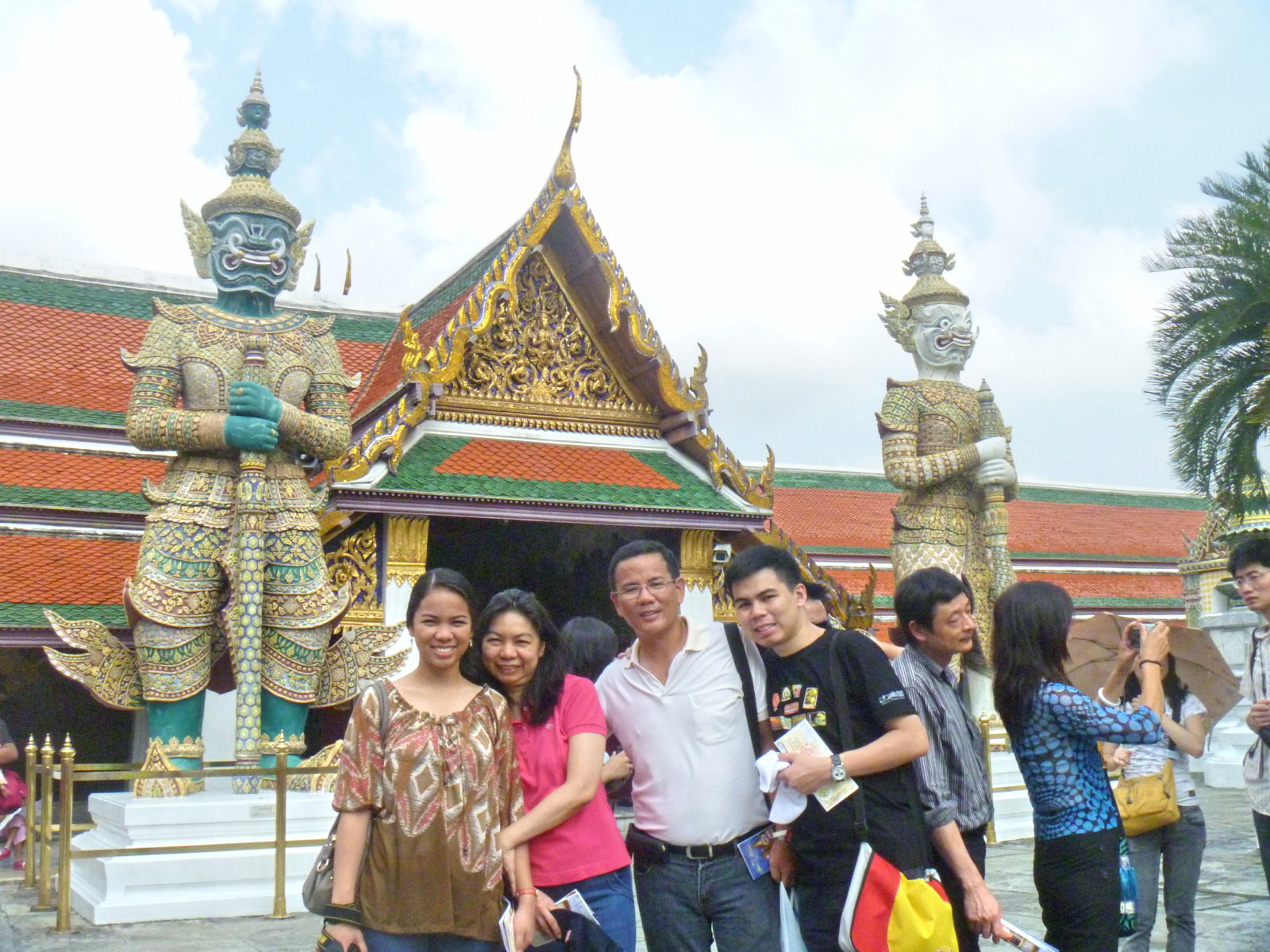
Wat Phra Kaeo Entrance Guarded by 2 Yakshis (mythical giants)

Sitting on the eastern bank of the Chao Phraya River, this complex of of shrines, temples, royal halls and apartment buildings, despite their proximity, have a distinct contrast in style, the Grand Palace being European-inspired in architecture  (the roof being the exception) and the Wat Phra Kaew very Thai.  It covers 218,400 sq.m. and is surrounded by a 1,900 m. long wall.

Wat Phra Kaeo

The 94.5-hectare (234-acre) Wat Phra Kaeo, built in 1782 during the reign of King Rama I, has a roof embellished with polished orange and green tiles, pillars inlaid in mosaic and pediments made of rich marble. The temple houses the small (45 cm. tall), beautiful, gold-clothed and greatly revered Emerald Buddha, carved from a block of fine green jade (instead of emerald) sitting on a high throne under a golden filigree canopy. As in all Thai temples, we were required to remove our shoes or sandals before entering.  Bare feet are not allowed either. We also weren’t allowed to take pictures inside.

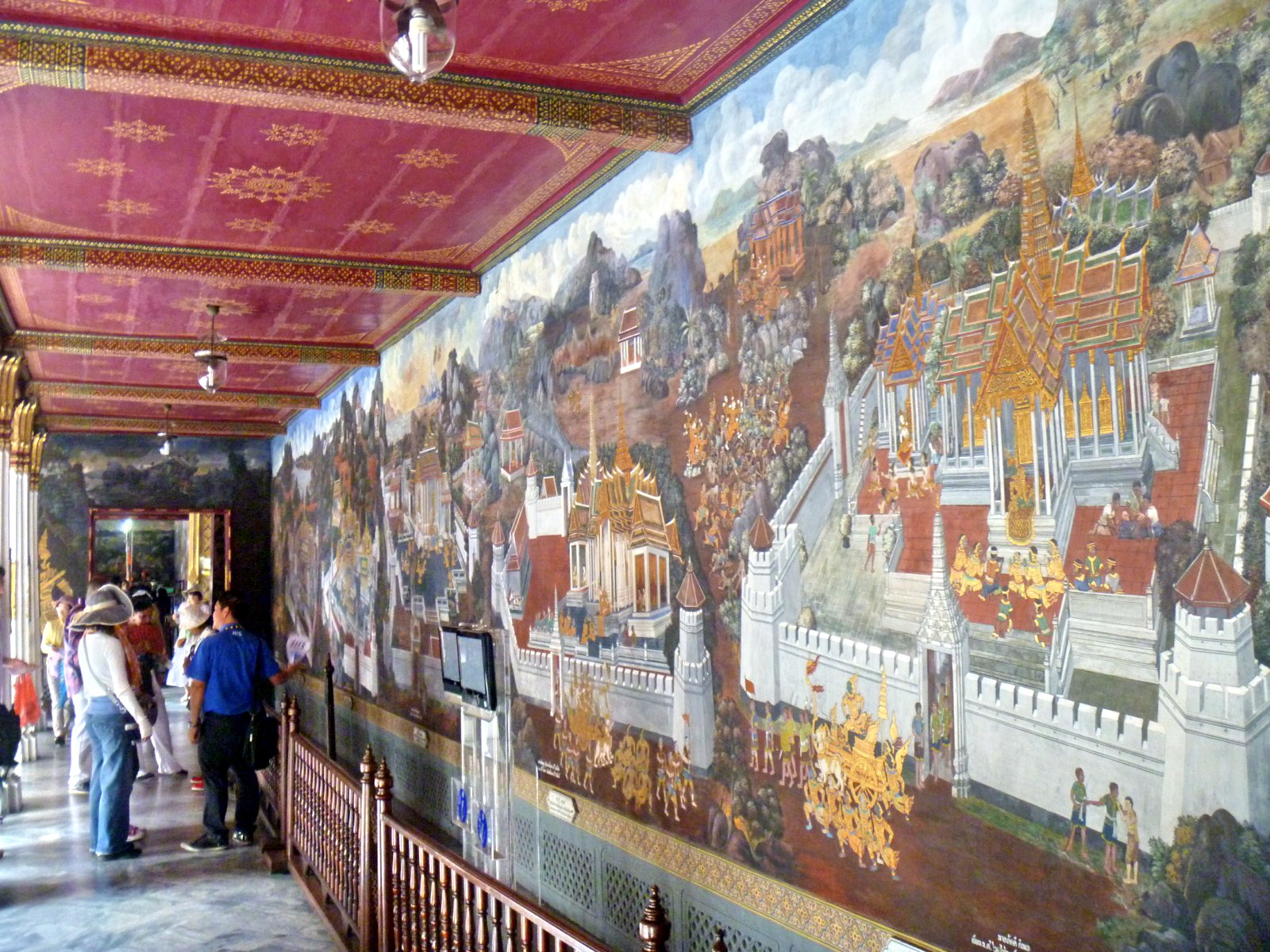
A Gallery Filled with Murals

In the middle of the complex is the Phra Mondop, a library built in Thai style by Rama I.  It houses elegantly carved, Ayutthaya-style mother-of-pearl doors, bookcases with the tripitaka (sacred Buddhist manuscripts), human-and dragon-headed nagas (snakes), and images of Chakri kings.

Phra Mondhob

Enclosing this temple complex are galleries with typically Thai murals that feature lovely paintings depicting 178 unbelievably vivid and detailed scenes from the Indian epic Ramayama (Ramakien in Thai) that show the heroic tale of Rama of Ayodhya and his war against the giant Ravana, king of Lonka.

Phra Sri Rattana Chedi

The Upper Terrace has 4 main monuments: the Phra Sri Rattana Chedi, the Repository of the Canon of Buddhism, the Prasart Phra Dedidorn (the model of Cambodia’s Angkor Wat presented to King Mongkut)  and the Prasat Phra Thep Bidon.  The Phra Sri Ratana Chedi, located west of Wat Phra Kaeo, is a 19th century stupa built in Sri Lankan style.  It enshrines the ashes of the Buddha.

Prasat Phra Thep Bidon

The Prasat Phra Thep Bidon (Royal Pantheon), crowned with a high filigree prang, contains the relics of the previous kings of the Chakri Dynasty.  It has lovely kinnara (half man, half bird) statues up front.

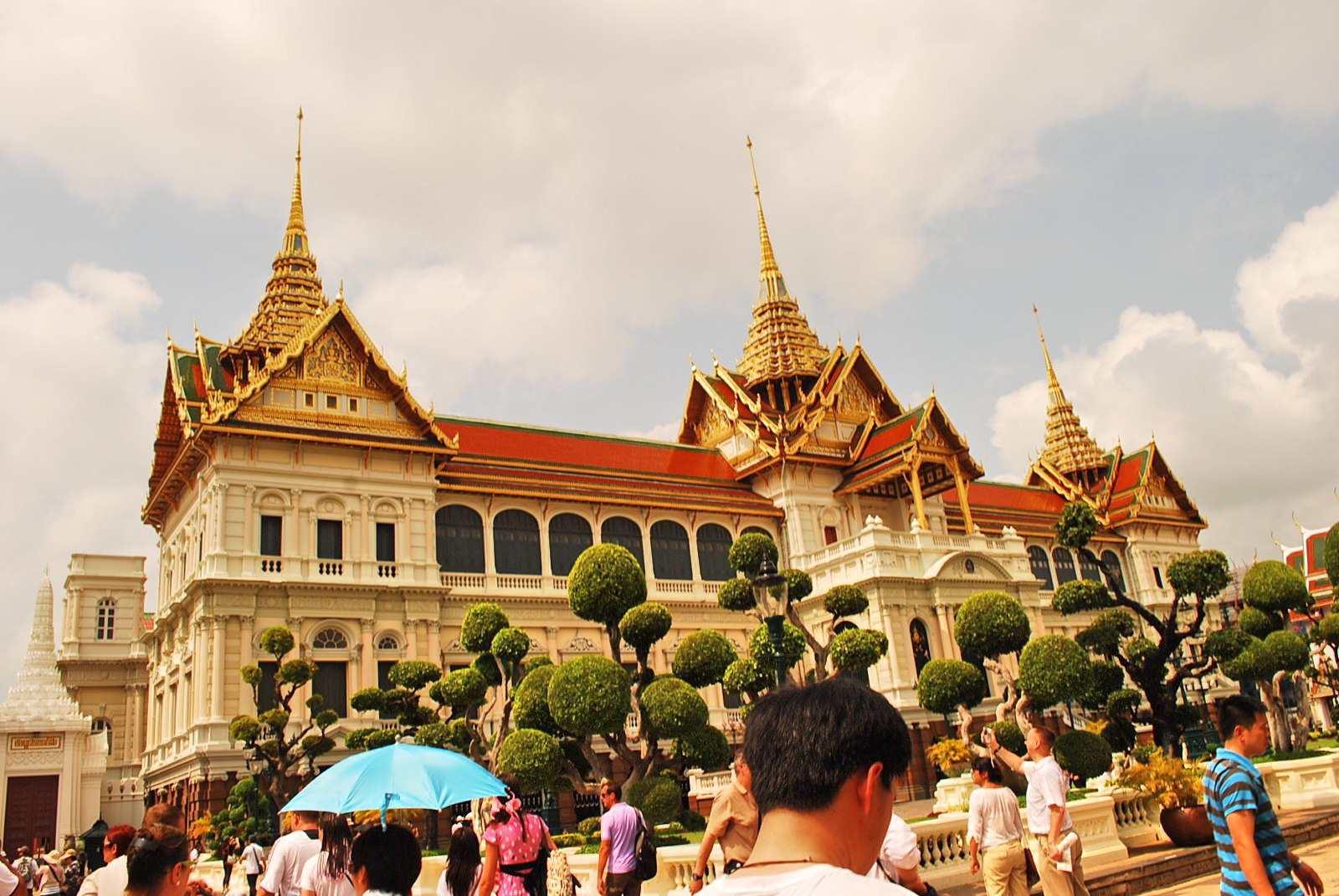
Chakri Maha Prasat Hall

The Grand Palace has two groups of residences: the Chakri Maha Prasat Hall and the Phra Maha Monthian. The Italian Renaissance-influenced Chakri Maha Prasat Hall, built in 1882 by King Chulalongkorn (Rama V), is a remarkable mixture of European and traditional Thai styles. Each wing has a shrine (mandap) crowned by a spire and has 3 prangs instead of domes.  This palace houses elegant staterooms and an exhibition of the royal weapons collection at the ground floor.

The Phra Maha Monthian consists of the Amarin Winitchai Audience Hall  and the Paisal Taksin Hall which features the monarchy’s coronation chair.  The Amarin Winitchai Audience Hall was where court ceremonies took place before the throne. It has a very interesting 4-tiered roof and a very pretty pavilion in front of it (Amporn Phimok Prasad).

At the eastern end is the Borombhiman Hall, built in the French architectural style.  Formerly the residence of King Rama VI, it is now used as guest house for visiting foreign dignitaries.

Borombhiman Hall

Grand Palace and Wat Phra Kaew: Open daily, 8:30 AM-4:30 PM.

How to Get There: take bus 44, 47 and 91 and drop off at Thaiwang Road, between Wat Pho and Wat Phra Kaew. You can also take bus 1, 25, 44, 47, 82 and 91 and drop off at Maharat Road, west of Wat Phra Kaew. North of Wat Phra Kaew, on nearby Sanam Luang, you can also take bus 3, 15, 30, 32, 43, 44, 59, 64, 70, 80, 123 and 201 as well as airconditioned bus 6, 7, 12, 39 and 44.  The Tha Chang river express boat stop is also very near.

Chao Phraya River Cruise (Thailand)

After our Wat Phra Mongkhon Bophit tour in Ayutthaya Historical Park, we all returned to our coach and were all brought to Potangtai Pier near Bangsai (the royal folk arts and handicrafts center) for the start of our 2.5 hr. Chao Phraya River cruise from Ayutthaya back to Bangkok on board the modern and luxurious cruiser Grand Pearl.  From Ayutthaya, we would be passing through Pathumthani and Nonthaburi provinces before arriving in Bangkok.

The Grand Pearl

On board, we were in for a late but delicious buffet lunch of mostly spicy Thai and international cuisine served within the luxurious confines of the cruise boat.  All 4 of us sat in a comfortable, u-shaped booth beside a large viewing window.

Dining, Buffet-Style, on Thai Cuisine

Throughout our lunch, we watched the scenery along the banks Chao Phraya River banks within the refreshing airconditioned cabin lounge.  By 3:30 PM, midway through our cruise,  a refreshing beverage of tea or coffee and cookies were also served to the guests.

The Airconditioned Cabin Lounge

After our filling lunch, some guests proceeded to lounge at the wooden sun deck  at the front of the cruiser while the majority, including us, opted to remain in airconditioned comfort at the cabin lounge.

The Sun Deck of the Grand Pearl

Sometimes, I would also go up the sun deck, amidst the fresh cool tropical air and warm, afternoon sun, to get an amazingly clearer view of the life of the inhabitants that dwell along the river and the unforgettable scenery of children as they greet the visitors going by.

Houses Mounted on Stilts

We would watch various kinds of river craft, from barges, smaller wooden pleasure cruise boats to traditional, long-tail boats, their engines invariably mounted on an inboard, turret-like pole which can rotate through 180 degrees, allowing steering by thrust vectoring.

Long-Tail Boats

The architectural scenery also varies; from simple houses on stilts to modern villas, to modern medium-rise (Mandarin Oriental Hotel) and high-rise (The Peninsula Bangkok) hotels, from traditional Thai temples (the graceful Wat Arun,  Wat Kanlayanamit, Wat Rakang Khosittaram, Wat Pathum Khongkha) to old Roman Catholic churches (Church of the Holy Cross) and from magnificent palaces (Grand Palace, Bang Khunprom Palace, etc.) to engineering marvels (King Rama VIII Bridge).

Royal Barge Museum

The Royal Barge Museum, on the banks of the Bangkok Noi Canal , is a huge boathouse that displays 8 finely-crafted Thai royal barges (including 4 for the king). The majestic Suphannahongsa (“golden swan,” the personal barge of the King, carved out of a single teak tree trunk, was completed in 1911.

King Rama VIII Bridge

The asymmetrical, cable-stayed, 2.45 km. long (including approach spans) Rama VII Bridge, opened on September 20, 2002, has a single, inverted Y-shaped tower, a sleek superstructure and gold-colored suspension cables arranged on single and double planes.

Bang Khun Phrom Palace (Bank of Thailand Museum)

The Baroque cum Art Nouveau Bang Khun Phrom Palace, the former residence (until 1932) of HRH Prince Paribatra Sukhumbhand, the 33rd son of King Chulalongkorn (Rama V), now houses the Bank of Thailand (BOT) Museum. The museum has 14 rooms many of which display the history of Thai currency and the Bank of Thailand.

Wat Arun

Wat Arun, recognizable by its central, 66.8 m. high prang (Khmer-style tower) topped with a 7-pronged trident, was started in 1809.  It is called the “Temple of the Dawn” because the first light of morning reflects off the surface of the temple with a pearly iridescence.  By the side of the river are 6 Chinese-style pavilions made of green granite and containing landing bridges.

Wat Rakang Kosittaram

Wat Rakang Kosittaram (Temple of the Bells), built during the Ayutthaya period, was later reconstructed and upgraded as a Royal Temple by King Taksin. The main features of the temple is the bell tower whose bells gave the name temple the name “Rakang” (Thai for “bell”).

Wat Kalayanamit

The massive, mid-nineteenth century  Wat Kalayanamit is well known for its 15.45 m. high and 11.75 m. wide Phra Buddha Trai Rattana Nayok (Luang Po To), called Sum Po Hud Kong in Chinese, which is Bangkok’s biggest Buddha image.

Sunanthalai Building (Royal Seminary)

The elegant, century-old Neo-Classical Sunanthalai Building, within the compound of Rajini School (the first girl’s school operated by Thais, founded by Queen Saowapa), was built  by King Rama V in memory of Queen Sunantha Kumariratana who drowned in the Chao Phraya River  on May 31, 1880.  It was restored after a fire in 2005.

Church of the Holy Cross

Nestled among old houses on the river banks and newer buildings inland, recognizable by its reddish dome, is the Church of the Holy Cross (Santa Cruz Church), one of Bangkok’s many old Catholic churches.  First built in wood in 1770 during the reign of King Taksin (1867–1782), it was rebuilt in 1835.  The present church, built in 1916, was designed by Italian architects Annibale Rigotti and Mario Tamagno.

River City Shopping Complex

Other sights along the river include  Thammasart University (Tha Prachan Center), Pom Pra Athit, and the Holy Rosary Church (the oldest Catholic Church in Thailand, also known as Wat Kalawar).  Our cruise ended when we docked at the River City Shopping Complex Pier, Si Phraya in Bangkok by 5 PM.  Altogether, it was a worthwhile experience.

Grand Pearl Cruises: 19/394 Chaovalitr Village, Rimklong Bangkor Rd., Chomthong, Bangkok, Thailand.  Tel: 084-1361199 and 081-9005429.