Cau May Walking Street (Sapa, Vietnam)

Cau May Walking Street

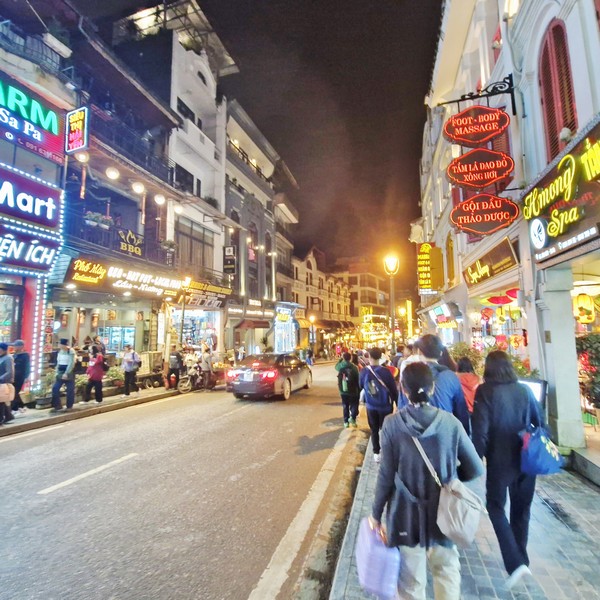
After our tour of Sapa Square and the Church of the Holy Rosary, we all proceeded to walk along the historic Cau May Walking Street, to reach Bora Hotel where we were to stay overnight.  Also known as Western Street, it is nestled in the grandeur of the Northwest mountains. 

Check out Sapa Square and Church of the Holy Rosary

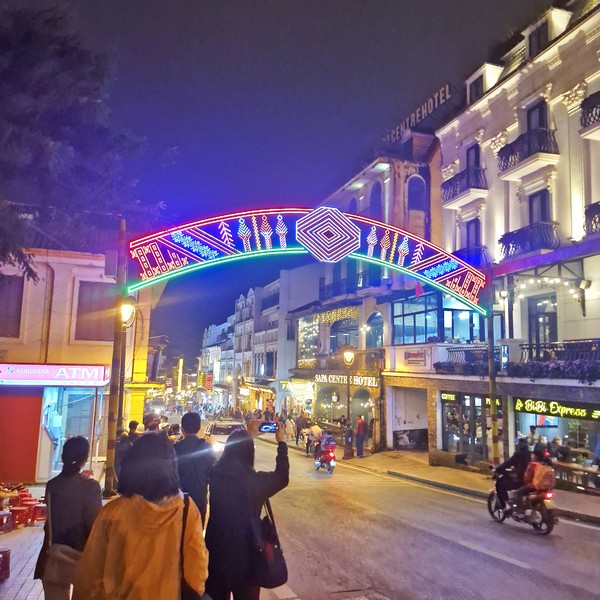
This popular and vibrant, though relatively small pedestrian-only street, in foggy Sapa town, is known for its lively atmosphere and local street food, with numerous modern restaurants, bars, cafes and 3 to 5-star hotels, and is a cultural hub where locals and tourists can interact, stroll, explore the bustling night market, sample local street food, and relax at a bar. 
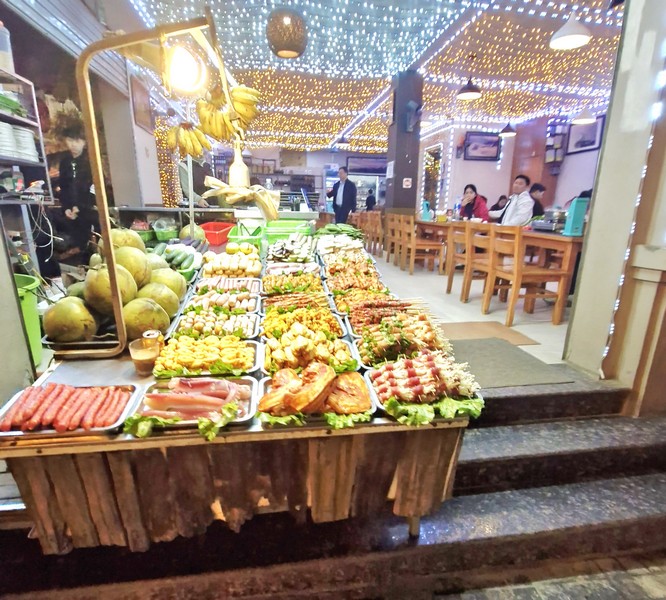
Food stall and restaurant

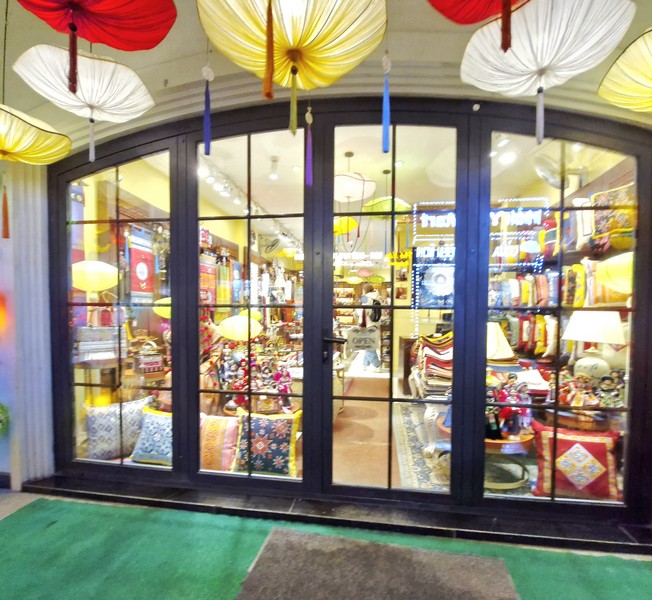
It was built in 1905, during the French colonial era as a retreat for French officials and Vietnamese locals alike, and serves as a convenient point to access other tourist spots in Sapa. At night, the street comes alive with colorful displays and many shops and stalls selling local street food and traditional handmade crafts.  
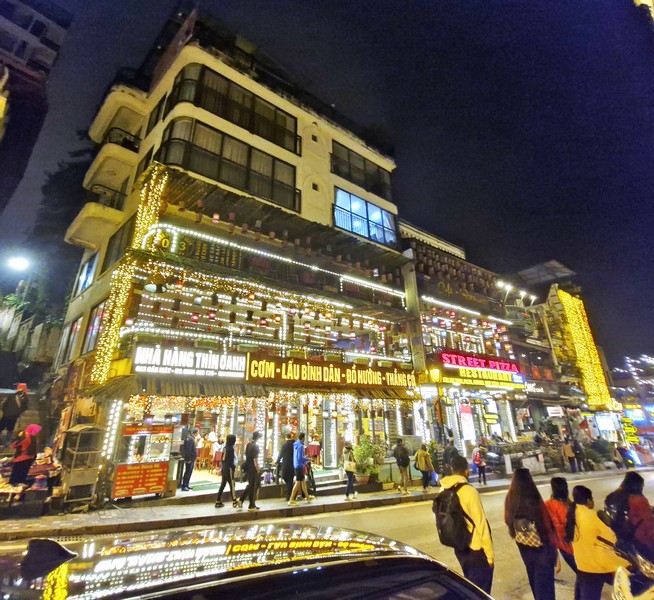
Sapa’s nightlife is often described as a blend of liveliness and an atmosphere that remains more tranquil than in large cities. Visitors can enjoy a variety of delicious and high-quality local Northern Highland specialties, ranging from humble to upscale culinary experiences.
They include dishes like sour salmon hotpot, Sapa green vegetable stir-fry, grilled deer with lemongrass, local pork, honey-glazed grilled duck, hotpot with gang hot sauce, butter lemon sauce fish, Sapa mushroom and lotus seed braised chicken, thang co (a famous horse meat soup), thit trau gac bep (dried buffalo meat), xoi ngu sac (five-color sticky rice), grilled skewers (lamb and bird) and bamboo-cooked rice as well as more modern dining options.
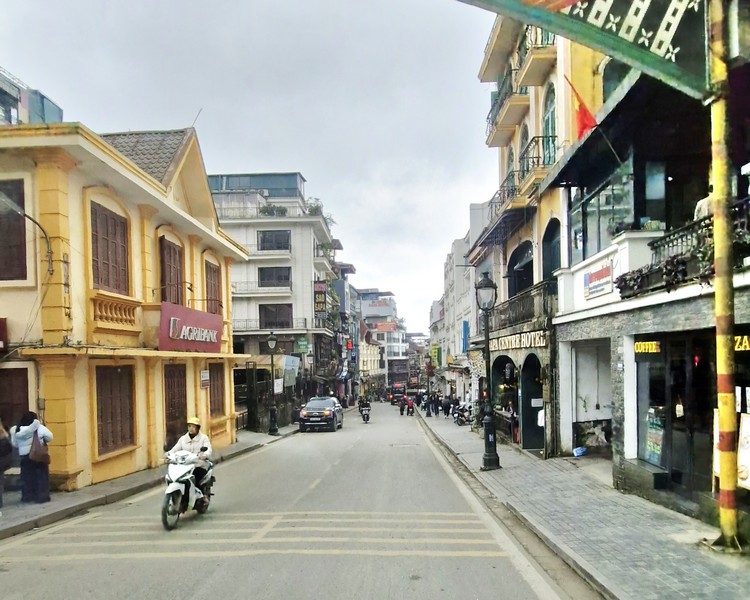
Cau May Walking Street in daytime

The street has a unique ambiance that harmoniously combines the allure of vintage and classic Western charm of the past century, with a touch of modernity, the captivating culture of local ethnic minorities, such as the H’mong and Tay. The street occasionally hosts cultural events and festivals that showcase the region’s heritage. 
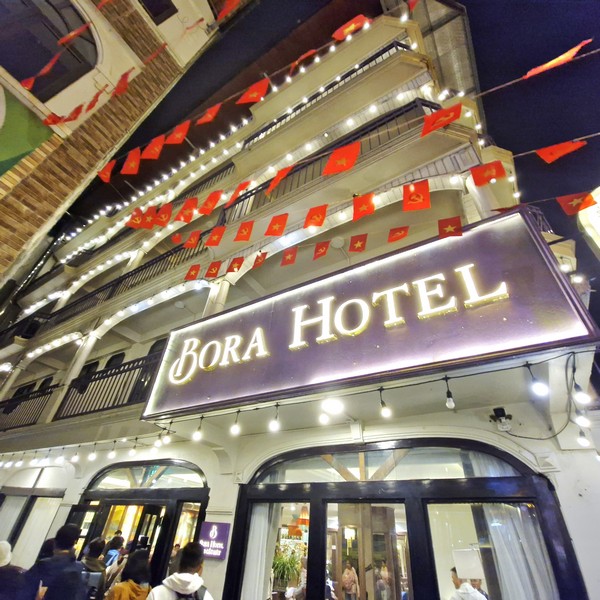
Bora Hotel

Cau May Walking Street: 19 Cau May Street, Sapa Town, Lao Cai Province.
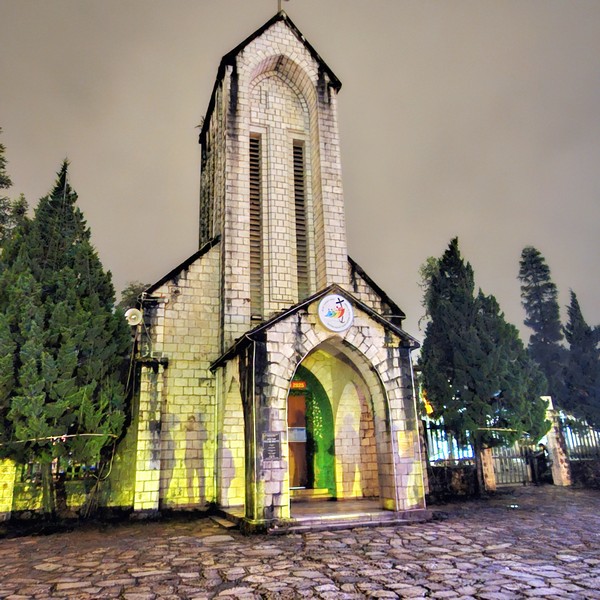
Church of the Holy Rosary (Sapa, Vietnam)

Church of the Holy Rosary

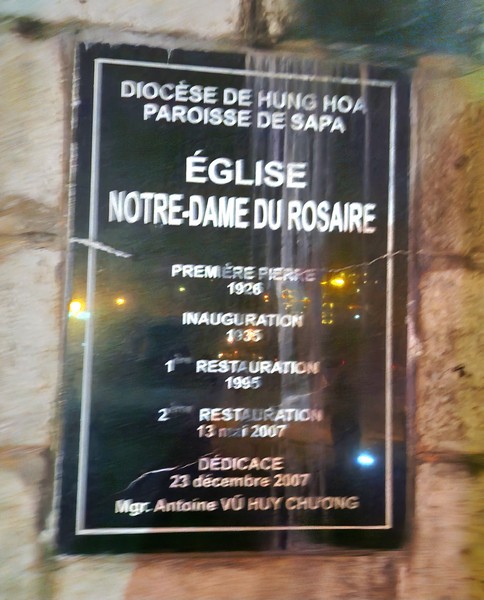
As a visitor come to Sapa, we must have at least once photo opportunity with the Church of the Holy Rosary. This symbol is an indispensable check-in point for visitors when coming to the city in the mist.  Located at Sapa Square in the center of town, Sapa stone church at the foot of the Ham Rong Mountain Range, was started in 1926 and completed in 1935.

Check out “Sapa Square

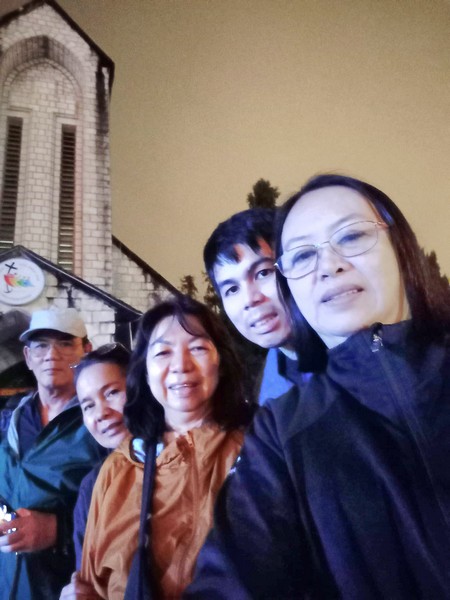
L-R: the author, Lourdes, Grace, Jandy and Lorraine

During World War II, the church was closed and, after the war, was used for storing rice and agricultural produce. In 1995, local governors started to restore and repair this church more than 5 times (the last in 2007) and the parish began to come back here to practice their religion. The church yard has become a familiar gathering point for the Mong and Dao people.

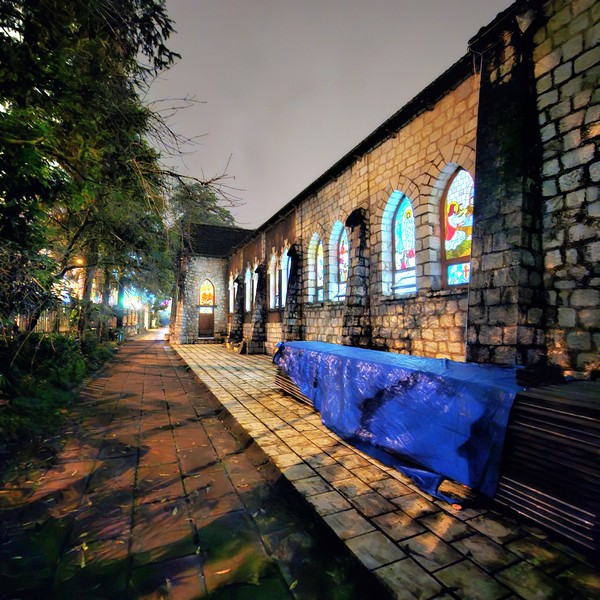
The left side of the church

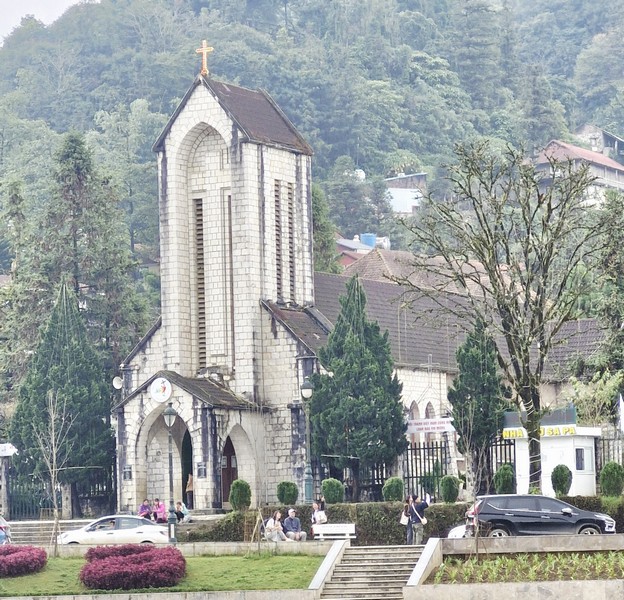
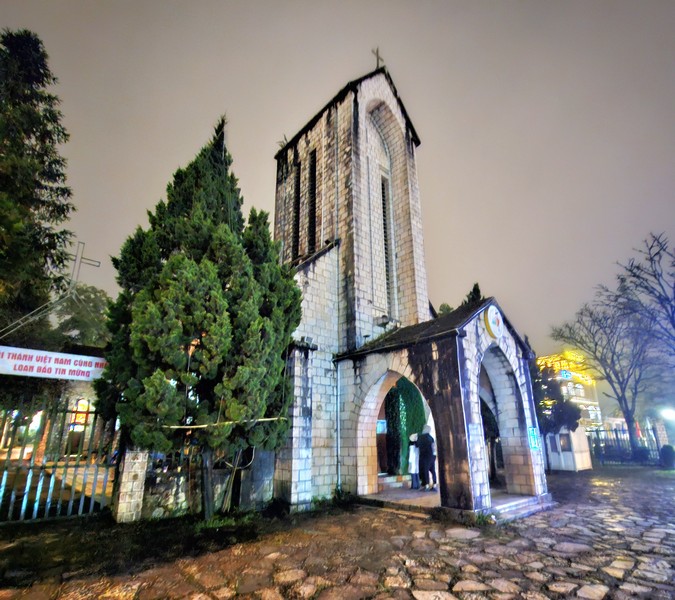
This impressive church, also called the Sapa Stone Church, is the main religious activity point of parishioners in Sapa.  Designed by a French architect, it is one of three significant buildings in Sapa that remain intact from the period of French rule (the other two are what are now Hoang Lien Hotel and the main Sapa Tourism Information Centre) and is also one of the few remaining works to this day that still retains the original Roman Gothic architectural style which is boldly reflected in the pyramidal roof, bell tower, arches, and windows.

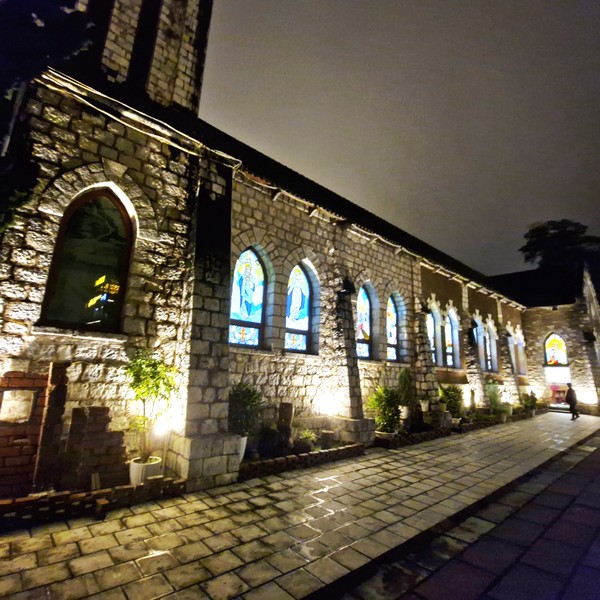
The right side of the church

It was built with monolithic, roughly hewn sandstone blocks linked by a mortar of sand, lime and molasses and is the only remained structure in Sapa which still preserves the soul and beauty of Catholic architecture. At night, vibrant LED lights cover the church.

Historical plaque

With a total area of ​​6,400 square meters, it is divided into 7 compartments (the church area, the angel house, a row of parish cottages, the parish house, the holy garden, etc.) each of 500 square meters. The angel house consists of three floors and one basement while the five-section parish house is equal to the church site. The holy garden has 5 (four of which grow on rocks) big trees which are more than one hundred years old.

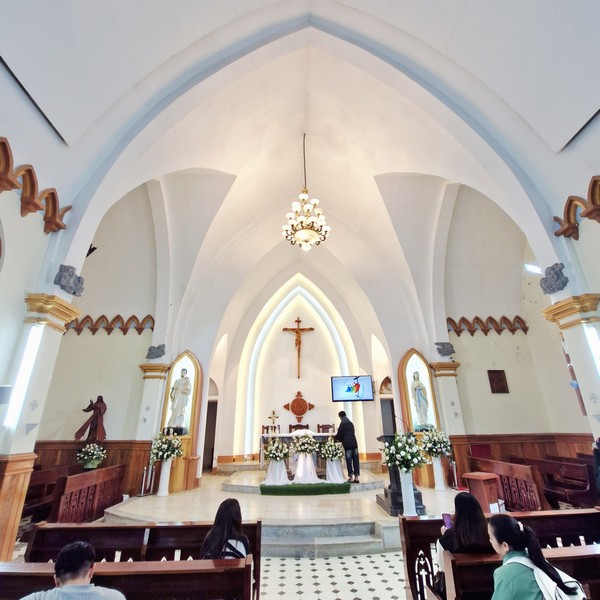
The main altar

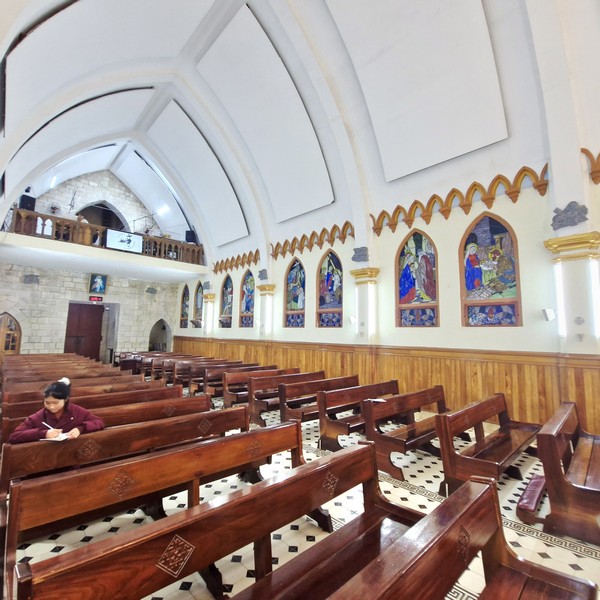
The church features 32 colorful stained-glass windows, depicting the Mysteries of the Holy Rosary, the Saints and the journey to the Cross, and an elegant, cross-shaped, 20-meter high and more than 80-year old bell tower, facing towards the west (Christ‘s birthplace), with and a 1.5-meter high bell weighing 500kgs..

View towards the choir loft

The white-painted interior, with a striking use of white, yellow and brown tones from the varnished wood, features a ceiling made of a combination of iron, straw and lime.

Daytime view of the church

Church of Our Lady of the Rosary: P. Hàm Rồng, TT. Sa Pa, Sa Pa, Lào Cai 333100, Vietnam. Open daily, 6 AM to 8:30 PM. Admission is free.

How to Get There: from Tran Quy Cap station in Hanoi, tourists can take the train for the 8-hour trip to get to Lao Cai province. Choose the train with departures at 8-10 PM to get to Lao Cai Province at around 5-6 AM the next morning. From Lao Cai Train Station, take a bus or a taxi to Sapa. Tourists can also get to Sapa Stone Church via motorbike, private car or sleeper buses, which usually leave at 7 AM or 9 PM, for the 6-hour journey to the center of Sapa without any transshipment. The church is located approximately 1 kilometer from the town center.
Sapa Square (Sapa, Vietnam)

Our visit to the north of Vietnam was never complete without a visit to the cool highland town of Sapa.  From Hanoi, the capital city, it was a six-hour drive, via coach, to this highland destination and it was already evening when we arrived. We still had time to tour Sapa Square (Quang Truong Square), also called Love Square.  As it was evening, the weather outside was chilly.

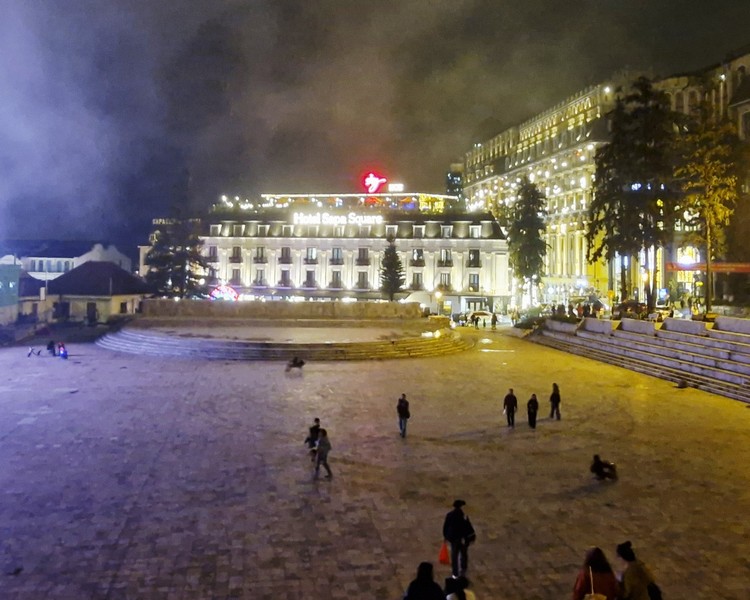
Sapa Square with Hotel Sapa Square in the background

Too bad we arrived on a Thursday as we missed the Sapa Love Market, a cultural event and traditional gathering, held every Saturday night, from 6:00 PM to 7:30 PM, where young men and women from the geographically dispersed H’Mong and Dao meet, socialize, and find potential partners or lovers through music and dance to show their love and affection. 

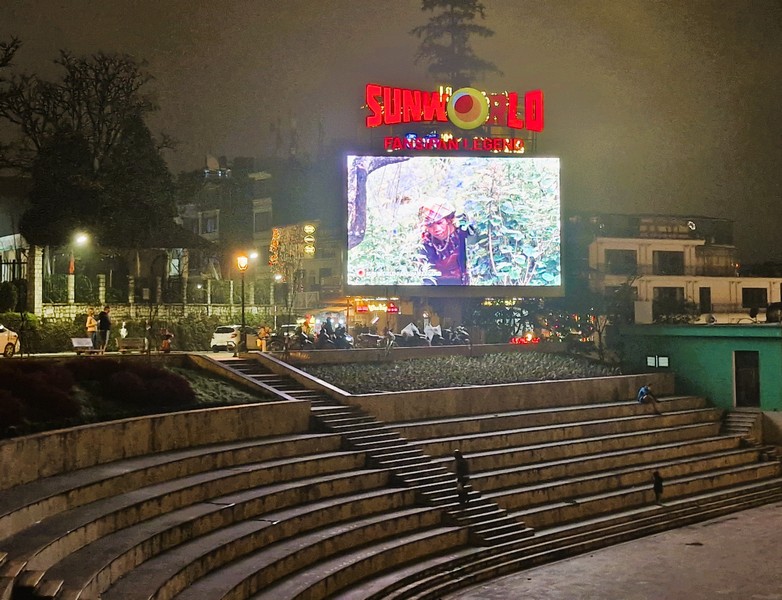
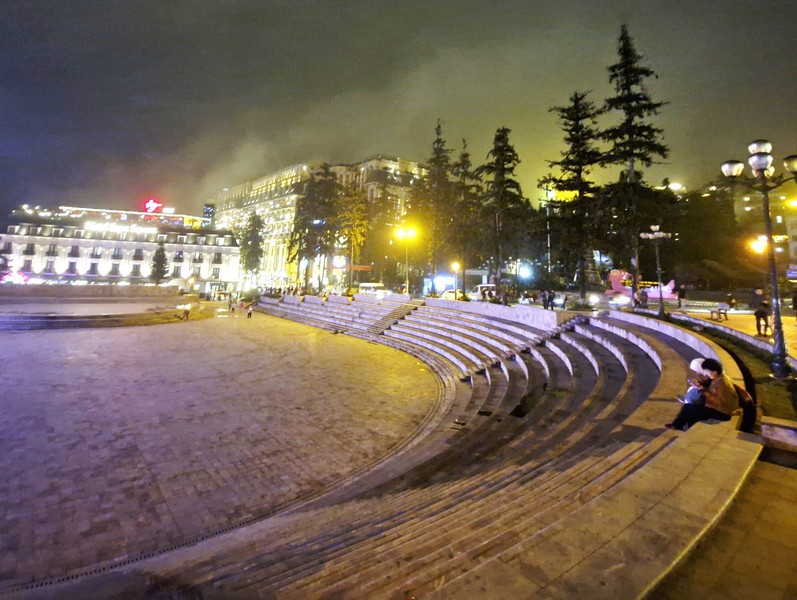
The sunken square’s perimeter, reminiscent of the Sunken Garden of the University of the Philippines Diliman, features distinct, concrete tiered seating area akin to that of a classic amphitheater (and similar to the rice terraces surrounding the town) which is perfect for watching events.  Even in the evening, it was well illuminated, creating a charming spot for locals and tourists alike.

The square reflects Sapa’s French colonial past.  In front of the square is the impressive Church of the Holy Rosary, also called the Sapa Stone Church, designed by a French architect and one of three significant buildings in Sapa that remain intact from the period of French rule (the other two are what are now Hoang Lien Hotel and the main Sapa Tourism Information Centre). 

It is also one of the few remaining works to this day that still retains the original Roman Gothic architectural style which is boldly reflected in the pyramidal roof, bell tower, arches, and windows.

Check out “Church of the Holy Rosary” and “Sun Plaza Sapa

Church of the Holy Rosary

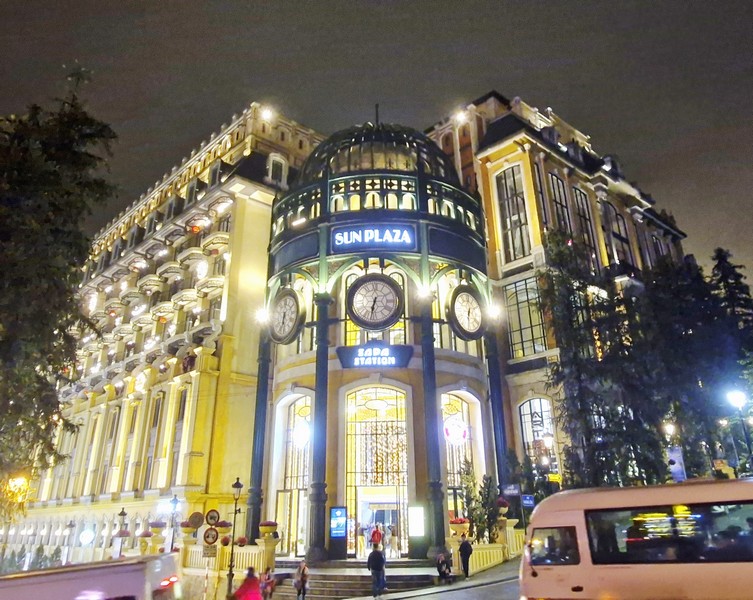
Also around the square are the distinctive Sun Plaza Building (a stunning backdrop often used for photos), Sapa Convention Center and Hotel Sapa Square, all modern buildings built in the charming French Colonial style.  The square also serves as a general gathering place for locals and tourists, with activities like sports, concerts and performances. The Lantern Festival is also held there.

Sun Plaza Building

Sapa Square: D. Thach Son,Sapa, Lao Cai 31786 Vietnam.

Hoan Kiem Lake (Hanoi, Vietnam)

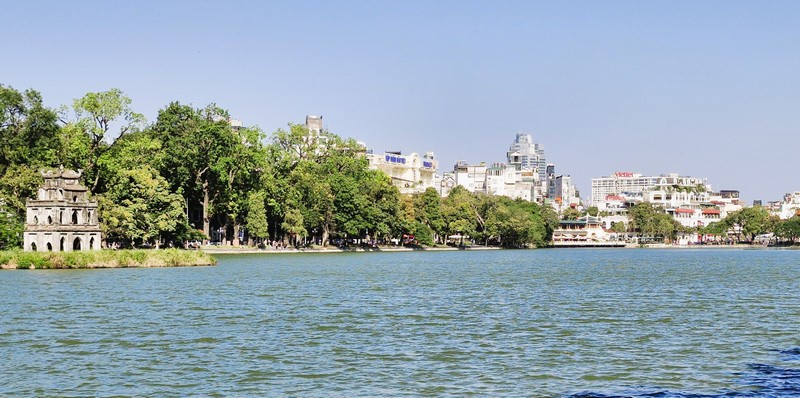
Hoan Kiem Lake

From Hanoi Train Street, a short 2-km. (10-min.) drive brought us to the 11.551-hectare (1,243,350 sq. ft.) Hoàn Kiếm Lake (Vietnamese: Hồ Hoàn Kiếm), a fresh water lake in the heart of Hanoi that is a popular cultural and historical landmark for both locals and tourists.  In the past, the lake was variously named as “Lục Thủy Lake” (Vietnamese: Hồ Lục Thủy, meaning “Green Water Lake,” aptly named for the water’s color), “Thủy Quân Lake” (Vietnamese: Hồ Thủy Quân, meaning “Mariner’s Lake”), Chữ Hán (meaning “Lake of the Returned Sword” or “Lake of the Restored Sword”), Sword Lake (Hồ Gươm) or Tả Vọng Lake (Hồ Tả Vọng, its first name). 

Check out “Hanoi Train Street”

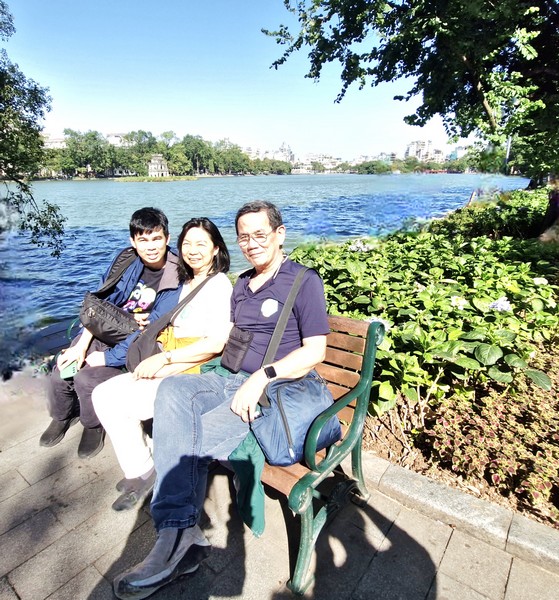
L-R: Grace, Jandy and the author

The area, one of the major scenic spots in the city and a focal point for its public life, is a powerful symbol of Vietnamese independence and resilience. Connected to the city’s Old Quarter, it is surrounded by several major streets (including Dinh Tien Hoang, Le Thai To, and Hang Khay), walking paths, flower gardens and age-old trees, making it an ideal place for a morning jog, a leisurely stroll, Tai Chi sessions, or simply unwinding while enjoying the scenic view, reflecting the harmonious balance between urban life and nature.  In 1891, the French built a road around Hoan Kiem Lake and, on New Year’s Eve 1893, it was officially inaugurated.

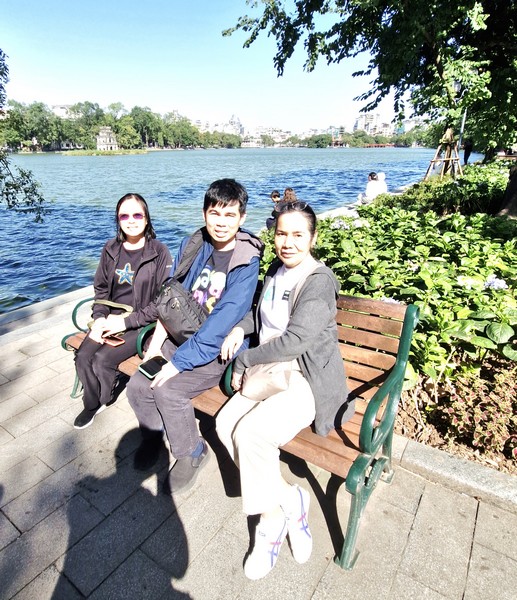
L-R: Lorraine, Jandy and Lourdes

During weekends, the area around the lake becomes a pedestrian-only zone, coming alive with street performances, cultural showcases, and local delicacies, offering a vibrant energy and experience for travelers.  It has a maximum length of 700 m. (2,300 ft.), a maximum width of 250 m. (820 ft.), an average depth of 1.2 m. (3.9 ft.) and a maximum depth of 2 m. (6.6 ft.).

The lake’s name comes from a legend which is deeply intertwined with Vietnam’s history and folklore.

During the 15th-century, Emperor Lê Lợi, while boating on the lake, was given Heaven’s Will, a magical sword, by the Dragon King (Long Vương) , a local god,  to defeat the Ming Dynasty of China. After his victory, the Golden Turtle God (Kim Qui) surfaced to reclaim the sword and return it to its divine realm, and the king renamed the lake to commemorate the event. 

Turtle Tower (Tháp Rùa)

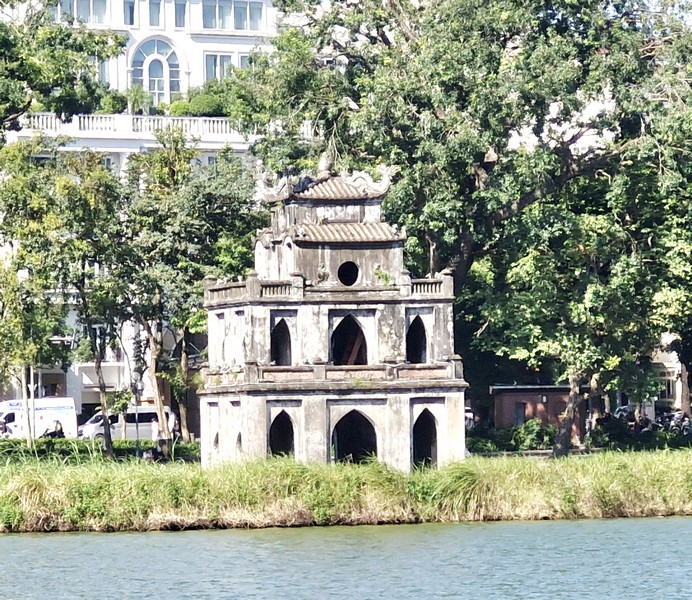
The iconic Turtle Tower (Tháp Rùa), a small tower standing on a small island near the center of the lake, is linked to the legend. For many years, large soft-shell turtles (either the species Rafetus swinhoei or a separate species named Rafetus leloi in honor of the emperor), have been sighted in the lake but the last known individual was found dead on January 19, 2016. There are three remaining turtles of the species Rafetus swinhoei.

Jade Islet, near the northern shore of the lake, is home to the Temple of the Jade Mountain (Ngoc Son Temple).  Built in the early 19th century, the temple, originally dedicated to “Three Sages” Wenchang DijunGuan Yu and Lü Dongbin, also honors Trần Hưng Đạo, a 13th-century military leader  and national hero who distinguished himself in defeating the Mongol invasions of Vietnam thrice; the classic scholar Văn Xương; Taoist master La To and Nguyễn Văn Siêu, a famous writer and official who undertook repairs of the temple in 1864.

Its architecture is a blend of traditional Vietnamese styles, with intricate wooden carvings, red-lacquered pillars, and delicate dragon motifs, while inside, visitors can observe ancient artifacts, calligraphy, and a preserved specimen of the sacred turtle believed to be linked to the legend of the lake.  Buildings of the temple, all with symbolic meaning, include the Tháp Bút (“The Pen Tower,” it is inscribed with the words “Ta Thanh Thien,” which means “Writing on the Blue Sky”, symbolizing the importance of literature and education in Vietnamese culture), the Đài Nghiên (ink-slab), the Đắc Nguyệt (“moon contemplation pavilion”) and the Đình Trấn Ba (pavilion against waves). 

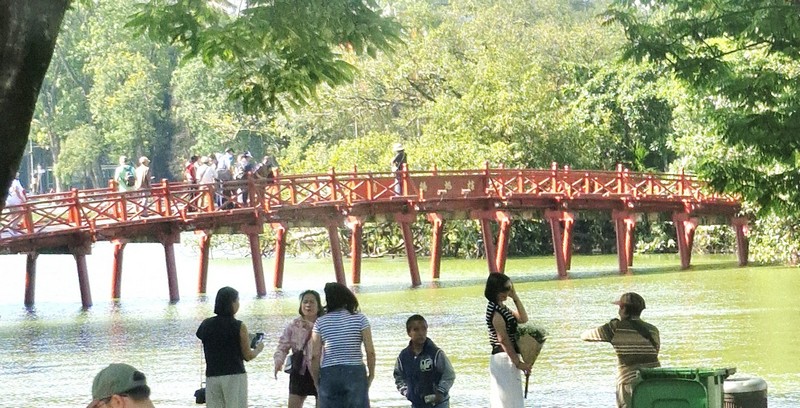
Jade Island is accessed, from the shore, by the wooden Thê Húc Bridge (Cầu Thê Húc).  Painted vermillion red, the bridge’s name is poetically translated as “Perch of the Morning Sunlight.” One of the most photographed spots in Hanoi, it stands out against the emerald-green waters of Hoan Kiem Lake.

Thê Húc Bridge

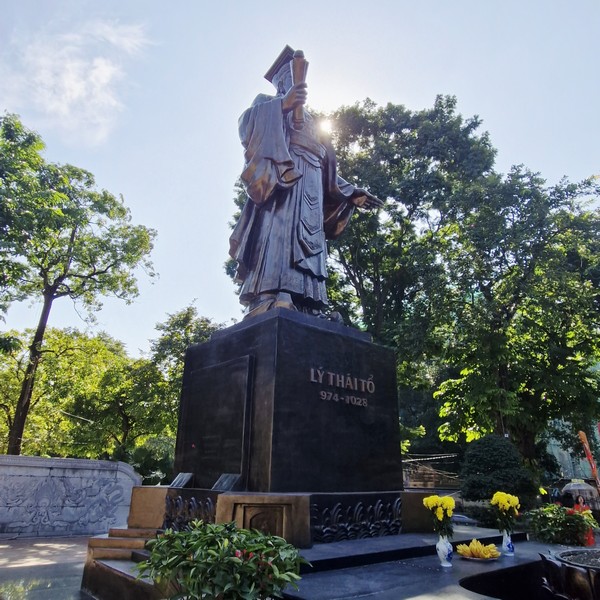
On the western bank of Hoan Kiem Lake, along Le Thai To Street, is the “Ly Thai To Monument” with its statue honoring King Ly Thai To (974–1028), the first emperor of the Ly dynasty, who reigned from 1009 to 1028 AD.  He is best known for moving the capital to Hanoi (then called Thang Long), in 1010 AD, and for leading the resistance against the Ming army in the 15th century.

Ly Thai To Monument

Hoan Kiem Lake: Hàng Khay Street, Hoan Kiem District, Hanoi, Vietnam. Coordinates: 21°01′44″N 105°51′09″E.

How to Get There: The lake is conveniently located near the Old Quarter and is easily accessible. 

Hanoi Train Street (Vietnam)

Hanoi Train Street

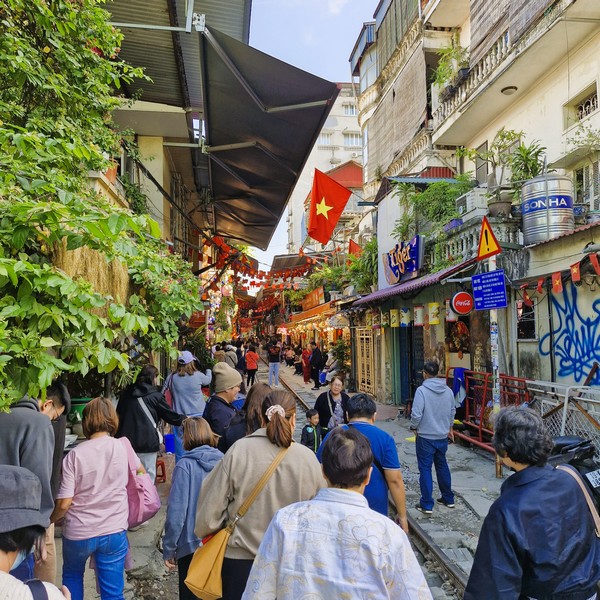
Upon our arrival in Hanoi’s Noi Bai International Airport, we met up with our Vietnamese guide from Hava Travel and boarded our coach for our city tour.  Our first destination was Hanoi Train Street, a 25.2-km. (45-min.) drive away.  This captivating blend of old-world charm and vibrant modern life winds its way through several bustling streets, including Phung Hung, Dien Bien Phu, and Le Duan. Here, we were to experience something unique many visitors enjoy – the thrill and excitement of sipping coffee while watching trains pass just inches away.

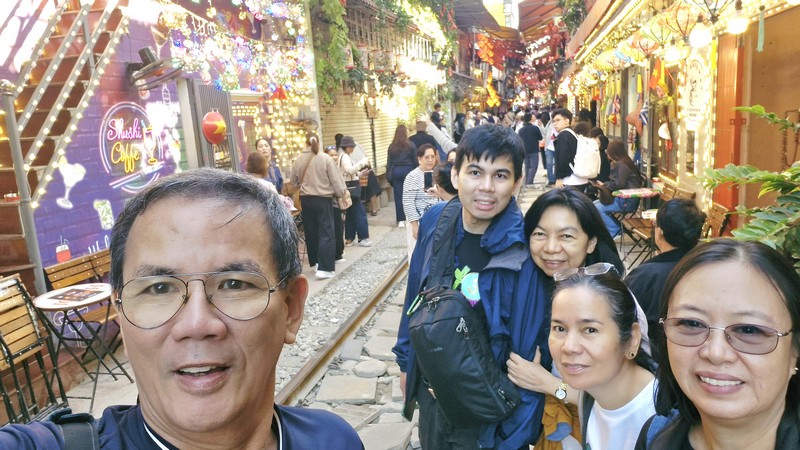
L-R: the author, Jandy, Grace, Lourdes and Lorraine

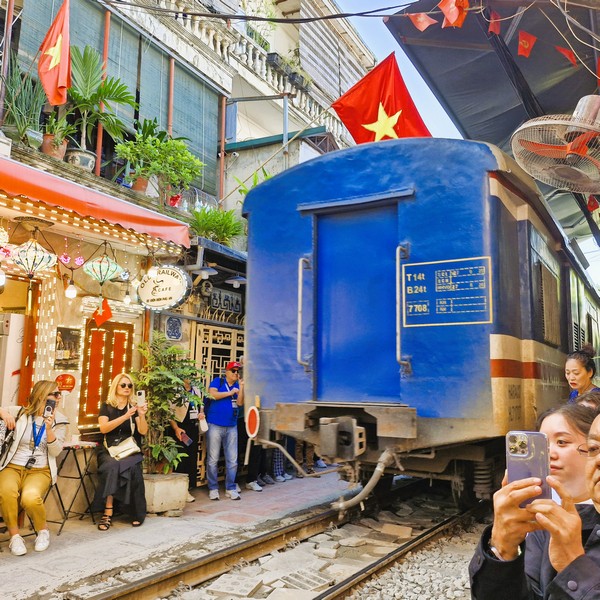
This narrow train bypass in Hanoi was built in 1902, during the French colonial era, when the French established the railway system to connect Hanoi with other parts of Vietnam.  As of 2025, it is still an active rail line.  It sees, several times daily, a train pass close to buildings on either side of the single train track line.  It runs north from south, to Hanoi railway station whose width takes up nearly the entirety of the famous Hanoi Train Street which refers to the narrow railway tracks running through residential neighborhoods, along Tran Phu and Phung Hung streets, in the Old Quarter.

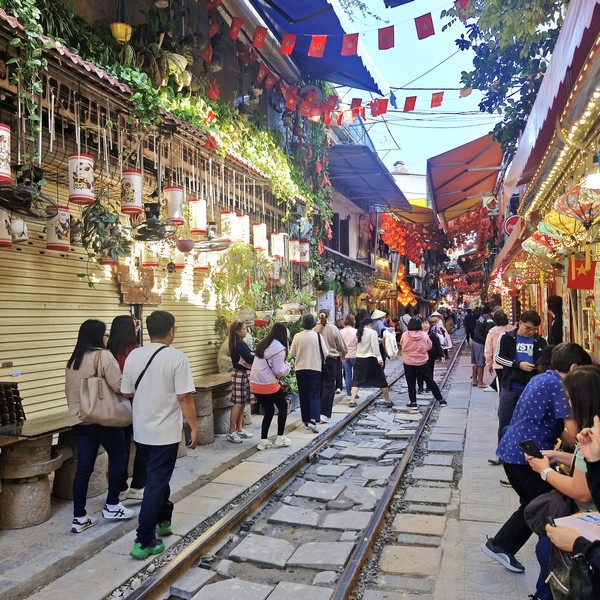
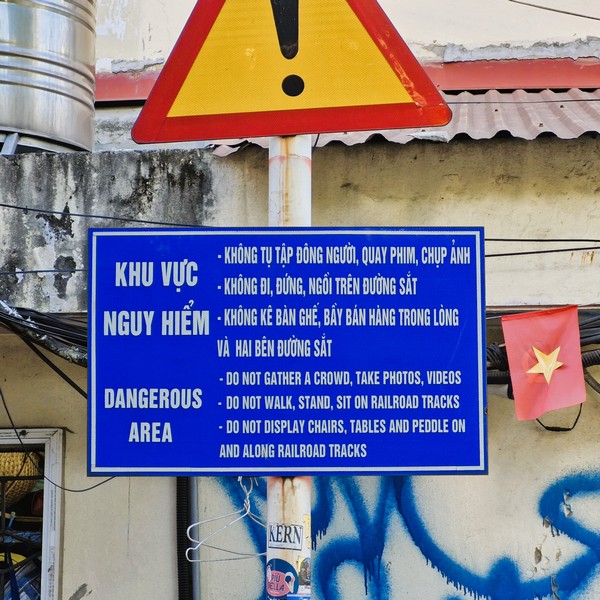
When trains approach, local residents living alongside the tracks clear their belongings from the narrow space. During other times, they often use the space for daily activities like drinking tea and playing board games. The street developed into a tourist destination and, along the narrow alley, tourists would often stop and take pictures to post on social media. In recent years, safety concerns have increased as tourism has grown.

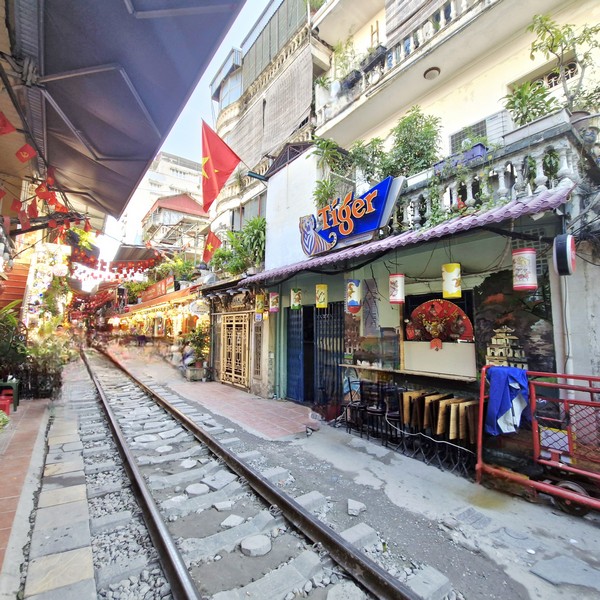
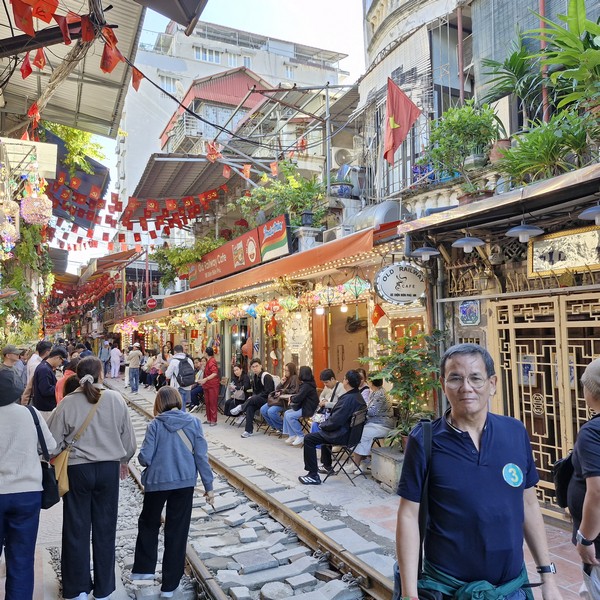
One of the cozy cafes lining the tracks

The street attracted widespread recognition and, eventually, became a tourist attraction. In October 2019, citing safety concerns, Vietnamese government directed businesses along the train track to close and implemented barriers and police presence to restrict tourist access to the street. This prompted thousands of complaints on social media and negatively affected local tourist businesses. In early 2023, the train street has reopened for tourists. 

Since it became popular with world tourists, Hanoi Train Street has seen a growth in local businesses and, as the number of visitors increased, many residents around the area turned their colorful homes into small, cozy cafes (Cafe Đường Tàu, Cafe Ga Đông Hương, etc.) and small businesses selling drinks, food and a range of traditional handmade local handicrafts (railway paintings, conical hats, embroidered wallets, ceramic teapots, etc.). Along the streets near the railway, numerous souvenir shops also line both sides of the road.

A reminder of the dangers on the track…..

Upon arrival, we approached the train tracks crossing Dien Bien Phu Street and the crowds were beginning to gather.  As we walked along Train Street, we caught the rich aroma of coffee and the enticing scents of traditional beef pho and fragrant grilled meat from roadside stalls.

We all sat down at outdoor seating areas closer to the wall at one of the local cafes, its façade adorned with colorful hanging lanterns and flags.  Along the alley are vibrant murals, in bright, vivid colors, that beautifully depict scenes from the past, such as Hanoi trams (which ran from 1901 to 1991), bustling streets, street vendors, festivals, and old houses that capture the everyday life of Hanoians.

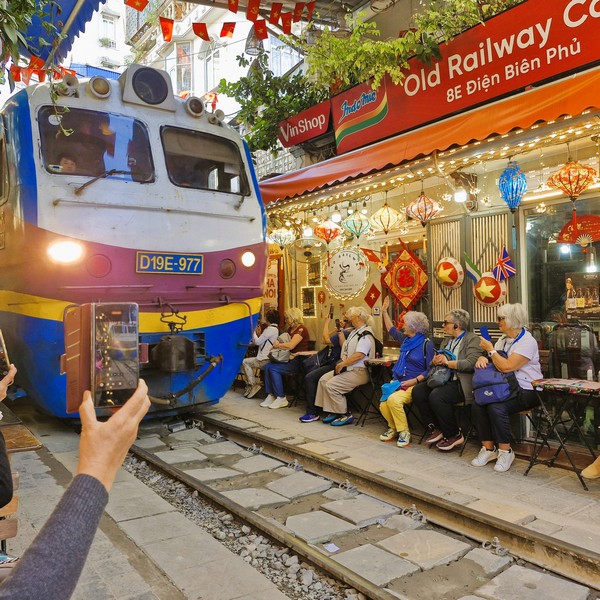
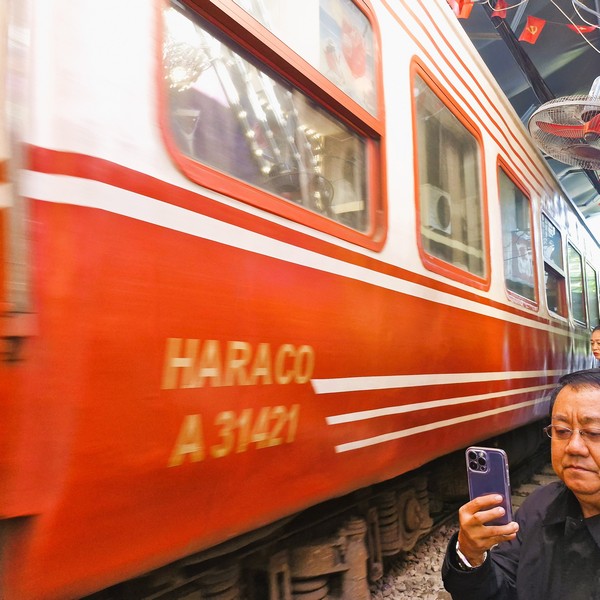
The train arrives….

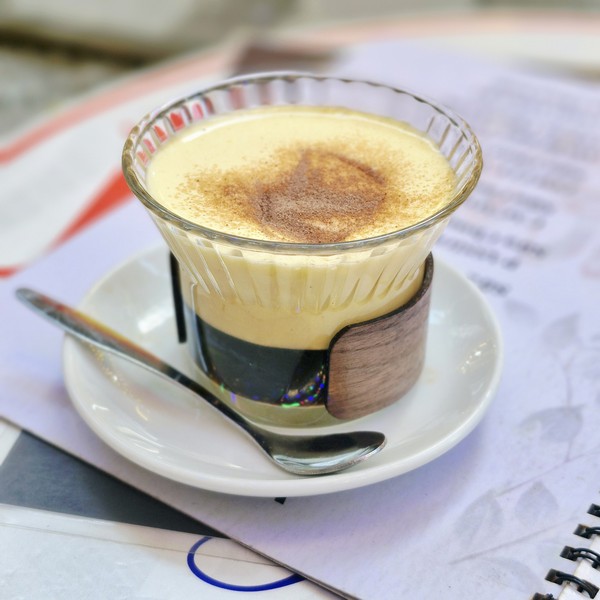
While waiting for the train to arrive, we ordered aromatic and creamy egg coffee (Cà Phê Trứng), a rich, creamy and decadent Vietnamese drink featuring a sweet, airy foam of whisked egg yolk, sugar, and condensed milk and served atop strong, dark coffee, often brewed with a traditional phin filter. Prices typically range from 25,000 to 60,000 VND (USD 1 – USD 3).

While sipping our strong Vietnamese coffee from our front-row seat, street vendors, residents, and children were playing near the tracks. Soon, we heard the blaring of the train horn and the locals quickly pulled in tables and chairs just in time as, seconds later, a train barreled past us.

Egg Coffee

It was an exhilarating experience, as the rumbling train sped by, just inches away from us.  Watching the train race through Hanoi Train Street was a thrilling spectacle.  Truly, Hanoi Train Street was a place where the soul of Hanoi thrives, framed by the hum of trains and the warmth of local life.

Hanoi Train Street: P. Trần Phú, Hàng Bông, Hoàn Kiếm, Hà Nội 100000, Vietnam. Usually, there are over 7 trains passing by, from 7AM to 11PM. There is no entrance fee to visit Hanoi Train Street. Popular viewing times are around 3 to 3:30 PM and 7 to 7:30 PM. Local cafes, on both sides, indicate the train timetable. You could also request train passing by time from cafe in advance.  The stretch through Phung Hung Street is, undoubtedly, the most vibrant, drawing visitors with its lively atmosphere and the thrilling spectacle. You can also watch along the alley of 224 Lê Duẩn street, specifically, along Điện Biên Phủ and Phùng Hưng streets, Alley 5 on Tran Phu Street and the main Hanoi Railway Station.