Moana Cafe (Sapa, Vietnam)

Moana Cafe

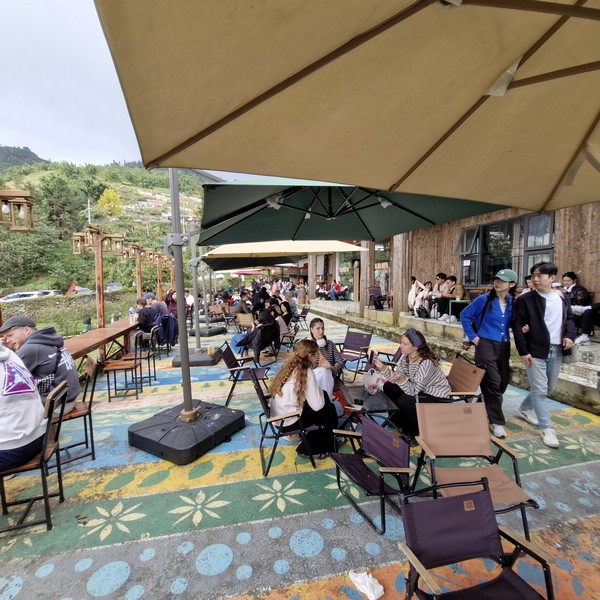
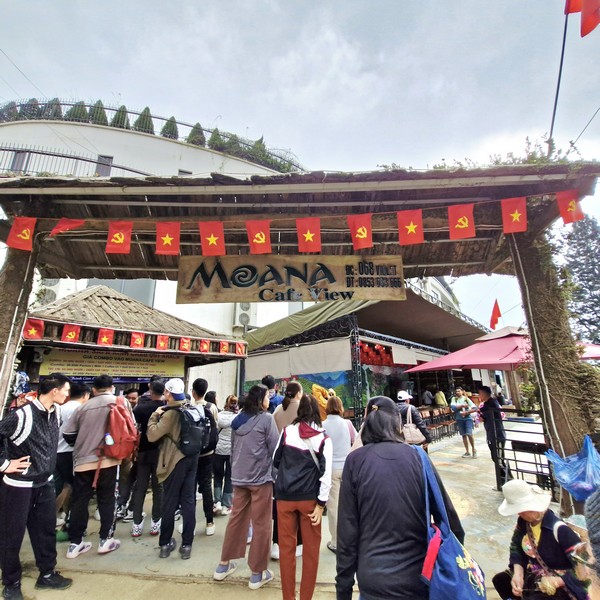
After our visit to the Fansipan Peak and prior to our departure for Viet Tri (where we were to stay overnight at the Tru by Hilton Viet Tri City Centre), we dropped by the popular, internet-famous 10,000 sq. m. Moana Café, a coffee shop (offering Vietnamese drip coffee, fruit smoothies and simple snacks) and themed photo zone in Sapa perched on a gentle hillside, for a cup of coffee, at the open-air terrace or shaded pavilions, and some sightseeing. 
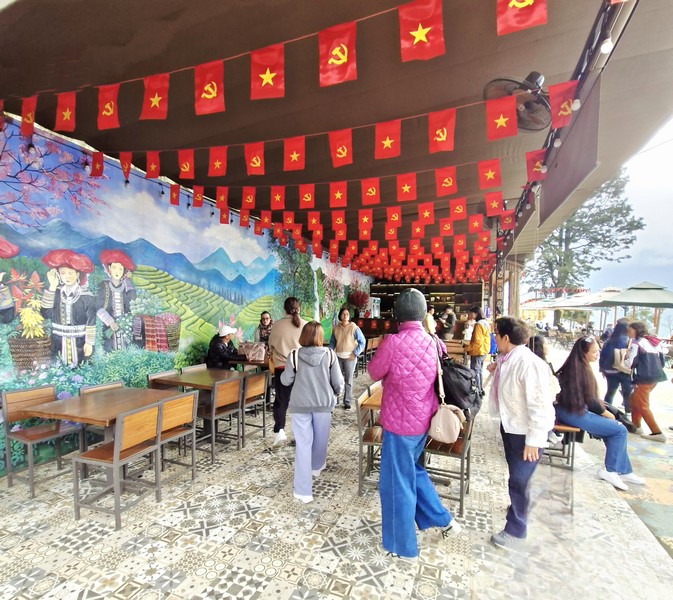
Open-air terraces

Known for its scenic and panoramic views, on clear days, it has numerous “Instagrammable” themed photo spots, with the misty weather sometimes creating a dreamy, magical effect while taking unique pictures against a stunning natural backdrop. 
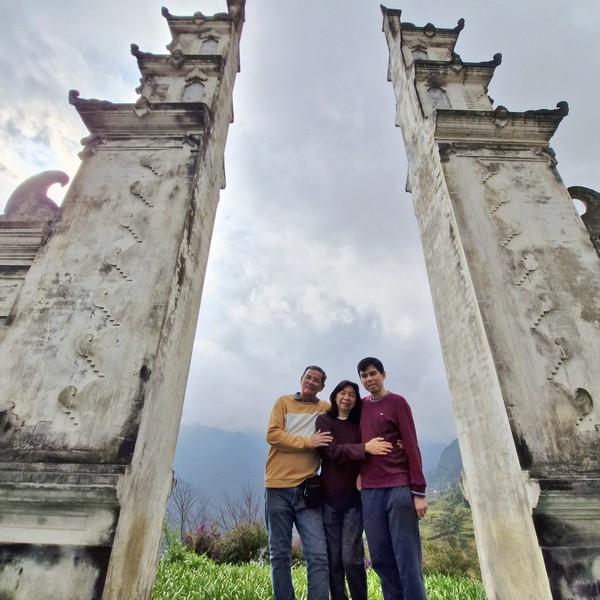
The author, with Grace and Jandy, at the Bali-inspired Heaven Gate
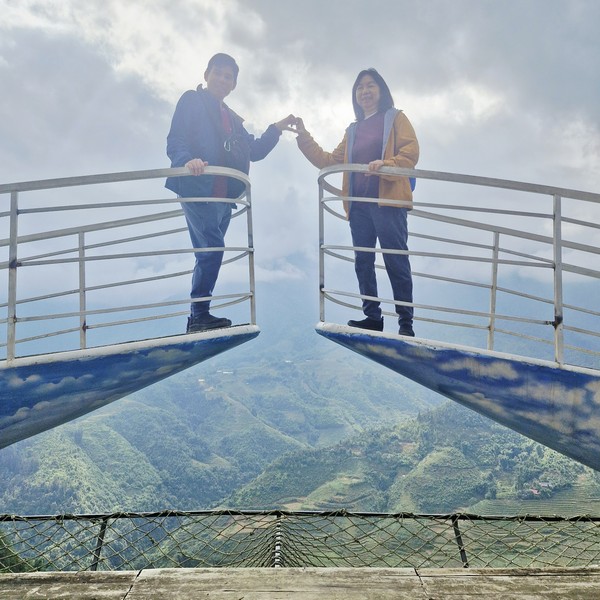
The author and Grace at Mini Phu Quoc Proposal Bridge

This curated outdoor experience is a combination of nature, art-inspired installations, and creative photo opportunities.  The atmosphere inside can be described as a mix of art, nature, and a laid-back dining experience and its popularity can mean it gets crowded.  Every corner screams “come take a photo here.”
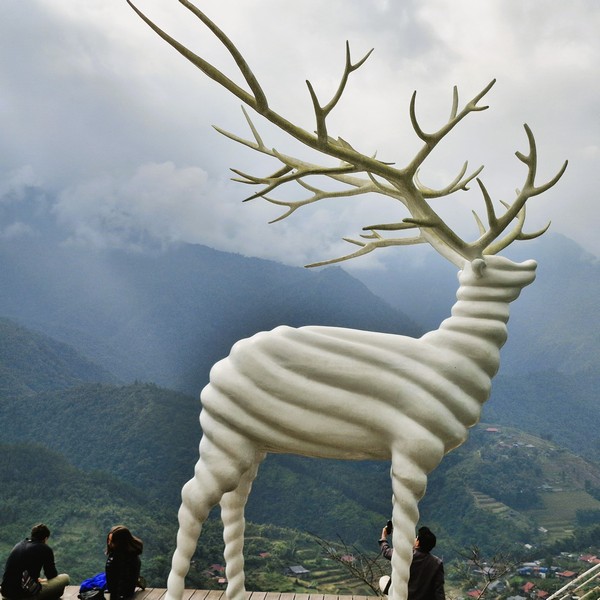
The iconic White Deer

The art-inspired sculptural installations and fantasy-inspired backdrops include the following:

  • The iconic White Deer
  • Giant blue Angel Wings
  • A pair of black and white Mandarin Duck statues – facing each other, their gracefully curved necks form a striking heart shape.
  • The Mini Phu Quoc Proposal Bridge – split into two sections, it is joined only by the touch of love, friendship and connection
  • A Bali-inspired gate (Bali Heaven Gate) – captures the essence of Bali’s charm in the heart of Vietnam
  • The 6 m. high, maasive and stylized Moana Girl – statue of a young Moana (Vaiana) with firmly closed eyelids, long flowing black hair and outstretch palms longing for the boundless blue sky. Its specifically constructed flooring is paved with transparent tiles, creating an illusion of a clear, mirror-like surface.
  • Infinity Lake – a virtual living spot, it has a white piano in the middle of the lake with clear waters that makes the lake’s surface lookslike a giant mirror reflecting the blue sky and white clouds.
  • A giant golden hand statue – provides ample space for visitors to stand on its palm.
  • The Moana Death Swing (Xich du tu than)– a psychological challenge for those with fear of heights.
  • Moana Sapa Flower Glass Box – nestled within the captivating Sapa-Moana film studio, this mesmerizing and ethereal attraction has an abundance of exquisite pink flowers adorning every corner.  Designed with lovers of the Muse Style in mind, it provides a perfect setting to showcase flowing dresses, cascading locks and gaze filled with dreams.
  • Rose Glass Cage – located to the left of the Moana Girl statue, it is a glass enclosure decorated with rose vines and a small chair.
  • The Giant Love Symbol – a huge 3 m. tall “Love” sign, in soft pastel pink, right on the road to the film studio and set on a platform decorated with charming stilt houses, terraced fields and mountains.
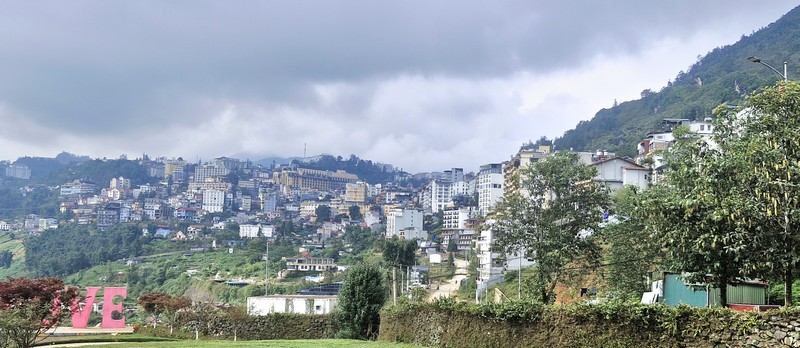
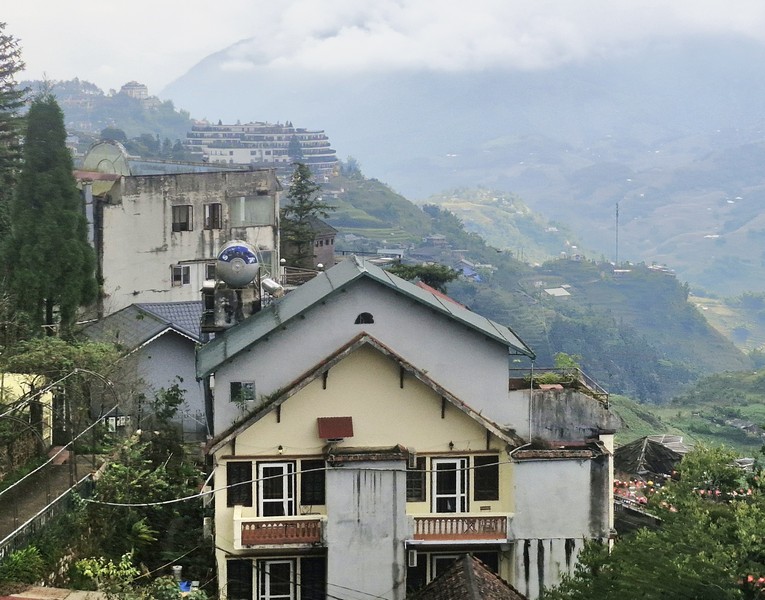
View of Sapa town from Moana Cafe

For clearer photos, consider visiting in the early morning or later in the afternoon. While the mist can be magical, clear weather will give you better views of of the Muong Hoa Valley and Fansipan Mountain.  They offer professional photography and rental of traditional Hmong and other Northern Highlands clothing.
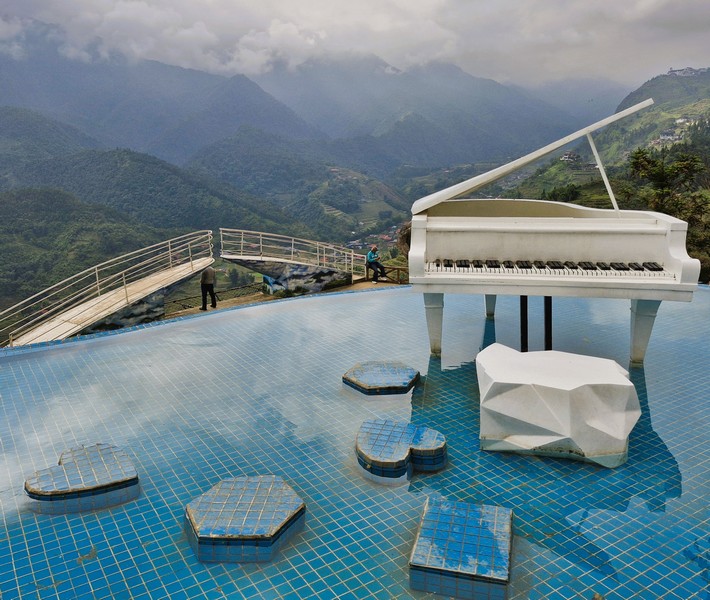
The white piano on Infinity Lake

The place wasn’t cloaked in dense fog during our visit but the line to get a picture with any of this art installations was long and many were taking their time as they took over the space. A clever mix of playful architecture and scenic drama, it wasn’t luxury dining but about the view and the atmosphere.  It was not a deeply cultural experience, in the traditional sense, but rather a play of both fantasy and the majestic reality of the Northern Highlands.
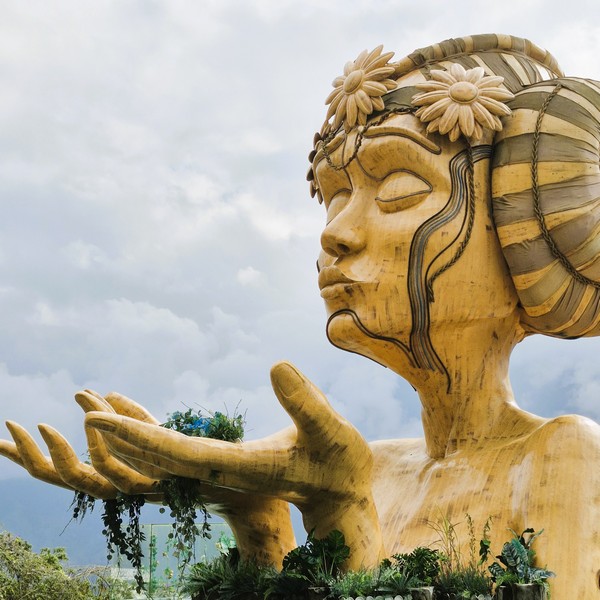
Moana Girl

Moana Café: số 68 Violet, Phường Cầu Mây, Sa Pa, Lào Cai 330000, Vietnam.Tel:+84 853 693 666. Admission: 90,000 Vietnamese dong (includes a drink voucher which you can exchange for a complimentary tea, coffee or soft drink). Open daily, 6:30 AM to 7 PM.

How to Get There: the café is located about 2 kms. from the town center, and can be reached by taxi or motorbike. 
Sun World Fansipan Legend – The Summit (Sapa, Vietnam)

Mount Fansipan summit

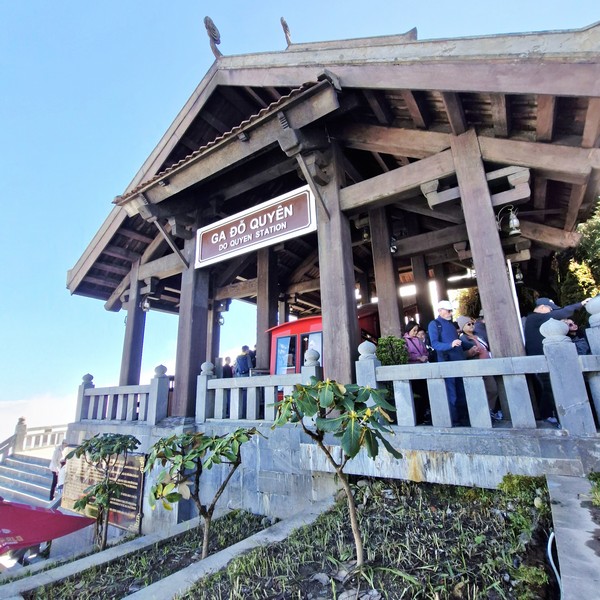
Upon arrival at the Fansipan Cable Car Station, there’s still a little more to go to get to the summit of Mount Fansipan.  We had two options – walking up the remaining 600 steps or, from the Fansipan Cable Car Station, we can walk, for about 10 mins., up a wide stone stairway to reach the Do Quyen Funicular Station and take the 2-min. funicular ride to the Truc May Funicular Station, which will bring us very close to the summit, a good option if you’re tired, short on time, or traveling with kids or elderly family members. We chose the latter.

Check out “Fansipan Legend Cable Car

Do Quyen Punicular Station

Mount Fansipan, the “Roof of Indochina,” is Vietnam’s and the Indochinese Peninsula’s (comprising Vietnam, Laos, and Cambodia) highest peak.  Nestled amid the at the gorgeous part of Hoàng Liên National Park, in Lào Cai province, Northwestern Vietnam, this spectacular mountain, well-known for its lively environment, which is home to unusual flora and wildlife found only in this enchanting region, is located only 9 kms. southwest of the lovely Sa Pa Town.

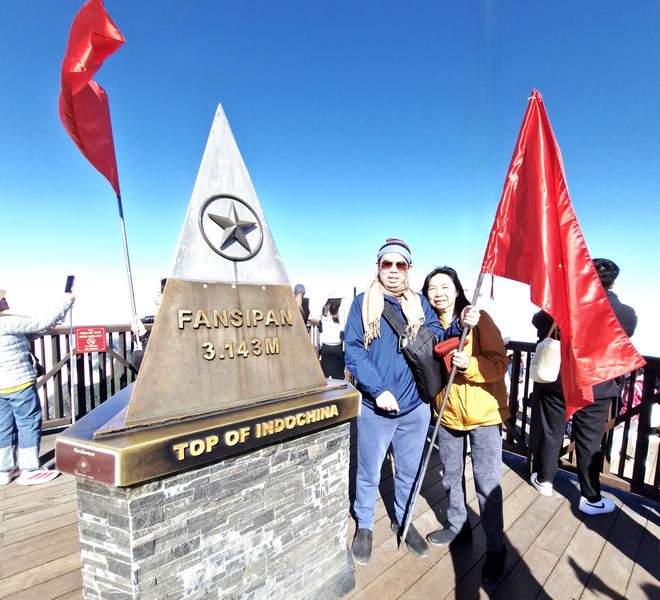
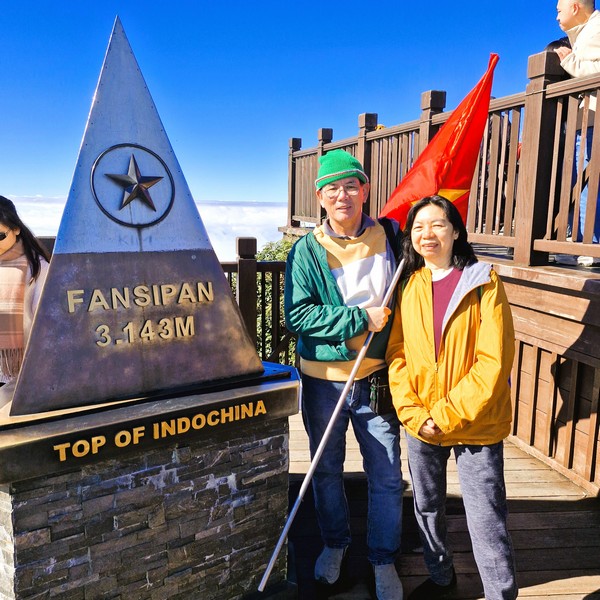
Jandy and Grace beside the Fansipan steel Pyramid

Its height was originally measured at 3,143 m. (10,312 ft.) but, in 1909, this value was later adjusted to 3,147.3 m. (10,326 ft.). Administratively, it is shared between Tam Đường District, Lai Châu and Sa Pa town.

The author (center) with Grace

The weather in Fansipan varies depending on the height – the higher you climb, the colder you feel.  At the top, the temperature ranges from 5°C (41°F) – 25°C (77°F) in the summer and from 0°C (32°F) – 9°C (48°F) in the winter. The humidity is high, from 66% – 95%, with 2 distinctive seasons – wet and dry season.

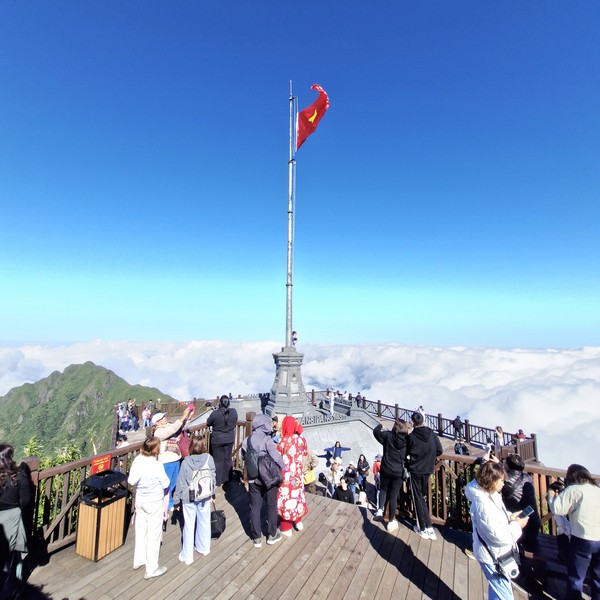
Fansipan Flagpole

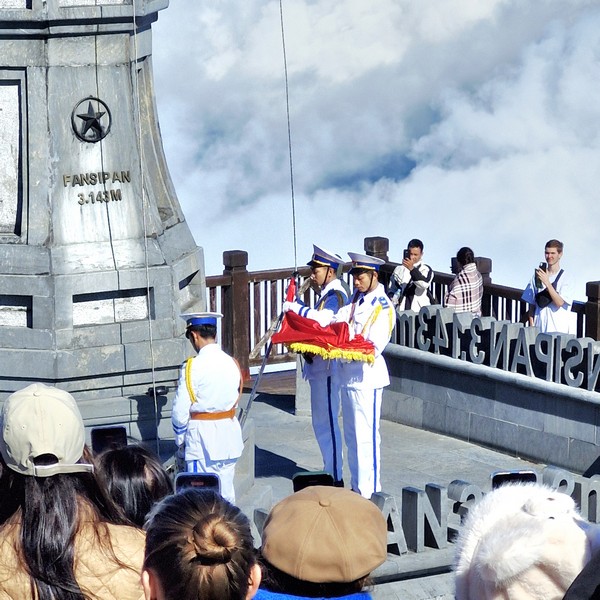
We arrived in time for the moving 10:30 AM flag-raising ceremony (held from Fridays to Sundays and on major national holidays) at the site of the 25 m. (approximately 82 ft.) high Fansipan Peak Flagpole. An iconic national symbol located at the summit of Mount Fansipan, it is the tallest flagstaff in the region and a major attraction for visitors. 
Getting ready to raise the flag

This national architectural masterpiece, considered a sacred symbol marking Vietnamese national sovereignty and pride, was crafted from sturdy Thanh Hoa blue stone and durable Tu Thiet wood which can withstand the extreme mountain weather conditions. The base of the flagpole features intricate carvings representing various key Vietnamese cultural landmarks and ethnic group traditions, including Cham Towers, stilt houses from the Northwest, and the landscapes of Halong Bay. 

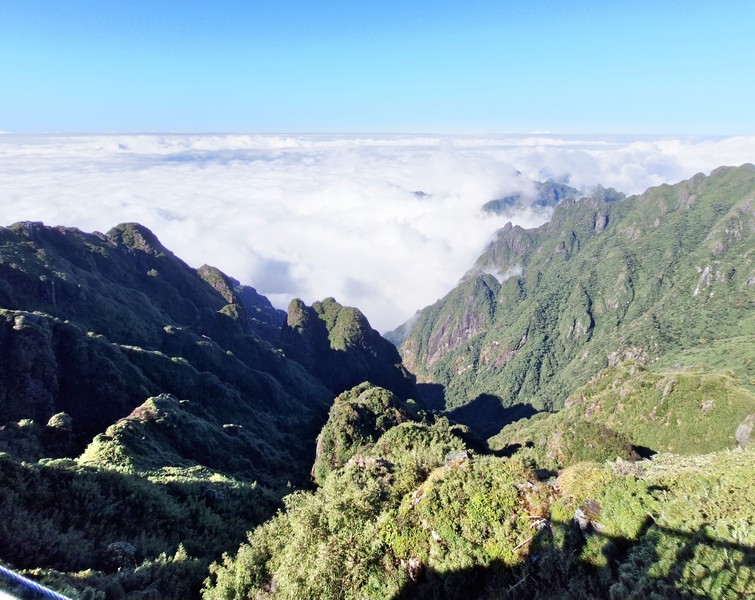
View from the summit

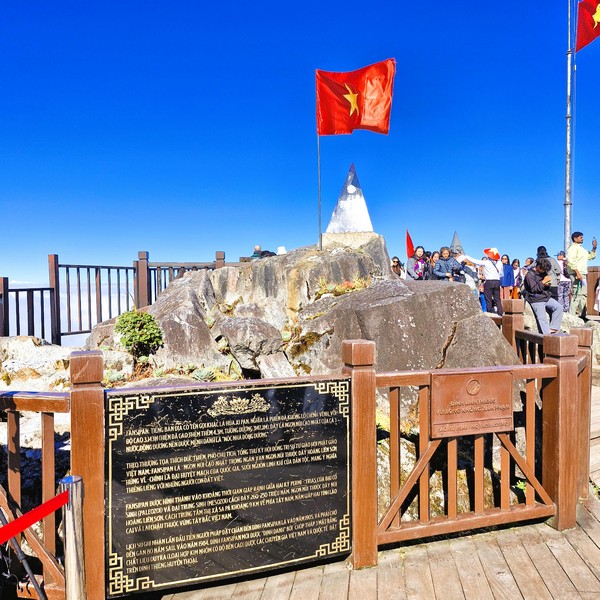
The summit is crowned with the iconic Fansipan Steel Pyramid, a triangular landmark.  A must-have photo for every traveler, this 20-kg. stainless steel pyramid monument, inscribed with “Fansipan 3143m,” is a popular spot for taking photos for tourists as it serves as a landmark to prove that one has reached the highest point in Vietnam and the former French Indochina region.

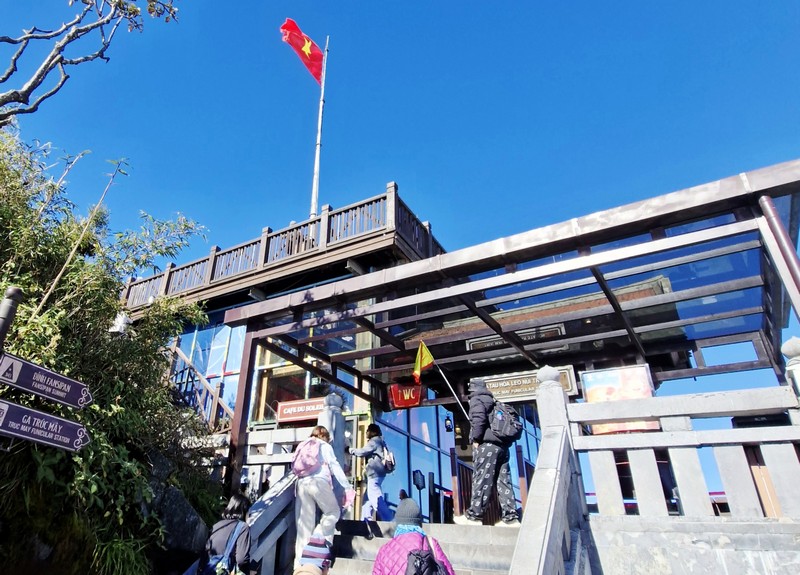
Cafe du Soleil

The initial metal pyramid was made and installed, on the mountain’s peak, by Soviet engineers from Hòa Bình province, in 1985. The amateur mountaineering expedition was the first since the end of the colonial period and was officially timed to the 40th anniversary of Victory Day of the Soviet Union over Nazi Germany. The current pyramid, installed, according to VCCI,  by a group of Vietnamese travelers in 2008.  It is a replacement for an earlier  original but damaged marble pyramid. 

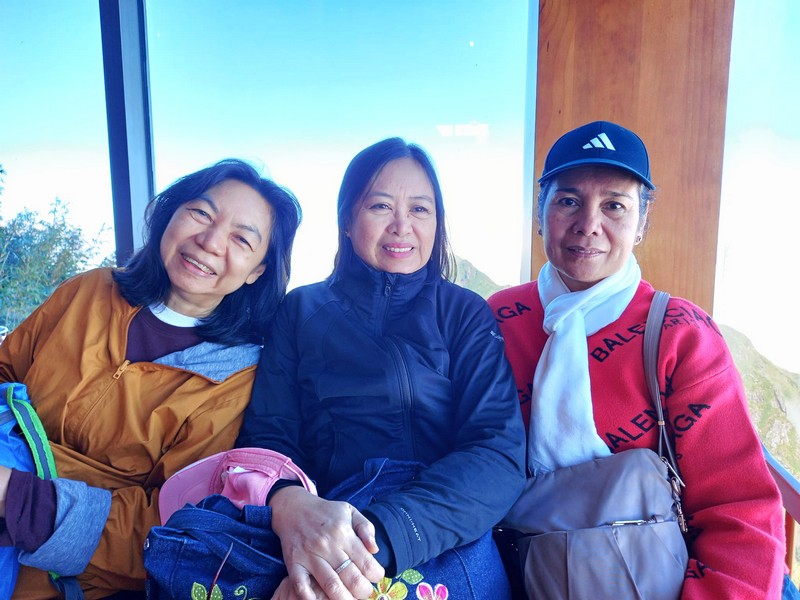
Grace, Lorraine and Lourdes at Cafe du Soleil

At the nearby Café du Soleil, you can enjoy a warm drink and views of the surrounding mountains and clouds.

Fansipan Peak: Coordinates: 22°18′12″N 103°46′30″E

How to Get There: By car, the 332-km. distance between Hanoi and Sapa take only 4 hours. Sleeper buses, suitable for budget travelers, has a longer transfer time than a car, about 5 hours. The convenient and easy trains, a popular choice as this vehicle allows passengers to enjoy the countryside’s scenery along the way, have the longest transfer time of 8 hours.

Sun World Fansipan Legend – Cultural/Spiritual Complex (Sapa, Vietnam)

For many Vietnamese, visiting Fansipan is more than a sightseeing trip, it is a form of modern pilgrimage. The temples of the Sun World Fansipan Legend spiritual complex are a remarkable network of religious structures built to honor Vietnam’s deep-rooted Buddhist traditions, heavily influenced by the Trúc Lâm Zen school of Vietnamese Buddhism, which promotes inner peace through harmony with nature.

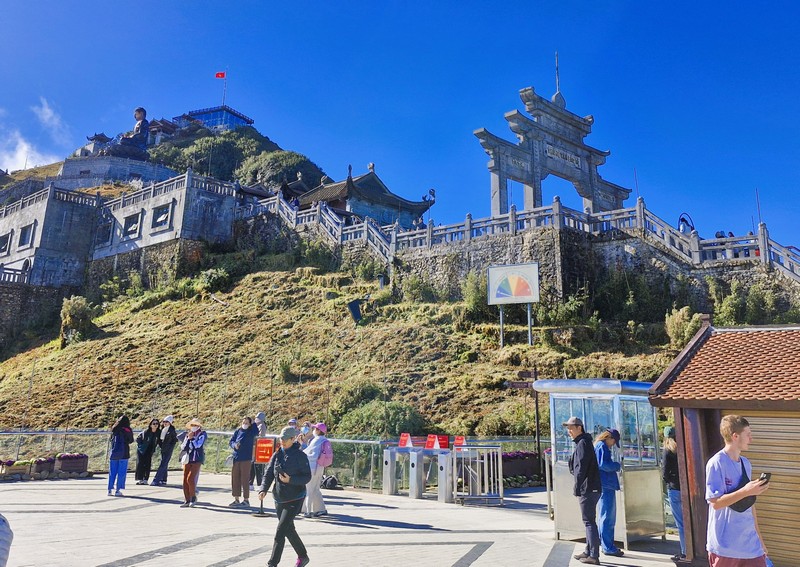
The Great Amitabha Buddha Statue on the upper left, and the Heavenly Gate Temple on the upper right

It has transformed Fansipan Mountain, from a rugged trekking destination, into a place of pilgrimage. Reflecting Vietnam’s historical reverence for the natural world as a dwelling place of divine energies, these temples were constructed in the 2010’s with a vision to preserve spiritual heritage while making it accessible to modern visitors via cable car.

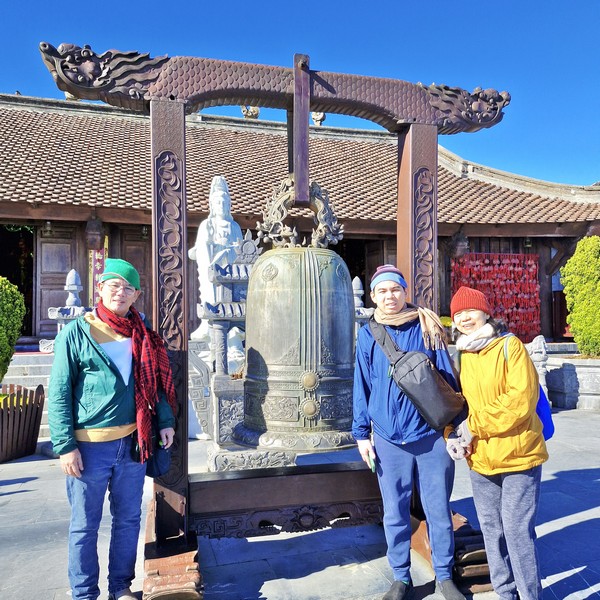
L-R: the author, Jandy and Grace beside a bell which was cast in the style of ancient Tran Dynasty bells. This rung at set times

Perched at over 3,000 m. above sea level, building these temples at such high altitudes required careful engineering and respect for the surrounding landscape, minimizing environmental impact while maximizing spiritual resonance. To ensure they reflect sacred geometry and the energy of the mountains, the temples were designed in consultation with Buddhist monks and Feng Shui experts.

Bao An Thien Tu (Trinh Pagoda)

The Fansipan spiritual journey starts at the tranquil Bao An Thien Tu (also known as Trinh Pagoda), located at the base of the Fansipan spiritual complex at an altitude of 1,604 m., near the Muong Hoa Station.  Built in traditional Vietnamese style, it offers a peaceful blend of traditional architecture and stunning mountain views.  The introductory Buddhist “presentation temple,” it serves as the first stop for pilgrims, arriving via the cable car, to pray for safe travels before ascending to the higher shrines like Bich Van Thien Tu and Kim Son Bao Thang Tu.  One of the most peaceful stops on Fansipan, locals and travelers come here to light incense and pray for good health, peace, and safe travels. It also offers stunning views over the misty mountains.

Interior of Trinh Pagoda

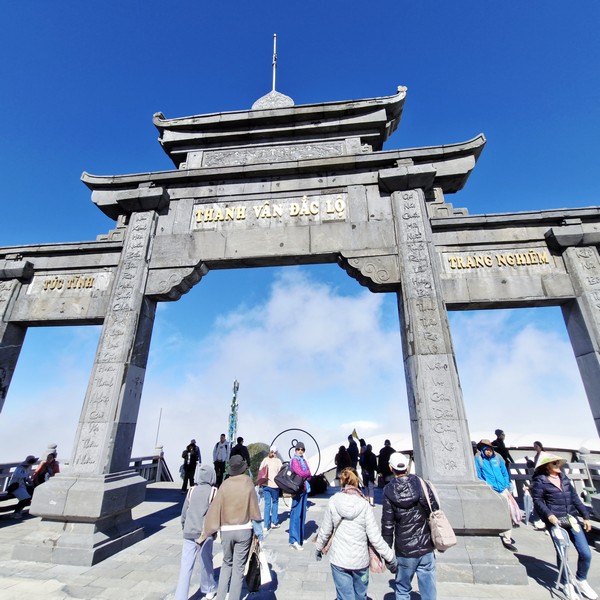
Upon exiting the Fansipan cable car station, one of the first structures we encountered was Thanh Van Dac Lo (often referred to as the “Heavenly Gate Temple”), a stone gate built in the typical ancient architectural style of the Ly Dynasty (10th-13th centuries) with its pillars of monolithic blue stone.  It serves as a symbolic threshold between the earthly realm and the spiritual plane. Frequently shrouded in drifting clouds, heightening the sense of transcendence, its name roughly translates to “Clear Clouds Gain the Way,” referring to the Buddhist aspiration of clarity and liberation.

Thanh Van dac Lo (Heavenly Gate Temple)

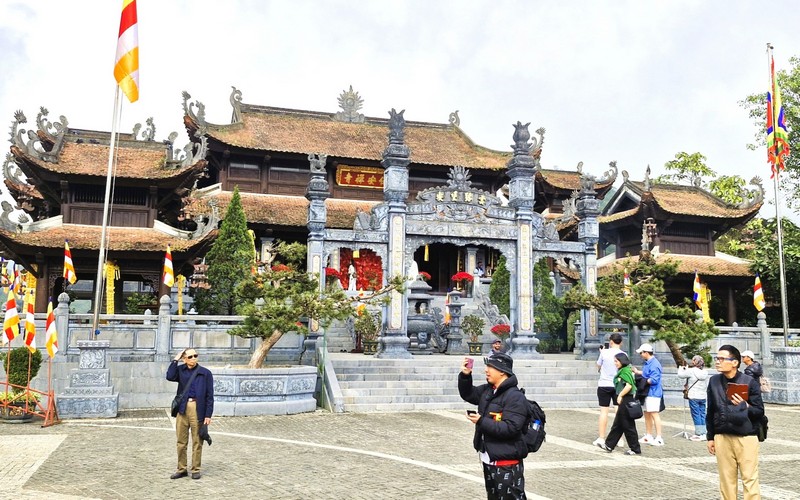
Further out into the complex lies Kim Son Bao Thang Pagoda (Kim Son Bao Thang Tu) which honors the Buddha, Bodhisattva Avalokitesvara (Guanyin) and revered Vietnamese saints.  The largest and most significant spiritual complex on Fansipan, it draws pilgrims and tourists alike who want to soak up the sacred atmosphere.  The complex, converging the quintessence of Vietnamese wooden pagoda architecture from the 15th and 16th centuries, was built using natural materials such as aged ironwood and hand-carved stone.  The antique, intricately tiled roof was restored. 

Kim Son Bao Thang Pagoda

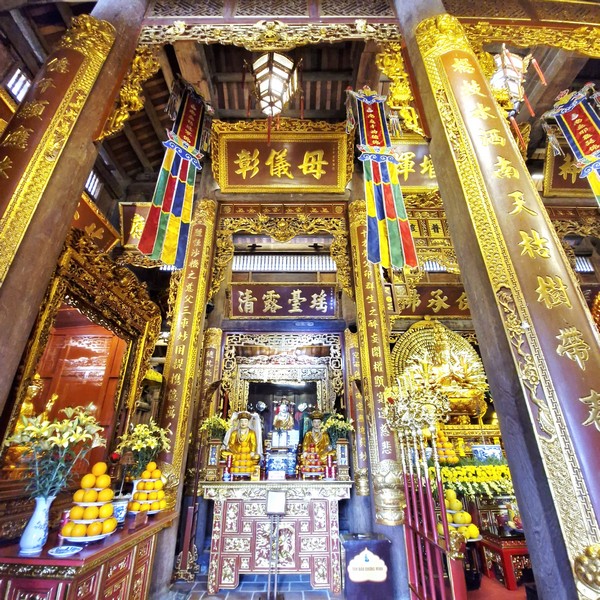
Its interior is adorned with golden statues, incense urns and calligraphic prayer scrolls. Featuring ornate shrines, bronze statues, and stone towers, it feels particularly magical when the clouds roll in, surrounding the pagoda with mist. Aligned according to feng shui principles, the temple believed to channel spiritual energy flowing through the Hoàng Liên Sơn mountain range.  The pagoda includes a front hall, the Three Treasures, the ancestral house, and the Three Mandarins.

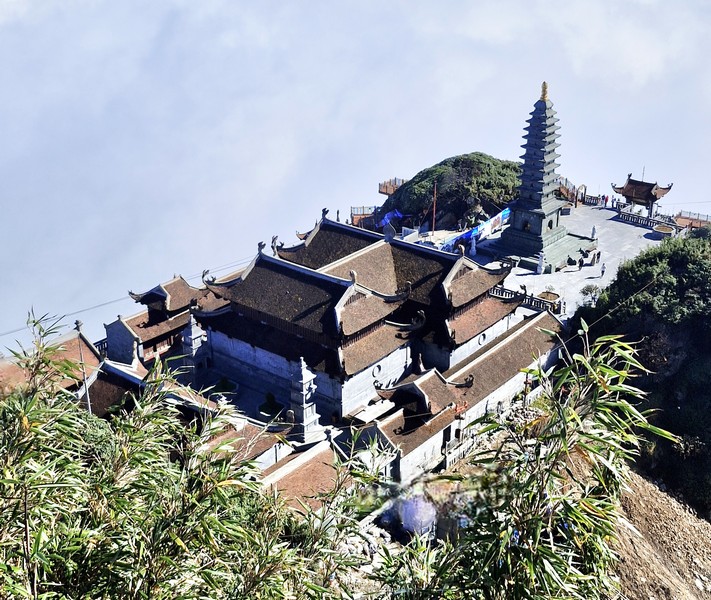
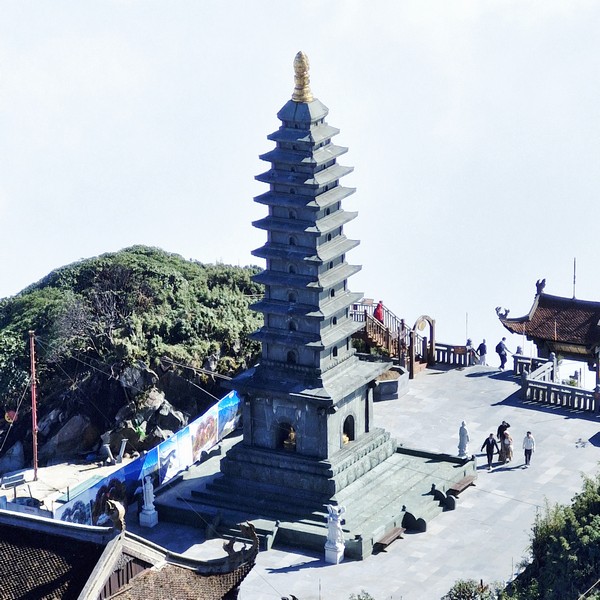
The 11-storey stupa of Kim Son Bao Thang Pagoda

The 11-storey stupa, in the yard in front of Kim Son Bao Thang, is clad with limestone from Central Vietnam. The lotus-shape top of the stupa, cast in copper, was inspired by the famous Pho Minh Stupa (in Nam Dinh Province), with typical Buddhism architecture of Tran Dynasty.

Bích Vân Thiên Tu (Azure Cloud Temple)

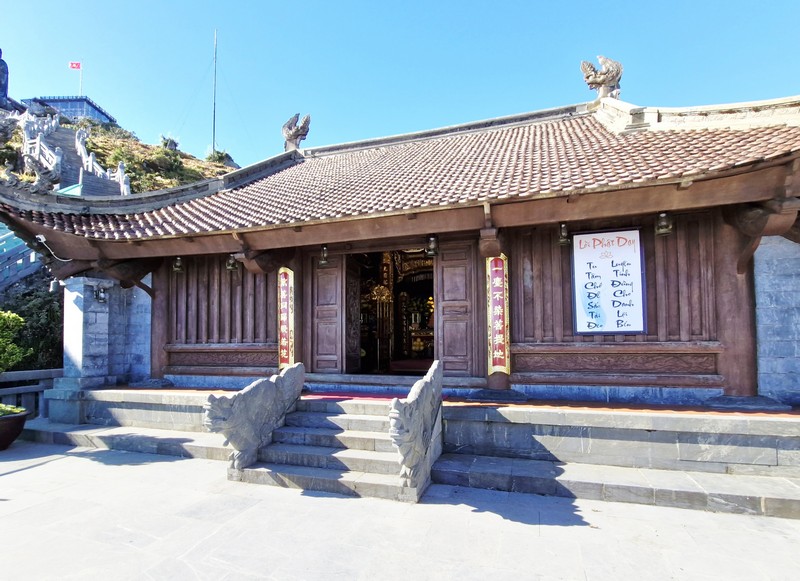
Higher up is the small yet beautiful Bích Vân Thiên Tu (or the Azure Cloud Temple), a temple situated at a midway point on the journey, at an altitude of 3,037 m. above sea level.  Nestled among pine trees and frequently enveloped in mist, this smaller temple, despite its remote location, offers perfect balance of cultural immersion and natural scenery and a quieter, more intimate setting for prayer.

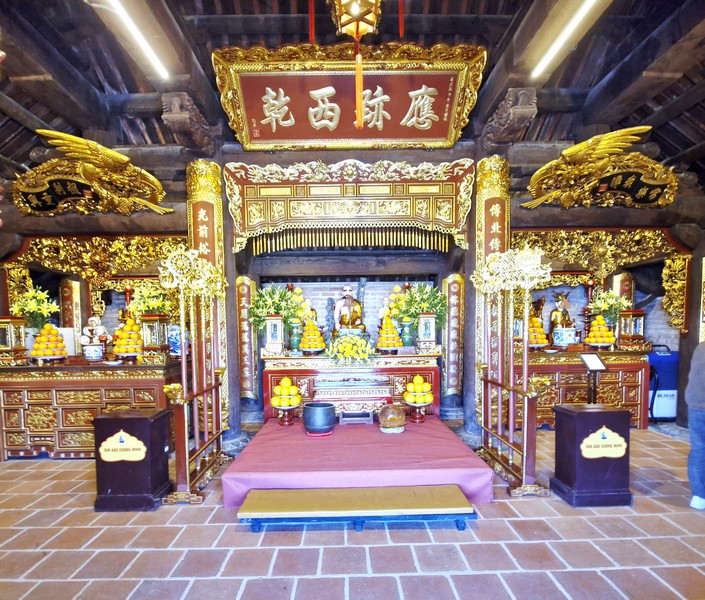
Interior of temple

Reflecting traditional architectural style of Vietnamese pagoda design influenced by the essences of Tran Dynasty (13th-14th centuries), it was carefully constructed with multi-tiered roofs, dragon finials and, at the entrance, stone guardian lions. From here, one can view the jagged peaks of the surrounding range and, on clear days, even the Yunnan mountains across the border to China.

Many visitors stop here to rest and admire the sweeping mountain views before continuing upward. The pagoda consists of wooden three-compartment and two-bay main hall, together one temple to worship Saint Tran00 Hung Dao and one to worship Three Holy Mothers. At the courtyard, in front of the pagoda, visitors can view the majestic landscape panorama of Hoang Lien mountains and forests.

Grand Belfry (Vong Linh Cao Dai)

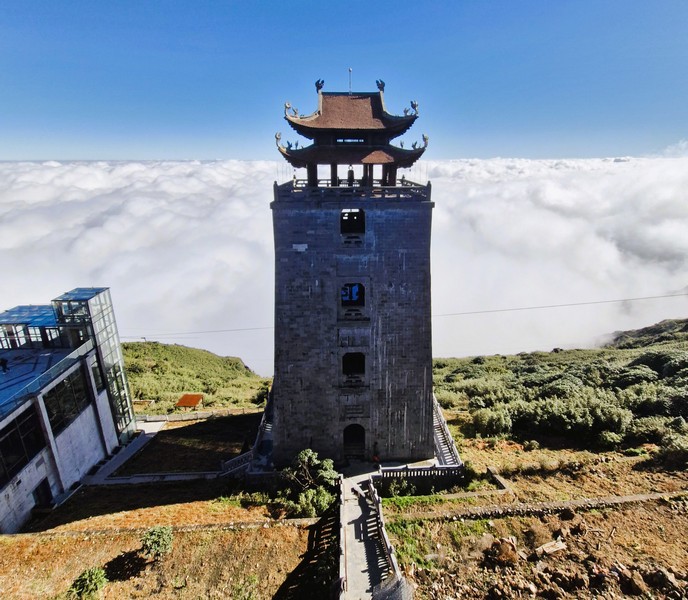
The 32.8 m. high Grand Belfry (Dai Hong Chung, also called Vong Linh Cao Dai), located on the main axis of Bich Van Zen Monastery, comprises 5 storeys, four of which were built with rock, and the upper storey designed after the traditional eight-roof pavilion. Each storey hosts a bronze bell that was cast after the original one in Tran Dynasty. 

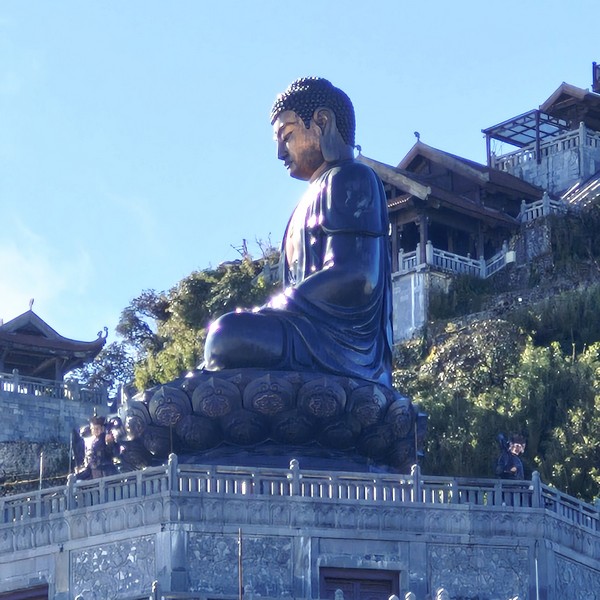
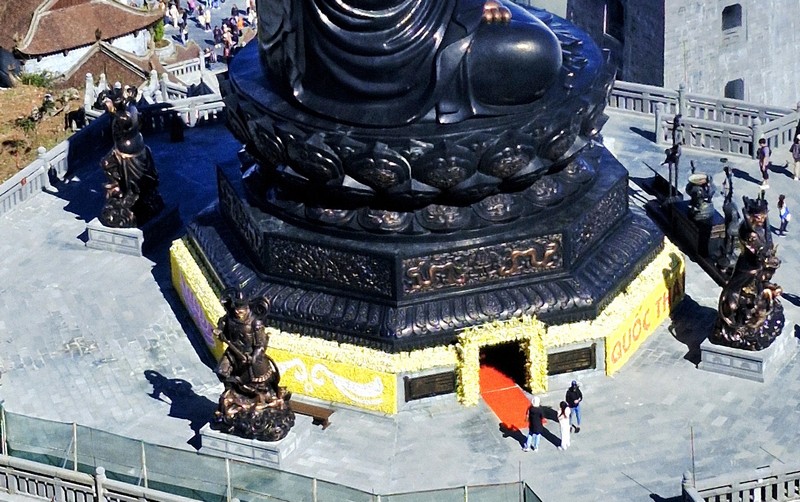
Along a small path, from Bich Van Zen Monastery, leads to the 21.5 m. high, massive Great Amitabha Buddha statue (Tuong Phat A Di Da), one of the most iconic symbols of the Fansipan complex. Cast from over 60 tons of bronze, this statue, representing the Buddha of Infinite Light and Compassion, is one of the largest seated bronze Buddhas of its kind in Vietnam.  Built in 2015, the statue is surrounded by lotus lanterns and its pedestal is decorated with a dragon and flower.

Great Amitabha Buddha Statue

Overlooking the vast Muong Hoa Valley below, it offers visitors a powerful space for contemplation. A breathtaking sight that symbolizes peace and enlightenment, its presence dominates the mountain landscape, often appearing like a silhouette in the clouds.

Inside the great Buddha statue is a place where the “Dharma Treasure Buddha’s Relics” are housed.  The Buddha relic, enshrined on February 2, 2019, was donated by the Vinh Nghiem Pagoda (in turn, given by Myanmar monks in the past), to pray for the peace for the nation and its people. The Buddha relic is stored in a small bronze tower clock within a 7-storey crystal stupa. Its first floor offers a space to rest and enjoy vegetarian dishes while the second floor arranges space to display images of Buddha. At the foot of the Great Buddha Statue is the 9-storey, 30 m. high waterfall with 150 stone steps on both sides.  Inside is a pillar of Buddhist scriptures.

Base of the Buddha statue

Another striking feature of the complex is the 800 m. long Arhat Road (Con Đuong La Hán), a stone path, along the mountain side leading to Kim Son Bao Thang Pagoda, lined with rhododendrons, ancient, century-old azalea trees (that still bloom from the end of December to June each year) and 18 2.5 m. high, lifelike bronze statues of Arhats or enlightened disciples of the Buddha. Each figure, weighing up to 500 – 600 kgs., is carved with distinct facial expressions and poses, representing various virtues such as wisdom, patience and determination. This path symbolizes the spiritual journey toward enlightenment and physically guides pilgrims up toward the final ascent to the Fansipan summit marker.

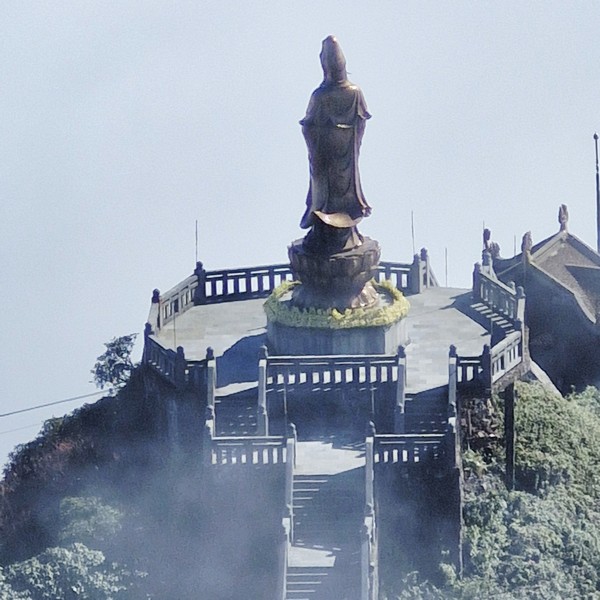
The Guan Yin Statue

The prominent, 12 m. high Guan Yin Statue (Tuong Quan Am), the elegant bronze statue of the Goddess of Mercy in front of the Kim Son Bao Thang Pagoda, weighs 18 tons, and sits gracefully on the mountainside. With eyes facing east, the statue holds a willow branch, on her right hand, and a sacred vase of orange trees, on her left hand, that symbolize benevolence and kindness. All represent the great compassion of suffering and saving suffering and saving sentient beings.  Here, visiting pilgrims pray for compassion and blessings. Against the dramatic backdrop of Fansipan, it’s one of the most photogenic spots on the mountain and travelers are drawn to its serene beauty.

How to Get There: By car, the 332-km. distance between Hanoi and Sapa take only 4 hours. Sleeper buses, suitable for budget travelers, has a longer transfer time than a car, about 5 hours. The convenient and easy trains, a popular choice as this vehicle allows passengers to enjoy the countryside’s scenery along the way, have the longest transfer time of 8 hours.

Fansipan Legend Cable Car (Sapa, Vietnam)

The Fansipan Legend Cable Car

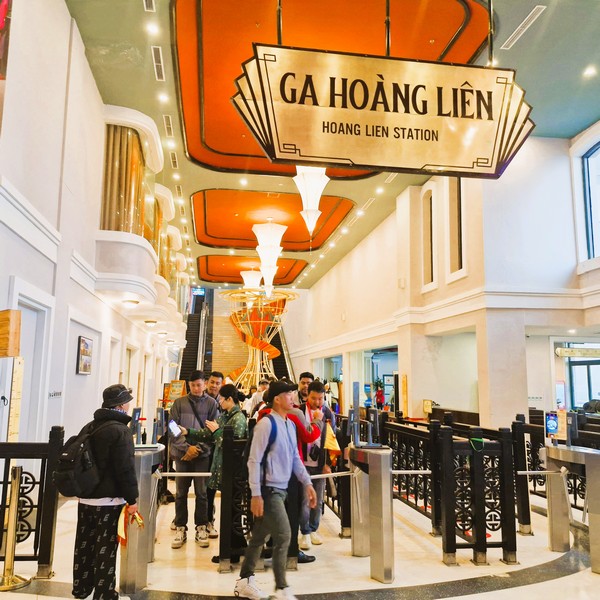
Our Muong Hoa Funicular ride ended at Hoang Lien Station, located in the Fansipan Legend tourist area. From this station, our cable car journey also began. We were lucky as the temporary suspension of the funicular and cable car systems was to start from November 24, 2025, just 10 days after our ride, and the cable car would reopen on December 16 and the funicular two days later.

Check out “Muong Hoa Funicular

Hoang Lien Station

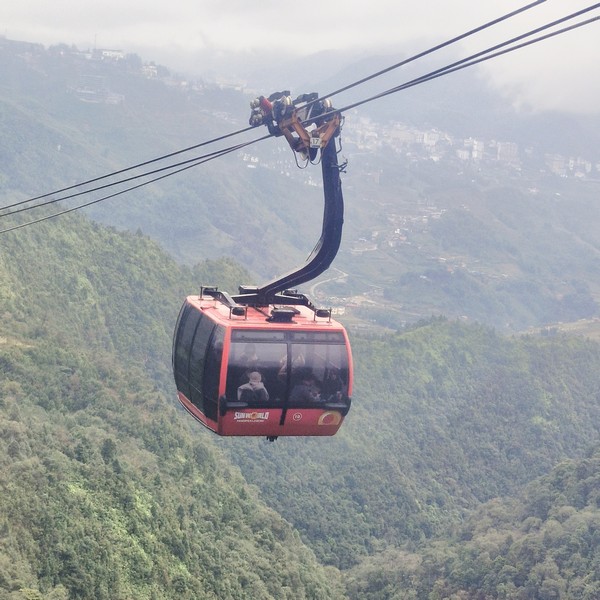
As we were in Sapa, a climb to the 3,147 m. high Mount Fansipan, the “Roof of Indochina,” which is crowned with the iconic triangular landmark, is a must-have photo for every traveler. The Sunworld Fansipan Legend Cable Car, a 3S ropeway system (three-rope) built by the world-famous Swiss/Austrian cable car manufacturer Doppelmayr/Garaventa Group, was the best, practical and risk-free option of reaching the top of Indochina’s highest point.

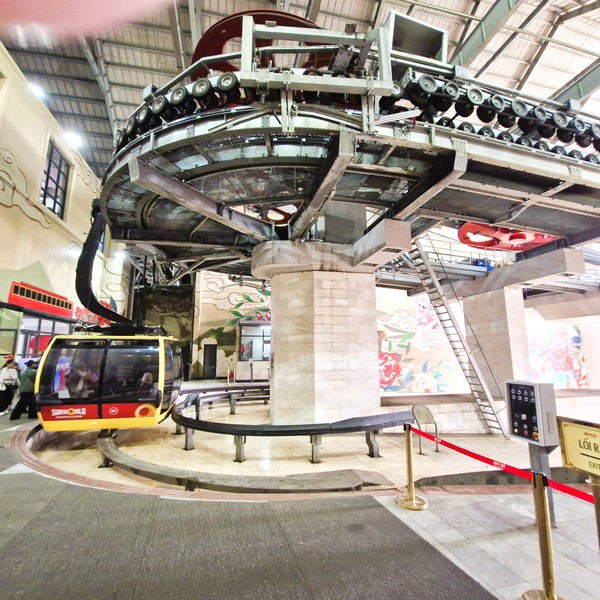
Boarding Platform

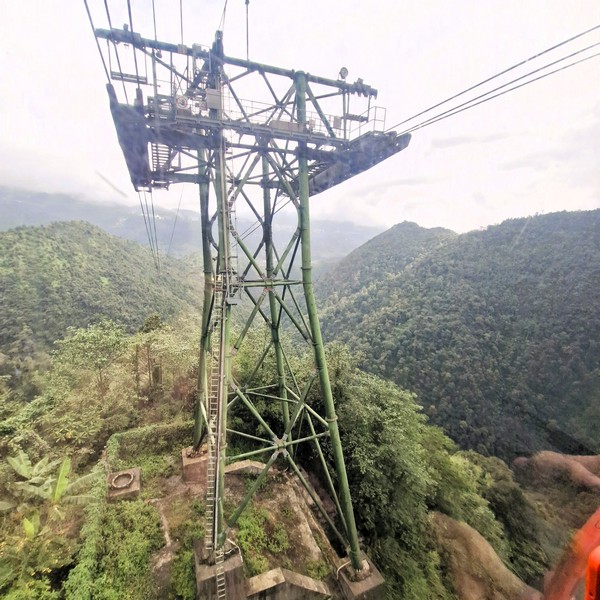
The 3S system combines the benefits of the gondola lift and reversible aerial tramway.  It has two fixed, fully-locked track ropes, on which the carrier travels, and a circulating haul rope which is clamped to the carriages.

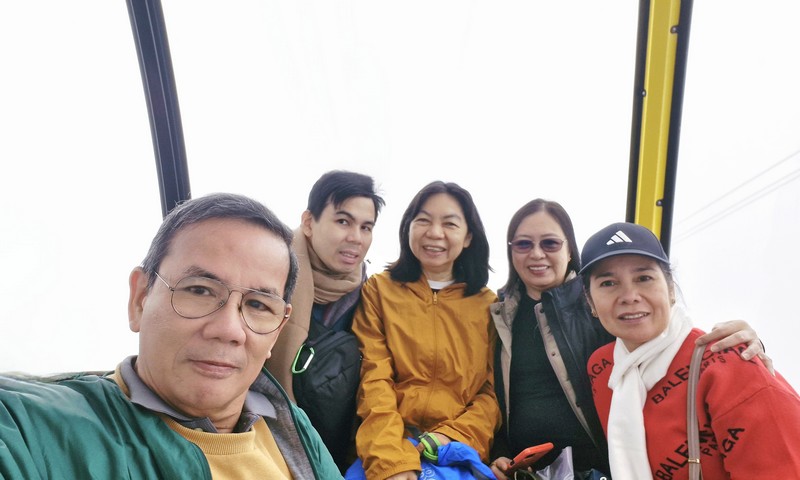
L-R: the author, Jandy, Grace, Lorraine and Lourdes

The Sunworld Fansipan Legend Cable Car System was registered, by Guinness World Records, as the tallest, longest and most advanced three-wire cable car system installed for the first time in Asia.

It has been recognized with two world records – the most extended tricable (three-line) cable car system in the world (6,292.5 m. in length) and the highest altitude difference in the world (1,410 m.). The system, an excellent spot for photos, highlights the North West area and captures the essence of Vietnamese culture.

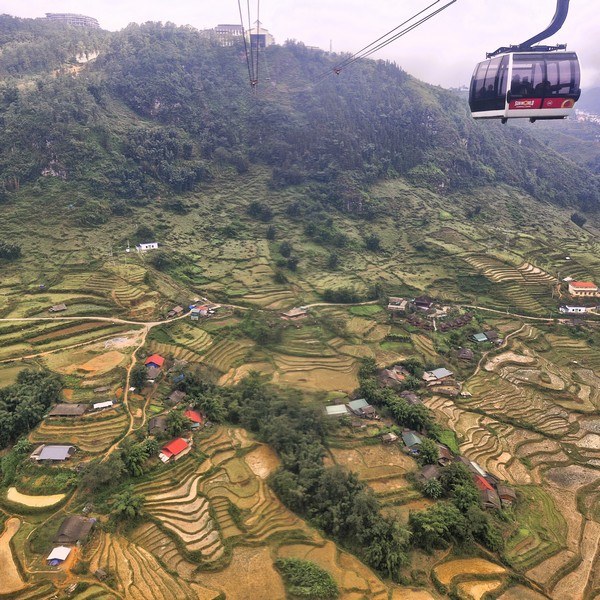
View of the rice terraces of Muong Hoa Valley

Before the cable car ride was built, it took visitors at one or even two days of hiking it would take to reach the 1,400 meters that separate the two cable car terminals or at least a day to reach Fansipan Peak. Tourists also required physical preparation for months in advance of trekking Fansipan. Not everyone is fit enough to conquer Mount Fansipan; you must also carry heavy luggage to get there.

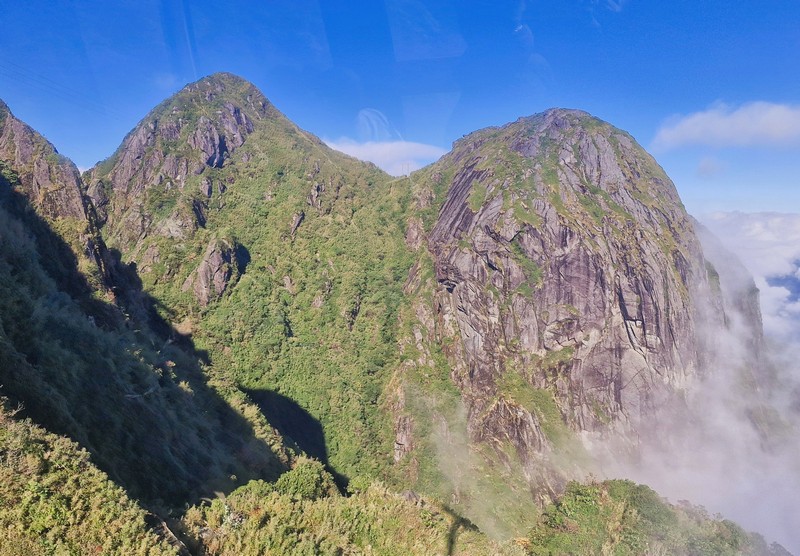
Hoang Lien Son Mountain Range

Each cable car, traveling at 8 m. per second, can accommodate 30 to 35 people per cabin and transfer 2,000 passengers between the 2 stations in 1 hour.

During our journey, at the height of several thousand meters, we got a clear bird’s eye view, from transparent tempered glass, of the picturesque scenery, including the poetic Muong Hoa Valley and the majestic Hoang Lien Son mountain range.

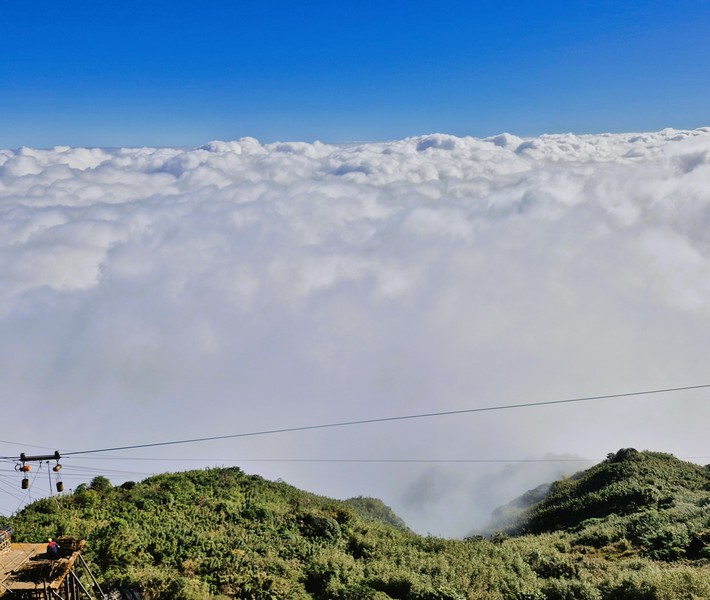
A sea of clouds

Also, we were treated to an impressive 360-degree panorama of the entire breathtaking landscape, from the golden rice fields to the quaint little towns, making Sapa seem like a secret paradise in the clouds. After 15 to 20 minutes, our trip ended at the Fansipan cable car station.

Cable car tower/pylon

Sunworld Fansipan Legend Cable Car: Nguyen Chi Thanh Street, Sapa, Vietnam. Hotline: 0948-30-9999. E-mail: fansipanlegend@sunworld.vn.  The cable cars run daily, from 7:30 AM to 5:30 PM. A ticket for the Muong Hoa train can be purchased as part of a larger package that includes the cable car to the summit.   The ticket price for the Muong Hoa Funicular can be purchased as a separate round-trip from the Sapa station or as part of an all-inclusive ticket for the entire Fansipan journey, which includes the cable car and the second funicular at the top. For 2025, a round-trip ticket is approximately 200,000 VND for adults, with free rides for children under 1 meter tall.

Tickets can be purchased at the Sun Plaza station or online. 

How to Get There: By car, the 332-km. distance between Hanoi and Sapa take only 4 hours. Sleeper buses, suitable for budget travelers, has a longer transfer time than a car, about 5 hours. The convenient and easy trains, a popular choice as this vehicle allows passengers to enjoy the countryside’s scenery along the way, have the longest transfer time of 8 hours.

Muong Hoa Funicular (Sapa, Vietnam)

The Muong Hoa Funicular

The start of our trip up the 3,147 m. high Mount Fansipan, the “Roof of Indochina,” began at the Sapa Station at the first floor of the Sun Plaza Sapa near the MGallery Hotel. Here, we were to take the Muonghua Mountain Train, Vietnam’s first mountain funicular.  This nearly 2-km. (1.2-mile) long scenic funicular mountain railway acts as a precursor to the main Fansipan Legend Cable Car journey up Fansipan.  Built by the Sun Group, it connects Sapa town (near Sun Plaza Sapa) to the Fansipan Cable Car station in the Muong Hoa Valley.

Check out “Sun Plaza Sapa and “Fansipan Legend Cable Car

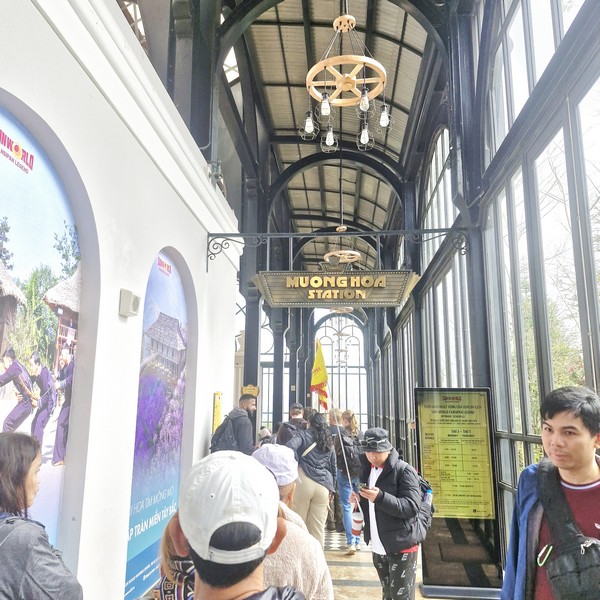
Muong Hoa Station

The Mường Hoa Funicular, a popular, smooth ride for tourists, was opened last March 31, 2018.  A fantastic way to explore Sapa, there are many great reasons to give it a try. First off, it saves time and energy as we don’t have to hike up the steep hill, perfect for families or anyone who wants to save their strength for the views and activities ahead. Second, it is also safe and family-friendly, making it a great option for visitors of all ages.

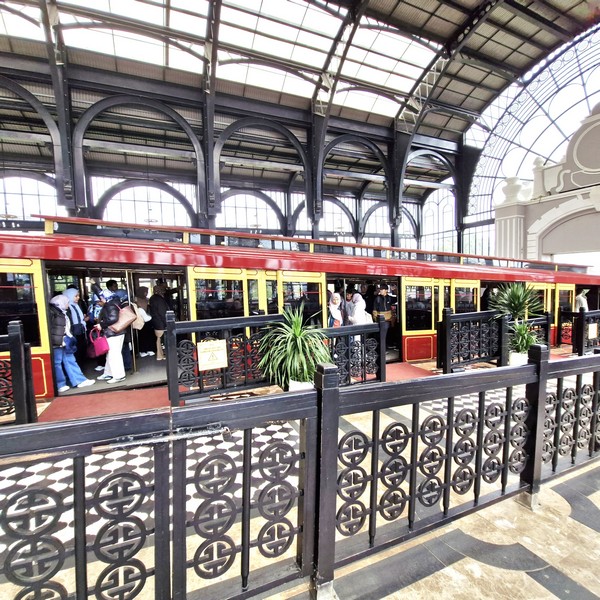
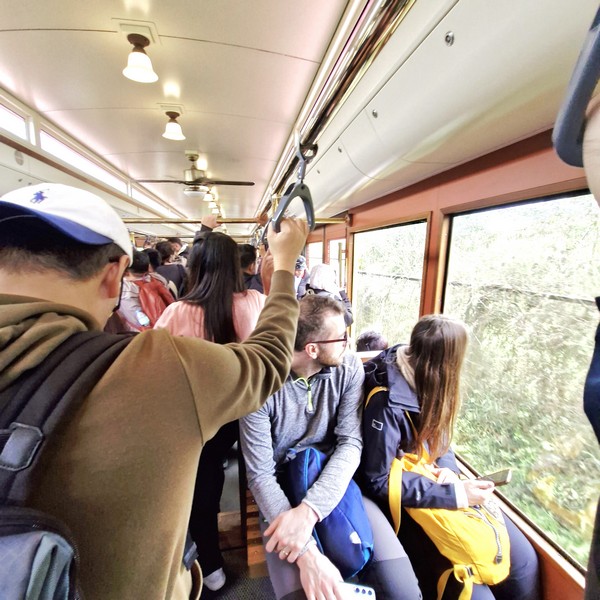
Inside the beautiful cabin

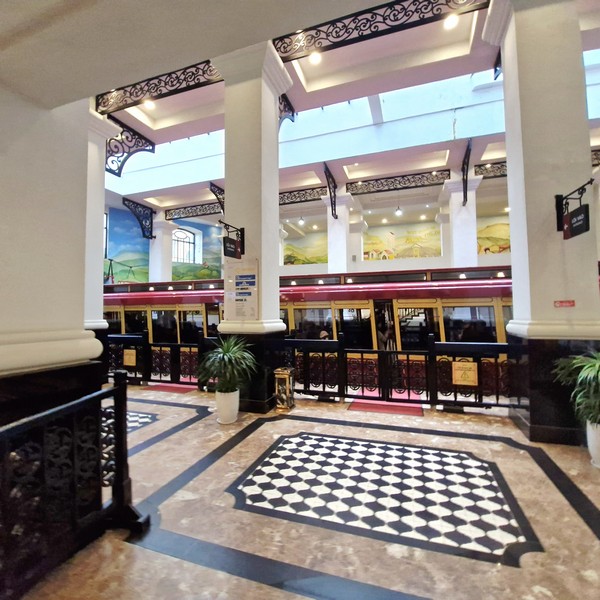
It has a capacity of up to 2,000 passengers per hour, with two beautiful cabins made by the Doppelmayr/Garaventa Group, a leading Swiss/Austrian cable car company.  Upon entering the pretty spacious, 20 m. long and 3 m. wide cabin (which can carry up to 200 people), we felt like stepping into a classy, old-school European interior design, with antique ceiling fans, golden details, vintage wooden seats, elegant decor and soft, antique lighting.

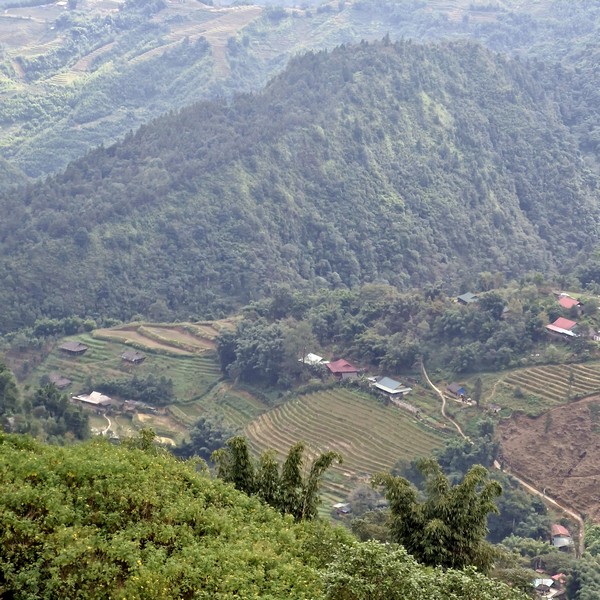
Muong Hoa Valley
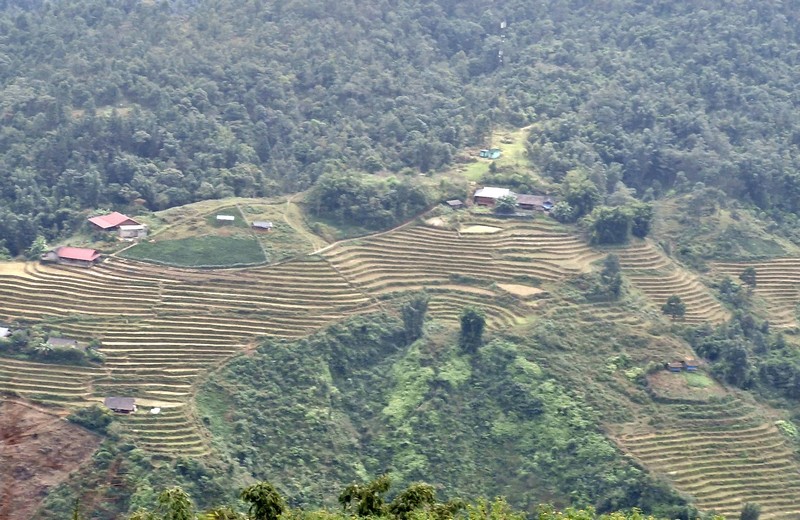
Terraced rice fields

The approximately 6-min., smooth, comfortable ride, traveling at a maximum speed of 10 m. per second, provided, from large glass windows, beautiful, breathtaking and stunning views of the stunning landscapes of northern Vietnam as we traveled through Hoang Lien Son range and the Muong Hoa Valley, often blanketed in clouds, passing peaceful villages, rice terraces, 2 tunnels, 4 viaducts and forests.

Truly, a delightful experience and an amazing way to soak in the natural beauty of the region. Our ride ended at the Hoang Lien Station, located in the Fansipan Legend tourist area.

A peaceful village

Muong Hoa Funicular: 1 Cau May Alley, Sapa Town, Sapa District, Lao Cai Province. Open daily (including holidays). Cost: 200,000 VD.

If you’re planning to ride the Mường Hoa Funicular in Sapa, you have two main options for purchasing tickets: online or in person. Booking online is a great choice if you want to skip the lines and maybe even catch a discount. Sites like Klook or E-Travel let you book in advance, and they’ll send your ticket straight to your phone – no need to print. Alternatively, you can buy tickets directly at the Sapa Station. This option allows you to ask questions and get immediate assistance, which can be helpful if you’re unfamiliar with the area. However, be prepared for potential wait times, especially during weekends or holidays.

Sun Plaza Sapa (Vietnam)

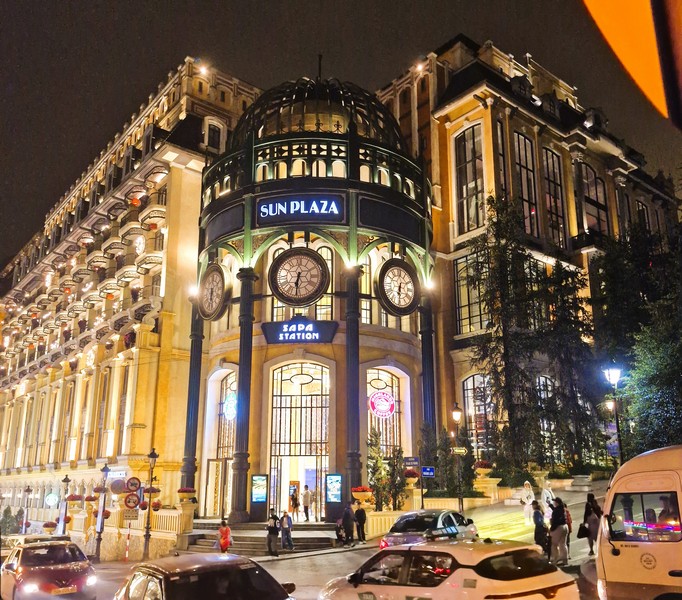
Sun Plaza Sapa

Come morning of our second day in Sapa, after breakfast at Bora Hotel, we walked along Cau May Walking Street, towards Sapa Square and the stunning, instantly recognizable four-storey Sun Plaza Sapa, a shopping and entertainment complex and the essential hub and crucial starting point for our visit to Mount Fansipan, the “Rooftop of Indochina” as it houses, at the first floor, the ticket office for the iconic Muong Hoa funicular.  Offering a unique way to travel through the clouds while taking in breathtaking views of the stunning mountain scenery, the train has a classic design and luxury vibe.

Check out “Cau May Walking Street” and Sapa Square

The Muong Hoa Funicular

The building, in itself, is a must-see spot in the heart of the beautiful town of Sapa. Sun Plaza Sapa is a place with great views, a shopping center and dining options, including a bar, at the first, second and third floors, and a parking area at the ground floor.

The clock tower

Designed in a grand, classic, luxurious and beautiful French-style architecture (by architect Bill Bensley of the international architectural firm Chapman Taylor) that brings a touch of Europe to the Sapa mountains, it was built by Sun Group and completed in late 2018.

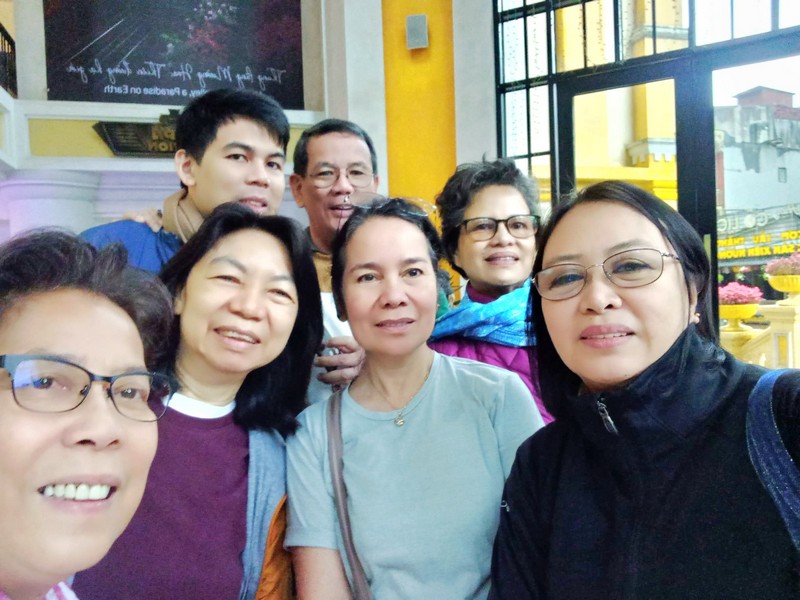
L-R (front row): Des, Grace, Lourdes, Lorraine. L-R (Back row): Jandy and the author

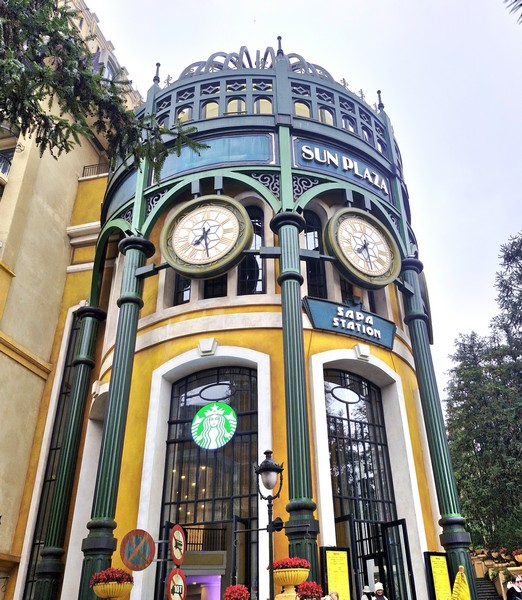
The building, with its striking yellow and green façade, also features large glass windows, which create a bright and inviting atmosphere, especially at night. The clock tower at the entrance, one of the main attractions and a symbol at Sun Plaza Sapa, attracts many visitors for photos.  Inspired by the famous Big Ben clock tower in the United Kingdom, it has three large clocks with a round, lantern-like design.

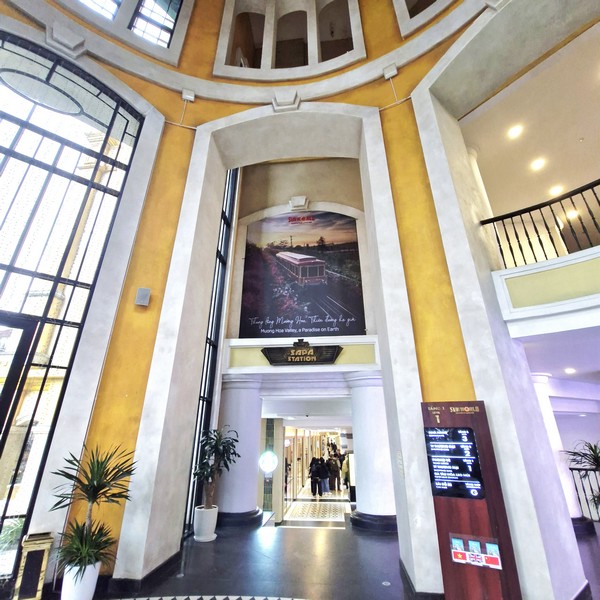
The circular central hall

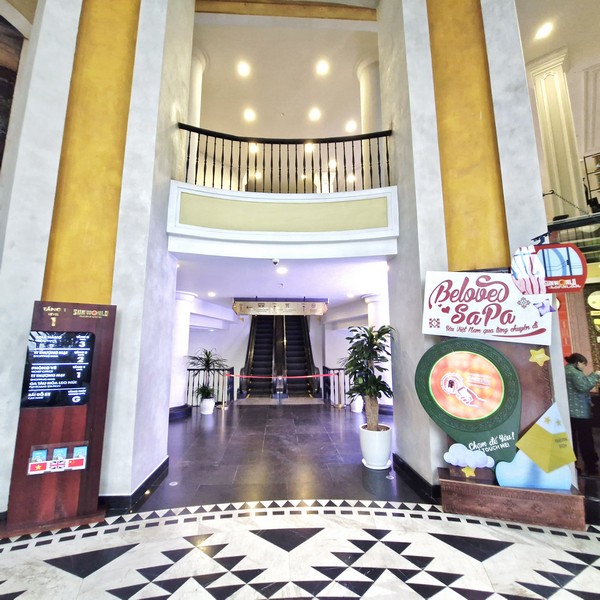
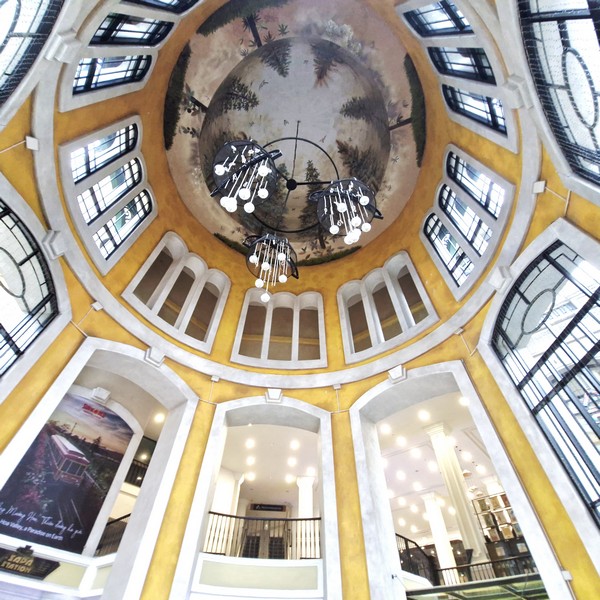
Upon stepping into the large circular hall of Sun Plaza Sapa, its floor decorated with motifs such as centrally located bronze drums, we felt like we were entering a European royal palace or a castle without leaving Vietnam.  Showcasing unique French-style of architecture with an interesting Vietnamese touch, its delicate interiors features a dome, large columns, stunning lights, grand corridors with intricately decorated walls, elegant glass doors, European-style lamps, arches, and metal railings.

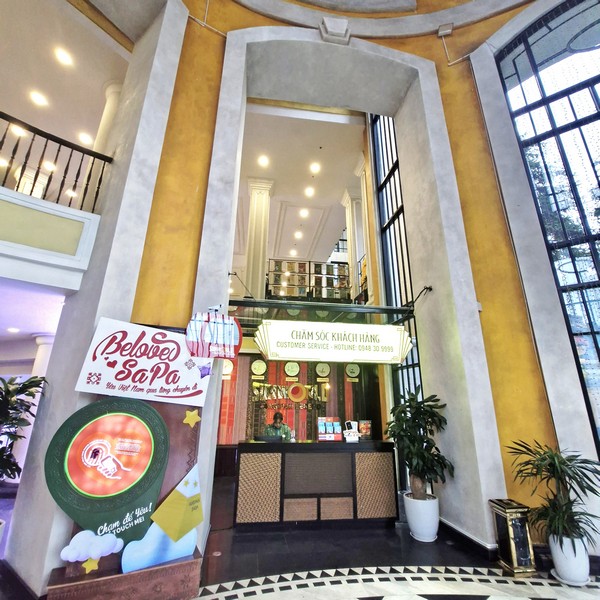
The funicular ticket office

The symmetrical design adds to the elegance, and the delicately painted artwork on the ceiling in the main lobby, with flowers and leaves, along with bright, sparkling light beams, is particularly eye-catching. This place is a perfect spot offering countless beautiful spots to snap amazing, Instagram-worthy photos.

The dome with its delicately painted artwork on the ceiling

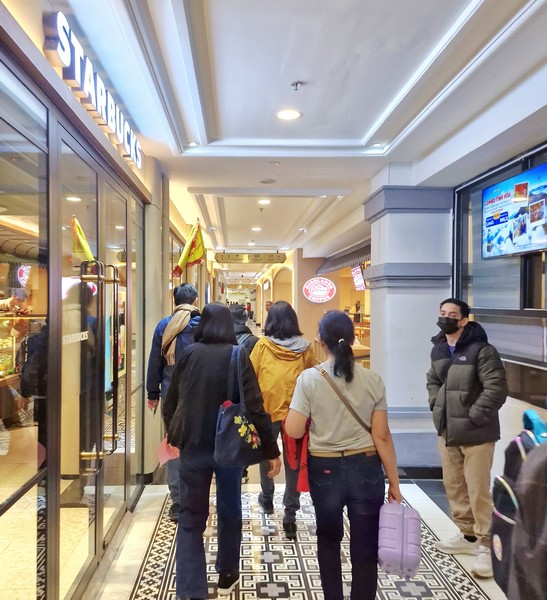
Shopping is a must at here as this shopping center is full of fashion (shoes, clothing, bags, cosmetics, etc.), local souvenirs, and regional specialties, ranging from budget-friendly to luxury items. As a food paradise, it offers delicious European dishes, prepared by professional chefs, to make your dining experience unforgettable. There are also cozy cafés and eateries, including a Starbucks.

Passing by the Starbucks on the left

De la Coupole Sapa – MGaller, a luxury 5-star hotel inside Sun Plaza known for its elegance and charm, offers a unique, unforgettable experience, with 249 stunning and creatively designed rooms inspired by local Northwest culture and French and Indochinese design. A perfect spot for a special and relaxing getaway, the hotel also has restaurants, bars, a spa, and event spaces.  

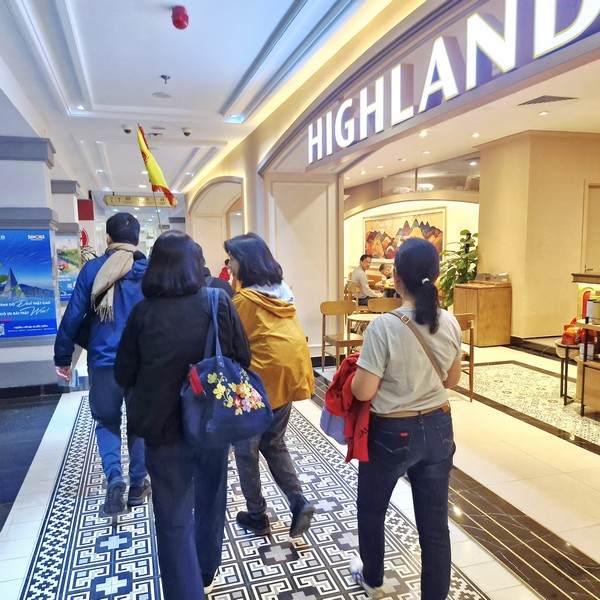
Passing the Highlands Coffee shop on the right

Absinthe, a cafe on the 10th floor, next to Sun Plaza, with French design and art creating a cozy vibe, is a great spot to relax and the perfect place to sit down for a coffee either inside, to enjoy the blended artistic interior space and French fashion style, or outside to take in the beauty of Sapa, enjoying nature and the amazing views of Sapa’s majestic mountains and forests hidden in the flying clouds.

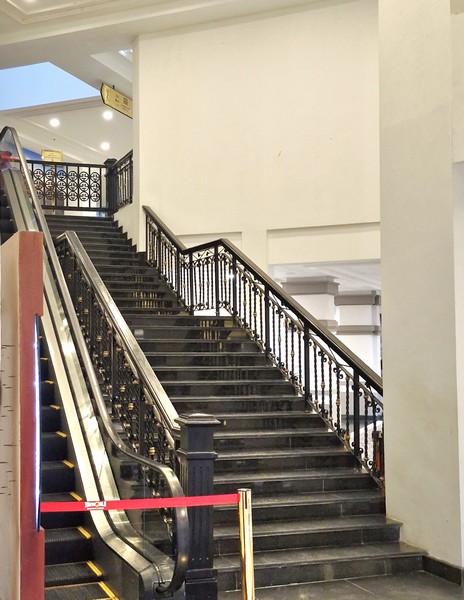
Stairway with intricately designed metal railings

Sun Plaza Sapa: 1 Ng. Cau May, Sa Pa Town, Sa Pa, Lao Cai.  Tel: +84 948 309 999. Open daily, 7:30 AM to 10 PM. Website: www.sunworld.vn.