teamLab Botanical Garden (Osaka, Japan)

teamLab Botanical Garden

After our Tempozan Ferris Wheel ride and early dinner at Tempozan Harbor Village, we again boarded our van for 19-km. (25-min.) drive to experience the new interactive outdoor art exhibit of teamLab, an international art collective, at the 240,000 sq. m. Nagai Botanical Garden, an outdoor botanical garden in Nagai Park that opened in 1974.

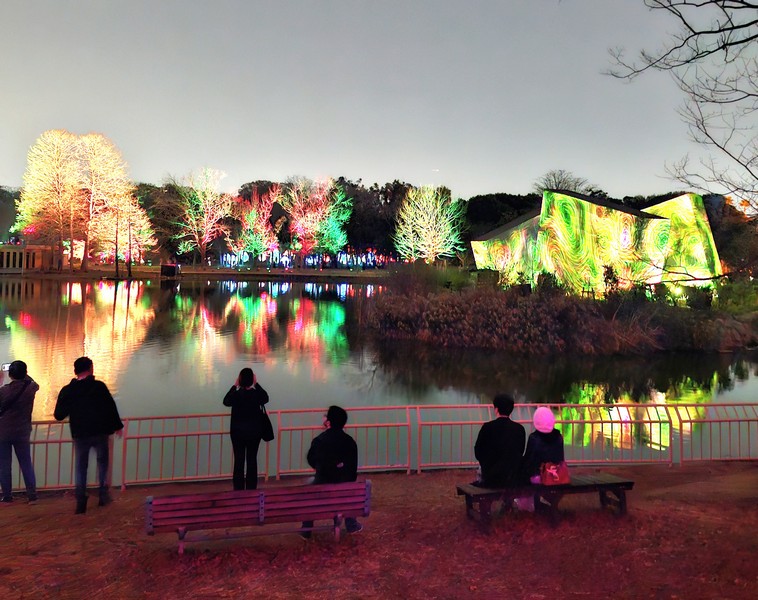
Taking the light show out of the hustle and bustle of the city streets and into a more natural setting, teamLab aims to explore an environment where human perception expands from the artwork itself to the environment. Their stunning, immersive nighttime installation transformed the natural landscape into an interactive digital canvas.

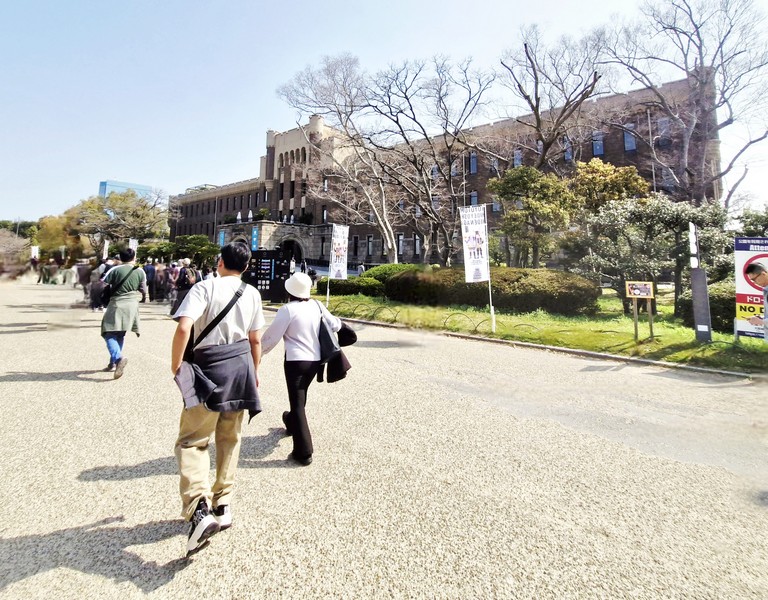
From our drop-off point, it was still a long walk to the entrance. Nestled among the forests and fields of the botanical garden were a variety of illuminated exhibits, ranging in size and scope from subtle illuminations embedded in the grass to completely awe-inspiring radiant pillars that dance in the wind and reach into the sky. Once we entered the grounds, it felt like we were transported to a world, miles away from Osaka. Deep, meditative music filled the air as we walked through the wide pathway flanked by towering bald cypress trees.
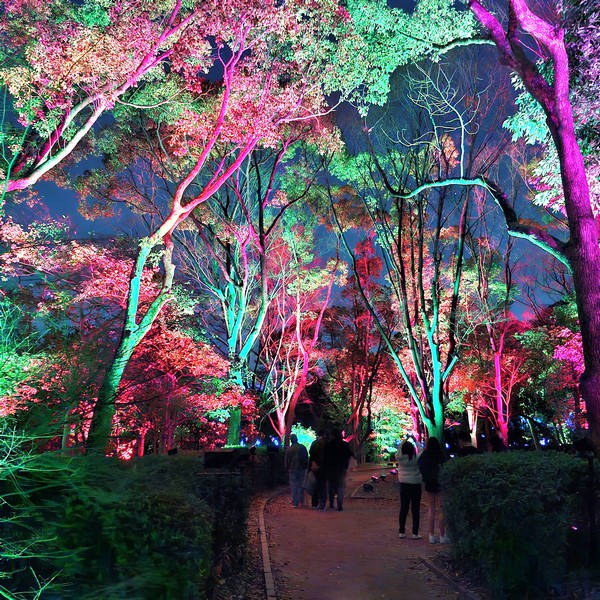
The Resonating Trees Exhibit

While subtle at first, we began to notice that the lights illuminating the trees rose and fell in brightness, depending on your proximity to them. This is our first hint that this was more than just a walk in the garden—we were a part of the exhibit. We didn’t find any velvet ropes or “do not touch” signs here.  Instead, we were encouraged to see how our interactions, within this unique “ecosystem,” would influence our surroundings.

As we walked through the garden of The Resonating Trees Exhibit, the trees shone brightly. When we passed close by, the trees changed color and emitted a unique musical tone. This wave of light and sound continuously spred outward to the surrounding trees. If light approached from a distance, it signified the presence of other people or wildlife, turning the ecosystem into an active canvas. Because the artwork interacted directly with nature, the display shifted in response to the wind, rain, and the natural seasonal changes of the trees.
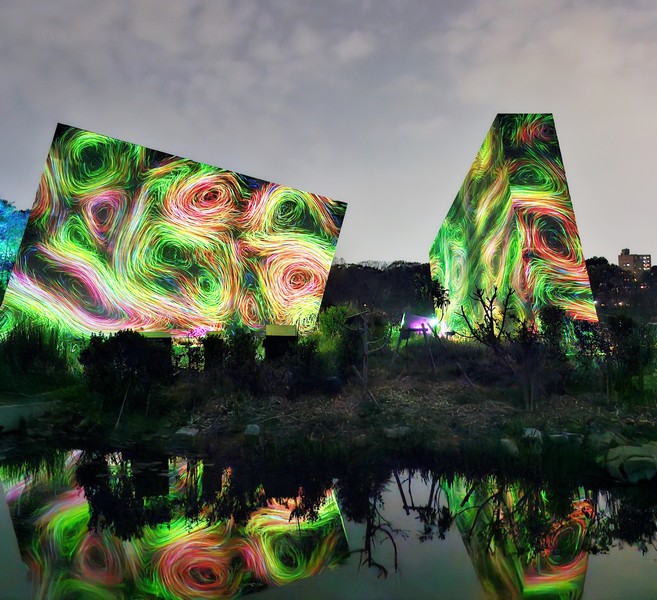
Sculptures of Dissipative Birds in the Wind

Rounding a corner, we saw The Sculptures of Dissipative Birds in the Wind installation, widely considered the signature and most spectacular open-air piece of the permanent exhibition.  It brings the invisible forces of nature—the wind and the physical flight of the birds—to life. Standing tall, on the edge of the lake, looking not unlike Van Gogh’s Starry Night coming to life here in Japan, the flowing swirls of color react to the flight paths of any passing birds that live in Nagai Park, further adding to the layers of interactivity throughout the gardens.

Lines and swirling patterns of bright, shifting light (in vibrant gradations of red, blue, green, and yellow) trace flight paths across the night sky and the installation’s structures. Because it reacts continuously in real time to actual wind speeds and the movement of the ecosystem, no two movements are ever exactly the same. Every second of the display is completely unique.  
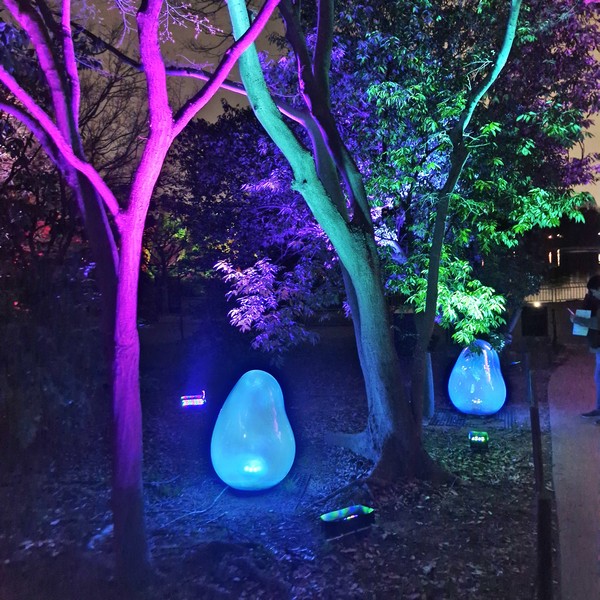
Resonating Microcosms in the Common Camellia Garden Exhibit

Continuing along the pathway, through the trees, and the sights continued to change with the landscape at The Resonating Microcosms in the Common Camellia Garden Exhibit. Small, waist-high glowing eggs fill the forest around the camelia garden, which foreshadows the absolutely overwhelming mass of 10 ft. tall orbs in the eucalyptus garden. During the day, their mirrored surfaces reflect the surrounding environment but, after sunset, they come alive.  

Getting lost amongst these luminous ovoid sculptures was a highlight for us, putting a smile on our face.  As we walked among them or when the wind blew, the ovoids react, glowing in up to 61 distinct colors and emitting unique sounds. When we pushed one ovoid or when it responded to its surroundings, it echoed out to the neighboring ovoids, creating a continuous, rippling wave of light and sound throughout the entire garden.
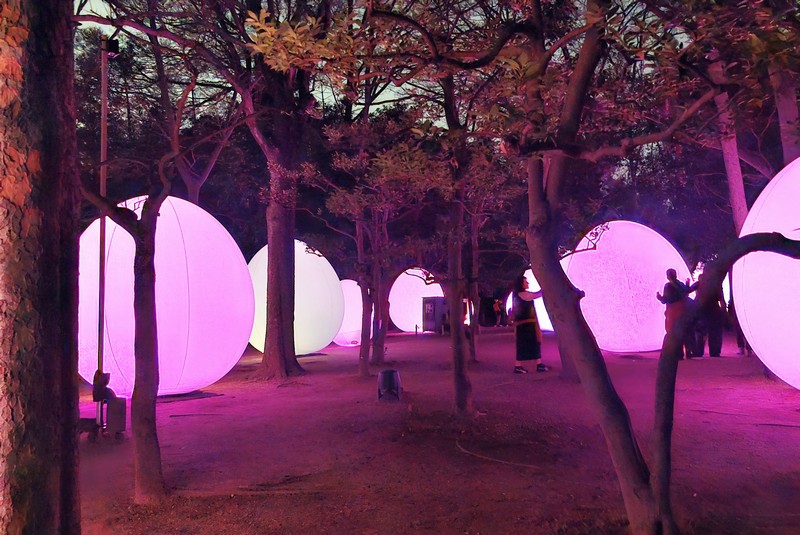
Forest of Autonomous Resonating Life – Eucalyptus

At the Forest of Autonomous Resonating Life Exhibit, the densely packed, standing ovoids of light are autonomous. When an ovoid was pushed over, by people moving through or blown down by the wind, it rose back up as the color of its light changed and emitted a tone specific to that color.

The author

The surrounding ovoids responded one after another, continuously changing to the same color and emitting the same tone. When the wind was not blowing and the people nearby were not interacting with the ovoids, their lights began to blink slowly.
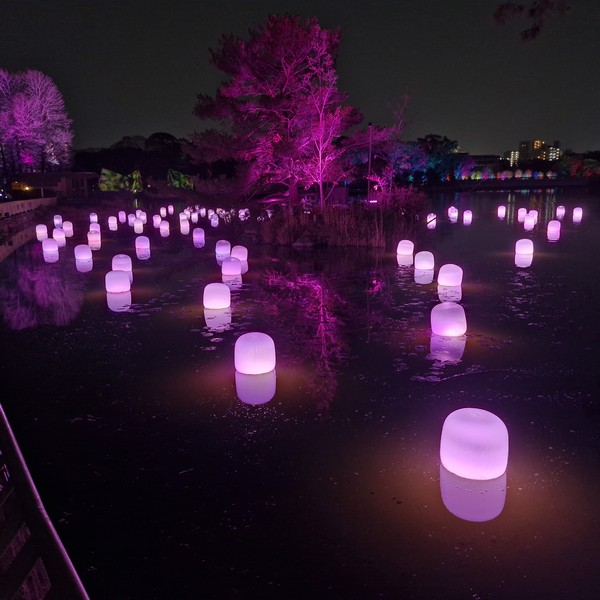
Floating Resonating Lamps on Oike Lake

At the Floating Resonating Lamps on Oike Lake – Fire Exhibit, each of the lamps on the Oike Lake’s surface floated autonomously. When we stood still near a lamp, or when the wind blew a lamp, it shone brightly and produced a tone.

The light of that lamp spred to nearby lamps, one by one, as they resonated with the same tone, continuing on to the trees on the islet in the center of the lake. If light approached from the other side, it signified the presence of people there, making them more aware of the existence of others in the same space. When the wind was not blowing and people were not nearby, the lamps began to blink slowly.
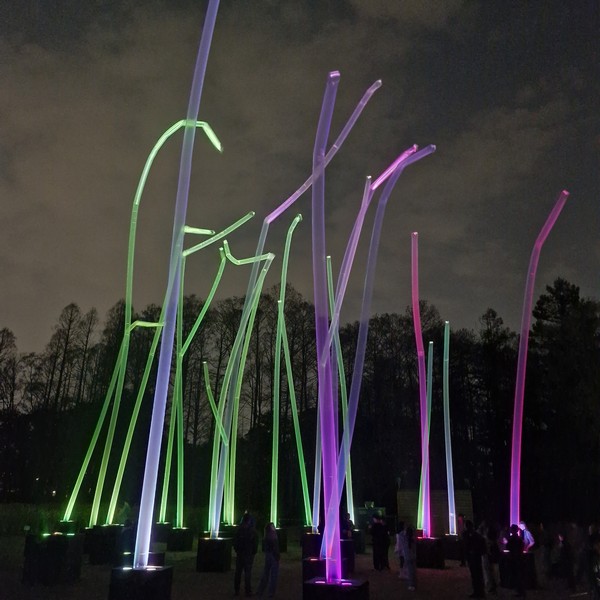
Pillars That Dance with the Wind

At the Pillars That Dance with the Wind Exhibit, the installation challenged the traditional notion that human structures must be solid and stable (like concrete). Instead, the pillars were soft, flexible, and defined entirely by their environment. The pillars changed in number, movement, and height based on the wind, rain, and humidity. They also interacted dynamically with visitors who walked near or touched them, creating patterns that were never repeated. Because the artwork relied so heavily on real-time environmental data, strong winds or heavy rain could cause the installation to be temporarily closed for safety.

teamLab Botanical Garden: Nagai Park, 1-23 Nagaikoen, Higashisumiyoshi-ku Ward, Osaka. Nighttime only; hours vary by season (usually opens from dusk, roughly 7 PM to 7:30 PM, until 9:30 PM with last entry at 8:30 PM). Admission: ~¥2,000 to ¥2,200 for adults (prices can fluctuate slightly depending on peak or off-peak seasons), with discounts available for students and children. Tel: 06-6699-5120. Website: teamlab.art/e/botanicalgarden/

How to Get There: Take the Osaka Metro Tanimachi Line to Nagai Station, a 10-min. walk on the Midosuji subway line. Take exit 3 and walk east through Nagai park to access the admission gates. From Exit 1 or 2, it is a brief 10 to 15-minute walk into Nagai Park to reach the botanical garden entrance. Via the JR Railway, it can also be reached via the JR Nagai Station, a 12-min. walk, on the JR Hanwa line (take the East Exit and walk east through Nagai park to access the admission gates).  Via the Kintetsu Railway, it is 15-min. walk from Harinakano Station on the Kintetsu Minami-Osaka line. Take the West Exit and walk through Nagai park to access the admission gates.
Tempozan Ferris Wheel (Osaka, Japan)

Tempozan Ferris Wheel

After admiring the Osaka skyline from the Kuchu Keien Observatory at the Umeda Sky Building, we had some free time to explore the Osaka Aquarium Kaiyukan (one of the largest aquariums in the world), a 13.9-km./20-min. drive away but, as we arrived late, we decided to try out the nearby Tempozan Ferris Wheel.

Check out “Umeda Sky Building

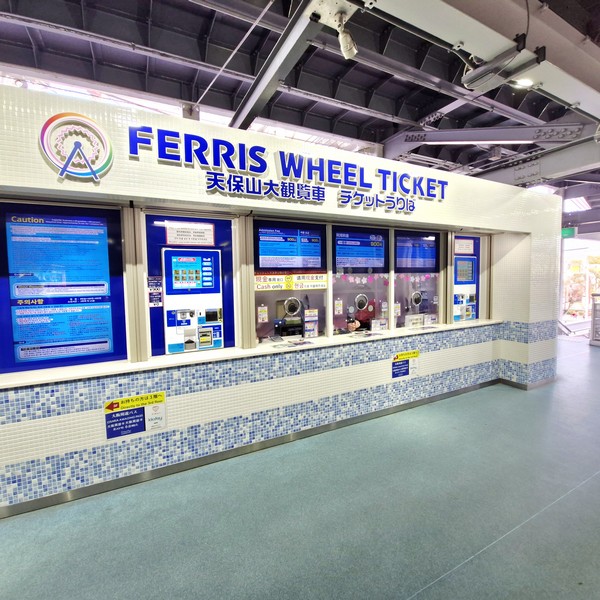
Ticket Office

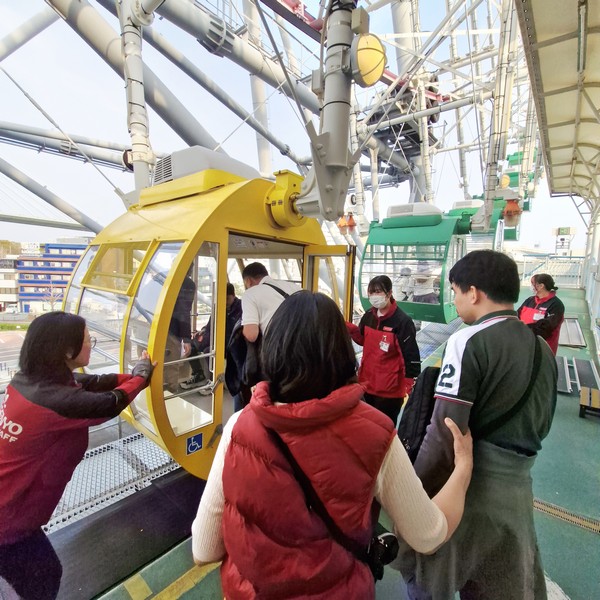
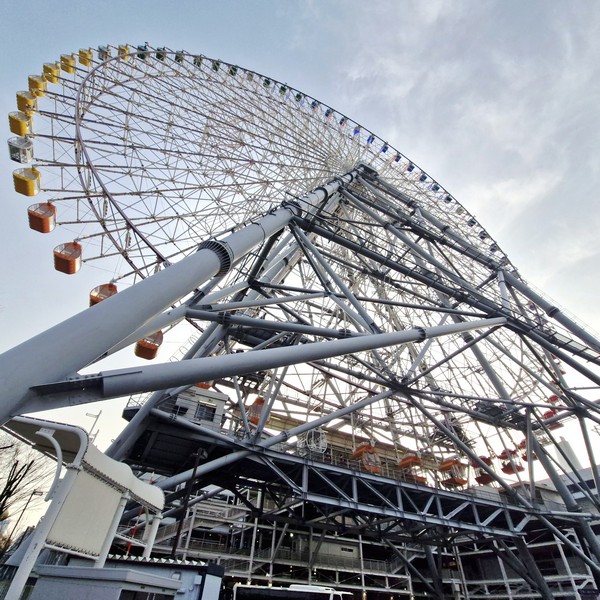
After paying the admission fee, we boarded two of its 60 airconditioned gondolas (three are barrier-free, allowing wheelchair users to board directly, while 8 gondolas have seats and floors that are see-through, giving you a 360° view of the scenery around your feet). During the ride, commentary is provided in both Japanese and English.

Boarding our gondola

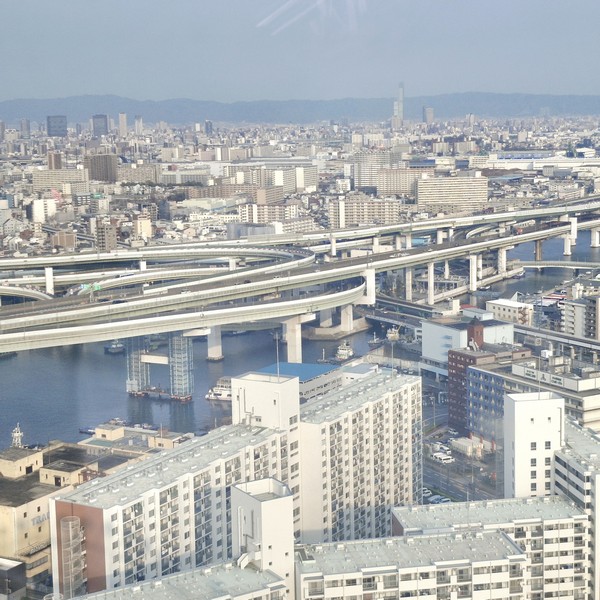
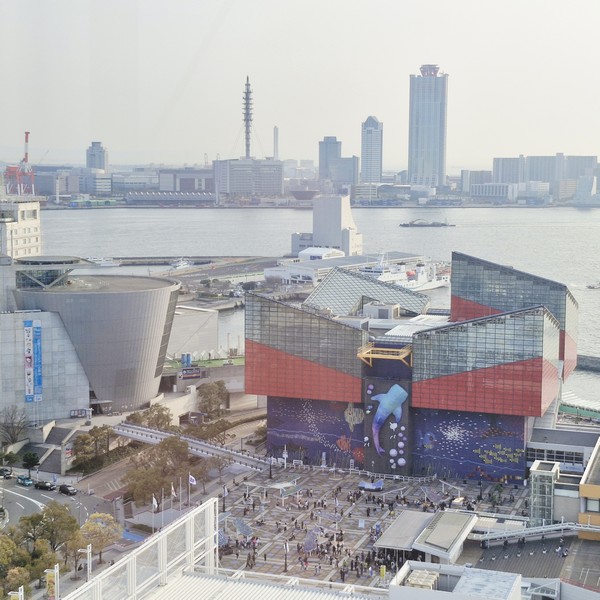
This 112 m. tall (367 ft.)  Ferris wheel  has a height of 112.5 m. (369 ft.) and diameter of 100 m. (330 ft.). Opened to the public on July 12, 1997, it was then the tallest Ferris wheel in the world.  During our fantastic, 17-minute aerial journey, we were offered a view of Osaka Bay and surrounding areas, including Mount Ikoma to the east, Akashi Kaikyō Bridge to the west, Kansai International Airport to the south, and the Rokko Mountains to the north.

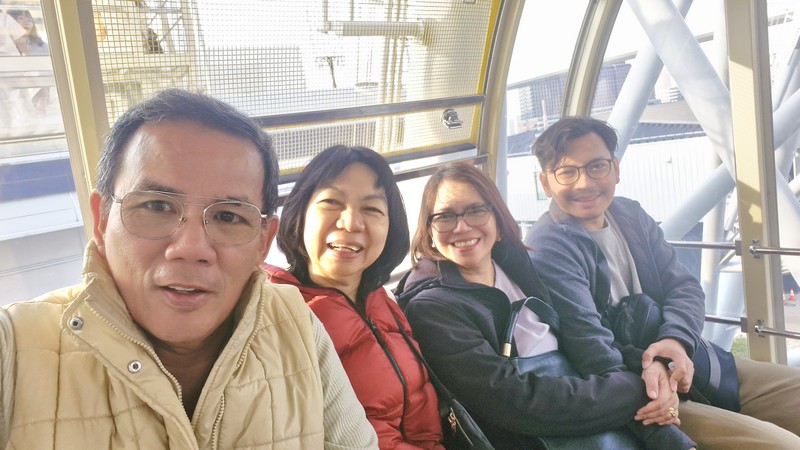
The author, Grace, Nenette and Miguel

The wheel has colored LED lights, another popular attraction, that provide a weather forecast for the next day. Orange lights indicate a sunny day, green lights a cloudy day and blue lights indicate rain. Illuminating Osaka Port, they have now become one of Osaka’s nighttime attractions.

The Osaka skyline
Osaka Aquarium Kaiyukan

Tempozan Ferris Wheel: 1-1-10 Kaigan-dori, Minato-ku, Tempozan Harbor Village, Osaka-shi, 552-0022, Japan. Tel: +81 6-6576-6222. Open daily, 10 AM-10 PM (last entry 9:30 PM). Admission: JPY900 per person (3 years old and above). Coordinates: 34°40′N 135°26′E.

How to Get There: It’s about a 5-minute walk from Osakako Station on Osaka Metro Chuo Line.

Umeda Sky Building (Osaka, Japan)

Kuchu Teien Observatory at Umeda Sky Building

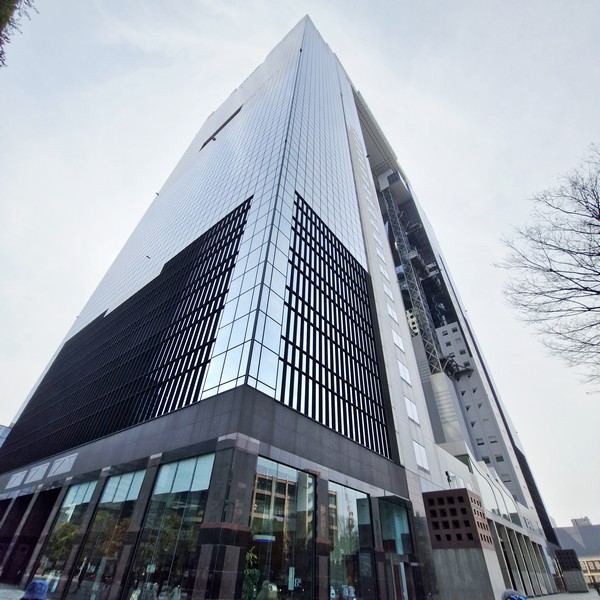
After our tour of Shitennoji Temple and lunch at Marumiya Restaurant, we transported, via van, for 12 kms. (a 30-min. drive) to the 170 m. (557.74 ft) high Umeda Sky Building (Umeda Sukai Biru),  a mixed-use skyscraper with two 40-storey towers (Tower East and Tower West). The tower also has an underground market that attempts to recreate the atmosphere of Osaka in the early 20th century. 

Check out “Shitenno-ji Temple

Umeda Sky Building
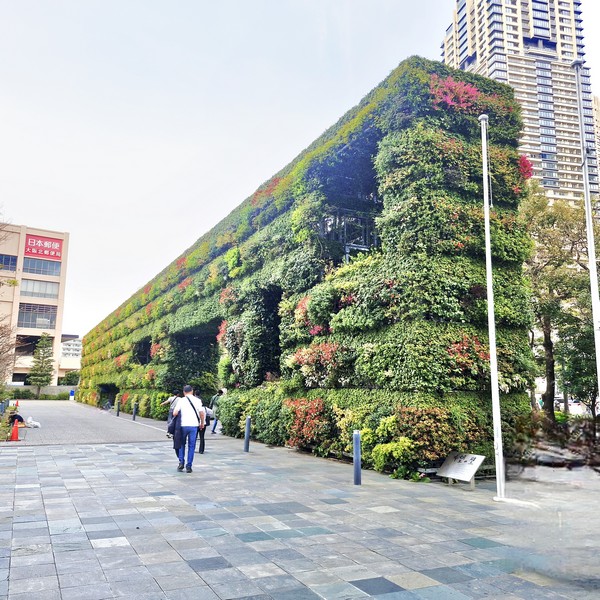
Wall of Hope (Tadao Ando)

The Umeda Sky Building was designed by Hiroshi Hara, the architect of the Kyoto Station Building, and were constructed by Takenaka Corporation. It was completed in March 1993. In 2008, The Times, a British newspaper, selected the Umeda Sky Building among the “Top 20 Buildings around the World,” recognizing it as an Osaka landmark due to its futuristic, dramatic design. The list also included the Sagrada Familia in Spain, the Taj Mahal of India and the Parthenon of Greece.

The author (left) with Grace and Jandy at the Kuchu Teien Observatory

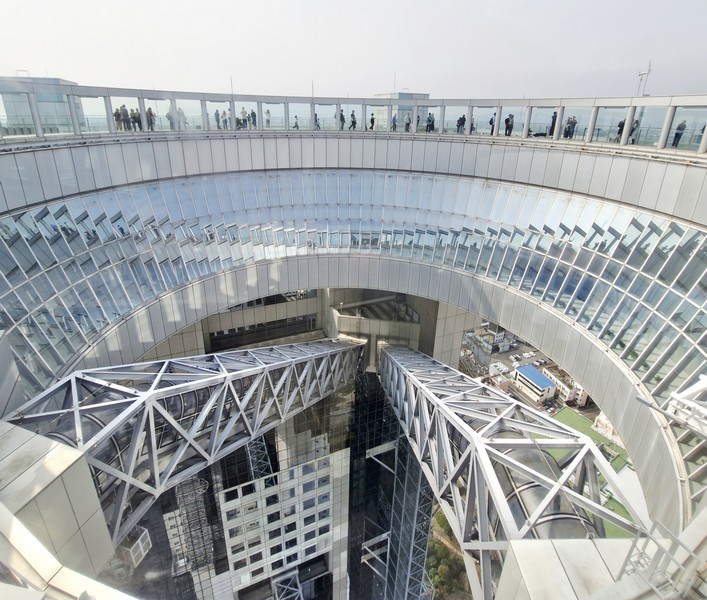
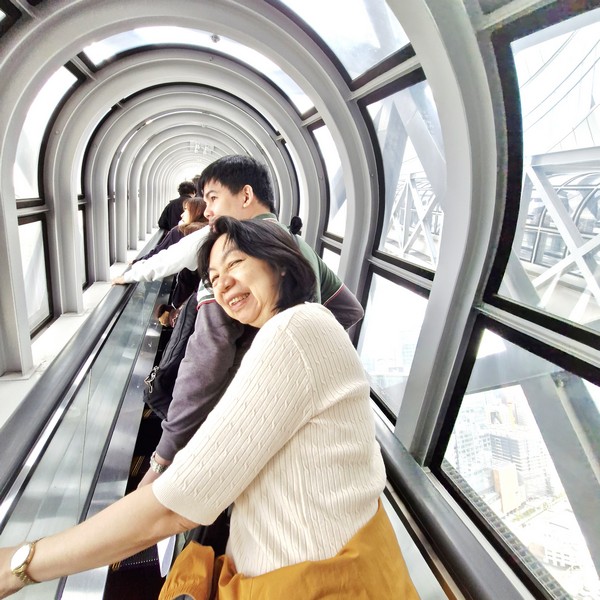
The two towers are interconnected, at the 39th, 40th and roof deck floors, by the famous Kuchu Teien (“Floating Garden”) Observatory.  Elevators cross an open atrium space.  The 35th floor is connected to the 39th floor (the observatory entrance) by see-through escalators covered in a transparent tube. A popular spot to take photos, here we felt like we were standing inside a spaceship.

The see-through escalator

The last stop of the escalator, the 39th floor, is open to the public. It consists of a ticket counter at the 39th floor where, after purchasing a ticket, visitors may enter the indoor observatory deck at the 40th floor and the Sky Walk, an open-air lookout (rooftop).  Sangu (an authentic Chinese restaurant serving lunch and dinner), and Stardust (a bar serving Italian course meals with 300 types of cocktails) are also located on the 39th floor.

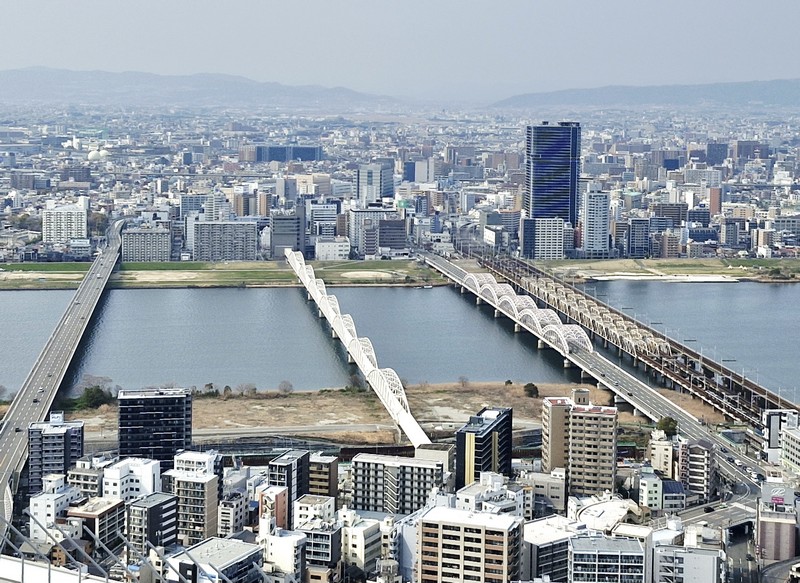
The Yodo River
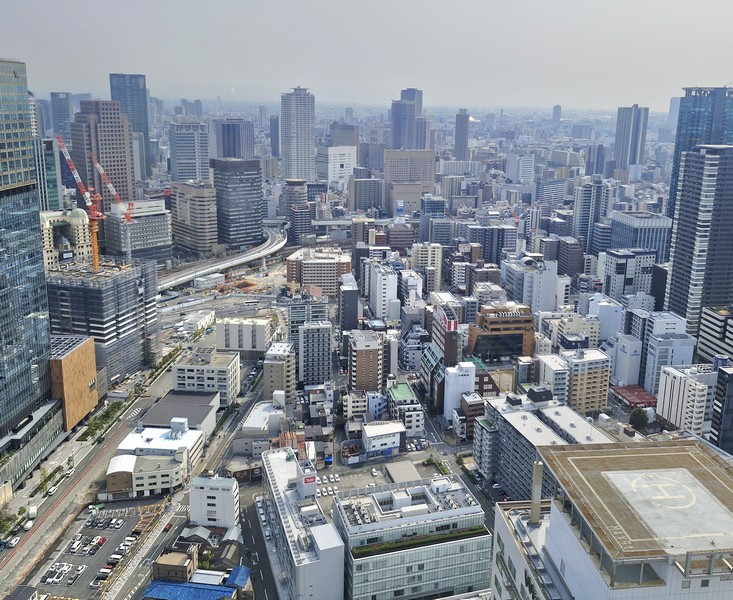
The Osaka skyline

The observatory offers great views of the city through its windows and from its 360° open-air rooftop observation deck where we felt the refreshing breeze, a must-see at least once in any season and at any time of day.  Here, we had views of the skyscrapers in the Umeda area, the Yodo River (the symbol of the city), Odori Park, Susukino, Sapporo Dome and, when the weather is fine, the Akashi Kaikyo Bridge, the longest suspension bridge in the world, is also visible. Dusk to evening is said to be the best time to drop by since visitors can enjoy the sunset and night view.

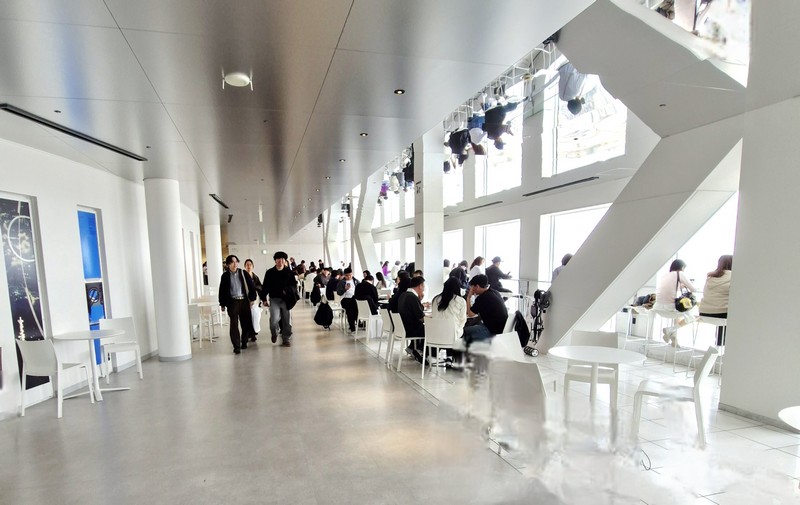
Cafe SKY 40

Cafe SKY 40, at the indoor observation floor (40th floor), features a 35 m. long glass counter, allowing you to enjoy cafe time as if floating in the sky.  It serves coffee, alcoholic beverages, and snacks.

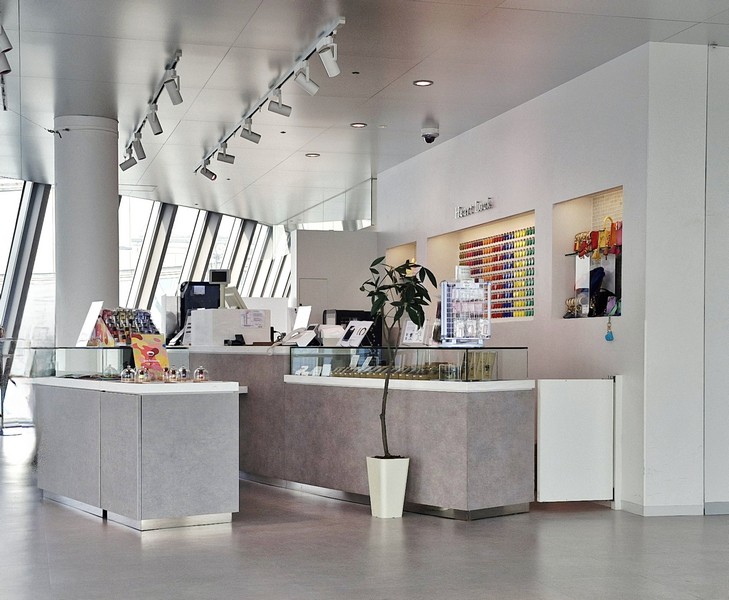
Heart Lock Counter

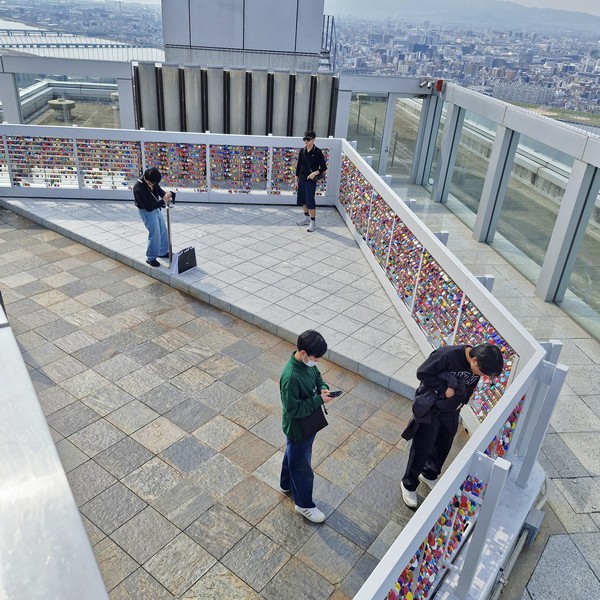
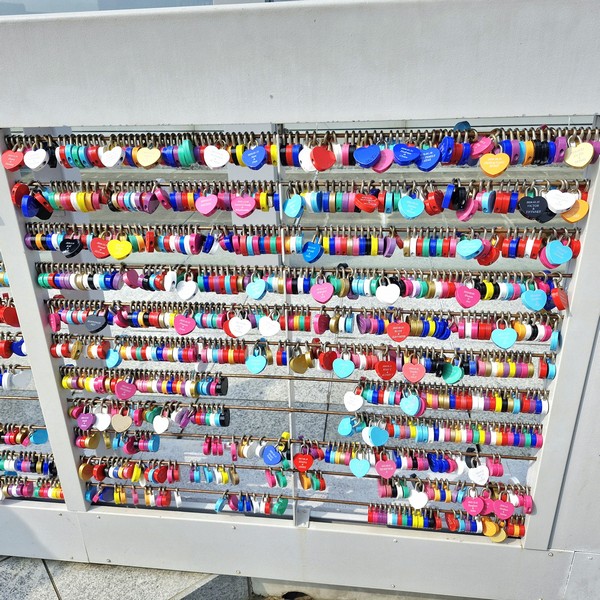
The one-and-only Heart Lock, a heart-shaped padlock, is especially popular with couples who can choose among ten colors and have their names and date engraved.

Lumi Deck

They can be taken home as a souvenir or can also be placed “Fence of Vows” at the Lumi Deck (rooftop), a sky-high dating spot, or the Chikai no Saku (“Fence of Pledges”) inside the shop. Once shut, the padlock cannot be opened, so it will be a unique memory with someone special.

Heart Locks at Lumi Deck

Umeda Sky Building: Kita Ward, Oyodonaka, 1 Chome−1−88 531-6039 OsakaJapan. Open daily, 9:30 AM to 10:30 PM (last admission: 10 PM). Tel: +81 6-6440-3855. Admission: 2,000 yen (adults), 500 yen (children, 4 years old to Elementary School). If you have Osaka e-pass, admission is free until 3:00 PM. If you would like to purchase the popular Heart Rock, be sure to purchase your online ticket with Heart Rock in advance.

How to Get There: It is a 7-min. walk from JR Osaka Station and a 9-min. walk from Hankyu Osaka-Umeda Station/ Osaka Metro Umeda Station

Shitennō-ji Temple (Osaka, Japan)

Shitennō-ji Temple

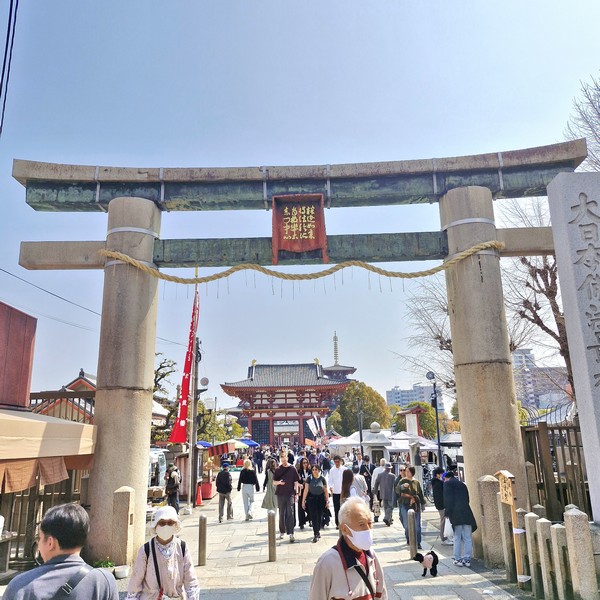
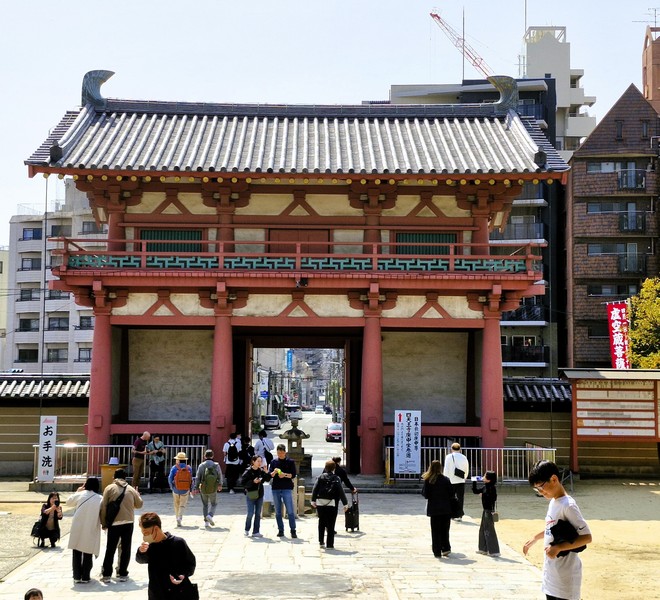
After our visit to Osaka Castle Park, it was a short 4.7-km. (15-min.) drive to Shitennō-ji Temple.  The outer temple grounds are free to enter, but we paid admission to explore the inner precinct (Chushin Garan), the Gokuraku-jodo Garden and the treasure house. The stone torii gate at the main entrance to Shitennō-ji dates from 1294 and is the oldest of its kind in the country.

Check out “Osaka Castle Park

Torii at entrance
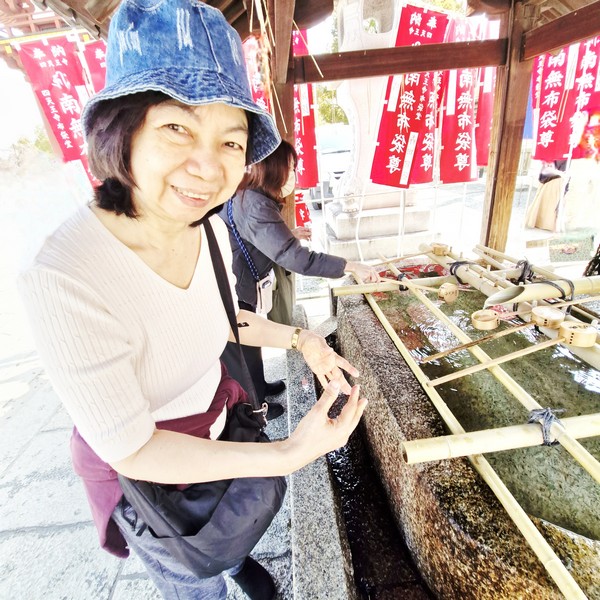
Grace at a Purification Fountain (Temizuya)

Also called as Arahaka-ji, Nanba-ji, Mitsu-ji or  Temple of the Four Heavenly Kings (“Shitennō” refer to the Four Heavenly Kings in Buddhism), this Buddhist temple is sometimes regarded as the first and oldest of Japan’s officially administered Buddhist temples and the first ever to be built by the state (although the temple complex and the buildings themselves have been rebuilt a few times over the centuries; most of the present structures are from when the temple was last completely rebuilt in 1963).

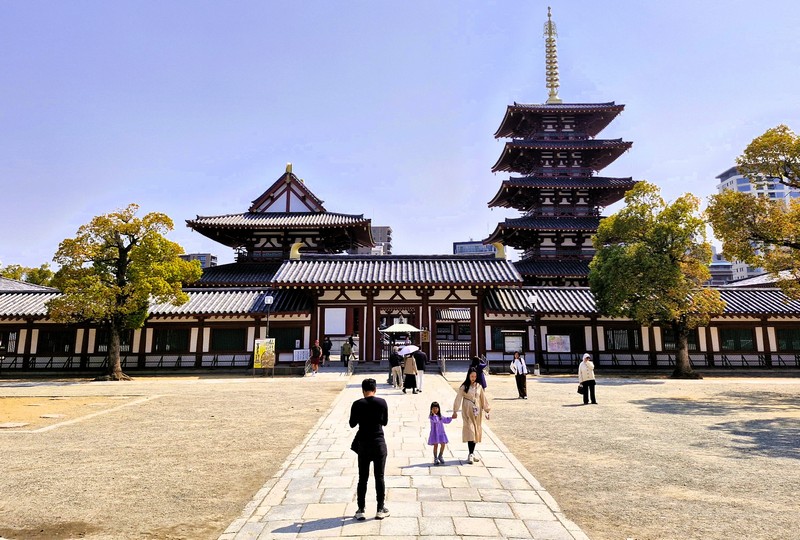
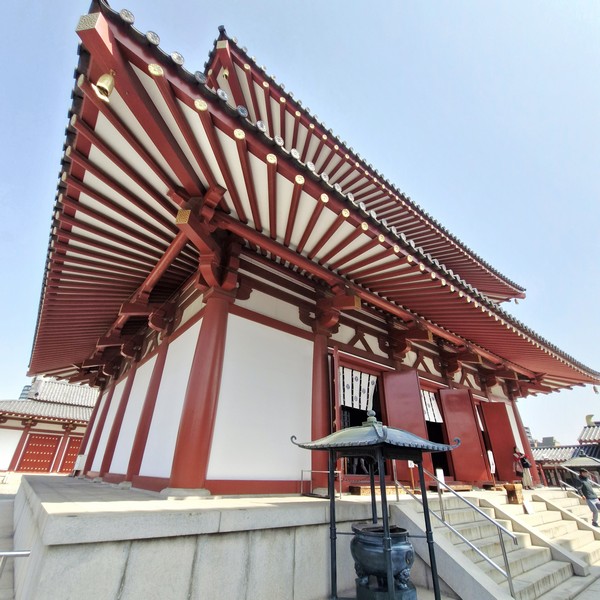
Golden Pavilion (Kondo)

The temple was founded in 593 by Prince Shōtoku, who known for his profound Buddhist faith.  He supported the introduction of Buddhism  which was not widespread in Japan during the 6th century. In order to popularize Buddhism, Prince Shōtoku led a massive national project to promote Buddhism and he commissioned the construction of Shitennō-ji in the 6th century, inviting three Korean carpenters from Baekje who brought knowledge and led the construction. Later, one of the members involved in the initial construction of the temple established the firm Kongō Gumi (the world’s oldest company until it was acquired by the Takamatsu Construction Group in 2004), which specialized in temple and shrine buildings.

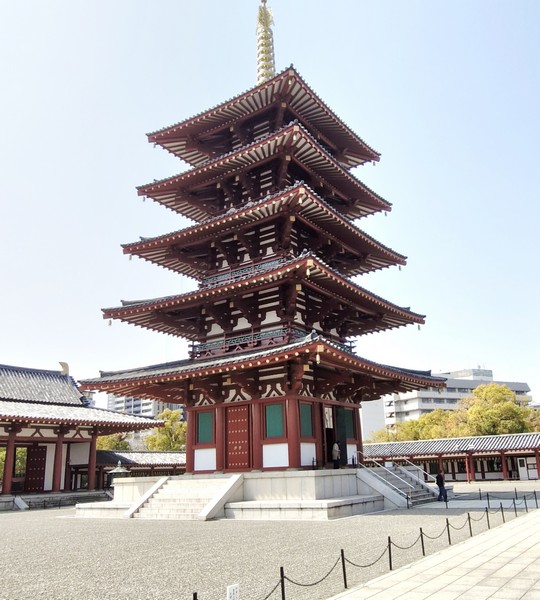
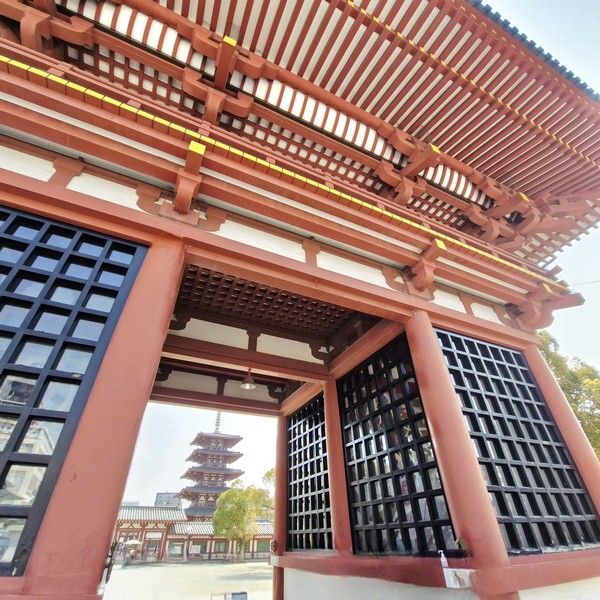
Pagoda (Gojunoto)

The temple Prince Shōtoku built to honor the Four Heavenly Kings had four institutions (Shika-in), each to help the Japanese attain a higher level of civilization, centered on the seven-building garan  (the complex inside the walls), which included a Kyōden-in (Institution of Religion and Education), a Hiden-in (Welfare Institution), a Ryōbyō-in (hospital), and a Seiyaku-in (pharmacy) to provide essential care to the people of Japan.

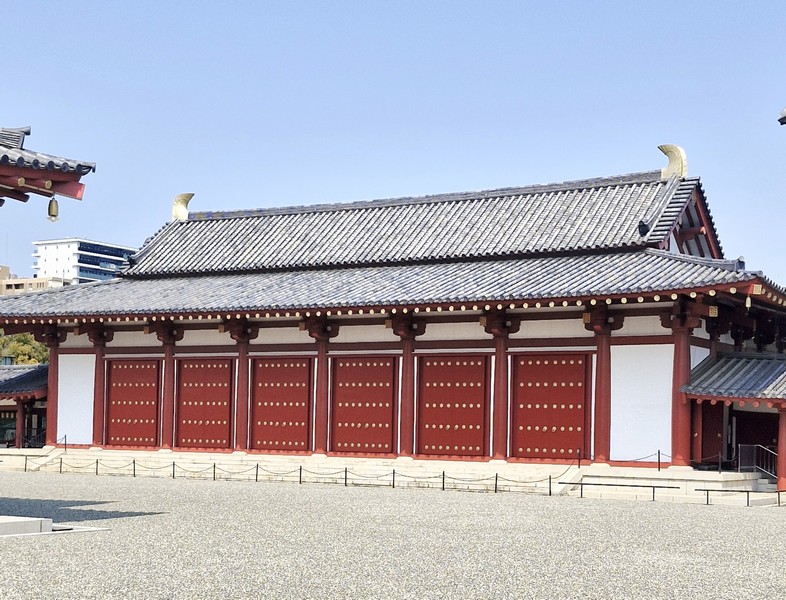
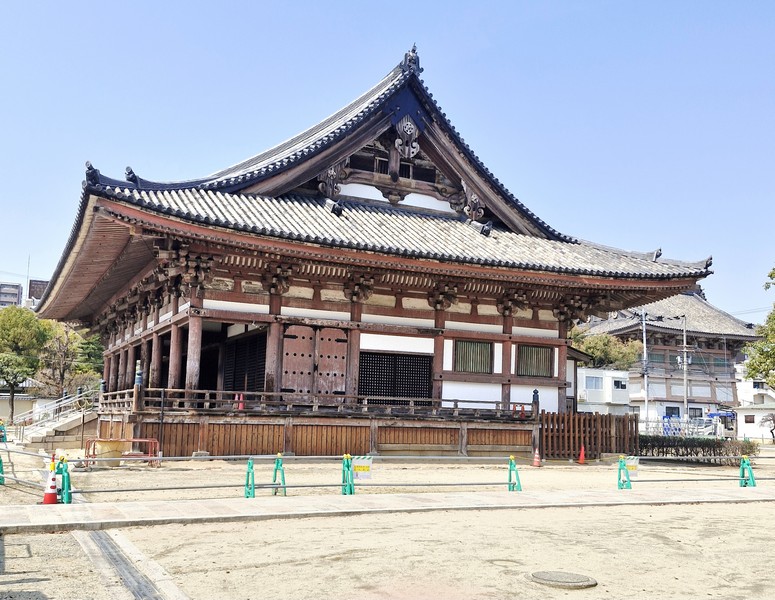
Lecture Hall (Koudou)

Within the pebble-covered courtyard of the inner precinct, the garan consists of a five-storey pagoda (which we entered and ascended), a main Golden Pavilion (Kondō) where Prince Shōtoku is enshrined as a statue of Bodhisattva Kannon, and a Kōudōu (Lecture Hall). 

Covered Corridors (Kairo)

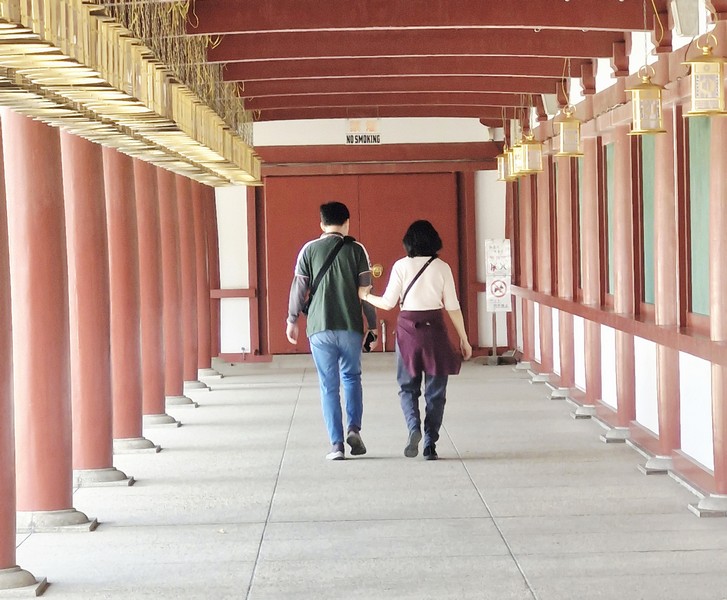
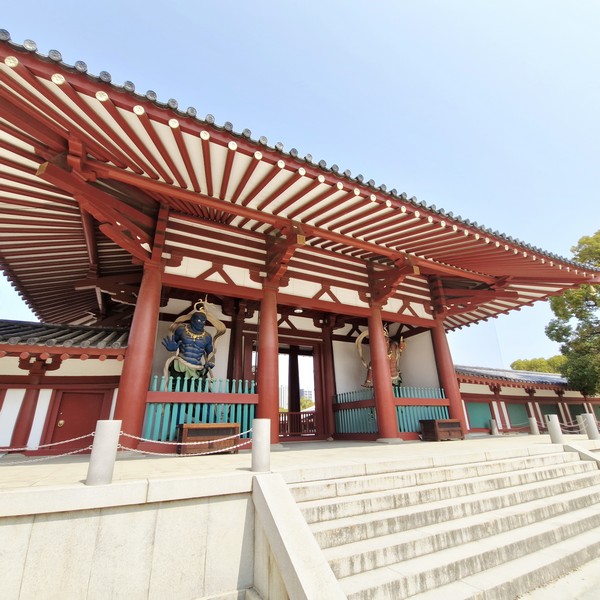
The covered corridor (kairo) holds three gates – the Deva Gate (Niōmon, also known as the Chūmon), the Western Gate (Saijumon), and the Eastern Gate (Tojumon).

Chumon

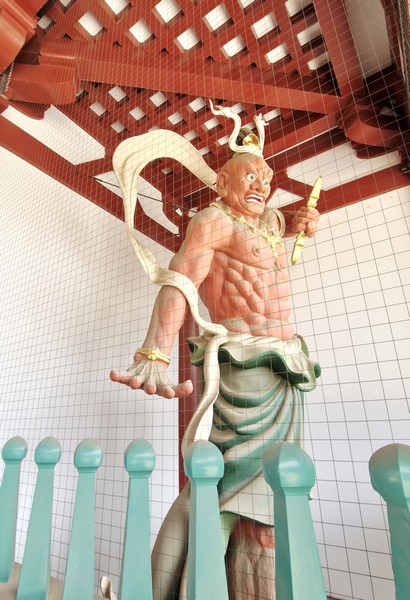
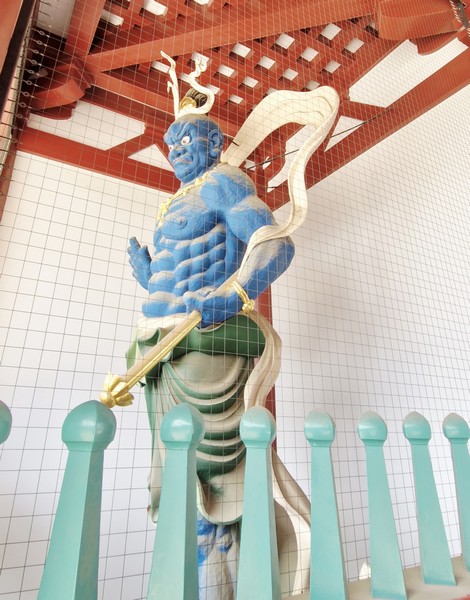
The Chūmon is home to two Nio (benevolent guardians). Ungyo, on the left, represents closure or death. Agyo, on the right, symbolizes beginnings or birth.

Agyo
Ungyo

Surrounding this central complex are the Great South Gate (Nandaimon), and a Great East Gate (Higashi-no-ō’mon). To the west is the Great West Gate (Nishi-no-ō’mon, also known as Gokuraku-mon). Further to the west is a stone torii, which is imagined to be the Eastern Gate to Sukhavati, the Pure Land of the West. These gates are guarded by wooden statues called Nio (Benevolent Kings).

Great West Gate (Gokuraku-mon)

During the Kamakura period, three of the four sections are known to have existed inside the temple. Although the temple’s buildings burned down several times over the centuries, they were always carefully reconstructed to reflect the original 6th century design. Shortly after World War II, Shitennō-ji became independent of the parent Tendai sect and formed the Wa sect (Wa-shū) of Buddhism.

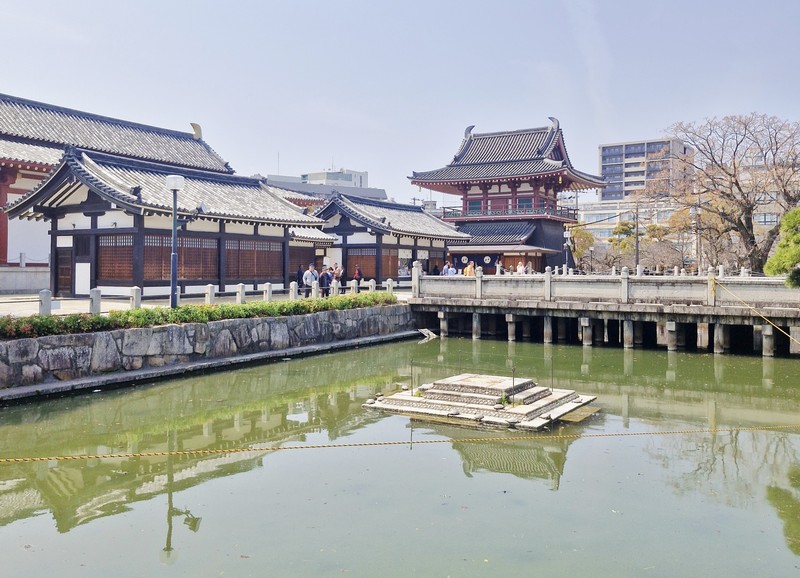
Kame-no-ike (Turtle Pond)
Prayer Hall (Rekujireisan-do)

A short walk away, the Gokuraku-jodo Garden, laid out in the early Edo Period, was designed in 1933 based on descriptions of the Western Paradise of the Amida Buddha. It has pleasant ponds and rock waterfalls, cherry trees, irises and stone lanterns. The Kame-no-ike Pond in the main complex is famous for its scores of basking turtles.
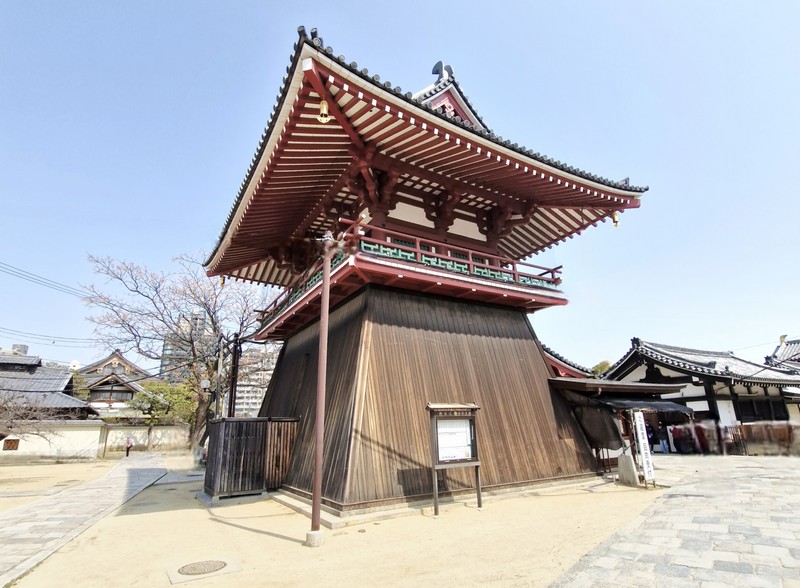
Northern Belfry

Also on the temple grounds is the Treasure House. It holds documents, paintings and sacred objects which are displayed in periodic themed exhibitions throughout the year as well as a number of National Treasures including swords said to have belonged to Prince Shotoku and a copy of the Heian Period Hokekyo sutra.

Nandai-mon Gate

Shitennoji: 1 Chome-11-18 Shitennoji, Tennoji Ward, Osaka, 543-0051, Japan.  Tel: +81 6-6771-0066. Open 8:30 AM to 4:30 PM (until 4 PM from October through March); slightly longer hours on the 21st of each month and on some other special days Admission: 300 yen (inner precinct), 300 yen (garden), 500 yen (treasure house)

How to Get There: Shitennoji is a 5-minute walk from Shitennoji-mae Yuhigaoka Station on the Osaka Municipal Subway Tanimachi Line, a 15-minute walk from Tennoji Station on the JR West Lines and the Osaka Municipal Subway Lines and a 15-minute walk from Osaka Abenobashi Station on the Kintetsu Minami-Osaka Line.

Osaka Castle Park (Osaka, Japan)

Osaka Castle Park

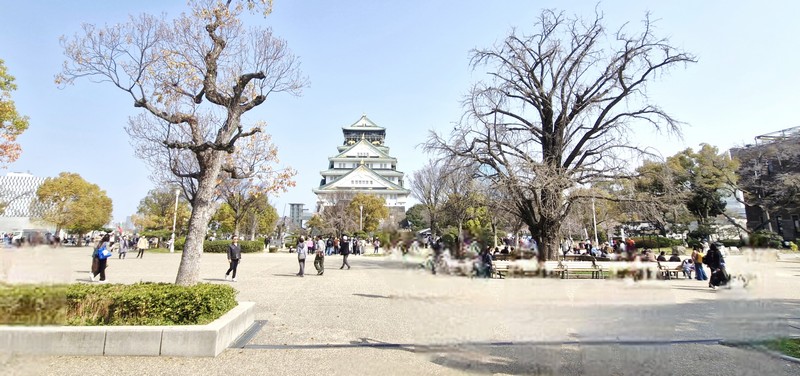
On our second whole day in Japan, we began our Osaka city tour with a stopover at 105.6-hectare (about 260 acres) Osaka Castle Park (known as Osakajo-koen in Japanese), a public urban park and historical site opened to the public in 1931.  The second largest park in the city, it lies on the south of the Ōkawa (Kyū-Yodo River) and occupies a large area in the center of the city of Osaka. It was well worth a visit, even if we didn’t intend to enter the castle. 

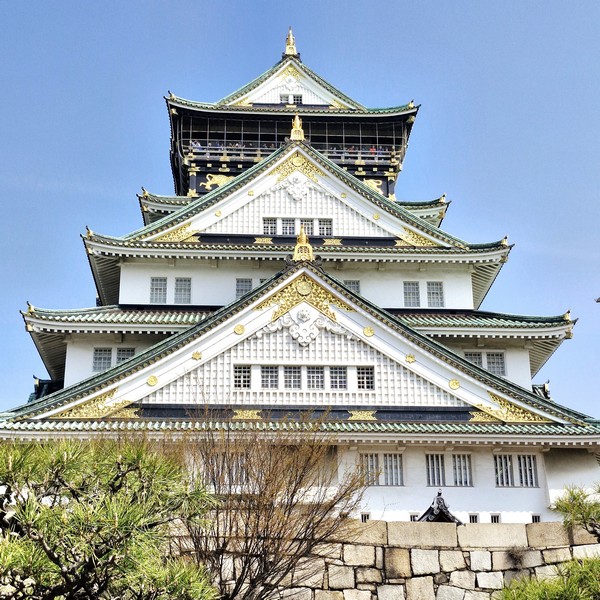
Osaka Castle

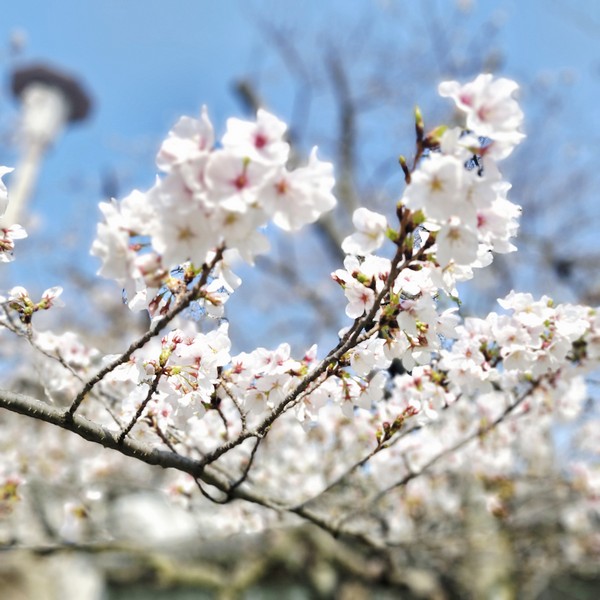
Forming the most attractive part of Osaka, here we can also view and enjoy seasonal flowers such as plum blossoms, 3,000 cherry blossoms (we arrived at the last week of March) and azaleas. This green and spacious expanse, built around the awe-inspiring tower of Osaka Castle (known as Osaka-jo in Japanese, the present castle is a concrete reconstruction that was finished in 1995), provided a pleasant escape from the otherwise crowded and concrete expanses of the rest of the city. 
Cherry blossoms

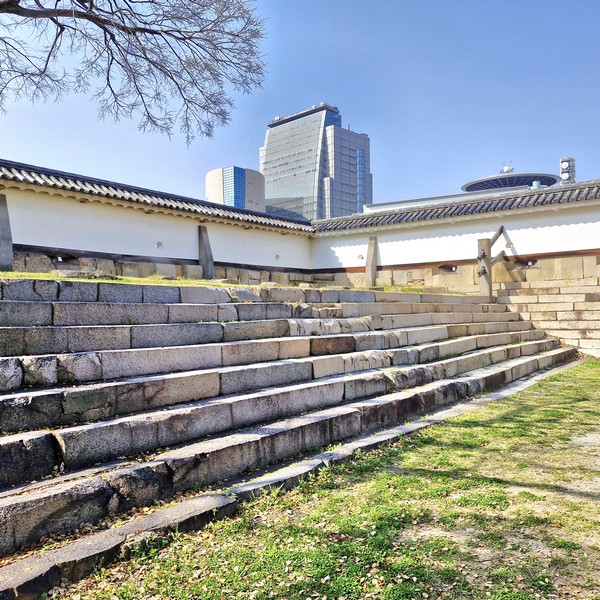
The castle grounds, which cover approximately 61,000 sq. m. (15 acres), contains 13 structures, around the 55 m. high main central tower, that were denoted as “Important Cultural Assets” by the Japanese government. They are Otemon Gate, Sakura-mon Gate, Ichiban-yagura Turret, Inui-yagura Turret, Rokuban-yagura Turret, Sengan Turret, Tamon Turret, Kinmeisui Well, Kinzo Storehouse and the Enshogura Gunpowder Magazine.

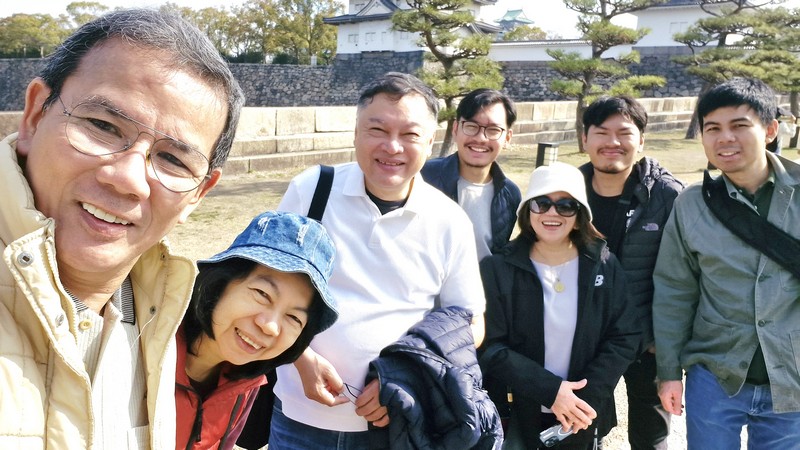
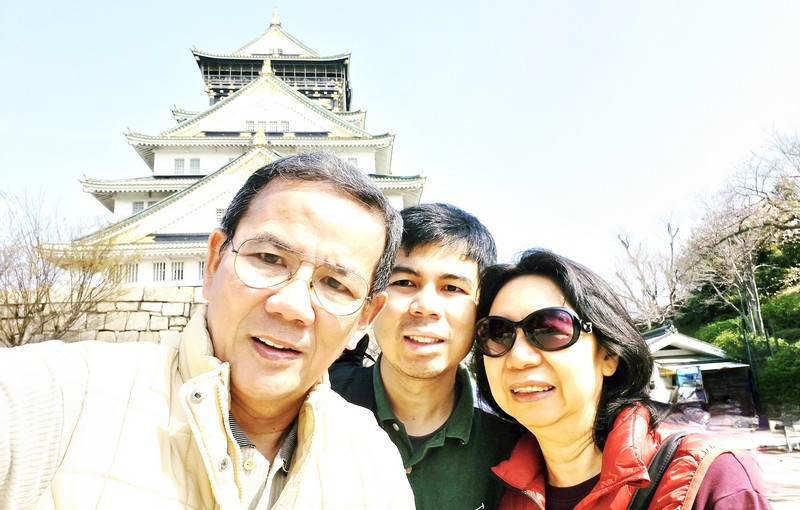
The author, Grace, Mark, Miguel, Nenette, Matthew and Jandy at Osaka Castle Park
The author, Jandy and Grace

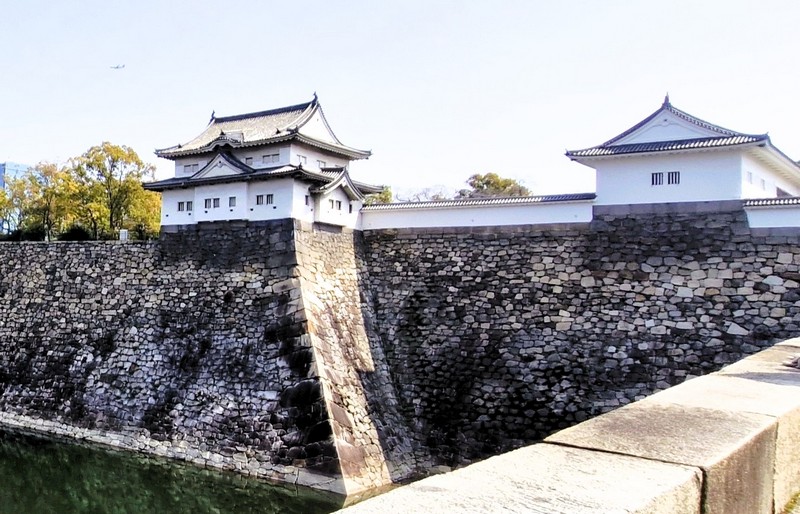
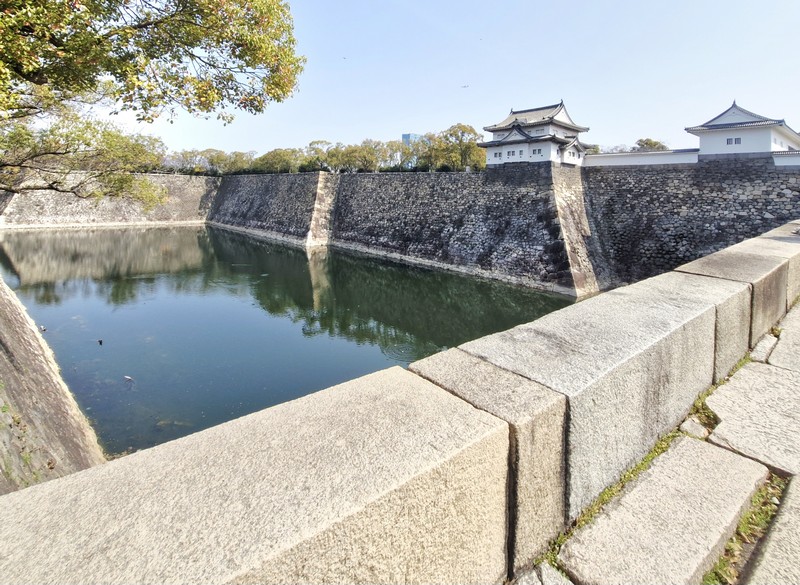
Surrounding the main keep are a series of moats and defensive fortifications. The castle has an inner and an outer moat. The former, lying within the castle grounds, consists of two types: wet (northern-easterly) and dry (south-westerly), while the latter surrounds the entire castle, denoting its outer limits, and consists of four water-filled sections, each representing a cardinal direction (North, East, South, West).

Castle moat

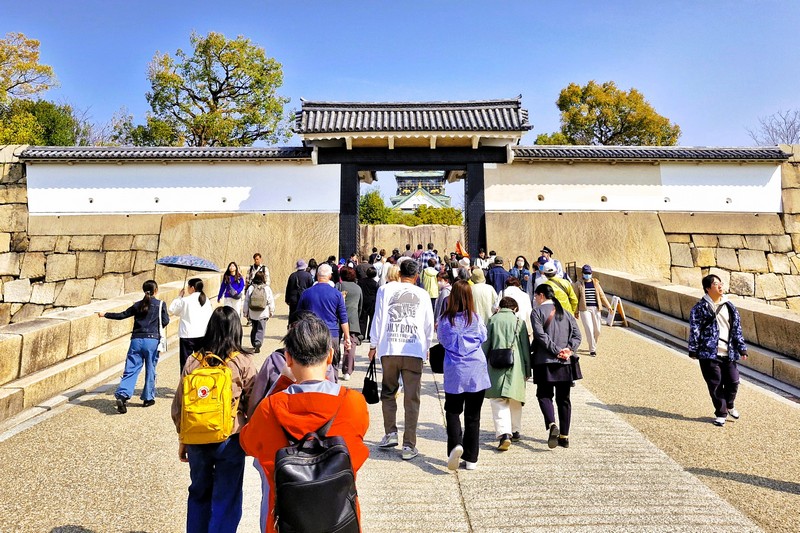
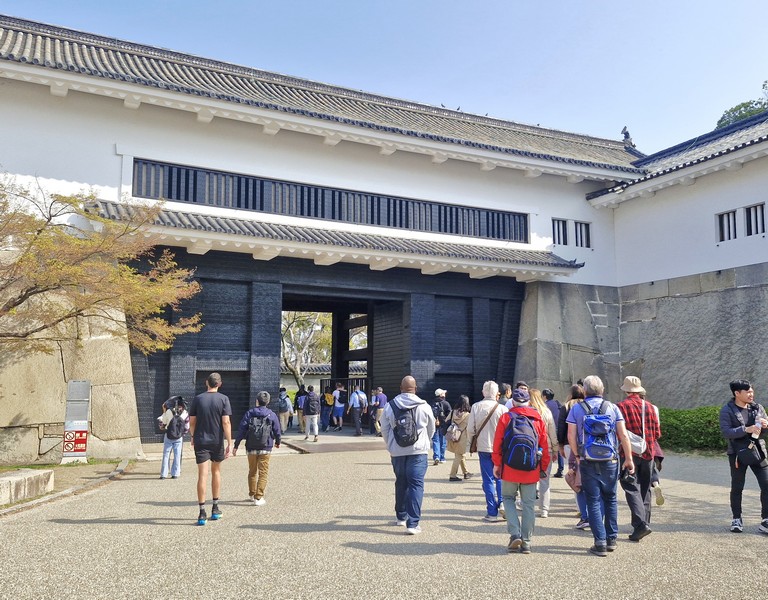
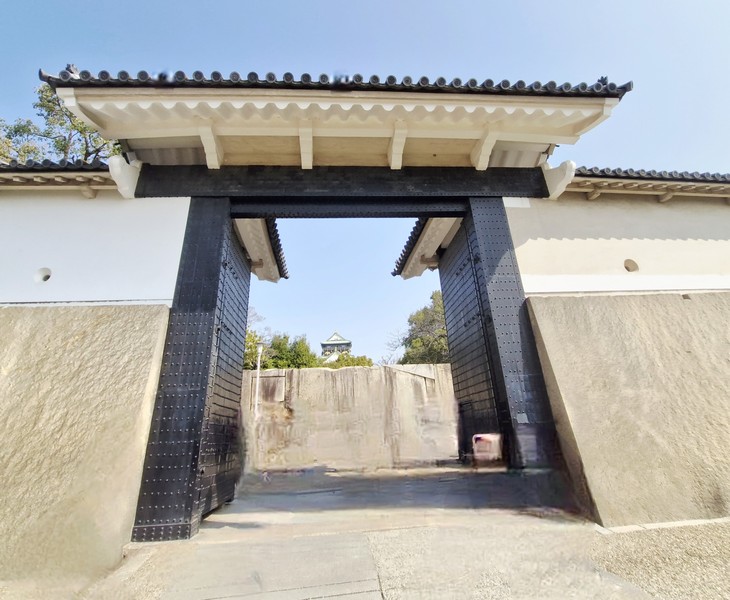
Aoyamon Gate, in the northeast, and Ote-mon Gate, in the opposing southwest, are two main sentry checkpoints at the outer moat. Three sections of ‘dobei’ mud-and-plaster wall, all located around the Otemon Gate, all have their own Important Cultural Property status.

Otemon Gate

There are also some megaliths, with no cultural property status, at the castle, including the Takoishi (Octopus stone). The Fushimi-yagura Turret Remains, Ensho-gura Gunpowder Storehouse, Osaka Geihinkan, Hoshoan Tea House, Osaka Castle Nishinomaru Garden, Sengan-yagura Turret, Tamon-yagura Turret, Remains of Taiko-yagura Turret, Osaka Shudokan Martial Arts Hall, Hokoku Shrine (Osaka), Ichiban-yagura Turret (the first turret), and Plum Grove are all located between the inner and outer moat.

Sakuramon Gate

You can cross the inner moat via the Gokuraku-bashi Bridge (or Paradise Bridge), located in the north, and Sakuramon Gate, the main sentry point in the south.

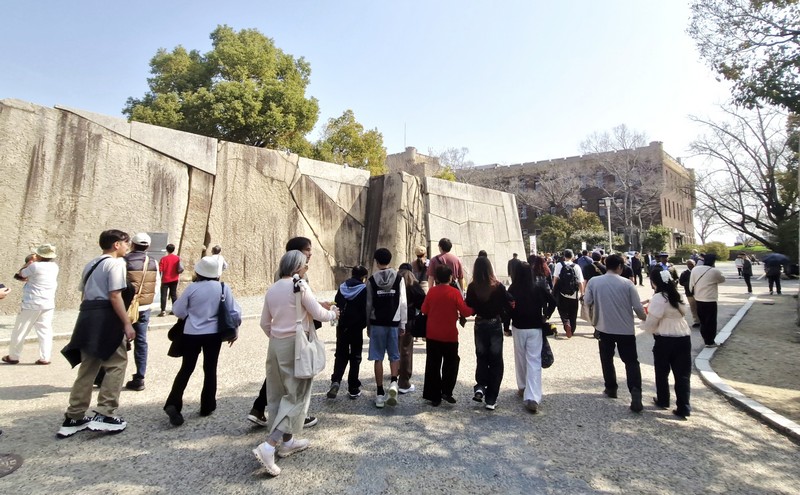
Huge stones at Sakuramon-masugata Square

The Hommaru (Inner Bailey) and the Yamazato-Maru Bailey divides the castle into two major areas within the inner moat. The Main Tower, the Kimmeisui Well, the Japanese Garden, the Takoishi (Octopus Stone), the Gimmeisui Well, the Miraiza Osakajo Complex, the Kinzo Treasure House, and the “Time capsule Expo’70” are located within the Hommaru while the Marked-Stones Square, and the Monument commemorating “Hideyori and Yodo-dono committing suicide” are within the Yamazato-Maru, Bailey.

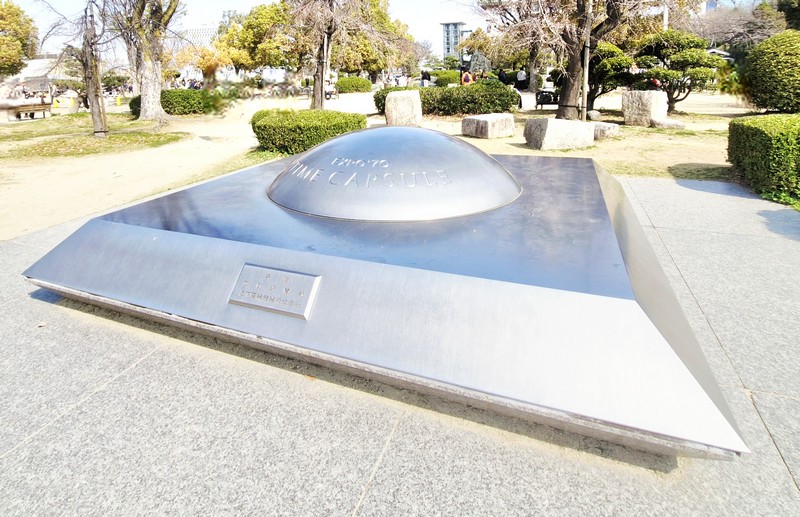
Expo ’70 Time Capsule

The Time Capsule Expo ’70 is a stainless-steel monument which marks the site of the 1970 Japan World Exposition time capsule buried 15 m., in 1971, by Panasonic and The Mainichi Newspapers.  The two identical capsules contain 2,098 everyday items from 1970 Time Capsule Expo ’70.

Site of Ichi-tamon Turret
Sengan-yagura Turret

In the park, there is Osaka Castle Hall, a large athletic field, baseball field, football field, open-air music theatre, open-air concert hall, and Osaka Castle Keep Tower where, from its top, the vista includes Osaka Bay to Mount Ikoma, which surround the Osaka Plain. Many busking groups perform in the park.

Tamon-Yagura Turret

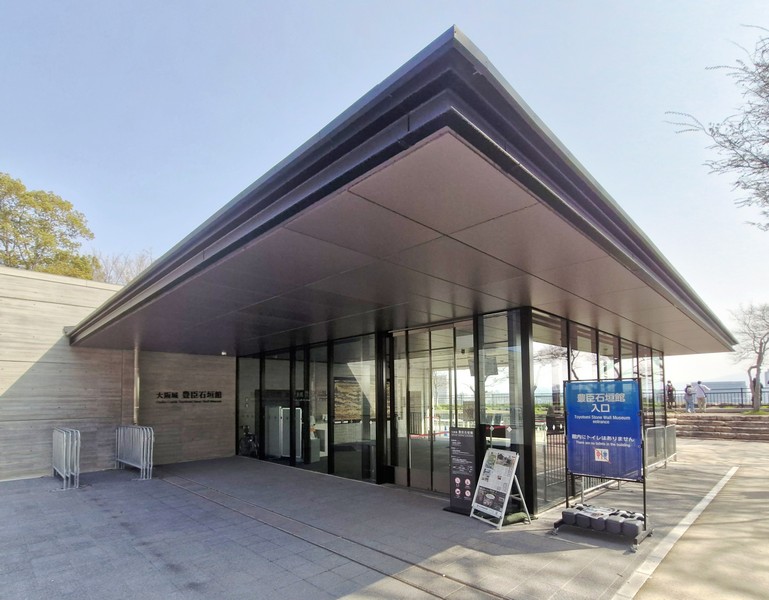
The Toyotomi Stone Wall Museum, opened to the public last April 2025, allows visitors to view, firsthand, the original Toyotomi stone walls that had been hidden, for over 400 years, since the Toyotomi forces were defeated in the Summer Campaign of Osaka in 1615 and the Tokugawa Osaka Castle was built over them.

Toyotomi Stone Wall Museum

The three-storey Miraiza Osaka-Jo, right beside the iconic Osaka Castle Main Tower, is a historical complex housed in a former military headquarters built in 1931.  It offers the Kaiyodo Figure Museum, rooftop cafes with castle views, and samurai and ninja experiences where you can dress up in authentic gear and try stage combat sword-fighting in the basement.

Miraiza Osaka-Jo

Osaka Castle Park: 1-1 Osakajo, Chūō-ku, Osaka, 540-0002 Japan. Admission is free. Tel: 06-6755-4146. Coordinates: 34°41′14″N 135°31′33″E.

How to Get There: On Osaka Metro Tanimachi Line, get off at Tenmabashi or Tanimachi 4-chome Station. On Osaka Metro Chuo Line, get off at Morinomiya or Tanimachi 4-chome Station. On the JR Loop Line, get off at Morinomiya or Osaka Castle Park Station.