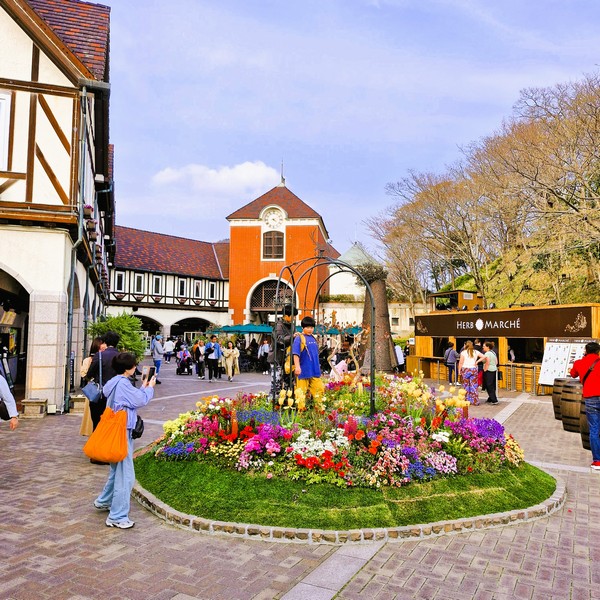
Nunobiki Herb Garden (Kobe, Japan)

Nunobiki Herb Garden

After touring the Ikuta Jinja Shrine and lunch at Yakiniku Like, we proceed to our final Kobe destination which was Nunobiki Herb Garden (Nunobiki Hābu-en), a big 40-acre botanical herb garden (Japan’s largest) located on the 931 m. high Mount Rokkō

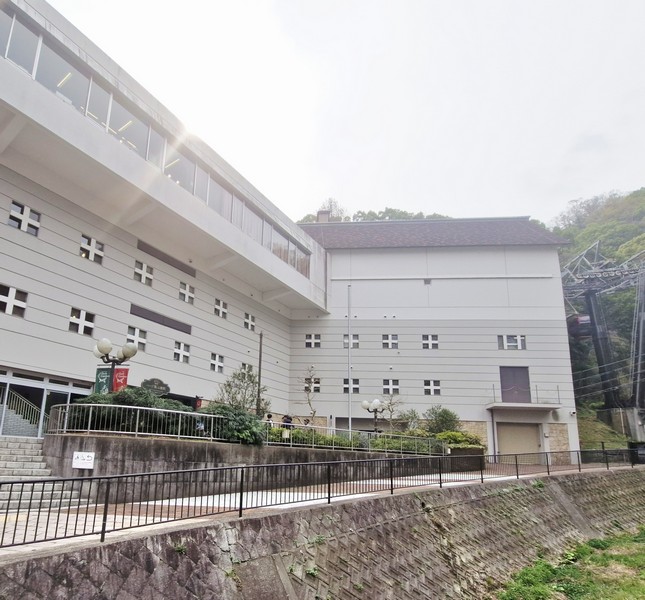
Sanroku (Bottom) Station

Built in 1991, it grows over 75,000 herbs (200 varieties) and flowers blooming year-round. To get there we were driven just 1.2 kms. (a 5-min. drive) to the Sanroku (Bottom) Station. 

Check out “Ikuta Jinja Shrine

Nunobiki Ropeway

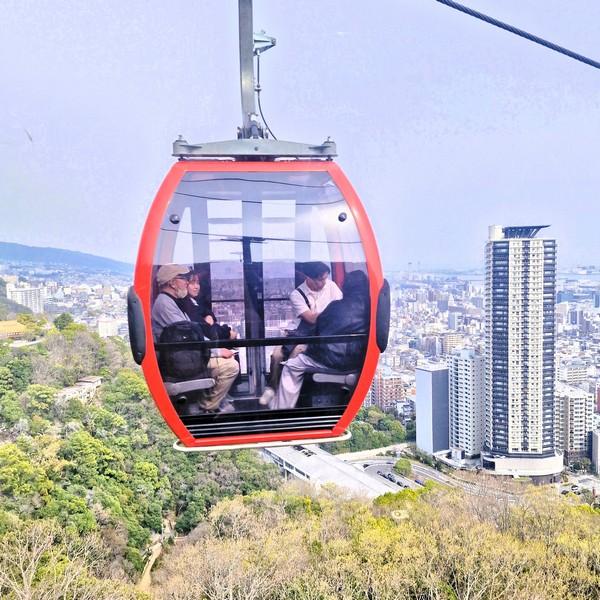
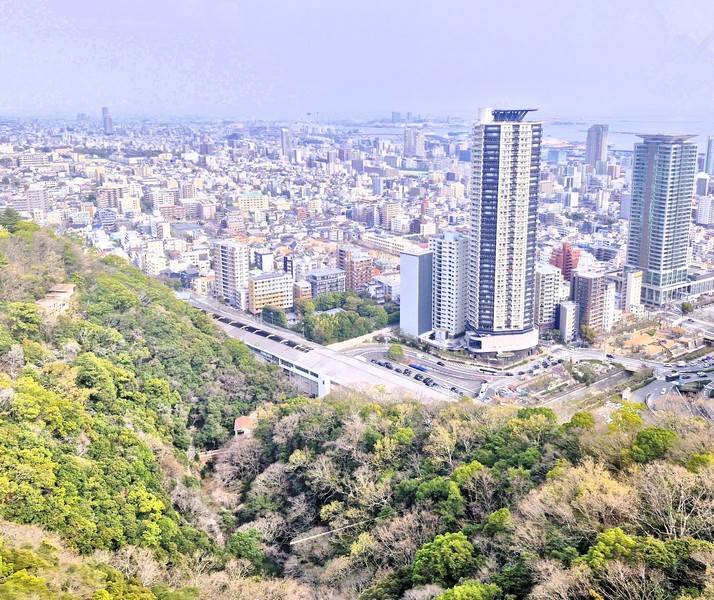
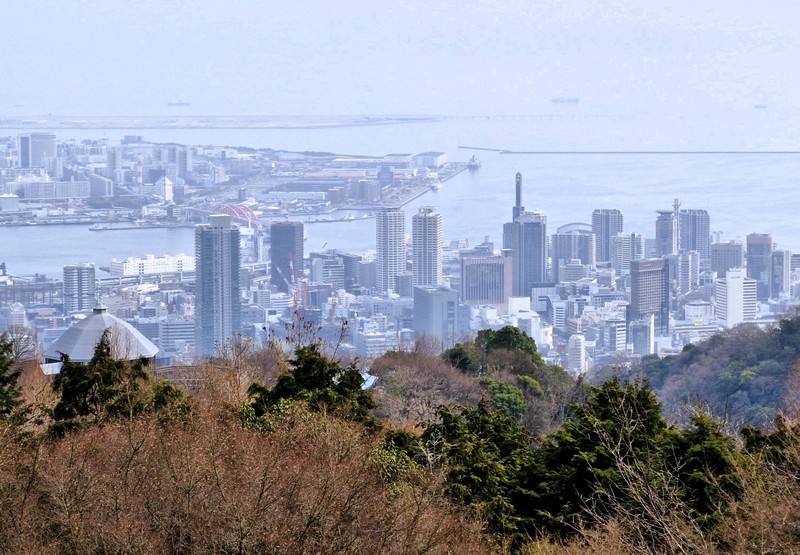
Here, we boarded a cable car for the 10-min. ride to Nunobiki Herb Garden, with sweeping panoramic views of the Kobe city skyline, the 43 m. tall Nunobiki Falls, the surrounding Rokko Mountain Range, Seto Inland Sea and previews of the gardens below. 
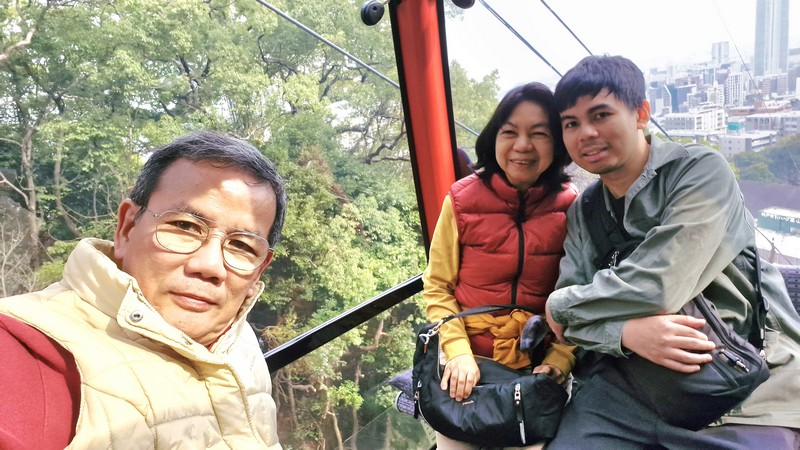
The author, Grace and Jandy inside the gondola
View of Mount Rokko and the Kobe city skyline

Upon arrival at the Sancho (Top) Station, the upper terminal point for the cable car, we then proceeded to the View Rest House, located at an altitude of 400 m., where we were welcomed with many charming garden vignettes with sculptures, sitting areas, carts and flower beds. 
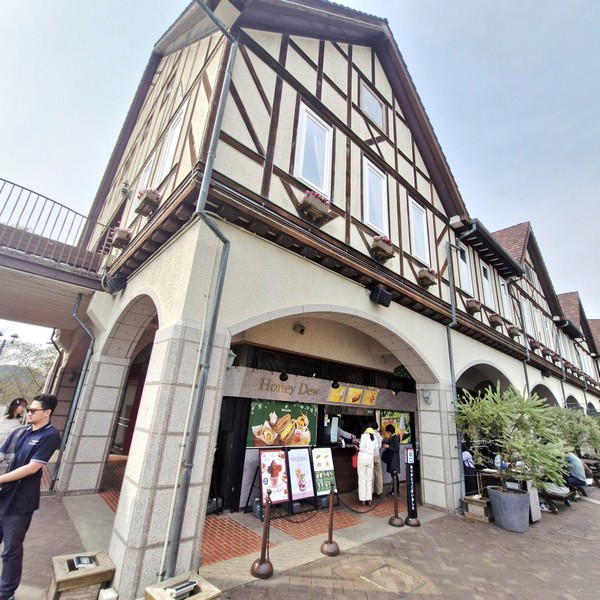
View Rest House

Modeled after the ancient Wartburg Castle in Eisenach, Germany, it has a large gift shop (offering herbal products, essential oils, herb-themed everyday utility items and souvenirs) and a dining option (The Herb Dining) plus access to sweeping outdoor terraces where you can enjoy your meals. There were a few stalls selling burgers, tarts , drinks and soft serve ice cream. We all indulged at the latter. The patio dining area was lined with theme carts (cookery, craft, tea and fragrance).
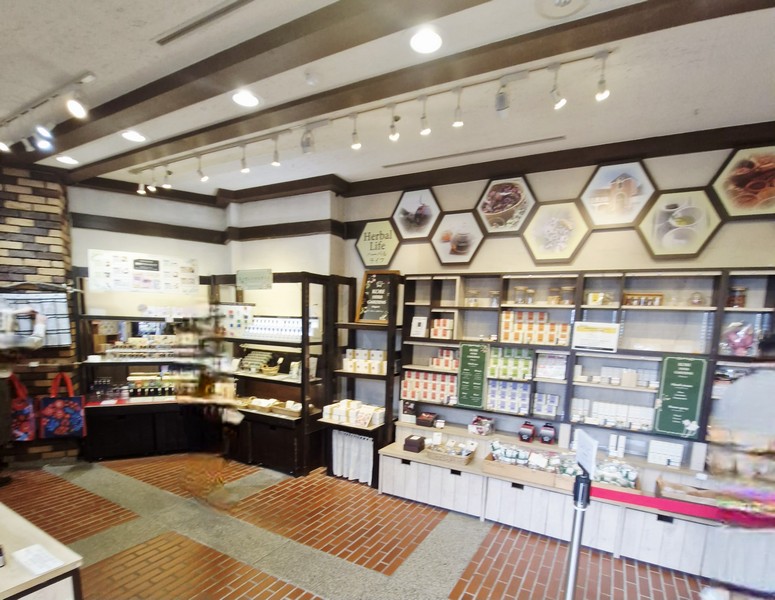
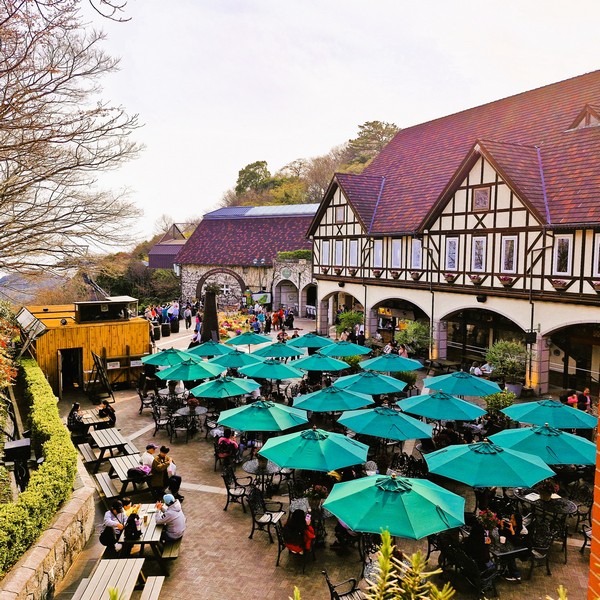
Herbal Market
The Veranda

The gorgeous Welcome Garden (View Plaza) is surrounded by a castle gate and the View Rest House. Herbs and flowers are in bloom throughout the four seasons.
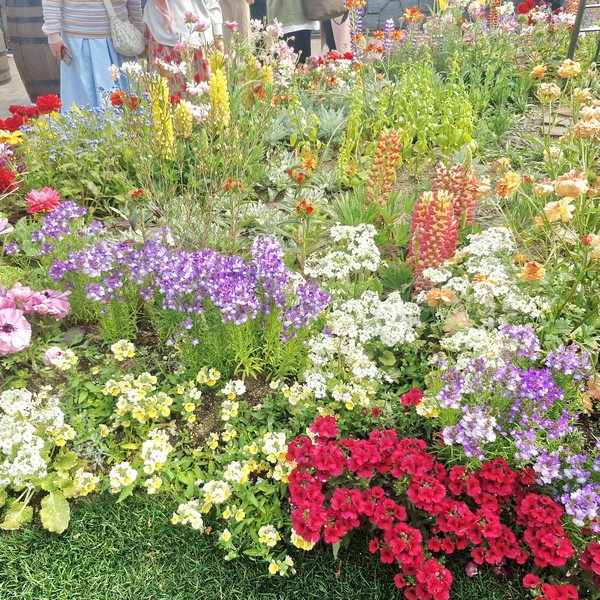
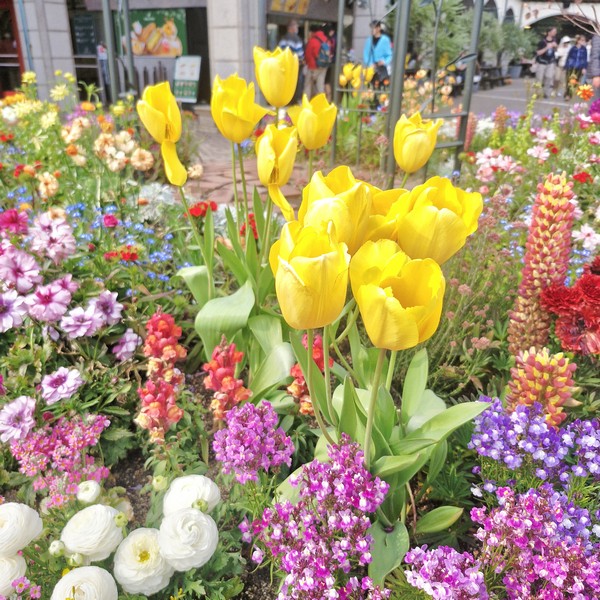
Welcome Garden
Tulips in full bloom

Nearby is the Mori no Hall, a small, wooden concert hall with great acoustics and a popular vernue for concerts and recitals.
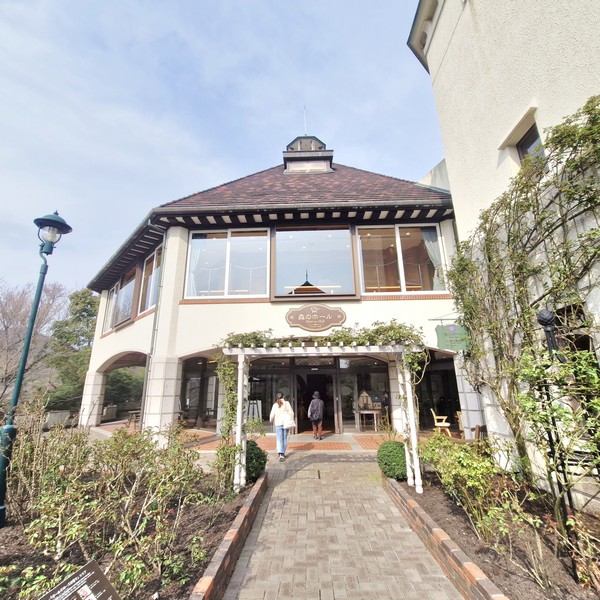
Mori no Hall (Concert Hall)

At the Fragrance Museum, at the ground floor, the historical aspects of fragrance are displayed and explained. Here, you can experience the scent of different natural essential oils.
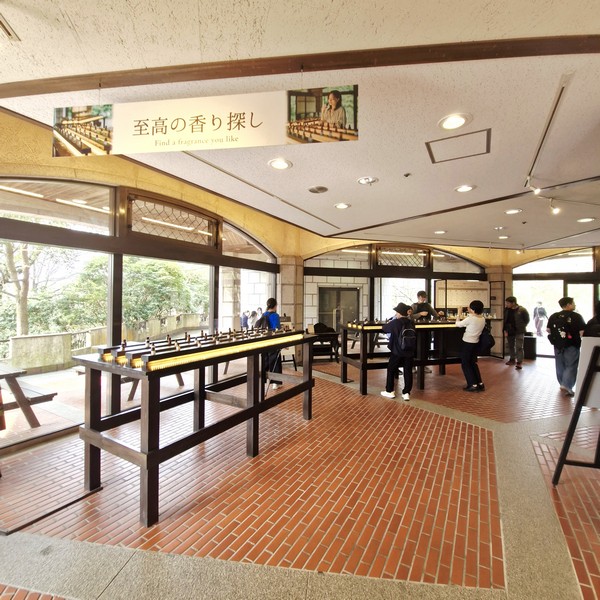
Fragrance Museum

Fragrant Garden, set against the backdrop of a serene mountain range, this idyllic garden is reminiscent of the European countryside. When strolling along the stone path, visitors will be enveloped by a gentle mint aroma.
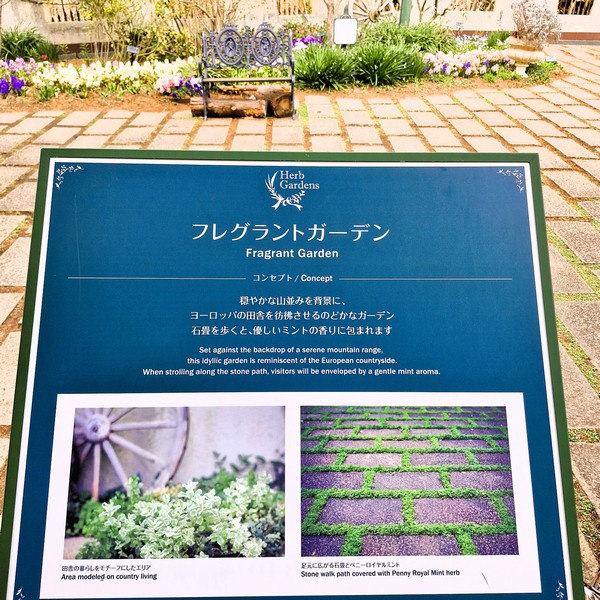
Fragrance Garden
View Plaza

At the back of the hall, after the Clock Tower, is the Rose Symphony Garden, a central area with approximately 60 types of fragrant roses (mainly English roses), of assorted colors and shapes that change according to each variety, and other flowers.
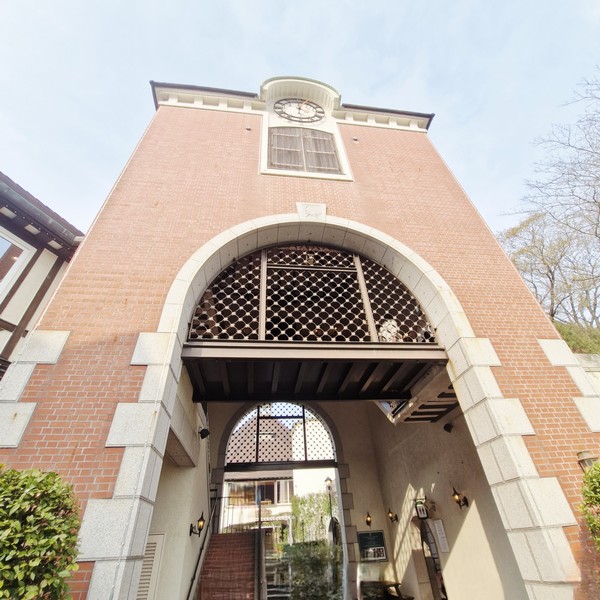
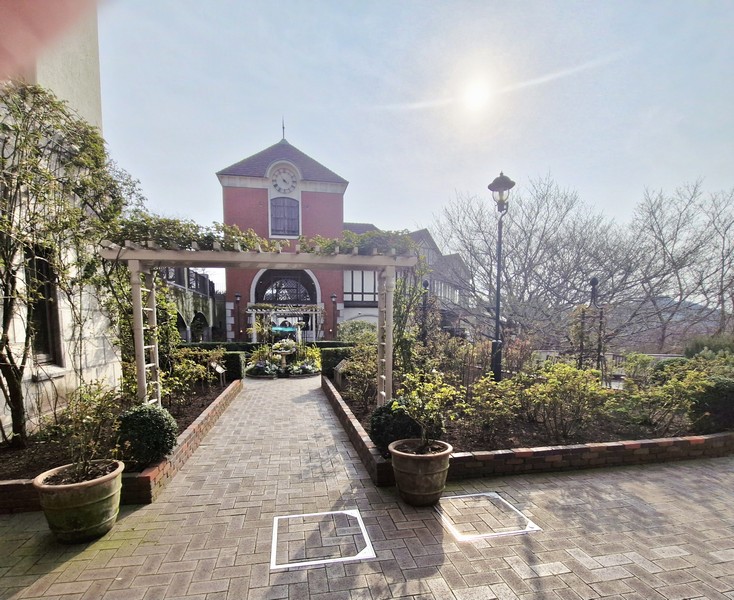
Clock tower
Rose Symphony Garden

Instead of taking the cable car all the way back to the Sanroku (Bottom Station, we decided to walk downhill, from the summit, all the way to Kaze no Oka Mid Station, passing through twisting pathways and its 12 distinct, extensive, seasonally-themed areas while enjoying aromatic and scenic views. 
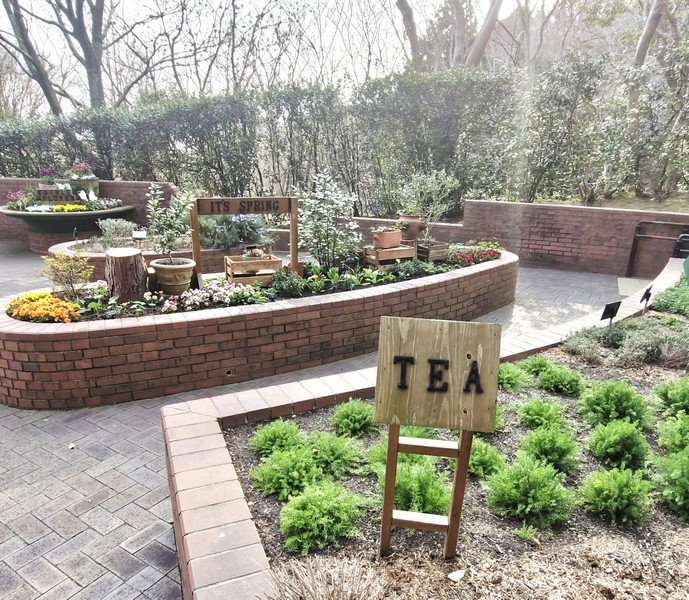
Herb Museum

The first themed area we passed was the Herb Museum.  Like a living encyclopedia, it has around 100 varieties of herbs.  Here, we learned about the attributes of herbs, how to use them and living with herbs. There is a guided tour of the garden every day.
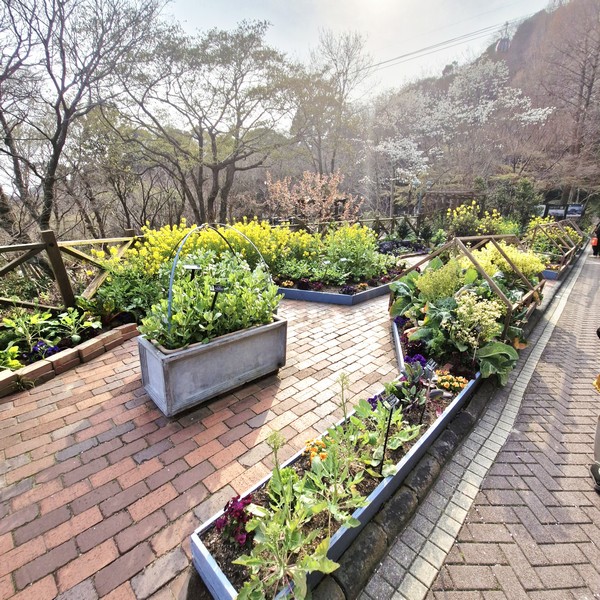
Kitchen Garden Potager

Further down is the Kitchen Garden “Potager,” a kitchen garden that features the mixed planting of vegetables and herbs. Its theme is a “stylish and practical kitchen garden” that you can also enjoy at your own home.
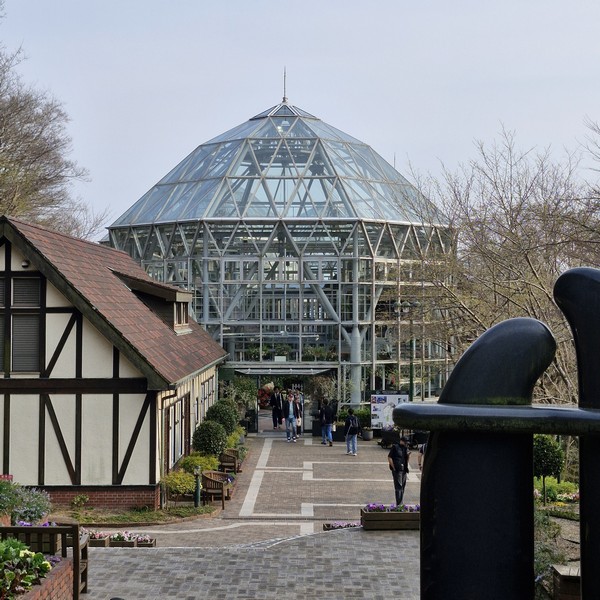
Glass House

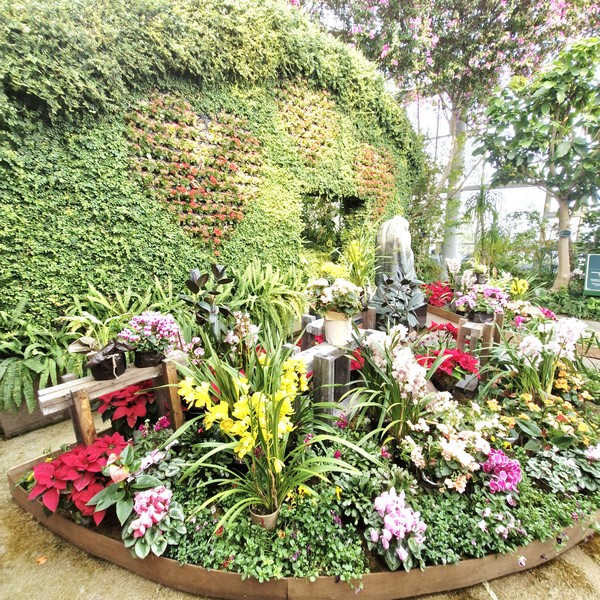
From here, a pathway leads down to the Glass House which features a spice museum, a herbal foot bath (behind the Glass House), café lounge, terraced restaurant (The Veranda, offering herb-infused treats) and tropical, fragrant, and citrus-themed plants, including a special, illuminated “rose garden.”
Wall Mural Flower Bed

It provides visitors with the pleasure of planting, observing and smelling the scents of mainly tropical plants such as spices and fruits (guavas, bananas, passion fruit, papayas, etc.) grown in a climate-controlled environment. Also within this garden is a sculpture entitled “Statue of Mother and Child” presented by the Italian city of Terni, as well as a colorful wall mural flower bed.
Lavender Garden

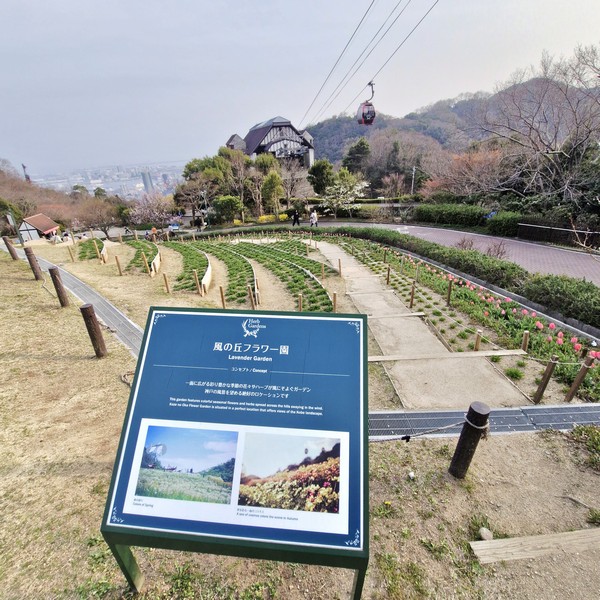
The Lavender Garden, ever enticing with its refreshing fragrance and lovely lavender flowers (which is known as the “Queen of Herbs”), holds a lavender-picking event every June. 
The author, Grace and Jandy at the Four Seasons Garden

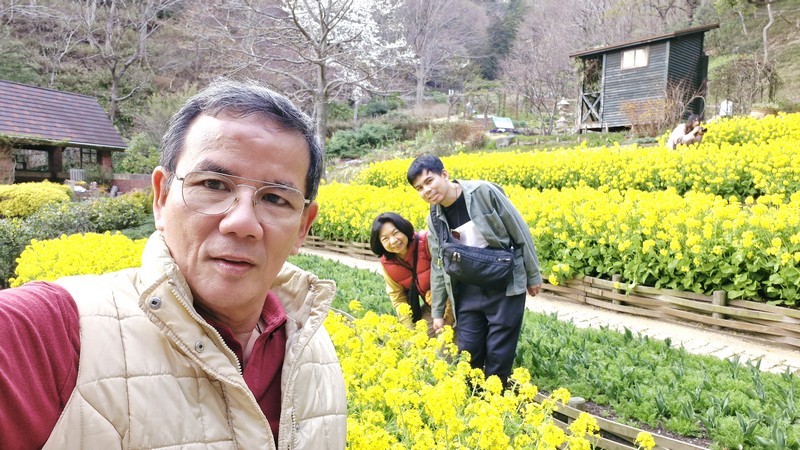
At the Four Seasons Garden, specially designed with pretty herbs and flowers arranged according to season, you can get a sense of each season by the roses and other flowers in full bloom covering the area.
Waterfall Patio

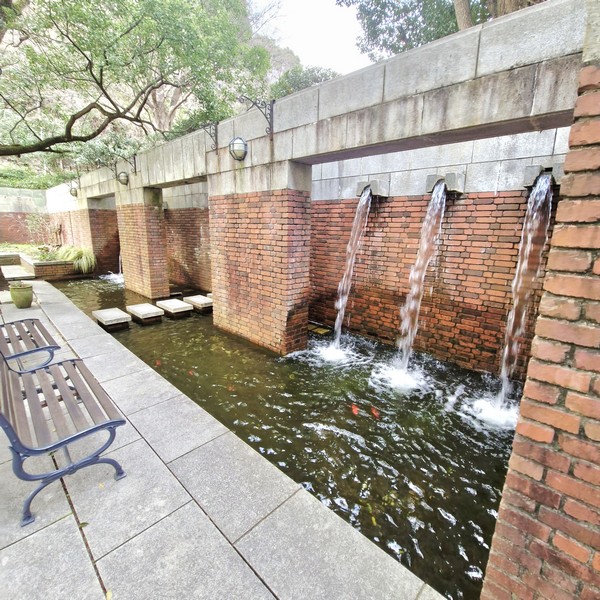
The Waterfall Patio, a waterside zone based on the image of Nunobiki Falls, has a tiered flower bed that continues on to the garden below as an expression of the flow of water from the waterfall. The waterside is inhabited by a variety of living things.  Egg-laying, by the forest green tree frog, a precious species, can be observed during the rainy season.
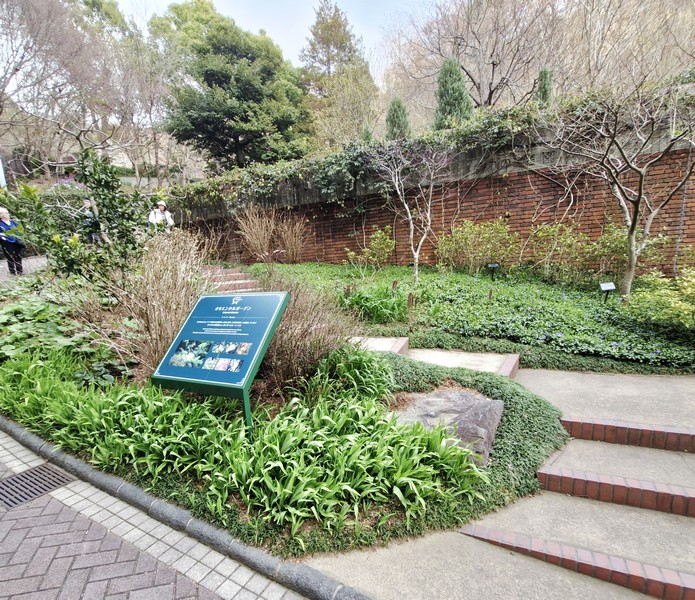
Oriental Garden

The Oriental Garden cultivates useful plants (plants for use in foods, medicine and craftworks) indigenous to Japan and Asia. The garden also provides observation and learning that includes the methods of using each plant.

The Kaze no Oka Flower Garden, at the southern end of the garden, features colorful seasonal flowers and herbs spread across the hill. The garden is situated in a perfect location that offers views of the Kobe landscape. The Lily Garden, which blooms in summer, offers visitors the chance to enjoy the fragrance of lilies. 
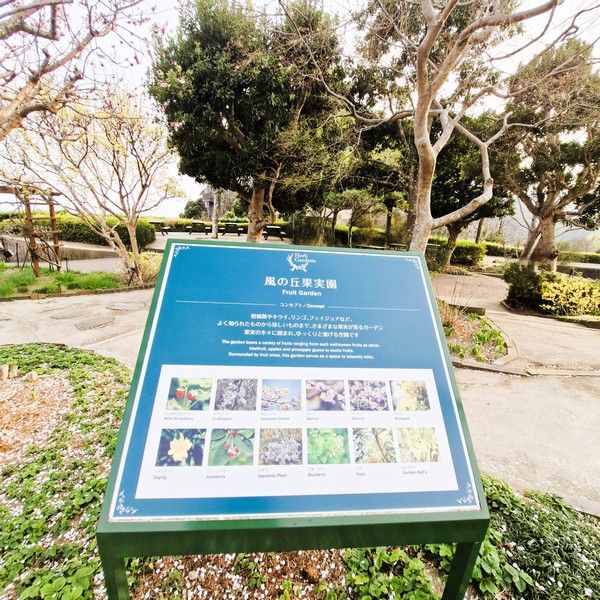
Fruit Garden

The Fruit Garden bears a variety of well-known fruits such as citrus, kiwi, pineapple guava, apples to exotic fruits.
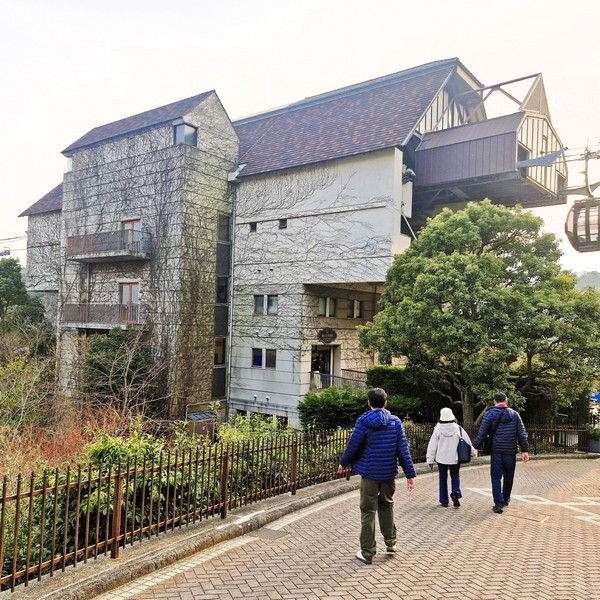
Kaze no Oka Mid Station

At the lower end of the garden, near the Kaze no Oka Mid Station, is a Recreation Area with hammocks, gift shop, play equipment (free to use) and the “White Constellation,” a wind sculpture, by Japanese sculptor Susumu Shingu, installed in 1991. Planted with mountain cherry blossoms and lilies, it also has a superb view of Kobe.
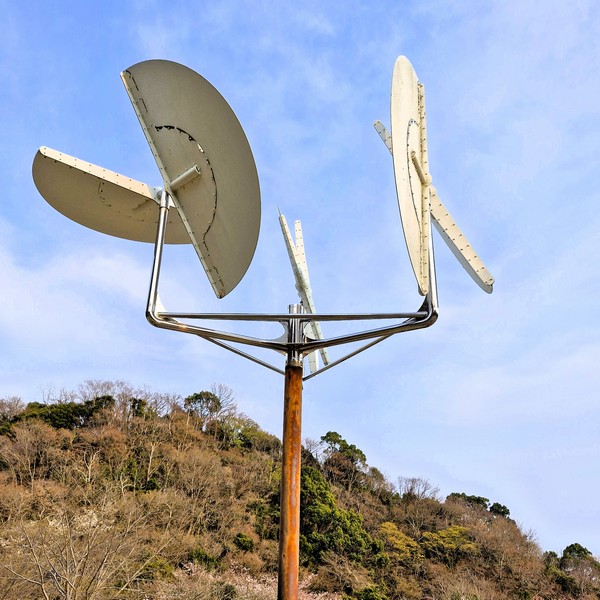
White Constellation (Susumo Shingu, 1991)

Nunobiki Herb Garden : 1 Chome-4-3 Kitanocho, Chuo-ku Ward, Kobe, Hyogo Prefecture 650-0002 Japan. Tel: +81 78-271-1160.  Website: www.kobeherb.com. Open daily, 10 AM – 5 PM. Admission: 2,000 yen/adult (admission ticket + round trip ropeway).  Coordinates: 34°42′55″N 135°11′32″E.

How to Get There: The garden is accessed via a scenic 5-minute Shin-Kobe Ropeway gondola lift from Shin-Kobe station in downtown Kobe.

Ikuta Jinja Shrine (Kobe, Japan)

Ikuta Jinja Shrine

After our tour of Meriken Park, it was just a short 2-km. drive to the wonderful Ikuta Shrine (Ikuta-jinja).  A major shrine in Kobe, is believed to be one of the oldest Shinto shrines in Japan.  Famous as a “power spot” for matchmaking and love, dotted around the grounds of Ikuta Jinja are 14 sub-shrines, each dedicated to a different god. This shrine, in Kobe’s city center, has spacious grounds, impressive buildings and, at its rear, you can find a remnant of the ancient forest that once covered the entire area.

Check out “Meriken Park

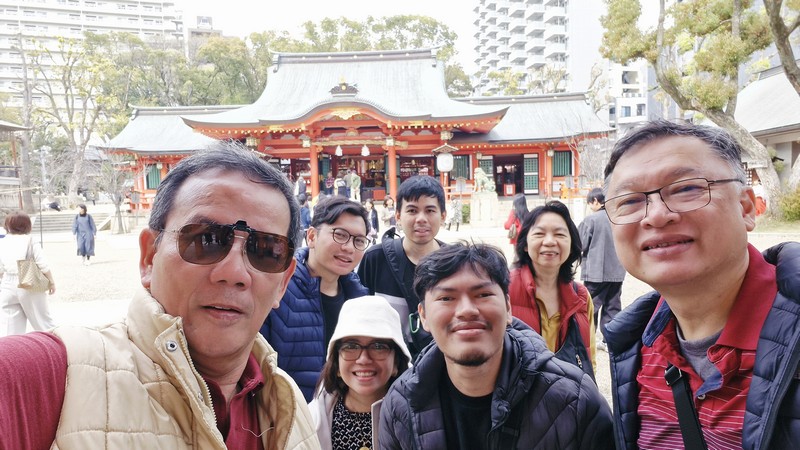
The author (left) with Miguel, Nenette, Jandy, Matthew, Grace and Mark

According to Nihon Shoki (Nihongi), the second oldest book of of classical Japanese history, it was founded in 201 AD by the Empress Jingū to enshrine the goddess (kami) Wakahirume-no-Mikoto. Empress Jingu was returning from the Three Kan campaign on the Korean Peninsula, when her ship was nearly shipwrecked by bad weather. By praying to Watatsumi, she managed to survive by stopping at what is now Kobe harbor. Upon arrival, she held a divination ceremony that summoned the goddess Wakahirume-no-Mikoto, and the goddess said she wanted a shrine to be built for her in a place called Ikuta.

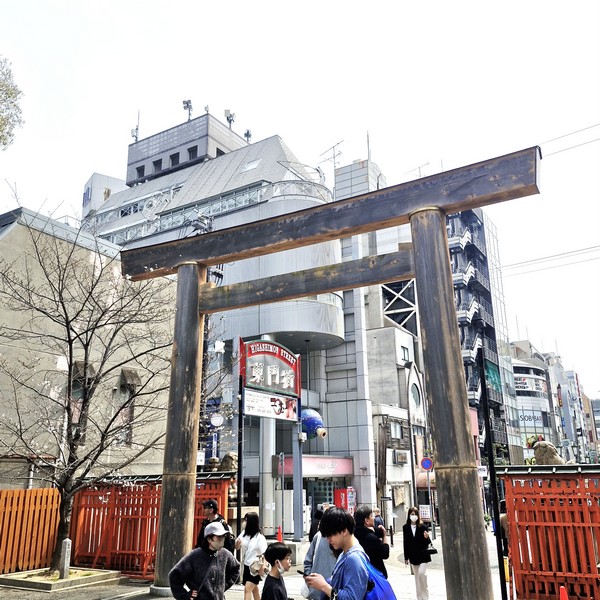
Old wooden torii

The shrine was originally located, on a sand dune, further north from its current location on Mount Isagoyama. However, in 799 AD, terrible floods threatening to wash the shrine away forced priest Tone Shichidayu to carry the goddess, in a portable shrine, to search for a new home. After 8 days, the portable shrine suddenly became too heavy.  Taking this as a divine message, the goddess was re-enshrined at its present location.

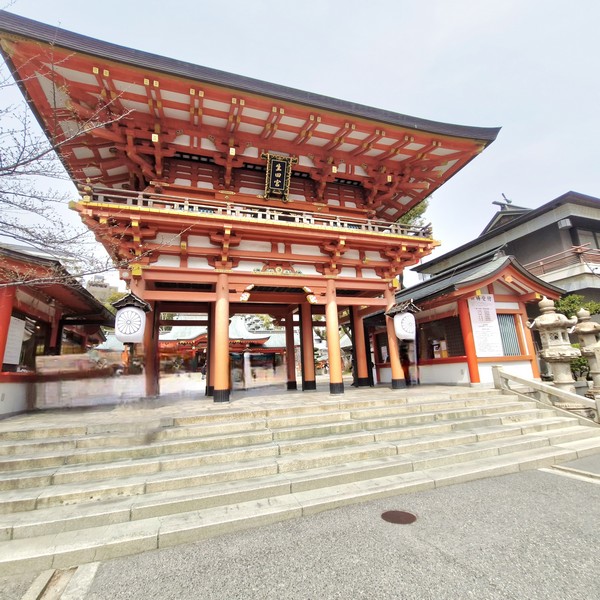
Tower Gate

In 806 AD, 44 households were given responsibility for the care and protection of the shrine and given the title kanbe (meaning “sacred households”). This was the origin of the name of the city of “Kobe,” which is written with the same characters.

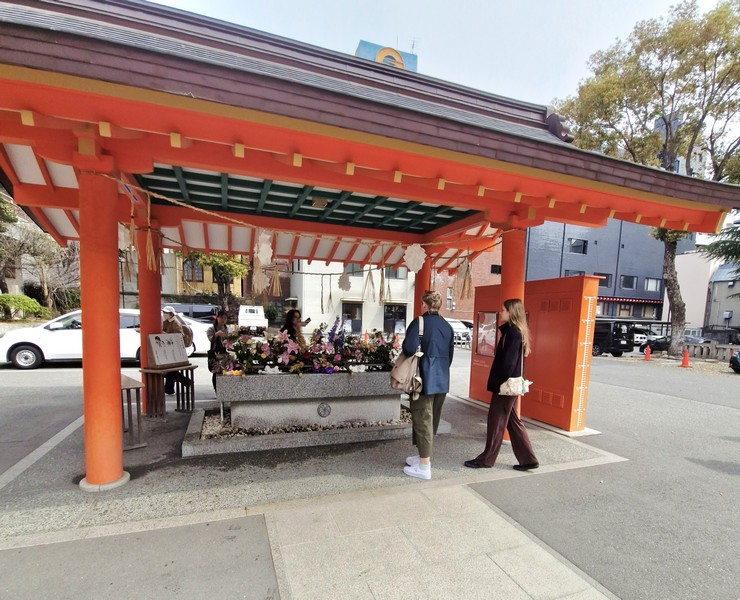
Chozu-ya basin

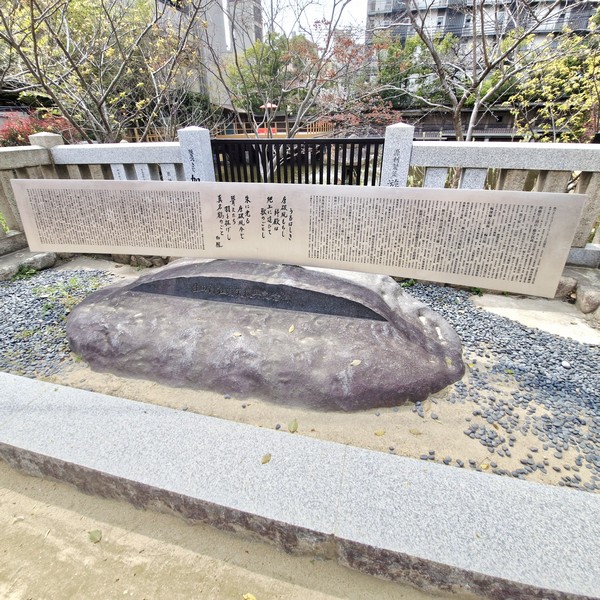
In 1938, the shrine suffered damage during floods and, in 1945, was severely damaged during air raids in World War II.  On January 17, 1995, the shrine suffered significant damage during the Great Hanshin-Awaji Earthquake. However, following each tragic event the shrine was restored with the support of local citizens. As a result, Ikuta Jinja is now loved and respected by the people of Kobe as a symbol of the city’s resilience and resurrection.

Ikuta Shrine Earthquake Recovery Monument

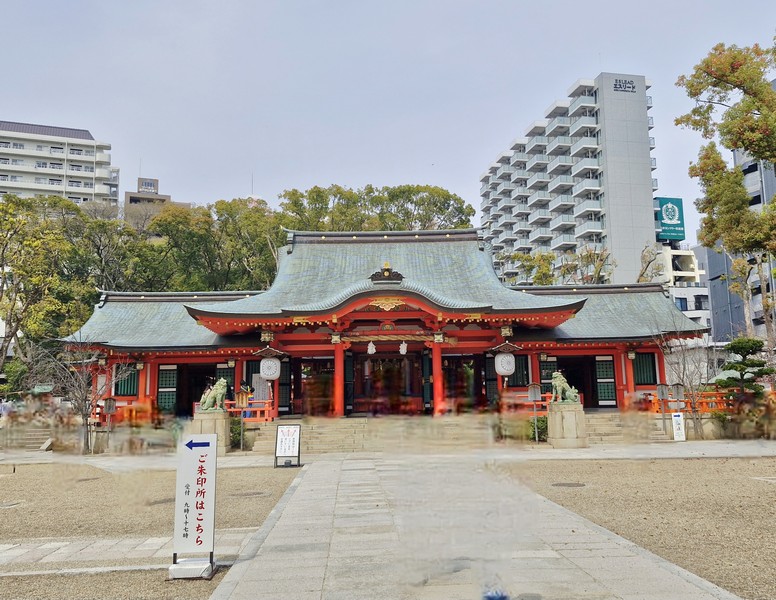
Before entering the shrine, there’s a chozu-ya (or temizuya), a traditional roofed Shinto water ablution pavilion, on the right, where we would ritually purify ourselves, by taking a bamboo scoop and washing our hands and mouth with the water, before approaching the splendid shaden (main shrine building), flanked by lion-dog statues (komainu), where you can softly murmur prayers in your mind.

Shaden (Main Shrine)
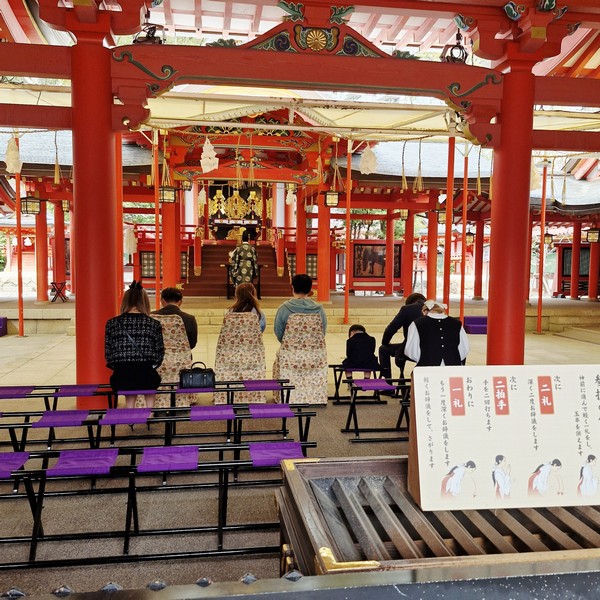
Interior of Shanden

We entered the shrine through the striking, vermilion-lacquered tower gate (ro-mon) which marks the transition, from bustling city, to the forested shrine grounds. 

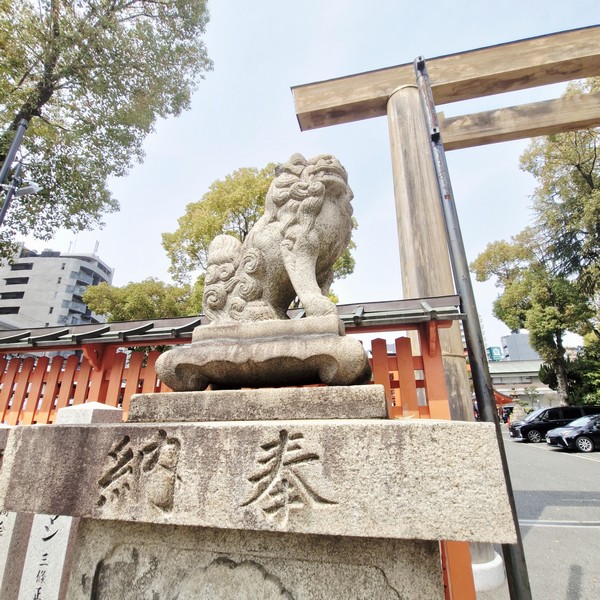
Lion-Dog Statue (Komainu)
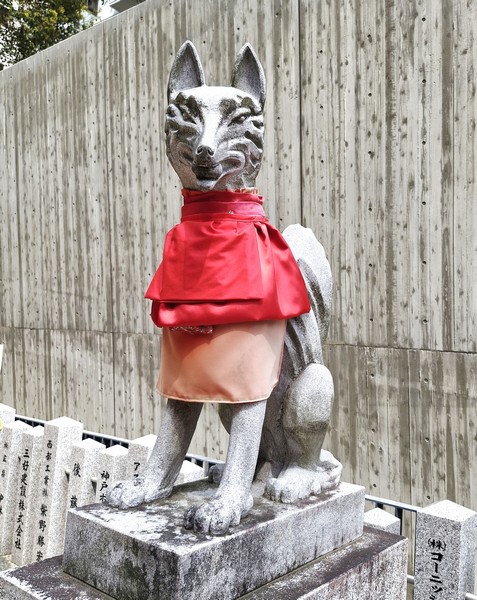
Fox Statue (Kitsune)

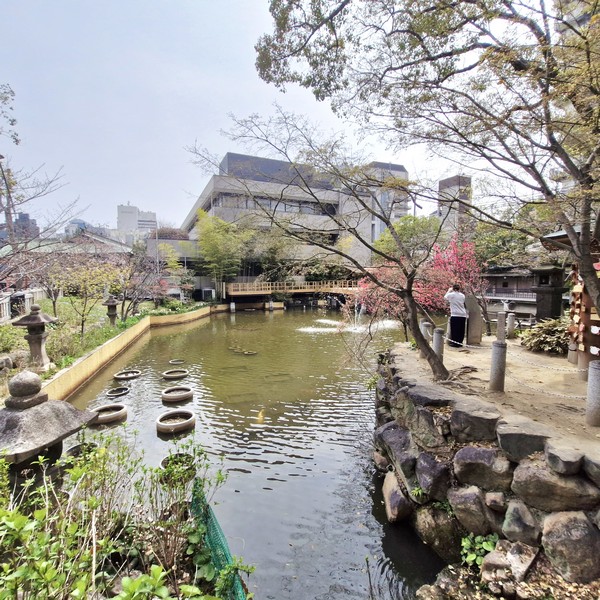
After passing through the impressive tower gate, we saw booths, on either side, selling a variety of omamori (protective charms) and omikuji (fortune paper slips). To the left of the shaden is a picturesque pond, with lotus flowers (in full bloom from July to August), ducks and koi (Japanese carp), called Ikuta-no-ike.  The serene, leafy pond has a small island accessible by a bridge. 

Ikuta-no-ike

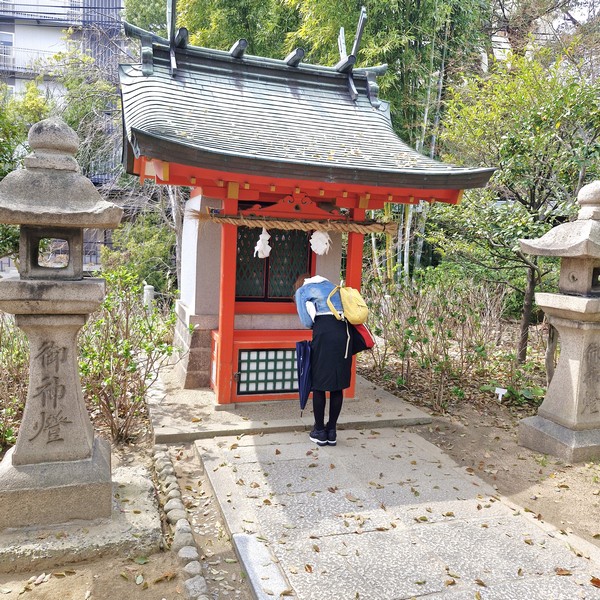
On the island is a small sub-shrine called Ichikishima Jinja, dedicated to Ichikishima-hime, (also called Benzaiten), the goddess of water and all things that flow (like language, performing arts and music).  This peaceful retreat is often visited for romantic blessings.

Ichikishima Jinja

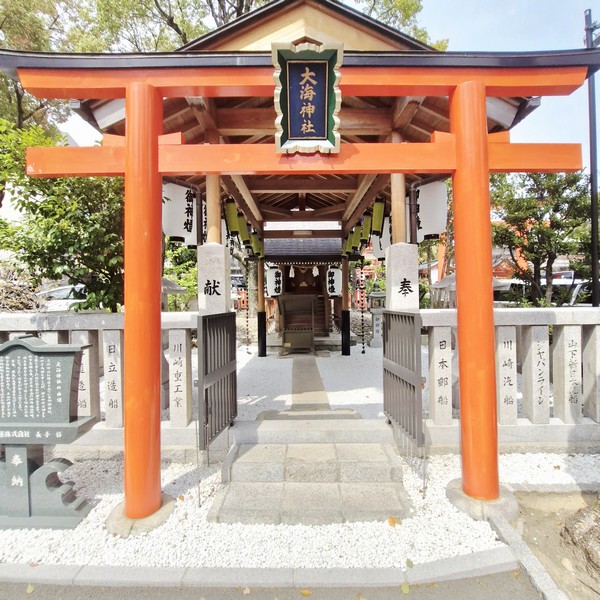
Near the entrance of Ikuta Jinja are two quite important sub-shrines. Just after the second torii gate, on the left side, is the maritime-focused Daikai Jinja (literally “Ocean Shrine”) with a red torii

Daikai Jinja

Dedicated to Sarutahiko-no-Mikoto, a god of guidance and travel, people pray here for safety at sea which is very important in a port city like Kobe. On the right side is Matsuo Jinja with a concrete gray torii. Dedicated to Oyamakui, the god of farming and sake brewing, this is an important shrine as Kobe is the home of many famous sake breweries.

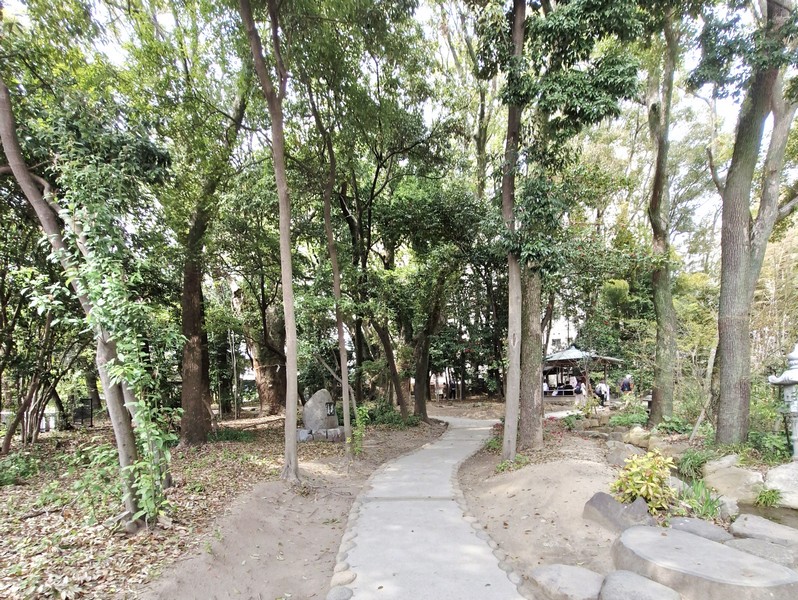
Ikuta-no-mori

At the far end of Ikuta Jinja’s grounds, behind the shaden, is the quiet and peaceful Ikuta-no-mori, the remains of an ancient forest. The forest was the site of the Battle of Ichi-no-Tani, a major battle during the the end of the Heian Period Genpei War (1180-1185), commemorated by markers. Today, Ebira and Ikuta Atsumori, two Noh plays which retell aspects of the Genpei War, are performed, on a regular basis, every year at Ikuta’s Autumn Festival (Akimatsuri), near the Ikuta Shrine. Ikutamorizasha, a sub-shrine inside the forest, is dedicated to the Empress Jingū. People pray here for growing things and for the safe birth of babies.

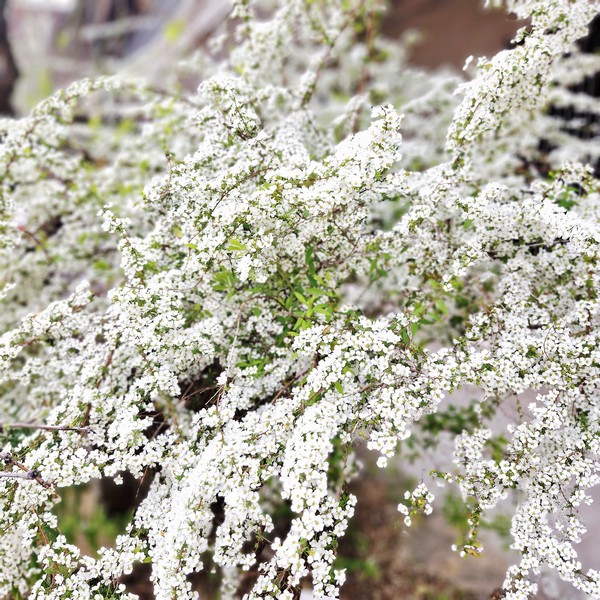
Cherry blossoms

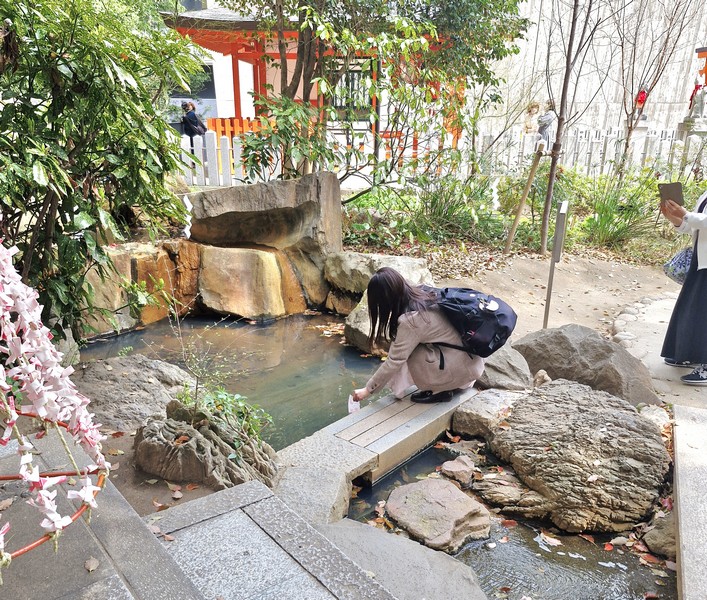
At Kinryusen, a popular spot in the forest, you can have your fortune read by water.  When you float an initially-blank mizu-omikuji (a Japanese water-activated fortune slip bought at the shrine office, 300 yen) on the water, your fortune (only available in Japanese) will appear, split into different categories such as your lucky color, location, place and more.  Truly, a delightful and interactive experience for visitors.

Lady floating an initially-blank mizu-omikuji at the kinryusen

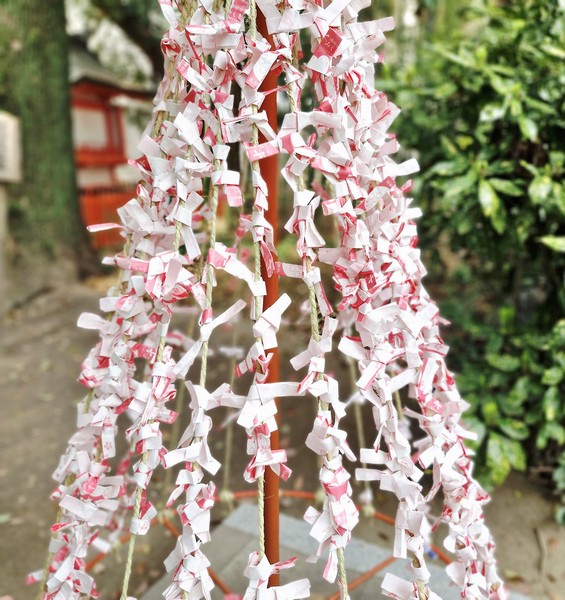
We also saw rows of omikuji (also in English, Korean and simplified and traditional Chinese) tied to racks. The goddess of weaving, Wakahirume is said to be good at making connections (whether these be business connections or romantic connections) so people pray to her for prosperity in business and happy marriages.

Omikuji (paper fortunes)

Also, as the shrine has survived many disasters in the past, people also pray here for their health and for protection from calamity.  Visitors often make a small donation and draw an omikuji to discover their luck in love and business.  If it’s bad luck, they tie it to a rack to leave the bad luck behind.

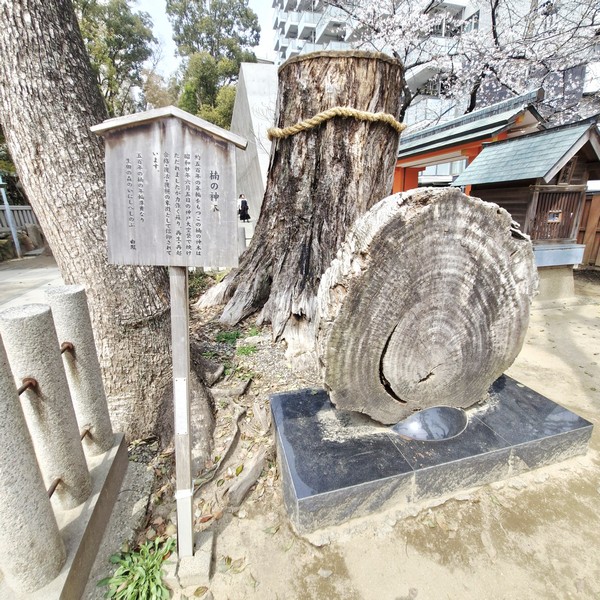
Sacred camphor tree

Also within the forest are the remains of a camphor tree which was around 500 years old (seen from its rings) when it fell. It is considered sacred and is seen as a symbol of reconstruction and revival because it survived the bombing of Kobe during World War II and, although terribly burned, it recovered and continued to live for many years.

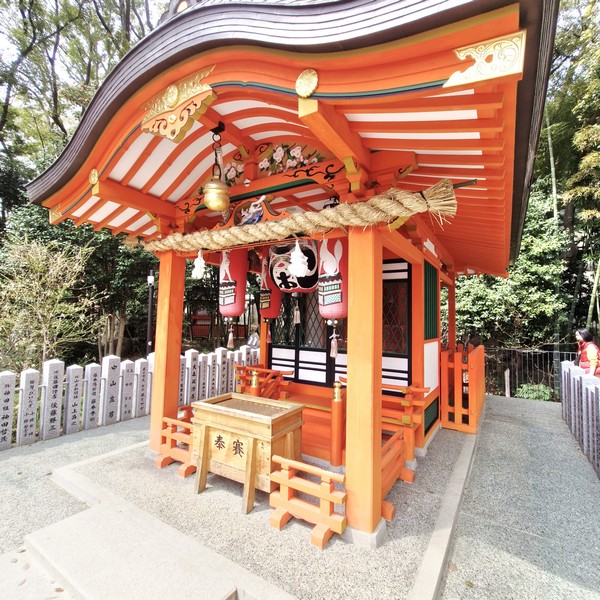
Inari Shrine

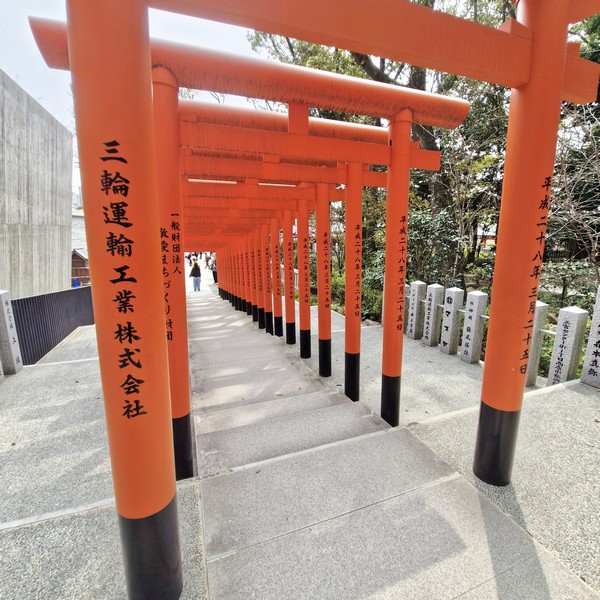
Within the forest, you can also walk through a striking, continuous series of 22 vermillion-lacquered torii gates (often referred to as a “row of red torii), donated in 2016, leading to the Inari Shrine dedicated to Uganomitama-no-Mikoto, the very important god of food, rice (the traditional staple food of Japan) and business prosperity who is also considered the god of fertility and life.

Series of torii

Ikuta Jinja Shrine: 1-2-1 Shimoyamate-dōri, Chūō-ku, KobeHyōgo prefecture 650-0011. Tel: +81 78-321-3851.  Open daily, 8:30 AM to 6:30 PM. Admission is free.  Coordinates: 34°41′42″N 135°11′26″E.

How to Get There: Ikuta Jinja is a short 10-min. walk from JR Sannomiya Station. Here is a map showing its location.

Hyogo Prefectural Maiko Park (Kobe, Japan)

Hyogo Prefectural Maiko Park

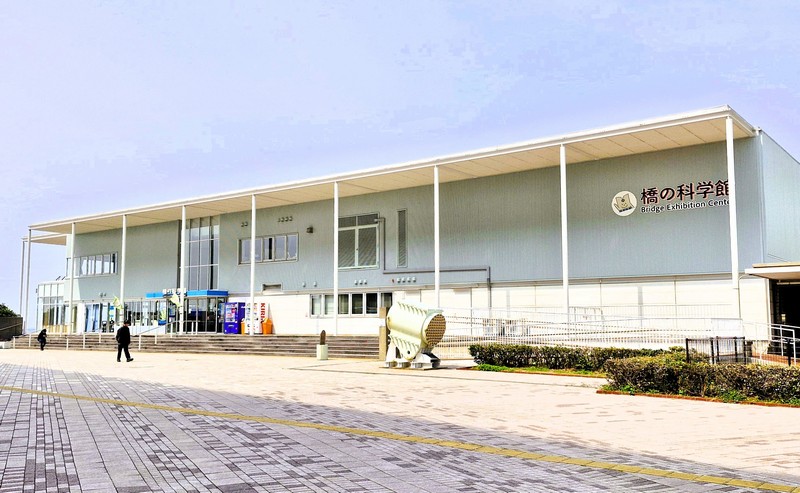
From Meriken Park, it was a 16.1-km. (30-min. drive) to our second stopover – the exotic atmosphere of Hyogo Prefectural Maiko Park.   This 7.8-hectare oceanside city park features large grassy areas with sea and bridge views; a 1,500-pine forest; the Akashi Kaikyo Bridge Exhibition Center (displays showing the history of what is the world’s longest suspension bridge) and several historic houses. The current Maiko Park was opened as the first Hyogo prefectural urban park in 1900.

Check out “Meriken Park

Akashi Kaikyo Bridge Exhibition Center

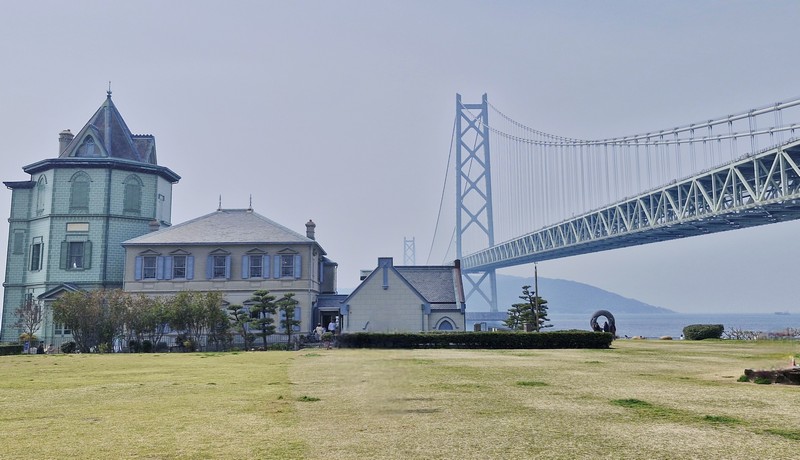
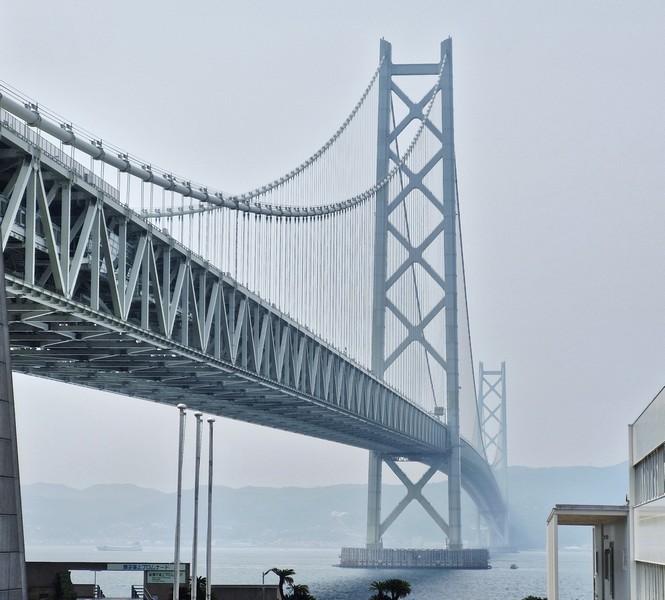
There are plenty of things to do and see at the park.  It is the gateway for the 3,911 m. long Akashi-Kaikyo Bridge which is the world’s largest suspension bridge. Linking Hyogo Prefecture (Kobe) with Awaji Island, it also boasts the world’s longest central span at 1,991 meters. At night, the bridge is illuminated with colorful lights.  This stunning sight, for those crossing the strait, has earned it the nickname “Pearl Bridge.”

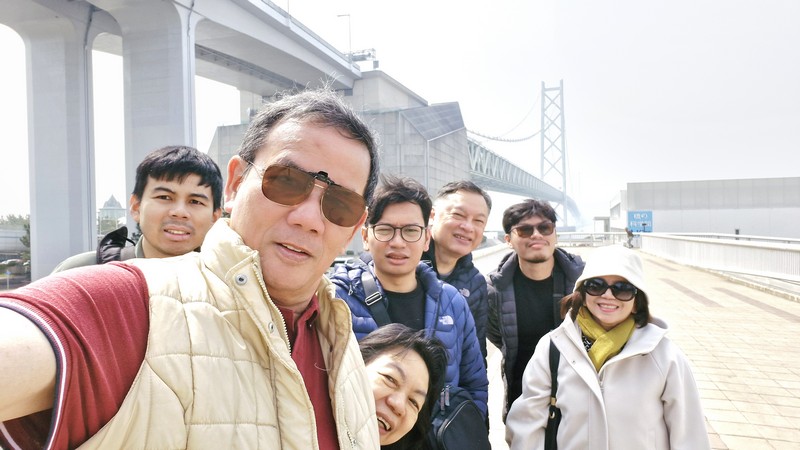
L-R: Jandy, the author, Grace, Miguel, Mark, Matthew and Nenette

Underneath the bridge is the Maiko Marine Promenade, a viewing facility built in the bridge girder, approximately 47 m. above the sea and 150 m. above the ground, that offers fantastic views of the Seto Inland Sea and Akashi Strait.  An approximately 317 m. long, circuit-style promenade on the Akashi-Kaikyo Bridge opened on April 5, 1998, it was constructed on the Kobe side of the bridge as an additional facility. Information materials and a DVD system that explain the bridge are available on the first floor of the promenade. There is an observation camera system which makes you feel like you’re on top of the bridge’s 300-m. high main tower. At the observation lounge, on the 8th floor, you can try an additional thrill – the “log-bridge 47 meters above the sea.”

Akashi Kaikyo Bridge

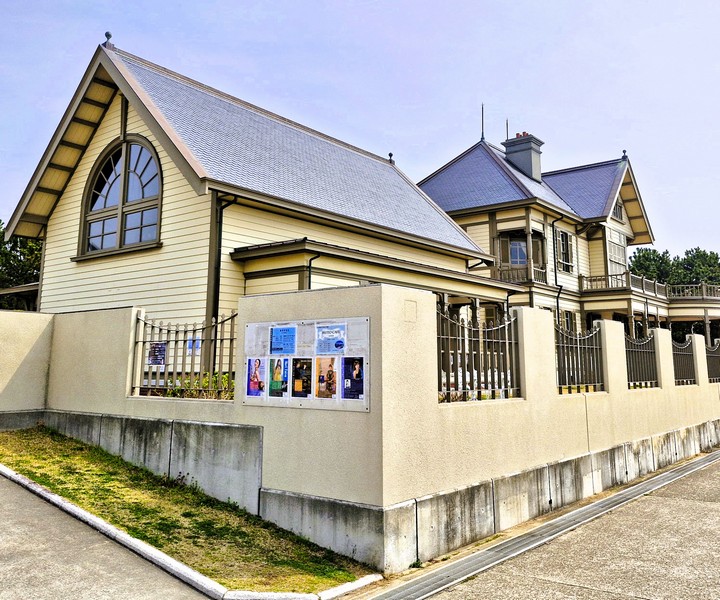
You can also see and visit three historical buildings.  Other Japanese residences, in Osaka and Kobe, have been gradually disappearing since the Hanshin/Awaji Great Earthquake. The Former Residence of Sanji Muto was built in 1907, during the Meiji period, at Maiko Beach, by businessman (he was president of the Kanebo textile company), journalist and politician (he was an active member of the House of Representatives) Muto Sanji.

After Muto was murdered in 1934 (as part of the fallout of the Teijin Incident), it was used by Kanegabuchi Boseki Co., Ltd. as its social welfare facility, and was called the Kanebo Maiko Club (also known as the Old Kanebo Maiko Club).  However, for the expansion work of National Route 2, it was taken down, in conjunction with the construction of the Akashi-Kaikyo Bridge, and the Western-style building was relocated to Kariguchidai, Tarumi-ku.

Former Residence of Sanji Muto

In 2007, Kanebo Co., Ltd. donated the building and furnishings to Hyogo Prefecture and, that same year, the prefecture started relocation/restoration work to move the building back to Maiko Park, its original location. In July 2011, it was registered as a National Tangible Cultural Property. Now a new tourist attraction representing Maiko Park, visitors can enjoy the scenery, from this Western-style seaside cottage, of the Akashi Strait and the pine forest. Inside, it features preserved Meiji-period furniture and stained glass.

The Former Japanese Residence of the Kinoshita Family is an early modern Japanese home built in the tea ceremony arbor (sukiyazukuri) style. Originally completed as a private residence, in 1941, for a man named Ryosuke Matano, it came into Mr. Kichizaemon Kinoshita’s possession in 1952 and, in 2000, the bereaved family of the late Mr. Kichijiro Kinoshita donated it to Hyogo Prefecture. In December 2001, as it has almost completely retained its appearance since its establishment, it was registered as a National Tangible Cultural Property.

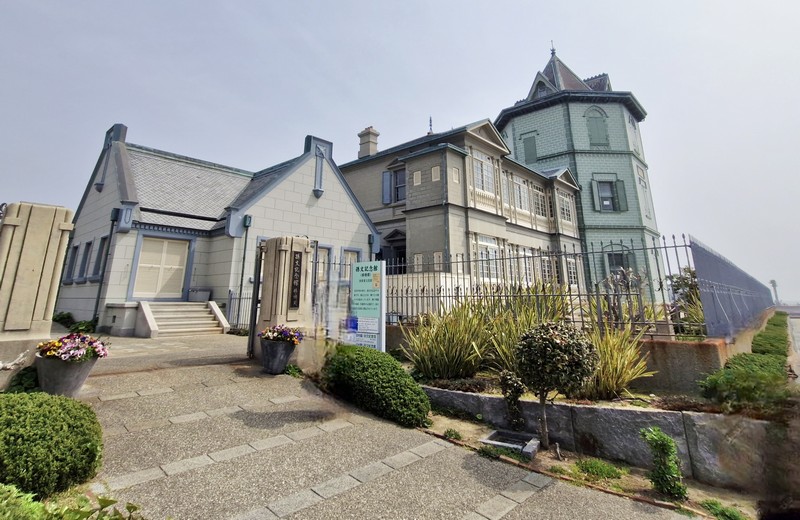
Sun Yat-Sen Memorial Hall (Ijokaku)

The iconic Sun Yat-Sen Memorial Hall (Ijokaku), built in 1915 by Wu Jintang (1855-1926), a prosperous Chinese merchant in Kobe, is a cottage with a three-storey octagonal tower (added, as an annex, in 1915) that was shown to the public, in 1984, as Sonchuzan Memorial Hall. It exhibits information materials related to Chinese revolutionary and first president of the Republic of China Sun Yat-sen who was honored with a dinner, hosted by the local Chinese business community, in 1913. On December 10, 1993, tt was registered as a Prefectural Important Tangible Cultural Property and, on November 14, 2001, as a National Important Tangible Cultural Property.

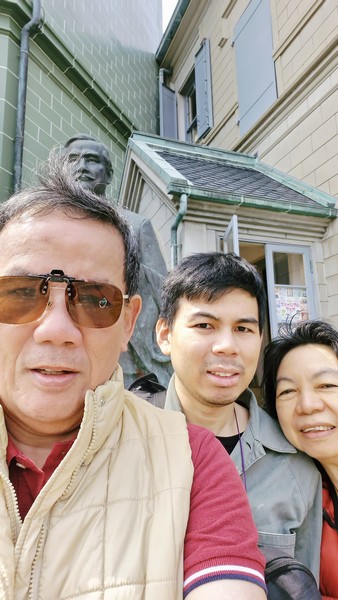
The author, Jandy and Grace

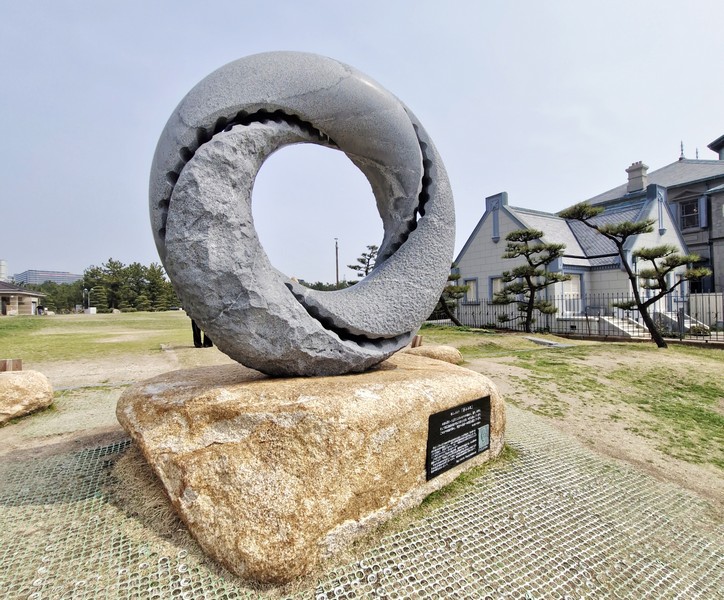
Nearby is monument “Dream Lens,” an iconic photo spot created by a sculptor Keizo Ushio.  It was installed to commemorate the 5th anniversary of the foundation of the Akashi-Kaikyo Bridge, the embodiment of half a century of technology. The Moebius strip, made of rock with three different types of surface, represents people, nature, and science as well as the main island of Japan, Awaji Island, and Shikoku, which are connected by the Akashi-Kaikyo Bridge. These three layers harmonize well, expressing hope for development in the future.

Dream Lens (Keiso Ushio)

Hyogo Prefectural Maiko Park: 4-2051 Higashimaikocho, Tarumi-ku, Kobe, Hyogo 655-0047, Japan.  Tel: +81 78-785-5090.

How to Get There: The closest train stations to Maiko Park and the Akashi Kaikyo Bridge are Maiko Station on the JR Sanyo Line and Maikokoen Station on the Sanyo Electric Railway, both just a few hundred meters from the park. The journey is 35 to 45 minutes from Himeji, or 25 minutes from Sannomiya Station in Kobe.
Meriken Park (Kobe, Japan)

Meriken Park

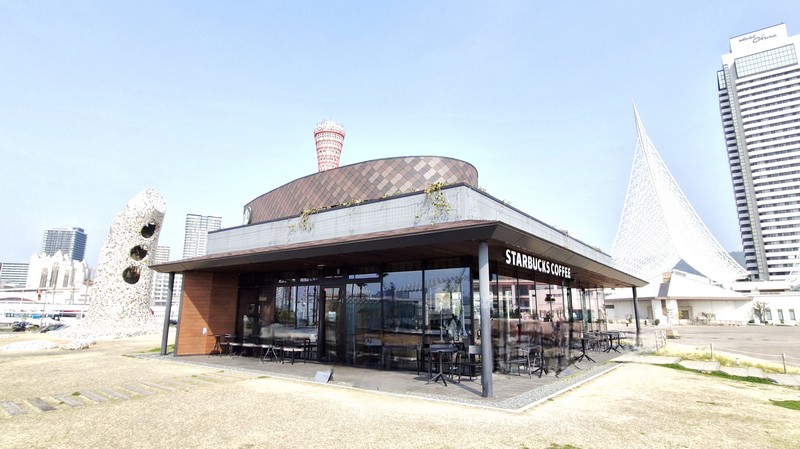
Our third whole day in Japan was spent on a day tour of Kobe which was just a 37.1-km. (40-min. drive) from Osaka.  Our first stopover was at Meriken Park, a nice waterfront park located in Kobe’s port area.  The park’s name was derived from the word “American,” which was commonly translated as “Meriken” during the Meiji era. Upon arrival, we first had breakfast at a stylish, 2-storey Starbucks outlet, with its ship-inspired design. Opened in 2017, it featured hishibuki (traditional diamond-patterned metal plates meant to evoke the feeling of a ship’s cabin) and offered stunning waterfront views of Kobe Harbor from its large glass walls and second floor outdoor balcony.

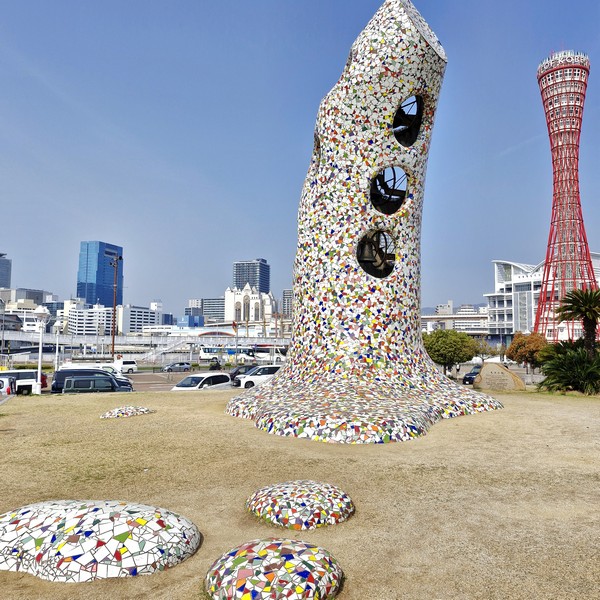
Beside the Starbucks store is the Bell of Hortensia, a colorful, modern mosaic sculpture. Installed on June 19, 1990, it represents the Hydrangea macrophylla, Kobe’s official flower.  It was established to commemorate the opening of the first Kobe Fashion Festival in November 1989, which was part of the World Fashion Festival ’89. When it was first installed at the “symbol monument of the fashion city of Kobe,” the bell was rung but, after the Great Hanshin earthquake, which devastated the park, it has not been rung.
Bell of Hortensia
Kobe Maritime Museum

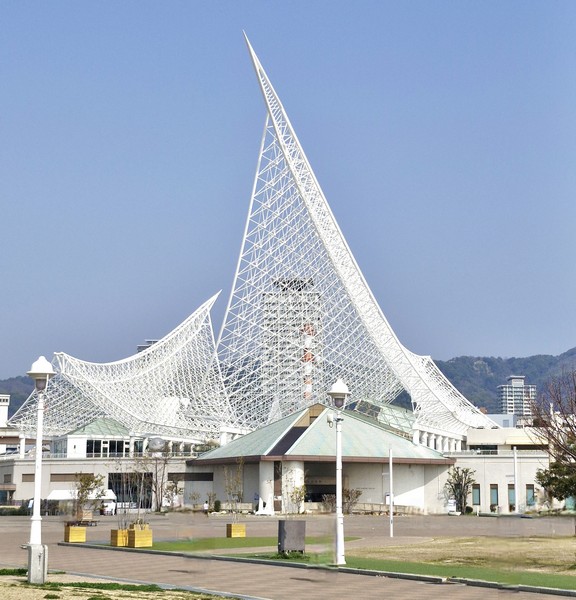
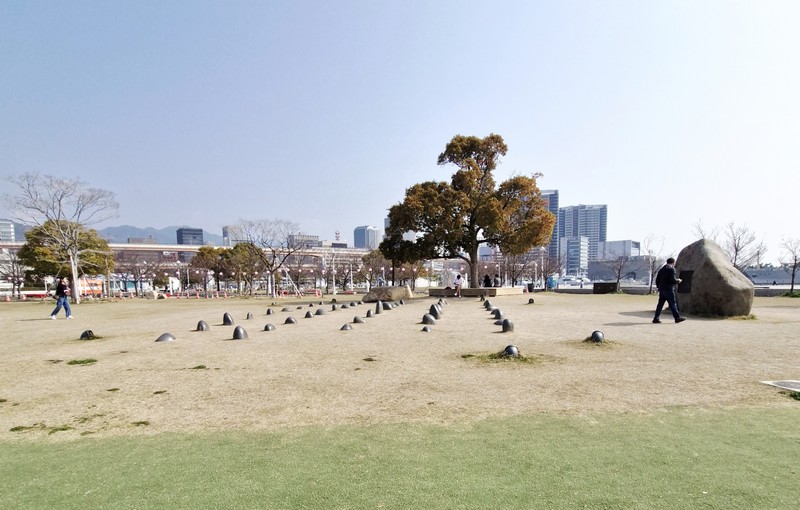
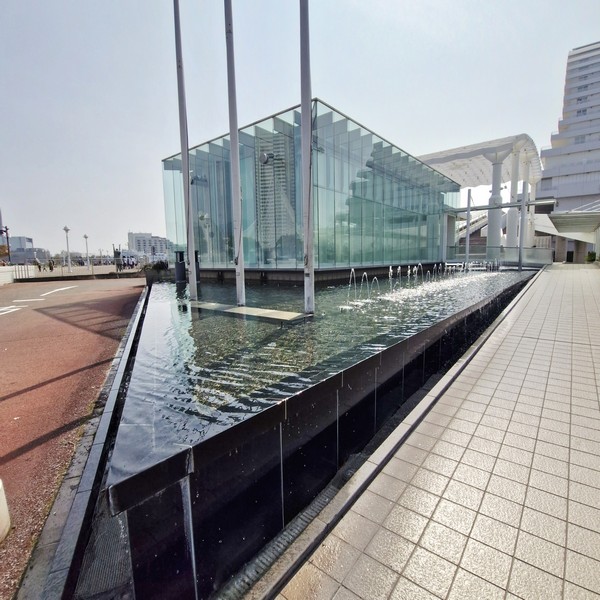
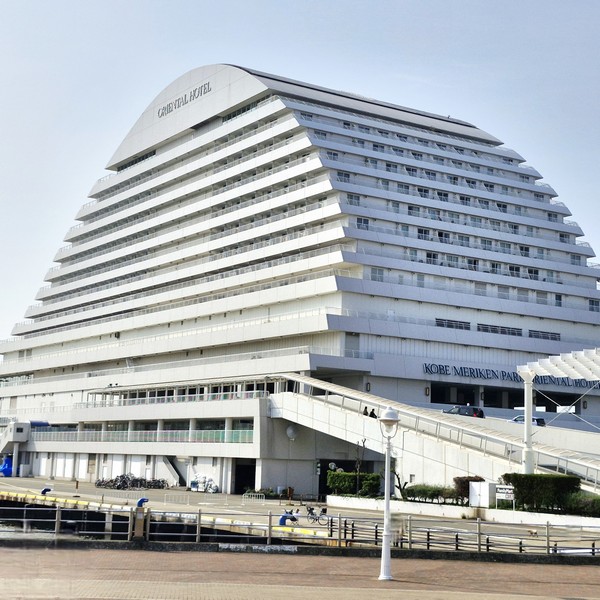
Built on an outcropping of reclaimed land, this waterfront park, a popular spot for locals and tourists, is covered in grassy lawn and open courtyards and is dotted with a collection of modern art installations and fountains. Meriken Park, the location of the Hotel Okura Kobe, Sannomiya Ferry Terminal (where the Jumbo Ferry, connecting Kobe, Shodoshima, and Takamatsu, and the Miyazaki Car Ferry, departs and arrives) and the wave-shaped Kobe Meriken Park Oriental Hotel, is home to some of the city’s more iconic contemporary architecture such as the red Kobe Port Tower and Kobe Maritime Museum.

Kobe Meriken Park Oriental Hotel

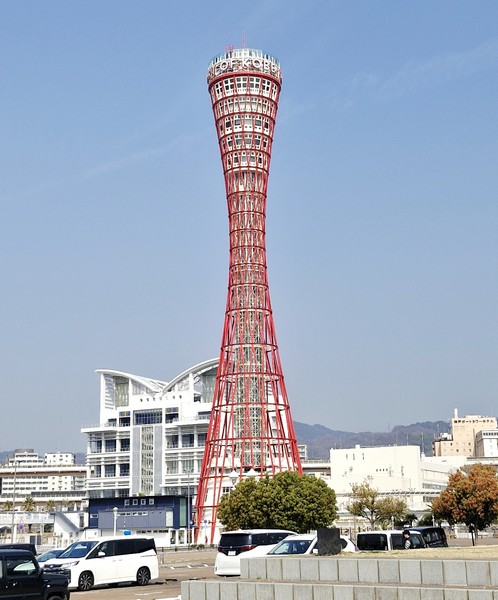
To the west of the Maritime Museum stands the 108 m. (354 ft.) high Kobe Port Tower, a unique, red-painted steel structure completed in 1963, was designed by the Nikken Sekkei Company to look like a tsuzumi, a Japanese drum. A symbol of the port and the city, it is the first tower built using a pipe lattice.  The tower has a total of 8 layers and is surrounded by 32 red steel staves as a symbol of welcome for vessels returning to the shore. It has five observation decks, approximately 100 m. above ground, including an open-air rooftop deck and a revolving cafe and bar.

Port of Kobe Tower

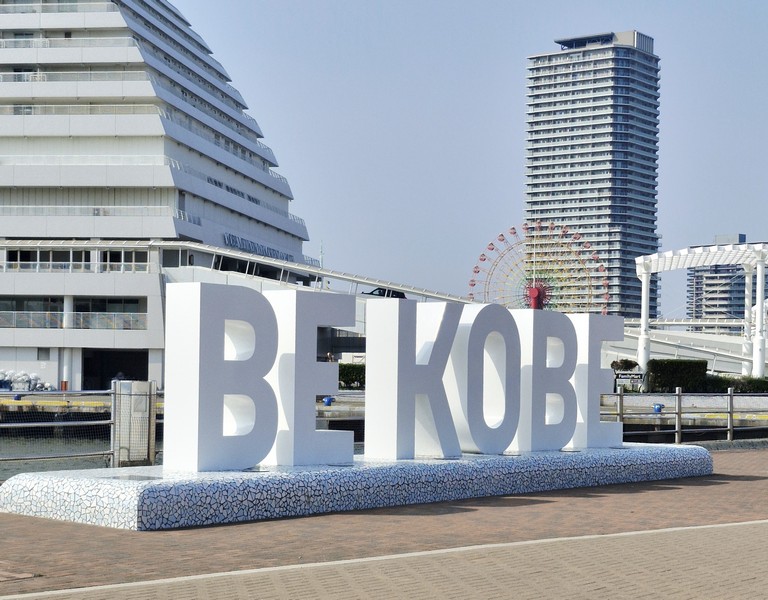
The “Be Kobe” Monument, installed in 2017 to commemorate the 150th anniversary of the opening of Kobe Port, is a popular photo spot.  The phrase “Be Kobe,” introduce in 2015 (the 20th anniversary of the Great Hanshin earthquake), is a civic pride message that expresses the idea that the chrm of Kobe lies in its people, inspired by those who work hard for the city’s recovery.

Be Kobe Sign

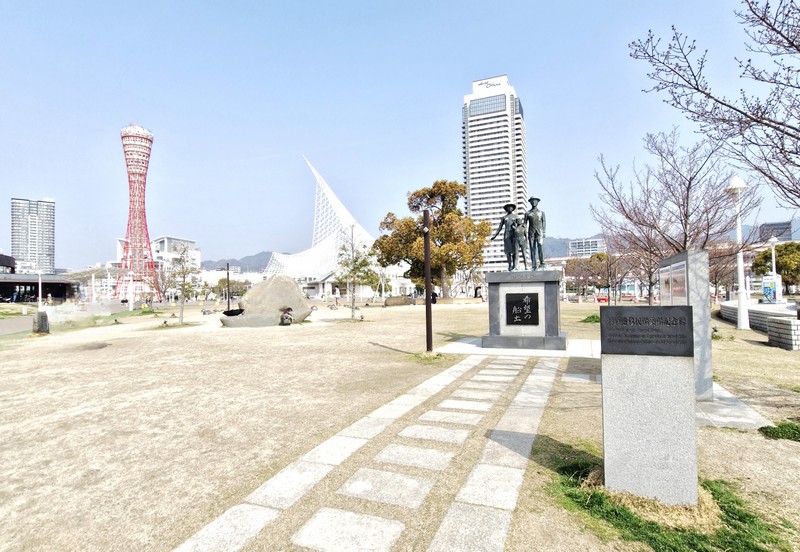
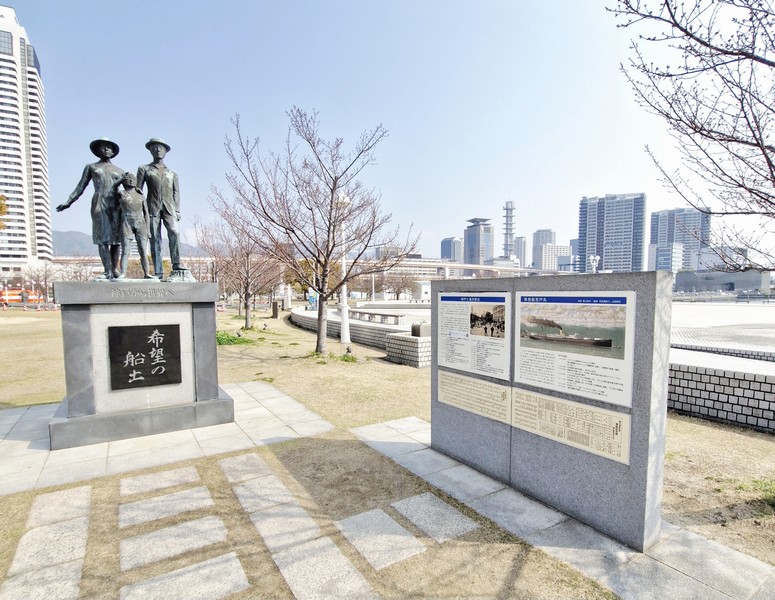
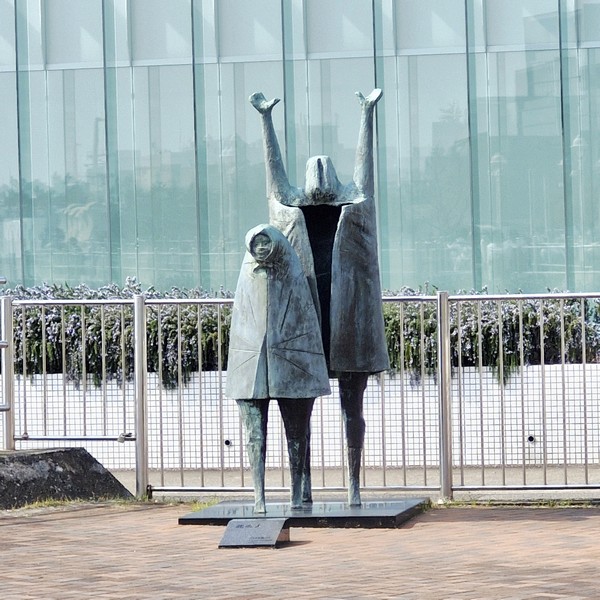
Kobe Port was once Japan’s most important departure point for overseas immigrants and the famous Kobe Port Emigrants Memorial Statue (also known as “Set Sail for Hope” or “Memorial Statue of Emigrants Boarding the Emigrant Ship”) honors the thousands of Japanese citizens who emigrated from Kobe Port, for new lives abroad, particularly to Brazil, in the early 20th century.

Kobe Port Emigrants Memorial Statue

Erected in 2001, it also serves as a reminder of the “National Kobe Emigrant Camp” history, where families awaited ships to travel abroad.  This bronze monument, erected in 2001, features a family (two adults and a child gazing out at the sea), symbolizing the departure.  The main statue is titled “Hope’s Departure.” The statue is seen as a bridge connecting Japan and the destination countries of immigrants, symbolizing international exchange and pioneering spirit.

Meriken Theatre Monument

The unique Meriken Theatre Monument, erected in 1987, commemorates Kobe as the location of the first public movie screening in Japan.  A popular photo spot, it was designed to look like a cinema screen and theatre seats. 

Kobe Kaientai Monument

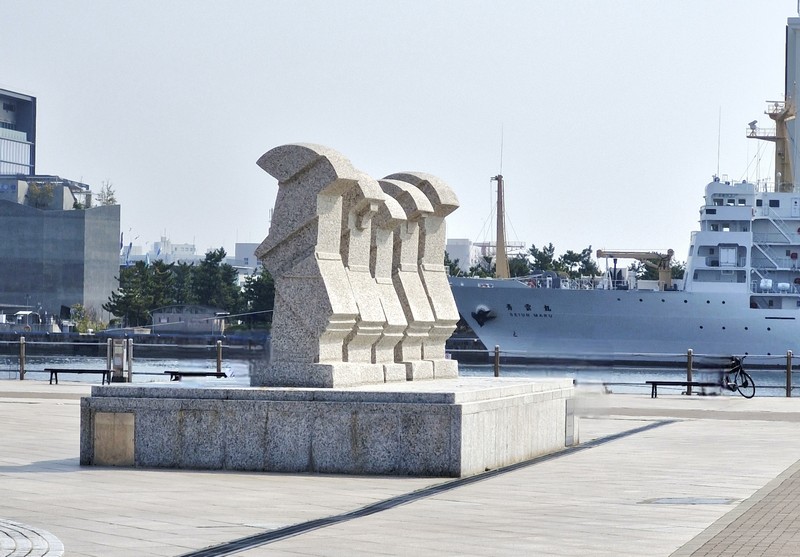
The Kobe Kaientai Monument, a notable abstract sculpture, commemorates the Kobe Kaientai, a historical naval group active at the end of the Edo Period.

Save Northern People (Kaneichi Futakuchi)

“Save Northern People,” a notable abstract, human-shaped bronze sculpture created by sculptor Kaneichi Futakuchi, was a winner of the Port of Kobe Anniversary Commemorative Award.  It is often interpreted as a tribute to those who left Kobe in search of a better life far away.

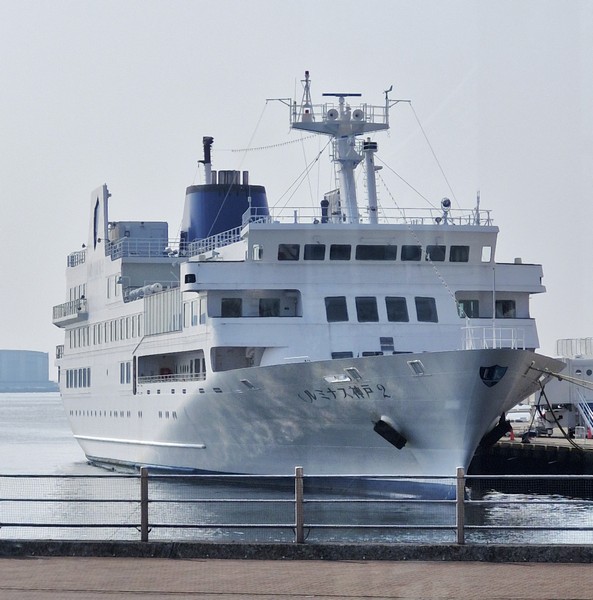
Sannomiya Ferry Terminal
A ship docked at the harbor

Meriken Park: 2 Hatobacho, Chuo-ku, Kobe-shi, Hyogo-ken, 650-0042.

How to Get There: Meriken Park is about a 10-minute walk south of Motomachi Station, on the JR Kobe Line, or just across the sightseeing cruise terminal from Kobe Harborland.