Church of St. Antoninus of Florence (Uyugan, Batanes)

Church of St. Antonius of Florence

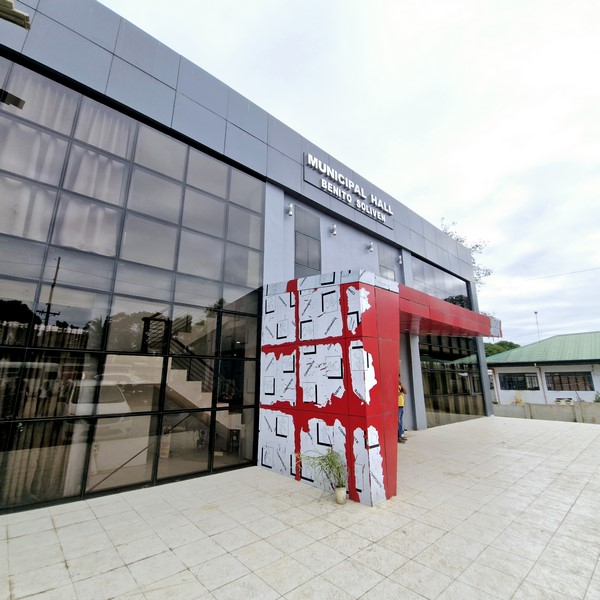
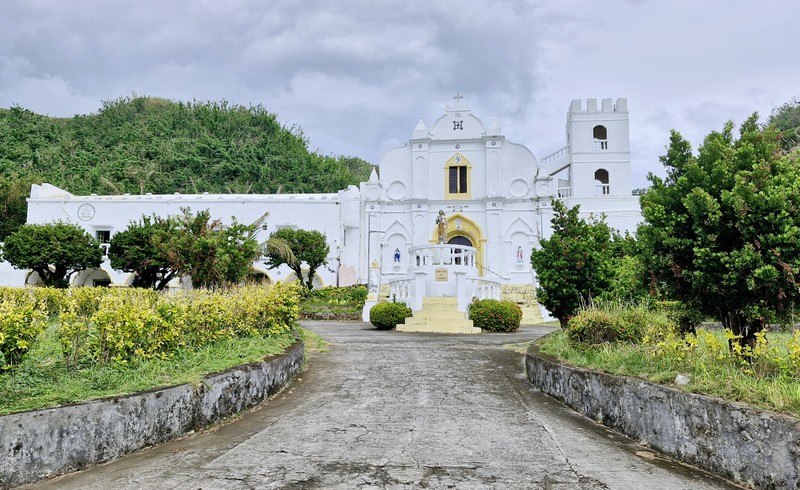
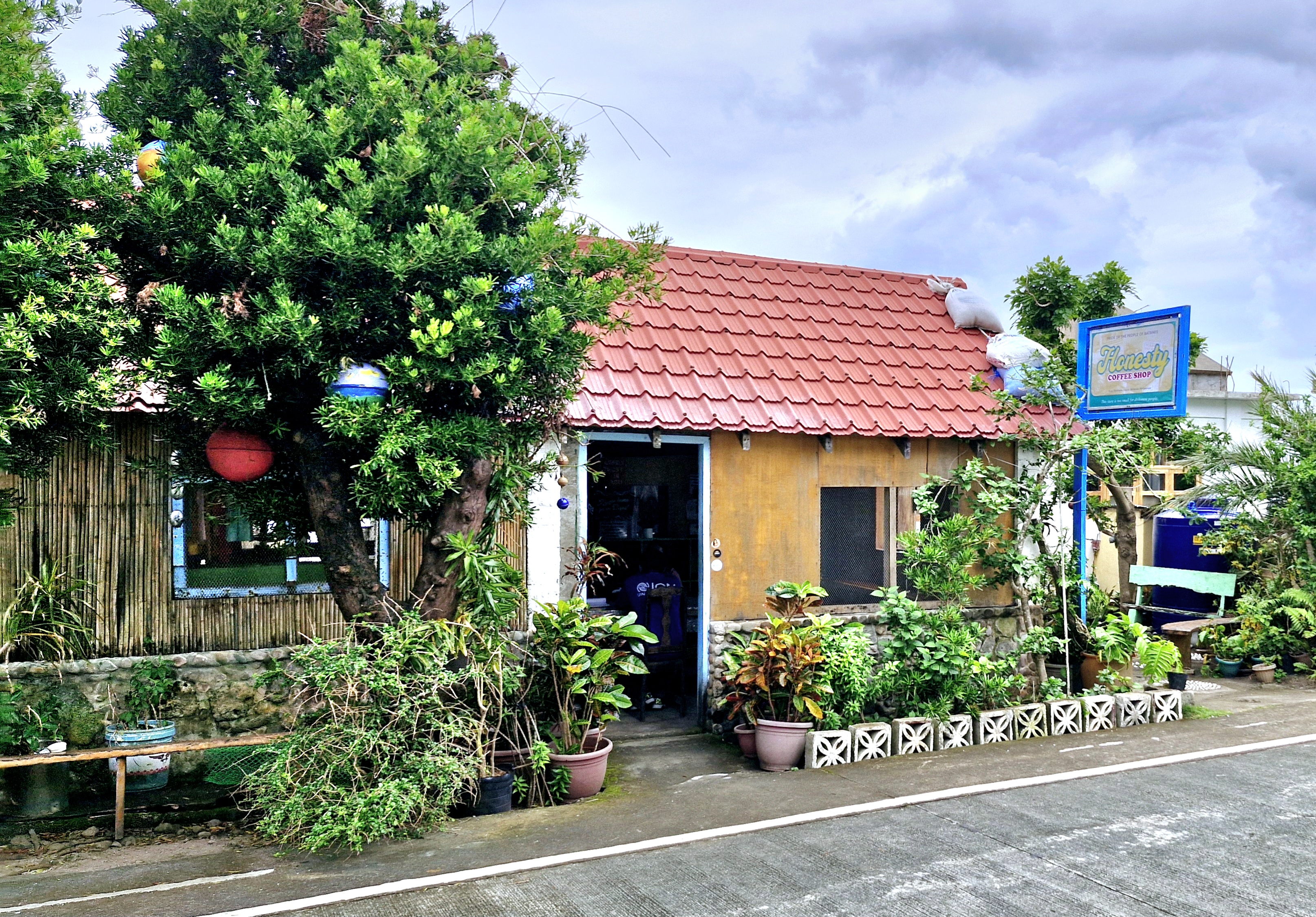
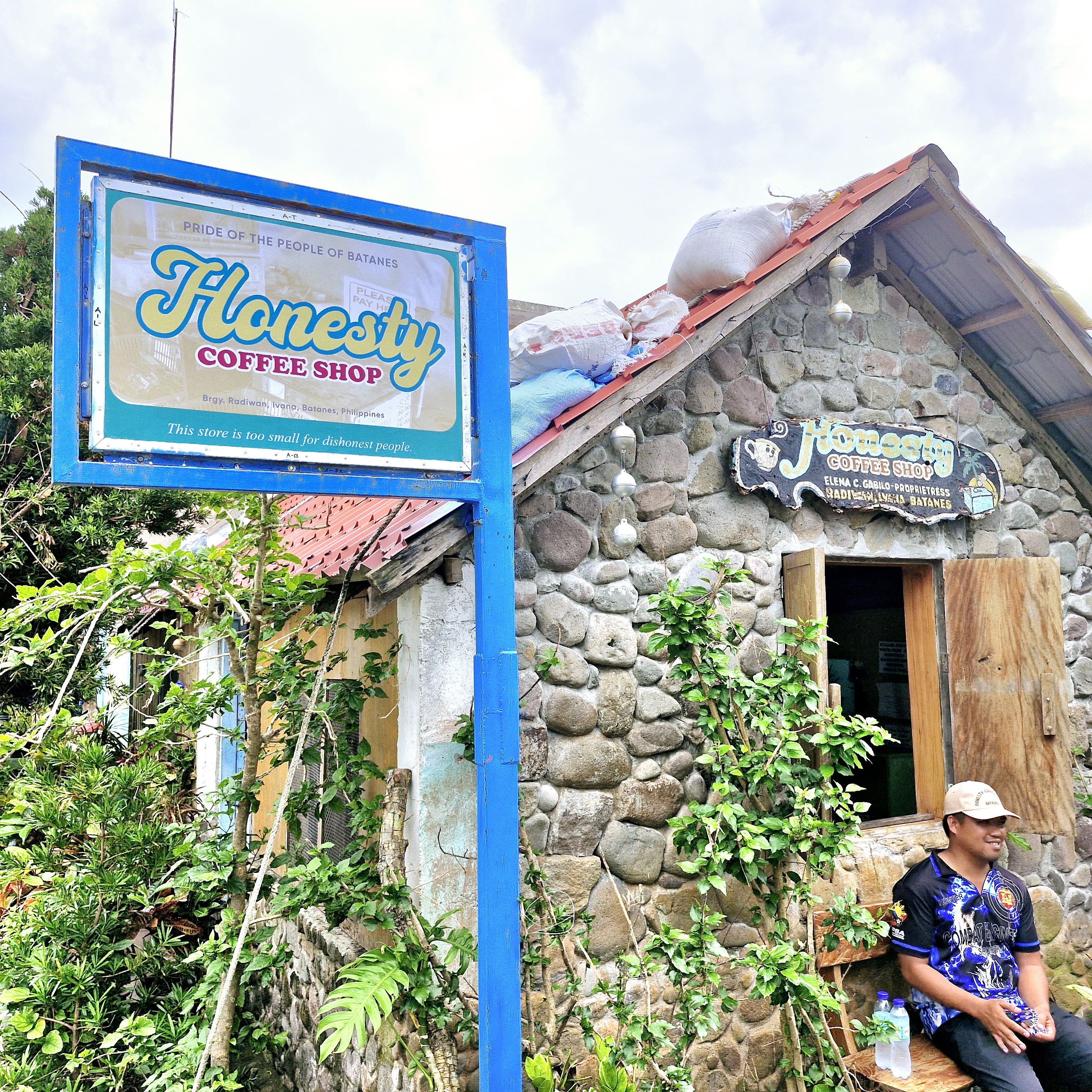
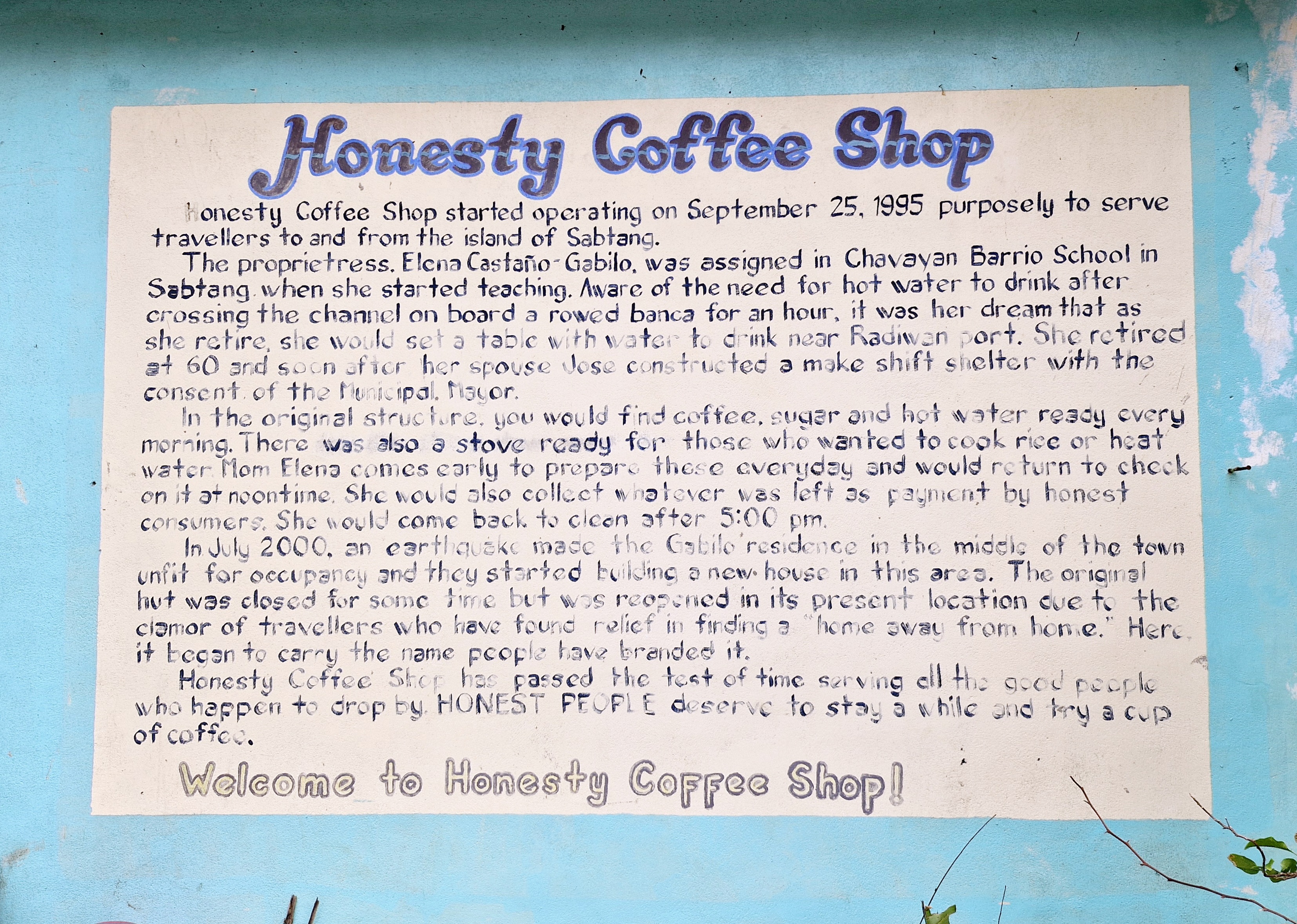
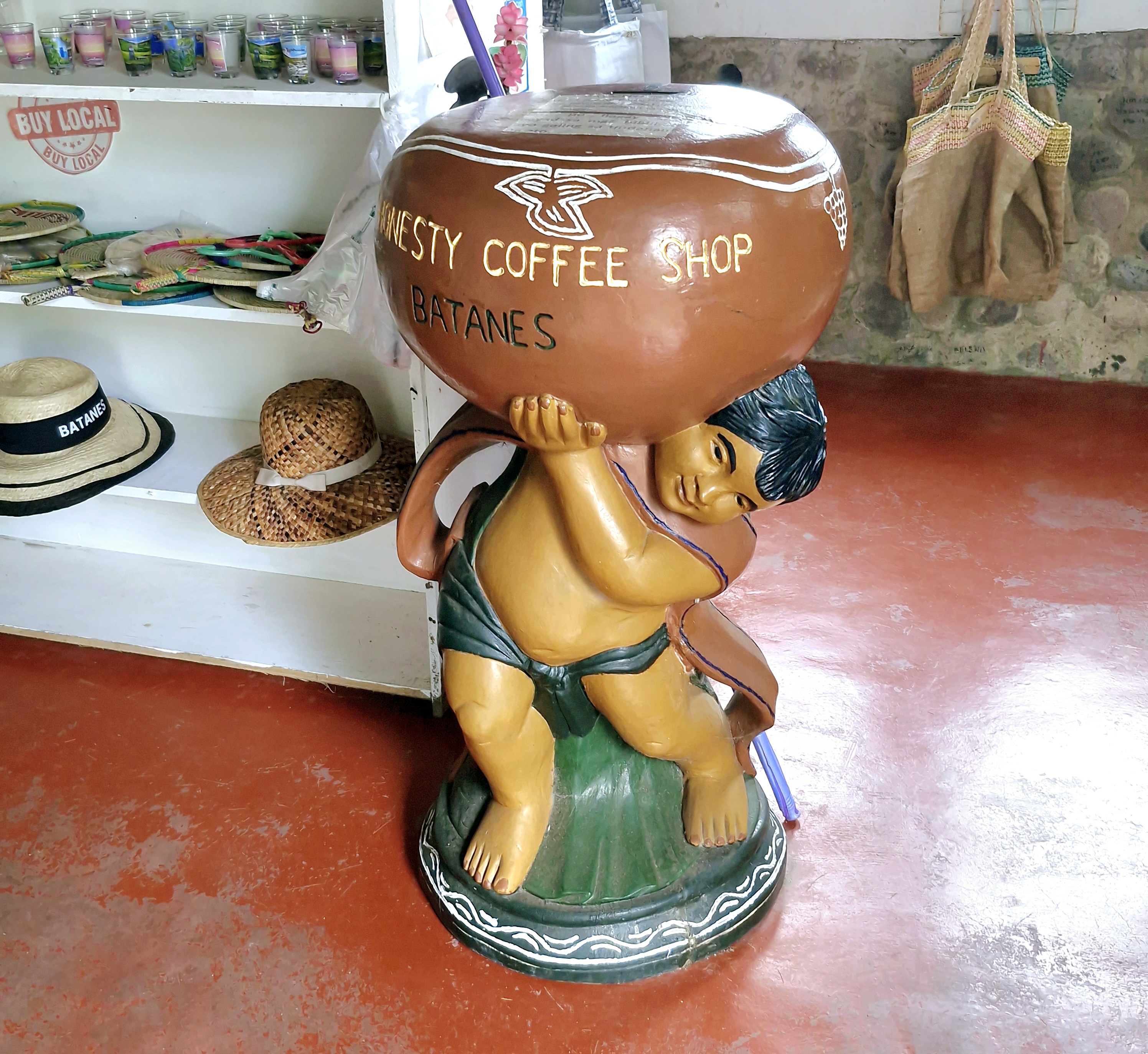
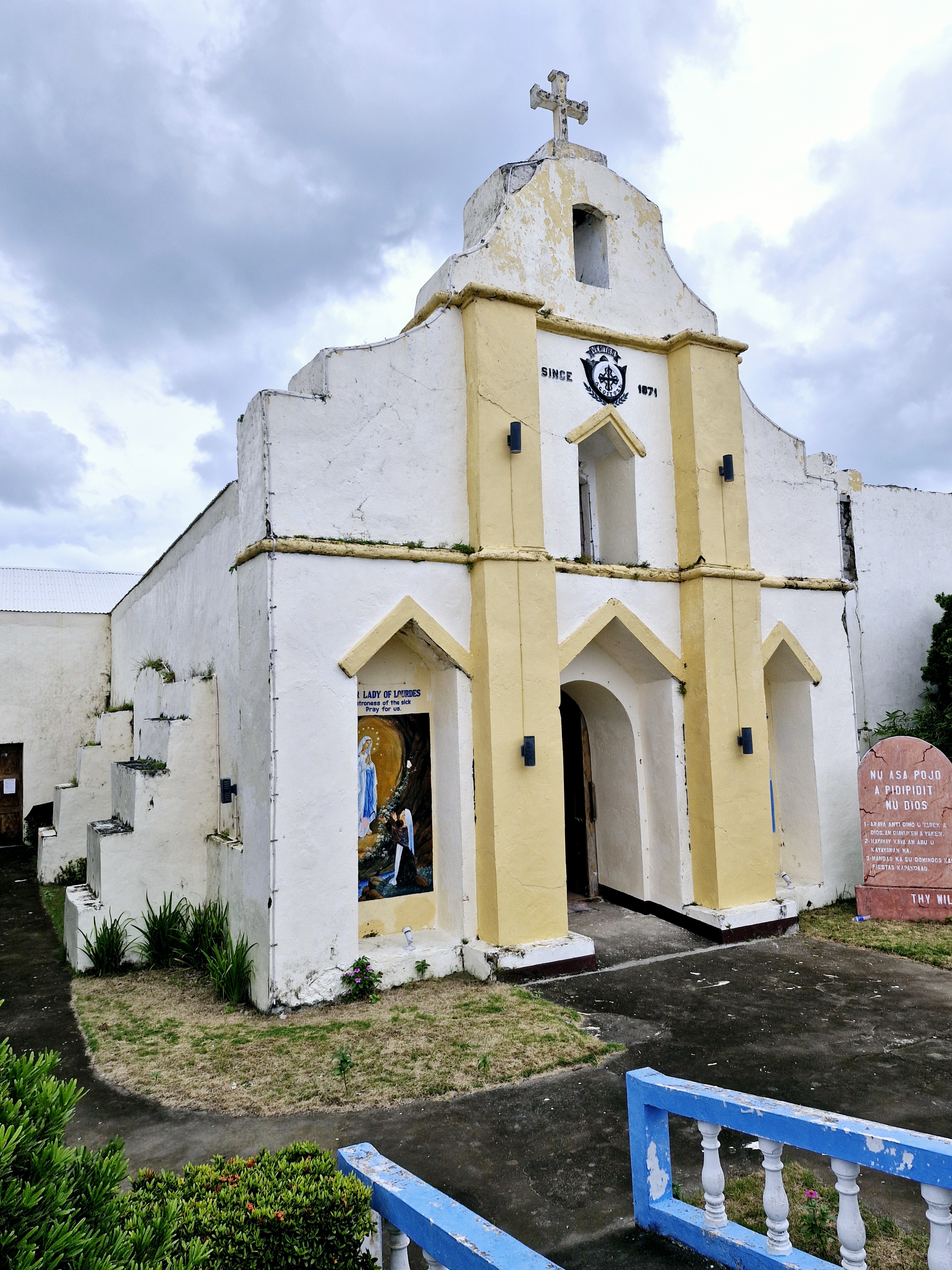
From Mutchong View Point, it was to be a long 20.1-km. (40-min.) drive to the Honesty Coffee Shop in Ivana. Five minutes into our trip, we made a short stopover at the Church of St. Antonius of Florence near the municipal hall at the town center of Uyugan.

Check out “Mutchong View Point” and “Honesty Coffee Shop”

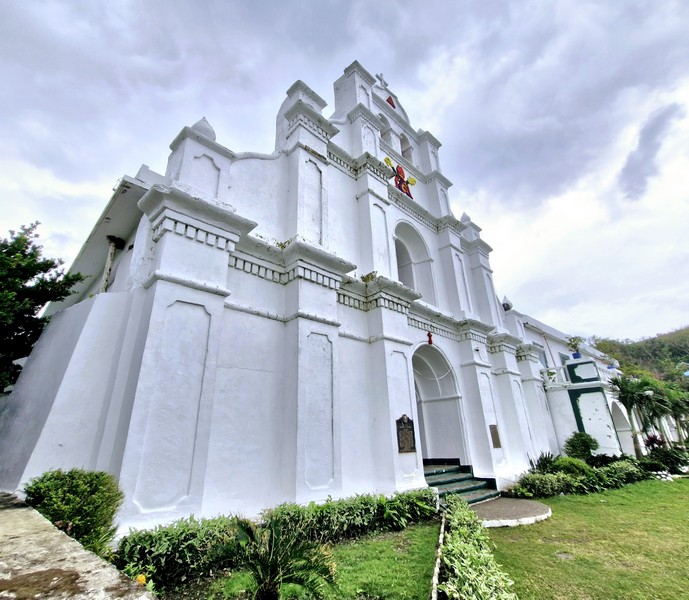
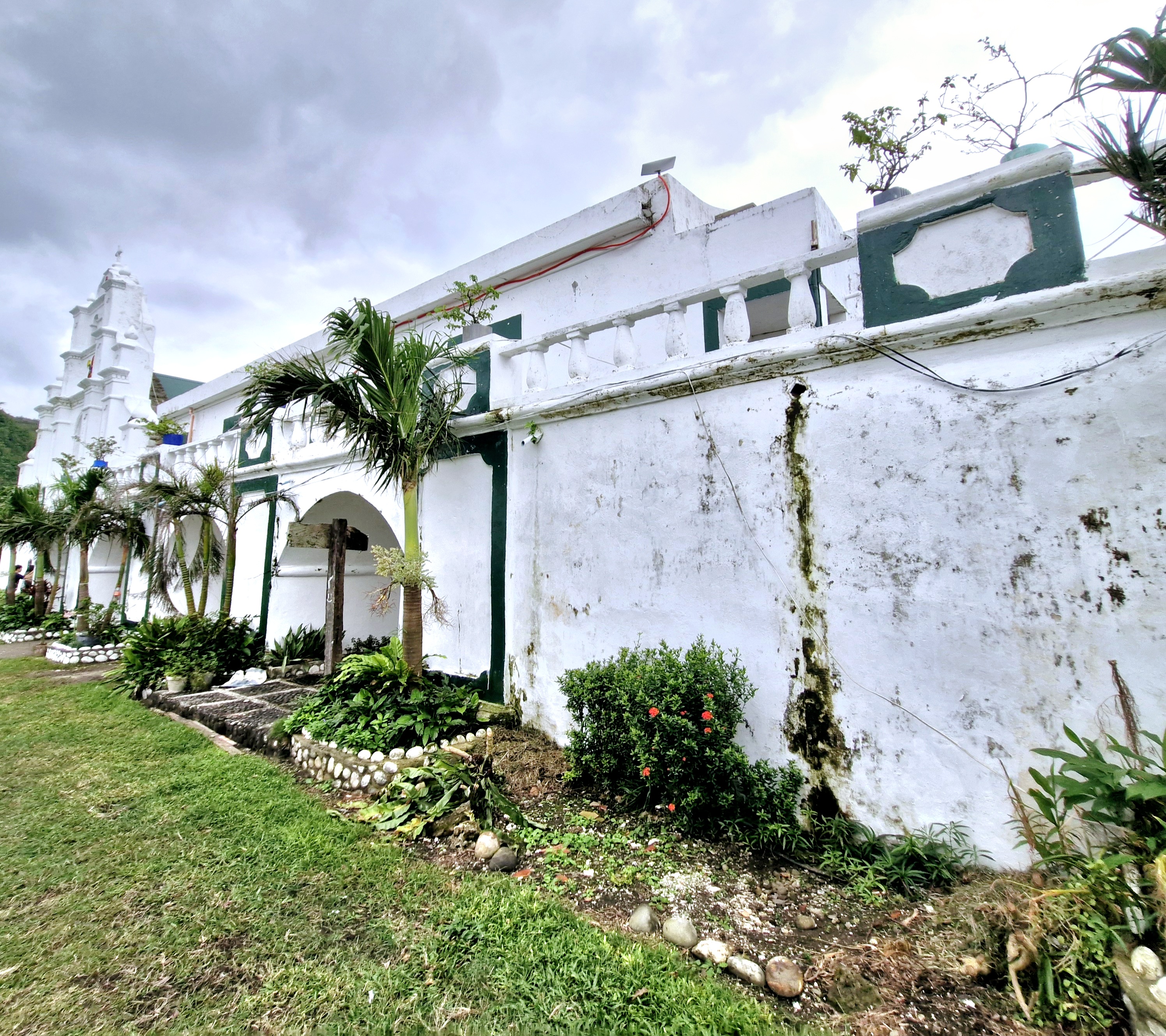
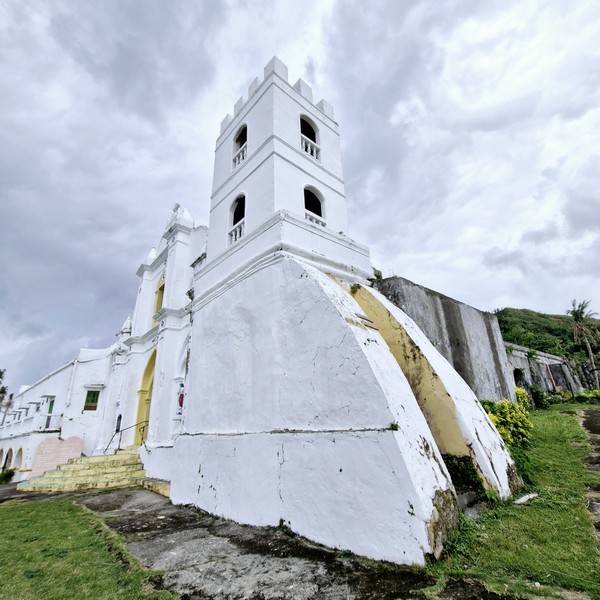
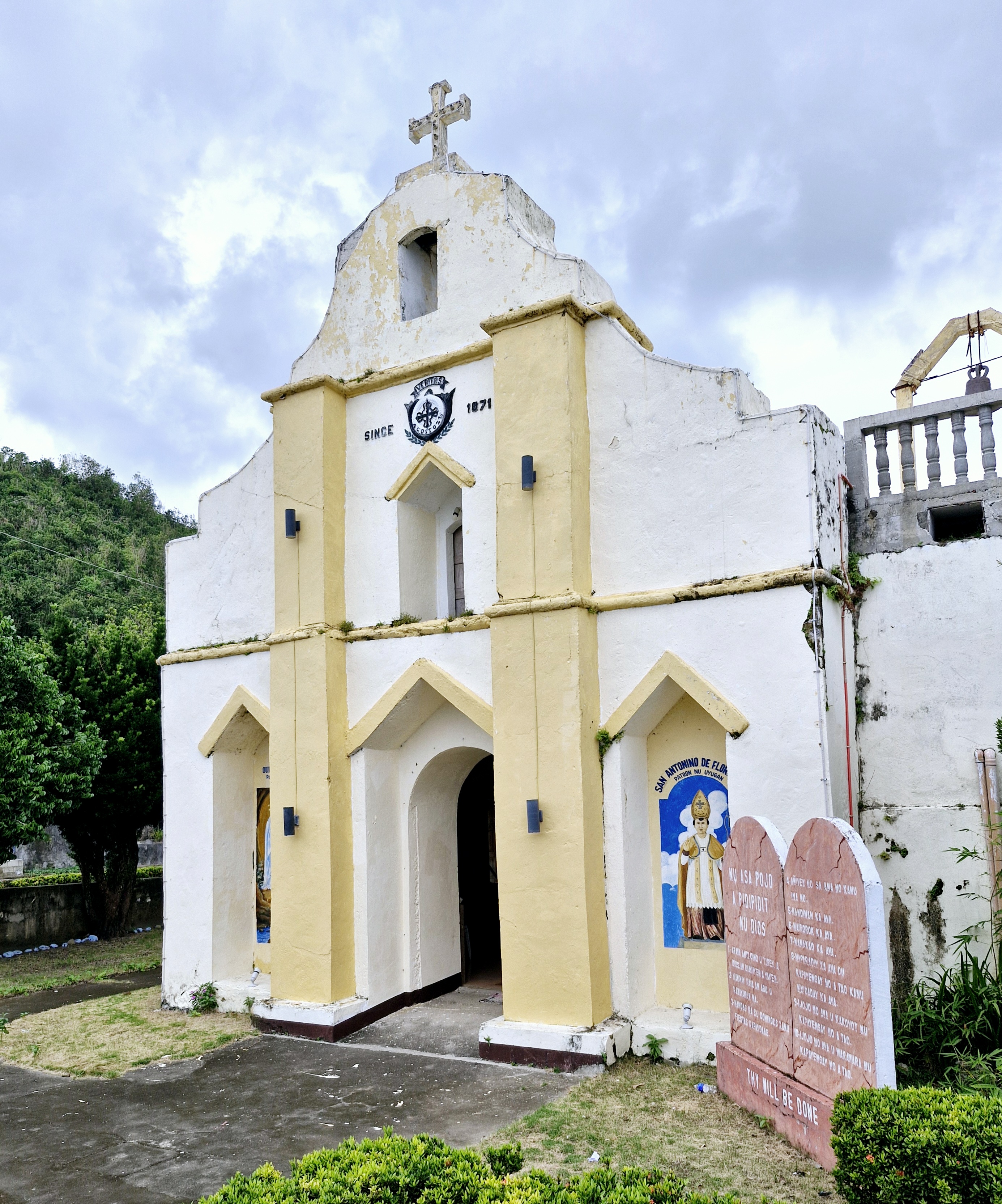
View of church from the left. Note the pair of step buttresses on the side

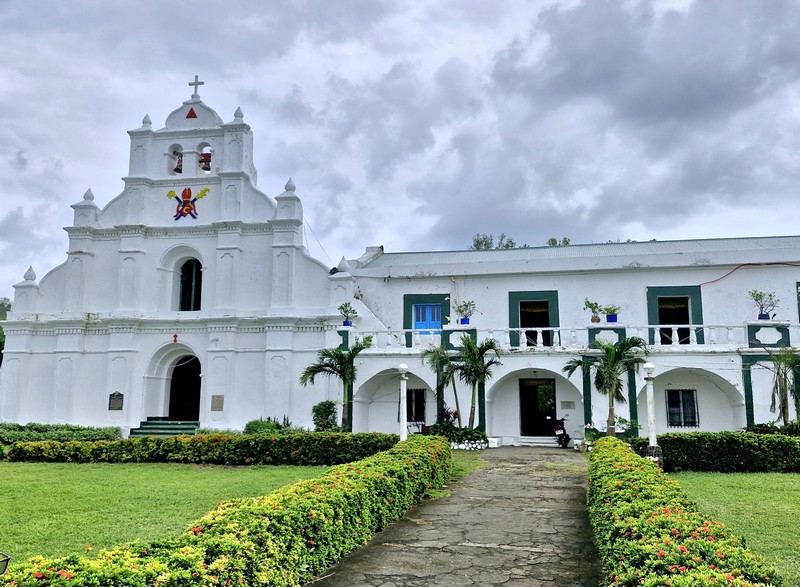
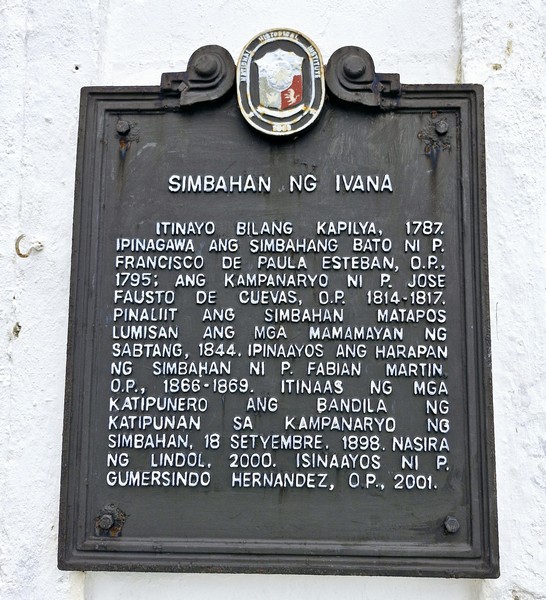
The smallest of all the Spanish-era churches in Batanes, this simple church was built in 1871 by Dominican Fr. Fabian Martin (term: 1844 to 1878) and is one of the churches frequented by Fr. Jerry Orbos during his Pilgrimage Tour.

AUTHOR’S COMMENTS:

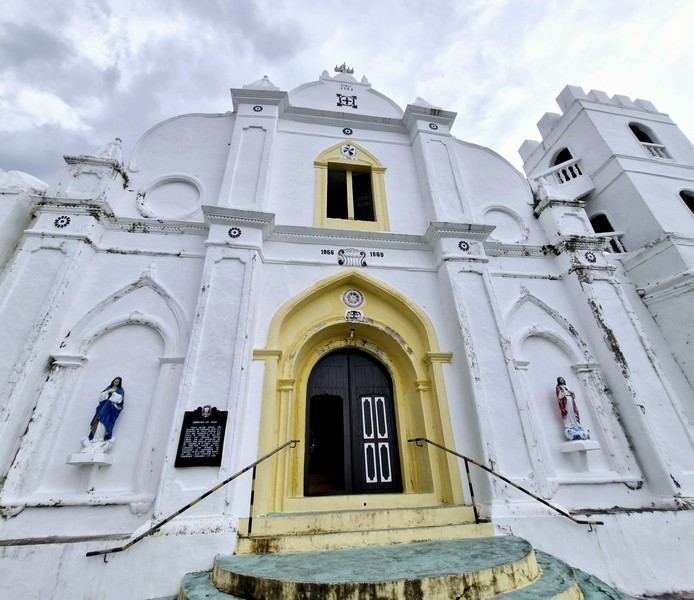
This single nave church, also built in the espadaña style, has one segmental arch for a bell (now gone) on the upper portion of its Baroque and Gothic-style façade which is buttressed by massive flat pilasters from the foundation to the top.  

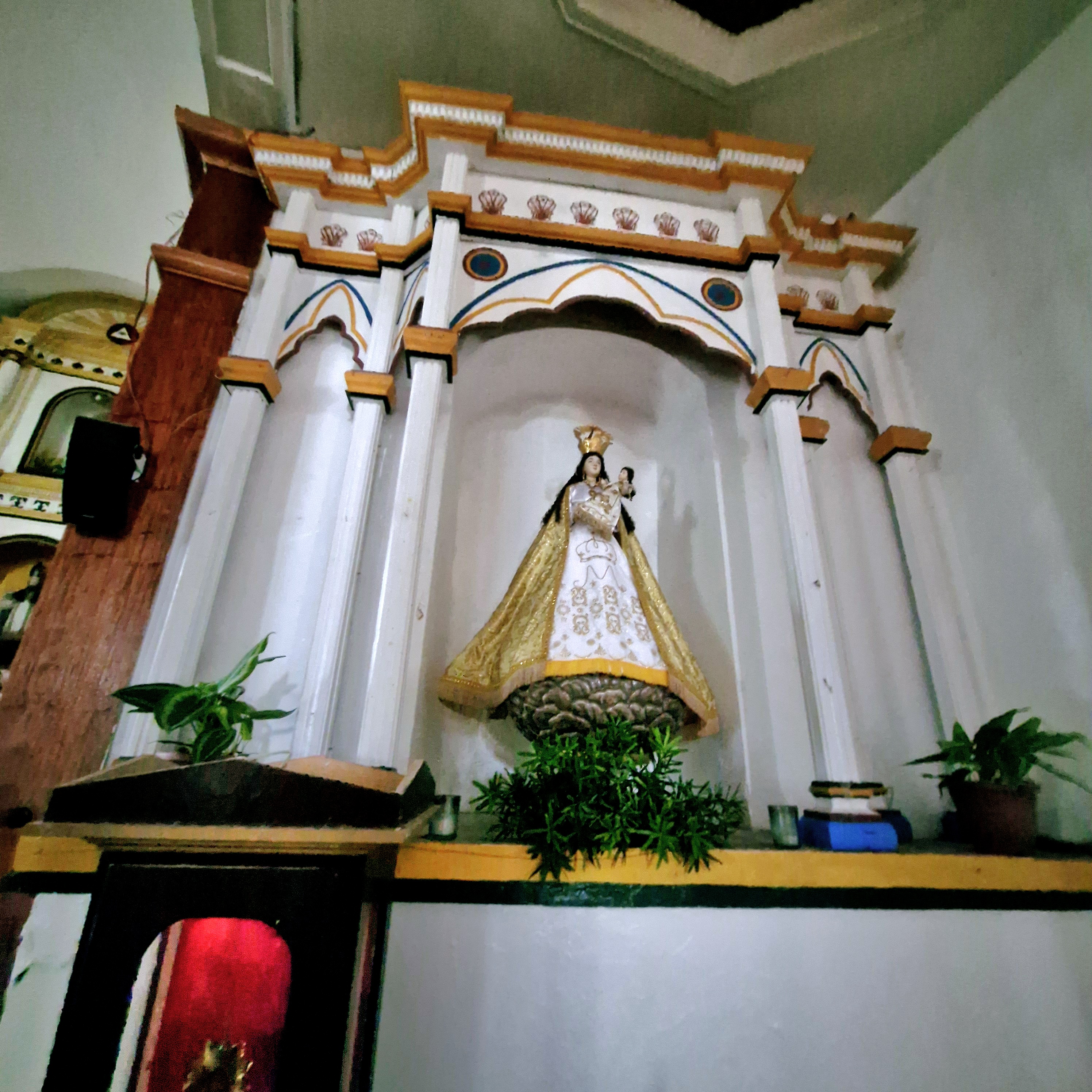
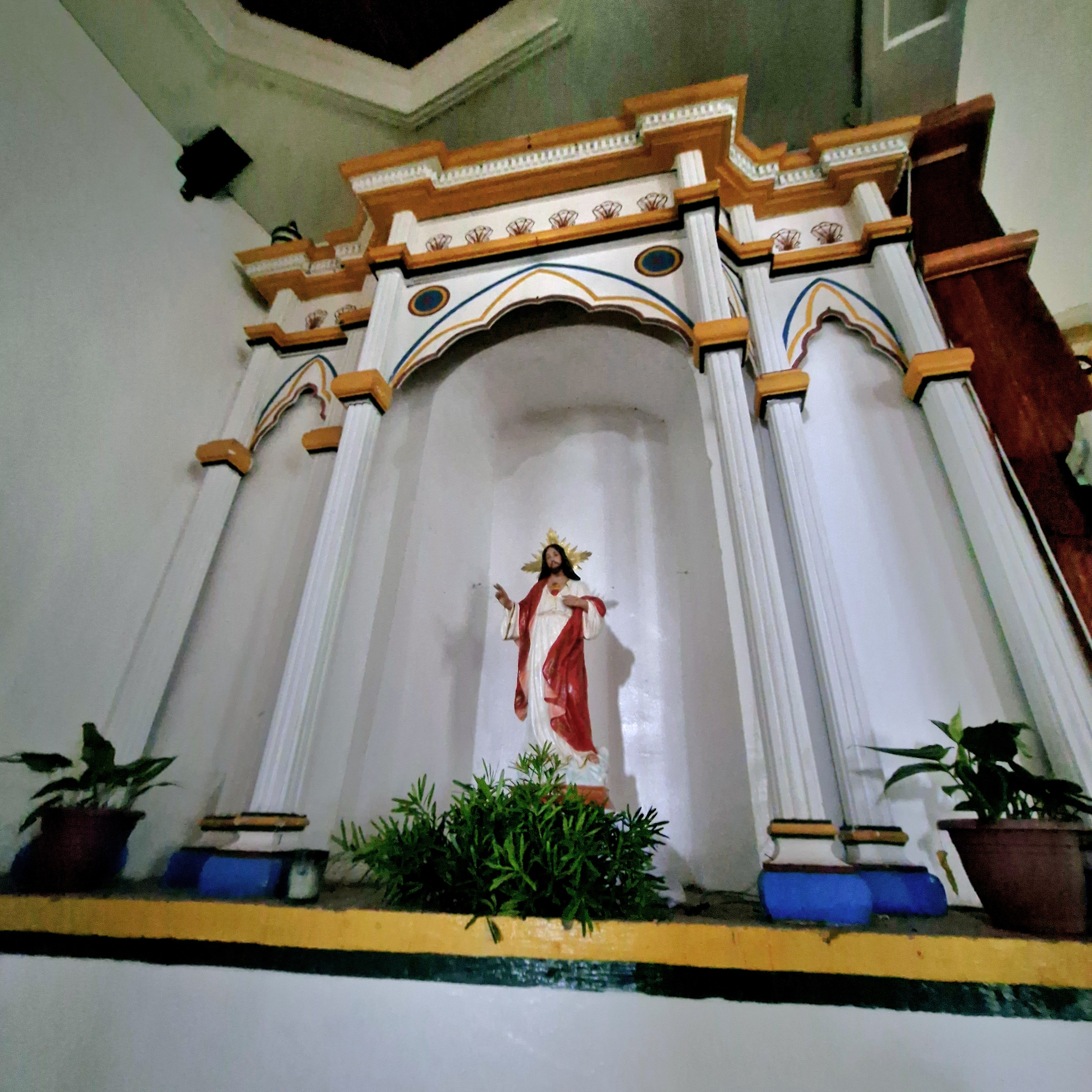
Gothic influences are seen from the gables over the narrow, semicircular arched main entrance, the flanking statue niches and the window (above which is the Dominican Order’s seal with its motto “Veritas”) over main entrance. On the sides are step buttresses that serve as stairways for servicing its then cogon-covered roof.   

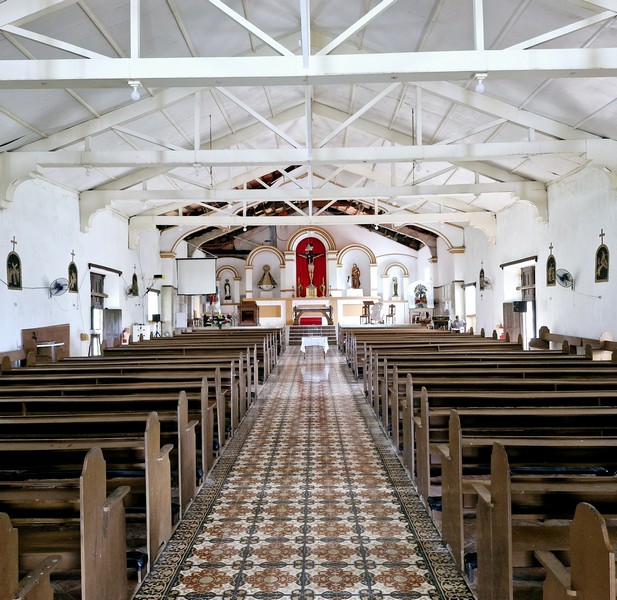
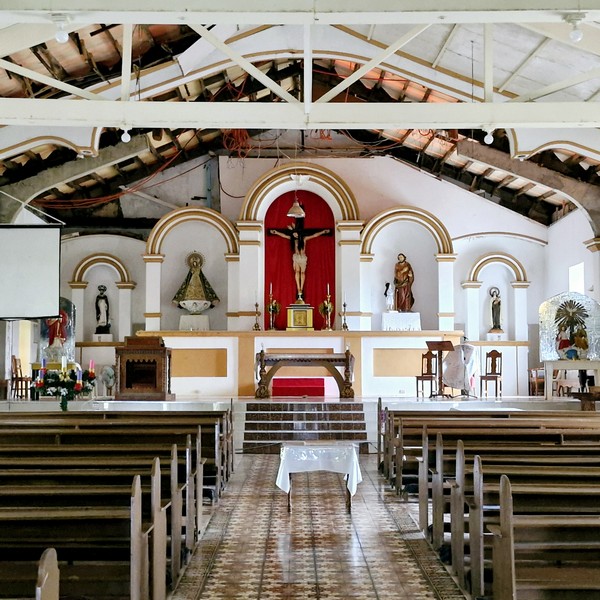
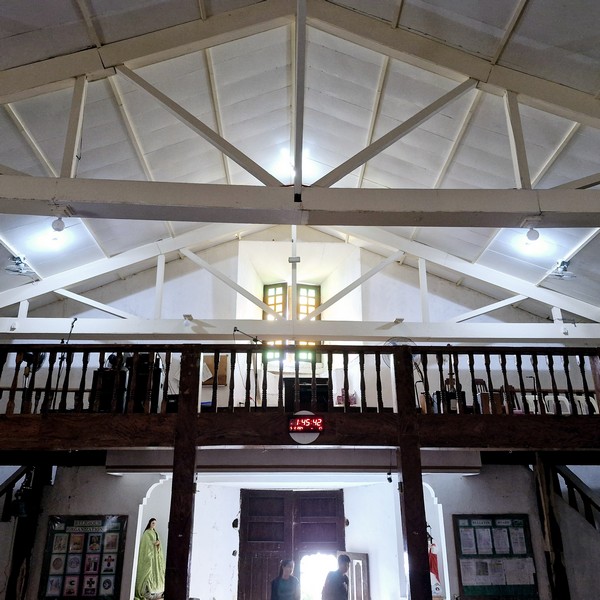
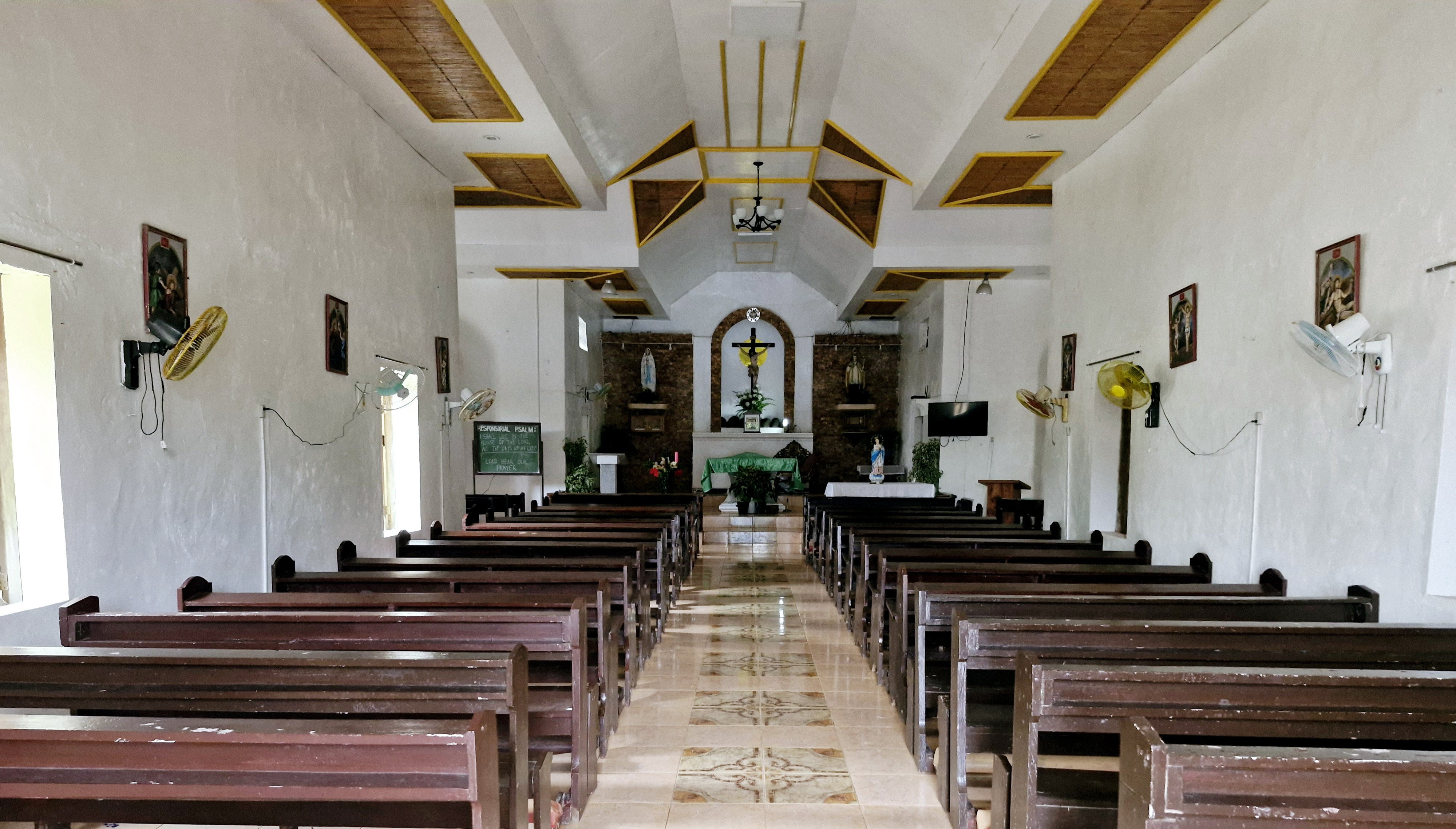
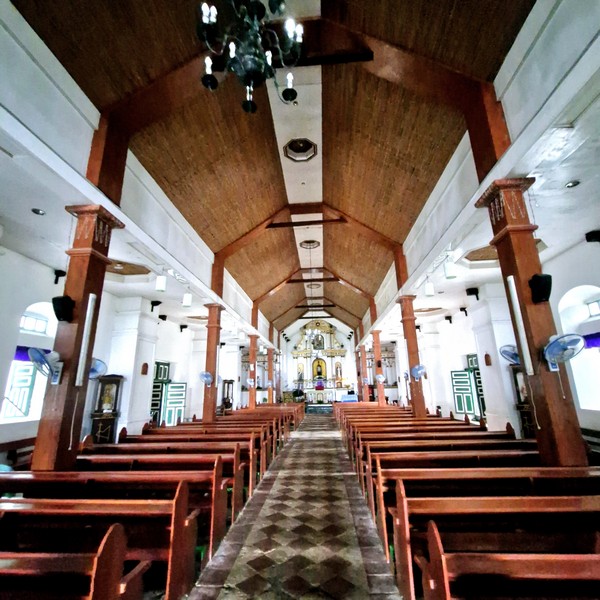
The church’s single nave interior

Church of Antoninus of Florence: Brgy. Kayuganan, 3903 Uyugan.  Feast of Antoninus of Florence: May 10.

How to Get There: Uyugan is located 22.2 kms. (a 45-min. drive) from Basco and 11.9 kms. (a 25-min. drive) from Ivana. 

Provincial Heritage and Tourism Office (PHTO): Mobile number: (0929) 230-5934. Website: www.breathtakingbatanes.com.

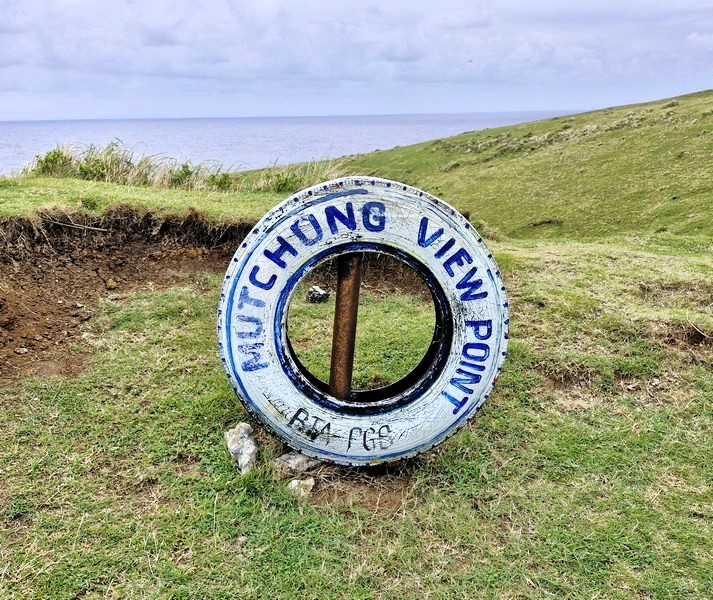
Mutchong Viewpoint (Uyugan, Batanes)

Mutchong Viewpoint

From the famous site of the Alapad rock formation, on your way to Brgy. Songsong in Uyugan, we made a stopover by the big sign saying “I ♡ UYUGAN,” a small boxlike community “bayanihan” (“Kamañidungan”) center and the Mutchong Viewpoint (also called Imnajbu Point) which is known for its breathtaking panoramic views of the surrounding landscapes, including the rugged cliffs, rolling hills, vast ocean, and the picturesque rocky coastlines of Batanes.

Check out “Alapad Rock Formation

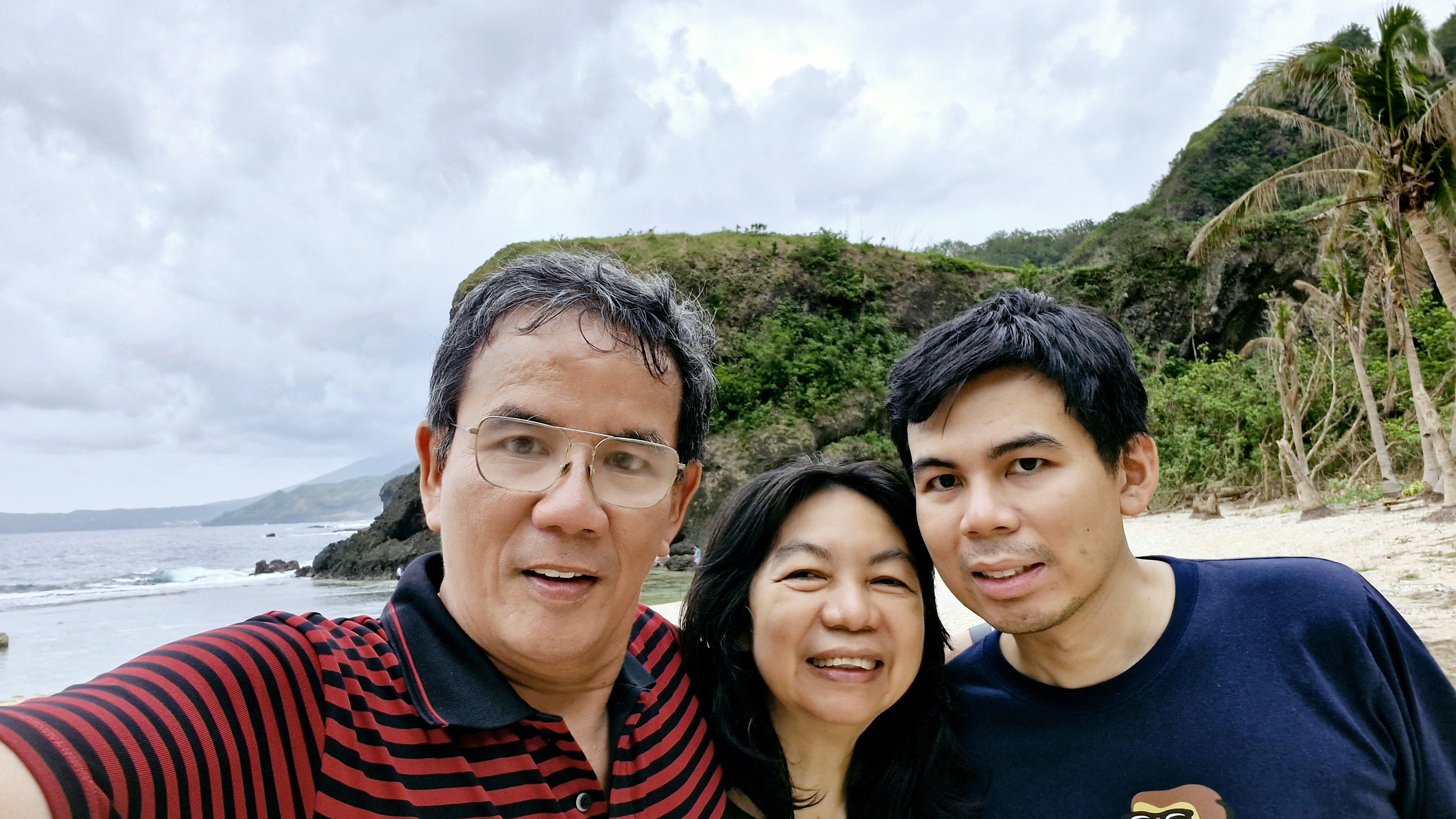
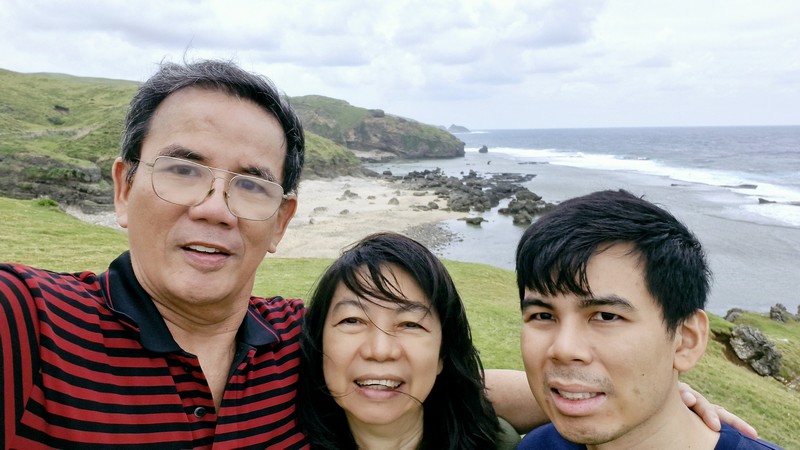
The author, Grace and Jandy

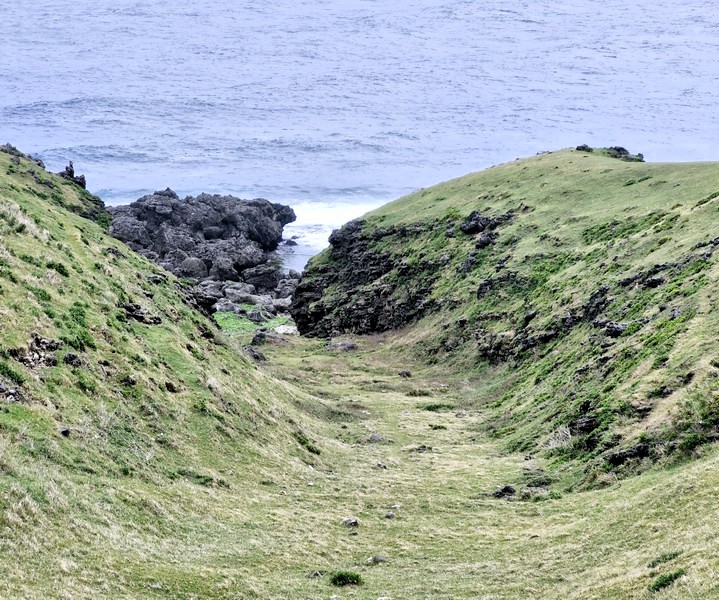
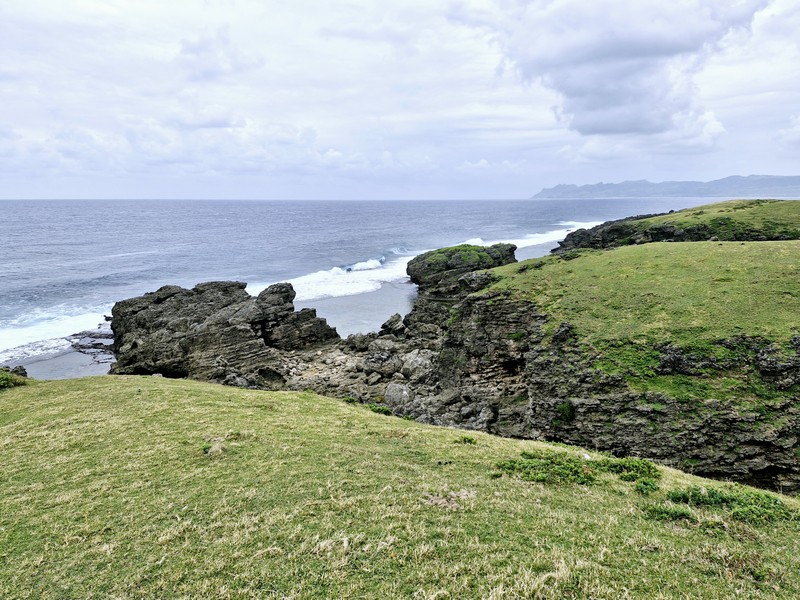
Here we were greeted with a spectacular sight of beautiful hills and the distant sea, as well as a refreshing breeze. The viewpoint allowed us to get close to a cliff, so we can see where the land meets the waters of the West Philippine Sea below. 

The big “I ♡ UYUGAN” sign

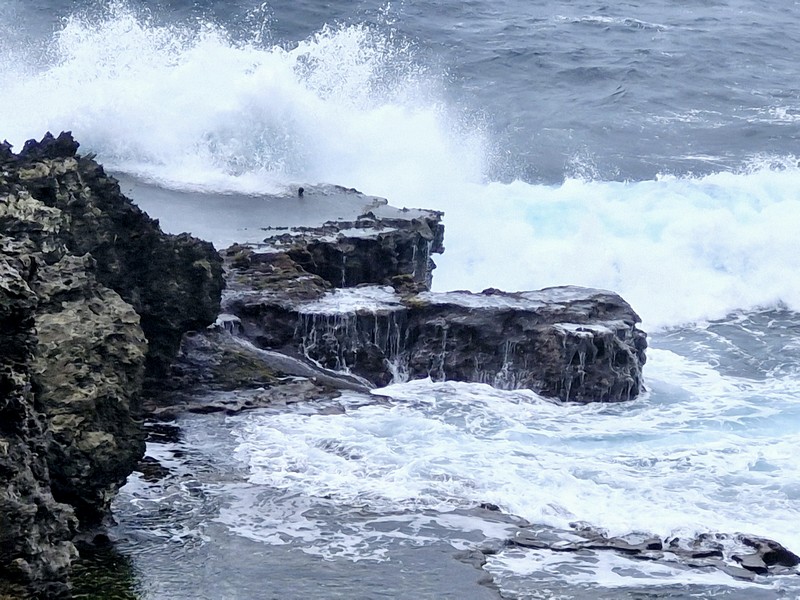
From this stunning vantage point, we admired the lovely scenery and natural beauty of the place, the waves crashing the unique geological formations of the area below and enjoyed the breeze and the sound of the howling wind.

Mutchong Viewpoint: Brgy. Kayvaluganan, 3903 Uyugan.

How to Get There: Uyugan is located 22.2 kilometers (a 45-minute drive) from Basco and 11.9 kilometers (a 25-minute drive) from Ivana.

Provincial Heritage and Tourism Office (PHTO): Mobile number: (0929) 230-5934. Website: www.breathtakingbatanes.com.

Alapad Rock Formation (Uyugan, Batanes)

From the BAMSO Museum, it was just a short drive to the iconic Alapad Rock Formation, one of the most visited tourist attractions in Batan Island.

Alapad Rock Formation

This an inclined rock, facing the Pacific Ocean, was naturally carved by the strong water current and tectonic movements. Since it is strategically situated along the coastline of Imnajbu in Batan Island, it was blasted open, right down the middle, leaving some space in between to accommodate Batan’s circumferential road.

On one side is a hill that serves as a view deck offering a picturesque view of the Pacific Ocean and the seascape, in general, for visitors, while on the other side is a rocky beach.

L-R: Grace, the author, Lorraine, Jun, Jandy, Lourdes and Gelyn

The rock formation deck also offers a view of the aforementioned BAMSO Museum now housed in the former LORAN (Long Range Aid to Navigation Station) constructed by the Americans in the 1960s, for Coast Guard purposes and, eventually, abandoned in the 1970s.

Check out “BAMSO Museum”

A famous scene in 1991 movie Hihintayin Kita sa Langit, wherein Richard Gomez was carrying Dawn Zulueta, was filmed here. The motorcycle scene in the 2015 film You’re My Boss, starring Toni Gonzaga (as Georgina) and Coco Martin (as Pong), was also shot here.

The “Blow Ur Horn” sign

Adding to its charm are the iconic “Blow Your Horn” signs along Mahatao’s cliff hugging roads, evidence of Ivatan ingenuity and creativity. Carved out from cliffs or boulders to prevent accidents at the blind spots, these unique, yellow-painted road signs, also associated with Batanes, were built to withstand the torrential winds of the strongest typhoons.

The uthor (left) with Grace and Jandy

Alapad Rock Formation: Brgy. Itbud, 3903 Uyugan,

How to Get There: Uyugan is located 22.2 kilometers (a 45-minute drive) from Basco and 11.9 kilometers (a 25-minute drive) from Ivana.Locals usually ride their motorcycles, bicycles, tricycles, or walk to the Alapad Rock Formation. You can also join a guided tour that includes this attraction.

Provincial Heritage and Tourism Office (PHTO): Mobile number: (0929) 230-5934. Website: www.breathtakingbatanes.com.

Racuh a Payaman (Mahatao, Batanes)

Racuh a Payaman

From the Chawa View Deck, it was a 6-km. (15-min.) drive, passing by the Mahatao Boat Shelter Port, to Racuh-a-Payaman (meaning “big pasture”), one of the most visited tourist attractions in the island.  By the time we arrived, the rain had already stopped and the sun was shining brightly in the sky.

Check out “Chawa View Deck” and “Mahatao Boat Shelter Port”

L-R: Grace, the author, Jandy, Lorraine, Junior, Lourdes and Gelyn

Located at Mahatao’s outskirts, it is also called Vayang (“rolling hills”) or Japarao but is more popularly called the “Marlboro Country of Batanes,” a referral derived from a 1968 Marlboro cigarette TV advertisement, mainly because of the rolling hills of limitless, velvety grazing grassland where cattle, carabao and horses are aplenty.

Grazing cattle

This huge track of communal pastureland, preserved by the villagers, have fields often typically hedged with tall rows of reeds, trees, cogon grass or piled stones.  These hedgerows serve as some sort of windbreaker, protecting the crops against the harsh winds and typhoons.  They also help prevent soil erosion.

The site is protected by the NIPAS Act (a law securing the proper use of protected lands in the country) and the Batanes Protection Act of 2000 (a law stipulating a Batanes as a cultural heritage and ecotourism zone). Therefore, the protection of the environment is strictly enforced in the area.

A cone-shaped islet

A large part of this area is occupied by the Cattle Raisers Association of Communal Pastureland No. 1, the oldest and most intact group in Batanes, with management ensuring that equitable access and distribution of the benefits derived from the grazing land.

Jandy doing a jump shot

From the top of the hills, the view here is nothing short of spectacular.  We had a clear, picture-perfect view of the rugged coastline below, with cliffs plummeting down to Diura Beach and a cone-shaped islet, the Pacific Ocean on the horizon, Tayid Lighthouse, crested on an opposite hill, to the north, Mt. Iraya on the far north, and the Dingo island close by.

Tayid Lighthouse amidst hedgerows 

It is also a nice venue for landscape photography and kite flying. For dining, there’s Maconines Canteen which serves local dishes such as uvud, mahi-mahi, vunes, lunis and Batanes lobsters.

Marconines Canteen

Racuh a Payaman was also featured in the 2015 film You’re My Boss, starring Toni Gonzaga (as Georgina) and Coco Martin (as Pong). Here, Georgina and Pong were taking lots of selfies as the day was coming to a close.

The author befriending a cow

Racuh-a-Payaman: Brgy. Uvoy, 3901 Mahatao.

How to Get There: Mahatao is located 13.4 kms. (a 30-min. drive) south of Basco. Located just between Mahatao and Imnajbu in the east-central Batan Island, this pastureland can be reached by tricycle from Basco Airport or Basco Town Proper. You can also hire a tricycle for a tour of South Batan, which includes a stop at Marlboro Country.

Mahatao Boat Shelter Port (Mahatao, Batanes)

On our way to Racuh a Payaman, from Chawa View Deck, we passed by the Mahatao Boat Shelter Port just before entering the town proper of Mahatao.  This shelter area, within a man-made cove, is for falowas, tatayas and other small inter-island vessels plying the Basco-Itbayat route as well as those ferrying passengers or construction materials from Basco or Ivana to Sabtang Island, when typhoons hit Batanes.

Check out “Racuh a Payaman” and “Chawa View Deck”

Mahatao Boat Shelter Port

Costing Php130 million (out of the originally estimated Php250 million), it was, at that time, the biggest provincial infrastructure project.  This brainchild of Governor Vicente S. Gato (1998 to 2007), officially called the Diosdado Macapagal-Jorge Abad Sr. Boat Shelter Port, was completed in October 2005 with the special assistance of the Naval Special Operations Group of the Philippine Navy (Gato is a retired Navy captain) and inaugurated on June 25, 2007. The shelter port has since become a popular stop on the South Batan tour.

Mahatao Boat Shelter Port

Mahatao Boat Shelter Port: National Rd., 3901 Mahatao.  Admission: Php50 per pax. Tel: (02) 782-8002.

How to Get There: Mahatao is located 13.4 kilometers (a 30-minute drive) south of Basco.

Provincial Heritage and Tourism Office (PHTO): Mobile number: (0929) 230-5934. Website: www.breathtakingbatanes.com.

Chawa View Deck (Mahatao, Batanes)

Chawa View Deck

On our third day in Batanes, after breakfast at the hotel, it began to rain when we boarded our van for the 1.8-km. (a 5-min.) drive, along winding roads, to the first stop of our Southern Batan Island Tour – the breathtaking Chawa View Deck (also called Mahatao View Deck or Chanarian View Deck).  The word chawa came from the Ivatan word meaning “cliff.”

Grotto of the Virgin Mary

Upon arrival, we first encountered a grotto of the Blessed Virgin Mary then some concrete benches where one can sit (if it weren’t wet) and have a panoramic view of the West Philippine Sea beyond, the pounding waves below, the rolling green hills and the rugged western cliffs that hug the road to the southern towns.

View from the deck

The cliff also has a steep concrete stairway, with 100 or so steps, that lead down to the sea where you can dip your feet in the cool waters, take additional photos, go fishing or just watch the waves hitting the rocks. During low tide, there is a mini pool.

L-R: Grace, the author and Jandy

We didn’t go down the stairway as climbing back up would be quite a workout and the steps were very slippery and dangerous to step on after the rain. Instead, we simply relaxed, took photos and enjoyed the breeze and the view.

Concrete steps leading down to the shore

Some distance from the view deck, I espied a pair of extraordinary mountain goats defying gravity as they clung precariously off the steep mountain side.

Two mountain goats clinging precariously to the mountain sides.

Chawa View Deck: Basco National Rd., Brgy. Hanib, 3901 Mahatao. 

How to Get There: Mahatao is located 13.4 kms. (a 30-min. drive) south of Basco.  The viewing deck is located at the top of the Chawa winding road within Mahatao.

Provincial Heritage and Tourism Office (PHTO): Mobile number: (0929) 230-5934. Website: www.breathtakingbatanes.com.

Church of St. Vincent Ferrer (Sabtang, Batanes)

Church of St. Vincent Ferrer

After our tour of Chavayan Village, we again boarded our van for 8.5-km. (20-min.) drive back to the población to visit the Spanish-era Church of St. Vincent Ferrer.  This church started as a small chapel in 1785.  In 1844, it was rebuilt in lime and stone by Dominican Fr. Antonio Vicente, OP.

Check out “Chavayan Village”

The church’s Baroque façade

In October 1956, after damage by a typhoon, Fr. Gumersindo Hernandez, OP, repaired the campanille and, from 1983 to 1984, Fr. Rafael Carpintero, OP, repaired the interior and replaced the cogon roofing with galvanized iron.

Historical plaque

In 2008, the church, convent and beaterio complex were declared as a National Historical Landmark by the National Historical Commission of the Philippines.

The massive buttresses at the sides

Like the Basco Cathedral and the Church of St. Charles Borromeo in Mahatao, this church has an espadaña-style facade, with two round arches for its two bells on the upper portion of the Baroque façade.

Check out “Cathedral of the Immaculate Conception” and “Church of St. Charles Borromeo”

The church convent

Four massive and broad pilasters, topped by heavy set, urn-like finials, flank the semicircular arched main entrance, at the first level, and the semicircular arched window at the second level.

The church’s interior

The thick walls enclosing the nave, made with stone and lime, are supported by buttresses while, at the back, four round pillars support the choir loft (below which is the baptistery).  A pedestal, with a stone statue of St. Vincent Ferrer, stands a short distance to the right of the church.

The main altar

Inside the church is the original Baroque retablo, with niches for statues of saints, above the high altar.  Made with polychrome and gilded woodwork, it was restored by Fr. Carpintero during the 1983 to 1984 renovation.

Stone statue, of St. Vincent Ferrer, on a pedestal

Church of St. Vincent Ferrer: Brgy. Malakdang (Poblacion) Sabtang, 3904 Batanes.  Mobile number: (0929) 110-2401. Feast of St. Vincent Ferrer: April 27.

How to Get There: There are scheduled 30 to 45-minute early morning boat trips by falowa (round-bottomed boat) from Ivana’s Radiwan Port to Sabtang. The church is located close to the port.
Sabtang Tourist Information Center: Brgy. Sinakan, 3904 Sabtang.  Mobile number: (0929) 226-8055.  E-mail: tourismsabtang@gmail.com.

Provincial Heritage and Tourism Office (PHTO): Mobile number: (0929) 230-5934. Website: www.breathtakingbatanes.com.

Chavayan Village (Sabtang, Batanes)

Chavayan Village

From Chamanatad-Tinan Viewpoint, it was just a short 1.1-km. drive, along a winding road, to the old, charming village of Chavayan.  The one of the smallest villages in Sabtang and the southernmost community in the province, it is situated between the mountains and the sea, facing the northern tip of Luzon Island. Here, you can find glimpses of the Ivatan way of life, now being threatened by our ever-changing world. Farming and fishing are the primary source of livelihood for the locals. The word chavayan was derived from the word cha (meaning “bountiful”) and vay, the arrowroot plant.

Check out “Chamanatad-Tinan Viewpoint”

Jandy, Grace and the author at the entrance to the village
L-R: Gelyn, Jun, Lorraine, Lourdes, the author, Grace and Jandy. On the left is a now unused boat winch

The iconic “welcome rotunda,” at the asdepen (or asdepan, meaning “entrance) signaled our arrival at the village. To its right is a small hut that serves as the shelter for the Sabtang Weavers Association, the most prominent feature of the village.

Sabtang Weavers Association

Here, we watched old womenfolk traditionally weaving unique souvenir items such as the soot, an Ivatan cape carefully made from finely stripped and dried banana or voyavoy palm leaves, which serves as protection from the scorching heat of the sun or the wind and rain.

Woman weaving a vakul

The vakul is a woman’s soot that covers the head and back and protects the wearer from the sun, rain and wind, keeping themselves cool during the long hours of work in the field.  The kanayi, on the other hand, is a man’s soot made with voyavoy palm leaves or dried abaca stalks.  Worn on the shoulders, it takes three weeks to a month to make but it lasts a lifetime. The talugong, a men’s headgear, normally goes along with the kanayi.

Vakul

Also displayed at their showroom are other handicrafts made out of grasses and palm trees such as abaca bags, purses, pasikin (basket), salakots,home decorations, and other handicrafts.  For photo ops, Grace Lorraine, Lourdes and Gelyn  tried out a vakul  (rented for only PhP20/vakul/person) while Jun, Jandy and I suited up with a kanayi and talugong.

A sinadumparan

Later on, we walked along the narrow street and its rows of old sinadumparan (one of the three classes of stone houses on Batanes) stone houses, a style introduced by the Spaniards when they landed in the province during the late 1800s and some of them are already more than 100 years old.  To preserve the architecture and design of the traditional houses, the provincial government has declared this villages as well as the village of Diura in Mahatao as cultural zones.

Chavayan Theater

These houses have thick walls are made with powdered limestone and corals, while the roofs are made of thatched cogon grass. Here, you can find the traditional detached Ivatan kitchen. The area has no commercial buildings and cellular site around and the life of the locals here are preserved and traditional.  The village does have a “teatro” (theater) where events are held.

Grace and Jandy in front of the Chapel of St. Rose of Lima
Interior of the chapel

Further out, located 10 m. from the beach, is the beautiful Chapel of St. Rose of Lima, the only house of worship in the islands that is still in its traditional form, with cogon grass as roofing.  With a pastel-colored façade, it was built, from 1951 to 1959, via Ivatan spirit of yaru (similar to the Filipino concept of bayanihan) organized by the late Ireneo Hornedo (who was also responsible for building the Chavayan “teatro” and the “welcome rotunda”).  Before venturing out to fish or farm, community prayers are held here before dawn, as villagers offer petitions for safety and abundance.

Monument of Satisfaction

Looking up into the cliff, you can make out Mother Nature’s most perfect sculpture; the phallic-looking Monument of Satisfaction. A small store, at the opposite end (avuyi) of the village, sells Chavayan-made native slippers or sandals, fondly called chavayanas,which fishermen use as protection for their feet on shallow, rocky coastal areas.

The road leading to the beach

On the beach near the village, a popular photo spot, are the Kissing Rocks of Chavayan Village, two unique and imposing rock formations, along the serene and breathtaking bay, that appear to “kiss’ or come close together.

The “Kissing Rocks of Chavayan Village”

Chavayan Village: National Rd., 3904 Sabtang.

How to Get There: Sabtang, on Sabtang Island, is located close to the port.  There are scheduled 30 to 45-minute early morning boat trips by falowa (round-bottomed boat) from Ivana’s Radiwan Port to Sabtang.  From the port, you can rent a tricycle to take you to the viewpoint.
Sabtang Tourist Information Center: Brgy. Sinakan, 3904 Sabtang.  Mobile number: (0929) 226-8055.  E-mail: tourismsabtang@gmail.com.
Provincial Heritage and Tourism Office (PHTO): Mobile number: (0929) 230-5934. Website: www.breathtakingbatanes.com.

Chamantad-Tiñan Viewpoint (Sabtang, Batanes)

Chamantad-Tinan Viewpoint

From Savidug Village, we all boarded a van for the 4,1-km. (10-min.) drive Chamantad-Tiñan Viewpoint.  One of the highest viewing sites in Sabtang Island, this is where tourists can enjoy the view of Chamantad Cove below and, beyond, Balintang Channel and Batan Island. This vast landscape, seated near the cove, is renowned for its curvy grass-carpeted scenery.

Jandy and Grace

Before reaching the view point, there were plenty of huts along the highway offering a sample of their local sugarcane wine and Ivatan wild tea called tubho. At the entrance itself, there are huts where you can buy souvenirs and even taste, for free, some local delicacies as well as coconut and sugarcane wine.

Upon arrival, a calming atmosphere was provided by the sweeping landscapes and natural beauty of the vibrant colors of the rustic, rolling hills (especially during sunrise and sunset), a gentle breeze and the sound of the inviting waves crashing against the beautiful cliffs below. I could stare at this exquisite view all day.

The equivalent of Batan Island’s Racuh a Payaman and Vayang Rolling Hills, it was just beyond words and photos don’t do it justice.  Truly, Sabtang does not disappoint when it comes to rugged, breathtaking scenery and magnificent views.

Check out “Racuh a Payaman” and “Vayang Rolling Hills”

For those hiking, the 10-15-min. journey to the viewpoint is a scenic adventure in itself as it allows one to appreciate the rich biodiversity of the place. The rolling hills conquering the area come in a variety of low and high slopes giving visitors different perspectives. You can also see mountain goats climbing and balancing off the cliffs.  From here, a short walk will take you to the seascape lined with powdery white sand and small to medium-sized stones.

Souvenir shops
Voyavoy (Phoenix loureirii var hanceana) along the hillside

Chamantad-Tiñan Viewpoint: National Rd., Brgy. Chavayan, 3904 Sabtang.

How to Get There: Sabtang, on Sabtang Island, is located close to the port.  There are scheduled 30 to 45-minute early morning boat trips by falowa (round-bottomed boat) from Ivana’s Radiwan Port to Sabtang.  From the port, you can rent a tricycle to take you to the viewpoint.

Sabtang Tourist Information Center: Brgy. Sinakan, 3904 Sabtang.  Mobile number: (0929) 226-8055.  E-mail: tourismsabtang@gmail.com.

Provincial Heritage and Tourism Office (PHTO): Mobile number: (0929) 230-5934. Website: www.breathtakingbatanes.com.

Morong Beach and Ahaw Rock (Sabtang, Batanes)

Morong Beach

Upon arrival at Sabtang Port, we all boarded our van for the short 1.8-km. drive to our first part of our day tour of Sabtang Island – the short, 300 m. long, pristine white sand Morong Beach(also called Nakabuang Beach orWhite Beach).

Arrival at Morong Beach
L-R: Jun, Lorraine, Lourdes, Gelyn, Grace and the author

Noted for its wild and natural beauty and unique rock formations, it is surrounded low, grass-covered hills on all sides and is probably the most well-known of all the beaches fringing the coast of the island. 

Despite the province’s usual rough weather, its less-ferocious, glass-like turquoise waters is peaceful and friendly enough for swimming, snorkeling and beachcombing. Giant sea turtles come here to lay their eggs and juvenile tiger sharks patrol its waters.

Ahaw Rock

In one area of the beach is a natural sandstone rock formation, called Ahaw Arch or Nakabuang Arch, where you can pass through.  It is iconic, not just for the island, but for Batanes as a whole. This rock formation is a favorite spot for picnickers.

Waves crashing on the rocky shore

The beach’s few amenities include bathroom facilities and shaded areas with picnic tables.  There are no cottages here. Along the beach is the Paypanapanayan Canteen which serves authentic Ivatan dishes.  Also nearby is the Sabtang Weavers Association Café.

A sea-sculpted cave

Morong Beach: Sitio Morong, Brgy. Malakdang, 3904 Sabtang.

How to Get There: Sabtang, on Sabtang Island, is located close to the port.  There are scheduled 30 to 45-minute early morning boat trips by falowa (round-bottomed boat) from Ivana’s Radiwan Port to Sabtang.

Sabtang Tourist Information Center: Brgy. Sinakan, 3904 Sabtang.  Mobile number: (0929) 226-8055.  E-mail: tourismsabtang@gmail.com.

Provincial Heritage and Tourism Office (PHTO): Mobile number: (0929) 230-5934. Website: www.breathtakingbatanes.com.