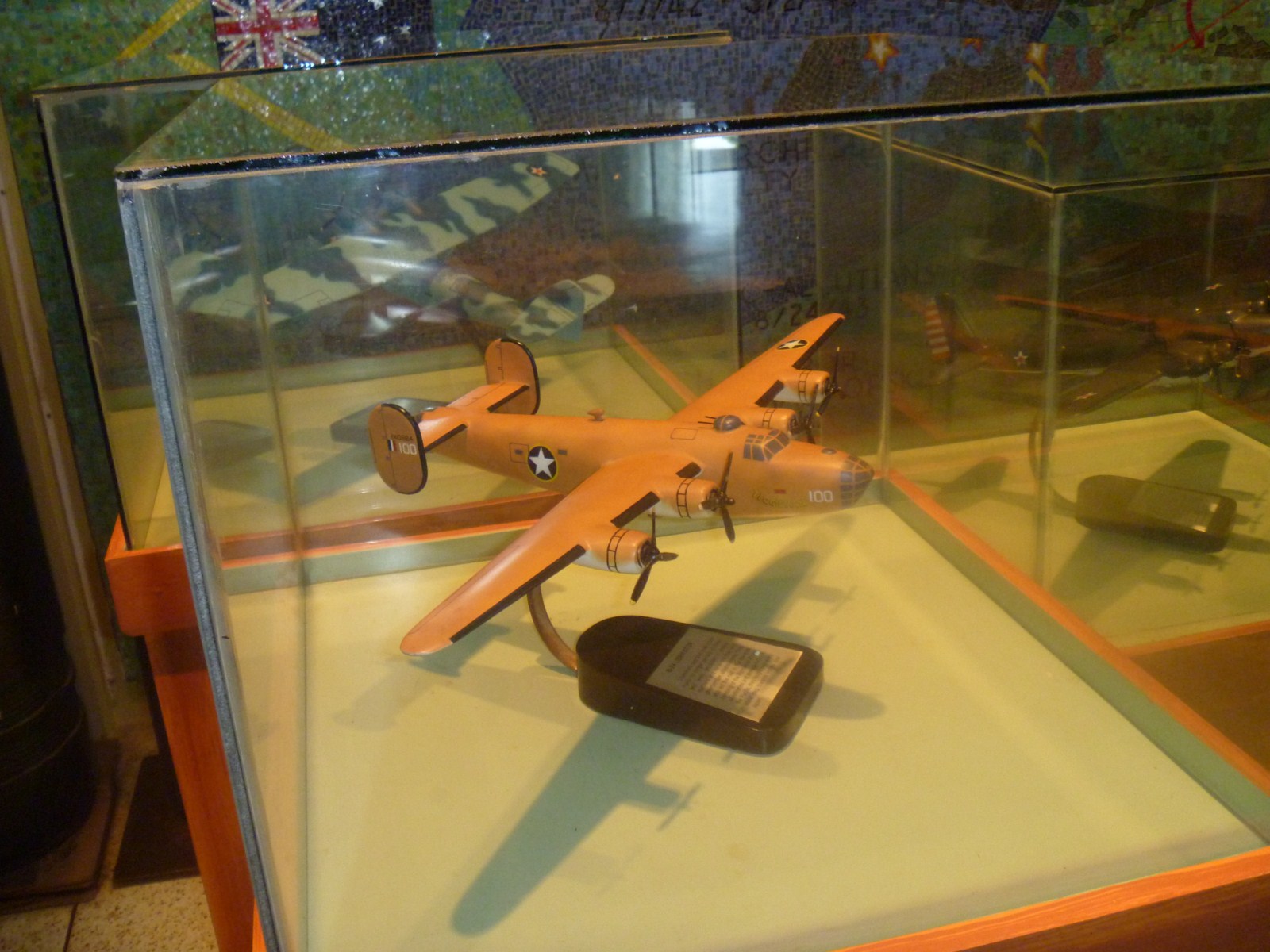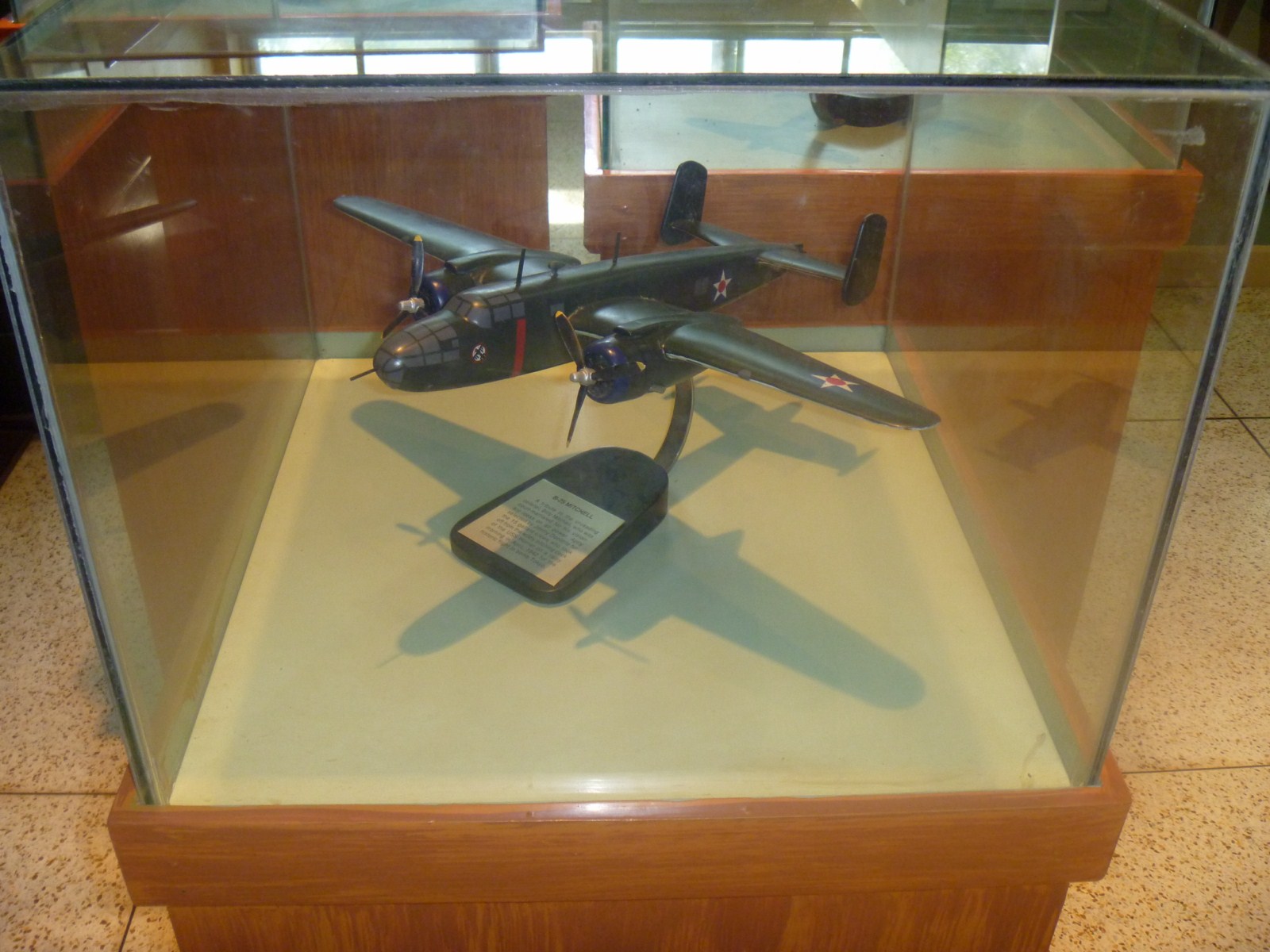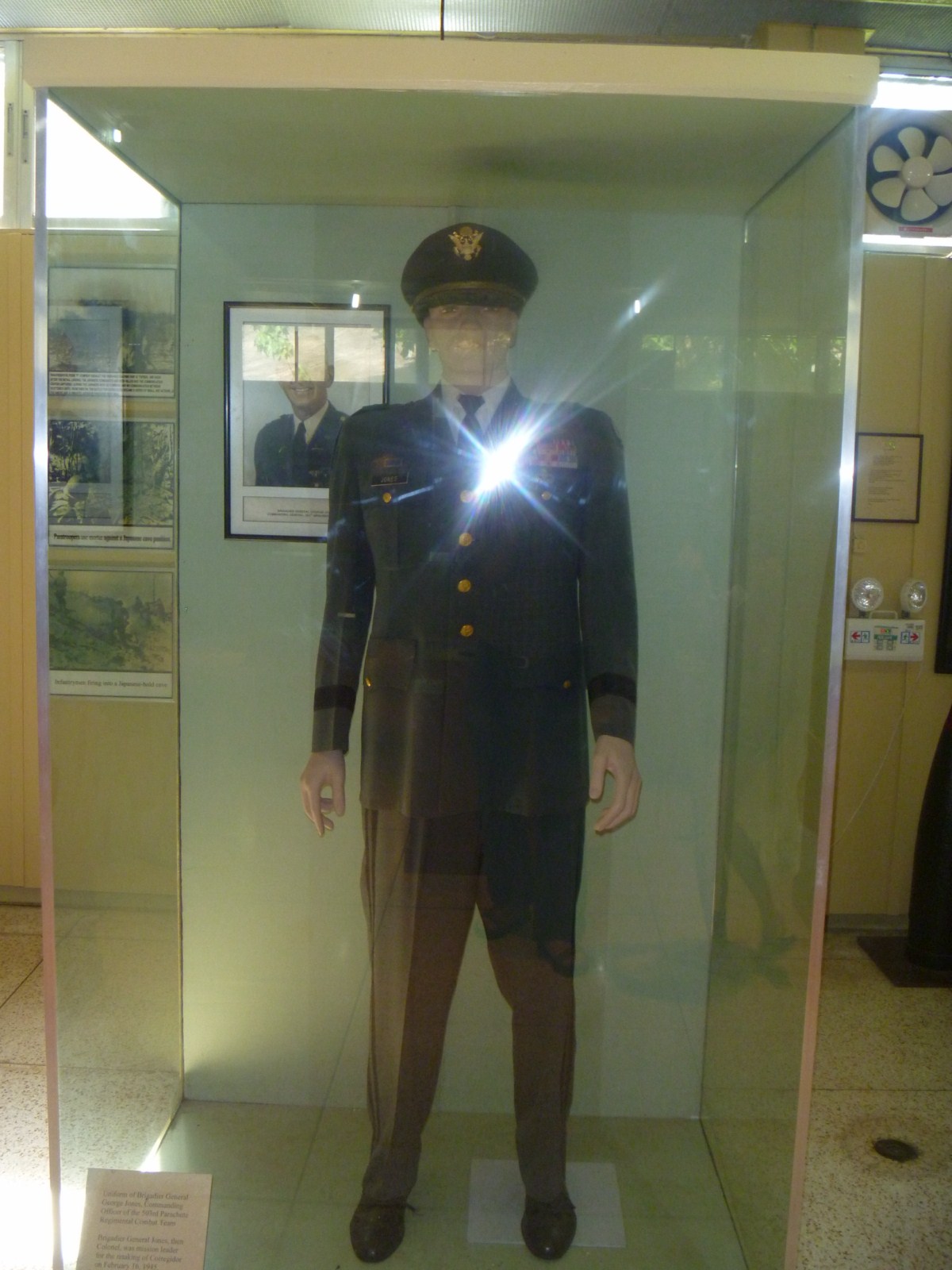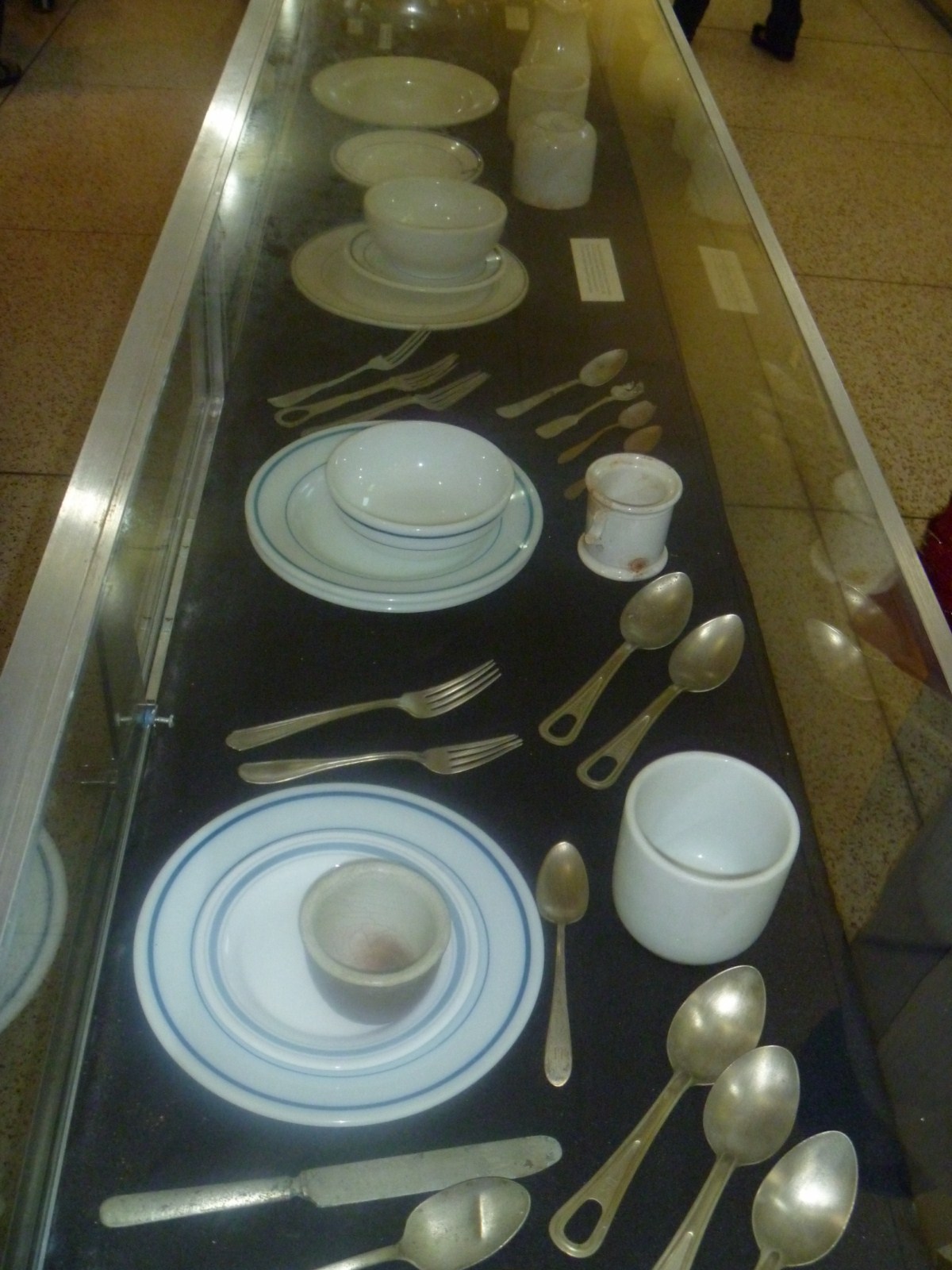
Valenzuela City Museum ((Metro Manila)

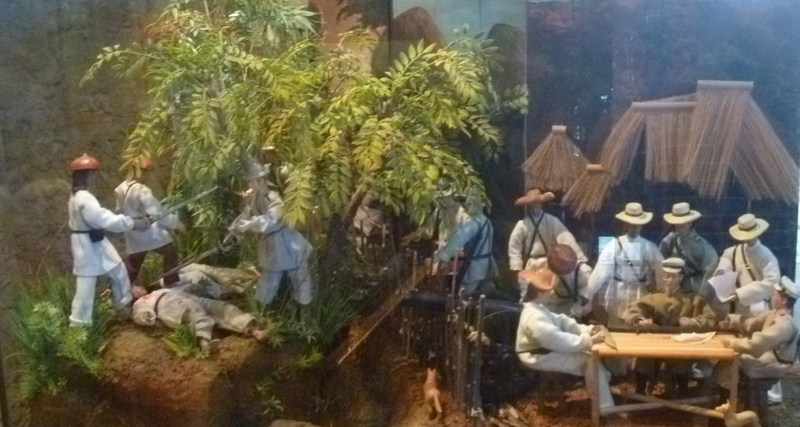
The first half of this museum tour features the Pre-Colonial Period (when a group of settlers lived within the city’s modern boundaries which was then surrounded by bodies of water, hence the name Pulo, meaning “island,”later to be called Polo), the Spanish Period (when Spanish authorities founded the town of Polo in 1623, then constructed a church from 1627-1632), the Philippine Revolution (where  Dr. Pio played a key part by publishing Kalayaan, the Katipunan’s newspaper, with the help of residents), the Philippine-American War (where Polo became the headquarters of Gen. Antonio Luna and where the March 26, 1899 Battle of Malinta took place, resulting in the death of U.S. Col. Harry ClayEgbert), the American Period (when Dr. Pio became Polo’s president municipal and the MacArthur Highway was constructed in 1928, allowing enterprising Americans to buy swathes of land, including the over 3,000 hectare Malinta Estate in 1904, which were turned into sites for subdivisions and factories such as the Balintawak Beer Brewery, which opened in 1938, eventually becoming San Miguel Brewery after the war) and World War II (when residents, including incumbent presidente municipal Feliciano Ponciano, formed a guerilla group, under Lt.-Col. Edwin Ramsey, to combat the Japanese invaders).

The Pre-Colonial Period
The Philippine-American War
The Spanish Period

Midway through the exhibit are life-size statues of 3 homegrown heroes of the Philippine Revolution and Philippine-American War: Delfin Vellila (who fought the Spanish during the March 30, 1897 battle at Pasong Balite and died fighting the Americans in Guiguinto, Bulacan, in 1899), Dr. Pio Valenzuela (with his walking stick on his right hand and doctor’s bag on his left) and Gen. Tiburcio de Leon (known for his role in the Battle of Tullahan River which enabled the forces of Gen. Emilio Aguinaldo to flee to Northern Luzon).

Life-size statues of Vellila, Valenzuela and De Leon

Interesting text and photo panels include an 1865 description of Polo by Fr. Felix de Huertagobernadorcillos(“little governors”) of Polo during the Spanish Period; a list of 55 World War II heroes (Barrion’s Division); and a list of 22 revolutionaries from Polo.  There’s also  beautiful, backlighted stained glass panels depicting San Diego Alcala (the city’s patron saint) and San Roque, flanked by texts of the hymn to the former and prayer to the latter.

San Diego and San Roque in stained glass

Another interesting panel is dedicated to the city as home to 2 movie companies (Premiere Productions and Larry Santiago Productions) and location site of movies (Asiong SalongaMinsa’y May Isang GamugamuDarnaMga Mata ni AngelitaLo Waist Gang, etc.); the local delicacy putong Polo (Polo rice cakes), with an actual gilingan bato (stone mill) on display; as well as to Stone Age (Pre-Neolithic Period), flaked tektites (rocks believed to have fallen from the sky) and obsidians (natural volcanic glass formed by the rapid cooling of magma) unearthed in 1933 at the barrios of Pugad Baboy (now Brgy. Gen. T. de Leon) and Maysan by Prof. H. Otley Beyer.

Tektites and obsidians
Putong Polo and a stone mill
Valenzuela in Movies

The second half of our museum tour, which began as soon as we entered the replica of Arkong Bato (built in 1910, it marked the boundary of Rizal, where Malabon formerly belonged, and Bulacan, where Polo formerly belonged), brought us to the city’s present, as an industrial hub. A prominent section, called “Made in Valenzuela,” features products made by factories based in the city – roasted peanuts (Grower’s), processed food (CDO), beauty and skin-care products (Splash), beer (San Miguel Beer), mattresses (Uratex), steel pipes (Mayer), water tanks (Bestank) and water pumps.

“Made in Valenzuela” Exhibit

The final part of the museum shows facilities and services (health care, education, etc.) offered by the current city government, photos of past and present mayors and congressmen of the city, and awards garnered by the city and modern-day Valenzuelanos (Marc Logan, Rowell Santiago, Fe Evangelista Padrinao, Irene S. De Castro, Isidro Arenas, Fernando S. Lumacad, etc.) deemed as role models for the current generation.

Photos of past and present mayors and congressmen
Modern Day Valenzuelanos

Valenzuela City Museum: G/F, City Hall, MacArthur Highway, Valenzuela City, Metro Manila.  Open from Mondays to Fridays, 8 AM-5 PM. Admission: free.

Bontoc Museum (Mountain Province)

After our stopover at Bay-yo Rice Terraces, we all returned to our jeepney for the remaining 13-km. drive to Bontoc Central.  This time, Aldrin, Donald and I climbed up the luggage rack to have an unobstructed view of the great mountain scenery.  However, I wasn’t able to take photographs as I had to hang on to avoid falling off.  Upon arrival at the outskirts of the town, we alighted and returned to the cabin.

Aldrin, Donald and I on the jeepney’s luggage rack

Upon arrival at the town proper, we made a stopover at the Bontoc Village Museum, located within the Catholic ICM Sisters’ convent and the St. Vincent’s Elementary School.  Jandy and I also visited this museum during a short lunch stopover on our way to Banaue from Sagada.

Bontoc Museum
The museum 15 years ago

The museum, structured in a way to resemble an Igorot house, was established by Mother Basil Gekiere (a Bontoc resident for 56 years, she died in 1983) and run by the Belgian ICM missionaries.  It aims to preserve a varied collection of authentic artifacts and photos reflecting the culture of the mountain tribes.  Its exhibits present a good overview of the differences and similarities between the mountain tribes in 3 well-laid out and labeled rooms, one each for the Ifugao, Bontoc and Kalinga artifacts. It consists of a group of miniature traditional houses, a collection of rocks and fossils from different parts of the Cordilleras and old photos (including some of the Igorot headhunting days).  As before, photography is not allowed inside.

Museum Ethno-Cordillera Library and Souvenir Shop

The library (with a limited collection of books) and the museum shop (which sells postcards, carved wood items and other novelties), formerly located at the museum’s basement during my first visit, is now housed in a separate building (Museum Ethno-Cordillera Library and Souvenir Shop).  Here, we met up with Sister Marcela Agang0-Ang, the new museum curator who is native Ifugao.  During our previous visit, the curator was Sister Teresita Nieves Valdez who, according to Sister Marcel, died a few years ago in her 80s.

Sister Marcela Agang-Ang
With the late Sister Teresita Nieves Valdez

Besides the building is an outdoor museum with a replica of an traditional Ifugao village.  Here, we visited a model of a traditional Bontoc house with furnishings, a smithy and fish traps.

The outdoor museum
The outdoor museum 15 years ago

There’s also an ato (where the council of elders meet), a ulog (where unmarried women live and a pig pen with a real, live pig inside.  The museum is now under the care of the Bontoc Diocese.  After our tour of Bontoc Museum, we all returned to our jeepney and proceeded to Tchayapan Restaurant near the municipal hall.

Check out “Restaurant Review: Tchayapan Restaurant

An ulog
An ato

Bontoc Museum: Gumaang Road, Bontoc, Ifugao.  Admission fee: Php60/person.  Open daily, 8 AM-5 PM.

Calvo Building (Escolta, Manila)

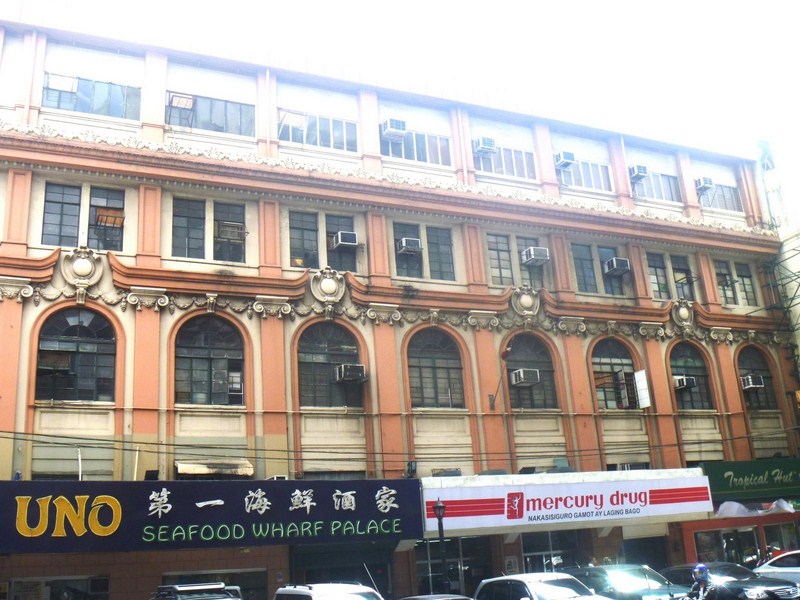
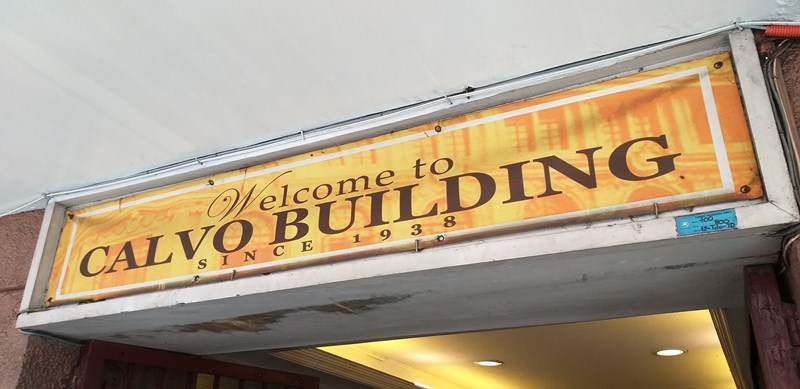
Calvo Building

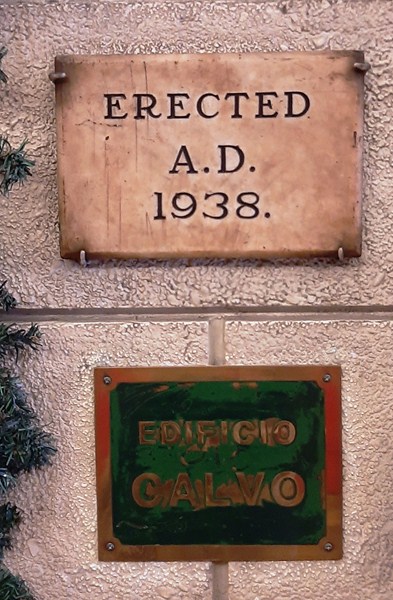
The historic Calvo Building, an outstanding example of Beaux Arts architecture, is one of the remaining buildings from the earlier part of the 20th century along Escolta Street. It was designed by architect and civil engineer Fernando H. Ocampo, Sr. (of Arguille & Ocampo Architects) and inaugurated on August 14, 1938 on the land owned by the couple Angel Calvo and real estate businesswoman Emiliana Mortera Calvo.

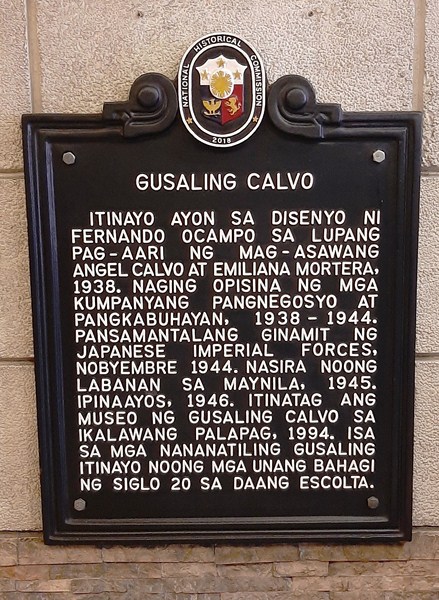
Plaque installed by National Historical Commission of the Philippines in 2018

On November 1944, during World War II, it was temporarily used by Japanese Imperial Forces and was destroyed during the 1945 Battle of Manila and restored in 1946. On August 14, 2018, a historical marker (entitled Gusaling Calvo) was installed by the National Historical Commission of the Philippines.

Cartouche above the arched window

This 4-storey building was one of the most prestigious business addresses of its time.  Its tenants were:

  • Philippine Bank of Commerce (ground floor)
  • Lissar Commercial (ground floor)
  • Aquino-Lichauco Law Offices (second floor)
  • Offices of Araneta & Co. (third floor)
  • MV Villar Records Store – then Manila’s biggest vinyl record bar
  • Sabater Optical
  • Mareco Broadcasting – owner of 105 Crossover FM
  • Mabuhay Records – a recording company that produced albums for kundiman legends Ruben Tagalog, Sylvia dela Torre and Pilita Corrales
  • Sorriente-Santos Department Store – the first store that introduced the “buy-one-take-one” selling strategy.
  • Luisa & Son (roof deck) – a pre-war soda fountain popular with Manila’s high society.

The truncated corner

On March 1, 1950, the GMA Kapuso Network was also born at a makeshift studio at the fourth floor of the building (before moving to its present location in Diliman, Quezon City) when former American war correspondent for United Press Robert “Uncle Bob” Stewart (who eventually fell in love with a Filipina and the country as a whole) transmitted the first signal of  Republic Broadcasting System, now radio station DZBB-AM. Stewart would later expand his media enterprise into television, and Radio Broadcasting System would later be renamed GMA.

Today, Uno Seafood Wharf Palace, Mercury Drug and Tropical Hut flank the entrance to the building, with Wah Yuen Hot Pot and Seafood Restaurant in its Calle Soda side.

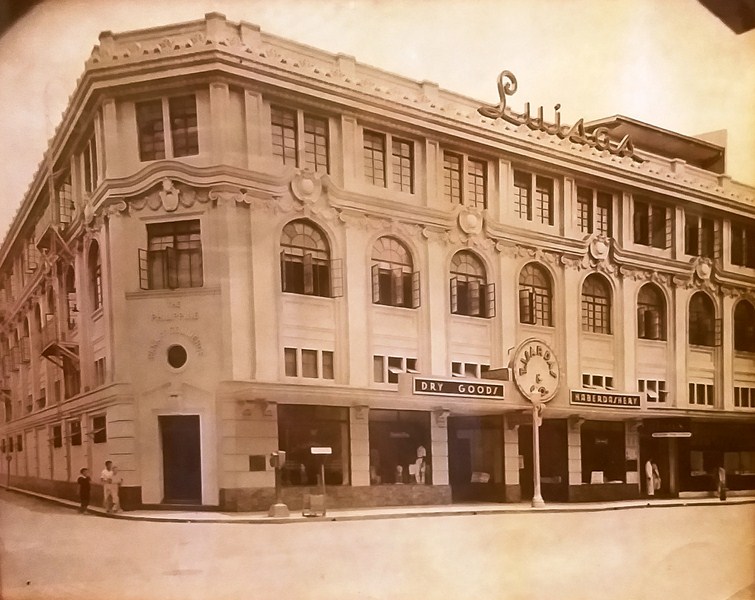
Old pre-World War II photo of Calvo Building without its fourth floor

Its mezzanine is home to the little-known Escolta Museum which contains memorabilia from the past.  During the post-war years, a fourth floor was added to the three-storey edifice.

Check out “Escolta Museum”

The ground floor lobby

Its front being a flagstop for the tranvia (electric tram line), it is the only building along Escolta that is pushed back. It house one of the few classic-style and rare, manually operated Otis elevators.

The richly-decorated and stunning facade at the second level has arched windows (except at the truncated corner) flanked by Ionic pilasters, above which is a cornice embellished by garlands and gracefully broken, in alternating sections, by cartouches supported by corbels above the window’s arch.

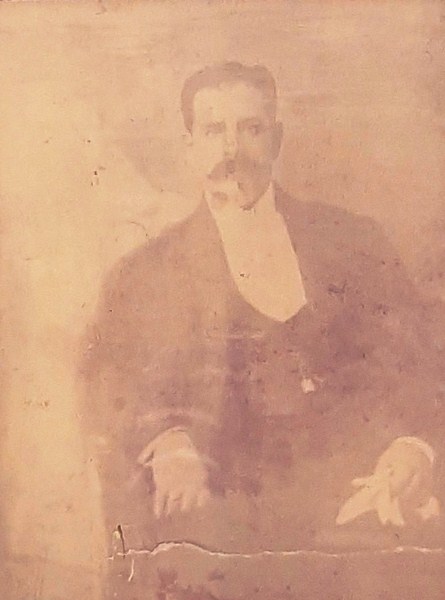
Photo of Don Angel Calvo

Calvo Building: 266 Escolta cor. Soda Sts., BinondoManila. Coordinates: 14.597141°N 120.978221°E.

How to Get There: The building is accessible from the LRT1-Carriedo station. The Pasig Ferry also has an Escolta stop.

Museo Valenzuela (Valenzuela City)

I recently got an invitation from Lakbay Norte colleague and now La Consolacion College School of International Hospitality Management Prof. Melissa  Dizon-Dulalia to join a Lakbay-Aral tour of Valenzuela City with her students as guests of City Mayor Sherwin T. Gatchalian.  I brought along, as my photographer, my son Jandy.  We met up with Melissa and her students at La Consolacion College where a chartered airconditioned Genesis bus was waiting for us to bring us to Valenzuela City.    

Museo Valenzuela

Aside from the Melissa’s 42 Tourism Planning and Destination Development Class students, joining us were fellow media colleague Mr. Rogine de Mata Rogelio of Pilipino Mirror; travel photographer Nico Karabatsos; travel agents Mr. Sandy Mella Clamor (Managing Director of Emmaus Travel & Tours) and Ms. Bingbing Rubio (Pogi Travels); and Ms. Violeta  C. Imperial (founder of Nature Awareness & Conservation Club, Inc.).

Mayor Sherwin Gatchalian with media and travel agents
Mayor Gatchalian with La Consolacion College students

We all left La Consolacion College by 8:45 AM and arrived at the 2-storey Museo Valenzuela, beside the National Shrine of Our Lady of Fatima, by 9:20 AM.  Here, we were joined by my good friend and fellow travel blogger Mr. Mark Vincent Nunez (www.mvlnunez.blogspot.com) and travel agent and Valenzuela City resident Ms. Rosanna Kho (Gen. Manager of Kho Travel & Tours).  

Museum curator Jonathan C. Balsamo

At the museum, we were welcomed by museum curator and historian Mr. Jonathan C. Balsamo who presented a video documentary, created by the City Cultural Affairs and Tourism Development Office (CATDO), featuring historical experts’ commentary on the life of local son and least depicted national hero Dr. Pio Valenzuela (July 11, 1869-April 6, 1956), Katipunan co-founder (together with Andres Bonifacio and Emilio Jacinto), mayor of Polo (the former name of the city) from September 6, 1899-February 1900 and Bulacan governor from 1921-1925.  The city was renamed after him on September 11, 1963.

Diorama – Pagkamakabayan and Paglilingkod
Diorama – Pagkamulat and Pagkilala

The museum, which gives public access on factual information on Dr. Pio, is among the major efforts of Mayor Gatchalian to prevent Dr. Pio’s deeds from dying in vain.  It has a bust sculpture of Dr. Pio and a permanent, full-dimensional diorama exhibit, opened last March 16, 2010, of the life of Dr. Valenzuela during and after the Philippine Revolution. The 150 hand-made dolls, fashioned out of resin and wire, were created by artists of the Balikatan sa Kaunlaran National Foundation, the same team behind the Pinaglabanan diorama exhibited at the Museo ng Katipunan in San Juan City. Also on display are the doctor’s memorabilia (clothes, old photos, awards, medical equipment, furniture, etc.).

Pio Valenzuela and wife Marciana de Castro
Dr. Pio’s clothes
The doctor’s medical equipment
Dr. Pio’s swivel chair

It also exhibits paintings of past Valenzuela mayors and a model of San Diego de Alcala Church.  Serving as the cultural and historical center of the city, the museum is also the repository of Valenzuela City’s rich heritage and provides a venue for cultural, historical and artistic presentations as well as seminars on national and local issues.

A picture gallery of Valenzuela mayors
Model of Church of San Diego Alcala

Museo Valenzuela: Fatima Ave., Brgy. Marulas, Valenzuela City, Metro Manila. Tel: (632) 291-0672.

Philippine Air Force Aerospace Museum – Indoor Exhibits (Pasay City)

While waiting for my father-in-law’s arrival from Kalibo (Aklan) at the NAIA 3 Terminal, I decided to kill time at the nearby Philippine Air Force Museum.  I have visited this museum before, but only got to explore, with Jandy, the 16 “retired” planes and helicopters at the museum’s outdoor Aircraft Park.  The indoor exhibit was just one hour to closing time during that visit.

Philippine Air Force Aerospace Museum

This military heritage and science technology museum was established way back on May 2, 1974 (as the Marcos Museum) but it only opened at its new location on July 1, 2001.  The world-class museum building was inaugurated on June 29, 2007, the 60th foundation anniversary of the PAF.  Surprisingly, this tidy, neat and quite impressive, 2-level museum, a good 2-hr. diversion for those who are also waiting for their plane connections, had a number of weekday visitors.

Science and Technology Section

The Science and Technology Section, at the ground floor, is highlighted by by an indoor static aircraft of various eras  – from pre-World War II to the present – all immaculately restored.  Of World War II vintage is a single-engine, 2-seater, open cockpit and fabric-covered Boeing PT-13D “Kaydet” (also known as Stearman Model 75) primary trainer biplane, a standardized U.S. Army/Navy trainer aircraft created by Boeing-Stearman from 1943-45.  Before World War II, the Philippine Army Air Corps (now the PAF) had Stearman model 73L3 trainers and the armed 76D version.  As part of the U.S. Military Defense Assistance Program (MDAP), the PAF Flying School acquired 50 PT-13/PT-17 “Kaydets.”

PT-13D “Kaydet”

The one on display is PT-13D “Kaydet” 76-7551 code 551 equipped with a 220-HP Lycoming R-680-17 radial engine (max. speed: 125 mph) and fitted with a ground-adjustable McCauley steel black propeller.  The aircraft has a 32-ft., 2-in. wing span and is 24 ft. 10 in. long and 9 ft. 2 in. high.

P-51D “Mustang”

Also of World War II vintage is a propeller-driven  P-51D “Mustang” fighter, manufactured by North American Aviation, the best fighter aircraft of World War II.  Around 100 of these fast and maneuverable aircraft, with 6 wing-mounted guns, were delivered to country in 1952 and assigned to the 6th Tactical Fighter Squadron, 5th Fighter Wing in Basa Air Base (Floridablanca, Pampanga).

SF-260

Beside it is a modern, Italian-made SIAI Marchetti SF-260, a light military trainer with low wings and tricycle undercarriage that is still in use.  The PAF acquired 2 variants in 1967 and initially received 2 SIAI Marchetti SF-260 operated by 102nd Training Squadron (now the PAF Flying School). The one on display had a tail number 15-44 and bore a tactical code 644.  Aside from being used by the flying school, it is also used for counter-insurgency roles.

“Cali” Super Pinto

Also on display are PAF experimental projects presented in ways to inspire young generations of Filipinos to learn on aerospace-related sciences. Of special interest is a prototype of the “Cali” Super Pinto, the first indigenous jet trainer and light attack aircraft in the country.  This turbojet-propelled, mid-monoplane aircraft has a TEMCO model TT-1 Pinto air frame with 2-place tandem seating.

U.S. space capsule
Replica of Wright Brothers’ 1902 glider

Suspended on the ceiling is a locally-made, full scale model of the Wright Brothers’ 1902 glider  and a U.S. space capsule.  The Science and Technology Section also exhibits aircraft mock-ups and miniatures. There is also a souvenir shop on this floor.

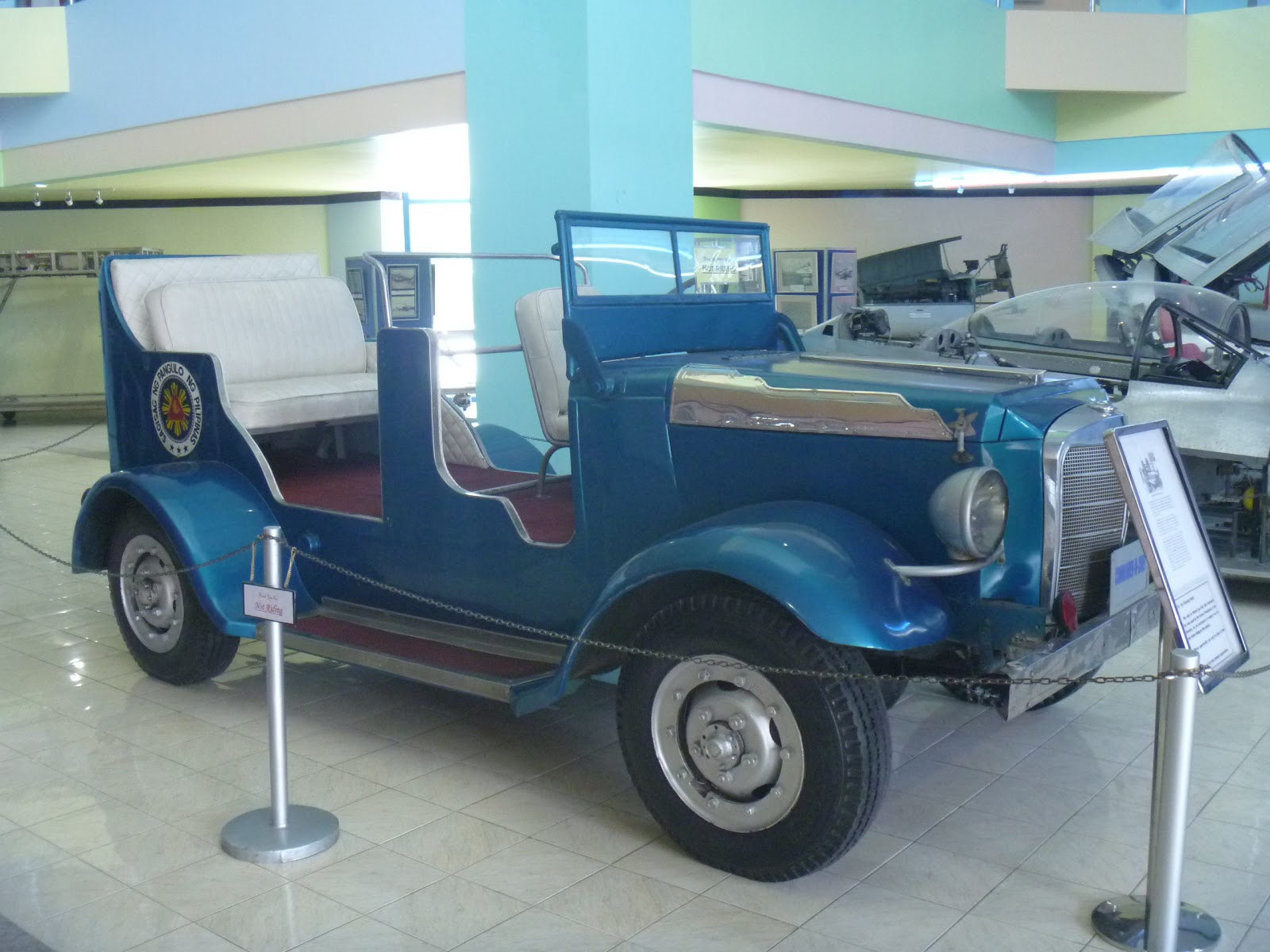
Dodge WC-57 Command Car
A row of ejection seats
Canopy and ejection seat systems

Also within this floor is a Dodge WC-57 Command Car (used by former Philippine presidents);  armament and gun system of a Northrop F-5A; F-86F nose landing gear system; canopy and ejection seats (F-86F “Sabrejet,” F-4 “Phantom” and F-5A “Freedom Fighter”); a portable rescue hoist and jet engines.  Kids may sit in the cockpit of an F-86D fighter jet simulator.

Hiroo Onoda Exhibit
Wall of Heroes
Evolution of PAF Uniforms

The Heritage Section, at the second floor of the museum, presents a variety of galleries displaying different military uniforms and their evolution (Evolution of PAF Uniforms); flying gear; dioramas and sand tables of important events involving the Air Force (Dioramas/PAF Model Aircraft); model planes, memorabilia, vintage guns, locally made bombs; a display of things left by Japanese straggler Lt. Hiroo Onoda while hiding in the jungles of Lubang in Mindoro; and skilled drawings and paintings of early military aviation and PAF history.

Past Commanding Generals of the PAF

There are also photographs of past commanding generals of the Philippine Air Force; recipients of the Philippine Medal of Valor and Distinguished Conduct Star (Wall of Heroes); old photographs depicting the history of the Air Force and its Blue Diamonds aerobatics team (Birth of Philippine Aviation) and a photo exhibit of the historic May 29, 1936 Arnacal (short for the names of Filipino pilots Antonio Arnaiz and Juan Calvo) flight from Manila to Madrid (Spain).

Photo exhibit of Arnacal flight

This floor also has a 150-200-pax function room for seminars, workshops, symposia, expositions and other cultural activities, plus a 45-pax mini-theater for small group film showings.\

Philippine Air Force Aerospace Museum: Gozar cor. Alia St., Col. Jesus Villamor Air Base, Pasay City.   Open Mondays to Fridays, 8 AM to 5 PM, Saturdays, 8 AM to 12 noon. Admission is free.  Tel: (632) 832-3498, 854-6729 and 762-6628.

Bulacan Doll Museum (Pulilan, Bulacan)

Bulacan Doll Museum

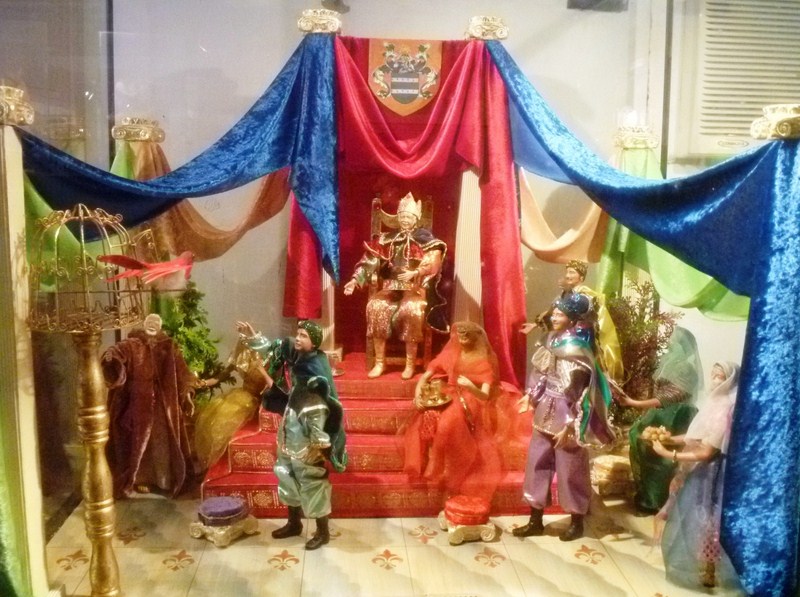
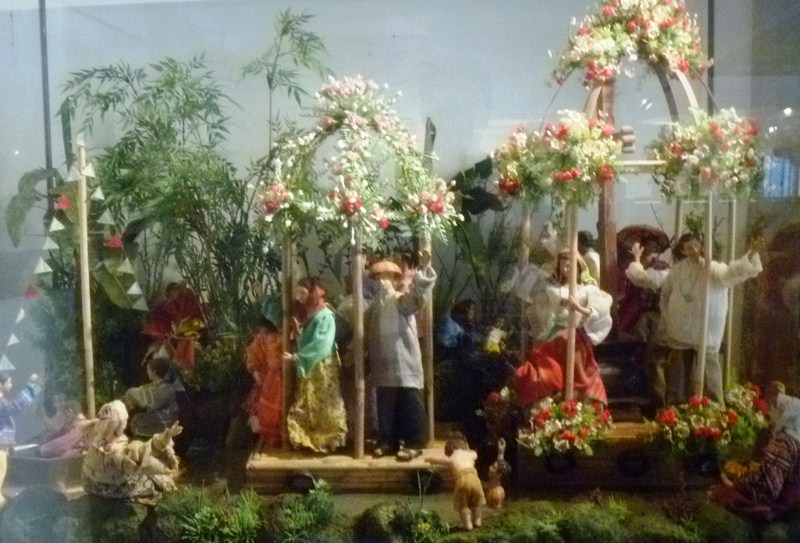
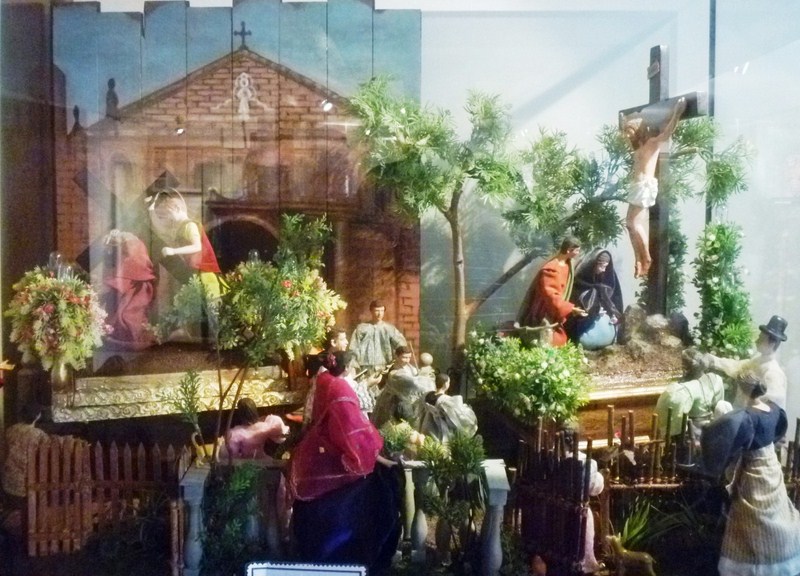
The Bulacan Doll Museum, a museum located within the Pulilan Butterfly Haven, a popular ecological and swimming resort, exhibits a 17-diorama doll collection that pays tribute to Filipino craftsmanship.

Check out “Pulilan Butterfly Haven and Resort


Alamat ng Ibong Adarna

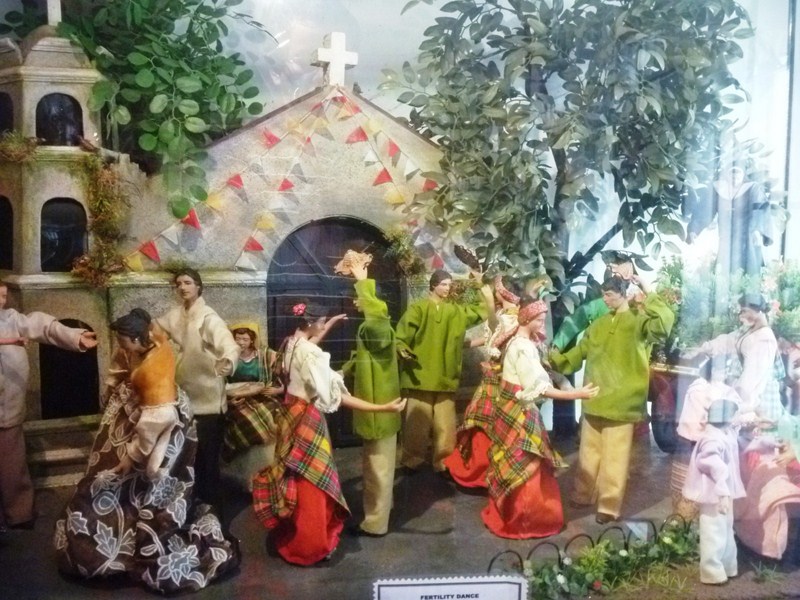
Fertility Dance

Among the historical events depicted in the dioramas are the Birth of Katipunan in Bulacan, the Battle of San Rafael, the Declaration of Philippine Independence, the Biak-na-Bato Republic; the Capture of Calumpit by the Americans, the Japanese Occupation in Bulacan, the Independence Day celebration in Bulacan, the Malolos Congress, and the Defense of Kakarong de Sili in Pandi.  

Fluvial Parade of Bocaue

Good Friday Procession

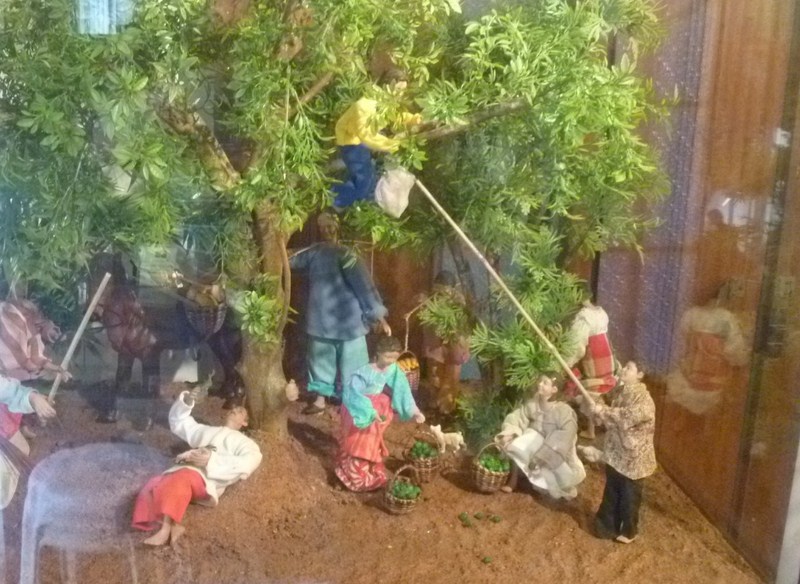
The Folklore of Juan Tamad

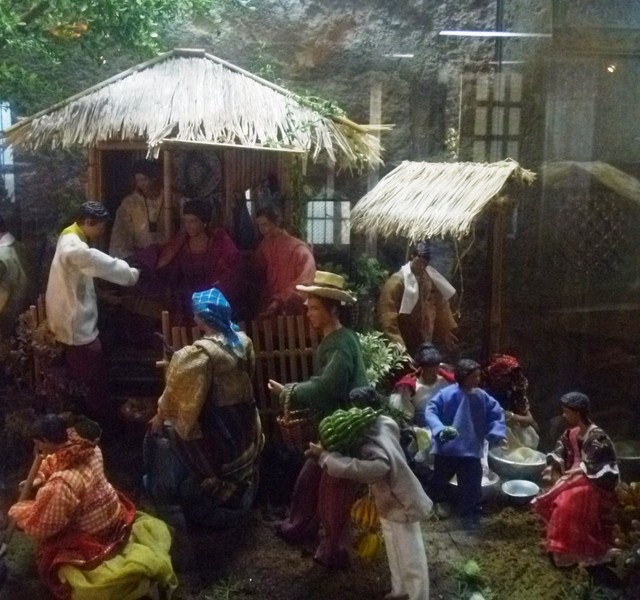
The museum also features the Carabao Festival, the Sta. Clara Fertilization Dance in Obando, the fluvial parade of Bocaue, the Good Friday procession in Baliwag, Bayanihan and Pamanhikan (pre-nuptial entreaty ceremony); Alamat (fable) of Ibong Adarana; the folklore of Juan Tamad; the neighborhood cooperative endeavor; and Bulacan industries such as Paombong vinegar (suka) industry, the making of polvoron and other native delicacies, jewelry-making, embroidery and hat-weaving.

Pre-Nuptial Entreaty Ceremony

The Biak-na-Bato Republic

Pulilan Butterfly Haven: San Francisco St., Poblacion, Pulilan, Bulacan.  Tel: (044) 676-1377 and 910-1388.  E-mail:  pulilanbutterfly@yahoo.com.  Website: www.pililanbutterfly.ph.

Pulilan Butterfly Haven and Resort (Bulacan)

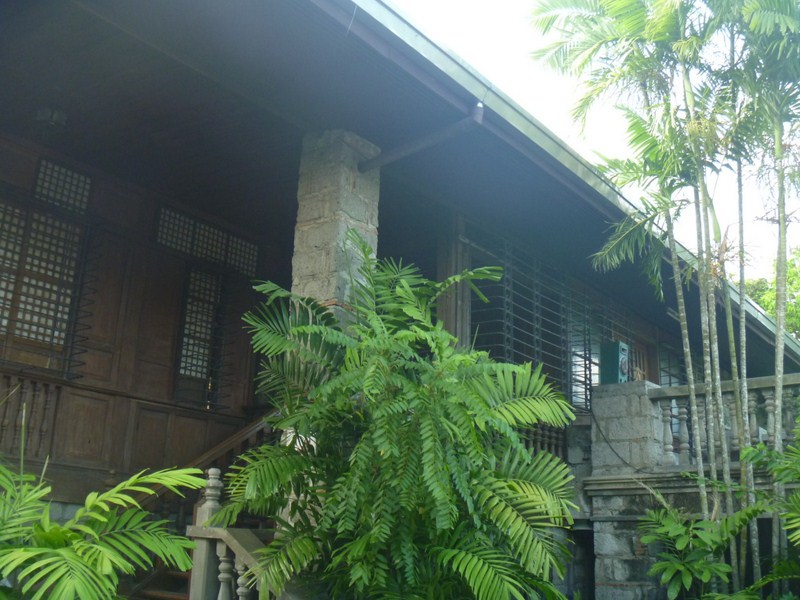
From Calumpit, Jandy and I entered the town of Pulilan and made a stopover at the Pulilan Butterfly Haven, a popular ecological and swimming resort house within the Aguirre Ancestral House.  Jandy had been here before, during a field trip in February 2005.

Check out “Pulilan Town Proper

A haven for butterfly enthusiasts and nature lovers, it has a collection of breeding and flight area for 8 species of colorful butterflies (tree nymph, lacewings, etc.), an ornamental garden, orchidarium (including the famous vanda sanderiana) and a 1,600 sq. m., butterfly-inspired swimming pool (admission: PhP100/pax), all creating a refreshing and cool atmosphere, plus a museum (Bulacan Doll Museum, admission: PhP50 ) and overnight cottages (PhP1,500).

Pulilan Butterfly Haven
Upon entry, we met up with caretaker Ms. Fe Magtalas who toured us around the Bulacan Doll Museum.  Located within the unassuming old ancestral house of owner Ms. Estelita A, Caleon-Aguirre (poetess, CPA and deputy commissioner of the Bureau of Internal Revenue), this museum houses the Bulacan Doll Museum, a 17-diorama doll collection that pays tribute to Filipino craftsmanship.
Check out “Bulacan Doll Museum
Bulacan Doll Museum


Pulilan Butterfly Haven
: San Francisco St., Poblacion, Pulilan, Bulacan.  Tel: (044) 676-1377 and 910-1388.  E-mail:  pulilanbutterfly@yahoo.com.  Website: www.pililanbutterfly.ph

Taipei National Palace Museum (Taiwan)

After our visit to the Revolutionary Martyr’s Shrine, we were next driven to the Taiwan Handicraft Promotion Center for some souvenir shopping.  On sale were porcelain, cloisonne, oil paper umbrellas, painted fans, wood carvings, crystal, etc.  Reto, Gabriella, Jandy and I just browse around while Isha bought some souvenir gifts for her friends.

Taipei National Palace Museum

We next proceeded to the final destination in our half-day city tour – the 198-acre Taipei National Palace Museum.  The national museum of Taiwan, it houses one of the world’s largest and most valuable collection of Chinese art treasures, with over 677,687 pieces of ancient Chinese artifacts and artworks, most of them high-quality pieces from the Chinese imperial collection of China’s ancient emperors, began over 1,000 years ago in the early Song Dynasty.  The collection encompasses over 8,000 years of Chinese history,  from the Neolithic Age to the late Qing Dynasty.

Taipei National Palace Museum

As it was a weekend, the museum was packed with visitors and we had to queue in line.  We weren’t allowed to take photos of the collection.  Donning our headphones, Mr. Pang gave us interesting descriptions of the 1,700 artifacts on display which, incidentally, is only 1% of the total collection which numbers some 93,000 items of Chinese calligraphy, porcelain,  6,044 cast bronzes,  5,200 scroll paintings, 12,104 pieces of jade, 3,200 examples of lacquer and enamel ware, figurines, assorted carvings, fans, rubbings, coins, textiles and many other artifacts from Beijing’s Forbidden City as well as 562,000 rare, traditional books and documents. The rest of the collection is stored in temperature-controlled basement vaults. The displays are rotated once every 3 months, which means 60,000 pieces can be viewed in a year but it would take us nearly 12 years to see them all.

L-R: Jandy, Gabriella, Reto and Isha

The most famous and notable pieces on display at the museum are the Jadeite Cabbage (part of the dowry of the Qing Dynasty concubine Jin), the Meat-Shaped Stone, Agate Finger Citrons, White Jade Branch of Elegant Lychee, T’ien-huang Stone Miniature Mountain, the Jiu Manzhou Dang (a set of Manchu archives), the Carved Olive-stone Boat, the Jadeite Screen Insert and “One Hundred Horses,” a painting done in 1728 by Giuseppe Castiglione.

During the civil war, these important treasures were transferred, in 2,972 boxes, to Taiwan to evade damage.  This transition brought the re-establishment of the National Palace Museum (it was first called Chungsan Museum).  Designed by Huang Baoyu, its construction was started in 1962 and the museum was inaugurated on November 12, 1965, the 100th anniversary of the birth of the great Chinese revolutionary Sun Yat-sen (1866-1925).

A sitting statue of Dr. Sun Yat-sen

The museum has 4 floors, the first, second and third floors are used for exhibitions while the fourth floor is a lounge where visitors can rest.  On the left side of the museum hall is the Chih-shan Garden (showcases many of the elements of traditional Chinese gardening art) while on the right is the Chih-te Garden. Also part of the Taipei National Palace Museum is the Chang Dai-ch’ien Memorial Residence, the home of the celebrated painter Chang Dai-ch’ien (1901-1984).

Taiwan Handicraft Promotion Center: No.1 Hsu Chow Rd., Taipei, Taiwan. Tel:(+886-2) 2393-3655. Fax: (+886-2) 2393-7330. Email: thpc@handicraft.org.tw.  Website: www.handicraft.org.tw.

National Palace Museum: No.221, Sec. 2, Zhishan Rd., Shilin District, Taipei City 11143, Taiwan. Tel: (+886-2) 2881-2021. Website: www.npm.gov.tw. Open daily, 9 AM-5 PM. Admission: NT$160.

How to Get There: take the MRT Danshui Line to the Shilin Station then take bus R30 (Red 30 – Low-floor bus) to the National Palace Museum. Other routes that will take you to and near the Museum plaza are buses 255, 304, 815 (Sanchung – NPM Line), Minibus 18 and Minibus 19.

You can also take the MRT Wenhu Line to the Dazhi Station then take bus B13 (Brown 13) to the National Palace Museum, alighting before the Front Facade Plaza of the Museum. Alternatively, visitors may choose to take the Wenhu Line and get off at Jiannan Rd. Station, then take bus B20 (Brown 20) to NPM’s front entrance (Main Building).

Chang Kai-shek Memorial Hall and Cultural Center (Taipei City, Taiwan)

Liberty Square

From Tung Ho Zen Temple, we again boarded our van and went on our way to our next destination, the National Chiang Kai-shek Memorial Hall, erected in memory of Generalissimo Chiang Kai-shek (October 31, 1887-April 5, 1975), Taiwan’s long-time leader.  Here, we were to observe the 9 AM Changing of the Honor Guard ceremony.

Presidential Office Building

Along the way to the hall, we passed the Neo-Renaissance-style Presidential Office Building, an elaborate red brick edifice built in 1919. It was already drizzling when we arrived at the Memorial Hall’s tremendous, 30 m. (98.4 ft.) high and 80 m. (262.4  ft.) high arched main gate  (which faces Chiang’s beloved China) – the Gate of Great Centrality and Perfect Uprightness.

Gate of Great Centrality and Perfect Uprightness

The main gate opened into Liberty Square with its grand vista reminiscent of my visit to Beijing’s Forbidden City, with the massive and ornate National Theater (on the south) and National Concert Hall (on the north) flanking it.  Both, completed in 1987, were modeled after the Forbidden City’s Halls of Supreme Harmony and Preserving Harmony and painted in the same brilliant Ming Dynasty style.

National Concert Hall

Added to it are immaculate grounds featuring lovely traditional Chinese sculpted gardens, miniature hills, an ornamental bridge, waterfalls and serene ponds (filled with colorful koi), truly a scene from the 1987 Bernardo Bertolucci classic film The Last Emperor.  The Gate of Great Loyalty also stands at the north side (along Xinyi Rd.) while the Gate of Great Piety stands at the south side (along Aiguo East Rd.).

National Theater

From the gate, we all walked along the Boulevard of Homage (bordered by manicured bushes), to the east end of the square where the magnificent, 76 m. (250 ft.) high 240,000 sq. m. memorial hall stands.  It has a marble facade and octagonal (the octagonal shape picks up the symbolism of the number 8, a number traditionally associated in Asia with abundance, wealth and good fortune), twin-eaved roof of brilliant blue tiles with red accents (echoing the flag of the Republic of China) crowned by a golden spur.

Chang Kai-shek Memorial Hall

The memorial’s design was based on the winning competition entry of the late, internationally renowned Chinese architect Yang Cho-cheng. Yang’s design incorporated many elements of traditional Chinese  architecture.  Started on October 31, 1976 (the 90th anniversary of Chiang’s birth), the hall was officially opened on April  5, 1980 (the fifth anniversary of the leader’s death). The hall has 2 sets of stairs, each with 89 steps, representing the age of Chiang Kai-shek at the time of his death. We didn’t climb the stairs. Instead we entered the hall via a huge doorway by the side of the stairs.

Jandy at entrance hallway

We arrived early, still minutes before the hall’s opening, so we first listened to Mr. Pang’s narrative of Chiang’s life.  Also at the ground floor is a museum with exhibit related to the late president’s life including his personal effects, photos, a mock-up of one of his offices and his bulletproof Cadillac.

Part of the ground floor museum exhibit

Chang Kai-shek Memorial Hall: 21 Zongshan South Rd., Section 1, Zhongzheng District, Taipei, Taiwan.  Tel: (+886-2) 2343-1100. Open daily, 9 AM-6:30 PM. Admission is free.

National Chiang Kai-shek Cultural Center: Tel: (+886-2) 3393-9888.

How to Get There: Take THSR or train to Taipei Station then transfer, via Taipei MRT, to Chiang Kaishek Memorial Hall Station.

Taipei Story House (Taiwan)

Immediately adjacent to the Taipei Fine Arts Museum is the half-timbered Taipei Story House (old name Yuanshan Mansion), the only faux Tudor-style heritage building in Taiwan.  Built on the Yuanshan section of the Keelung River from1913–14 by Chen Chao-chun, a Dadaocheng tea merchant, it was originally a guest house for rich merchants and other important local people.   In 1998, the Taipei City Government designated this building as a Heritage Site and, in 2003, Miss K.C. Chen sponsored the establishment of Taipei Story House as a mini-museum to showcase historic cultural life in Taiwan, as well as to promote the re-use of historical buildings.

Taipei Story House

The ground floor is built of load-bearing brick while the upper floor is made of wood with English Tudor-style beams and woven branches on the exterior wall.  The staircase was constructed to look like a pagoda. The entrance portico is in the Classical style with Ionic columns.  The Gothic-style house tower and chimney are made of brick, and the curved gable is covered with bronze tiles, on which the verdigris caused by aging reveals the trace of time.

The Gothic-style tower

The tower above the entrance is inlaid with green, yellow and red-stained glass. Inside the house are two fireplaces and Art Nouveau tiles featuring natural and floral patterns. The overall configuration of the interior space, together with the outdoor balconies and terraces, exhibit a Classic style and are closely integrated with the surrounding landscape.

The European-style garden

The European-style garden, consisting of more than one hundred kinds of flowers, has a pond, red brick dwarf wall and curved paths.  Now a museum, it has exhibits related to tea and local history. Also within the grounds is the Story Tea House, a chic French fine dining restaurant opened in 2003 and operated by The Landis Taipei Hotel group.  We climbed up its view deck for a bird’s eye view of the complex.

Story Tea House

Our visit to Taipei Story House capped our walking tour of the city and, quite tired from all that walking, opted to take our first Taipei taxi ride (NT$100) back to the hotel. Later in the evening, we again had dinner, also along Changchun Rd., this time at a Burger King outlet.  Our half-day city was scheduled the next day.

Taipei Story House: 181-1 Zhongshan North Rd., Section 3, Zhongshan District, Taipei, Taiwan.  Tel: (+886-2) 2587-5565. E-mail: story@storyhouse.com.tw. Website: www.storyhouse.com.tw. Open Tuesdays-Sundays, 10 AM-5:30 PM.  Admission: NT$50 (adults) and NT$40 (students and groups of 10+).  Free admission for children under 6 years of age, seniors over 65, and disabled person with one companion.

Story Tea House: Open daily, 11 AM-7 PM (11 AM-9 PM, Saturdays and Sundays).  Tel: (+886-2) 2586-8628.