St. Dominic Church and Treasures of Sacred Heart Museum (Macau)

When we were in Largo do Leal Senado, my kids and I visited the Church of St. Dominic, situated right in the middle of the  square.  Built in 1587 by 3 Spanish Dominican priests, it is one of the most beautiful churches in Macau.   Originally built in wood, it was, in 1828, rebuilt in stone and was restored in 1994.

St. Dominic Church

The first Portuguese newspaper, A Abelha da China (The China Bee), was published here in 1822.   The church’s basic layout is influenced by both Portuguese and Spanish styles and its architecture is Jesuit Mannerist. The church is now part of the UNESCO World Heritage Site Historic Centre of Macau.

St. Dominic Church – Interior

We also dropped by bell tower at the back which was modified into the small Treasure of Sacred Art Museum. On the right side of the church is the sacristy (dedicated to Our Lady of the Rosary), the only surviving part of the old monastery/convent that was built with the church.  Here, we went up the stairs that lead to the museum located at second and third floors.

Treasure of Sacred Art Museum – Exhibit

When the Religious Orders were abolished in Portugal in 1834, the museum received many articles of sacred art that are now presently displayed. The museum, opened to visitors in 1997, occupies what is left of the ancient cloister and also the other rooms that are still connected to the church.

Treasure of Sacred Art Museum – Exhibit

There are approximately 300 pieces of excellent quality artifacts, many of which are also from Macau. that date back from the 17th to the 19th centuries.  The rich collection includes gold objects, statues, richly ornamented canonicals, religious paintings and other liturgical vessels.

Museo de Baler (Aurora)

Museo de Baler

We arrived in Baler by 3 PM, Holy Thursday, and we were met at the quaint, 2-storey Museo de Baler by Baler Tourism Coordinator Ms. Riza del Rosario who tried to secure accommodations for us (there weren’t any).   While waiting, we took time to explore the museum both  inside and out.   At the building’s facade is “The Baler Historical Mural” done by sculptor Toym Imao (son of National Artist Abdulmari Imao) and unveiled on June 30, 2008.  It depicts 400 years of Spanish rule in the Philippines, from their arrival until the Siege of Baler, plus images depicting progress and development in Baler and in other towns of Aurora.

Museum exhibits

Opened on June 30, 2003 (Philippine-Spanish Friendship Day), the museum exhibits historical records dating back to the Spanish period; splendid photographs covering the images of Baler and the rest of the province; centuries-old Chinese ceramics; memorabilia of Lt.-Gov. Pedro Guerrero; old bells of Baler Church; sabutan weaving products;  art works, costumes, etc. One notable exhibition is devoted to the life and career of Commonwealth Pres. Manuel L. Quezon, Baler’s foremost son (born here on August 19, 1878), while another highlights Aurora’s indigenous peoples, preserving Ilongot as well as Dumagat artifacts.  The museum’s wall is decorated with a mural commissioned by local son Sen. Edgardo Angara to remind the locals about the heroism of their ancestors.

Quezon Memorial Park

Standing beside the museum, at Quezon Memorial Park, is a replica of the bahay kubo where Pres. Quezon’s was born and grew up (Casa de Maestro Lucio Quezon) plus a Spanish-era cannon, mini-lagoon and a sitting bronze statue of Quezon, set on a circular platform, designed by Julie Lluch and installed in 2006.  Baler is also the birthplace of Quezon’s wife Doña Aurora Aragon Quezon (February 19, 1888), after whom the province was named.  As First Lady, she initiated the rebuilding of Baler’s old church.  marker for her is located a block away.

Light and Sound Museum (Manila)

Light and Sound Museum
One of my son Jandy’s subjects in Asia Pacific College was “Rizal Life and Works” and one of the subject’s requirements was a scheduled visit, with his classmates, to the Light and Sound Museum in Intramuros.  I decide to accompany him there. This 2-storey, 1,800-sq. m. museum used to be the Beateria de San Ignacio, the first nunnery established in the Philippines.
Execution of Gomburza
Inaugurated last 30 November 2002, this museum, a tourism project of Sen. Richard Gordon, chronicles the Filipino’s pursuit for freedom under the leadership of National Hero Dr. JoseRizal, and other revolutionary leaders such as Cebuano warrior Lapu-Lapu, RajahSoliman and Andres Bonifacio. It features, in dramatic, historical tableaux, up to 140 moving mannequins dressed in life-like costumes, its overall presentation showing the Filipinos’ resiliency, intelligence and self-worth throughout its history.  
Rizal in Europe
Characters in Rizal’s novels
The sets and other effects took us through a 45-min. tour, with voice-over script, of Philippine history: from prehistoric times, the arrival of the Spaniards and Christianity, the shaping of Filipino culture under the friars and the brewing revolutionary movement, up to Rizal’s execution in 1896.
Jandy at Printing Press of La Solidaridad
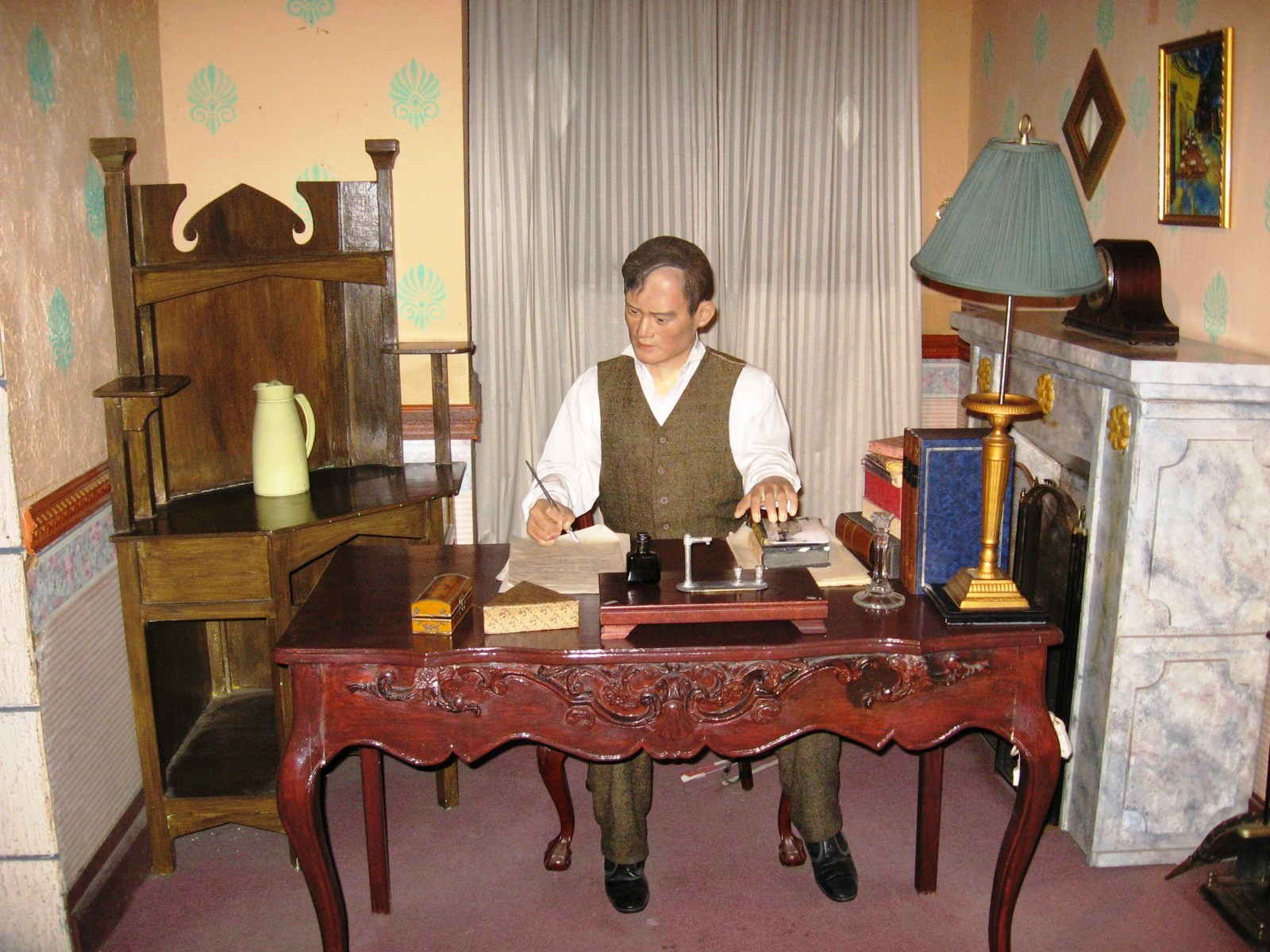
Rizal writing his novel Noli me Tangere
Rizal in Dapitan
The entire ground floor focuses to the Spanish annexation of the Philippines as a province. The second floor recounts Dr Jose Rizal’s saga and describes his prolific days as a student at the Ateneo Municipal de Manila as well as his trip to Europe where his burning desire for Filipinos to be treated fairly by the colonizers was ignited. It also features his two books Noli Me Tangere and El Filibusterismo which exposed the ills of the Spanish society.
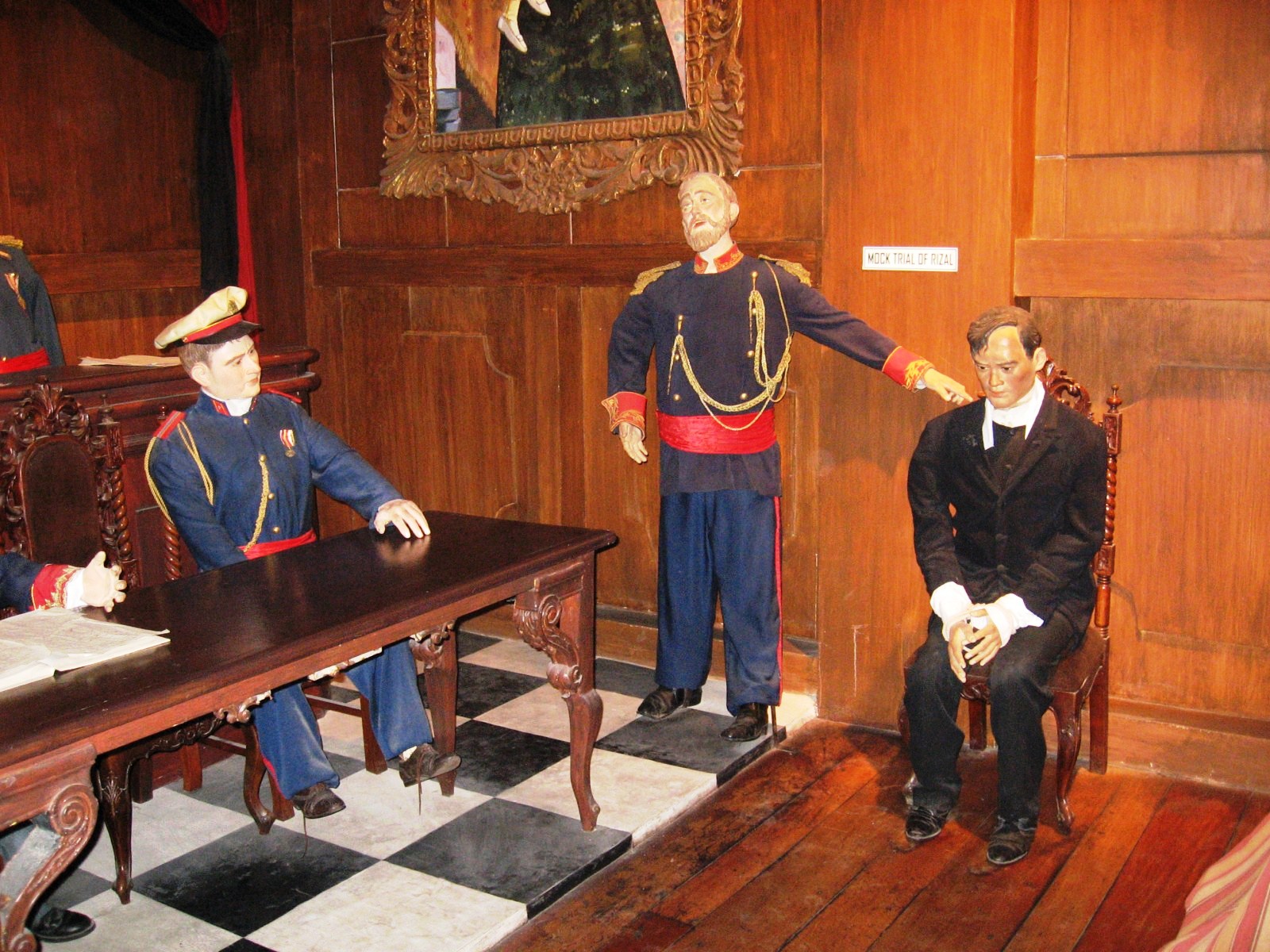
Trial of Rizal
Rizal visited by his mother
Rizal walking to his execution
There was also a huge room tracing Rizal’s martyrdom. The room replicates the scenario at Bagumbayan where Rizal tried to face the executioners to prove his innocence.  Another area shows details of Filipino uprisings steered by Andres Bonifacio. Bonifacio and his followers tear up their cedulas or residence certificates, a symbol of Spanish dominance during that time. 
Execution of Rizal
In addition, there is the Bagumbayan exhibit with its symbolically collapsed walls depicting a prelude to something new for Filipinos.  Towards the end of our tour, we all walked along a dim corridor leading through the exit made of heavy wooden doors facing the set up of the new Intramuros overlooking the well-lighted city golf course in the perimeter of the walls. 
Death of Rizal
Light and Sound Museum: Sta. Lucia cor. Victoria St. (near Baluartillo de San Diego), Intramuros, Manila.  Admission: PhP100 per person for a group of ten. First show starts at 10 AM and last show starts at 6 PM.  Tel: (632) 524-2827.  Fax: (632) 524-0823.

A Historical Tour of Clark (Pampanga)

After watching the early morning flight of Clark’s famous hot air balloons, Jandy and I returned to our Toyota Revo and made our way out of Clark as we still wanted to explore nearby Angeles City.  Along the way we made brief stopovers at some of Clark’s historical sights.  Our first stopover was at the old parade grounds.

Fort Stotsenberg Gate Posts

The Fort Stotsenberg Gate Posts once stood at the Dau Gate, the first gateway to Fort Stotsenberg , from the early 1900s until the Japanese Occupation in 1942 when they were removed and buried as landfill.  Unearthed intact in 1965,  these posts were moved to the American Legion Post (near the Personnel Office and not far from the Clark Gym) and finally relocated to the south side of the entrance of the parade grounds in 1984.

Clark Museum

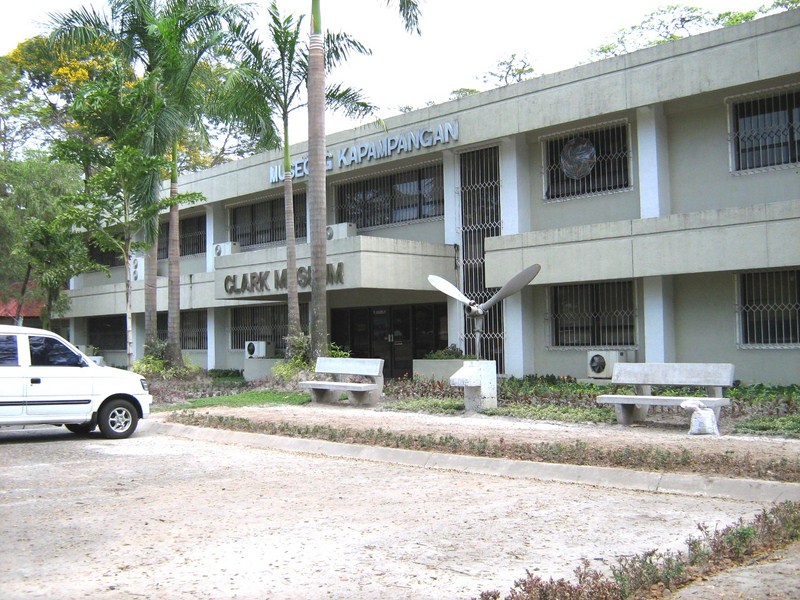
Near the old parade grounds, on the original site of the 217-bed base hospital (dating to September 1903) and the Base Commander’s office, is the Clark Museum, also called the Kapampangan Museum.


Check out “Clark Museum

Death March Marker

At the entrance of the Clark Veterans Cemetery, along the main entrance road, just past the main gate, is the Death March Marker.  This memorial marker was erected by the Manila BPO Elks lodge in honor of fellow Elks, American and Filipino POWs, who passed this spot during the infamous Bataan Death March in 1942.

Clark Veterans Cemetery

Just inside the Main Gate, along the Mitchell Highway, is the 20.365-acre, 12,000 plot Calrk Veterans Cemetery, formed between 1947 and 1950 to house 7,559 military and civilian remains.  There are headstones/markers and remains from at least 4 other U.S. military cemeteries (Fort Stotsenberg 1 and 2, Fort McKinley and Sangley Point Naval Cemetery).  These include 2,030 fallen American soldiers, including at least 638 Philippine Scouts (PS) from the pre-World War II era.  Some, but not all, were veterans of the Spanish-American war and the Philippine-American War.

Graves of the unknown dead

Others are graves of U.S. veterans from the U.S. Army, U.S. Navy, U.S. Marine Corps, U.S. Coast Guard and U.S. Air Force who died after World War II (all World War II dead were moved to the American Cemetery in Manila) and during the Korean and Vietnam War.  The largest category interred is civilian, mostly U.S. and Filipino, all of whom worked for the U.S. government, and their dependents.  In addition, nationals from France, Spain, Canada, Japan, China, Vietnam and India are also buried there.  A little over 1,600 remains are still unidentified.  The cemetery is also the only place in the former U.S. 13th Air Force base where the U.S. flag flutters alongside the Philippine flag.

Salakot Arch

Finally, at the main gate entrance to the Clark Freeport Zone, at Bayanihan Park, is the Salakot Arch, a cavernous welcome landmark fashioned after a farmer’s hat built in 1979.  It stands as a sign of Philippine-American friendship over the years and was originally built to symbolize the historical March 14, 1947 signing of the RP-US Military Bases Agreement.  Beyond the arch is Angeles City.

The City of "Angels" (Angeles City, Pampanga)

Angeles City

After the culmination of Clark’s Hot Air Balloon Festival, Jandy and I drove on to Angeles City for a walking tour of the City of Angels.  Many know Angeles City only as a rest and recreation area frequently visited by the U.S. servicemen from nearby Clark Air Base.  Even with the base’s closure, Angeles is still home to a large colony of expatriates as many Americans chose to permanently settle in city, particularly in the Balibago District.  They were just about everywhere I looked in the city.  However,  not many people know that, on March 17, 1899, Angeles was briefly made the capital of the First Philippine Republic by Gen. Emilio Aguinaldo.  In fact, the first and only anniversary of the Declaration of Philippine Independence (June 12, 1899) was celebrated here.  Upon its capture by the Americans on November 5, it was made the headquarters of Maj.-Gen. Arthur MacArthur (father of Douglas).  Angeles, once just a jungle clearing and a northernmost barrio of San Fernando called Kuliat (after an indigenous vine that grew abundantly in the area), soon grew rapidly around the former Clark Air Base and was made into a chartered city on June 22, 1963 by virtue of Republic Act No. 3700.

Holy Rosary Cathedral

Many relics of the city’s Spanish and American era past still exist, all within the Sto. Rosario Historic District and all within walking distance from each other. My walking tour started at the Holy Rosary Cathedral (where I parked my car), along Sto. Entierro corner Sto. Rosario St.

Check out Cathedral of the Holy Rosary

The Holy Family Bldg., the former convent, was used by the U.S. Army from August 1899 to December 1900 as a military hospital and by the Japanese Army as a troop barracks, officers’ quarters and arsenal in early 1942.

Angeles Physical Therapy Rehabilitation Center

Adjacent to the cathedral is the 2-storey Museo Ning Angeles, the former City Hall built in 1922.    This museum, opened on December 8, 1999, now showcases Kapampangan lifestyle and culture.

Check out Museo Ning Angeles

The Angeles Physical Therapy Rehabilitation Center, now a center for polio and stroke patients, was first built in 1899 as the deposito for religious statues and carriages used in religious processions.   From 1899 to 1901, it was utilized by the U.S. Army as a jail  for recalcitrant U.S. troops and, from 1946 to 1947, as headquarters of U.S. Army 11th Film Exchange.  From February 6, 1967 to 1986, it was  the City Post Office.

Bale Matua

The oldest building in the city is Bale Matua, also known as the Founder’s House.  It was built in 1824 by Don Angel Pantaleon de Miranda, the former gobernadorcillo of San Fernando, and his wife Doña Rosalia de Jesus.  Together, they founded Angeles in 1796.  On December 8, 1829, the barrio was separated from San Fernando and was renamed Angeles in honor of Don Angel and the town’s patron saints, the Holy Guardian Angels (Los Santos Angeles de los Custodios).  To build Bale Matua, Angel used materials salvaged from their older house built around 1811. The house was later inherited by their only daughter, Doña Juana de Miranda de Henson.  It has high stone walls and an ornate gate and was declared as a Historical Site by the National Historical Institute.

Nepomuceno Ancestral House

The Nepomuceno Ancestral House, along Sto. Rosario St., was the home of Don Ciriaco de Miranda, the first gobernadorcillo of Angeles. Built in 1840, it was inherited in 1868 by Don Ciriaco’s niece, Doña Agustina Henson de Nepomuceno.  A restored grain storehouse (kamalig), along Sto. Rosario St., between these two old houses, was also built in 1840 by Don Ciriaco. In 1980, it was restored by Armando L. Nepomuceno and is now home to Armando’s Pizza and the Camalig Restaurant.   Bale Herencia, at the corner of Lakandula and Sto. Rosario Sts., was built in 1860 by carpenters from Vigan (Ilocos Sur). Said to have been built for the mistress of a parish priest, the current owners now use it as a banquet hall.

Bale Herencia

Clark Museum (Clark Special Economic Zone, Pampanga)

Clark Museum

Located near the old parade grounds, on the original site of the 217-bed base hospital (dating to September 1903), headquarters of the 3rd Combat Group in 1979 and the 3CSG Headquarters, this museum, also called the Kapampangan Museum, was inaugurated on July 5, 1997.

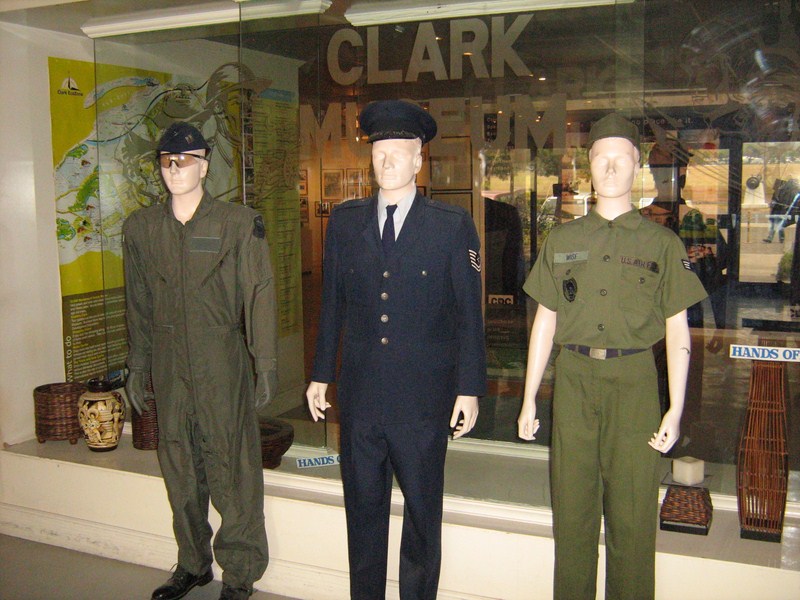
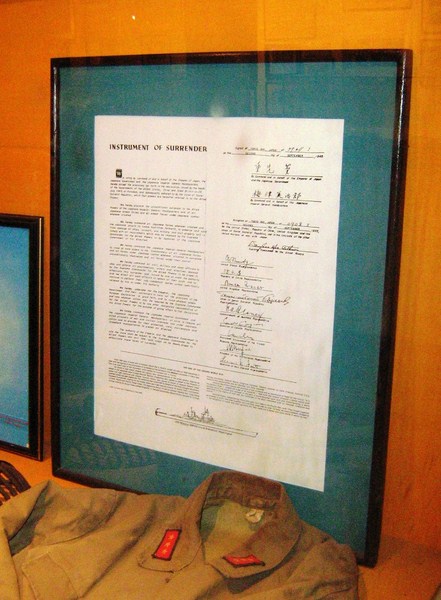
Military Uniforms

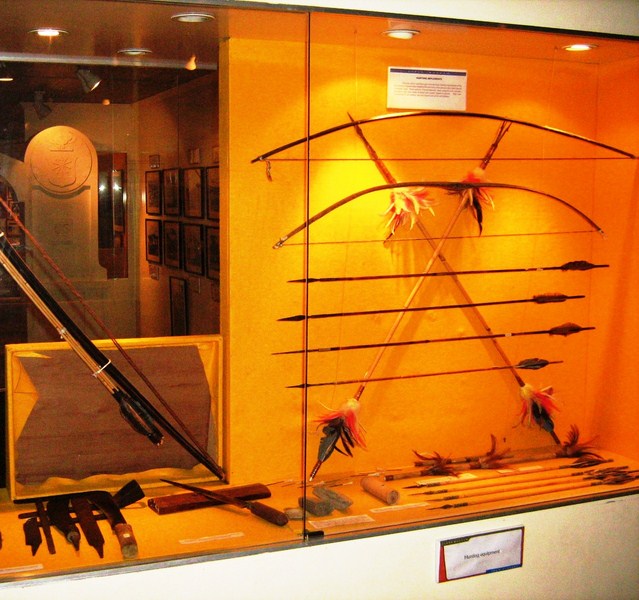
Aeta Hunting Equipment

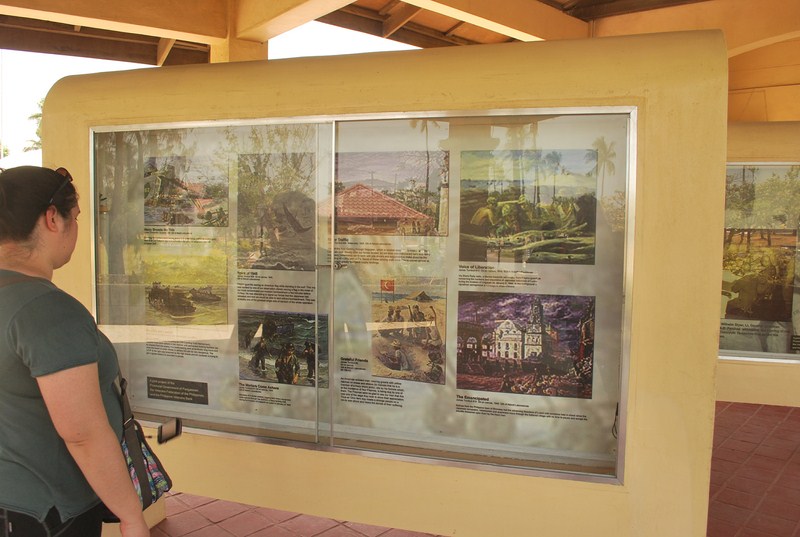
The museum showcases Clark’s rich history and transformation, from the time it was used as a U.S. military base (the largest outside mainland USA) in 1902 up to its dramatic development as a Special Economic Zone. It is also a tribute to the resilient Filipinos who strive to reshape their future despite ravages of war and the wrath of nature

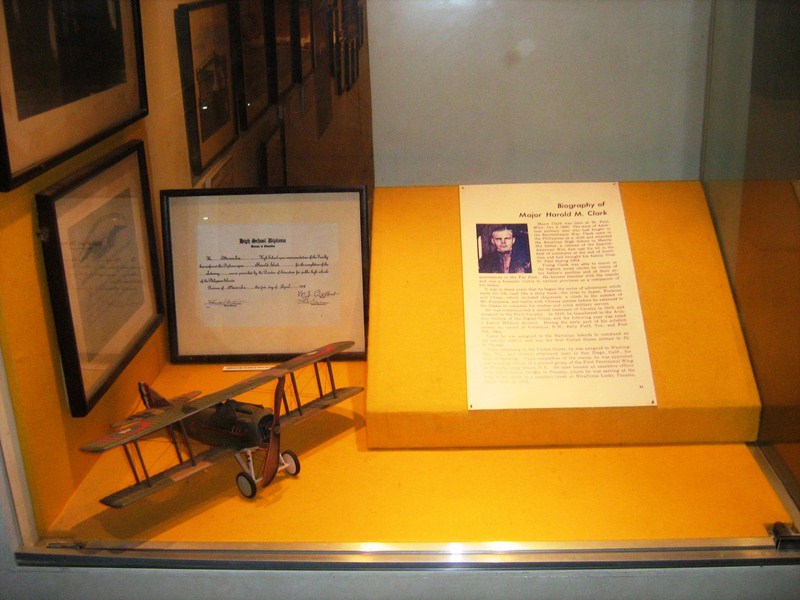
Biography of Maj. Harold M. Clark

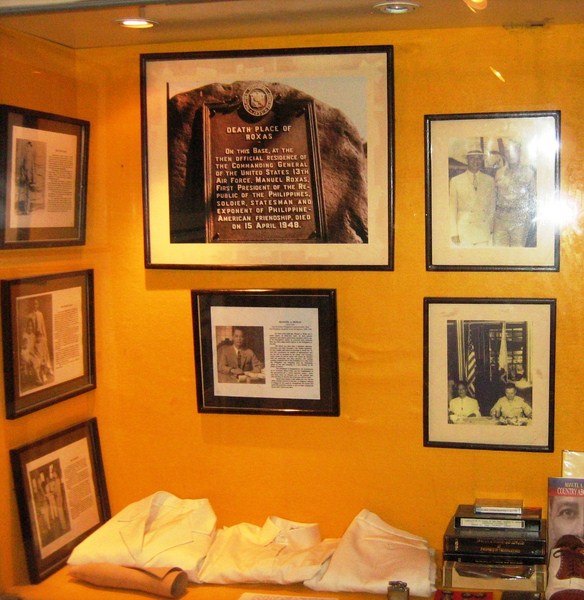
Pres. Manuel A. Roxas Exhibit

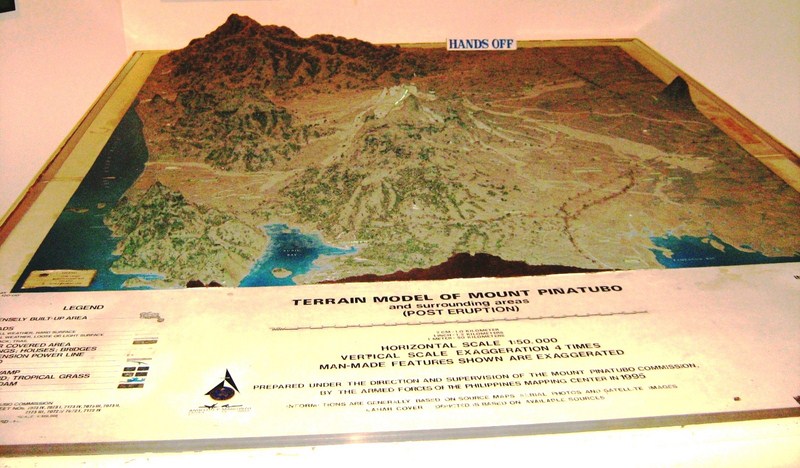
The museum is divided into different sections – “Aetas,” “US Early Years,” “Aviation Era,” “World War II,” “Reconstruction,” “US-Philippines Turnover,” “Alumni of Wurthsmith and Wagner High School,” “People Power Revolution,” “Mt. Pinatubo Eruption,” “Former Base Employees,” “The Transformation,” and the “Jack and Ariella Art Collection.”

Copy of Instrument of Surrender signed at USS Missouri

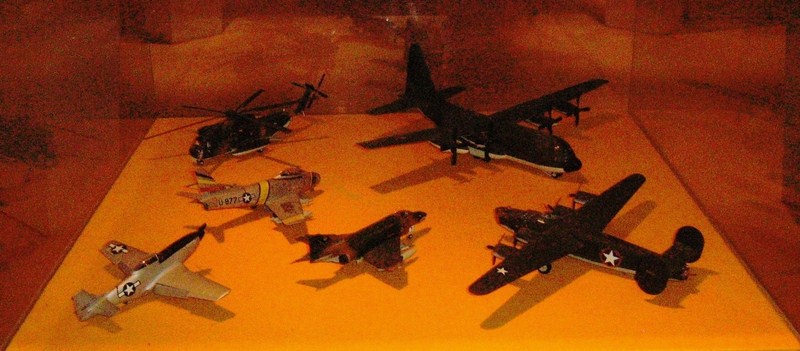
Model aircraft

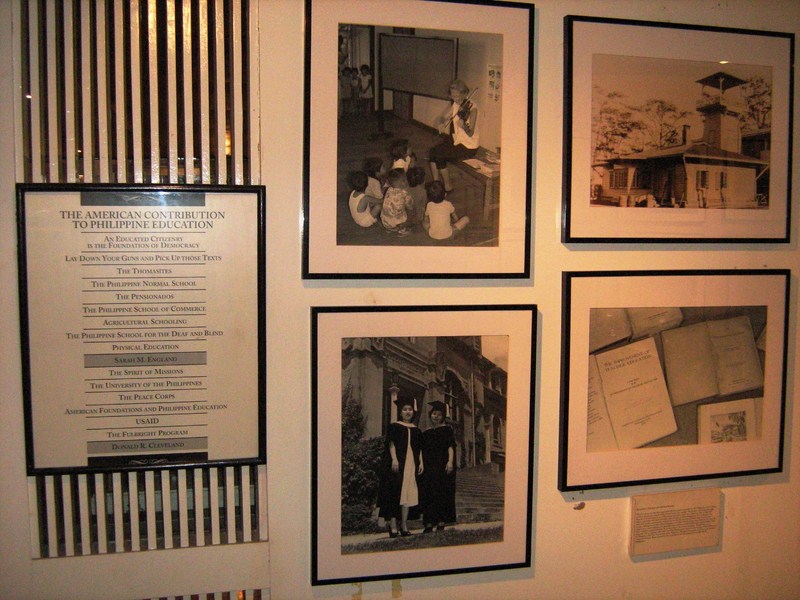
A large mural depicting the vision of Clark Development Corporation (CDC) and five scenic dioramas portraying the transformation of Clark into its present state are among the exhibits at the museum. A special section, featuring vivid photographs, is dedicated to the Thomasites, the first American teachers in the Philippines. 

Terrain Model of Mt. Pinatubo

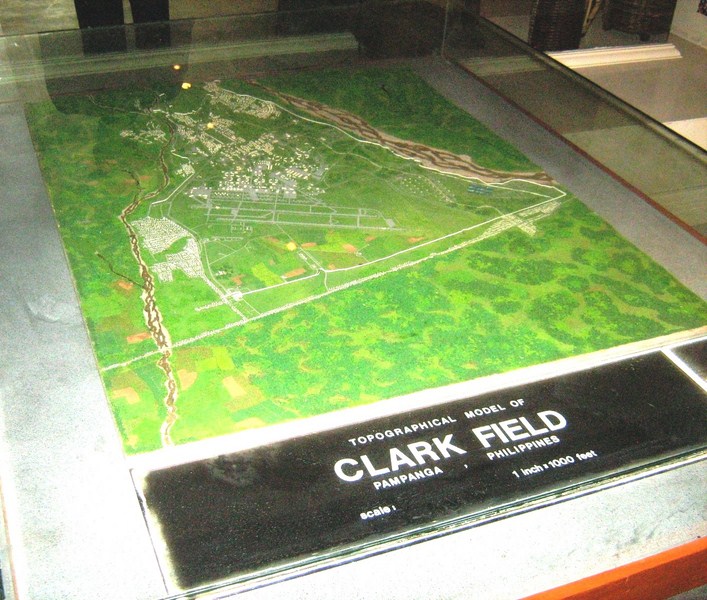
Topographical Model of Clark Field

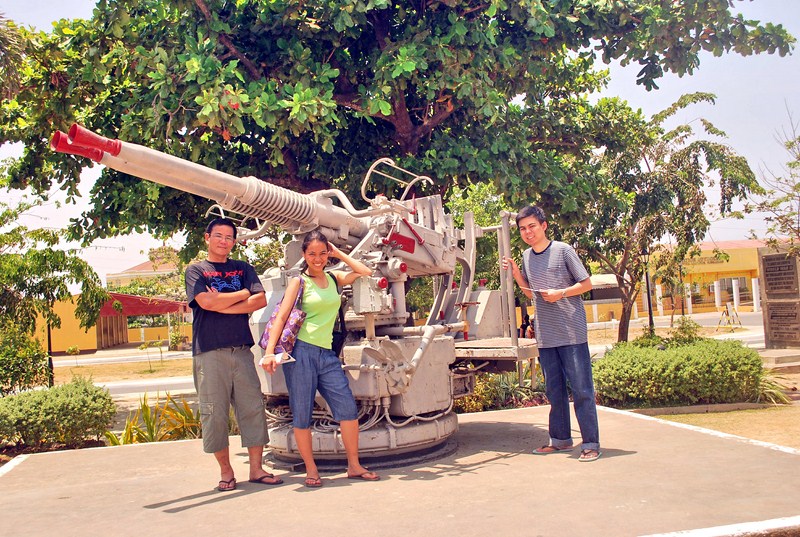
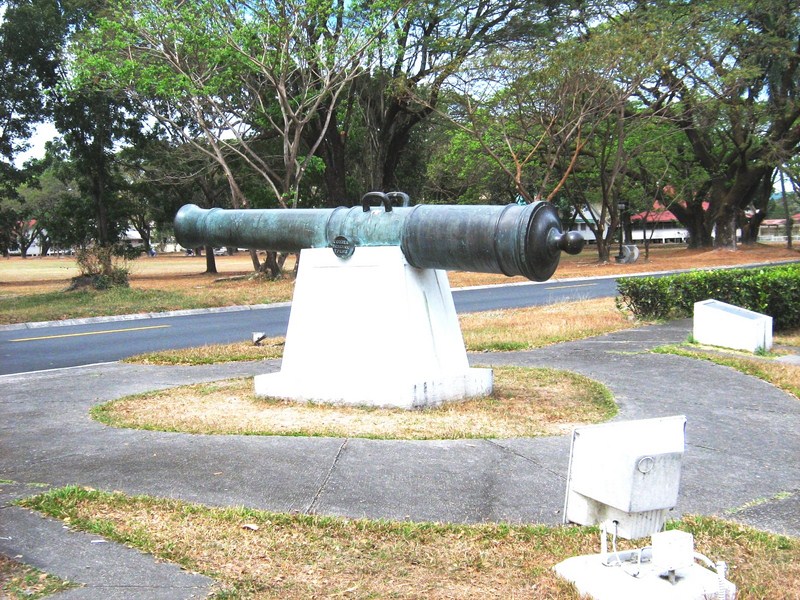
Also on display are photos, models of U.S. aircraft, Philippine currency during the Japanese Occupation, weapons and a Mount Pinatubo exhibit.  In front of the museum is a Spanish-era cannon (cast in Peru in 1778, it made its way to the Philippines on board the Spanish warship Seville) and a Japanese World War II anti-aircraft gun. Spanish-era cannon..

The American Contribution to Philippine Education

Spanish-era cannon

Clark Museum: Building 2425, Tourism Promotions Office, Clark Development Corporation, E. Quirino St., Clark Freeport Zone, Pampanga.  Tel: (045) 599-2832, (045) 599-3221 and (045) 599-6235. Open Monday-Fridays, 8 AM to 5 PM.  Weekends by special arrangement. Admission: PhP30 per person.  Tour guide, teachers and children below 3 years of age are free of charge.

How to Get There: The Clark Special Economic Zone is located 80 kms. north of Manila.

Rizal Shrine (Fort Santiago, Manila)

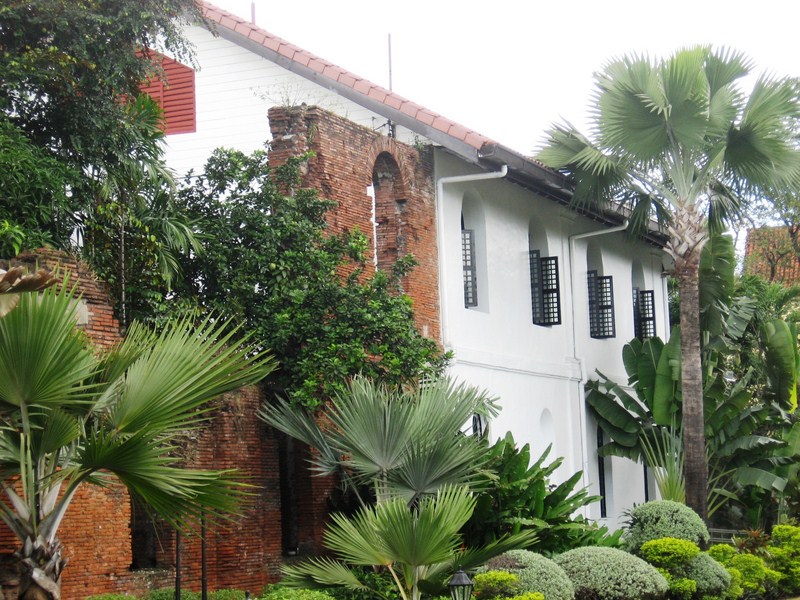
Rizal Shrine

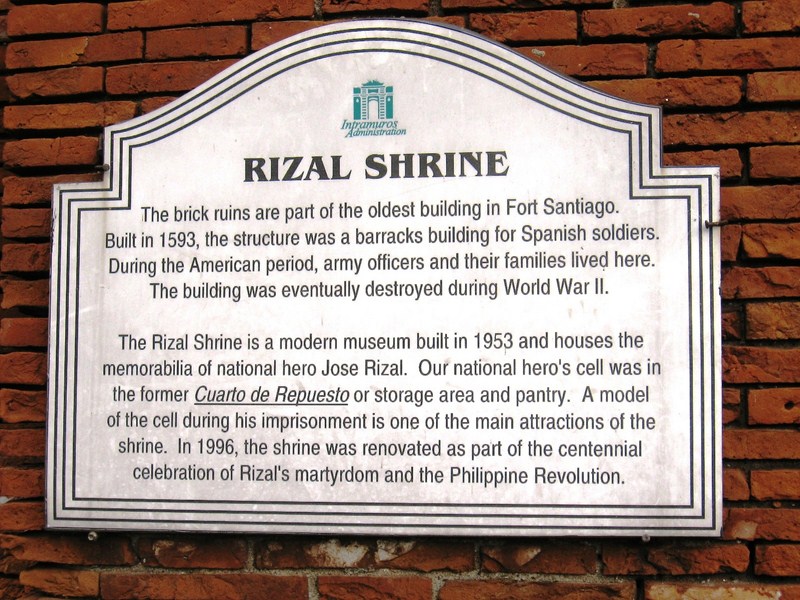
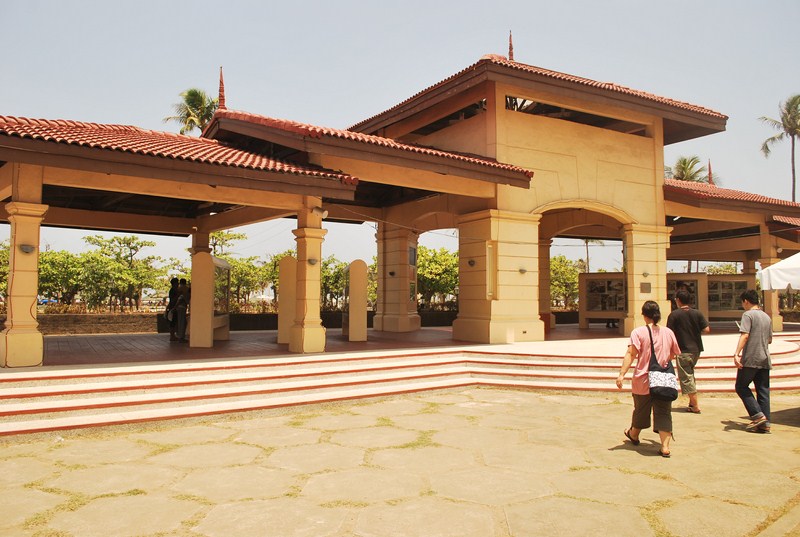
The Rizal Shrine, Fort Santiago’s most prominent attraction, was the highlight of our tour.  The shrine, housed in a restored (in 1953) 2-storey building formerly used as barracks for two Spanish artillery companies, remains under the supervision of the National Historical Institute (NHI).


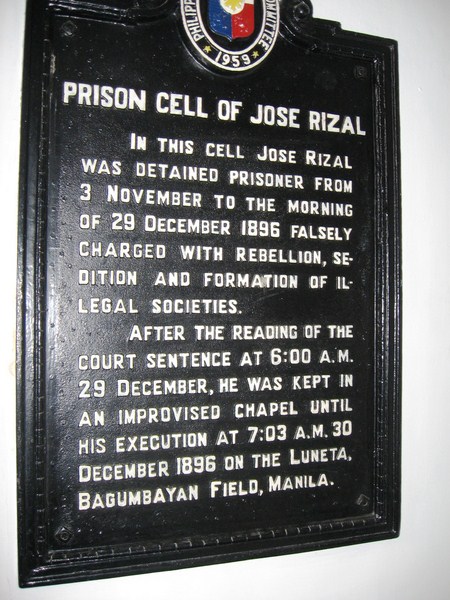
National Hero Jose Rizal was imprisoned in an improvised “chapel cell” on one corner of its ground floor at the fort’s eastern side.  Here, he was held for two months prior to his execution (November 3 to December 29, 1896) when his sentence was read at 6 A.M..   He also wrote his “Mi Ultimo Adios” (“My Last Farewell”) in this cell.  As a prisoner condemned to death, he was moved into this church-like setting for spiritual contemplation.  He was never confined in a dungeon unlike captured Katipunan members.

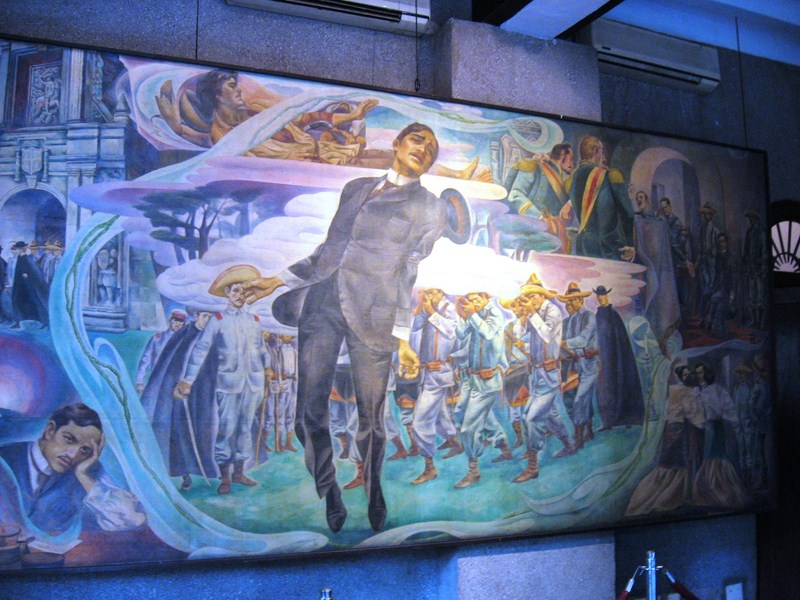
Rizal’s Execution (Carlos Botong Francisco, 1961)

Upon entering the first room (Pagbukas ng Alaala), we were greeted by the late National Artist Carlos “Botong” V.Francisco’s commissioned mural (1961) of Rizal’s execution.   Immediately to the right is the door leading to the airconditioned Bulwagan ng Panunulat(Chamber of Texts).  Here are displayed old photos of Rizal’s parents, his sweetheart Leonor Rivera and of Rizal as a child and adult.

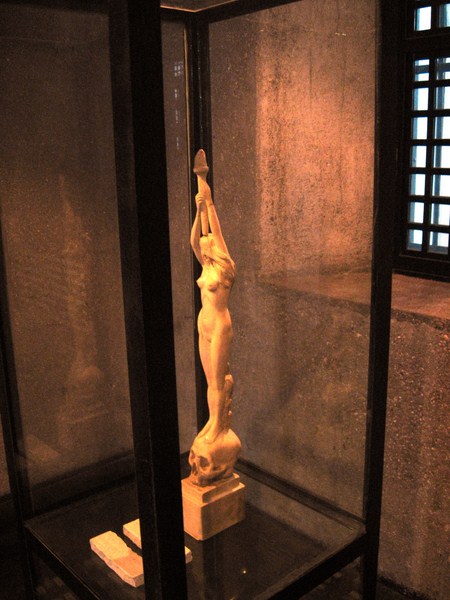
Triumph of Science Over Death

Reproductions of original sculptures done by Rizal, “Triumph of Science Over Death” (a torch-bearing Muse of Science standing over a skull) and “Prometheus Bound”, are also prominently displayed. On mounted steel plates are Rizal’s own opinions and analyses as well as those on Rizal done by various scholars.

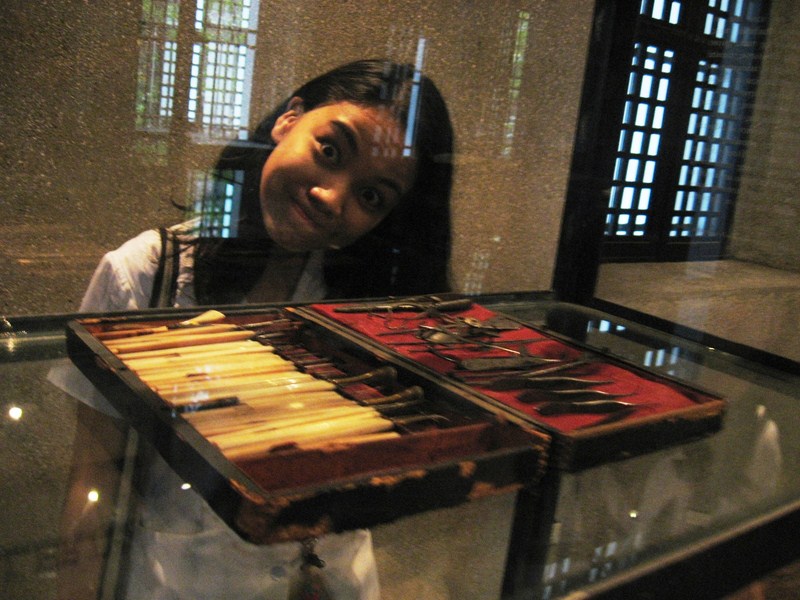
Rizal’s Opthalmological Instruments

Also on display here are faithful reproductions of Rizal’s handwritten manuscripts Noli Me Tangere(published  in Berlin, 1887) and El Filibusterismo (published in Ghent, Belgium, 1891),  his ophthalmological instruments (Rizal was an ophthalmic surgeon), his shell collection, his Hongkong calling cards, his chess and damaset and  skeletons of frog (Rhacophorus rizali) and lizard (Draco rizali), both named after him.

PHC Plaque

Outside the room is the Galeriya ng Halamanan (Garden Gallery).  On its right is the Silid ng Paninilay(Contemplation Room) which is interconnected to Rizal’s cell (Ang Piitan).  The former was a pantry of food rations for Spanish troops (Cuarto de Menestra) before it was made into a receiving room for Rizal.  The latter, a narrow, dark and nearly airless room, was formerly a storage for military supplies (Cuarto de Repuesto) before being converted to Rizal’s cell.  Rizal’s untitled farewell poem was believed to have been written here. Inside is the familiar sitting wax statue of Rizal done by the late National Artist Guillermo E. Tolentino.  Both rooms are closed to the public.  Two of its doors are original.

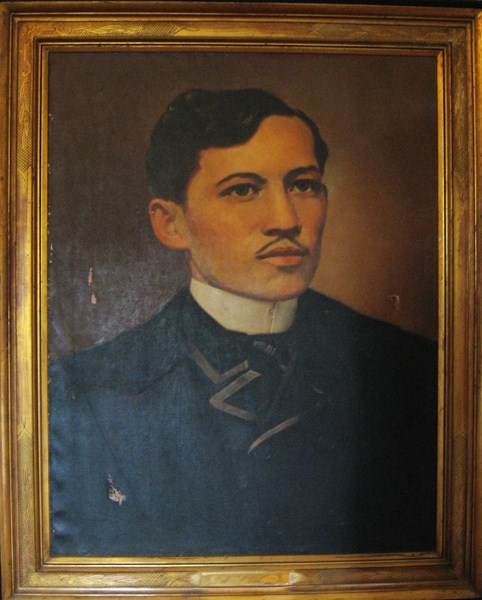
Portrait of Rizal at Stairwell Gallery

To the left of the Garden Gallery is the Galeriya sa Hagdanan (Stairwell Gallery).  Here on display, from the foot of the stairs all the way to the top, are oil paintings depicting key moments of Rizal’s life as visualized by painters (Romeo Enriquez, E. Gonzales, Rudy Herrera, etc.) who won in a painting competition during the centenary of Rizal’s birth (June 16, 1961).

A Glass Urn With a Piece of Rizal’s Vertebra With Bullet Wound

Upon reaching the top of the stairs, we entered the Silid ng Nalalabi (Reliquary Room).  Enshrined in a glass urn is the fort’s secular relic: a piece of Rizal’s vertebra with a bullet wound.

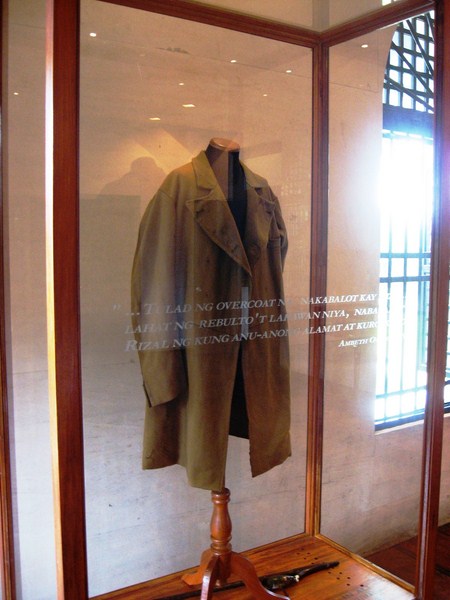
Rizal’s Cerrada Coat

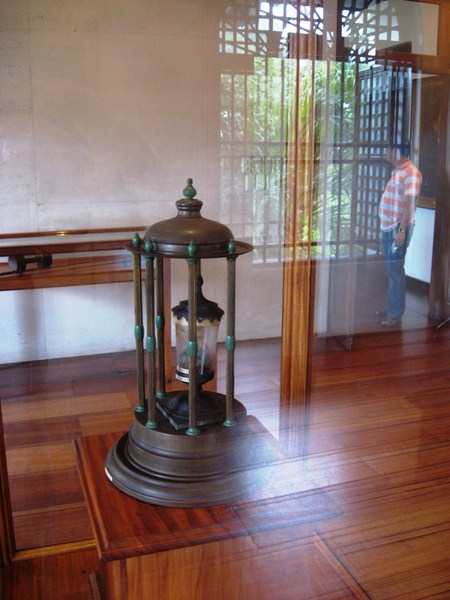
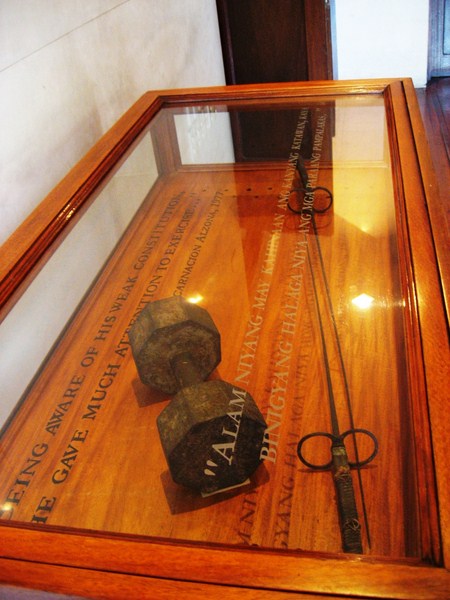
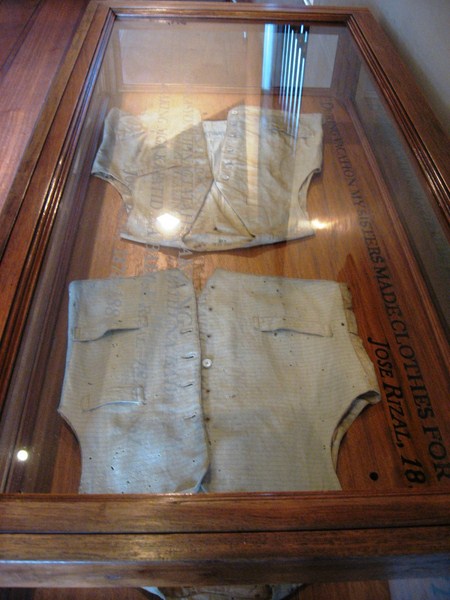
Other Rizal personal effects and relics on display in glass cases are two vests made by Rizal’s sisters (1878-81), a cerrada coat, a winter overcoat, fencing sword, dumbbell and walking cane.

Rizal’s Dumbbell and Fencing Sword

2 Vests Made By Rizal’s Sisters

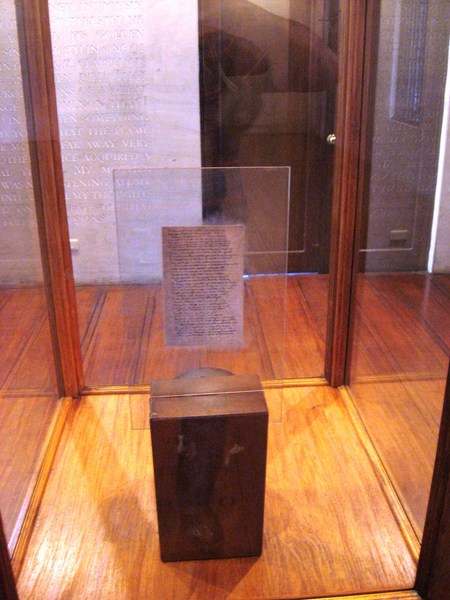
The adjoining airconditioned, 18 meter by 8.5-m. room, Ang Tulang Walang-Hanggan (The Valedictory Poem) is nearly empty except for a glass case with Rizal’s original poem (written on both sides of a tiny piece of paper) and the alcohol burner where the poem was hidden.  Rizal gave this stove to his sister Trinidad with word of its hidden content.  The end of the wall facing the door is inscribed with the words of the “Mi Ultimo Adios” written in Spanish.

Rizal’s Original Mi Ultimo Adios

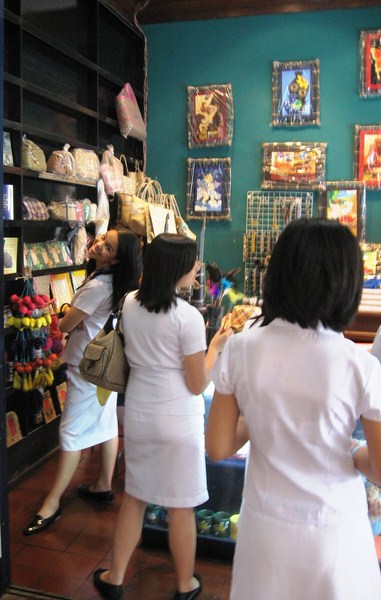
The last leg of the tour was the Galeriya sa Beranda (Veranda Gallery) where guests sign the guestbook.  Its Museum Shop sells reproductions of old photos, old promotional posters of movies and VHS tapes on the life of Rizal as well as paper bills, medals, stamps, books, key chains, T-shirts and even a cross stitch, all emblazoned with Rizal’s likeness.

Museum Shop

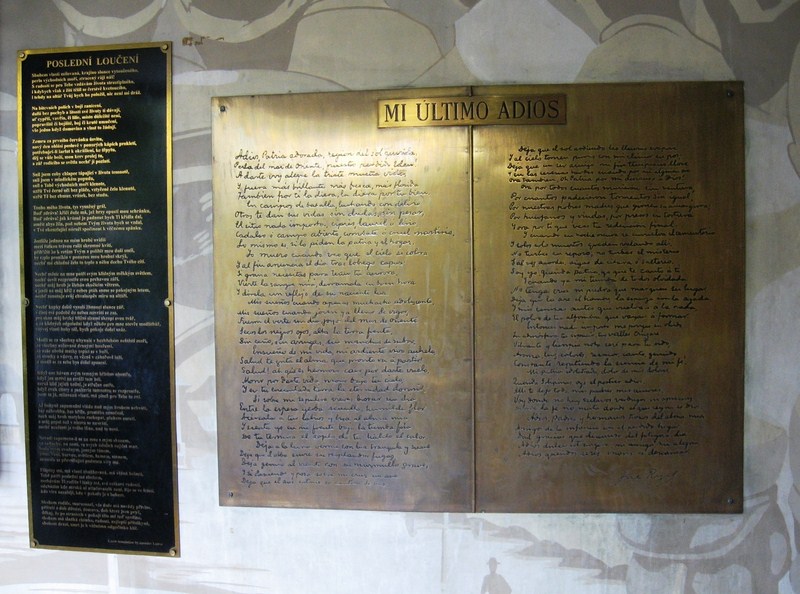
On the walls are plaques with Rizal’s “Mi Ultimo Adios” translated by individuals or groups into different languages : English (Nick Joaquin), Tagalog (Jose Gatmaytan), Korean (Korean Embassy), French (Jean-Claude Masson), Serbo-Croatian (“Povelja” Magazine) and Chinese (Shen Kwang Literary Association of the Philippines).

Czech and Spanish version of Rizal’s “Mi Ultimo Adios”

Translations in Romanian and Indonesian are found in the Garden Gallery. 

Stotsenberg Parade Grounds (Clark Field, Pampanga)

When one mentions Clark Field in Pampanga, the first thing that comes in most peoples’ minds is duty-free shopping.  Having booked ourselves for an overnight stay at Hotel Vida, we also did that, doing some shopping at Puregold.  However, there’s more to Clark than just duty-free shopping.  For one, there’s history.

Stotsenberg Parade Grounds

Lots of history exists around the Stotsenberg Parade Grounds.  Large houses called “barns,” built with Oregon pine shipped from the U.S. and used as officers’ quarters, are arranged in a row along the grounds.  Built from 1910-1913 at a cost of US$1,309.9 each by Filipino, Chinese and Japanese laborers, they were the first permanent structures in Fort Stotsenberg (named after Col. John W. Stotsenberg, killed in the Battle of Quingua, Bulacan on April 23, 1899), the forerunner of Clark Field (renamed as such in 1919 after Army aviator Maj. Harold M. Clark who was killed in an air crash in the Panama Canal).  

CDC Exhibition of Kapampangan Crafts

Over the years, until 1922, hundreds of these barns were built but, by the mid 1980s, most of these barn houses were demolished.  Those along Cardinal Santos Ave., now called the Centennial Block, are all that remain.  The huge, shady and century-old acacia (monkey pod) trees in the area were planted in 1903.  

Centennial House: Lifestyle in Stotsenberg Museum

Many of theses barn houses have undergone adaptive reuse. One barn house, Bldg. 2081, houses the Mabalacat Municipal Tourism Office.  Another houses the Clark Development Corp. (CDC) Exhibition of Kapampangan Crafts.  A number also house restaurants such as Cafe Mesa Coffee Shop and Bar (Bldg. 2078) and Red Crab Alimango House (Bldg. 2078).  Another houses a museum (Centennial House Lifestyle in Stotsenberg Museum).

Cafe Mesa Coffee Shop and Bar

The Death Place of  Roxas Marker, directly across the street from the CDC office, close to the Philippine flag, was built in memory of the Philippine president Manuel A. Roxas who, upon the invitation by the U.S. 13th Air Force commander, came to see for himself the massive reconstruction and rehabilitation work in war-damaged Clark on  April 15, 1948.  That same, while delivering a speech at Kelly Theater, he suffered a heart attack and died. 

Death Place of Roxas Marker

At the western edge of Stotsenberg Parade Grounds is the 26th Cavalry Memorial which commemorates the men of the 26th Cavalry Philippine Scounts, U.S. Army, who died during their heroic action at Lingayen (Pangasinan) in 1941.  Next to it is the U.S. Army Air Corps and Philippine Air Force Monument which details the joint participation of the Philippine and American military forces

26th Cavalry Monument
US and Philippine Air Corps Monument

Cafe Mesa Coffee Shop and Bar: Cardinal Santos Ave., Clark Special Economic Zone, Pampanga.  Tel: (045) 499-0694.

Red Crab Alimango House: Cardinal Santos Ave., Clark Special Economic Zone, Pampanga.  Tel: (045) 599-5345.


Camp John Hay – Historical Core (Baguio City, Benguet)

After lunch at the Philippine Military Academy (PMA) cafeteria, Jandy and I again boarded our Toyota Revo and proceeded to Camp John Hay. This attractive, quiet place, with views of the surrounding hills, always offers an abundance of rest and recreation activities such as hikes along a 1.8-km. eco-trail; biking, horseback riding and kiddie rides at Scout Hill; camping, an educational tour of the Butterfly Sanctuary; and golf at its 5,330-yard, 18-hole, par-68 golf course, one of the best in the country.

Club John Hay Golf Course

The Camp John Hay Mile-Hi Center, a former recreation center of the Americans, offers local and exported crafts and garments.  Within the CJH Commercial Mall, located at the former Administration Bldg., is the John Hay Commissary (a duty-free shop), Strumms, Dencio’s Bar and Grill, Side Bar and Nike Stadium, plus a billiards hall, business center and an internet cafe.  There’s also the Camp John Hay Manor and the Camp John Hay Suites, nice places to stay within the camp.

John Hay Manor

A 3-hectare slice of nostalgia within the camp, called the Historical Core, my favorite spot then and now, has been set aside to preserve the camp’s timelessness and allure.  Deemed inviolate to the whims and winds of change, this living museum was envisioned as more than just a window on time.  It consists of the Bell Amphitheater, the History Trail, Honeymoon Lodge, Our Secret Garden, the Cemetery of Negativism and Bell House.

Cemetery of Negativism

Near the entrance is the Cemetery of Negativism, built during the term of camp commander Maj. John Hightower (1979-1982).  A glimpse into the homespun American philosophy of living, here we strolled among the tombstones where bad habits and the scourge of productivity are buried, its touch of whimsy doing little to negate the truth of its message.  Among them are the inept Kant du Nutin Wright, the defeatist Ben Trid Bfor and the notorious General Neg A. Tivism (whose epitaph reads “Died of positive reaction to enthusiasm”).

Bell House (Camp John Hay Museum)

The Bell House, now the Camp John Hay Museum (opened on October 25, 2003), was named after U.S. Gen. J. Franklin Bell.  Initially built as the vacation home of the Commanding General, today it is the repository of artifacts and other indoor exhibits.

Bell Amphitheater

Personally designed by Gen. Bell who took inspiration from the Ifugao’s terracing technique, the amphitheater was once a venue for social and cultural gatherings known for its perfect acoustics.  Anything said under the gazebo at the center is amplified, audible from any point within the amphitheater.  Its rows of chairs have since been replaced and it is now a multi-level landscaped garden with rare flowers.  The amphitheater is now available for concerts, weddings and other special occasions.

The History Trail

The History Trail, designed to wind its way amidst pine trees, offers landscaped resting areas.  Our Secret Garden is planted to blooms that add a splash of color and scents. It also has a gazebo. The Honeymoon Cottage is rented out to newlyweds.

Philippine Military Academy – Relics Point (Baguio City, Benguet)

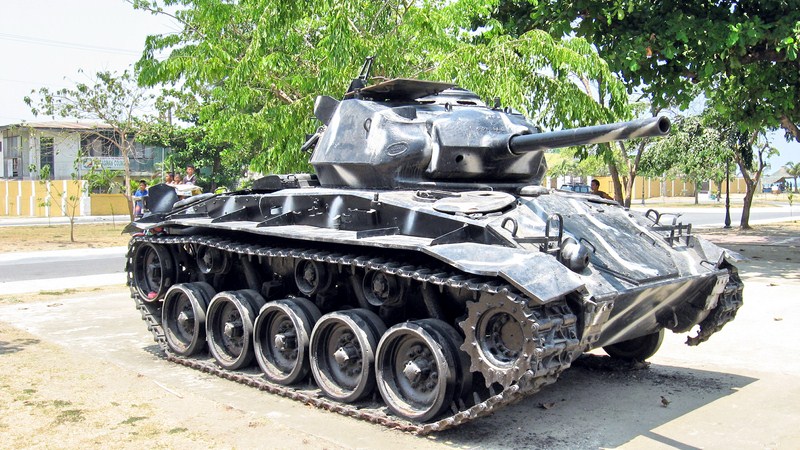
Our first stopover at the Philippine Military Academy was at Relics Point, a favorite for military hardware lovers including me.  Here, you can see and touch (and actually ride) the real McCoy as on display are actual U.S. and U.K-made armored tracked or wheeled vehicles and U.S., French, Dutch and Japanese-made howitzers and mortars.

Me beside an Armored Infantry Fighting Vehicle
The U.S.-made Armored Infantry Fighting Vehicle (AIFV) weighted 13,687 kgs. (30,175 lbs.), had a fuel tank capacity of 416 lieters ADF (diesel) and was armed with 25 mm. Oerlikon KBA B02 auto cannon as primary armament and a 7.62 mm. co-axial machine gun as secondary armament.
 
Landing Vehicle Tracked 4 (LVT)
The amphibious, U.S.-made Landing Vehicle Tracked 4 (LVT), used during World War II, was armed with a 7.62 mm. machine gun and can be loaded by a jeep or a 105 mm. howitzer.  It had a maximum speed of 32 kms./hr. on land and 12 kms./hr. on water.  Here in the country, it was used by the Philippine Marines.
 
V-150
The U.S.-made V-150 had a battle weight of 9,000 kgs. (24,000 lbs.), a ground clearance of 64.7 cms. (25.5 inches) and a fuel tank capacity of 300 liters ADF.  It was armed with a 50 cal. M2 heavy barrel machine gun as primary armament and a 7.62 mm. co-axial M240 machine gun as secondary armament.
 
Sherman M-4A1 Medium Tank
The U.S.-made Sherman M-4A1 Medium Tank, developed during the early part of World War II, was built in large numbers and was extensively deployed in the Pacific and European theater.
 
M-7 Self-Propelled Howitzer
The U.S.-made M-7 Self-Propelled Howitzer saw extensive service during World War II with the Allied forces, from the Battle of El Alamein onwards.  Nicknamed the “Priest,” its gun had a range of 11,160 m.
 
Simba Light Combat Vehicle
The U.K.-made Simba Light Combat Vehicle  had a battle CBT weight of between 9.9 to 11.2 tons, a hull ground clearance of 0.45 m. (1.5 ft.), an axle ground clearance of 0.33 m. and a fuel tank capacity of 296 liters ADF.  It was armed with one 50 cal. QCB machine gun.
 
Jandy trying out the 40 mm. Bofors
The Dutch-made 40 mm. Bofors was the most widely-used ant-aircraft gun of World War II.  Both Allied and Axis forces used license-built and captured guns of this type.
 
75 mm. Mountain Gun
The Japanese-made, pre-World War II (1934), Type 94 75 mm. mountain gun, light and for rugged use, was suitable for fighting in mountainous country.
 
12.2 mm. Light Field Howitzer
The French-made 12.2 mm. Light Field Howitzer, introduced in 1909, was used in World War II.  It had a maximum range of 7,500 m..
 
105 mm. L3A1 Melara Howitzer

The U.S.-made 105 mm. L3A1 Malara Howitzer, of Italian design, was adopted by the American in 1939 and used to ward off the Japanese in 1941.

105 mm. M101 A1 Howitzer

The U.S.-made 105 mm. M101 A1 Howitzer was one of the most successful guns ever produced.  Between 1940-1953, 10,202 were produced and supplied to 46 national armies.  Firing at a rate of 8 rounds per minute, it had a maximum range of 11,200 m..

105 mm. M2 Howitzer

The U.S.-made 105 mm. M2 Howitzer, an improved version of the M1 howitzer, had a lower caliber but with a higher degree of accuracy.  It was later replaced by M2A1 which improved its stabilizers.

105 mm. M3 Howitzer
The U.S.-made 105 mm. M3 Howitzer, a variant of the M2 howitzer, has a shorter barrel built for shorter ranges (9,500 m. maximum).  This artillery was used by the Americans during the Lingayen landing.
 
120 mm. M120 Mortar

The U.S.-made 120 mm. M120 mortar, the largest mortar in the U.S. arsenal, was used during World War II against the Japanese.  It had a maximum range of 7,240 m..  Although this was used to fire chemical ammunition, it was also used high-explosive (HE) rounds.

The Aircraft Park
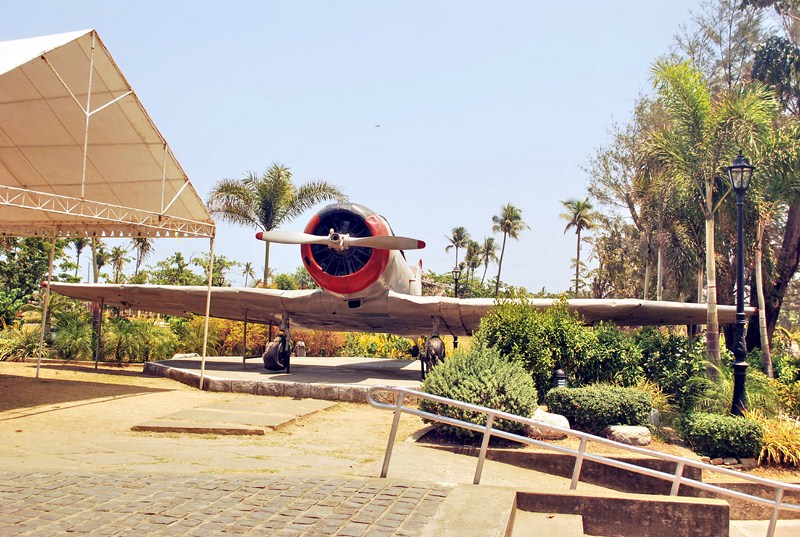
Continuing on our way, we passed the Shaku, the PMA’s landmark feathered parade cap, and stopped again at Melchor Hall.  In front of the hall is an aircraft park, this time with a display of 3 aircraft – U.S.-made, Vietnam War vintage Bell UH-1H helicopter and a F-8H Crusader fighter and an Italian-made Aermachhi SF-260M (S1A1) Marchetti military trainer.  
 
Bell UH-1H Helicopter
The Bell UH-1H general purpose helicopter had a 1,400-HP AVCO turbo shaft engine, a maximum level cruising speed of 110 knots, a sea level rate of climb of 1,600 ft./min., a ceiling service of 12,600 ft. and a hovering ceiling OGE (of ground effect) of 13,600 ft.
 
F-8H Crusader Fighter

The F-8H Crusader fighter has variable incidence wings, all-weather radar autopilot, a sophisticated weapons delivery system and can be equipped with various weapons such as air-to-air missiles, rockets, 20 mm. cannons, M-60 machine guns and 500-lb. bombs.

SF-260 M (S1A1)

The 7.1 m. long Aermacchi SF-260 M(S1A1), a basic military trainer first used for flying training, was further modified to load 250-lb. bombs and MA-3 rocket launchers and deployed in combat operations to conduct close air support to ground operations.   It had a maximum level speed of 180 knots and had a range, with max fuel, of 890 nautical miles (1,630 kms./1,025 miles).

Fort Del Pilar: Loakan Rd., Baguio City, Benguet