Philippine Military Academy – PMA Museum (Baguio City, Benguet)

From Melchor Hall, Jandy and I walked over to the nearby 2-storey building housing the PMA Museum.  Here, we sampled the PMA story as well as military history  through its display of old black and white photos, documents, newspaper clippings, paintings, weapons, memorabilia and other historical artifacts. 

The PMA Museum
The museum displays a typical cadet room (complete with double bunk bed, study tables, chairs and closets); a diorama of the Battle of Bulacan; the evolution military uniforms from 1908 to the present; old books; a painting of the Battle of Tirad Pass; class seals; photos of PMA superintendents; and weapons (rocket launcher, swords, rifles, spears, knives, etc.)
 
A typical Cadet Room
Battle of Bulacan diorama
Posing beside a circa 1908 uniform
Prominently displayed on the wall is a copy of the September 2, 1945 Japanese Instrument of Surrender, held on board the battleship USS Missouri in Tokyo Bay. Marking the end of World War II, it was signed by representatives of Japan, U.S., USSR, China, France, U.K., Australia, Canada, Netherlands and New Zealand.
 
Copy of Japanese Instrument of Surrender
Prominently displayed is a signboard of the Abdulrahman Bedis Memorial Military Academy, the largest camp of the Moro Islamic Liberation Front in Central Mindanao, located in Brgy. Tugaig, Barira, Maguindanao. It was captured in July 2000 by elements of the 7th Infantry Batallion (6th Infantry Division) under Lt.-Col Audie G. Delizo.
 
Signboard of Abdulraman Bedis Memorial Military Academy

The War and Weapons Gallery displays trophies of war, personal effects (sabers, helmets, boots, caps, belts, etc.) and other interesting artifacts belonging to PMA alumni, former cadets and other personalities.  

Personal effects of PMA alumni
Among the trophies of war displayed here is a short, wide and leaf-shaped, single-edged barong knife previously owned by Abu Sayaff commander Mujib Susukan.  It was seized on May 7, 2000 in Brgy. Bandang, Talipao, Sulu, by elements of Task Force Sultan (104th Brigade) of the 1st Infantry Division under then Col. Romeo P. Tolentino during its first encounter in the attempt to rescue 19 foreign hostages kidnapped in Sipadan, Sabah, Malaysia.
 
Mujib Susukan barong knife
The Alumni Gallery displays the names and class pictures of PMA alumni.    The museum also has a souvenir shop.
 
The Alumni Gallery
PMA Museum: Fort Del Pilar, Loakan Rd., Baguio City, Benguet.  Open daily, 8 AM-5 PM.  Admission: PhP10 (PhP5  for children and students). 
 

Camp John Hay Museum (Baguio City, Benguet)

Camp Hohn Hay Museum

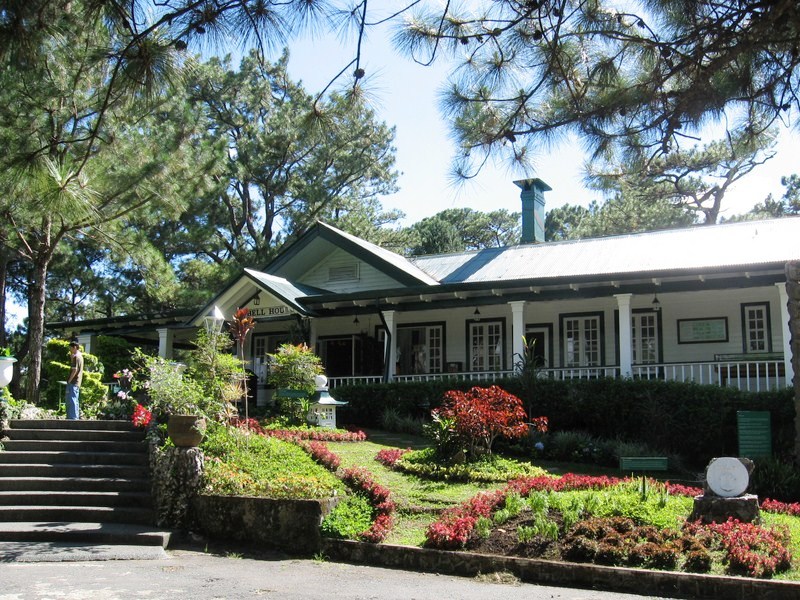
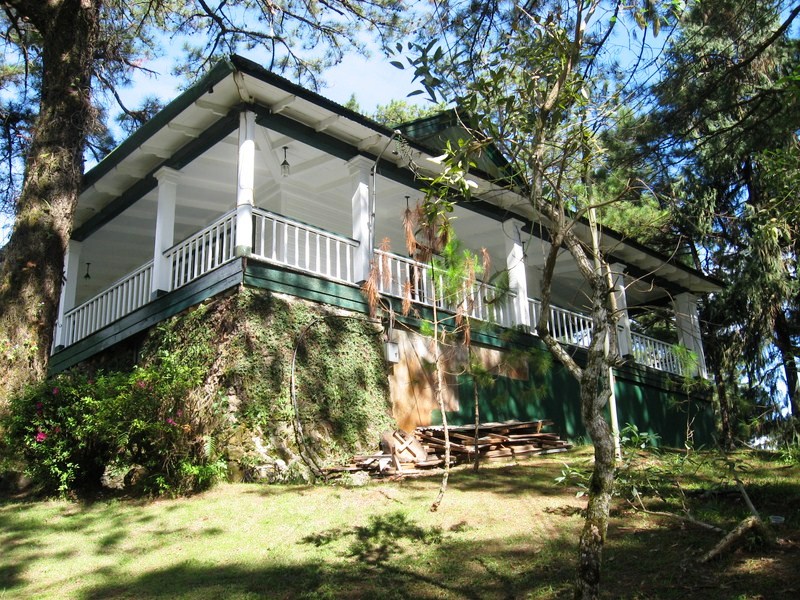
The Camp John Hay Museum, opened on October 25, 2003, was formerly the Bell House, named after U.S. Maj.-Gen. J. Franklin Bell, the commander of the Philippine Division in 1911 to 1914.

Bell transformed Camp John Hay from a small convalescent facility into a major military resort. Initially built as the vacation home of the Commanding General, it exemplifies American Colonial architecture and lifestyle.

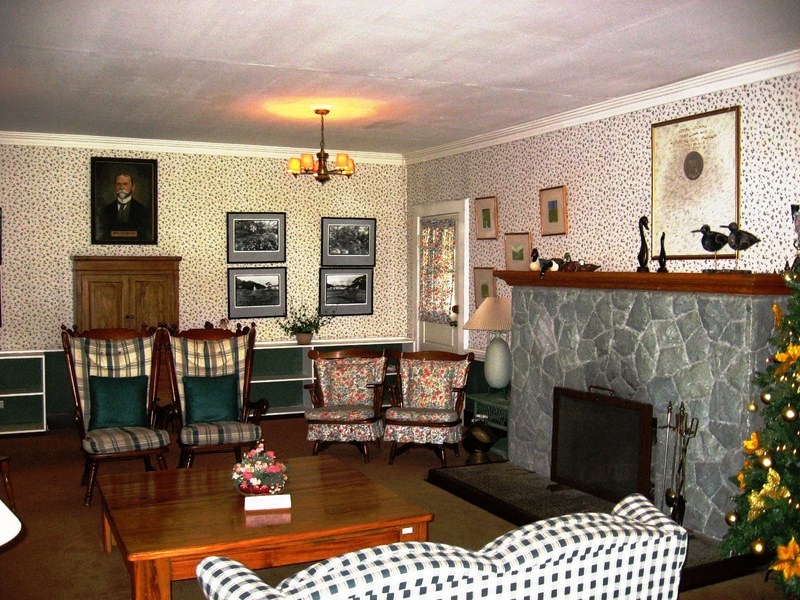
Living Room

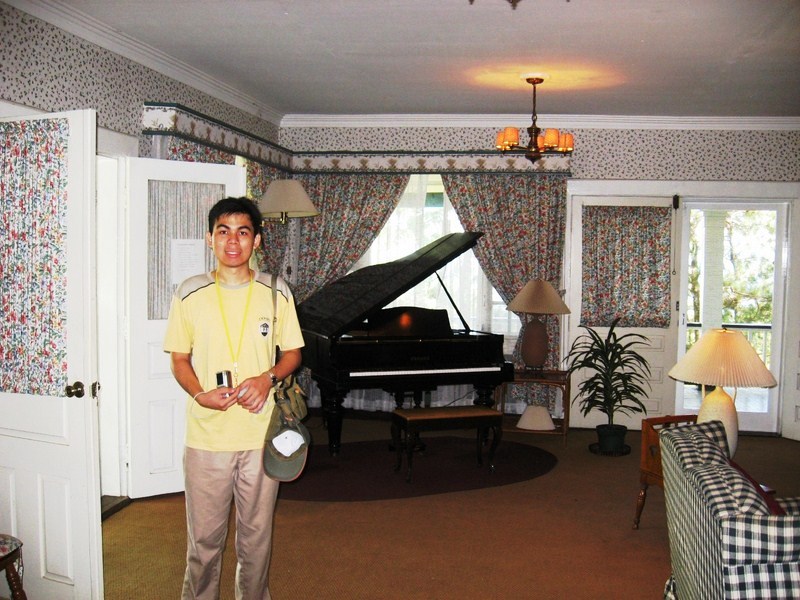
The grand piano

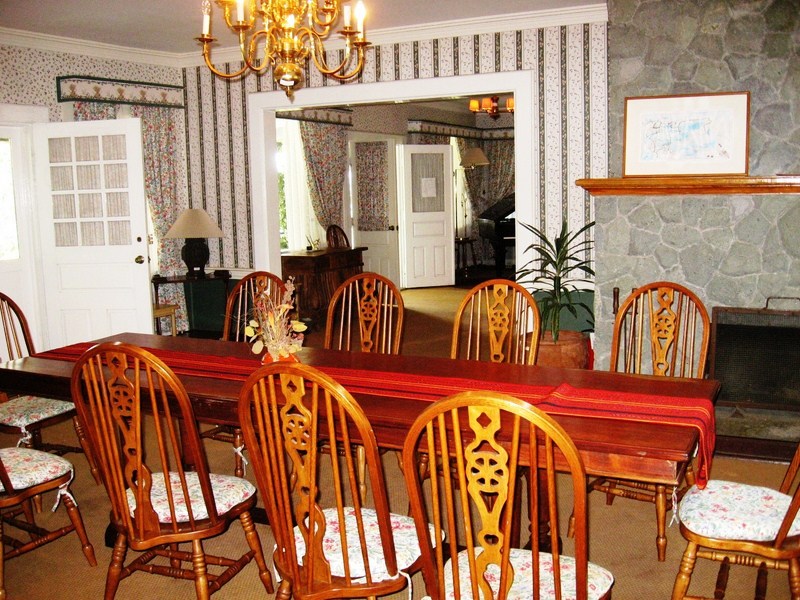
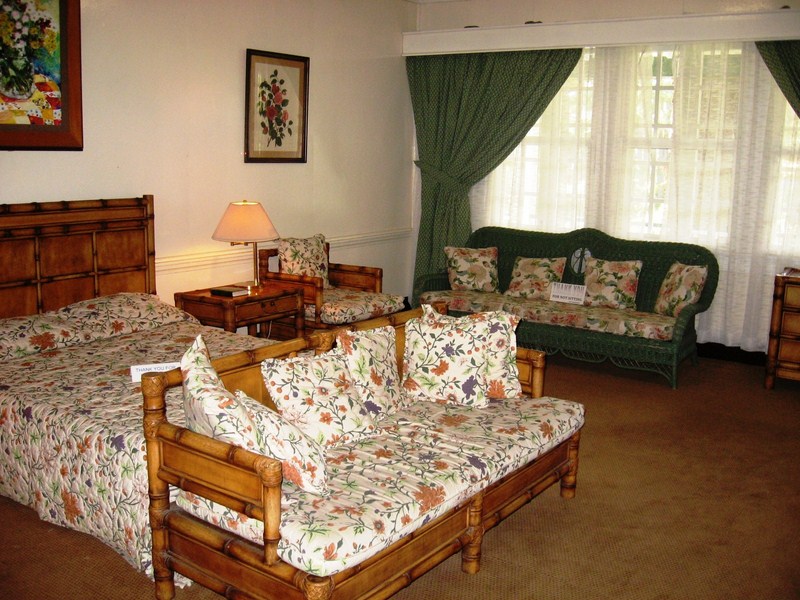
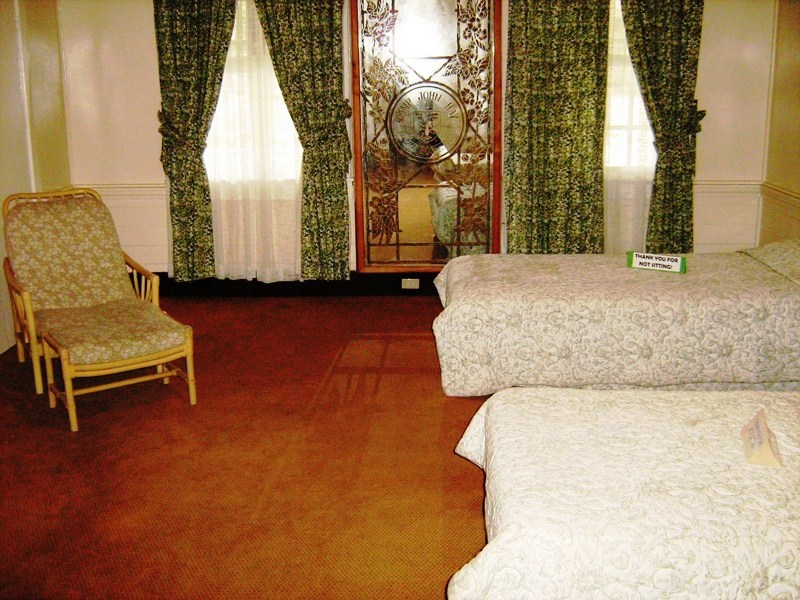
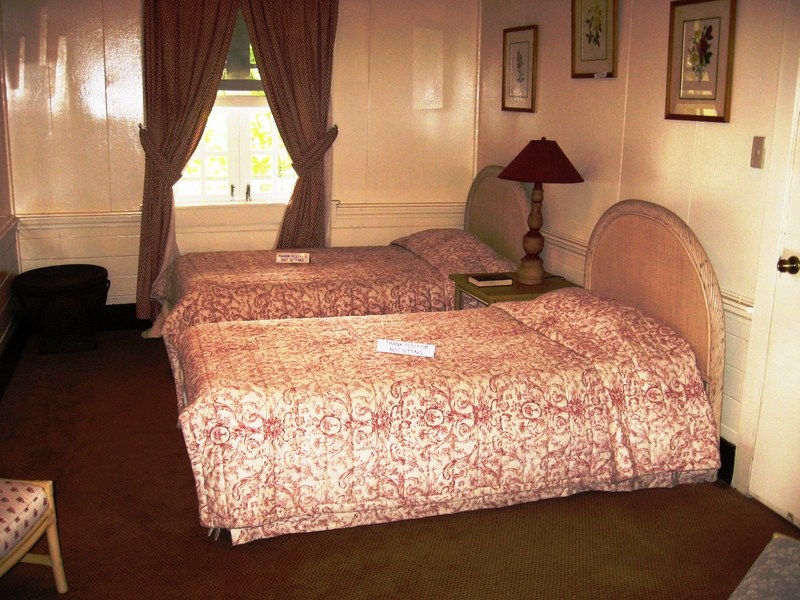
Part of the Camp John Hay Historical Core, today this one-storey houses is the repository of artifacts and other indoor exhibits. Its interiors, consisting of 3 spacious bedrooms, a living room, dining room and kitchen, are tastefully decorated with period furniture showcasing the traditional American country style typical of old American homes. Each room has its own fireplace.

Dining Room

Master Bedroom

At the entrance are twin brass seals that used to adorn Camp John Hay’s main gate. The living room, complete with a  grand piano, displays a portrait of John Milton Hay (after whom the camp was named). Various images on the walls narrate Camp John Hay’s history.  A library can also be found at right side of the house.

Bedroom 1

Bedroom 2

The front porch has a scaled model of Camp John Hay. Here, one can look down into the Bell Amphitheater.   Along with the amphitheater, the house is now declared as a historic landmark.

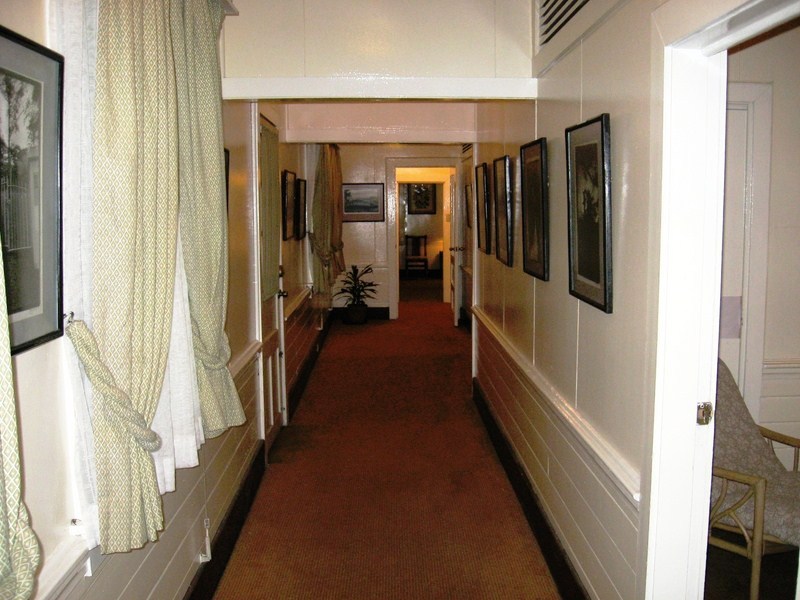
Hallway

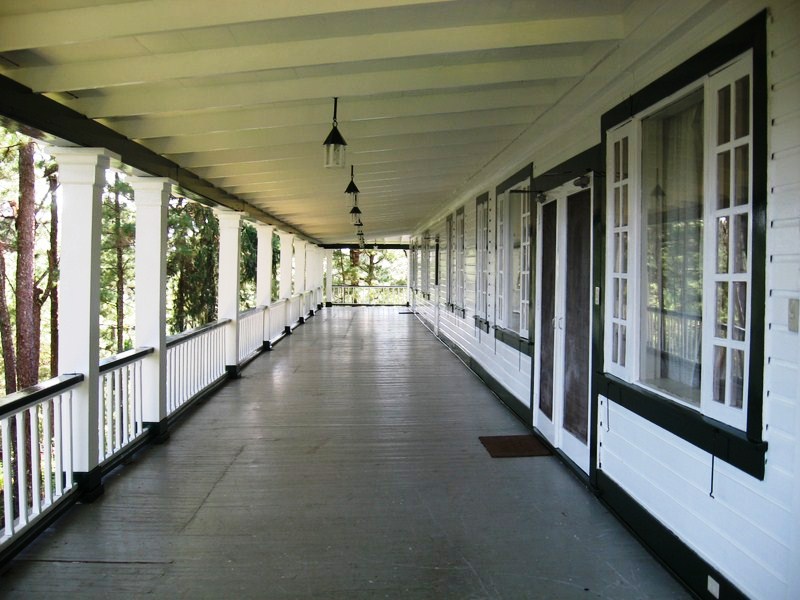
Front Porch

Camp John Hay Museum: Camp John Hay, Baguio City, Benguet. Admission (for Historical Core): PhP60 (standard), PhP40 (Baguio residents) and PhP30 (senior citizens/students). Open daily, 9 AM – 5 PM.  Visitors are not allowed to sit on the furniture, smoke or take food inside. Tel: (074) 444-8981. (Camp John Hay Management Corp. Office)

How to Get There: The best way to get there is via a taxi from Baguio CBD/Session Road.  Jeepneys are not allowed to enter.

Nayong Pilipino sa Clark Expo (Pampanga)

Nayong Pilipino sa Clark

During a lull in the Flavors of Spain Foodfest held at Hotel Vida, Grace, Norma, Ethel, Mitch and I boarded a van and visited the Nayong Pilipino sa Clark Expo at Clark.  Formally opened on November 30, 2007 after a PhP40 million rehabilitation, Nayong Pilipino sits on a 3.5-hectare portion of the Clark Expo, formerly Expo Pilipino.  This historical and cultural theme park, transferred here from its original site in Pasay City, is divided into two areas: the pre-colonial division and the colonial division. The pre-colonial division proudly shows the culture of the ethnic tribes of the northern Philippines long before the Spanish occupation through exhibits, native cottages and demonstrations that are accurately designed.  

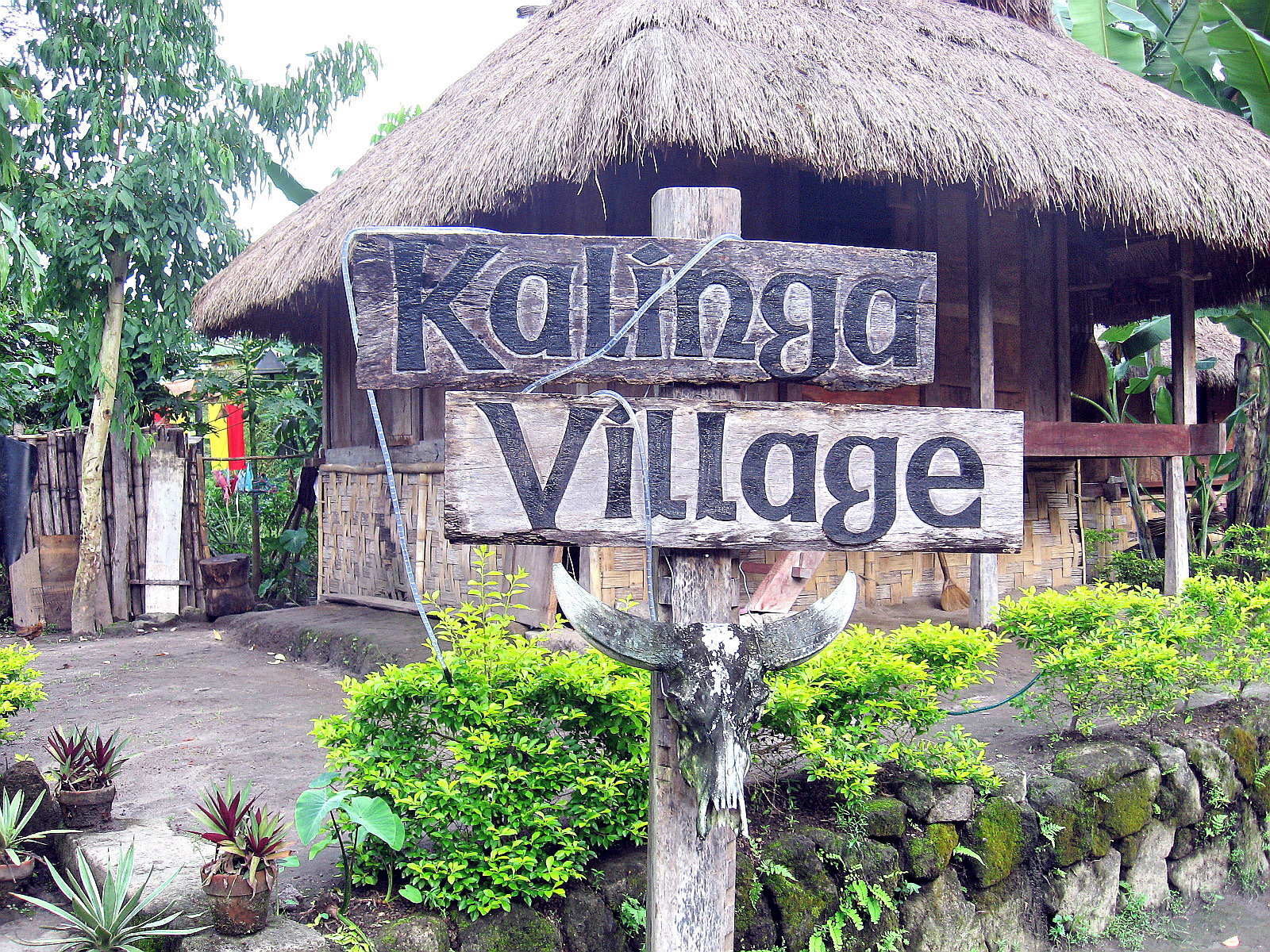
Kalinga Village

Its outdoor museum features the Ifugao Village (features typical Ifugao houses called ulog, under which is an Ifugao woodcarver carving various wooden artifacts for souvenirs), the Kalinga Village, the Aeta Village and the Muslim Village (features the Torrogan House). Adjacent to the Torrogan House is a replica of Tabon Caves.  The Labuad Village is where ethnic Kapampangan handicraft and artwork are on sale. There are also replicas of the Banaue Rice Terraces and Mayon Volcano. 

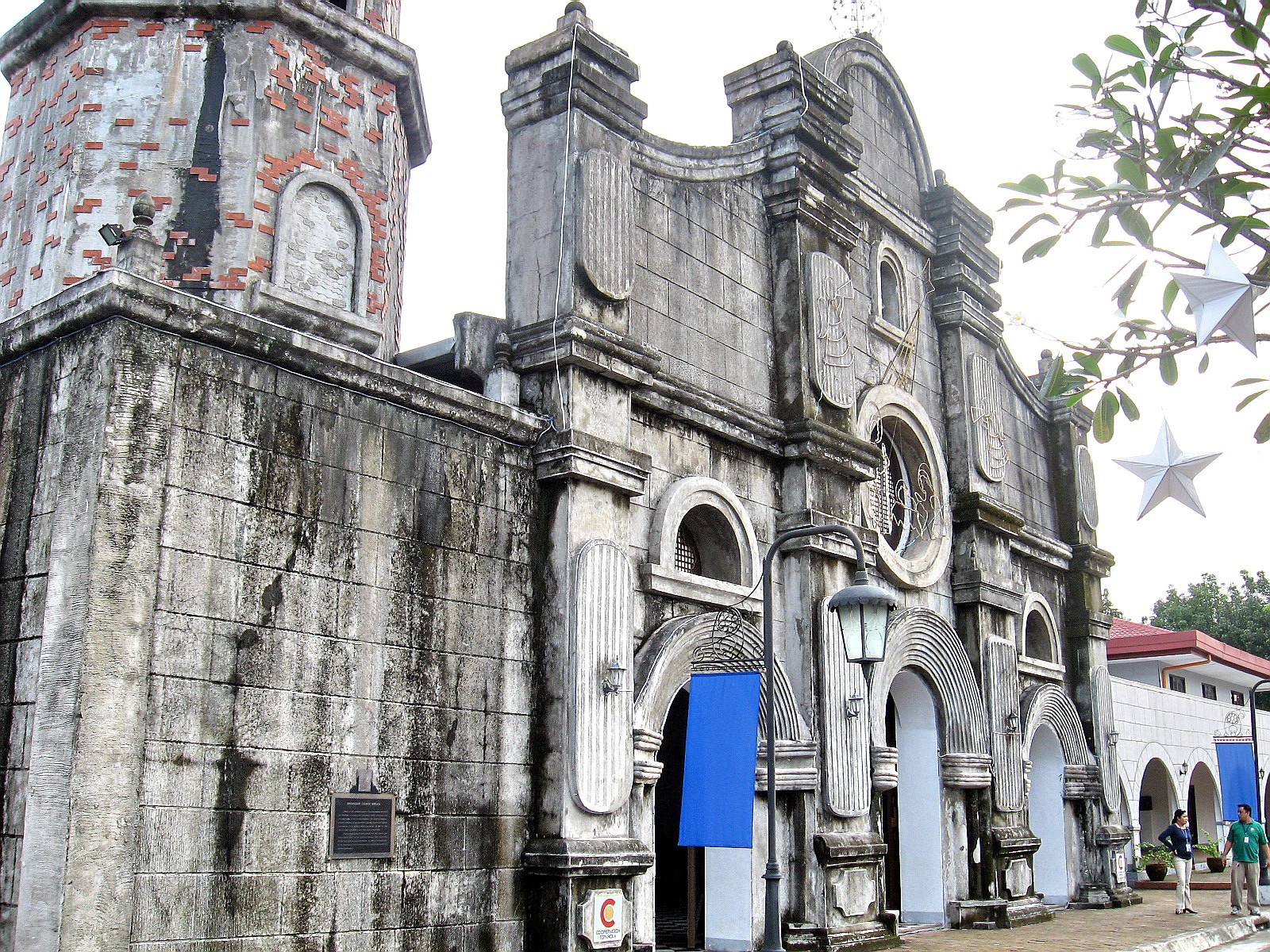
Replica of Barasoain Church

The colonial division, on the other hand, displays the Spanish regime on the archipelago through replicas of Spanish-style houses and other edifices. It includes the far from faithful replicas of Malolos’ Barasoain Church (a mass is held here every Sunday, 10 AM)  as well as the ancestral houses of National Hero Dr. Jose Rizal, Pres. Emilio Aguinaldo and Apolinario Mabini (a museum for Kapampangan artifacts).  The Colonial Plaza, fronting the church, has a 3-tiered fountain. The Hero’s Plaza has a statue of a bolo and KKK flag-wielding Andres Bonifacio.  

The Jose Rizal House

Interspersed between the two areas are clean open spaces.  Guests can go boating and fishing at the Lagoon.  The Spanish Culture & Religion Museum and the Philippine Museum are 2 separate structures that look like fortresses.  Also within the grounds are a 1,000 seat outdoor amphitheater used for social gatherings, theater plays and cultural presentations. 

Nayong Pilipino sa Clark Expo: Clark Expo, ClarkField, Pampanga.  Tel: (045) 436-1718 and (045) 599-2813. E-mail: nayon_saclark@yahoo.com.  Website: www.nayonsaclark.com. Admission: PhP30 (adults) and PhP20 (children). Open 8 AM-6 PM.

Yuchengco Museum (Makati City)

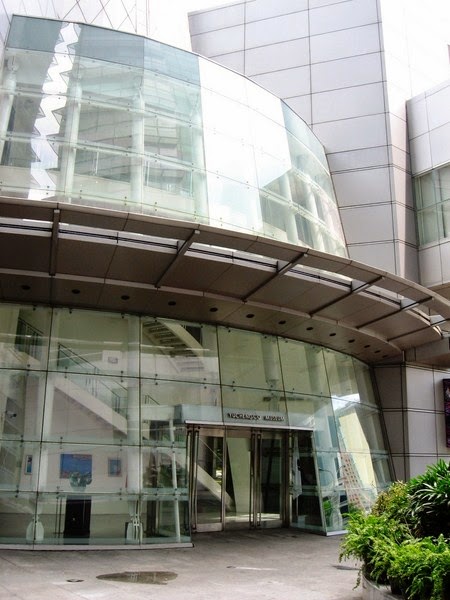
Yuchengco Museum

Yuchengco Museum

This visual arts museum, opened in September 2005, houses the art collection of Ambassador Alfonso T. Yuchengco, highlighting his distinguished career as a businessman, diplomat, collector, philanthropist, patron of the arts and advocate for education in the Philippines and beyond.

image-06-copy

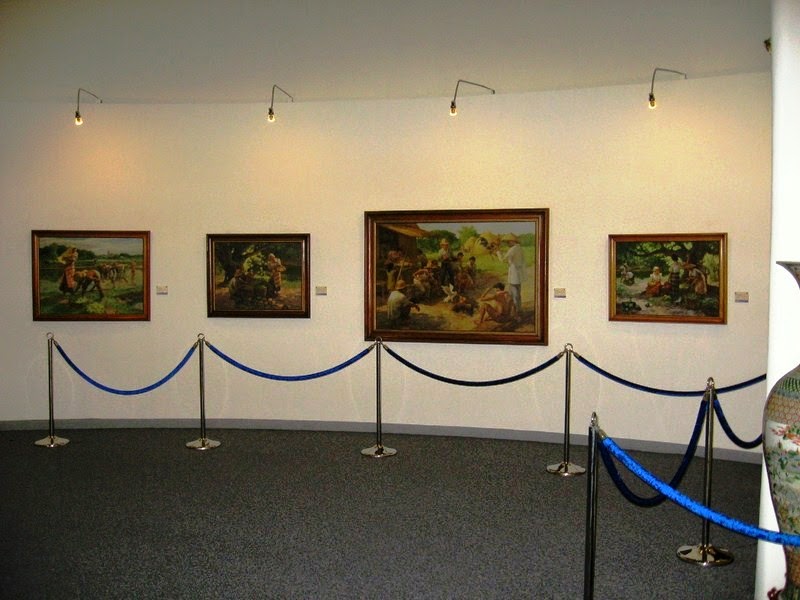
This museum, as an exhibition venue, aims to be a cultural bridge to the regional Asian and Pacific Rim communities. The museum also aims to bring out the excellent artistic and creative expressions of the Chinese Filipinos as well as look at the best attributes of the twin-heritage, namely the Chinese’s hardworking skills and craftsmanship and the Filipinos’ highly expressive and adaptive sensibility.

image-02-copy

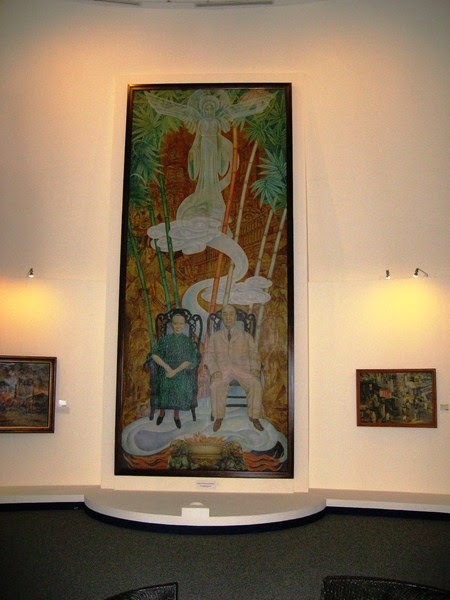
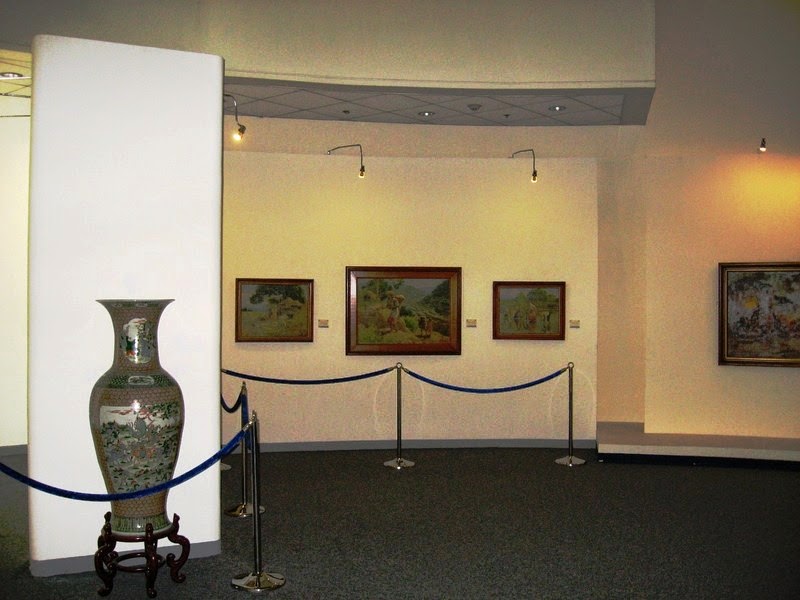
Its Masters Gallery highlights three of the most celebrated Filipino visual artists: Fernando AmorsoloCarlos Francisco and Juan Luna.   Also part of the Museum’s permanent collection are key art pieces from the Yuchengco Group of Companies executive offices consisting of works by Filipino Modernists such as Anita Magsaysay Ho and by National Artists such as Napoleon AbuevaVictorio EdadesJose JoyaAng Kiukok,  Cesar LegaspiVicente Manansala, etc. The YGC Collection also has a sizeable number of works in the folk genre by Angelito AntonioManuel Baldemor, and Norma Belleza, and prints by Boy Rodriguez and Manuel Rodriguez Sr..  Some thematic exhibitions periodically presented in the museum feature these pieces.

image-07-copy

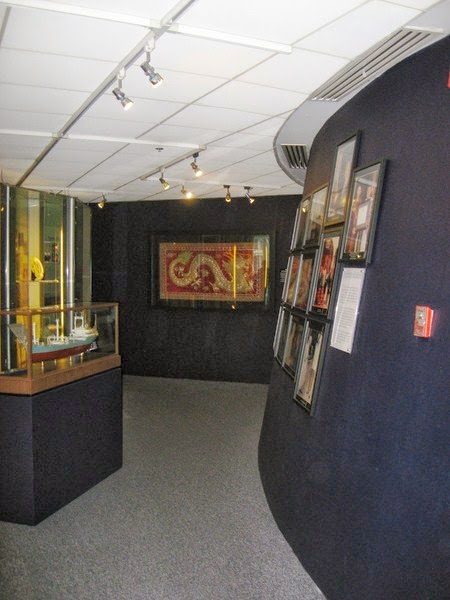
To promote better understanding of art and heritage, collections and creative industries, the museum regularly holds educational and extension programs (Young Curators Program; volunteer and internship programs; etc.) that link various sectors and audiences.  Art workshops on Chinese traditional painting on Shui-Mo or “ink and water” as well as calligraphy are also conducted regularly.

image-08-copy

Yuchengco Museum: RCBC Plaza, cor. of Ayala and Sen. Gil Puyat Ave., Makati City, Metro Manila. Open Mondays to Saturdays, 10 AM to 6 PM.  Admission: PhP100 for adults, PhP50 for students 15 years and below (with valid ID, PhP25 for accompanied children and senior citizens and free for YGC employees (with ID) and UNESCO-ICOM and media pass holders.  Group tours for children below 15 years old must be accompanied by adults and apply for special permission.  The museum also has education and extension programs that link various sectors and audiences and promote better understanding of art and heritage, corporate collections, and the creative industries.  Curator: Ms. Jeannie Javelosa.  Tel: (632) 889-1234.  Fax: (632) 887-5144.  E-mail: info@yuchengcomuseum.org. 
Website: www.yuchengcomuseum.org.


This museum, as an exhibition venue, aims to be a cultural bridge to the regional Asian and Pacific Rim communities. The museum also aims to bring out the excellent artistic and creative expressions of the Chinese Filipinos as well as look at the best attributes of the twin-heritage, namely the Chinese’s hardworking skills and craftsmanship and the Filipinos’ highly expressive and adaptive sensibility. 

Its Masters Gallery highlights three of the most celebrated Filipino visual artists: Fernando AmorsoloCarlos Francisco and Juan Luna  Also part of the Museum’s permanent collection are key art pieces from the Yuchengco Group of Companies executive offices consisting of works by Filipino Modernists such as Anita Magsaysay Ho and by National Artists such as Napoleon AbuevaVictorio EdadesJose Joya, Ang Kiukok,  Cesar Legaspi, Vicente Manansala, etc. The YGC Collection also has a sizeable number of works in the folk genre by Angelito AntonioManuel Baldemor, and Norma Belleza, and prints by Boy Rodriguez and Manuel Rodriguez Sr..  Some thematic exhibitions periodically presented in the museum feature these pieces.

To promote better understanding of art and heritage, collections and creative industries, the museum regularly holds educational and extension programs (Young Curators Program; volunteer and internship programs; etc.) that link various sectors and audiences.  Art workshops on Chinese traditional painting on Shui-Mo or “ink and water” as well as calligraphy are also conducted regularly.

Yuchengco Museum: RCBC Plaza, cor. of Ayala and Sen. Gil Puyat Ave., Makati City, Metro Manila. Open Mondays to Saturdays, 10 AM to 6 PM.  Admission: PhP100 for adults, PhP50 for students 15 years and below (with valid ID, PhP25 for accompanied children and senior citizens and free for YGC employees (with ID) and UNESCO-ICOM and media pass holders.  Group tours for children below 15 years old must be accompanied by adults and apply for special permission.  The museum also has education and extension programs that link various sectors and audiences and promote better understanding of art and heritage, corporate collections, and the creative industries.  Curator: Ms. Jeannie Javelosa.  Tel: (632) 889-1234.  Fax: (632) 887-5144.  E-mail: info@yuchengcomuseum.org
Website: www.yuchengcomuseum.org.

Casa Manila (Intramuros, Manila)

Casa Manila

From San Agustin Church, we again boarded our calesa and made a stopover at the 3-storey, colonial lifestyle Casa Manila. This museum, built in 1981, is a faithful, beautifully-done reproduction of a typical mid-19th century Spanish bahay na bato residence of Binondo merchant Don Severino Mendoza that once stood along Calle de Jaboneros in San Nicolas, Binondo.

The courtyard

It has a façade of balconies and a overhanging wooden gallery, a beautiful inner courtyard and antique Philippine, Oriental and European furniture and furnishings. Designed by Arch. Jose Ramon Faustmann with interiors by Martin I. Tinio, Jr., it is a window to the opulent 19th century lifestyle of the gentry.

The courtyard fountain

Though the house is just a reproduction, its exhibits aren’t.  No photography was allowed inside.  On display are antique 17th to the early 20th century jewelry, finely-crafted local, Chinese and European furniture and other items from the Intramuros Administration’s collection.  

L-R, Miguel, Mark, Matthew, Vicky and Francis

Casa Manila: Plaza San Luis Complex, Gen. Luna cor. Real St., Intramuros, Manila.  Tel: (632) 527-4084. Open Tuesdays to Sundays, 9 AM to 6 PM.  Admission: Php50 for children, students with valid ID and faculty members; and PhP75 for adults.

Clock Tower, Hong Kong Cultural Center, Hong Kong Museum of Art and Hong Kong Space Museum (Hong Kong)

From Kowloon Park, Jandy, Cheska and I walked along Canton Road until we reached the red brick and granite, 45-m. high Former Kowloon-Canton Railway Clock Tower, located near Victoria Harbor at the foot of Salisbury Road.  Topped by a 7-m. high lightning rod, it is the only remnant of the original site of the former Kowloon Station on the Kowloon-Canton Railway. Built in 1915, it marks the start of the scenic Waterfront Promenade and remains as a photogenic monument to Tsim Sha Tsui’s rail heritage. The tower can be reached by a wooden staircase located within. Another landmark, the Tsim Sha Tsui Ferry Pier, is located nearby.

Clock Tower

The Clock Tower reused the clock from the now demolished Pedder Street Clock Tower. However, only one side had a clock, and it was not until 1920 that the remaining three sides of the Clock Tower were installed. They began operation in the afternoon of March 22, 1921, and have run ever since except during the Japanese occupation of Hong Kong during World War II.  In 1975, the Kowloon Station was moved to the present-day Hung Hom Station, on the newly reclaimed Hung Hom Bay. The old building of the station was demolished in 1977 but the Clock Tower was preserved. Since July 13, 1990, the tower has been listed as a declared monument in Hong Kong.

Hong Kong Cultural Center

Today, the site of the historic railway station is now occupied by the multipurpose Hong Kong Cultural Center, its curving roof and futuristic features creating an unusual background to the Clock Tower. Home to the Hong Kong Philharmonic Orchestra, the center has an oval, 2-tiered 2,019-seat Concert Hall with adjustable acoustic canopy and curtains and finished with high-quality oak.  It also houses an 8,000-pipe pipe organ (Asia’s largest, built by the Austrian firm Rieger Orgelbau), a 1,734-seat, 3-tiered Grand Theater for large scale opera, ballet and musicals,  a 300-496-seat Studio Theater for smaller-scale theater and performance works, an  Exhibition Gallery, 4 foyer exhibition areas and 11 rehearsal and practice rooms.

Hong Kong Museum of Art

Flanking the Hong Kong Cultural Center are the Hong Kong Space Museum and the Hong Kong Museum of Art.  The Hong Kong Museum of Art, a museum for Chinese cultural heritage, and local and international art in Hong Kong, houses 14,000 art objects, mainly Chinese paintings of historical significance, sculpture and calligraphy works and antique Chinese treasures.  The museum also presents a great variety of thematic exhibitions drawn from local and overseas sources. It was first established in the City Hall in 1962 and moved to the present premises in 1991.

Hong Kong Space Museum

The 80,000-sq. m., dome-shaped Hong Kong Space Museum, built in 1980, has 3 sections: the Hall of Space Science, the Hall of Astronomy, and one of the world’s largest and most technical planetariums, the Space Theater, where thrilling wide-screen Omnimax and Skyshows are presented.

How to Get There: From MTR Tsim Sha Tsui Station Exit E, walk towards Salisbury Road, turn right, take pedestrian next to YMCA to Hong Kong Cultural Centre. Then turn right and walk straight ahead towards the waterfront.  Take Star Ferry from Central or Wan Chai and follow the signs. The Clock Tower is located next to the Tsim Sha Tsui Star Ferry Pier.

Marinduque National Museum Branch (Boac, Marinduque)

Marinduque National Museum Branch

We next proceeded to Boac Park, the execution site of Filipino revolutionaries and the surrender site of Col. Maximo Abad and his 300 Filipino soldiers during the Philippine-American War.  Within the park grounds is the Marinduque National Museum branch.  Housed in an old, historic building built in 1887, it was formerly used as a boy’s school, jailhouse, a library and the Municipal Trial Court Building. The museum, opened on February 22, 1995, showcases the province’s cultural and social heritage.

Cheska and Jandy at the museum’s staircase.

Luckily for us, the museum was open in spite of today being Holy Thursday.  Its displays include artifacts found in caves, shells, vintage photos, antiques, Moriones masks, costumes and pieces retrieved from galleons still buried under the waters between Pingan and Melchor Island.

Marinduque National Museum Branch: Boac Park, Poblacion, Boac, Marinduque. Open Mondays to Fridays.  Admission is free.

Aguinaldo Shrine (Kawit, Cavite)

After bringing my son Jandy to school, I decided, on a whim, to do some sightseeing outside Metro Manila, motoring all the way, via the Cavite Coastal Rd., to Kawit in Cavite where I plan to visit the Aguinaldo Shrine, the birthplace of Philippine Independence.  Upon arrival at the shrine, I met up with Mr. Alvin Alcid, the shrine curator, who toured me around the mansion.

Aguinaldo Shrine

The stately, 6-storey (including a mezzanine) Aguinaldo’s house started out in 1845 as a wood and nipa thatch structure before being rebuilt in 1849 as a bahay na bato with a stonewalled ground floor and a wooden second floor with banks of capiz windows.  Emilio Aguinaldo was born (according to his mother) here on March 22, 1869 (March 26 according to his partida de baptismo or parish records).

The Independence Balcony

The mansion underwent another facelift from 1919 to 1921.  To commemorate the “original” Independence Day (albeit on a personal basis), Aguinaldo added the elaborate, cannon-capped “Independence Balcony” to replace the bank of capiz windows at the living room. The Philippine sun, stars and foliate patterns decorate its eaves.  The balcony is now used during June 12 Independence Day celebrations.

The watchtower

Before his death on February 6, 1964, at the venerable age of 94 (our oldest president), Aguinaldo, in a fitting, final gesture, turned over his home and a portion of the gardens to the government on June 12, 1963 to “perpetuate the spirit of the Philippine Revolution of 1896.”   Four months later, on June 18, 1964, the mansion was declared a National Shrine and a National Treasure, by virtue of Republic Act No. 4039, and placed under the management of the National Historical Institute (now National Historical Commission of the Philippines).

Aguinaldo’s bedroom

The architecturally-inclined former president also added a family wing of children’s bedrooms; a gabled, 3-storey, spired watchtower (Aguinaldo’s favorite spot for viewing, on a clear day, the skyline of Manila) on top of the mansion (designed to match a 200-year old tamarind tree, since felled by lightning), and below it, a bedroom called the Tower Suite, his favorite retreat in his later years.

Today, the entire house uniquely blends Rococo, Baroque and Gothic architectural styles characteristic of the Spanish and American colonial period.  The entire ground floor, formerly the zaguan or grain storage area, was converted into a revolutionary-theme museum.  On exhibit are Aguinaldo’s personal memorabilia and uniforms, dioramas of the Battle of Zapote River, the Battle of Binakayan and Aguinaldo’s oath-taking as president, an exhibit of prominent Cavite revolutionary heroes, historical relics and weapons.    There is also a chess set and a bowling alley.

Aguinaldo had a very inventive and secretive mind. The antique, mostly Philippine hardwood furniture done by skilled native woodcarvers, some designed by the general himself, includes an armoire, inlaid ivory love seats, four-poster beds, China cabinets and Vienna rocking chairs.  Some chairs and cabinets have secret compartments to hide important documents or even weapons.  Ingenious sliding wall panels, along the narrow stairways to the upper rooms and in the bedrooms, are used as secret storage areas large enough for two people to hide.

The Dining Room

There are also camouflaged secret passages made just for the general.  The one leading to his second floor bedroom is concealed by a wall of shelves at the main stair landing.   Below the ground is a stone air raid shelter concealed under the kitchen’s wooden dining table top.

The decorated dining room ceiling

On the second floor are the general’s bedroom, the grand hall, conference room, dining room and kitchen and the azotea.  The rectangular grand hall is a visual showcase of Aguinaldo’s nationalistic fervor.  On the walls and pillars are recurring flag patterns done in polished wooden mosaic. The floor, a waxed-and-polished jigsaw puzzle of flags, is a mosaic of wooden trapezoids.  The decorated ceiling, which commemorates the events of August 30, 1896 (the start of the revolution), features Inang Pilipinas (Mother Philippines), an eight-rayed sun representing the first 8 provinces to rise in revolt, and the furled flags and dove of the pre-World War II League of Nations (symbolic of Aguinaldo’s aspiration for Philippine recognition in the League of Nations).

Corridor leading to children’s bedrooms

At the end of the hall are the historic windows and the added “Independence Balcony.”  The dining room ceiling is a gallery of soaring symbols featuring a bas-relief map of the country with Cavite (site of his glorious victories) painted red to symbolize war.   Overlooking the grand hall, like an alcove or balcony, is the mezzanine library.   A corridor leads to the mansion’s eastern wing where Aguinaldo’s daughters used to live with their families.

Children’s bedrooms

Another flight of stairs lead me to the Ambassador’s Room, the former study of Ambassador Jose Melencio, Aguinaldo’s son-in-law.  Above it, through a narrow stairway, is Aguinaldo’s Tower Suite.  In it are a brass bed and a large roll-top escritorio.  To reach the spired tower, the general’s favorite retreat, I had to climb a foot-wide, almost ladder-like stair.  Here, I had a bird’s eye view of the town and Aguinaldo Park (Liwasang Emilio Aguinaldo).

Check out “Liwasang Emilio Aguinaldo

Aguinaldo Park
View of town from Tower Suite

At the garden behind the house is Aguinaldo’s marble tomb, facing the river whose waters often served as a secret escape route.

Aguinaldo’s marble tomb
Aguinaldo Shrine: E. Aguinaldo Highway, Kawit, Cavite. Open Tuesdays to Sundays, 8 AM-4 PM.

Jose P. Laurel Museum and Memorial Library (Tanauan City, Batangas)

From the Cathedral of St. John the Evangelist, Jandy and I moved on to the nearby Jose P. Laurel Museum and Library, the home of Jose P. Laurel, the president of the Japanese-sponsored Second Philippine Republic (October 14, 1943-August 17, 1945).  Laurel was born here on March 9, 1891.  The Laurels, being a prominent family, built their residence just walking distance from the cathedral and town hall and 100 m.  from the national road. 

Jose P. Laurel Museum and Memorial Library

Built in 1880, this ancestral house was restored by Jose P. Laurel’s son Mariano and daughter-in-law Alicia on March 9, 1964 and was donated to the national government to serve as a public library.  It also houses Jose P. Laurel’s memorabilia.  The 2-storey house has a ground floor of stone and an upper level of wood with wooden posts, sliding capiz windows and a floor of brightly polished wooden planks. 

The dining room
The living room
Laurel’s office

It was a holiday (Labor Day) during the time of our visit but the caretaker gladly allowed us free rein to tour the areas of the house – the living room (with its prominent bust of Laurel), dining room (with its 8-seater dining table and mounted photo of Laurel delivering a speech) and Laurel’s bedroom (with its antique 4-poster bed) and office (with Laurel’s desk and chair).    Beside an oil painting of Laurel is a wooden harp.  Outside the house is an antique church bell.

Laurel’s bedroom
A wooden harp
The old church bell

Jose P. Laurel Museum and Memorial Library: A. Mabini Ave, Poblacion, Tanauan City, Batangas. Open daily, 8 AM-5 PM.

Silliman University (Dumaguete City, Negros Oriental)

A big portion of Dumaguete City’s progress was said to have been due to the presence of the Protestant-run Silliman University, founded as the Silliman Institute (an elementary school) by American Presbyterian missionary Dr. David Sutherland Hibbard and his wife Laura, through a grant, on August 28, 1901, by Dr. Horace Brinsmade Silliman.  It was later converted into a college in 1910 and into a university on March 1938.  This 61-hectare university, with its 13 colleges and schools, is the first university outside Manila and is also the first and only Protestant university in the Philippines.  It is dotted with many old and shady acacia trees.

Silliman University campus

The university is another showcase of American-era architecture.   Silliman Hall, built along Silliman Ave. in the Southern U.S. architectural style, is the oldest building within the campus.  It was inaugurated on 30 November 1903 and was restored in 2000.  The iron posts supporting the metal ceiling of the south wing was salvaged out of construction materials from a New York theater.  The S. U. Ethnographic Museum, at the building’s second floor, houses an extensive collection of artifacts and archaeological findings, 2,000-year old Sung and Ming porcelain, voodoo paraphernalia from Siquijor and rare shells such as Glory of the Sea (Conus gloriamaris).

Silliman Hall

Other old buildings within the campus include Guy Hall (completed in 1918), Oriental Hall (built in 1921), Channon Hall (built in 1923) and the Schiede Chapel, the former Mission Hospital Chapel (built in 1937).  Hibbard Hall, started in 1930 and completed in 1949, was the former library building (since 1932).  Built on a more modern note is the 900-person Henry Luce Auditorium, named after Claire Isabel McGill Luce, the founder and publisher of Time-Life magazines.  It was built at a cost of PhP5 million from January 2, 1973 to October 6, 1974.  The Chapel of the Evangel, along Hibbard Ave., was completed in 1957 and was designed by world-famous Chinese-American architect I.M. Pei.  The S.U. Main Library and Media Center, built at a cost of US$ 1.275 million through a grant from USAID and inaugurated in 1979, is reputed to have the biggest collection (more than 100,000 volumes) of books and publications in Asia.  The 188-bed S.U. Medical Center Hospital, along Aldecoa Drive, was built at a cost of PhP5.5 million and was inaugurated on 28 August 1976.

Silliman University: Real St., Dumaguete City, Negros Oriental.