Kennon Road (Tuba, Benguet)

Bernard, Rodel, Jandy and i all woke up very early in the morning as we had to make it back to Manila by lunch time as Jandy had an afternoon class at Asia Pacific College.  Previously, I entered Baguio City via the longer Palispis-Aspiras Highway (formerly Marcos Highway).  This time, to cut travel time and distance (43 kms.), I plan to return via the traditional Kennon Road route.  Besides, it is also the most exciting and scenic route.  Starting from Rosario, Pangasinan, this winding 38-km. zigzag road, though narrower than the Marcos Highway, is used by light vehicles only, leaving out the wider buses and slower cargo trucks.  

Jandy and Rodel at the Lion’s Head

Started in 1903 by American Col. Leighton W.V. Kennon with 125 imported Japanese laborers, its labor force was increased to 2,000 by the time of its opening on January 29, 1905. Built at a cost of US$2,051,562.80, it was the most expensive road in the world at that time.  Points of interest along the way are named after spots in California’s Yosemite Valley in the American West.  The upward climb reveals picturesque heights, lush greenery and two roughly-hewn, pre-World War II mountainside tunnels (one of which has a stream running through it) meant to accommodate a locomotive and pave the way for those narrow-gauge railroad runs from Baguio City to Damortis but never used.  Best viewed near the Kennon Police Checkpoint, this road is frequently hit by landslides during the heavy monsoon rains. 

Bridal Veil Natural Falls

On a hairpin bend above the steep-sided Bued Rier gorge, at Camp 6, a few kms. from the Kennon Rd. view deck, we made a stopover at the 40-ft. high Lion Head.   Built from 1971 to 1972, it was carved from a limestone boulder by a Cordillera artist hired by the Lions Club to create a symbol that would proclaim the presence of the group in Baguio City. Beside it are a few small stalls selling woodcarving and other native handicraft. It was during the term of Baguio Mayor Luis Lardizabal, who was also Lions Club governor in 1969 to 1970, when the club conceptualized the creation of the lion head.  Actual work started in 1971 and took a year before it was unveiled to the public by Lions Club International in 1972. The club tapped donations from Lion members and businessmen in the city and pooled proceeds from a state convention to fund the construction of the lion head.

Further down the Kennon Road, past Camp 3,  about 36 kms. from Baguio City, we espied Bridal Veil Natural Falls.  So called because of its silvery braids of water, it cascades down its steep, rocky slope to a 10-ft. deep natural pool.  

Bridal Veil Natural Falls: Brgy. Tabaan Sur, Tuba, Benguet

Bell Church (La Trinidad, Benguet)

From the strawberry farms, Bernard, Rodel, Jandy and I proceeded to the Bell Church.  Right before the Welcome Arch of La Trinidad, we espied, on a hillside, a cluster of ornate Chinese-style temples and pagodas.  On the right, we entered a large arch with 2 dragons facing each other, then traversed a narrow alley leading up to the temple.  Once inside, we parked the Revo at a spacious parking lot alongside a terraced wall filled with Chinese prints.

Bell Church
The terraced wall filled with Chinese prints

Built by the early Chinese settlers in Baguio and Benguet, this temple is run by the Bell Church Inc. that believes in a amalgam of Buddhist, Taoist, Confusian and Christian doctrines.  The church, guarded by fu dogs, has ornate gateways topped by ephemeral dragons, a towering pagoda with curliqued roofing, windows guarded by stone Buddhas and bells.

Rodel and Jandy posing beside a Chinese deity

Posing beside a fu dog

Bell Church: Km. 3, Brgy. Balili, La Trinidad, Benguet. Open 6 AM-5 PM.

How to Get There: Take a jeepney at the corner of Magsaysay Ave. and Bonifacio St. in Baguio City. 

Camp John Hay – Historical Core (Baguio City, Benguet)

After lunch at the Philippine Military Academy (PMA) cafeteria, Jandy and I again boarded our Toyota Revo and proceeded to Camp John Hay. This attractive, quiet place, with views of the surrounding hills, always offers an abundance of rest and recreation activities such as hikes along a 1.8-km. eco-trail; biking, horseback riding and kiddie rides at Scout Hill; camping, an educational tour of the Butterfly Sanctuary; and golf at its 5,330-yard, 18-hole, par-68 golf course, one of the best in the country.

Club John Hay Golf Course

The Camp John Hay Mile-Hi Center, a former recreation center of the Americans, offers local and exported crafts and garments.  Within the CJH Commercial Mall, located at the former Administration Bldg., is the John Hay Commissary (a duty-free shop), Strumms, Dencio’s Bar and Grill, Side Bar and Nike Stadium, plus a billiards hall, business center and an internet cafe.  There’s also the Camp John Hay Manor and the Camp John Hay Suites, nice places to stay within the camp.

John Hay Manor

A 3-hectare slice of nostalgia within the camp, called the Historical Core, my favorite spot then and now, has been set aside to preserve the camp’s timelessness and allure.  Deemed inviolate to the whims and winds of change, this living museum was envisioned as more than just a window on time.  It consists of the Bell Amphitheater, the History Trail, Honeymoon Lodge, Our Secret Garden, the Cemetery of Negativism and Bell House.

Cemetery of Negativism

Near the entrance is the Cemetery of Negativism, built during the term of camp commander Maj. John Hightower (1979-1982).  A glimpse into the homespun American philosophy of living, here we strolled among the tombstones where bad habits and the scourge of productivity are buried, its touch of whimsy doing little to negate the truth of its message.  Among them are the inept Kant du Nutin Wright, the defeatist Ben Trid Bfor and the notorious General Neg A. Tivism (whose epitaph reads “Died of positive reaction to enthusiasm”).

Bell House (Camp John Hay Museum)

The Bell House, now the Camp John Hay Museum (opened on October 25, 2003), was named after U.S. Gen. J. Franklin Bell.  Initially built as the vacation home of the Commanding General, today it is the repository of artifacts and other indoor exhibits.

Bell Amphitheater

Personally designed by Gen. Bell who took inspiration from the Ifugao’s terracing technique, the amphitheater was once a venue for social and cultural gatherings known for its perfect acoustics.  Anything said under the gazebo at the center is amplified, audible from any point within the amphitheater.  Its rows of chairs have since been replaced and it is now a multi-level landscaped garden with rare flowers.  The amphitheater is now available for concerts, weddings and other special occasions.

The History Trail

The History Trail, designed to wind its way amidst pine trees, offers landscaped resting areas.  Our Secret Garden is planted to blooms that add a splash of color and scents. It also has a gazebo. The Honeymoon Cottage is rented out to newlyweds.

Philippine Military Academy – PMA Museum (Baguio City, Benguet)

From Melchor Hall, Jandy and I walked over to the nearby 2-storey building housing the PMA Museum.  Here, we sampled the PMA story as well as military history  through its display of old black and white photos, documents, newspaper clippings, paintings, weapons, memorabilia and other historical artifacts. 

The PMA Museum
The museum displays a typical cadet room (complete with double bunk bed, study tables, chairs and closets); a diorama of the Battle of Bulacan; the evolution military uniforms from 1908 to the present; old books; a painting of the Battle of Tirad Pass; class seals; photos of PMA superintendents; and weapons (rocket launcher, swords, rifles, spears, knives, etc.)
 
A typical Cadet Room
Battle of Bulacan diorama
Posing beside a circa 1908 uniform
Prominently displayed on the wall is a copy of the September 2, 1945 Japanese Instrument of Surrender, held on board the battleship USS Missouri in Tokyo Bay. Marking the end of World War II, it was signed by representatives of Japan, U.S., USSR, China, France, U.K., Australia, Canada, Netherlands and New Zealand.
 
Copy of Japanese Instrument of Surrender
Prominently displayed is a signboard of the Abdulrahman Bedis Memorial Military Academy, the largest camp of the Moro Islamic Liberation Front in Central Mindanao, located in Brgy. Tugaig, Barira, Maguindanao. It was captured in July 2000 by elements of the 7th Infantry Batallion (6th Infantry Division) under Lt.-Col Audie G. Delizo.
 
Signboard of Abdulraman Bedis Memorial Military Academy

The War and Weapons Gallery displays trophies of war, personal effects (sabers, helmets, boots, caps, belts, etc.) and other interesting artifacts belonging to PMA alumni, former cadets and other personalities.  

Personal effects of PMA alumni
Among the trophies of war displayed here is a short, wide and leaf-shaped, single-edged barong knife previously owned by Abu Sayaff commander Mujib Susukan.  It was seized on May 7, 2000 in Brgy. Bandang, Talipao, Sulu, by elements of Task Force Sultan (104th Brigade) of the 1st Infantry Division under then Col. Romeo P. Tolentino during its first encounter in the attempt to rescue 19 foreign hostages kidnapped in Sipadan, Sabah, Malaysia.
 
Mujib Susukan barong knife
The Alumni Gallery displays the names and class pictures of PMA alumni.    The museum also has a souvenir shop.
 
The Alumni Gallery
PMA Museum: Fort Del Pilar, Loakan Rd., Baguio City, Benguet.  Open daily, 8 AM-5 PM.  Admission: PhP10 (PhP5  for children and students). 
 

Philippine Military Academy – Relics Point (Baguio City, Benguet)

Our first stopover at the Philippine Military Academy was at Relics Point, a favorite for military hardware lovers including me.  Here, you can see and touch (and actually ride) the real McCoy as on display are actual U.S. and U.K-made armored tracked or wheeled vehicles and U.S., French, Dutch and Japanese-made howitzers and mortars.

Me beside an Armored Infantry Fighting Vehicle
The U.S.-made Armored Infantry Fighting Vehicle (AIFV) weighted 13,687 kgs. (30,175 lbs.), had a fuel tank capacity of 416 lieters ADF (diesel) and was armed with 25 mm. Oerlikon KBA B02 auto cannon as primary armament and a 7.62 mm. co-axial machine gun as secondary armament.
 
Landing Vehicle Tracked 4 (LVT)
The amphibious, U.S.-made Landing Vehicle Tracked 4 (LVT), used during World War II, was armed with a 7.62 mm. machine gun and can be loaded by a jeep or a 105 mm. howitzer.  It had a maximum speed of 32 kms./hr. on land and 12 kms./hr. on water.  Here in the country, it was used by the Philippine Marines.
 
V-150
The U.S.-made V-150 had a battle weight of 9,000 kgs. (24,000 lbs.), a ground clearance of 64.7 cms. (25.5 inches) and a fuel tank capacity of 300 liters ADF.  It was armed with a 50 cal. M2 heavy barrel machine gun as primary armament and a 7.62 mm. co-axial M240 machine gun as secondary armament.
 
Sherman M-4A1 Medium Tank
The U.S.-made Sherman M-4A1 Medium Tank, developed during the early part of World War II, was built in large numbers and was extensively deployed in the Pacific and European theater.
 
M-7 Self-Propelled Howitzer
The U.S.-made M-7 Self-Propelled Howitzer saw extensive service during World War II with the Allied forces, from the Battle of El Alamein onwards.  Nicknamed the “Priest,” its gun had a range of 11,160 m.
 
Simba Light Combat Vehicle
The U.K.-made Simba Light Combat Vehicle  had a battle CBT weight of between 9.9 to 11.2 tons, a hull ground clearance of 0.45 m. (1.5 ft.), an axle ground clearance of 0.33 m. and a fuel tank capacity of 296 liters ADF.  It was armed with one 50 cal. QCB machine gun.
 
Jandy trying out the 40 mm. Bofors
The Dutch-made 40 mm. Bofors was the most widely-used ant-aircraft gun of World War II.  Both Allied and Axis forces used license-built and captured guns of this type.
 
75 mm. Mountain Gun
The Japanese-made, pre-World War II (1934), Type 94 75 mm. mountain gun, light and for rugged use, was suitable for fighting in mountainous country.
 
12.2 mm. Light Field Howitzer
The French-made 12.2 mm. Light Field Howitzer, introduced in 1909, was used in World War II.  It had a maximum range of 7,500 m..
 
105 mm. L3A1 Melara Howitzer

The U.S.-made 105 mm. L3A1 Malara Howitzer, of Italian design, was adopted by the American in 1939 and used to ward off the Japanese in 1941.

105 mm. M101 A1 Howitzer

The U.S.-made 105 mm. M101 A1 Howitzer was one of the most successful guns ever produced.  Between 1940-1953, 10,202 were produced and supplied to 46 national armies.  Firing at a rate of 8 rounds per minute, it had a maximum range of 11,200 m..

105 mm. M2 Howitzer

The U.S.-made 105 mm. M2 Howitzer, an improved version of the M1 howitzer, had a lower caliber but with a higher degree of accuracy.  It was later replaced by M2A1 which improved its stabilizers.

105 mm. M3 Howitzer
The U.S.-made 105 mm. M3 Howitzer, a variant of the M2 howitzer, has a shorter barrel built for shorter ranges (9,500 m. maximum).  This artillery was used by the Americans during the Lingayen landing.
 
120 mm. M120 Mortar

The U.S.-made 120 mm. M120 mortar, the largest mortar in the U.S. arsenal, was used during World War II against the Japanese.  It had a maximum range of 7,240 m..  Although this was used to fire chemical ammunition, it was also used high-explosive (HE) rounds.

The Aircraft Park
Continuing on our way, we passed the Shaku, the PMA’s landmark feathered parade cap, and stopped again at Melchor Hall.  In front of the hall is an aircraft park, this time with a display of 3 aircraft – U.S.-made, Vietnam War vintage Bell UH-1H helicopter and a F-8H Crusader fighter and an Italian-made Aermachhi SF-260M (S1A1) Marchetti military trainer.  
 
Bell UH-1H Helicopter
The Bell UH-1H general purpose helicopter had a 1,400-HP AVCO turbo shaft engine, a maximum level cruising speed of 110 knots, a sea level rate of climb of 1,600 ft./min., a ceiling service of 12,600 ft. and a hovering ceiling OGE (of ground effect) of 13,600 ft.
 
F-8H Crusader Fighter

The F-8H Crusader fighter has variable incidence wings, all-weather radar autopilot, a sophisticated weapons delivery system and can be equipped with various weapons such as air-to-air missiles, rockets, 20 mm. cannons, M-60 machine guns and 500-lb. bombs.

SF-260 M (S1A1)

The 7.1 m. long Aermacchi SF-260 M(S1A1), a basic military trainer first used for flying training, was further modified to load 250-lb. bombs and MA-3 rocket launchers and deployed in combat operations to conduct close air support to ground operations.   It had a maximum level speed of 180 knots and had a range, with max fuel, of 890 nautical miles (1,630 kms./1,025 miles).

Fort Del Pilar: Loakan Rd., Baguio City, Benguet

Camp John Hay Museum (Baguio City, Benguet)

Camp Hohn Hay Museum

The Camp John Hay Museum, opened on October 25, 2003, was formerly the Bell House, named after U.S. Maj.-Gen. J. Franklin Bell, the commander of the Philippine Division in 1911 to 1914.

Bell transformed Camp John Hay from a small convalescent facility into a major military resort. Initially built as the vacation home of the Commanding General, it exemplifies American Colonial architecture and lifestyle.

Living Room

The grand piano

Part of the Camp John Hay Historical Core, today this one-storey houses is the repository of artifacts and other indoor exhibits. Its interiors, consisting of 3 spacious bedrooms, a living room, dining room and kitchen, are tastefully decorated with period furniture showcasing the traditional American country style typical of old American homes. Each room has its own fireplace.

Dining Room

Master Bedroom

At the entrance are twin brass seals that used to adorn Camp John Hay’s main gate. The living room, complete with a  grand piano, displays a portrait of John Milton Hay (after whom the camp was named). Various images on the walls narrate Camp John Hay’s history.  A library can also be found at right side of the house.

Bedroom 1

Bedroom 2

The front porch has a scaled model of Camp John Hay. Here, one can look down into the Bell Amphitheater.   Along with the amphitheater, the house is now declared as a historic landmark.

Hallway

Front Porch

Camp John Hay Museum: Camp John Hay, Baguio City, Benguet. Admission (for Historical Core): PhP60 (standard), PhP40 (Baguio residents) and PhP30 (senior citizens/students). Open daily, 9 AM – 5 PM.  Visitors are not allowed to sit on the furniture, smoke or take food inside. Tel: (074) 444-8981. (Camp John Hay Management Corp. Office)

How to Get There: The best way to get there is via a taxi from Baguio CBD/Session Road.  Jeepneys are not allowed to enter.

Fresh Catch Isdaan (Gerona, Tarlac)

Jandy and I, together with United Tourist Promotions (makers of EZ Maps) employees Bernard Gonzales and Rodel Vivas, were on our way to Baguio City when nighttime caught up with us in Gerona in Tarlac.  Already hungry, we decided to stop at Fresh Catch Isdaan for dinner.  This open restaurant was one huge koi-filled fishpond with “floating” (actually on stilts) cabanas with tables for diners, all connected by bamboo walkways.  All over the place are huge, eye-catching statues of Buddhas, mermaids, monkeys, dinosaurs and crocodiles; Disney characters; noted Filipinos (Corazon Aquino, Joseph Estrada, Jaime Cardinal Sin, Ninoy Aquino, etc.)  as well as Marvel comic characters such as Batman, Iron Man and the Incredible Hulk.

Fresh Catch Isdaan

Food served here was mostly Filipino, the restaurant being part of the Barrio Fiesta Restaurant Group.  Its signature dishes include chicken tinupig, sisig, adobong pusit, bulalo, manok sa gata, kare-kare, sinampalukan, sizzling tanigue, hototai (mixed vegetable soup), Bicol Express, pinakbet, inihaw na liempo, buko pandan, binagoongang baboy, sinigang na hipon, lumpiang shaghai, fried chicken or porkchop, lechon kawali, among others.  While waiting for our order to arrived, I went about exploring the place.  There were subli dancers as well as roaming singers with guitars serenading guests, all dressed in approapriate Filipiniana attire.  

Koi-filled fishpond
Tacsiyapo Wall

One big surprise was Tacsiyapo Wall, a cool and neat though not original idea which is bound to bring tourists, looking for stress relief, to this place.  Here, you can release your anger by throwing crockery such as cups (PhP15), bowls (PhP18), plates (PhP35), pitchers (PhP100), vases or even a broken TV (PhP2,000) at a wall.   According to the attendant, to get the feel of it, you need to shout “tacsiyapo!” (A Kapampangan word meaning, at best, “shame on you” or, at worst, similar to the Tagalog P…I….).  Before throwing, you can choose at a  selection of targets on the wall such as “Taksil!,” “Sip-sip!,” “Bolero!,” “Bolera!,””Ingitera!,” “Tsismosa!,” etc.  

Fresh Catch Isdaan: MacArthur Highway, Brgy. Salapungan, Gerona, 2302 Tarlac.  Tel: (045) 931-2196.

Nayong Pilipino sa Clark Expo (Pampanga)

Nayong Pilipino sa Clark

During a lull in the Flavors of Spain Foodfest held at Hotel Vida, Grace, Norma, Ethel, Mitch and I boarded a van and visited the Nayong Pilipino sa Clark Expo at Clark.  Formally opened on November 30, 2007 after a PhP40 million rehabilitation, Nayong Pilipino sits on a 3.5-hectare portion of the Clark Expo, formerly Expo Pilipino.  This historical and cultural theme park, transferred here from its original site in Pasay City, is divided into two areas: the pre-colonial division and the colonial division. The pre-colonial division proudly shows the culture of the ethnic tribes of the northern Philippines long before the Spanish occupation through exhibits, native cottages and demonstrations that are accurately designed.  
Kalinga Village

Its outdoor museum features the Ifugao Village (features typical Ifugao houses called ulog, under which is an Ifugao woodcarver carving various wooden artifacts for souvenirs), the Kalinga Village, the Aeta Village and the Muslim Village (features the Torrogan House). Adjacent to the Torrogan House is a replica of Tabon Caves.  The Labuad Village is where ethnic Kapampangan handicraft and artwork are on sale. There are also replicas of the Banaue Rice Terraces and Mayon Volcano. 

Replica of Barasoain Church

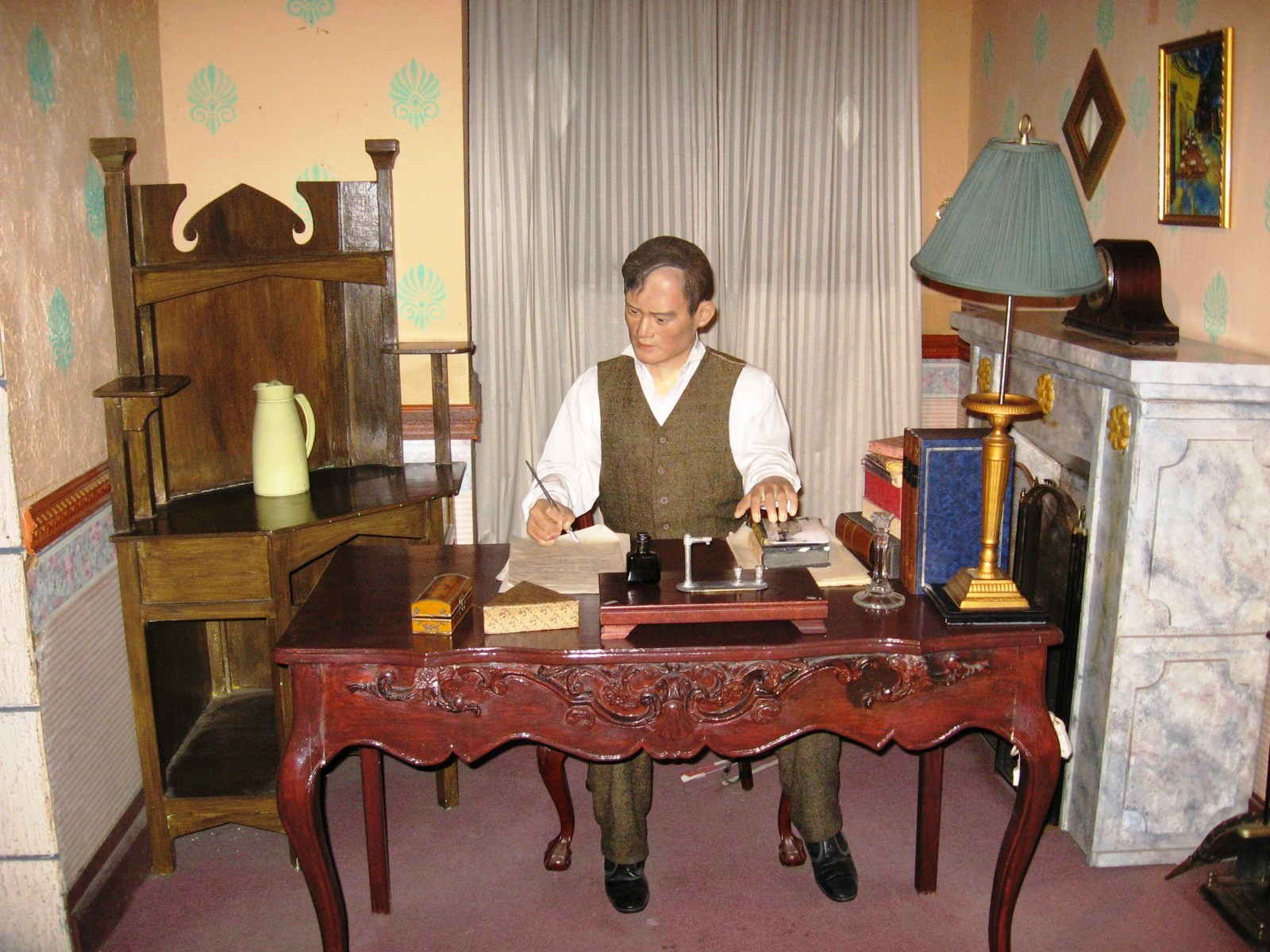
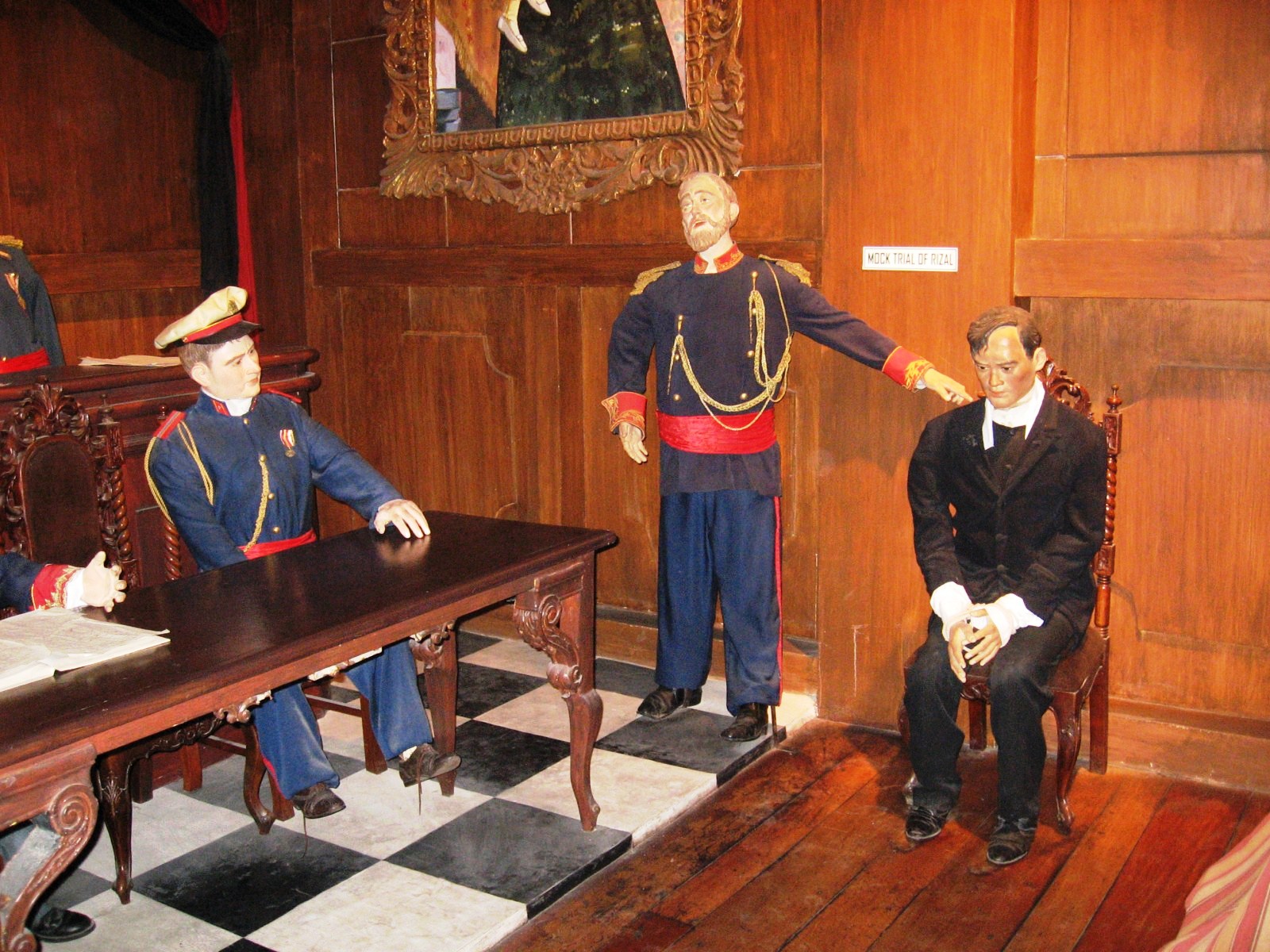
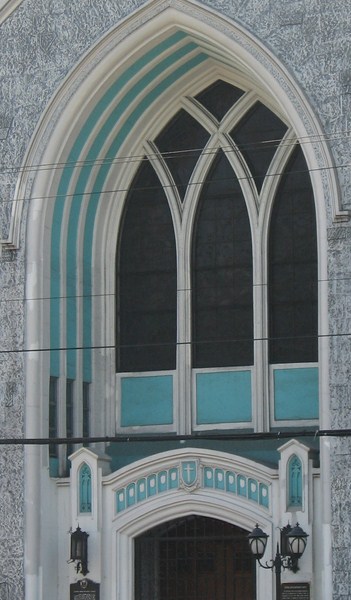
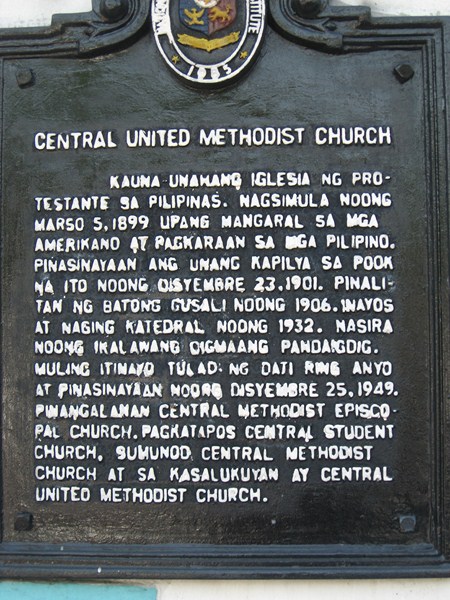
The colonial division, on the other hand, displays the Spanish regime on the archipelago through replicas of Spanish-style houses and other edifices. It includes the far from faithful replicas of Malolos’ Barasoain Church (a mass is held here every Sunday, 10 AM)  as well as the ancestral houses of National Hero Dr. Jose Rizal, Pres. Emilio Aguinaldo and Apolinario Mabini (a museum for Kapampangan artifacts).  The Colonial Plaza, fronting the church, has a 3-tiered fountain. The Hero’s Plaza has a statue of a bolo and KKK flag-wielding Andres Bonifacio.  
The Jose Rizal House

Interspersed between the two areas are clean open spaces.  Guests can go boating and fishing at the Lagoon.  The Spanish Culture & Religion Museum and the Philippine Museum are 2 separate structures that look like fortresses.  Also within the grounds are a 1,000 seat outdoor amphitheater used for social gatherings, theater plays and cultural presentations. 

Nayong Pilipino sa Clark Expo: Clark Expo, ClarkField, Pampanga.  Tel: (045) 436-1718 and (045) 599-2813. E-mail: nayon_saclark@yahoo.com.  Website: www.nayonsaclark.com. Admission: PhP30 (adults) and PhP20 (children). Open 8 AM-6 PM.

Yuchengco Museum (Makati City)

Yuchengco Museum

Yuchengco Museum

This visual arts museum, opened in September 2005, houses the art collection of Ambassador Alfonso T. Yuchengco, highlighting his distinguished career as a businessman, diplomat, collector, philanthropist, patron of the arts and advocate for education in the Philippines and beyond.

image-06-copy

This museum, as an exhibition venue, aims to be a cultural bridge to the regional Asian and Pacific Rim communities. The museum also aims to bring out the excellent artistic and creative expressions of the Chinese Filipinos as well as look at the best attributes of the twin-heritage, namely the Chinese’s hardworking skills and craftsmanship and the Filipinos’ highly expressive and adaptive sensibility.

image-02-copy

Its Masters Gallery highlights three of the most celebrated Filipino visual artists: Fernando AmorsoloCarlos Francisco and Juan Luna.   Also part of the Museum’s permanent collection are key art pieces from the Yuchengco Group of Companies executive offices consisting of works by Filipino Modernists such as Anita Magsaysay Ho and by National Artists such as Napoleon AbuevaVictorio EdadesJose JoyaAng Kiukok,  Cesar LegaspiVicente Manansala, etc. The YGC Collection also has a sizeable number of works in the folk genre by Angelito AntonioManuel Baldemor, and Norma Belleza, and prints by Boy Rodriguez and Manuel Rodriguez Sr..  Some thematic exhibitions periodically presented in the museum feature these pieces.

image-07-copy

To promote better understanding of art and heritage, collections and creative industries, the museum regularly holds educational and extension programs (Young Curators Program; volunteer and internship programs; etc.) that link various sectors and audiences.  Art workshops on Chinese traditional painting on Shui-Mo or “ink and water” as well as calligraphy are also conducted regularly.

image-08-copy

Yuchengco Museum: RCBC Plaza, cor. of Ayala and Sen. Gil Puyat Ave., Makati City, Metro Manila. Open Mondays to Saturdays, 10 AM to 6 PM.  Admission: PhP100 for adults, PhP50 for students 15 years and below (with valid ID, PhP25 for accompanied children and senior citizens and free for YGC employees (with ID) and UNESCO-ICOM and media pass holders.  Group tours for children below 15 years old must be accompanied by adults and apply for special permission.  The museum also has education and extension programs that link various sectors and audiences and promote better understanding of art and heritage, corporate collections, and the creative industries.  Curator: Ms. Jeannie Javelosa.  Tel: (632) 889-1234.  Fax: (632) 887-5144.  E-mail: info@yuchengcomuseum.org. 
Website: www.yuchengcomuseum.org.


This museum, as an exhibition venue, aims to be a cultural bridge to the regional Asian and Pacific Rim communities. The museum also aims to bring out the excellent artistic and creative expressions of the Chinese Filipinos as well as look at the best attributes of the twin-heritage, namely the Chinese’s hardworking skills and craftsmanship and the Filipinos’ highly expressive and adaptive sensibility. 

Its Masters Gallery highlights three of the most celebrated Filipino visual artists: Fernando AmorsoloCarlos Francisco and Juan Luna  Also part of the Museum’s permanent collection are key art pieces from the Yuchengco Group of Companies executive offices consisting of works by Filipino Modernists such as Anita Magsaysay Ho and by National Artists such as Napoleon AbuevaVictorio EdadesJose Joya, Ang Kiukok,  Cesar Legaspi, Vicente Manansala, etc. The YGC Collection also has a sizeable number of works in the folk genre by Angelito AntonioManuel Baldemor, and Norma Belleza, and prints by Boy Rodriguez and Manuel Rodriguez Sr..  Some thematic exhibitions periodically presented in the museum feature these pieces.

To promote better understanding of art and heritage, collections and creative industries, the museum regularly holds educational and extension programs (Young Curators Program; volunteer and internship programs; etc.) that link various sectors and audiences.  Art workshops on Chinese traditional painting on Shui-Mo or “ink and water” as well as calligraphy are also conducted regularly.

Yuchengco Museum: RCBC Plaza, cor. of Ayala and Sen. Gil Puyat Ave., Makati City, Metro Manila. Open Mondays to Saturdays, 10 AM to 6 PM.  Admission: PhP100 for adults, PhP50 for students 15 years and below (with valid ID, PhP25 for accompanied children and senior citizens and free for YGC employees (with ID) and UNESCO-ICOM and media pass holders.  Group tours for children below 15 years old must be accompanied by adults and apply for special permission.  The museum also has education and extension programs that link various sectors and audiences and promote better understanding of art and heritage, corporate collections, and the creative industries.  Curator: Ms. Jeannie Javelosa.  Tel: (632) 889-1234.  Fax: (632) 887-5144.  E-mail: info@yuchengcomuseum.org
Website: www.yuchengcomuseum.org.

Taal Vista Hotel (Tagaytay City, Cavite)

Taal Vista Hotel

A lot of my childhood memories included family visits to Tagaytay  City where we enjoyed the cool and crisp (average temperature is 22.7 degrees Celsius) mountain air and a picture-pretty view of Taal Volcano from its original grand viewdeck: Taal Vista Hotel. I wanted to sample what the hotel had to offer, so I brought along my wife Grace, kids, Jandy and Cheska, plus in-laws, and stayed two nights in 2 (out of 88) interconnected superior rooms. On arrival, we were welcomed by the soft-spoken, Mr. Ikuo Itoi, and Ms Zeny Alcantara.

Check out “Hotel and Inn Review: Taal Vista Hotel

De luxe room

The hotel has its beginnings way back in 1935 when the Zamoras of Manila Hotel bought six hectares of flatland perched atop an incline along Ilong Kastila (people say it resembles a nose or ilong) from American Hammon H. Buck, the Superintendent of Schools in Batangas. Two years later, hotel was built. Its architect was probably Andres Luna de San Pedro who, just a few years earlier, renovated another landmark, the Manila Hotel, to accommodate a suite for Gen. Douglas MacArthur.

Its contractor was probably the well-known Pedro Soichi who built the Rizal Memorial Stadium in Manila. Both were favored by Commonwealth President Manuel L. Quezon who was then, as I still am now, equally fascinated with Tagaytay. Upon completion, Quezon frequently held cabinet meetings in the lodge’s premises and, on 21 June 1938, he converted Tagaytay into a chartered city by virtue of Commonwealth Act No. 338.

During World War II, the lodge was converted into quarters for Japanese officers. Between 1956 and 1964, Tagaytay began to be promoted as a major tourist attraction of the Philippines and Taal Vista Lodge was one of its leading attractions. n fact, the hotel was the public viewing ground to the September 28, 1965 (8 PM) major eruption of the volcano as well as mild to moderate eruptions from 1966 to 1970 (lasting from three to 65 days), and mild eruptions in 1976 (September 3 to October 23), 1977 (October 3 to 4 and  November 9 to 12) and 1991. In 1973, Taal Vista Lodge, now a three-star hotel, boasted a large pavilion for dinner and dancing, a bowling alley, a golf course, a billiards hall and a horseback riding area beside the lodge.

One its many regular visitors was a young man who often chose one spot in the grounds from which he gazed out and dream. That dreamer was Henry Sy whose SM Investments Corp. would later acquire the hotel. In 2002, he had the hotel rebuilt in the style of the original lodge and added 2 new extensions on the east side of the complex to provide 128 rooms, conference facilities and amenities. In 2004, this reinvigorated and now first-class hotel welcomed back guests and visitors. Today, it remains a landmark deeply entrenched in the history and heritage of Tagaytay City.

Taal Vista Hotel Historical Mural

The original building now houses the hotel’s front desk, business center, shops, ball room and meeting rooms. At the hotel foyer is the 26-ft x 8-ft. Taal Vista Hotel Historical Mural, a joint project of Paolo Alcazaren and Felix Mago Miguel.

Seasons

However, the building’s focal point are its three food and beverage outlets: Cafe-on-the-Ridge, Season’s, and the Lobby Lounge. Both take you far beyond the plate,whether al fresco or from within, as their panoramic floor-to-ceiling glass windows allows diners to watch, aside from Taal Volcano and Lake, the fog rolling in, the captivating sunset and, at nighttime, the stars or the pinpoint lights of fishing boats and the lakeshore towns. cafe-in-the-ridge, offering a la carte & buffet service, recreates the cuisine and ambiance of two continents, featuring a menu that distinctly highlights the simple elegance of Europe, the carefree disposition of Spain and the Asian mystique was offered with live entertainment at night. Season’s, where you can dine of the finest gourmet creations made from the freshest of the season,  is a classy fusion of setting and landscape, is a perfect place for intimate dinners and cozy get-togethers.

The Lobby Lounge, with its natural motifs, was an ideal rendezvous for a lazy after dinner conversation, evening interludes and winding down moments. Its well-stocked bar offers light meals, coffee or cocktails. Here, warmed by the fireplace, we all sampled hot chocolate while listening to a piano.Try sampling  the Chocolate Eruption, a sinfully delicious dessert concoction prepared and baked, minutes before serving, by Canadian executive chef Bill McGrath.

Swimming pool

The tropical style Ylang-Ylang Spa, ran by French doctor, Charles Sutter and his Filipina wife Pristine in Davao, applies all-natural techniques and ingredients rooted on the principle of  “touch therapy” which has been proven to stimulate the release of endorphins which is supposed to make you happy.

The hotel is in the midst of a Php 650 million (US$16 million) expansion which will add 133 more rooms, 6 function rooms, and a 1,000-seater grand ballroom. By the end of the year, the hotel will have a total of  261 guestrooms, 2 grand ballrooms and 16 function rooms.

Taal Vista Hotel: Tagaytay City, Cavite.  Tel: (046) 886-4325 and (046) 413-1000.  Fax: (046) 413-1225.