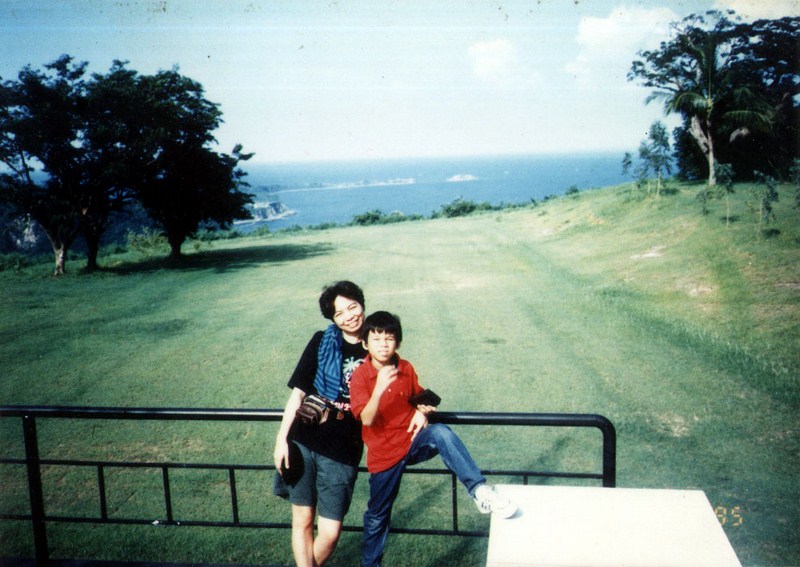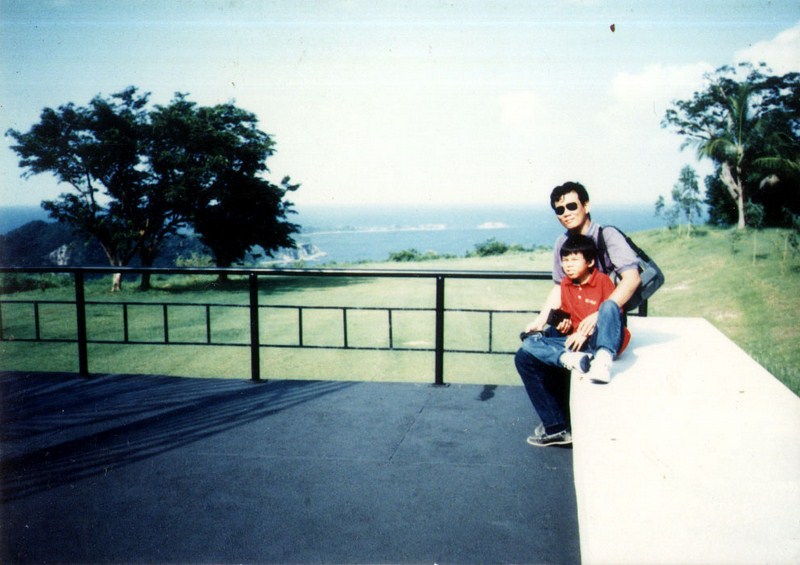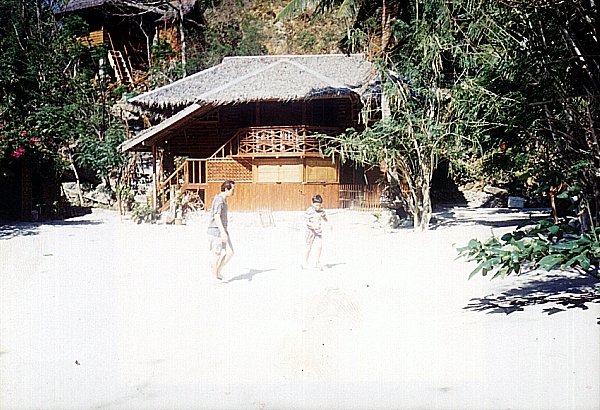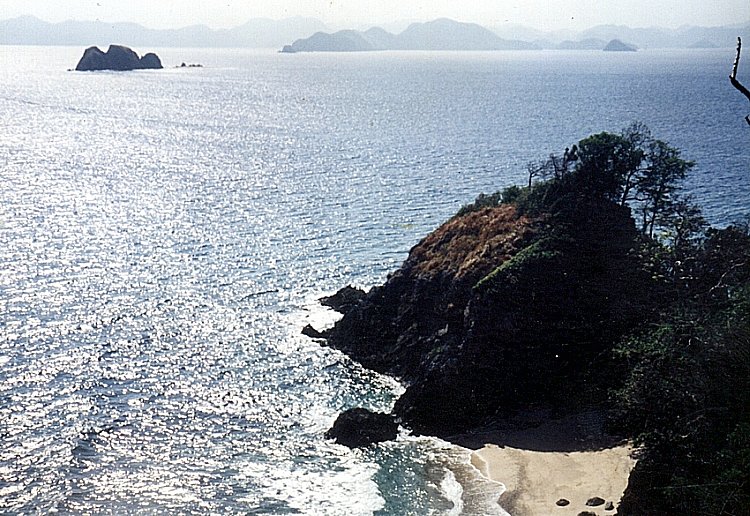
Puerto del Mar Resort (Nueva Valencia, Guimaras)

Puerto del Mar Resort

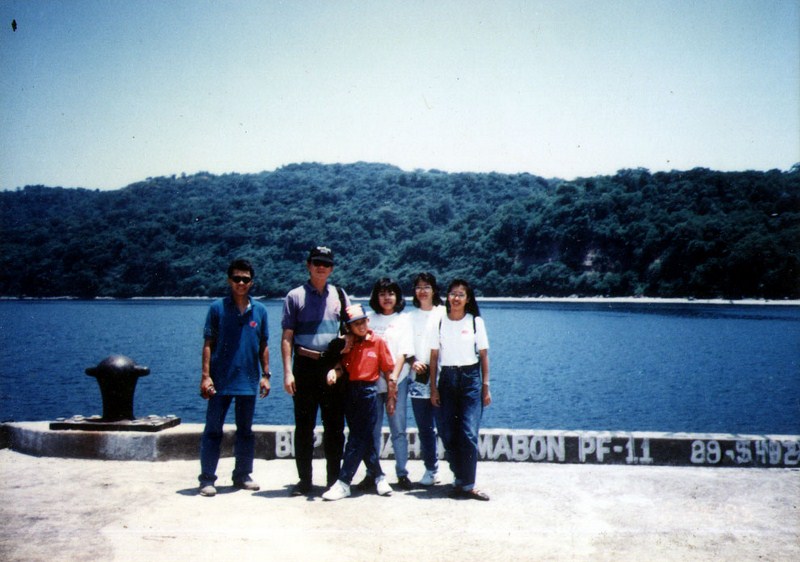
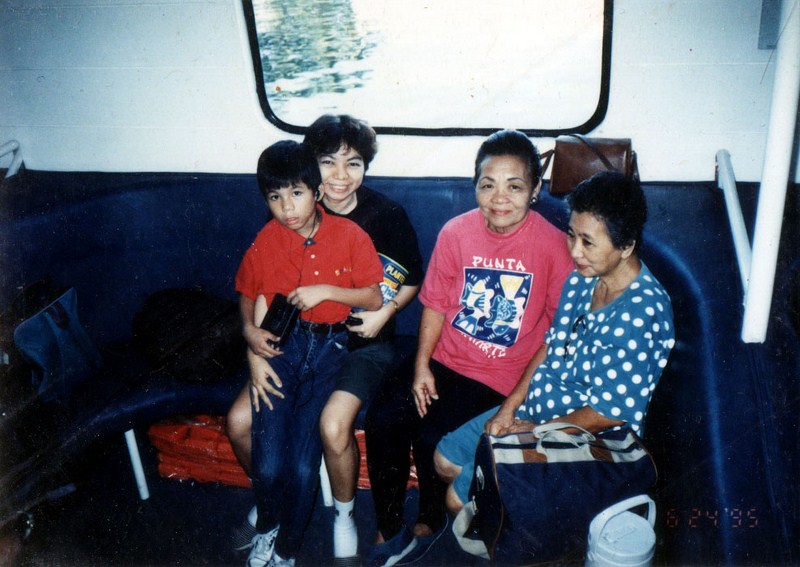
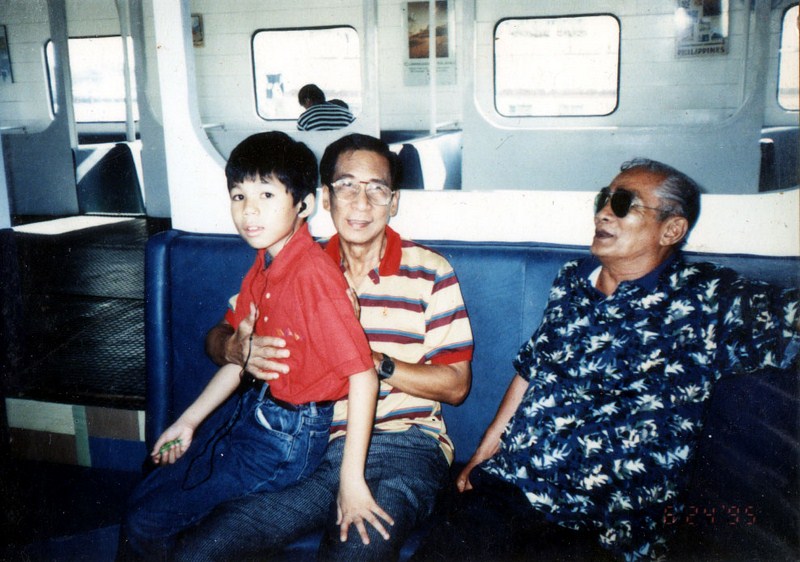
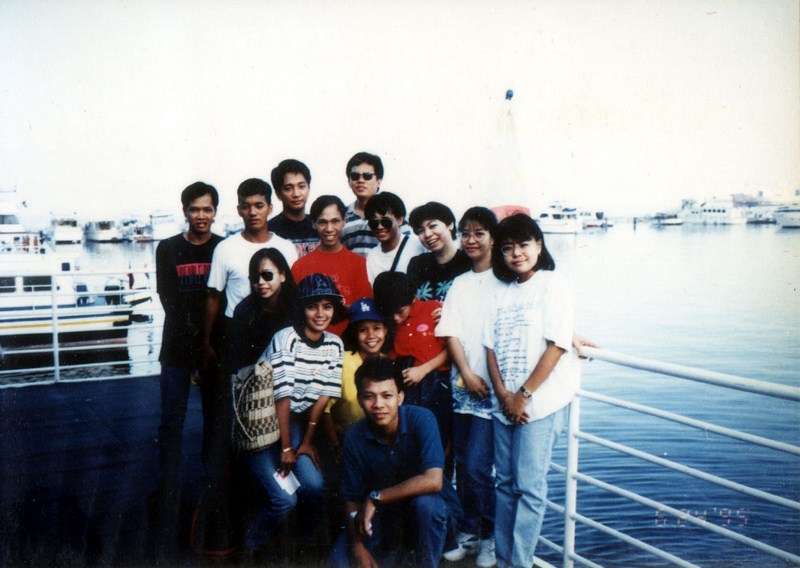
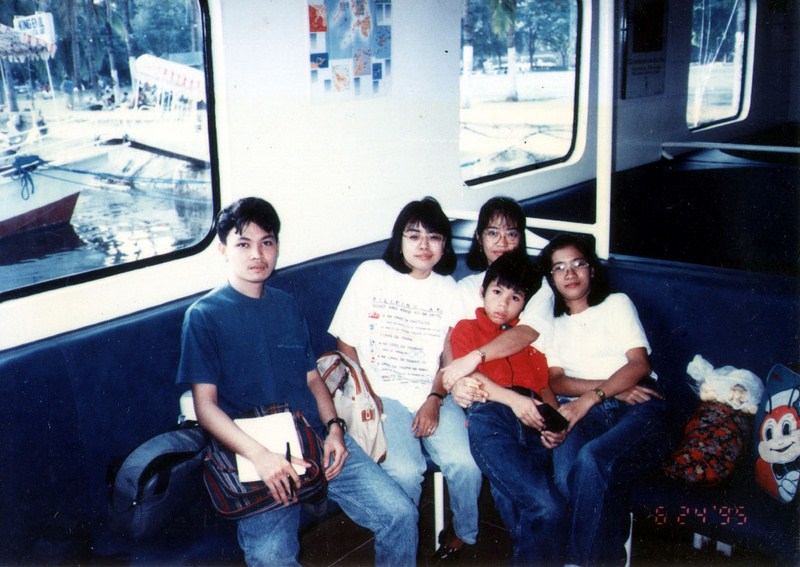
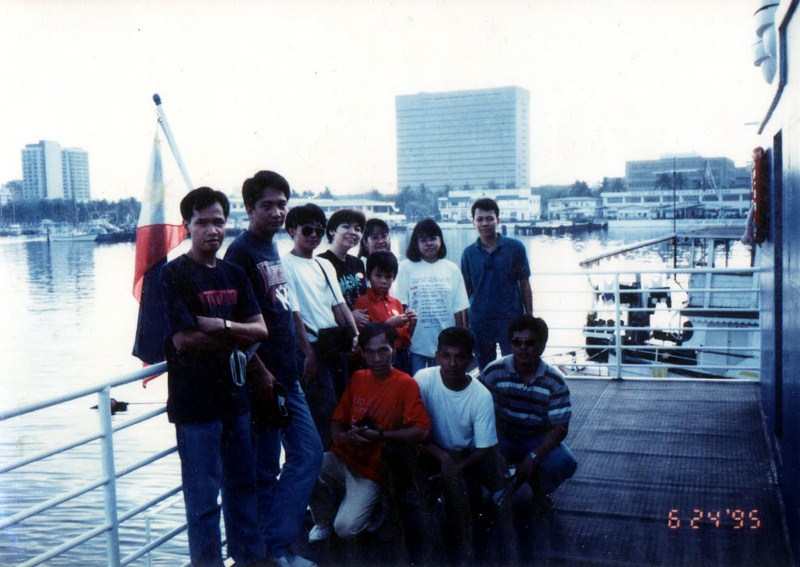
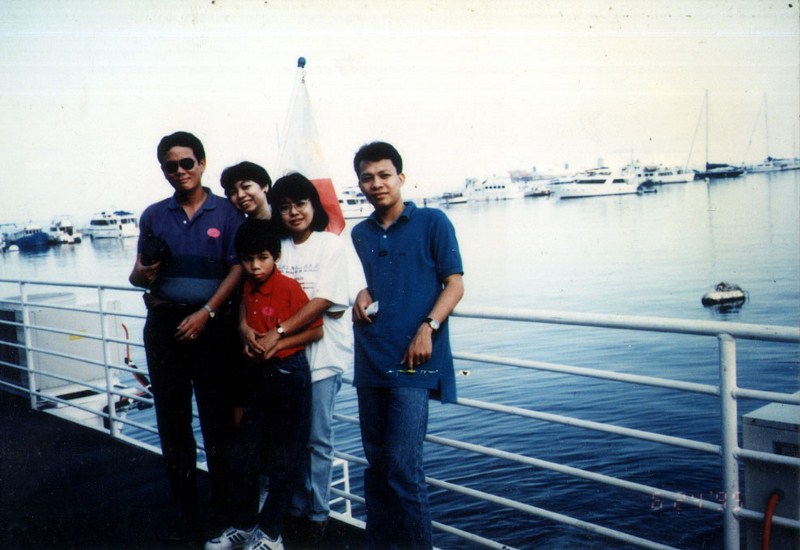
Holy Week of 1995 was Layug family reunion time we all opted to spend a 4-day vacation to a place we have never been to or rarely heard of – the 604.65 sq. km., island province of Guimaras.   Me, Grace and our kids, 9-year old Jandy and 4-year old Cheska, as well as my mom Carol, our eldest Frank, together with wife Cherry, daughters Jaja and Sandy and son Franco, and our youngest sister Tellie were joining.  However, my older sister Salve wasn’t able to join us. We left Manila on April 13, Holy Thursday, on the 4:30 AM PAL flight from Manila to Iloilo City arriving at the Mandurriao airport by 6:30 AM.  At the airport, we were picked up by a shuttle which brought us to the city’s Muelle Loney Wharf near the Post Office.  

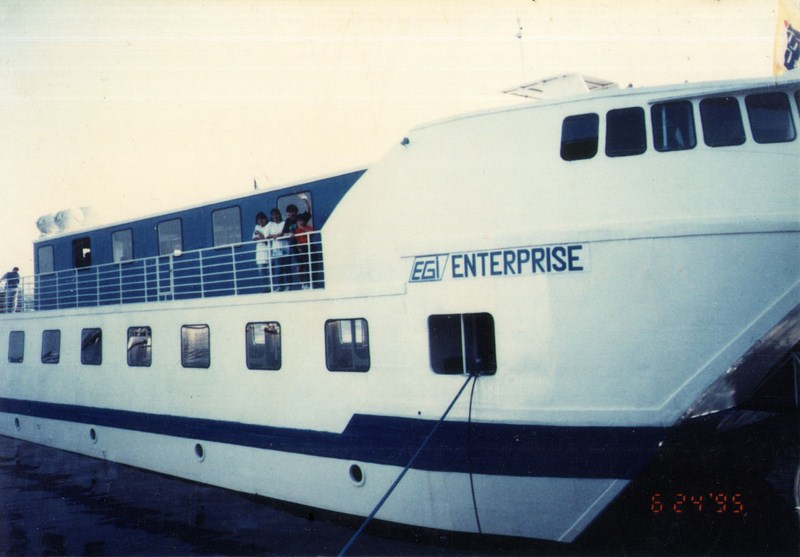
On our way to Guimaras Island

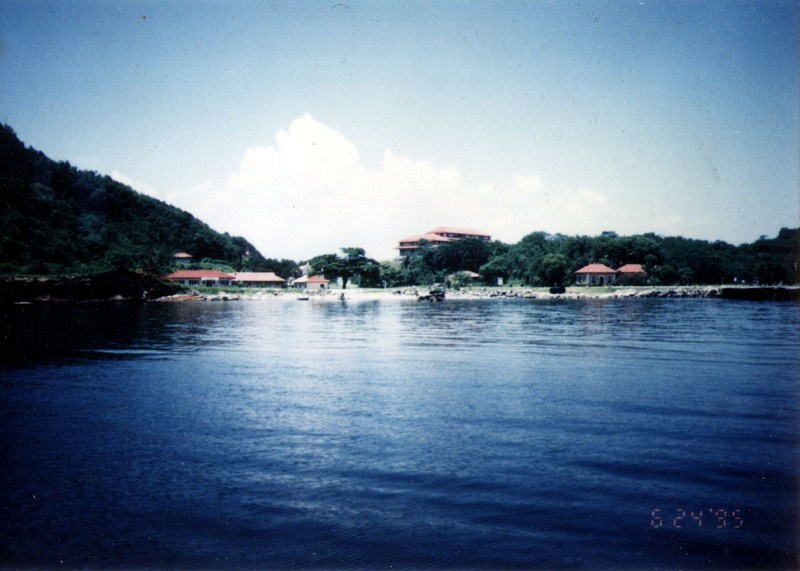
Directly offshore from Muelle Loney, separated by the 1.5-nautical mile wide Iloilo Strait, is Guimaras Island.  Here we boarded a big outrigger boat which brought us to our destination – the Class “A” Puerto del Mar Resort, along Alubijod Bay in Brgy.  Sta. Ana, Nueva Valencia, arriving at the resort  by 8:30 AM.  Breakfast was already being served at its restaurant and we had our first taste of the island’s famous mangoes (8,000 hectares or about 20% of the province is mango orchards). 

Dinner at the resort’s restaurant

We were billeted at 3 of the resort’s non-airconditioned native-style beachfront cottages with bath.   The resort also has a private beige sand beach, picnic coves, an aqua sports club (windsurfing and snorkeling), pavilion, bamboo bridge and serves as a training center for a local maritime school. 

Cheska enjoying her hammock along the beach


Calauit Island Game Reserve and Wildlife Sanctuary (Busuanga, Palawan)

Calauit Island

After my trial dive,  we booked ourselves on an optional half-day tour of Calauit Island Game Reserve and Wildlife Sanctuary, located just off Busuanga Island’s northwestern coast and opened to tourists since 1985.  Cost, including permit and boat ride,  was to set us back US$30 per person.  We left right after lunch at the resort.

An eland

This 3,700-hectare, DENR-administered Strict Nature Reserve was, in response to an appeal made by the International Union of Conservation of Nature (IUCN), was established as a repository for 108 African animals endangered by the 1977 drought and Kenya’s civil war on August 1976 by virtue of Presidential Proclamation No. 1578 issued by the late Pres. Ferdinand Marcos.  Its original 250 island families were relocated, 40 kms. away, to Halsey Island and compensated with land titles.  Since 1994, it was managed by the Office of Palawan Council for Sustainable Development, a  government body dealing with environmental issues in Palawan.

On our way to Calauit

We, together with other resort guests, left the resort by 1 PM on the resort’s motorized outrigger boat.  The trip took about 45 mins.  Upon arrival, we first logged in at the sanctuary’s office.  Then, accompanied by a guide, we ushered to the back of the sanctuary’s only “safari” vehicle, a converted 6 x 6 truck which resembled a huge open cage.  From our slow-moving and somewhat dilapidated truck, we got up close and personal with these herbivores as some fed near the road we were traveling while zebras grazed under shading trees.  Bushbucks (Tragelaphus sylvaticus), Grévy’s zebra (Equus grevyi), Common Eland (Taurotragus oryx), Topi (Damaliscus lunatus jimela), Impala (Aepyceros melampus), Thomson’s gazelle (Eudorcas thomsonii),  Reticulated Giraffe (Giraffa camelopardalis reticulata) and Waterbuck (Kobus ellipsiprymnus) can be seen, in pairs or in groups, as they feed or gracefully gallop at the sign of our presence.

A short necked giraffe

Graceful giraffes, with their somewhat shorter necks (maybe because trees here are shorter), were unmindful of our presence as they continued  feasting on the branches of their favorite acacia trees.  Our vehicle halted when these tall “jaywalkers” crossed the road.  Others stayed put for a short while as if purposely posing for our cameras.   Too bad we weren’t able to bond or interact with the giraffes by feeding them (it is discouraged), truly a highlight of any trip to the sanctuary.  Such an experience would probably  come second to swimming beside a whale shark or butanding off Donsol (Sorsogon).

Zebras in the wild

From the original 108 African animals brought here in 1977, 3 or 4 generations of offspring have increased the animal population to 570  heads comprising 8 species, all herbivorous.  At the time of our visit, there were now 43 giraffes, 155 impalas, two Thompson gazelles, 122 water bucks, 78 zebras, 50 elands, 14 topis and 16 bushbucks. Together with indigenous animals, they range freely around the island in an environment that loosely approximates their original environment.

The Palawan bearcat

The guided tour includes stops at pens holding many of Palawan’s indigenous species.  The sanctuary has saved from extinction, by  successfully breeding in captivity, the foot-high The Philippine mouse-deer (Tragulus nigricans) or pilanduk, the smallest hoofed animal found in Asia; the largely nocturnal and endangered Calamian Deer (Hyelaphus calamianensis)  and the Philippine reshwater crocodile (Crocodylus mindorensis) which now lives along the mangrove swamps.  Also bred in captivity are the Palawan bearcat or Binturong (Arctictis binturong), Palawan bearded pig (Sus ahoenobarbus), tarsier or mago (Tarsius philippensis), scaly anteater or balintong (Manis javanica), leopard cat or maral (Felis bengalensis), Philippine porcupine (Hystrix pumila) or landak/duryan  and monitor lizard (Varanus salvator).  I had a very close encounter with a forever hungry binturong.  Too close, in fact, that he snarled when I tried to feed him a banana.

An encounter with a snarling bearcat

There are also over 120 species of birds, endemic and transient and, as a boon to birdwatching enthusiasts, the personnel here are quite capable of identifying these birds.  There are also protected rearing and egg-laying areas for giant sea turtles or pawikan (Chelonia mydas). The project also includes a 7-km. marine sanctuary which protects the highly endangered 16-20 dugongs or sea cows (Dugong dugon) that feed along the offshore sea grass beds, and  7 species of clams including what is believed to be the largest live giant clam shell (Tridacna gigas) in the world which weighs as much as 300 kgs..  As fishing is prohibited, commercial fishes, crabs and lobsters now breed here in undisturbed .  The coral reefs around the island have shown a 75% recovery rate.

Exploring Dimakya Island and its Environs

View of Isla Walang Lang-aw from Eagle’s Nest

The next day, I made an early morning, lung-busting hike, with many rest stops, along a trekking trail to the island’s highest point called Eagle’s Nest.  Along the way, I was on the lookout for wild boar (baboy damo) and wild chickens which, the resort staff said, hid in the woods. 

The resort as seen from my vantage point at Eagle’s Nest

Upon reaching the top, I got a panoramic eagle’s view of the surrounding islands including nearby Isla Walang Lang-aw (Island Without Trees).  A treehouse and a viewdeck is located here.  For a brief moment I felt like Daniel Defoe’s Robinson Crusoe.  After about an hour, I retraced my way back down to again be part of Swiss Family Robinson. 

After lunch, we, together with other guests, booked ourselves on an island-hopping tour (US$20 per person).  Our boat ride took us past numerous islands with thickly-vegetated, sea-and-wind-sculpted limestone cliffs and white sand beaches.   We stopped over on 3 of these islands (Tapadyan Island, Liatui Island and Isla Walang Lang-aw) were Tellie and I went swimming and snorkeling and did some trick photography.

Trick photography at Isla Walang Lang-aw

Back at the resort, we, as well as the other guests, were treated to another boat ride, this time a sunset cruise on board the resort’s 55-ft. long trimaran (with its all-convenient toilet).  We sat at the spacious front area, sipping drinks as we awaited the sun’s setting .  We weren’t disappointed as the sun set on the horizon, amidst a clear, cloudless night sky.

On board the trimaran
Sunset at paradise

Upon our return from our sunset cruise, we returned to our cottage to freshen up and were served dinner by candlelight, albeit in a different setting: by the beach.  The restaurant’s tables and food were set up along the beach and, while dining, we could hear the sound of the waves hitting the shore.

Dinner along the beach

Club Paradise (Coron, Palawan)

Club Paradise Resort

Upon our arrival on the island, we were offered welcome drinks and  billeted in one of the resort’s rustic non-airconditioned, beachfront cottages.  Made of rattan, bamboo and nipa, it had double beds (plus an extra one for me), a marble bath and a veranda with a bamboo sala set and an enticing  hammock for relaxing.  Our luggage, though, didn’t arrive with our flight as it was bumped off to make way for the bulky dive equipment of some foreign tourists.  We thus had to take a late lunch with just the clothes on our back.  No swimming or snorkeling the rest of the day.  Our luggage arrived late in the afternoon.  My irritation was somewhat diminished by dinnertime.   Crispy lechon (roasted pig) was served at the clubhouse and we didn’t seem to have many rivals as the seemingly health-conscious foreign guests avoided it like the plague (they preferred the seafood). And to cap it all, dessert consisted of some of the sweetest mangoes I have ever tasted.

Our cottage

The exclusive, Class “AAA” Club Paradise Resort, opened in 1986, was expanded in 1990 and now has 26 non-airconditioned  cottages with bath (9 de luxe, 17 standard), 14 airconditioned family cottages and 20 airconditioned apartment-type rooms.  It has a shimmering 700-m. long, powdery white sand beach, a magnificent and colorful coral reef (including large colorful giant clams) and crystal-clear, turquoise water.  It also has a saltwater swimming pool and a spacious clubhouse with a 120-pax, al fresco restaurant (Kanog), 2 bars (Dugong and Jungle Bar), lounge with indoor sport area (pingpong, billiards, darts and board games), video/videoke room, cable TV room, boutique shop, beauty parlor, 24-hour clinic and mini-library.  

Tellie relaxing at our hammock

There is also a jacuzzi, children’s playground, tennis court and a well-equipped dive center.  The resort also offers dive and dive courses,  waterskis, sit-in kayaks, wakeboards, ringo tubes, windsurfing, Hobie Cat sailing, banana boats and snorkeling as well as island hopping, bottom and troll fishing trips, Coron town and island trips and Calauit Island Wildlife Sanctuary “Safari” tours.  It can accommodate about 150 guests at one time.

Lounging along the island’s white sand beach

Club Paradise: Dimakya Island, Coron 5316, Palawan.  Mobile number: (0918) 912-7106.

Day Tour of Puerto Galera (Mindoro Oriental)

The next day, we were again off, to another excursion, this time to Puerto Galera itself.  We again took a jeepney from the town proper and, once outside the city, the others, including me, again went up the jeepney’s luggage rack.  However, we had to always be on the lookout for approaching trees, ducking to avoid being thrown off the roof.  About 15 kms. out, we again passed the previously visited Tamaraw Falls.  The road to Puerto Galera zigzags most of the way and the scenery – thick forests, mountains planted with rows of calamansi trees, deep ravines – made for a thrilling and scenic ride. 

We first dropped off at Muelle Pier where RO-RO (Roll On Roll Off) ships and motorized outrigger boats from Batangas City dock.

White Beach

At the town, we had the choice of at least 13 superb connected beaches that have been developed for tourism within 7 kms. or so of the town. About 6 kms. from the poblacion, we dropped off at the broad 1-km. long White Beach which is immensely popular with tourists.  The water, however, gets very deep a few meters from the shore.

Trick photography along Tamaraw Beach

From White Beach, we hiked to the less developed Tamaraw Beach where many go for seclusion or peace and quiet.  Again, we had this beach to ourselves.  From Tamaraw Beach, we retraced our way back to White Beach where we boarded a jeepney back to Calapan.  Back at home, Rainy, Lulu, Liezl and Erwin boarded the 6:30 PM boat back to Batangas City.  Jandy, Ronnie and I stayed behind for another night, leaving the next day on the 10 AM boat.  We arrived in Batangas City by 12:45, and boarded a Manila-bound bus.  We arrived in Manila by 4:30 PM.

Pulong Laki (Calapan, Mindoro Oriental)

The next day, All Saints Day, Jing again packed us some lunch (including beer) for our excursion to Pulong Laki (Big Island), one of the 3 Baco Islets, the others being Pulong Munti (Little Island) and Pulong Gitna (Middle Island).  All have white sand beaches.  We espied these beautiful islands during the ferry crossing from Batangas City to Calapan.  Ronnie also brought along his fishing rod.

On our way

Jing also chartered a boat very early in the morning for our use as, if there are no charters, their owners usually leave early in the morning to catch fish for a living.  From Ronnie’s home, we walked towards the nearby beach where our motorized outrigger boat and the boatmen where waiting for us.  Once on board, we were soon on our way.  The trip was smooth, usual for the morning and, after about an hour, we made landfall on the island.

The island’s coarse sand beach

The island had a broad, coarse sand beach, with vegetation and shade some distance away.  This didn’t matter much to us as we savored our first dip in a Mindoro Oriental beach.  From the beach, we also had a panoramic view of a couple of islands.  We were the only excursionists on the island that day.  I guess that most Calapenos were visiting their dead while most local and foreign tourists were in Puerto Galera.  We had this beach to ourselves.  

Doing some trick photography

Ronnie went fishing  and sunbathing while the rest went swimming or shell hunting.  Ronnie caught a couple of small fish that day which he cooked.  By mid afternoon, we all left the island, upon the boatman’s suggestion,  to avoid the high, late afternoon waves.  Back on the mainland, we again had supper at the house of Ronnie and Jing’s aunt.    

Tamaraw Falls (Puerto Galera, Mindoro Oriental)

Come morning, after breakfast, we packed up our swimming gear as well as a picnic lunch as we were headed for the Tamaraw Falls, the largest waterfall in the province and a popular swimming spot for weekenders.  The falls, located 131 m. above sea level, is a 15-km. drive from Calapan. We took tricycles to the Calapan town proper where we all boarded a jeepney bound for the resort town of Puerto Galera.

Tamaraw Falls
Once outside the city proper, the others went up the jeepney’s luggage rack to better enjoy the view and the air.  The narrow road towards Puerto Galera alternated from sometimes paved to mostly rough.   After about an hour, we espied the falls along the road and alighted beside the aptly named Waterfall Bridge, just a couple of meters from the falls.  At this distance, we could feel the mist of water from the falls as we posed by the bridge.
 
The waterfall’s natural pool
It being the eve of All Saints Day, we were expecting a lot of tourists at the falls but it seems we were the only visitors.  Passing jeepneys sometimes stop for their passengers to take pictures but, after a few minutes, continue on their way.  Just below the waterfall is a shallow natural pool, fed by waters coming from the forested ravine above.
 
Our cool  dip
There were some picnic tables and a changing room across the road from the waterfall and below it are 2 man-made pools fed by the waters of the falls.  Its waters were equally shallow as the wooden barrier which dammed up the water was removed.
 
The man-made pool
We quickly changed into our bathing attire and first tried the natural pool below the falls.  Later, we transferred to the man-made pools.  In both cases, the waters were bracingly cold but refreshing.  The rocks were also slippery so we had to watch our step.  Even after lunch, we continued frolicking at the pools.  After this refreshing dip, we packed up and hailed a Calapan-bound jeepney to get home.
 
Tamaraw Waterfalls: Brgy. Villaflor, Puerto Galera, Mindoro Oriental

Grand Palace and Wat Phra (Bangkok, Thailand)

We were now on my fourth and last day in Bangkok, with my whole morning free prior to my evening return to Manila, I decided to go at it alone, taking a tuktuk (the Thai equivalent of our tricycle) to get to the fabulous Grand Palace (Phra Borom Maha Ratcha Wang) and its adjoining Wat Phra Kaew. I just brought along my camera and portable tripod. Incidentally, today was also the Songkran Festival, the Thai New Year.

Grand Palace Complex

This complex of buildings is just walking distance from the previously visited Wat Pho and sits on the east bank of the Chao Phraya River. It being a holiday, many Thais were in the temple to pray and give food to monks.  Many were also cleansingBuddha images by gently pouring water mixed with a Thai fragrance over them (believed to bring good luck and prosperity for the New Year).

Wat Phra Kaew

Despite being in one compound, the Golden Palace and Wat Phra Kaew have a distinct difference in architectural style, except for the traditional Thai roof.   Except for the Wat Phra Kaew (I had to remove my shoes before entering), the interiors of most of the buildings remain closed to the public.

Wat Phra Kaew - Porch

Wat Phra Kaew (Chapel Royal of the Emerald Buddha), Thailand’s most important temple, houses the small (45 cm. tall), beautiful, gold-clothed and greatly revered Emerald Buddha, carved from a block of green jade (instead of emerald) and said to have been created in India in 43 BC. I wasn’t allowed to take pictures inside.

The Galleries

The temple’s grounds are enclosed by galleries with beautiful, vivid and colorful murals which depict the story of the  Indian epic Ramayama (Ramakien in Thai) of the first reign version.  The European-inspired Grand Palace, the official residence of the king of Thailand from the 18th century to the mid-20th century, is nowadays used only for occasional ceremonial purposes.

Chakri Maha Prasat Hall

It has 2 groups of residences: the Dusit Maha Prasat (built in a style influenced by the Italian Renaissance, it has a spacious, European-style reception room decorated with galleries of portraiture) and the Phra Maha Monthian (consists of the Amarin Winitchai Audience Hall and the Paisal Taksin Hall where coronations take place).

Amarin Winitchai Audience Hall

Construction of the palace complex began in 1782, during the reign of Rama I.  After the death of King Ananda Mahidolin the Baromphiman Palace, the much-revered King Bhumibol (Rama IX), the present king, moved the official royal residence to Chitralada Palace (closed to tourists).

Viseschaisri Gate

My Grand Palace tour should have included Vimanmek Mansion along Rajavithee Road, also a former royal residence.  The biggest wooden building made from golden teak in the world, it was built by King Chulalongkorn (of the “King and I” fame).  Regrettably, I had to forego this visit as it was time to go and pack for home.

Don Muang International Airport

I returned to the hotel, joined the others in checking out of the hotel and left, via coach, for Don Muang International Airport, arriving there by noon.  By 2:30 PM, we left Bangkok on a Thai Airways International flight (TG-624) back to Manila.

Golden Palace: Na Phra Lan Road, Bangkok, Thailand.

Coral Island – Koh Larn (Pattaya, Thailand)

After an early breakfast at the hotel, we prepared for a change of pace as we were scheduled to do an island tour, with lunch, of Koh Larn (translated as “Coral Island”).  Located about 7-8 kms. off the coast of Pattaya Beach, Koh Larn is about 4 kms. long and 2 kms. wide.  It has 2 villages (Ban Ko Lan and Ban Krok Makhan)  and a number of white sand beaches (Tonglang Beach, Tien Beach, Samae Beach, Naon Beach, Na Ban Beach, Ta Waen Beach, etc.) with clear, blue waters, mostly on the western side.  Koh Larn is part of a cluster of 3 islands called the Near Islands (the other 2 are Koh Sak and Koh Krok).

On Our Way to Koh Larn

From the Bali Hai Pier, we all boarded a cruiser for the 45-50 min. trip, across the Gulf of Thailand, to the hilly island.  Within sight of the crescent-shaped Ta Waen Beach (the most frequented beach), we all transferred to a glass-bottom boat so that we could view the marine life and offshore coral garden.

Glass-Bottom Boat Ride

Upon landing, we were assigned to a long picnic shed with other guests. As the beach was very inviting, the sun was out and the skies were clear, we all changed into our swimming attire.  The sand here was definitely much cleaner (and whiter) than in Pattaya Beach.

Koh Larn (Coral Island) – Ta Waen Beach

Salve and Tellie tried jetskiing while I donned  mask and snorkel and explored the island’s coral garden.  Come noontime, we returned to our picnic hut were a seafood lunch was arrayed before us. This we feasted on with gusto.  After lunch, we all went back to our boat for the return trip back to the mainland. Once on shore, we returned to the hotel, checked out and, by 4:30 PM, boarded our bus for the return trip to Bangkok.  Back in the city, we had supper at a MacDonald’s outlet along Sukhumvit Rd., then returned to our hotel.

Arrival in Pattaya (Thailand)

Pattaya

After our Bangkok city tour, we were returned to our hotel. Upon arrival, we readied ourselves for our overnight stay at Pattaya, Thailand’s premier and most successful beach resort within (but not part of) Amphoe Bang Lamung in the province of Chonburi.

After lunch, we boarded our airconditioned tourist bus which would take us there.  The 147 km. trip, via Highway No. 3, took all of 2.5 hrs. and we arrived in Pattaya by 3 PM.  We were all checked in at the 5-storey Regent Marina Hotel.

Check out “Hotel and Inn Review: Regent Marina Hotel

Until the 1960s, Pattaya was just a sleepy fishing village along the Gulf of Thailand. Then, during the Vietnam War, American servicemen stationed at nearby U-Tapao or other US bases in Thailand began visiting Pattaya.

Pattaya Beach, parallel to the city center, runs from Pattaya Nuea south to Walking Street. Along Beach Road are restaurants, shopping areas, and bars.

Offshore are a number of islands. The three “near islands,” located 7 kms. (4.3 mi) from the shore,  are Ko Lan (main island), Ko Sak, and Ko Krok.  Located further west of the “near islands” are the “far islands” – Ko Phai (main island), Ko Man Wichai, Ko Hu Chang and Ko Klung Badan. Ko Rin lies to the south-west, south of Ko Phai group.

Regent Marina Hotel: 463/61 Pattaya Beach Rd., Pattaya, 20260 Thailand.  Tel: (038) 428-015.