Saigon Opera House (Ho Chi Minh City, Vietnam)

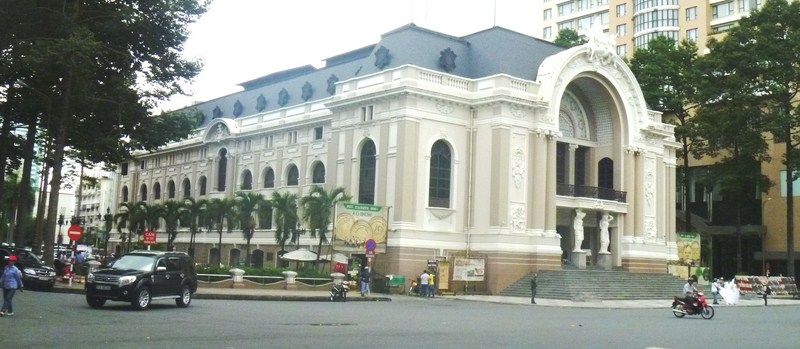
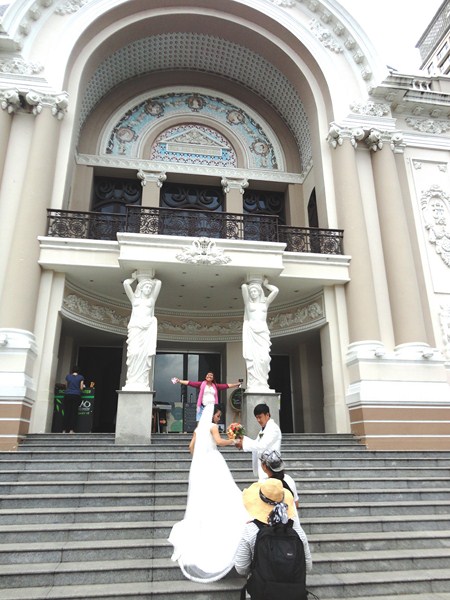
The iconic, stately and elegant Saigon Opera House, also known as the Ho Chi Minh Municipal Theater, is hard to miss as it is located at the intersection of Ð Dong Khoi and ÐL Le Loi.  The front of the building is a good place to take photos or maybe just sit round and spend some time people-watching. A Highland Coffee Shop outlet is located behind the building. During our visit, a pre-nuptial photo shoot was ongoing at the bottom of the steps in front of the theater.

Saigon Opera House

Saigon Opera House

Unfortunately, we weren’t allowed to see the inside unless we watched an actual performance (plays, concerts, ballet, opera, and Vietnamese traditional dance) or the 60-min. AO Show (6 PM and 8 PM), a show fusing dance, circus and musical forms in a vibrant and light-hearted series of sketches.  However, prices for these performances don’t come cheap. For the AO Show, admission ranges from 630,000 VND to 1,470,000 VND (US$29.7 to US$69.3).

A venue for pre-nuptial photo shoots

A venue for pre-nuptial photo shoots

This grand, 1,800-seat colonial building, an example of French Colonial architecture in Vietnam, was designed, as the Opėra de Saigon, by architect Felix Olivier and its construction, started in 1898, was supervised by architects Ernest Guichard and Eugène Ferret. The theater was completed on January 1, 1900. Its applied ornaments, balustrades, cartouches and roof are particularly French while the large central arch, Ionic columns, coffered ceiling and the caryatids (though less modestly clothed than Greek examples) are Greco-Roman motifs.

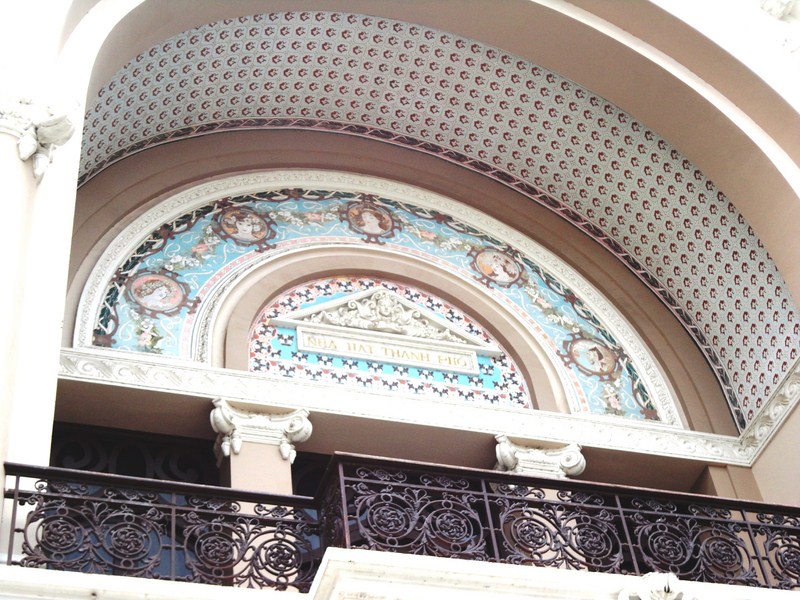
The veranda and richly-engraved arch

The veranda and richly-engraved central arch

In 1944, the theater was damaged by the Allied air attacks and, in 1954, was used as a temporary shelter for French civilians arriving from North Vietnam. After 1956, the building was restored and used as the home of the Lower House assembly of South Vietnam and it was not until 1975, after the fall of Saigon, that it was again used as a theater. In 1995, the theater was again restored.

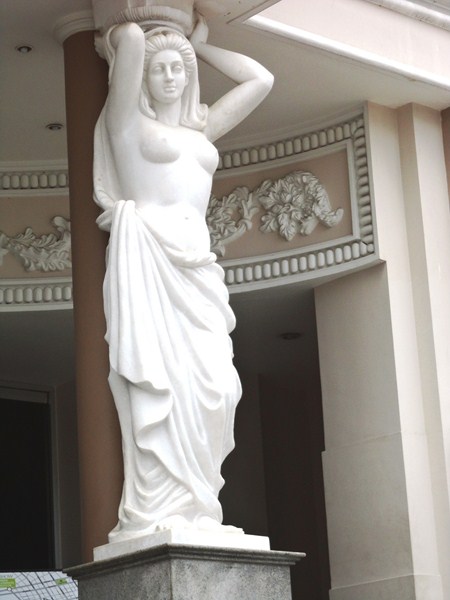
A scantilly clad carytid

A scantily clad caryatid

Shaped like the Opéra Garnier in Paris, the Municipal Theater is a smaller counterpart of the Hanoi Opera House (built between 1901 and 1911).  Influenced by the flamboyant style of the French Third Republic, its ornate façade, decorated with inscriptions and bas reliefs, is shaped like France’s Petit Palais (“little palace”) which was also built in 1900. In 1943, some of its decorations, engravings and statues were removed from the theater façade (to make the the theater look more youthful) but, in 1998, during the 300th anniversary celebration of Saigon, a portion was restored by the city government.

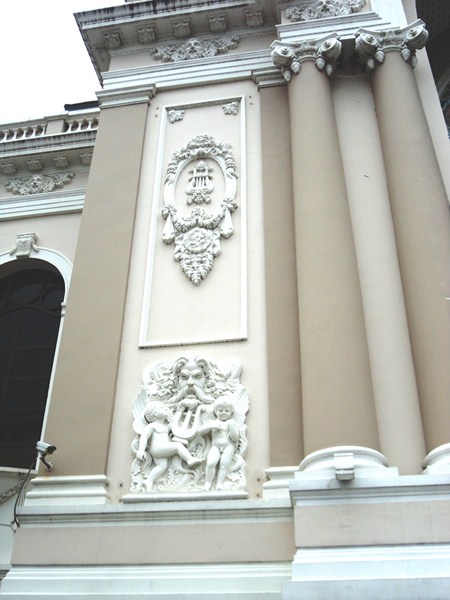
Bas reliefs and paired Ionic colums

Bas reliefs and paired Ionic colums

This opera house has an 800-seat main seating floor plus two levels of seating above; a sweeping staircase; and all the inscriptions, décor, and furnishings were designed and drawn by a French artist and sent from France. It now hosts the Ho Chi Minh City Ballet Symphony Orchestra and Opera (formerly the Ho Chi Minh City Symphony and Chamber Orchestra), one of the city’s premiere entertainment companies.

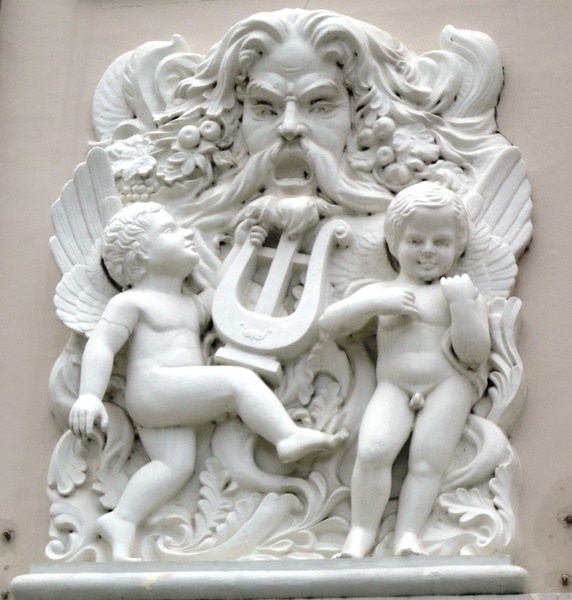
Deatil of bas relief

Deatil of bas relief

The theater is equipped with state-of-the-art lighting and sound systems, and safety equipment. Many of its original architectural and decorative features, including a stone veranda, white stone statues at the entrance, colorful granite tiled floors, chandeliers, bronze statues in front of the stairs, richly-engraved auditorium arch and wall statues, have been incorporated. In 2009, an outdoor lighting system was installed on the roof of the Opera House.

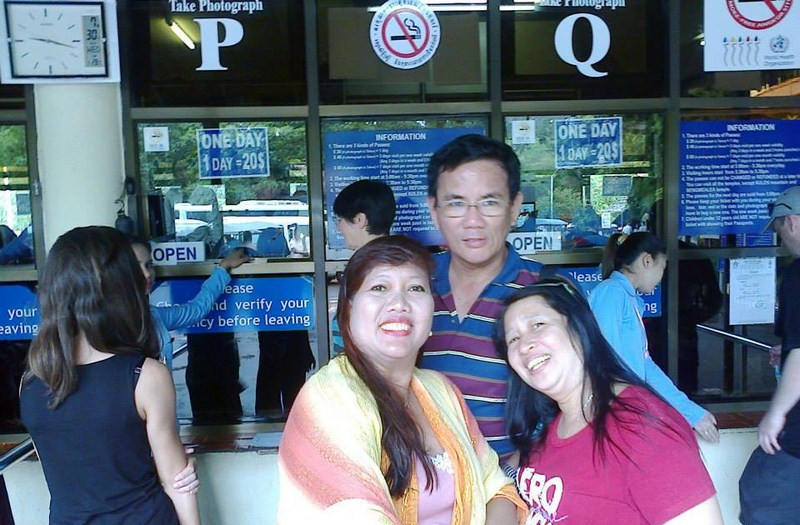
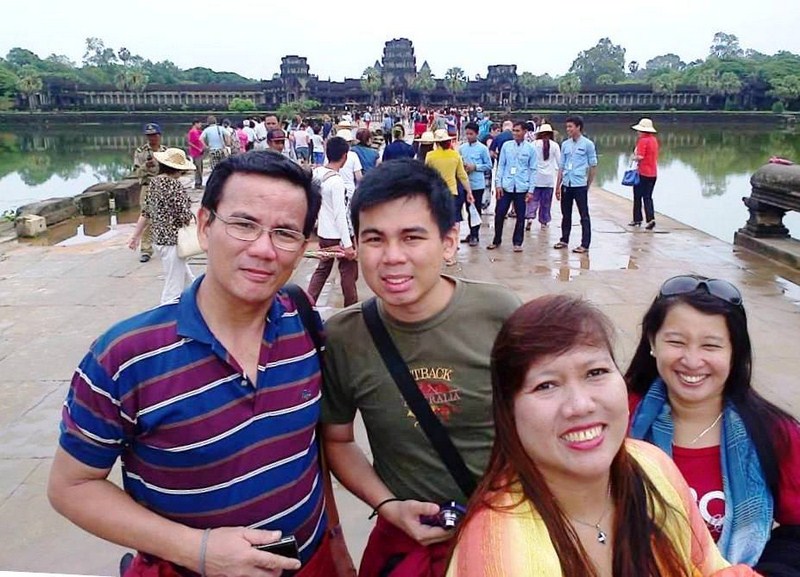
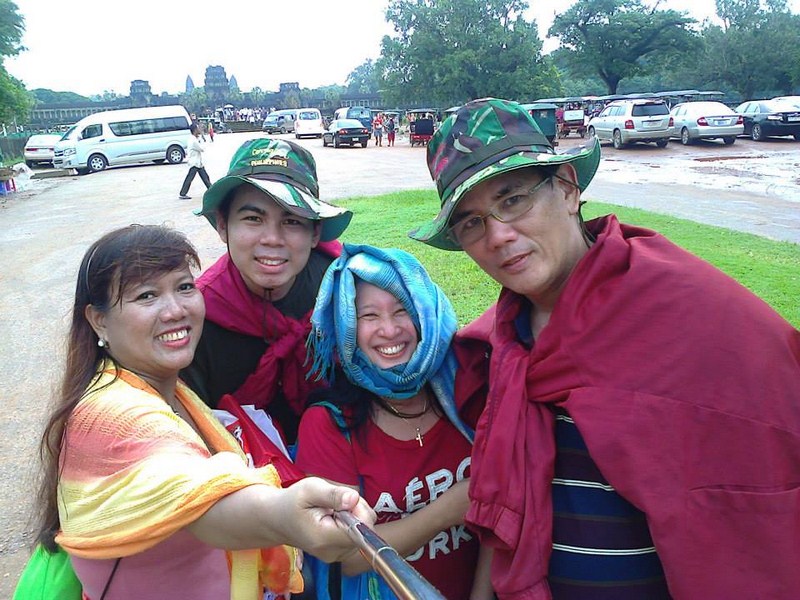
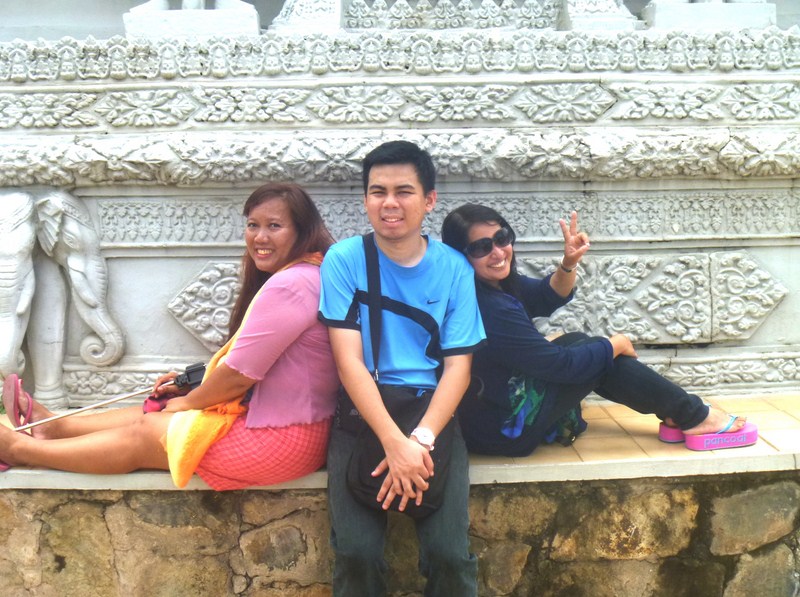
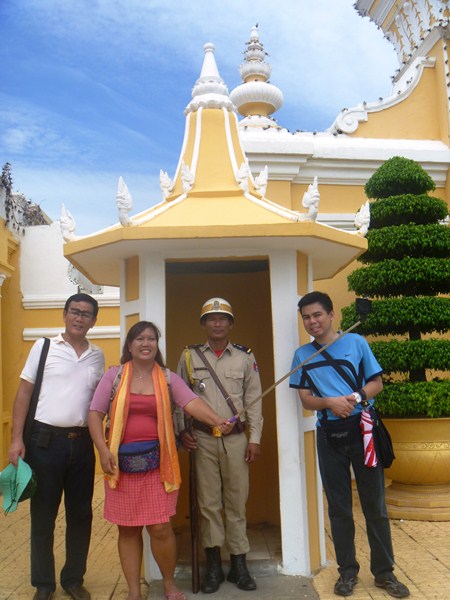
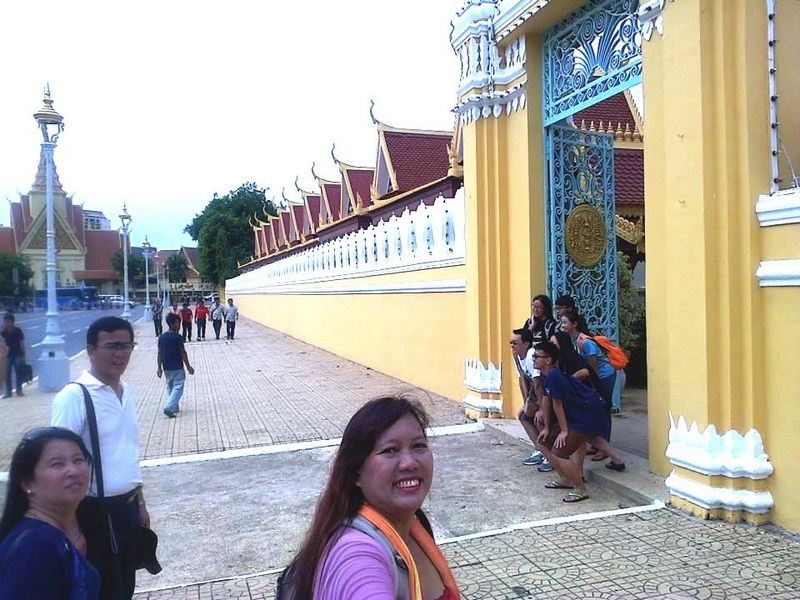
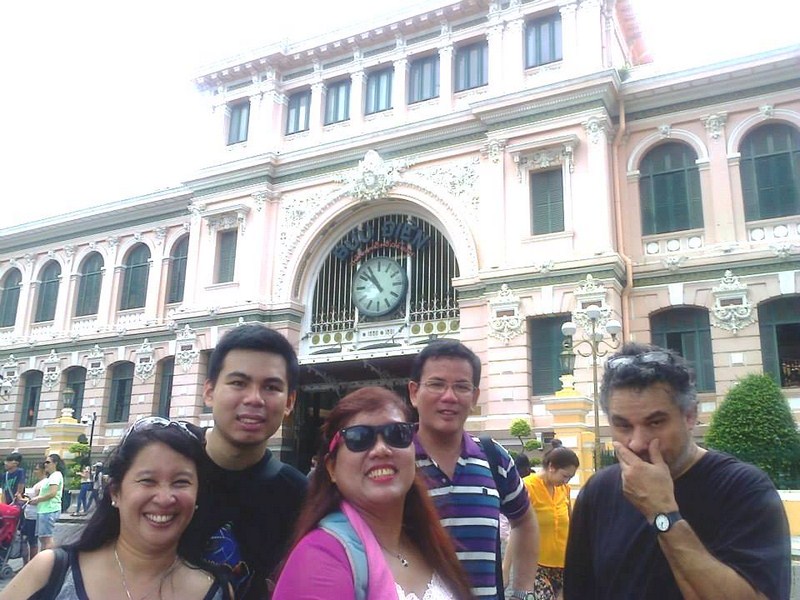
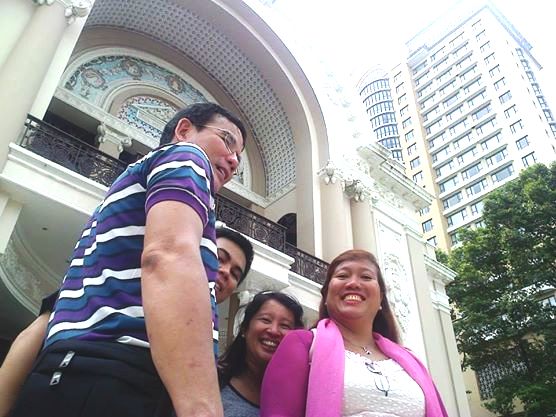
The author, Jandy, Osang and Violet

The author, Jandy, Osang and Violet

Saigon Opera House: 7 Lam Son Square, Ben Nghe Ward, District 1, Ho Chi Minh City. Tel: 08 3829 9976.

Sangyaw Pasasalamat Parade (Tacloban City, Leyte)

Jandy and I arrived at typhoon-ravaged Tacloban, via a Cebu Pacific flight, on the morning of June 29.  Grace, Cheska, Marve and Kyle were already in the city, having left the day before.  We arrived at my brother-in-law Manny’s house just in time for lunch.

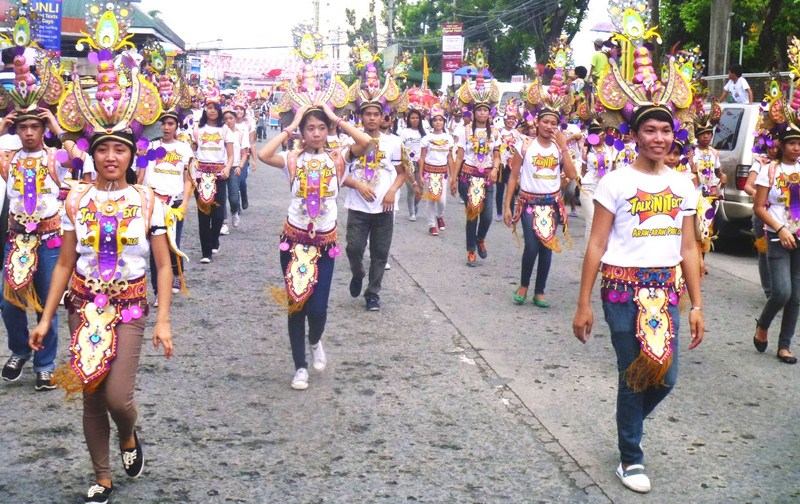
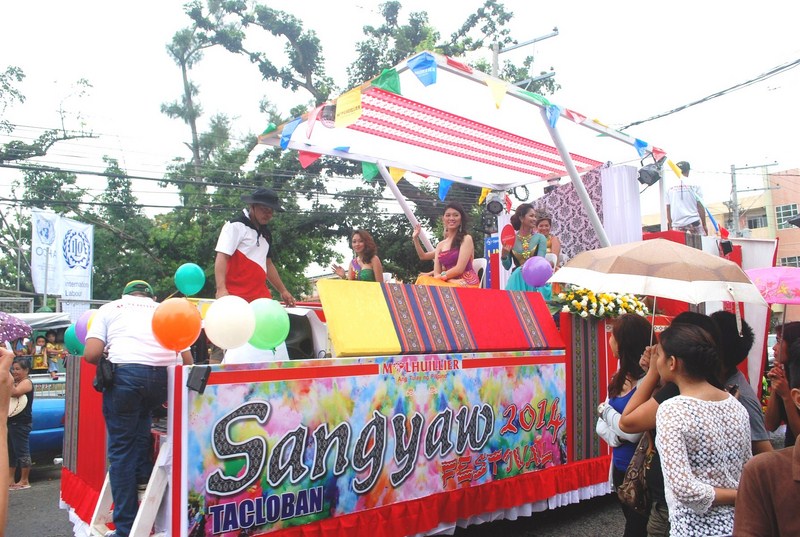
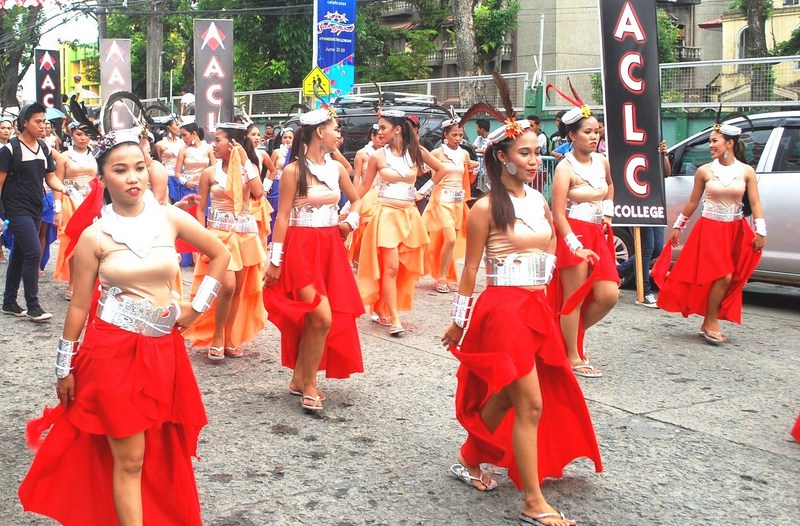
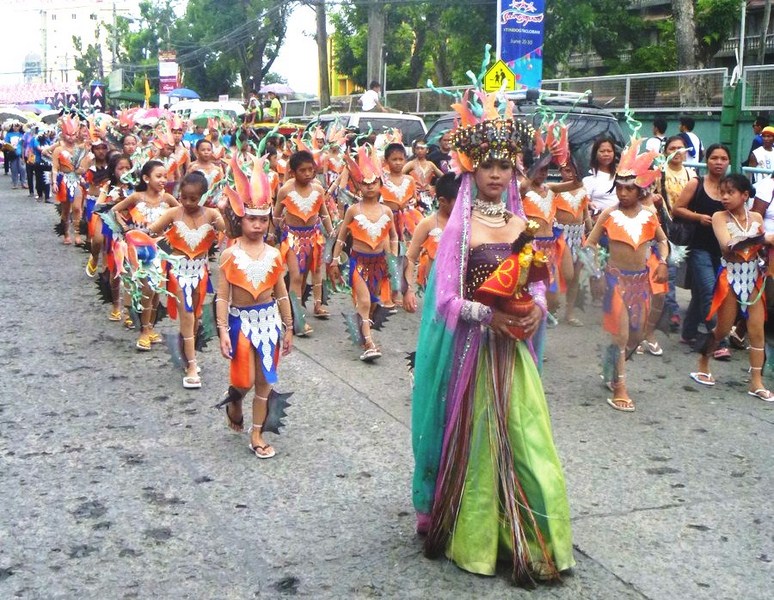
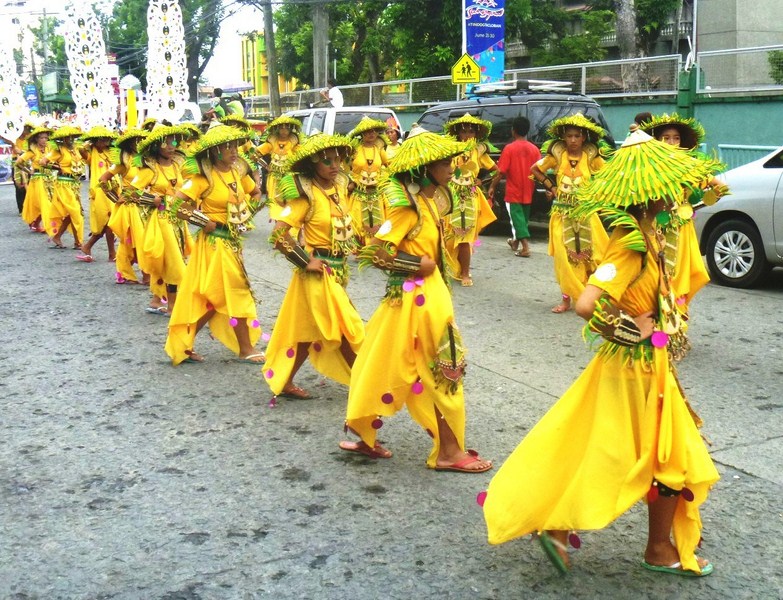
The Sangyaw Pasasalamat Parade

The Sangyaw Pasasalamat Parade

His house was conveniently located along Avenida Veteranos, one of the major city streets that the Sangyaw Pasasalamat Festival (which honors Señor Santo Niño de Leyte, Tacloban City’s patron saint) parade would pass through (Real to Imelda then Rizal towards Romualdez and will end at the Kanhuraw Hill).

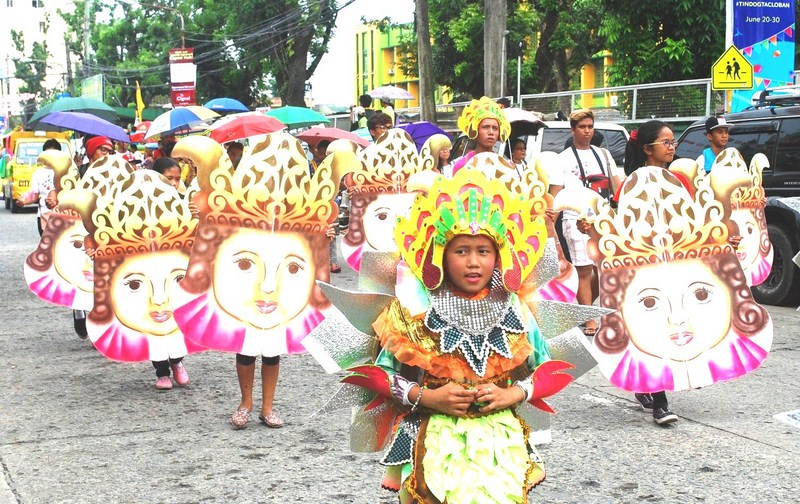
The Sto. Nino de Leyte is a favorite theme

The Sto. Nino de Leyte is a favorite theme

The parade, held nearly 8 months after Typhoon Yolanda (international name: Haiyan) devastated the city and other parts of the Visayas, was a simple affair, tame and devoid of much extravagance and glamour as with previous festival parades.

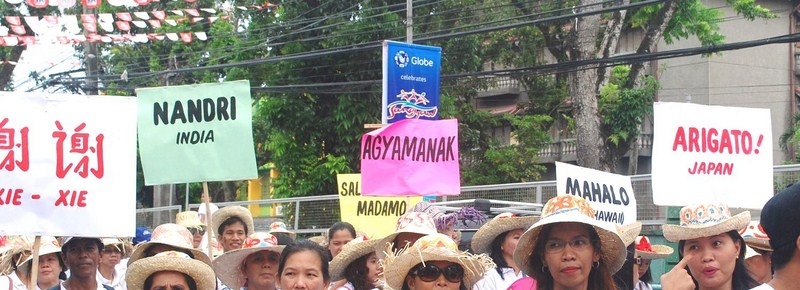
Thank you in many languages

Thank you in many languages

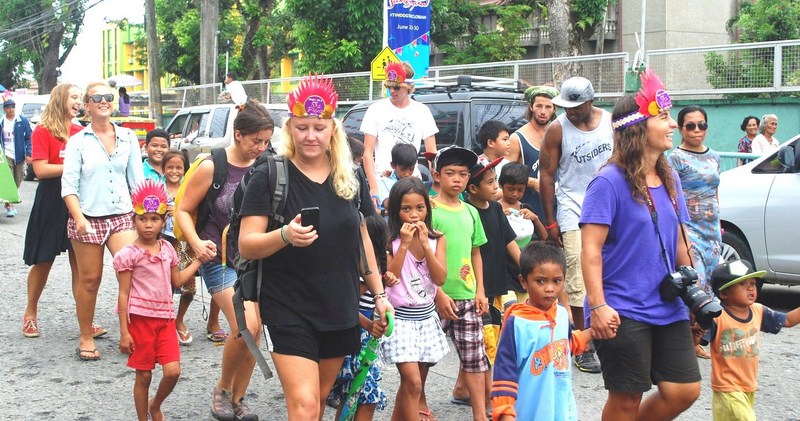
Foreign aid workers also join in

Foreign aid workers also join in

The parade was participated in by more than a thousand merrymakers from 8 schools, 5 barangays, private companies (LBC, Talk and Text, Monterey, ABS-CBN, etc.), government agencies (PhilHealth, Department of Health, Department of Education, etc.), delegates from the various branches of the country’s armed services, and the humanitarian international non-government organizations (iNGOs) such as Oxfam, Save the Children, Volunteers for the Visayans, World Vision, Plan Philippines, Care Philippines, and the United Nations High Commissioner for Refugees (UNHCR), etc.. Eleven non-competing and six competing groups will join in the merrymaking. There were only 5 participating floats.

One of the participating floats

One of the participating floats

With its theme “Pasasalamat,” the parade now focuses on thanksgiving for those who survived the wrath of the super typhoon as well as for Taclobanons and Leyteños to express their gratitude to the different iNGOs whose heartwarming assistance and support helped Tacloban and the Taclobanons get back on their feet.

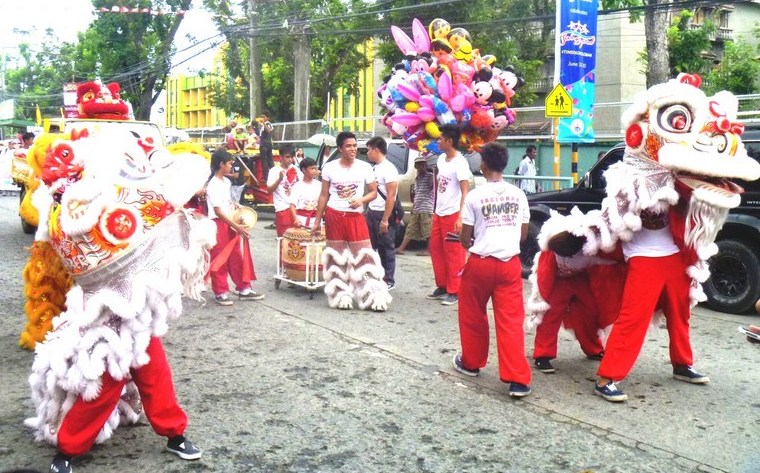
Lion dancers from the Fil-Chinese community

Lion dancers from the Filipino-Chinese community

The iNGOs also made this parade possible by taking care of the logistics, giving a subsidy of not less than PhP30,000 to each participating barangay and contingent.  During, the parade, thanks was expressed in the languages of the iNGOs –  Australia (Thoinks Moite), Belgium (Dank U), China (Xie Xie), France (Merci),  Germany (Dankeschön),  Greece (Efharisto), Hungary (Koszonom), India (Nandri), Indonesia (Terima Kasih), Italy (Grazie), Japan (Arigato), Korea (Kamsahamnida), New Zealand (Kiaora Koe), Russia (Blagodarya), Spain (Gracias), U.S.A. (Thank You), etc.

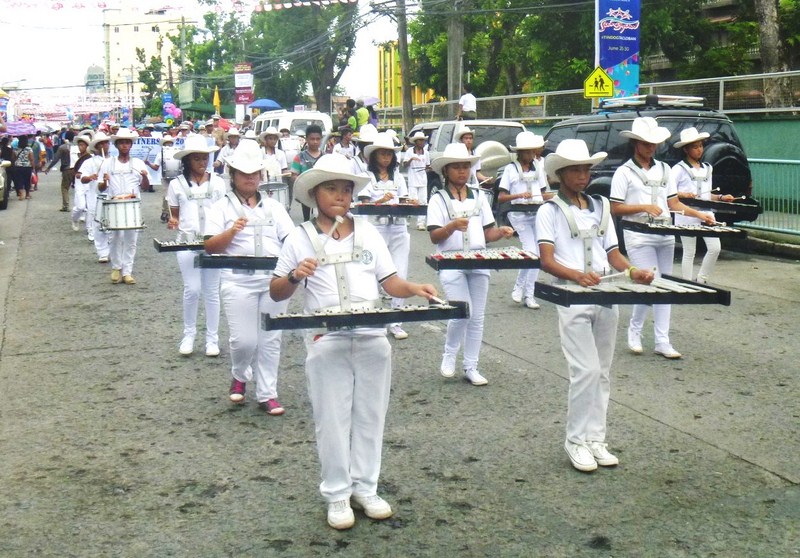
A drum and lyre band

A drum and lyre band

Though it was a gloomy Sunday, with scattered rain showers (but no excruciating heat from the sun), it was nice to see the people enjoying again and the city colorful, with many Taclobanons, in colorful costumes, joining the parade, exhibiting their unique innovations and creativity.

Sangyaw Parade (27)

Sangyaw Parade (37)

Sangyaw Parade (147)

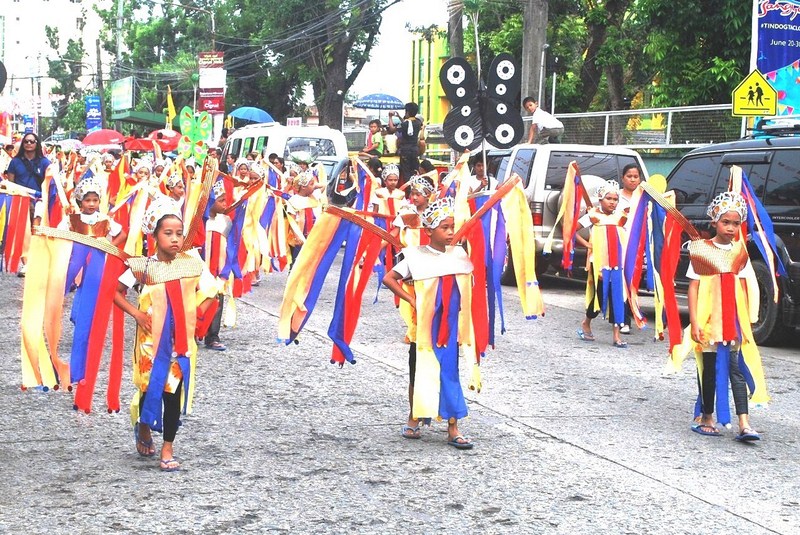
It was still a parade with a rainbow of colors

It was still a parade with a rainbow of colors

The parade somehow relieved the stress and trauma that the Taclobanons have experienced after Typhoon Yolanda.  At the same time, it also helped people in the area to feel that life is returning back to normal in the city.

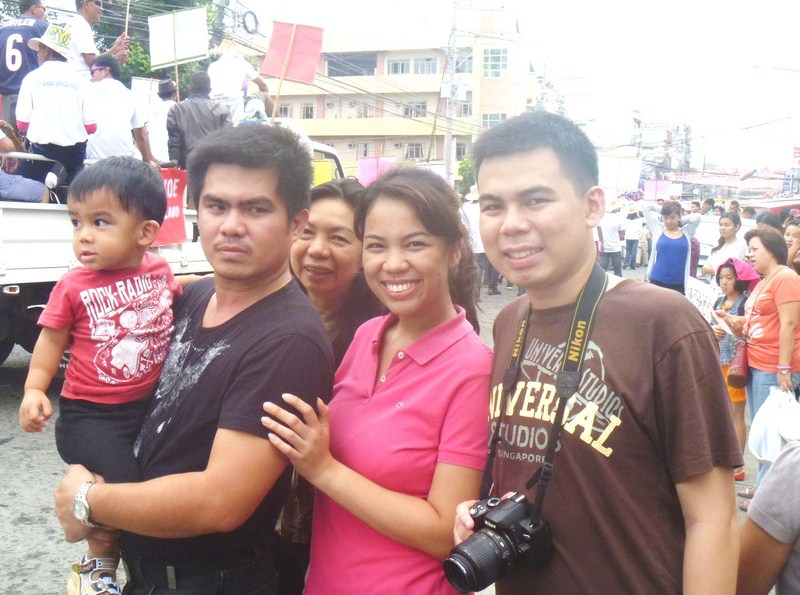
Kyle, Marve, Grace, Cheska and Jandy enjoying the parade

Kyle, Marve, Grace, Cheska and Jandy enjoying the parade

City Tourism Operations Office: City Hall, Kanhuraw Hiil, Tacloban City, Leyte. Tel: (053) 325-8955, (053) 325-2491, (053) 523-9671 & (053) 325-6248.

The Mangyan Village of Talipanan (Puerto Galera, Mindoro Oriental)

From the Puerto Galera Municipal Hall, we returned to our respective vans, with Ms. Aileen N. Bareng (Senior Tourism Operations Officer of Puerto Galera) plus Ms Susan E. Cruz (Tourism Operations Assistant) and Sienna May R. Manongsong, both of the Oriental Mindoro Provincial Tourism Office joining us, and were driven to the Iraya Mangyan Village at Sitio Talipanan.
Weaving hut

Weaving hut

The Mangyans, the indigenous people of Mindoro Island,  consists of 8 ethnic sub-groups, the Iraya being one of them.  This tribe used to prospered along the coastal areas until they were forced to move from their land and were treated as second class citizens, neglected and discriminated.

Iraya-Mangyan weavers at work

Iraya-Mangyan weavers at work

They never wore slippers, wore old and torn clothes, and could rarely afford to eat rice in a week, surviving by gathering lami (sweet potato). After a major battle between government forces and communist rebels in 1986, the indigenous families were forced to leave the mountain and squat in the lowlands. The foot of Mt. Malasimbo in Puerto Galera alone is home to as many as 200 Iraya-Mangyan families.

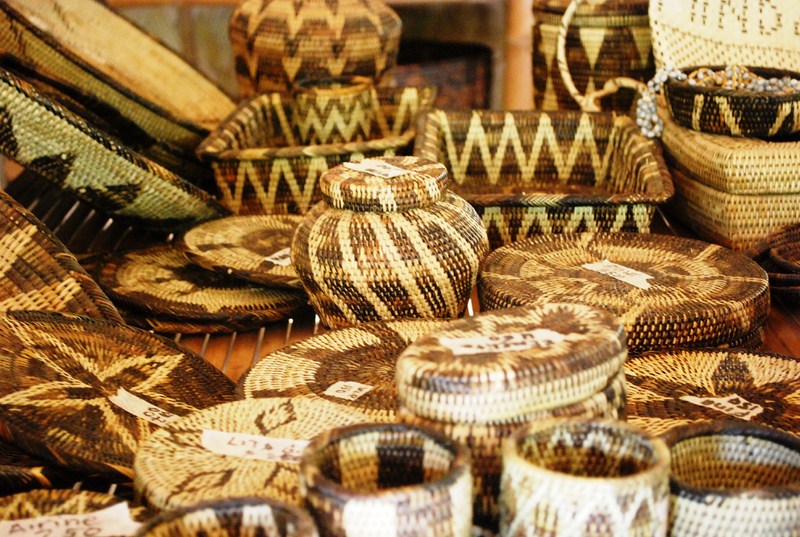
Nito handicrafts on display at showroom

Nito handicrafts on display at the showroom

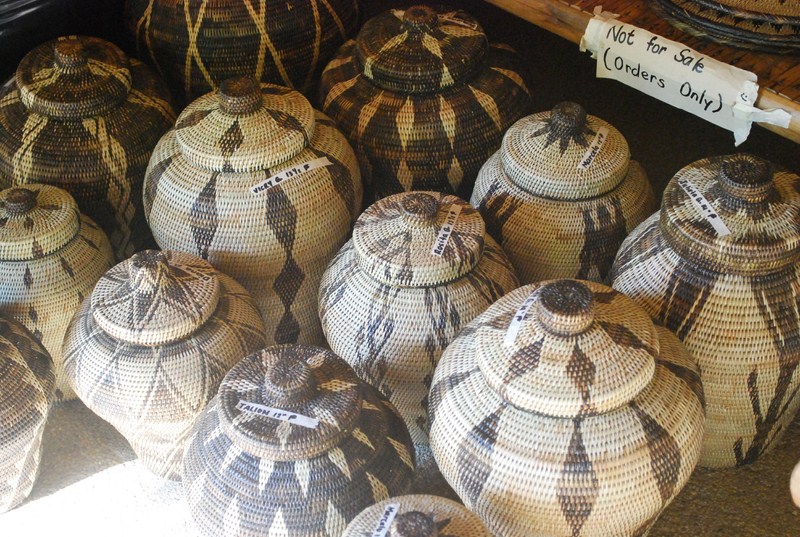
Nito jars

Nito jars

Since 1989, the Ayala Foundation, with the help of Ms. Beatriz “Bea” Zobel (wife of businessman and philanthropist Don Jaime Zobel de Ayala), has been implementing numerous projects covering education, livelihood development, housing management and health for these Iraya-Mangyans so that they may become more active participants in and productive members of their community yet be capable of managing its own affairs and activities without compromising its own culture.

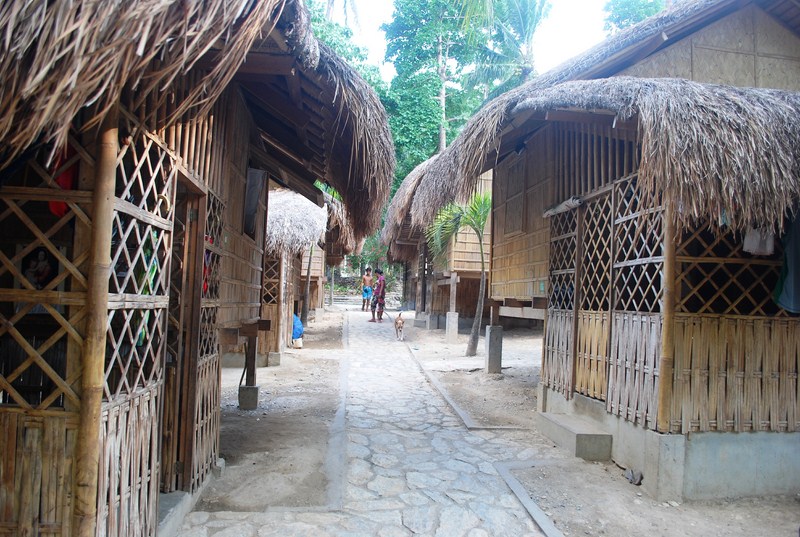
Neat row of Mangyan houses

A neat row of Mangyan houses

In 1990, the Jaime and Bea bought a piece of the property for them and, in 2007, the couple acquired the rest of land and started developing the Mangyan Village, complete with power and water supplies.  Through their effort to bring the Mangyans to the mainstream of Philippine society through education, the village has produced a number of successful graduates (licensed teachers, community workers, ec.) who are now doing their part in helping their fellow Iraya-Mangyans.

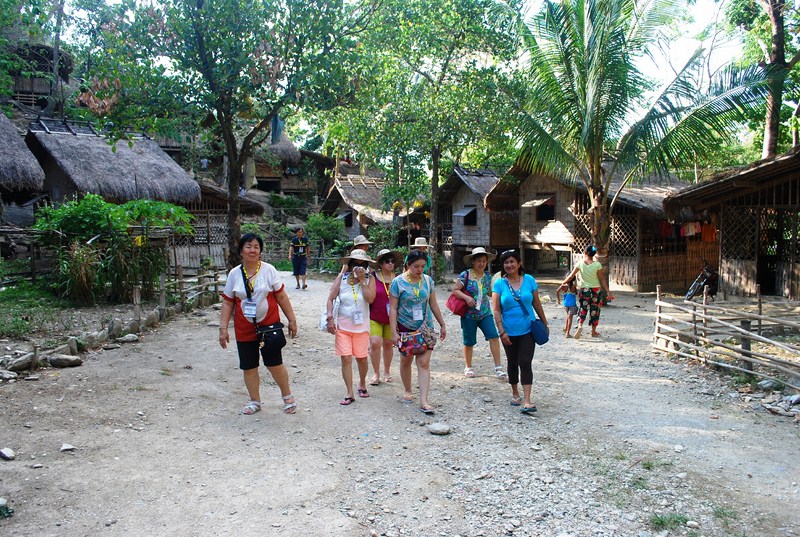
Oriental Mindoro Cruise Drive Caravan ladies exploring village

Oriental Mindoro Cruise Drive Caravan ladies exploring the village

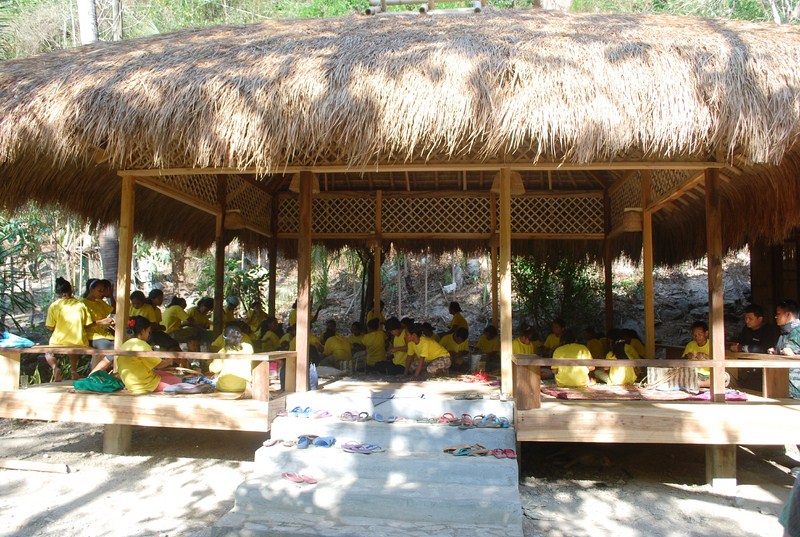
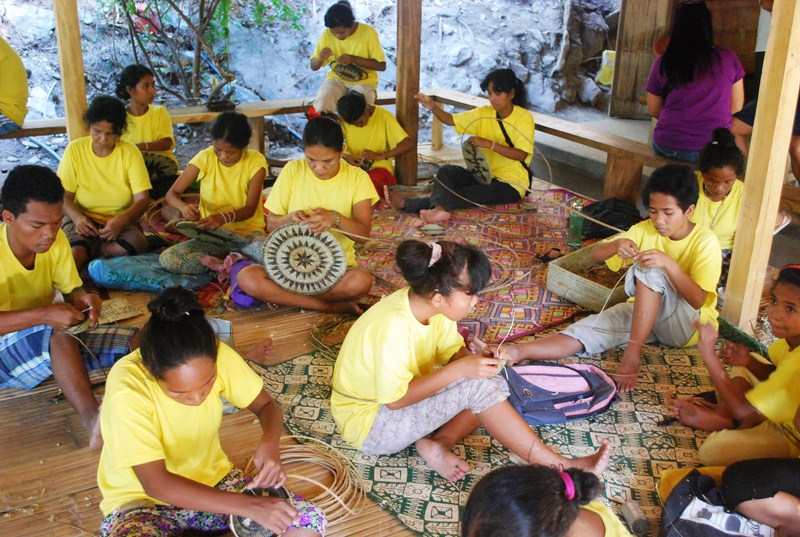
At the village, Oriental Mindoro Cruise Drive Caravan participants were welcomed by Mr. Fabian “Pabling” de Jesus, the 53 year old Batangueño right hand man of the Ayalas in Mindoro, who is at the helm of this project.  We met him at a large pavilion, at the center of the village, were about 52 Iraya-Mangyan, mostly women and wearing their uniform yellow shirts, were busy weaving strands of nito (Lygodium circinatum), a richly colored tropical vine of the fern family, into beautiful but functional baskets, plates with intricate designs, beer bottle holders, place mats, laundry baskets, jars and storage boxes. Mangyans are  expert basket weavers. At the very least, each Mangyan earns around PhP60-P70 in a day. In 2013, the Mangyan Village received 1,879 visitors who availed of these locally produced handicrafts.

An Iraya=Mangyan family in their new home

An Iraya-Mangyan family in their new home (photo: Ms. Sheena Ferrer)

The finished nito products are displayed at the adjoining showroom. The products are also brought to Makati City where the Ayalas opened two stores. The Mangyan workers receive shares from the sales and 4 kilos of rice every week. The Foundation also provides livelihood training in dressmaking, beading, masonry, electrical wiring and agriculture, among others.

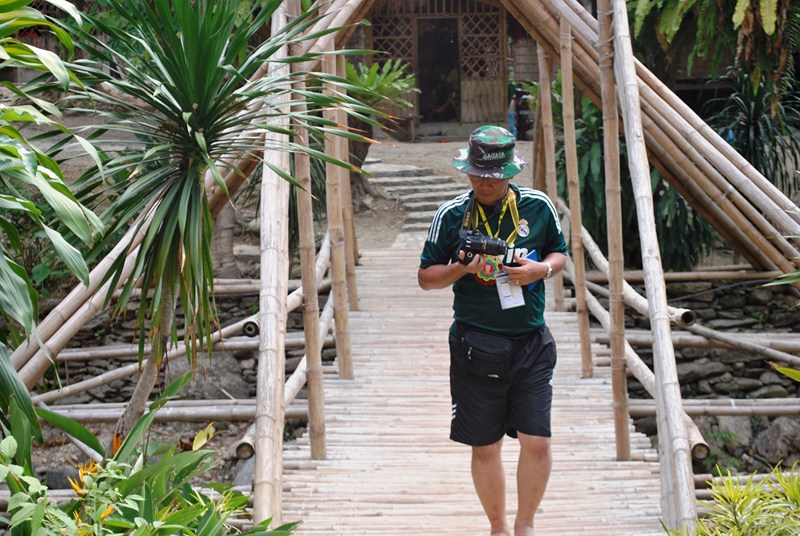
Author crossing bamboo bridge (photo: Sheena Ferrer)

Author crossing bamboo bridge (photo: Ms. Sheena Ferrer)

When we visited this 4.2-hectare community located 9 kms. from the town proper, they already had a 4-classroom public elementary school (which accommodates grades 1 to 6 students), a medical facility managed by Indian nuns, common comfort rooms and 69 nice 36 sq. m. 2-bedroom houses complete with electricity, beds, furniture and kitchen and eating utensils.  Priority was given to the community elders.  Each house was estimated to have cost PhP150,000 which includes labor and materials. According to Mr. de Jesus, they are looking at building about 300 of these houses.

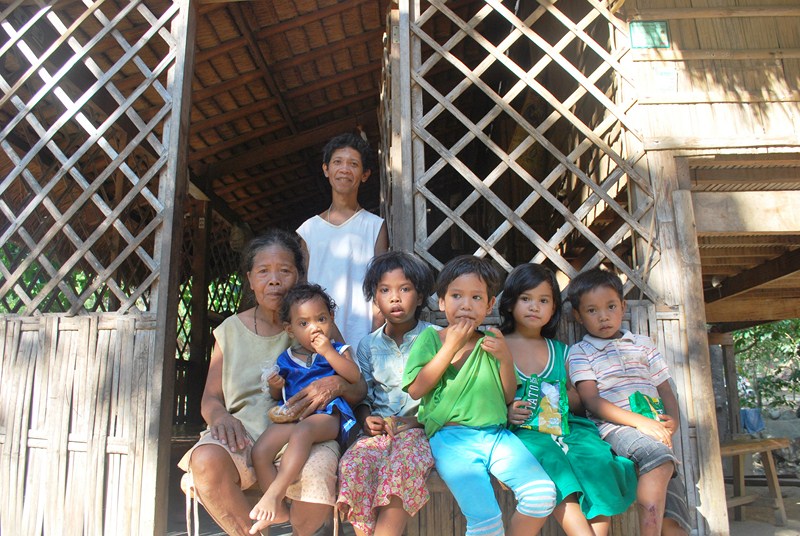
Iraya-Mangyan children

Iraya-Mangyan children (photo: Ms. Sheena Ferrer)

Mangyan Village: Sitio Talipanan, Brgy. Aninuan, Puerto Galera, Mindoro Oriental.

Automobile Association Philippines (AAP): 28 EDSA, Greenhills, San Juan City.  Tel: (632) 655-5889.  Fax: (632) 655-1878.  E-mail: info@aap.org.ph. Website: www.aap.org.ph.

AAP Travel: G/F, Sea Tower Bldg., 2332 Roxas Blvd. cor. Arnaiz Ave., Pasay City. Tel: (632) 551-0025.  Fax: (632) 551-0014. E-mail: info@aaptravel.com.  Website: www.aaptravel.com.ph.

Bancuro Church Ruins (Naujan, Mindoro Oriental)

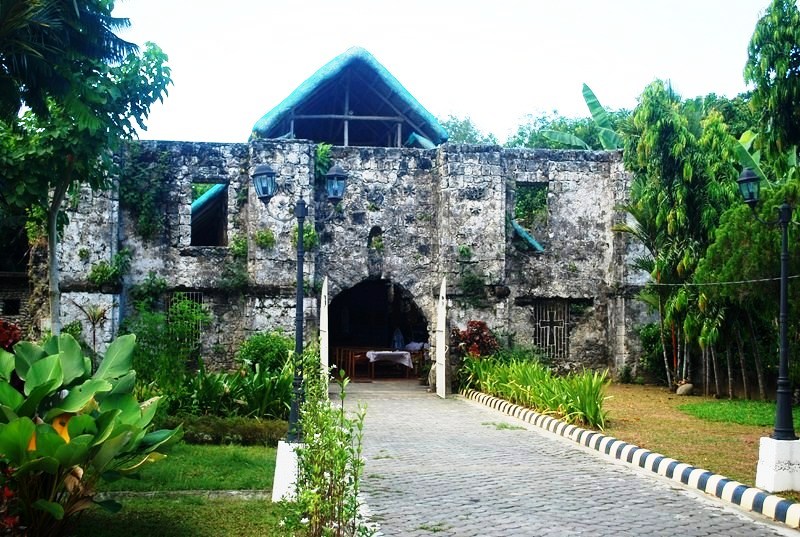
After lunch at Benilda ng Bancuro Resort & Restaurant, next on our Oriental Mindoro Cruise Drive Caravan tour was the Bancuro Church Ruins, more popularly known as Simbahan Bato (Stone Church), just a short drive from the resort.

Bancuro Church Ruins (Simbahan Bato)

Bancuro Church Ruins (Simbahan Bato)

This old, roofless ruin is what remains of an Augustinian Recollect church and priory that was built in the 1690s, on swampy ground, with adobe and coral rock.  The church also served as a fort and a place of refuge against Moro invaders.

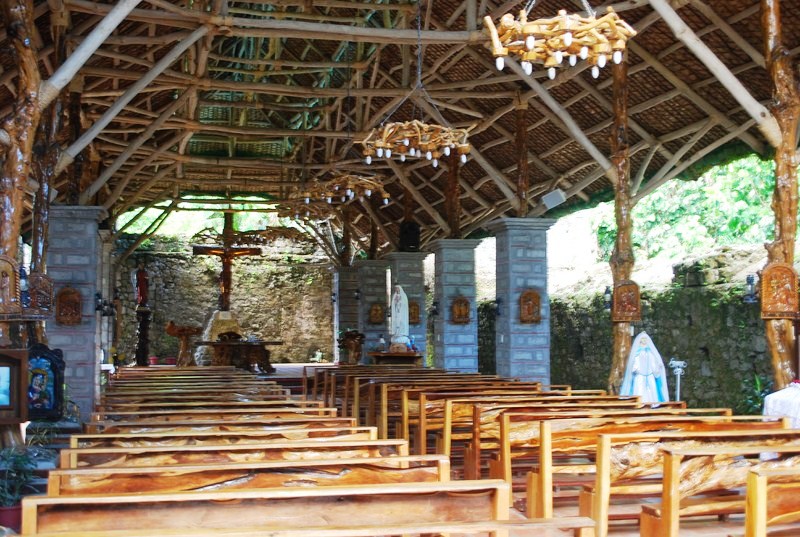
The native-style church within a church

The native-style “church within a church”

After several tries by marauding Moro pirates, the place was finally overran by them.  The pirate were said to be looking for the church’s bell, said to be made of gold but, not being able to find it, they instead burned the church to the ground in 1824.

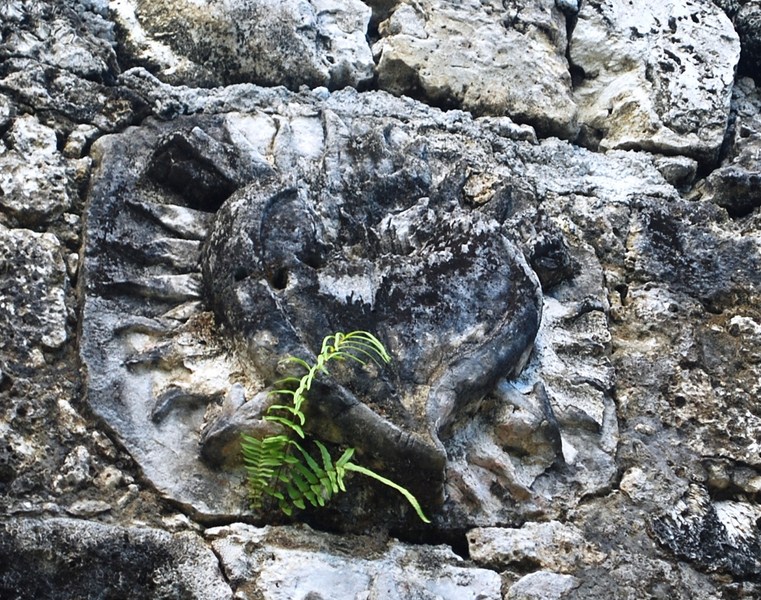
The Augustinian symbol of a pierced heart

The Augustinian symbol of a pierced heart

The 2-level church has never been reconstructed and its coralstone and adobe walls were crumbling and creeping with vines until the 1960s, when a small chapel (literally “a church within a church”) was built within its massive walls.  It was renovated in 2011.

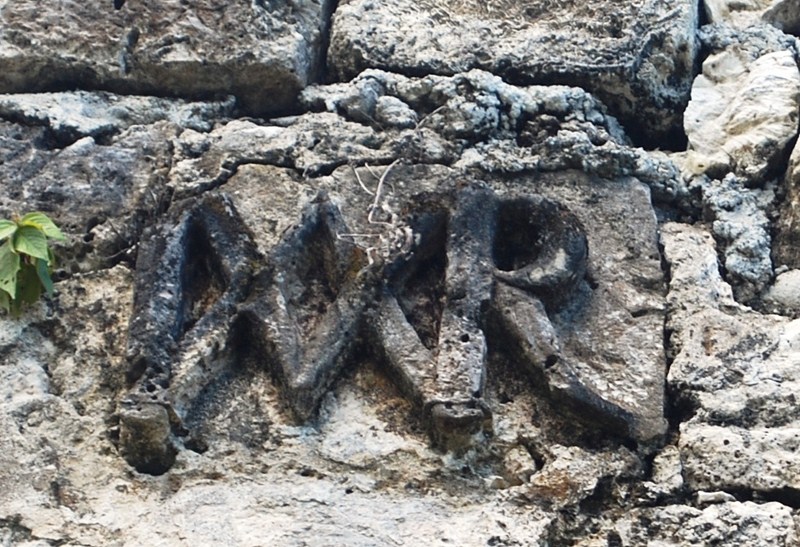
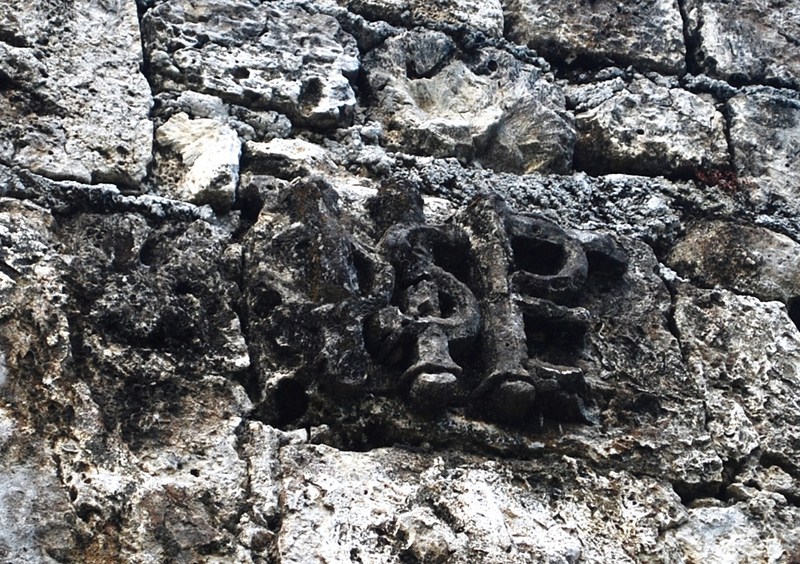
Masonic symbol of a square over compass?

Masonic symbol of a square over compass? 

Still trying to decipher it.

Still trying to decipher this. I recognize the pierced heart on the left. The symbol beside it looks like the Greek symbol for “pi.”

Above the main entrance arch, on the second level, is a small statue niche, above which is the Augustinian symbol of the pierced heart. Flanking it are rectangular openings. Pockets along the walls display several Christian icons. Outside the native-style church is a small plaza with 2 shrines (one for Jesus and the other for the Virgin Mary).

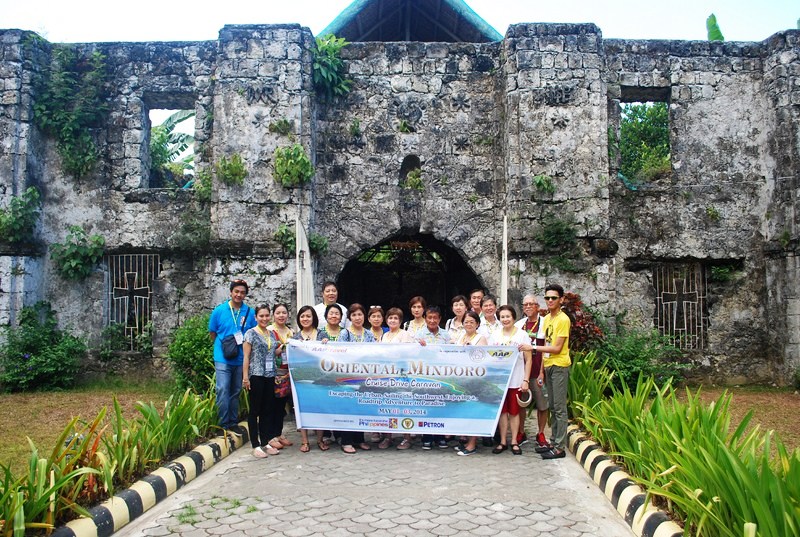
Oriental Mindoro Cruise Drive Caravan participants at church entrance

Oriental Mindoro Cruise Drive Caravan participants at church entrance

Simbahan Bato: Brgy. Bancuro, Naujan, Mindoro Oriental.  It is a 45-min. jeepney ride from the town proper.

Automobile Association Philippines (AAP): 28 EDSA, Greenhills, San Juan City.  Tel: (632) 655-5889.  Fax: (632) 655-1878.  E-mail: info@aap.org.ph. Website: www.aap.org.ph.

AAP Travel: G/F, Sea Tower Bldg., 2332 Roxas Blvd. cor. Arnaiz Ave., Pasay City. Tel: (632) 551-0025.  Fax: (632) 551-0014. E-mail: info@aaptravel.com.  Website:www.aaptravel.com.ph.

Chapel of St. Joseph the Worker (Victorias City, Negros Occidental)

The highlight of our visit to the Victorias Milling Co. (VICMICO) was the Chapel of St. Joseph the Worker, an artistic landmark in the Western Visayas that heralded the birth of Filipino religious art in the country.  This modern and futuristic  church, also called the Ossorio Chapel, was designed by New York architect Anthony Raymond (an apprentice of the great American architect Frank Lloyd Wright) and was built, on the site of the old factory, from 1948 to 1949.  Earthquake-proof, its tower and nave are connected by movable beams.

The Chapel of St. Joseph the Worker

The Chapel of St. Joseph the Worker

This Chapel, built for VMC personnel and their families, was once featured in Life Magazine (as well as Liturgical Art Magazine) as “The Church of the Angry Christ.”  It features mosaic panels formed with bits of broken bottles of soda, milk of magnesia and other colored bottles gathered by parishioners.

The chapel interior

The chapel interior

A symbol of avant garde art, it depicts the angry Christ (God the Son), with a flaming heart and seated on skulls and a serpent (which represents death), on Judgment Day with big eyes and long, outstretched hands (symbolizing His welcoming of the faithful who were called to this continual last judgment), being received by God the Father, represented by 2 huge, red-orange hands.  The Holy Spirit, represented by a descending dove with multi-colored wings, hangs above. All over the place are multi-colored angels.

The controversial mural

The controversial mural

Christ is flanked by brown-skinned Filipinized saints in native attire, standing as witness to Christ’s resurrection – St. Joseph and the St. John the Baptist on the left and Mary and St. John the Evangelist on the right.  The first Filipinism in liturgical art, its singular rendition of brown-skinned Filipinos as Catholic saints has deliberately “Filipinized” traditional Biblical themes, thus giving it a Filipino face.

Triangle with an overseeing eye

Triangle with an overseeing eye

The controversial altar mural, done in a psychedelic splash of primary colors, was also criticized in the 1950s because of its solid, vibrant colors and striking brush strokes.  It also created a stir in conservative church circles for its depiction of Jesus Christ as angry and fierce-looking, instead of a merciful and gentle god. The altar’s beam has a triangle with an overseeing eye, looking at those who are called – the faithful attending the mass.

Skylight above altar

Skylight above altar

Belgian-born American liturgical artist Adelaide “Ade” de Buthune, the Baroness of Schaerbeek, assisted by Romulo Sta. Ana, was commissioned to decorate the baptistery (depicting Christ being baptized as a Filipino), the tabernacle, the mosaic outer walls (particularly the mosaic of Joseph’s wedding to Mary) and murals at the back.

A sculpture of Benjamin VValenciano

A sculpture of Benjamin VValenciano

Local engraver Arcadio Anore executed Bethune’s designs for the brass plates decorating the pulpit, baptistery and other parts of the church. Local artist Benjamin Valenciano, a carpenter from Victorias, did the the crucifix, the Stations of the Cross and the images of Joseph and Mary, garbed as ordinary brown-skinned Filipinos.

Bell tower

Bell tower

Philippine-born American abstract expressionist Alfonso A. Ossorio, the New York-based artist son of Don Miguel Ossorio, did the mural decoration of the altar within 11 months.  Alfonso studied Fine Arts at Harvard University (Cambridge, Massachussets, U.S.A.) and continued his studies at the Rhode Island School of Design. Among his friends were the famous abstract expressionist artists Jackson Pollock and Clyfford Still.

The Last Supper

The Last Supper

As painting medium, Alfonso used ethyl silicate 40, recommended to him by Ralph Mayer, a paint chemist, as appropriate for the tropics as it fghts humidity and withstands the dampness. Up to now, the murals have not been retouched and their bright colors still looks magnificent.

The Virgin Mary with the Holy Spirit

The Virgin Mary with the Holy Spirit

The front facade of the church has a mural showing three scenes from the life of St. Joseph – the marriage to Mary, the workshop at Nazareth, and the death of Joseph. There;s also the comic-like painting outside depicting “The Prodigal Son” (believed to be a pioneering work on the comics art in the Philippines) while the back of the church depicts “The Last Supper” and “The Virgin Mary with the Holy Spirit.”

The workshop at Nazareth

The workshop at Nazareth

Outside the church is a Carabao Sundial, built in December 1975 by Senior Machine Shop students of Don Bosco Institute, led by Hezekiah B. Katalbas and Vicente Gonzaga, with the assistance of VMC management.  Its horn is exaggerated to become the dial face.

The Three Kings

The Three Kings

As it features the works of world famous artists, this chapel should be protected and preserved for other generations to appreciate and, to ensure its preservation, it should be declared as a National Heritage Site or National Cultural Treasure.

The Carabao Sundial

The Carabao Sundial

Church of St. Joseph the Worker: Victorias Milling Co. (VICMICO), Victorias City, Negros Occidental.

How to Get There: Victorias City is located 34 kms. (a 45-min. bus or jeepney drive) northeast of Bacolod City.  Upon reaching the intersection of the National Highway and the road leading to VMC, hire a tricycle that goes straight to the church.

The Ruins (Talisay City, Negros Occidental)

The highlight of our Silay Heritage Tour was our visit to The Ruins in nearby Talisay City.  Here, a wacky, English and Tagalog-speaking tour guide narrated to visitors the fascinating tale of The Ruins, injecting humor along the way.

The Ruins - the Taj Mahal of Negros

The Ruins – the Taj Mahal of Negros

The Ruins is what remains of the grand, 2-storey mansion that Negrense sugar baron, Don Mariano “Anoy” Ledesma Lacson (1865-1948) built in the middle of his 440-hectare sugar cane plantation in the early 1920s, following the death of his first wife, Maria Braga, a Portuguese from Macau who died in an accident while pregnant with their 11th child. Don Mariano is the youngest of the 8 children of Lucio Lacson and Clara Ledesma from Molo, Iloilo.

Our tour guide explaining the history of The Ruins

Our tour guide explaining the history of The Ruins

He later remarried, this time to Concepcion Diaz from Talisay, adding 3 more children to his existing brood of 10 (which included Rafael Lacson, the former governor of Negros Occidental). It became the residence of Don Mariano and his unmarried children. After drawing lots, Don Manuel’s sugar plantation was divided among the 10 children by his first wife Maria and  the mansion went to Mercedes Lacson who married Manuel Javellana from Jaro District in Iloilo.

The interior of The Ruins

The interior of The Ruins

Later, the land was again divided into equal parts among the couple’s 12 children and the 3.6 hectares that included the mansion was given to Ramon Javellana. Raymund Javellana, one of Ramon’s children, thought of restoring the mansion and converting it to a tourist spot but the mansion remained abandoned for 67 years until they started to develop it on May 2007.  On January 2008, it was officially opened to the public as a tourist attraction.

The main entrance

The main entrance

The 903 sq. m., 10-room (8 rooms for their children, a master’s bedroom and a family room) mansion, of Italianate architecture, has twin Neo-Romanesque columns with the first letters of the names of Don Manuel and Dona Maria engraved onto the mansion’s posts.  They actually looked like Es that face each other.

The mansion grounds

Cheska, Marve, Kyle and Grace at the mansion grounds

Facing the main door, the boys’ and girls’ bedrooms, at the ground and second floors respectively, were all located on the left side. The master’s bedroom and the family room were both located upstairs and facing west, on the left and right, respectively. A small arched window, between the kitchen and the dining area, facilitated the movement of food, minimizing the servants going in and out of the kitchen.

The "M" moldings

The “M” moldings

The picturesque mansion, one of the top 12 fascinating ruins in the world and the Taj Mahal of Negros, has many interesting tales to tell.  Its top edges also feature a shell-inspired decor which, in New England, indicates that the homeowner is a ship captain. At the glassed-in sunroom with bay windows, Don Mariano would be often seen sitting as he viewed ships that come and go along the coastal waters of Talisay. Maria Braga’s father was also a ship captain.  Again, in keeping with the marine theme, the mansion’s second story also features a belvedere, between the master’s and family room  and also facing the west, where the family would gather to watch the sunset.

The restaurant dining area

The restaurant dining area

Felipe, one of Don Manuel’s sons, supervised the continuous concrete mixing and pouring, done 24 hours a day, 7 days a week.  This ensured that the concrete was very compact and that no air got in, resulting in the high-quality strength of the structure.  The concrete mixture also incorporated egg whites which, to this day, visitors can still see the gloss or shine on the mansion’s walls because of it.

The remains of the stairs

The remains of the stairs

In 1942, during the Japanese occupation in the early part of World War II, the mansion was reduced to its skeletal frame when USAFFE (United States Armed Forces in the Far East) guerillas set the mansion ablaze, with the consent of Don Manuel, so it would not be used as headquarters by the Japanese forces.

Detail of column capital

Detail of column capital

The mansion’s roof, ceiling and the 2-inch thick, meter wide and approximately 20.5 m. long, jointless wooden floors, extending from the main entrance up to the end of the dining area, were all burned during the non-stop, 3-day fire but the foundations remained standing, thanks to its oversized steel bar reinforcement and the meticulous way of pouring the A-grade mixture.  The original Spanish machuca floor tiles, the hardest and most expensive during that time, also survived.

Detail of arch

Detail of arch

The original, 4-tiered fountain outside the mansion was, in its heyday, surrounded by a beautiful lily garden maintained by a Japanese gardener who, following the burning of the mansion, mysteriously disappeared.   Today, its landscaped garden draws various inspirations – from formal English to Japanese-inspired gardens.

The original 4-tier fountain

The original 4-tier fountain

Viewed just outside the mansion, with a tree on top, is the chimney (simborio) of the muscovado sugar mill (where the juice of the sugarcane is extracted) of the family’s sugar farm. From the mill, the extracted sugarcane juice is then transferred to large vats, heated and then cooled to produce the sugar crystals.

Exterior detail

Exterior detail

Inside The Ruins is a semi-fine dining restaurant (offering Mediterranean cuisine), a mini-bar and a souvenir shop while around it are modern additions – an 18-hole mini golf course, a snack bar and newly built toilets that still use the mansion’s original septic tank.

Belvedere detail

Belvedere detail

Aside from tours and dining, The Ruins are also be used for special events such as weddings, family reunions, pre-nuptial pictorials, etc.  There are also a stall selling Erv’s sugar cane juice, camping and picnic grounds, bath houses and a pavilion. Also within the grounds is a 3 m. high obelisk,the Landmark Award of the Philippine Institute of Civil Engineering (PICE). Too bad, we left at 5 PM.  According to our guide, you will see the building glow from the sunset around 5:30 PM.

The simborio

The simborio

The Ruins: Open daily, 8:30 AM to 8 PM. Tel: (034) 476 4334. Admission: PhP60 (adults), PhP40 (students) and PhP30 (children).


Silangang Nayon Park and Restaurant (Pagbilao, Quezon)

Our final stop on our Appsline Travel-sponsored Lucena City/Pagbilao tour was the Silangang Nayon Park and Restaurant where we were to have dinner.  From Pagbilao Wharf, we followed Lurhen as we drove to this popular destination and quiet retreat which is a 25-min. drive from Lucena City.  From the Maharlika Highway, we turned right and drove 6.5 kms. inland before reaching the resort.  It was just about dusk when we arrived and we were welcomed by general  manager Ms. Mary Ann Padilla who asked us to proceed to its floating restaurant.

Silangang Nayon Park and Restaurant

Silangang Nayon Park and Restaurant

We descended down a series of paved walkways with dining cottages, nestled along the edge of cliffs, on either side.  At the base of the cliff, we next had  to cross a long footbridge with a sturdy  foundation of concrete stilts, passing two other dining cottages, before reaching the larger, boat-shaped restaurant at its end which overlooks Tayabas Bay, Pagbilao Grande Island and Patayan Island.

The footbridge and floating restaurant

The footbridge and floating restaurant

Ms. Padilla soon joined us at the table and we proceeded to interview her, at length, about the resort. The resort first opened in 2003 with just one seaside cottage. As the years went by it slowly grew into a cozy park with a  main restaurant (a very nice place to view the sunrise and feel the cool sea breeze while dining); bamboo dining cottages, function hall; a mini-zoo and a children’s playground.

DSC_0573

The resort also has a bed and breakfast, on top of a cliff and overlooking the sea, with affordable room rates: PhP2,500 (good for 2-4 persons with free breakfast for 2), Php4,000 ( good for 8 persons with free breakfast for 4) and PhP5,000 (good for 8-10 persons).  Each spacious, clean airconditioned cottage has a TV and a private bath with hot and cold shower.  They also offer boat trips or kayaking to Patayan Island Puting Buhangin Beach and Kwebang Lampas.

Interior of restaurant

Interior of restaurant

The place also had its share of misfortunes, being almost reduced to rubble by the wrath of typhoons, notably Milenyo. From the ruins, it slowly rebuilt, replacing the bamboo and thatch main restaurant and the bamboo bridge with sturdy concrete.  It also closed down a not so successful second branch at SM City Lucena.  Even with the same cooks preparing the same food at both branches, the SM branch simply could never relicate the ambiance of the original.

L-R: Lurhen, Mary Ann, Mel, the author and Rannie

L-R: Lurhen, Mary Ann, Mel, the author and Rannie

Even as we were interviewing her, our cooked food slowly arrived, delivered to the restaurant from the main kitchen/grilling area on the mainland via a helicopter-shaped dumbwaiter running along a steel cable, truly an attraction by itself. The restaurant serves very affordable and great tasting Filipino and Chinese seafood dishes and we got to sample a number of their signature dishes.

Seafood Cream Soup

Seafood Cream Soup

Beef with Broccoli

Beef with Broccoli

First up was the filling seafood cream soup (PhP340 for medium and PhP500 for large) followed by the green mango encelada, beef with broccoli, calamares and crab szechuan (PhP100/100 gms.). The ostrich with mushroom sauce (PhP415 for medium and PhP615 for large), its meat sourced all the way from Cagayan de Oro in Mindanao, was really tender and tasted like beef.  The piece de resistance was the grilled oysters .  These oysters are first steamed, then grilled and flavored with garlic and butter.  For dessert, we had the not so sweet but still great tasting buchi plus brewed coffee.

Camaron Rebosado

Calamares

Ostrich with Mushroom Sauce

Ostrich with Mushroom Sauce

It was now late in the evening when we finished dinner and, as we had a long 3.5-hour drive back to Manila, we said our thanks and goodbye to our gracious host Mary Ann as well as Ms. Lurhen.  With me at the wheel of the car, traffic was almost non-existent but we were sometimes traveling at a snail’s pace because of slow-moving trucks.  We arrived in Manila past midnight.

Grilled Oysters

Grilled Oysters

Silangang Nayon Park and RestaurantBrgy. Bantigue, Pagbilao 4302, Quezon. Tel: (042) 716-0077 and (042) 622-2173. Mobile no.: (0922) 886-7677, (0920) 813-2324 and (0919) 442-0042. Contact Person: Ms. Mary Ann Padilla.  Email:  silangang_nayon@yahoo.com.ph

Appsline Travel Services and Consultancy: Phase 2, Krisanta Village, Brgy. Bukal, Maharlika Village, Pagbilao, Quezon.  Tel: (042) 716-0067.  Mobile number: (0922) 633-0363 (Ms. Lurhen T. Cortes). E-mail: yvette_24@yahoo.com and appsline0305@gmail.com.

Cortijo de Palsabangon Farm Park and Restaurant (Pagbilao, Quezon)

From Ouan’s The Farm Resort in Lucena City, we proceeded to the next destination in Appsline Travel-sponsored tour, this time traveling to the next town of Pagbilao where we were to have lunch at the 5.1-hectare Cortijo de Palsabangon Farm Park and Restaurant.  As we neared the restaurant, we passed by its organic farm planted to fruit trees and pesticide-free vegetables.

The native-style restaurant

The native-style restaurant

Upon arrival, we were welcomed by owner Ms. Ayrin Llorin at the native-style restaurant. The place looked very relaxing, with its lush greenery and backdrop of mountain scenery. Built with bamboo, hardwood and sawali, the restaurant is furnished with tables and chairs made with bamboo or hardwood and accented with large and small cart wheels.  Within is a billiard table and a bar stocked with regular wines and spirits.

The dining area

The dining area

Cart wheels provide a nice touch

Cart wheels provide a nice touch

The well-stocked bar

The well-stocked bar

Ms. Ayrin prepared for us Filipino dishes that included  pork sisig and baked tahong (mussels baked with cheese), both popular appetizers, and seafood kare-kare (using shrimp instead of stewed beef or pork and cooked with some of their organically grown vegetables), all served with steamed rice, plus pancit canton.

Shrimp kare-kare

Shrimp kare-kare

Pancit canton

Pancit canton

Pork sisig and baked tahong

Pork sisig and baked tahong

After this very filling and delicious meal, we also tried out the local, coconut-based lambanog (the Philippine version of vodka) spiked with liputi, a local wild blackberry which adds a slightly sweet, tangy taste. Lambanog’s other flavors include grapefruit, bubble gum, pineapple, prunes among others. Though fiery tasting, it is said not to produce a hangover.

Trying out the local liputi lambanog

Trying out the local liputi lambanog

Near the restaurant are 3 native-style bamboo cottages named after vegetables – singkamas (jicama root), sigarilyas (winged bean) and talong (eggplant).  They each have their own dining and sleeping area and is rented out for PhP500 for an overnight stay. Aside from the restaurant, customers can dine al fresco or in a picnic cottage.Come Friday evening, a local band provides a night life party. Cold nights are warmed with a bonfire.

L-R: Melissa, Lurhen, Ayrin, Rannie and the author

L-R: Melissa, Lurhen, Ayrin, Rannie and the author

Diners here can also play billiards or sing their hearts out with their videoke.   The place is ideal for camping; team building; agricultural and organic farming tours (you pick and pay for the fresh fruits and vegetables which they cook); and horse and pony riding.  Come November to January, a rainbow usually appears during the day.

Cottages for overnight stays

Cottages for overnight stays

Cortijo de Palsabangon Farm Park and Restaurant: Brgy. Ibabang Palsabangon, Pagbilao, Quezon. Mobile number: (0999) 513-4730 (Ms. Ayrin Llorin), (0923) 517-7001 (Ms. Ayrin Llorin) and (0917) 719-5184 (Ms. Noriko Usui).  E-mail:cortijodepalsabangon@yahoo.com.ph.

Appsline Travel Services and Consultancy: Phase 2, Krisanta Village, Brgy. Bukal, Maharlika Village, Pagbilao, Quezon.  Tel: (042) 716-0067.  Mobile number: (0922) 633-0363 (Ms. Lurhen T. Cortes). E-mail: yvette_24@yahoo.com andappsline0305@gmail.com.

CCP Museo ng Kalinangang Pilipino (Pasay City)

Diwa: Buhay, Ritwal at Sining

The Museo ng Kalinangang Pilipino (Museum of Philippine Culture), an integrated humanities museum established in 1988, gathers together the works of Filipino traditional artists and preserves Filipino artistic traditions; studies and interprets these to provide a deeper understanding of Filipino national culture evolving with and for the people; and strengthens the people’s awareness of the integral, dynamic role of creativity and artistic expression in national life and culture.

Bpagapel (Maguindanawon healing rite)

“Diwa: Buhay, Ritwal at Sining” (Spirit, Life, Ritual and Art), a permanent exhibit, presents an overview of aspects of Philippine traditional culture and showcases significant Filipino artistic traditions as well as explores the development of Philippine art and aesthetics in the socio-cultural context.   

Komedya of Peñaranda, Nueva Ecija

Different artistic forms are presented as a result of the Filipino’s interaction with five conditions/concepts – Bayan (Nation), Buhay at Kamatayan (Life and Death), Kamag-anakan at Pamayanan (Kin and Community), Lupa (Land), and Kaluwalhatian (Divinity).

Ifugao House

On display are sunduks (grave markers) and models of indigenous houses (the Agta lean-to, the Higaonon treehouse, the Badjao houseboat, the Ivatan house, the Mandaya house, the Ifugao house and the Maranao torogan).

Sunduk (grave marker) of Tausug of Sulu)

CCP Museo ng Kalinangang Pilipino: 4/F, Cultural Center of the Philippines Main Bldg., CCP Complex, Pasay City. Tel (Visual Arts & Museum Division)(632) 832- 3702, (632) 832-5094 and (632) 832-1125 local 1504,1505 and 1508.  Open Tuesdays to Sundays, 10 AM to 6 PM. Admission: PhP40 for adults and PhP30 for students and children. If there are performances at the Main Theater, exhibit hours are extended up to 10 PM. Mobile number: (0920) 470-0690.  E-mail: ccp.exhibits@gmail.com.

Why Do I Travel?

Why do I travel? Over three decades ago, you wouldn’t imagine me traveling the way I do now. Even during my Holy Week school break, when just about everybody was out in the provinces having a great 4-day vacation, I was spending mine at home.  So why do I do it? For many, it’s to fulfill a dream of seeing the world, for others it’s for education, earning a living, to prove to oneself you can do it or simply just for the hell of it.

Father and son on Mt. Makulot

Father and son bonding on Mt. Makulot

I did so when I was already married, and a father to boot, and I did it for the most fatherly of reasons – to show my autistic son Jandy the beauty of this country and world, through travel and immersion, and not imprison him to the confines of a home, school or, worse, a mental institution.

Contemplating my future on the Rockies of Mt. Makulot.  Who would Have thought I would be a writer?

Contemplating my future on the Rockies of Mt. Makulot. Who would have thought I would be a writer much less an author?

October 27 to 29, 1999 would be one of the few times father and son would be traveling alone, this time on a 3-day odyssey to circumnavigate Taal Lake, visit the Southern Luzon heritage town of Taal and culminate it with a climb up the 1,145 meter high Mt. Makulot, Batangas’ highest mountain.

Mt. Makulot, Batangas' highest mountain.  The campsite is on the mountain's shoulder on the left

Mt. Makulot, Batangas’ highest mountain. The campsite is on the mountain’s shoulder on the left

Being an architect, first and foremost, our visit to Taal town brought me, up close and personal, with some of the country’s Spanish and American-era vernacular architecture (churches, ancestral houses, historical buildings, etc.) and the need to preserve them as part of the country’s patrimony so that future generations would live to see and feel them the way we see and feel them today.  I also got to experience, firsthand, the deep religiosity of the Filipinos.

Taal's Basilica of St. Martin of Tours, the largest in the Far East

Taal’s Basilica of St. Martin of Tours, the largest in the Far East

A somewhat scary experience was our overnight stay in the town’s Casa Punzalan, an ancestral house converted into an inn.  We were the only boarders that night and the caretaker left early because he was feeling sick and locked us within for security, with our permission, of course.   That wasn’t the scary part.  The ghosts of Taal’s past being where we were was.   Thus, it was a great relief when the sun came out that morning and the caretaker unlocked the inn’s main entrance.

Jandy in front of the Chapel of Our Lady of Caysasay

Jandy in front of Taal town’s Chapel of Our Lady of Caysasay

The climb up the campsite on the Mt. Makulot’s shoulder, on the other hand, introduced us to the joys of mountaineering and camping.  It also showed me how unfit I was, huffing and puffing, as we went up the mountain, more so when I saw a woman carrying a heavy load of long bamboo stems and a man laden with two backpacks and an icebox full of soft drinks, all slung on a pick.  We never made it, past the campsite, to the peak that day, it already being very late in the day to do so.  However, we did so, four months later, on another climb with Jandy plus four other companions.

Casa Punzalan.  We stayed at the second floor corner room.  We survived the night.

Casa Punzalan. We stayed at the second floor corner room and survived the night here.

Barely three months after this memorable trip, I decided to write about this unique father and son bonding experience and sent the drafts of two articles to Ms. Rosario “Chato” Garcellano, travel editor of the Philippine Daily Inquirer (PDI). On January 20, 2000, a memorable day for me, my first article “Makulot Beckons” came out on newsprint.  I have become a travel writer!!! This was followed three months later, on April 2, by “Taal: The Grande Dame of Batangas.”

Jandy at our room in Casa Punzalan

Jandy at our room in Casa Punzalan

After two more PDI articles, I had a much longer stint as a travel writer for TODAY (now Manila Standard TODAY).  It was during this time that I decided to raise the bar a little higher and add additional feathers on my hat by becoming an author – compiling my four published PDI and 28 TODAY travel articles into a book entitled “A Philippine Odyssey: A Collection of Featured Travel Articles,” published by New Day Publishers in 2005.

A framed copy of "Makulot Beckons" - my first published article (PDI)

A framed copy of “Makulot Beckons” – my first published article (Philippine Daily Inquirer, January 20, 2000).  That’s Jandy on the upper left corner of the article

From all these firsts, came four more travel books on Boracay and Philippine churches (a favorite topic of mine), national shrines and museums; copy editing stints with two publishing houses; development of a travel website (Biyahero: A Philippine Travel Portal, www.biyahero.net) with 3 other friends, my own travel blog (B.L.A.S.T. – Benjie Layug: Adventures of a Savvy Traveler, www.benjielayug.com), more travel writing stints with different newspapers (I’m now with the Business Mirror) and magazines (COLORS, Business Day and 7107 Islands Magazine); lots of media invitations to cover and promote Philippine travel destinations; and now, an urge to travel, here and abroad, when the opportunity presents itself.

My first book “A Philippine Odyssey: A Collection of Featured Travel Articles.”  That's me with daughter Cheska on cover

My first book “A Philippine Odyssey: A Collection of Featured Travel Articles.” That’s me with daughter Cheska on cover

A love for churches awakened by my visit to Taal town inspired me to write this book

A love for old Philippine churches, awakened by my visit to Taal town’s two churches, inspired me to write this book

All these because a concerned father wanted to see his son break out of the prison we call autism.  At such a young age at that time, my son has packed in more adventure than what most people would experience in their lifetime. Today, though still classified as autistic, my wife and I have seen him graduate, one small step at a time, from grade school, high school and, finally, college where he finished two degrees – Multi-media Arts and Tourism Management.  He sometimes joins me in media familiarization tours as my photographer.

With my family at the launching of my fourth book, September 18, 2010, at SMX Convention Center

With my family at the launching of my fourth book, September 18, 2010, at SMX Convention Center

Talking about a life-changing experience, that 3-day moment in time when a father bonded with his son changed my life forever.  Today, Holy Weeks are no longer stay-at-home experiences.