Bang Pa-In Royal Palace (Ayutthaya, Thailand)

On our second day in Thailand, we decide to go out of the city and visit the old Thai capital of Ayutthaya, a UNESCO World Heritage Site.  We made our travel arrangements with a  travel agency based near our hotel lobby at the ground floor. The 60-km. trip, via an airconditioned tourist bus, took just 1 hr.  Our first stop, upon reaching Ayutthaya, was the Bang Pa-In Royal Palace, also known as the Summer Palace.

Bang Pa-In Royal Palace

This palace complex, located along the bank of the Chao Phraya River, was originally constructed by King Prasat Thong  in 1632 but, after the sack of Ayutthaya in 1767, it lay empty and overgrown throughout the late 18th century and early 19th century.  King Mongkut (Rama IV) began to partially restore the site in the 1850s. Most of the present European-style buildings were constructed between 1872 and 1889 by King Chulalongkorn (Rama V).

Entry Promenade

Today, the palace remains largely open to visitors, as King Bhumibol Adulyadej and his family uses it only rarely for banquets and special occasions. However, as at all royal sites, proper dress was required and Grace and Cheska had to rent colored polo shirts to cover their shoulders. The grounds are not too large to be covered on foot. From the entrance, we walked along a formal entry promenade.

Ho Haem Montien Devaraj (Golden Palace of the God King)

The buildings, very European in design, are laid out along a long rectangular, artificial and ornamental lake lined with formal landscaping. The lake serves to divide the “public” outer area of the palace from the inner private areas. Along the route, we passed the Ho Haem Montien Devaraj (Golden Palace of the God King) or King Pasart Thong Shrine. This Khmer-style, stone prasat (residence of a king or god with a corncob-shaped super-structure ), under a banyan tree, was built by King Rama V in 1879 to replace an old shrine built by villagers as an offering to King Prasart Thong of the Ayutthaya period.

Saphakhan Ratchaprayun (Exhibition Hall)

On the left bank of the lake is the colonial-style, 1-storey, Neo-Classical style  Saphakhan Ratchaprayun (Exhibition Hall).  Originally built for the King’s brothers, it now houses a small museum covering the history of the palace.

Warophat Phiman (Excellent and Shining Heavenly Abode)

The one-storey Warophat Phiman (Excellent and Shining Heavenly Abode) was King Chulalongkorn’s residence and throne hall. It is richly decorated in turn-of-the-century European aristocratic style, with quirky Thai touches here and there.  Its audience chambers and anterooms are decorated with oil paintings, commissioned by King Chulalongkorn in 1888, depicting significant events in Thai history and scenes from Thai literature.  The private apartments of this building are still used by the king and his family whenever they reside in the palace.

Phra Thinang Utthayan Phumisathian (Garden of the Secured Land) Residential Hall

Opposite the lake, to the east, is the 2-storey, elaborately-constructed Phra Thinang Utthayan Phumisathian (Garden of the Secured Land) Residential Hall, considered the principal building in the palace complex.  Completed in 1877, this  building  was built from wood and decorated with mahogany furniture ordered directly from Europe. However, it was destroyed by fire during the restoration in 1938. Its modern reconstruction, tinted alternately in dark and light green, has a more “Paris Metro” Art-Deco feel to it. Its balcony is similar in design to that of a Swiss chalet. The building is still occasionally used by the royal family and is not open to the public.

Krajome Trae

At the end of the promenade, the lake took on a more natural shape and, from a circular Spanish-style pavilion (Krajome Trae), we saw the “signature piece” of Bang Pa-In, the gracefully elegant Aisawan-Dhipaya-Asana Pavilion (The Divine Seat of Personal Freedom) in the middle of the lake. The only example of classical Thai architecture within the palace, it was built by King Chulalongkorn (Rama V) in 1876 and has 4 porches and a spired roof. From Krajome Trae, we fed the fishes with pieces from a previously paid for loaf of bread.

Aisawan-Dhipaya-Asana Pavilion (The Divine Seat of Personal Freedom)

Opposite the Krajome Trae is the Devaraj-Kunlai (The God King Goes Forth) Gate, the principal entrance to the Inner Palace.  It is connected to the Varobhas Bimarn Mansion (located in the Outer Palace) by a covered bridge with a louvered wall from which the court ladies could look out without being seen themselves.

Devaraj-Kunlai (The God King Goes Forth) Gate

The highlight of our visit was the opulent, Chinese-style Phra Thinang (Royal Residence) Wehart Chamrun (Heavenly Light), the only royal residence open to the public.  Constructed in the Chinese Emperor style and made entirely of materials imported from China, it took 10 years to build and was completed in 1889.

Phra Thinang (Royal Residence) Wehart Chamrun (Heavenly Light)

It was a royal offering to King Chulalongkorn (Rama V) by the Chinese Chamber of Commerce represented by Chinese merchant Phraya Choduk Ratchasetthi (Fak) as a token of the long-lasting brotherly relationship between the Thai and Chinese peoples. King Chulachomklao usually made a royal visit here during the cool season.

Phra Thinang – Interior

Here, we had to remove your shoes to enter.  Full of red, gold, dark woods and inlaid mother of pearl, it has a stupendous dragon sculpture inside carved from camel bone and a Chinese-style throne room at the ground floor. the upper storey houses an altar enshrining the name plates of King Mongkut and King Chulalongkorn with their respective queens.

Before returning, we climbed the 112-step spiral staircase up the 30 m. high, 3-storey and brightly painted Ho Withun Thasana (Sage’s Lookout), built in 1881, following in the footsteps of King Rama V who, when residing in Bang Pa-In Palace, used this hall as the place to get the bird’s eye view of the surrounding area. This hall was constructed in the form of a tower between Utthayan Phumisathian and Wehat Chamrun.  Only the first two floors are open to the public.

Ho Withun Thasana (The Sages Lookout)

Back at the entrance, we returned the shirts and bought some soft drinks and snacks (10-20 baht) before boarding our bus.

Bang Pa-In Palace: Bang Pa-In District, Ayutthaya, Thailand. Open daily, 8 AM-4 PM.

Jim Thompson House (Bangkok, Thailand)

After our Bangkok city tour, we asked our guide to to drop us off at Jim Thompson’s House, another of the city’s popular tourist destinations. We alighted at a non-descript lane, at the end of which was the entrance of the Jim Thompson House, standing on 1 rai (about half an acre) of land beside Klong Maha Nag and enveloped by verdant and beautifully landscaped gardens.

Entrance of the Jim Thompson House

Its jungle landscape (palm trees, ficus, flowering bananas, the flame of the forest, golden bamboo, rain trees and a myriad of other flowering and non-flowering plants, shrubs and bushes), in the midst of the city, gives the house its unique appeal.

Jim Thompson Museum Garden

Upon entering, we first paid the entrance fee and decided to view an exhibit of Thai silk at the Jim Thompson Art Center.  The art center also had a running video presentation of the life of Jim Thompson which we viewed.

Exhibit of Thai Silk at the Art Center

Self-made American entrepreneur James Harrison Wilson Thompson, born in Greenville, Delaware in 1906, studied architecture at the University of Pennsylvania and was a practicing architect in New York City until 1940.  During the Second World War, Thompson was assigned to the Office of Strategic Services (OSS), the forerunner of the Central Intelligence Agency (CIA), a move which offered him an opportunity to see more of the world.  In 1946, he assumed the duties of OSS station chief in Thailand and had developed a certain fondness for the country and its people. He later settled down in Bangkok and went into business in Thailand, founding the world renowned Jim Thompson Thai Silk Company.  Jim mysteriously disappeared in the jungles of the Cameron Highlands in Malaysia in 1967 while on an Easter weekend holiday with friends.

After our visit to the art center, we decided to have lunch at its coffee shop and check out the souvenir shop. We then availed of a guided tour of his charming complex of six traditional Thai-style, teak houses  as well as its showcase collection of Southeast Asian objets d’art.  Before doing so, we were required to leave our bags in lockers to prevent their knocking off many of the valuable antiques in the house.  We were also not allowed to take pictures inside the house.

Jim Thompson House – Exterior

The teak structures were purchased by Jim from several owners from various parts of Thailand, knocked down, brought to the site, re-assembled again and completed in 1959.  The house’s supporting columns and walls lean slightly inward, adding to the illusion of height and grace. The relatively few, purely decorative elements are largely confined to panels carved in Chinese designs under the windows and sometimes over the doors, and the curved, stylized ends of the steep roof (characteristic of traditional Thai houses), probably adaptations of naga (serpent) motifs that adorn Khmer temples.

Jim Thompson House – Interior

The houses are elevated to facilitate the circulation of air, offer a more comfortable living space and protect the home from the risk of floods, in the monsoon season, as well as from hostile wildlife.  The open space was also used as a living area in the hot season, as storage for the season’s harvest, and as a place to keep livestock.

There were a great number of windows and doors, all carefully aligned to facilitate an uninterrupted flow and aid the circulation of air. The walls, though generally left unpainted, were sometimes oiled. The broad overhangs of its roof protect the interior from both sun and rain.

Jim Thompson House: 6 Soi Kasemsan 2, Rama 1 Road, Bangkok, Thailand.  Tel: (662) 216-7368 Fax: (662) 612-3744.   Open daily, 9 AM-5 PM.  Last guided tour at 5 PM.  Website: www.jimthompsonhouse.com.

Museo de Nuestra Senora de Manaoag (Pangasinan)

Image of Our Lady

Last April 4-6, I was invited by events organizer Mr. Bernard Supetran to cover the Agew na Pangasinan Festival (the provincial foundation anniversary) of Pangasinan. Together with my photographer daughter Cheska, we met up with Bernard, Mr. Amadis Ma. Guerrero of Philippine Daily Inquirer, Mr. Vince Lopez of Manila Bulletin and travel blogger (http://mvlnunez.blogspot.com/) and good friend Mr. Mark Vincent Nunez  at MacDonalds near De La Salle University along Taft Ave. in Pasay City.  Along the way, we also picked up Lakbay Norte 2 colleague Ms. Kara Santos of Sunday Inquirer at Quezon City.   Our first destination would be the Shrine of Our Lady of Manaoag.  The trip took longer than expected as we made a wrong turn at Urdaneta City, reaching as far as Calasiao before we realized our mistake.  We backtracked and made it to Manaoag and the shrine by 1:30 PM.  

Museo de Nuestra Senora de Manaoag

I have been  to the shrine many times, the last time just 70 days ago during the first leg of my Lakbay Norte 2 tour, visiting its newly inaugurated Candle Gallery.  Time constraints then made us miss visiting its Museo de Nuestra Senora de Manaoag.  Now the opportunity presented itself.  The museum, first opened on May 10, 2000 (incidentally Cheska’s 10th birthday), was recently renovated and inaugurated again last April 21, 2010.  Its display includes an old carroza used to transport the image during her procession, an earlier pedestal, a collection of embroidered, pre-Vatican II chasubles, capes and a dalmatic (possibly dating back as far as the 17th century); a collection of monstrances, chalices, ciboria, patens and communion plates; silver candelabras with the unmistakable markings of the Dominican seal; an old wooden statue of St. Dominic; golden crown, staff, rostrillo, aureola and embroidered cape that are used to embellish the image; perfume bottles and pieces of jewelry.that adorn the statue of Our Lady.  

The “Church on a Hill” exhibit

One panel on the wall, “The Church On a Hill,” narrates the history of the town’s church. Another interesting display are the letters of the devotees who are seeking divine assistance for the many concerns of life, such as success, cure, enlightenment and relationship. At the center of the hall is a beautiful 3 ft. high ivory statue of Our Lady of the Rosary of Manaoag mounted on a huge, carved wooden bulk of clouds from which three cherubim heads pop out. A visitor can write  prayers on pieces of paper  provided on a console table at the right side of the image.In front of the image is an antique wooden bench.  A mounted flat television on the wall depicts the history, the miracles and personal reflections related to Our Lady of Manaoag.  

Museo de Nuestra Senora de Manaoag:  Shrine of Our Lady of Manaoag, Milo St. cor. N. Garcia Rd., Manaoag, Pangasinan.  Tel: (075) 529-0249 and 519-2547.  Fax: (075) 529-0132.  Website: www.ourladyofmanaoag.org. Open Mondays to Sundays (except Tuesdays), 8 AM-4:30 PM. Admission is free of charge but donations are welcomed to augment museum maintenance and education program.

Malacanang of the North (Paoay, Ilocos Norte)

Malacanang ti Amianan

After our short stopover at Paoay Lake in Paoay, we now proceeded to the two-storey Malacanang ti Amianan (Malacañang of the North), one of the 29 former vacation houses of the Marcoses.  This was to be our last Lakbay Norte 2 tourist destination. Located uphill, on the first road past the Maharlika Hall of Fort Ilocandia Resort Lake Golf and Country Club, this hardwood mansion was built in 1977 by former First Lady Imelda Marcos, along the edge of Paoay Lake, to commemorate the 60th birthday of the late Pres. Ferdinand E. Marcos and as a vacation home and cabinet meeting place.

The baby grand piano beside the grand staircase

After the Marcoses lost power in 1986, the property was sequestered and the Philippine Tourism Authority was given custodianship of the property for 24 years but had neglected its upkeep.  When Imee Marcos became governor of Ilocos Norte in 2010, she had the house restored at a cost of PhP7 million and inaugurated it again on January 1, 2011. During the restoration, all the wooden furniture sets and fixtures were reupholstered or repaired. Now a museum and a venue for grand weddings, private functions and corporate and theme events, it has a photo gallery of the late president  and displays some of the personal belongings of the Marcoses, life-size Ferdinand Marcos mannequins and Congresswoman Imelda’s Cora Jacob arm candy and other clutches.

Life-size Ferdinand Marcos mannequins

The museum was supposed to be closed during our visit, it being a Monday, but our media group was given special permission to visit by the provincial government.  Ms. Letty Buduan, who served the Marcoses for over three decades, and seven others keep the museum spic and span.  The narra floors were so shiny and the furniture dust-free.  In the past, visitors here included George HamiltonNora AunorGabby Concepcion, among others.  Nowadays, bus loads of school children and guests frequent this museum which offers a breathtaking and panoramic view of Paoay Lake, especially during sunset.

Formal dining area

This huge, 1,900 sq. m. mansion, on a  roughly 4 hectare lot, has nine luxurious bedrooms, two living rooms, two formal dining areas, two kitchens and two verandahs. Imelda Marcos’ bedroom, the largest of the nine, displays some of her handbags.  Imee and Irene shared a bedroom while Bongbong’s and the late president’s master bedroom were both located at the ground floor.  They all slept in canopied beds.  A baby grand piano is located by the staircase.

The verandah with its panoramic view of Paoay Lake

After our Malacanang ti Amianan Museum visit, we all boarded our bus as we headed back to Laoag City for our 9:30 PM return flight back to Manila.  But first, we had dinner at Texicano Hotel and there, said goodbye to our gracious hosts, the Ilocos Norte Convention and Visitors Bureau.

Malacanang ti Amianan: Brgy. Suba, Paoay, Ilocos Norte. Open Tuesdays to Sundays, 9 AM-11:30 PM.  Admission fee: PhP30 for adults and PhP10 for children.

Ilocos Norte Convention and Visitors Bureau: Room 2, Balay da Blas, 10 Giron St., Brgy. 7-B, Laoag City, Ilocos Norte.  Mobile number: (0920) 269-1544.  E-mail: stevebarreiro@yahoo.com.  Website: http://northphilippines.org/destinations/ilocos-norte.

Marcos Museum and Mausoleum (Batac City, Ilocos Norte)

Marcos Museum and Mausoleum

We were now on our last day of our 6-day North Philippines Visitors Bureau (NPVB)/Manila North Tollways Corp. (MNTC)-sponsored Labay Norte 2 media tour and, after our Playa Tropical Resort Hotel presscon in Currimao, we returned again to the Ilocos Norte Hotel and Convention Center for lunch and another presscon, this time with former presidential daughter and now Ilocos Norte Gov.  Maria Imelda “Imee” R. Marcos.   After that, we proceeded to nearby Batac City to visit the Marcos Museum and Mausoleum and the Imelda Marcos Gallery.  This would be my second visit to the former and my first to the latter. A few meters from the museum is the Romanesque-style Church of the Immaculate Conception. 

The presidential table

The Marcos Museum and Mausoleum was the colonial-style, wood and adobe boyhood ancestral home of the late Pres. Ferdinand E. Marcos who moved to Batac from Sarrat when he was 8 years old.  Housing the memorabilia of the former president, this modest, 3-room museum has a wall dedicated to Marcos’ wartime service in the Philippine Army, as a soldier in the defense of Bataan and with American Forces after liberation. There are also photos of him and Imelda, his military awards, his letters, important documents, license plates of his cars, the bust of the president and his work desk at Malacanang. At the second floor are the offices of former presidential children Ferdinand “Bongbong” E. Marcos, Jr. (now a senator) and Gov. Imee R. Marcos when they were Second District congressmen. 

Imelda Marcos Residence

On the right side of the house is the Marcos Mausoleum where the glass-encased, embalmed corpse of the late president lies, since 1993, in a vacuum-sealed, refrigerated crypt.  Marcos died in exile in Hawaii on September 28, 1989 and his body was brought to his hometown in Batac while awaiting a state funeral at the Libingan ng mga Bayani.  The president is dressed in a white barong tagalog with a red, white and blue ceremonial sash and polished medals. The dimly lit interior is filled with piped-in soft Gregorian chant music. Visitors are not allowed to take pictures inside.  I guess the only time photos were ever taken of Marcos’ corpse was when former First Lady and Imelda R. Marcos visited it for some publicity shots.

Marcos Photo Gallery

Also within the compound is another ancestral house used as the office of now Second District congresswoman Imelda Marcos.  We also dropped by the nearby Marcos Photo Gallery (World Peace Center), a 200-photo archive of the Marcos family. They include a collage of news clippings and photos during the Marcos era.  Prior to leaving Batac City for Paoay, I bought a cowboy hat (PhP150) at one of the sidewalk stalls and tried out the Batac empanada. 

Marcos Museum and Mausoleum: Marcos Ave., Batac City, Ilocos Norte. Open daily, 9 AM- 12 noon and 1-4 PM. 

Marcos Museum (Sarrat, Ilocos Norte)

Marcos Museum

After our lunch and church visit at Paoay, we again boarded our bus for Sarrat, the birthplace of the late Pres. Ferdinand E. Marcos.  Our first stop was, fittingly, the Marcos Museum.  The museum, overlooking the Padsan River, is actually the Edralin house where Marcos was born on September 11, 1917 to Mariano and Josefa Edralin Marcos, both school teachers from well-to-do families.  He lived here until he was 8 years old when his family moved to Batac.  

The museum’s ground floor

The house then was a traditional 2-storey bahay na bato, with a red brick ground floor for storage and the wooden upper level, with its hardwood floor, reserved for the living quarters.  It was renovated by  First Lady Imelda R. Marcos in 1977, the president’s  60th birthday, but was left abandoned after the fall of the Marcos before being restored again.   Many of the items on display were taken from the Malacanang Palace Museum as well as from the Malacanang of the North in Paoay.   

The museum’s second floor

On display are the 4-poster bed where Marcos was born, the old clock set to the time of his birth, the many barong tagalogs he wore on different occasions, musical instruments (harp, piano, etc.), many old photographs of the family, busts of Don Mariano and Dona Josefa Marcos, the license plates Marcos used for his cars, the Marcos family tree on the wall facing the stairs, as well as documents and old furniture (the escrihana used by Don Fructuoso Edralin y Carpio, the presidents grandfather, when he was vice-gobernadorcillo; the president’s swivel chair, aparadors, etc.).

Marcos Museum: Brgy. San Agustin, Sarrat, Ilocos Norte.  Open Mondays-Saturdays, 8 AM-12 noon and 2-5 PM.

Cagayan Museum and Historical Research Center (Tuguegarao City, Cagayan

While at the museum, I also took time out to talk with museum curator Ms. Primitiva “Bing” Talla whom I  first met in Basco, Batanes in 2006. Conceptualized in 1971, the museum was inaugurated on August 15, 1973 during the Aggao nac Cagayan.  I also  explored the museum’s modest but distinguished collection covering various periods in the province’s history – from prehistoric times to the last century.  Though picture taking, normally, was not permitted, I was granted special permission to do so.

Cagayan Museum and Historical Research Center
 

On display were fossilized teeth and bones of elephas (pygmy elephants), rhinoceros and stegodons that once roamed the valley half a million years ago; ancient flaked stone tools; 4,000-year old pottery and jewelry found near Lal-lo; porcelain tradeware from the ancestral river trade unearthed from Ybanag burial sites; carved colonial wooden altars; gold-braided vestments from old Dominican missions; and other religious artifacts and antique furnishings such as re-enameled washbasins from old mestizo families, mostly from Nueva Segovia and Vienna chairs.

Display of religious artifacts
Bones of stegodons
Antique furniture

Cagayan Museum and Historical Research Center: Expo Bldg., Provincial Capital Compound, National Highway, Tuguegarao City, Cagayan.  Tel: (078) 846-7337.  Open Mondays to Fridays, 8:00-11:30 AM and 1:30-4:30 PM.

Museo Bulawan (Daet, Camarines Norte)

Bulawan Museum

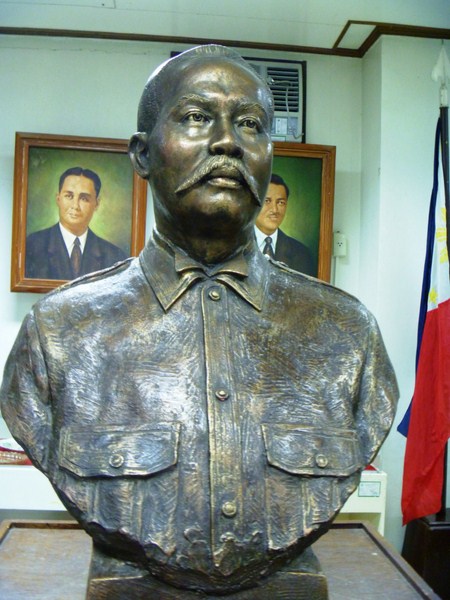
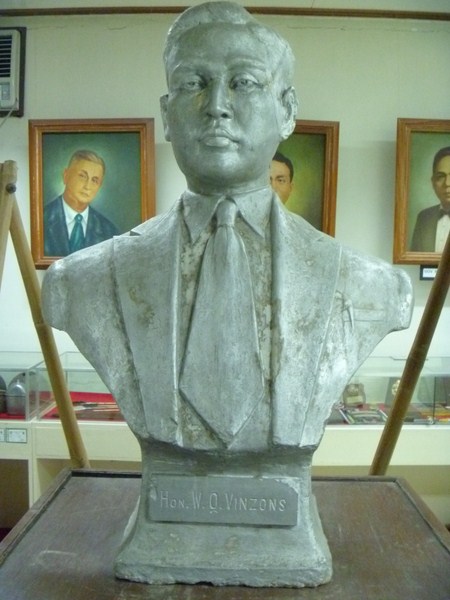
Gen. Vicente R. Lukban Bust

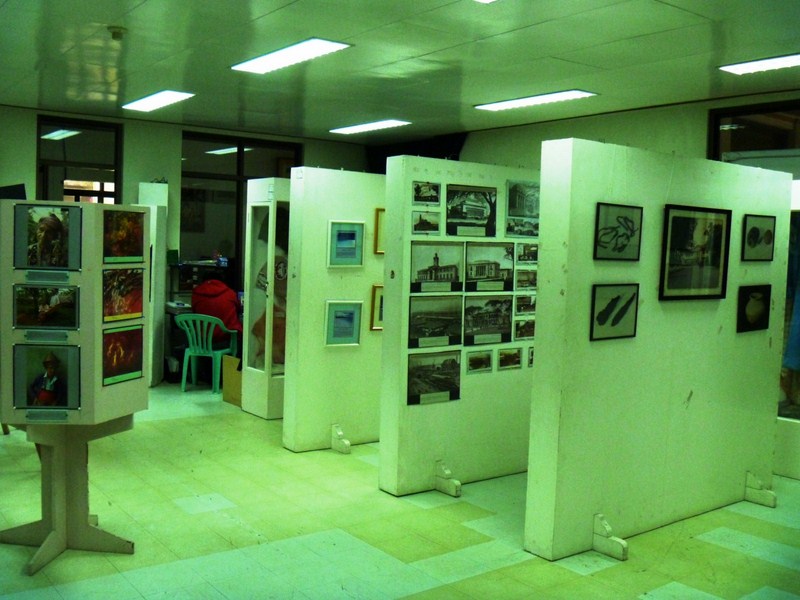
The Bulawan Museum, known as the “Golden Museum,” is located within the sprawling Provincial Capitol.  

A window into the province’s rich history and culture, it has a collection of old photos; World War II memorabilia (weapons); portraits of past governors; and busts of local heroes (Gen. Vicente Lukban, Wenceslao Q. Vinzons, Sr., Capt. Tomas M. Zaldua and Lt.-Col. Francisco D. Boayes).

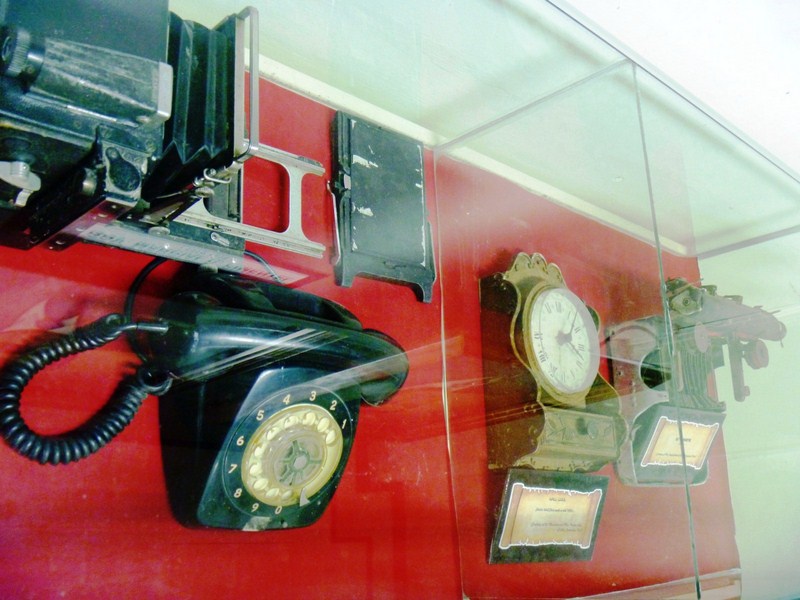
Old camera, telephone, wall clock and typewriter

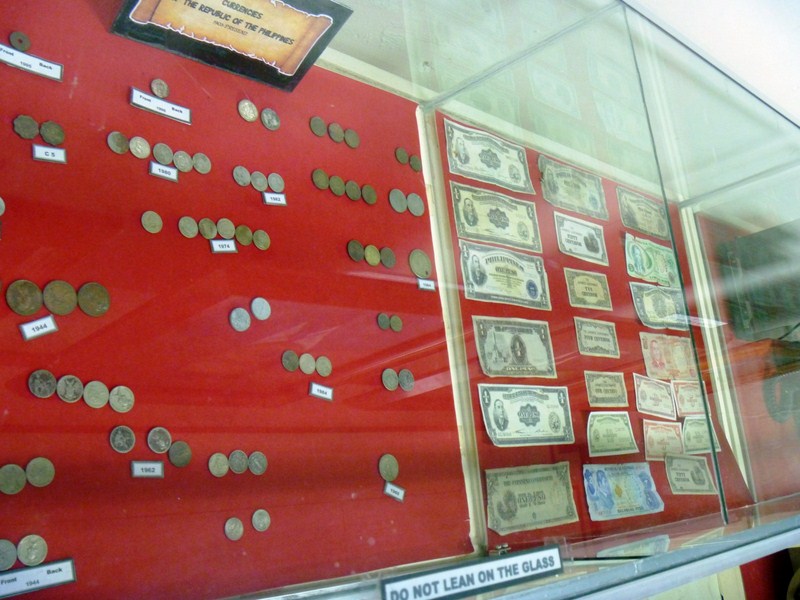
Numismatic Collection of ol coins and paper currency

Wenceslao Q. Vinzons Sr. Bust

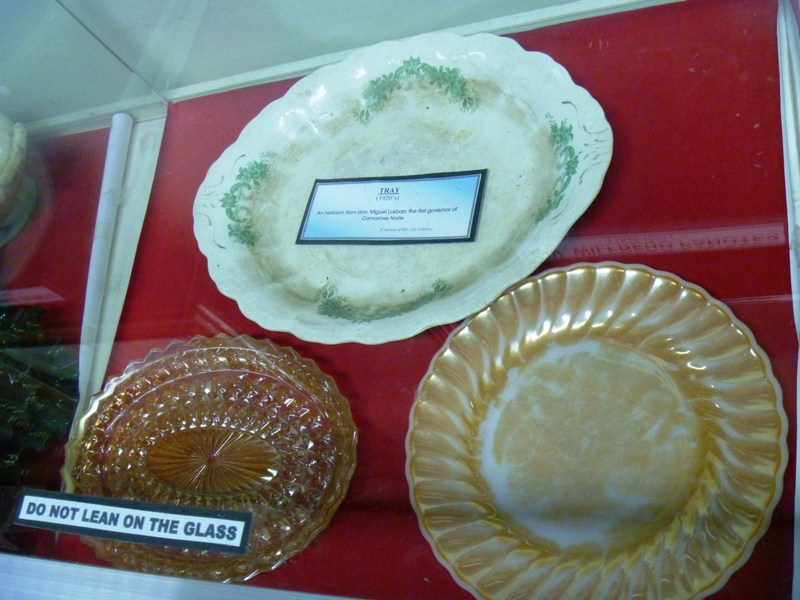
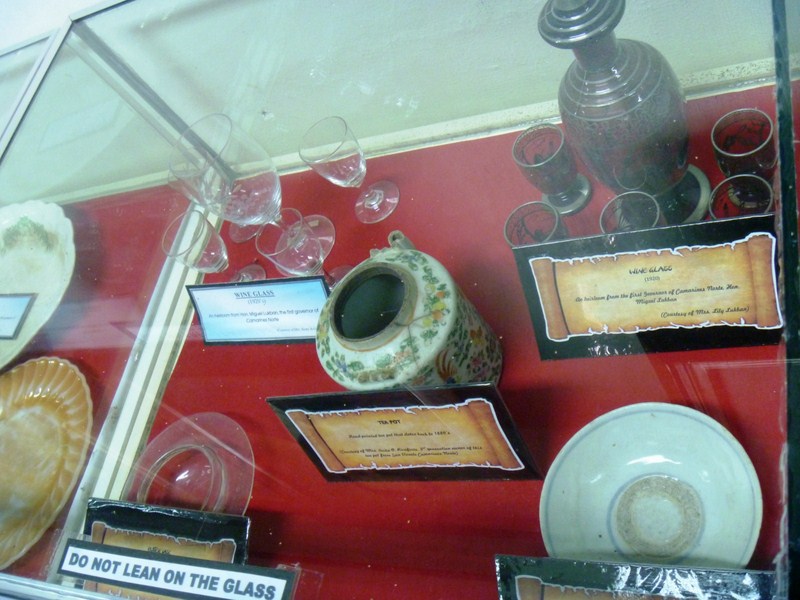
It also displays family heirloom pieces (including a collection of kitchen utensils such as silver spoons, fork and butter knife of the late Gov. Miguel Lukban), traditional clothing; a numismatic collection of old coins and paper currency; a collection of shells; gold jewelry; antique household appliances, paintings and a boya (a round floater attached to a net to keep it afloat). 

Antique wine glasses and teapot

Museo Bulawan: Provincial Capitol Complex, Daet, Camarines Norte.  

Celebrating Four Centuries of Christianity in Camarines Norte

Courtesy call on Gov. Edgardo A. Tallado

The year 2011 marks the quadricentennial of the University of Sto. Tomas, the oldest university in Asia. In Camarines Norte, it marks a different milestone – the 400th year foundation anniversary of the three parishes of Daet, Paracale and Vinzons.  Although all these towns were founded by Franciscan missionaries in 1581, it was only in 1611 when permanent parish priests were assigned. Yours truly, together with events organizer Bernard Supetran, travel blogger Mark Vincent Nunez (L.E.N.S.) and mediamen Mr. Joselito “Lito” Cinco and Ms. Kara Santos (Sunday Inquirer), were invited to cover the quadricentennial activities in these towns. All five of us met up at Starbucks in Magallanes Village in Makati City where our transportation and our hosts, Mr. Amable Miranda and Roufel “Raffy” de Vera of the Provincial Tourism Office awaited us.  We left the place by 5:30 PM and the 350-km. long-haul drive took all of 8 hrs., including stopovers for toilet breaks and dinner at a Chowking outlet in Quezon, snatching sleep in between.

Bulawan Museum

We arrived at Bagasbas Lighthouse Resort in Daet, our home during our 3-day stay in Camarines Norte, by 2 AM and were soon checked in and back on the sack.

Check out “Resort Review: Bagasbas Lighthouse Hotel Resort

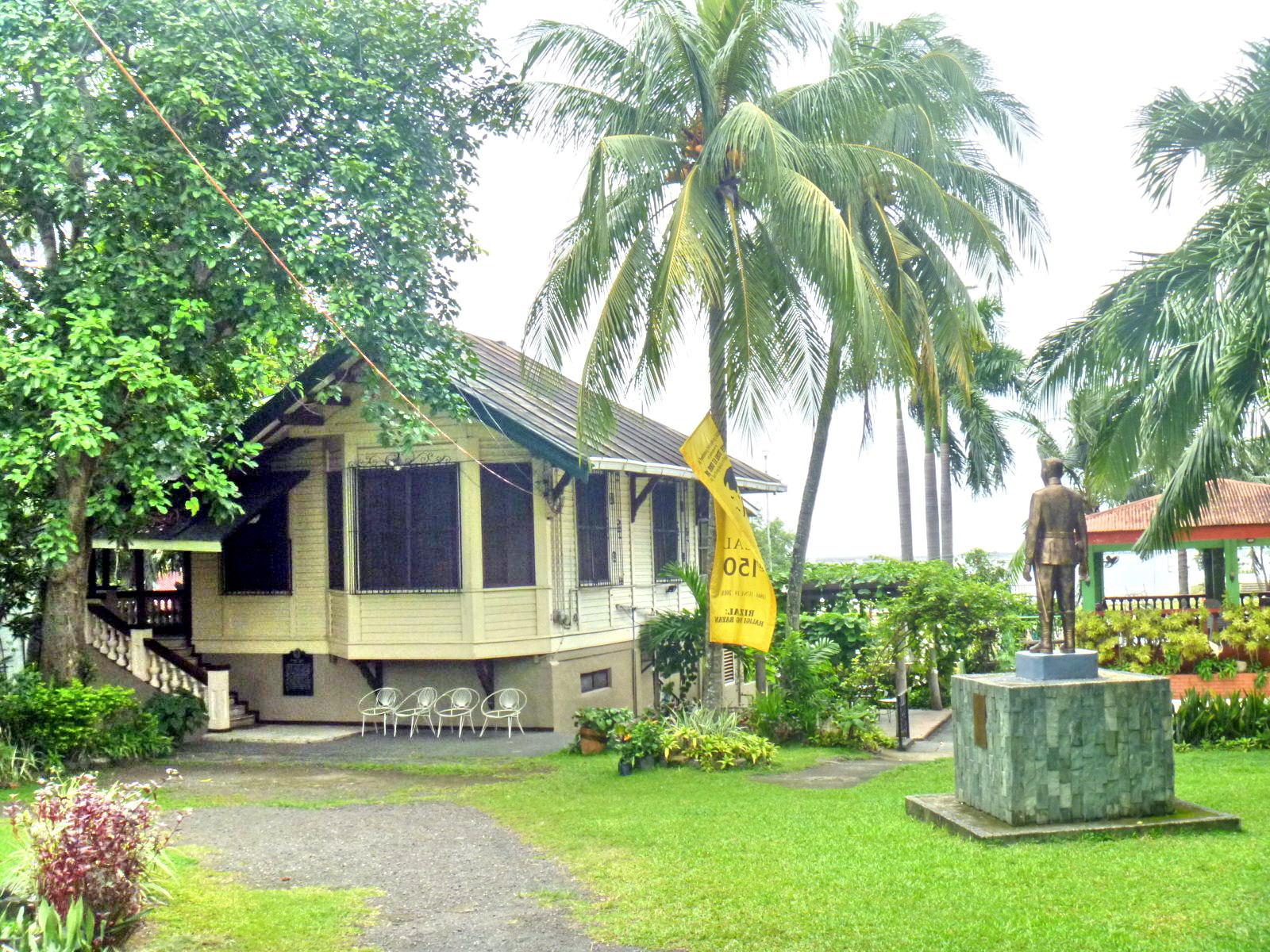
Come morning, right after breakfast, we were picked up by Amable and Raffy to visit Bagasbas Park and the First Rizal Monument (unveiled on December 30, 1898) then meet up with Atty. Debbee G. Francisco, the Provincial Tourism Officer designate, at the Provincial Capitol as well as visit the Bulawan Museum with its collection of old photos, portraits of past governors, busts of local heroes, family heirloom pieces, numismatic collection and paintings.

Church of St. Peter the Apostle in Vinzons

From Daet, we moved on to Paracale where we were to attend its Pabirik Festival which showcases the rich mining industry of the town. We next left for Labo where we checked out the Museo de Labo, the Church of St. John the Apostle and Evangelist and a showcase of the town’s handicrafts.  After a few hours rest bit back at the resort, we proceeded to the town of Vinzons where we interviewed Fr. Francisco P. Regala, Jr., the parish priest of the town’s Church of St. Peter the Apostle, the oldest in the province (first built in 1611 by Fr. Juan de Losar and rebuilt at its present site in 1624).  Fr. Regala, narrated in detail, the town’s town’s quadricentennial plans on June 29, the town’s fiesta.  We capped this evening with dinner at the residence of Atty. Francisco where I stuffed myself full with angko, a glutinous, rice-based and thumb-size native delicacy with a filling of sweet, grounded peanuts.  We left right after this as we were scheduled to leave early in the morning for overnight camping at the Calaguas Islands.  That night it started to rain heavily.

Daet Heritage Center

That same heavy rain welcomed us early in the morning and a phone call confirmed our worst fears – the trip to the Calaguas Islands was cancelled.  Regretfully, we switched to Plan B – hiking to Nakali Falls in San Lorenzo Ruiz town, rain or shine.  The physically draining hike took all day. It was raining less the next day and all had lunch with Daet Mayor Tito S. Sarion at Golden Palace Restaurant followed by an ocular tour of the newly-established museum at the Daet Heritage Center (formerly the old municipal hall), a courtesy call to Gov. Edgardo Tallado at the Provincial Capitol and a farewell visit to Atty. Francisco who gifted us with daing, dried dilis (anchovies) and my favorite angko.  Amable and Raffy accompanied us on our return trip to Manila, with a delicious dinner stopover at Lita’s Carinderia along the way.  We made it back by midnight. Check out my Business Mirror article “Camarines Norte: 400 Years of Keeping the Faith.”

Provincial Tourism Office: Provincial Capitol Complex, Daet, Camarines Norte.  Tel: (054) 721-3087.  E-mail: come2camnorte@yahoo.com.

Museo Ning Angeles: Showcase of History, Culture and Kapampangan Cuisine

The 2-storey Museo Ning Angeles, also called the Angeles City Museum, is located adjacent to the Holy Rosary Cathedral.  Showcasing the Kapampangan lifestyle and culture, this city museum was established in 1999 through the Kuliat Foundation and is housed in the former City Hall built in 1922. On display are interesting handiwork of Angeles City artists and rare photographs relating to the Philippine-American War and the history of the city.

Museo Ning Angeles

The museum also has a charming diorama exhibit of  Ninay Dolls (created by Patis Tesoro, an Angeleña) showing various episodes of Kapampangan lifestyle (weddings, fiestas, woodcarving, etc.). One of the museum’s permanent exhibits is the Angeles City Hall of Fame, honoring Angeleños who have excelled in serving the city and have made significant contributions through their different fields of endeavor.   There’s also a display on the  evolution of Philippine revolutionary uniforms (1806-1906)It also has a museum shop selling locally-made products. 

Evolution of Philippine revolutionary costumes
Diorama Exhibit

A special exhibit, the Culinary Arts of the Philippines, at the second floor, was inaugurated in October 2007.  It showcases different Filipino cuisines from various regions in the country.  Also on display are a collection of native kitchen tools used in ancient times.  Its library has a collection of books about Philippine recipes.  

Culinary Arts of the Philippines Exhibit
Museo Ning Angeles: Old Municipio Bldg., Sto. Rosario St., Angeles City, Pampanga.  Tel: (045) 887-4703.  Open Mondays to Saturdays.  Admission: PhP10.  E-mail: angelesmuseo_kfi@yahoo.com.  Website: www.angelesmuseum.com.