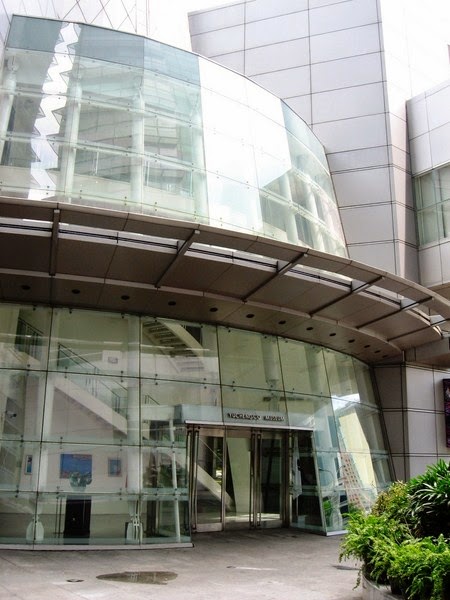
Subic Bay Yacht Club Resort (Subic Freeport Zone, Zambales)

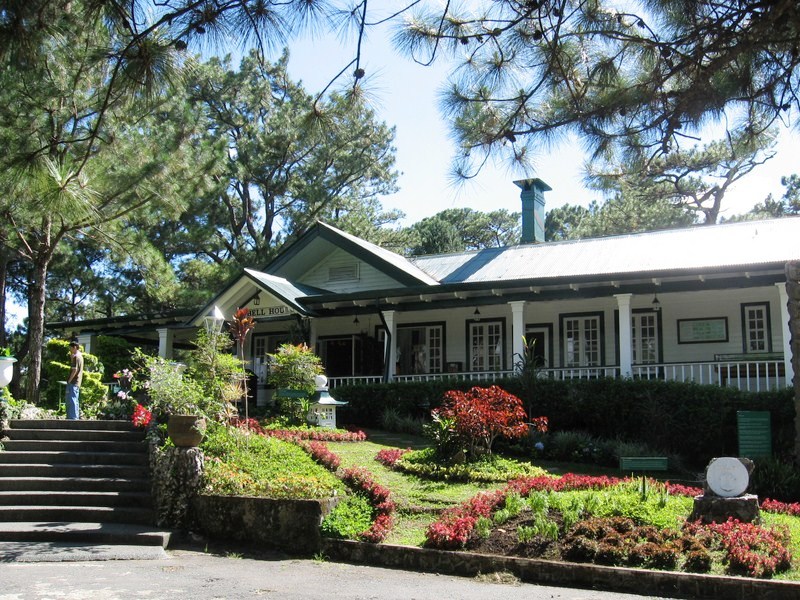
Subic Bay Yacht Club

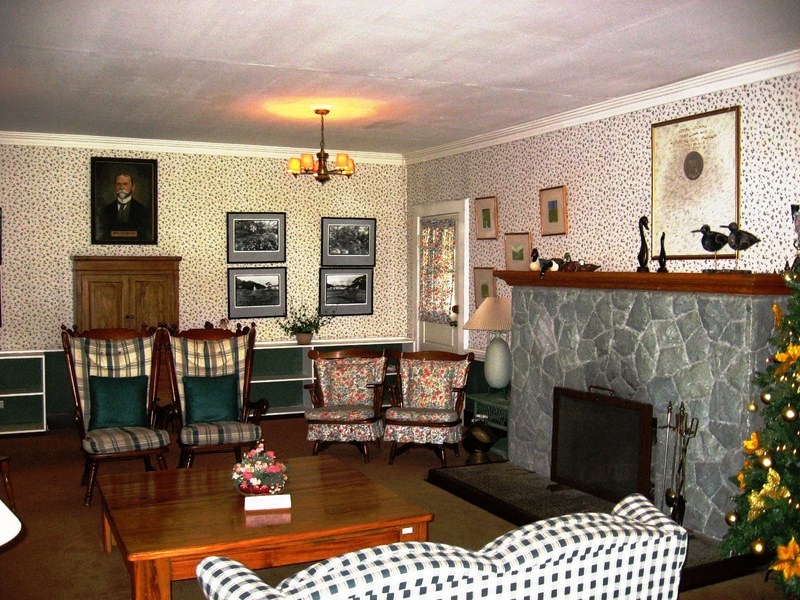
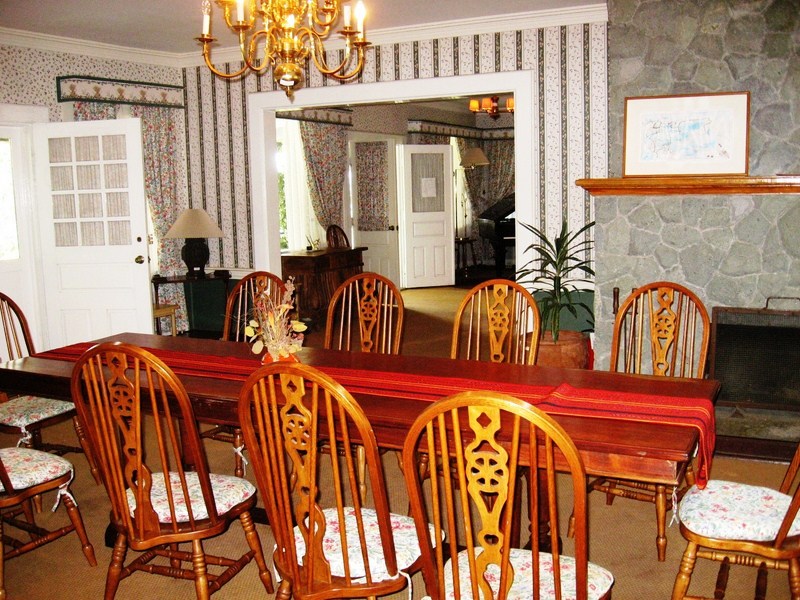
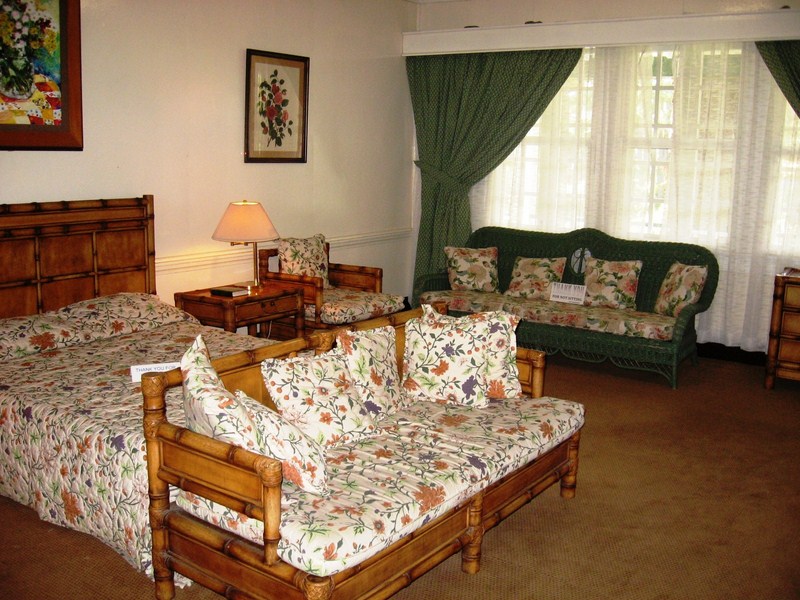
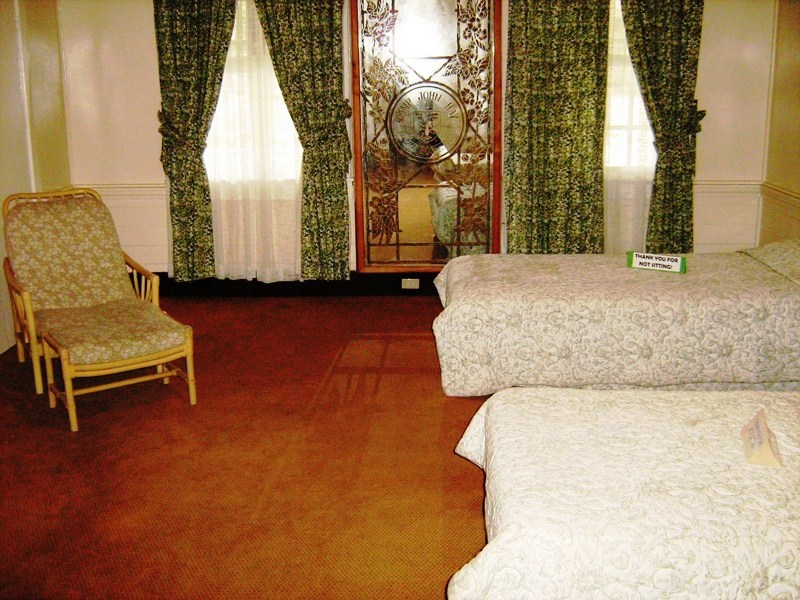
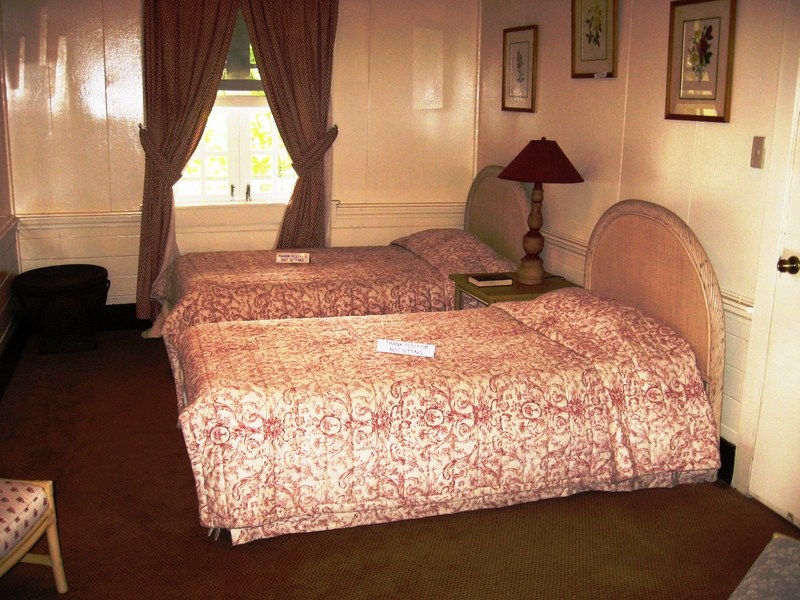
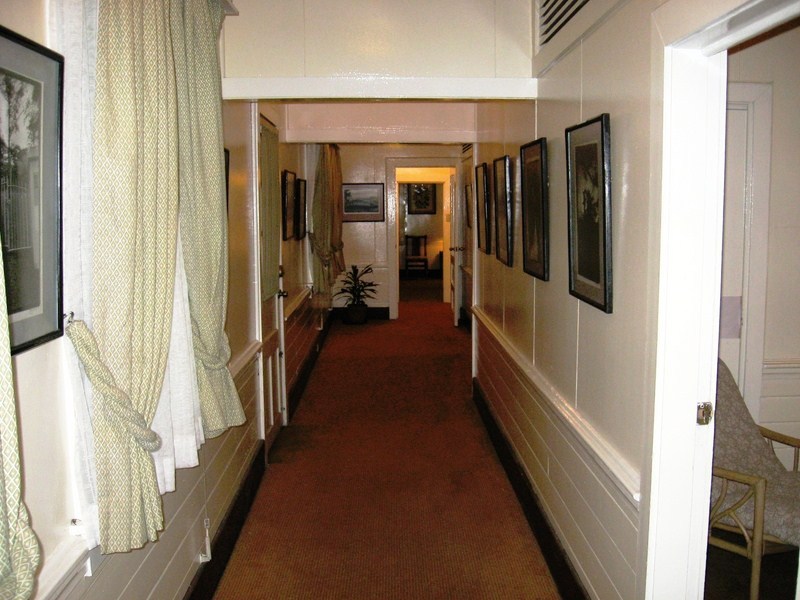
By brother Frank and his family were staying overnight at the Subic Yacht Club (SYC) on March 15, 2008 and he invited me and Tellie and our families to join them.  I brought along Jandy while Tellie brought along her daughter Mandy and a maid.  We all arrived at the SBYC by 3 PM and each of us checked in at an exquisitely decorated Club Room, each with top-level amenities such as  telephone, 29-inch cable TV, DVD player, internet-wired connection, a minibar, jacuzzi whirlpool bath with shower jets.

Entrance driveway


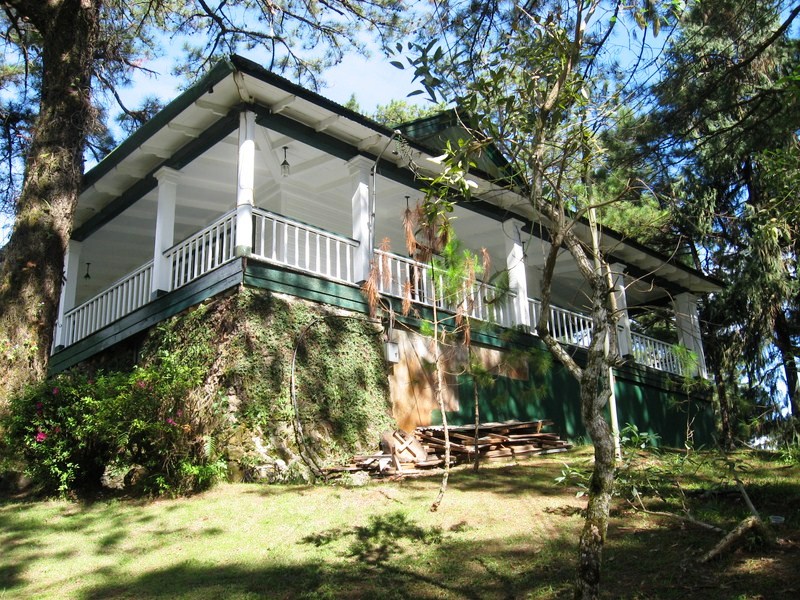
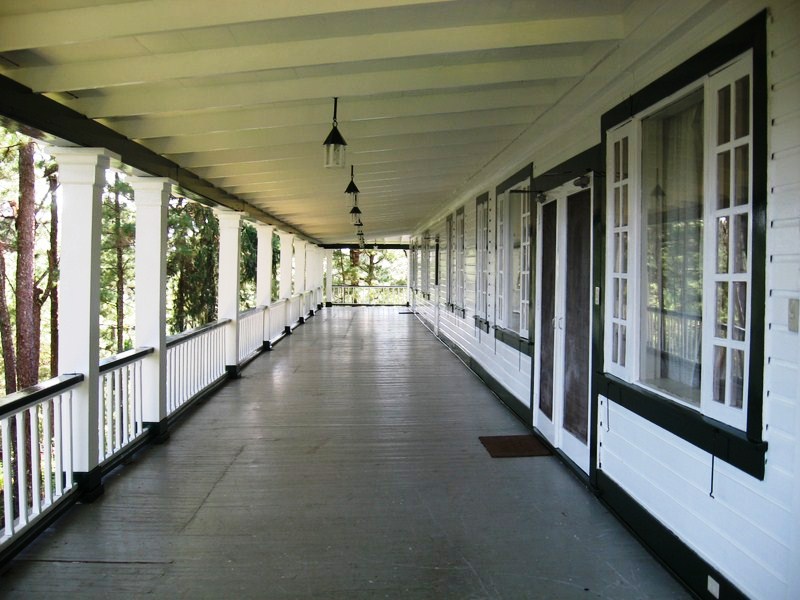
The premier yacht club in the Philippines, SBYC was built in 1998 at a cost of PhP2billion. It exemplifies luxury and style at every turn.  Aside from its 39 Club Rooms, SYC also has a 2 story presidential suite that has its own living, dining and receiving areas complete with a spiral staircase, a study room with 2 terraces and an outdoor jacuzzi. The 17,000 sq. m. main clubhouse has a 64-pax home movie theater at the 4th level and 3 function rooms (the 50-pax Victoria, the 50-pax Trinidad and the 20-pax Concepcion).

The Club Room

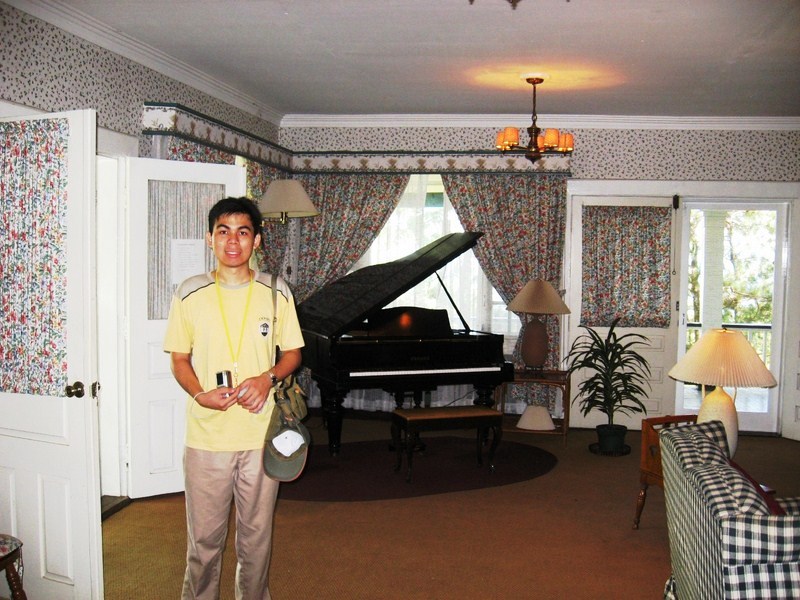
Venues for nightlife at SYC include a piano lobby bar (1572) offering relaxing piano music; a disco bar and videoke joint and the 150-pax Jacques Lounge reserved for private gatherings.  Restaurants here serving everything from Southern Italian cuisine (Cambusa Restaurant) to Japanese and Chinese favorites (the al fresco Skipper Verandah and the Caracoa Restaurant).  There’s even a casual deli called Providores offering informal sandwich and potato salad meals as well as vintage wines and spirits.  The Recreation Café, beside the pool, serves tropical drinks and light snacks (hamburgers, hotdogs, etc.) and other grilled specialties.

Pool area

For the water enthusiasts, the club rents yachts, jet boats, speedboats, pontoon boats, Platu keelboats and water sports equipment such as picos, lasers, Hobie Cats, wakeboards, knee boards, water skis, jetskis and scuba diving and snorkeling apparatuses. SBYC also has one of the country’s few certified US designed hyperbaric recompression chamber for divers. They also offer escorted wreck diving.

The fitness center

For sports and recreation, there are basketball courts, world-class covered tennis courts with a spectator area, an 8-lane, tenpin bowling center with glow-in-the-dark alleys and pool tables; and a complete fitness center (Tetrix Virtual Reality Bike; Virtual Reality Climber; Trackmaster treadmills, stationary cycles and rowing machines; etc.).

The huge swimming pool

The huge, 2,500 sq. m., multi-level swimming pool actually has a beach with imported powdery sand from Perth, Australia; twin water slides and a pool bar.  The spa has a sauna and steam room, masaage/treatment rooms and separate whirlpool spas for men and women  featuring numerous jet tubs. For kids, there is a daycare and nursery center, a children’s pool complete with rafts, chutes, rings, water jets and water toys for babies and young kids; a children’s outdoor play area with lots of great play equipment and the popular, educational and creative Little Fingers Art Workshop.

Subic Bay Yacht Club Resort: Blk. 3, Lot 2, Rizal Highway cor. Burgos St., Subic Bay Freeport Zone, Zambales. Tel: (047) 252-5211. Fax: (047) 252-6586.  Website: www.sbyc.com.ph

Davao Crocodile Park Complex (Davao City, Davao del Sur)

After our visit to the Philippine Eagle Sanctuary and Wildlife Preserve, Jay next drove 35 kms., via the Davao-Bukidnon Rd. and Davao City Diversion Rd/Pan-Philippine Hwy/AH26, to the 7-hectare Davao Crocodile Park Complex, a mere 15-30-min. drive from the city’s downtown area.  The park’s main attractions, naturally, are its 700 saltwater crocodiles and the park has facilities solely for the propagation of these ferocious reptiles, showcasing state-of-the-art crocodile farming in the Philippines.

Check out “Philippine Eagle Sanctuary and Wildlife Preserve

The author at Davao Crocodile Park

Owned and operated by a group of businessmen headed by Davao City resident Philip “Sonny” Dizon, this world-class park was opened on August 18, 2005 with the help of consultant Dr. Gilbert Buenviaje.  The park has 3 breeding ponds literally teeming with languid crocodiles stretching out and soaking up the sun, completely unmindful of the excited noise of spectators and their flashing cameras.  They are caged according to size and breed.  The biggest cage has a viewing deck elevated at the center of the area.

The gigantic Pangil in his own cage and pond

The most breathtaking and noteworthy of all these crocodiles is the 18-ft. long Pangil (from the native word meaning “fang”), reportedly the country’s second largest and the oldest crocodile (about 60 years old) in the park. He has a pond and a big cage all to himself and, even if he just lies still, he still amazes every curious spectator, including me, with his immense size.

The Crocodile Dancing Show

We arrived in the midst of the 4:45-5:45 PM crocodile dancing show which showcases the leaping ability of the crocodile.  A piece of meat is suspended by a rope just below the cage for the crocodile to eat and  the crocodile leaps (up to 6 ft. high), through its mighty tail, to reach it.  I also saw the skeleton of a 14-ft. long, male, Indo-Pacific crocodile named Boktot who died in 2005 at the age of 40.

The skeleton of Boktot

The park is more than just a crocodile farm as it also houses other exotic animals such as eagles, parrots, lovebirds, mynahs, turkeys, ostriches, monitor lizards (bayawak), Burmese pythons (one of the 6 biggest snakes in the world), bearcats, Oriental civet (or Malaysian civet), Philippine warty pigs, monkeys, Philippine sailfin water dragons, turtles, a male and female Siberian tiger (there are times when feeding them is open to the public), etc..  A few steps from the center of the park is the Davao Butterfly House.

A park ostrich

Davao Crocodile Farm: Riverfront Corporate City, Ma-a Diversion Rd., Davao City, Davao del Sur. Tel: (082) 286-8883 and 286-1054.  Fax: (082) 221-4671. Admission fee: PhP150 (adults) and PhP75 (children, 2-12 years old). Open daily, 8 AM-6 PM (7 PM on Fridays, Saturdays and Sundays). Website: www.davaocrocodilepark.com.

Philippine Eagle Sanctuary and Wildlife Preserve (Davao City, Davao del Sur)

Pag-Asa, the first eagle to be bred

After lunch at Jay Mendoza’s residence, he drove me all the way to the Philippine Eagle Sanctuary and Wildlife Preserve, a natural captive breeding facility established to conserve the critically endangered and mighty Philippine eagle (Pithecophaga jefferyi), the country’s national bird.

Locally called haribon (short for “hari ng ibon or “king of birds”), it is also the symbol and icon of Davao City.  Its 2-m. (6.5 ft.) wingspan also makes it the world’s second largest eagle after the Central and South American harpy.  Due to illegal logging and irresponsible cutting of trees (resulting in a loss of habitat), its uniqueness (there is a demand for it in major zoos of the world) and its very size and majestic stance (making it a very desirable target as a trophy), the Philippine eagle has become critically endangered.

Jay Mendoza

In 1987, the private, non-profit Philippine Eagle Foundation, Inc. was organized to save the eagle through captive breeding management, field research, community-based enterprise development and conservation education.   They set up the Philippine Eagle Sanctuary and Wildlife Preserve near Calinan, 36 kms.  northwest of the city.  This nature park, spread over a large forest preserve, is planted with different fruit-bearing trees and is now home to 14 of these Philippine eagles, out of a known population of 119 (2 others in the DENR office in Los Baños, Laguna, 96 in Mindanao, 5 in Aurora and the Sierra Madre Mountains and 2 in Samar).

Philippine Eagle Sanctuary

The Philippine Eagle was first recorded by John Whitehead on a collecting expedition in 1896.  Formerly called the monkey-eating eagle (now amended), it is called manaol by the Cebuanos and Muslims, aguila by the Tagalogs and mamboobook or malamboogook by the Bagobos, Mandayas and Tagakaolos.  It is only found in the Sierra Madre mountains in Eastern Luzon and the heavily forested area of Mindanao.

This eagle stands one meter high, weighs an average of four to seven kilograms, and has a powerful bill, strong legs and claws and eyesight eight times that of a human.    Its general body color is grayish brown on the back and wings, white at the front neck and belly and has shafts of gray brown streaked feathers on the head which, when erect, forms a crest.  Its raw meat menu includes flying lemurs (kaguang), wild cats (musang), flying squirrels (tapilak), snakes, chickens, bats and monkeys.

Brahminy Kite

Flying at speeds of 70 to 80 kms. per hour, one eagle claims and defends a wide, 60 to 100-sq. km. territory in lowland and medium elevation forest and nests (a crude platform shaped by branches and twigs) are established approximately 80 ft. atop the tallest trees in the jungle (sufficient enough for it to have a good view over its territory) or on high promontories overlooking a stream or river.

The Philippine Eagle is a faithful mate, having been observed to usually prefer a monogamous lifestyle.  At breeding time (between August and January), they usually indulge in high-soaring aerial courtship and are said to mate in mid-air, in or near the nest. The female lays one white egg every two years and both parents alternately incubate the egg for about 60 days until it hatches.  Usually the male does the hunting, sharing his catch with the female and the young, especially during breeding time. Hunting flights extend to the cleared areas as well.   The eaglet fledges within 150 days and becomes independent at 18 months, at which time the parents drive the juvenile out of their territory. It matures after 6 years.

Philippine Brown Deer

On January 15, 1992, Pag-asa (“hope”) was born in the center, the first eagle to be bred in captivity.  A second eaglet, born five years later, was named Pagkakaisa (“unity”).  On February 23, 1999, another eaglet, Pangarap (“dream”) was born through artificial insemination, followed by Maginoo (“respectful”) on December 15, 2000.

The center is also home to other indigenous birds such as Brahminy kites (Haliastur Indus), African grass owls (Tyto capensis), crested serpent eagles (Spilornis cheela), Philippine hawk-eagles (Spizaetus philippensis), grey-headed fish eagles (Haliaeetus ichthyaetus), white-bellied sea eagles (Haliaectus leucogaster) and cockatoos; and wildlife such as tarsiers (Tarsius philippensis), Philippine deer (Cervus mariannus), saltwater crocodiles (Crocodylus porosus), crab-eating macaque(Macaca fascicularis) and reticulated pythons (Python reticulatus).

Sunbathing macaques
Philippine Eagle Sanctuary and Wildlife Preserve: Malagos Gardens, Baguio District, Davao City, Davao del Sur.  Tel: 224-3021.  Fax: 224-3022.  E-mail: info@philippineeagle.org and phileagl@pldtdsl.net.  Open daily, 8 AM to 5 PM.  Entrance fee: PhP50.00.  To get there, take a jeep to Calinan along C.M. Recto Ave., A. Pichon St. and  Bankerohan Market.  At Calinan Public Market, take a 30-min. (5-km.) tricycle ride to the center. You can also take a 45-min. airconditioned bus ride from Aldevinco Shopping Center.

St. Peter Metropolitan Cathedral (Davao City, Davao del Sur)

St. Peter Metropolitan Cathedral

The St. Peter Metropolitan Cathedral (also referred to as the San Pedro Cathedral or Davao Cathedral), dedicated to Saint Peter, is the ecclesiastical seat of the Roman Catholic Archdiocese of Davao. It is located in front of the Sangguniang Panglungsod (City Council) ng Dabaw Building.

First built using nipa and bamboo in 1847 by Don Jose Oyanguren, it was later demolished subsequently rebuilt in wood in the Neo-Gothic style in the mid 1900s by the late Architect Ramon Basa.  During World War II, it was said to have been turned into a horse stable by Japanese troops. In 1964, due to its small size, it was finally remodelled in concrete, glass and metal by Architect Manuel Chiew.

Being of recent origin, it doesn’t have the weathered look of heritage churches. Still, it has a turbulent history as the cathedral has been a witness to two grenade bombing incidents.

The main altar

The first incident, on April 19, 1981 (Easter Sunday), killed 17 people and injured 157. Again, on December 28, 1993 (Holy Innocents Day), another bombing resulted in 6 deaths and 151 injured (32 seriously).

From the outside, the distinctive modern façade is a departure from the usual façade of Catholic churches, with Islamic elements incorporated into its design.  Its curved, gray roof looks like a bow of a vinta (a traditional boat made by the Badjao tribe in Southern Mindanao) sailing over waters with a Christian cross in the middle as the rudder.

The arched windows, flanking the cathedral’s main doorway, hint at traditional Gothic design. The old altar, designed by Ramon Basa, with antique images of different saints, is preserved at the cathedral’s right wing.

The old altar at the right wing of the cathedral

The separate imposing bell tower, standing by a corner in the courtyard, has a replica of the the Pieta (a statue of the sorrowful Blessed Virgin Mary with the dead body of her son, Jesus Christ, on her lap), adorning a pocket garden, and the two concrete tablets of the Ten Commandments of God.

The separate bell tower

St. Peter Metropolitan Cathedral: San Pedro St., Barangay Poblacion District, Davao CityDavao del Sur. Tel: (082) 227-2317, 227-2398 and 226-4740.

Davao International Airport (Davao City, Davao del Sur)

Davao International Airport (Francisco Bangoy International Airport)

Our gateway to Samal Island and its Pearl Farm Resort was the Francisco Bangoy International Airport, the main airport serving Davao City and the entire Davao Region in the Philippines,  also commonly known as Davao International Airport (IATA: DVO, ICAO: RPMD).

Check out “Pearl Farm Resort

Here are some interesting trivia regarding the airport:

Here is the historical timeline of the airport:

  • In the 1940s, Don Francisco Bangoy donated the land where the airport sits on. At the time it began operation, the airport merely consisted of a 1,200 m. long unpaved grass runway with quonset huts serving as terminal buildings.
  • Throughout much of the 1940s and 1950s, Philippine Airlines and the Philippine Air Force provided air service to the city.
  • By 1959, the complex consisted of a small control tower and several low-rise buildings.
  • During the latter stages of Paciano Bangoy’s gubernatorial term, right of way and access to the terminal buildings and the airport was improved through further donation of land by Bangoy.
  • In 1980, a new terminal, designed by Filipino architect Leandro Locsin, with a capacity of one million passengers, was constructed and the runway was progressively extended from its original length of 1,200 m. to its current 3,000 m.. Then-Congressman Manuel Garcia, whose congressional district covers the airport perimeter, funded both projects.
  • In 2000, construction began on a new, larger Php2.7 billion (US$128 million) terminal building which would consolidate the Php15 million interim international terminal and the airport’s then-existing terminal.
  • In 2001, the new 3,000 m. long runway (extended from its previous length of 2,500 m. to accommodate future international flights) was completed.
  • On December 2, 2003, the new terminal was inaugurated.
  • On November 12, 2007, Cebu Pacific announced the airport as its third hub.
  • On March 26, 2018, Philippine Airlines, the country’s flag carrier, announced the airport as its third hub.

One of four jet bridges

The two-level Malay architecture-inspired passenger terminal, with double the capacity of the old terminal, has an approximate area of 17,500 sq. m. (188,000 sq. ft), four times larger than the old terminal. It is fully computerized, more secure and has more commercial spaces for concessionaires (approximately 9,000 sq. m. or 97,000 sq. ft.) of gross leasable area.

Interior of terminal

For passenger boarding, it has four jet bridges plus a Flight Information Display System and closed-circuit television system that complements the terminal’s security system. The latest navigational, security and baggage handling equipment also complements the added capacity.

To handle a steady flow of passenger traffic, the terminal has 14 domestic and 14 international check-in counters equipped with electronic weighing scales and conveyors and a computerized its baggage handling system. It also has 2 arrival areas (domestic and international), with 2 baggage conveyors each. The cargo terminal building, covering almost 5,580 sq. m. (60,100 sq. ft.), can handle up to 84,600 metric tons (83,300 long tons; 93,300 short tons) of cargo annually.

Besides the main terminal building, there are also new support facilities like the Administration Building, Airfield Maintenance Building, Central Plant Building, Hangar for Military and Training aircraft and Fire/Crash/Rescue Building. It has an 800-slot car parking area and 4 slots for shuttle buses. It has a 3-megawatt (4,000 hp) standby power generator.

The airport has a single 3,000-m. (9,800 ft.) long by 45-m. (148 ft.) wide precision runway that can handle basically all passenger wide-bodied aircraft (including the Airbus A380).  Two turning pads at each end of it, which help aircraft make a back track, complement the runway.

The installation of a new instrument landing system (ILS), for both Runways 05 and 23, upgraded its compliance to International Civil Aviation Organization (ICAO) operating category-Precision Approach Category 1. Depending on size, it can accommodate 8 to 10 aircraft landings per hour and has the equivalent 9 gate holding areas for those aircraft.

The airport has also 2 dual access taxiways. Taxiways A3 and A4 are used to access the new ramp and terminal while taxiways B and C are used for access to the old airport ramp.

Today, Philippine Airlines, All Nippon, Cebu Pacific Air and South East Asian Airlines operate more frequently here. The most popular sectors from Davao are Davao to ManilaDavao to Cebu with 375, 152 weekly flights respectively.

Francisco Bangoy International Airport: Daan Maharlika Highway, Brgy. Sasa, Buhangin District, Davao City 8000.  Tel: (082) 234-0418.

Rafael’s Farm Garden Restaurant (Babatngon, Leyte)

On my fifth day on Leyte, I decided to take a much needed break, my map updating work for United Tourist Promotions (makers of EZ Maps) just about done.  My sister-in-law Paula suggested I bring along Selena and Sean, my niece and nephew respectively, and have lunch at Rafael’s Farm Garden Restaurant in the next town of Babatngon.  We brought along their family driver Cherwine Avis.  It was just a 13-km./30 min. drive to the restaurant.

The boating lagoon

This peaceful, 16-hectare place in the middle of farmland, because of its ambiance, is a perfect place to dine, get close to nature and relax  with its beautiful, well-maintained landscaping.  There were many open green spaces to walk around, a wishing well, a manmade waterfall, a calesa, a treehouse for children to play in and a lagoon where one can go rowboating.  A wooden platform leads to a gazebo at the middle of the lake.  At night, fireflies swarm at a nearby tree.  The restaurant was named after the grandson of owner/entrepreneur Rene Tampil. Rene is also the owner of meat shops and the “Join Us” fastfood eateries in Tacloban City.

Selena at entrance to main building

The thatched-roof main building, with its native decor and open on 2 sides, has a wooden floor, conversation areas with sofas, interesting coffee tables, old and lamps, sculpture pieces, and an infinity pond with koi fish around the perimeter. A favorite weekend destination, it is truly a nice place for one who wants to get out of noise and stress of city life, even if just for a few hours.

The conversation area and infinity pond

The main dining area has dining tables topped with crocheted tablecloth and wooden chairs with woven abaca backrests and seats covered with banig.  All around are artwork (done by local artists) for sale.  The menu features a wide selection of delicious Filipino dishes (fish sinigang, grilled herb chicken, kinilaw, kare-kare, crispy chicken kawali, coco chicken stew, garlic butter fish steak, yellow pork chop, baked scallops, classic baby back ribs,  etc.), salads (farmer’s salad, garden fresh salad, etc.), desserts (buko gelatin, halo-halo, turon, etc.), pastries and beverages (lemon grass tea, ginger tea, iced tea, etc.), all at reasonable prices.  You can avail of a set meal consisting of salad, a side dish, rice, main course and dessert for PhP220.


Rafael’s Farm: Brgy. Pagsulhugon, Babatngon, Leyte.  Tel: (053) 325-0729.  Mobile numbers (0918) 669-9909 and (0915) 920-0325.  E-mail: inquiry@rafaelfarm.com and reservation@rafaelfarm.com.  Website: www.rafaelfarm.com.

Church of Our Lady of the Immaculate Conception (Hilongos, Leyte)

Continuing on our way to Maasin City, Doods and I traveled the next 44 kms., past the towns of Inopacan and Hindang, to Hilongos. There, we made a brief stopover at the town’s Spanish-era, fortified Church of Our Lady of the Immaculate Conception.  This church was built by Jesuit friars in the 18th century and renovated by secular Fr. Leonardo Celis-Diaz, a native of Cebu.   

The modern Church of Our Lady of the Immaculate
Conception.  On its left is its Spanish-era bell tower

The original church, now incorporated as a transept, was a single-nave structure whose main door was also the gate to a bastioned fortification.  Some bastions and walls of that fortification still remain.  The main nave of the church is a modern construction and the church interior is completely new.

Ruins of the bastioned fortification

However, the town is more known for its octagonal flanking bell tower, now considered as the highest existing bell tower built in the Spanish era.  Also built by Fr. Celis-Diaz, this  independent multi-storey structure is now plastered over with Portland cement.   The convent, probably completed in the 19th century, houses many of the church’s antiques including silver vessels from the 18th century.

Baybay City (Leyte)

After breakfast at Bahia Coffee Shop, I was picked up at the Hotel Don Felipe lobby by Mr. Doods Alcaraz, a medical representative requested by my sister-in-law Paula to drive me to Maasin City where I was to do map updating for United Tourist Promotions (makers of EZ Maps).  We used Dood’s car for this purpose.  We left Ormoc City by 8:30 AM.  The Maharlika Highway, though concreted, was pockmarked with cracks and potholes and first time drivers along this route would have to drive with caution.  Doods, however, frequently plied this route and knew it like the palm of his hand. 

Baybay City Hall

After 46 kms., past the town of Albuera, we made our first stopover for  merienda at a Jollibee outlet at the new component city of Baybay (it became such by virtue of Republic Act No. 9389 and was ratified by a plebiscite held on June 16, 2007) on the central west coast of Leyte where ferries leave for Cebu and the other islands.  This wasn’t my first visit to the city as its port was our jump-off point for our April 22, 2000 visit to the Cuatro Islas (under the jurisdiction of Inopacan).   

Baybay Port

On November 18, 2008, the Supreme Court struck down Baybay’s cityhood law, making Baybay a municipality again.  On December 22, 2009, acting on the appeal of the so-called “League of 16 Cities” (of which Baybay is a part of), the Supreme Court reversed its earlier ruling but, on August 24, 2010, again reinstated its 2008 decision. On February 15, 2011, the Supreme Court upheld, for the third time, the cityhood of Baybay.  Baybay is a city again.

After merienda, I dropped by the town’s Spanish-era Church of Our Lady of the Immaculate Conception.  The church was built in 1852 by Fr. Vicente E. Coronado and continued under the supervision of Maestro Proceso from Manila.  In 1866, fire destroyed the church except for the Chapel of the Holy Cross.  It was repaired in 1870 and finished by painter and sculptor capitán Mateo Espinoso (probably a local dignitary and artisan). 

Church of Our Lady of the Immaculate Conception

Cathedral of Our Lady of Assumption (Maasin City, Southern Leyte)

From Hilongos, Maasin City was just a further 37 kms.away, past the towns of Bato and Matalom. Doods and I finally reached city by 12:30 PM and Doods conveniently parked the car in front of the city’s Spanish-era Cathedral of Our Lady of Assumption.  This church was started in 1771 by Jesuit Fr. Serapio Gonzalez, continued by Fr. Jose Paco from 1839 to 1852, destroyed by fire in 1884 and later rebuilt.  In 1968, the church was made into a cathedral and, in 1993, the cathedral was made a National Shrine by the National Historical Institute.

 Cathedral of Our Lady of Assumption

Its simple, sparsely-decorated Early Renaissance façade has a semicircular arched main entrance flanked by narrow paired columns, a pediment with a centrally located a statued niche flanked by square windows and topped by a circular window.  On its right is a tall and slender 3-storey bell tower and surrounding the church is a fortification with quadrilateral bulwarks at the corners. Part of the fortification has been demolished to give way to a school. A bulwark on the western side of the site has the inscription “San Carlos Año de 1781.” Inside the cathedral are Spanish-era images and santos found in its altar and ceiling.

The cathedral’s interior

Hong Kong Disneyland (Hong Kong)

Too excited to even wait for our check-in, from the Hollywood Hotel we all proceeded to the park via its regular complimentary airconditioned shuttle.   The actual 100-acre park, the smallest Disneyland in the world, currently features 4 themed lands similar to those at other Disneyland parks: Main Street, U.S.A., Adventureland (the biggest one among all the Disneyland parks), Fantasyland and Tomorrowland.

Entrance Promenade

We had a choice of 22 entertainment items in the park (there are 44 in Paris, 45 in Tokyo and Florida, and 65 in California).  The park’s biggest draws were its shows and there were three on our list. The Golden Mickeys, at Disney’s Storybook Theater in Fantasyland, is a spectacular musical extravaganza featuring all the glitz and glamour of a Hollywood tribute, honoring your favorite Disney films.

Golden Mickeys - Disney's Storybook Theater

Also at Fantasyland, we donned special sunglasses at Mickey’s PhilharMagic and watched a hilarious and dazzlingly immersive 3-D attraction of movies, music and mayhem featuring Maestro Mickey Mouse, Donald Duck, Alladin and other animated Disney characters as they burst forth before our amazed eyes.

Festival of the Lion King - Theater in the Wild

At the newly decorated Adventureland, temporarily renamed Pirateland (until June 30) to celebrate the release of the new feature film “Pirates of the Caribbean: At World’s End,” we watched the fantastic Festival of the Lion King at its Theater in the Wild. This colorful pageant of music and dance, inspired by and celebrating Disney’s animated classic “The Lion King,” features a vibrant collaboration of live performers (including a number of Filipinos), stunning costumes and exotic scenery. We liked it so much; we watched it again the next day.

Jungle River Cruise Pirate Takeover

Also at Pirateland, we tried out the Jungle River Cruise, Pirate Takeover!, venturing down the dangerous waters of a seemingly mysterious river filled with new surprises; and took a motorized log raft to Tarzan’s Island (inspired by Disney’s animated feature, “Tarzan”), climbing the moss-and-vine-covered Tarzan’s Treehouse, along the way  learning the story of this human child raised by gorillas.

Sleeping Beauty Castle - Fantasyland

Other park attractions are their rides.  We took one giant and tumultuous leap for fun at Space Mountain, an indoor roller coaster, where we seemingly rocketed, at warp speed, to into the inky blackness of the nether reaches of space, amidst synchronized music and sound effects.

Buzz Lightyear Astro Blasters - Tomorrowland

At Buzz Lightyear Astro Blasters, in Tomorrowland, we became Space Rangers saving the galaxy from the Evil Emperor Zurg, riding Star Cruisers and firing moveable, hand-held laser cannons as we tried to blast enemy targets and amass points. Less tumultuous was our horseback ride on the Cinderella Carousel, a sure hit for the young and the young-at-heart.

Posing with Snow White

Other favorite activities of kids, including mine, were photo opportunities with costumed Disney characters. However, you have to sometimes wait in long lines to do so.  Where the queue was short, we posed with Captain Hook at Pirateland; and Belle, Goofy and Snow White at Fantasyland.  We again got to see them, and the others we missed, at the magical 3 PM Disney on Parade, a daily cavalcade of Disney characters and music in a procession starting in Fantasyland and proceeding down to Main Street, U.S.A.

Royal Banquet Hall

In between rides and shows, we quenched our thirst and filled our stomachs with rice meals at the Royal Banquet Hall at Fantasyland, and chicken burgers and French fries at Comet Café at Tomorrowland.

With a Tricycle-Mounted Filipino Piano Player at Main Street, U.S.A.

Main Street is our favorite hangout, cooling off (and buying souvenirs such as shirts and key chains) at Main Street Emporium, again cooling off and admiring (but not buying) expensive and exquisite crystal figurines of Disney characters (including watching a demo on how they were made) at Crystal Arts.

The Disneyland Story - Main Street, U.S.A.

We also learned “How Mickey Mouse came to Hong Kong” in The Disneyland Story, or simply watching  people passing by or enjoying a nostalgic and leisurely trip along Main Street to Town Square on board quaint Paddy Wagons or Main Street Taxis or on the excursion-style train of Disneyland Railroad.

Disney on Parade

I also enjoyed chatting with many of our kababayans employed in the park, including a tricycle-mounted piano player. Main Street is also the venue for a grandstand view of the 8 P.M. Disney in the Stars, a  magnificent, magical and colorful fireworks spectacular, choreographed to classic Disney songs and music, and held over the towering and graceful spires of Sleeping Beauty Castle. We capped our evening with fine dining at the nearby Corner Café.

Disney in the Stars Fireworks