Church of St. Peter the Martyr (Sual, Pangasinan)

Fr. Gabriel Perez began the construction of the town’s first church and convent (which was later completed by Fr.Juan Gutierrez) The church was completed by Fr. Pedro Villanova in 1870.

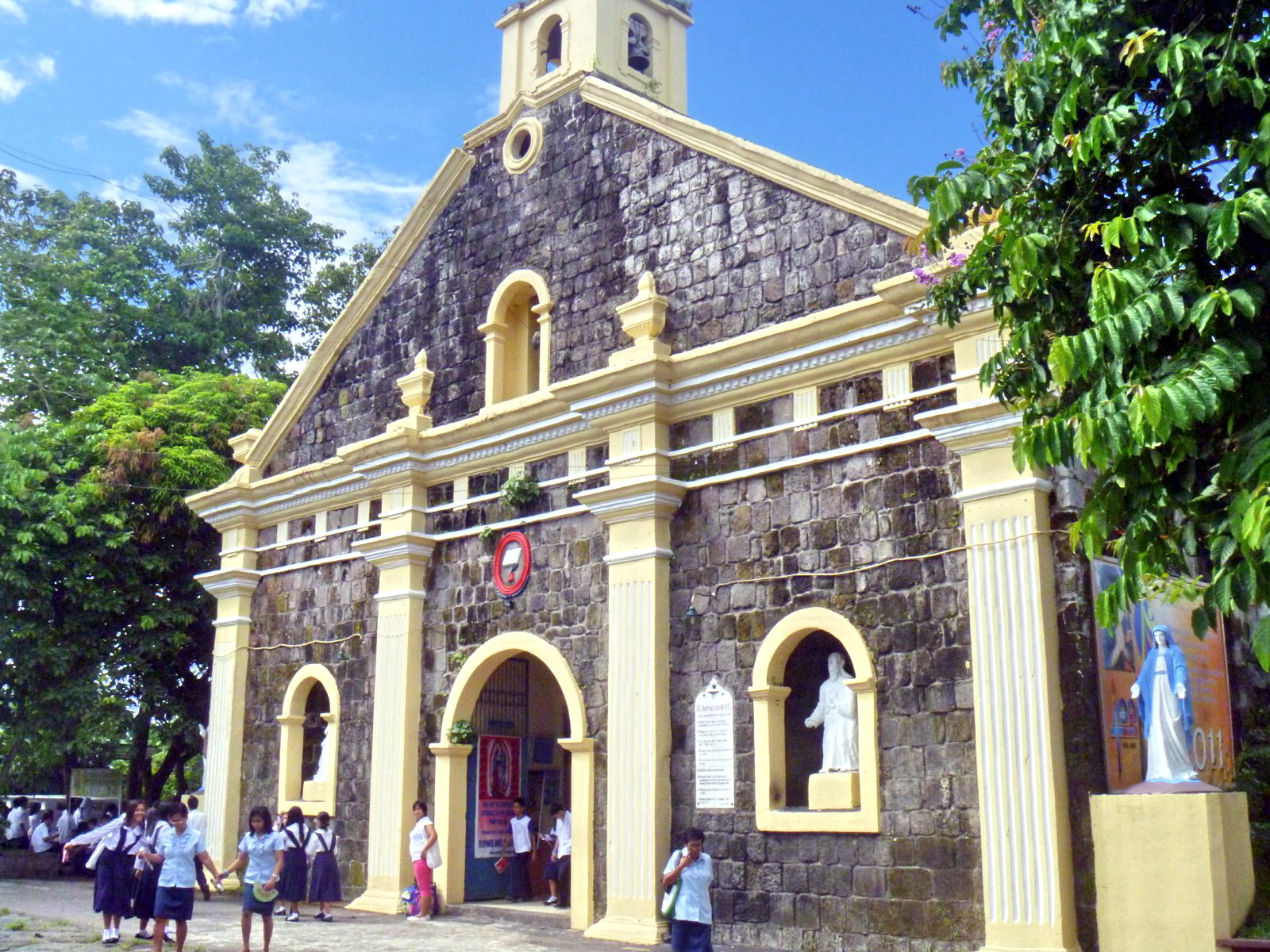
Church of St. Peter the Martyr

Church of St. Peter the Martyr

A second church, started in 1883 during the term of Fr. Felix Casas, was completed by Fr.r Eugenio Minguez in 1891 and later consecrated on June 8, 1893. It was destroyed during the liberation in 1945. 

The church's interior

The church’s interior

The present church is the town’s third.  Since 1949, the parish has been under the administration of the Columban Fathers.

The main retablo

The main retablo

Its fancy post-Baroque or Early Spanish Colonial Revival facade has a low entablature (which does not fit the classical proportions of the Renaissance style) and staggered placement of columns on the first and second levels (which provides an element of irregular rhythm). On the church’s left is the bell tower.

Retablo on the left

Retablo on the left

Retablo on the right

Retablo on the right

Church of St. Peter the Martyr: Brgy. Capantolan, Sual 2403, Pangasinan. Tel (075) 548-2072.

How to Get There: Sual is located 352 kilometers from Manila.

Malacanang of the North (Paoay, Ilocos Norte)

Malacanang ti Amianan

After our short stopover at Paoay Lake in Paoay, we now proceeded to the two-storey Malacanang ti Amianan (Malacañang of the North), one of the 29 former vacation houses of the Marcoses.  This was to be our last Lakbay Norte 2 tourist destination. Located uphill, on the first road past the Maharlika Hall of Fort Ilocandia Resort Lake Golf and Country Club, this hardwood mansion was built in 1977 by former First Lady Imelda Marcos, along the edge of Paoay Lake, to commemorate the 60th birthday of the late Pres. Ferdinand E. Marcos and as a vacation home and cabinet meeting place.

The baby grand piano beside the grand staircase

After the Marcoses lost power in 1986, the property was sequestered and the Philippine Tourism Authority was given custodianship of the property for 24 years but had neglected its upkeep.  When Imee Marcos became governor of Ilocos Norte in 2010, she had the house restored at a cost of PhP7 million and inaugurated it again on January 1, 2011. During the restoration, all the wooden furniture sets and fixtures were reupholstered or repaired. Now a museum and a venue for grand weddings, private functions and corporate and theme events, it has a photo gallery of the late president  and displays some of the personal belongings of the Marcoses, life-size Ferdinand Marcos mannequins and Congresswoman Imelda’s Cora Jacob arm candy and other clutches.

Life-size Ferdinand Marcos mannequins

The museum was supposed to be closed during our visit, it being a Monday, but our media group was given special permission to visit by the provincial government.  Ms. Letty Buduan, who served the Marcoses for over three decades, and seven others keep the museum spic and span.  The narra floors were so shiny and the furniture dust-free.  In the past, visitors here included George HamiltonNora AunorGabby Concepcion, among others.  Nowadays, bus loads of school children and guests frequent this museum which offers a breathtaking and panoramic view of Paoay Lake, especially during sunset.

Formal dining area

This huge, 1,900 sq. m. mansion, on a  roughly 4 hectare lot, has nine luxurious bedrooms, two living rooms, two formal dining areas, two kitchens and two verandahs. Imelda Marcos’ bedroom, the largest of the nine, displays some of her handbags.  Imee and Irene shared a bedroom while Bongbong’s and the late president’s master bedroom were both located at the ground floor.  They all slept in canopied beds.  A baby grand piano is located by the staircase.

The verandah with its panoramic view of Paoay Lake

After our Malacanang ti Amianan Museum visit, we all boarded our bus as we headed back to Laoag City for our 9:30 PM return flight back to Manila.  But first, we had dinner at Texicano Hotel and there, said goodbye to our gracious hosts, the Ilocos Norte Convention and Visitors Bureau.

Malacanang ti Amianan: Brgy. Suba, Paoay, Ilocos Norte. Open Tuesdays to Sundays, 9 AM-11:30 PM.  Admission fee: PhP30 for adults and PhP10 for children.

Ilocos Norte Convention and Visitors Bureau: Room 2, Balay da Blas, 10 Giron St., Brgy. 7-B, Laoag City, Ilocos Norte.  Mobile number: (0920) 269-1544.  E-mail: stevebarreiro@yahoo.com.  Website: http://northphilippines.org/destinations/ilocos-norte.

Paoay Lake National Park (Ilocos Norte)

Cattle and boats for hire line the lake shore

After our brief sojourn in Batac City, we next proceeded to the Malacanang Ti Amianan (Malacanang of the North) in Paoay.  Along the way, we made a brief stopover at the view deck of Paoay Lake National Park.  This 470-hectare, horseshoe-shaped lake, the largest in the province, was declared as a National Park on June 21, 1969 by virtue of Republic Act No. 5631.  Once known as Naguyudan, it is known to the locals as Dakkel a Danum and is a popular picnic site. The lake is artificially seeded with various species of colorful fish and is 10 m. deep, yet the surface is below sea level.  Its fresh water comes from a subterranean source.

Lakbay Norte 2 at Lake Paoay National Park

According to a charming but Sodom and Gomorrah-like legend, it is said that a once-prosperous town, San Juan de Sahagun, once stood where the lake is now.  The materialism of the town and the indolence of its people incurred God’s wrath, so he sent an earthquake and flood waters that swallowed up the town and formed the lake.   Town elders will tell you that the original townsfolk, in gaudy fiesta finery, can still be seen as colorful, transformed fishes swimming around with earrings and bracelets.  Geological studies indicate that the lake was formed by a massive earthquake that caused the ground to sink and be filled with water from underground springs.  

A barge used to cross the lake

The lake is ideal for bird watching   Common residents here include the endemic Philippine Duck (Anas luzonica), the White-Collared Kingfisher (Halcyon chloris), the White-Throated Kingfisher (Halcyon smymensis), the Brahminy Kite, cattle egret and little egret. Migratory birds that linger for a while here include the Tufted Duck (Aythya fuligula), the Grey Heron (Ardea cinerea), great egret and the osprey. Cottages (PhP50) can be rented at the viewing deck.

Paoay Lake is located north of Paoay town, 3 kms. off the main highway and 3 kms. from the sea.

Marcos Museum and Mausoleum (Batac City, Ilocos Norte)

Marcos Museum and Mausoleum

We were now on our last day of our 6-day North Philippines Visitors Bureau (NPVB)/Manila North Tollways Corp. (MNTC)-sponsored Labay Norte 2 media tour and, after our Playa Tropical Resort Hotel presscon in Currimao, we returned again to the Ilocos Norte Hotel and Convention Center for lunch and another presscon, this time with former presidential daughter and now Ilocos Norte Gov.  Maria Imelda “Imee” R. Marcos.   After that, we proceeded to nearby Batac City to visit the Marcos Museum and Mausoleum and the Imelda Marcos Gallery.  This would be my second visit to the former and my first to the latter. A few meters from the museum is the Romanesque-style Church of the Immaculate Conception. 

The presidential table

The Marcos Museum and Mausoleum was the colonial-style, wood and adobe boyhood ancestral home of the late Pres. Ferdinand E. Marcos who moved to Batac from Sarrat when he was 8 years old.  Housing the memorabilia of the former president, this modest, 3-room museum has a wall dedicated to Marcos’ wartime service in the Philippine Army, as a soldier in the defense of Bataan and with American Forces after liberation. There are also photos of him and Imelda, his military awards, his letters, important documents, license plates of his cars, the bust of the president and his work desk at Malacanang. At the second floor are the offices of former presidential children Ferdinand “Bongbong” E. Marcos, Jr. (now a senator) and Gov. Imee R. Marcos when they were Second District congressmen. 

Imelda Marcos Residence

On the right side of the house is the Marcos Mausoleum where the glass-encased, embalmed corpse of the late president lies, since 1993, in a vacuum-sealed, refrigerated crypt.  Marcos died in exile in Hawaii on September 28, 1989 and his body was brought to his hometown in Batac while awaiting a state funeral at the Libingan ng mga Bayani.  The president is dressed in a white barong tagalog with a red, white and blue ceremonial sash and polished medals. The dimly lit interior is filled with piped-in soft Gregorian chant music. Visitors are not allowed to take pictures inside.  I guess the only time photos were ever taken of Marcos’ corpse was when former First Lady and Imelda R. Marcos visited it for some publicity shots.

Marcos Photo Gallery

Also within the compound is another ancestral house used as the office of now Second District congresswoman Imelda Marcos.  We also dropped by the nearby Marcos Photo Gallery (World Peace Center), a 200-photo archive of the Marcos family. They include a collage of news clippings and photos during the Marcos era.  Prior to leaving Batac City for Paoay, I bought a cowboy hat (PhP150) at one of the sidewalk stalls and tried out the Batac empanada. 

Marcos Museum and Mausoleum: Marcos Ave., Batac City, Ilocos Norte. Open daily, 9 AM- 12 noon and 1-4 PM. 

Arrival in Currimao (Ilocos Norte)

Playa Tropical Resort Hote: Solana Spa (left) and the Casas

It was midnight when we ended our cocktails and videoke night at Balay da Blas in Laoag City and, after saying goodbye to our hosts, we proceeded to Currimao where we were to stay overnight at Playa Tropical Resort Hotel.  It already past midnight when we arrived at the resort and, after checking in at our rooms, grabbed some much needed shuteye. It was with some effort that I went down for breakfast at the resort’s Cafe Amarra for my coffee fix and fill of breakfast.

Check out “Resort Review: Playa Tropical Resort Hotel

As we still had time prior to our presscon at the hotel, Ian Garcia, Astra Alegre, Kara Santos, Ivan ManDy and I decided to visit nearby Sitio Remedios Heritage Village, going there via the gray sand beach.  It was starting to rain upon our arrival at the resort  and it was only after the rain stopped that we got to explore the grounds.

Check out “Resort Feature: Sitio Remedios Heritage Village

Here, we were welcomed here by Rene Gluatco, our Pasuquin, Paoay and Sarrat local guide and historian.

Check out “The Biscocho of Pasuquin

Rene treated us to some hot native chocolate at the resort’s Abrao Restaurant by the sea.  The restaurant serves local Ilocano fare (bagnet, Vigan longanisa, etc.), fresh fruit juices, and refreshing herbal drinks and teas. Rene then toured us around the resort.

From left, Ian Garcia, Rene Guatlo, Ivan
ManDy and Astra Alegre

Back at Playa Tropical, we then had our presscon with Gen. Manager Kenji Numano whom, I later found out, prior to leaving, is a fellow Merville Subd. resident and a friend of my daughter  Cheska. Small world.

Check out “Resort Review: Playa Tropical Resort Hotel

Presscon with resort GM Kenji Numano (standing) at Solana
Playa Tropical Resort: Brgy. Victoria, Currimao, Ilocos Norte 2903. Tel: (077) 676-1001 and 670-1211. E-mail: stay@playatropical.com.ph.  Website: www.playatropical.com.ph.

Sitio Remedios Heritage Village: Brgy. Victoria, Currimao, Ilocos Norte.  Mobile number: (0920) 925-0217.  Email: sitio_remedios@yahoo.com. Website: www.sitioremedios.com.

Back to Laoag City (Ilocos Norte)

After our La Paz Sand Dunes adventure, we again boarded our shuttle bus for San Nicolas   where we were invited for a buffet dinner at Ilocos Rosewell Hotel and Restaurant’s atrium-style lobby. After dinner we checked out the hotel’s rooms.
After our dinner at Rosewell Hotel and Restaurant, we were in for another round of eating, this time at Balay de Blas Pensionne House in Laoag City, as guests of hotel owner Mr. Sammy Bas, for some cocktails and videoke.  The hotel was formerly a residence of the Blas family until it opened its doors to tourists.
Executive Suite bedroom at Balay de Blas

Before everything else, we were allowed to freshen up at its executive suite. The room’s furnishings were all period pieces and one table had a Singer sewing machine base, same as the those in Cafe Herencia in Paoay, where Sammy is a co-owner.

Check out “Restaurant Review: Cafe Herencia

Spacious living room (take note of the Singer sewing machine
table at center)

Sammy also owns Saramsam Ylocano Restaurant and guests can place their orders through the hotel.  The restaurant offers Ilocano dishes (bagnetigadopoque-poquedinakdakpinakbet, etc.) as well as avant-garde versions of the traditional Ilocano fare fused with Western cuisine such as Saramsam pasta, poque-poque pizza and dinuguan pizza.  Some of these dishes were served to us during our cocktails and videoke night which was emceed by media colleagues Ron Rivera and Kenneth del Rosario.

Ilocos Rosewell Hotel and Restaurant: Brgy 1, San Francisco National Highway, San Nicolas, Ilocos Norte. Tel: (077) 670-6528 and 781-2122.  Fax: (077) 781-3700.  Website: www.ilocosrosewellhotel.com.

Balay da Blas Pensionne House: 10 Giron St., Brgy. 7-B, Laoag City, Ilocos Norte.  Tel: (077) 770-4389.  Email: balaydablas@yahoo.com. Website: www.balaydablas.com.

Saramsam Ylocano Restaurant: N. Corpuz Bldg., Rizal cor. Hizon St., Brgy. 7-A, Laoag City, Ilocos Norte.  Tel: (077) 771-5825.  Email: balaydablas@yahoo.com.

Church of St. Monica (Sarrat, Ilocos Norte)

Church of St. Monica and bell tower
After visiting the Marcos Museum in Sarrat, we returned to our bus and proceeded to the nearby Church of St. Monica, also located along the Padsan River.  Probably the largest church in the province, it was first built in 1779 by Augustinian friars, the last Spanish-era church built in the Ilocos.  Its red brick exterior facade blends simple and formally organized Neo-Classic proportions (a central main entrance and smaller side windows, all decorated by triangular pediments) with Baroque features (massive, heavily-rounded pilasters on solid rectangular pedestals with elaborate and curvilinear scroll-like pediments with heavily outlined volutes).
 
Convent

The impressive convent, known as the Casa del Palacio Real, was first built in 1779, reconstructed  in 1817 and 1886 and completed by Fr. Celedonio Paniagua. It was, at times, used as a Presidencia Municipal.  Within its environs then were a jail where criminals and political prisoners were incarcerated and tortured, a sala court, a strangulation room and other secular sections. It also served, for a time, as the Colegio de Santa Monica (a branch of the Liceo de Manila). The convent is now a parochial museum (Casa Paroquial Sarrat).  A unique, massive and attractive brick staircase connects the convent with the  church.

The brick staircase connect church and convent

The church and convent survived many calamities – fire on February 3, 1816 and 1882 and an earthquake on March 19, 1932 (its bell tower was damaged).     The church interior, along with the houses surrounding the plaza, were renovated in 1983 for Irene Marcos‘ (the youngest daughter of the late Pres. Ferdinand E. Marcos) June wedding to Greggy Araneta.  The lavish ceremony was attended by 5,000 guests and cost an estimated US$10.3 million.  Food was provided for over 100,000. A few months later, on September 7, 1983, an Intensity 7.8 earthquake severely damaged the church’s main altar and upper facade. The former 3-storey square brick bell tower of diminishing sizes lost its top storeys. 

Marcos Museum (Sarrat, Ilocos Norte)

Marcos Museum

After our lunch and church visit at Paoay, we again boarded our bus for Sarrat, the birthplace of the late Pres. Ferdinand E. Marcos.  Our first stop was, fittingly, the Marcos Museum.  The museum, overlooking the Padsan River, is actually the Edralin house where Marcos was born on September 11, 1917 to Mariano and Josefa Edralin Marcos, both school teachers from well-to-do families.  He lived here until he was 8 years old when his family moved to Batac.  

The museum’s ground floor

The house then was a traditional 2-storey bahay na bato, with a red brick ground floor for storage and the wooden upper level, with its hardwood floor, reserved for the living quarters.  It was renovated by  First Lady Imelda R. Marcos in 1977, the president’s  60th birthday, but was left abandoned after the fall of the Marcos before being restored again.   Many of the items on display were taken from the Malacanang Palace Museum as well as from the Malacanang of the North in Paoay.   

The museum’s second floor

On display are the 4-poster bed where Marcos was born, the old clock set to the time of his birth, the many barong tagalogs he wore on different occasions, musical instruments (harp, piano, etc.), many old photographs of the family, busts of Don Mariano and Dona Josefa Marcos, the license plates Marcos used for his cars, the Marcos family tree on the wall facing the stairs, as well as documents and old furniture (the escrihana used by Don Fructuoso Edralin y Carpio, the presidents grandfather, when he was vice-gobernadorcillo; the president’s swivel chair, aparadors, etc.).

Marcos Museum: Brgy. San Agustin, Sarrat, Ilocos Norte.  Open Mondays-Saturdays, 8 AM-12 noon and 2-5 PM.

Church of St. Augustine (Paoay, Ilocos Norte)

Church of St. Augustine

After our delicious lunch at Cafe Herencia, we still had time  to visit Paoay‘s most notable landmark, its Aztec-like Church of St. Augustine, situated near the banks of the Wawa River.  This fortress-like church, a premier example of Philippine Earthquake Baroque architecture, has been declared a National Cultural Treasure for its architectural style and cultural value and was included in UNESCO’s World Heritage List in 1994.  This will be my second time to visit the town, and the church for that matter, but it was only a stopover for photo ops and I never got to enter the church.

The gracefully curving and flowing, 
scrolled stone buttresses

Built from 1699 to 1702 by Augustinian Fr. Antonio Estavillo, the church was repaired in 1865 by Fr. Ruperto Rodriguez and Fr. Baldomero Real did major restoration work from 1889 to 1898.  The church was officially inaugurated on February 18, 1896.  The church has 24 2.5-m. thick, massive but gracefully curving and flowing scrolled stone buttresses that ballast the walls (found nowhere else in the country) and two exterior stone staircases (near the main altar transept) on both sides that reached the church’s roof.  Its 1.67-m. thick coral block walls were faced with bricks and sealed with a particularly hard lime mortar mixed with sugar cane juice.  The main nave, supported by 14 molave posts, is 60 m. long, 15 m. wide and 5.10 m. high.  The transept is 7 m. high. The church’s unique two-level triangular facade, divided by horizontal string courses, combines Gothic, Baroque and Oriental (Indian Madjapahit) designs. The buttresses are Baroque features and the decorative pinnacles are reminiscent of Gothic architecture.  Chinese elements are seen in the gable, while the crenellations and five niches (each with a large statue of a saint) topping the walls suggest Javanese influence.    

The church interior

Inside is a 3-storey main altar and two side altars each fitted with gilded retablos.  Over the wooden rail of the choir is a large wooden statue of Christ.  Its intricately designed pulpit and a statue of the Holy Family where brought from Spain in 1891.  Its separate three-storey, coral stone bell tower, was first built with 3.5-m. high wooden posts and three bells and enlarged from 1753 to 1756 by Fr. Tomas Torres with chopped 12 inch by 16 inch coral stones and molave braces put together.  The main entrance door was installed in 1793 and five bells were installed by Fr. Jose Nieto in 1818.  The bell tower was used as a watchtower by Katipuneros in 1898 and by local guerillas during the Japanese occupation.

The Surreal World of Kapurpurawan Rock Formation (Burgos, Ilocos Norte)

Kapurpurawan Rock Formation: The Sphinx-like “Head”

After our biscocho and salt making observation tour in Pasuquin, our Lakbay Norte 2 media group then boarded our bus and proceeded to the fellow Ilocos Norte town of Burgos.   From the National Rd. our bus turned towards a gravel road and traversed it for about 3 kms. until we reached a makeshift picnic hut, our jump-off point for the amazing, unique and Sphinx-like Kapurpurawan  Rock Formation, one of the best places to visit in the town, aside from the iconic Cape Bojeador Lighthouse, the country’s tallest.

Bonsai-like plants amid pools of limpid sea water

From the hut, it was a 30-min. walk, along concrete steps, dirt track and then, through a tidal pool.  At the tidal pool, sea water-filled coral rock pools, of varying sizes, and bonsai-like vegetation can be seen sporadically.  The rock formation was formed from sandstone naturally carved by weathering from wind, sand and water to create different surreal shapes such as the iconic “Head,” “Cradle” and the “Resting Dragon.” The word kapurpurawan was derived from the Ilocano root word puraw meaning “white” and these formations are said to be much whiter during the summer months of April and May.

This rock formation, possibly the “Resting Dragon,” looks
like a slithering cobra  about to pounce

Our short Kapurpurawan Rock Formation hike made us hungry and, as it was lunchtime, we proceeded to the nearby, picturesque town of Paoay for lunch at Cafe Herencia.

Check out “Restaurant Review: Cafe Herencia

Herencia Cafe: MacArthur St., Brgy. 14, Sangladan, Paoay, Ilocos Norte.  Tel: (077) 614-0214